The reason — or maybe the trigger — for this trip was simple.
It was my birthday.
I didn’t want to spend it alone at home.
There is a certain charm in spending a birthday alone while traveling,
but spending it alone at home feels only lonely, nothing else.
Today is my birthday.
Right after checking into the hotel,
the first thing I did was book a restaurant for tonight.
Choosing where to eat tonight was the most important decision of this trip.
I spent a lot of time searching, reading reviews, and checking photos.
When you sort Kagoshima restaurants by Tabelog rating,
the top results are mostly sushi restaurants.
Makes sense for a city with fresh and abundant seafood.
But I didn’t want sushi alone.
I wanted a place that served dishes unique to Kagoshima.
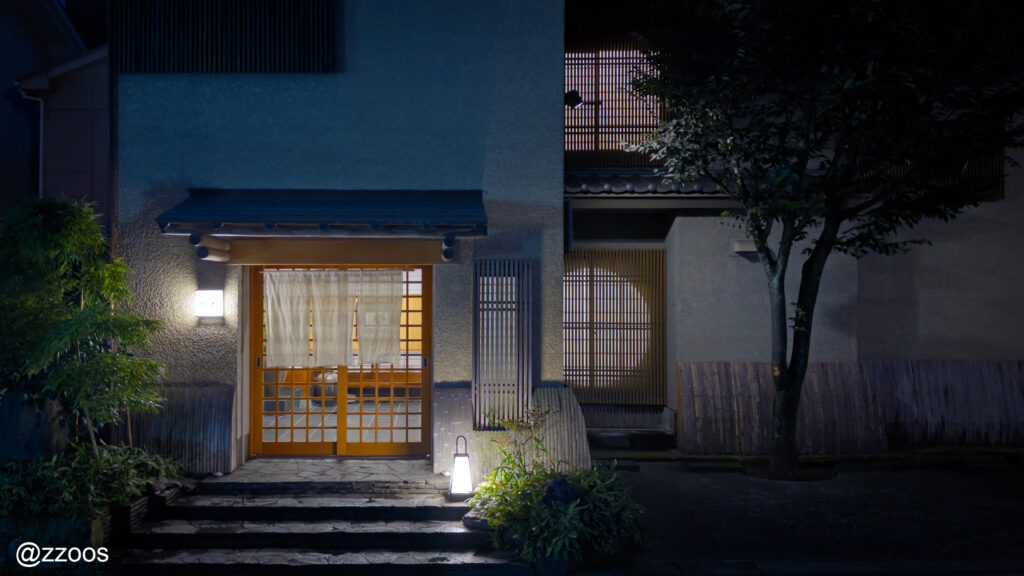
Sanei opened in 1933.
That makes it exactly a 92-year-old restaurant this year.
It seems the second and third generations are now running it together.
They serve traditional Kagoshima cuisine.
I booked their most popular dinner course.
My expectations were high — finally, a chance to try Kagoshima’s local dishes.
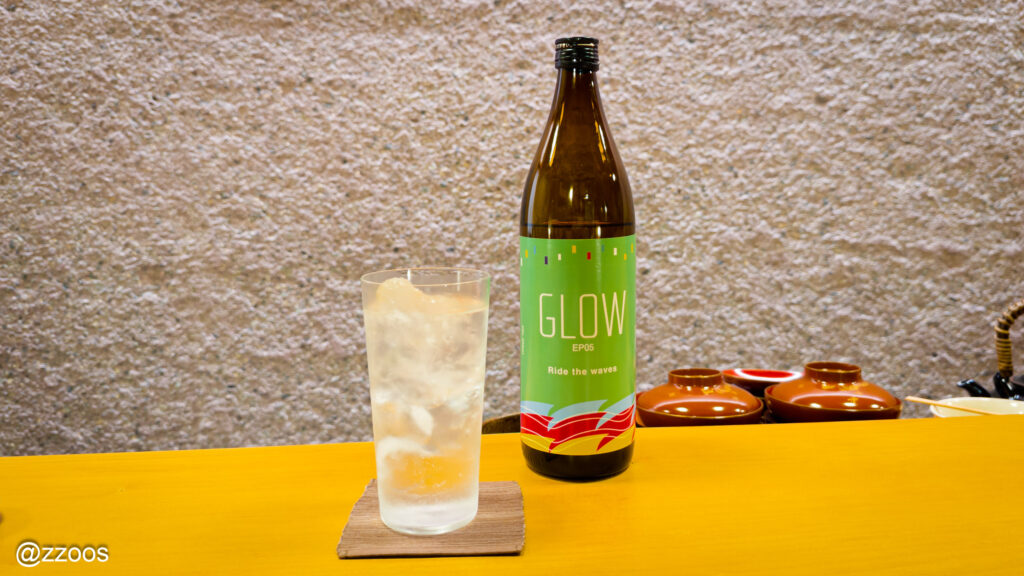
After sitting down, I greeted the proprietress.
I asked her to recommend a shochu for soda-wari,
and she suggested GLOW EP05.
It was indeed easy to drink,
a “kaori-kei” shochu with a melon-like aroma that rises beautifully with soda.
- Amazake
- Fig tofu dressing
- Appetizer plate
— Nanbanzuke, okra
— Eel siraae, karasumi powder
— Grilled sea bream sesame dressing
— Grilled tofu with Jsansho miso
— Sweet potato, chestnut, ginkgo nut
— (plus a jelly made with honmaguro, added by the chef) - Sake sushi
- Shuto Takaebi caviar
- Kibinago
- Sashimi
- Sea bream soup (turned into a different soup with natural matsutake added)
- (An off-menu grilled sea bream and matsutake dish with karasumi)
- Kurobuta tonkotsu
- Satsuma-age vegetable tempura
- A5 Kuroge-wagyu shabu-shabu
- Porridge with sea bream broth
- Melon
- One-bite dorayaki
— red bean paste, organic matcha jelly - Mame-gashi
- Sencha (first flush from Shinbushi)
With a drink in hand, I looked over the course menu.
It was written in English.
To spoil things a bit,
there were several dishes not written here.
The chef told me later that he doesn’t strictly follow the preset menu.
He just makes whatever he feels like.
I certainly didn’t mind.
(Though in the end, I was so full that I had to skip the rice and soup,
and even asked to simplify the dessert.)
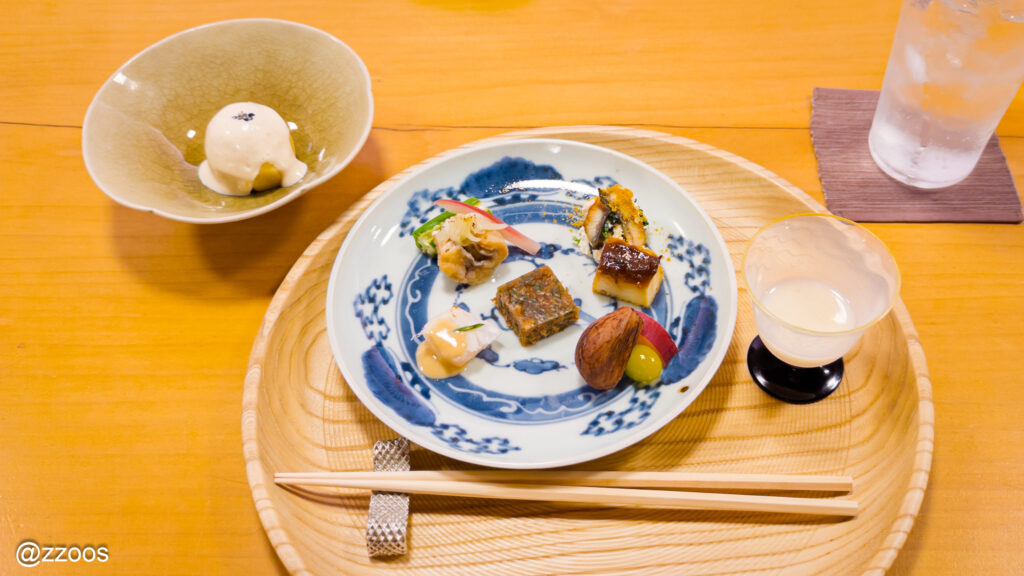
Amazake, fig tofu dressing, and the appetizer plate arrived.
Amazake is a Japanese drink somewhat similar to Korean sikhye.
It had a gentle, refined sweetness.
The round item covered with dressing confused me at first.
When I cut it open, it was a fig.
It was so good that my expectations for the entire meal skyrocketed.
The texture of the fig and the smooth tofu dressing worked beautifully together.
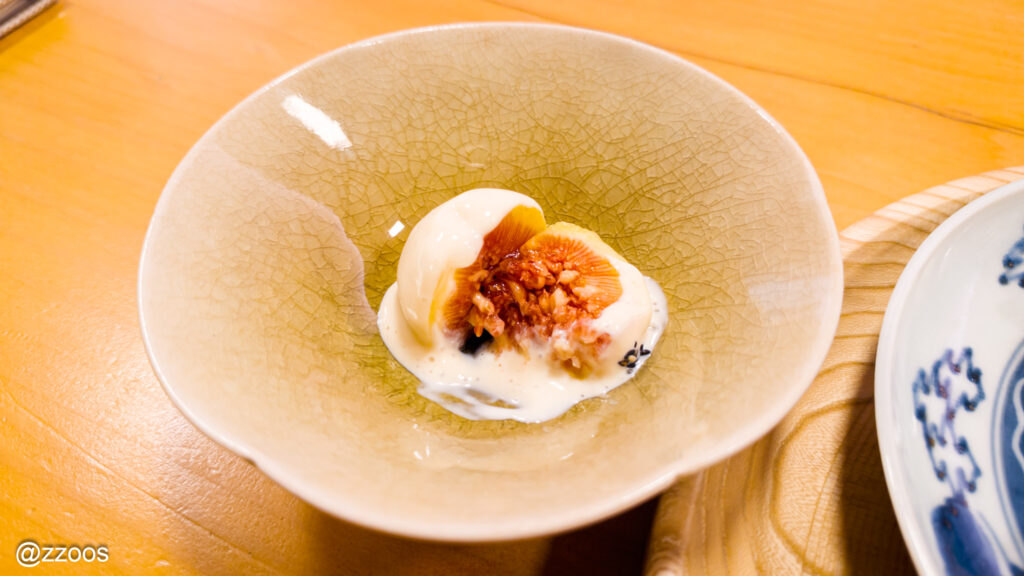
The appetizer plate had six items.
The menu listed five, but the chef added one more.
Starting from the top-left, going counterclockwise:
aji nanban with okra,
lightly grilled sea bream with sesame sauce,
steamed chestnut, ginkgo nut, and Kagoshima sweet potato,
grilled tofu with miso,
eel siraae sprinkled with karasumi powder.
In the center was the extra dish the chef made — something like a tuna jelly.
Every item on the plate was delicious.
The aroma of the aji nanban rising gently,
the soft and crunchy eel siraae with that final hit of karasumi,
and the miso on top of the tofu carrying a clean shiso fragrance and a crisp texture.
You could feel the delicate handling of each ingredient.
Everything tasted thoughtful and sincere.
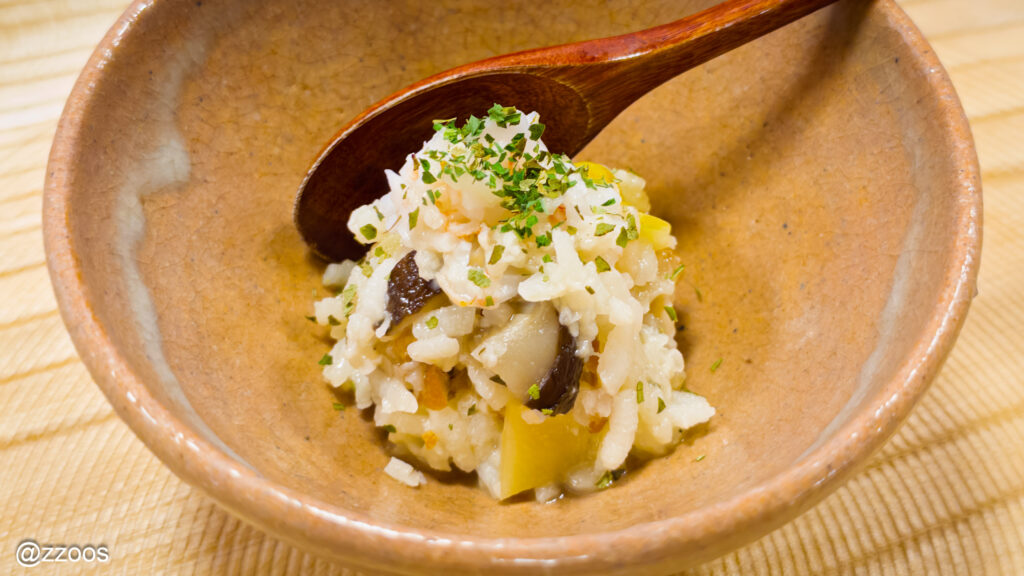
Next came sake-zushi,
a traditional Kagoshima dish.
Ingredients are placed in a large jar,
cooking sake is poured in,
and the mixture is left for some time.
They told me it has a distinctive aroma.
Inside, I could taste rice, mushrooms, shrimp, herbs,
and several kinds of fish.
There was a gentle sweetness and acidity,
with the aromatic herbs floating above everything.
The ingredients each kept their flavor — very enjoyable.
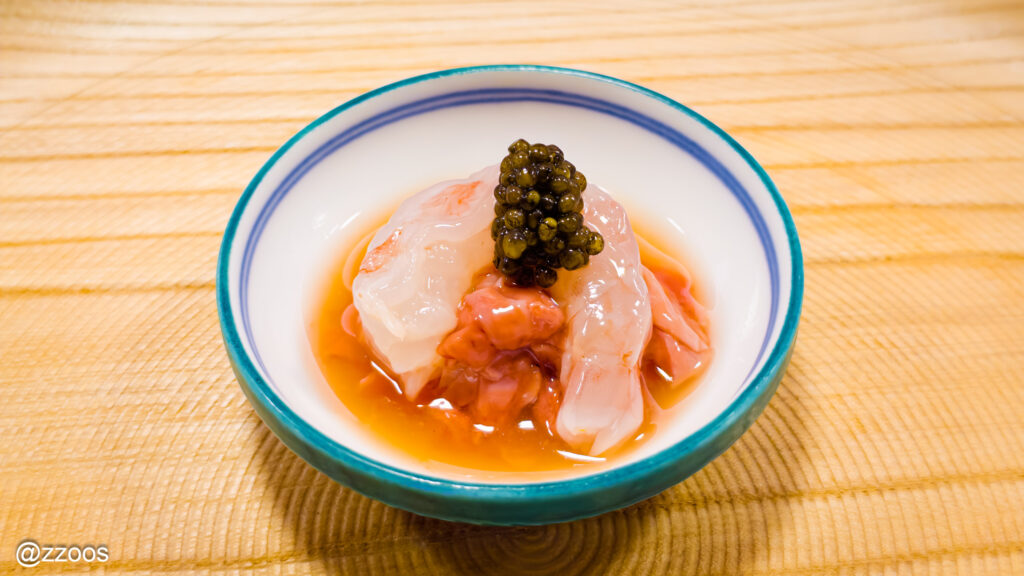
This is shuto with takaebi and caviar.
Shuto-ae sometimes appears as a drinking snack in Japan;
it’s made from salted, fermented bonito innards.
Fresh shuto looks exactly like this — bright and alive.
On top were takaebi and caviar.
The takaebi was wonderfully sweet.
And fresh shuto really does steal your drink away.
But the broth-like liquid underneath was extremely salty.
It is, after all, fermented innards.
So I gently shook off the excess salt and ate the shuto that way.
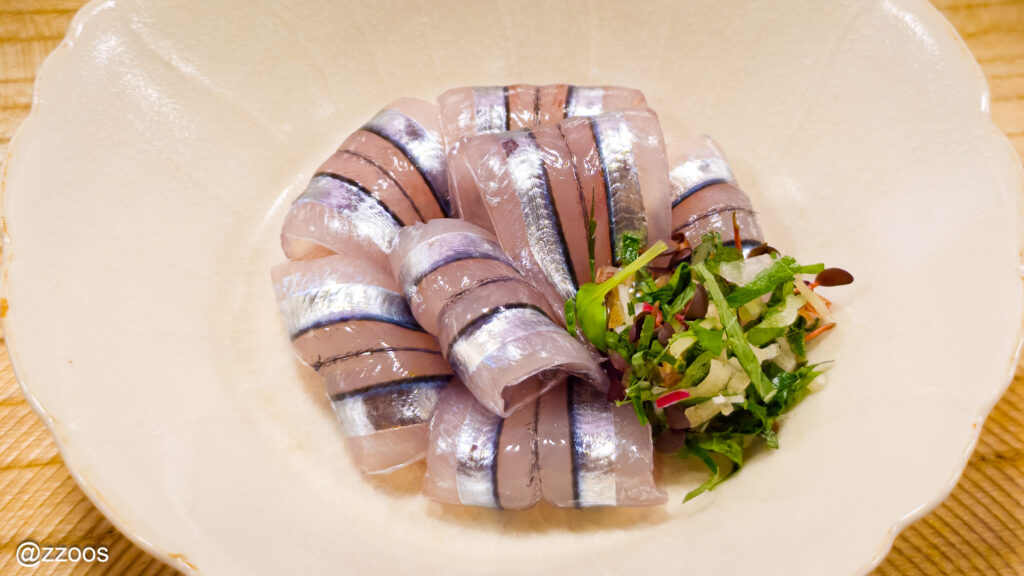
Next was kibinago sashimi.
Its appearance is beautiful.
It’s one of the iconic images of Kagoshima.
Kibinago is called “saetjul-myeol(샛줄멸)” in Korean,
and in the south people sometimes call it “kkot myeolchi(꽃멸치),”
but it’s actually a different species from anchovy.
I heard that when Jeju makes “meljeot,” this is the fish they use.
Anyway, the kibinago sashimi was incredibly fresh.
It had a cleanness I’ve never tasted before,
almost a cool, refreshing sensation.
When eaten with shredded shiso,
the freshness was amplified even more.
A truly charming sashimi.
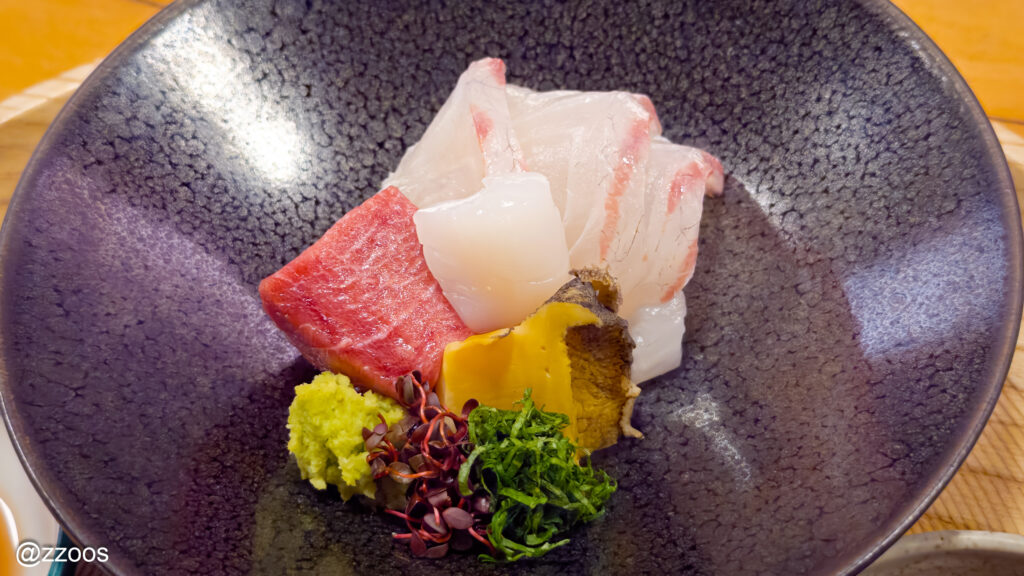
Now the sashimi platter:
madai (red sea bream), mizu-ika (aori-ika), hon-maguro (bluefin tuna), katsuo (bonito), awabi (abalone).
I heard Sanei has a special skill in preparing sea bream.
And yes — the sea bream tasted strangely refreshing.
I wonder what their secret is.
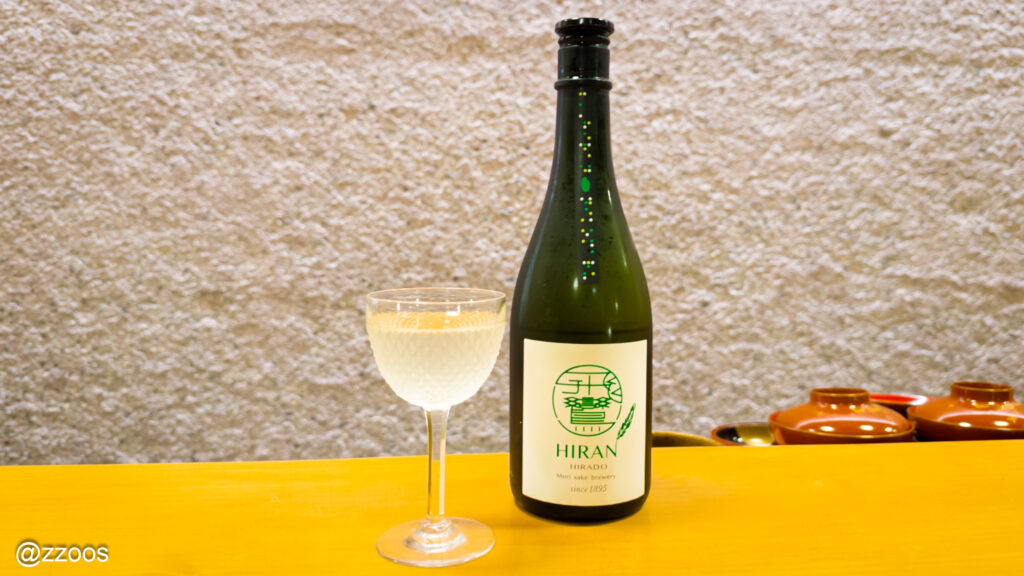
I asked for a sake recommendation,
mentioning that I like styles such as Aramasa and Juyondai.
They said they had Aramasa,
but when I asked for something new,
they suggested HIRAN from Nagasaki.
It was refreshing and delicious.
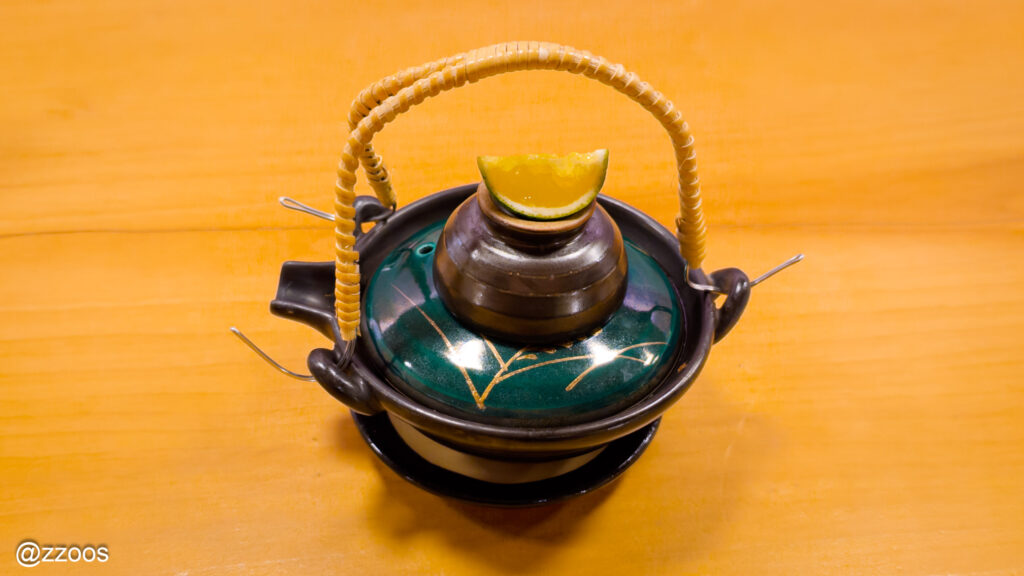
The next dish was dobin-mushi.
The menu called it “sea bream soup,”
but the chef changed it a bit.
He said he used natural matsutake.
Well, that only makes it better for me.
Inside the little teapot was a broth,
which you pour into a small cup to drink.
The sudachi on the lid was for adjusting the acidity to your liking.
Inside were natural matsutake and pieces of sea bream.
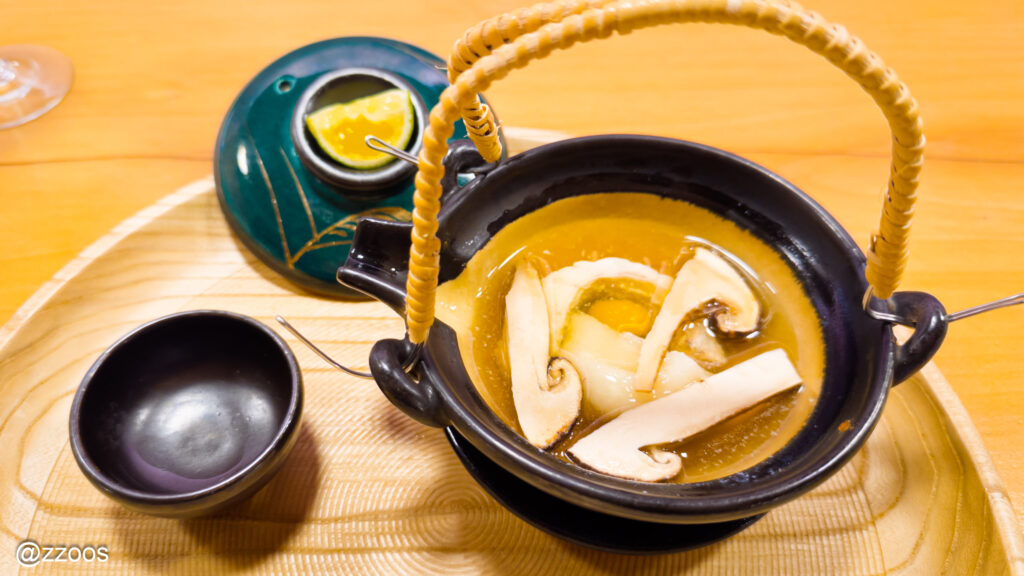
This was truly delicious.
The aroma of matsutake was unmistakable,
and the sea-bream-based broth was incredibly deep.
Whatever ingredients they used,
the flavor wasn’t simple at all — it had many layers.
I loved this dish.
By this time,
two hours had already passed.
I eat slowly,
and I also chatted a lot with the proprietress.
She asked for Korean food recommendations,
so I recommended naeng-je-yuk,
and I told her about some restaurants.
We talked about dramas, actors,
and many other things.
Time flew while eating good food slowly.
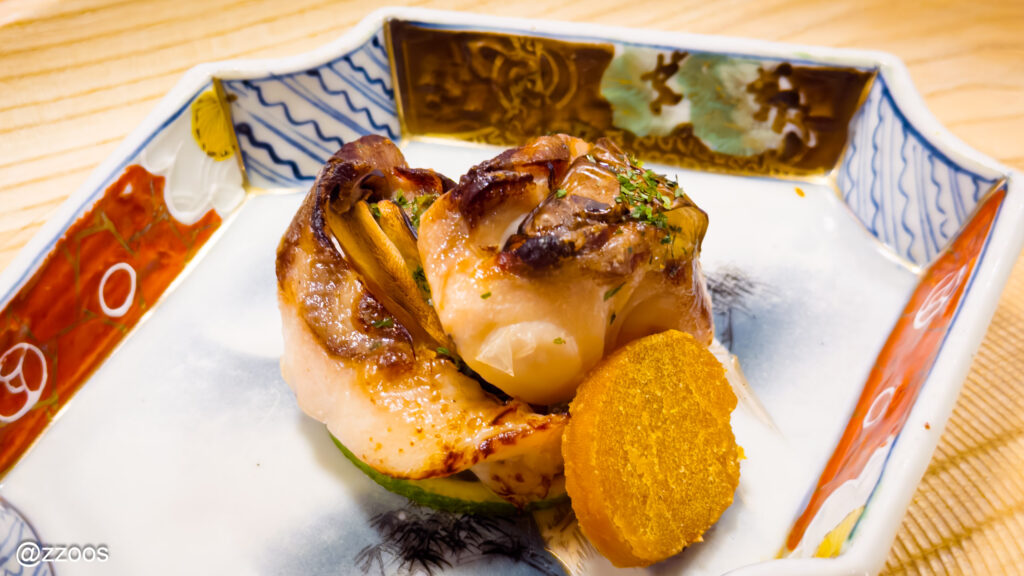
Then came a dish that wasn’t on the menu.
The chef himself came out to explain.
He was probably the second-generation master.
He grilled sea bream,
again using natural matsutake,
and placed karasumi on the side.
The aroma was amazing.
Even with the explanation,
I still don’t know exactly what seasoning he used —
but the flavor combination was outstanding.
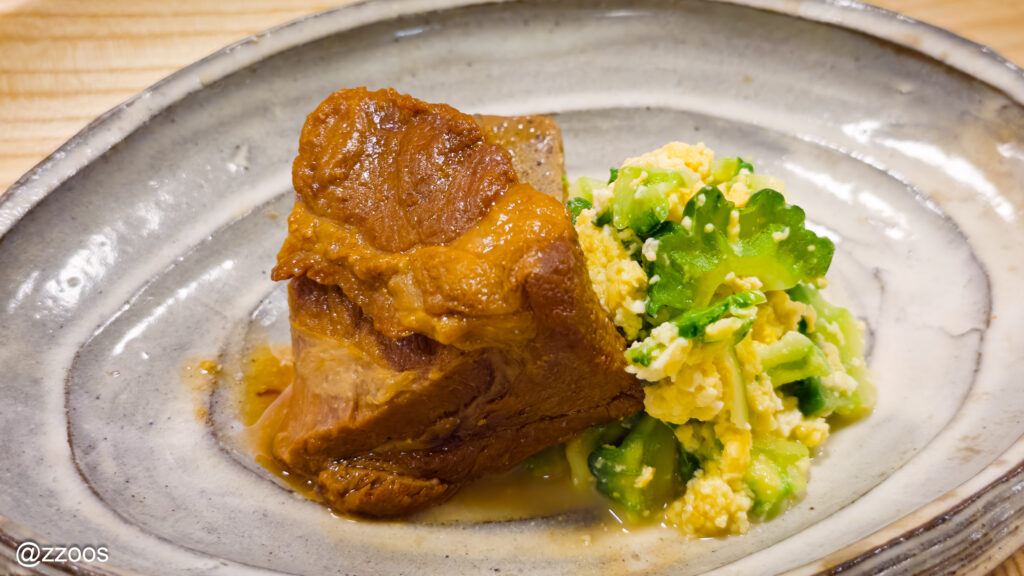
This time, a dish that actually was on the menu:
Kurobuta tonkotsu and stir-fried goya.
It’s a traditional Kagoshima dish.
I think this dish carries influence from Okinawa.
Goya champuru is a signature Okinawan dish,
and Okinawa also has a strong tradition of simmered pork.
Kagoshima historically has deep ties with Okinawa.
The Satsuma Domain annexed lands such as the Amami Islands,
which used to be part of the Ryukyu Kingdom.
Those areas became part of Kagoshima Prefecture first,
and later the rest of the Ryukyu lands became Okinawa
when Japan integrated the kingdom.
Naturally, Okinawan food culture influenced Kagoshima.
Anyway, the pork here was marinated with shochu,
miso, and other seasonings.
The flavor felt very Korean to me.
It tasted like soy-braised pork —
soft, tender, and deeply seasoned.
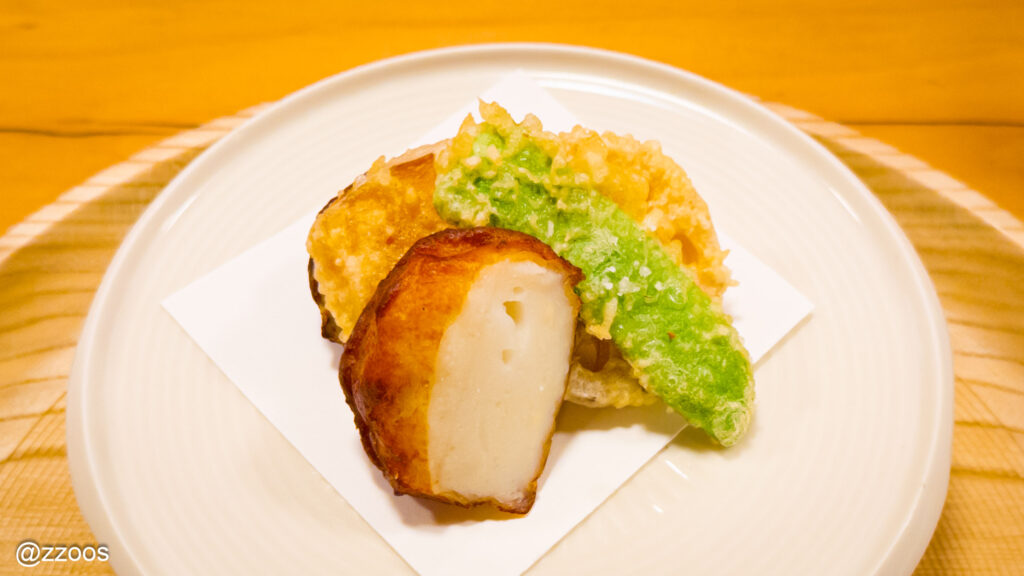
Next came satsuma-age and vegetable tempura.
Plain satsuma-age,
lotus-root satsuma-age,
pumpkin, lotus root, and bean skins.
There was no dipping sauce,
which surprised me,
but everything was pre-seasoned with salt.
Of course, this place fries things well too.
The satsuma-age was the best I’ve had so far.
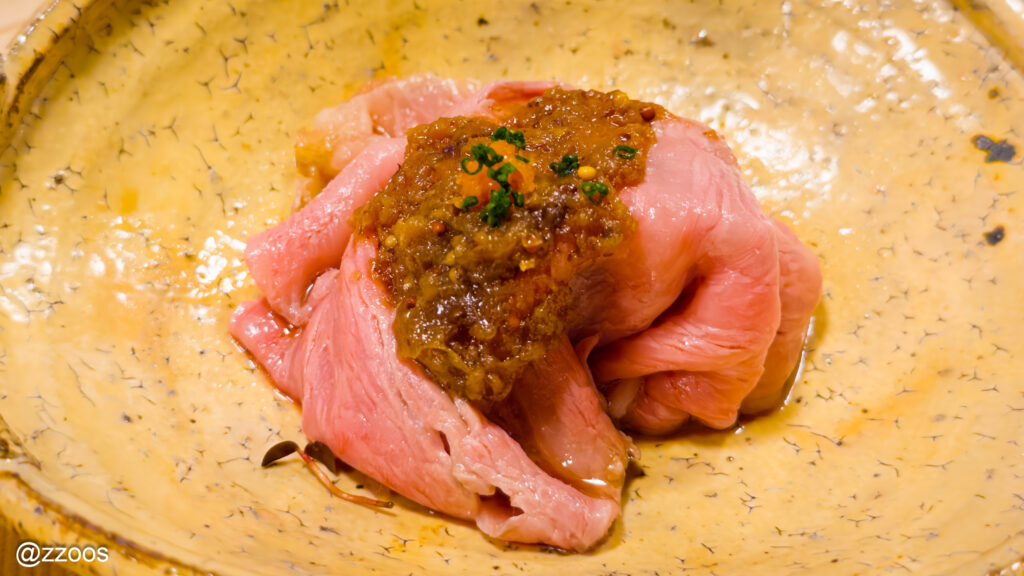
We were nearing the end.
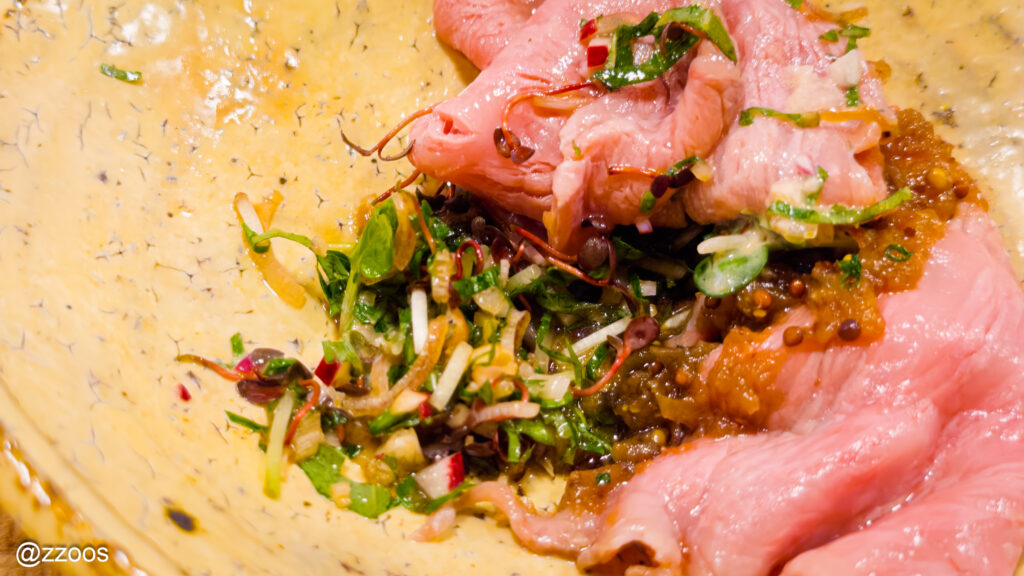
Kuroge-wagyu shabu-shabu.
I didn’t cook it myself; the kitchen prepared it.
The beef was cooked to a soft pink color,
with sauce poured over.
Under the meat were finely chopped vegetables.
The portion was big enough that I cut it in half.
This was incredibly delicious.
Softness aside,
the sauce was wonderful,
and there was a faint, pleasant scent of blood and beef.
The flavor burst in my mouth.
Next would have been white rice and sea-bream soup,
but I said I couldn’t eat any more.
I also asked them to simplify the dessert.
I was completely full,
and the chef had served extra dishes earlier.
I shouldn’t have said it,
but I mentioned that today was my birthday.
I only wanted to say,
“Thanks to you, I had such a wonderful birthday meal.”
But they panicked in the kitchen —
saying I should have told them earlier.
I told them that’s exactly why I didn’t say anything.
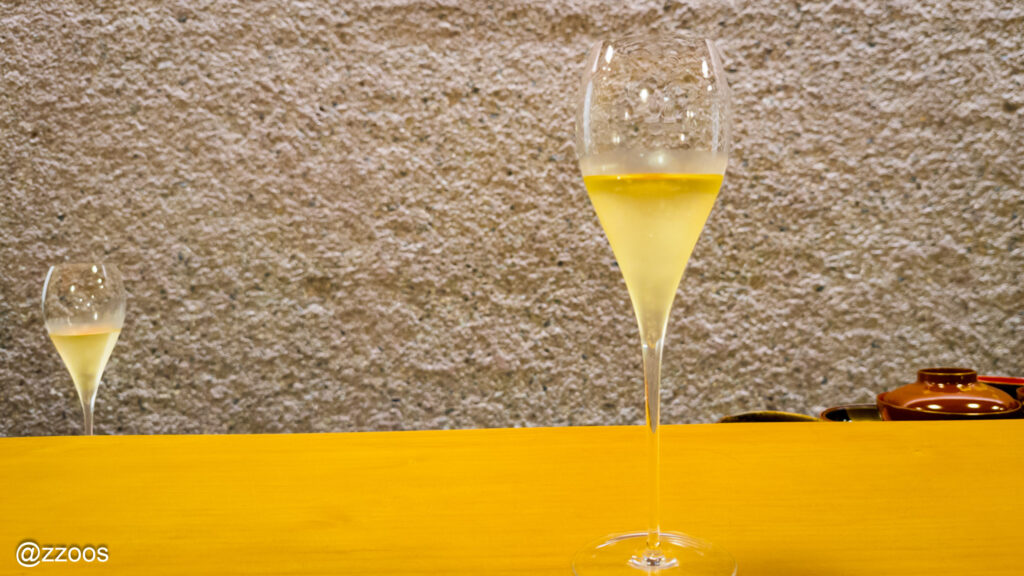
Still, they poured two glasses of champagne,
and the proprietress toasted with me.
They congratulated me on my birthday.
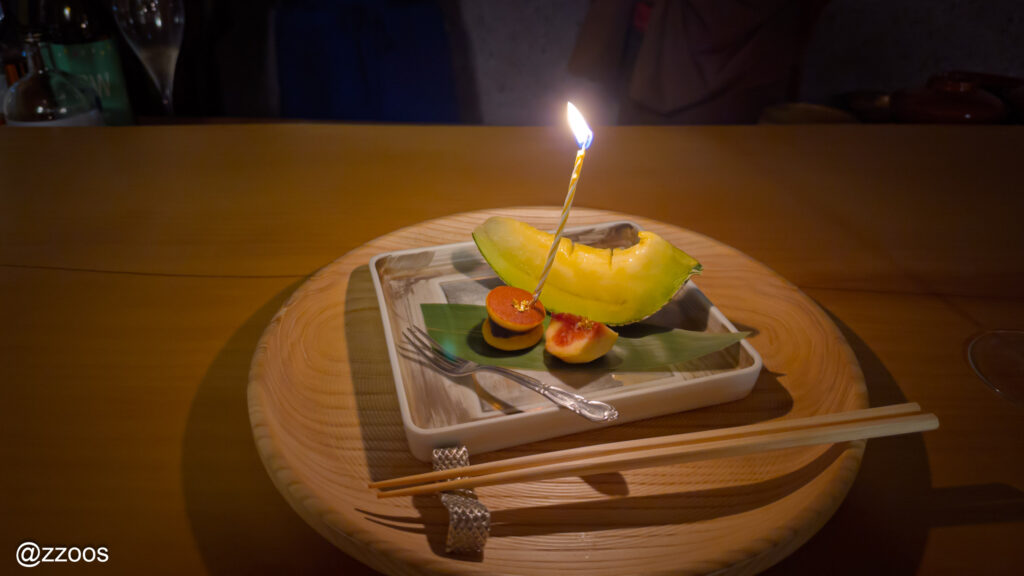
Then suddenly the lights went out.
What is happening? I wondered.
And then they brought out a dessert plate with a candle.
A birthday candle on a one-bite dorayaki.
I was touched.
All the staff gathered and sang happy birthday,
and I blew out the candle.
I wished for good health,
and that I could return someday.
It was a deeply satisfying meal.
If I get the chance, I want to visit again.
If I ever travel to Kagoshima,
I think I’ll always try to get a reservation here.
The food was wonderful,
the ingredients were fresh,
and their kindness left a real impression.
I didn’t drink much this time,
so next time I’d love to pair everything properly with shochu.
My birthday in 2025 became a birthday to remember.

Leave a Reply