I have a friend who is originally from Mokpo.
He moved to Seoul during college, and now that he’s middle-aged, you could probably say he’s more of a Seoul person than a Mokpo person.
Still, both he and his wife are from Mokpo,
and all of their parents and siblings live there.
They visit Mokpo several times a year.
So I think it’s fair to say
he’s someone who lives in Seoul,
but is still very much a Mokpo person.
I’ve met this friend in Mokpo two or three times.
We went to restaurants his parents recommended,
and we also met up with his local friends to drink soju together.
One of the places he introduced me to fit my taste perfectly.
Ever since then, whenever I visit Mokpo,
I make sure to stop by and have dinner there.
Once, when I took a taxi and told the driver to take me here,
he said,
“You don’t seem like a local. How do you know this place?
Only locals come here.”
That’s how much of a local favorite it was.
Recently, though, it seems the restaurant appeared on a YouTube channel.
If you search for it now, it’s becoming fairly well-known.
For regular customers, that’s actually a bit uncomfortable.
Am I allowed to call myself a “regular”?
Well, someone who lives in Seoul
and has visited this place four or five times
might not quite qualify.
But I think it’s safe to say
I like it a lot.
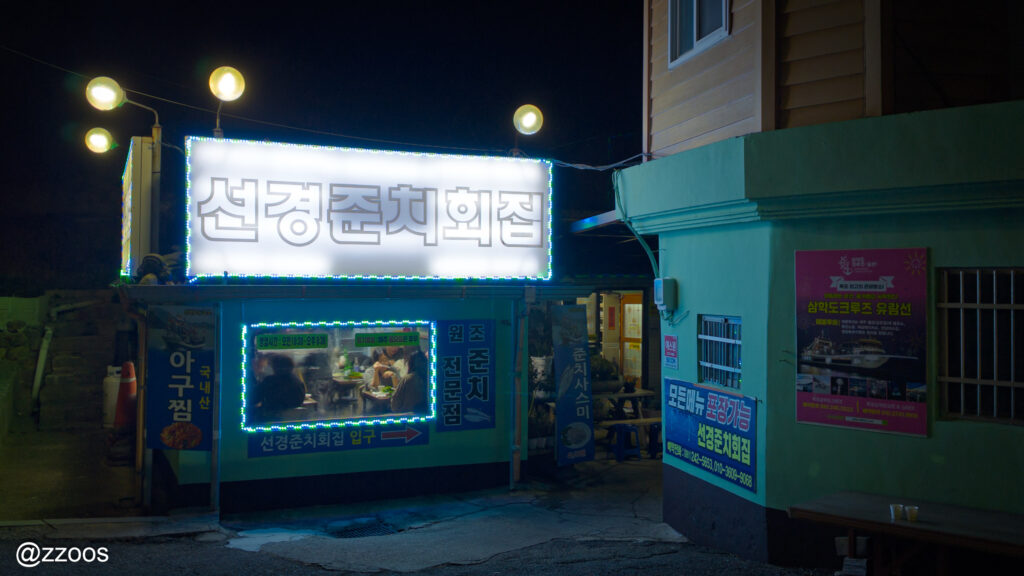
Anyway, the name of the place
is Seonggyeong Junchi Hoetjip.
※ ‘Junchi’ means Ilisha elongata or elongate ilisha and ‘Hoetjip’ means raw fish restaurant.
The location is unusual.
It’s not in the old downtown area,
not in a new district,
and not right in front of a port.
It just sits alone along a coastal road,
so accessibility isn’t great.
Still, people somehow manage to find their way here.
When I visited this time,
the place was almost full.
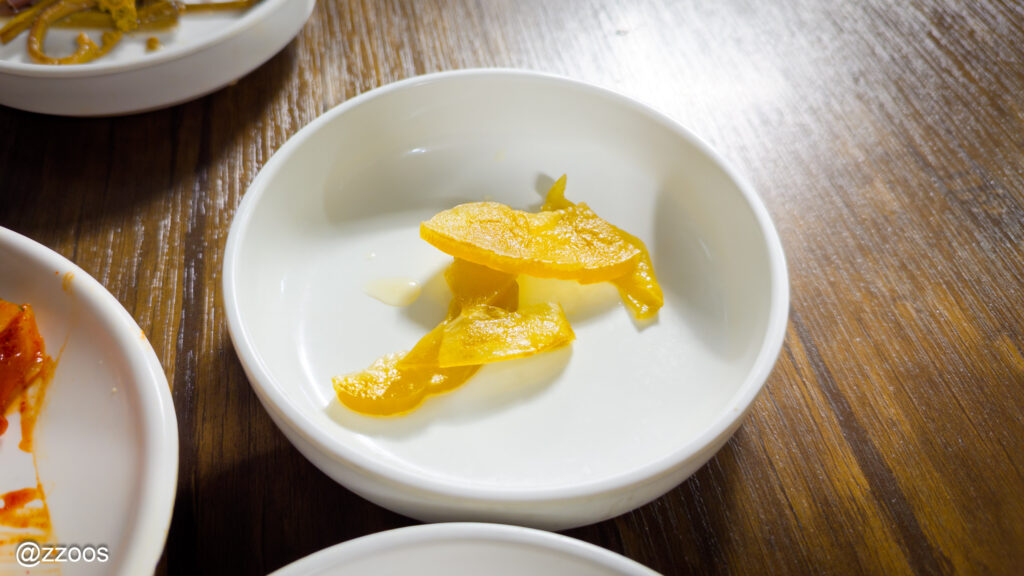
My friend told me that the signature dishes here
are Junchi hoe-muchim and Agu-tang.
※ ‘hoe-muchim’ means seasoned raw fish. / ‘Agu’ means angler. / ‘tang’ means ‘stew’.
Personally, though,
I really love the Byeongeo-jjim.
※ ‘Byeongeo-jjim’ means steamed silver pomfret.
So as soon as I sat down, I ordered it.
I knew it was only available from two servings,
so I ordered two.
Since byeongeo-jjim takes some time to prepare,
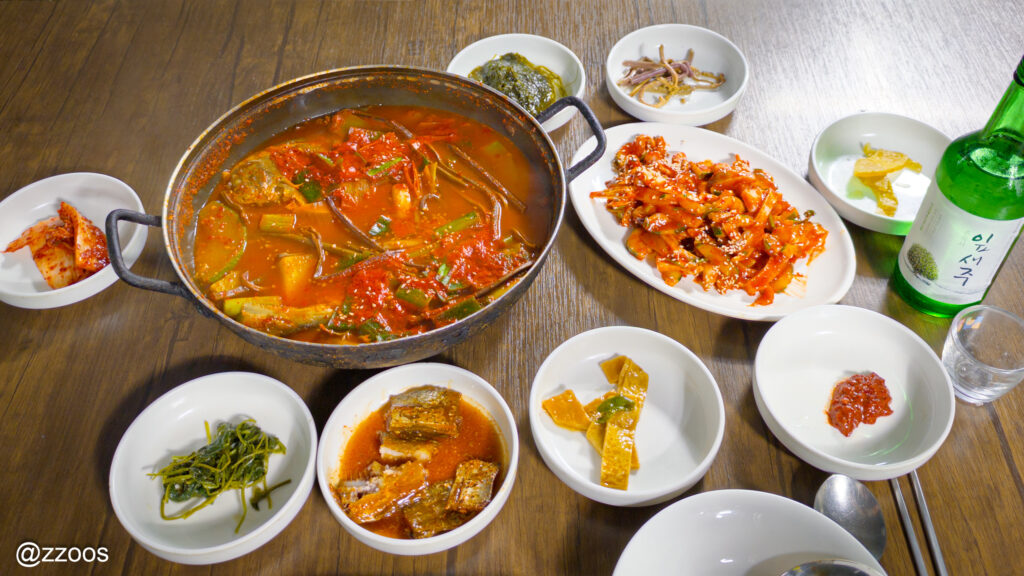
I also ordered a plate of Junchi hoe-muchim
to snack on while waiting.
That meant I ordered enough food for three people,
even though I was alone.
If I couldn’t finish it,
I figured I’d just leave some behind.
I’ve learned that
missing out on something I really want to eat
feels worse.
That’s something that happens
from time to time
when you travel alone.
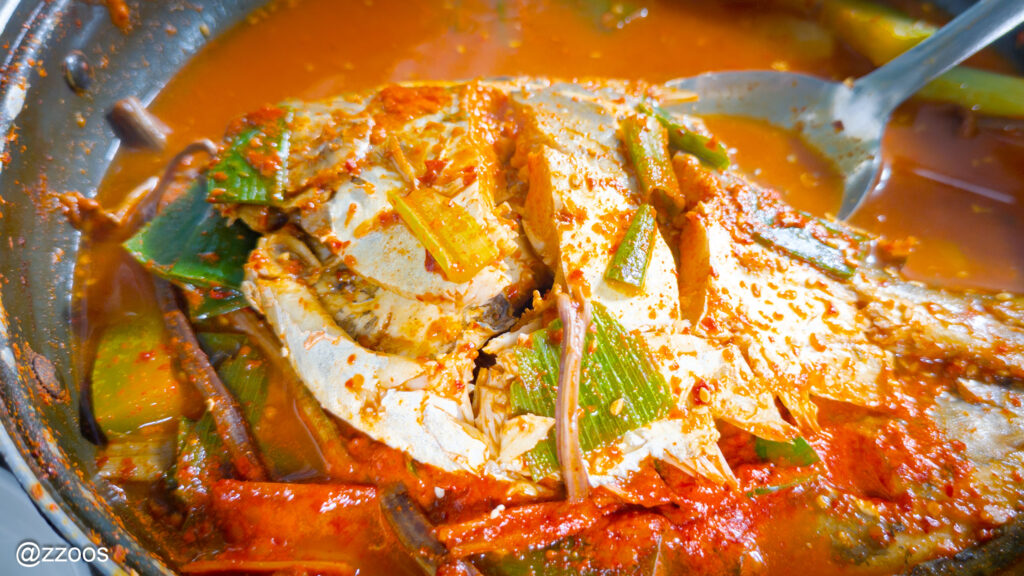
The byeongeo-jjim came with two large fish.
As always, it was cooked gently enough
to really show off the softness of the flesh.
But this time, there was a problem.
The byeongeo-jjim I had on this visit
had a noticeable fishy smell.
Byeongeo is a summer fish.
Since it’s the middle of winter,
I understand that they’re using frozen fish.
But there still shouldn’t be an off smell.
The flesh itself was cooked very well.
Nice and tender.
The seasoning was delicious,
and the vegetables were good too.
That’s why
it felt disappointing.
Byeongeo-jjim is my favorite dish at this restaurant.
I order it every time I come here.
The lightly cooked, tender flesh of the byeongeo,
done at just the right timing,
is something I love so much
that I consider this the best byeongeo-jjim I’ve ever had.
This visit reminded me once again
that byeongeo really should be eaten in summer.
Come to think of it,
I’d always visited Mokpo in the summer before.
Maybe that’s why
the byeongeo-jjim had always tasted better.
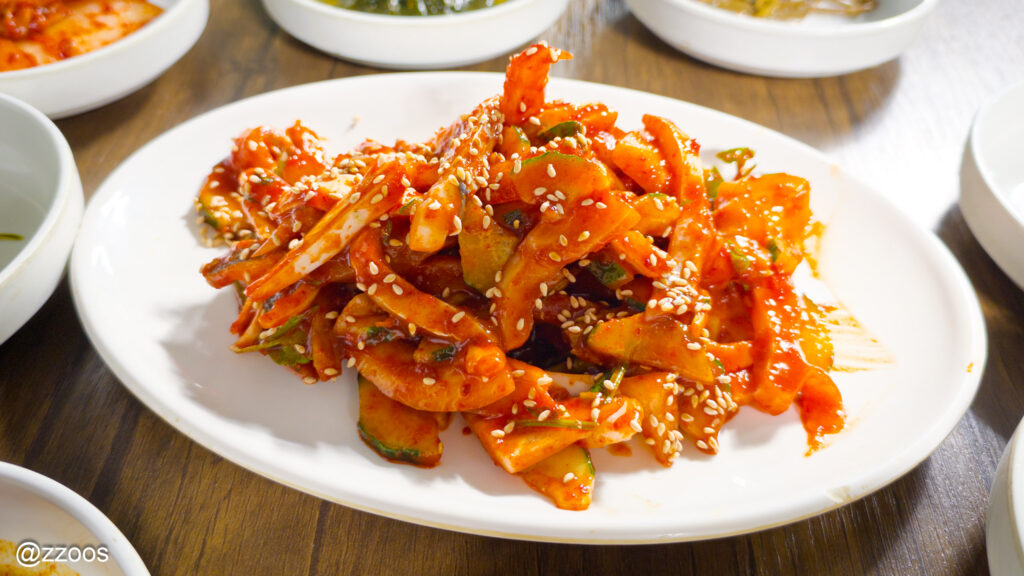
The Junchi hoe-muchim, on the other hand,
was perfect as always.
The sweet, sour, and spicy seasoning,
the soft yet slightly crunchy texture of the Junchi,
and the onions and cucumbers
all came together to make an incredible dish.
After eating the slightly fishy
but still tender byeongeo,
taking a bite of the Junchi hoe-muchim
instantly lifted my mood.
If I hadn’t ordered this,
it really would have been a disaster.
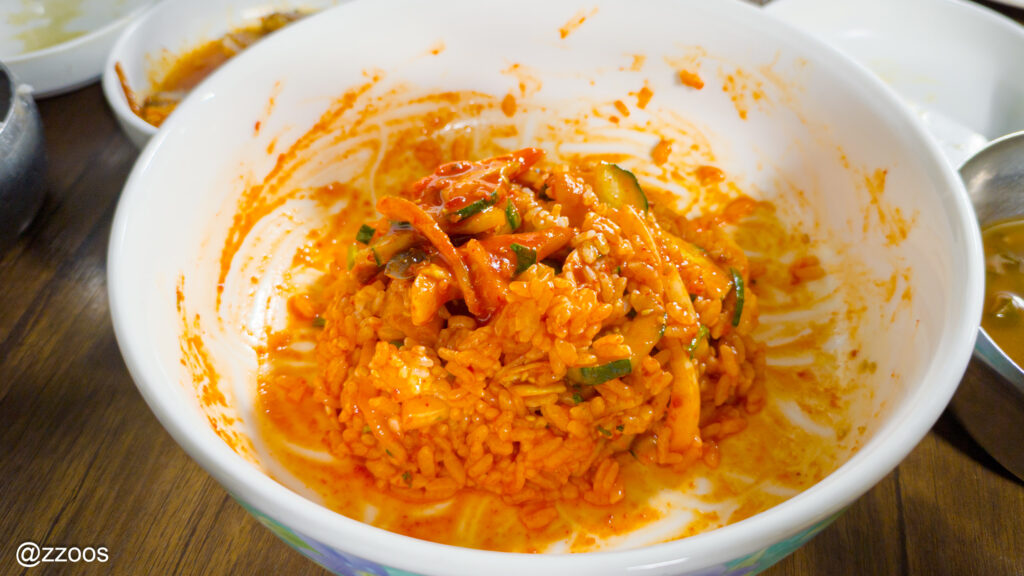
In the end,
I asked the owner for a “bibim bowl.”
She brought out a large bowl
with plenty of sesame oil already added.
I put the leftover Junchi hoe-muchim
and a bowl of rice into it,
and mixed everything together.
It’s honestly hard to describe
how good it is.
Even now,
just looking at the photos
makes my mouth water.
That’s how intense the flavor is.
Next time,
I definitely want to come back in summer,
when the byeongeo is at its best,
and try this combination again.
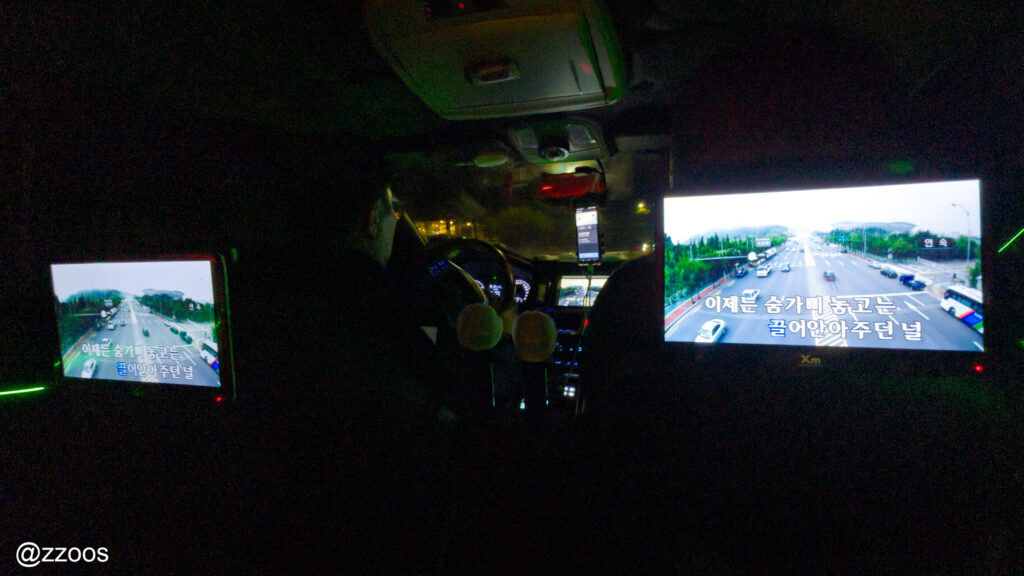
After dinner,
I called a taxi to go back to my hotel
in the Hadang new town area.
When I got in,
I noticed a suspicious-looking monitor and a microphone.
While I was wondering what it was,
the driver asked for the last digits of my phone number.
I thought he was just checking that I was the right passenger,
so I told him.
Then suddenly,
music started playing, and song lyrics appeared on the monitor.
It turned out to be a karaoke machine.
The driver said
the song that came on was selected using the phone number I gave,
and that it was my “destined song.”
I listened to my “destined song,”
something I’d never heard of in my life,
and rode back to the hotel in a good mood.
The title of the song?
I have absolutely no idea now.

Leave a Reply