On my last night in Kagoshima, I was unsure where to have dinner.
After thinking for a moment, I decided to visit this place.
I had first discovered Bunke Mujaki in 2017, and their kuromiso oden was so delicious that I promised myself to return one day.
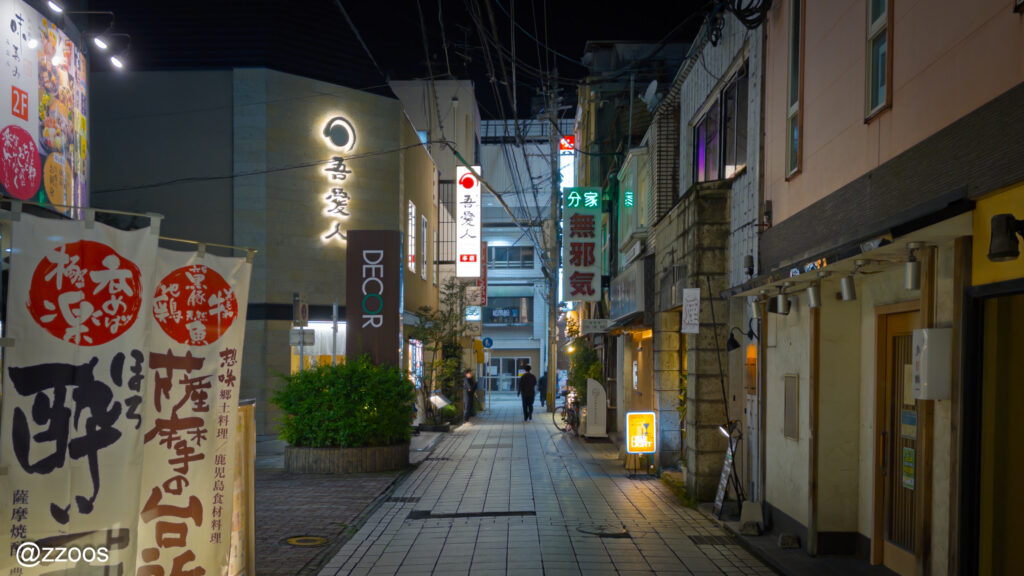
It sits inside a narrow alley in the northern part of Tenmonkan.
Right in front of it is the large chain restaurant Tenmonkan Wakana Honten.
That place is a clean, spacious izakaya where you can try many Kagoshima dishes, and the counter seats make it easy to visit alone.
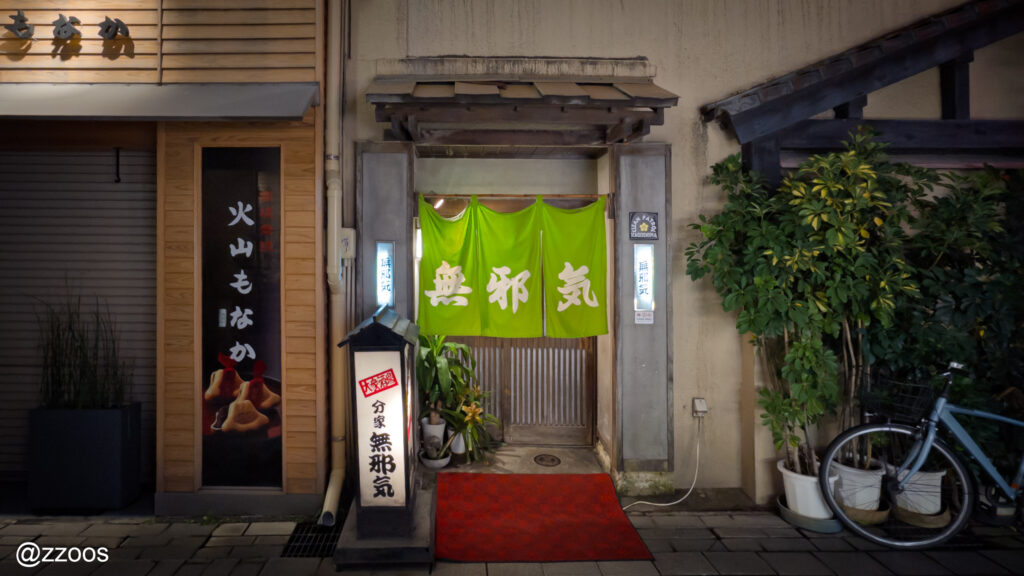
But if Wakana is a big, polished local izakaya,
then Bunke Mujaki is a small, down-to-earth one.
Or more precisely, it is a sakaba.
The sign even says “Taishu Sakaba,” which means an affordable, casual drinking spot.
A sakaba focuses more on drinks than on food.
While izakaya tend to emphasize their dishes,
sakaba are places where the alcohol comes first, and the small plates simply follow.
And because this one labels itself as a taishu sakaba, you can assume the prices are low.
The moment I stepped inside, the place was buzzing.
It felt like a completely local crowd, with no tourists in sight.
Luckily, a single seat at the counter opened up, probably the same spot where I sat eight years ago.
Looking at the menu, I noticed a drink called “Mujaki Shochu.”
It must be their own label.
Most likely they asked a distillery to bottle it for them.
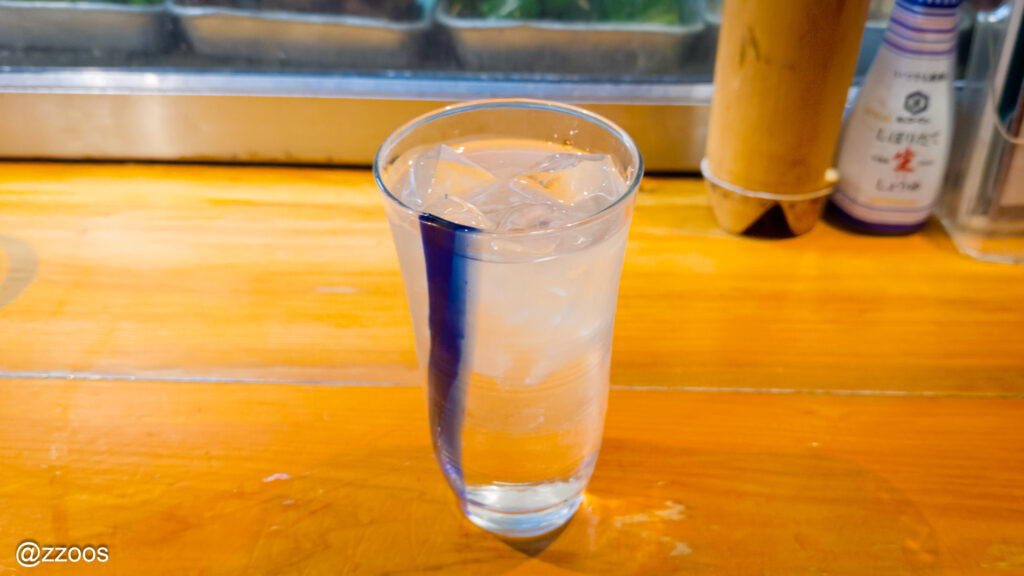
I ordered a soda-wari to start.
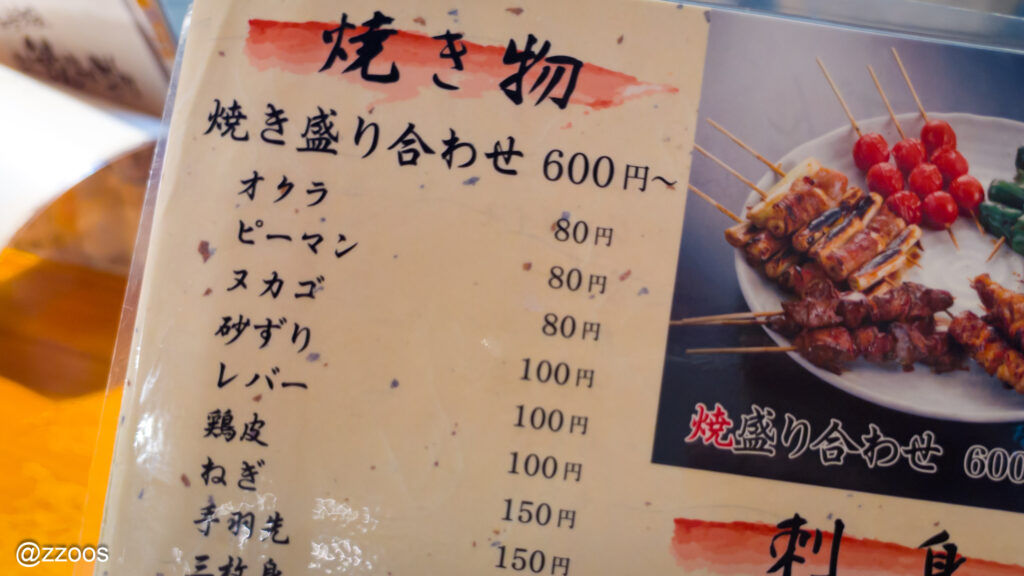
After ordering my drink, I took my time going through the food menu.
Okra, green pepper, and nukako (small Pacific saury) skewers were 80 yen.
Same price as eight years ago.
Below that, gizzards, liver, and chicken skin were 100 yen.
This place is truly inexpensive.
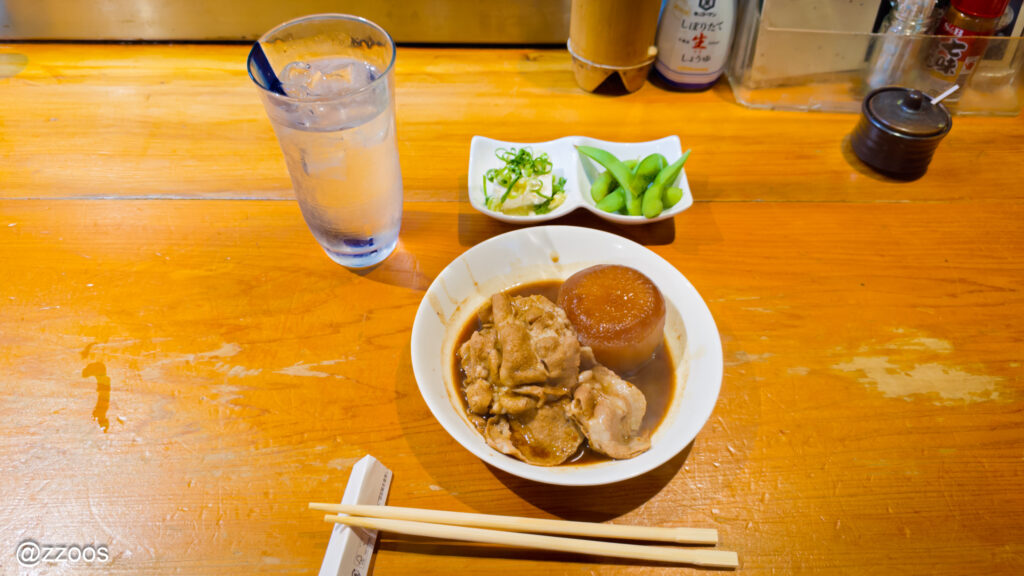
But the reason I came today was this.
The kurobuta loin oden.
Bunke Mujaki is known for its kuromiso oden — literally “black miso,” because the broth uses a dark, rich miso.
Oden in Japan is a little different from what we imagine in Korea.
I’ll explain it more another time,
but simply put, anything simmered together in a shared broth can be called oden.
So once the kurobuta loin is simmered in the oden broth, it naturally becomes “kurobuta loin oden.”
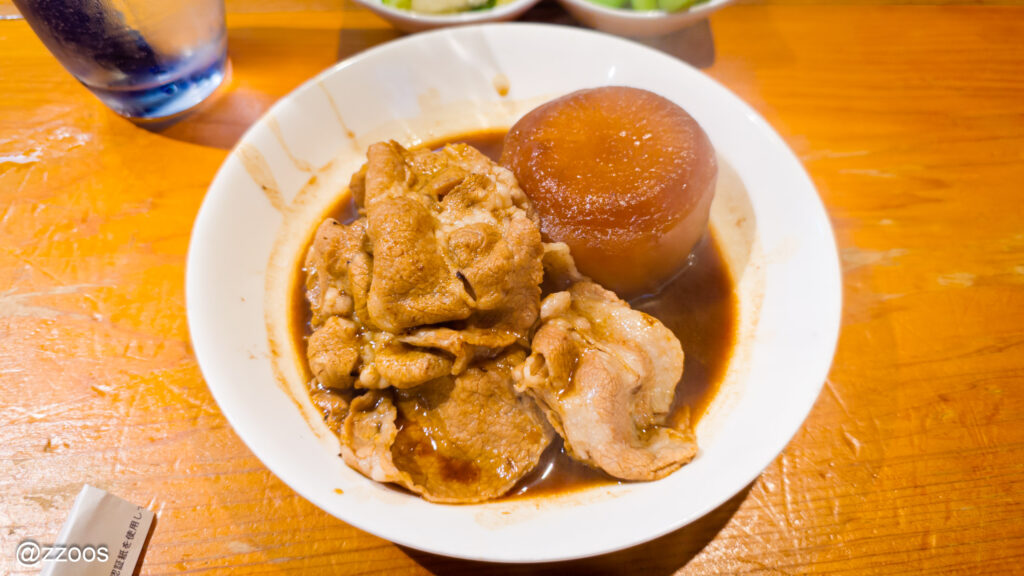
I ordered one daikon and two slices of kurobuta loin oden.
I had missed this so much.
The first time I ate it, it was this dish that made me fall in love with kurobuta.
Soft, savory, and rich — melding beautifully with the salty broth.
It was truly something special.
But maybe memories get too shiny over time.
It didn’t taste exactly like the legendary version in my head.
Of course, it was still delicious.
That’s the truth.
But it wasn’t the same overwhelming brilliance I remembered.
It felt a bit like meeting your first love again and realizing the memory had been exaggerated.
Again, it was very good.
I can absolutely recommend it.
It’s just that my memory had been overly romanticized.
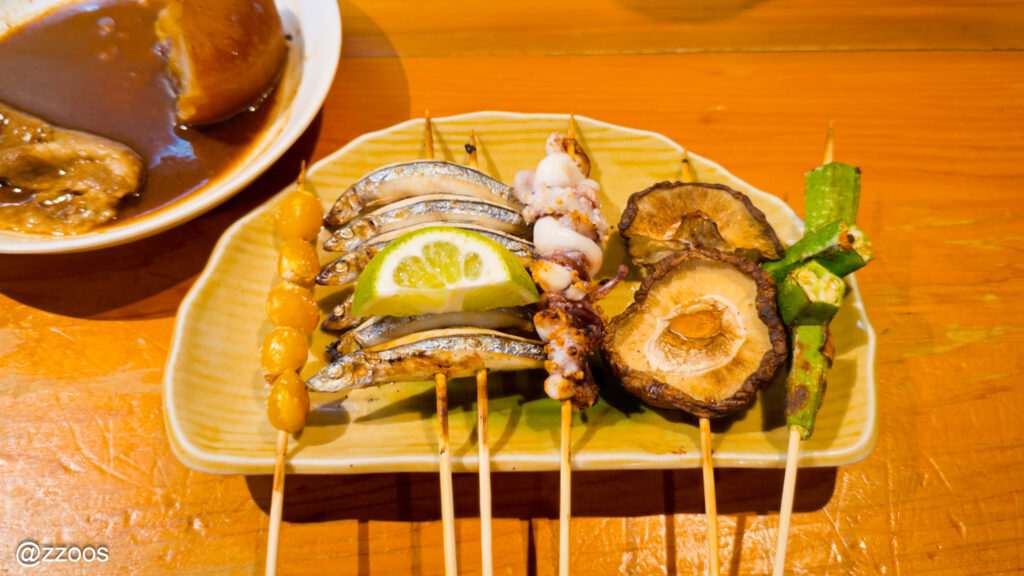
Next, I ordered some of the inexpensive skewers.
Ginkgo, kibinago, squid, shiitake, okra.
Most of them were quite strongly seasoned, perfect with drinks.
Especially the kibinago — the little fish was incredibly flavorful.
How does something that tiny carry the richness of a blue-backed fish?
No wonder it’s considered one of Kagoshima’s signature tastes.
After finishing these, I decided to wrap up.
It was my last night of the trip.
I had one more drink to go before calling it a night.

Leave a Reply