I’m not really the type of traveler who rides things like cable cars.
It always feels like something for middle-aged tourists,
a very obvious travel course.
My style has always been to make my own route
and walk wherever I feel like walking.
Well, to be fair,
I am already a middle-aged man.
I heard that the Mokpo Marine Cable Car
is the longest cable car in Korea.
And it’s not a straight line,
but a route that bends at a right angle.
I was curious what it would feel like
to cross the sea by cable car.
I had also never been to Goha Island(Gohado),
the island right in front of Mokpo.
For all those reasons,
I decided to give the cable car a try this time.
I didn’t have high expectations.
If I want to complain about something,
I should at least try it once.
With that half-doubtful feeling,
I headed to the Bukhang cable car station.
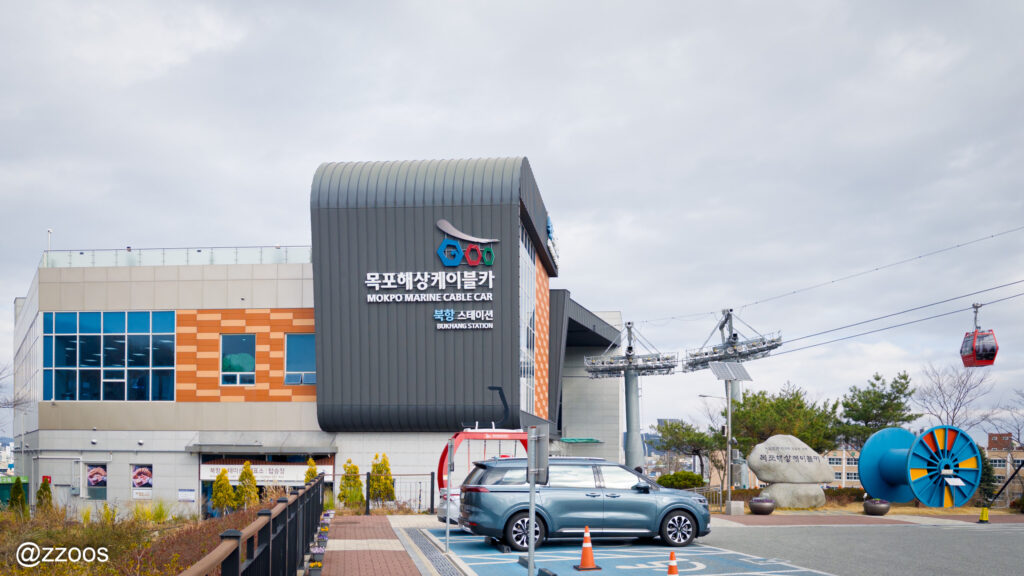
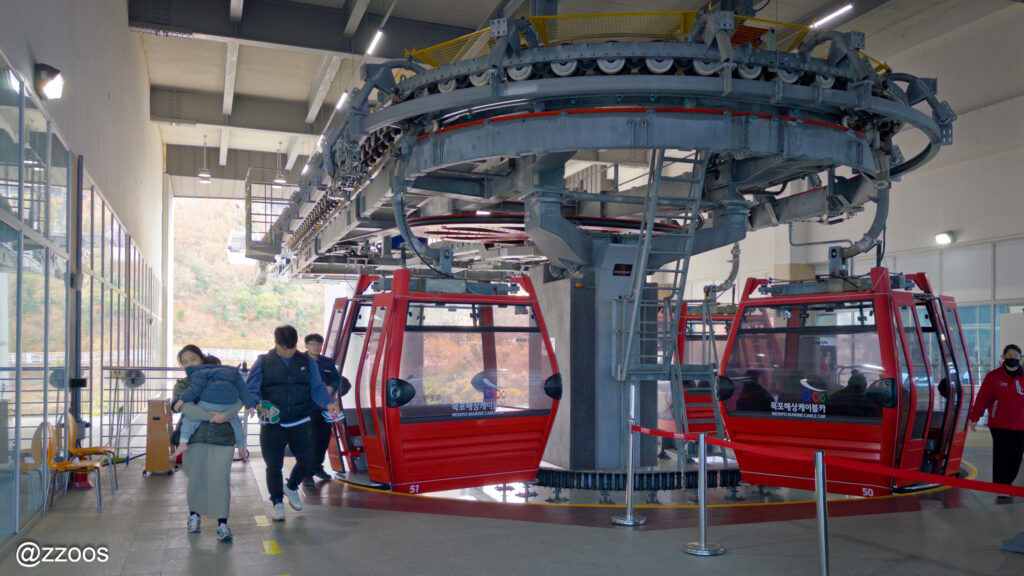
By the way,
the Mokpo Marine Cable Car has three stations:
Bukhang, Yudalsan, and Gohado.
No matter where you get on,
you eventually come back to the same place.
The route keeps looping:
Bukhang → Gohado → Yudalsan → Bukhang.
The Yudalsan station is on a mountain,
so some hiking is required.
It didn’t feel like a good starting point.
The Gohado station is connected by a bridge,
but it’s still an island across the sea,
so that also didn’t feel ideal as a starting point.
So I planned a route like this:
start at Bukhang,
go to Gohado,
stop by Yudalsan,
and return to Bukhang.
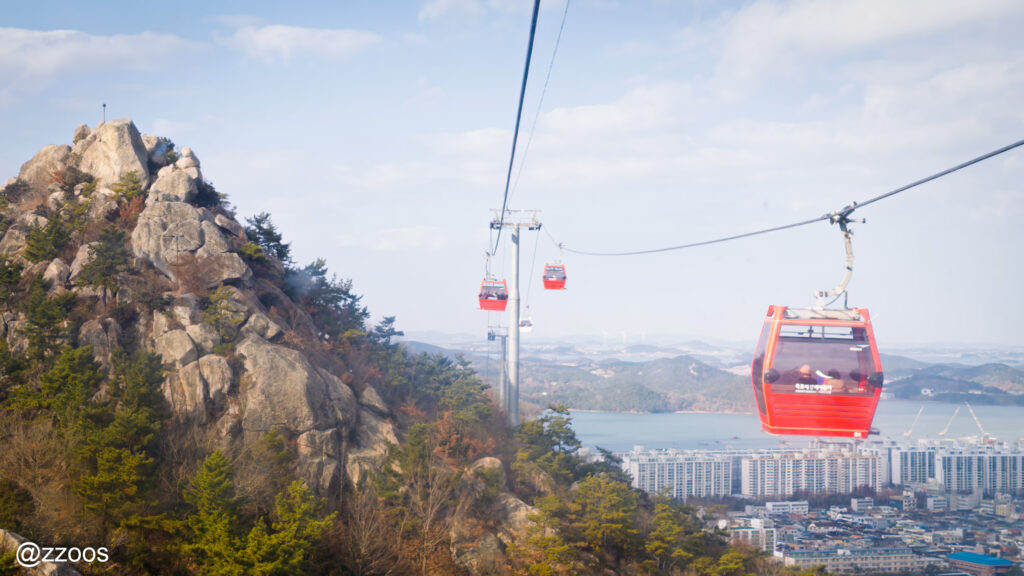
It seemed like most people followed the same route.
That’s probably why Bukhang station was the busiest.
Since it was winter,
I felt there were fewer people than usual.
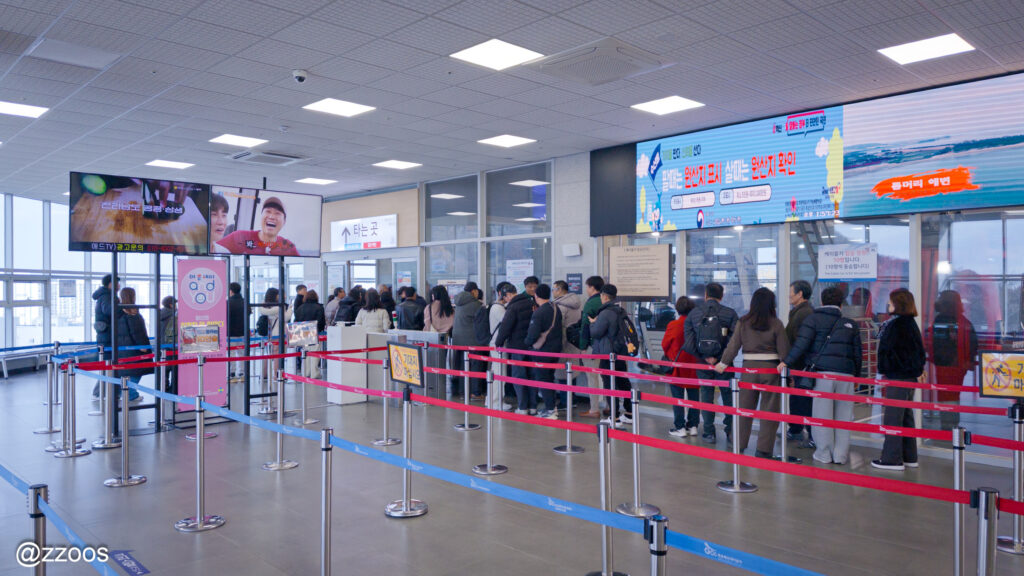
I didn’t have to wait at all to buy a round-trip ticket.
There was a line to board,
but it moved quickly,
so the wait wasn’t long.
There are two types of cable cars:
regular ones with solid floors
and ones with transparent floors.
The transparent ones are more expensive
and have a separate line.
The line is shorter,
but there are fewer transparent cars in operation.
Because of that,
the line actually moves more slowly.
So I didn’t feel there was any need
to buy a transparent-floor ticket just to get on faster.
The number of cars felt roughly like a 2:1 ratio.
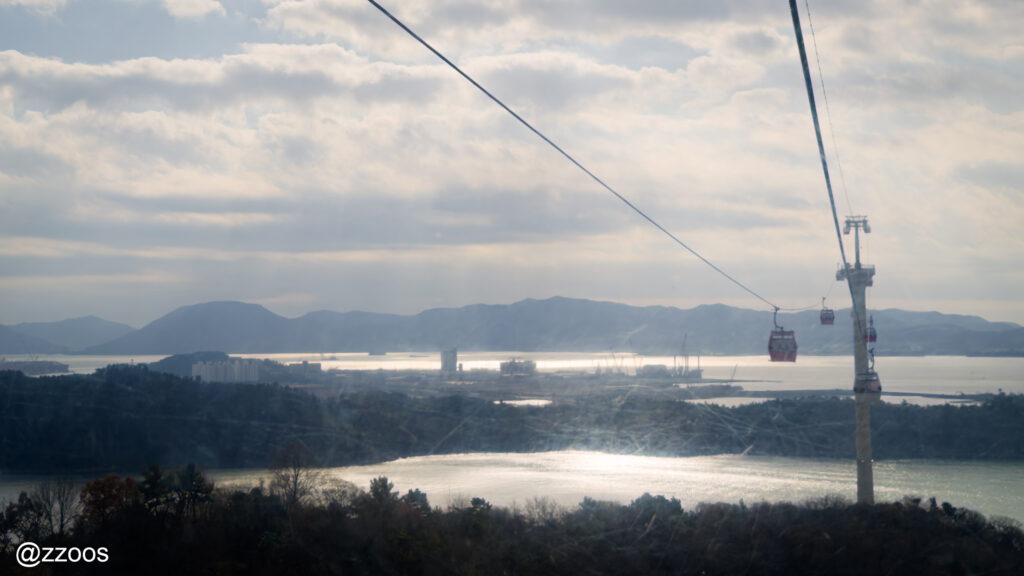
I’ve ridden cable cars before,
but it’s not something I’m used to,
so I felt a little nervous.
I was traveling alone,
but they didn’t let me ride alone.
I ended up sharing the cabin with a young couple.
I felt like an uninvited guest,
but I still held up my phone
and kept taking photos and videos.
The glass wasn’t very clean,
so the image quality isn’t great.
Still, I wanted to share the atmosphere.
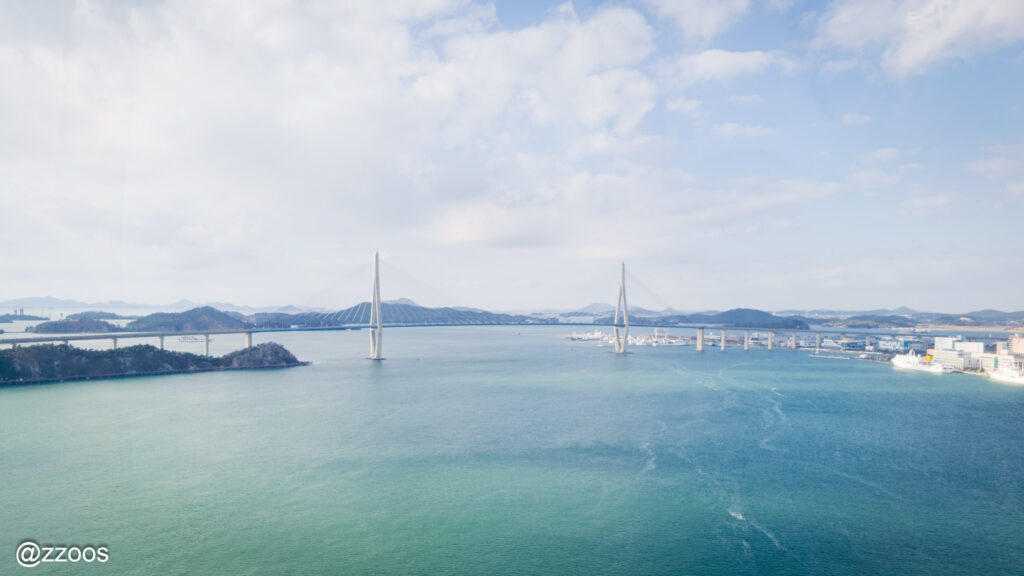
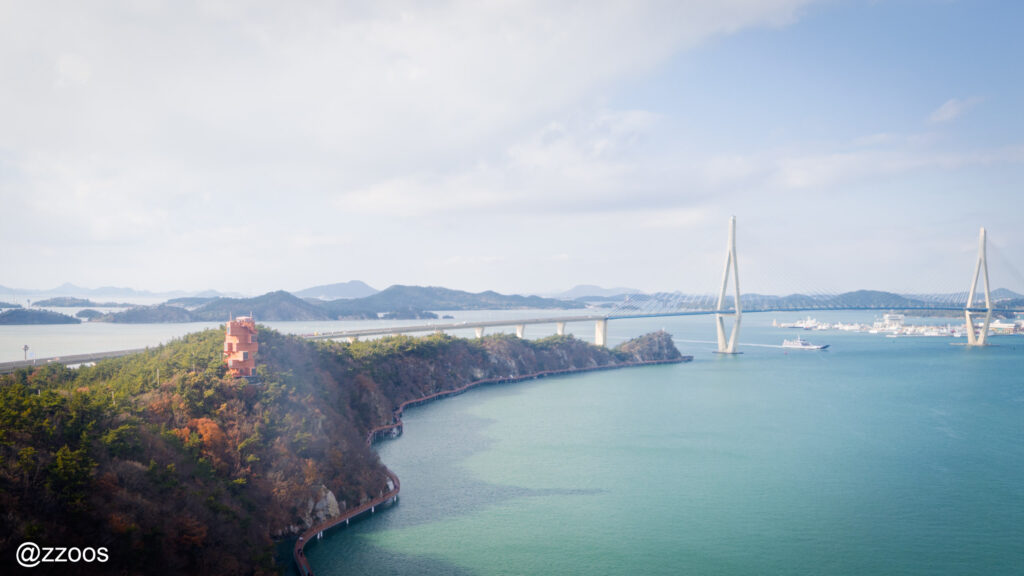
The cable car leaves Bukhang
and goes to the Yudalsan station.
You can’t get off there.
It loops around the station
and then continues on to Gohado.
That’s why the entire route forms an L shape.
The section from Yudalsan to Gohado
is where the cable car crosses the sea.
It may not sound like much,
but it was surprisingly thrilling
and felt really nice.
There’s the unfamiliar tension of riding a cable car,
and on top of that,
the novelty of crossing the sea.
Even though I was an uninvited guest
in a stranger’s cabin,
my mood gradually improved.
I started to understand
why cable cars are so popular with travelers.
It took about 15 minutes
from Bukhang to Goha Island.
It felt much longer than I expected.
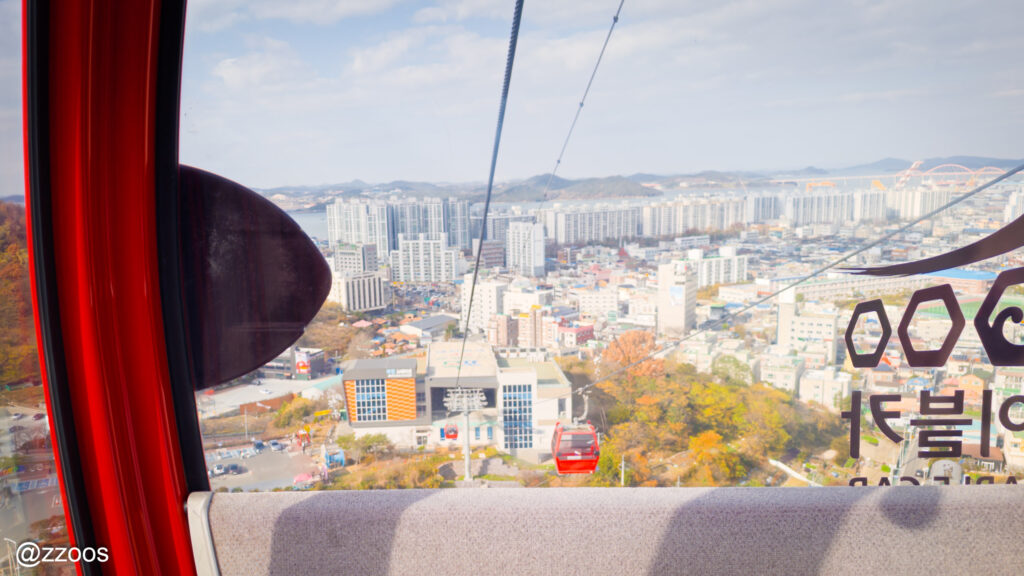
The scenery from the cable car is quite impressive.
The section over the sea
was far better than I had imagined.
I thought I would say,
“Well, that was nothing special. I won’t ride it again.”
But honestly,
I think I would ride it again if I get the chance.
Next time,
it might be nice to ride after sunset
and see the night view.
You can get off at Goha Island
and immediately take the cable car back,
but I decided to walk around the island for a bit.
From the cable car,
I noticed a coastal deck
built all the way around Goha Island.
If that’s the case,
it only makes sense
to walk along the deck
and feel the sea up close.
I’ll talk about Goha Island
in the next post.

Leave a Reply