When I chose Mokpo as the destination for this trip,
one of the very first things I did
was search whether there were any sushi restaurants in the city.
I am not someone who loves sushi that much,
but for some reason, this time I was curious.
What would sushi feel like
in a coastal city in Korea?
I remember having very good sushi in Jeju before.
The technique was solid,
the flavors were clean,
and I liked that they used local fish
such as hairtail, tilefish, and mackerel.
So naturally, I began to wonder.
What about Mokpo?
Before thinking about the taste,
another thought came to mind first.
Does Mokpo even have a proper sushi restaurant?
I assumed there would be conveyor-belt sushi or casual chain places.
But a restaurant with a higher level of service,
using good ingredients and taking sushi seriously,
might not exist in a city of this size.
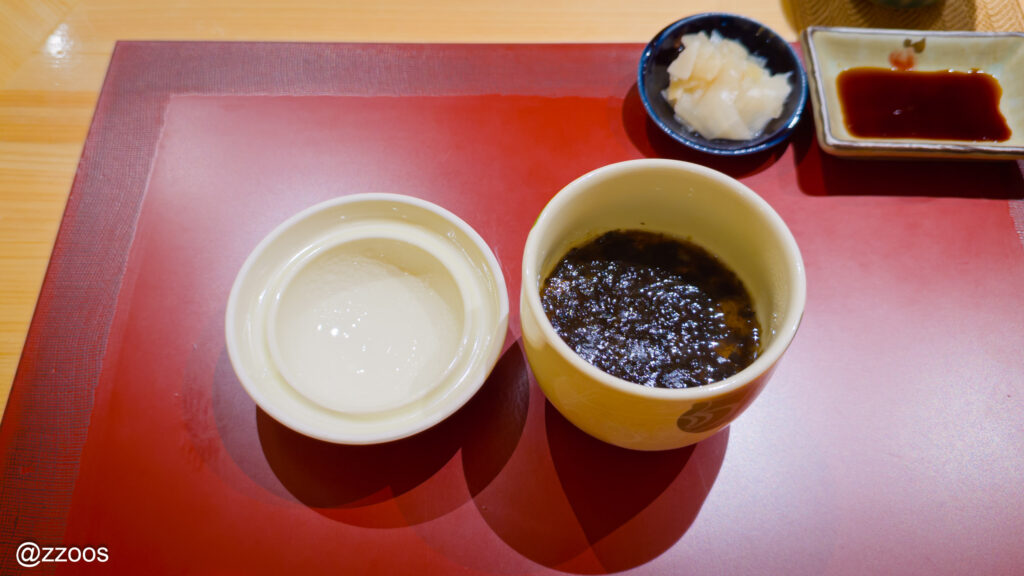
The flavor and aroma of the seaweed are distinctive, but with no other ingredients, it feels a bit plain.
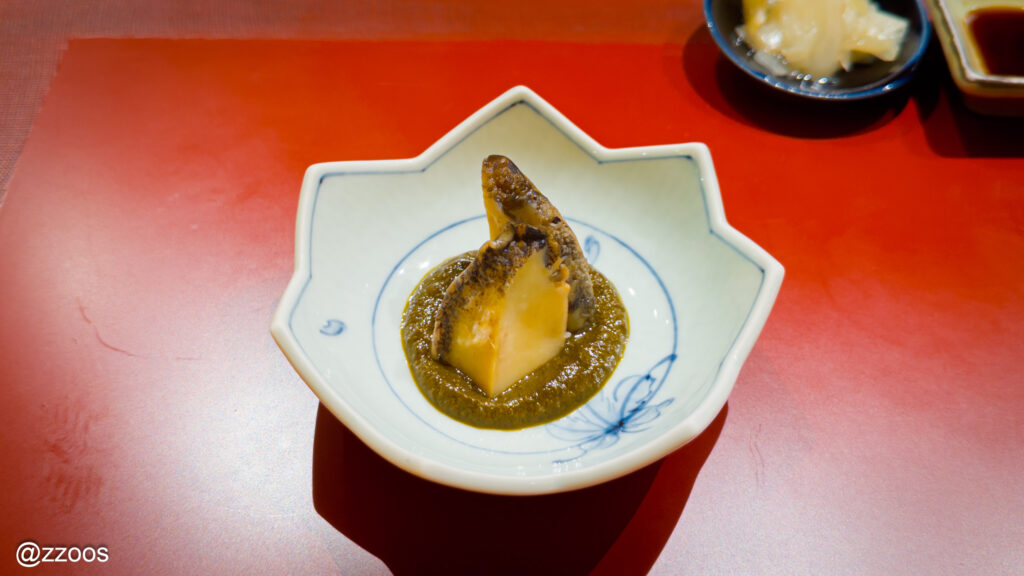
Well-cooked abalone on top of a salty liver sauce.
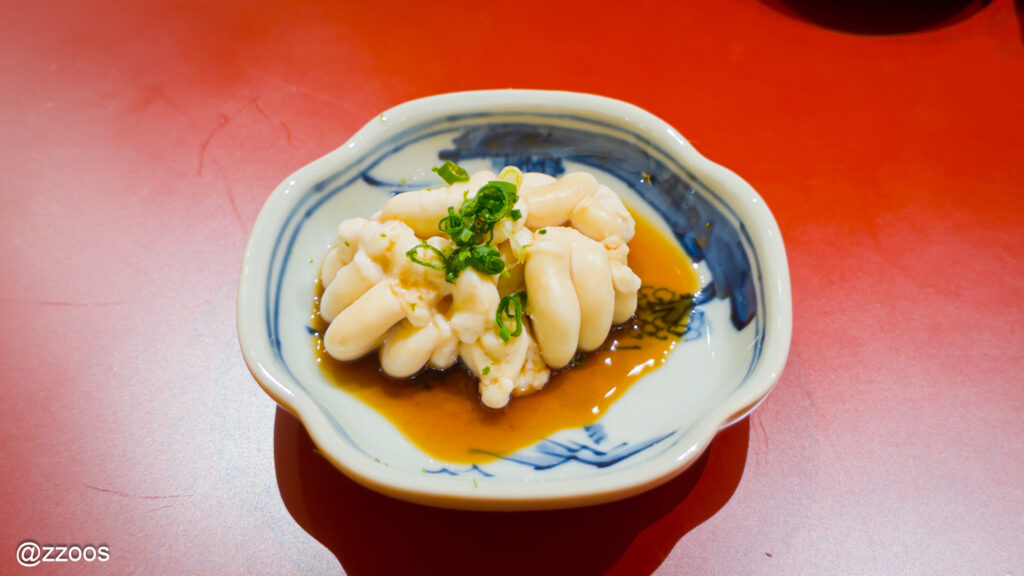
The sudachi was hardly noticeable, but the freshness of the shiroko was outstanding.
I did some searching before the trip.
It seemed that there were about two proper sushi restaurants in Mokpo.
One was in the old downtown area,
and the other was in the newer Hadang district.
So on the first day after arriving in Mokpo,
I went out for sushi in the evening.
Luckily, perhaps because it was a weekday,
there was one open seat,
and I was able to make a same-day reservation.
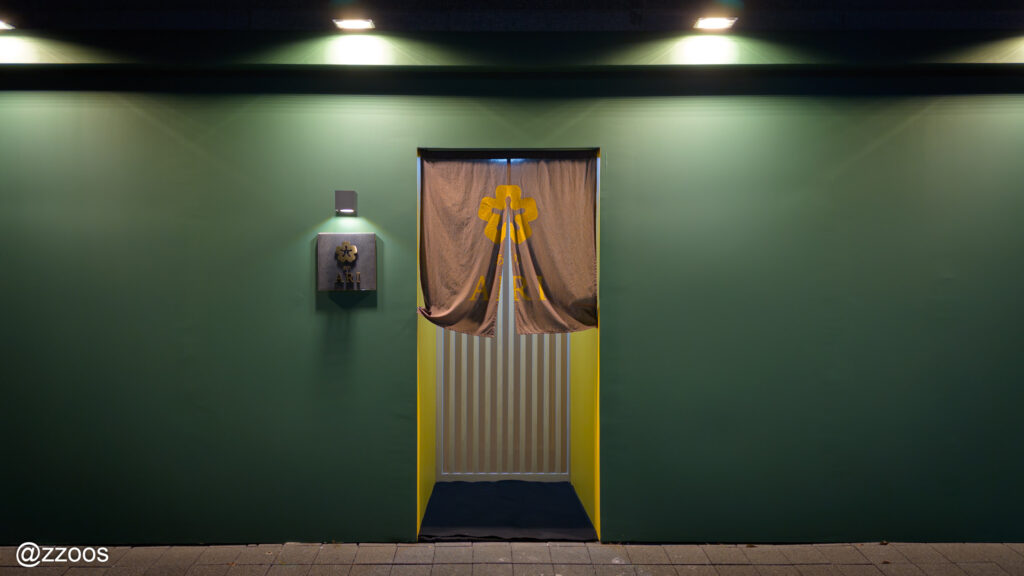
The place I visited was Sushi Ari,
located at the eastern edge of Pyeonghwa Square.
It had only been open for about a month,
so it was not even marked on the map yet.
The address is here.
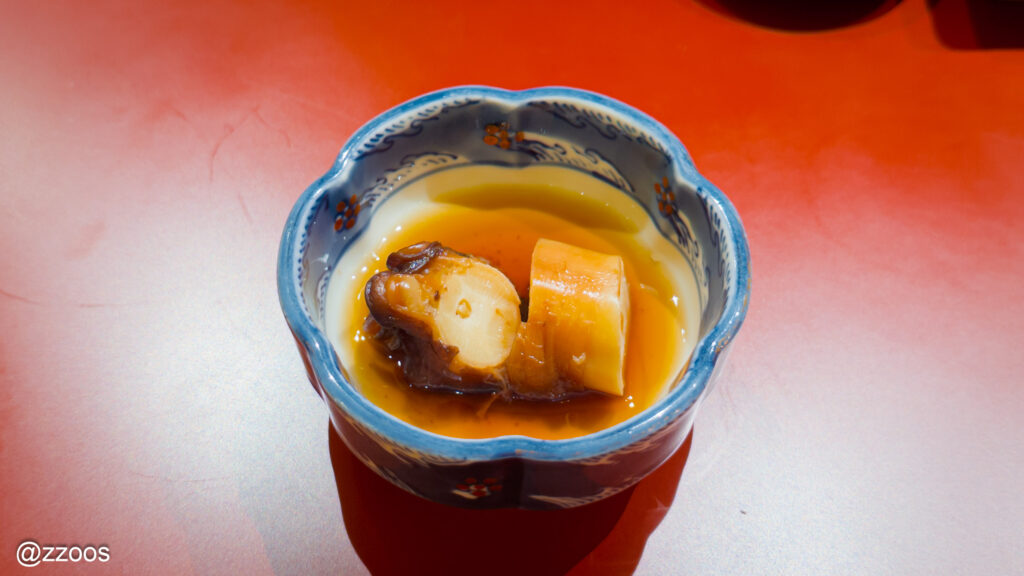
Even though it was simmered thoroughly, the chewy texture was still alive.
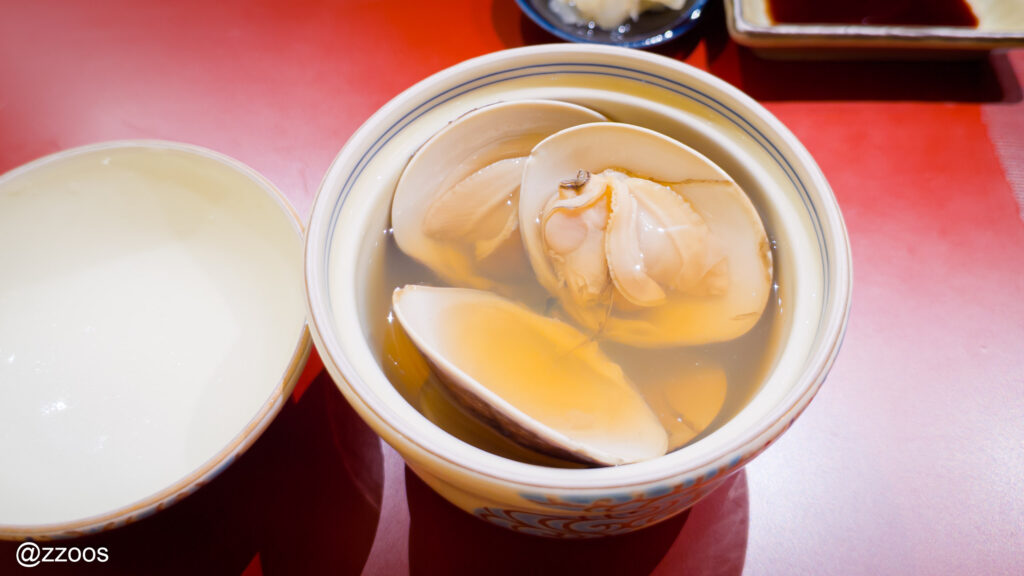
The umami of the katsuobushi overpowered the refreshing flavor of the clam, which was a bit disappointing.
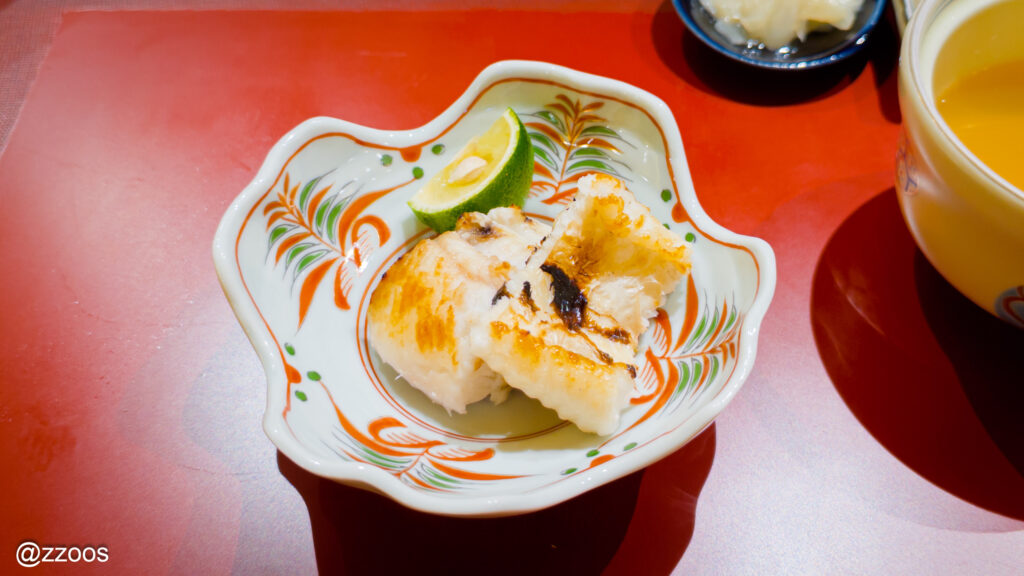
Lightly grilled, with moist flesh and a pale interior.
| I missed taking a photo of one tsumami dish. It was ankimo(monkfish liver), honmaguro(bluefin tuna) kamatoro(fatty collar), and buri(yellowtail) kama(collar). The soft texture and freshness of the ankimo were excellent, and as for the kamatoro and yellowtail collar, there is really nothing more to say. |
The course consisted of 7 tsumami dishes and 11 pieces of sushi,
along with soup, service dishes, and dessert.
In total, 21 items.
It was not a short course.
With about two and a half hours until the next reservation,
the timing worked out almost perfectly.
I only managed to drink about half of the bottle of Japanese sake I ordered,
but I had not intended to finish it anyway.

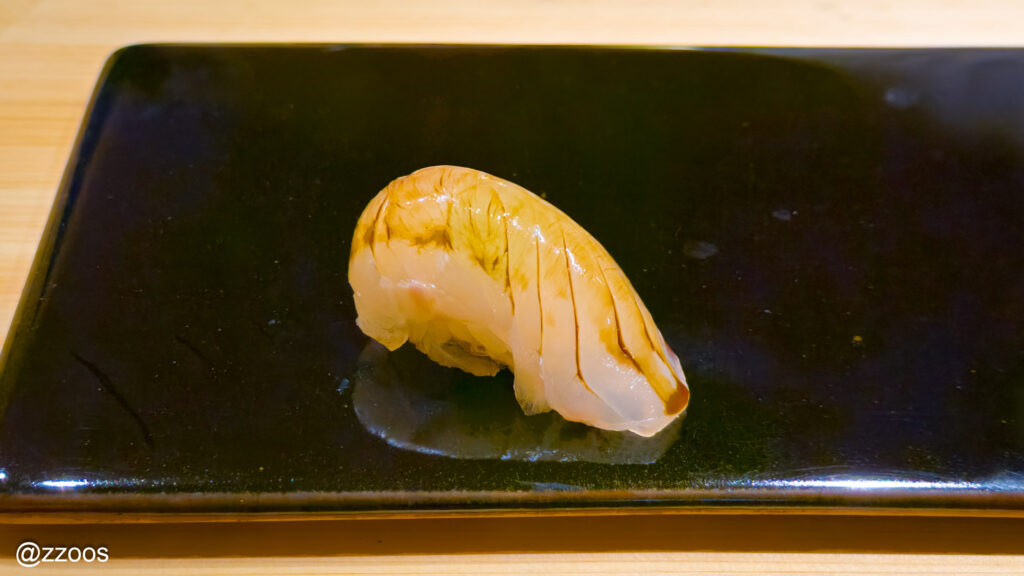
The strong soy sauce aroma gives it a distinctly Korean feeling.
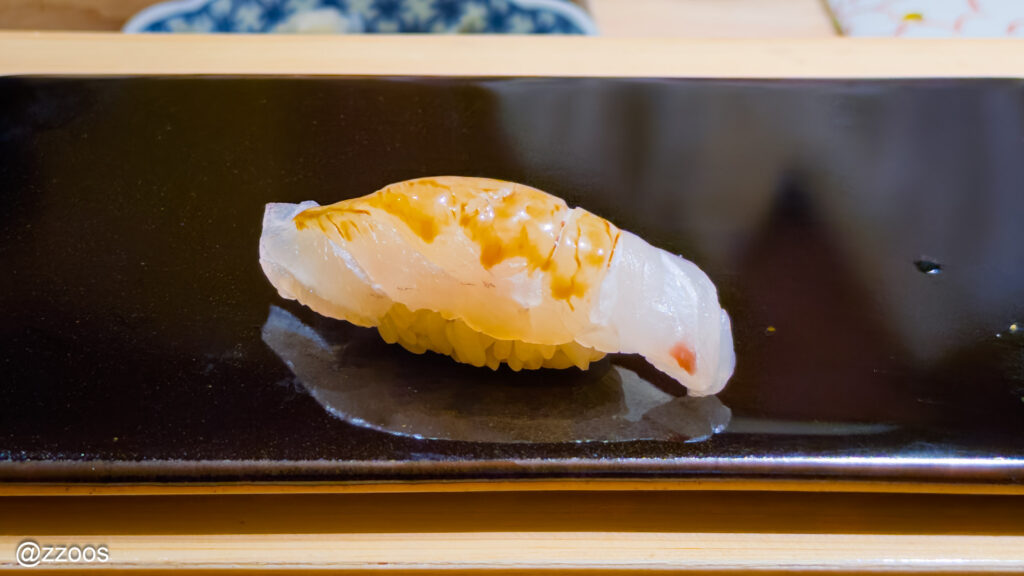
A neta you can try because this is Mokpo.
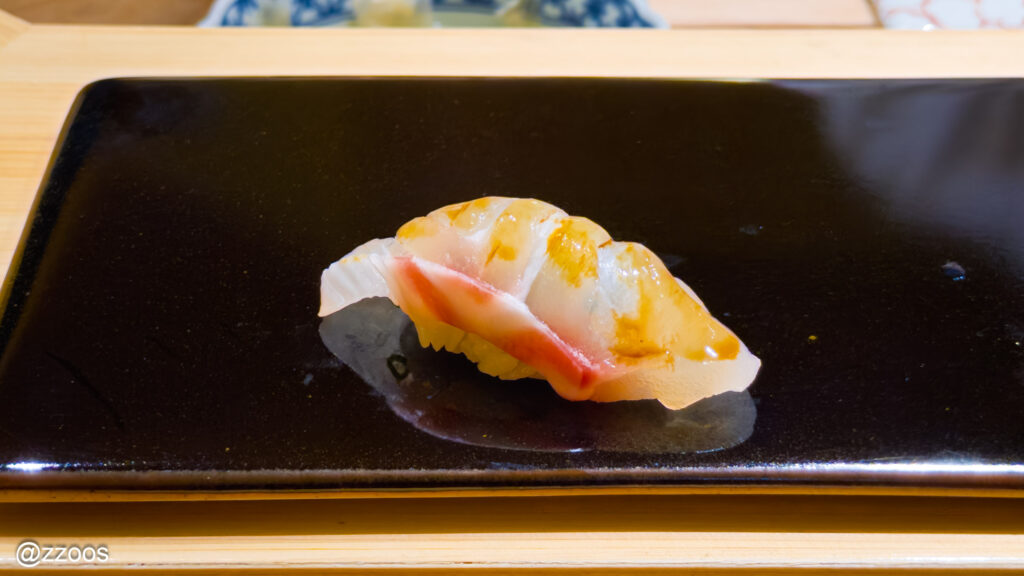
It feels like they are using good-quality fish.
Overall, the food was delicious.
How should I put it -
it felt like a place with real “hand taste.”
But that hand taste was openly Korean.
It was clearly a Japanesse sushi restaurant,
yet the flavor nuances felt Korean.
Rather than the clean and restrained feeling
of a Japanese sushi bar,
it reminded me of the side dishes
at a good soup restaurant in Jeolla-do.
It was a very unique experience.
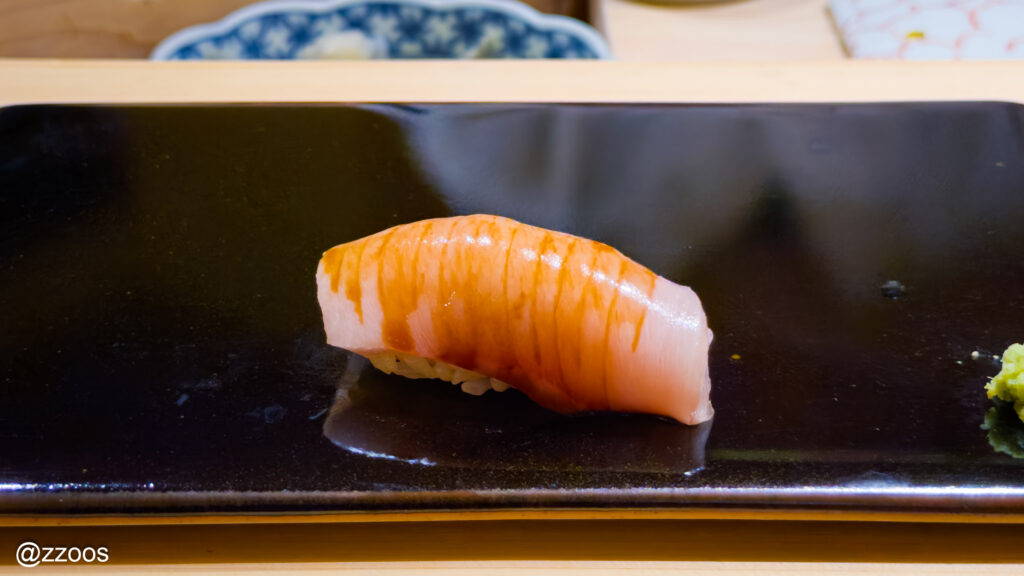
Since the shari is fairly strongly seasoned, it pairs better with oily blue-backed fish.
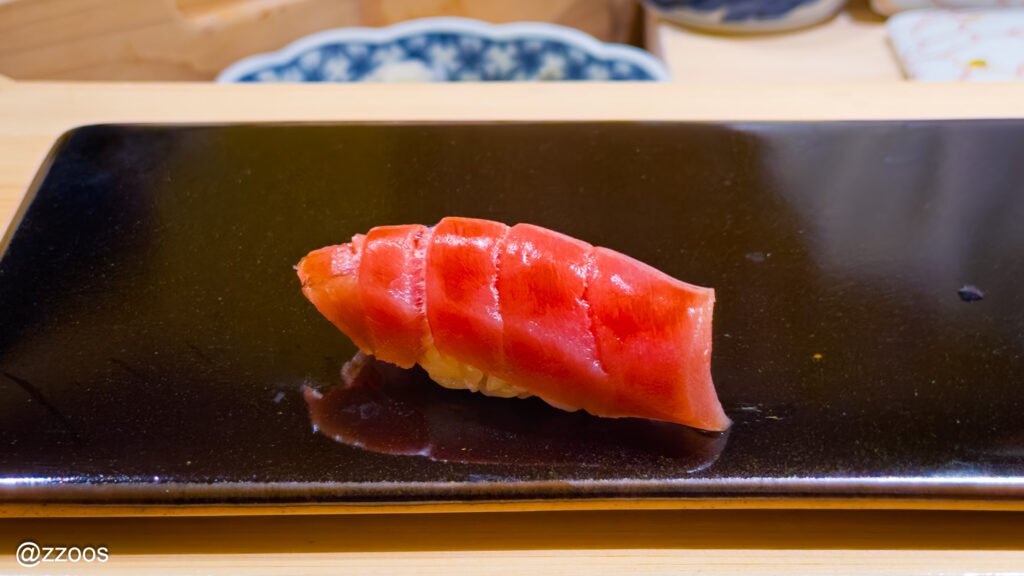
A piece where the shari and neta matched perfectly.
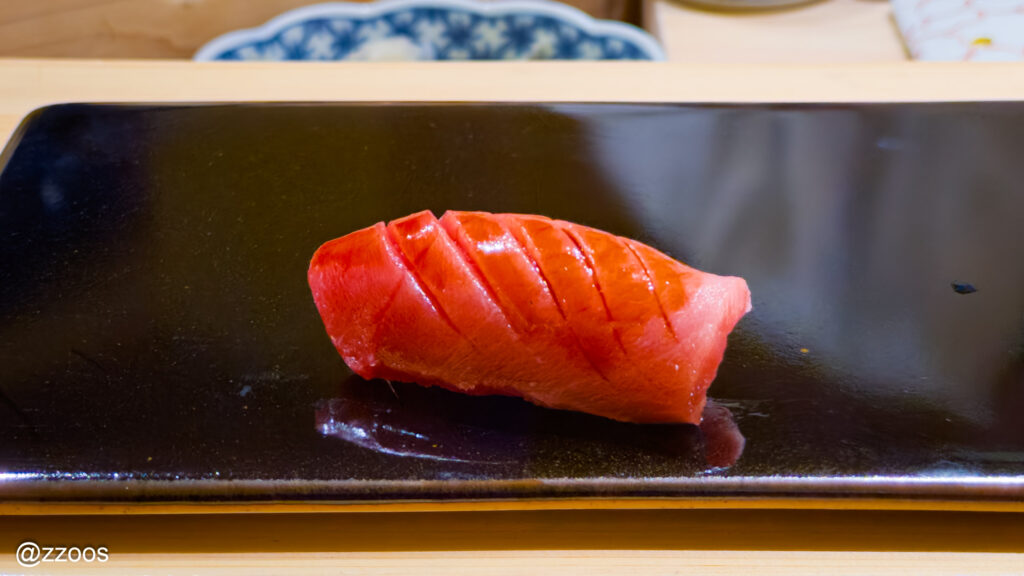
It seemed they were using good tuna as well.
As expected from a sushi restaurant in a coastal city,
the quality of the ingredients was generally high.
The tuna, in particular, stood out,
and the scallop was surprisingly good.
The mackerel was very clean, too.
It was my first time trying sushi made with nibe.
It was not especially memorable in taste,
but the attempt itself was interesting.
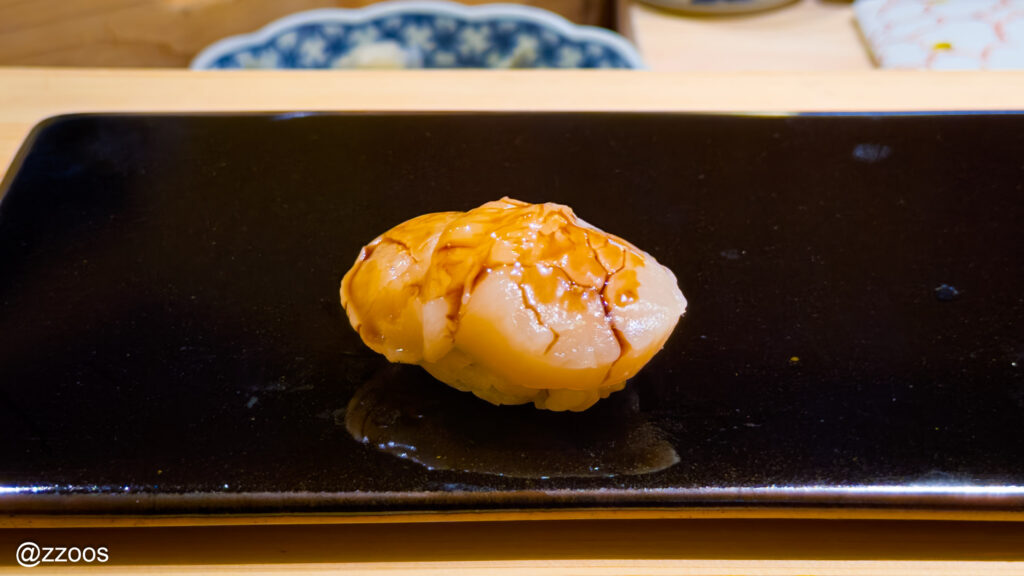
One of the most memorable scallops I have had.
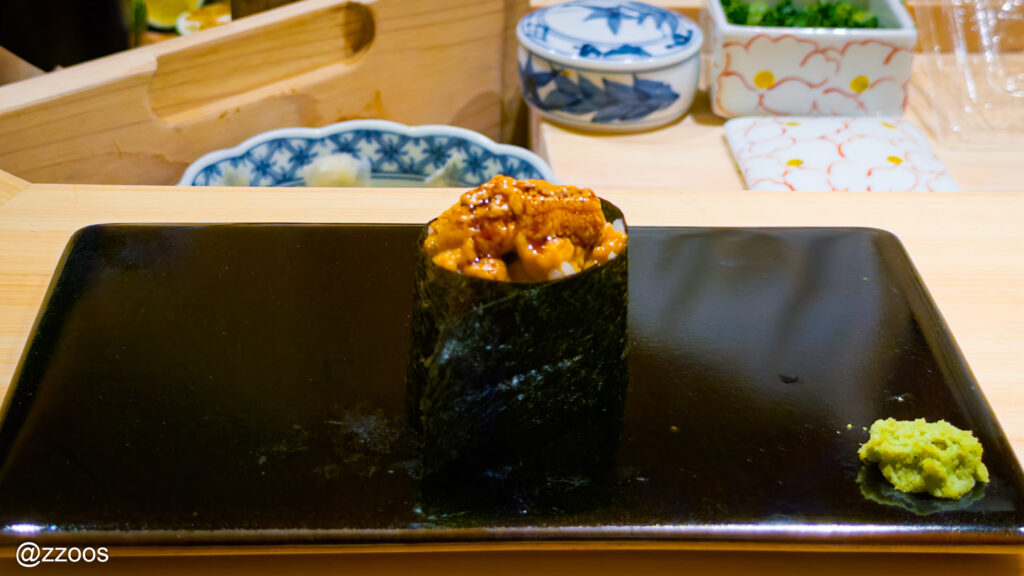
The soy sauce aroma overpowered the uni, which was unfortunate.
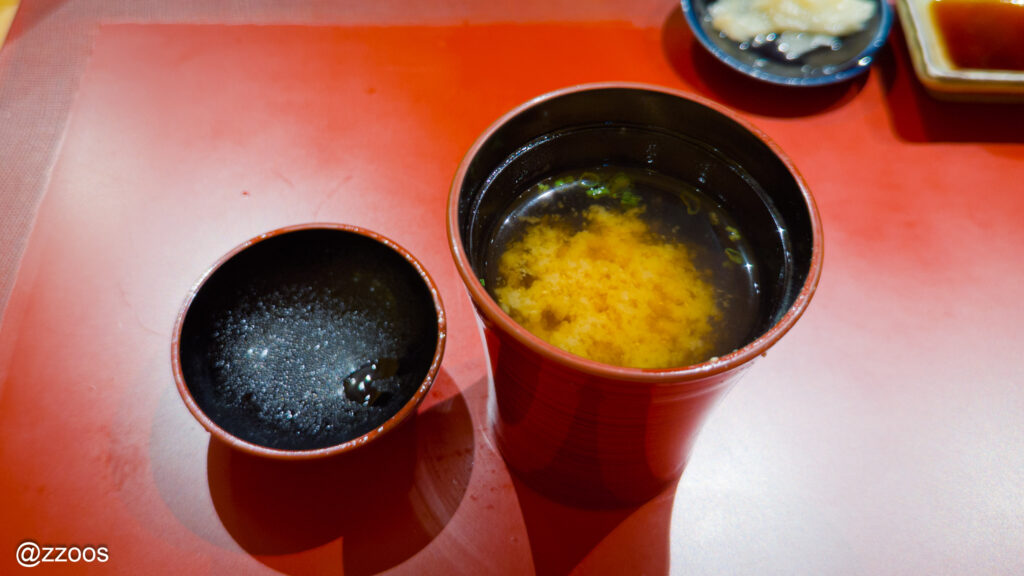
Another distinctive point
was that both anago and unagi
were included in the course.
The unagi, in particular, surprised me.
It was a very large piece of glazed eel,
served as a maki roll.
According to the chef,
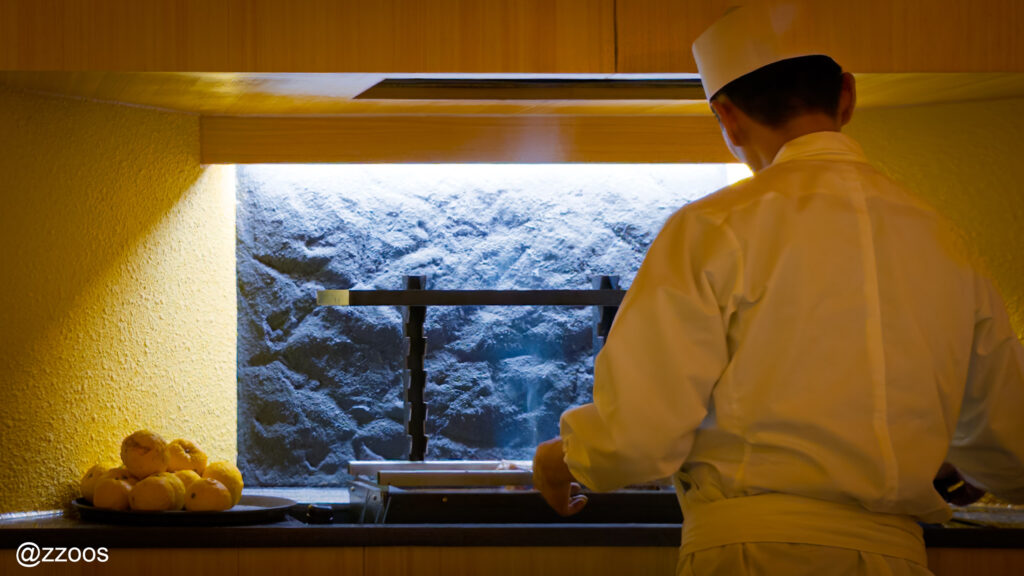
they pay special attention to grilled dishes.
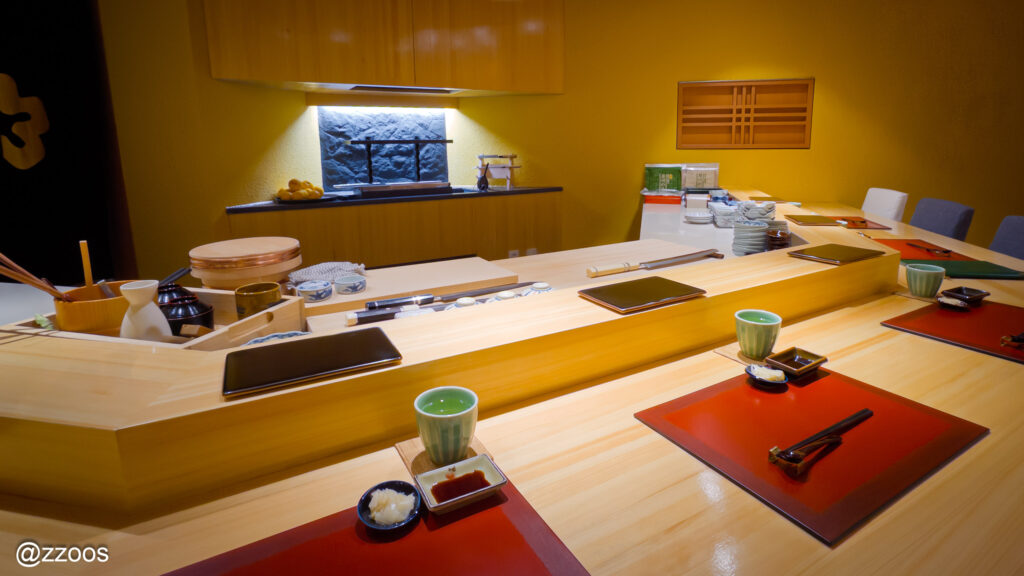
That is why the brazier
was placed prominently in the center of the restaurant.
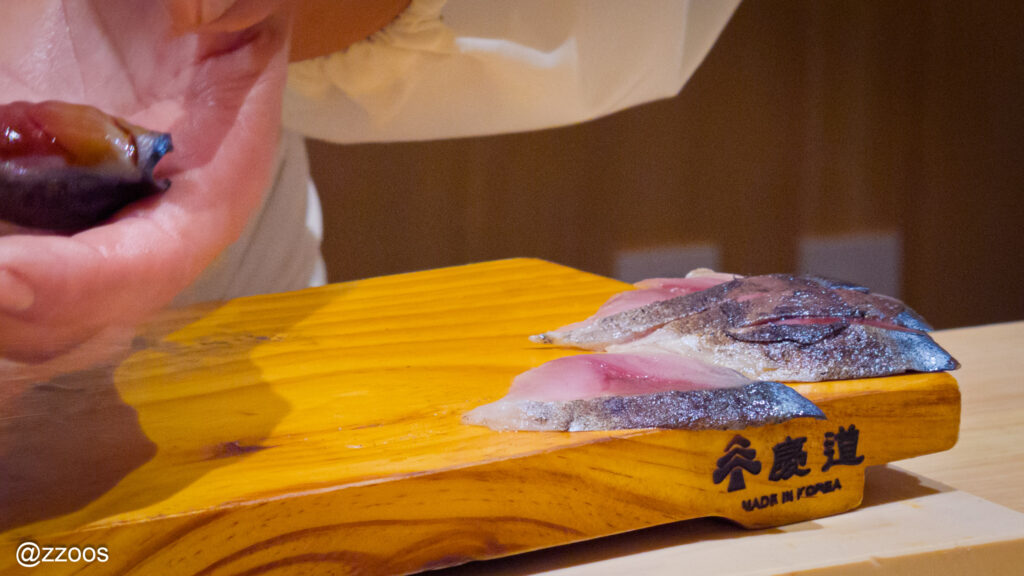
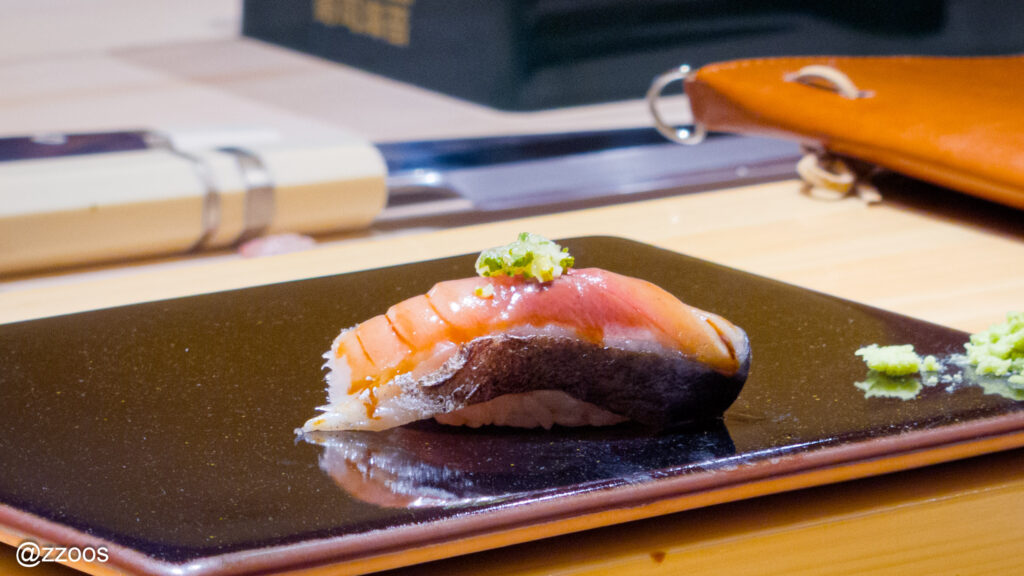
With the strong seasoning of the shari, this restaurant really shines when the neta is bold.
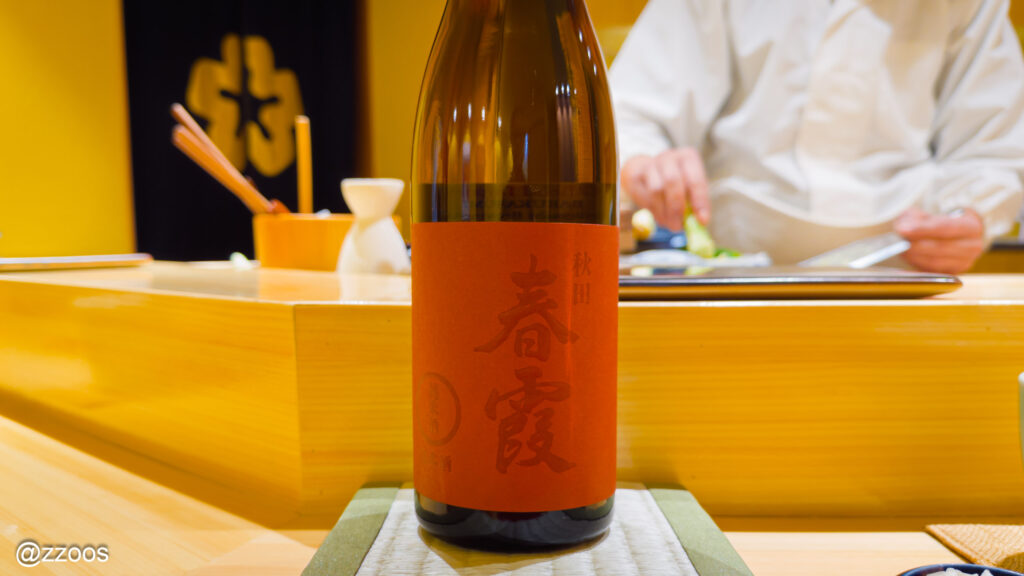
I was disappointed that I could not find the vibrant brightness I remembered.
As a drink,
I ordered a bottle of Harukasumi Red Label,
which I had enjoyed greatly in the past.
It is a Japanese sake from Akita,
the same region as Aramasa,
and it is known to use the same no.6 yeast.
I had even heard that,
for the Red Label specifically,
Aramasa gave advice on the brewing process.
Because of that,
it once gave me a similar impression to Aramasa.
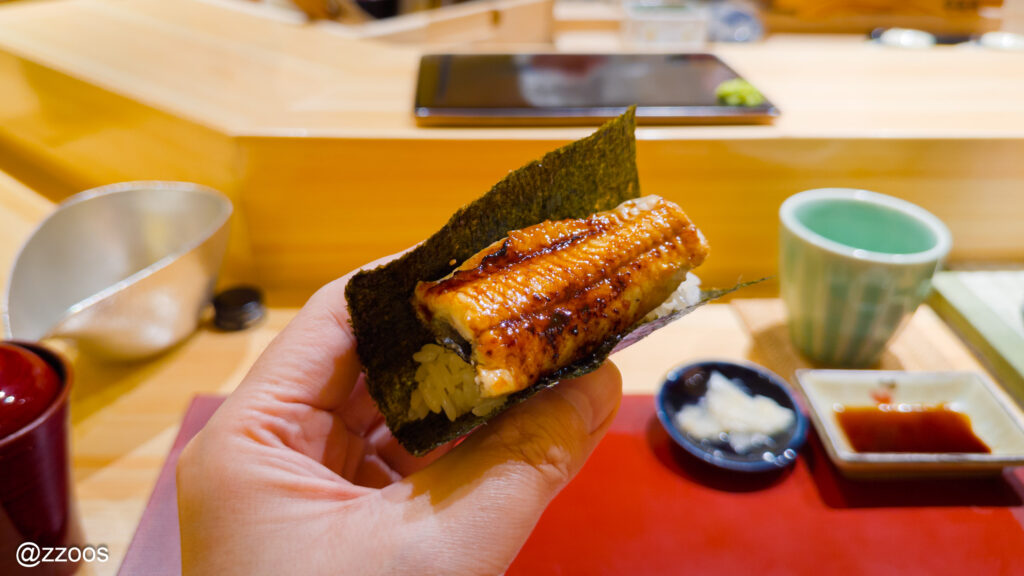
With glazed eel like this, no further explanation is needed.
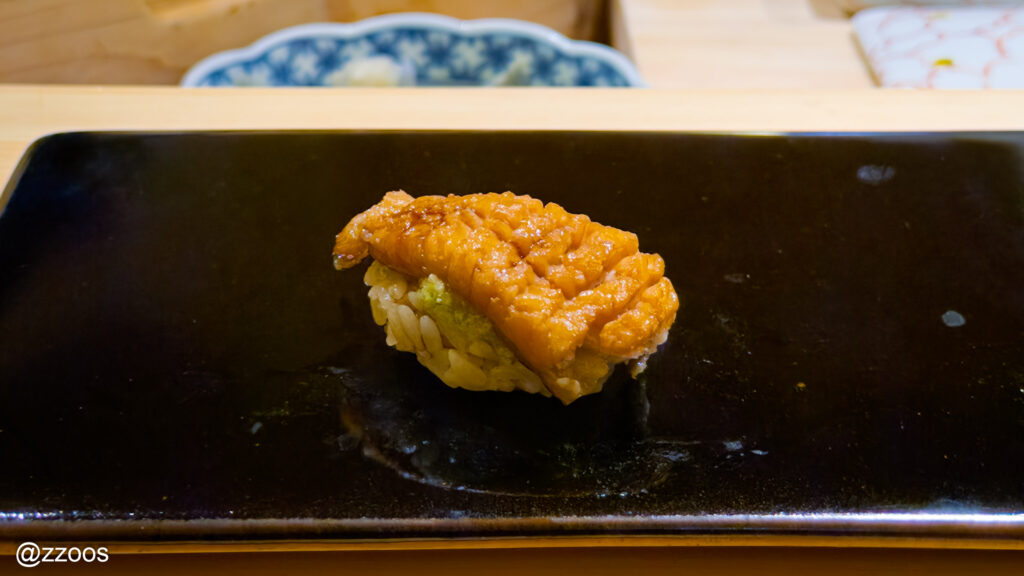
Soft and fluffy, seasoned deeply with soy sauce.
This time, however,
the experience was different.
I could not feel the same brightness as before.
When first opened,
the alcohol felt a bit sharp.
As time passed,
it gradually settled and became easier to drink,
but it never quite brought back
the impression I remembered.
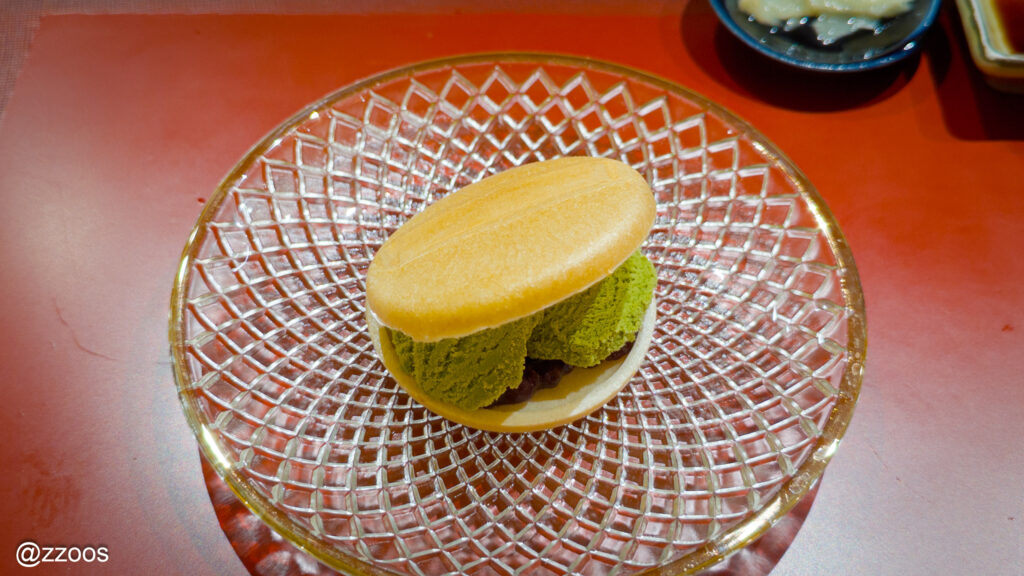
Overall, the food was delicious
and full of hand-crafted character.
That said,
the seasoning felt somewhat inconsistent.
At the time of my visit,
the restaurant had been open
for less than a month.
Given the quality of the ingredients
and the evident skill,
it feels like a place that will continue to improve.
Perhaps because they had run other businesses before,
the service was excellent.
In the end,
I finished my first meal in Mokpo
with what felt like “Mokpo-style” sushi.

Leave a Reply