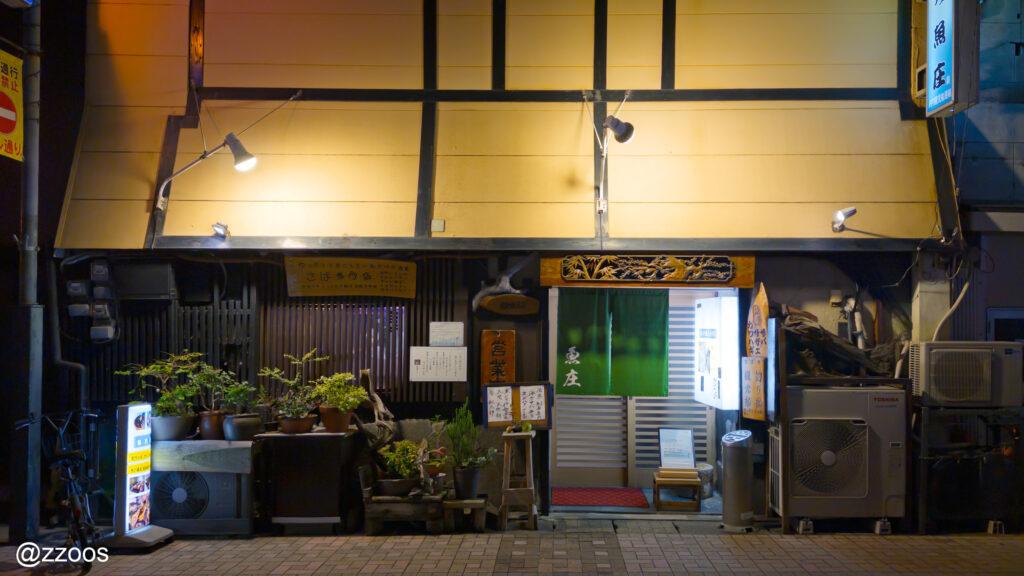
It was the first evening in Kagoshima.
I wondered what kind of place and what kind of meal would be good for dinner.
Of course, the main reason I came to Kagoshima was to eat Kurobuta(pork from Kagoshima black pigs) shabu-shabu.
But now it’s autumn, the season when fish get fattier.
Kagoshima is famous not only for beef, pork, and chicken but also for fresh seafood.
Strangely, in my previous trips to Kagoshima, I hardly ate fish.
Alright then – tonight is a fish night!
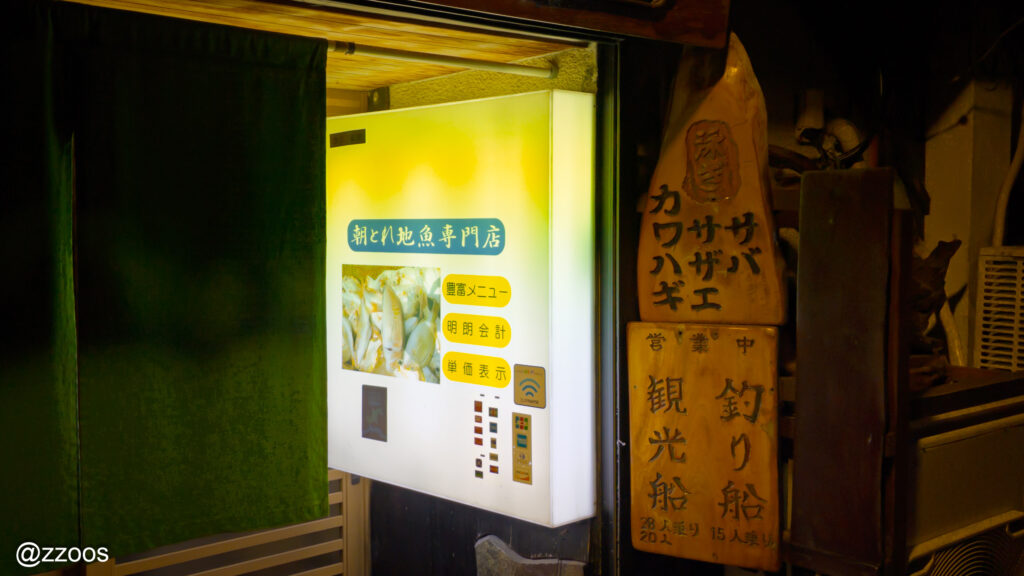
I searched on Tabelog and Google Maps — and even got some help from ChatGPT.
Finally, I chose about three restaurants.
All of them operate their own fishing boats and serve fish they catch themselves.
That means I could eat the freshest seasonal seafood.
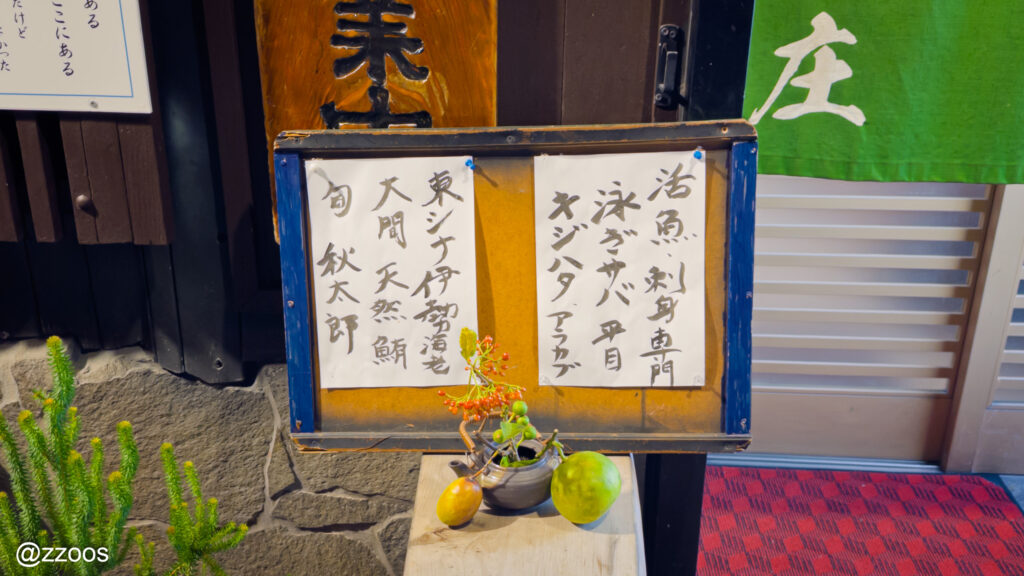
Among them, I picked one place.
I didn’t have a reservation, but luckily, there was exactly one seat left.
Lucky me!
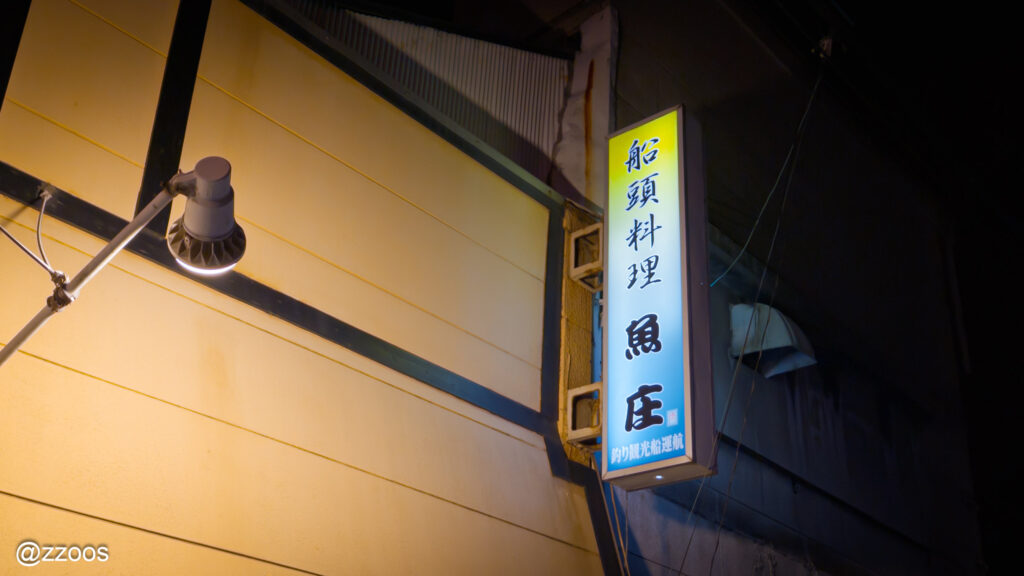
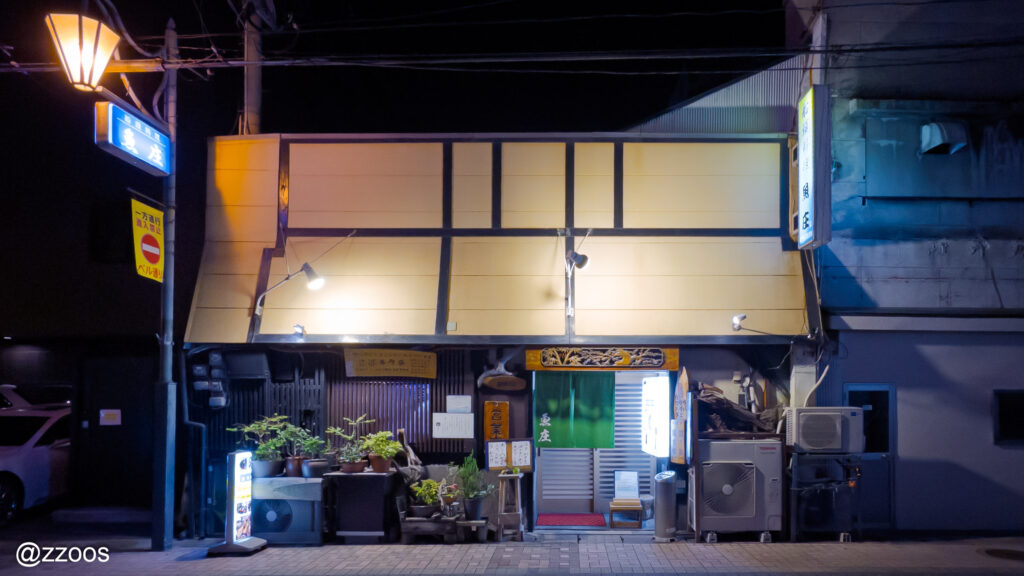
Sendoryori Uosho –
Sendō means “boat captain” in Japanese,
and sendō-ryōri refers to dishes made with fish caught directly from the boat.
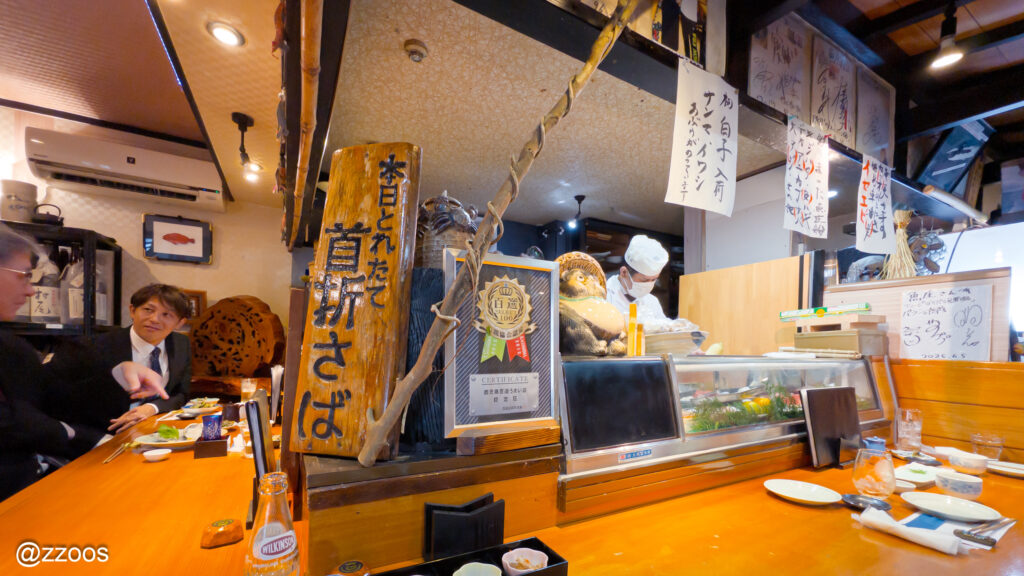
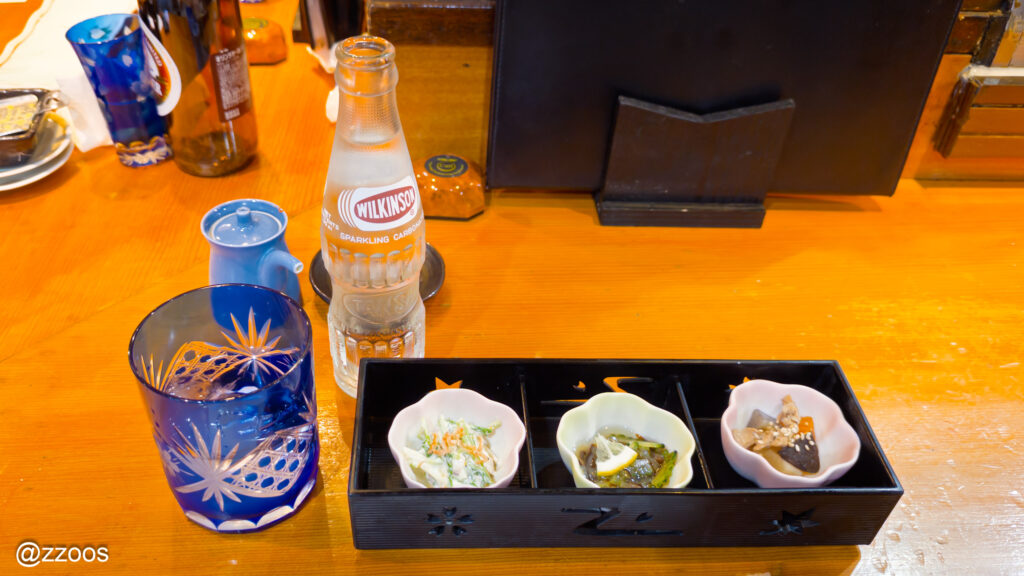
I asked the lady staff to recommend a shochu that would be good with soda water.
Her choice was Asahi.
It was clean but had a sharp sting – unique flavor.
By the way, even though I ordered a soda-mix, the shochu was served on the rocks,
and they brought me a bottle of Wilkinson soda to mix it myself.
The three otoshi(appetizers) were all delicious:
a salad with some strongly aromatic vegetables I couldn’t identify,
mozuku seaweed with goya,
and simmered mushrooms with hanpen fish cake.
If the otoshi is good, the kitchen is good – my expectations rose quickly.
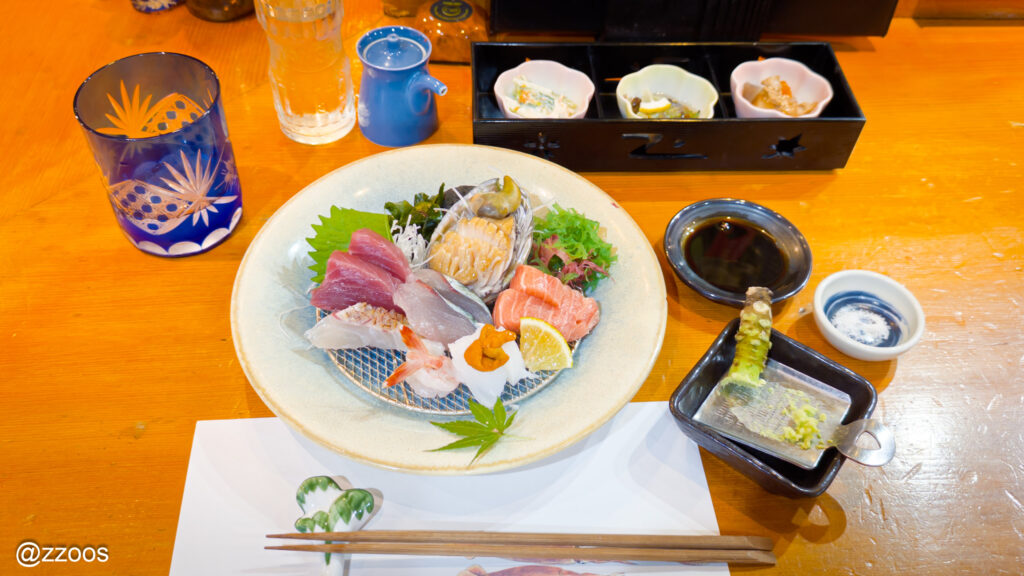
I came for fish, so of course I ordered sashimi:
Special Moriawase for One.
It included Akitaro(swordfish), Madai(sea bream), Taka-ebi(deep-sea shrimp), Mizuika(squid), Katsuo(skipjack tuna), Awabi(abalone), and Saba(mackerel).
All fresh and seasonal, caught in Kagoshima.
Akitaro is the Kagoshima dialect for mekajiki(swordfish).
It’s in season now, full of rich oil.
Because autumn(aki) is its best season, it’s called Akitaro – “autumn boy.”
In the photo it looks like salmon, but it isn’t.
It melts in the mouth like fatty tuna.
Such a cute name too – Akitaro.
Taka-ebi is a shrimp species not found in Korea,
a deep-sea shrimp also in season in autumn.
Firm texture, sweet flavor – really nice.
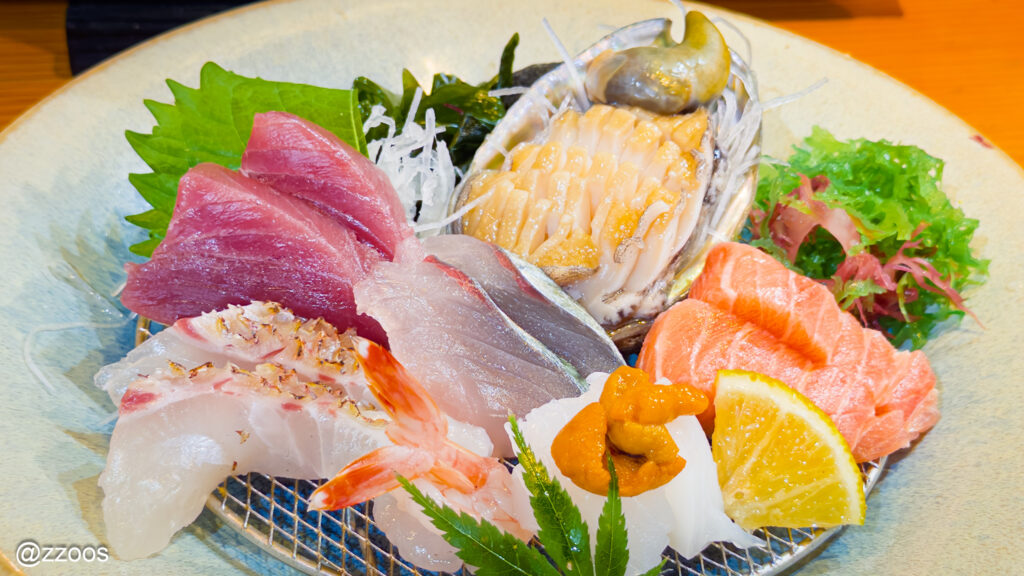
Katsuo and Saba are both famous in Kagoshima.
Makurazaki in Kagoshima Prefecture produces the largest amount of katsuo in Japan.
In the manga Mister Sushi King, “Neck-broken Mackerel” appears – that means the special Kagoshima mackerel that’s killed instantly after being caught to drain the blood and keep it fresh.
Exactly as the title says, it felt like the autumn sea of Kagoshima on one plate.
While drowning in the taste of Kagoshima’s autumn sea,
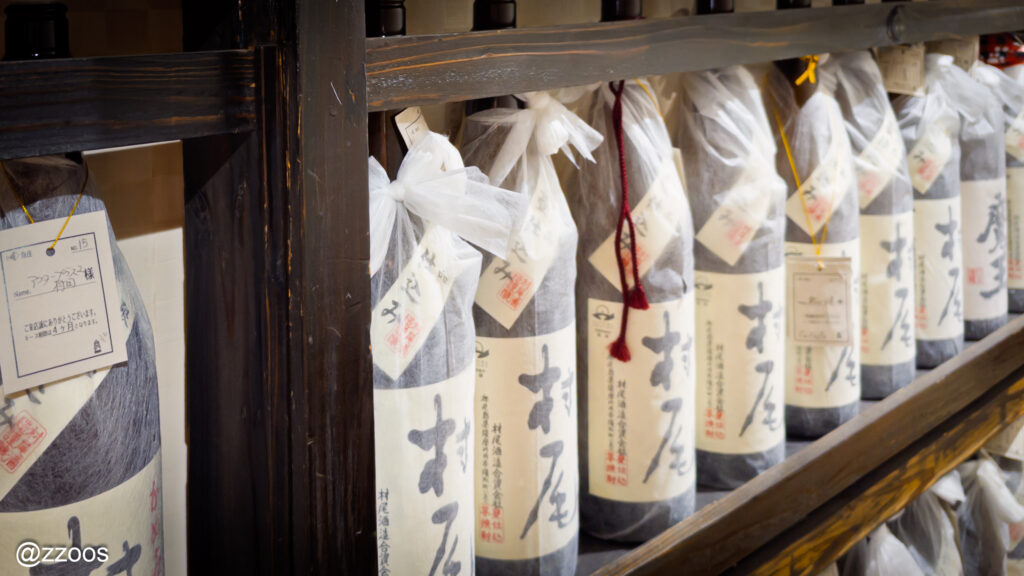
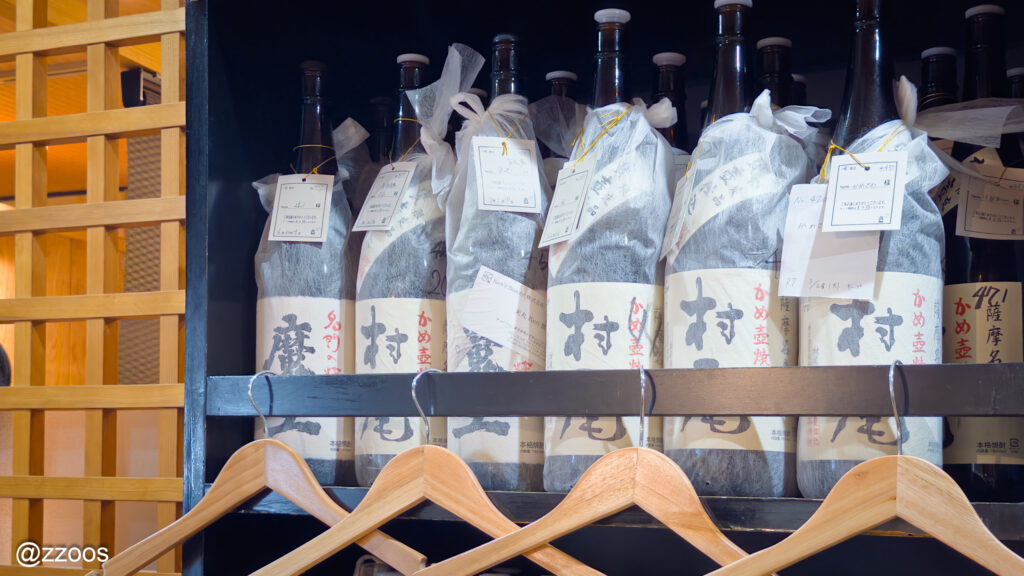
I looked around and noticed many isshobin bottles of Murao lined up everywhere.
Each bottle had a tag with a customer’s name – apparently all kept bottles.
I got curious – is there something special about Murao here?
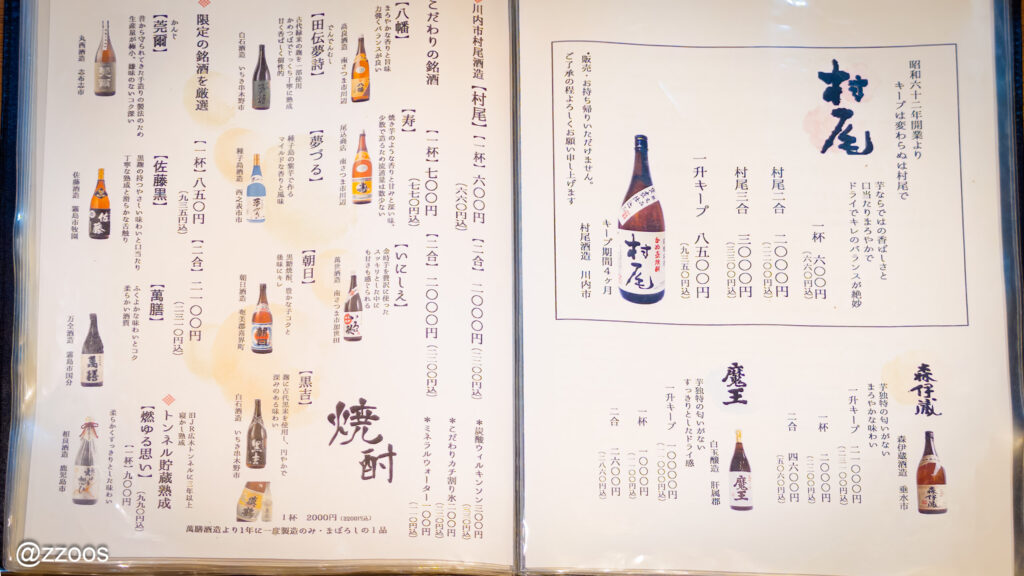
Aha! It really was.
Only 600 yen per glass, 8,500 yen for a whole isshobin.
At that price, I almost wanted to keep one myself.
(But could I really finish it within four months if I only visit Kagoshima occasionally…?)
Anyway, this place was clearly the best deal for Murao, so I boldly ordered two gō(about 360 ml).
That’s maybe three or four cups – no problem, I’ll drink more anyway!
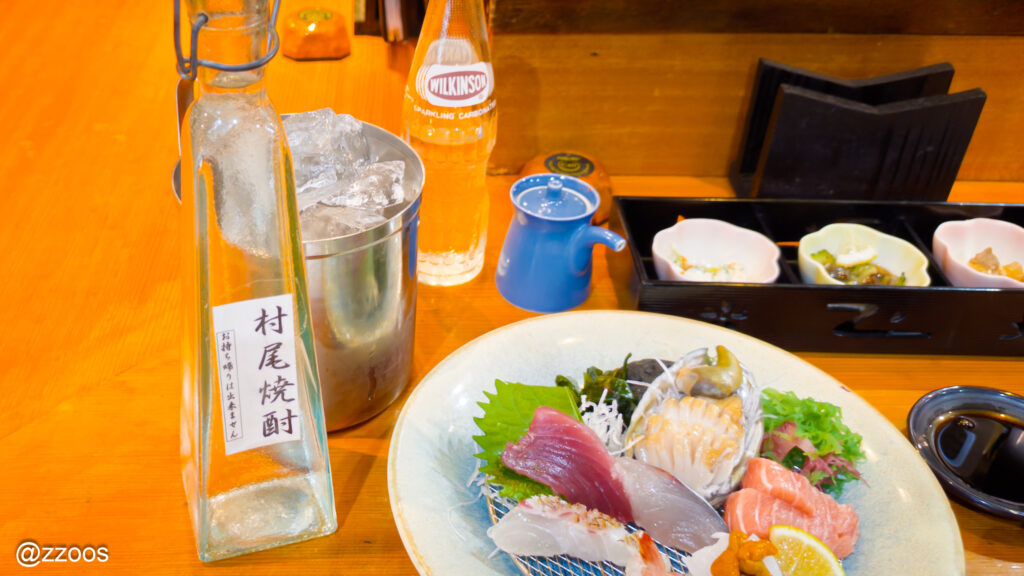
In fact, the two-gō portion was huge.
I kept drinking, but it hardly went down.
And that’s how the overdrinking of the night began.
For reference, Murao is one of the top three shochu brands along with Mori Izo and Maō.
They’re called the “3 M’s.”
All premium shochu – usually over 1,000 yen per glass in most bars.
Even in Kagoshima, that’s considered expensive; in Fukuoka, it’s more, in Tokyo, much more.
Here, though, it was so cheap that I got greedy…
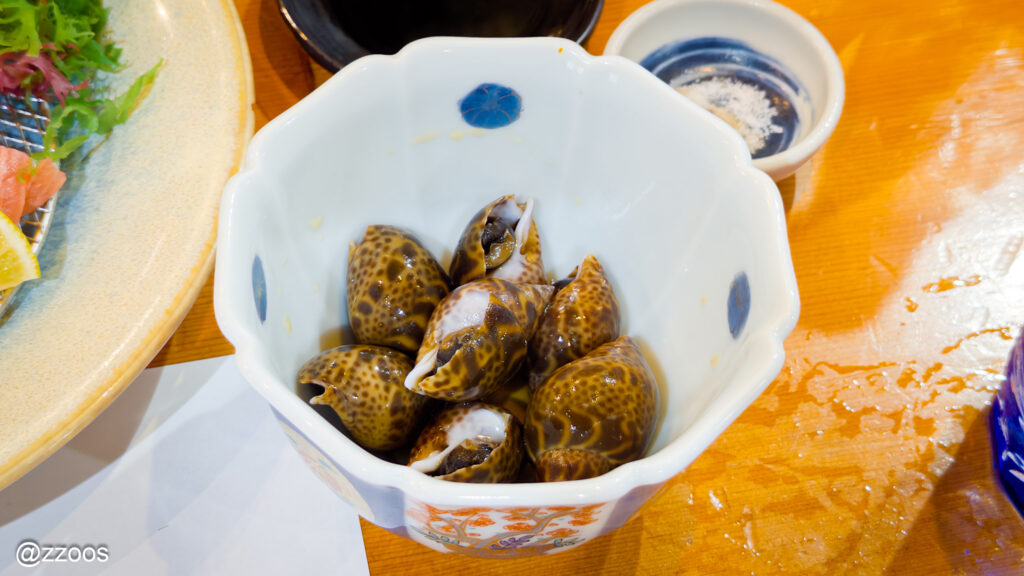
I needed something more to snack on, so I ordered another dish – Toriaezu Baigai.
The name sounds funny, but it’s a common menu style in izakaya.
Toriaezu means “for now” or “to start with.”
So it’s like saying “Let’s start with this one before deciding the rest.”
Baigai is a type of whelk(sea snail) often found in Kagoshima.
Seasoned, sweet-salty, and braised – a perfect light snack with drinks.
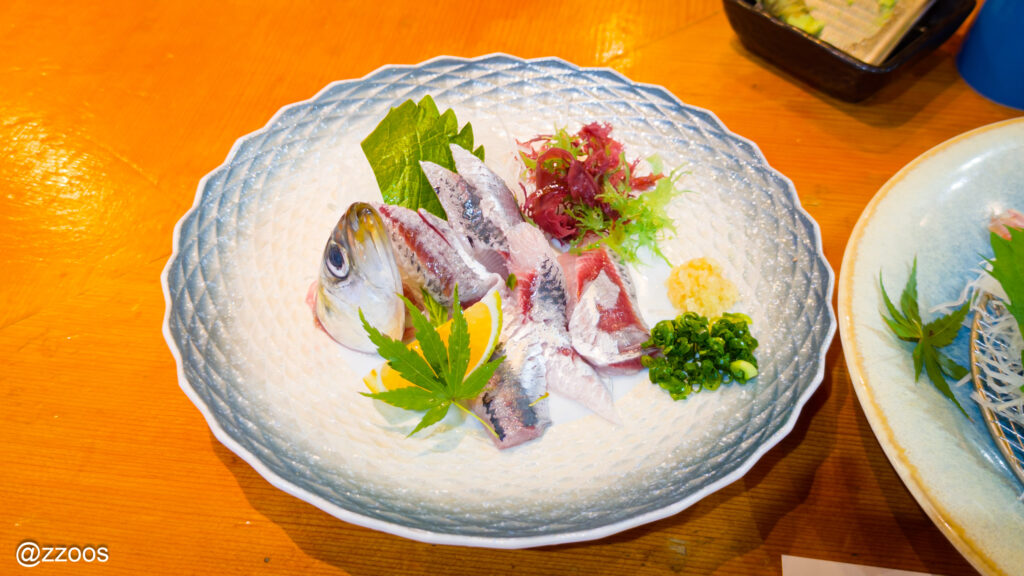
I noticed a handwritten menu on the counter and thought,
“This must be today’s fresh catch,” so I ordered one.
Iwashi means sardine.
They had carefully filleted small sardines, shiny with oil.
The fatty richness and flavor were amazing – the true essence of blue-backed fish.
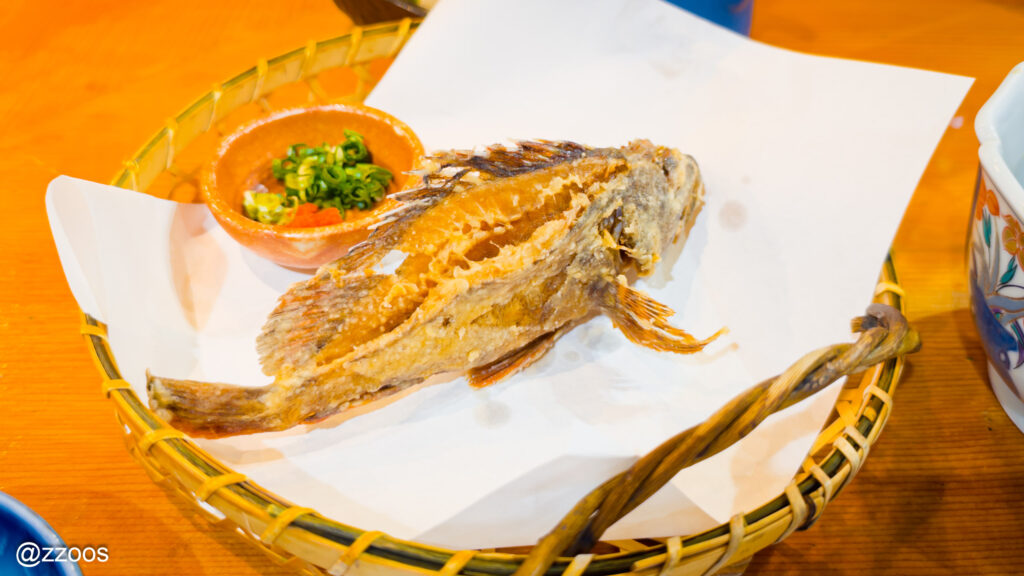
For the last dish, I wanted something fried, so I ordered Tsuri Arakabu Karaage.
Arakabu is the Kagoshima dialect for Kasago, or scorpion fish in English – in Korean it’s called ssombengi.
So it literally means “deep-fried scorpion fish caught by fishing.”
To be honest, it was expensive, small, and didn’t have much fish taste – but still delicious because it was fried.
Since the fish was tiny, I couldn’t really taste the meat itself, but it was crispy enough to eat with bones.
Because it was line-caught, the price made sense though.
After eating and drinking all that, I finally stood up.
I really had had enough of Murao for one night.
Now then – off to the second bar!

Leave a Reply