When I travel, I usually have one meal at a high-end restaurant.
Especially in a city like Kagoshima, with so many good ingredients.
I want to eat good food at a restaurant that makes good use of them.
Kagoshima is famous first of all for Kurobuta(黒豚, black pork).
The beef and chicken are just as good.
There are also many kinds of fish caught in Kinko Bay and the East China Sea.
And Kagoshima is the number one region in Japan for farmed eel production.
The Amami Islands, very close to Okinawa, also belong to Kagoshima Prefecture.
So Okinawan cooking methods and ingredients have influenced Kagoshima’s local cuisine as well.
To try delicious food made from these rich ingredients, you need to find a good restaurant.
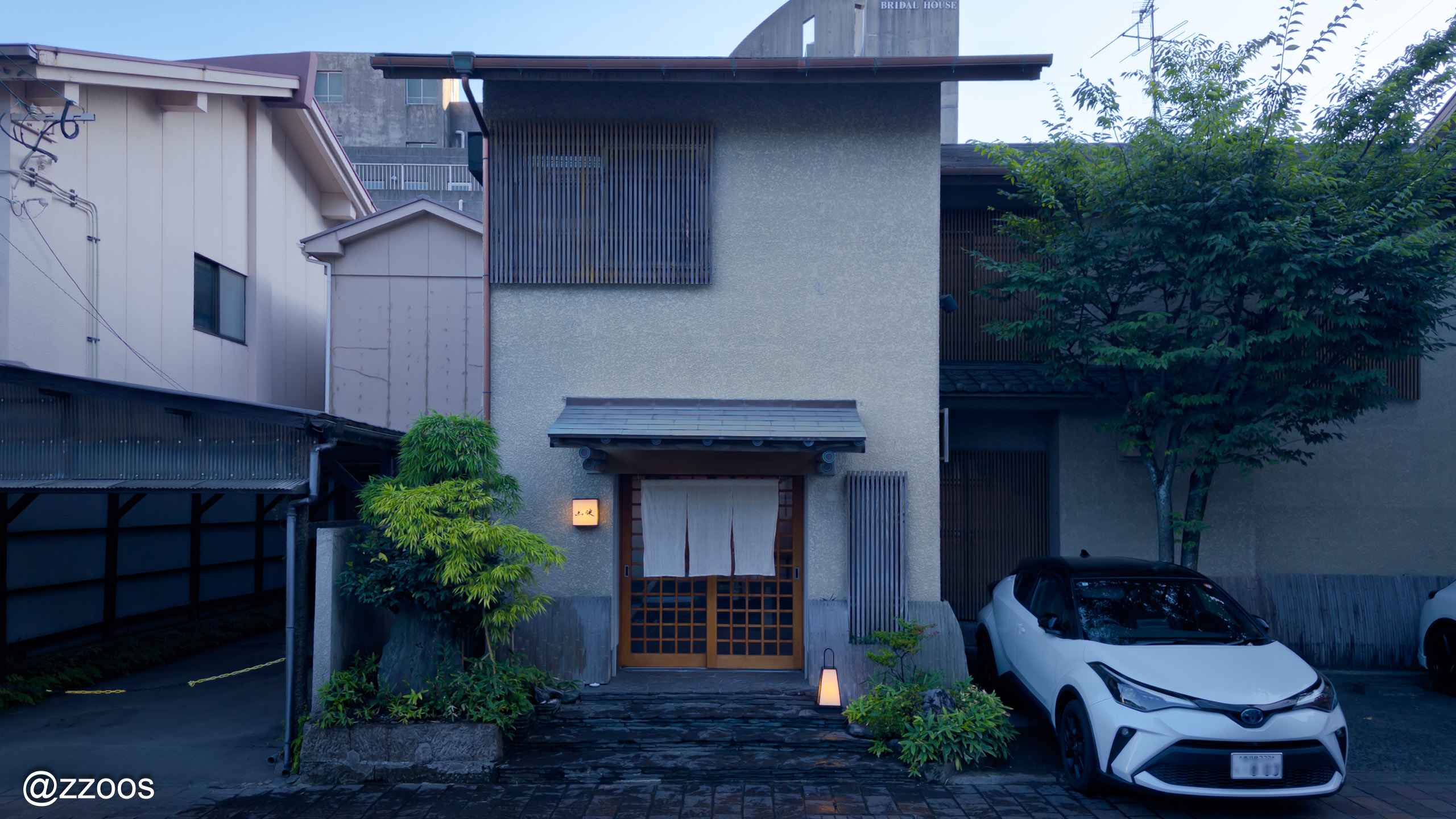
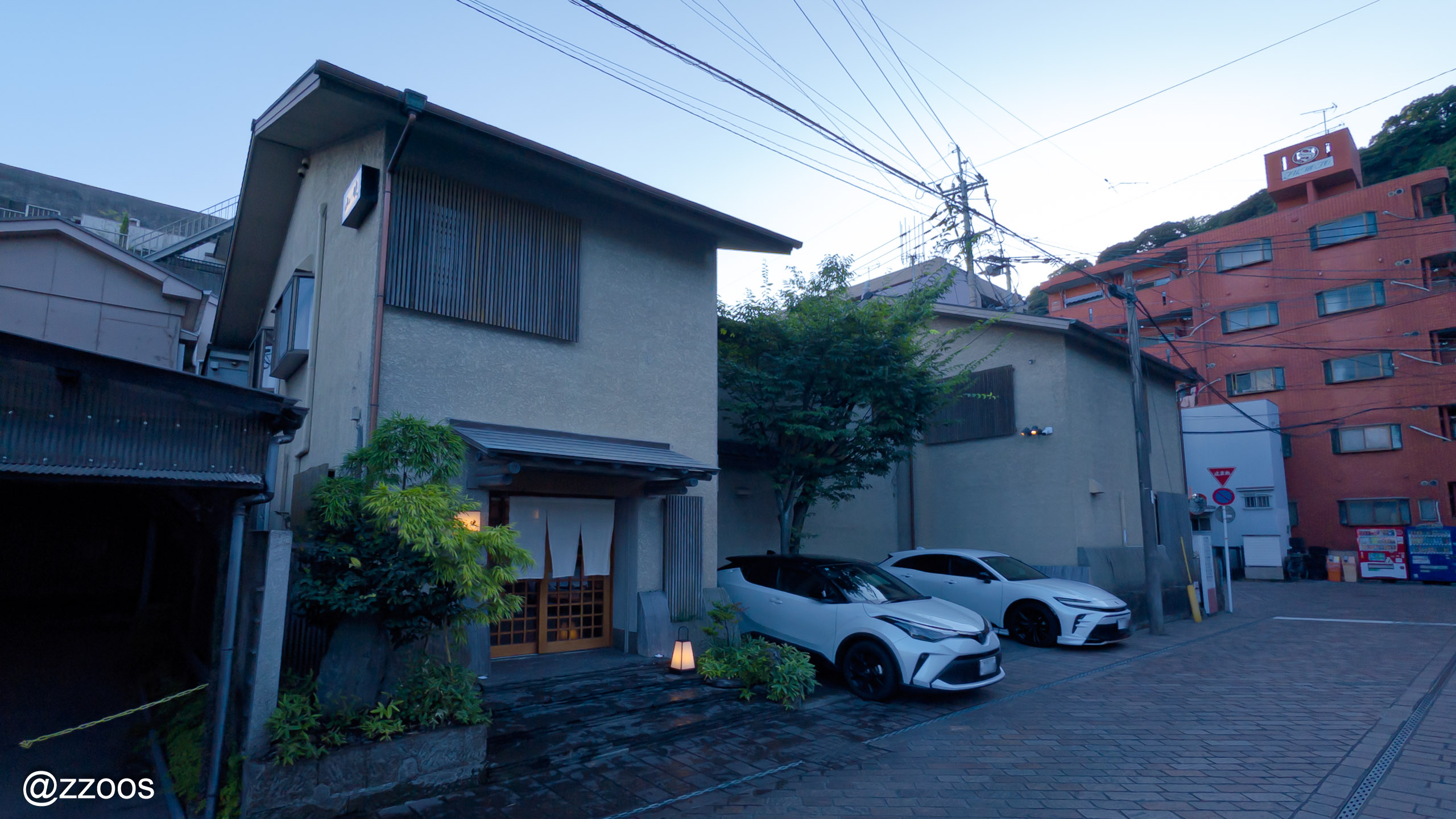
:: Sanei : 93-Year-Old Kagoshima Local Cuisine
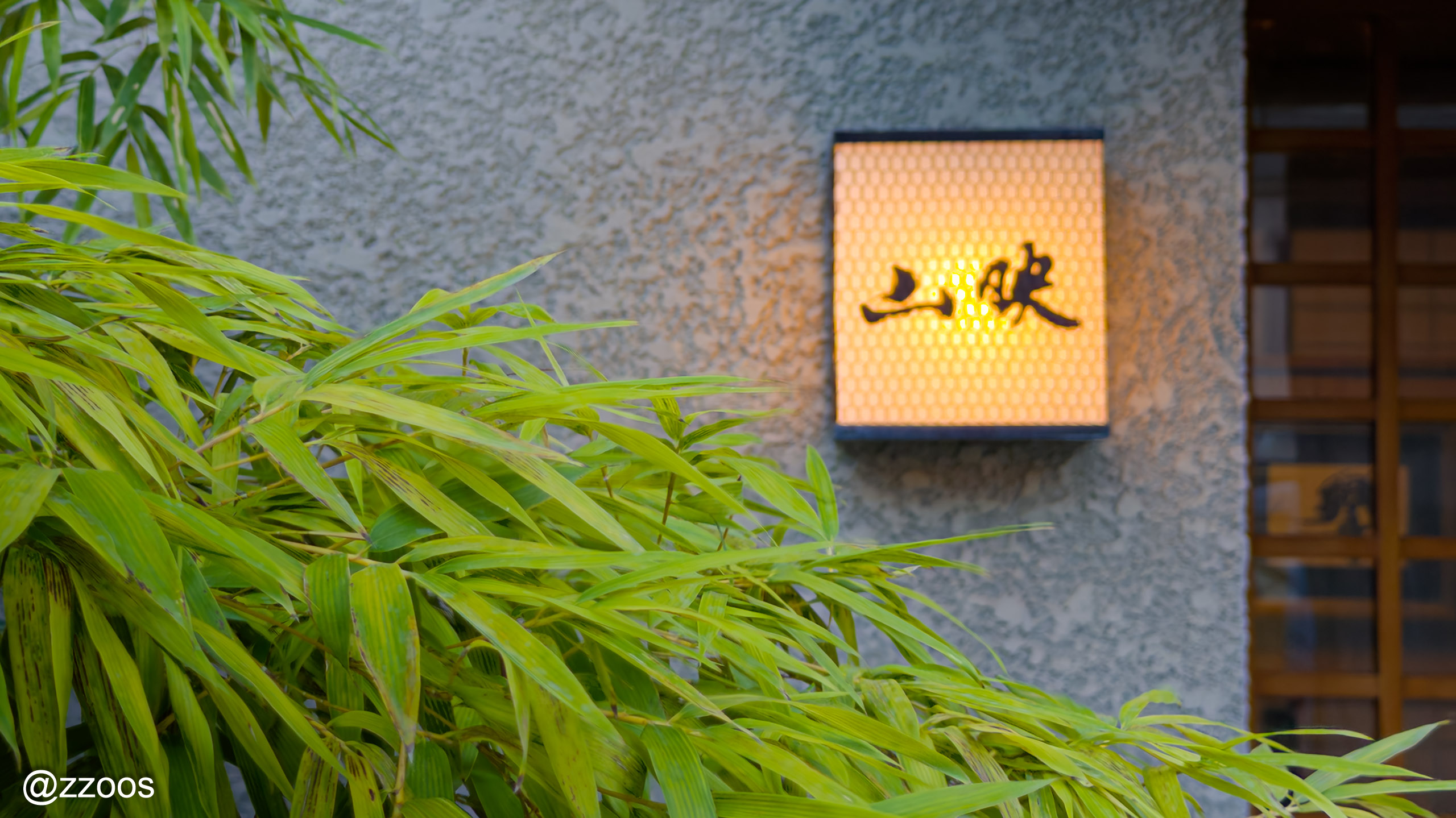
The place I found is this one, Sanei(山映). This is my second visit.
It’s a restaurant specializing in Kagoshima local cuisine, soon to reach 100 years in business.
On its homepage, it introduces itself as “a long-established kappo in Kagoshima(鹿児島の老舗割烹).”
So you could also call it a kappo restaurant.
When I visited on my birthday last year, you could only book by phone.
Now you can also book online through TableCheck.
There’s also a cheaper course menu than last year.
They seem to be trying out some changes.
I didn’t know online booking was available.
So this time too, as soon as I checked in at SHIROYAMA HOTEL kagoshima, I asked the concierge to make a reservation for me.
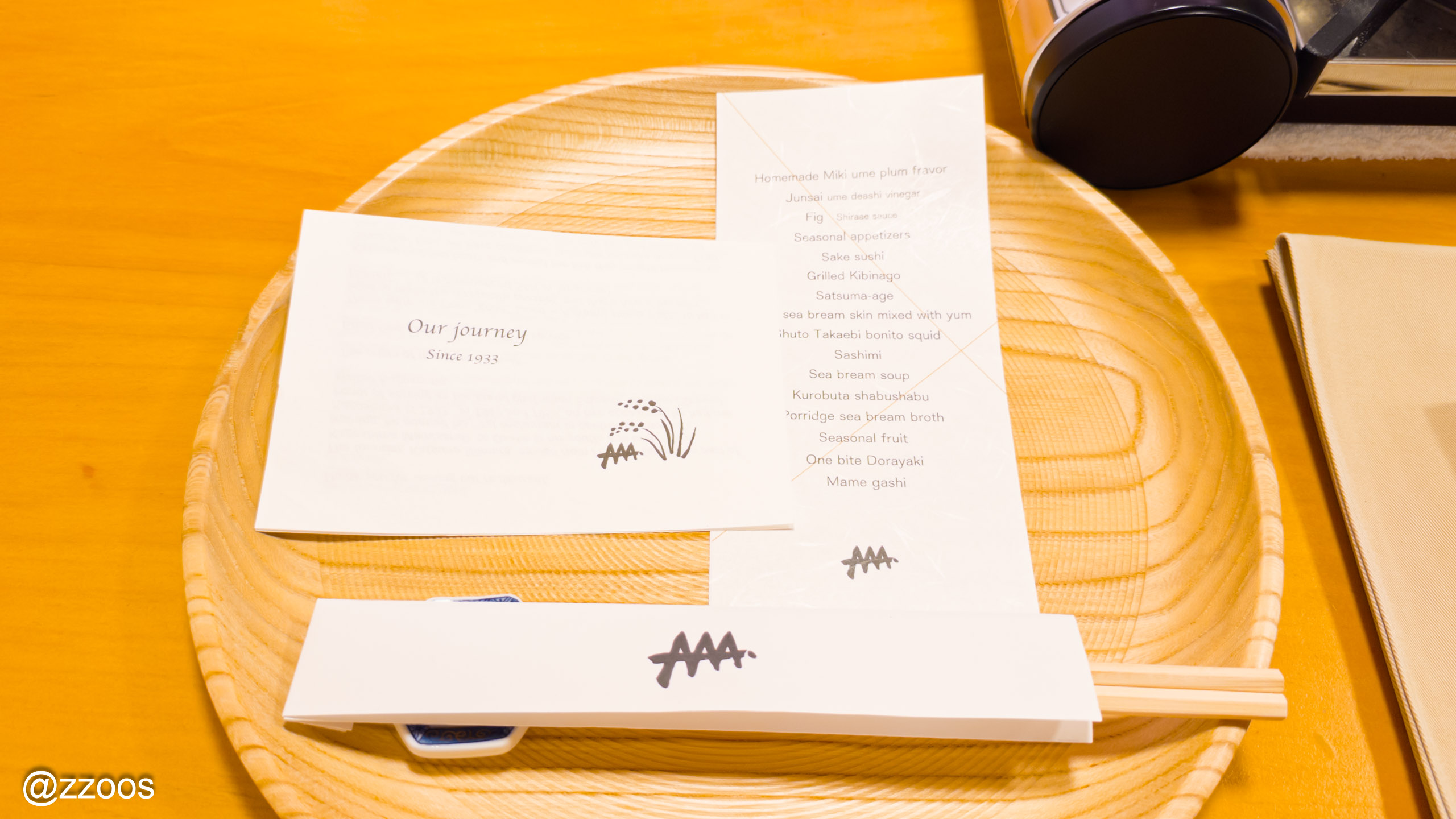
First, I look over today’s courses while drinking a glass of Pouilly-Fumé.
There are some typos in the English here and there.
I think writing it in Japanese might actually make it easier to understand the dishes.
Translation apps are so good these days.
- Homemade Miki ume plum flavor
- Junsai ume dashi vinegar
- Fig Shiraae sauce
- Seasonal appetizers
- Sake sushi
- Grilled Kibinago
- Satsuma-age
- Sea bream skin mixed with yam
- Bonito shuto, Takaebi, squid
- Sashimi
- Sea bream soup
- Kurobuta shabushabu
- Porridge sea bream broth
- Seasonal fruit
- One bite Dorayaki
- Mame gashi
What I booked was the Kurobuta shabu-shabu and local cuisine course(黒豚しゃぶしゃぶと郷土料理コース).
The order on the menu was a little different from how the dishes were actually served.
Some things were also changed or added along the way.
When I visited last year, they also served far more dishes than planned.
I remember leaving very full.
:: Seasonal Local Dishes, One After Another
The first things to come out were starters to whet the appetite.
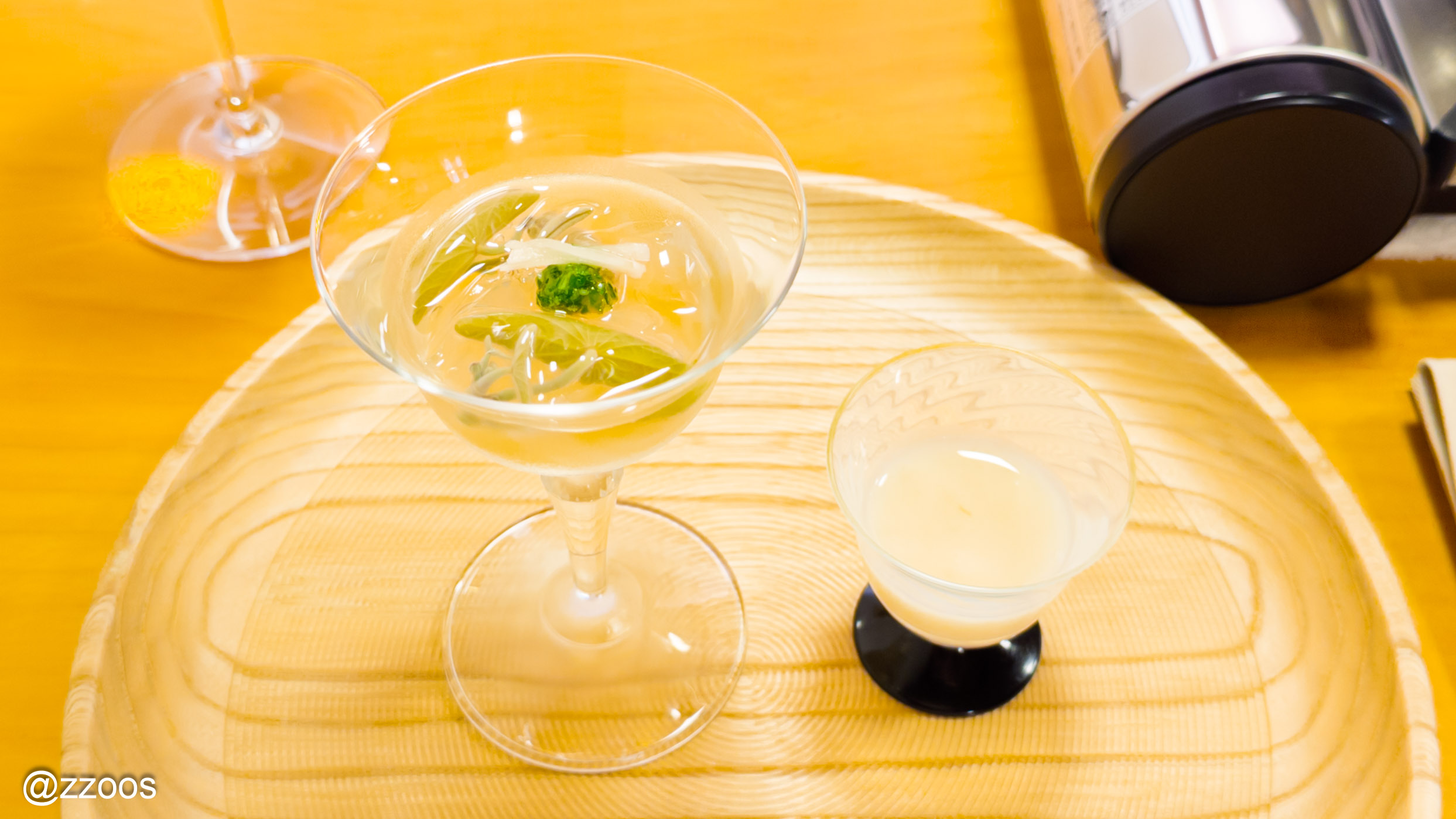
The one on the left is water shield in a cool, refreshing broth.
It really woke up my appetite.
The one on the right, they said, is called miki(ミキ).
It’s a traditional fermented drink from the Amami Islands.
Could you say it’s similar to amazake?
It’s a drink made by fermenting things like rice and sweet potato.
They said it’s fermented with lactic acid bacteria, not koji.
And they added ume syrup, so a light ume aroma comes through.
It isn’t sweet.
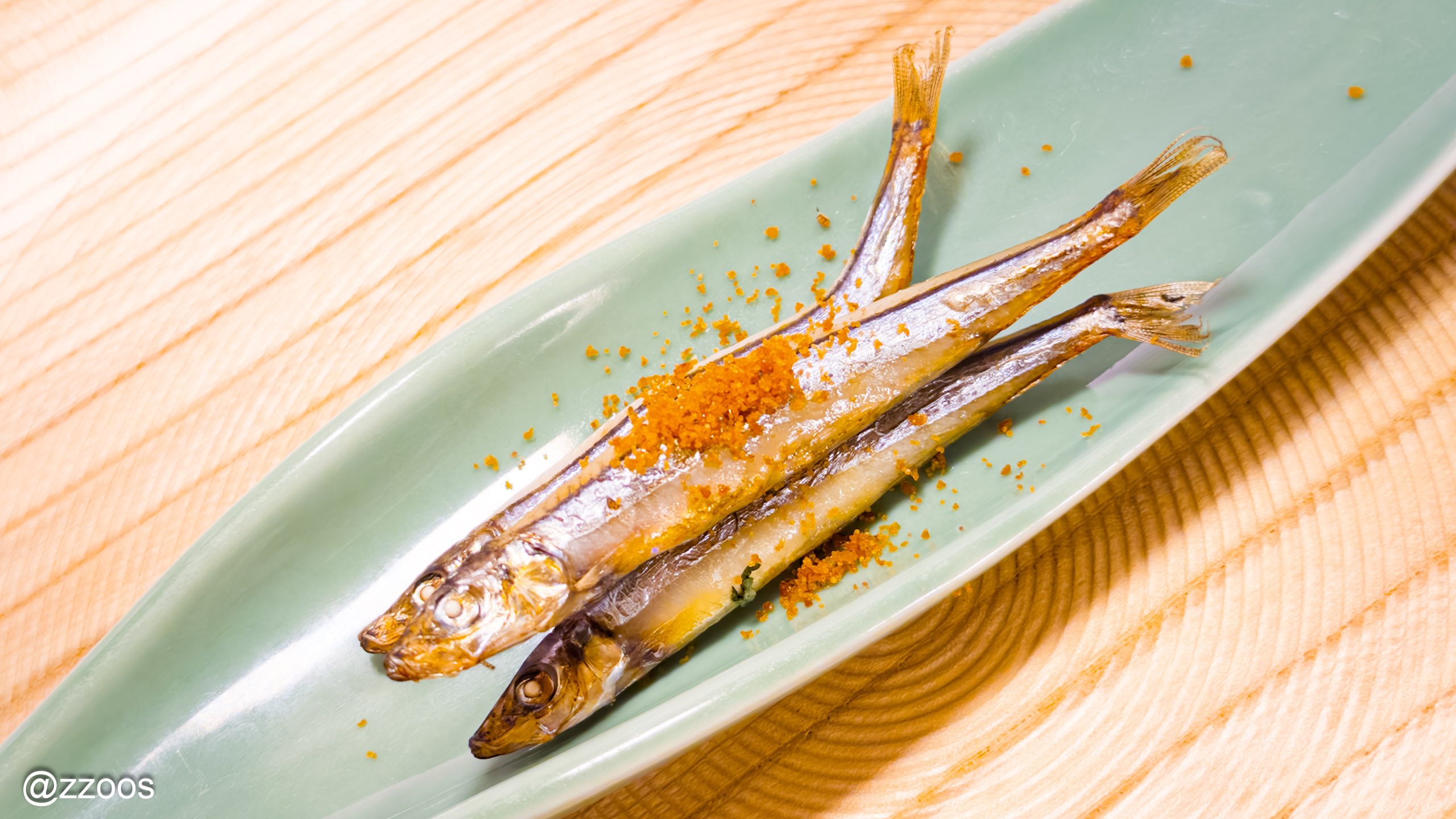
Next came kibinago(きびなご, silver-stripe round herring).
You could call it Kagoshima’s signature fish.
But they said the fish market was closed today, so there was no fresh kibinago.
The shining silver of kibinago sashimi is really beautiful.
I was looking forward to it, but I can’t enjoy that today.
It’s a pity.
What came instead was kibinago dried for a day and lightly grilled.
Fish roe was sprinkled on top.
It’s a dish with a very strong, savory aroma.
So this is how kibinago tastes when it’s grilled well.
This is a good experience too.
The aroma was a bit strong, so I wonder if moving it later in the course would have been better.
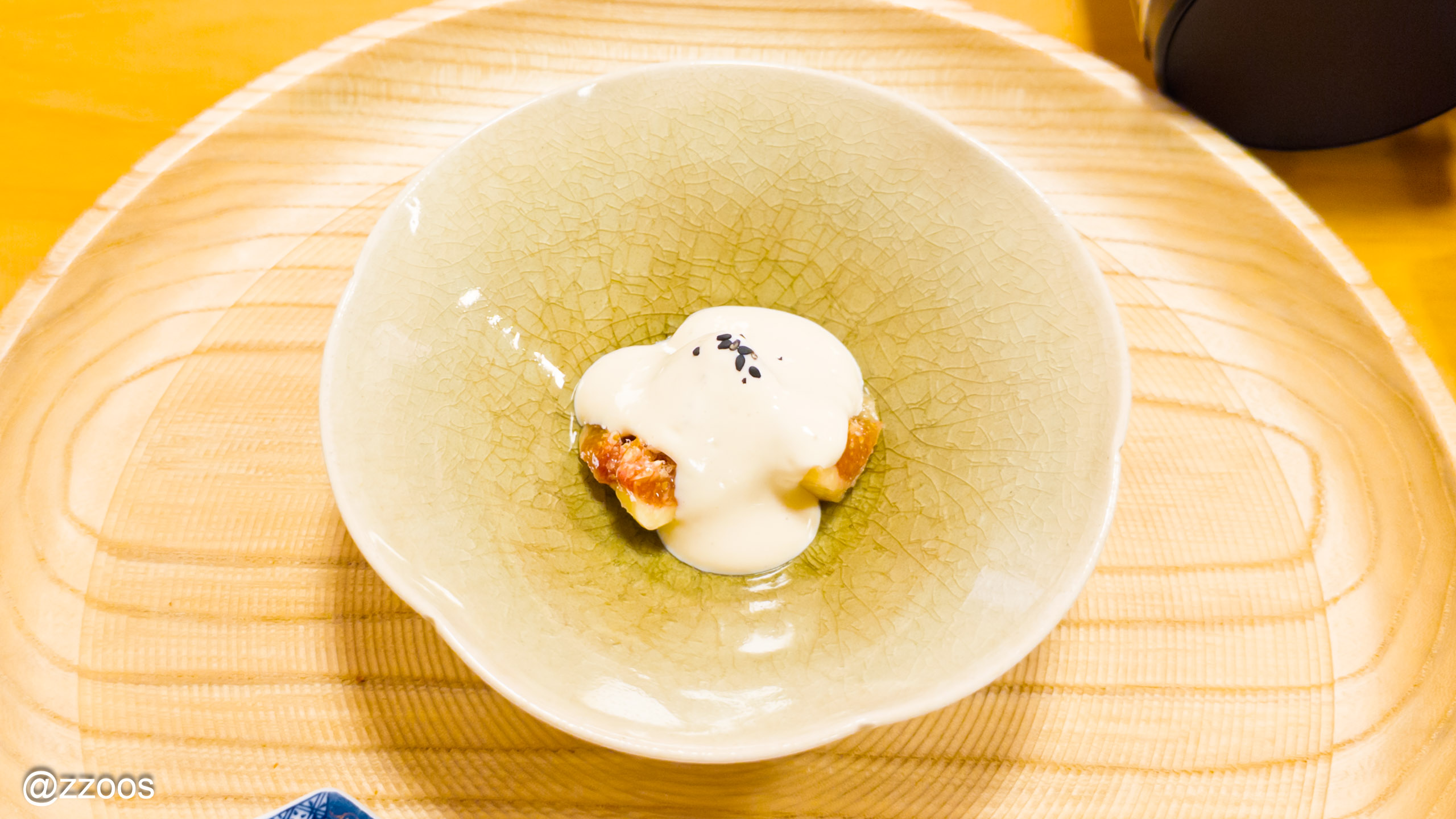
Maybe because it was midsummer, the fig in this dish tasted a little less good.
What’s poured on top is tofu sauce.
This is a really delicious dish.
The same dish came out last year too.
That was autumn, maybe that’s why the fig tasted better.
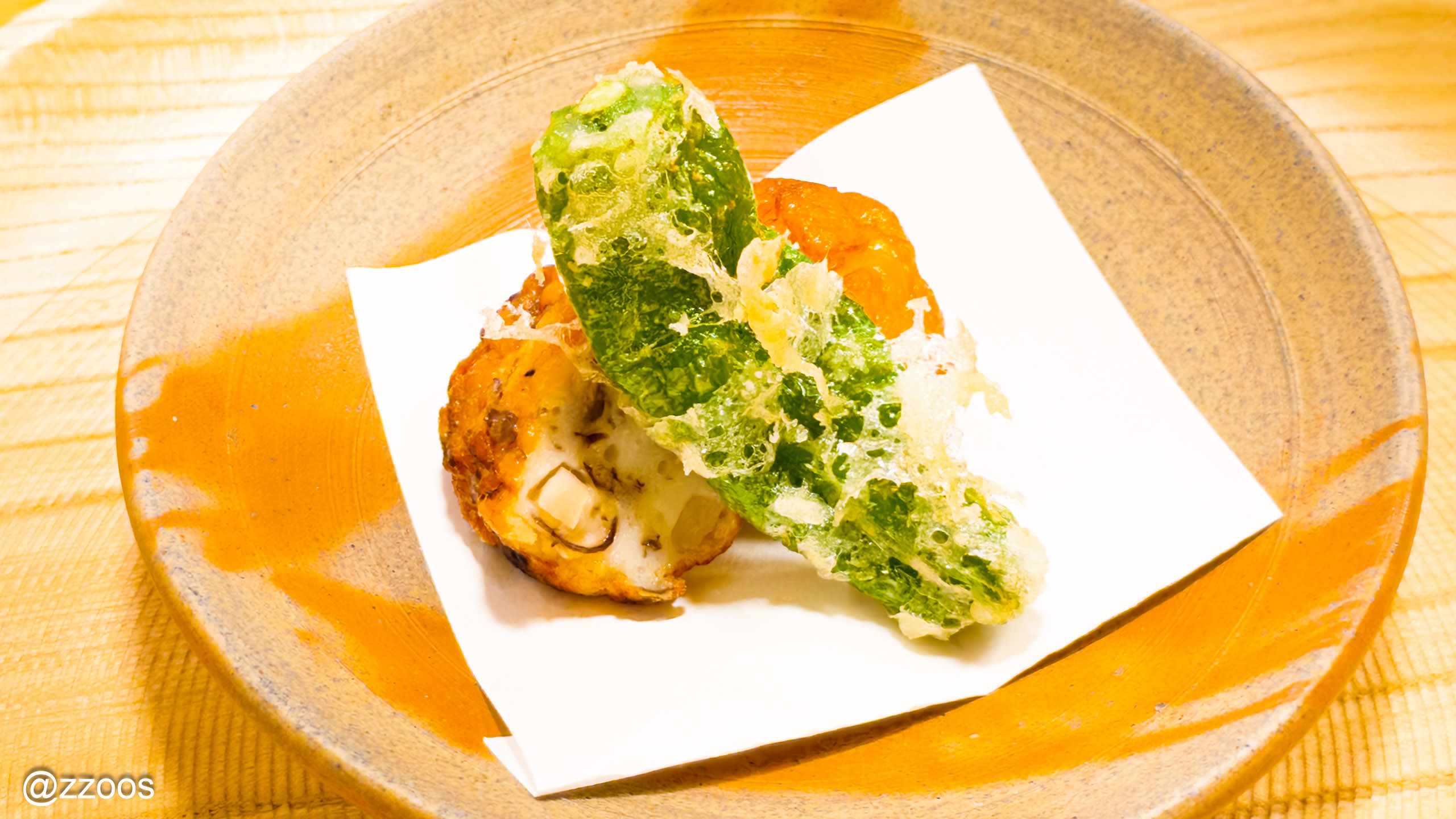
This is a place serving Kagoshima local cuisine, so satsuma-age(さつま揚げ) can’t be left out.
I ate a lot of satsuma-age on this trip, you know?
But this one is truly far more delicious.
You can feel it: so this is how well-made satsuma-age tastes!
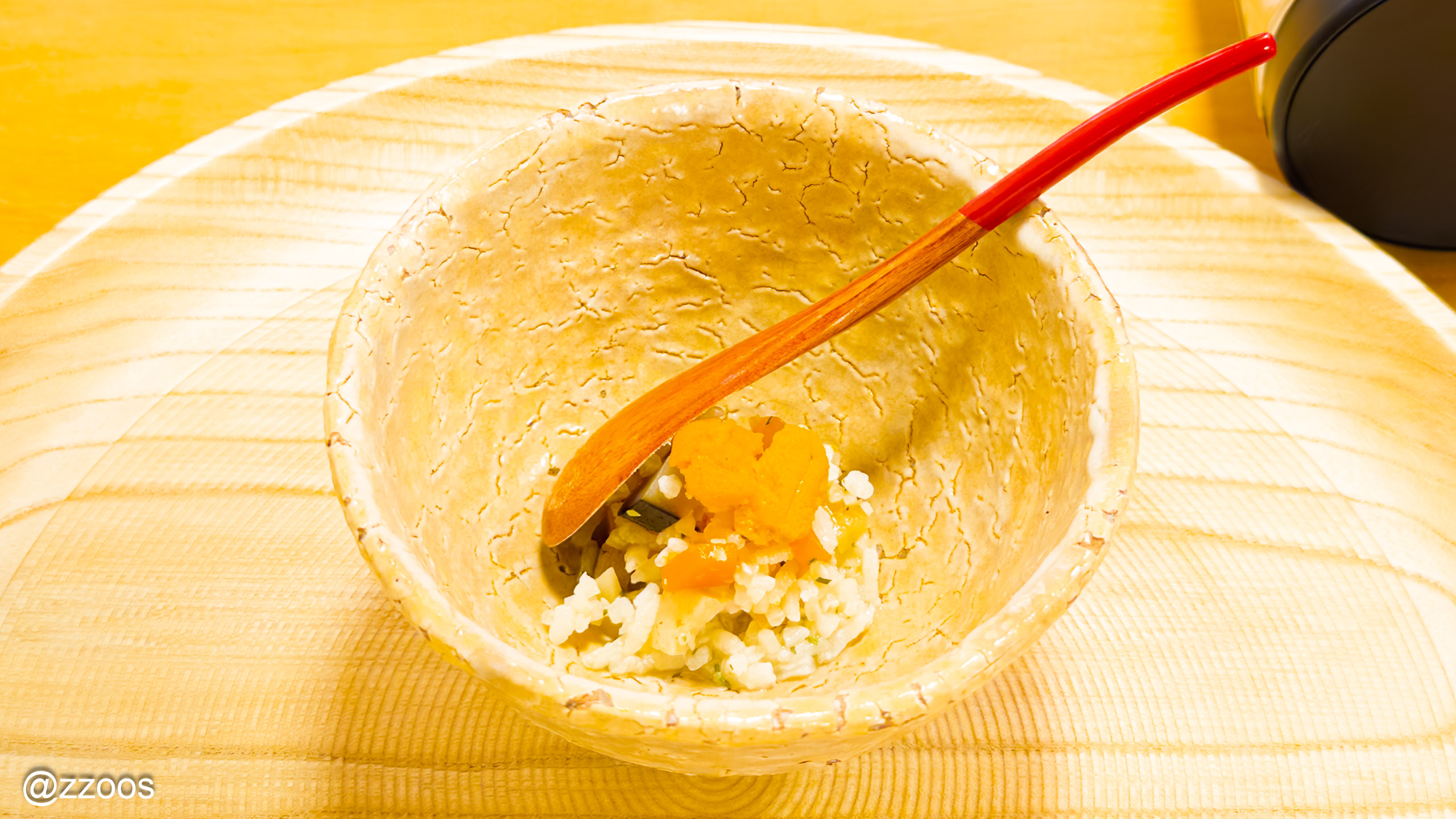
I don’t think the photo shows it well, but it’s rice.
It’s called sakezushi(酒寿司).
This is also one of Kagoshima’s traditional dishes.
Akumochizake(灰持酒), Kagoshima’s local sake, is mixed into the rice and fermented together.
Then various toppings are mixed in.
It has shiitake and various other vegetables, and uni on the very top.
It tastes good, and the aroma is interesting too.
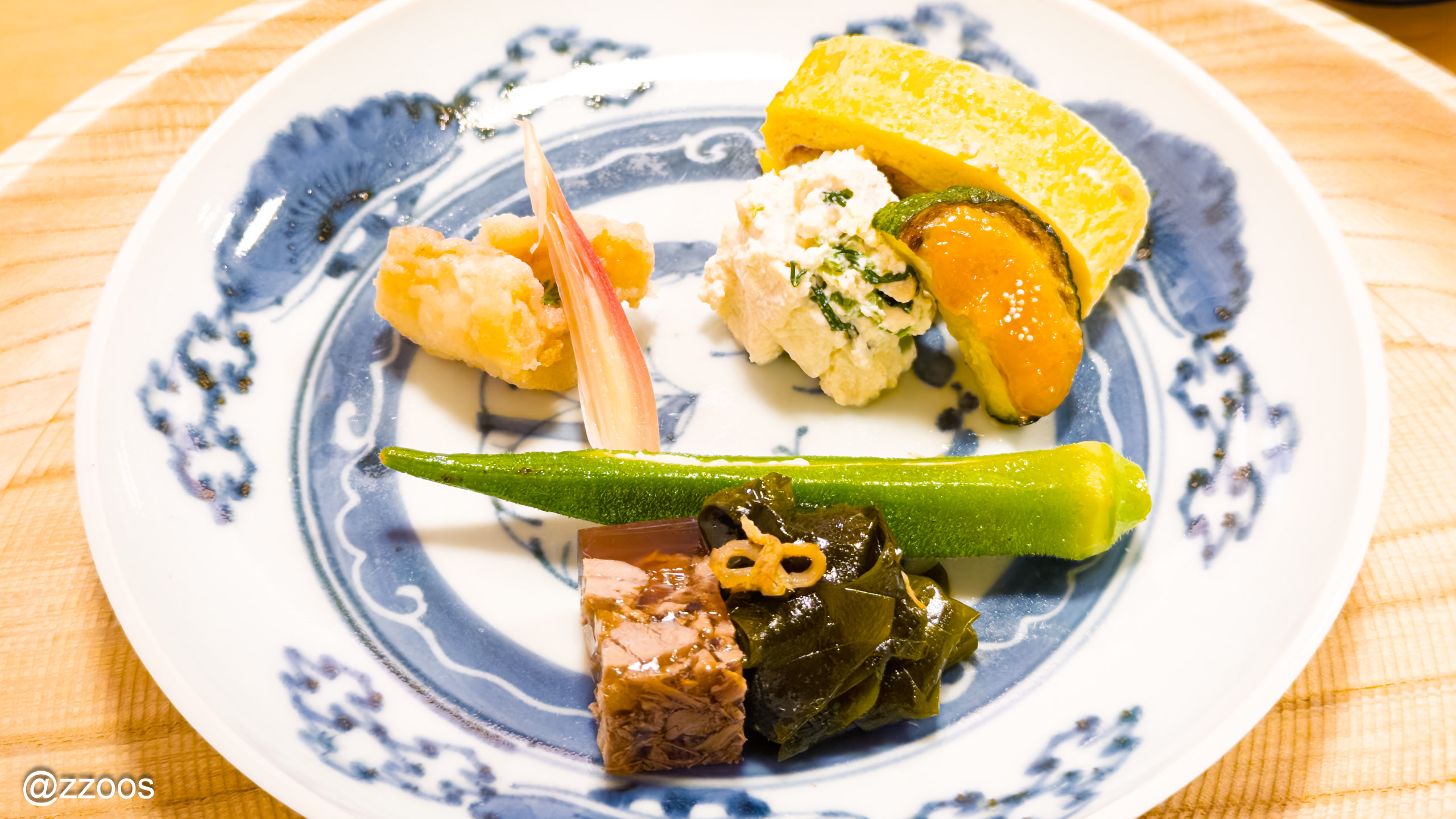
A plate with various foods came out.
This must be the seasonal appetizers on the menu.
Let’s look at them one by one.
The fried piece at the top left is amadai(甘鯛, tilefish) tempura.
On top of it is myoga, pickled to be fragrant and refreshing.
I ate the tempura and must have had a “what is this?” look on my face.
The okami-san(女将) told me “Amadai!” as she passed by.
At the top right there’s tofu dressed with vegetables.
I took a bite, and there was pork inside.
Huh, this tasted different from what I expected.
Next to it was grilled zucchini, and the sauce seems to be the secret.
It was a delicious sauce, but I couldn’t find out what it was.
I thought the one in the back was dashimaki(だし巻き).
But oh, it’s umaki(う巻き).
There’s well-grilled eel inside.
It was very, very delicious.
The long one lying across the middle is okra.
This really was just okra.
A unique texture, crisp and sticky.
It’s a vegetable I like.
At the bottom left is nikogori(煮こごり), fish set together with the gelatin that comes out of the bones, skin and so on.
It probably uses the leftover flesh from fish caught a lot in Kagoshima, like skipjack tuna or Japanese amberjack, or greater amberjack, which is in season in summer.
Lastly, the wakame at the bottom right had a curious texture.
It’s not raw wakame, but not cooked soft and limp either.
It’s a pleasantly tender texture.
The small anchovies on top give a point to the taste and texture.
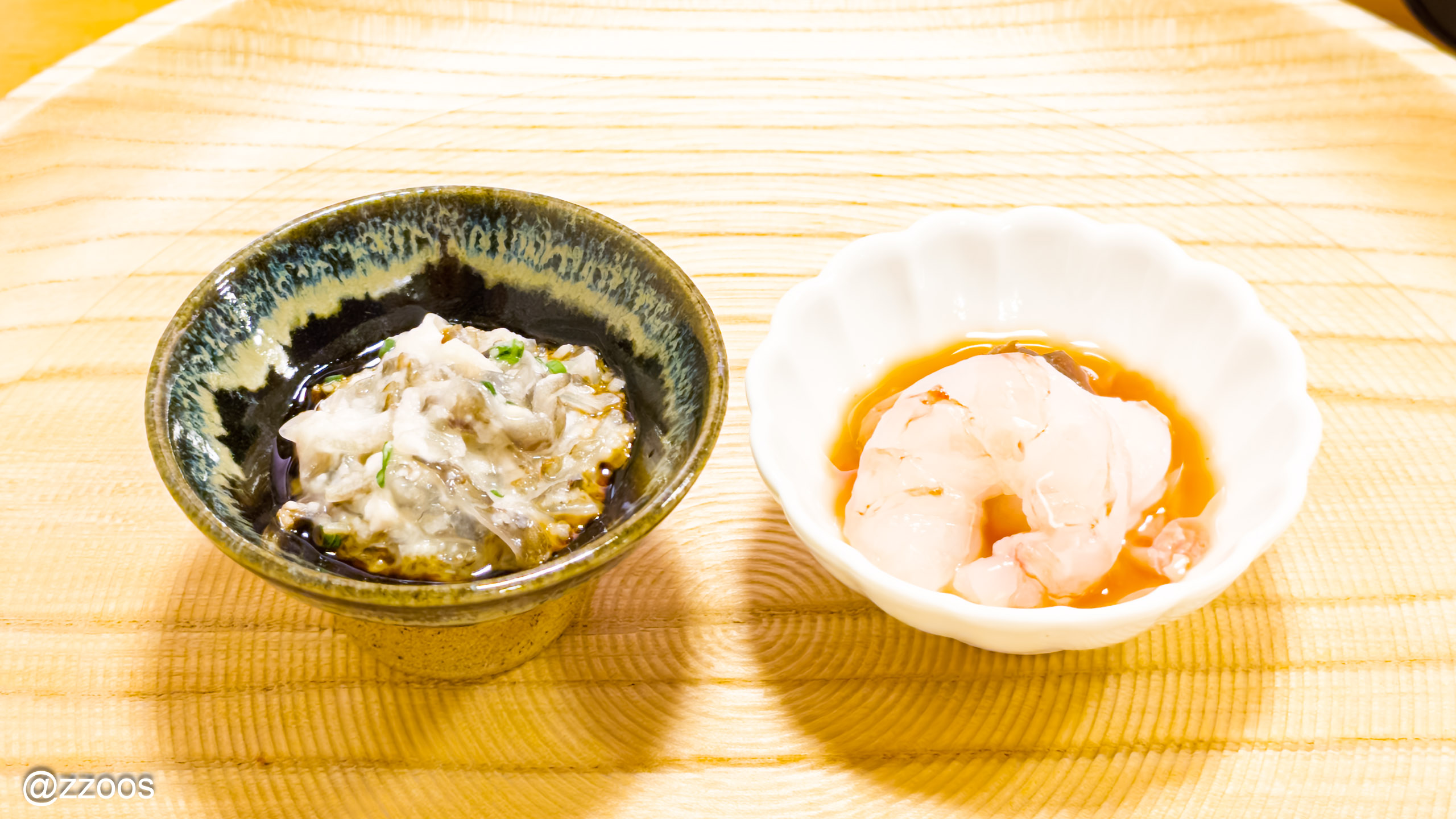
Ah, two plates of tasty ones came out.
In the dark bowl on the left is sea bream skin dressed with grated yam.
Maybe they added vinegar, the refreshing taste is excellent.
The texture of the sea bream skin is fun.
The stickiness of the grated yam might divide people.
I like it a lot, though.
In the white bowl on the right is takaebi(タカエビ) and squid on top of shuto(酒盗).
I think the squid may be aori-ika(アオリイカ, bigfin reef squid), but I couldn’t confirm.
Shuto is a salted, fermented dish made from skipjack tuna innards.
Kagoshima catches a lot of skipjack tuna, so the shuto is very fresh too.
It’s the kind of freshness where the bright, milky red color makes you hungry.
Shuto came out last year too.
At the time I said “it’s too salty and a bit hard to eat.”
This time it wasn’t like that.
It was pleasantly salty.
Could they have remembered what I said last year?
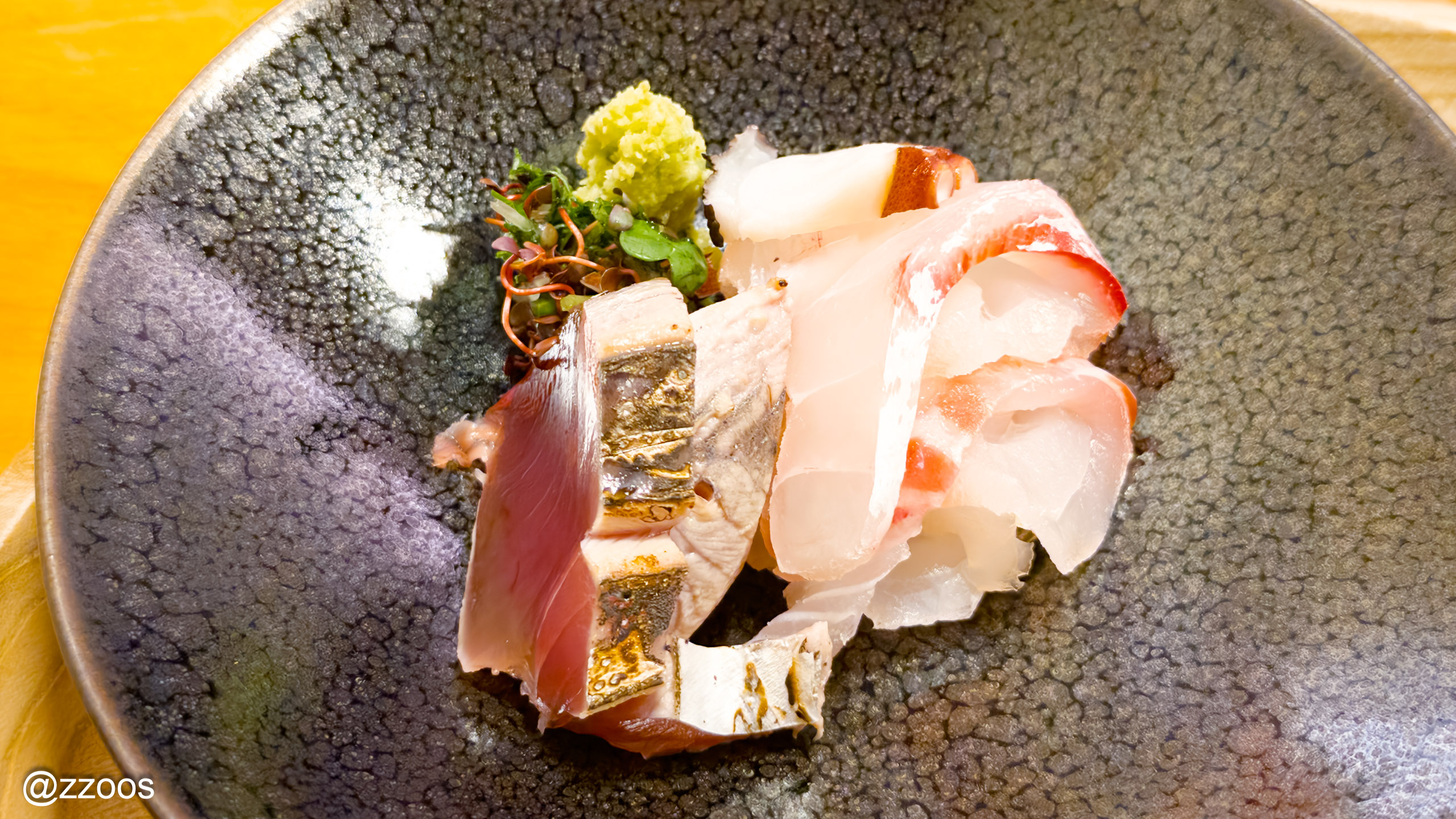
This time three kinds of sashimi came out.
Hon-gatsuo tataki(本ガツオたたき), sea bream, and octopus.
I think the katsuo (skipjack tuna) tataki was probably seared over straw.
The aroma was very good.
And the sea bream.
This sea bream is a very special one.
Just looking at the photo, each slice is huge, right?
So I asked the chef, and he said it was a sea bream weighing all of 4.9 kilos.
I can’t even imagine how big a fish that weight is.
You can’t see it in the photo, but under the sea bream sashimi there was also some kombujime(昆布締め).
It’s a method where sea bream is aged between sheets of kombu.
The umami comes alive, and as the moisture comes out, the flesh gets firm and springy.
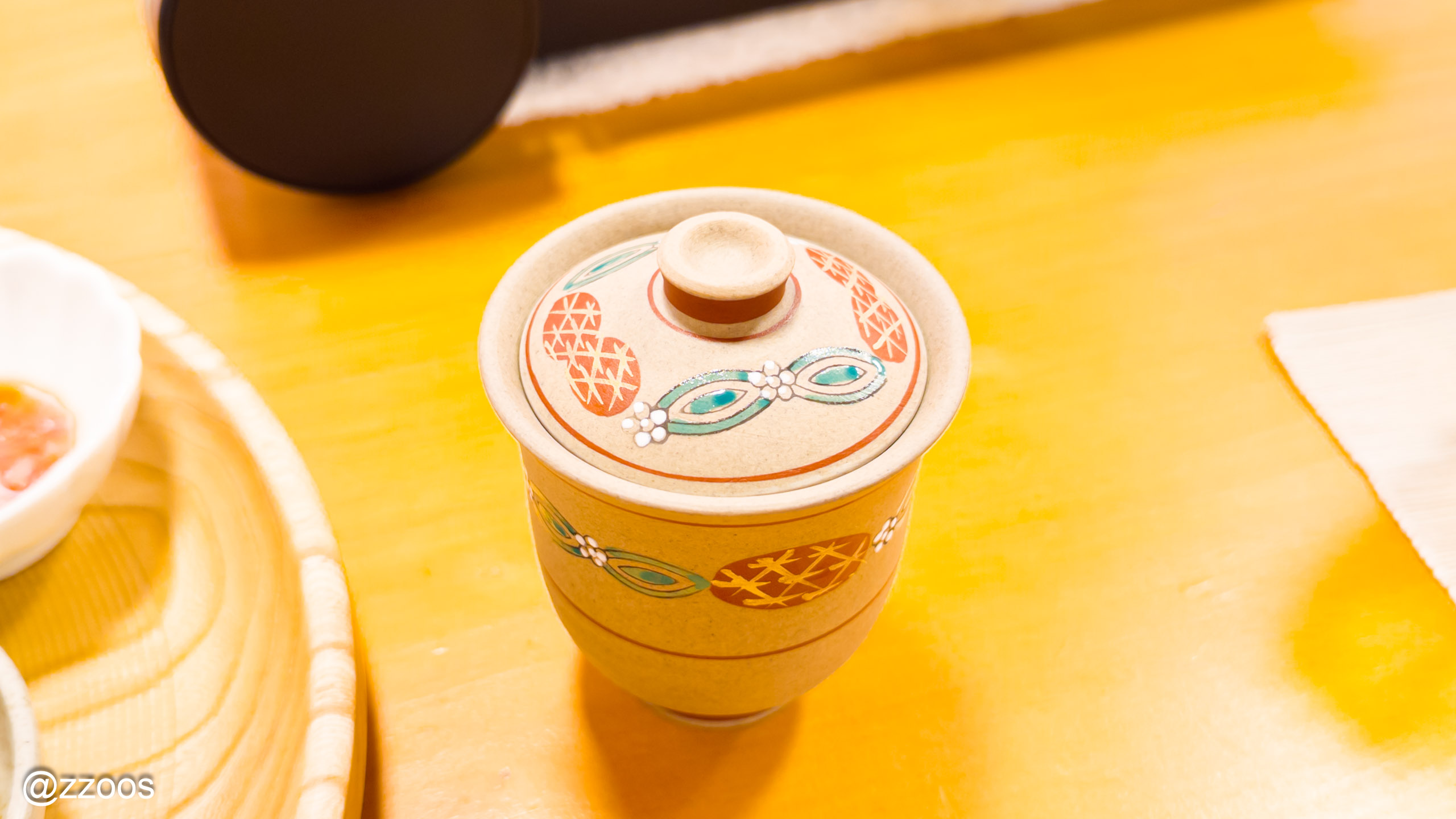
A warm, clear sea bream soup came in a cup with a nice texture.
After one cold dish after another, drinking a warm soup puts me in a good mood.
Inside there was a little seaweed and daikon too.
:: Later in the Course, Kurobuta Shabu-Shabu
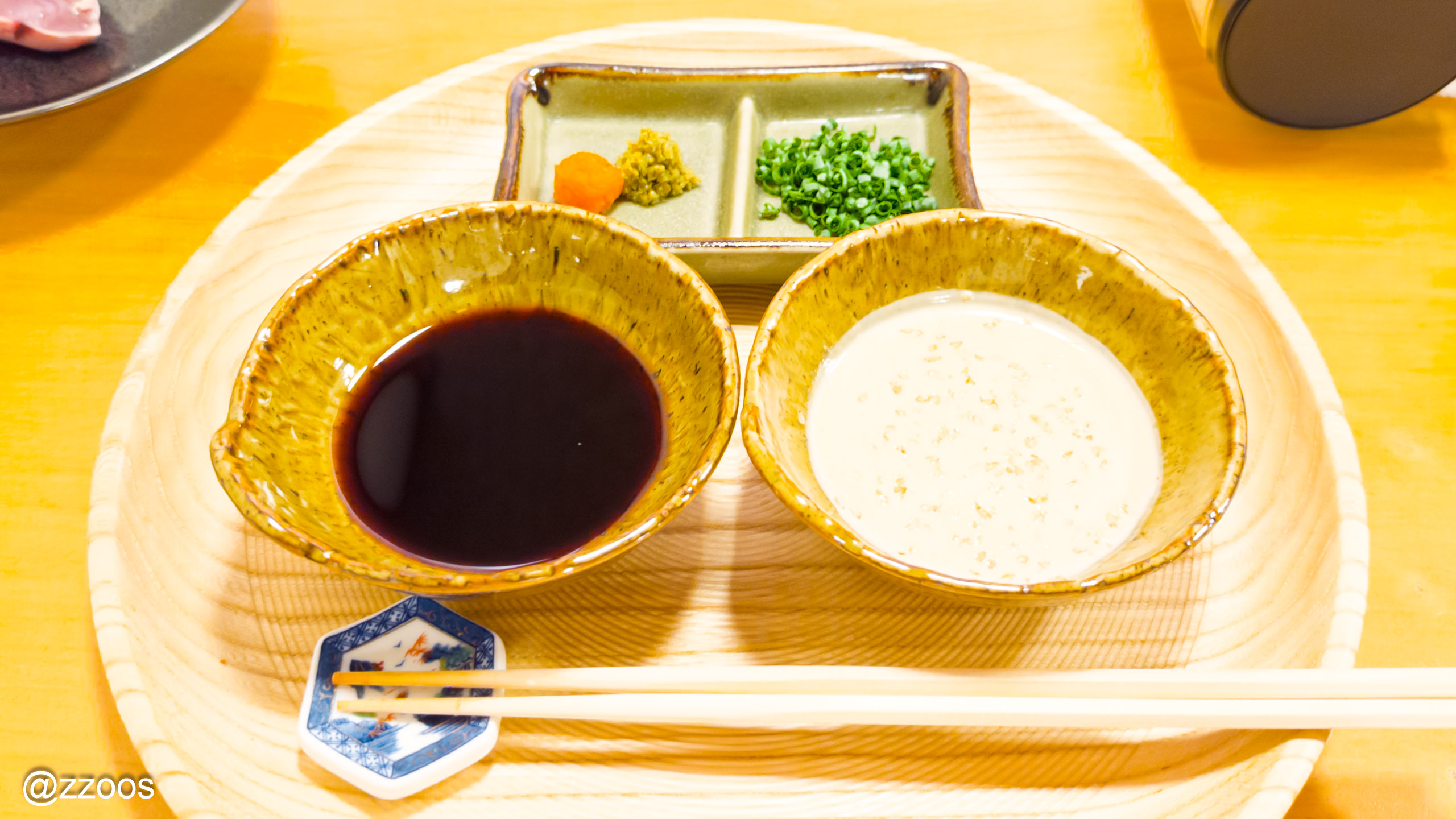
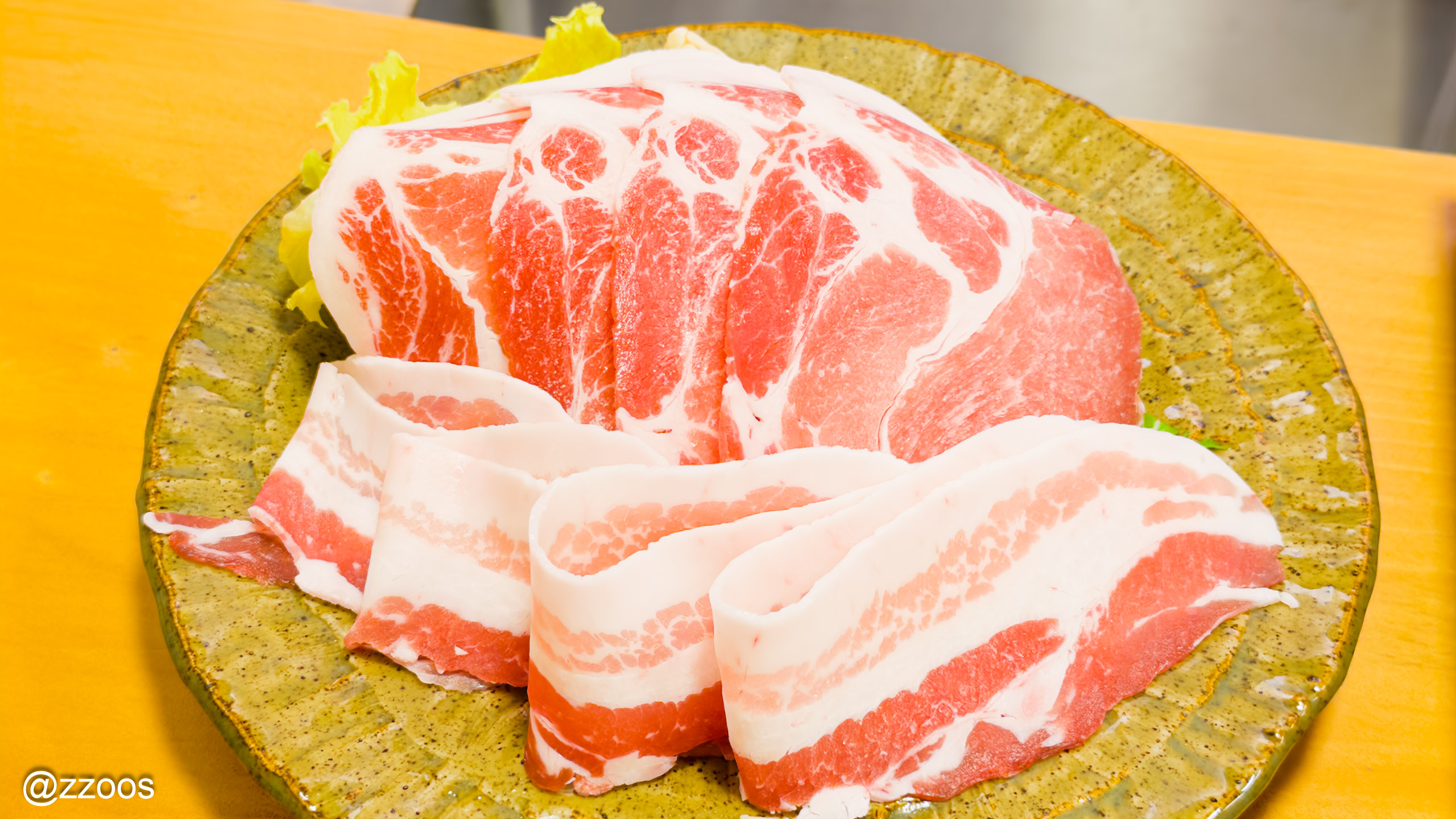
Now, finally, the sauce is ready, and Kagoshima’s Kurobuta with its nice color has come out.
It looks like pork belly and shoulder, right?
Kagoshima’s Kurobuta is the Berkshire breed.
So the fat melts even at a low temperature.
I think you can taste its rich flavor better as shabu-shabu than grilled over charcoal or on an iron plate.
It’s also why I always eat Kurobuta shabu-shabu in this city.
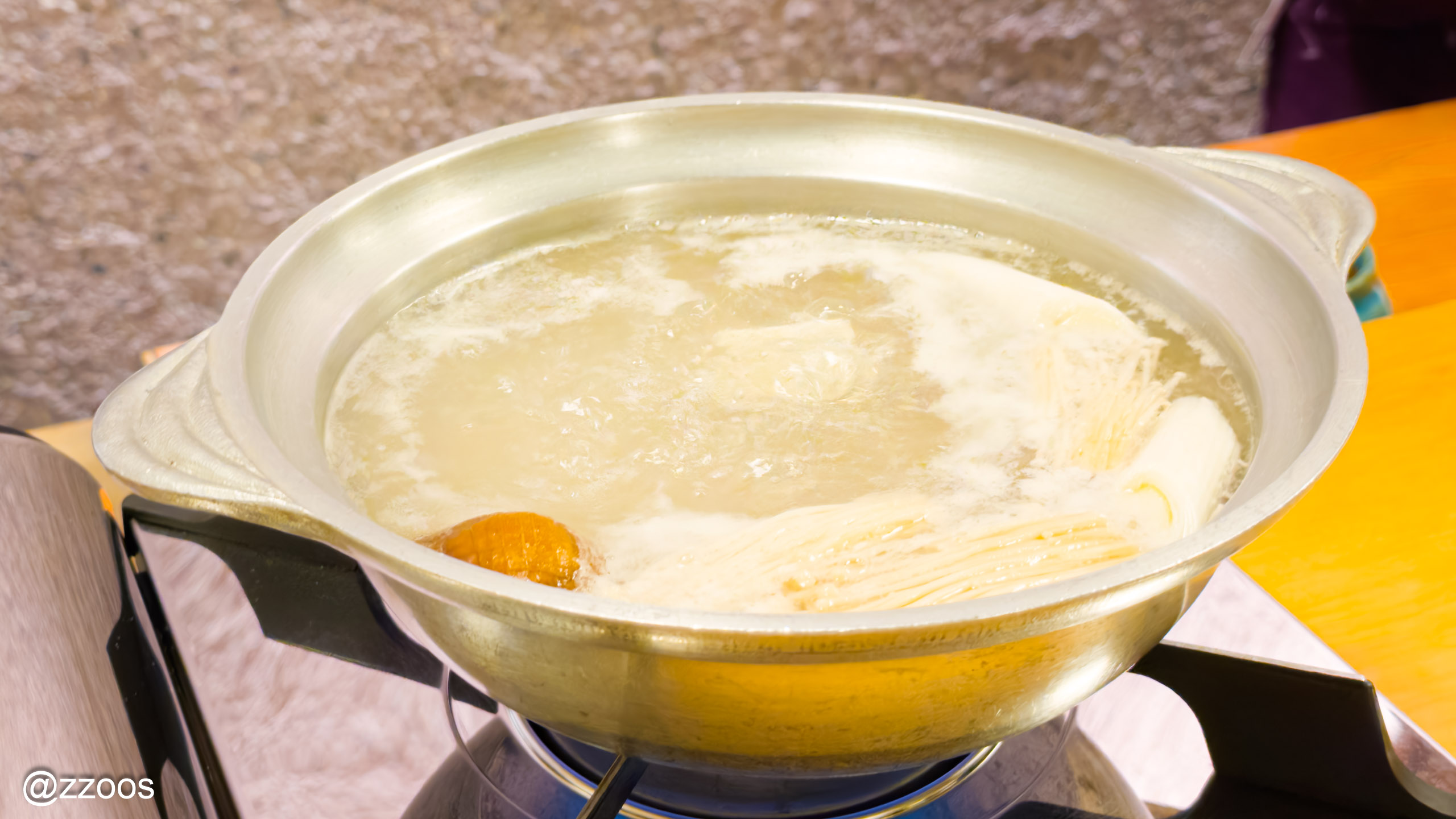
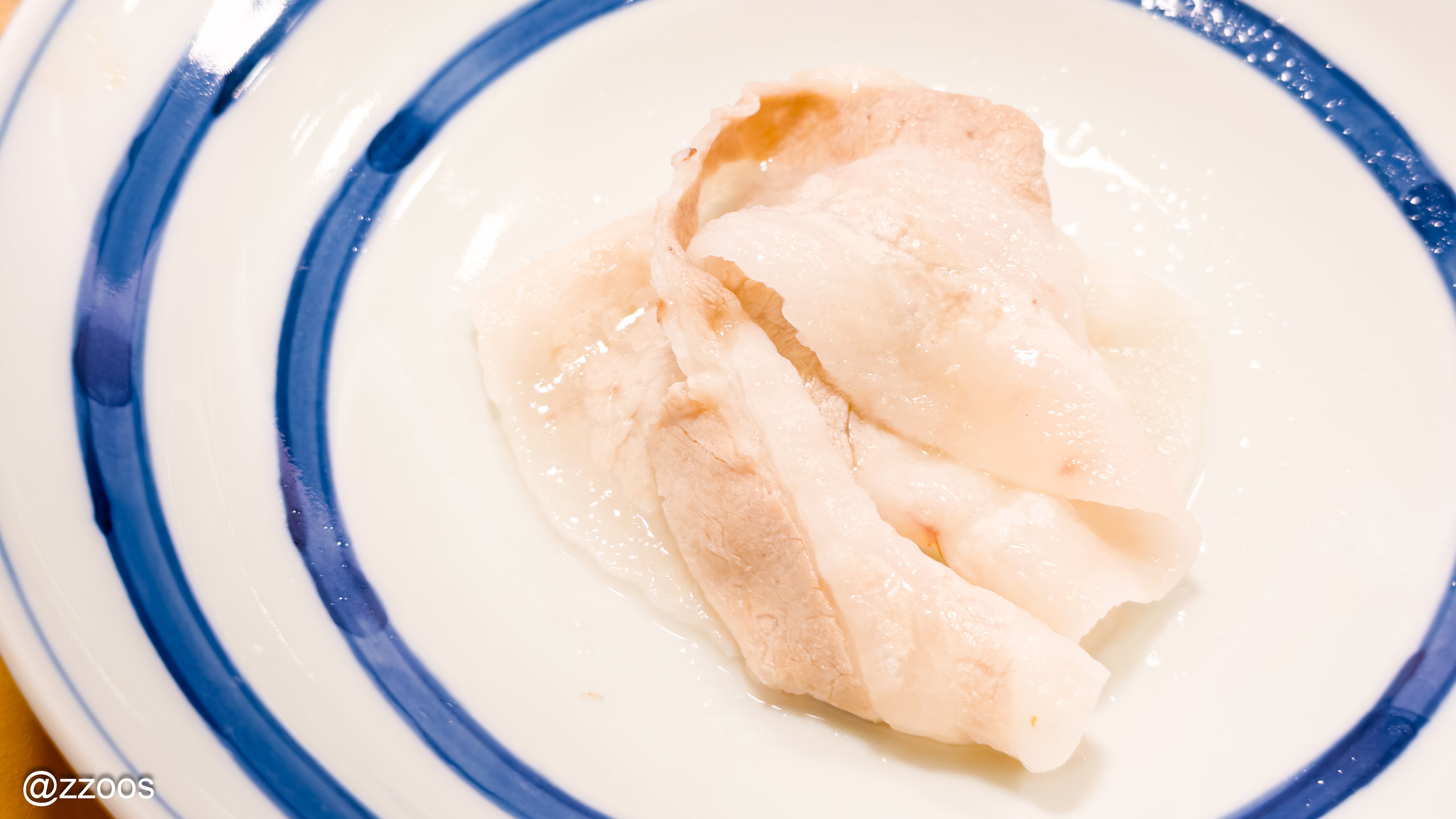
When the broth boils, put the meat in one slice at a time to cook.
There’s no need to cook it too long.
The meat is very thin.
When the pink meat turns white, the white fat melts out and it becomes tender.
Then take the meat out and dip it in the sauce made beforehand.
Tenderness, chewiness, richness and more.
It’s exactly the taste where all of Kurobuta’s charms burst out.
I feel like I could eat this endlessly, you know?
So from next time I should eat Kurobuta shabu-shabu at a different place, not here at Sanei.
If I eat as much shabu-shabu as I want here, I think it would get too expensive.
Some shops specializing in shabu-shabu offer tabehodai(食べ放題, all-you-can-eat), so I could eat as much as I want there.
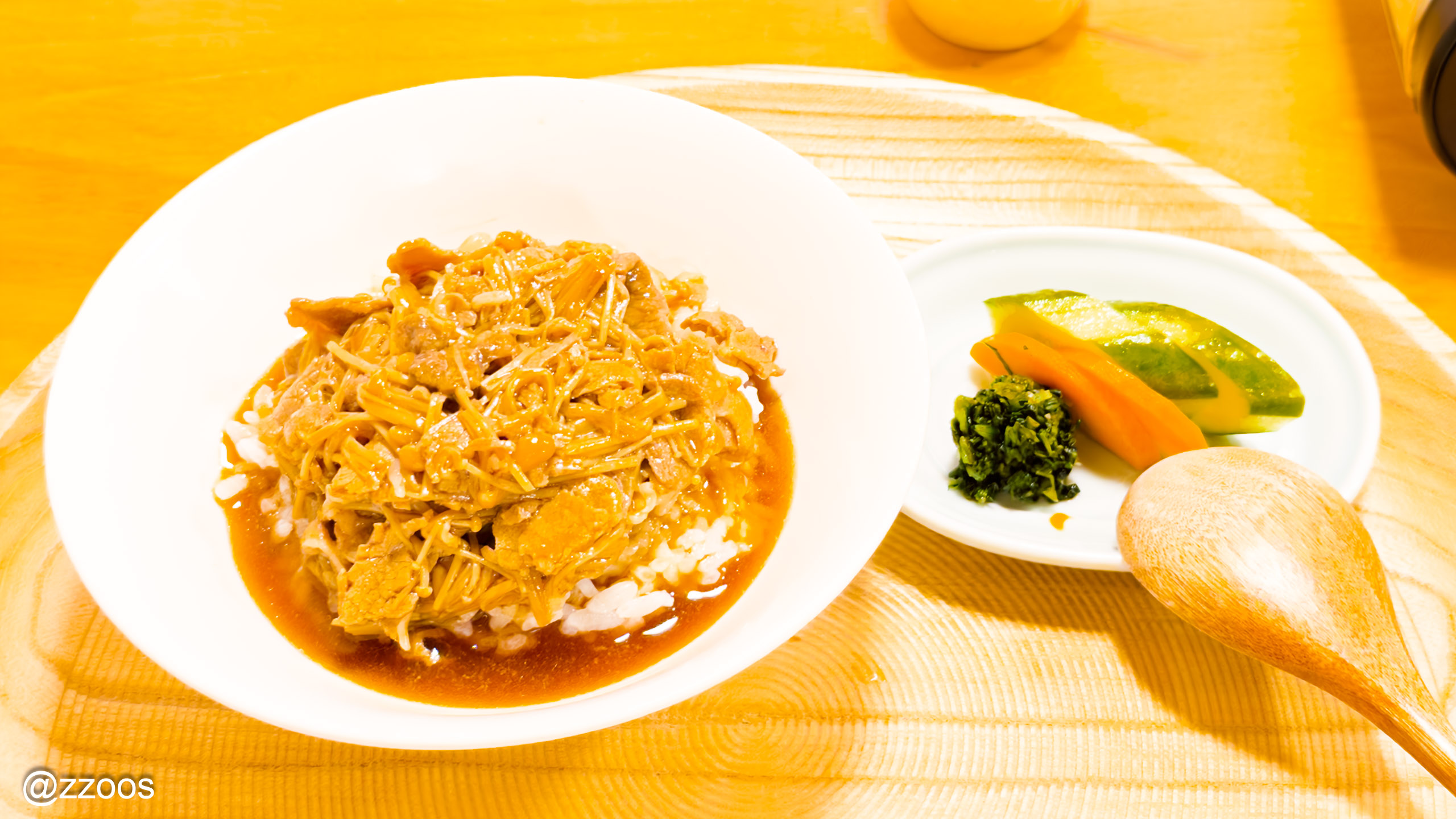
What was originally on the menu was rice porridge made with sea bream broth, you know?
But the okami-san said she could make a different rice dish.
So I asked which was more delicious, and she prepared this, saying I should try it.
It’s a rice bowl with Kurobuta and mushrooms simmered in soy sauce on white rice.
I don’t know the exact name, but this is very delicious.
It feels like eating Korean soy-braised pork, jangjorim, on top of rice.
While eating, I spilled a little soy sauce on the table.
So I quietly wiped it with the oshibori(おしぼり, wet towel) on the table.
A staff member must have seen it.
They quietly replaced the towel.
At a good restaurant, this kind of unseen, quiet service gives great satisfaction.
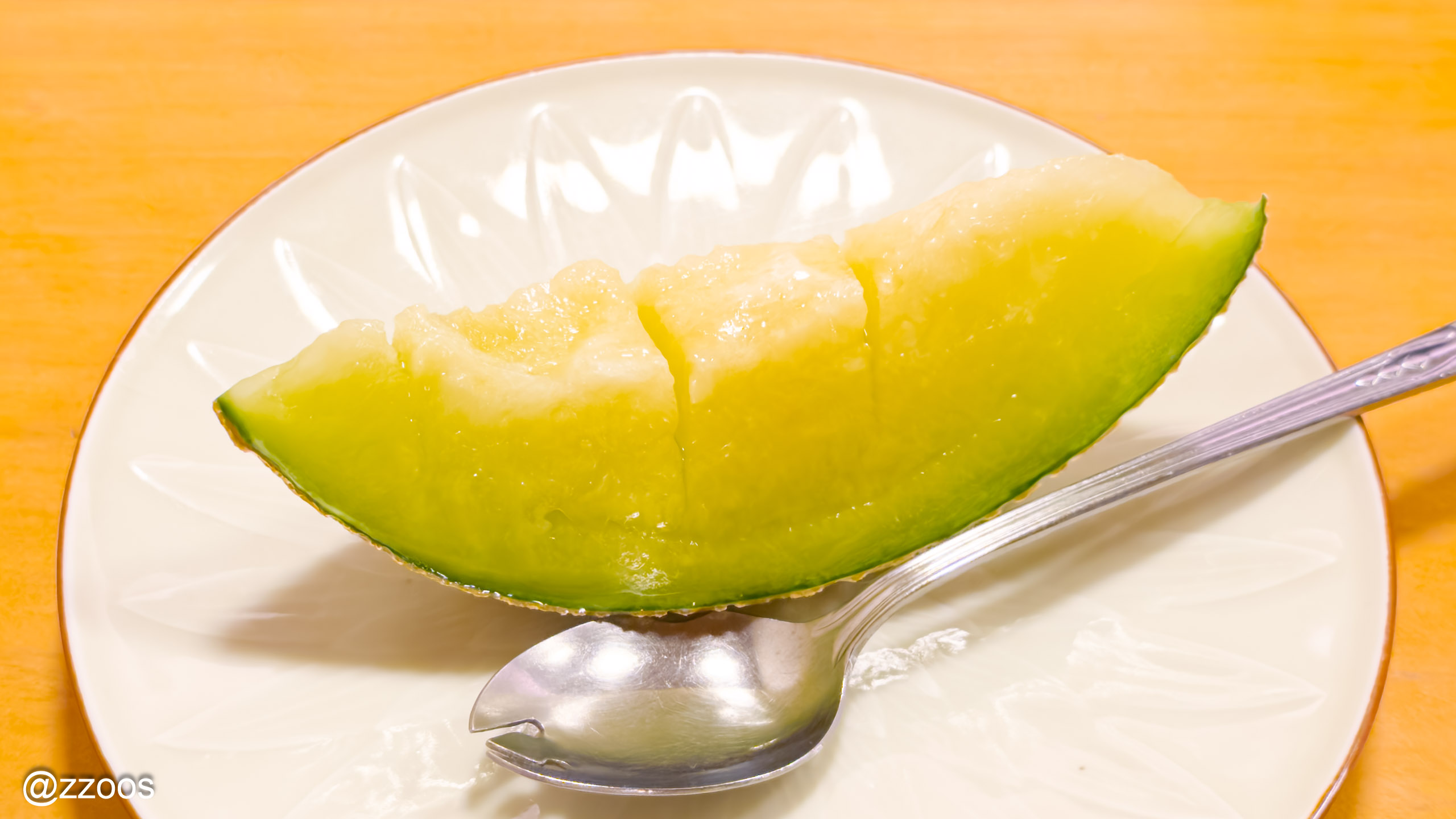
After the rice, melon came out.
Is melon a summer fruit?
It’s small, but incredibly high in sugar.
It was a really delicious melon.
While eating the melon, I held my empty wine glass, wondering whether to have another glass, and if so, what to drink.
Then the okami-san gave me a glass of white wine on the house, as a gift.
This is why I can’t help but like this place.
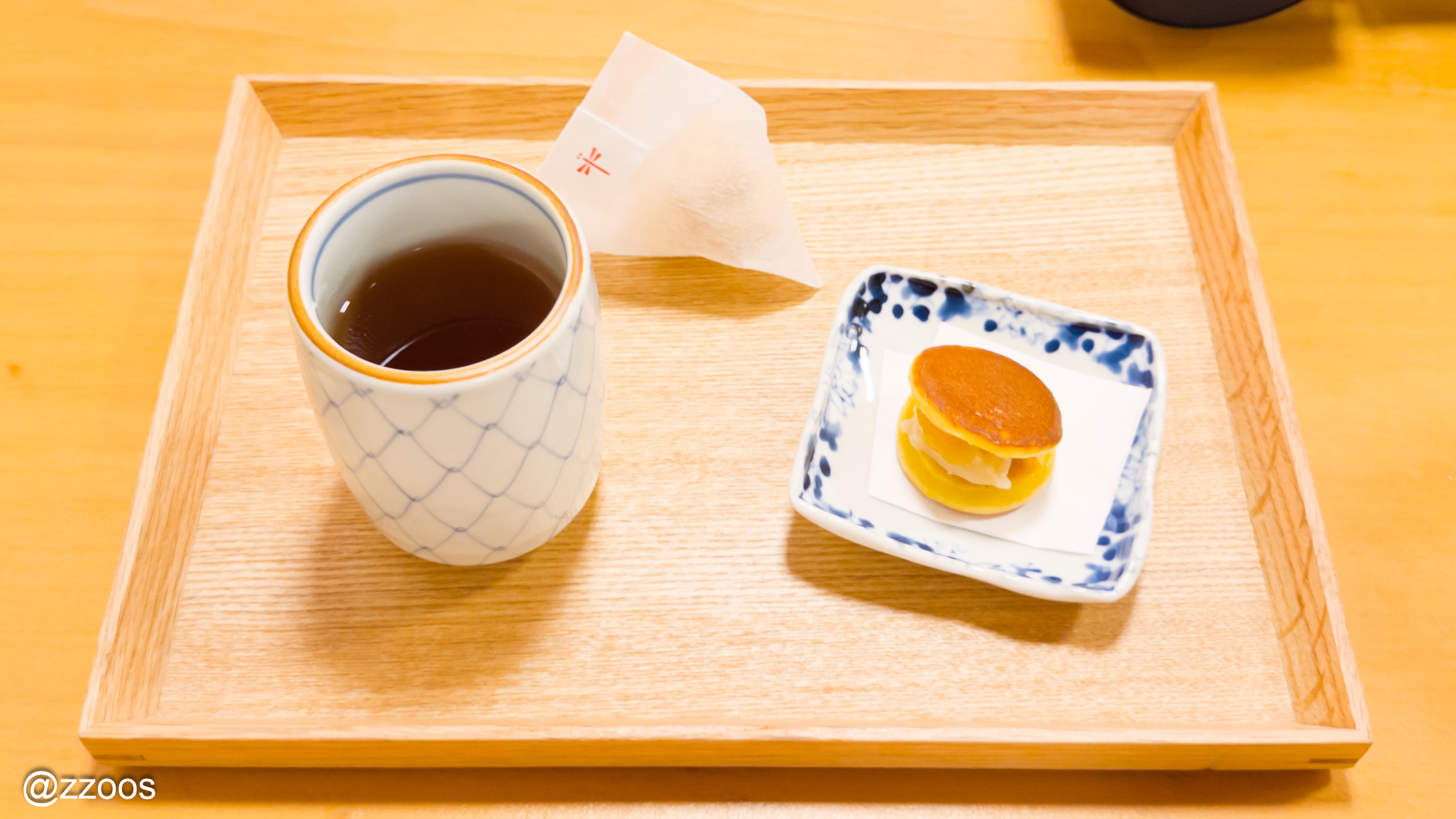
Finally, warm tea, dorayaki(どら焼き), and mamegashi(豆菓子) came out.
While eating the sweets, the okami-san, the previous okami-san and I talked about this and that, the three of us.
I came last year, and came again this year.
So I hope I can come next year too.
We also said today’s food was so delicious, and so on.
It’s the time that wraps up the meal.
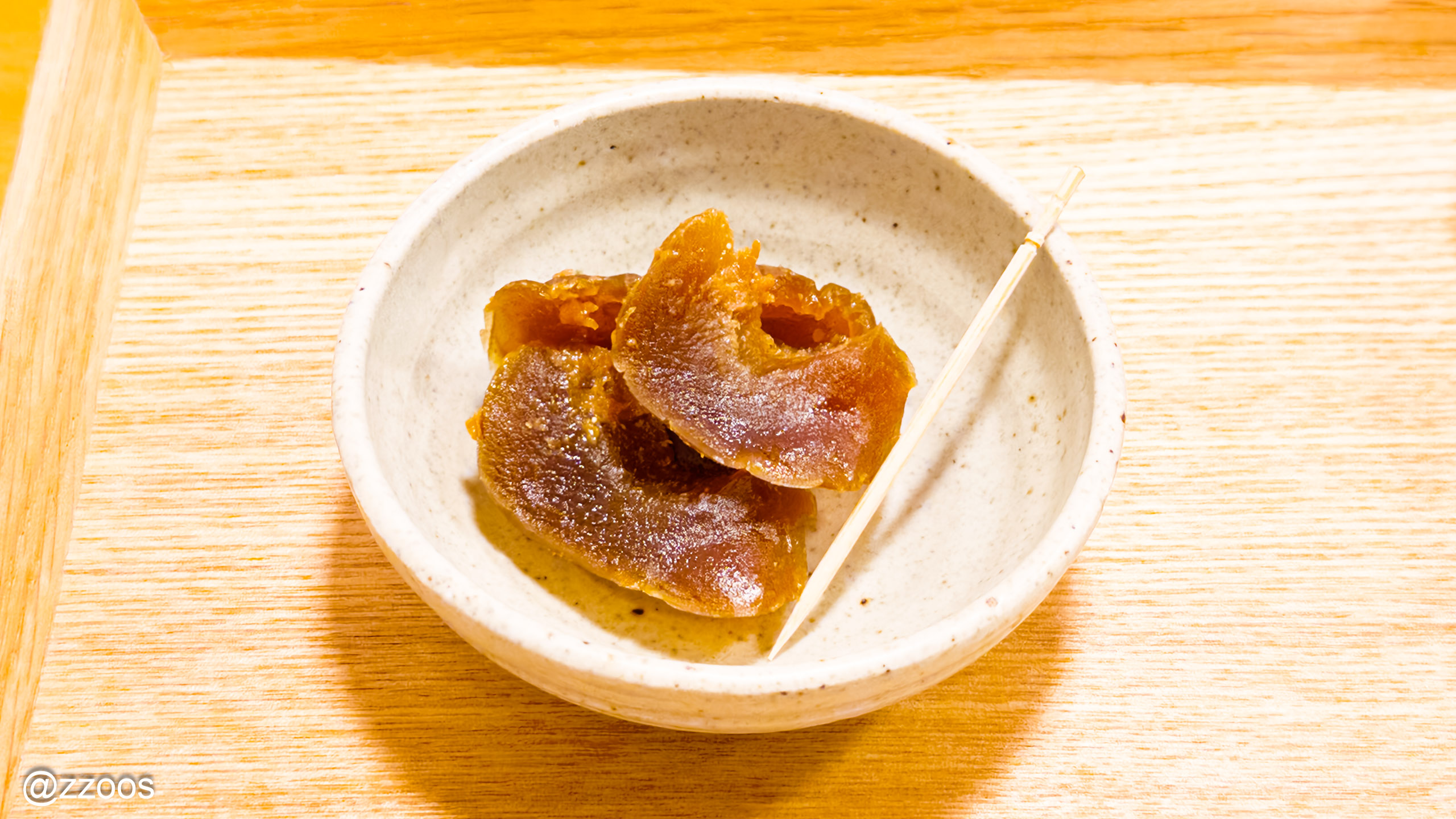
:: Until Next Year
Then I mentioned that I like bettarazuke(べったら漬け).
She said Sanei’s bettarazuke is delicious too.
Then she suddenly went into the kitchen and brought out narazuke(奈良漬け).
If bettarazuke is daikon pickled sweet in rice koji, narazuke is a tsukemono of various vegetables pickled in sake lees.
She said it’s narazuke made here, and told me to try it.
You taste sourness and saltiness, and maybe because it matured in sake lees, you can taste the aroma of sake.
Not the alcohol.
The okami-san said she likes kimchi.
So I said I’d bring some delicious kimchi when I come next year.
Then she said she’d have some delicious bettarazuke ready too.
And so the meal ended with laughter.
It was a really delicious, pleasant meal.
The hospitality of the okami-san and the staff was so good, and every single dish was excellent.
It’s a bit on the pricey side, but with the cheaper course they made recently, it seems more guests are coming little by little.
If someone asks me to recommend a restaurant in Kagoshima, it’s the first place that comes to mind.
It’s a place I want to stop by every time I go to Kagoshima.