Phew, it was a long day. A real push.
The forecast had looked the best for today out of the whole trip. So I had a lot of places I wanted to get through. On top of that, I spent a good chunk of the morning at Kanazawa Station trying to book a bus to Shirakawago(白川郷).
After lunch, I started at Omicho Market, walked along Ohori-dori, stopped by Oyama Shrine, took in Kanazawa Castle, and then made it all the way to Kenrokuen. This kind of itinerary is only possible in Kanazawa. Everything is compact enough to cover on foot.
The flip side is that if you don’t get it all done in one day, you end up retracing basically the same route. That’s why I wanted to knock it all out today.
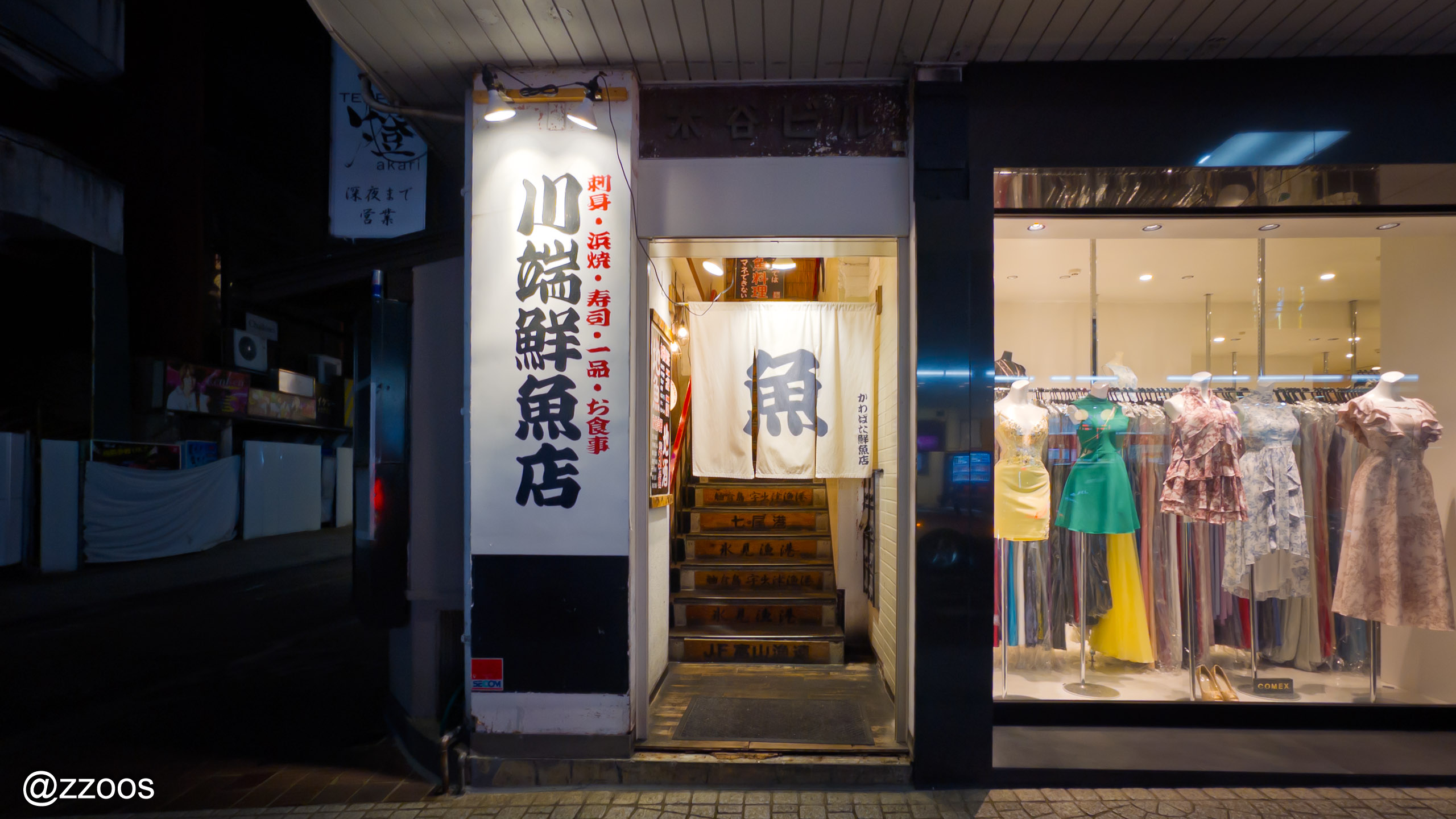
Before leaving Kenrokuen, I sat down on a bench near Hisago-ike pond and opened Tabelog. I wanted to search for dinner and, if possible, make a reservation. I’d walked a lot that day and was tired. I didn’t have the energy to wander around checking vibes and looking for empty seats the way I had the night before.
I was searching for a place to drink with fresh Kanazawa seafood when I found Kawabata Sengyo-ten Katamachi-ten (川端鮮魚店 片町店). It had a Tabelog score of 3.5 — which puts it near the top among the places I visited this trip. Tabelog scores are notoriously stingy, so a 3.5 basically means there’s a line out the door.
Strangely, though, the Google Maps rating was only 3.1. Google Maps tends to run high, so a 4.0-plus place can still disappoint — 3.1 is basically a red flag.
Two very different takes. I had no idea what to expect.
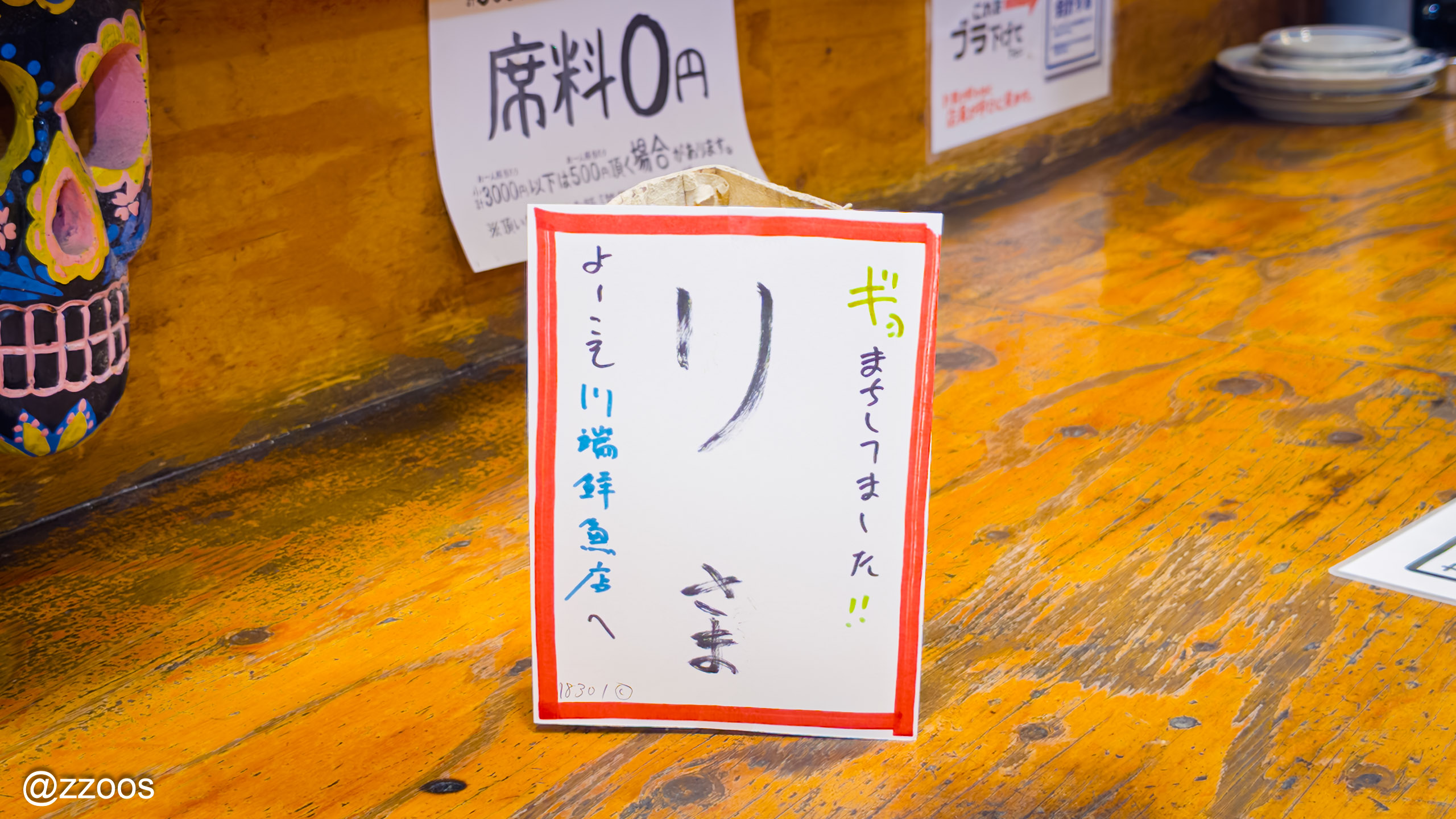
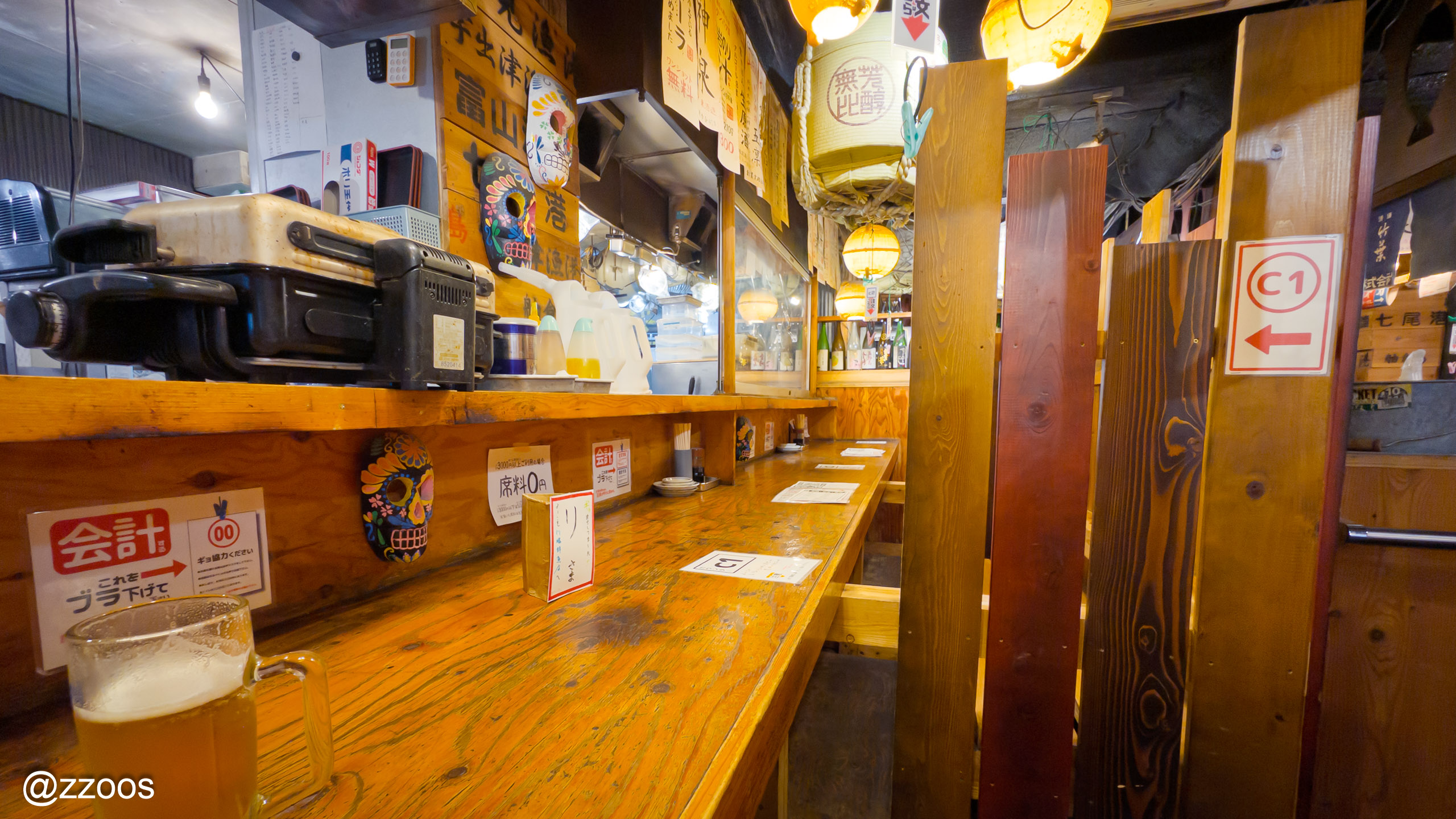
I arrived at my reserved time and was shown to my seat.
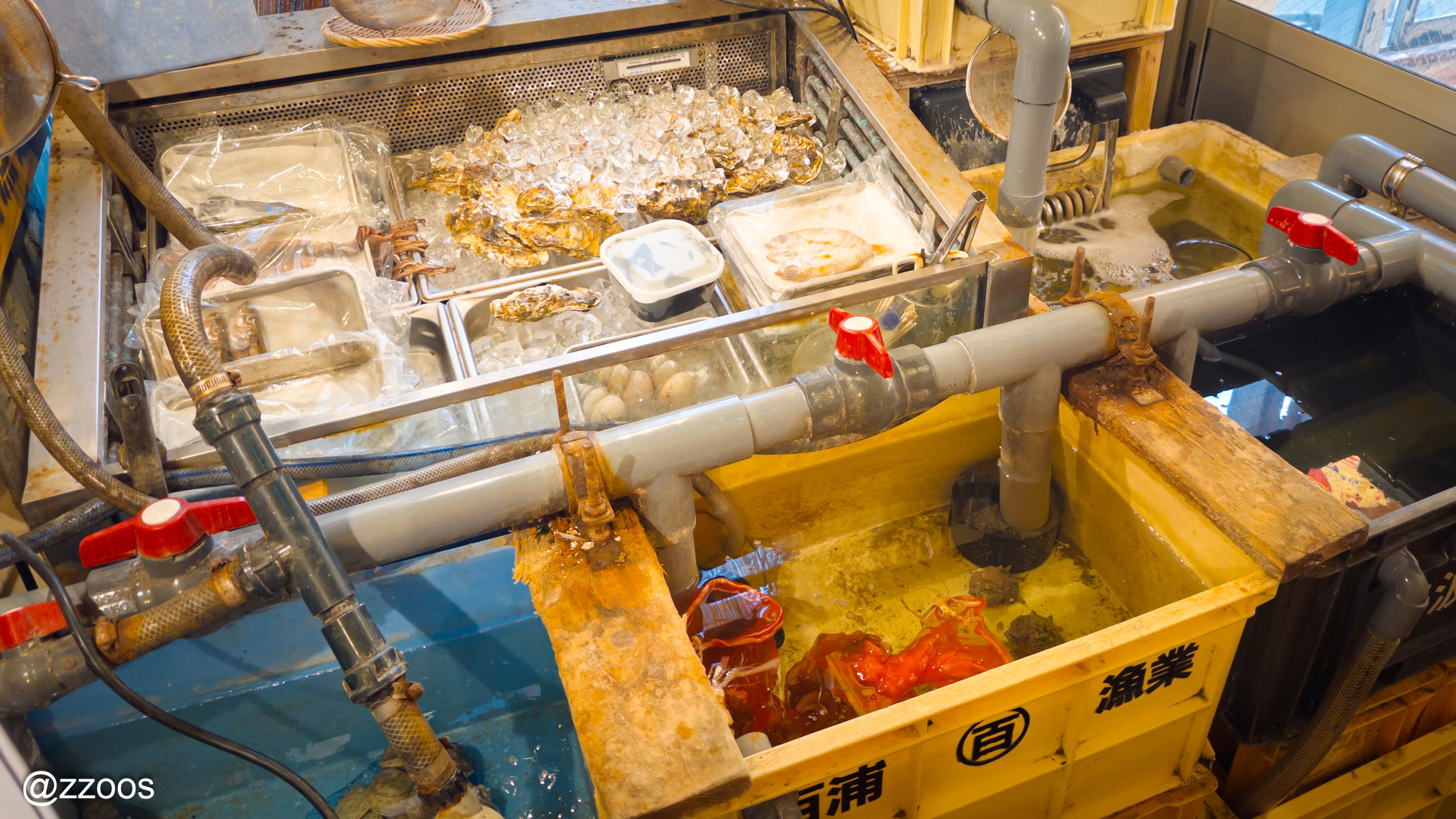
Right at the entrance, there was something like a fish tank filled with seafood. The kind of display that says: our ingredients are fresh.
The person who seemed to be the master spotted from my reservation name that I wasn’t Japanese and started to switch to English — but I greeted him in Japanese first, and I caught a flicker of relief on his face. He explained the system in Japanese.
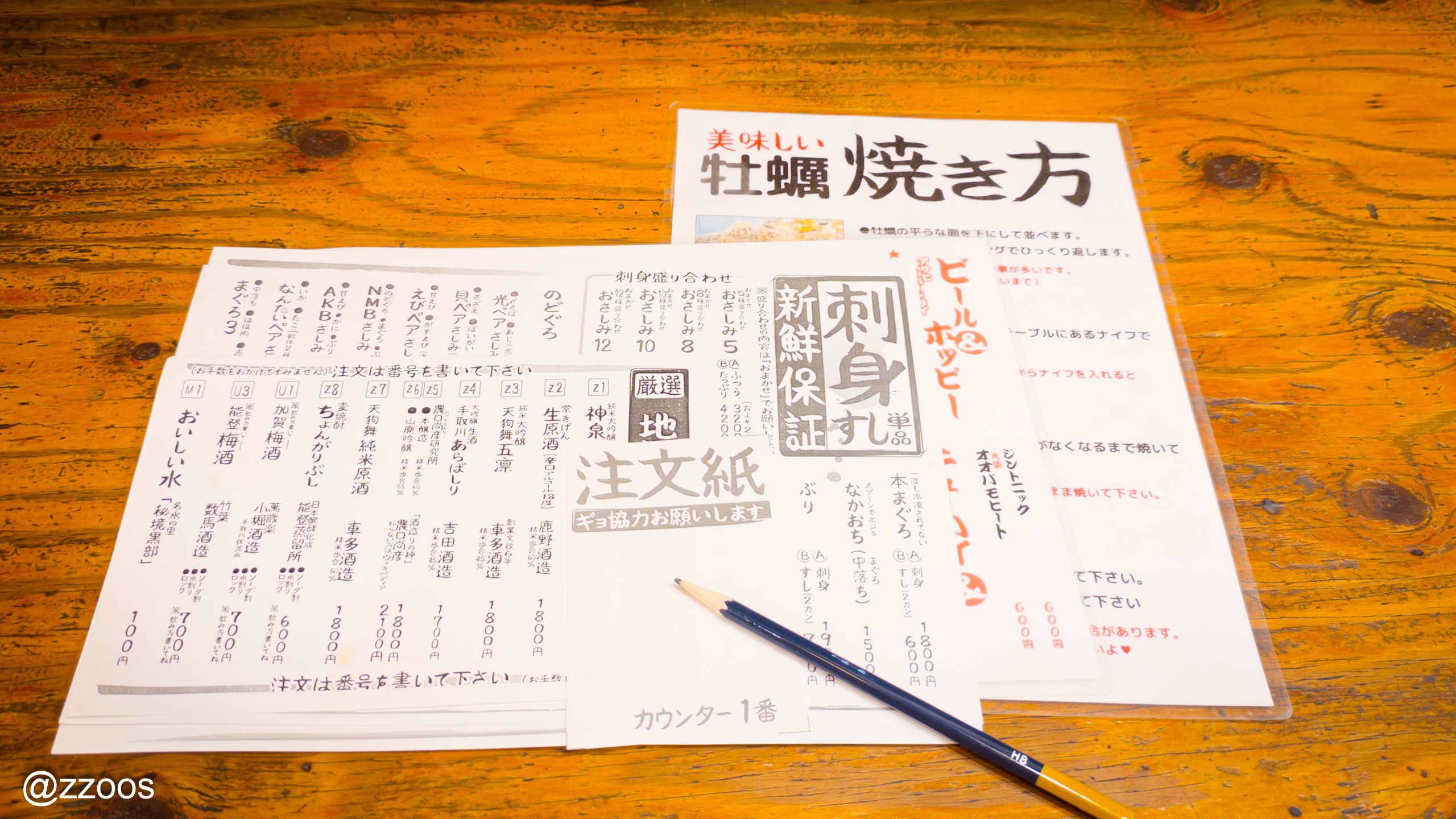
At the table was a menu, a pencil, and an order sheet. You write what you want, clip it to the peg hanging next to your seat, and a staff member comes to pick it up.
Every time I ordered, I had to carefully “draw” the Japanese kanji on the sheet — which was its own kind of workout.
One small mercy: ordering nihonshu was easier since there were numbers on the menu.
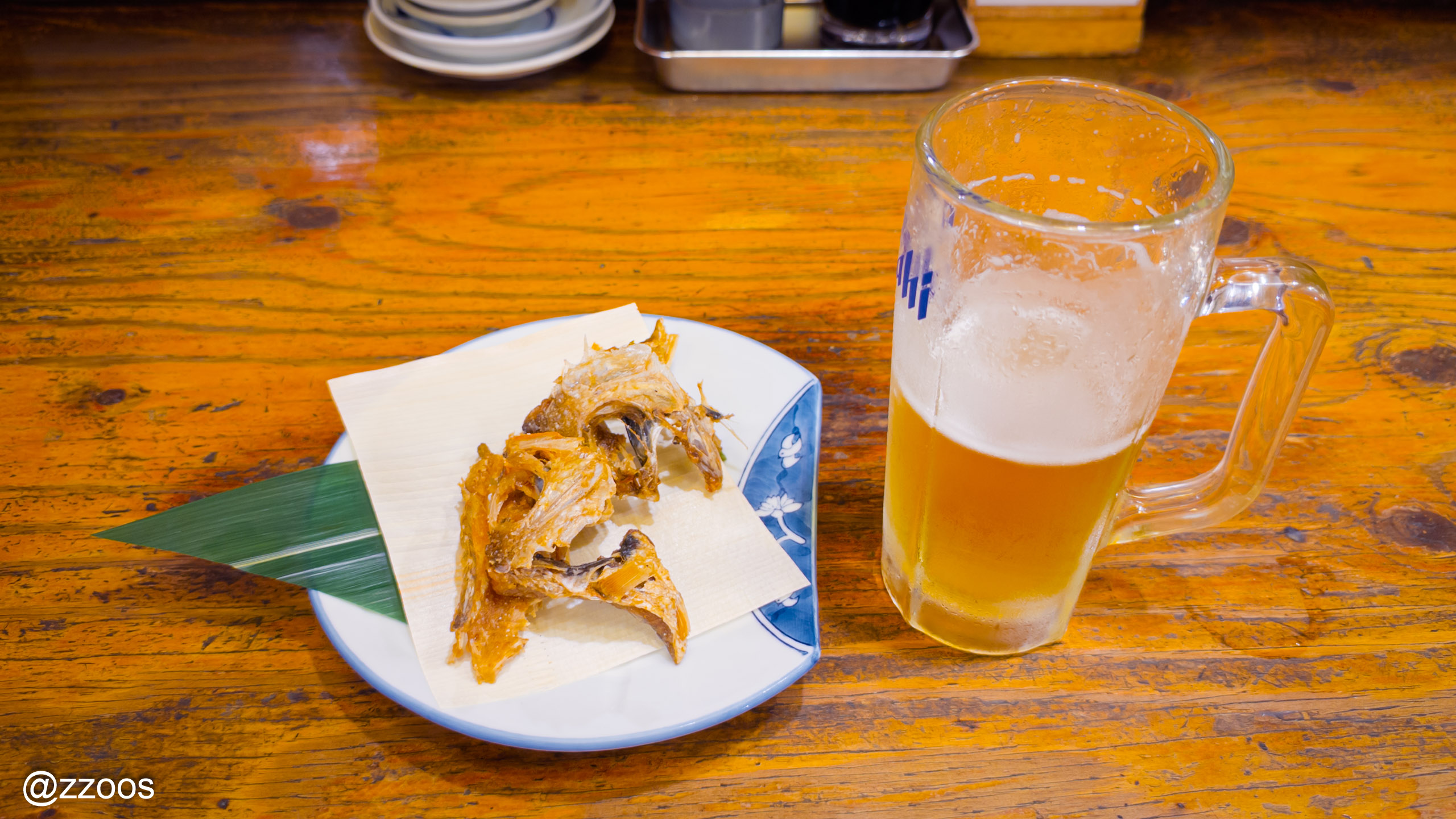
After all that walking, sitting down made me want a draft beer — even though I’m not really a beer person.
So I ordered one first — toriaezu biiru, as they say — and slowly looked through the menu.
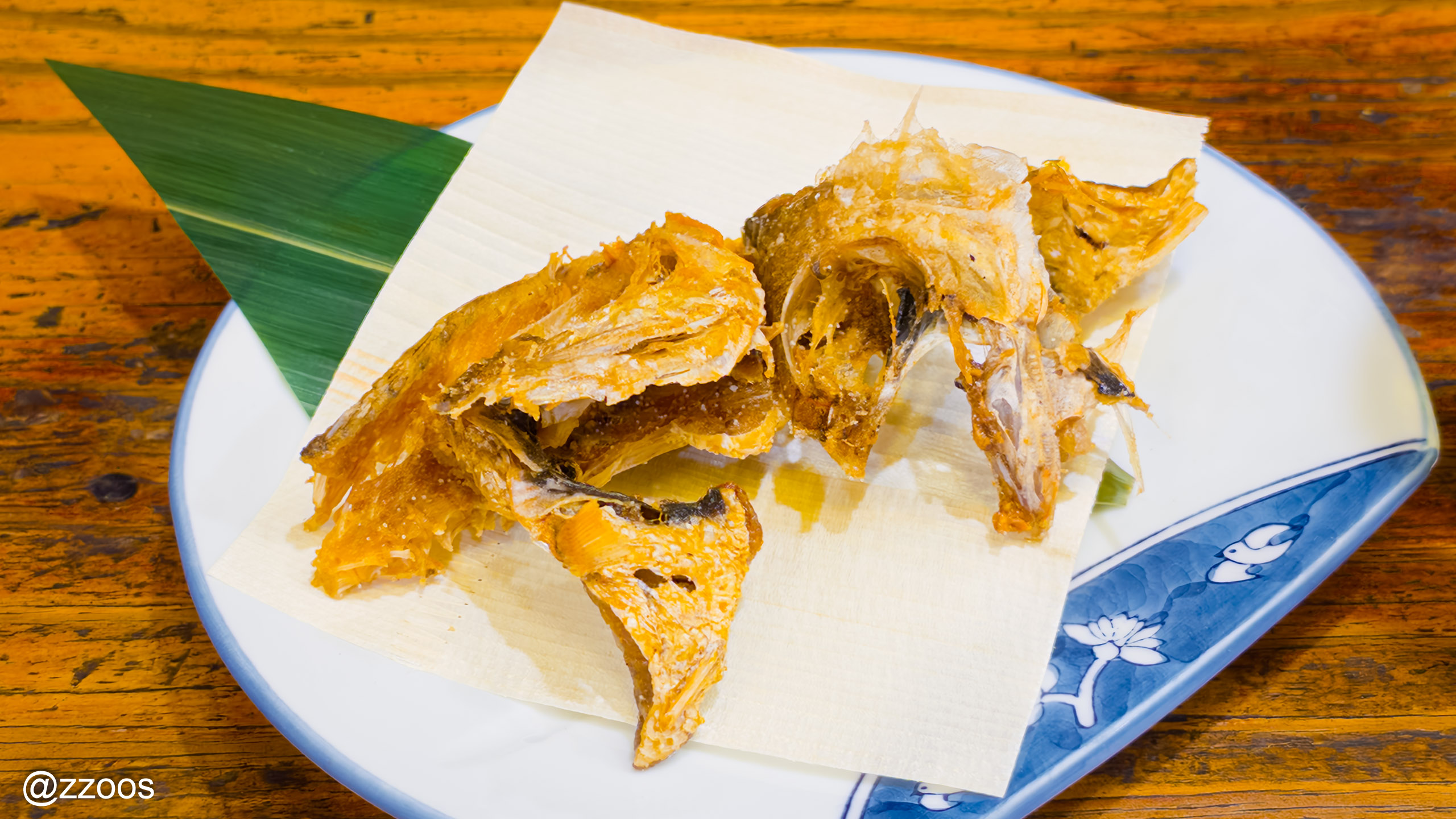
I was still working my way through it when the master brought over a little something. A fried nodoguro head, apparently. A complimentary dish — or maybe it was an otoshi? Either way, it was excellent. Fried crisp, so you could eat the whole thing. Really nutty.
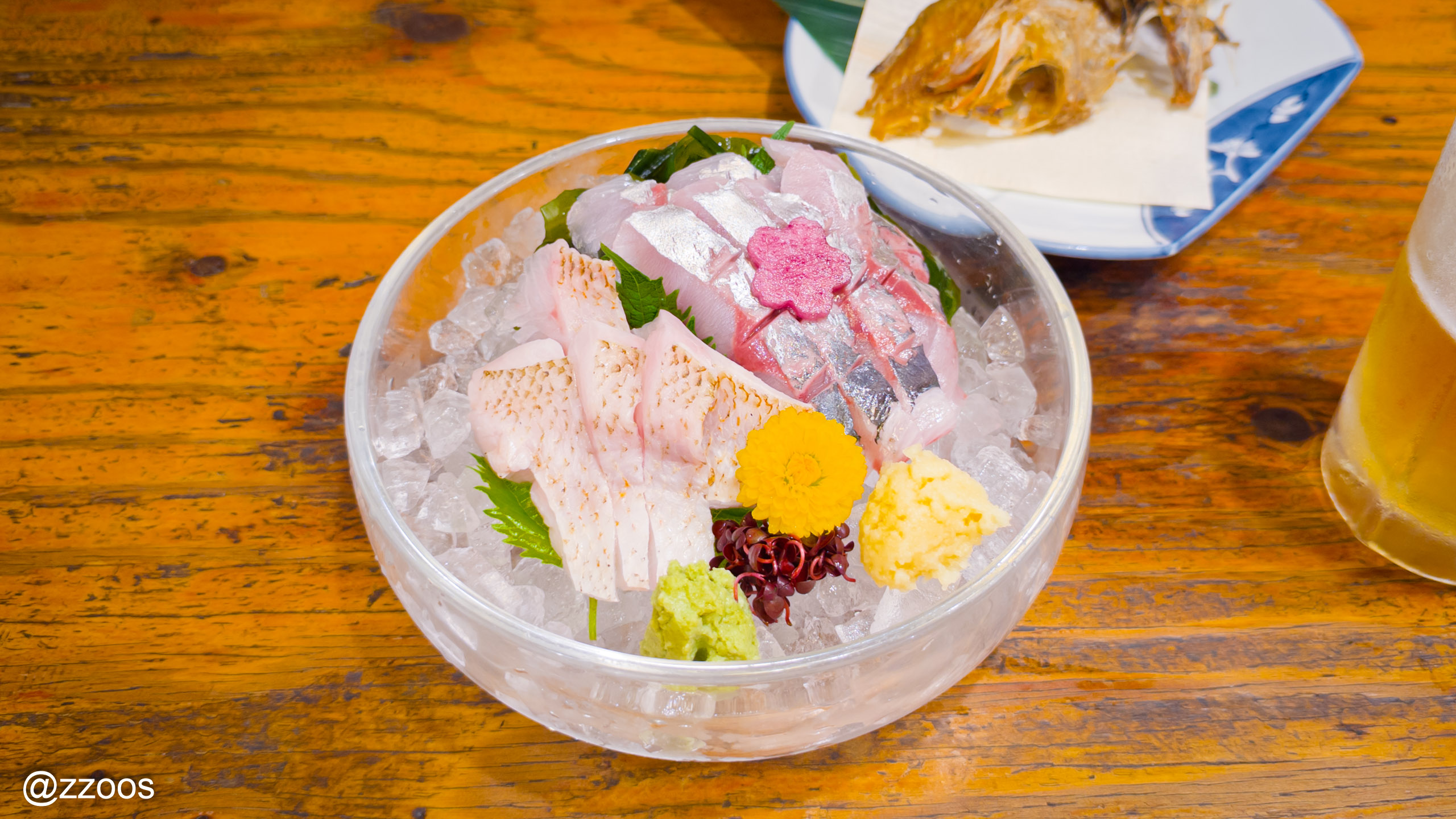
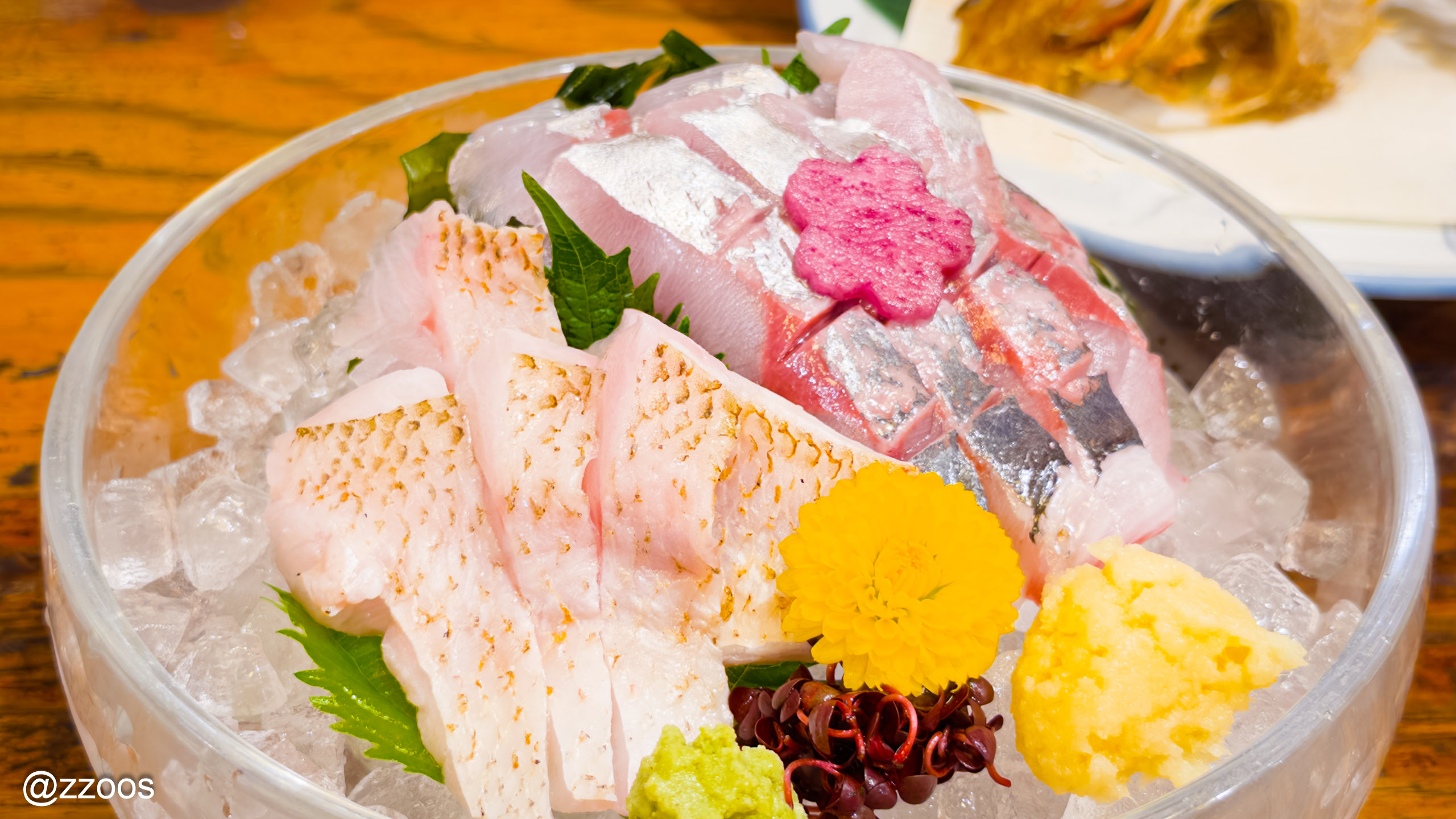
My first order was nodoguro sashimi — Kanazawa’s signature fish, the same one I’d had the night before. Not in season right now, but based on yesterday’s experience, it holds up anyway.
Second was horse mackerel. A fish I really love, but oddly hard to find in Korea. Just look at the bounce and the fat on that flesh in the photo.
They came together on one plate. Delicious — no need to say more.
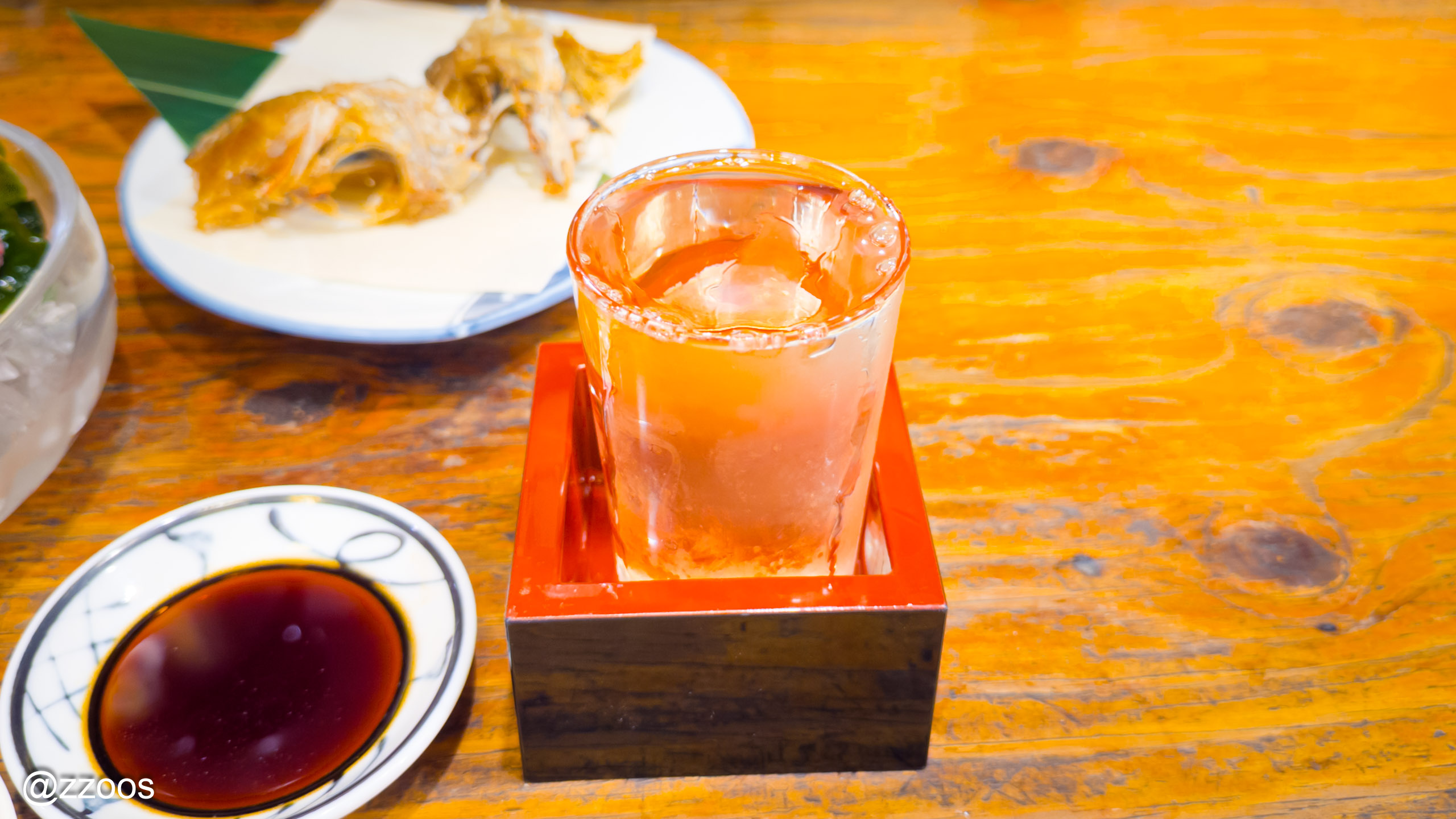
Along with the food, I had about two glasses of nihonshu. Rack up too many and the dinner bill climbs fast. The night before had already come out to more than I expected.
The two I had here were the Noguchi Naohiko Sake Institute’s Honjozo Muroka Nama Genshu (農口尚彦研究所 本醸造酒 無濾過生原酒) and Tedorigawa Daiginjo Namazake Arabashiri (手取川 大吟醸生酒 あらばしり). Both from Ishikawa Prefecture, which is where Kanazawa is. When you travel, you drink the local sake.
The first glass was the Noguchi Naohiko Institute’s honjozo. A brewery name I’d heard of — well known in the sake world.
Honjozo, unlike junmai, allows the use of distilled alcohol in the brewing process, which usually puts it in the cheaper tier. But Noguchi Naohiko’s honjozo is in a completely different league.
I’m not sure how they used the distilled alcohol, but they’ve managed to clean up that bitter, lingering aftertaste completely. It’s clearly a more traditional style — not the modern style I usually go for — but once that aftertaste disappears, it becomes something genuinely compelling.
This is actually the most entry-level bottle from the Noguchi Naohiko Sake Institute. And yet, at this level, you want to try everything else they make.
The second glass was a Tedorigawa — the same brewery that disappointed me the night before, but a different bottle. Arabashiri refers to the very first sake that flows out during pressing, without any applied pressure. The middle portion — nakadori — is generally considered the finest, so arabashiri sits somewhere between a first-run novelty and a sake with its own distinct character.
This one was far better than the Junmai Daiginjo Ishikawa-mon I’d had the previous night. Much more my style. The one the night before had too much of that rice-forward taste. This one has a cleaner profile that shows off what Tedorigawa is really about — some umami underneath, and a fresh, almost fruity note. Modern-style nihonshu, no question.
After this, Tedorigawa started to grow on me. I kept ordering it throughout the rest of the trip, and brought a bottle home when I left.
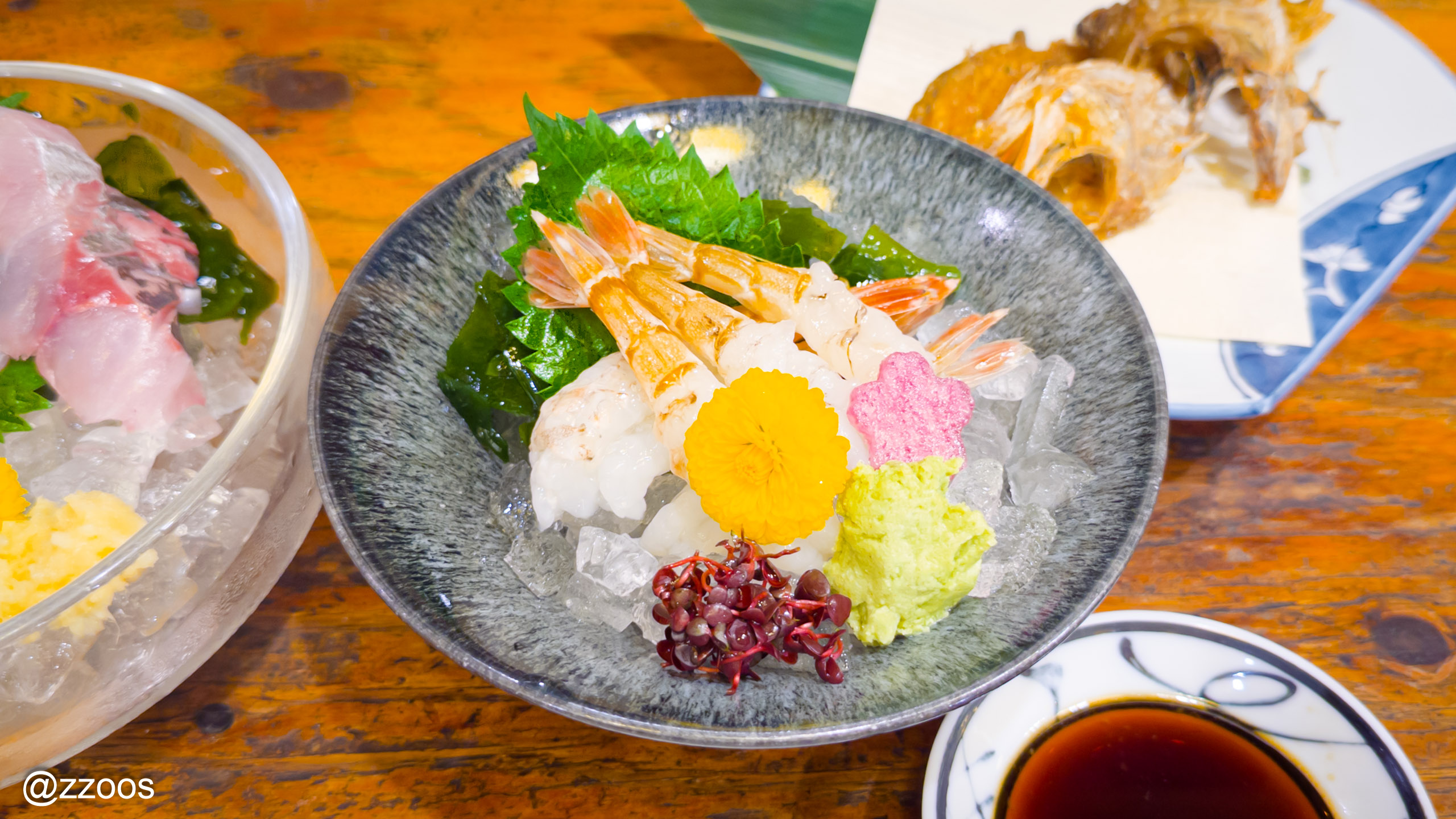
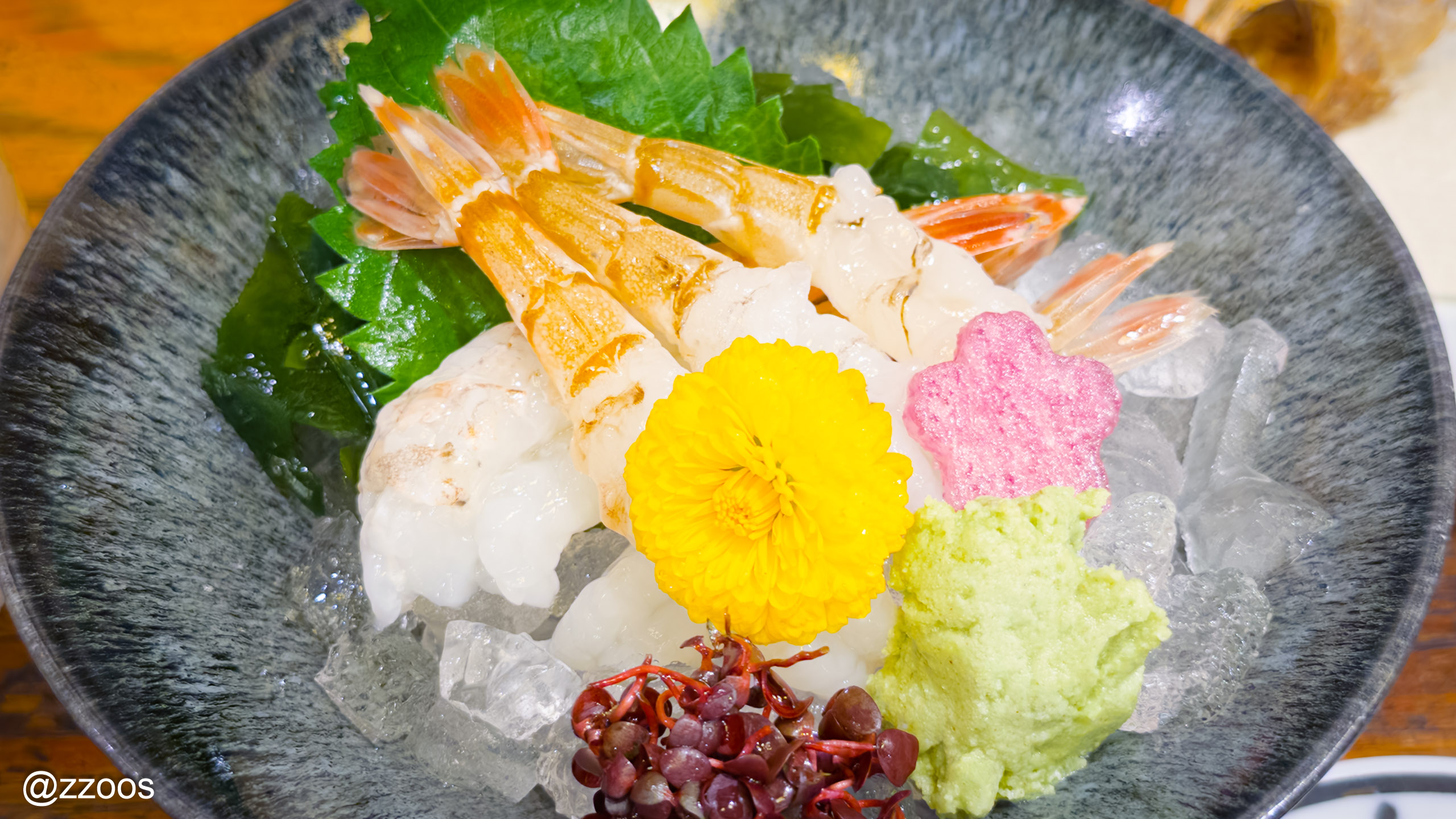
After the sashimi, I ordered gasu-ebi (ガスエビ). It’s a shrimp you almost never see outside Japan — locally known as gasu-ebi, with no real equivalent name in English.
Before the trip, I’d done some research and knew that Kanazawa had excellent fresh seafood. I knew nodoguro was the famous one, and that there was also a well-known shrimp. I assumed that shrimp was gasu-ebi, ordered it, loved it, and just kept going back for more.
What I didn’t know was that the real star shrimp in this area is actually shiro-ebi (白えび). I’d only registered “there’s a famous shrimp” — it never occurred to me that there might be two. So unfortunately, I never got to try shiro-ebi the entire trip.
Anyway — gasu-ebi is genuinely something else. As you chew through that almost-melting flesh, there’s no subtle sweetness; instead, a bold, intense sweetness hits you from behind. It’s on a completely different level from any other shrimp I’ve had.
So for me, gasu-ebi — not nodoguro — became the seafood that defines Kanazawa.
That title would later get handed off to something else. But that’s a story for another time.
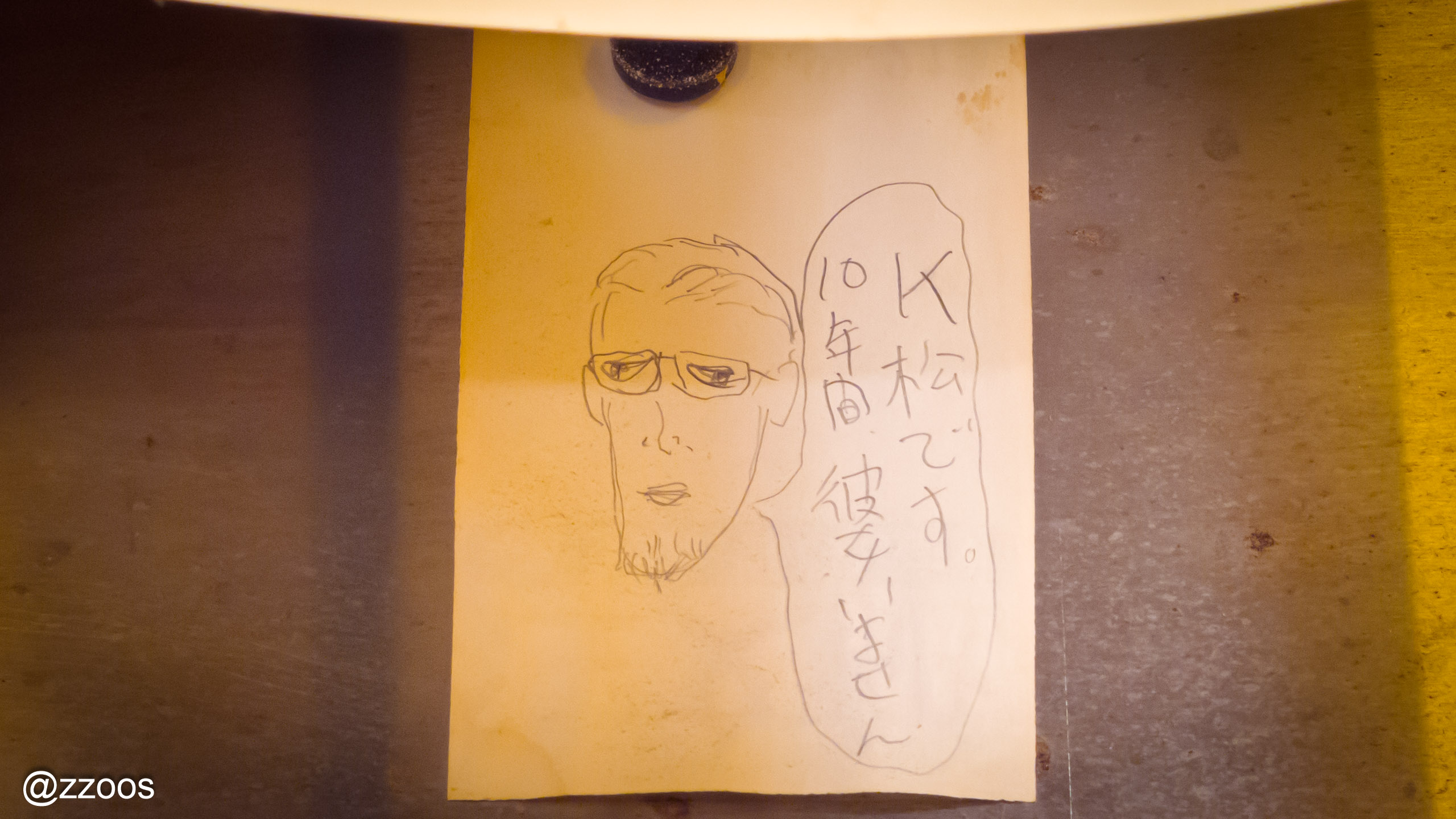
The expensive items — nodoguro sashimi, gasu-ebi — were filling my stomach slowly and my bill quickly.
So at that point I ordered something cheap to fill up on: sagoshi (サゴシ) sushi. Sagoshi is a young Spanish mackerel — not quite a juvenile, more like a teenager.
This place had an interesting setup where you could order the fish either as sashimi or as sushi. And sagoshi sushi was one of the cheapest things on the menu. So I ordered it to fill up — and…
Yeah, it wasn’t good.
Since it was my first time having sagoshi, I’m not sure if that’s just how the fish is, or if it was the prep, or the season. I get that a younger fish would have less depth of flavor. But the texture was tough rather than springy.
Was it so unmemorable that I forgot to take a photo? No photo left of it.
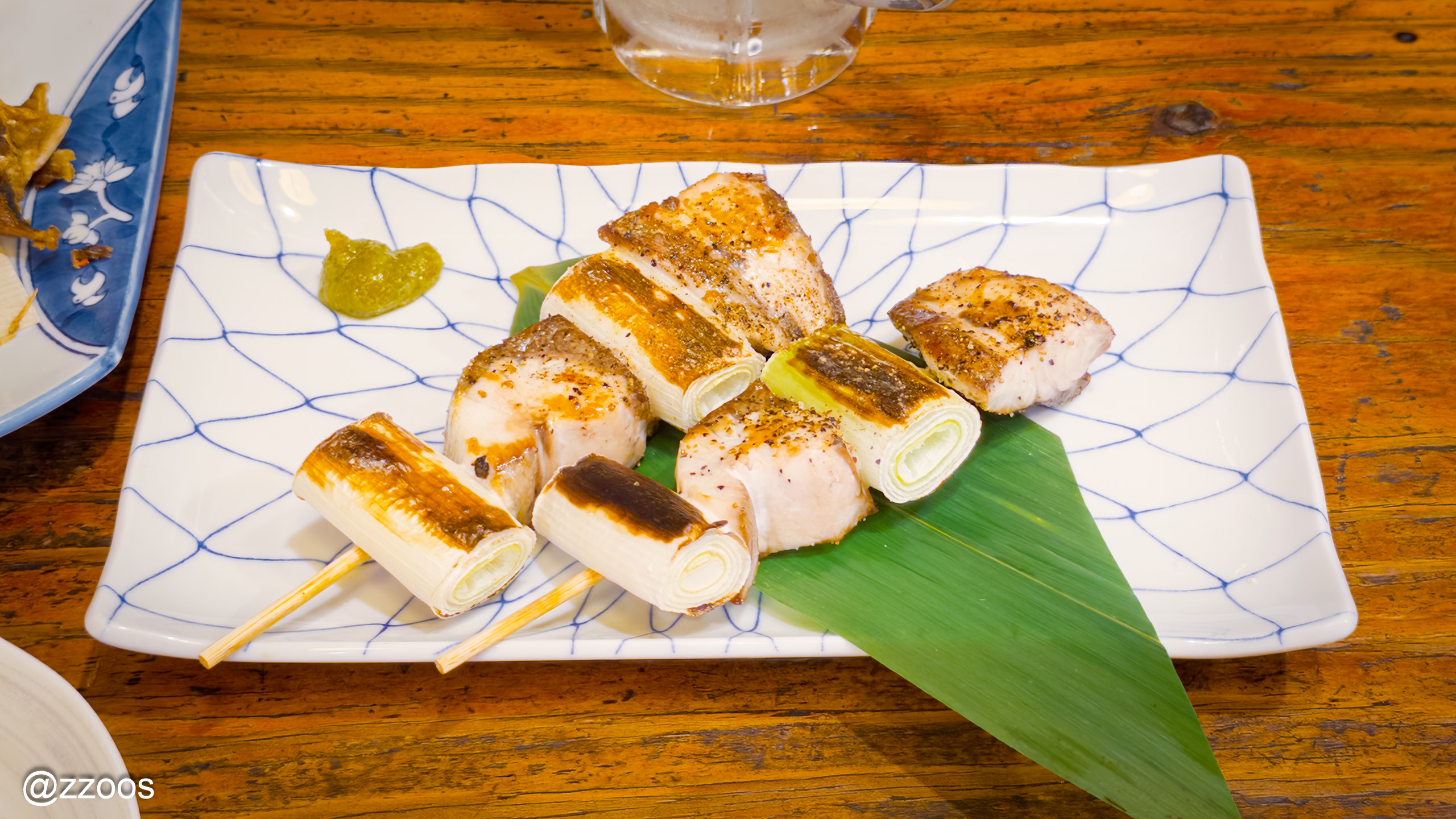
Last thing: I spotted buri negima (ぶりねぎま) on the menu and couldn’t resist. Buri is yellowtail, and negima is that skewer of meat and green onion you get at yakitori places, right? So it’s the same thing — but with yellowtail instead of chicken.
How could you not be curious? Ordered it immediately.
Yellowtail and green onion together… hmm. Didn’t really work for me. Better to eat the yellowtail on its own and use the green onion as a palate cleanser between bites.
And without the fat of winter yellowtail, grilling it made it dry. Just okay for me.
That was it. Time to move on — second stop of the night.
Overall, the place has good space and the seafood is fresh, so it’s worth a visit. But the cooking itself wasn’t anything special. At the end of the day, this is a casual izakaya catering to tourists. You can book through Tabelog, so it’s not a bad option.
For something better, you have to do the legwork.