It was the morning of the third day of a five-day trip. As always, I did not rush. I woke up slowly and went to the public bath to wash.
I put the used towel in my bag and hung it outside the room door. I also left the trash can in front of the door. I cannot fully agree with hotel policies that shift inconvenience to guests under the excuse of being eco-friendly, but when I think of it as a way to keep accommodation prices lower, it is a level of inconvenience I can accept.
Since I woke up late and finished the morning routine, it was time to go out for lunch.
Today’s destination was Menya Sho (麺屋 將) in Nakamachi (中町)
Someone recommended this place when I said I like Hakata-style tonkotsu ramen. It might be the hottest ramen shop in Karatsu.
I left the hotel and took a bus.
During this trip, the ICOCA card registered on my iPhone was very useful. In Kumamoto and Kagoshima I had to buy separate local cards, so I often just paid with cash. But in Fukuoka and Karatsu, nationwide IC cards work, which makes things much easier. Especially when the transit card is registered on an iPhone, you only need to tap the phone. It is really convenient.
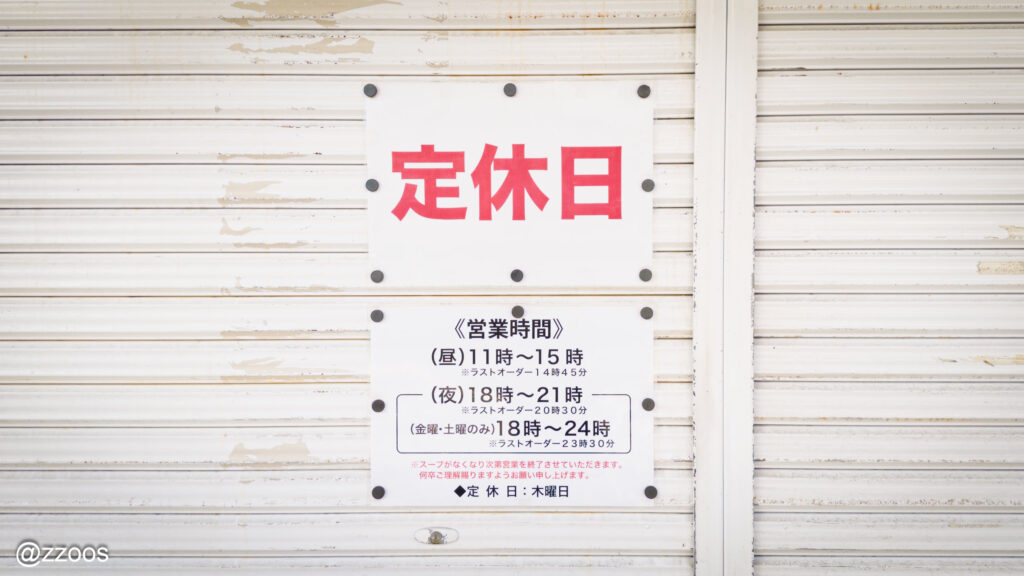
Oh no. Of all days, today is Menya Sho’s regular closing day.
Strangely, this kind of thing happens to me quite often. I always check things like opening hours, popular menu items, or whether reservations are needed if ratings are high. But somehow, every time… I forget to check the regular closing day.
I stood blankly in front of the shop for a moment, then quickly came back to my senses.
This is not the only restaurant here. Since I am already downtown, there must be many places for lunch. If I walk around and look at the town a bit, I might find somewhere that catches my eye.
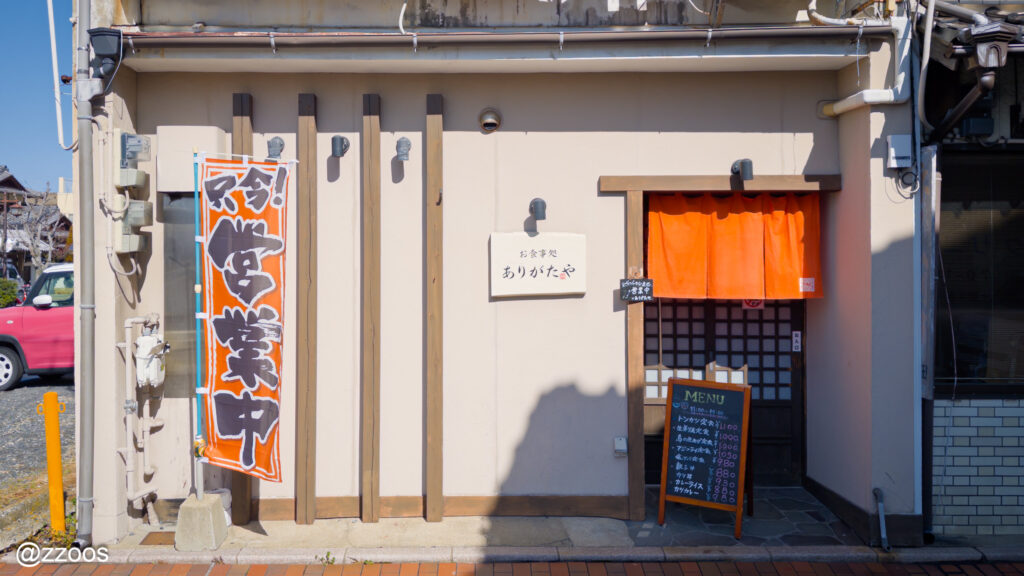
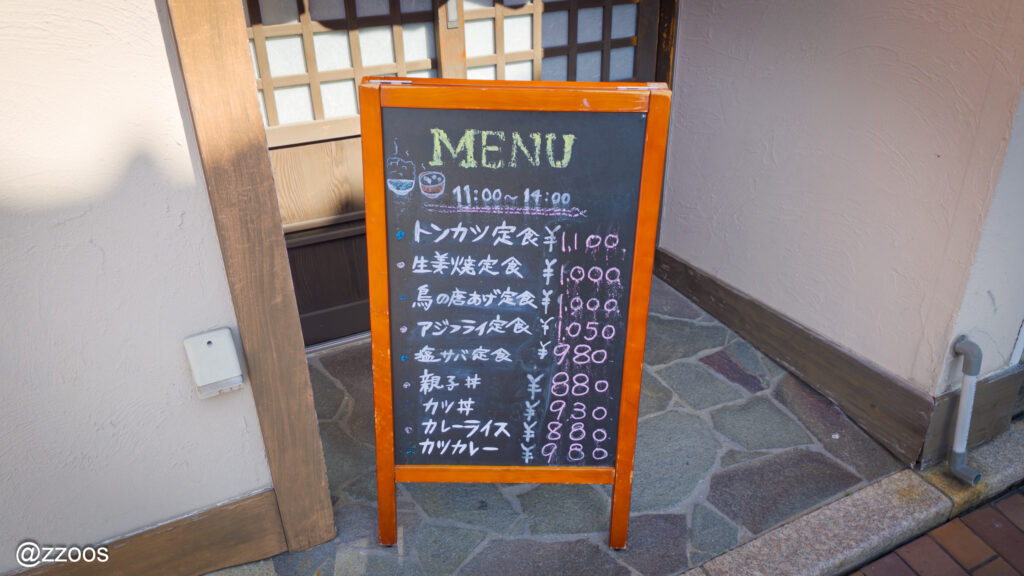
I found this place after walking through several small alleys.
Looking at the menu board outside, it seemed to serve typical meal sets such as tonkatsu set, shogayaki set, and karaage set. This was exactly the kind of restaurant I was looking for. I really liked the menu here. And it was inexpensive.
The restaurant is called Arigataya (ありがたや).
If translated, it might mean something like “a grateful place.” It seems to be a name based on arigato (ありがとう).
Apparently there are quite a few shop names like this in Japan. For example, Arigataya would be “a grateful place,” Shiawaseya (しあわせや) would be “a happy place,” and Umaiya (うまいや) would be “a tasty place.”
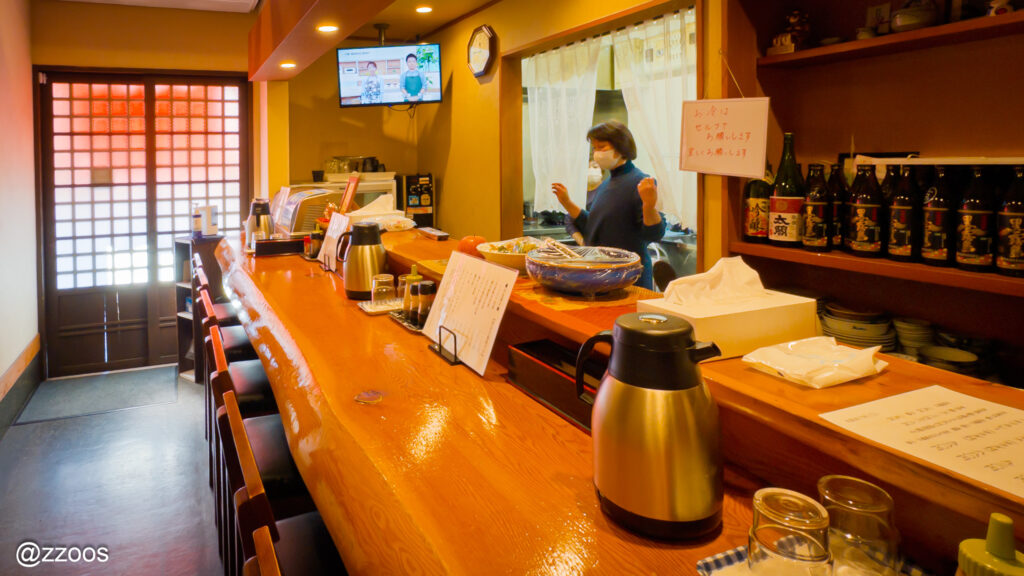
Maybe it was still a little early for lunch. There was no one inside.
There were about seven or eight seats at the counter, and on the opposite side there were two or three tatami tables where you take off your shoes and sit on the floor. It was a clean and quiet place.
Two women were running the restaurant. One seemed to be in charge of the dining area, and the other in the kitchen.
Behind the counter I noticed bottles of shochu stacked up, so it seemed like a place where people could also have drinks with their meal in the evening. A typical neighborhood restaurant where locals keep bottles such as Kurokirishima (黒霧島) to drink over time.
After placing my order and looking around the restaurant, it quickly filled up. It must be a popular place among the local men.
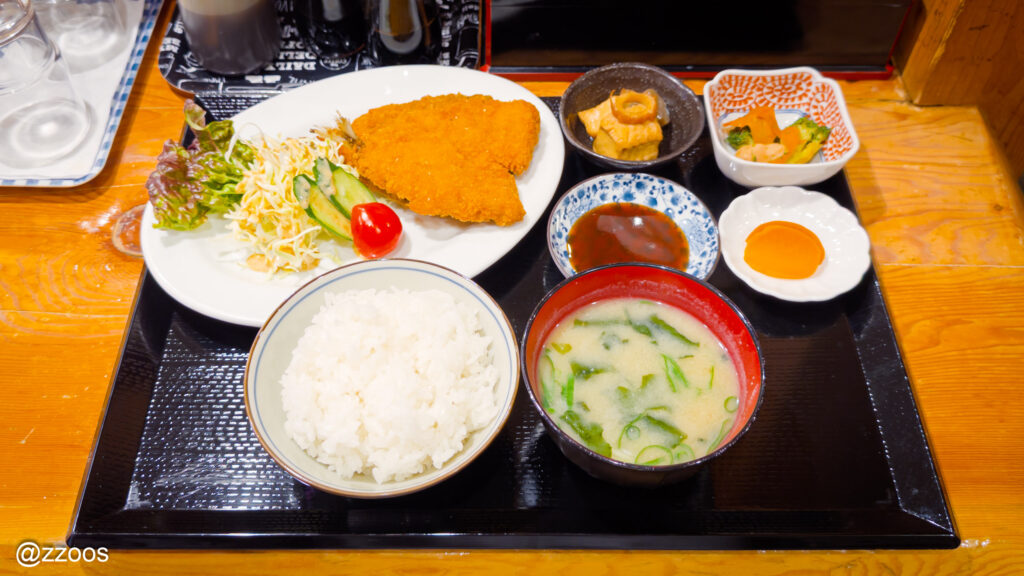
I was deciding between the tonkatsu set and the aji fry set, and in the end I chose the aji fry set (アジフライ定食).
For some reason, when I am in Japan, I feel like eating horse mackerel. Maybe because it is a fish I rarely eat in Korea.
By the way, karaage (唐揚げ), tempura (天ぷら), and fry (フライ) are all fried foods, but there are small differences.
Karaage is lightly coated with flour or starch before frying.
Tempura uses a batter mixed with water.
Fry uses breadcrumbs in the coating, which makes it crispier.
In everyday conversation, however, people sometimes call all fried food “furai.”
The food took a little longer than expected, but eventually my order arrived.
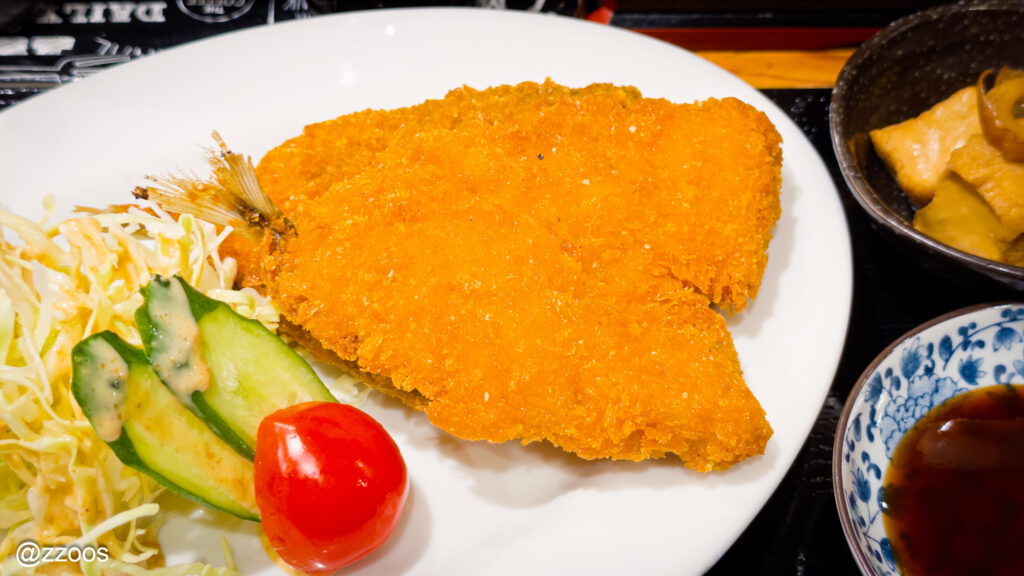
There was fried horse mackerel with salad, tofu simmered in soy sauce, tsukemono, stir-fried vegetables, and miso soup with seaweed. Every dish tasted like home cooking. It had the kind of flavor that feels like it came from a mother’s or grandmother’s hands.
There was just one small issue.
The aji fry had a slight fishy smell.
It probably is not the most popular menu item here. Most people were ordering the tonkatsu set or the karaage set.
The fish itself was fried beautifully and very tender, but there was a faint smell. Since horse mackerel is a blue-back fish, the flavor might have been stronger.
Still, when dipped generously in sauce, it was hardly noticeable.
Anyway, The restaurant is clean, friendly, inexpensive, and tasty.
It does not serve anything particularly special, but that is exactly why I like it. The menu is full of the typical dishes you find in a neighborhood Japanese restaurant.
When traveling, we often keep looking for something special to eat. But after a while, eating special meals every time can become tiring.
This is a place where you can experience the ordinary meals that Japanese people eat every day.
For that reason, it is a place I can recommend.