This is the third evening of the 4 nights, 5 days trip.
Today, I wanted to have dinner at a place like an izakaya.
It would be even better if I could enjoy some good Japanese sake from Saga.
With that in mind, I was looking through Google Maps,
and a place called Fujiya (ふじや) caught my eye.
It didn’t look like a popular restaurant,
but rather like a hidden spot for locals.
In fact, there were very few reviews,
so there was almost no information available.
It wasn’t even listed on Tabelog.
I had a feeling.
I wanted to take a chance.
Quite often, I get this kind of “instinct for finding good places.”
It felt like that again this time.
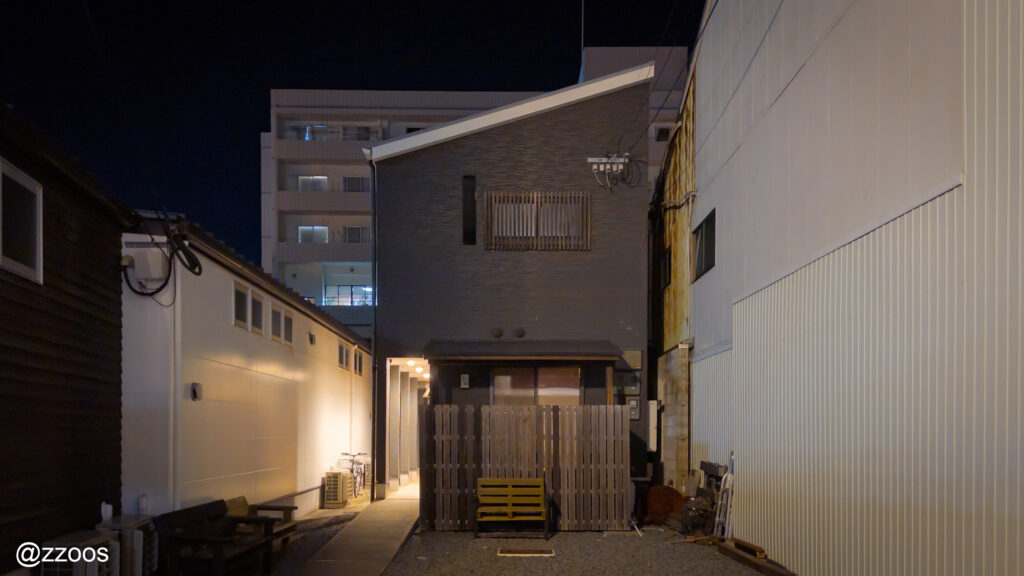
When I arrived in front of the place,
I realized that without a map, I would never have found it.
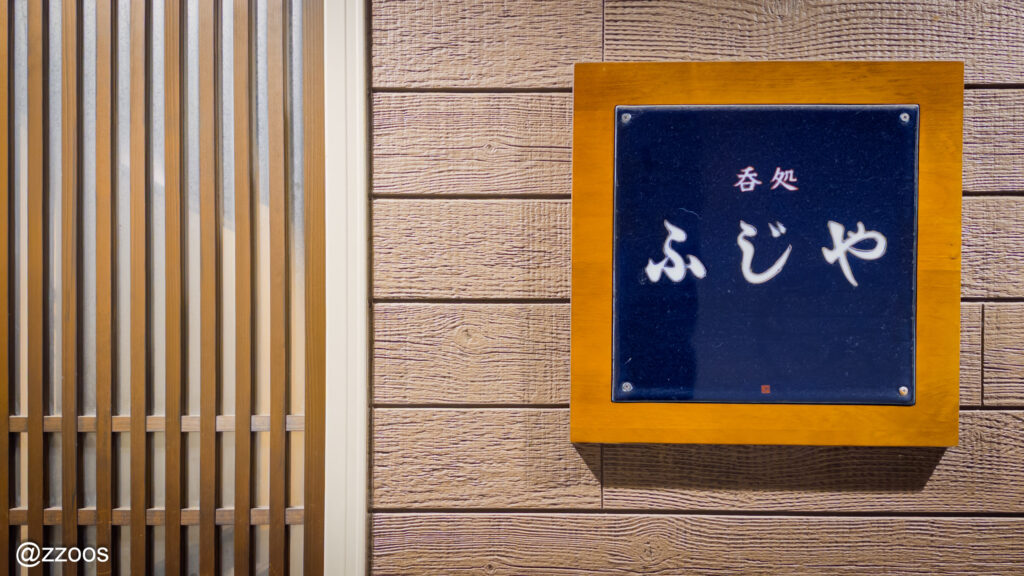
The sign was hidden inside,
and it looked more like a regular house than a restaurant.
It was the kind of place you would just walk past.
Nomidokoro (呑処) Fujiya (ふじや).
“呑処” is an old-fashioned way of writing “飲み処.”
Literally, it means “a place to drink,”
so in the end, it just means a bar.
The fact that it doesn’t say izakaya (居酒屋) or sakaba (酒場)
gives it a slightly different feeling.
When I opened the door and went in,
there were no customers,
and a man who seemed to be the owner was drinking beer alone.
When I told him I was alone,
he said this place only accepts reservations.
Ah, I see.
Since they operate only by reservation,
there was no need to put up a sign outside.
It was a bit disappointing, but I had to turn back.
As I sat on the bench in front of the shop and opened Google Maps again,
trying to decide where to go for dinner,
the owner suddenly ran out and told me to come in anyway.
There is no menu here.
The owner simply serves seasonal dishes that go well with drinking.
If I had made a reservation,
he might have prepared fresher and better ingredients,
but today he said he would have to cook
with whatever he had on hand.
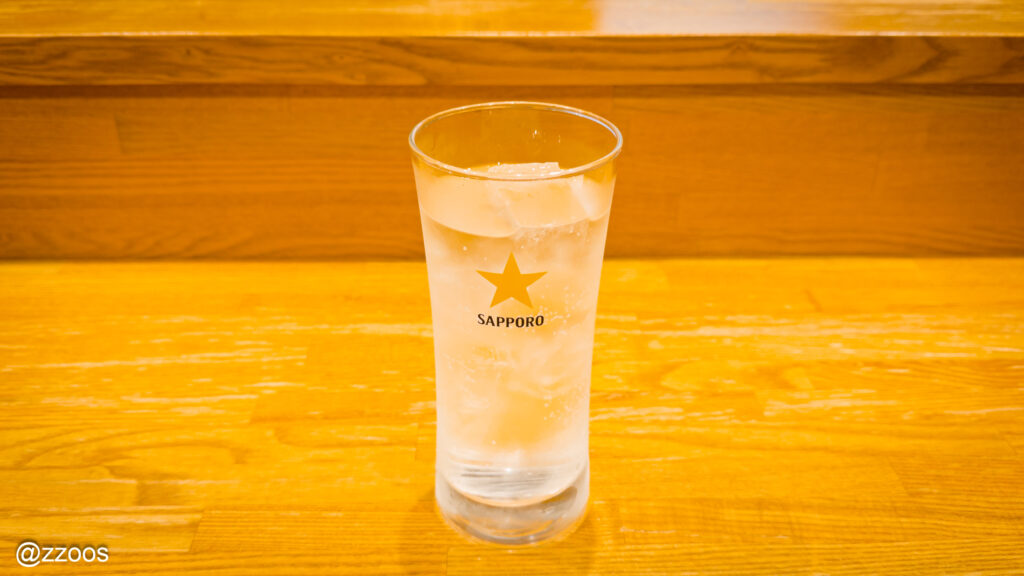
For the first drink,
I ordered imo shochu (sweet potato shochu) mixed with soda.
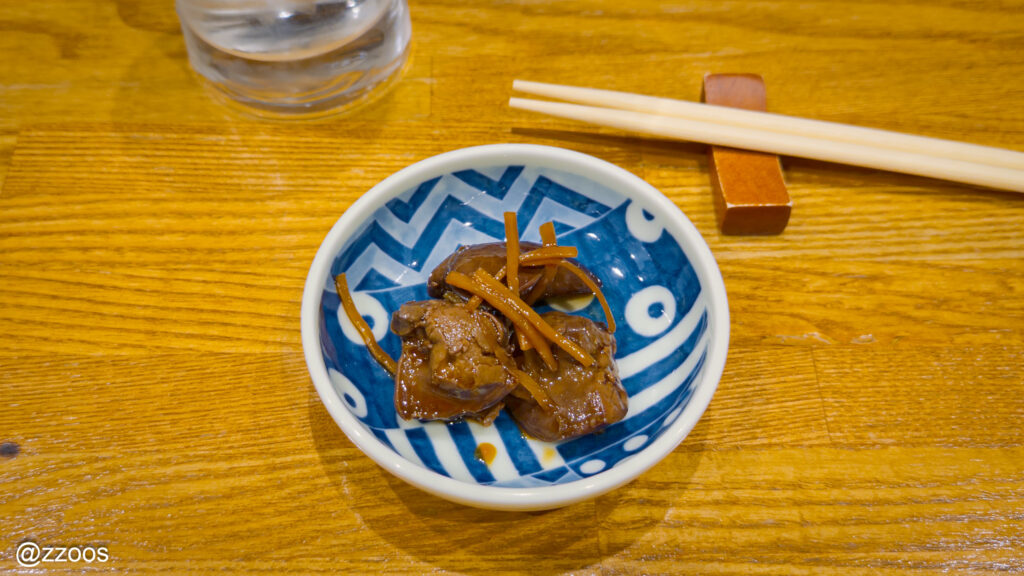
Soon after, torireba (鳥レバー) was served.
It’s chicken liver simmered in soy sauce.
It has the unique texture and aroma of liver,
but the soy sauce makes it easy to eat.
It feels slightly dry,
but when you take a sip of shochu, it washes it all away.
The owner asked if I could eat whale meat.
We do have whale meat in Korea, so I’ve tried it before,
but I don’t particularly like it.
So I hesitated a bit,
but he insisted it was really good and told me to try it.
Since whale meat in Korea is only available
|when it’s accidentally caught,
it’s hard to eat it fresh.
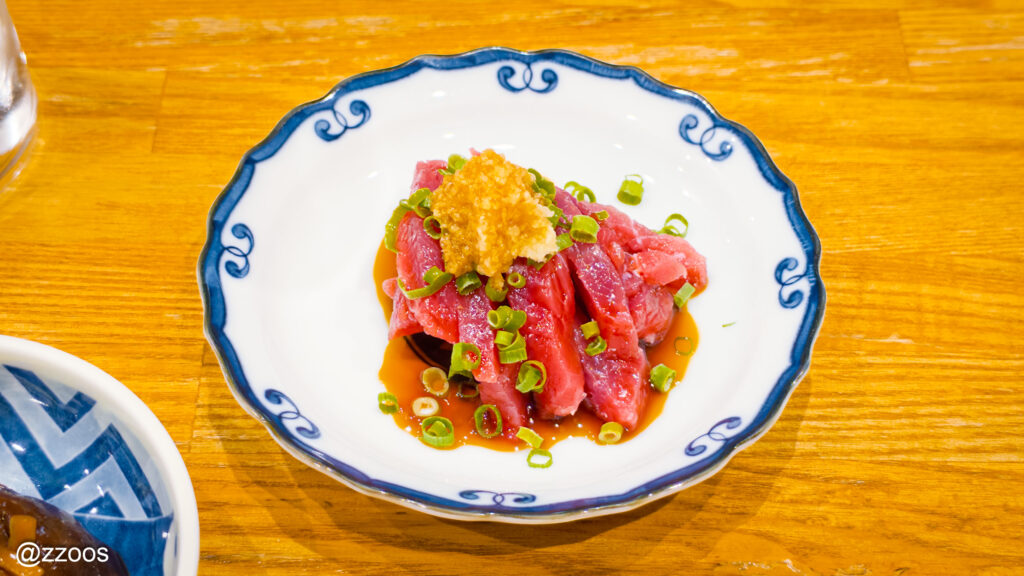
Then came kujira akami (クジラの赤身).
It means the red meat of whale,
but it doesn’t necessarily refer to a specific cut like tuna.
It refers to lean meat without fat.
There was a lot of grated ginger on top,
so I wondered if it might have a strong smell,
but it was completely clean and refreshing with no off-flavor at all.
The light soy seasoning was a perfect touch.
It was so good that I wished the portion had been larger.
Since it had no fat, it was also very tender to chew.
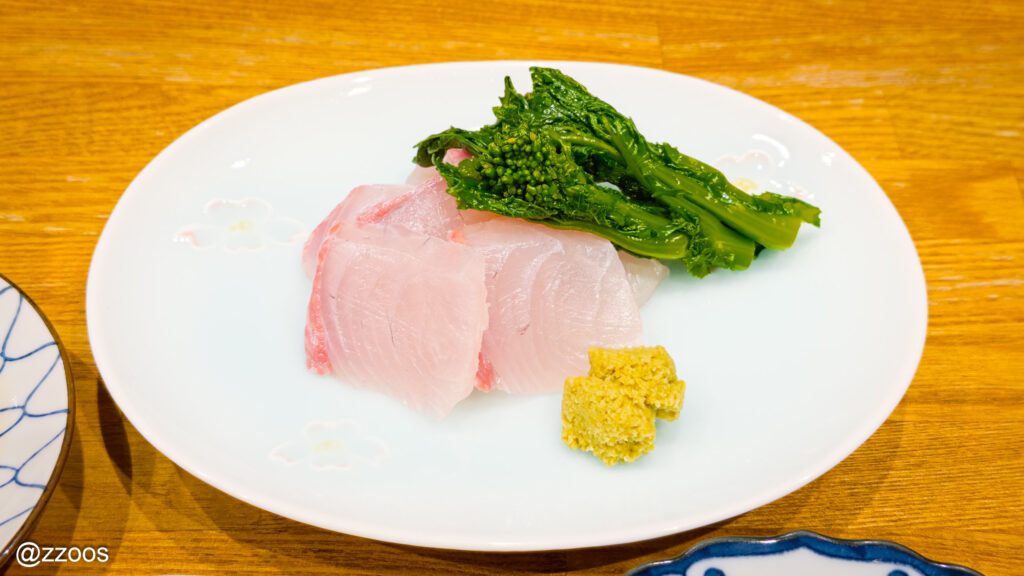
Next was kanpachi (カンパチ) and nanohana (菜の花).
Greater amberjack and rapeseed blossoms lightly marinated in soy sauce.
It felt like a direct hit on my taste,
with both fish and vegetables I love.
If this level of quality comes from what he has on hand,
I can only imagine how much better it would be with a reservation.
It clearly felt like a place with real skill.
Now that I finished the shochu soda,
it was time to move on to Japanese sake.
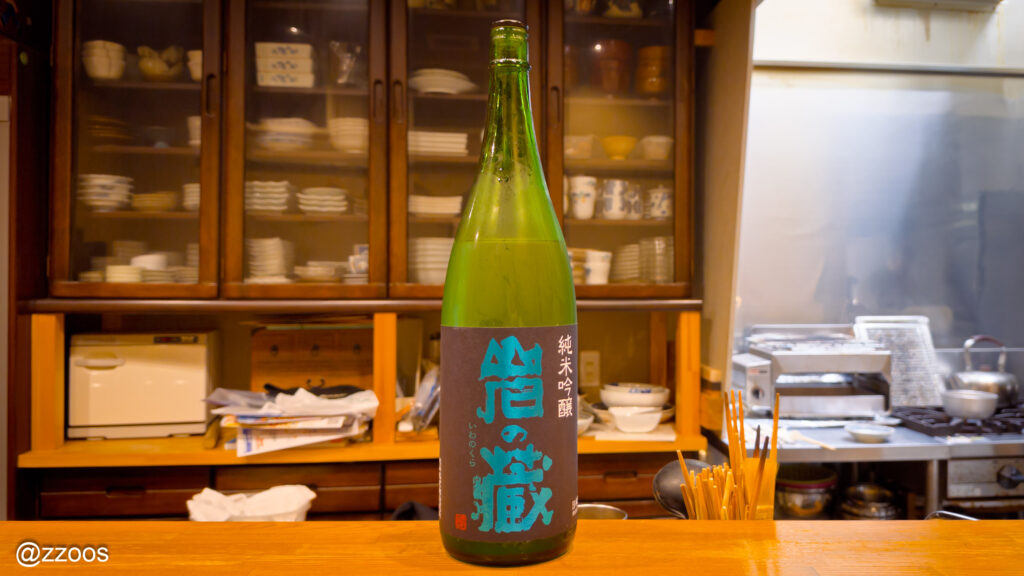
The first recommendation was Iwanokura Junmai Ginjo (岩の蔵 純米吟醸).
It’s a Japanese sake distributed in limited quantities by Tenzan Shuzo (天山酒造),
which is known for Shichida (七田).
After the first sip, I immediately understood.
The Japanese sake at this place is serious.
It doesn’t have the flashy aroma of modern-style sake,
but it has a clean profile without unnecessary rice flavors.
It’s easy to drink,
and pairs well with light dishes.
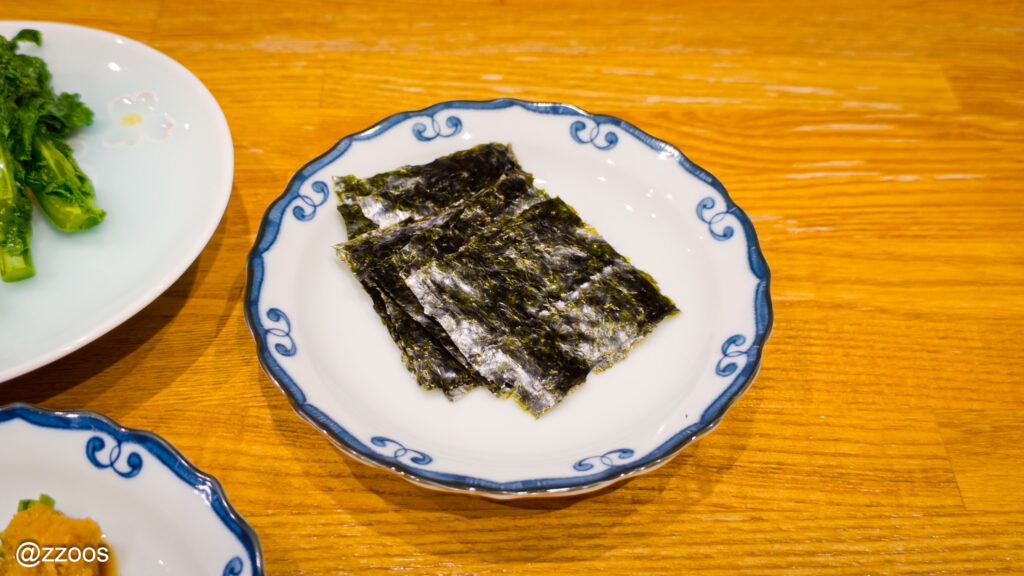
Next, he served some cut nori.
Hmm? Just nori?
I wondered if it was meant to be eaten with something,
but he said it was “the best nori from the Ariake Sea (有明海).”
The Ariake Sea is an inland sea in Kyushu
surrounded by Saga, Nagasaki, and Kumamoto.
Karatsu is in the northern part of Saga,
so it doesn’t actually face the Ariake Sea.
The texture was dense and it was good,
but honestly, I’m not sure if it deserved that level of praise.
Maybe it’s because I’m used to eating good nori in Korea.
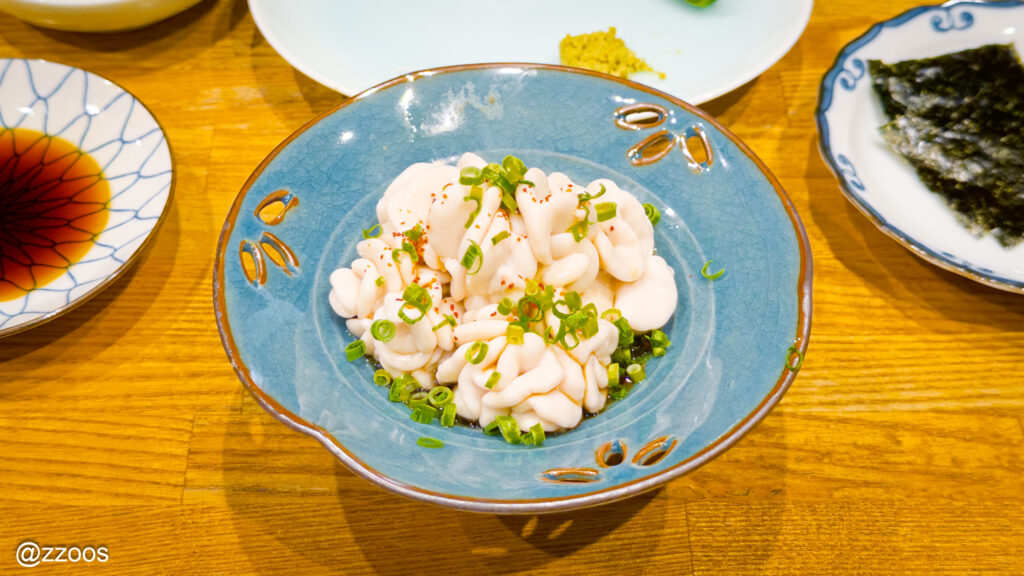
Tara no shirako (鱈の白子), cod milt,
is considered quite a premium ingredient in Japan.
In Korea, it’s often used as a secondary ingredient in soups,
so it doesn’t stand out as much.
In Japan, it’s something people seek out in season,
and it’s known to be quite expensive.
Fresh cod milt was placed over ponzu sauce.
When it’s fresh,
it’s creamy and has no unpleasant smell.
It’s not that Japanese cod is different from Korean cod,
but rather that freshness and proper preparation make the difference.
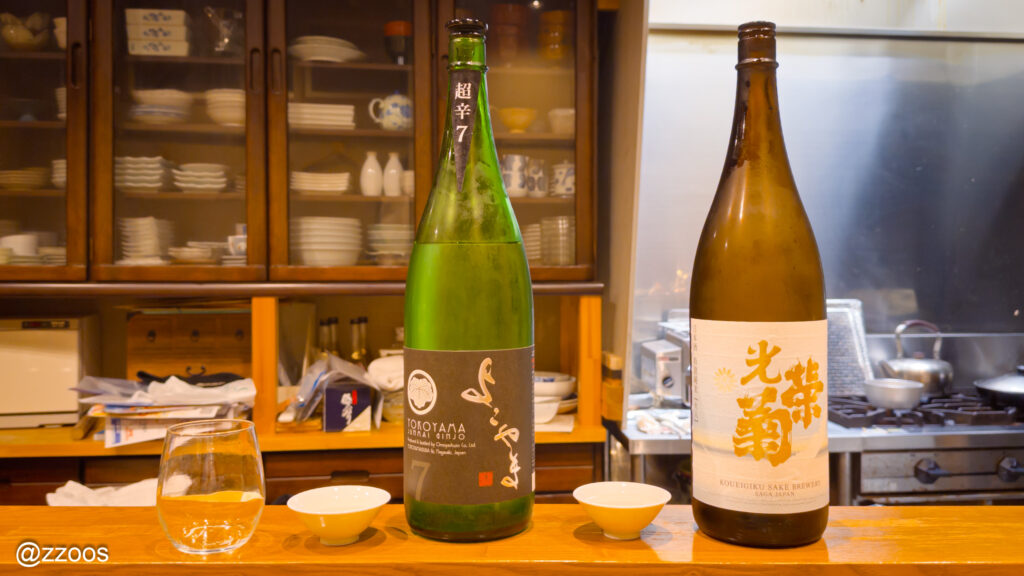
When I asked for another sake recommendation,
he brought out two bottles.
He poured a little of each and told me to try them and choose.
The one on the left is Yokoyama Junmai Ginjo Chokarakuchi Silver 7
(よこやま純米吟醸SILVER超辛7生詰).
It’s a modern-style sake made by Omoya Shuzo (重家酒造) on Iki Island (壱岐島).
Iki Island belongs to Nagasaki Prefecture,
but it’s located just northwest of Karatsu.
There are regular ferry routes from Karatsu,
so it’s quite close.
That explains why he recommended a sake from Nagasaki.
It has the clean character typical of modern sake,
with a strong aroma.
However, it doesn’t feel sweet.
So it’s a unique sake that is very dry,
but still aromatic.
The one on the right, oh! It’s Koeigiku (光栄菊)!
I found it here.
Koeigiku Shuzo (光栄菊酒造) is essentially a newly revived brewery from 2019.
It’s considered one of the hottest modern-style Japanese sake brands in Saga,
often compared to Aramasa.
Since it’s new and production is limited,
they don’t even have an official website
and only run an Instagram account.
Before the trip, I looked up some Japanese sake I wanted to try in Saga,
and this was one of them.
Since Karatsu is a relatively small city,
I didn’t expect to find such a rare sake here,
but here it was.
It’s a modern style centered on acidity.
It has a strong aroma and an overall clean taste.
I heard that many of their products are experimental,
but Sukai feels more refined,
perhaps because it’s part of their official lineup.
In the end, I had a glass of both.
The Japanese sake lineup at Fujiya is excellent.
These are not the kinds of bottles you can easily find.
Even from famous breweries,
they are either limited releases
or highly sought-after items.
It’s definitely a place I would want to visit again.
Thinking back now,
I remember telling the owner that I like Aramasa and Juyondai.
Maybe that’s why he recommended these modern-style sake.
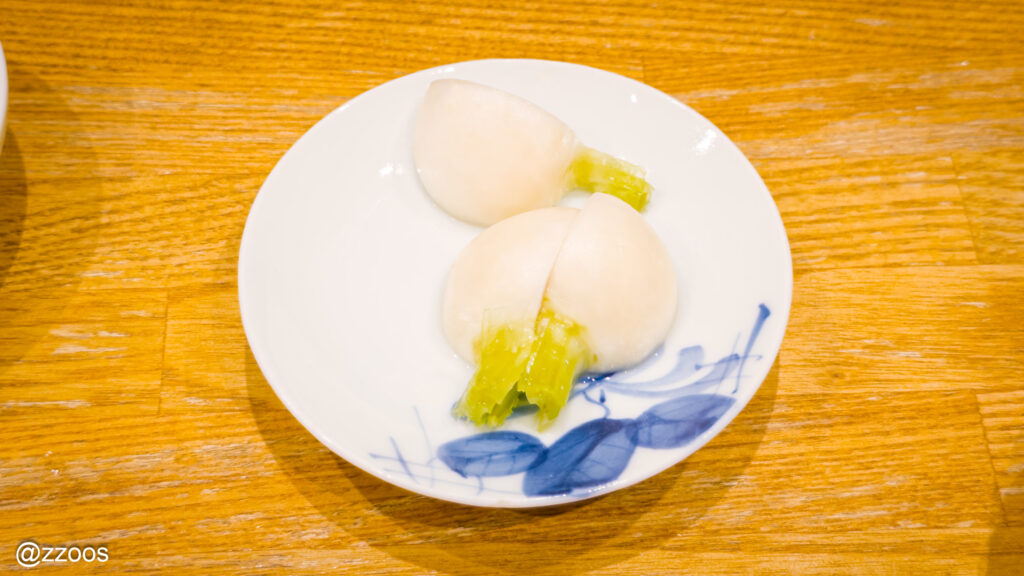
He served a plate of kabu asazuke (かぶ浅漬け).
It’s lightly pickled turnip,
and he said it pairs well with sake.
We don’t eat turnips very often in Korea,
but in Japan, they are quite common.
So the unfamiliar texture and taste
make you feel like you’re traveling.
Of course, as he said,
it paired well with the sake and was delicious.
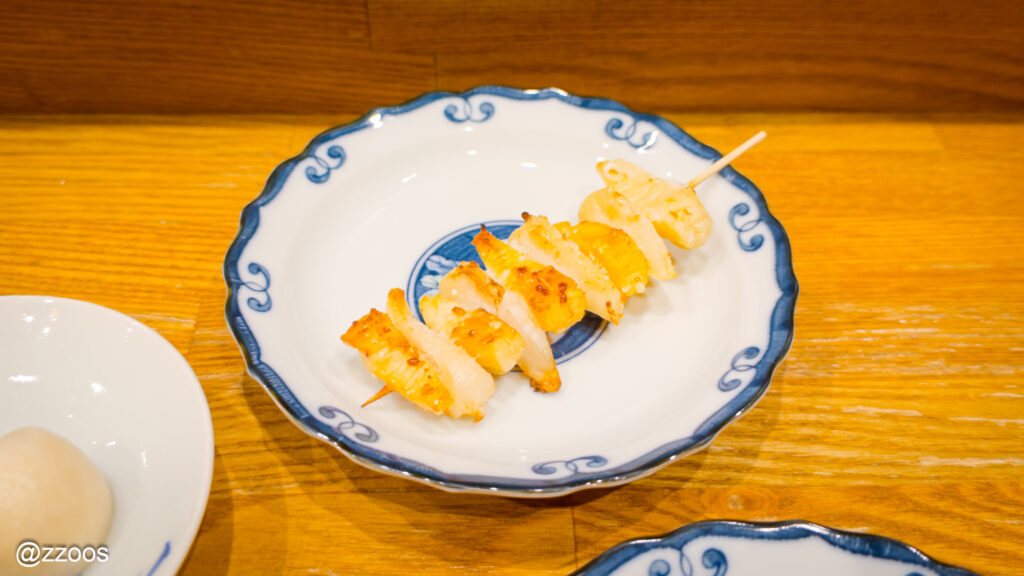
This dish took me a while to understand.
It’s not a common part.
Akoya-gai (あこや貝), the pearl oyster,
is not something we usually eat.
And instead of the usual kaibashira (貝柱),
the scallop-like muscle,
this was the “himo” (ひも),
the part around it.
There doesn’t seem to be an exact equivalent term in Korean.
Once, I bought something called “jogaetti-jeot” in Seocheon, Korea,
a fermented seafood made from the part surrounding the scallop muscle.
It might be similar to that.
Anyway, it’s great as a drinking snack.
It’s similar to the muscle,
but more chewy,
with a rich umami and nutty flavor.
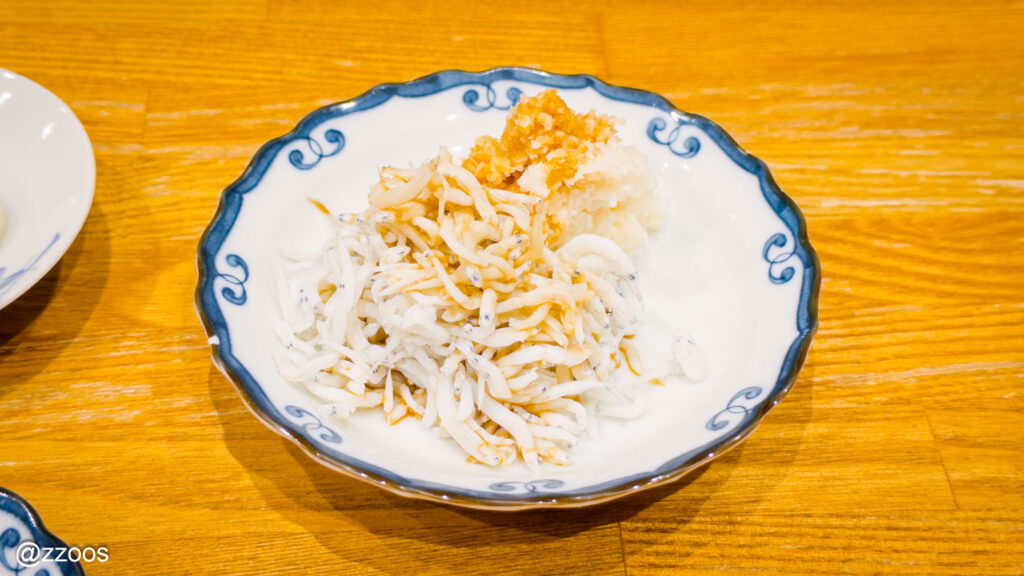
While chatting, I asked if it was still too early
to eat shirasu (しらす), whitebait, in Karatsu.
I was specifically asking about nama-shirasu (生しらす),
eaten fresh like a quick gulp.
He said that would only be available from around May.
Then he took something out and served it.
Not raw shirasu,
but boiled and lightly dried shirasu.
On the side, he added grated spicy radish
with a bit of soy sauce.
This also made a great snack.
In this small place,
it felt special to sit and talk with the owner
while he prepared dishes one by one.
The ingredients and dishes were far from ordinary,
and especially the Japanese sake list
was so impressive
that I want to come back again.
It’s a place that usually only accepts reservations,
and I was lucky to be able to eat here without one.