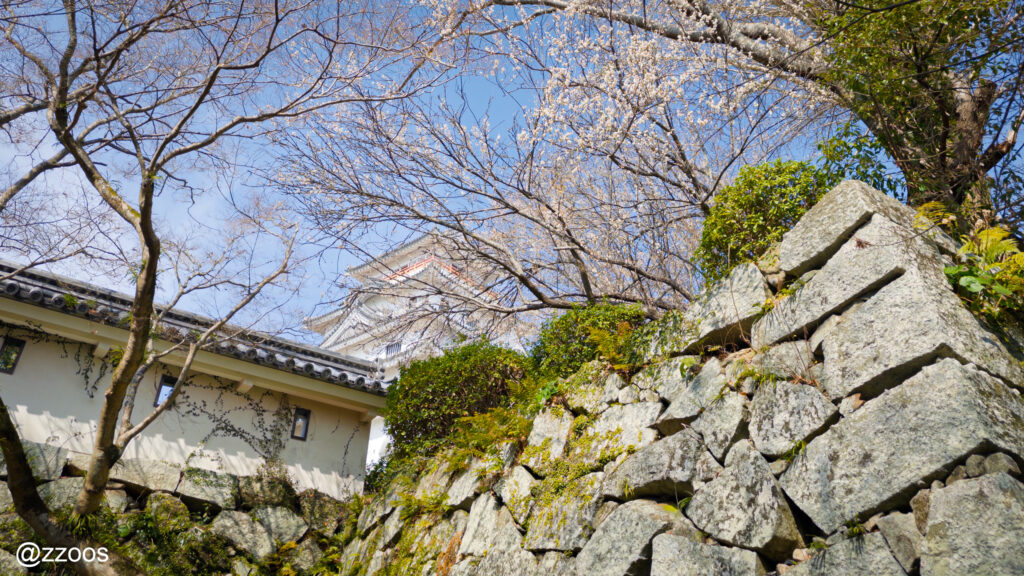
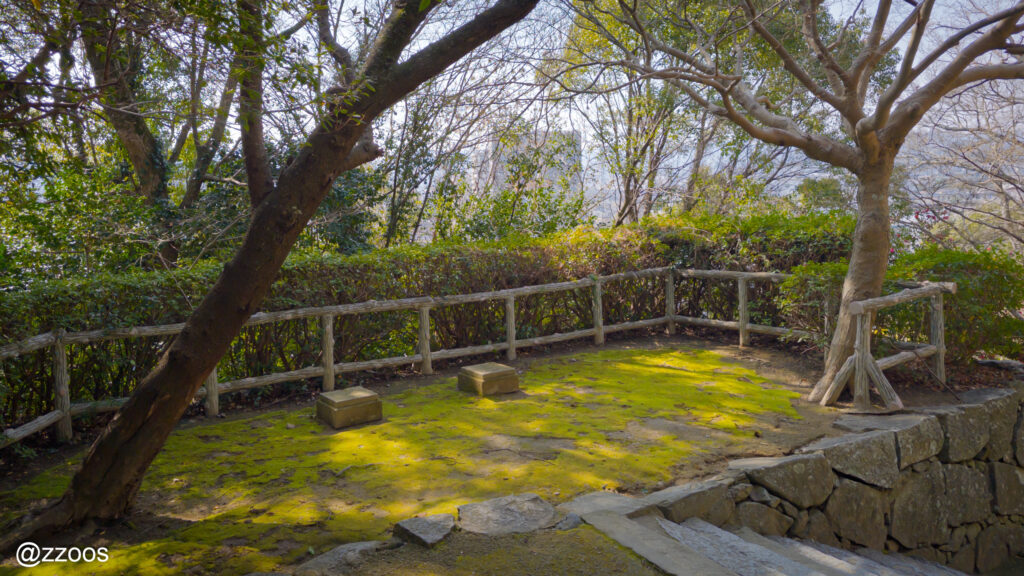
It’s the fourth day of my 4-night, 5-day trip to Karatsu.
Today, I decided to visit Karatsu Castle.
After that, I plan to walk around the city
and see old residences and shrines.
In other words, it’s a full day of sightseeing in town.
In fact, I’ve been seeing Karatsu Castle throughout this entire trip.
It’s a castle you can see from almost anywhere in Karatsu.
Since it’s a small city without tall buildings,
and with a wide river opening up the view,
the scenery feels very open.
And on one end of the city, on a hill,
the tall keep rises high enough to be seen from anywhere.
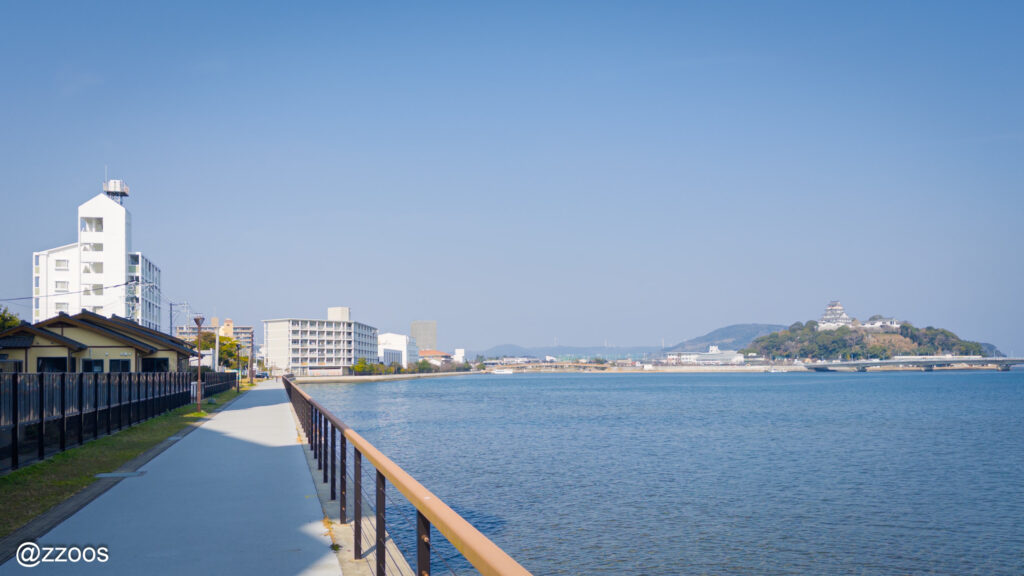
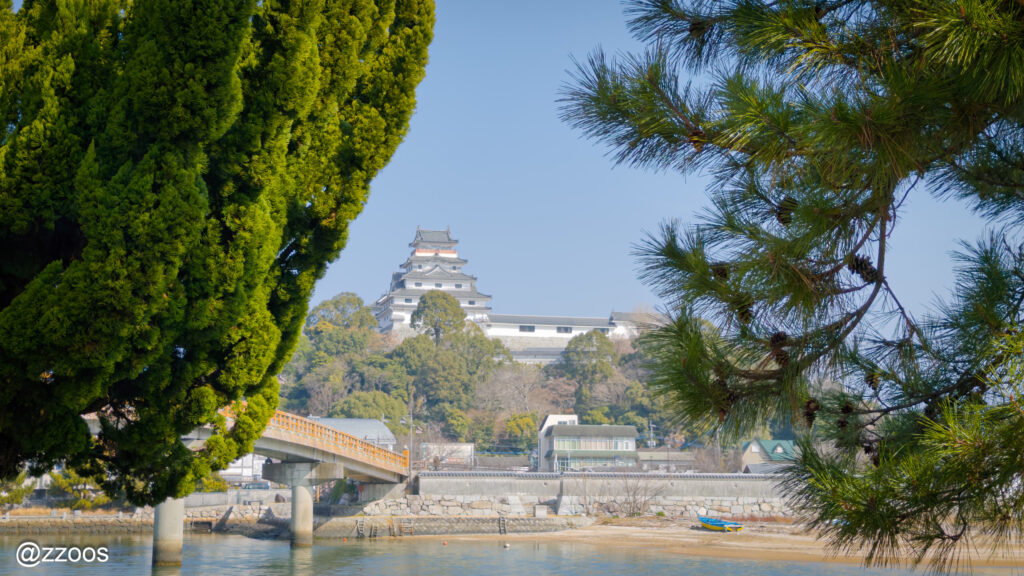
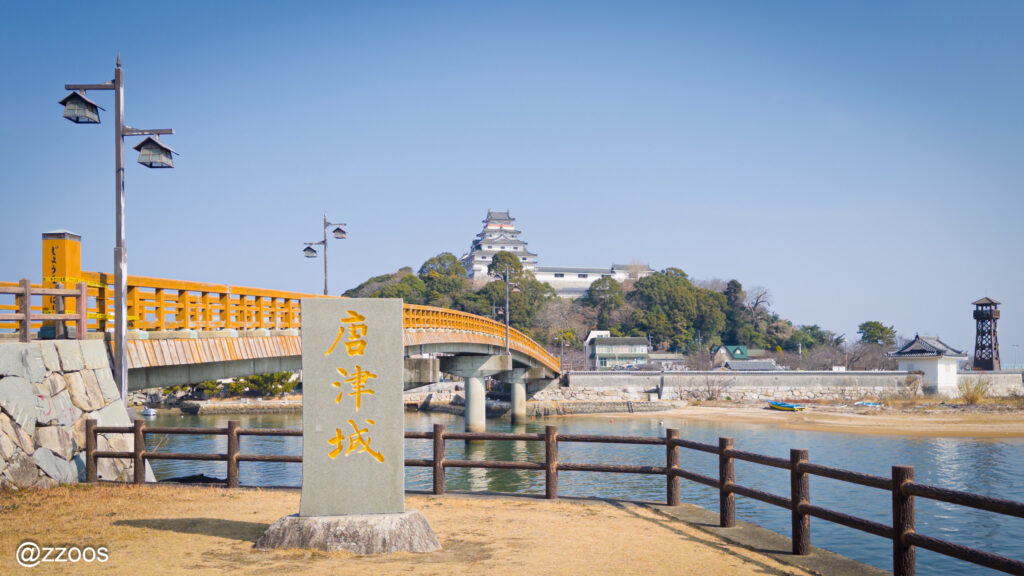
After leaving the hotel the weather was so nice
that I decided to walk along the Matsuura River
all the way to the castle.
Seeing the keep from afar,
it really felt like a symbolic image of the city of Karatsu.
But interestingly,
I later found out that the keep is not actually that old.
Originally, Karatsu Castle didn’t even have a keep.
The current keep was built in 1966 as a tourist facility.
So it’s not a structure from some distant past,
but something built about 60 years ago—
relatively recent.
Still,
it remains an unmistakable symbol of Karatsu today.
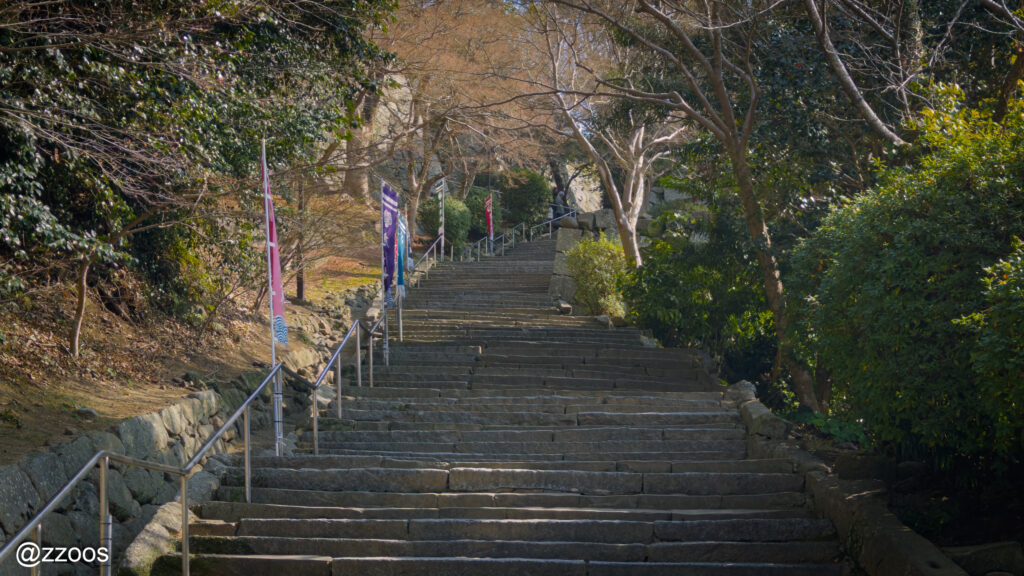
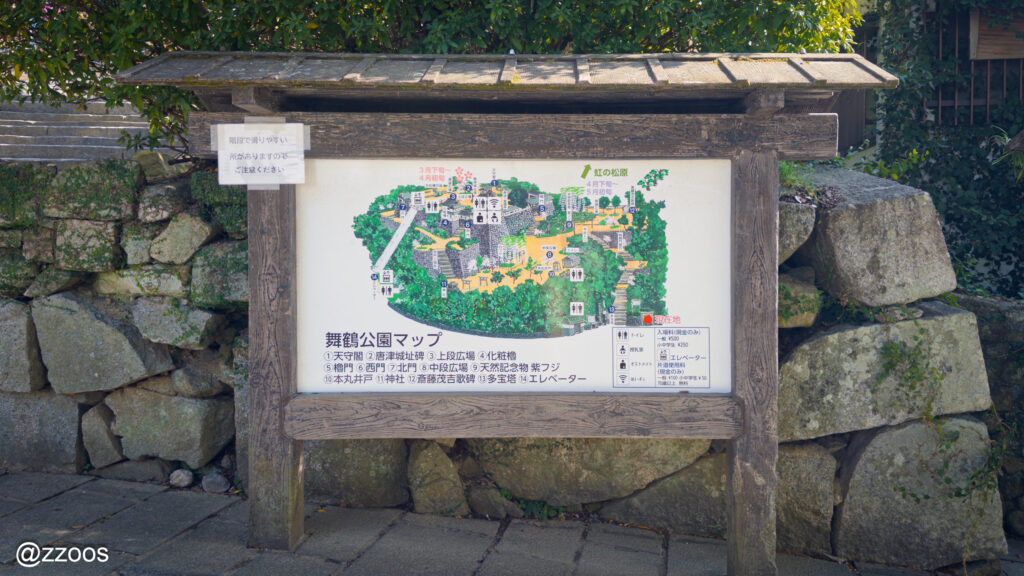
Karatsu Castle is said to be inside Maizuru Park,
but in reality, it feels like the same place.
The castle is the park,
and the park is the castle.
Looking at the map, I noticed something—
if you go a bit further around, there’s an elevator.
I had already been thinking
those stairs would make me sweat,
so this was a welcome discovery.
Taking the elevator up, and walking down later,
seems like a good way to save energy.
There’s still a lot of walking ahead
after leaving the castle.
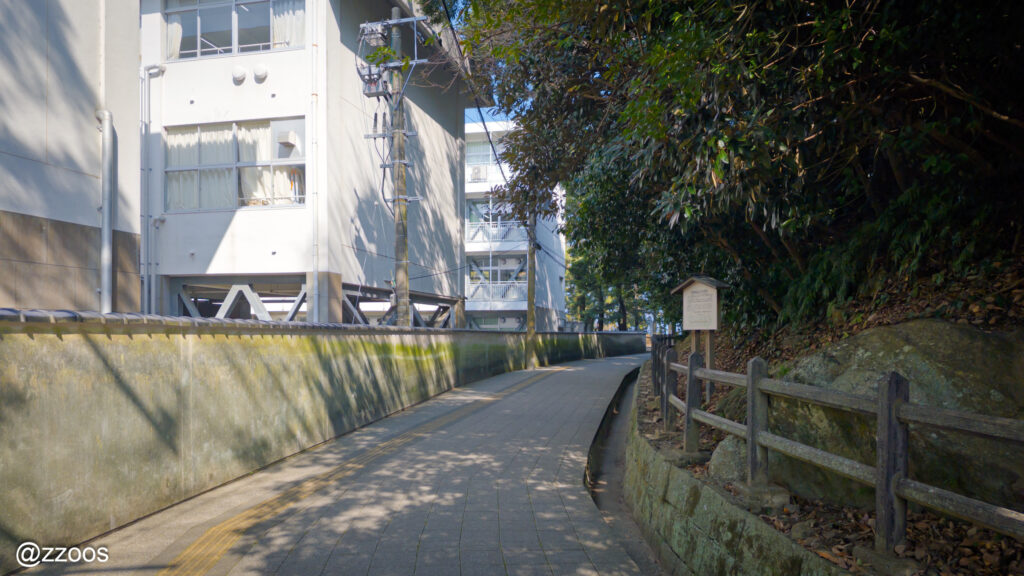
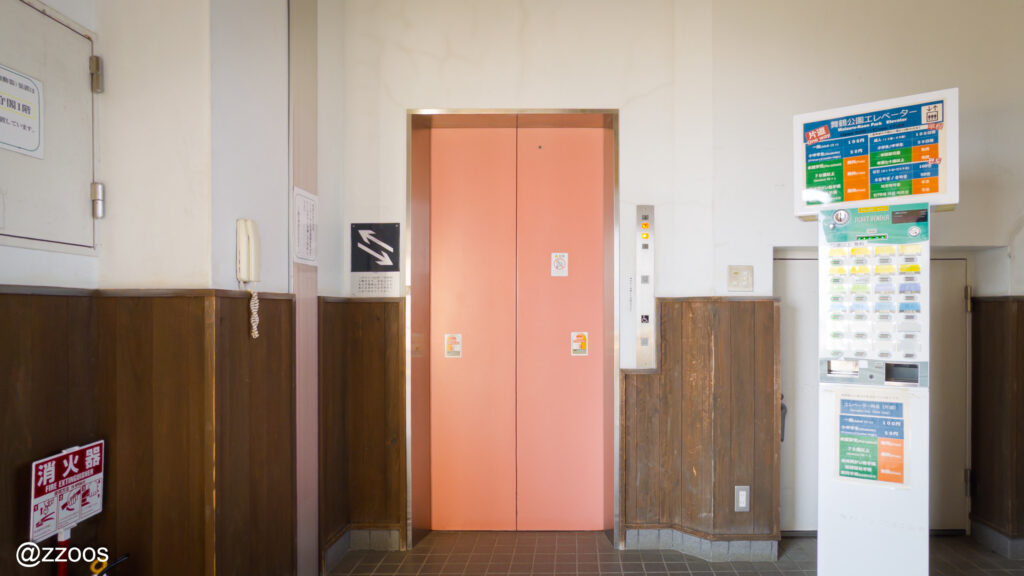
The elevator doesn’t move straight up and down,
but diagonally.
Unfortunately, you can’t see outside,
which was a bit disappointing.
It’s not free—
it costs 100 yen one way.
The ride takes about
30 seconds to a minute.
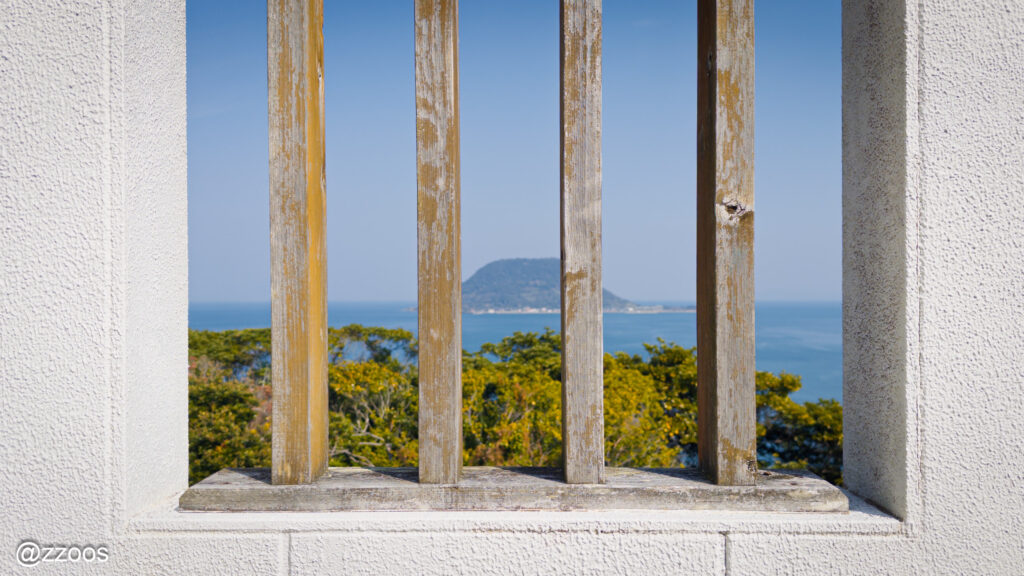
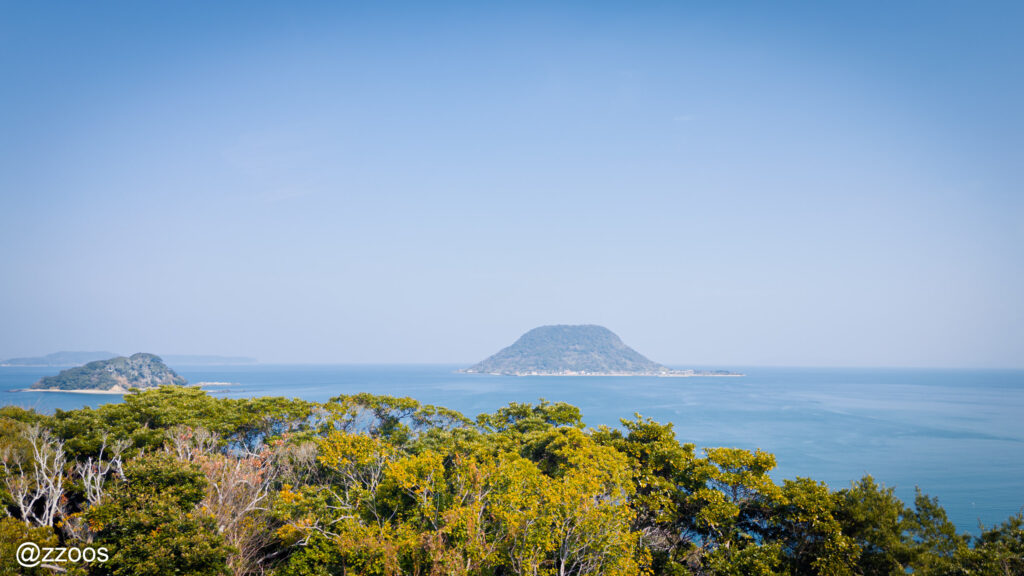
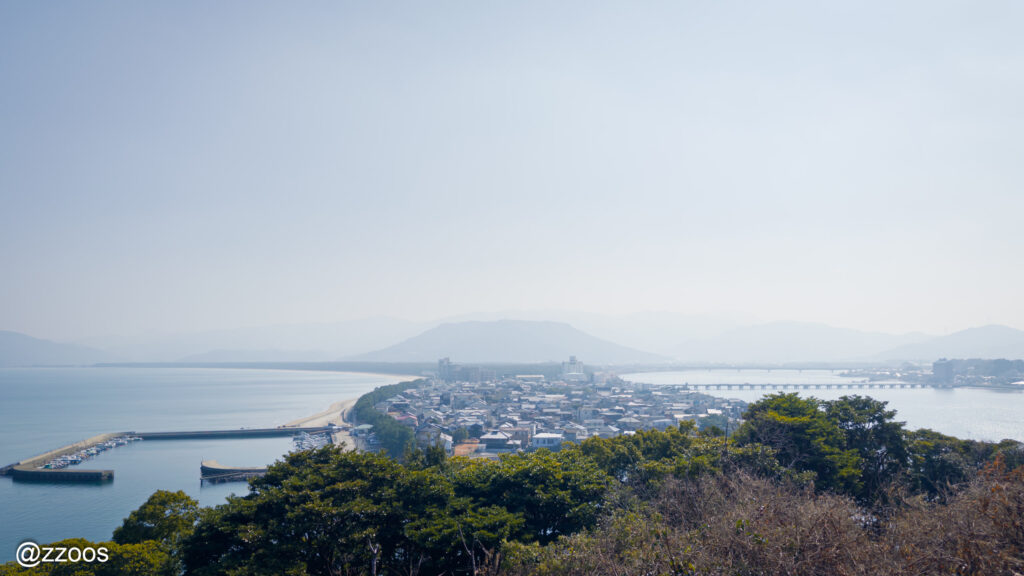
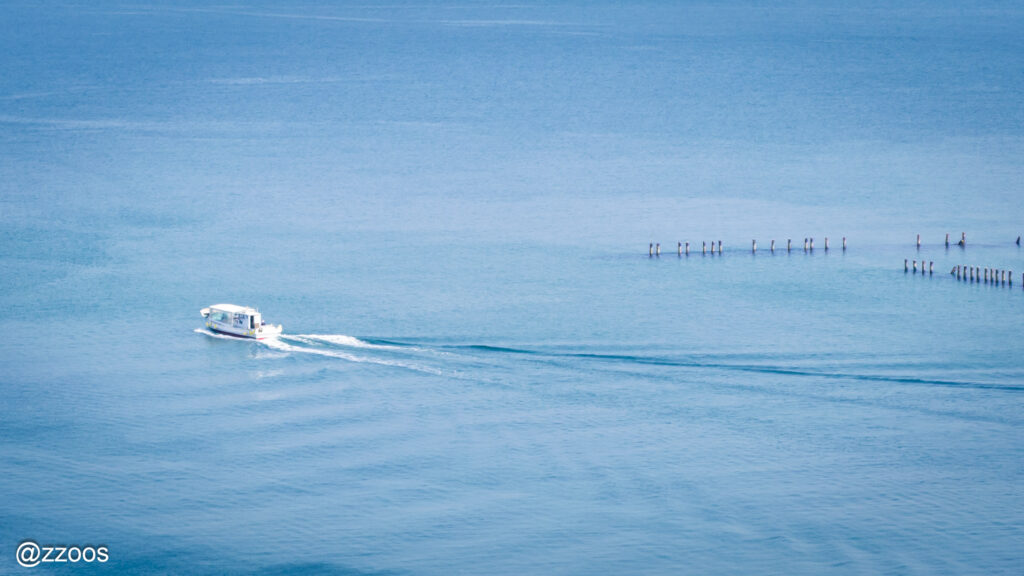
Wow—!!
Up here,
the view opens up completely,
and it feels amazing.
The scenery speaks for itself.
Karatsu Castle isn’t actually on a very high mountain,
but since nothing blocks the view,
it really gives that “wide-open” feeling.
The weather today definitely helps too.
Yesterday,
I looked down at Nijinomatsubara from Kagamiyama.
Now I’m seeing that exact view
from the opposite side.
You can see Karatsu city,
Nijinomatsubara (虹ノ松原),
and even Kagamiyama (鏡山)
in the distance.
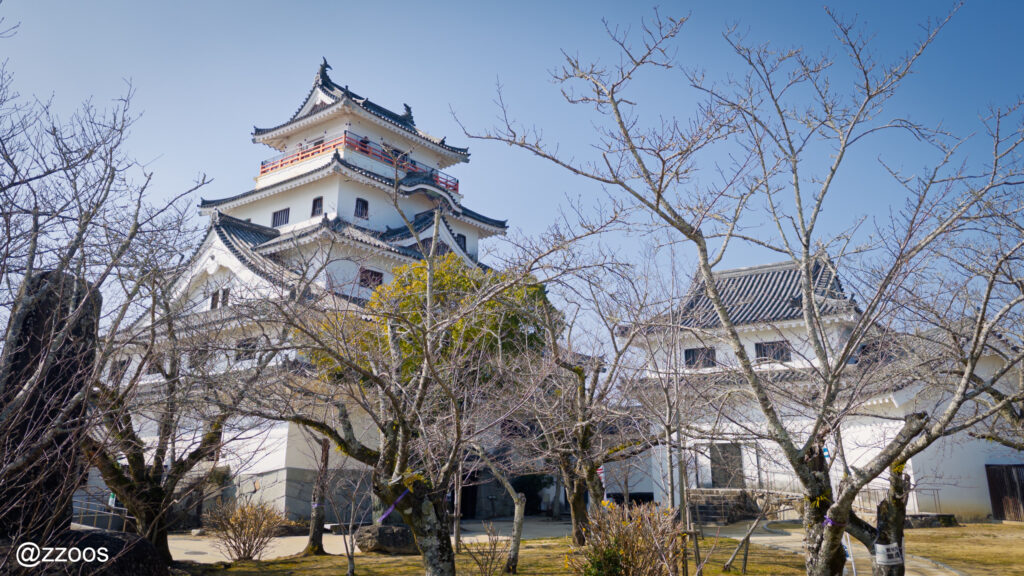
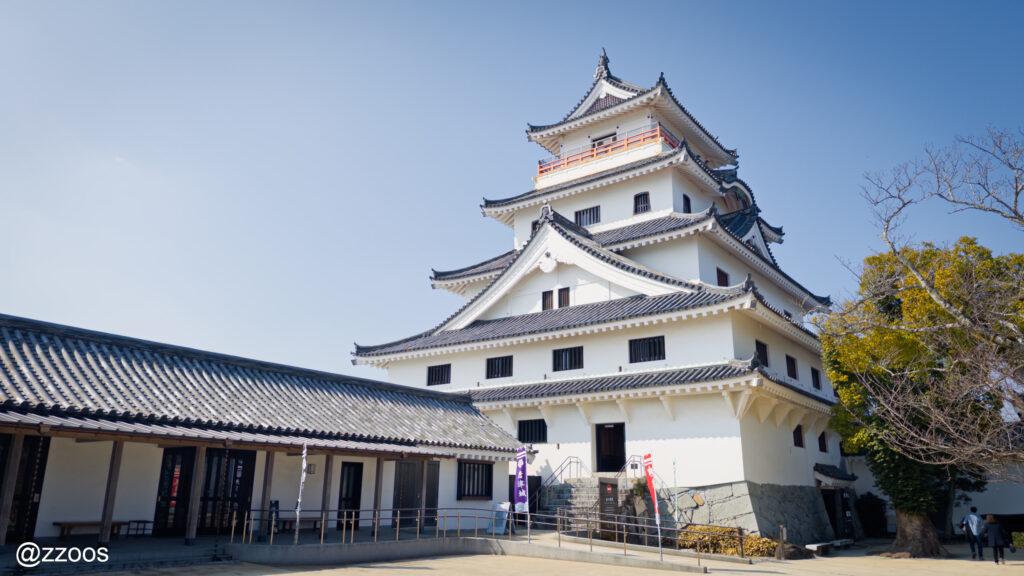
Now it’s time
to explore the keep.
The first floor is free,
but from the second floor up, there’s an admission fee.
There are exhibitions
about Karatsu’s history and culture,
but photography is not allowed.
On the fifth floor,
there is the observation deck—
the main reason to pay the admission.
From there,
you can look out over the city
from an even higher point.
Climbing up to the fifth floor
wasn’t that difficult.
The exhibitions in between
were all in Japanese,
so I only glanced at them.
My goal was the observation deck anyway.
The observation deck was surrounded by glass,
and you could open a door
to step out onto a terrace.
The terrace is narrow, so you need to be careful.
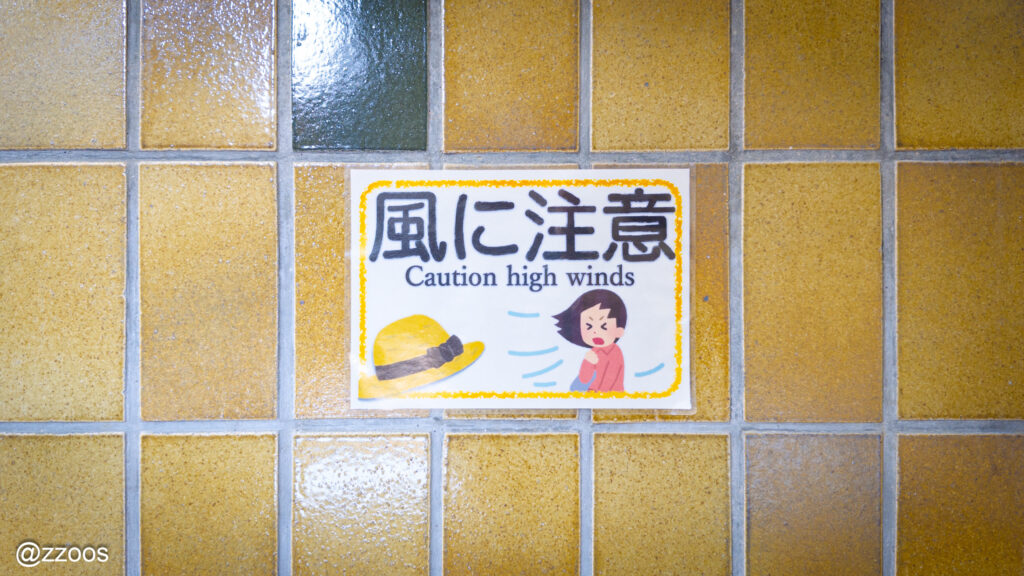
And more than anything, the wind is very strong.
The warning about hats wasn’t there for nothing.
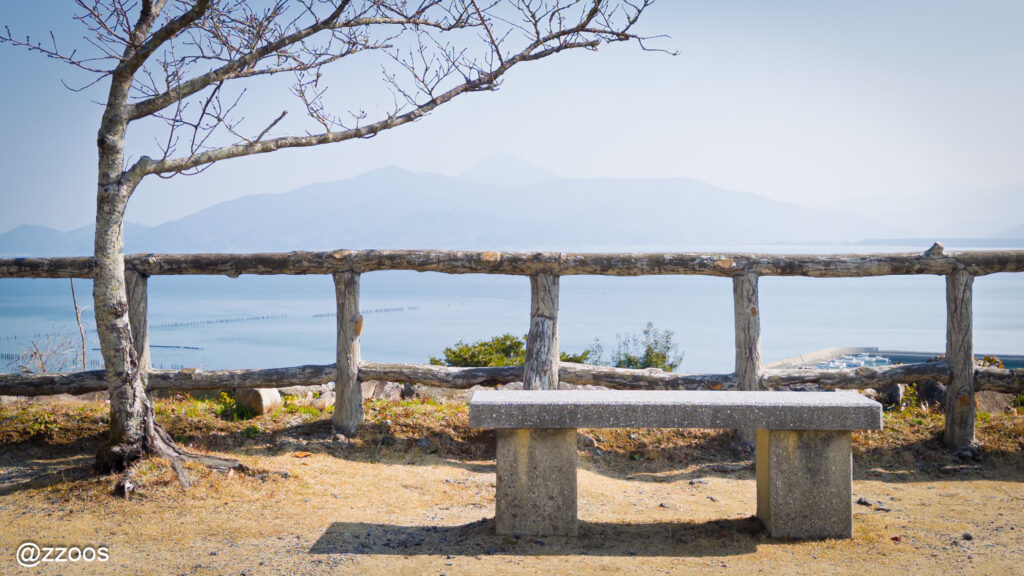
Looking down at Karatsu Bay from above,
the sandy shores stretch out on both sides
like a crane’s wings—
as if a crane is dancing.
That’s when I understood
why the park is called Maizuru (舞鶴).
※ “舞” means “dance,” and “鶴” means “crane.”
After finishing the visit,
I stopped by the souvenir shop on the second floor.
I bought some citrus caramel as a gift for my niece,
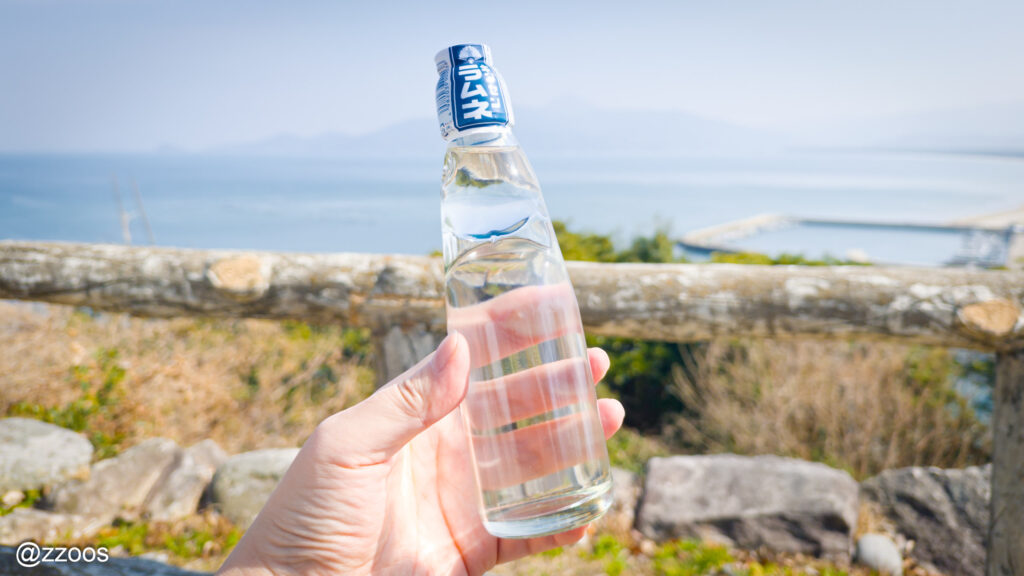
and a bottle of ramune to quench my thirst.
Kyushu is mostly located south of Jeju Island of Korea,
so each region has its own type of citrus.
That’s why there are so many kinds of citrus candies and jellies.
And strangely enough—even though I didn’t grow up in Japan—
I always end up buying ramune during trips here.
That “psshh!” sound
when you push the marble in,
and the “clink”
as it drops inside the bottle—
I just want to hear that.
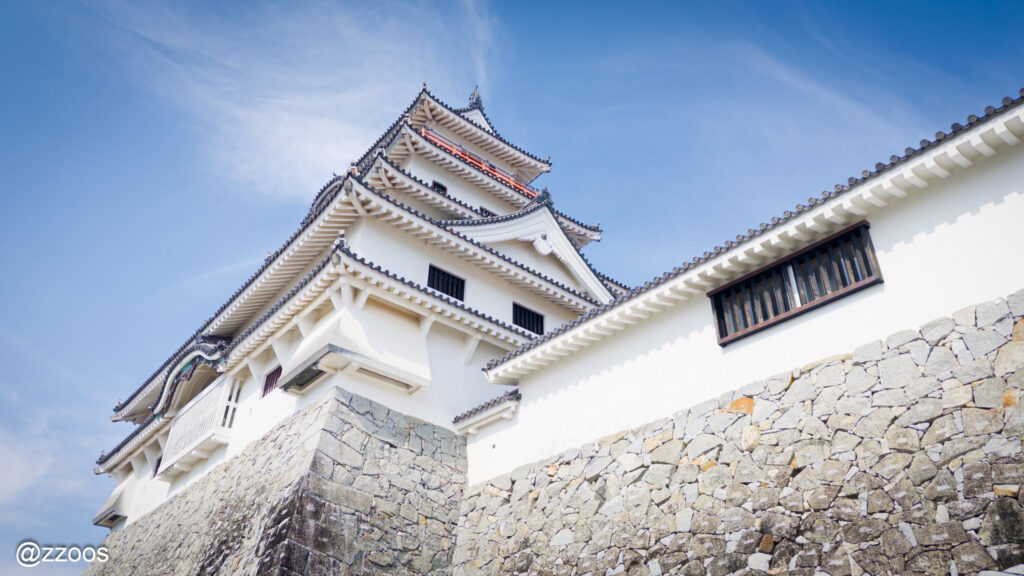
This time,
I walk down
while looking around the castle.
It’s not as large as I expected,
and the stairs aren’t that steep either.
Even without the elevator,
it probably wouldn’t have been too difficult.
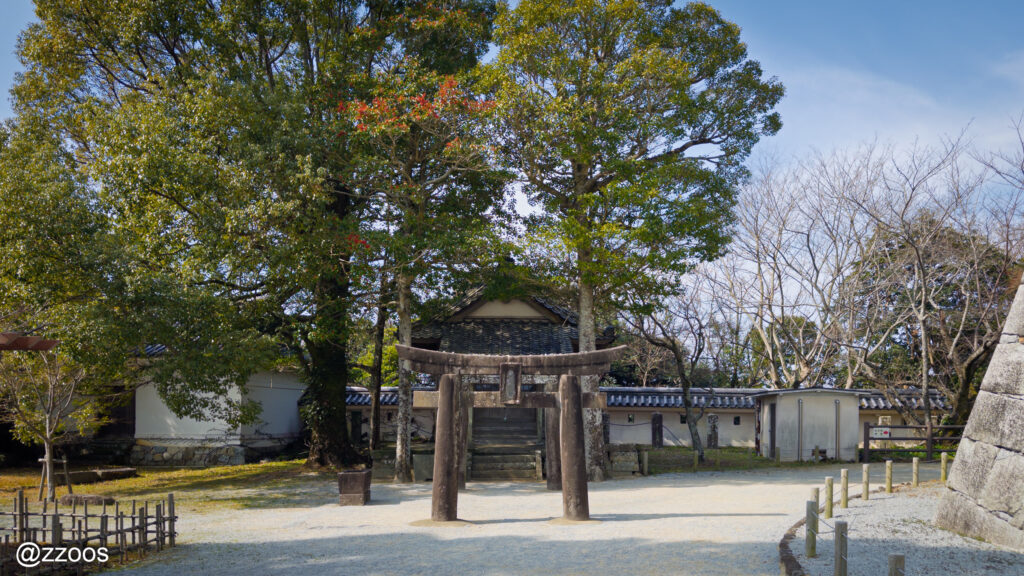
Under a large tree,
there was an old shrine.
Checking the map,
it turned out to be Kotohira Shrine (金刀比羅神社).
It enshrines Konpira (こんぴら), a deity of the sea,
and people pray here for safety in navigation.
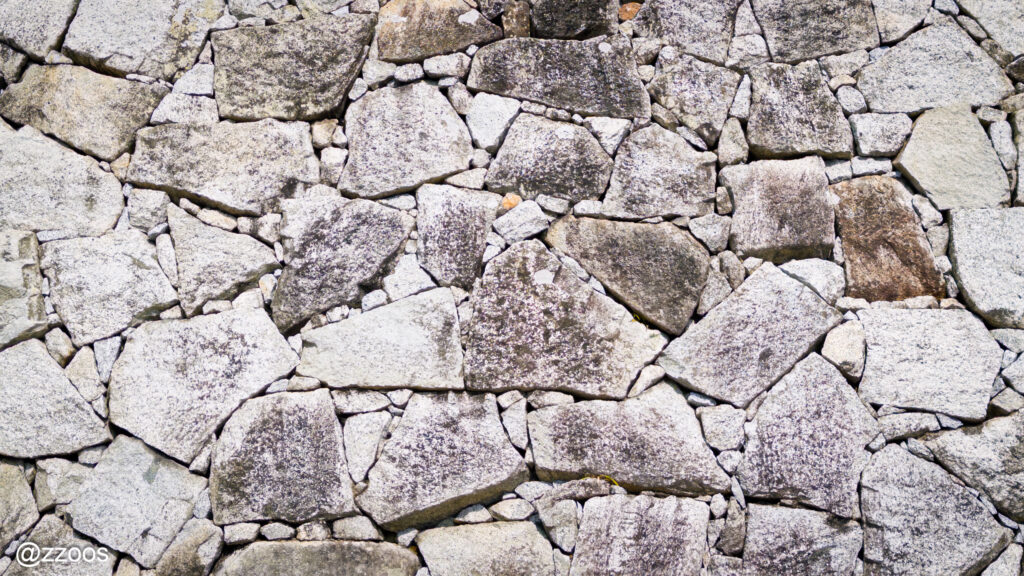
Karatsu Castle was built using leftover materials
from the construction of nearby Nagoya Castle (名護屋城).
Even from the map,
the difference in scale is clear.
Nagoya Castle must have been
much larger and more elaborate.
Karatsu Castle didn’t even have a keep at first.
But after Toyotomi Hideyoshi’s death,
Nagoya Castle quickly fell into ruin,
while Karatsu Castle developed along with commerce
and became more prosperous.
It’s hard to predict how things turn out.
Then are the remaining stone walls here
made from those original materials?