From Hadomisaki (波戸岬) to Hotel Riviere in Karatsu, it was quite a long way.
After checking in, I unpacked a little. I had been moving since early morning, so I lay down on the bed and rested.
My first trip to Saga Prefecture (佐賀県).
What is the most famous thing in Saga? Of course, Saga-gyu (佐賀牛). For dinner, I decided I had to eat Saga-gyu.
I searched on Google Maps and Tabelog to find a place in Karatsu that serves good Saga-gyu, and found Yoshimuraya (よしむらや), which seemed to handle high-quality Saga-gyu.
I went down to the hotel lobby and asked them to make a reservation. 6 PM today. Fortunately, it worked. I went back to my room to rest a bit more.
The city center is about a 15-minute walk from the hotel, so I could have walked, but I was tired, so I decided to take a taxi.
At the reserved time, I went down to the lobby and tried to call a taxi using the GO! app, but no taxi was available.
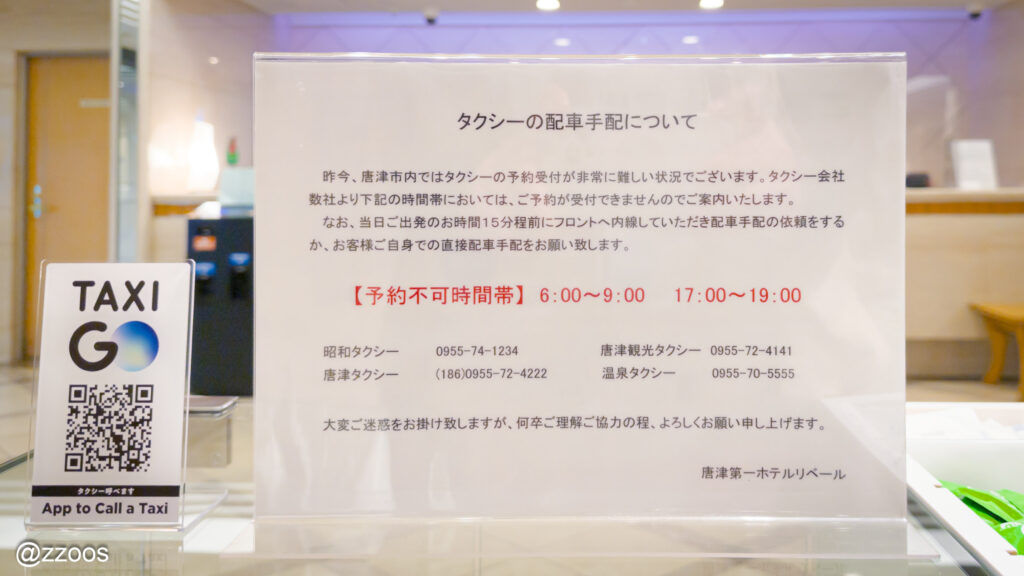
Then I noticed a notice posted in the lobby.
There are not many taxis in Karatsu, so during commuting hours it may be difficult to get one.
I asked the hotel counter if they could call a taxi, and they directly phoned a taxi company for me. Fortunately, that worked.
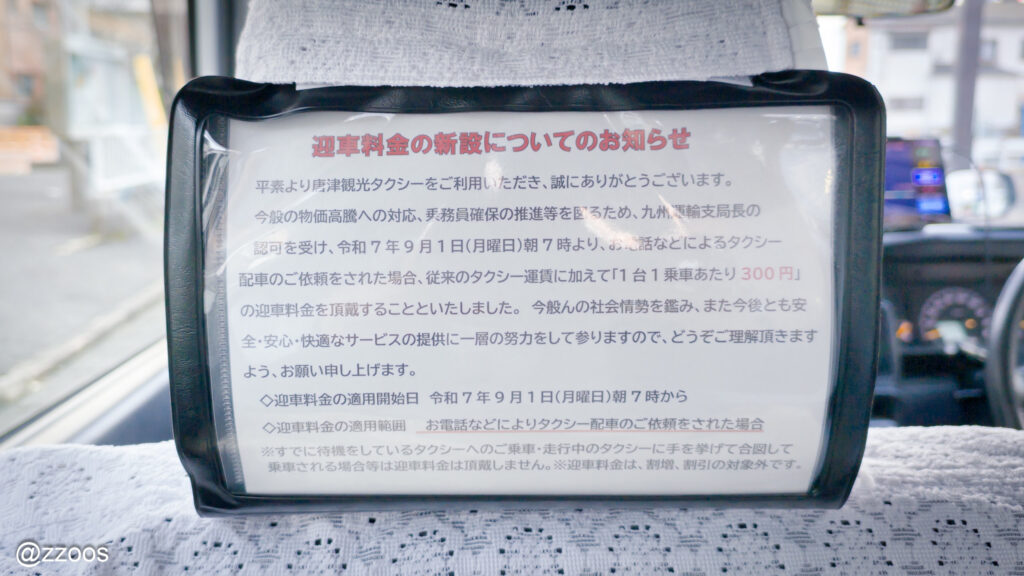
Inside the taxi, there was another notice. If you “call” a taxi, there is a 300-yen dispatch fee. This does not apply when you catch one on the street, but it does apply when you call via app or phone.
In a short time, I encountered two notices, both exactly about my situation.
Anyway, I quietly promised myself to walk or take the bus next time.
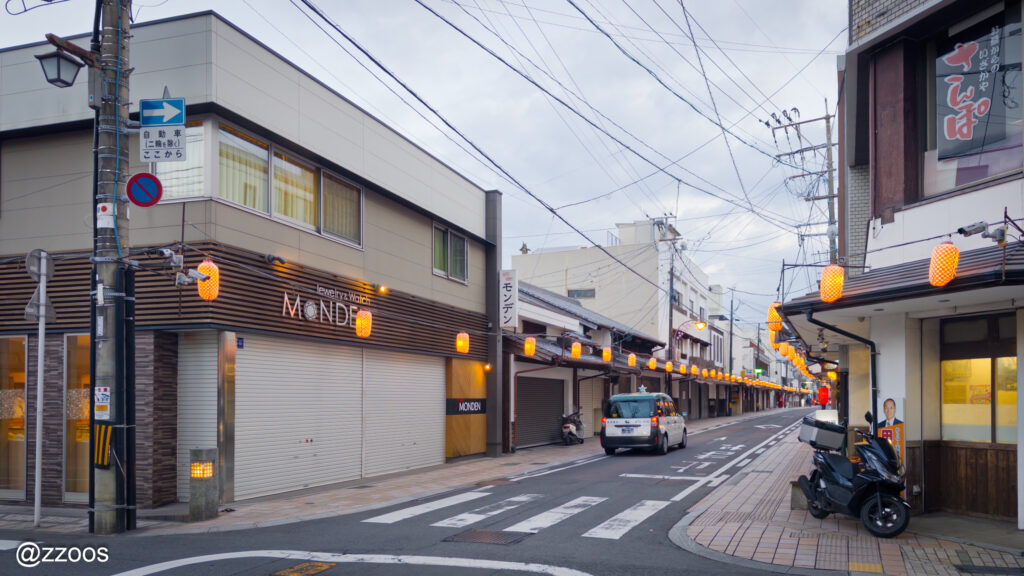
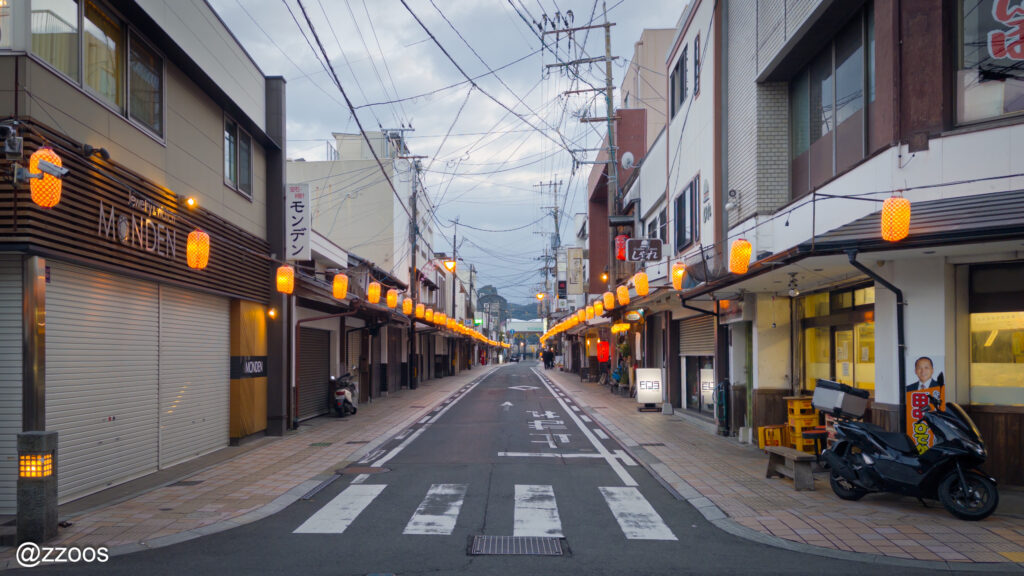
I arrived in downtown Karatsu a little earlier than my reservation time.
The streets were gradually getting darker. Shops that were open during the day were closing, and restaurants that open in the evening had not yet opened.
The streets felt very quiet.
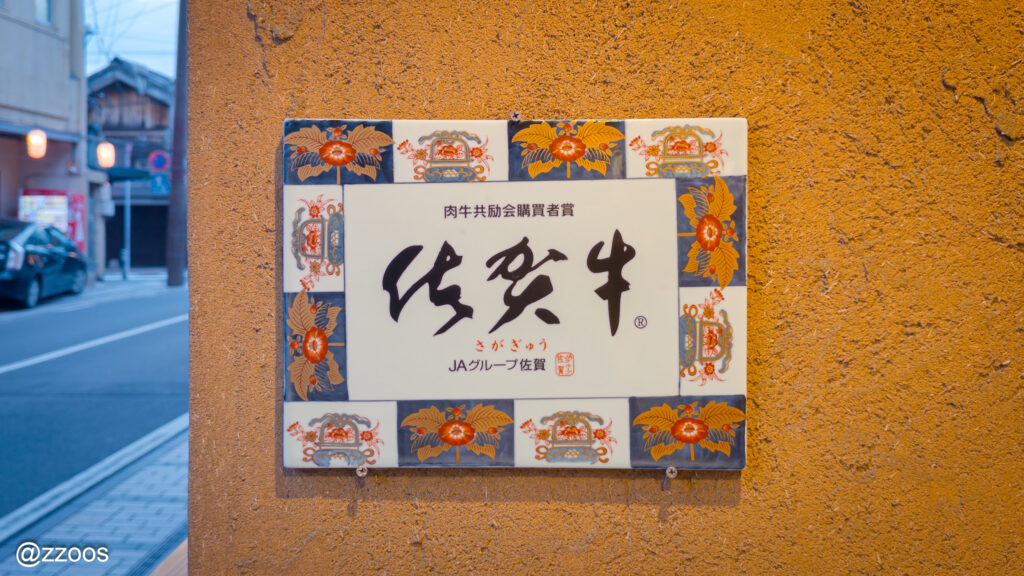
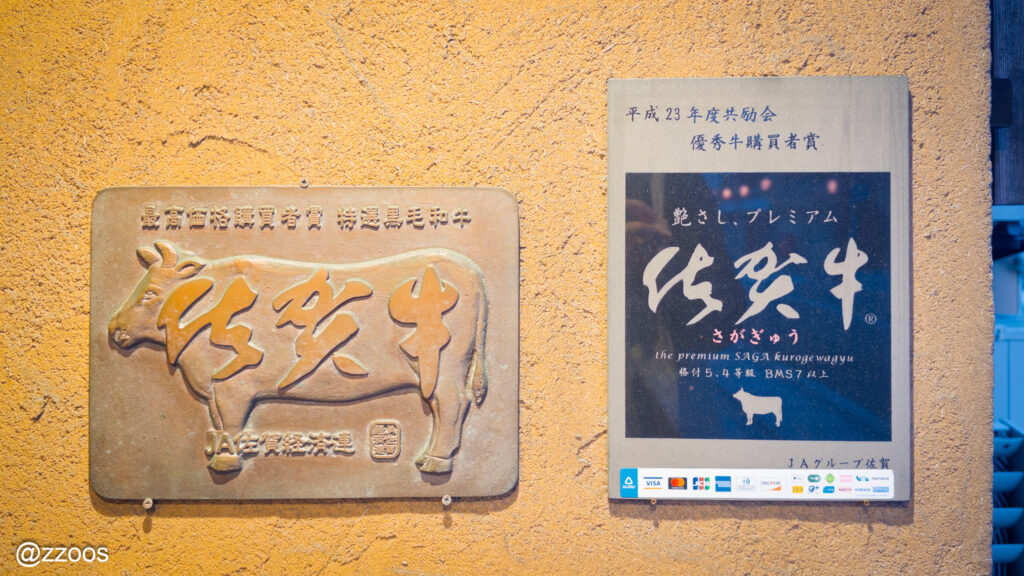
In front of the restaurant, several signs showed that they serve Saga-gyu. One of them said they handle premium Saga-gyu with BMS 7 or higher.
My expectations grew.
When people talk about famous Japanese beef, Matsuzaka-gyu and Kobe-gyu are usually mentioned.
Because of rarity, history, and marketing, they carry the image of being the most expensive and delicious beef in Japan.
Miyazaki-gyu and Saga-gyu have also been famous for a long time.
At the National Wagyu Ability Competition (全国和牛能力共進会), recent award trends show strong results from Kyushu regions such as Miyazaki and Kagoshima.
Saga-gyu has consistently remained among the top for many years.
The BMS score evaluates how finely and beautifully marbling is distributed. It ranges from 1 to 12, and generally 8 or above is considered top grade.
Korean Hanwoo 1++ roughly corresponds to BMS 9. Honestly, BMS 11 or above feels like it has crossed into an extreme territory beyond ordinary beef.
Anyway, I came here to eat that very “Saga-gyu.”
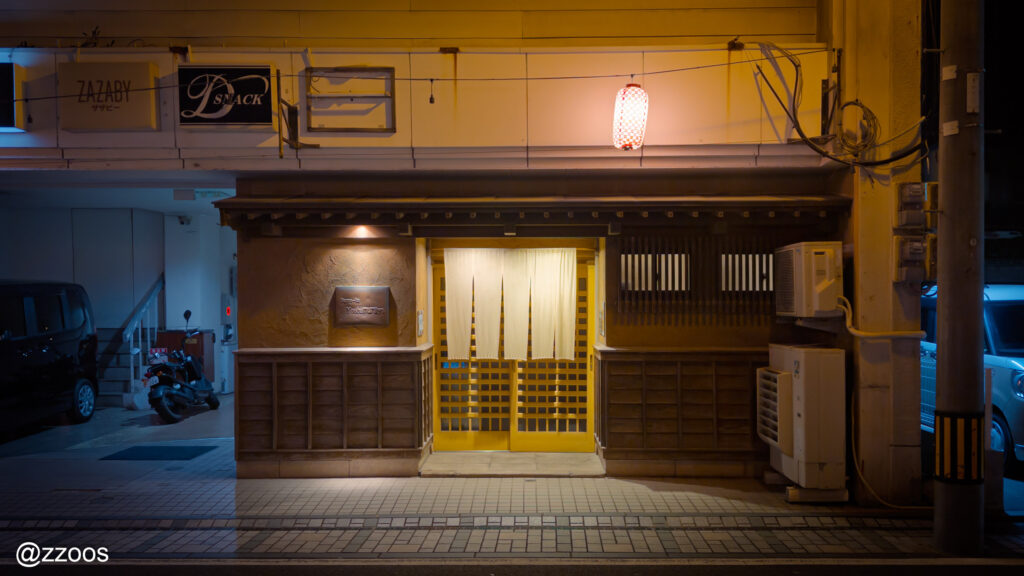
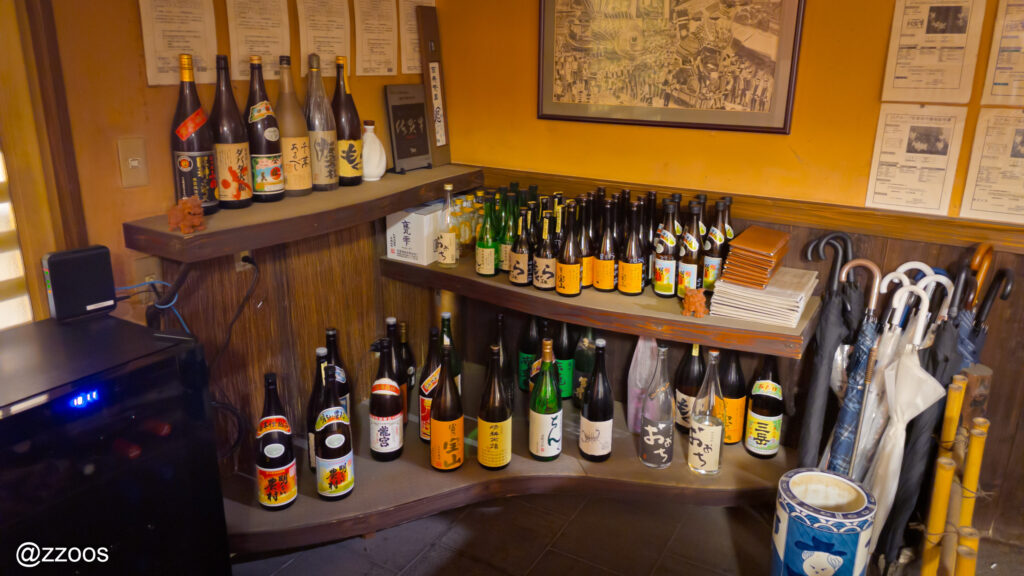
After entering and giving my reservation name, I was guided to a counter seat.
There were about six seats at the counter, and behind them were table seats separated like small rooms.
The restaurant was not very large, but not cramped either. It was not brand new and spotless, but it had a proper and comfortable atmosphere.
Simply put, it was the kind of place where you feel at ease.
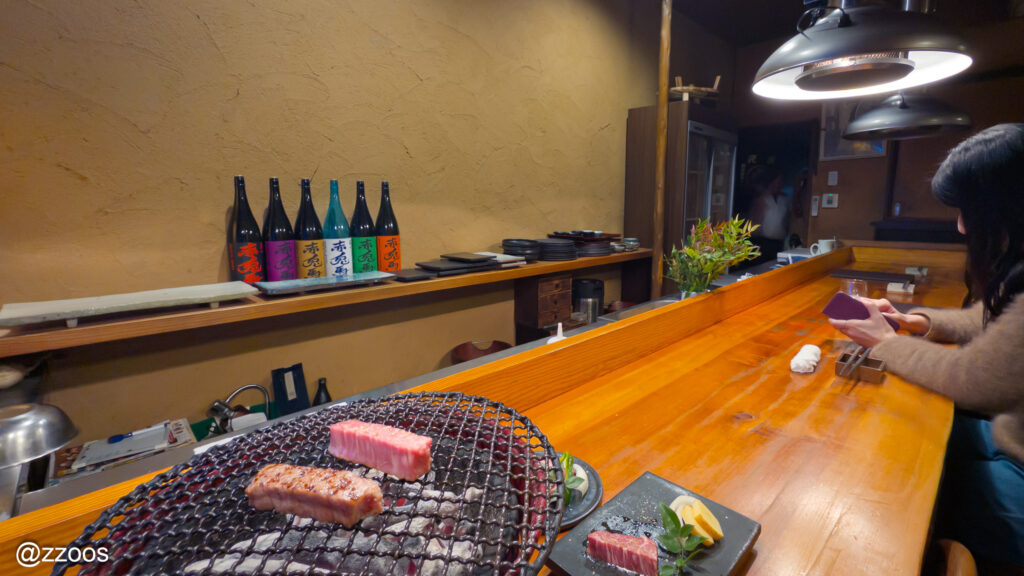
Looking at the menu, I saw chateaubriand.
It was overwhelmingly expensive, but I became curious. I came looking for the rich flavor of heavily marbled wagyu, yet the most expensive cut was chateaubriand, the best part of the tenderloin, which usually has less marbling.
In Japan, beef cuts are not segmented exactly like in Korea, so they cannot be matched one-to-one, but roughly speaking, hire (ヒレ) is tenderloin, sirloin (サーロイン) is strip loin, rosu (ロース) is ribeye/loin, and karubi (カルビ) refers to ribs.
I ordered one plate of chateaubriand (シャトーブリアン) and one plate of jo-karubi (上カルビ).
For a drink, I ordered Mitake (三岳), an imo shochu from Yakushima, with soda.
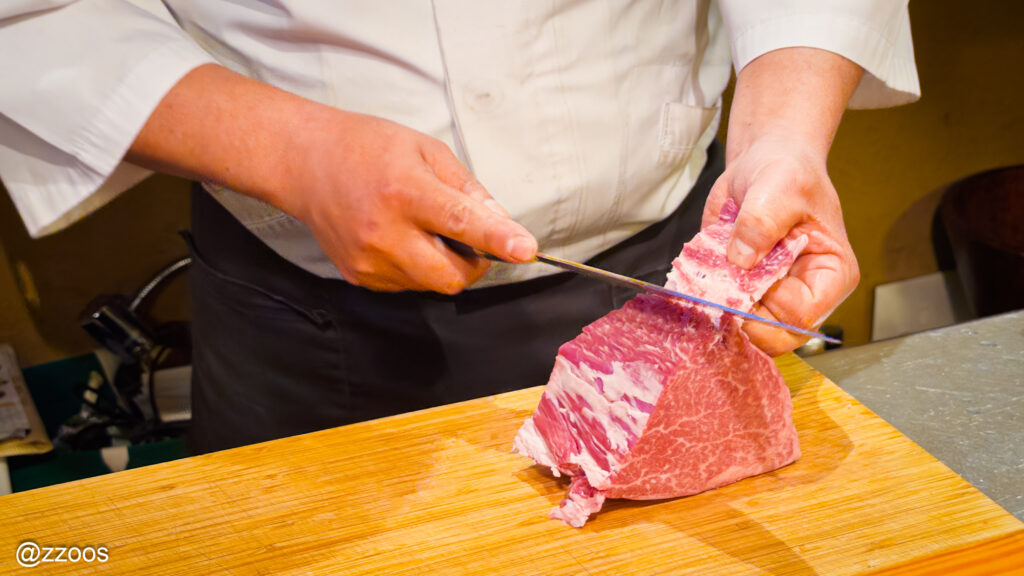
Sitting at the counter, I could watch the chef prepare the meat.
At first, I thought the beautifully marbled piece he was handling was ribeye ordered by another table.
But it was my chateaubriand.
That was tenderloin.
Tenderloin with that kind of marbling.
Wagyu marbling is truly impressive. Even visually, it made me anticipate the taste.
Of course, more marbling does not automatically mean better flavor.
But today, I came to enjoy exactly that marbling.
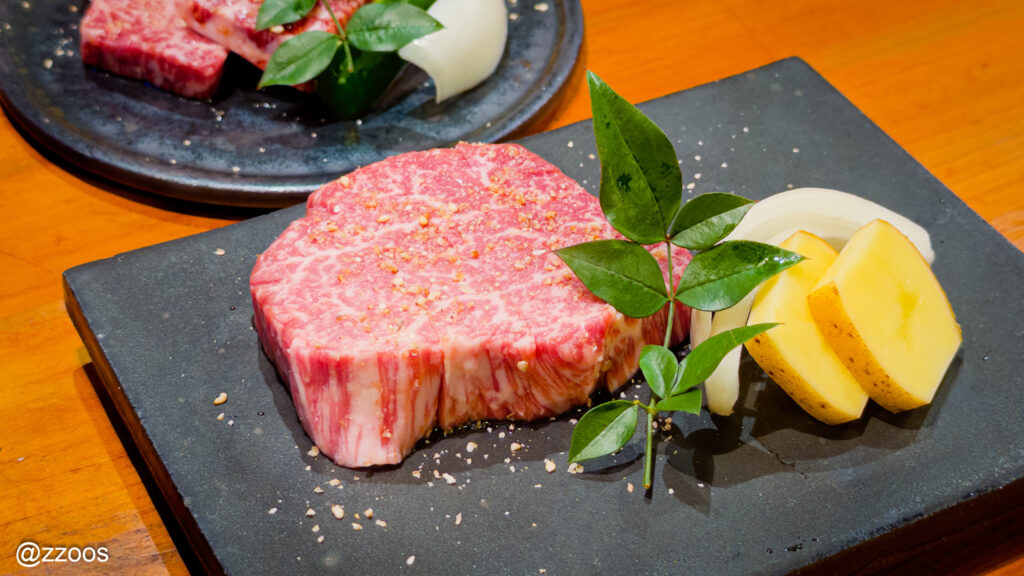
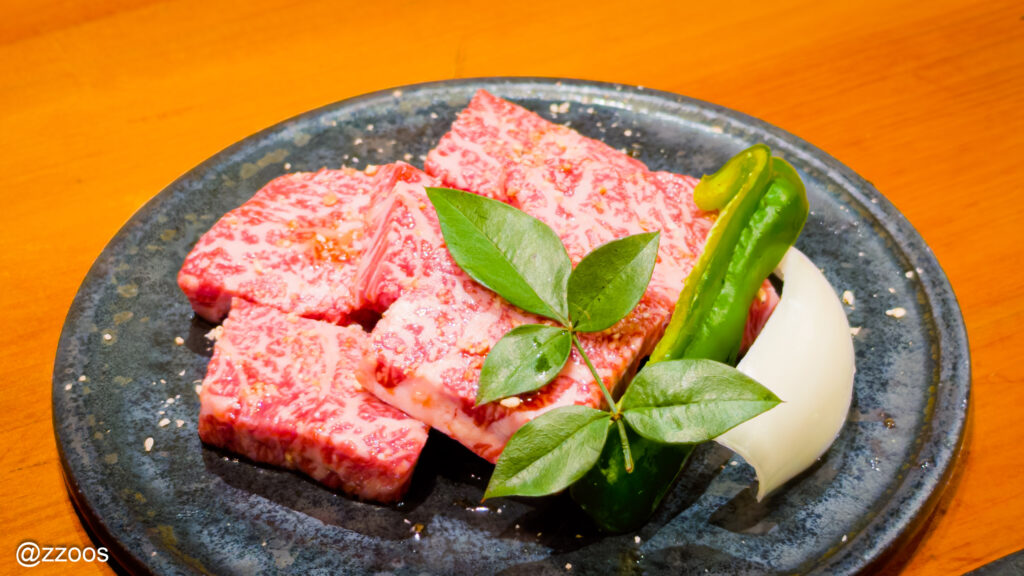
Finally, the chateaubriand and ribs arrived.
The marbling on the ribs was also outstanding. They also served some vegetables to grill together.
In Japan, karubi indeed refers to meat from the rib area. Especially tokujo-karubi (特上カルビ) or jo-karubi (上カルビ) are usually cuts trimmed from the most flavorful rib sections.
However, since the bone is removed and sliced into rectangular pieces, the shape is different from what Koreans typically imagine as “galbi.”
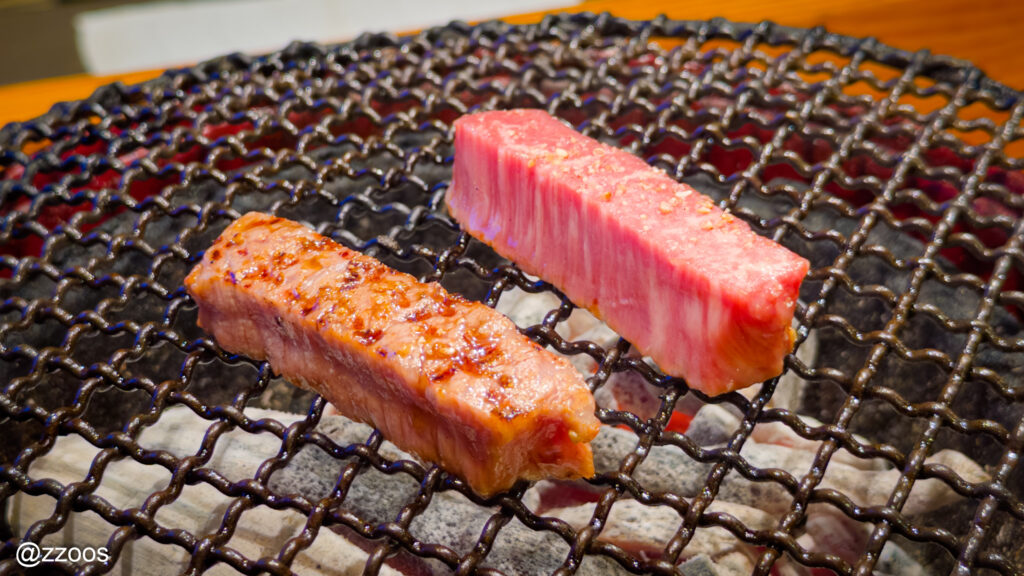
I grilled it.
I grilled the radiant chateaubriand over the charcoal brazier.
I prefer to cook beef thoroughly. I believe good beef reveals its true flavor when properly cooked. Especially when the meat is well managed.
However, tenderloin can easily become dry if overcooked.
So I cooked the first piece lightly. I could feel its potential.
This chateaubriand could handle more heat.
And that was true.
Because it had sufficient marbling, it did not lose moisture even when cooked more. It did not become dry. The texture improved, and the flavor became even better.
It was very high-quality chateaubriand.
I even wondered if it was acceptable to eat this level of beef for about 30,000 KRW.
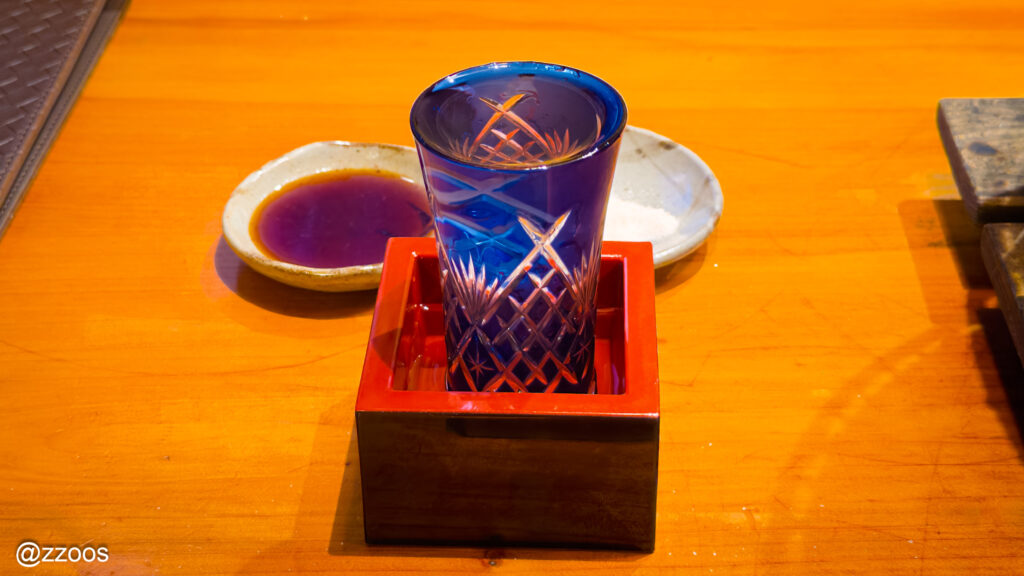
After finishing the Mitake soda, I ordered one go of Shichida (七田) Junmai Ginjo.
Since I was eating Saga-gyu, I chose a sake from Saga. It had a clean and modern profile.
Saga is famous not only for Saga-gyu but also for Japanese sake. Along with Shichida, the well-known Nabeshima (鍋島) is also from Saga. Although I usually prefer shochu, since this is a Saga trip, I intend to actively try its sake.
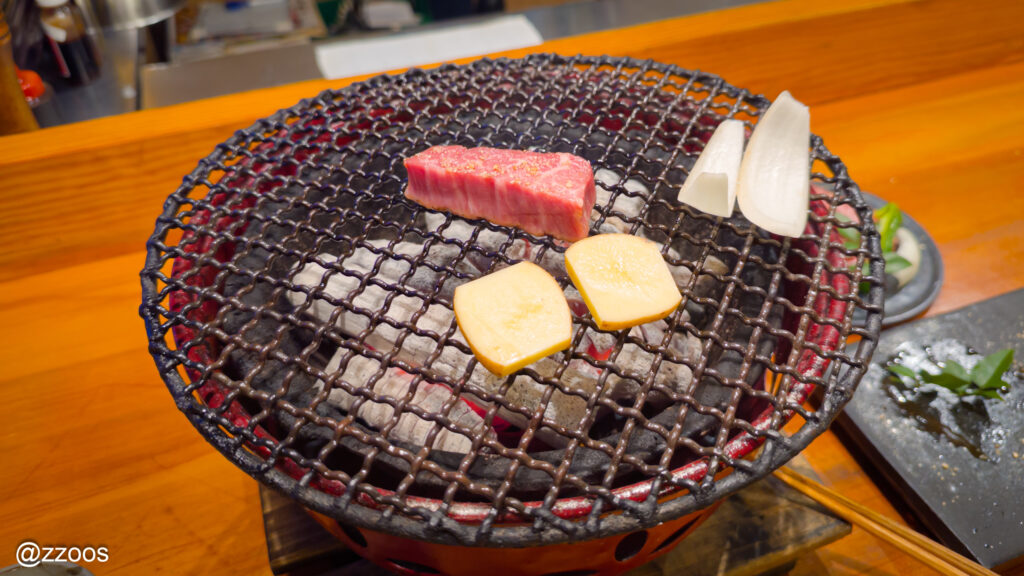
The ribs were, of course, delicious. An explosion of fat flavor. Melting away in the mouth.
I admired each piece as I ate.
At one point, I wanted to order kimchi, but I missed the timing. If I ordered it awkwardly, I might end up ordering more beef just to eat with the kimchi, so I gave up.
Only two plates and that’s it? You might think so, but I do not eat large portions, and I was already full.
Besides, this was only the first round. If I wanted to continue to a second and third place, I needed to stop here.
Two plates of expensive beef, one shochu soda, and one go of sake. The total cost was 7,120 yen. The cuts I ordered were the most expensive on the menu.
Considering that I ate certified high-quality Saga-gyu at this price, it was excellent value.

Leave a Reply