One of the well-known foods in Mokpo is something called “Jungkkan.”
According to what you can find through a quick search, the name comes from shortening “ganjjajang from Junghwaru” into “Jungkkan.”
It seems that the original place is Junghwaru, located in the old downtown shopping area.
However, since the day I planned to visit happened to be their regular day off,
I ended up going to a nearby place called Daemyeongchun instead.
I sat down at a table, ordered a bowl of Jungkkan, and waited.
A group that came in after me also ordered Jungkkan.
They asked the owner what “Jungkkan” meant.
I listened carefully, and she explained that it means
“a light bite eaten briefly between lunch and dinner, something in the middle.”
That’s why, she said, the portion is relatively small.
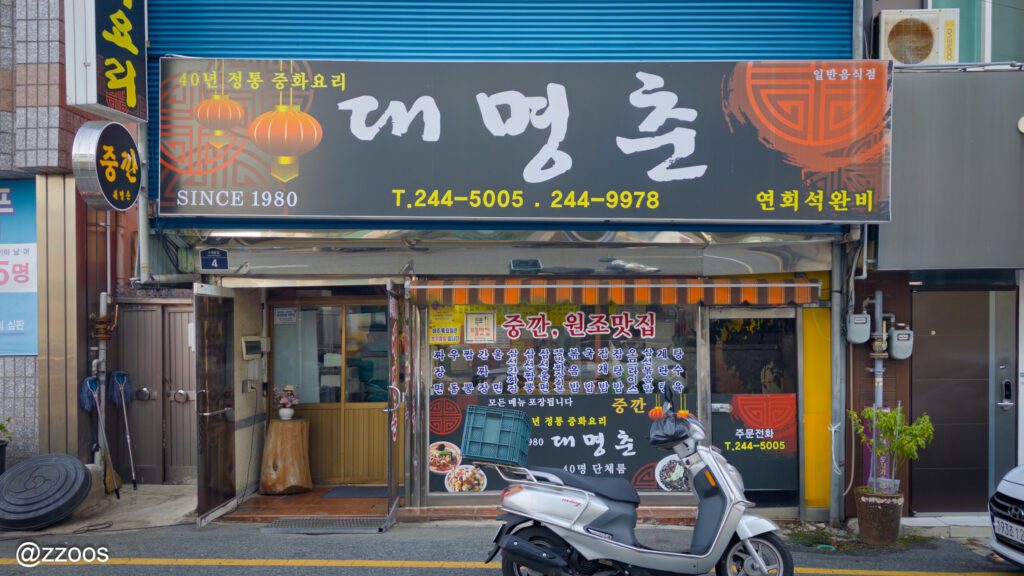
I’m not sure which explanation is the true origin:
whether it comes from ganjjajang at Junghwaru,
or from the idea of a small snack eaten briefly in between meals.
Food names often have origins that are hard to pin down.
What is certain, though, is that in Mokpo,
there exists a style of jjajangmyeon called “Jungkkan.”
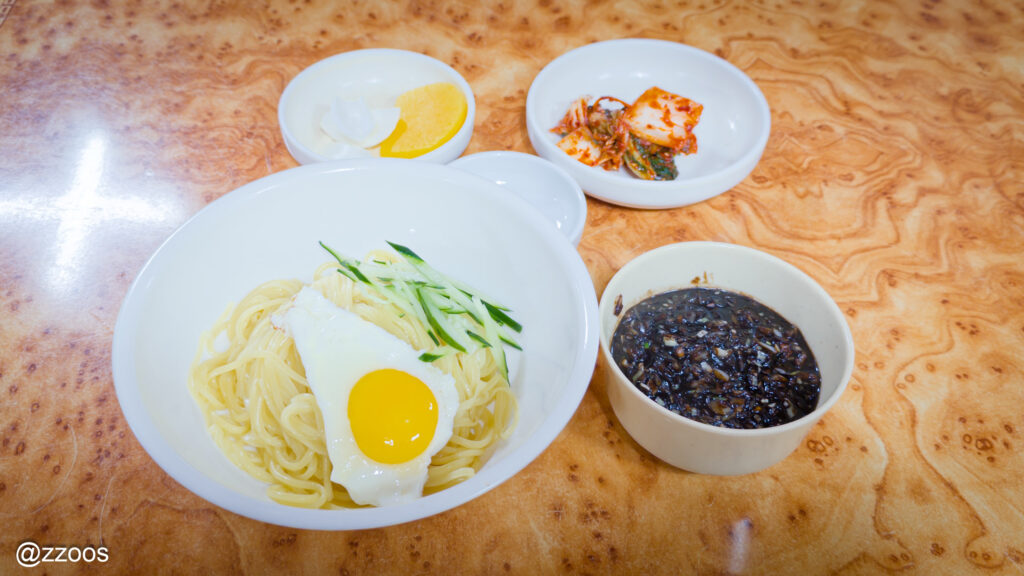
When the dish arrived and I took a closer look,
I realized this is a yuni-style jjajang.
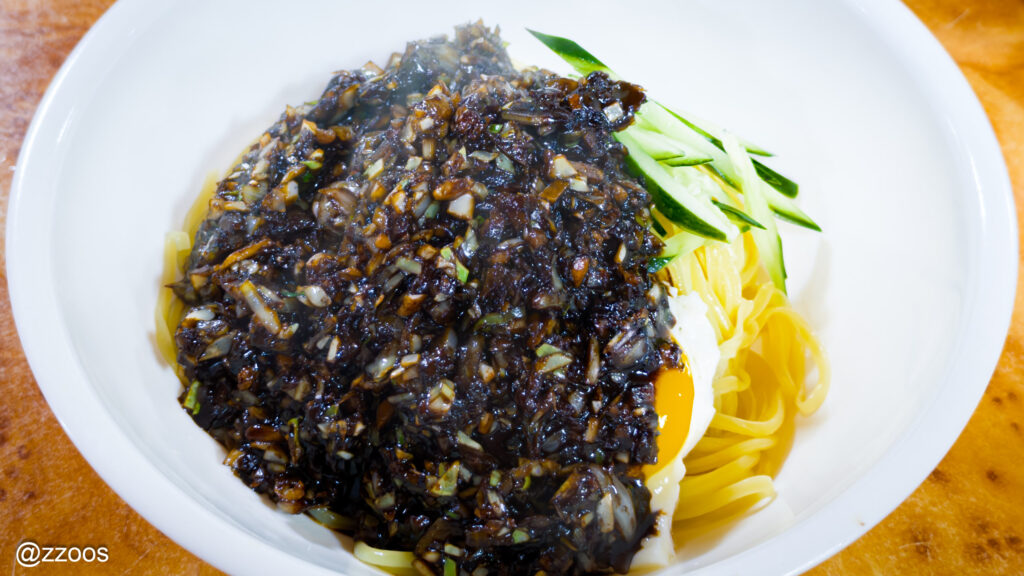
The meat and vegetables are all finely chopped.
In the Jeolla dialect, you’d say they’ve been “completely minced.”
And since the sauce doesn’t look watery at all,
it seems they didn’t dilute it with water like regular jjajang.
So yes, it really is a kind of ganjjajang.
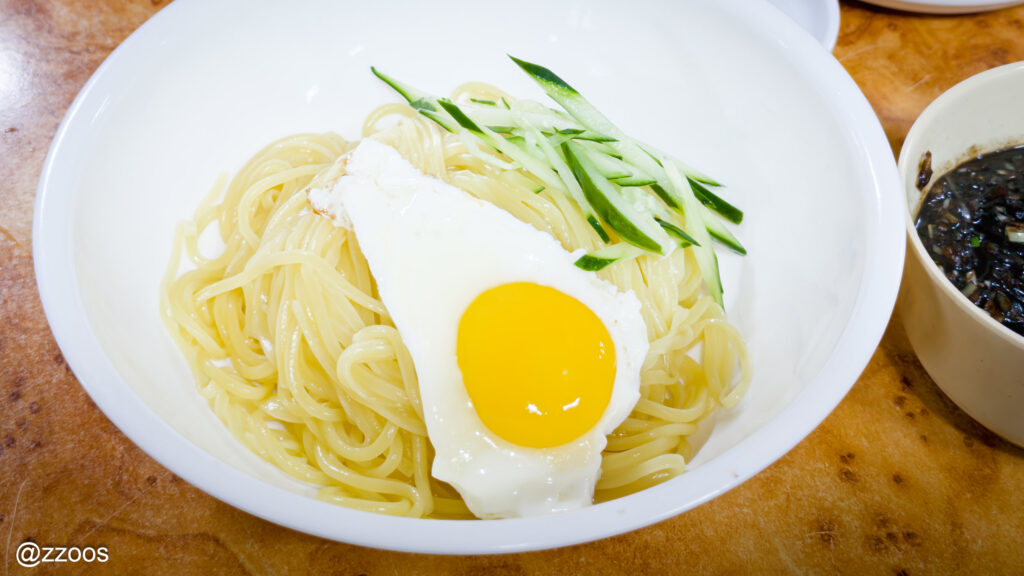
You pour the jjajang sauce, served separately,
over the noodles topped with shredded cucumber and a soft-fried egg,
then mix everything together.
The noodles are a bit thinner than the jjajangmyeon noodles I’m used to.
They’re not as thin as somyeon,
but they have a long, slightly flattened cross-section.
After mixing it well and taking a bite,
I immediately thought, this is something special.
The sauce is rich and nutty, packed with umami.
The texture of the slightly thinner noodles works well, too.
Thinking it would be just an ordinary bowl of jjajangmyeon was a mistake.
This is the kind of distinctive flavor
you should make time for at least once during a trip to Mokpo.
To be honest, it’s a bit pricey.
Even considering how much jjajangmyeon prices have gone up these days,
Jungkkan costs more than standard jjajangmyeon or even ganjjajang.
Is the fame of being a local specialty reflected in the price?
I wouldn’t say the price feels fully justified,
but there’s no denying that it’s delicious.
Even as I write this, my mouth is watering.
It’s the kind of taste that makes you want a bowl right now.
A true flavor of Mokpo.

Leave a Reply