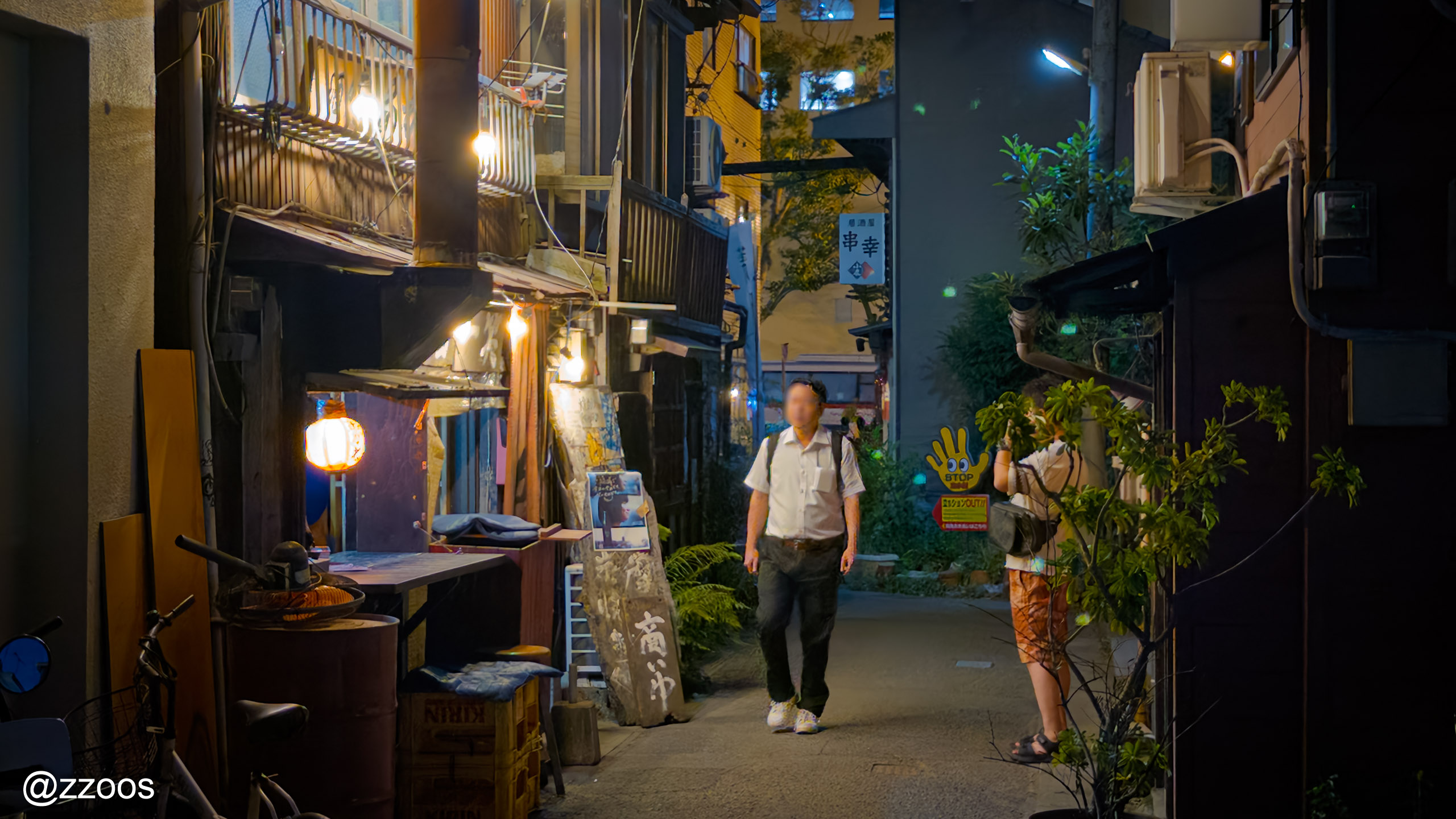
My second night in Kagoshima City.
Tonight I’m heading somewhere with a slightly unusual atmosphere.
Not Tenmonkan(天文館), Kagoshima’s only(?) nightlife district,
but the area in front of City Hall.
People call it Meizanbori(名山堀).
The exact address is Meizancho(名山町).
Walking through narrow alleys between old buildings gives the place a unique feel and look.
Instead of big chain stores, you’ll find shops full of character gathered here.
But the street is much smaller than the photos might make you expect.
If you actually go, you could be very disappointed.
It’s that kind of place.
:: Akane, Thick with Local Atmosphere
I’d been to this alley once before.
Back then, I’d marked one place to try.
It was full at the time, so I had to turn back.
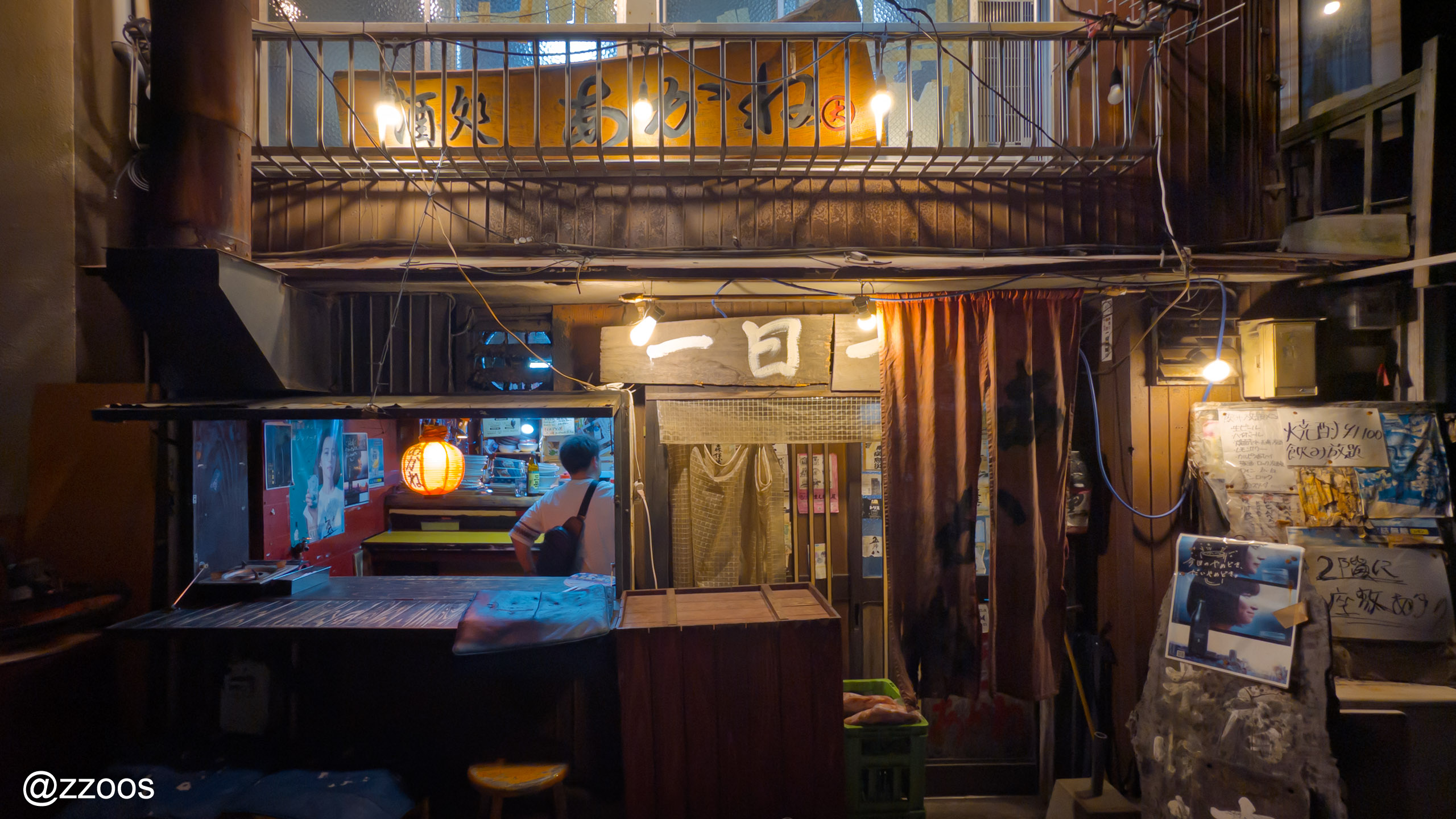
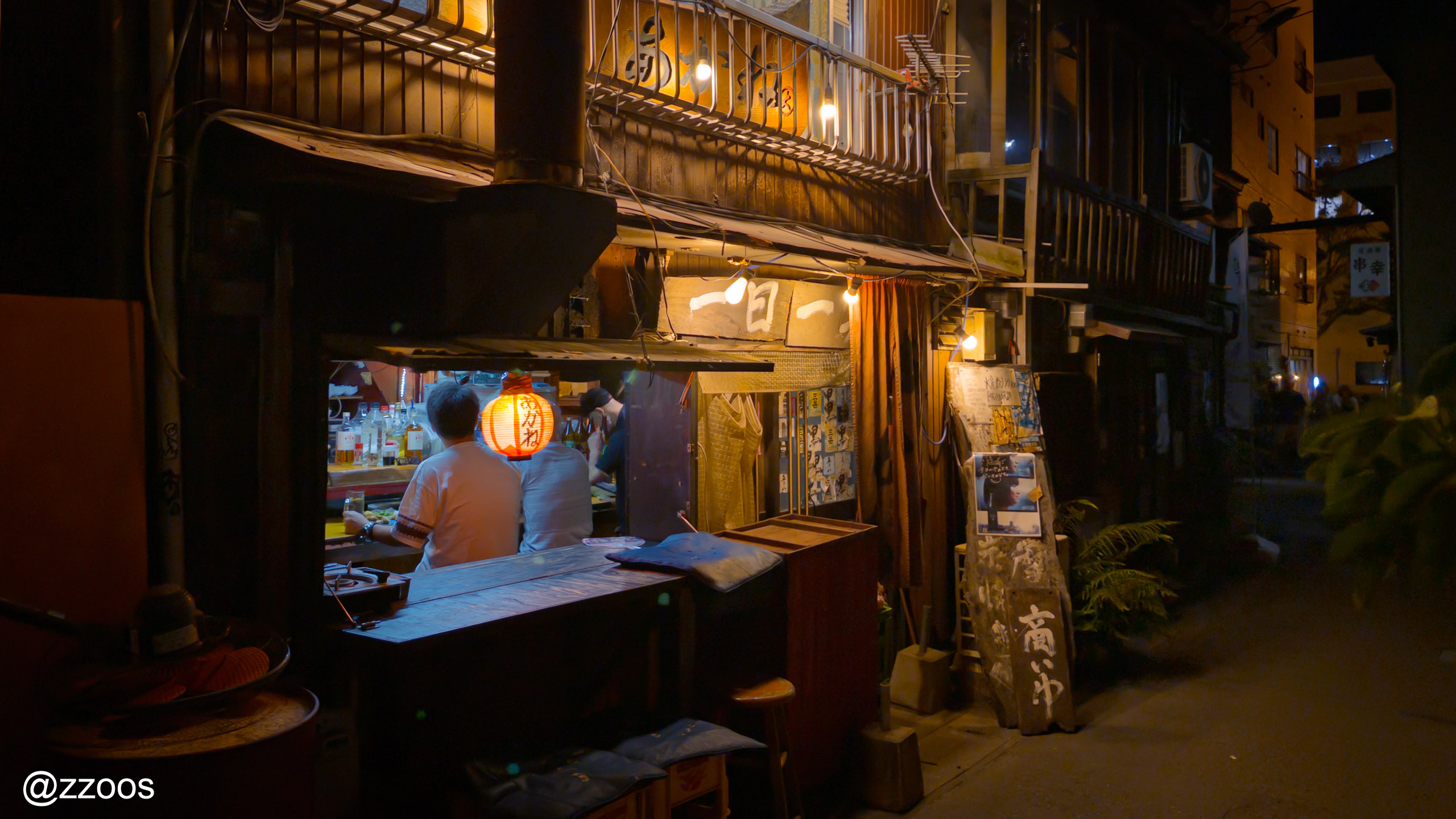
It’s the kind of shop anyone wandering the alleys of Meizanbori would be curious about.
Akane(あかね).
The exterior is full of the marks of time.
Wood worn by hands and handwritten lettering.
Old posters, dusty curtains and cushions.
Honestly, I can’t call it clean or tidy.
On top of that, it’s midsummer and there’s no air conditioning.
The windows are wide open.
But that’s exactly what gives this place its unique atmosphere.
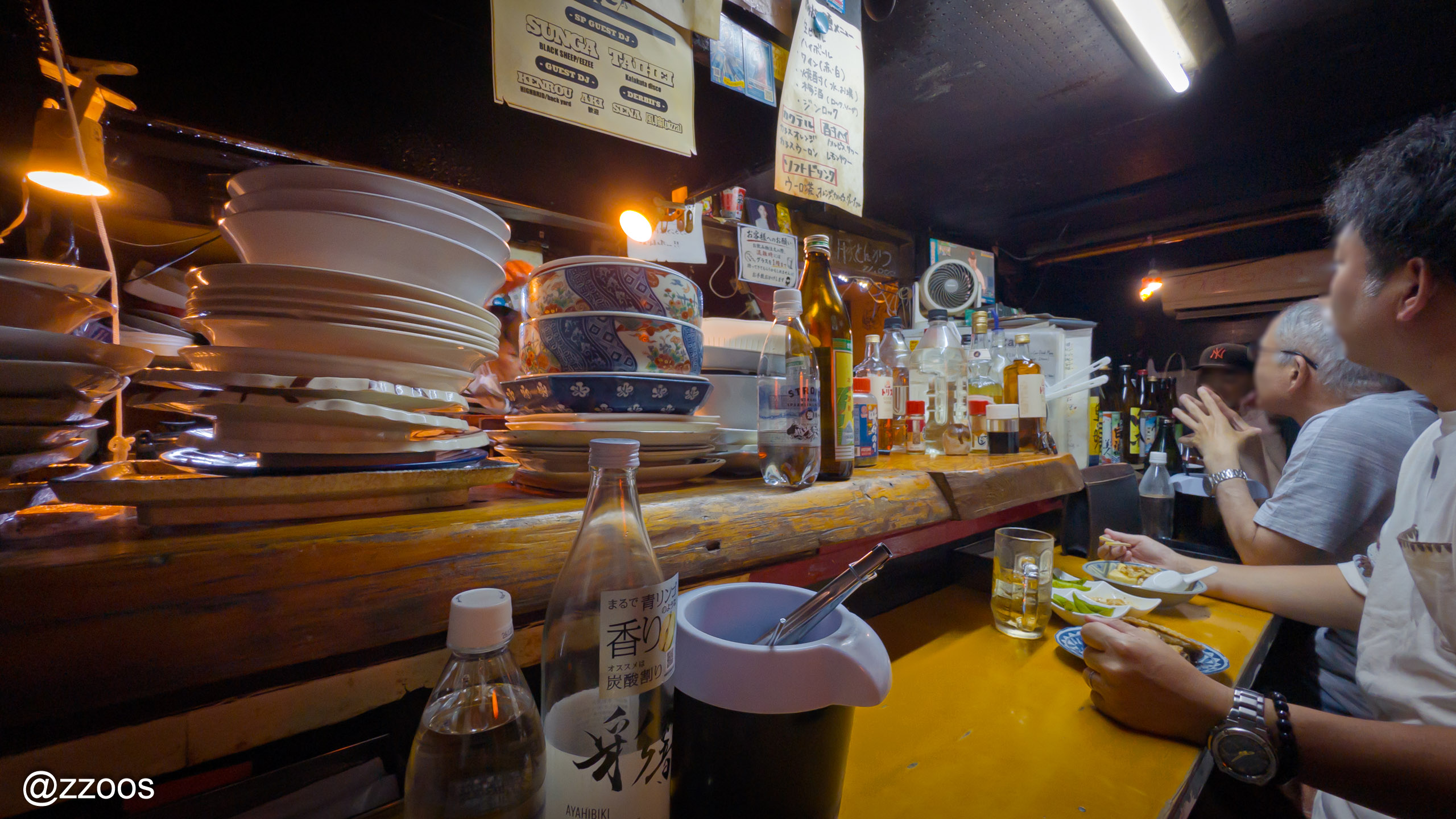
And what completes it are the local uncles filling the shop.
:: The Osusume Course, Seven Dishes
Once again, the shop was filled with uncles.
There was one seat left in the corner, and I barely managed to sit down.
The menu had a wide variety of dishes, but choosing wasn’t easy.
Written in large letters at the top: “Osusume course, 2,200 yen.”
Next to it, in small print, “7 dishes.”
Seven dishes for 2,200 yen looks pretty good.
Oh, and it even includes nomihodai(飲み放題, all-you-can-drink)!
Then there’s no need to think further.
Let’s start tonight’s dinner with the osusume course.
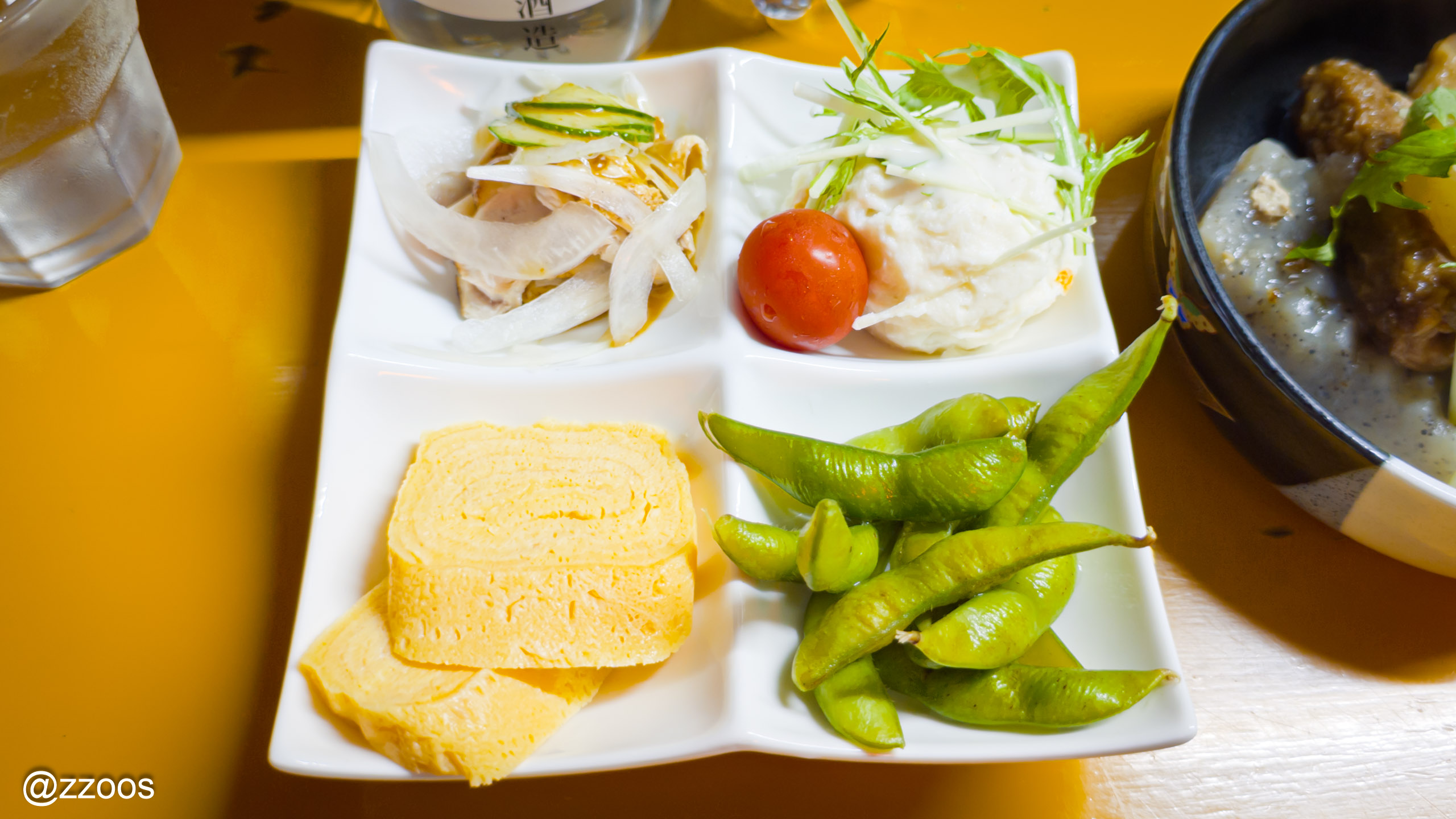
The first thing to come out is four dishes, a little of each on one plate.
Torisashi(鳥刺し, raw chicken sashimi), potesara(ポテサラ, potato salad), tamagoyaki(卵焼き, rolled omelet), and edamame(枝豆, boiled green soybeans), all on one plate.
The torisashi is clean with no gamey smell.
The other dishes aren’t amazing, but they’re plainly tasty.
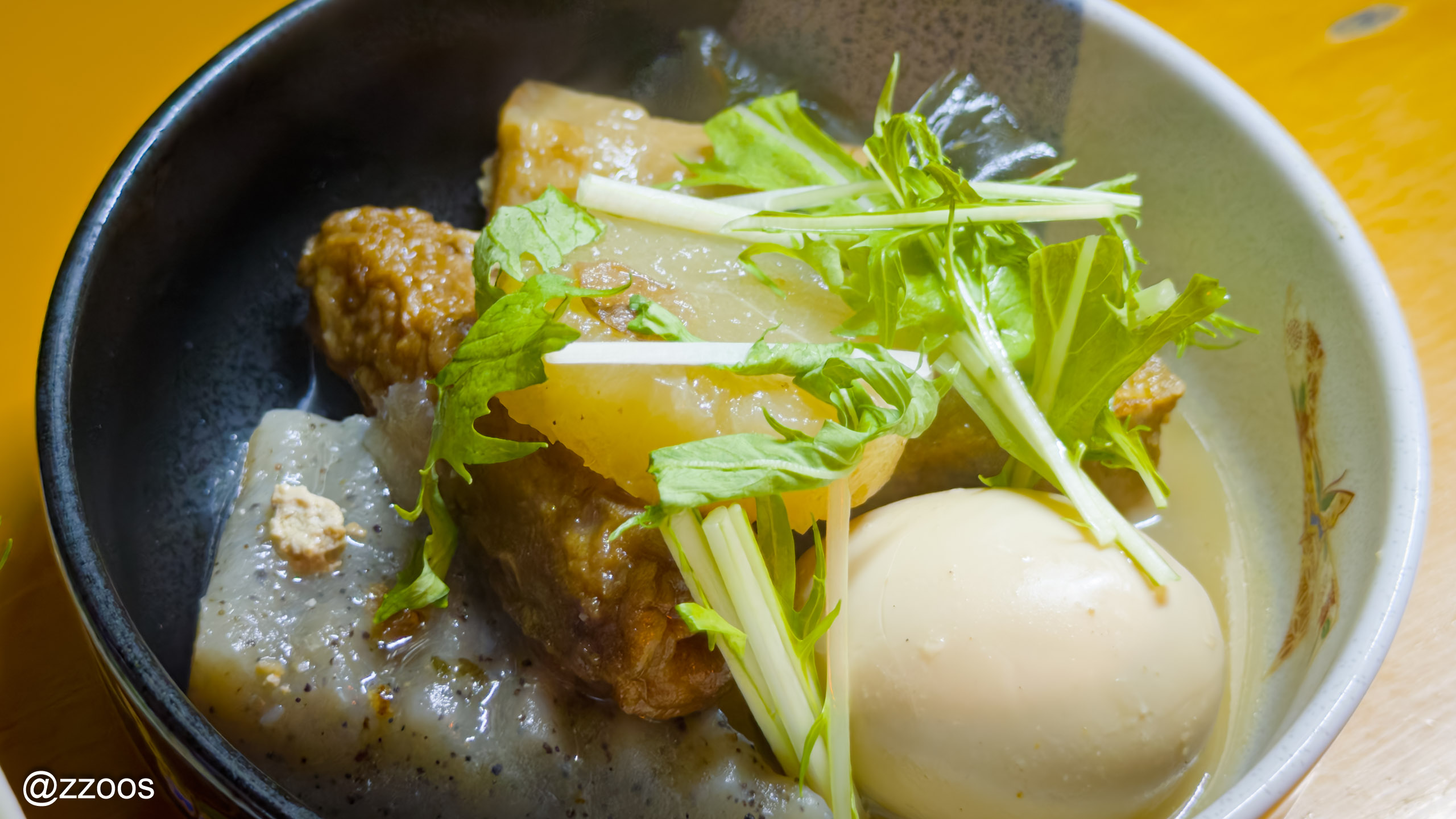
Oden comes out too, in a big bowl.
The classics, like daikon(大根, radish), satsuma-age(さつま揚げ, fried fish cake), konjac, and tamago(玉子, egg).
Simmered for a long time, they’re soft and well soaked in broth.
There’s a lot of it, so it’s quite filling.
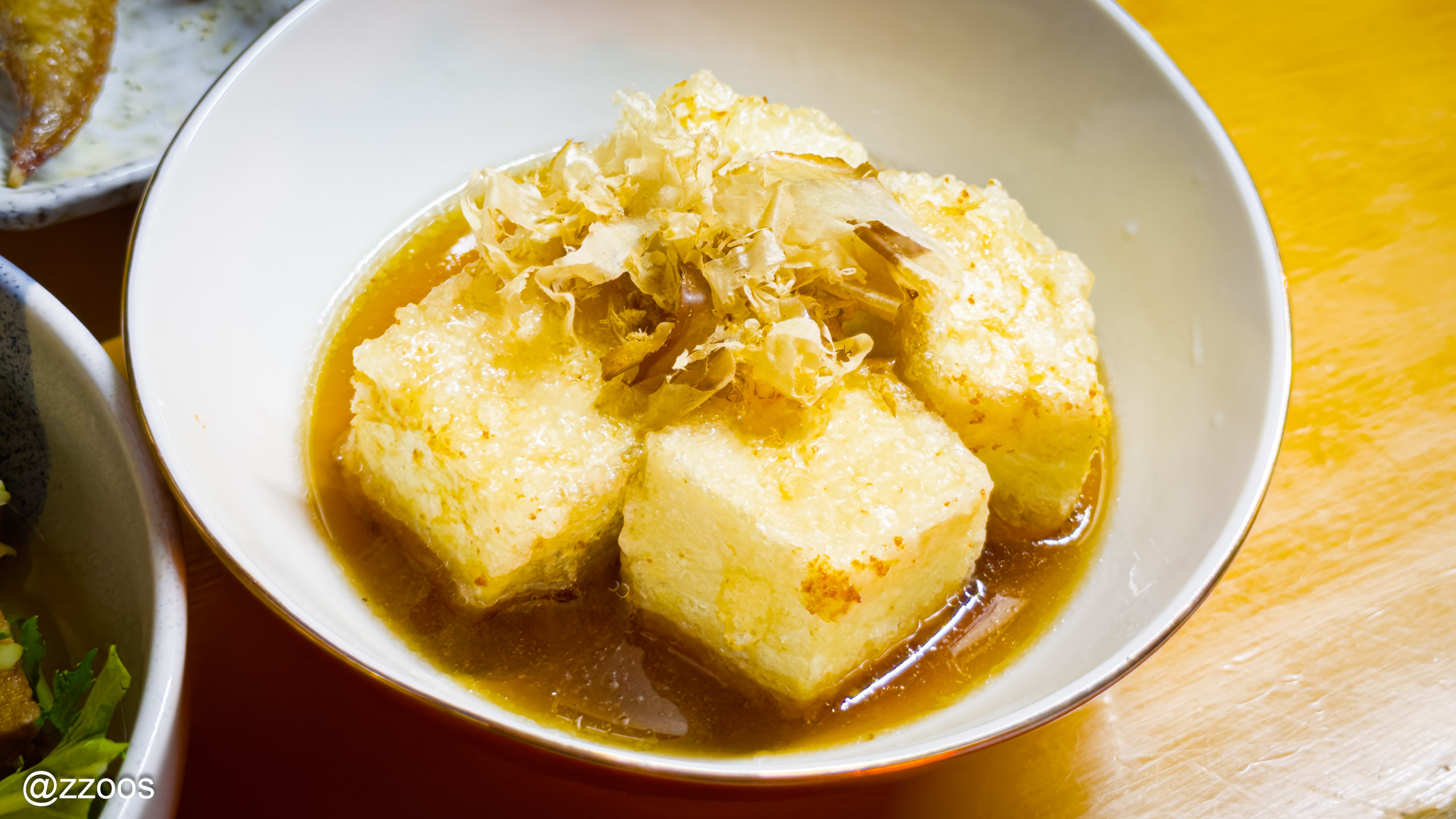
Agedashi tofu(揚げ出し豆腐, fried tofu) is fried tofu with a sweet and salty broth poured over it.
It’s finished with katsuobushi on top.
Personally, this was the best.
The tofu was fried really well, and the broth was good too.
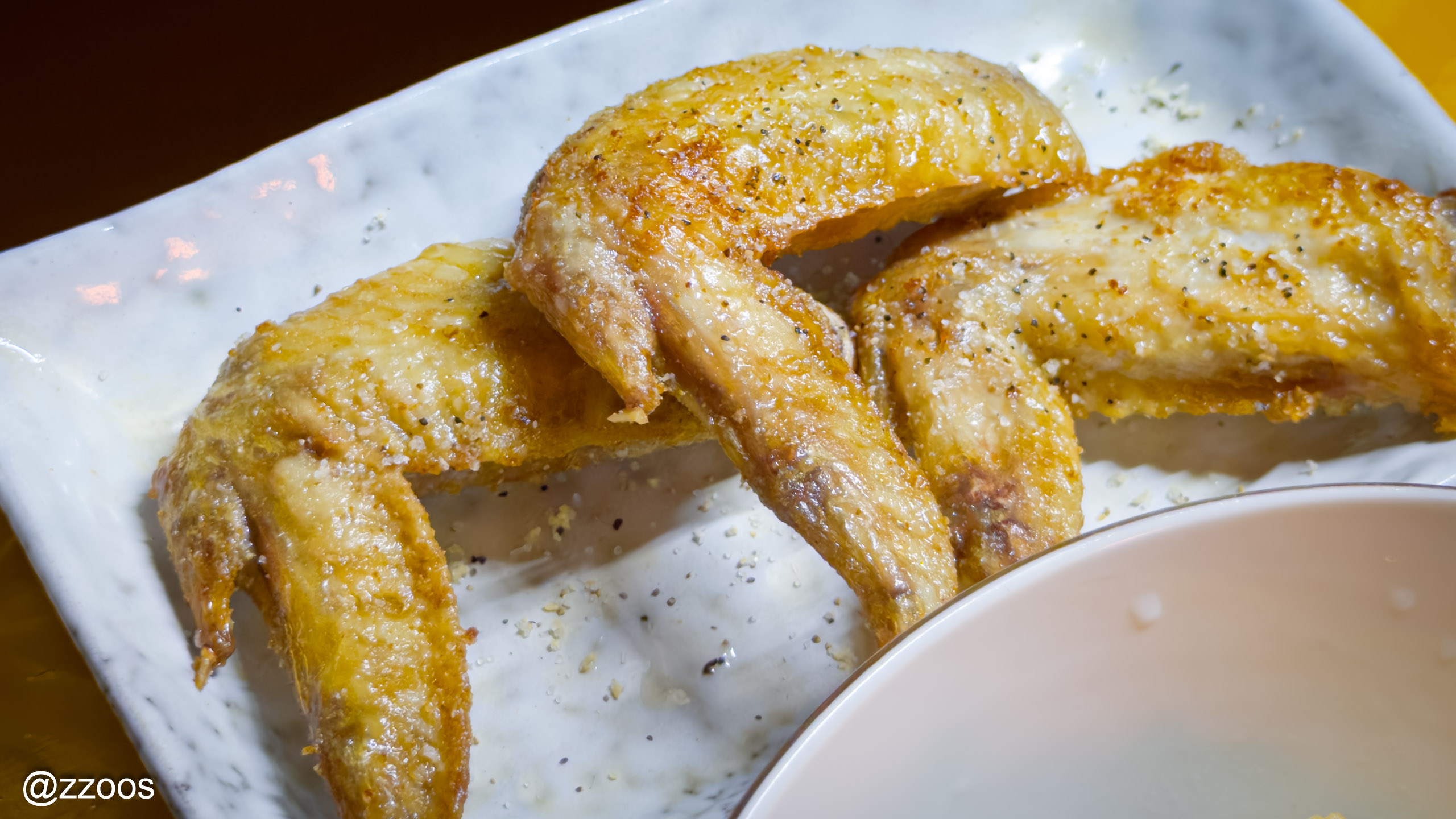
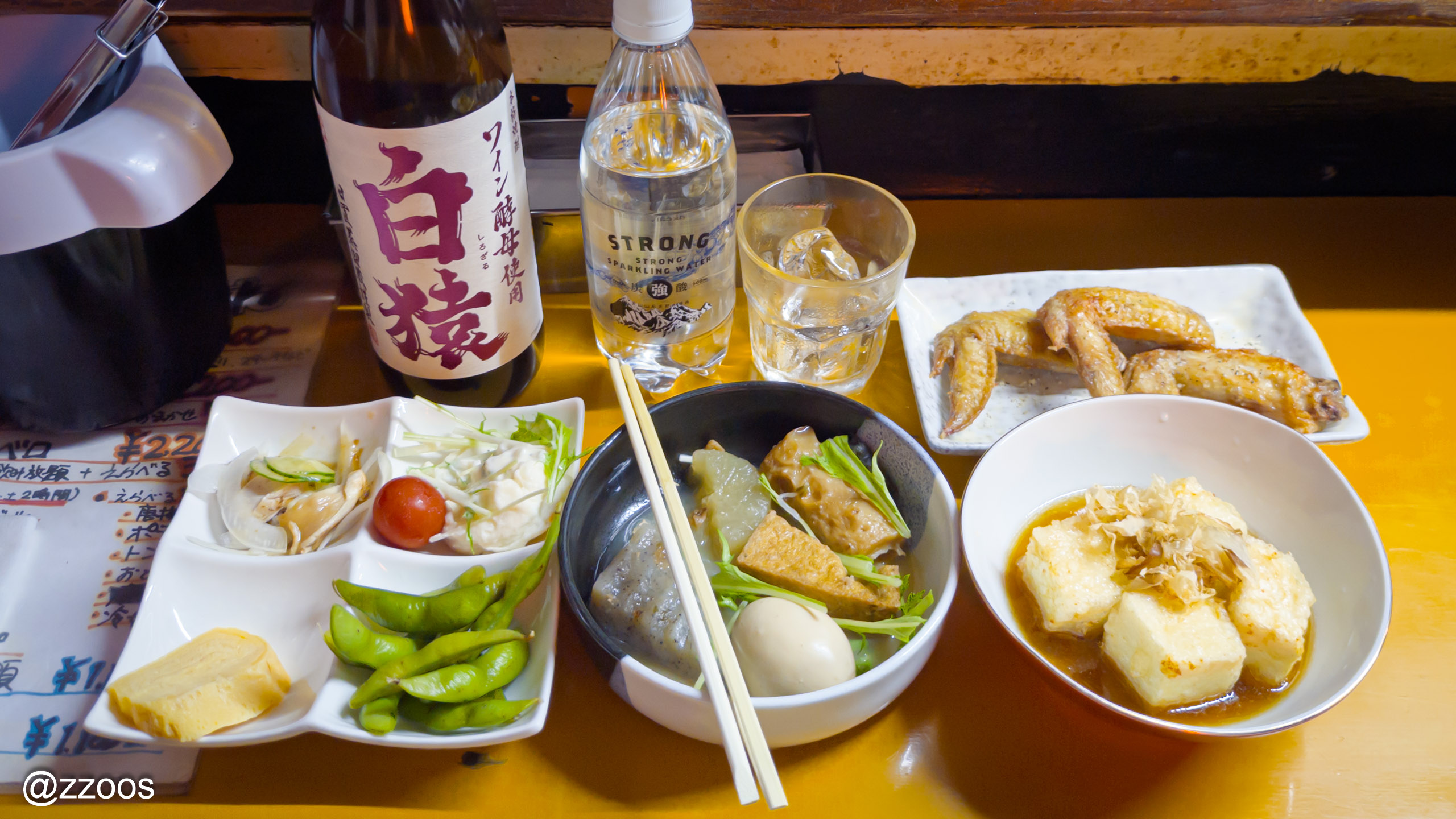
Last came three pieces of tebasaki(手羽先, fried chicken wings).
There’s almost no batter, and the salt and pepper seasoning is strong.
Picking the meat off the bones is a hassle, but it’s a great snack with drinks.
:: Shochu, All You Can Drink
The drink that went with all seven dishes was shochu.
I’ve mentioned before that Kagoshima is the city of imo shochu(いも焼酎, sweet potato shochu), right?
Tonight’s order includes nomihodai, so I can drink as much as I like.
The shochu was displayed on the shop’s wall.
There are two wooden shochu shelves.
You just grab a bottle from there and pour it yourself.
I didn’t count exactly, but there seemed to be over 50 kinds of shochu.
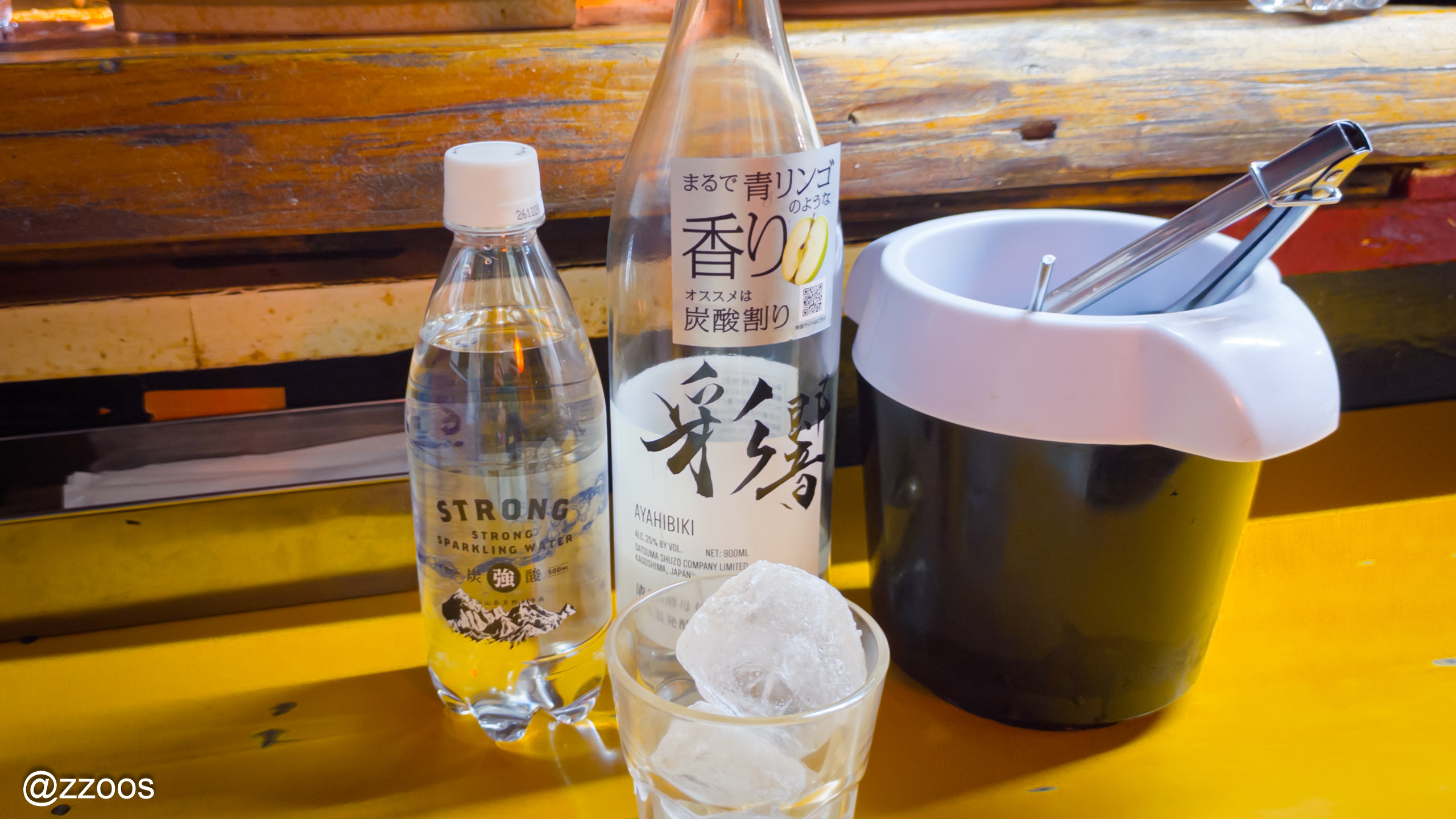
If you want sodawari, you have to order soda water separately.
Ice they just give you.
I start with one I know well and have drunk a lot.
Ayahibiki(彩響).
It’s known for its clear bottle, and it’s an aromatic shochu with a green grape scent.
At convenience stores in Kagoshima, you can also buy it as a canned sodawari.
If you buy a few cans before heading home, you can enjoy it easily at home too.
The second one I picked because the label said something about wine(ワイン).
Later I found out it meant it was fermented with wine yeast.
It’s a shochu called Shirozaru(白猿).
Apparently it’s barley shochu, not sweet potato, but I didn’t know that while drinking.
It felt very clean.
The third one I picked because the label was unusual.
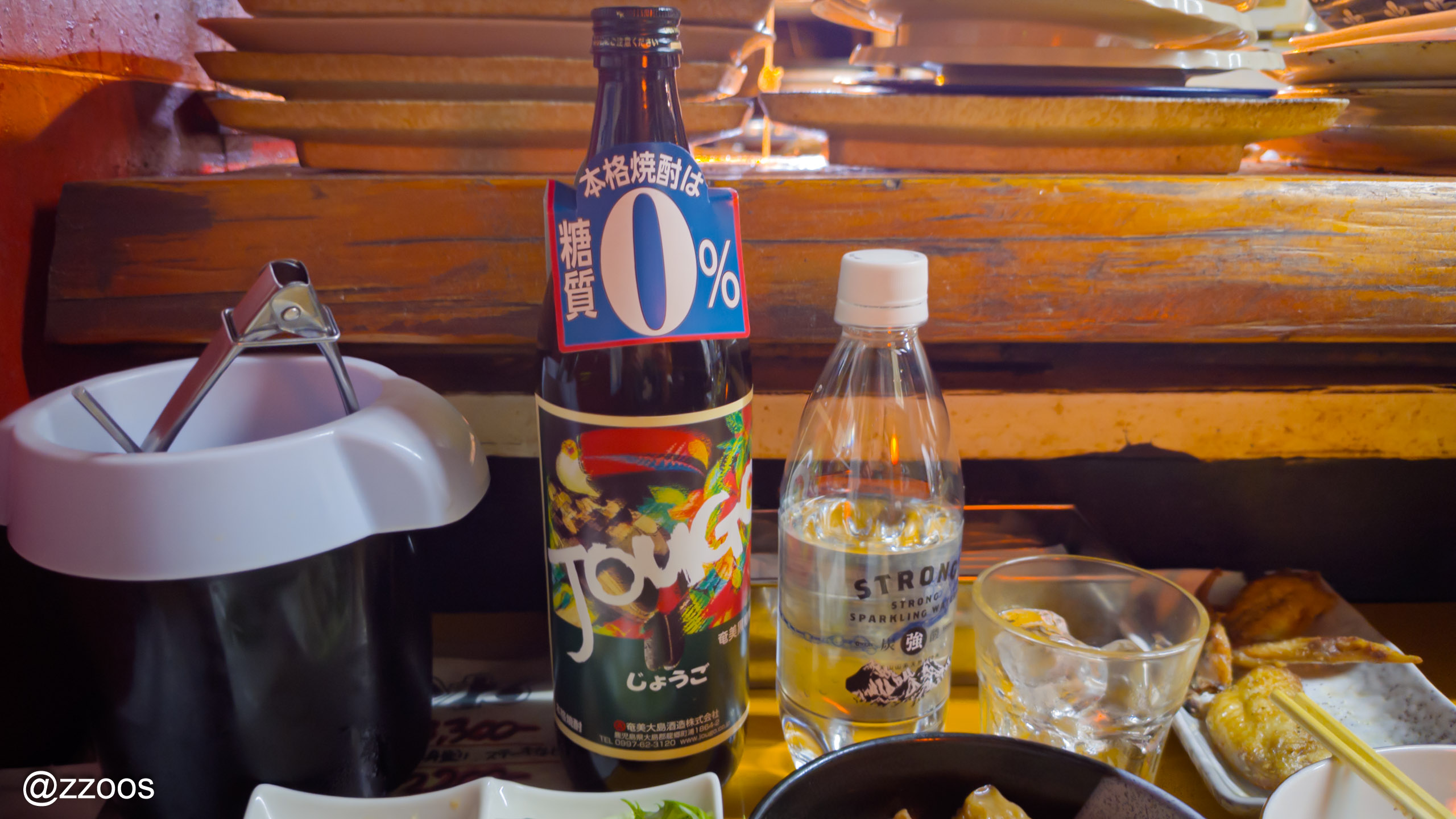
Jogo(じょうご).
It’s a brown sugar shochu(黒糖焼酎) that can only be made in the Amami Islands(奄美群島), Kagoshima Prefecture.
Under Japanese law, it can only be produced in the Amami Islands.
By the way, brown sugar shochu doesn’t have sugar added.
Its main ingredient is brown sugar.
Grains go through saccharification(糖化), and then alcohol is produced through fermentation.
Brown sugar made from sugarcane is already sugar, so it skips saccharification and goes straight to fermentation to make alcohol.
It’s generally said to be sweeter, but honestly, I couldn’t tell.
All I know is that it was tasty.
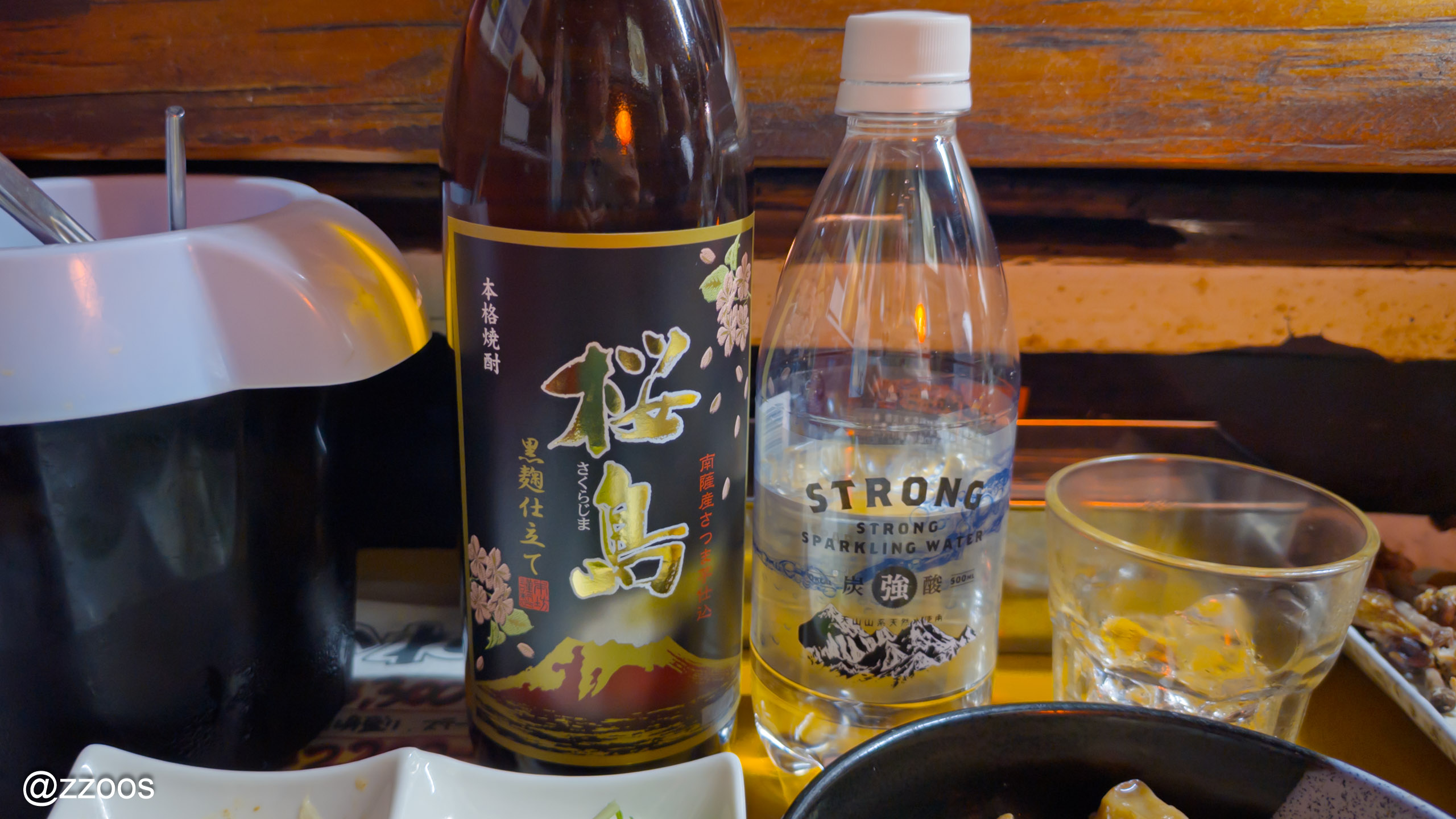
The fourth was Sakurajima(桜島), which I picked because I liked the name.
It’s a shochu made with black koji.
Apparently it’s a common daily shochu in Kagoshima.
Maybe it holds a similar place to Miyazaki’s Kurokirishima(黒霧島)?
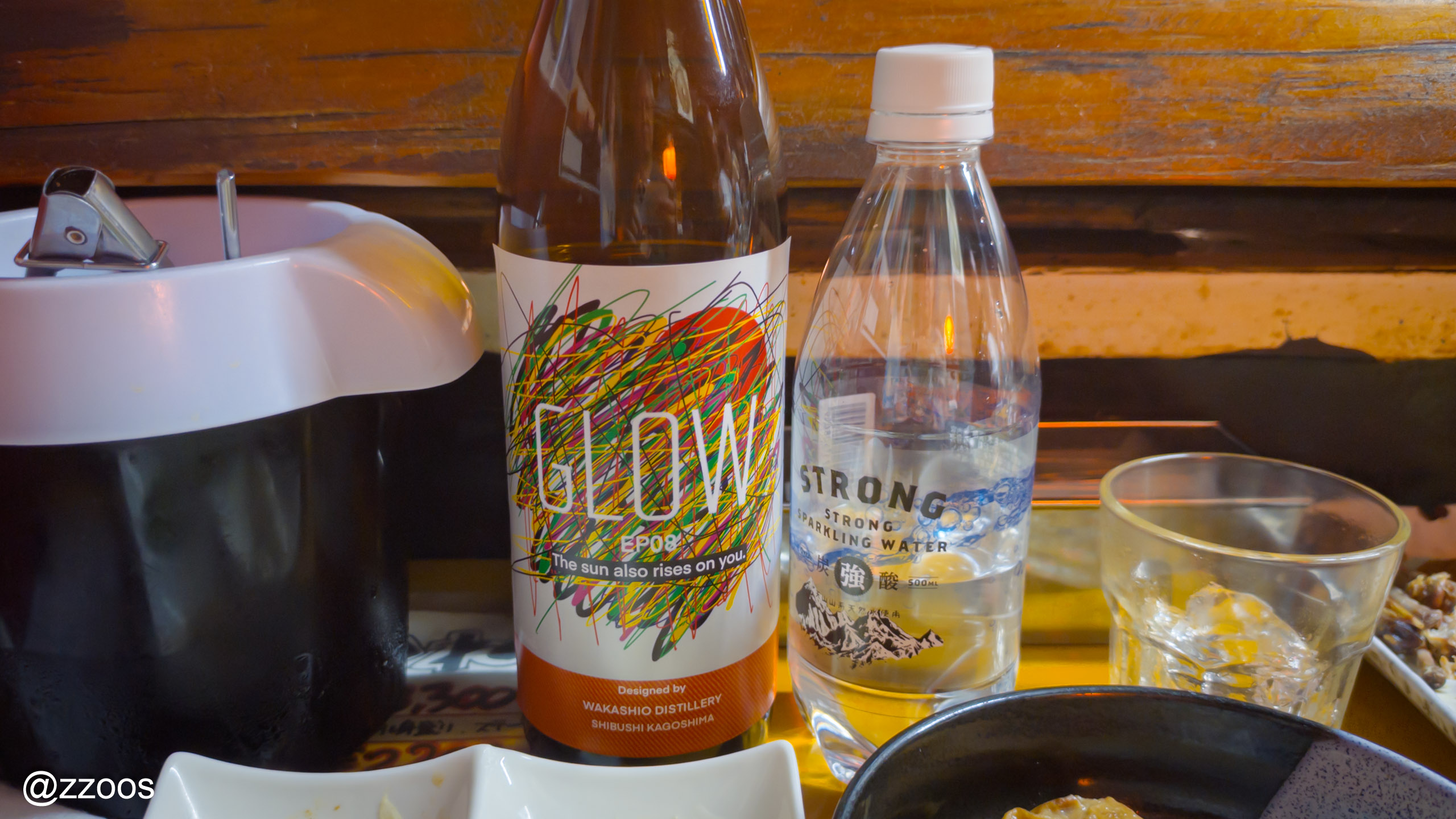
The fifth was ep.08, the eighth in GLOW’s series, which releases a new edition every year.
The same company’s ep.05 is pretty common in Korea these days.
Its distinctive melon aroma seems to have made it popular.
ep.08 is hard to pin down to a specific fruit, but it’s an aromatic shochu with a pleasant, refreshing scent.
I ended up drinking it several times on this trip too.
I liked it quite a lot, so after that I kept making sodawari with ep.08.
I didn’t really talk with the people next to me,
but it was a place where I could fully feel the local mood.
Partway through, a young Korean man came in alone.
His Japanese was clumsy, but he was working hard to talk using a translation app.
Then the uncles next to him all stepped in to help him order and chatted with him about this and that.
This is a place where you can come across warm scenes like that.
With no air conditioning in the hot summer, honestly, it is an uncomfortable place.
I can’t say the shop is completely clean,
and there’s a bit of that greasy smell typical of old restaurants.
But there’s something here that outweighs all that.
The food isn’t anything special, but the prices are cheap instead.
The Showa feel of a Kagoshima back alley, a bar for old guys.
I’d say it’s that kind of place.