More than half the trip is behind me.
After days of riding trains and moving around every single day, I finally arrived in Kagoshima City.
For the next three days, I’ll be spending my time eating and drinking here.
In Kagoshima, it has to be imo shochu(いも焼酎).
Because of the volcanic terrain, crops like sweet potatoes grow better here than rice.
So unlike other parts of Japan, they don’t make their liquor from rice.
They make it from sweet potatoes.
The Japanese word for sweet potato is satsumaimo(さつまいも).
Satsuma is the old name for Kagoshima.
So the place name is built right into the word for sweet potato.
Sweet potato means Kagoshima, and Kagoshima means sweet potato.
That kind of image.
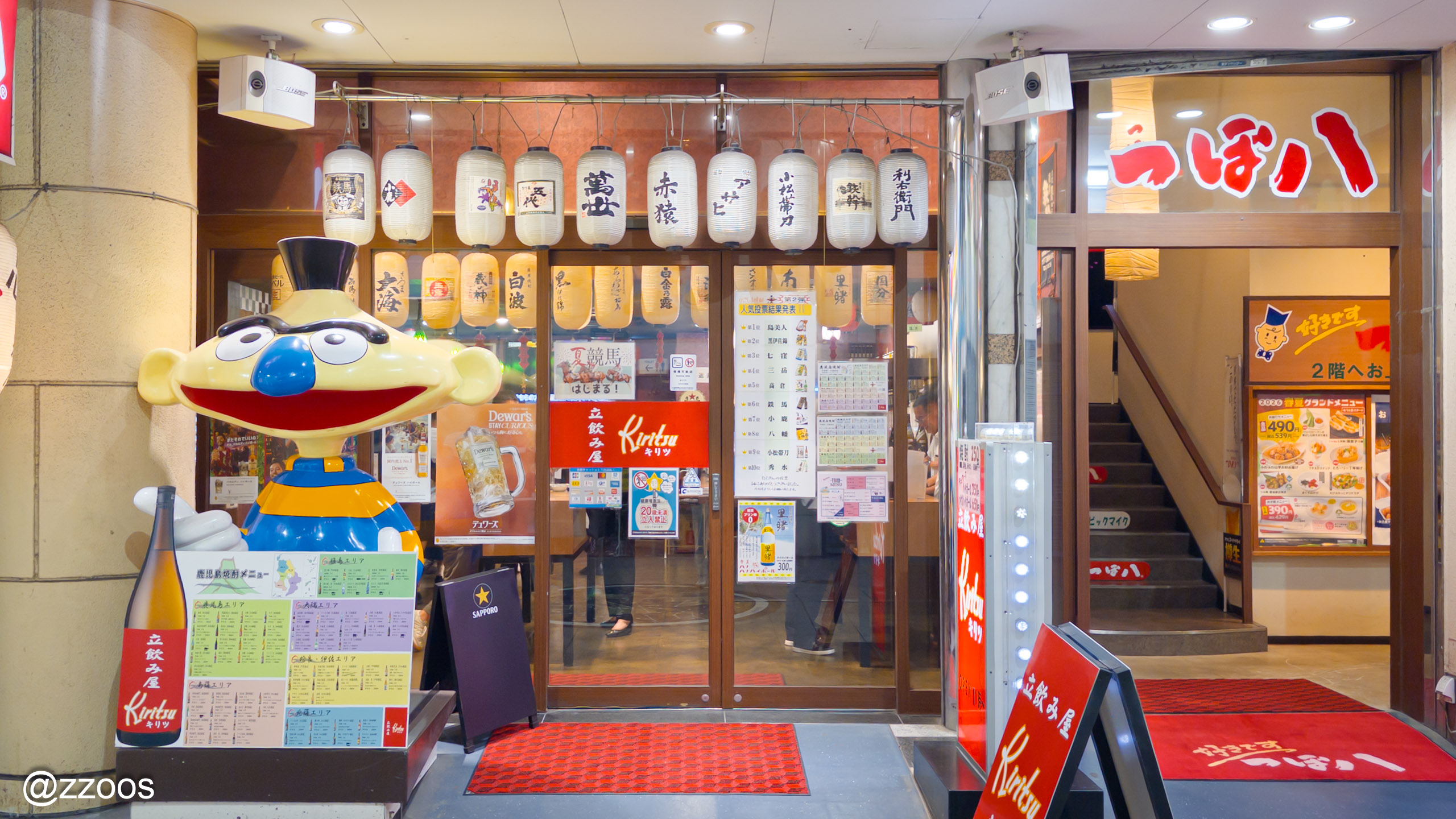
:: Kiritsu, the Best-Known Tachinomi in Tenmonkan
Tachinomi(立ち飲み) means a place where you drink(飲み) standing(立ち).
In Korean, maybe something like a seonsuljip?
In English, a stand-bar?
You come across places like this in Japan now and then.
The main thing is that they’re cheap.
And since you share tables while you drink, you might end up talking with strangers.
They’re often bars with a cheerful atmosphere.
Tenmonkan, Kagoshima’s busiest downtown area, has one of these tachinomi too.
This being Kagoshima, it specializes in shochu.
It’s Tachinomi Kiritsu(立ち飲み屋 キリツ).
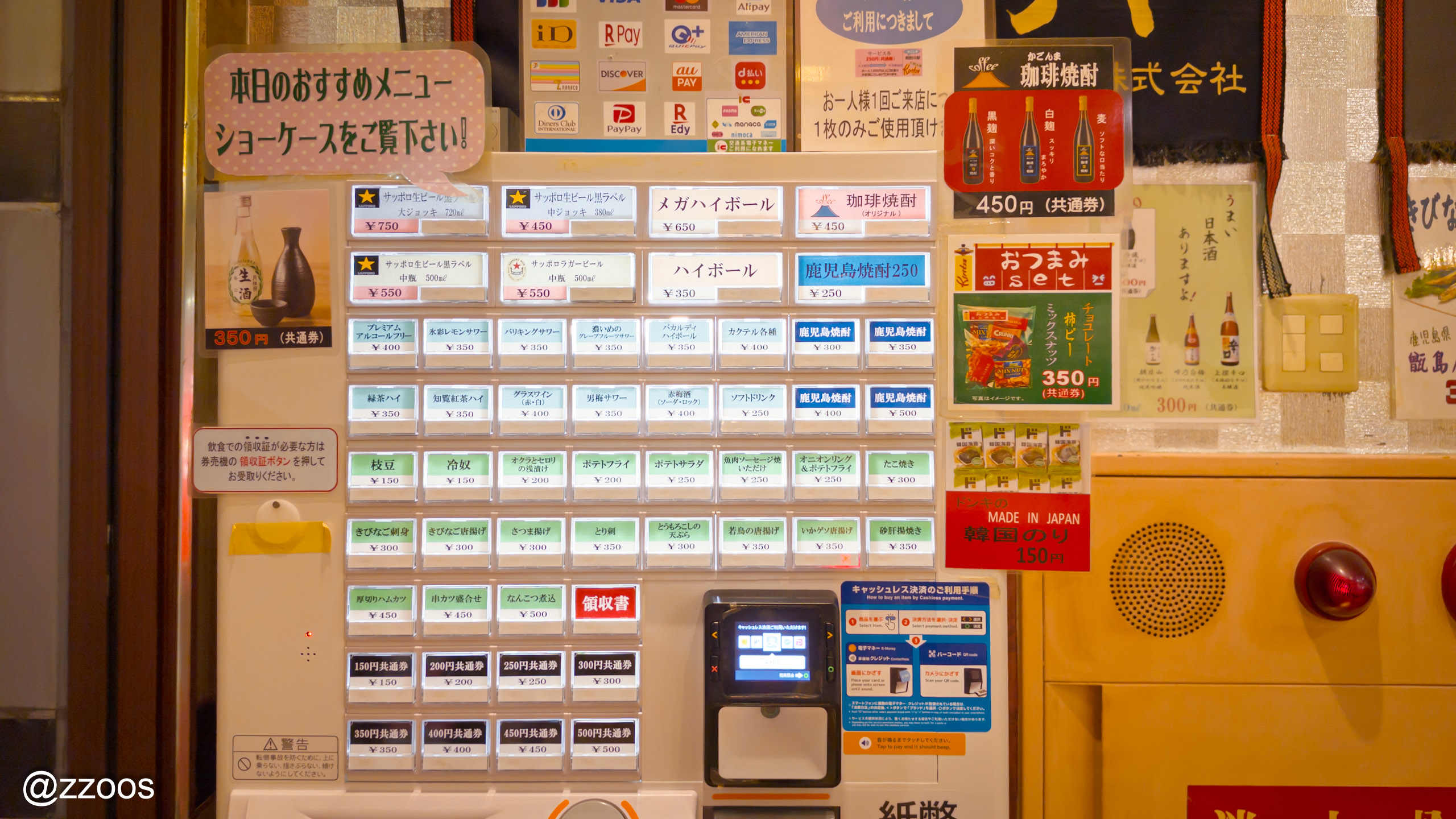
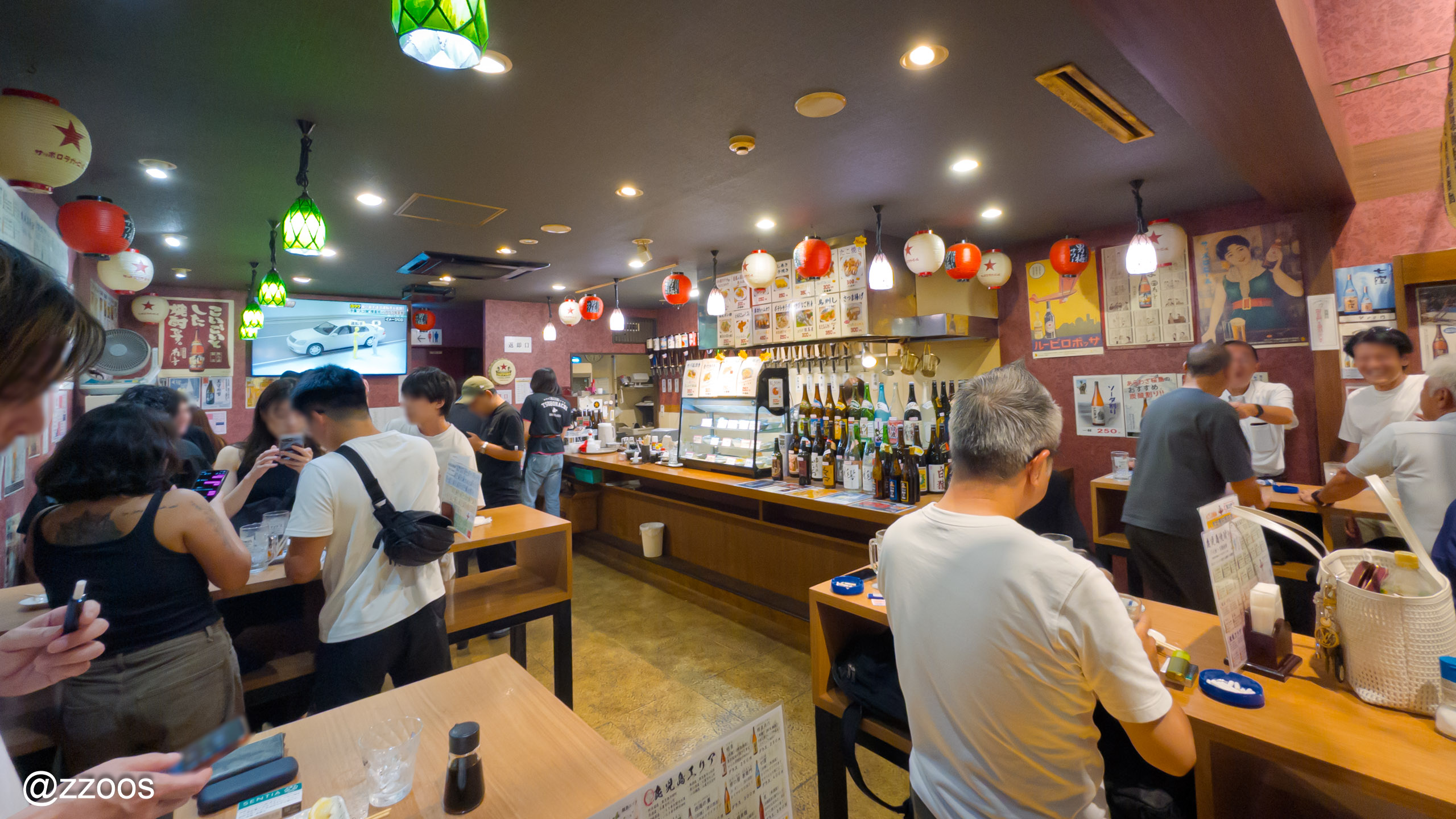
There’s a meal ticket machine right by the entrance.
Check the prices of the shochu and snacks on the menu or on display at the counter.
Then buy a ticket for that price and hand it to the staff at the counter.
Some tickets have the name of the snack or shochu on them.
But there are so many kinds that sometimes you have to buy a ticket with just the price on it.
In that case, you tell them what you’re ordering when you hand it over.
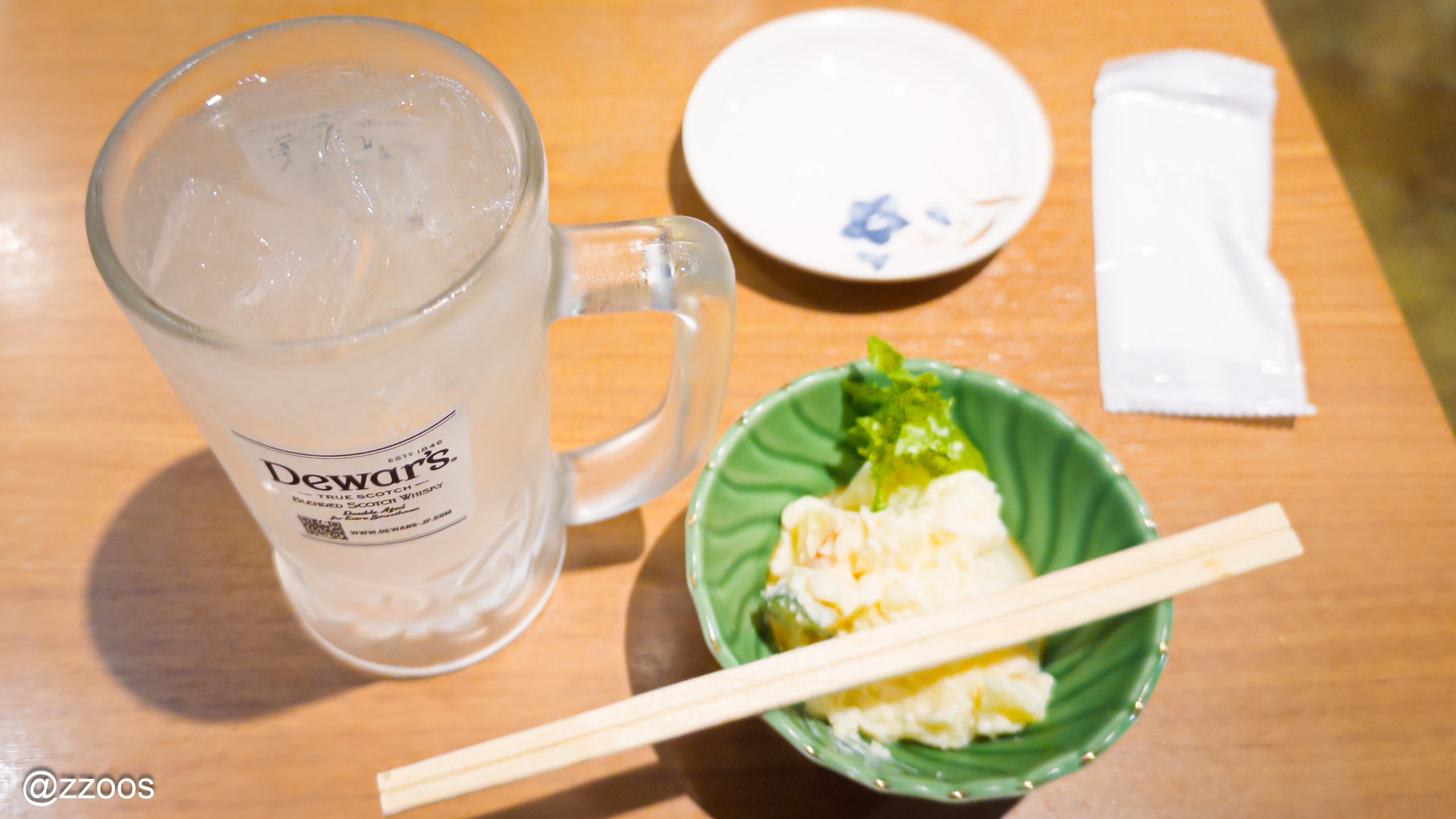
I had two glasses of shochu.
BEYOND GODAI and Kojika(小鹿).
BEYOND GODAI is made in Satsumasendai, where I stopped by yesterday.
It was one of the aromatic shochu that have been popular lately.
Kojika tasted more like traditional shochu.
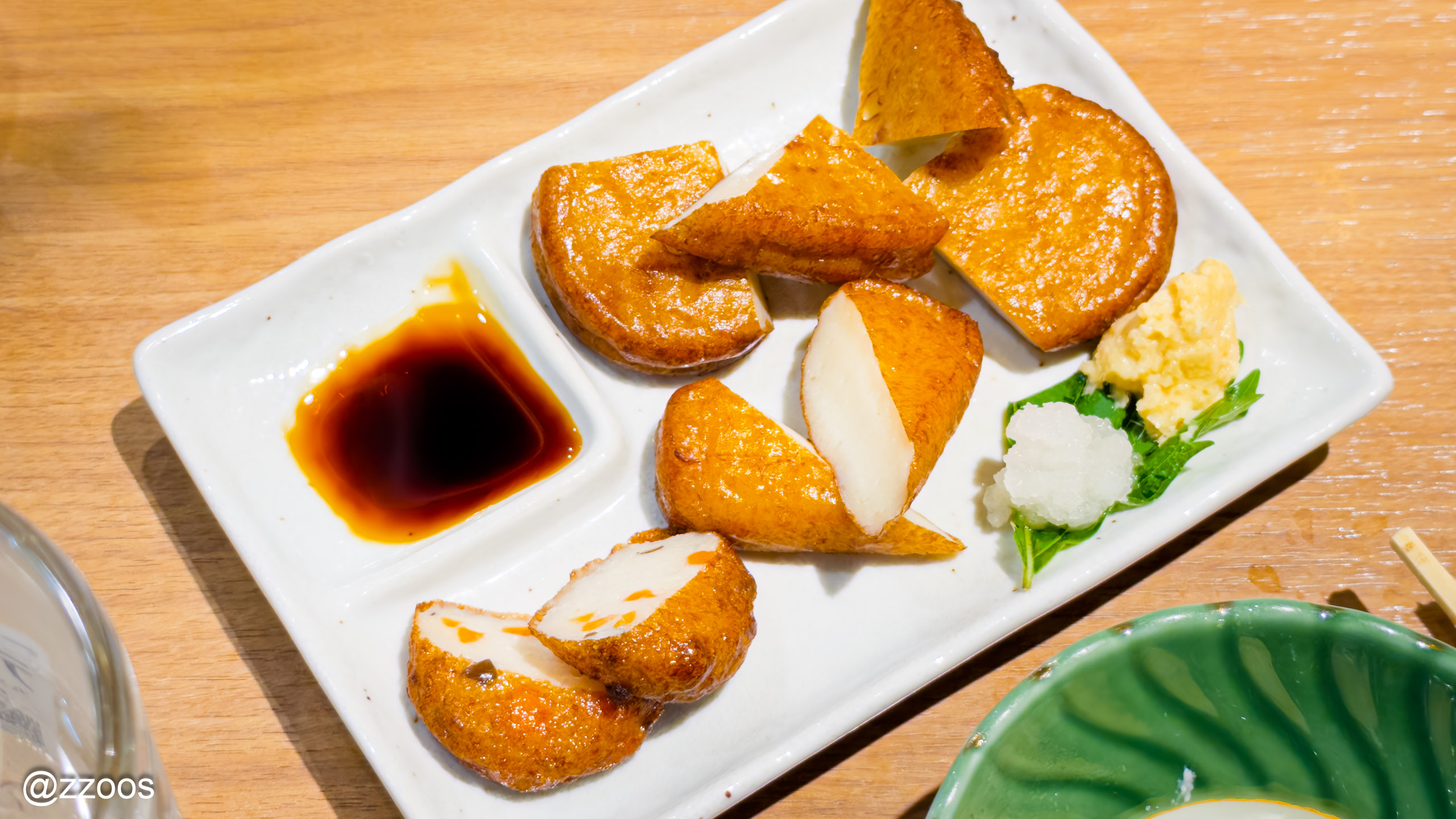
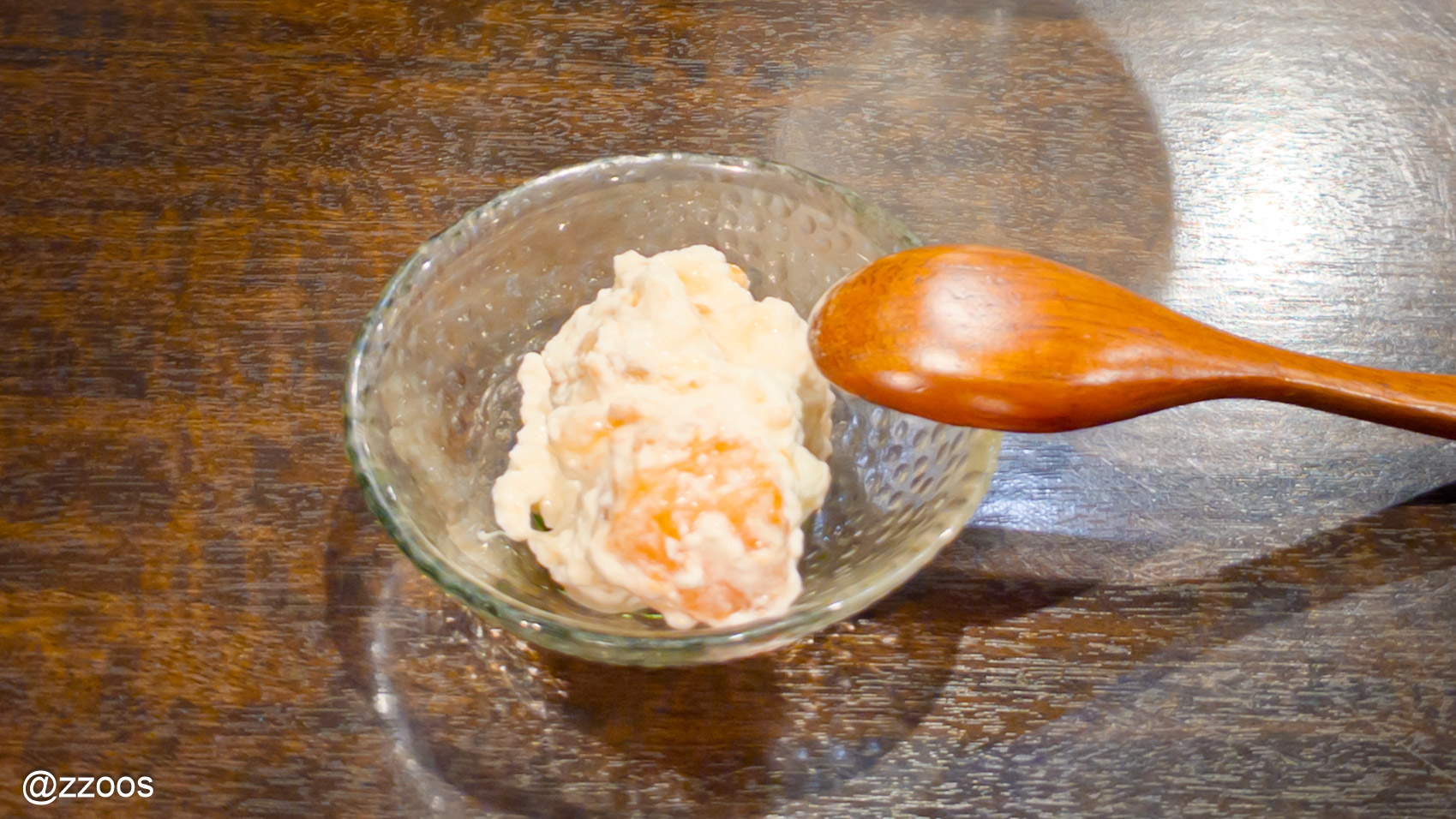
For snacks, I ordered potato salad and Satsuma-age.
The cheapest shochu is around 250 yen, and the cheaper snacks are 250 yen too.
Standing is a bit uncomfortable.
But being able to try shochu you’ve been curious about for cheap is a big plus.
Two glasses of shochu and two snacks, just a little over 1,000 yen in total.
Isn’t that amazing?
But it’s a bit awkward to go alone.
I was expecting that tachinomi atmosphere, where you naturally start talking with the people next to you.
Maybe because the place is big, or maybe because it was a little early.
There was no need to share tables.
So everyone stayed at their own table, talking with their own group.
As a solo traveler, I wanted to chat naturally with other people.
So I had just two glasses and moved on to the next place.
:: S.A.O, My Favorite Shochu Bar in Kagoshima
Other cities in Japan have shochu bars too.
But Kagoshima, the city of shochu, has a lot of great ones.
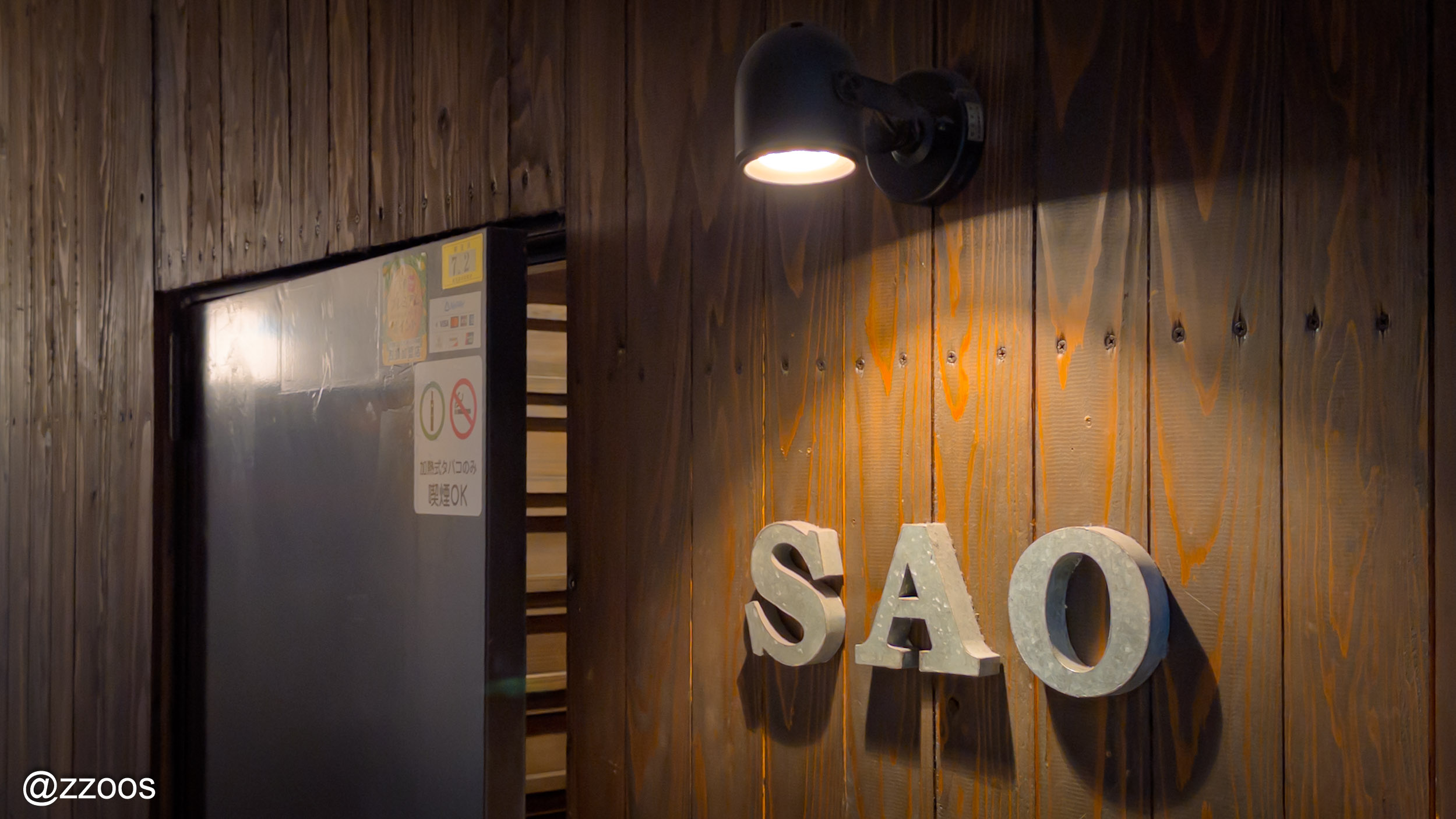
My favorite among them, the place I rush to first whenever I arrive in Kagoshima, is S.A.O.
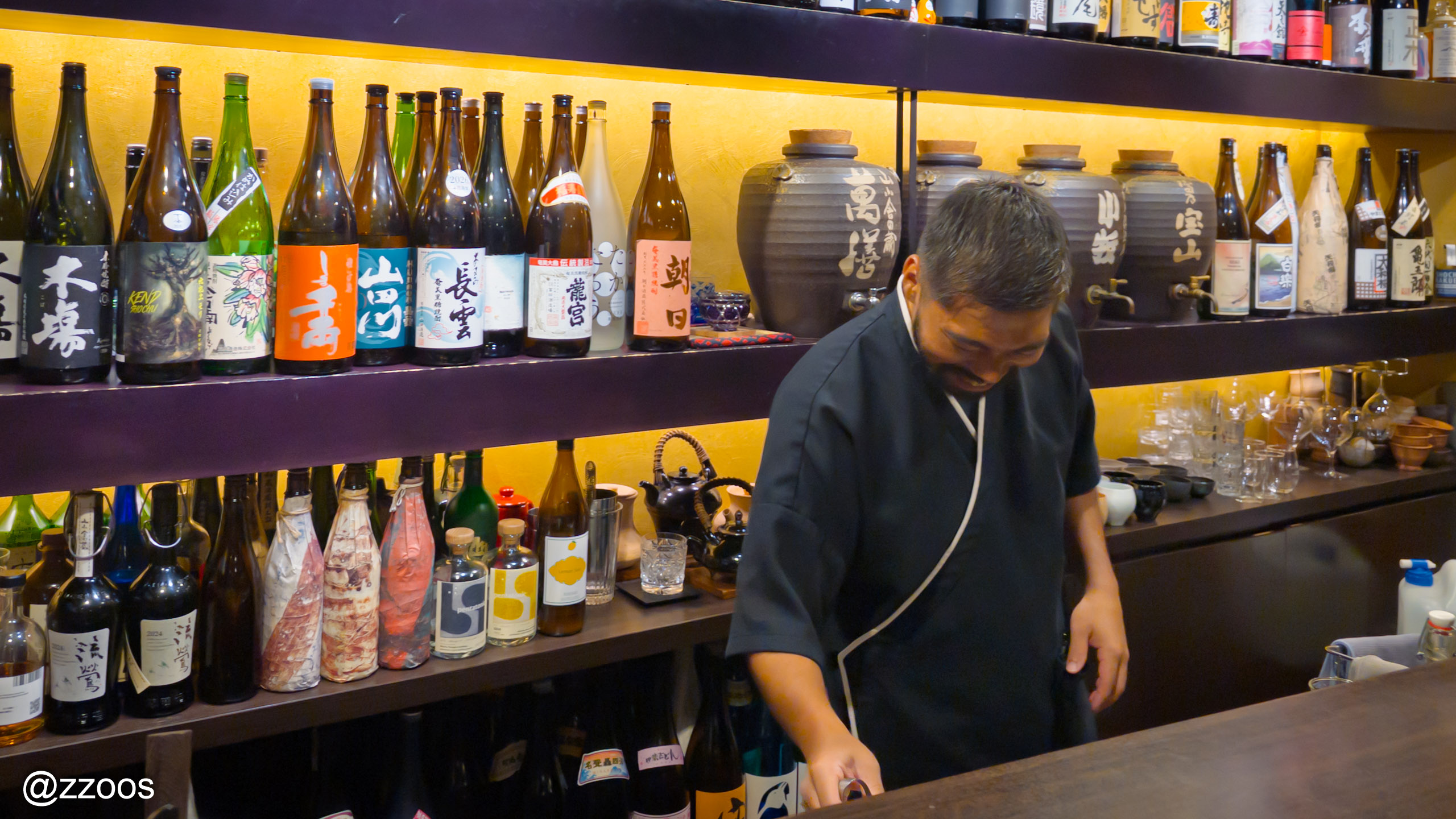
The reason I like it more than other shochu bars is the master.
You can feel his relentless passion for shochu here.
Introducing a new shochu every time goes without saying.
He also tells me about new ways to drink shochu, or other interesting things.
Whenever I get here, my first glass is the Manzen(萬膳) maewari(前割り).
Maewari is one way of drinking shochu.
Drinking shochu as it is, is straight.
With ice, it’s rokku, the Japanese short form of “on the rocks.”
Mixed with water, it’s mizuwari(水割り).
Mixed with hot water, it’s oyuwari(お湯割り).
Mixed with soda water, it’s sodawari or tansanwari.
Wari means to mix.
Maewari is a bit more unusual.
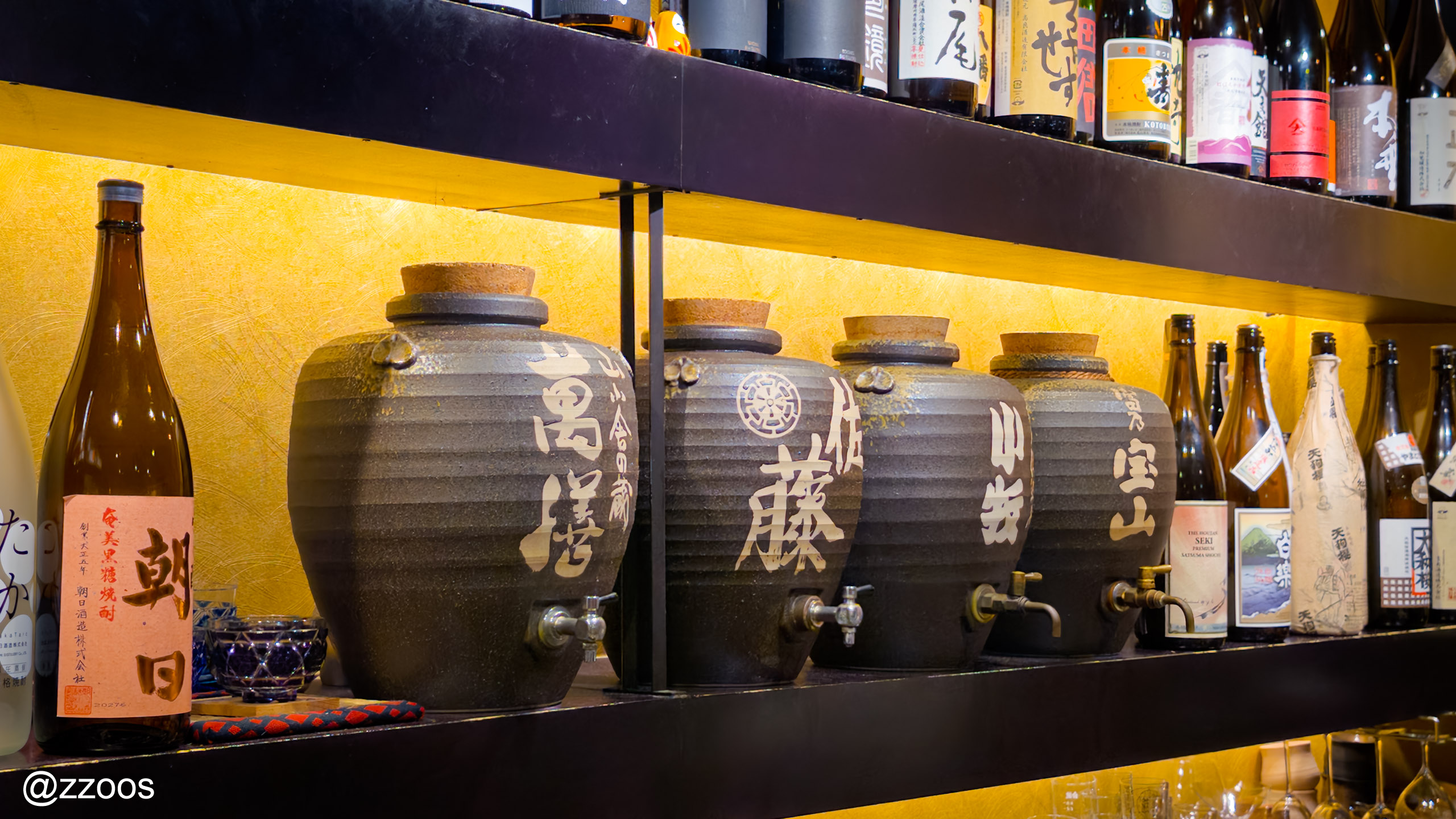
You mix shochu with water, then drink it after a certain amount of time has passed.
It sits for a few days in something like the pots you see in the photo.
The alcohol softens and settles with the water.
So you get a rounder, calmer shochu than if you just added water.
On top of that, the master at S.A.O goes all the way to the distillery himself.
He brings back the water they use to make Manzen.
So the maewari is made with the very same water that Manzen was made with.
His explanation is that this makes everything come together better.
Honestly, I can’t catch that level of detail in the taste.
But I love that passion and persistence.
But today, I didn’t have the Manzen maewari.
I’d only stopped by to say, “I’m here in Kagoshima,” so I was having just one glass.
I wanted to go back up to the hotel and take one more onsen bath while looking at the night view of Sakurajima.
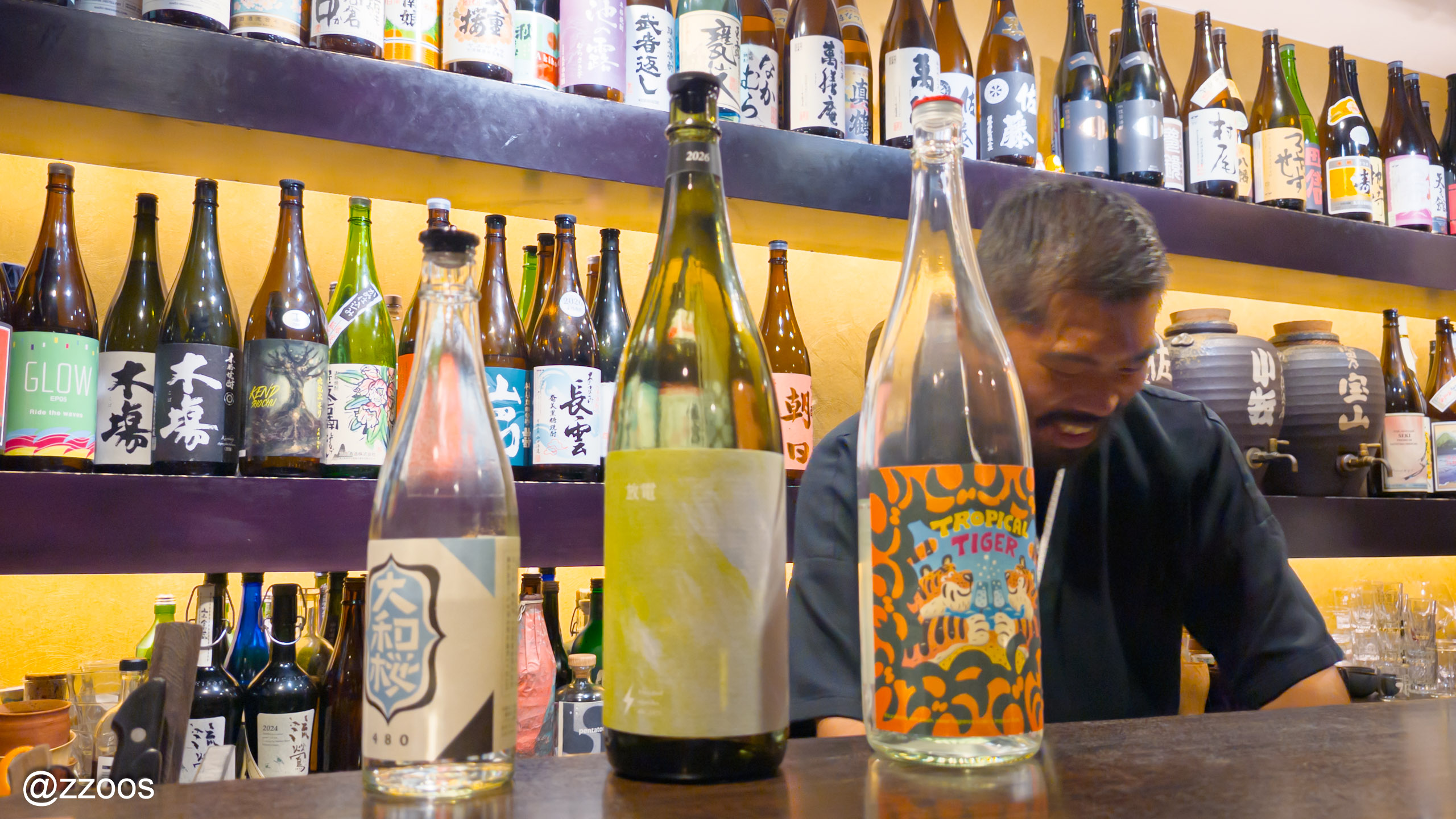
When I asked for a recommendation, he showed me three bottles.
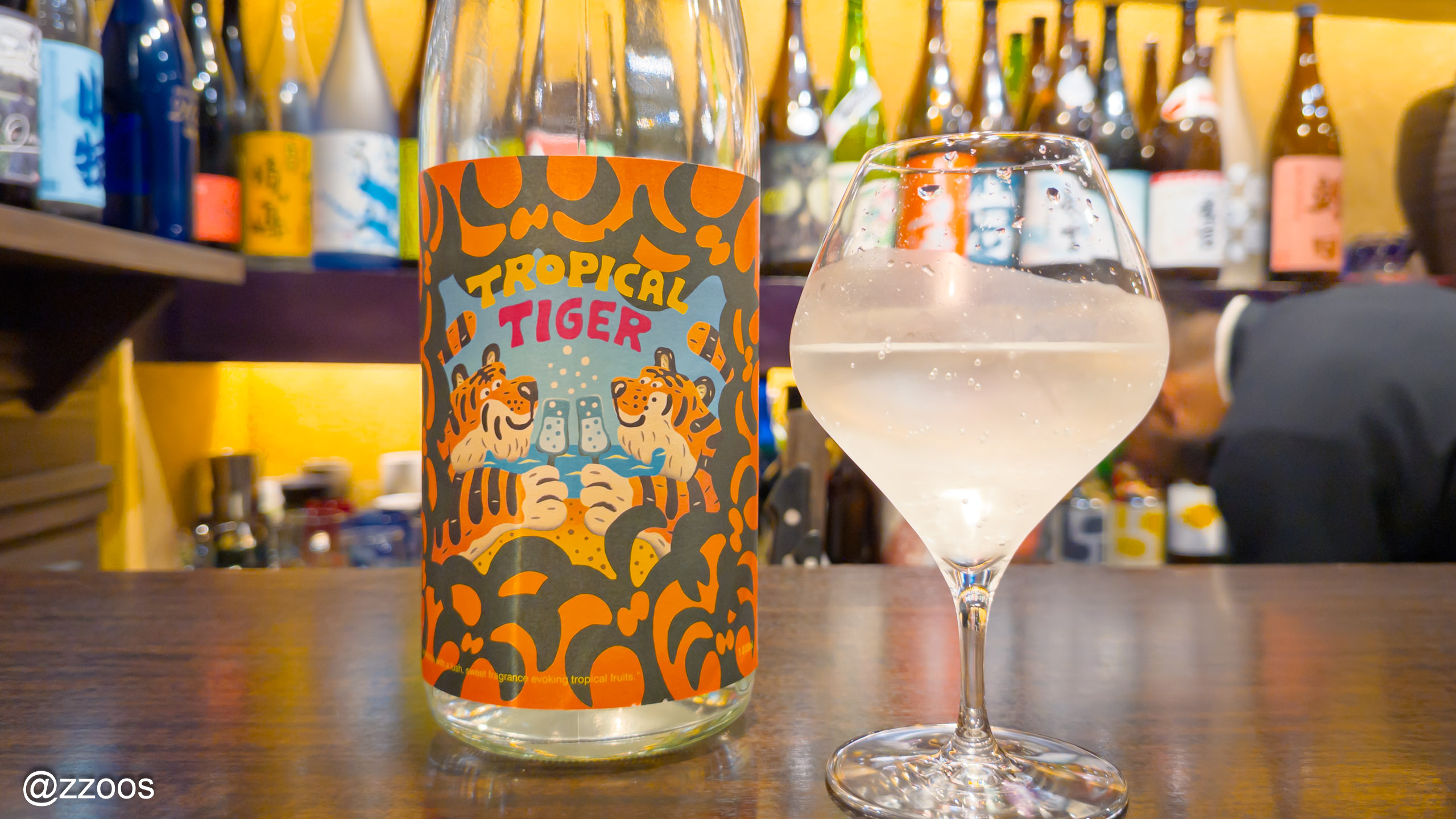
I chose a shochu called Tropical Tiger, with a cute label.
True to its name, it tasted cheerful and lively.
It went well as a sodawari.
As planned, I had just one sodawari.
Before the onsen closed, I said a reluctant goodbye and got up.
Well, it’s a place I’ll be stopping by every day while I’m in Kagoshima anyway.