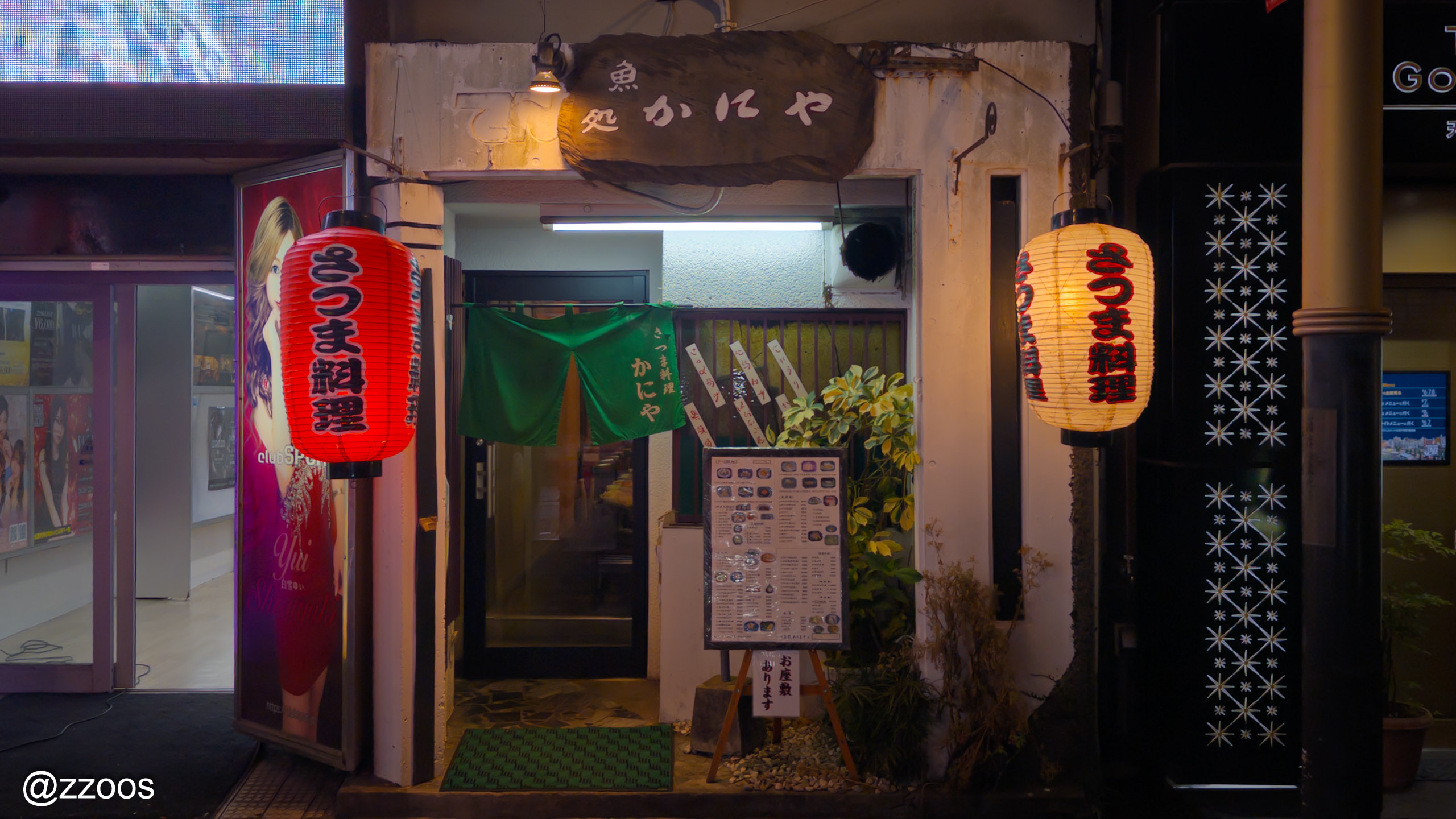
:: Tonight’s Dinner Is Here: Kaniya
My first day in Kagoshima.
I was wandering the streets of Tenmonkan, still undecided about where to have dinner.
To be more honest, I had marked a few places on Google Maps in advance.
But I hadn’t made up my mind yet.
I wanted kurobuta shabu-shabu, but I’d already booked a restaurant for that a few days later, so that was out.
Yakitori? Maybe.
But the place I’d pinned on Google Maps was already full.
I walked the alleys of Tenmonkan, thinking about where to go.
When I reached the front of Kaniya(かにや), I made up my mind.
Tonight’s first stop is right here!
The place wasn’t very big.
There were about five or six seats at the counter, and I think about three low tables on tatami further inside.
In the small kitchen, two people who seemed to be a married couple were busy at work.
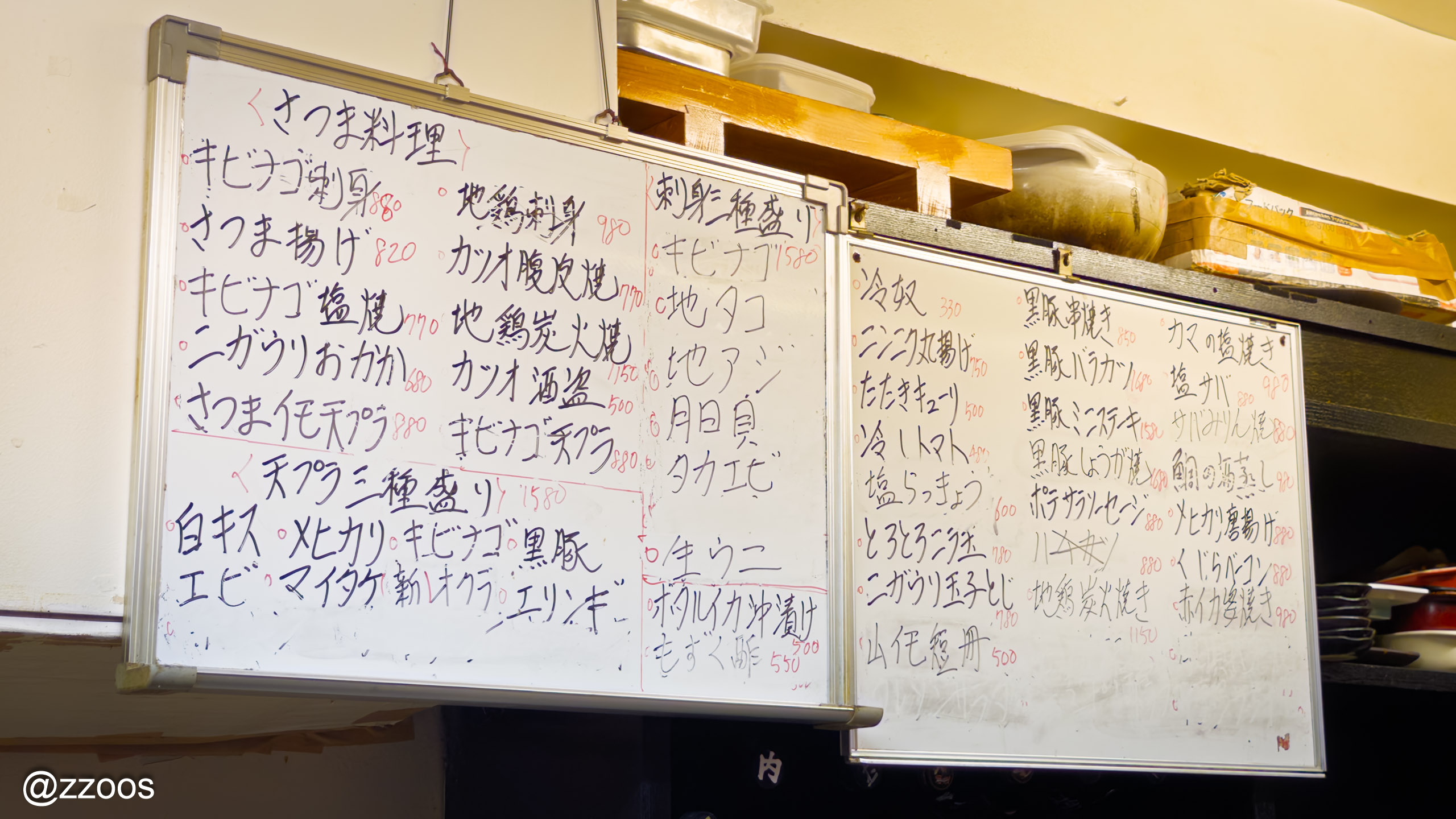
Above the kitchen, there was a menu handwritten on a whiteboard.
Something unusual: when you order the three-kind tempura platter(天プラ三種盛り) or the three-kind sashimi platter(刺身三種盛), you can pick any three from the menu.
I think it’s a pretty reasonable way to order.
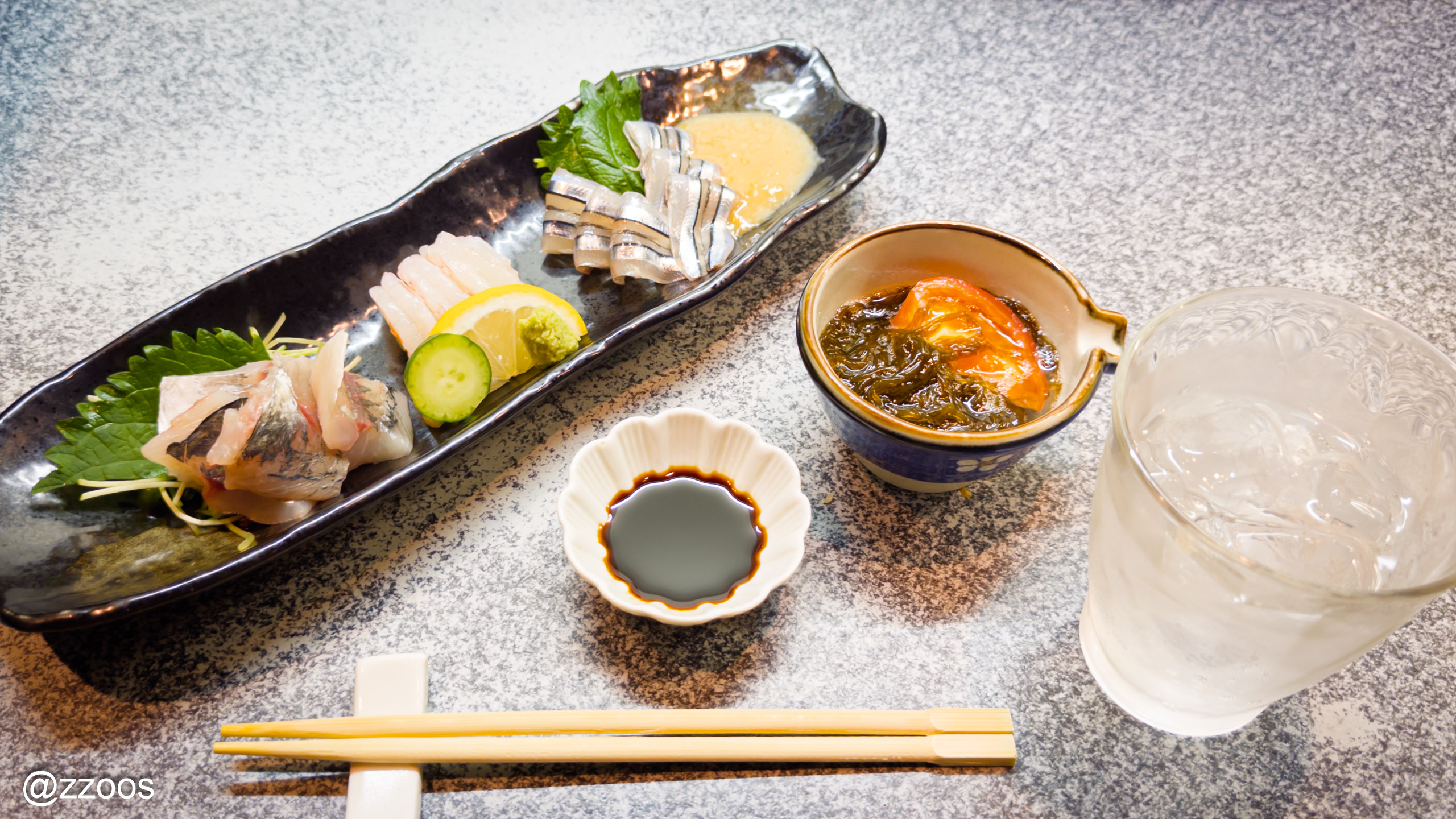
:: A Three-Kind Sashimi Platter, Picked to Your Taste
What I ordered was the three-kind sashimi platter.
I picked jiaji(地アジ, horse mackerel), takaebi(タカエビ), and kibinago(キビナゴ, silver-stripe round herring).
I started drinking a shochu soda-wari, with mozuku-su(もずく酢, vinegared mozuku seaweed) that came out as the otoshi.
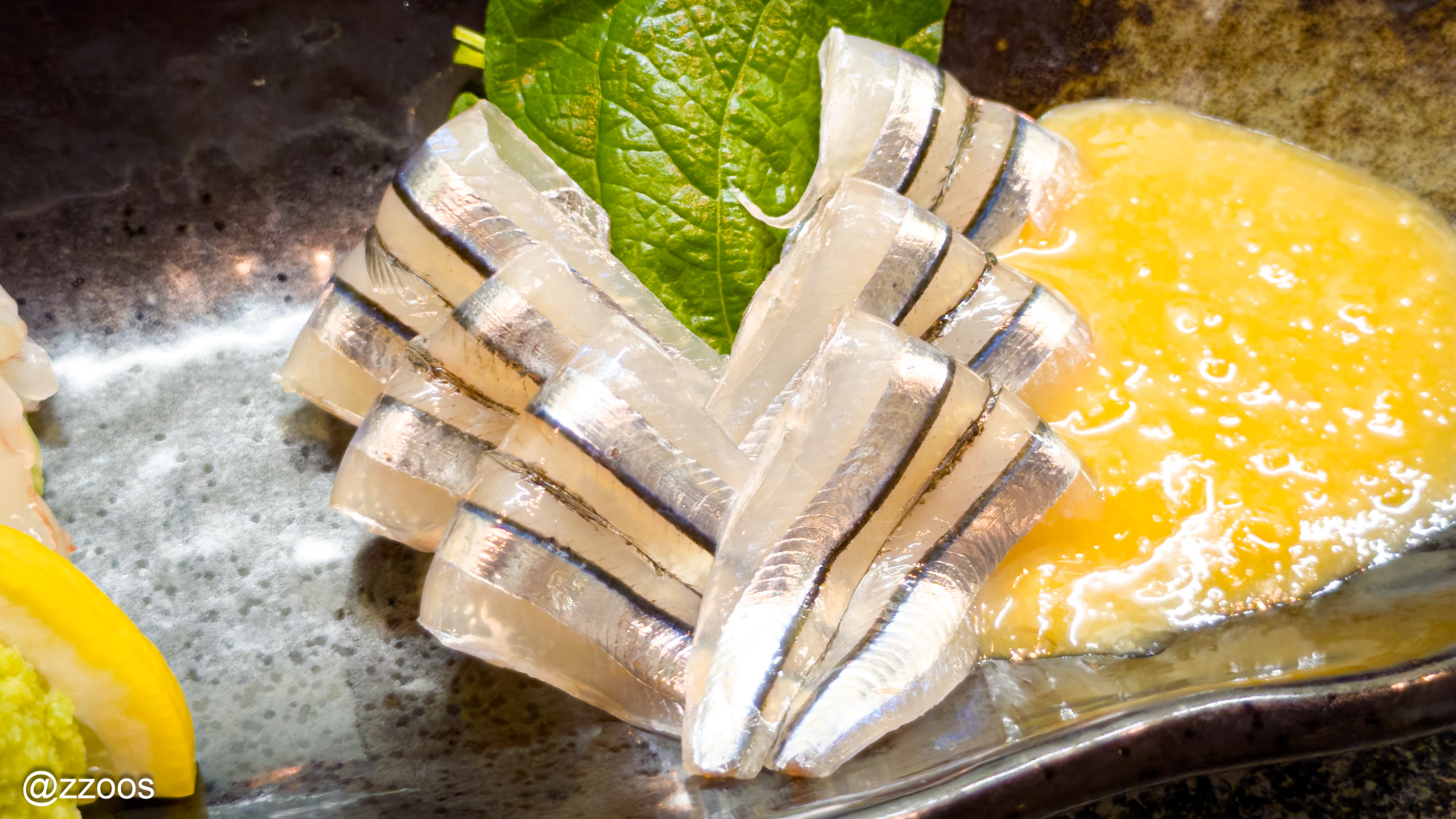
If you’ve come to Kagoshima, you have to eat kibinago, right?
I did have it on my first day in Izumi(出水), too, but that time it was tempura and grilled.
They didn’t have fresh kibinago.
In Korean, it’s called saetjulmyeol.
It looks similar to anchovy, but it’s a somewhat different species.
It’s the very fish they call kkotmyeolchi on Korea’s south coast and in Jeju.
I think the image that best represents Kagoshima food has to be the shiny, sparkling kibinago.
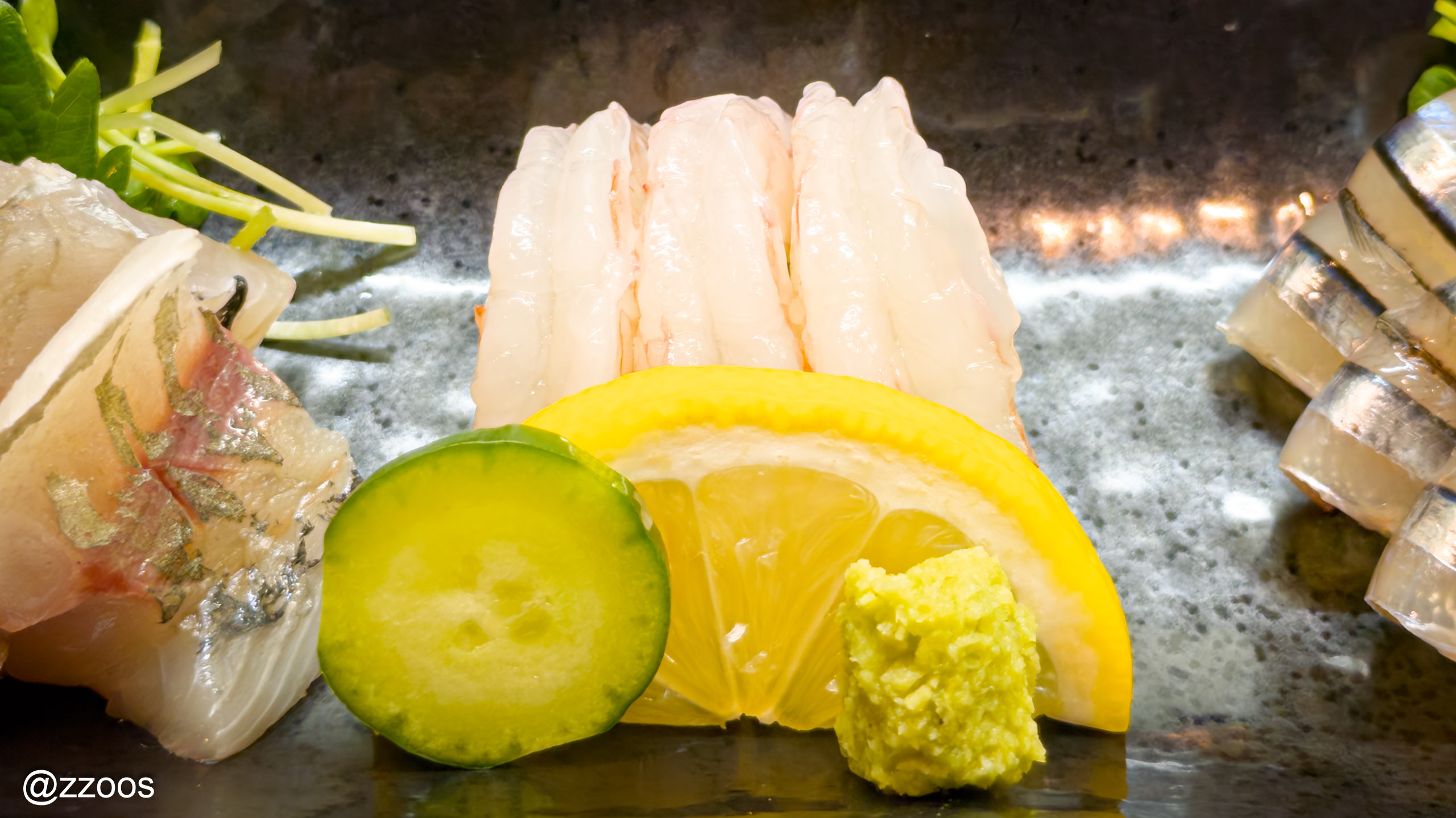
Takaebi is a shrimp you can’t eat in Korea.
It’s hardly distributed there, so it doesn’t even have a known Korean name.
They say it loses its freshness so quickly after being caught that it’s hard to eat anywhere but where it’s landed.
I think it’s a shrimp worth trying when you go to Kagoshima.
Because it’s a really sweet shrimp.
You can’t see it in the photo, but they had placed half a cucumber underneath to hold the shrimp’s round shape.
That left an impression on me.
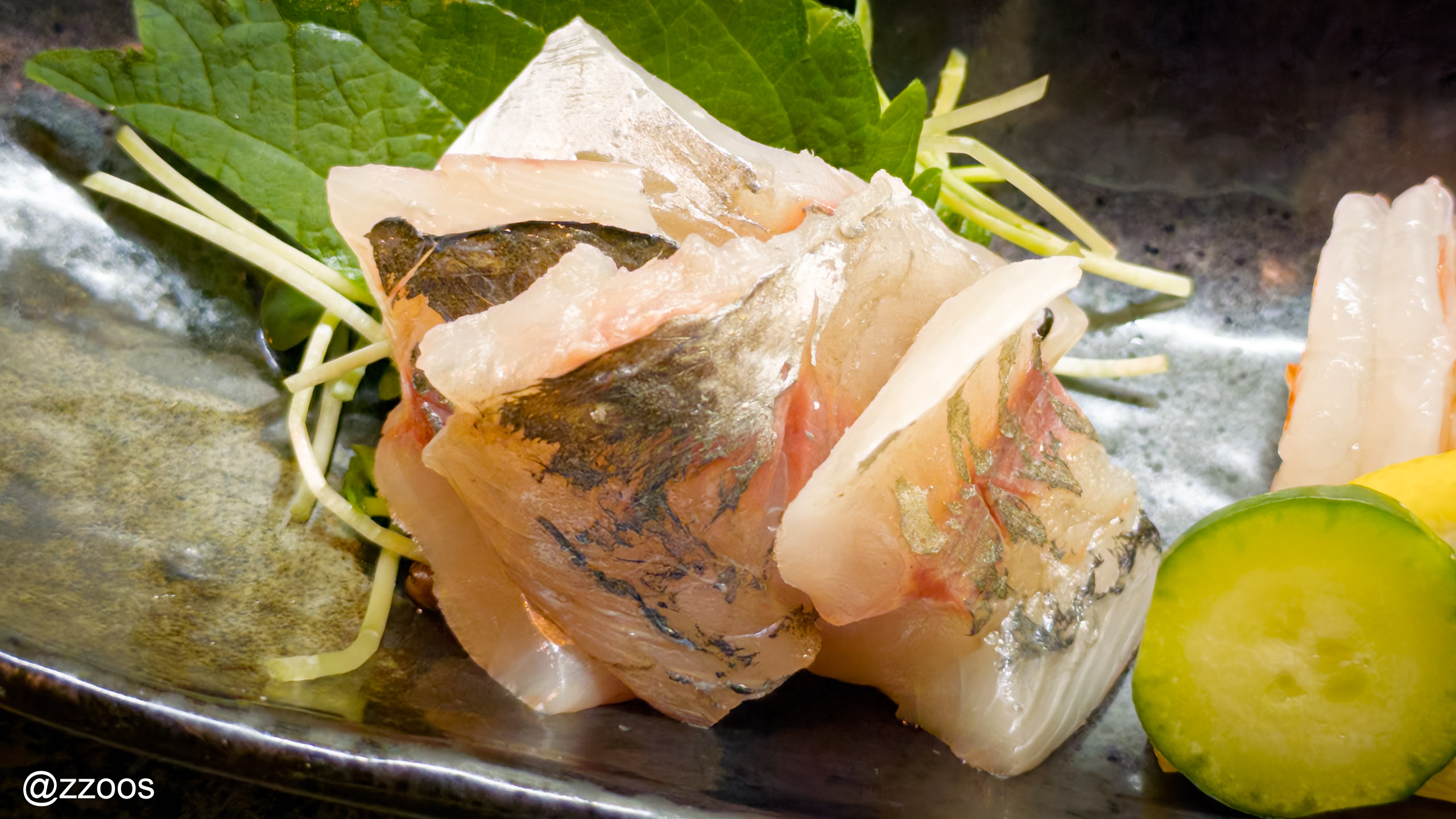
Horse mackerel is strangely not very popular in Korea.
Seeing jiaji(地アジ) written on the menu, it must be wild-caught nearby.
You can eat horse mackerel anywhere in Japan, so I always order it when I travel in Japan.
It’s a fish I really like, for its firm, chewy, sticky texture and its oiliness.
The small grilled fish served at breakfast is also mostly this horse mackerel, dried and then grilled.
And at home-style set meal restaurants, aji fry set meals are a common sight.
:: Satsuma-age and Mehikari Karaage
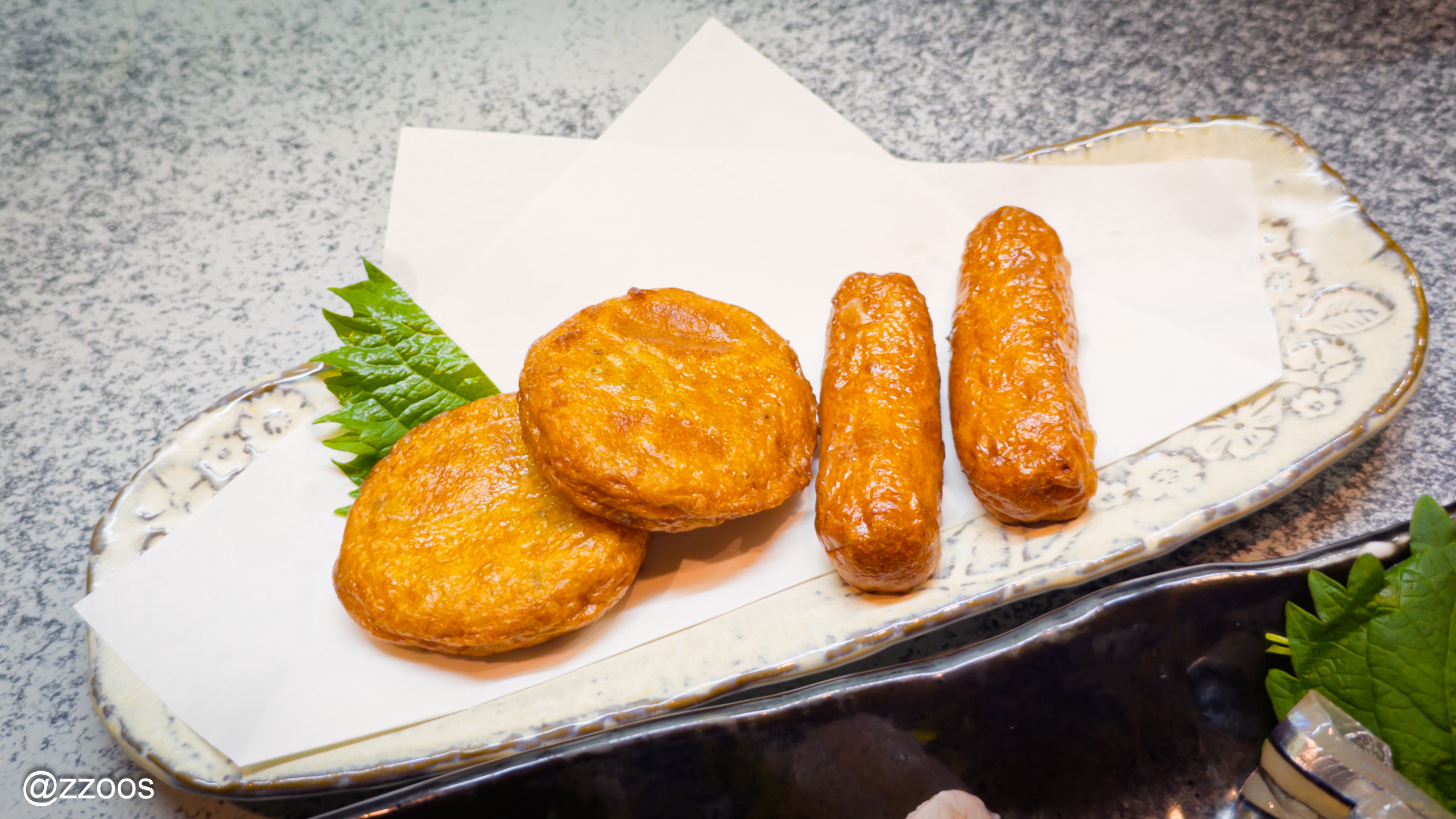
Next, I ordered satsuma-age(さつま揚げ).
You could maybe even say it’s the most famous food in Kagoshima.
It’s named after Satsuma(薩摩), Kagoshima’s old name.
The reason it’s famous among Japanese people is that it’s a typical oden ingredient.
Well, to explain this, I need to explain a bit more about “oden.”
In Japan, oden means something a little different from what it means in Korea.
In Korea, oden means fish cake, right?
But in Japan, oden is the name of a dish.
A hot pot dish where you put various ingredients into broth and simmer them is called oden.
The ingredients that go in it are not called “oden.”
Each ingredient has its own name.
Ground fish paste that’s steamed is kamaboko(かまぼこ), fried is satsuma-age(さつま揚げ), and wrapped around a stick and grilled is chikuwa(ちくわ).
These are the typical oden ingredients.
And Kagoshima is where one of them, satsuma-age, began.
So if you’ve come to Kagoshima, you have to have satsuma-age too.
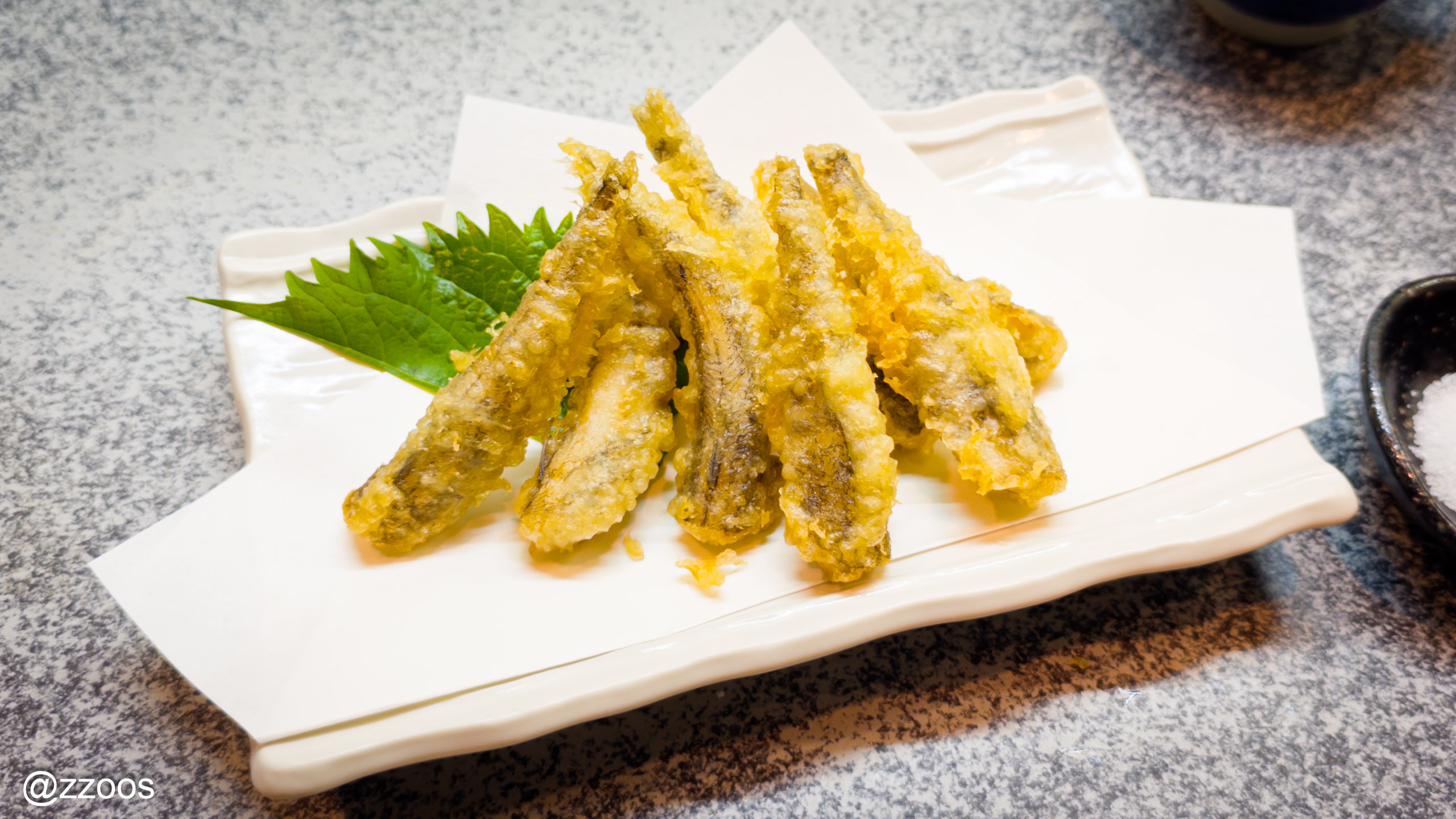
I didn’t have enough to go with my drinks, so the last thing I ordered was mehikari karaage(メヒカリ唐揚げ).
There is a Korean name for it, but honestly, it’s a name I’ve never heard.
It’s a finger-sized deep-sea fish.
They say it got the name mehikari because its eyes are very big and shine.
It’s the fish with the head cut off, then fried.
It was nice as a light snack with drinks.
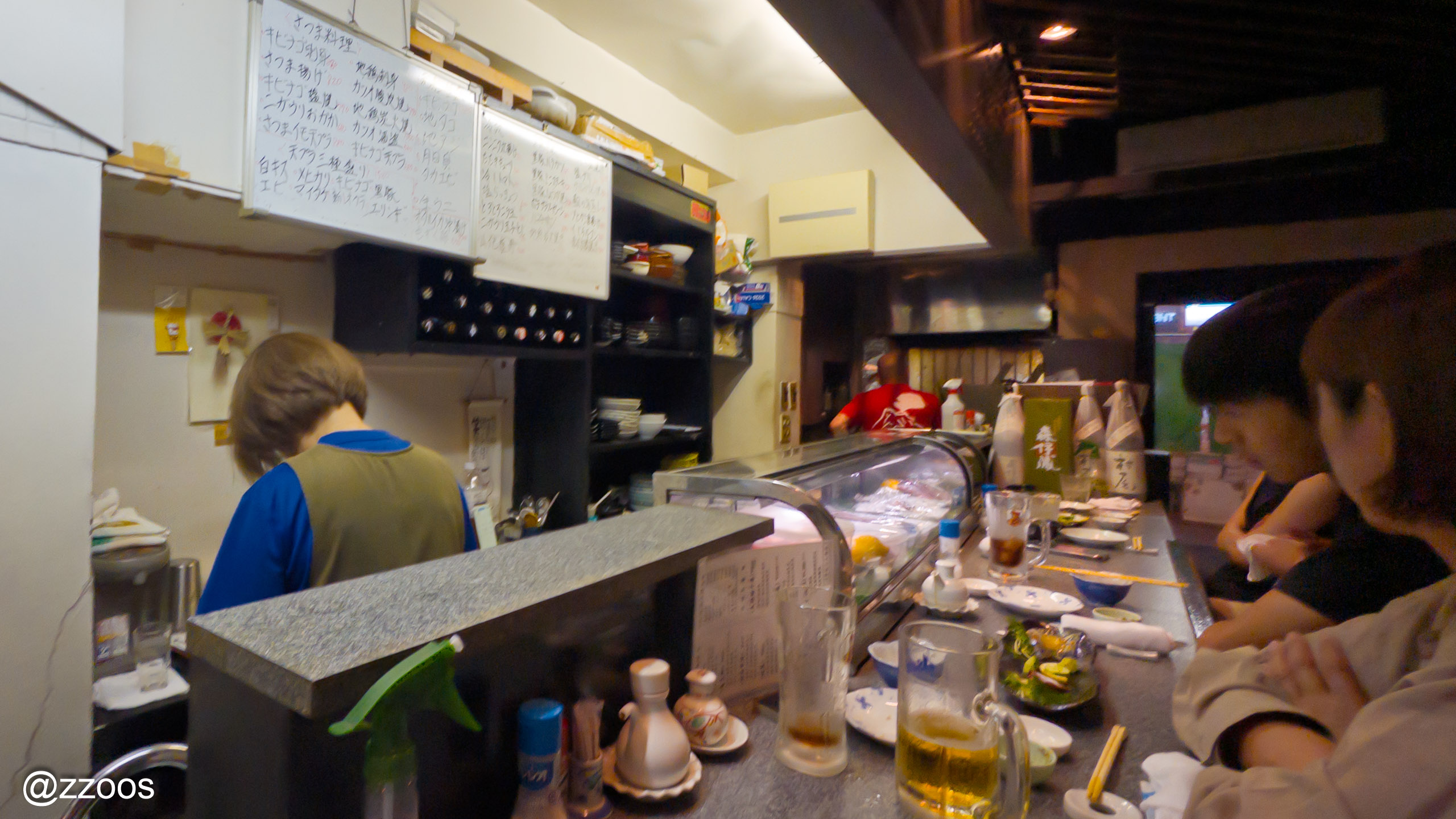
Kaniya, on Tenmonkan’s Bunka-dori(文化通り).
A small place serving Kagoshima’s local cuisine and fish.
And a place where the owner is not only kind, but always serves with a smile and cheerfully goes along with jokes.
They don’t have a very wide menu, but I liked that you can pick what you like from things like sashimi and tempura and order them as a three-kind platter.
I could also taste dishes unique to Kagoshima.
For a Kagoshima place, they don’t carry many kinds of shochu.
But oddly, they were selling Murao(村尾) very cheaply.
For reference, I drank things like Hanahotaru no Sato(華蛍のさと), Junkuro(純黒), and Kamegoro(亀五郎).
It’s a place I’d be willing to stop by again anytime during a Kagoshima trip, for a light dinner and a glass of shochu.
I liked it quite a lot.