Kagoshima has a lot of shochu bars.
Shochu is the first thing that comes to mind when people think of Kagoshima, so maybe that’s only natural.
If you had to name another region famous for shochu, it would be Miyazaki Prefecture(宮崎県), right next door.
Kuro Kirishima(黒霧島), the best-selling shochu in Japan, is actually from Miyazaki.
Kagoshima is the most famous shochu region, but the best-selling shochu comes from Miyazaki.
I find that interesting.
The shochu of the two regions is similar in some ways and different in others.
Hmm, but I’ll save that for another time.
In this post, I want to introduce three shochu bars I like in Kagoshima City.
On the last night of this trip, I visited all three of them.
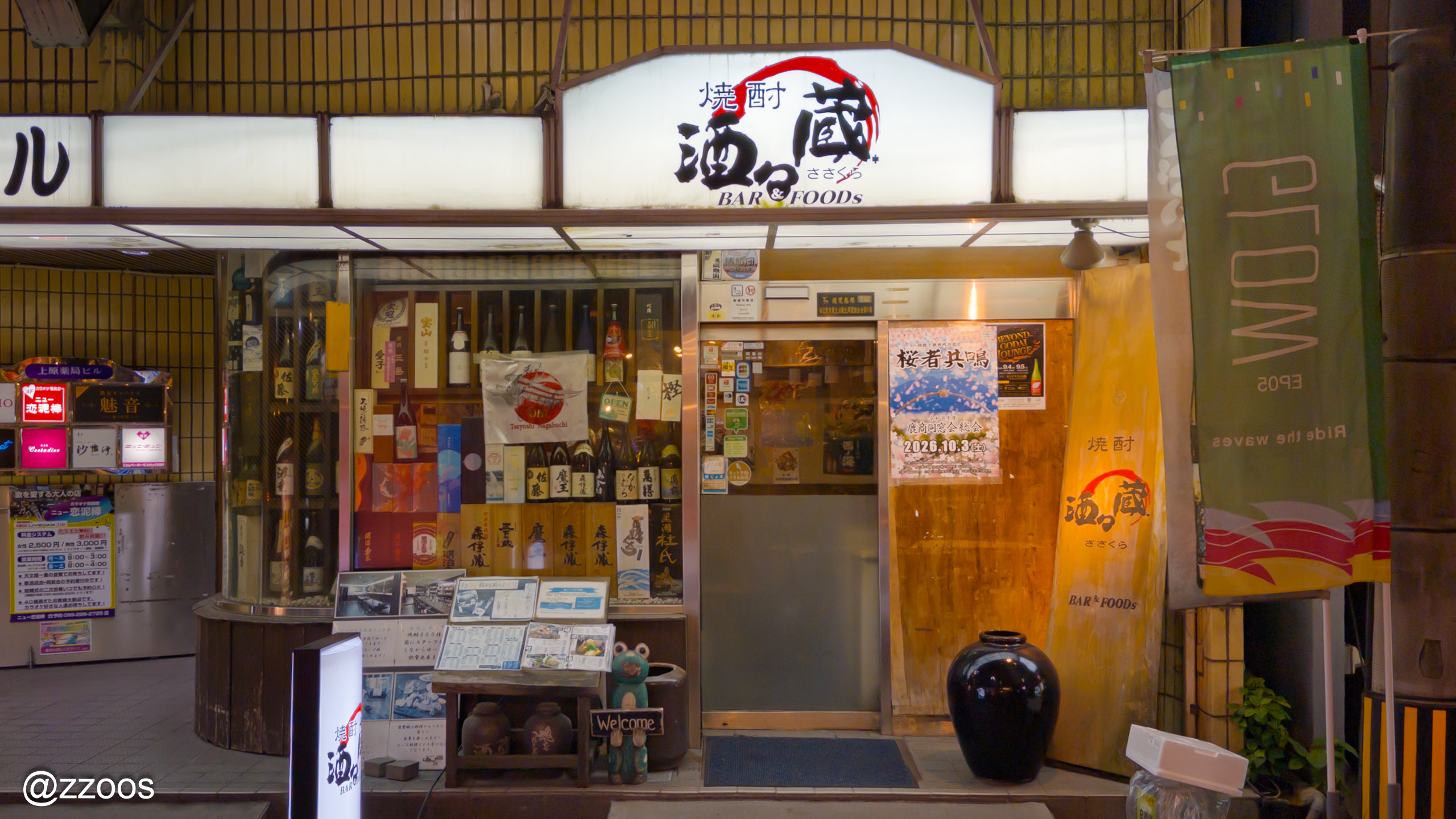
:: A Place with a Nice Casual Vibe, Sasakura
The first stop was Sasakura(酒々蔵).
Whenever I describe this place, I always say the same thing.
It’s a casual place with a strong local atmosphere.
But I do wonder whether it’s really “casual.”
Look at how much shochu they stock, or the bottles they recommend, and it’s anything but “casual.”
The master is always cheerful and kind.
The elderly owner seems gruff but is actually warm.
And the part-timers are friendly and happy to chat with customers.
It’s definitely a place that puts you in a good mood.
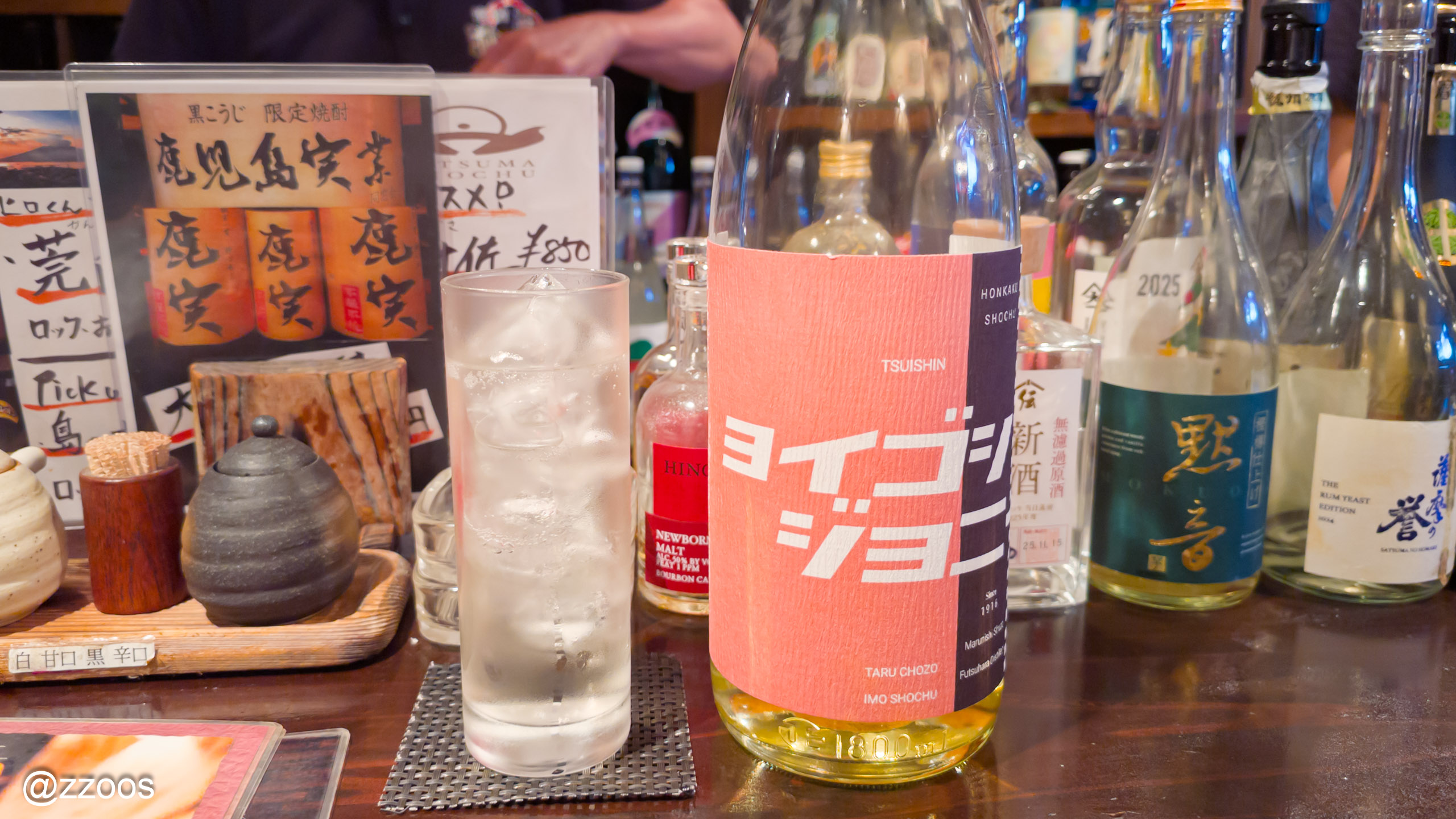
As soon as I sat down, I asked for a recommendation.
I said I wanted something to drink as a sodawari.
They recommended Yoigoshi Johnny(ヨイゴシジョニー), made by Marunishi Shuzo(丸西酒造).
Ah, this is really good.
Fresh fruity aromas pop one after another.
I wanted to know more about it, so I visited the distillery’s website.
But it wasn’t in the product list at all.
Maybe it’s some kind of limited edition?
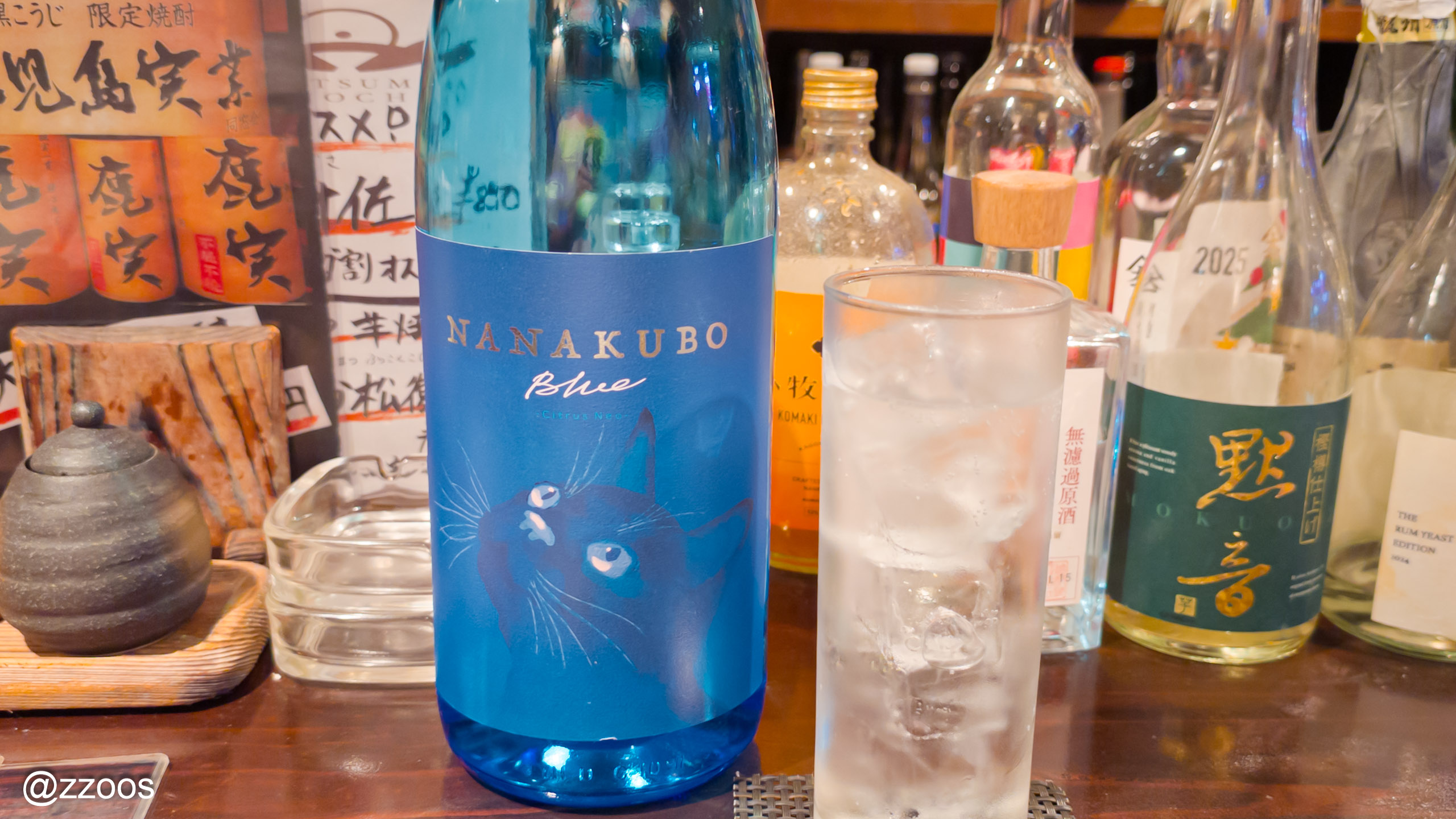
Next was a shochu with a cute label, apparently also nicknamed Nyanyakubo(にゃにゃくぼ).
It’s NANAKUBO Blue Citrus Neo from Higashi Shuzo(東酒造), the distillery known for Nanakubo(七窪).
The name has the word “citrus” in it, but I didn’t actually get any citrus in the aroma or taste.
Still, overall it was cool and clean.
This one also went really well as a sodawari.
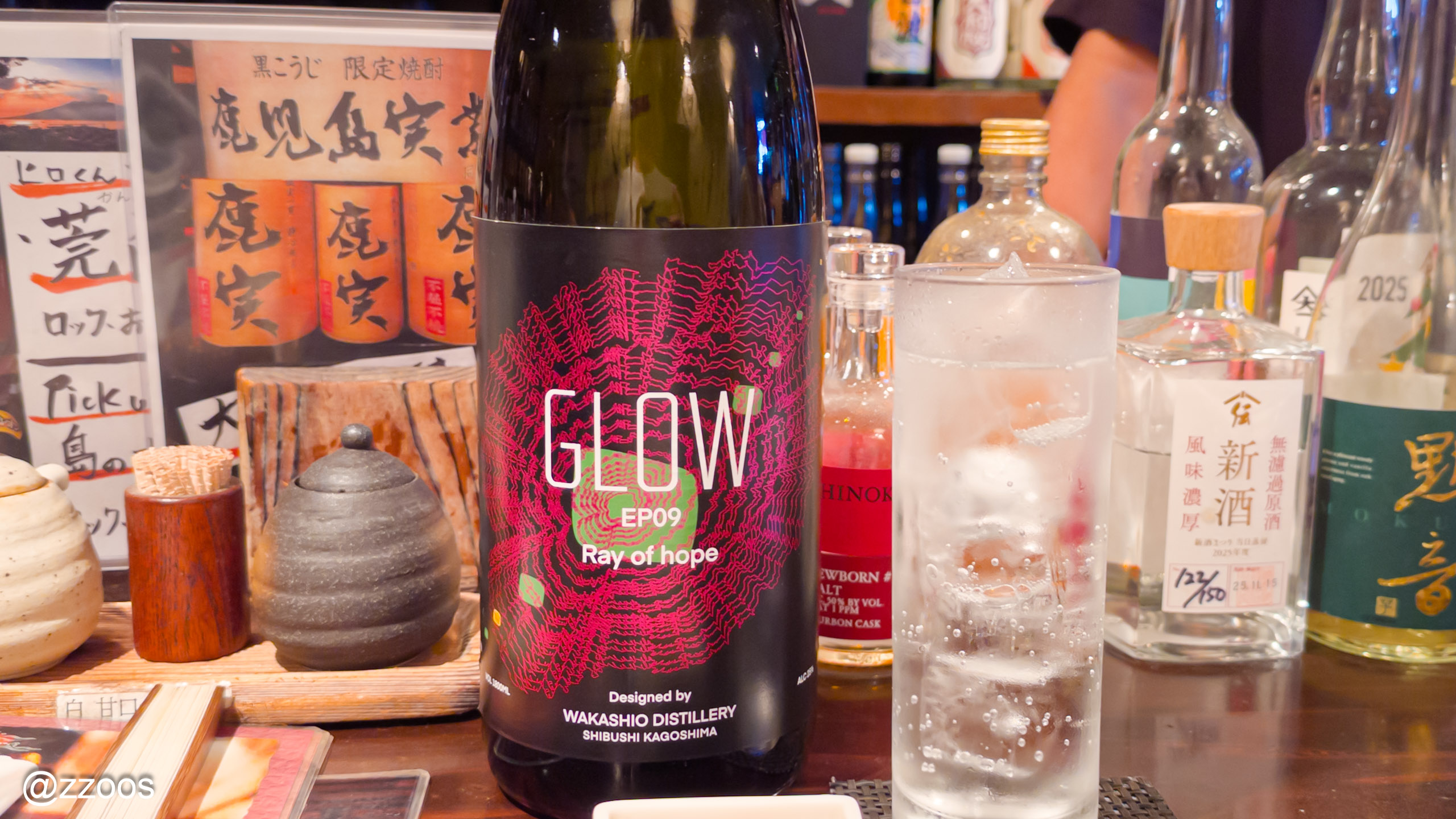
This is the latest 2026 release in the GLOW series, a shochu well known enough that it’s widely sold in Korea too.
GLOW EP09 – Ray of hope.
Wakashio Shuzo(若潮酒造) has released one in this series every year since 2018.
The best-known one, EP05, came out in 2022.
It won the Shochu Grand Prize Chosen by Liquor Stores(酒屋が選ぶ焼酎大賞) three years in a row and entered its hall of fame. A popular shochu.
The feel that runs through the whole series is still there: fruity aromas and a fresh, clean finish.
But if I had to choose, EP05 is clearly more appealing.
With EP08 or EP09, it’s a bit hard to pin down a clear character.
:: A Place Full of the Master’s Passion, S.A.O
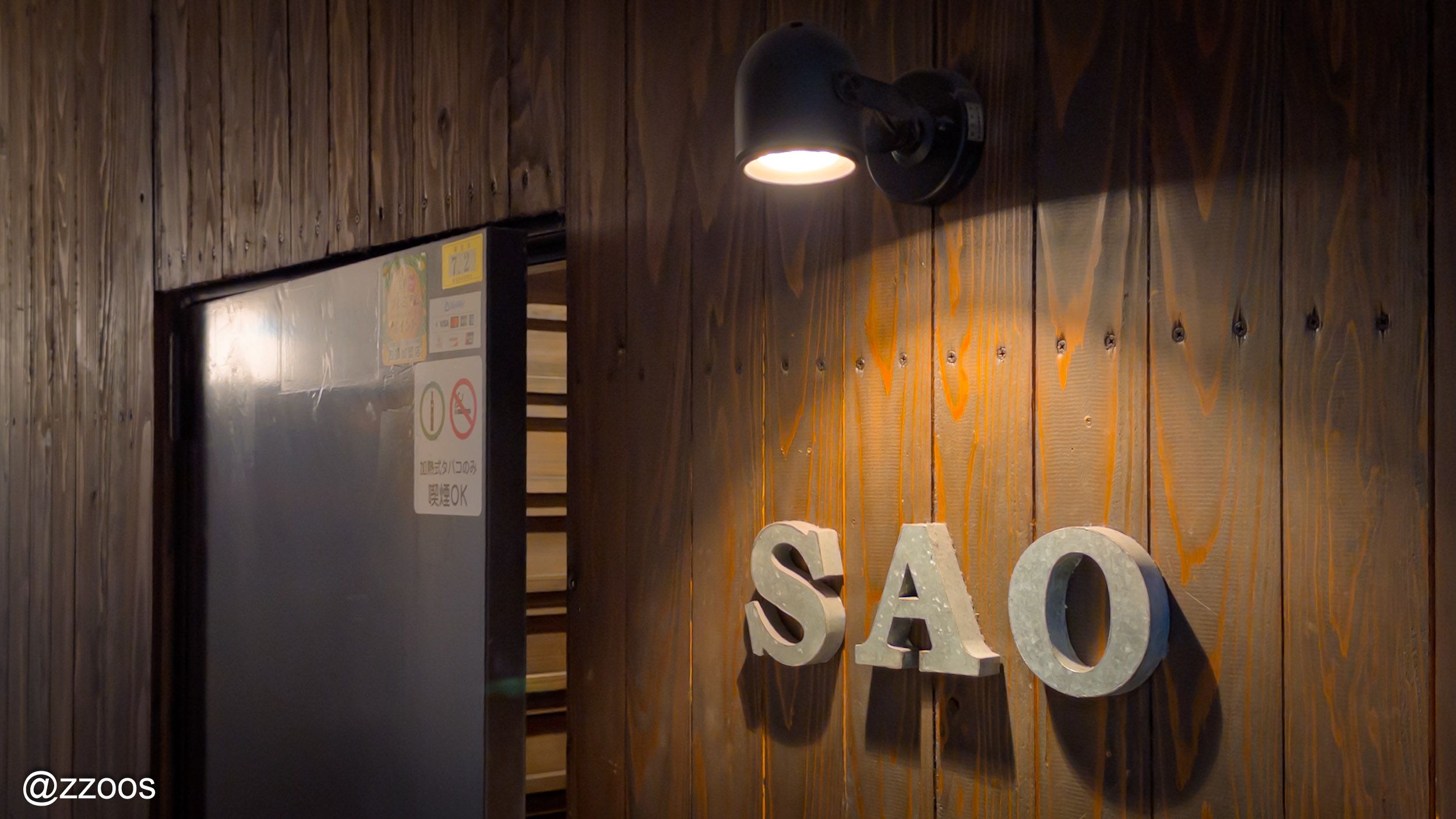
Today I stopped by S.A.O again, the place I visited right after arriving in Kagoshima.
It’s a place I could happily visit every single day.
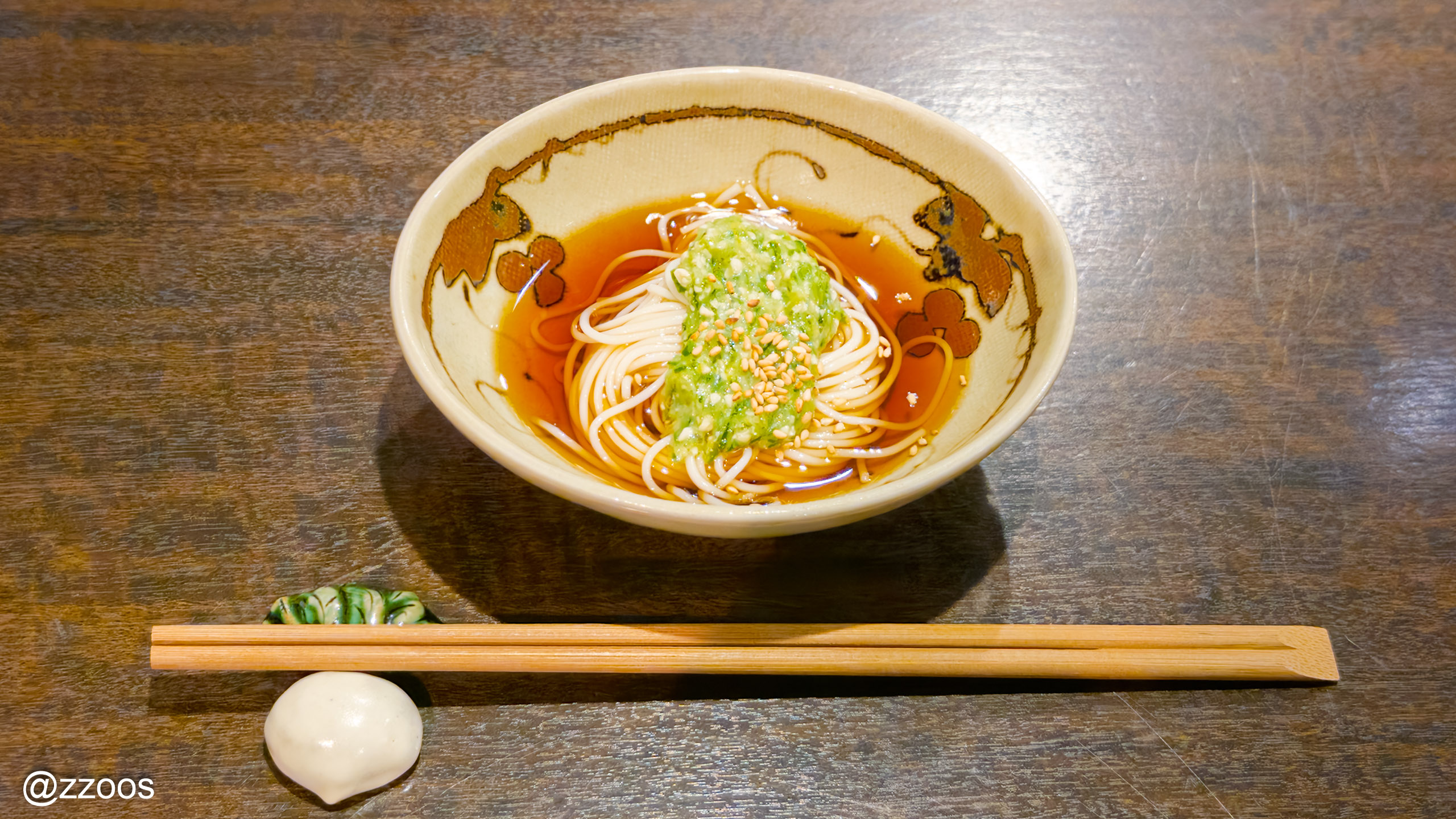
Today’s otoshi was okra somen.
Well-boiled somen in tsuyu, topped with grated okra.
Because of okra’s natural stickiness, it tasted a bit like grated yam. A fun taste.
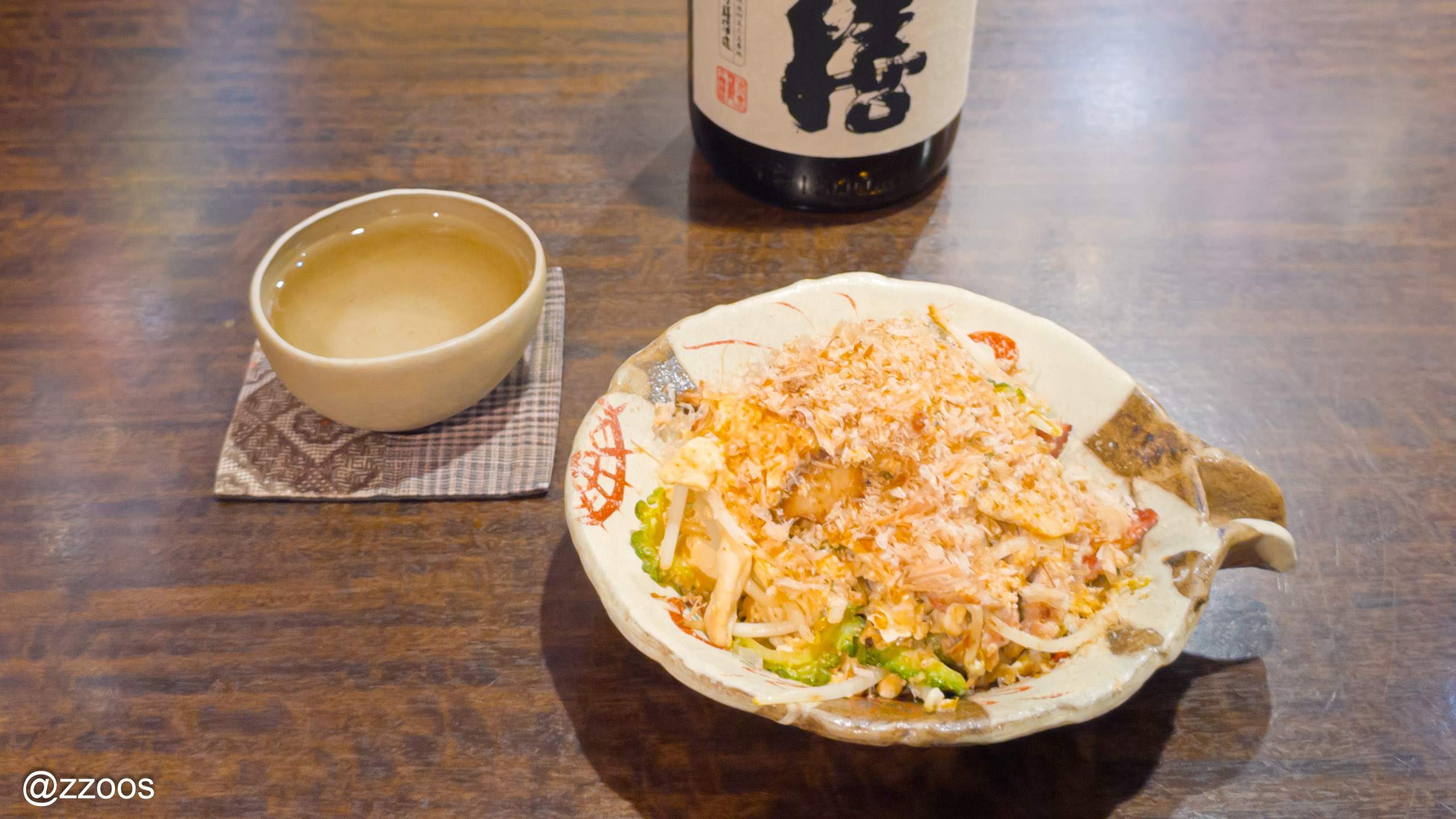
On top of that, I ordered goya champuru to fill my slightly hungry stomach.
Kagoshima is close to Okinawa, so Okinawan cooking has had a lot of influence here.
But it looked and tasted a bit different from the Okinawan goya champuru I had in mind.
The one you eat in Okinawa is rougher, but somehow warmer and tastier. Something like that.
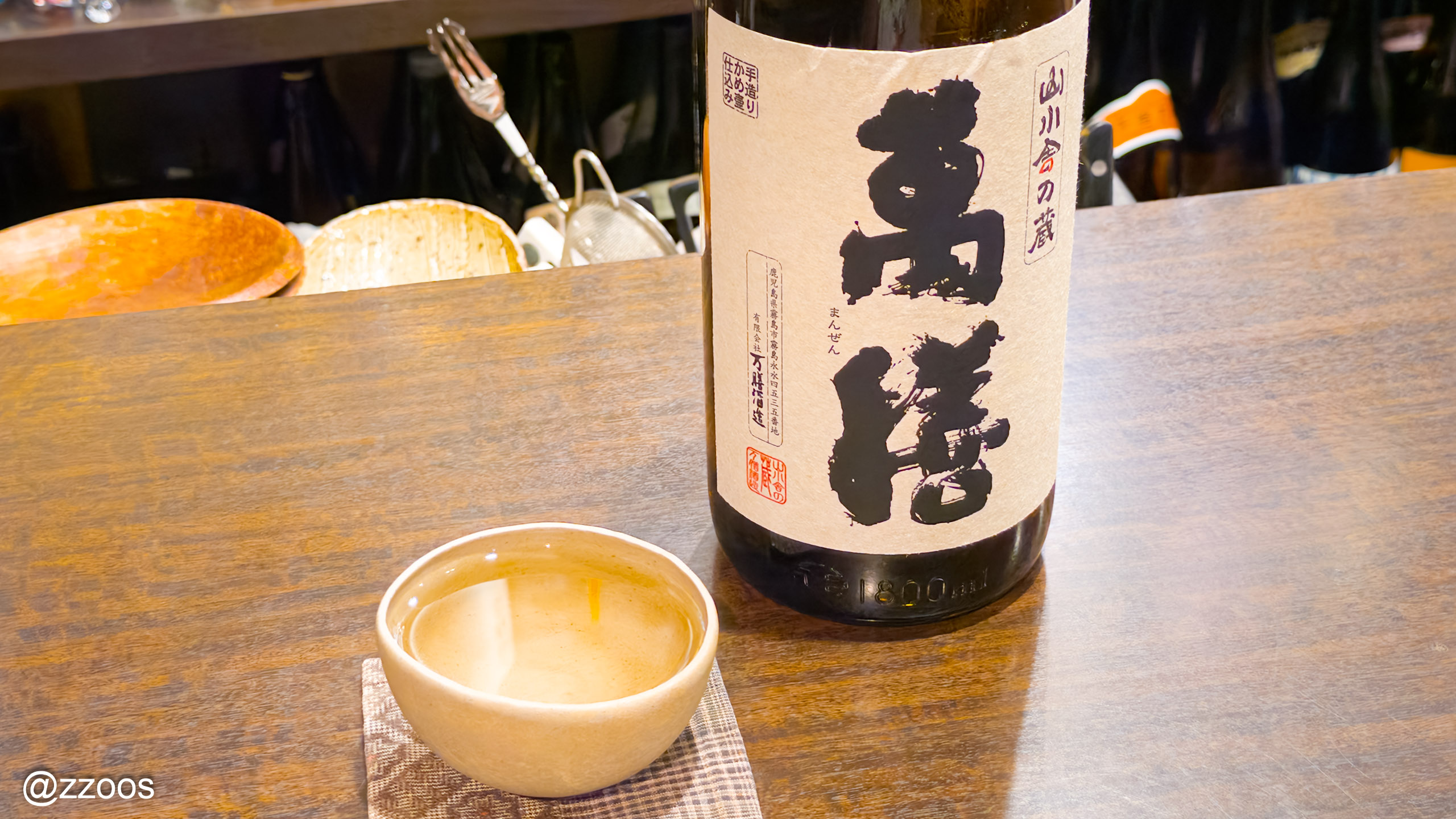
As always, my first glass here was Manzen(萬膳) maewari(前割り).
Manzen is a sweet potato shochu from Manzen Shuzo(万膳酒造).
I think its quality rivals the big three of Kagoshima shochu: Moriizo(森伊蔵), Murao(村尾), and Mao(魔王).
All three names start with M, so they’re sometimes called the 3M.
Personally, I think the next M is this Manzen.
Maewari means mixing shochu with water and drinking it a few days later.
The owner went all the way to Manzen Shuzo himself to fetch the water for this maewari, so he explained that it blends together even better.
I can’t taste that much of a difference, though.
Anyway, one thing is certain.
This maewari is really good.
There’s a reason I always have it as my first glass.
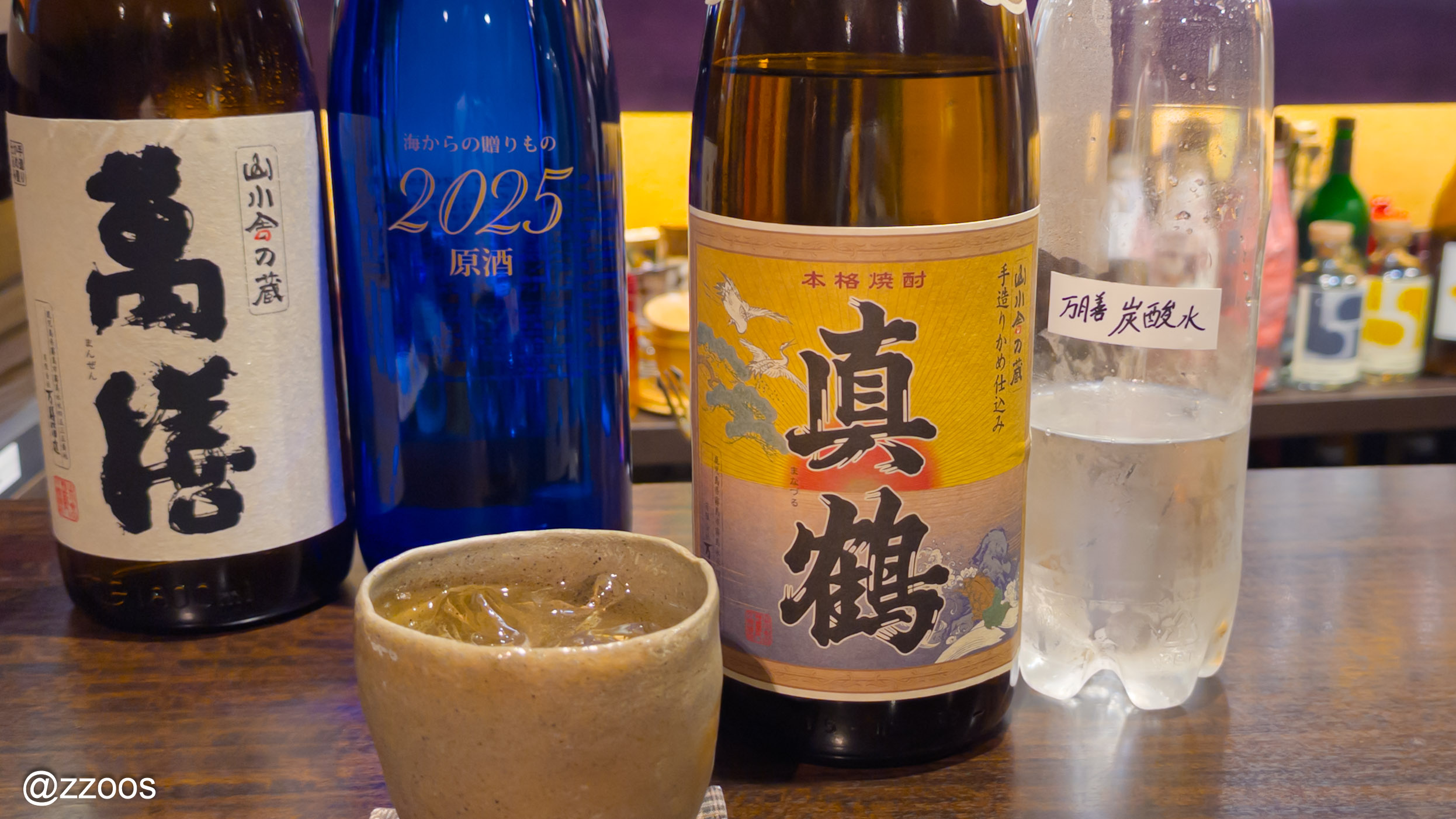
Manazuru(真鶴) is also made by Manzen Shuzo, the same as Manzen.
Manzen uses black koji and Manazuru uses white koji. Two buddies from the same company.
Today the owner said he had something fun, and made me a Manazuru sodawari.
Sodawari is shochu mixed with sparkling water, right?
But this sparkling water was made from Manzen’s water.
You know, the water from Manzen Shuzo that he uses for the maewari?
He carbonated that.
Thanks to the owner’s cleverness and passion, I can’t help but love this place.
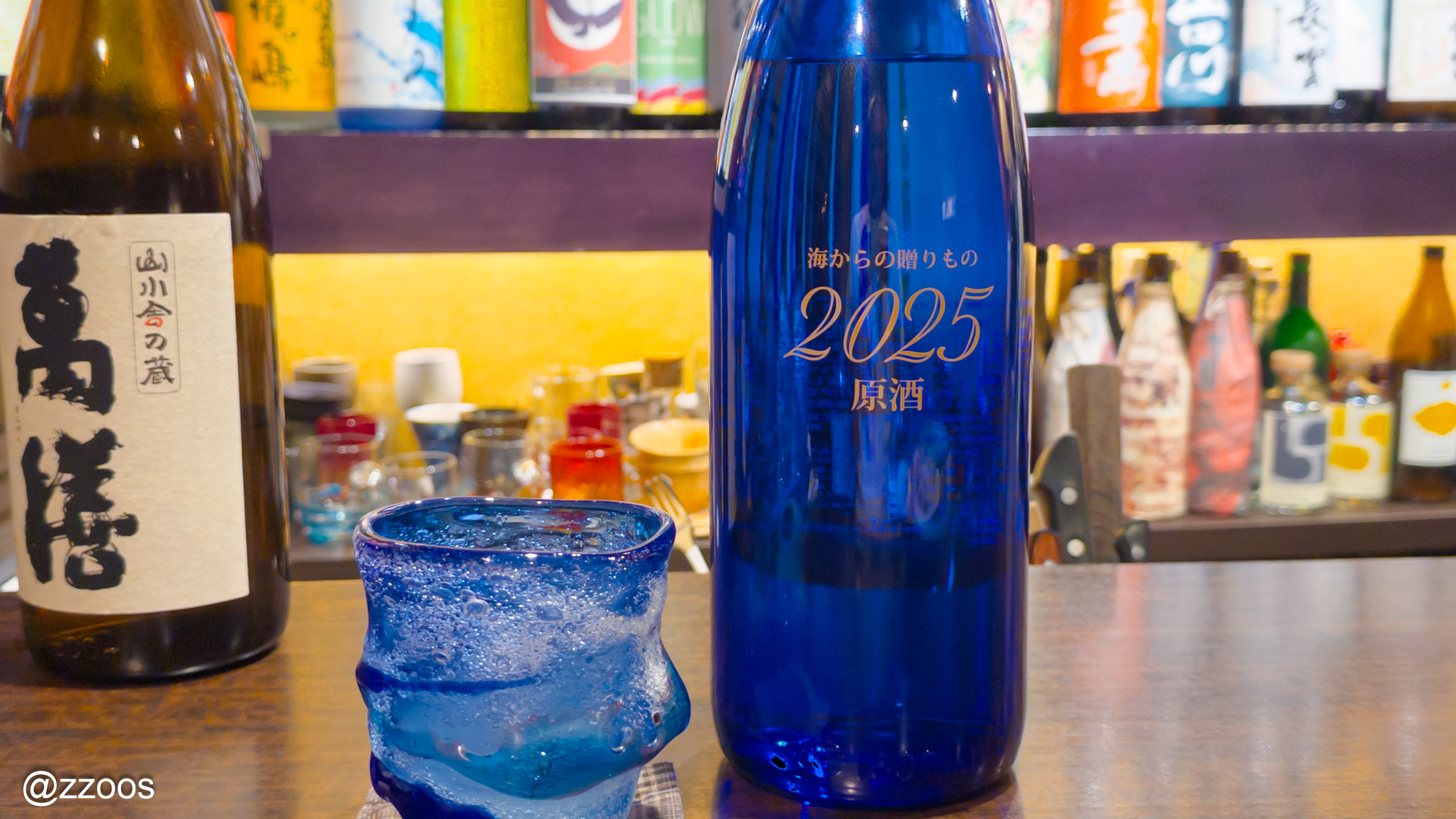
Umikara no Okurimono(海からの贈りもの, A Gift from the Sea).
The clear blue bottle is unique and attractive.
He even matched it with a blue glass. That’s quite a touch.
It’s a limited edition Daikai Shuzo(大海酒造) releases every year for Marine Day, and this is apparently the genshu(原酒) version.
By the way, genshu means the spirit as it is after distillation, with no water added.
Shochu genshu is around 40 percent alcohol.
I drank the genshu straight, on the rocks(ロック).
The bright aroma was nice, but more than anything, the clean finish that didn’t feel like genshu at all left an impression.
I couldn’t feel the high alcohol at all.
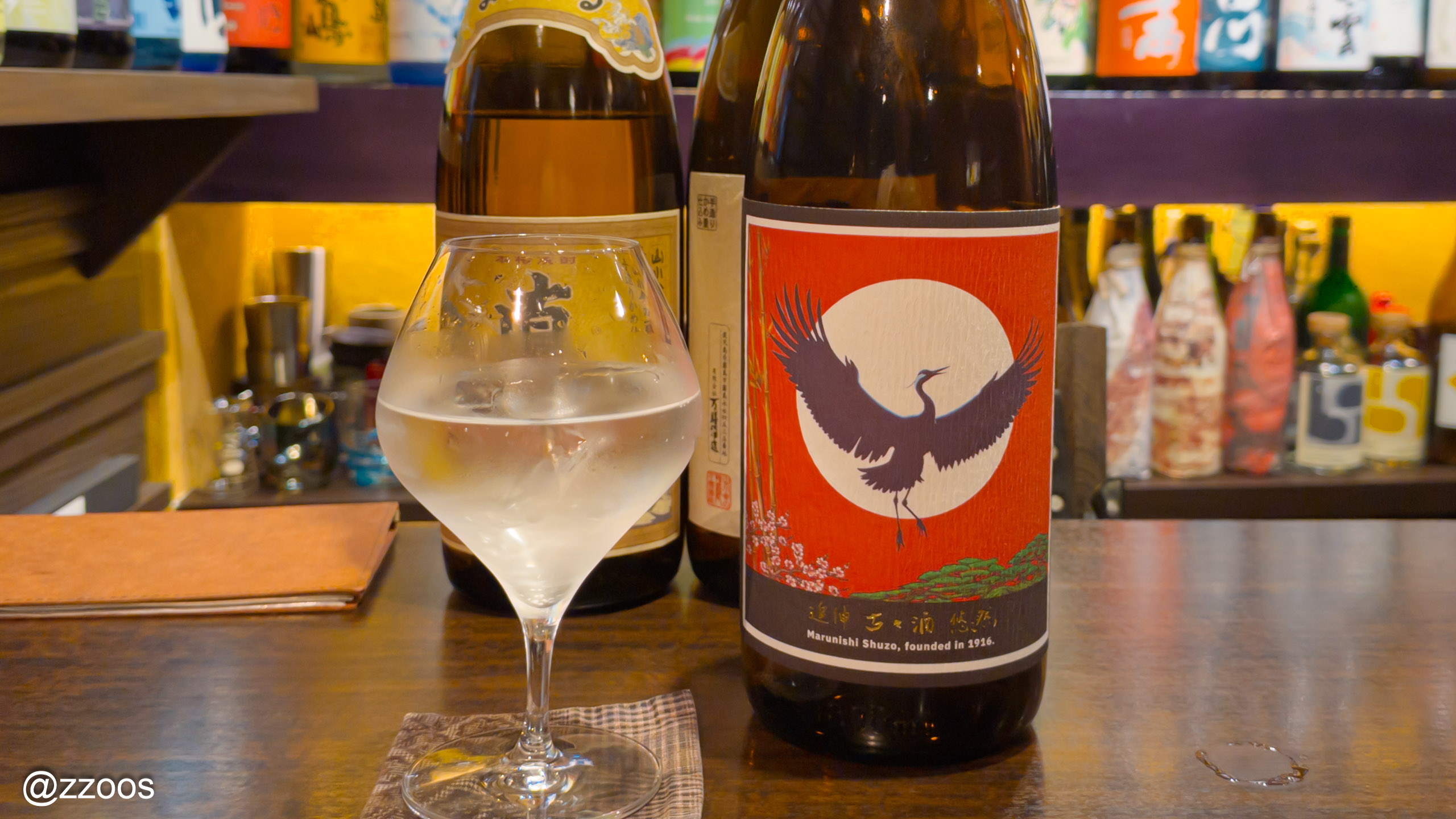
I don’t think I’ve seen them often, but today I ended up drinking two from Marunishi Shuzo(丸西酒造).
This one is a shochu called Tsuishin Kokoshu Yuzen(追伸 古々酒 悠然).
Seeing kokoshu(古々酒) on the label, I wondered if it had been aged quite a long time.
I looked it up, and it’s a blend centered on base spirits aged 15 years or more.
As far as I know, shochu generally loses more than it gains from aging, so it isn’t usually aged long.
So you don’t get many chances to drink a long-aged one like this.
This one was very unique.
Even as a sodawari, something like a salty taste came up.
When I brought my nose to the glass, the impression wasn’t that great.
But once it was in my mouth, that impression faded a little, and a fragrant aroma came through as it went down.
Maybe that’s because it blends long-aged spirits with unaged ones?
A fun drink that shows different tastes and aromas at different stages.
While I was drinking, the owner told me he’s going to be a dad soon!!
When I visited, he said his wife was eight months pregnant, so by now he’s probably already a dad.
I offered congratulations, and offered them, and offered them again for a long time.
Congratulating him over and over in my limited Japanese, I ended up saying the same thing again, and again, and again.
Just like a drunk.
Still, I wanted him to feel what I meant, so I couldn’t help repeating it.
I was about to get up, but kept on congratulating him, couldn’t leave, and ordered one more drink.
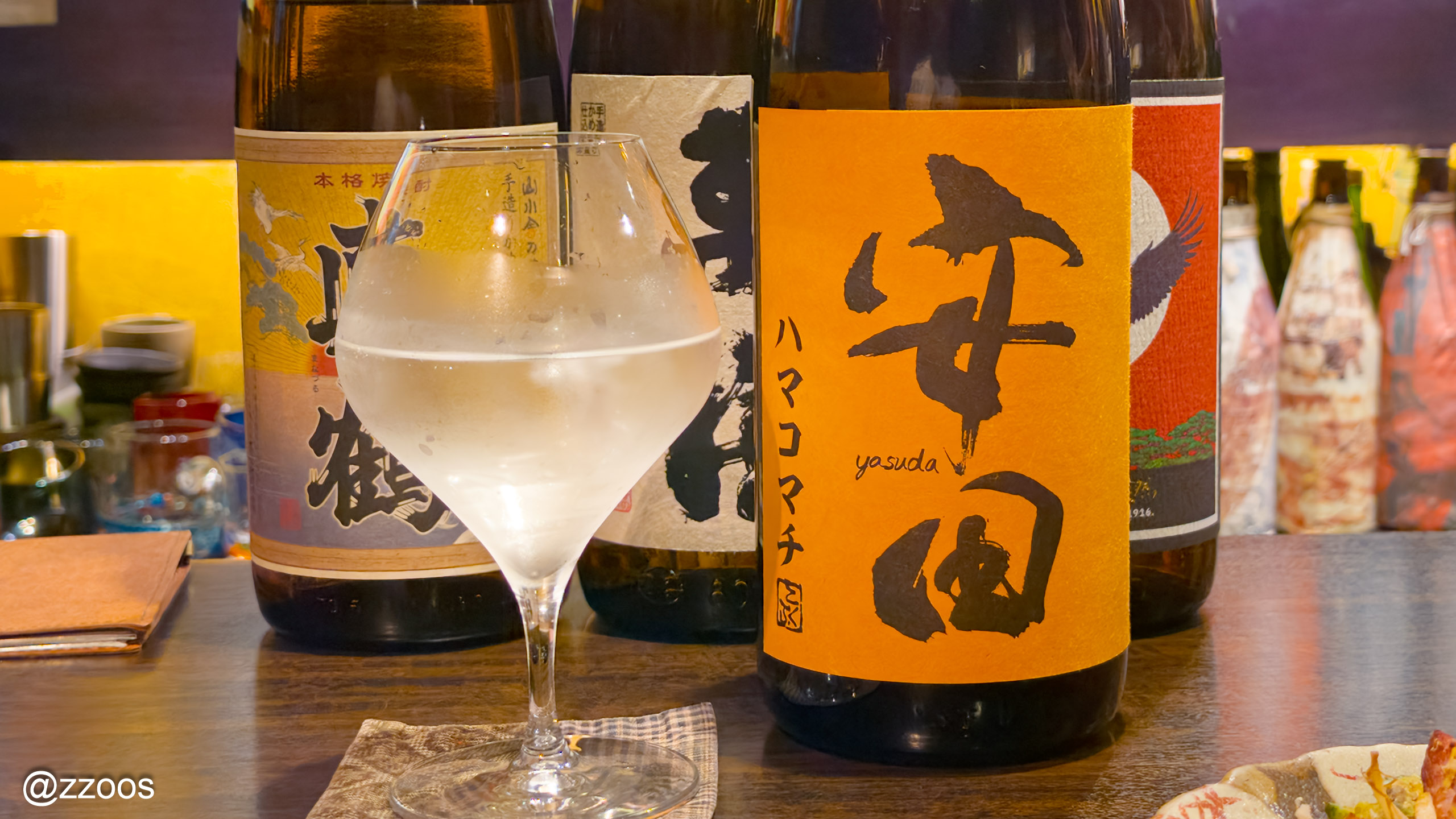
Yasuda Hamakomachi(安田ハマコマチ) from Kokubu Shuzo(国分酒造).
First of all, Yasuda is something like a pioneer among sweet potato shochu.
It’s no exaggeration to say that today’s sweet potato shochu can give off all kinds of fragrant aromas because this pioneer called Yasuda came first.
Yasuda Hamakomachi uses a different sweet potato variety from the original Yasuda.
Hamakomachi is the name of the variety.
The variety changed, but it’s still fragrant.
People say Yasuda is Yasuda, and they’re not wrong.
:: The Root of Kagoshima’s Shochu Bars, Ishizue
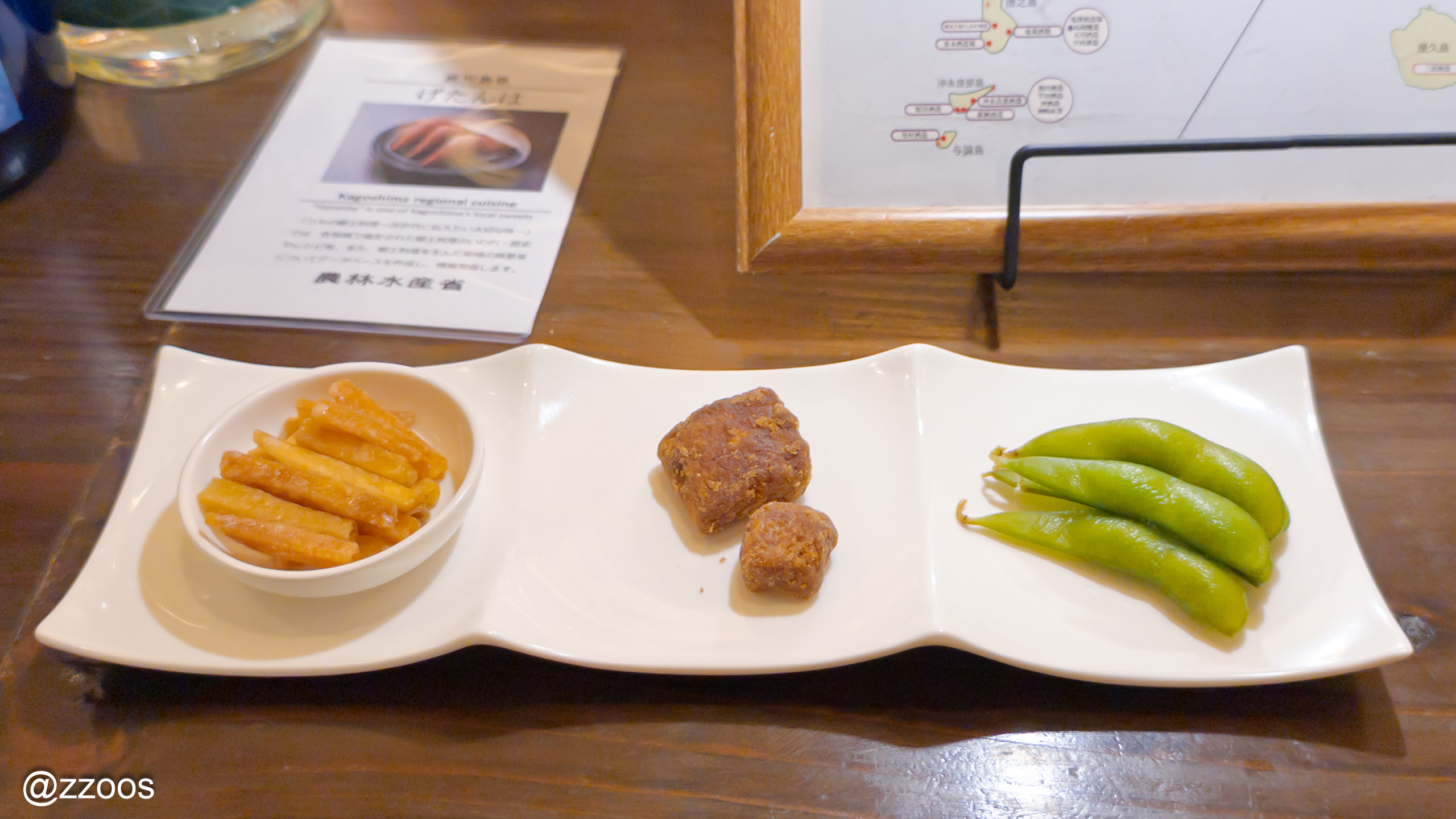
On my first visit to Kagoshima, I saw an article introducing shochu bars on the Kagoshima tourism association’s website.
And I went myself.
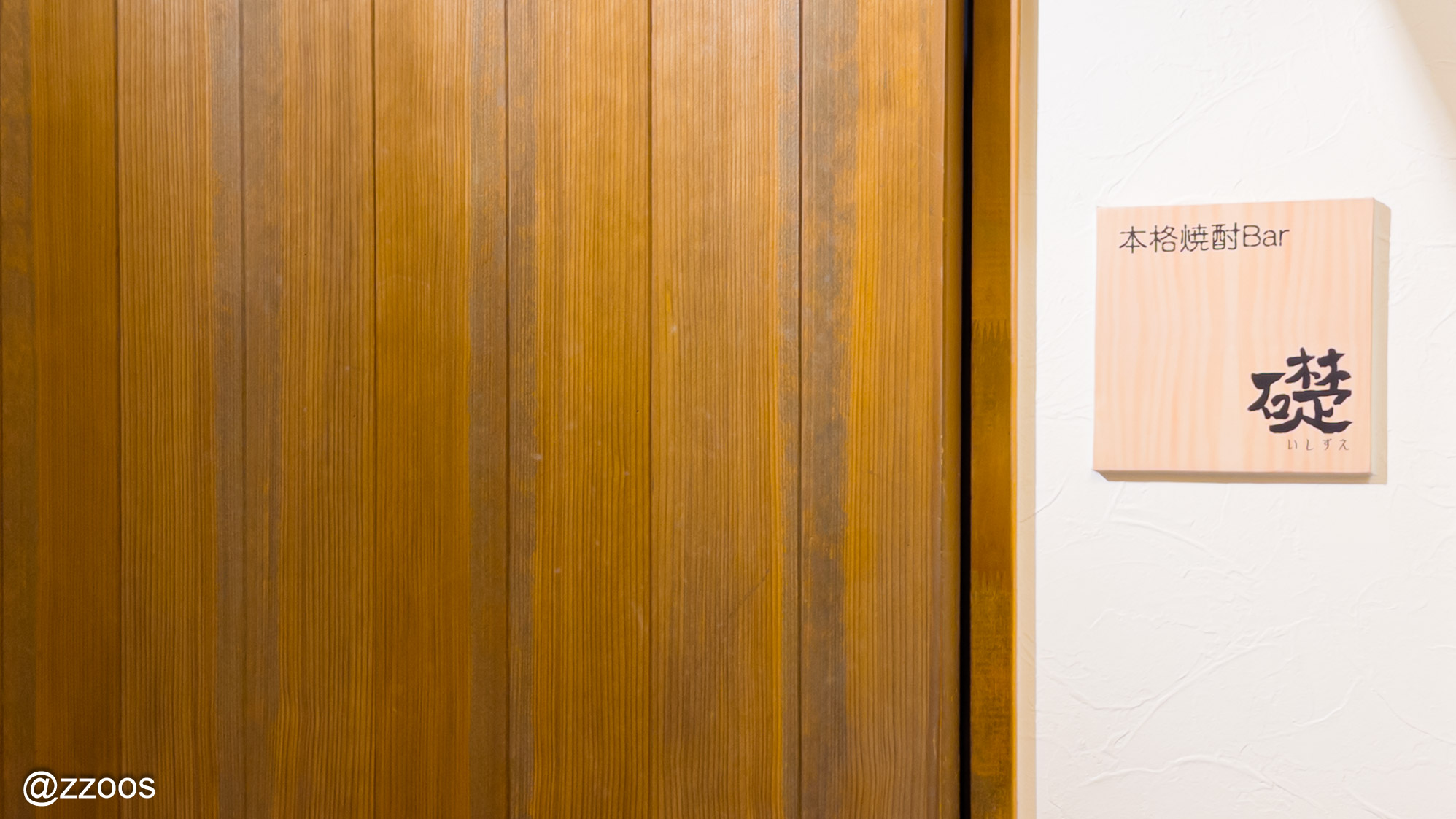
So Shochu Bar Ishizue(礎) was my first shochu bar.
Now I know the owner well enough that we greet each other when we run into each other on the streets of Kagoshima.
So whenever I come to Kagoshima, it’s a place I have to stop by at least once.
ROKU(鹿 ROKU), where an American woman is the master so you get perfect English service, and Shochu Bistro GOU(焼酎Bistro 郷 GOU), newly opened to show how food and shochu go together, are both his places too.
He runs three places in Tenmonkan, so maybe I should call him a Tenmonkan old-timer?
I got to Ishizue at about 2 a.m.
It was the last night of the trip, and my flight back to Korea tomorrow was late in the afternoon, so I was burning through the last night.
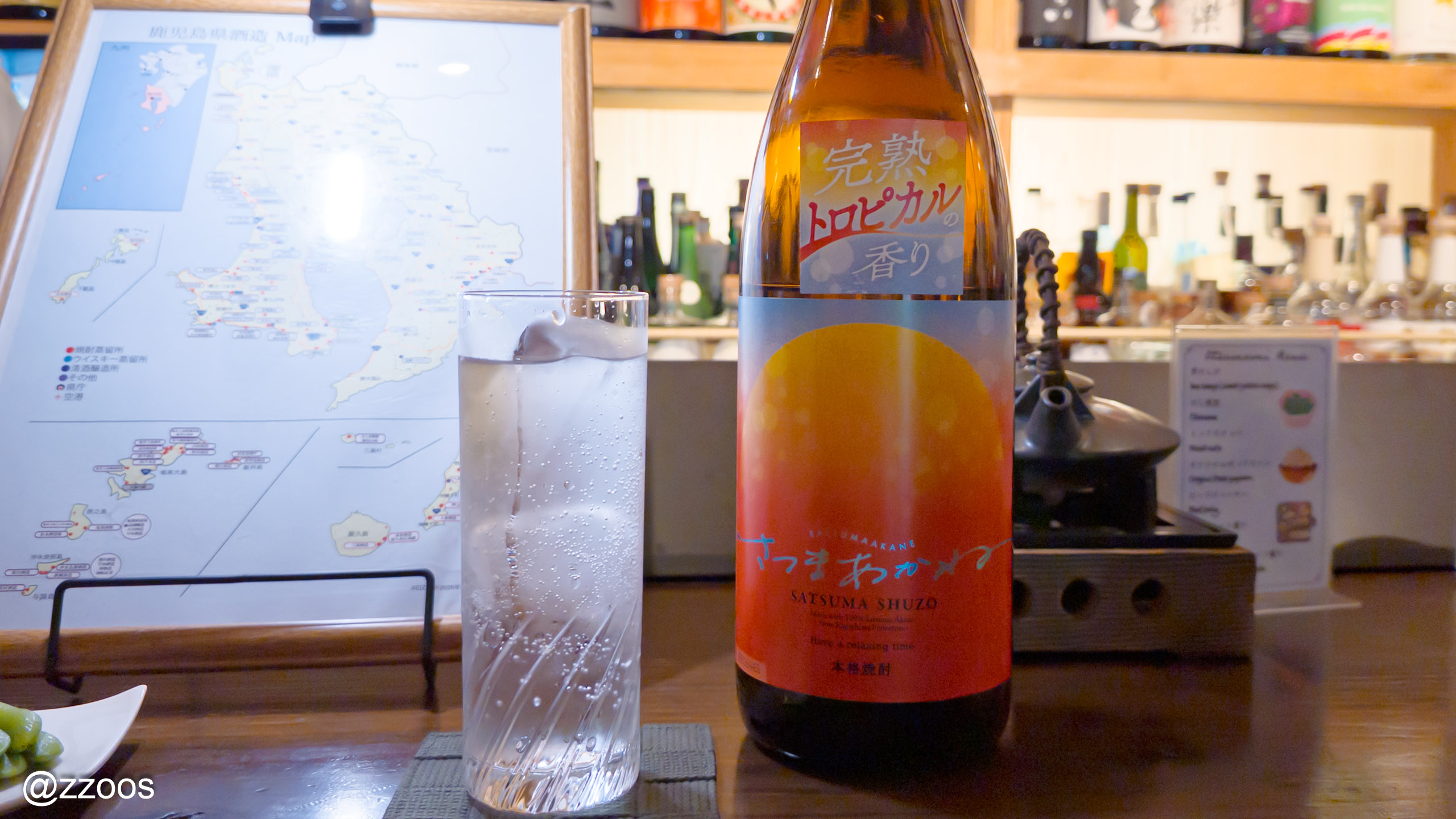
The owner of Ishizue recommended Satsuma Akane(さつまあかね) from Satsuma Shuzo(薩摩酒造).
The top of the bottle says “fully ripe tropical aroma(完熟トロピカルの香り),” so it’s clearly an aromatic type of shochu.
Apparently the shochu itself is designed so the aroma bursts out with the bubbles when you drink it as a sodawari.
But when I actually drank it, I couldn’t tell that much.
What’s certain is that it was a really easy, good drink. That’s about it.
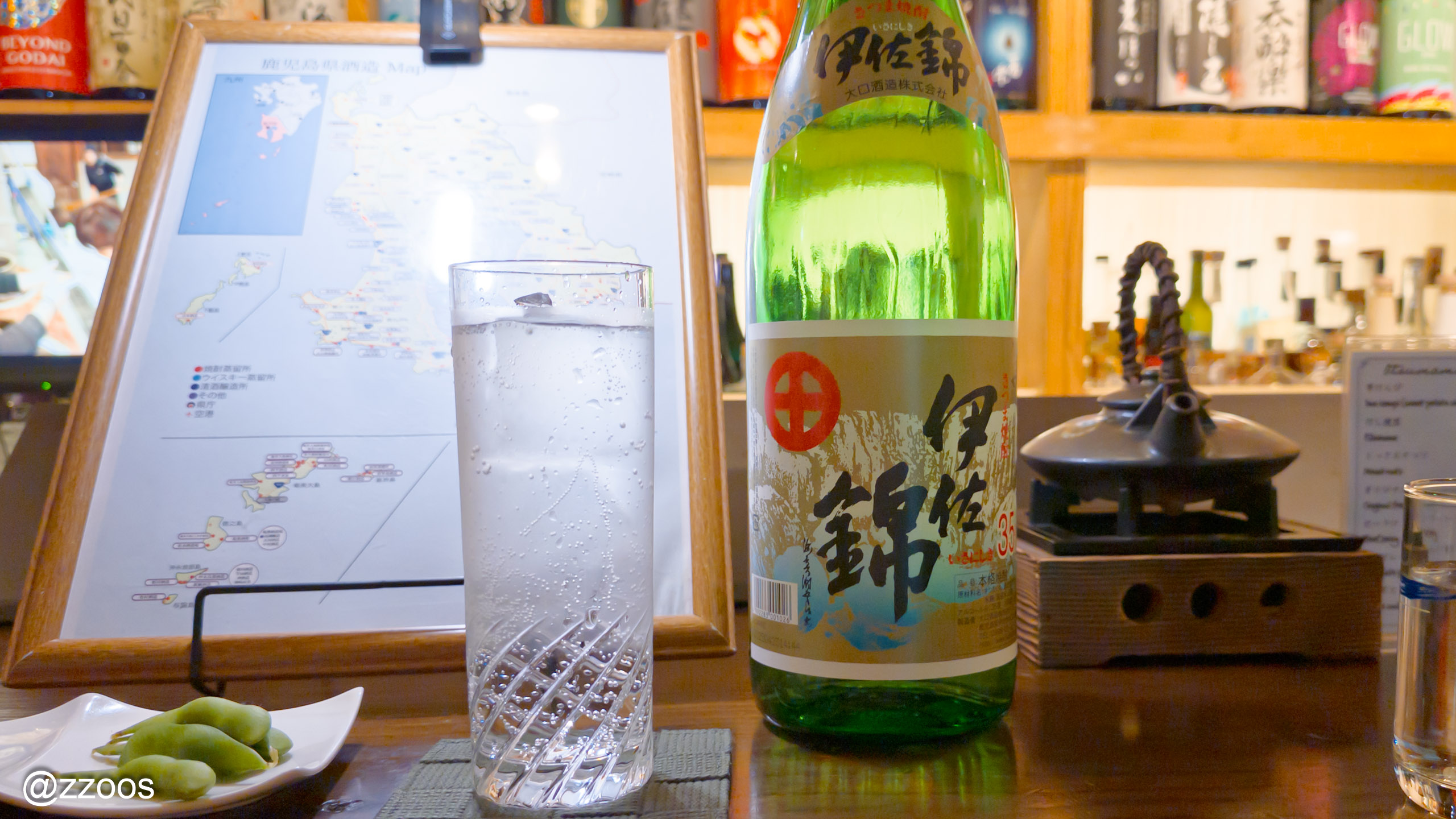
My last glass was Isanishiki(伊佐錦), the signature shochu of Okuchi Shuzo(大口酒造).
It’s a shochu you can easily find at izakaya and other places in Kagoshima.
Ah, but this one is a bit different.
Unusually, it’s 35 percent.
The one you usually see is 25 percent.
So this was my first time drinking it.
Maybe because I had it as a sodawari, I didn’t think it was strong.
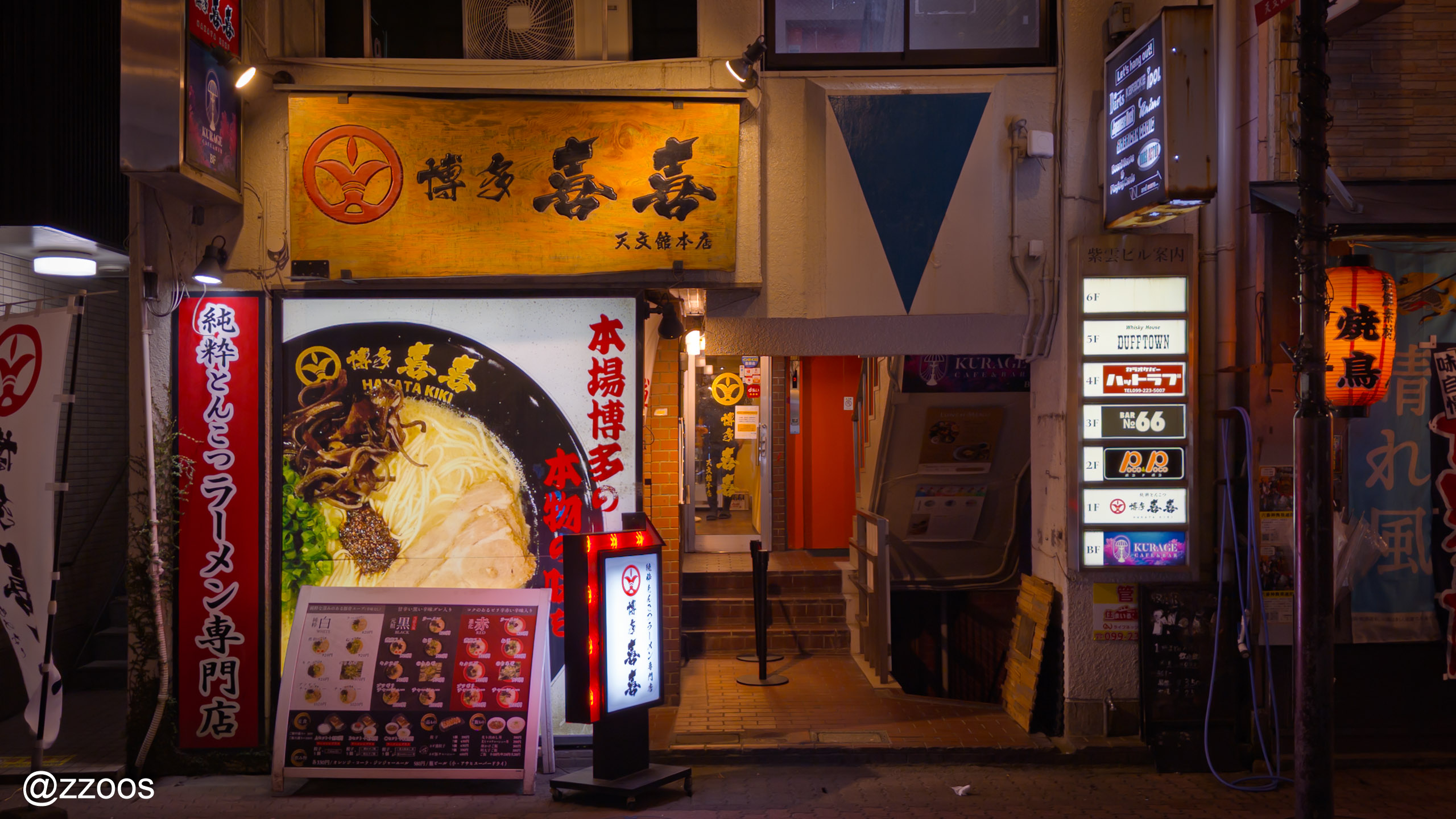
On my last night in Kagoshima, I visited all three of my favorite shochu bars and said hello.
Each time, there’s the joy of drinking the shochu I love and always order, and of being introduced to new ones.
The reason I’ve traveled to Kagoshima five times, and the reason I’ll keep going, is shochu.
There are still many shochu bars I haven’t been to.
And many Kagoshima dishes I haven’t tried yet.
Besides, new shochu will come out every year.
So every time I go, I can enjoy Kagoshima nights with a fresh feeling.