A few days ago, at Higenomise, I met the master of this place. He was cheerful and full of fun. The other guests recommended it enthusiastically, too. So today, I finally came.
I wanted to come here second, but the place was full, so I had a glass of wine somewhere else first and came here third instead. Luckily, there was a seat.
I’d only said a quick hello a few days ago, but Mukai-san, the master, remembered me and greeted me warmly.
Ah, this place is called Hiroko (弘幸).
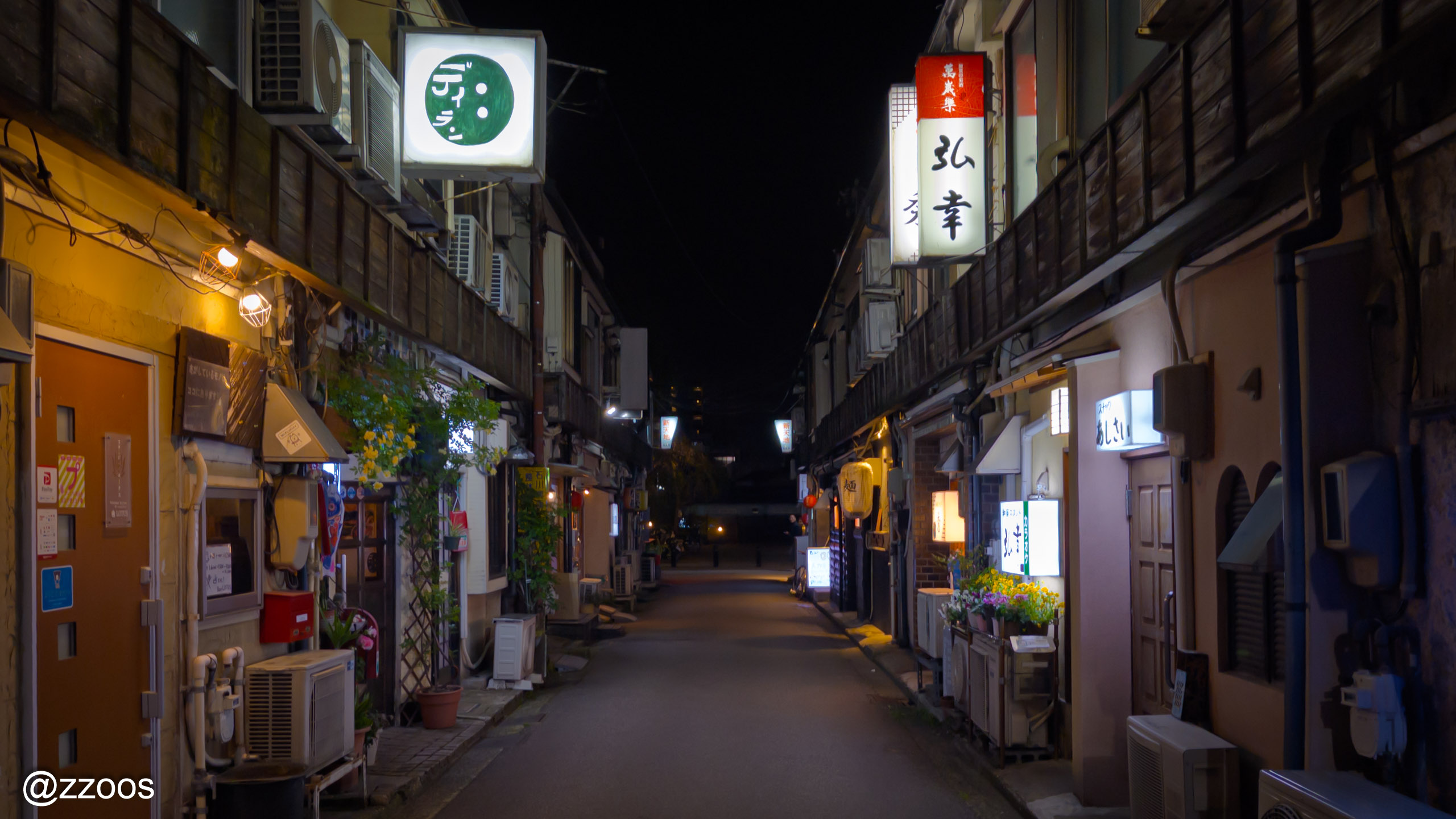
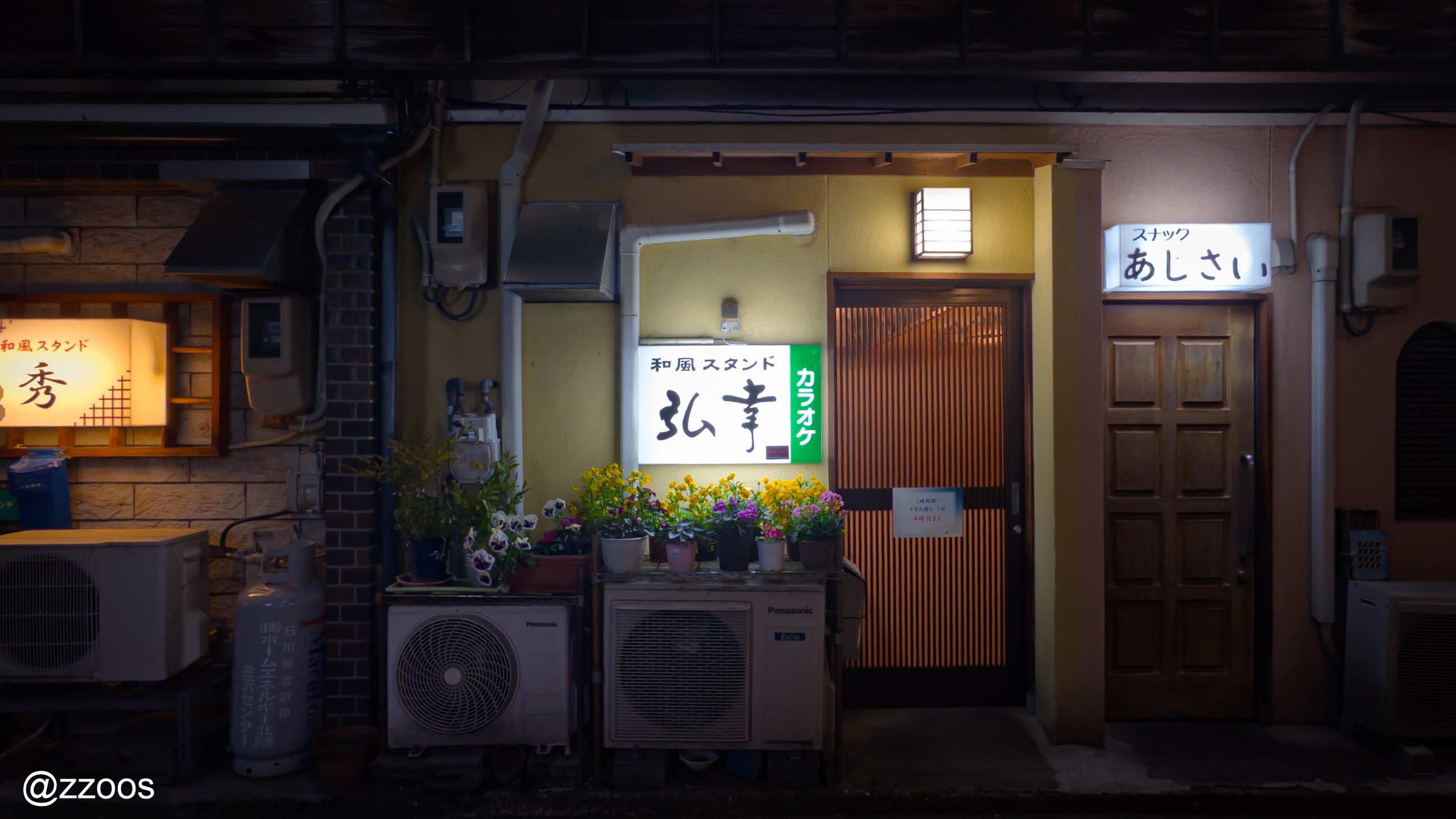
The sign at Hiroko reads “wafu stando (和風スタンド).”
Wafu (和風) means Japanese-style. Stando (スタンド, stand) is, simply put, another word for bar. So it means a Japanese-style bar.
When bar culture first arrived in Japan, it carried the image of a sophisticated Western-style place where people drank whiskey or cocktails. Since people mostly drank standing up, these were called stand bars. Even bars without standing became known as “stands” if they had that kind of atmosphere.
Later, places serving something more familiar than whiskey or cocktails — shochu or nihonshu — began to appear, and these came to be called “wafu stando,” meaning Japanese-style bar.
Either way, it’s not a word from this era. It’s a word from the 60s and 70s. Which means this place has been around for a very long time, too.
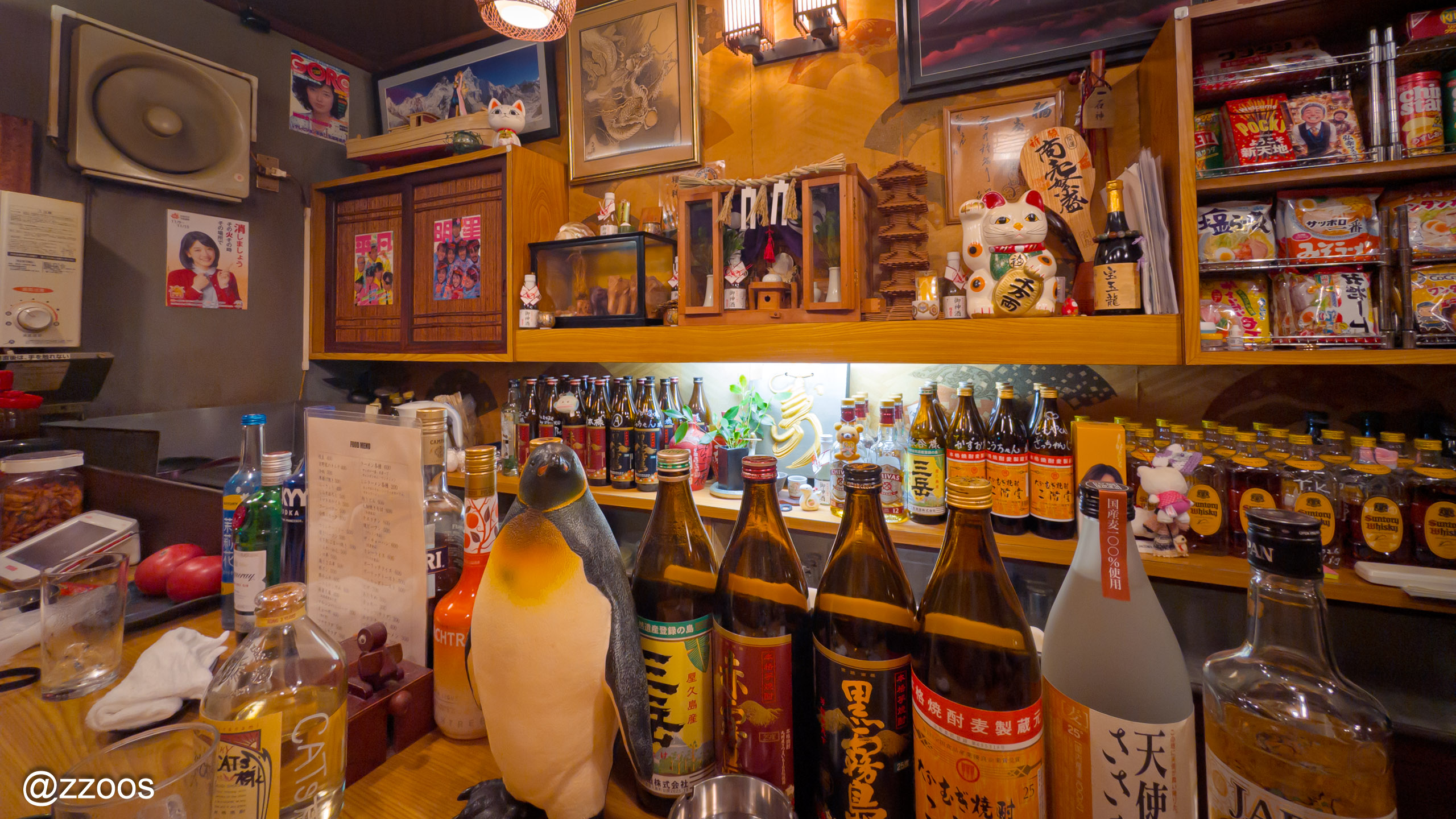
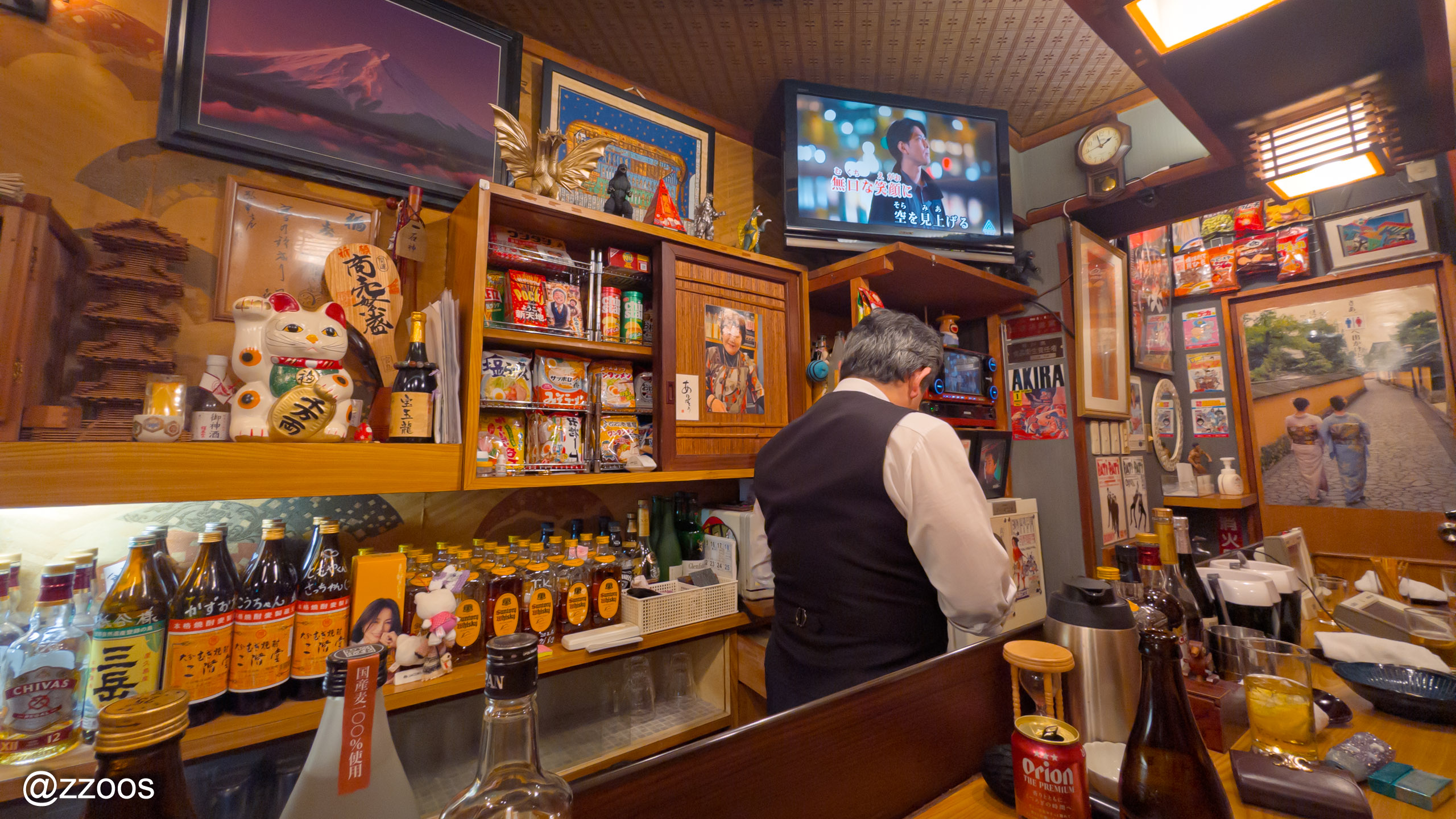
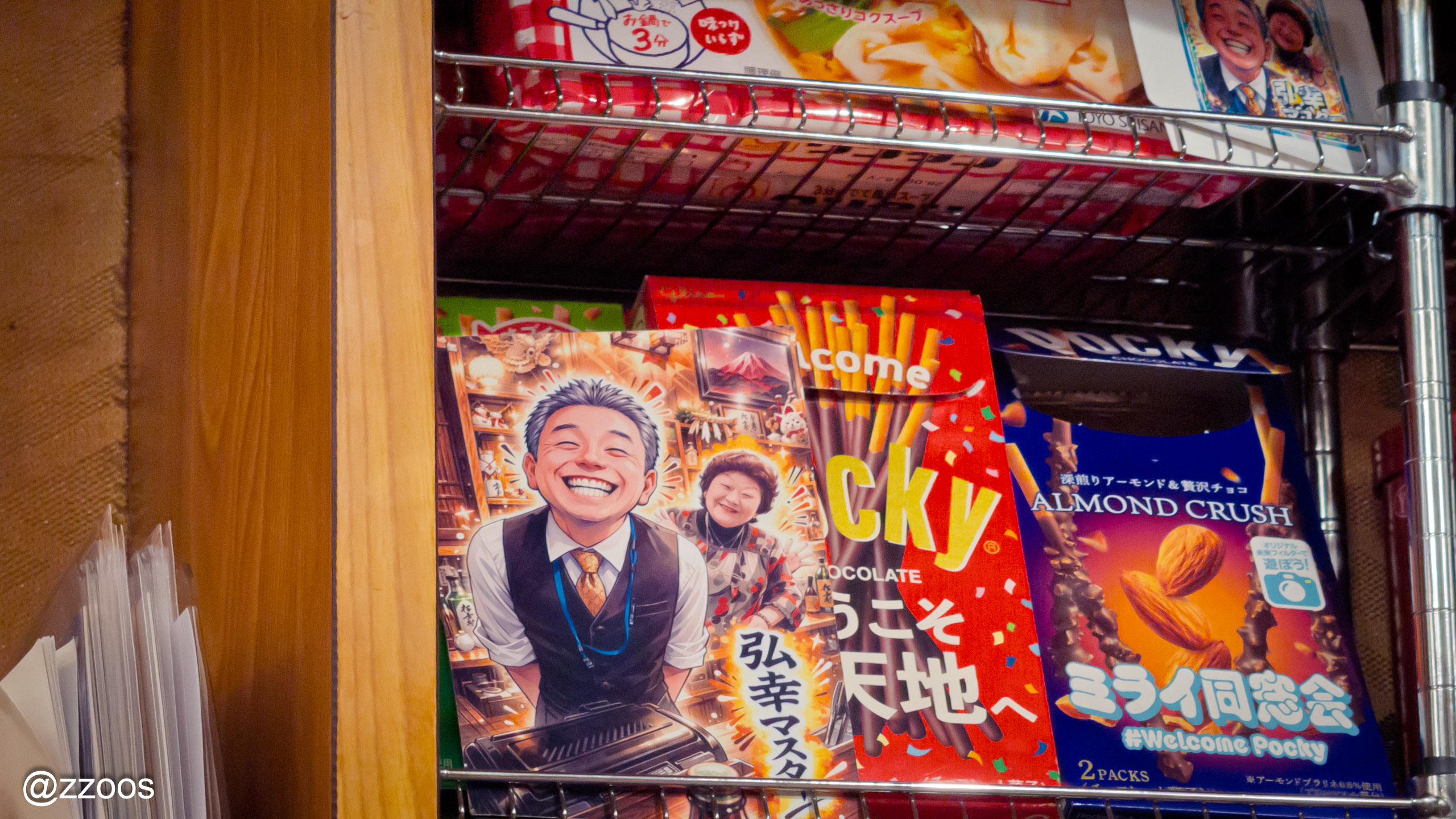
A few days earlier at Higenomise, when I asked for recommendations for a “snack bar” I wanted to try, this was the place the other guests pointed me to — Hiroko.
The sign says “wafu stando” — so is this really a “snack bar”? I asked, puzzled. Apparently the line between what counts as a “snack” isn’t very clear. If you define it as “a place where guests sing and mingle together,” then this place counts as a snack bar, too.
In fact, places with a similar atmosphere get called “bar,” “stando,” or “snack” interchangeably. It really just comes down to what the owner decides to call it.
If you ask a Japanese person what the difference is between a “snack” and a “bar,” no one can give you a clear answer. That’s how blurry the line is.
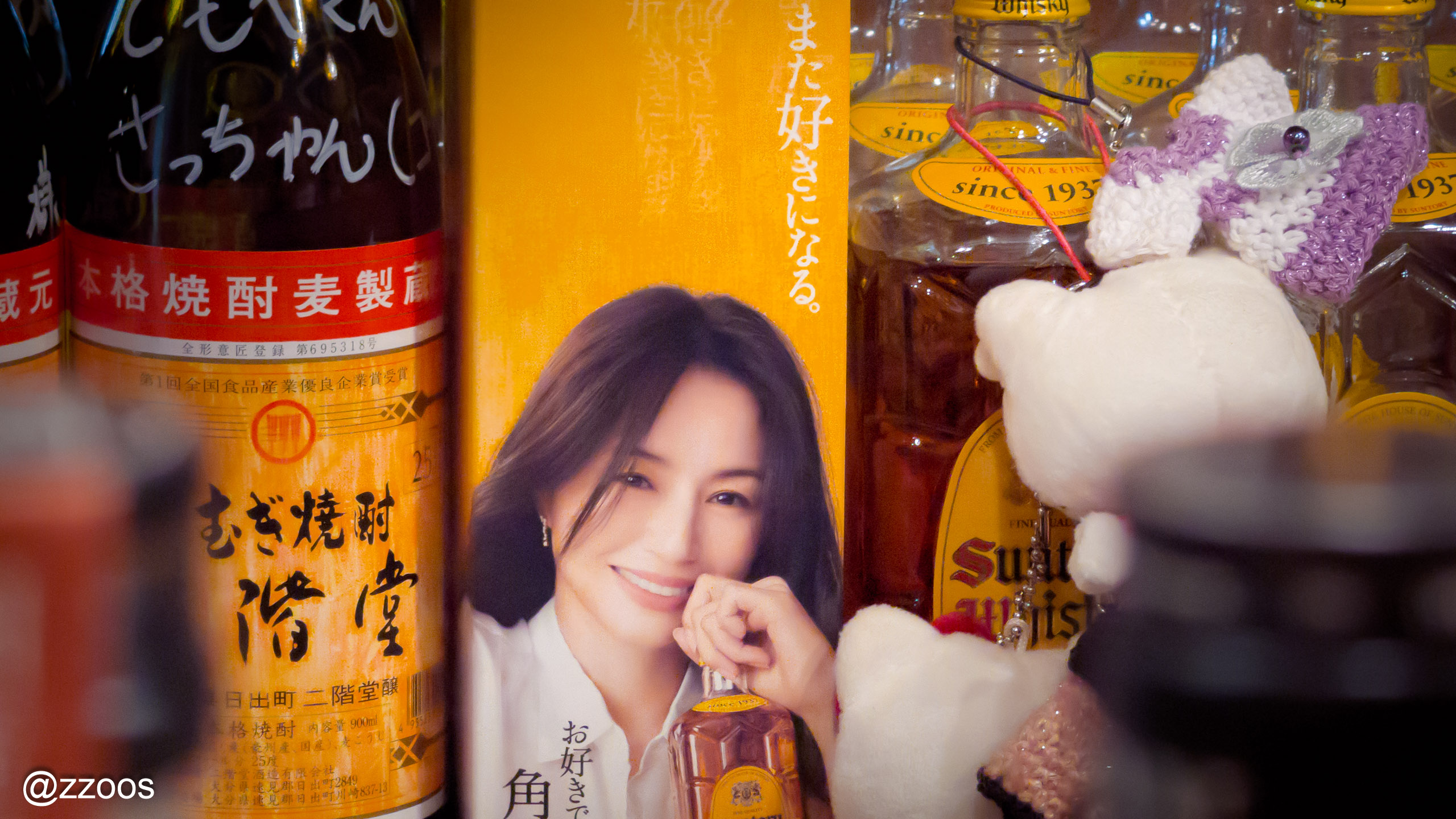
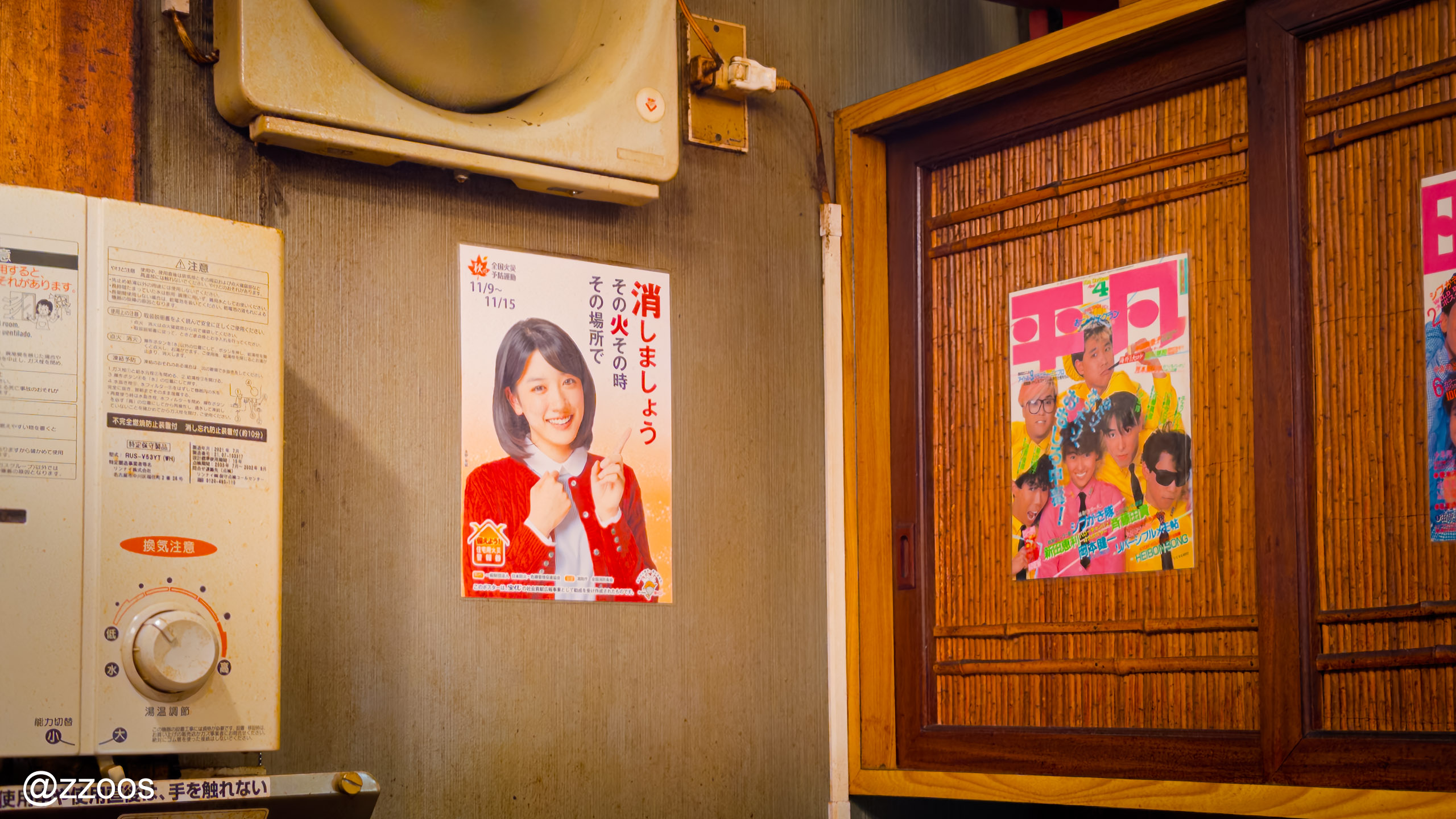
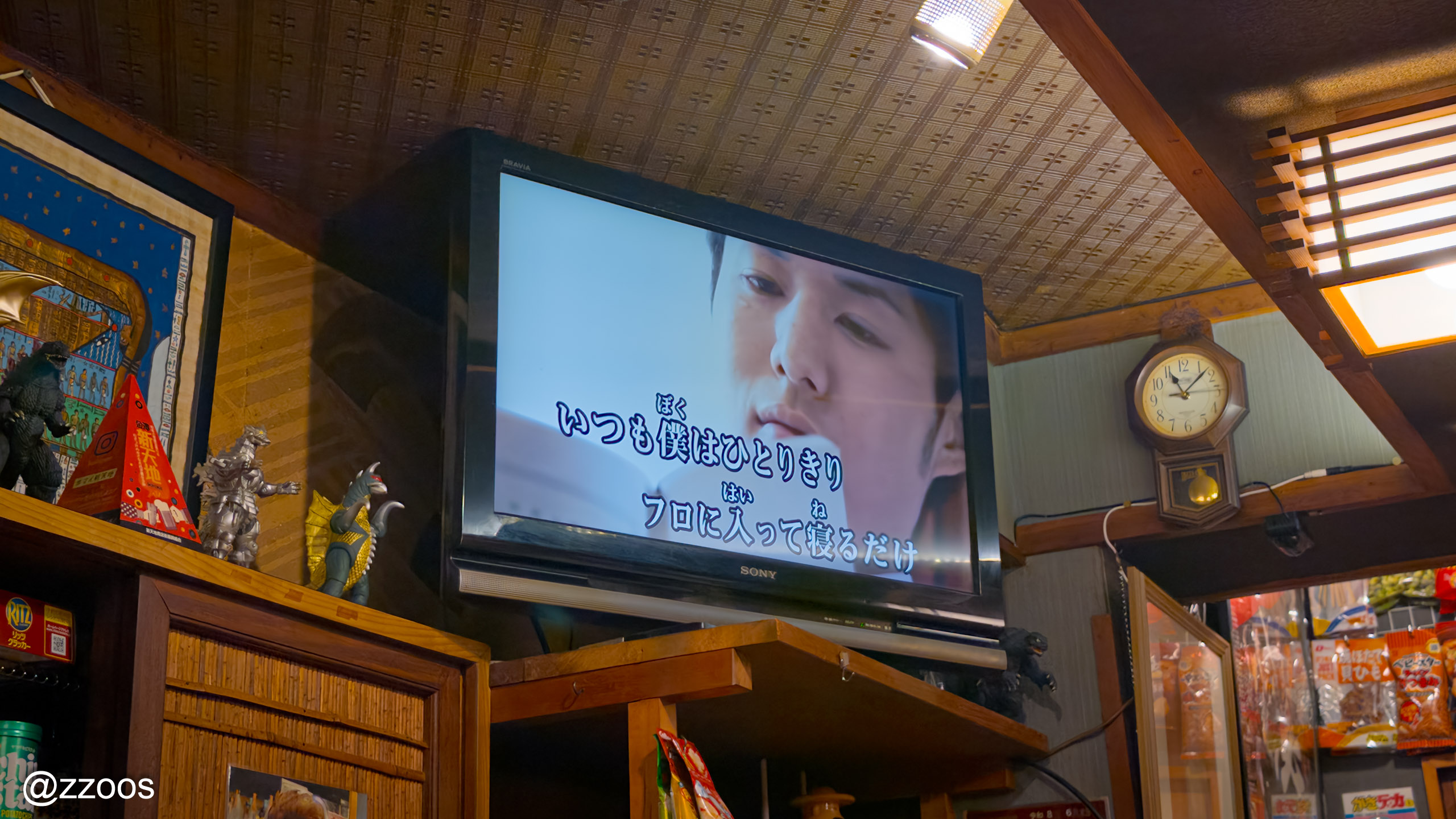
Honestly, I don’t fully understand how Hiroko’s system works. I never got a proper explanation of whether there’s a table charge, or a fee for singing.
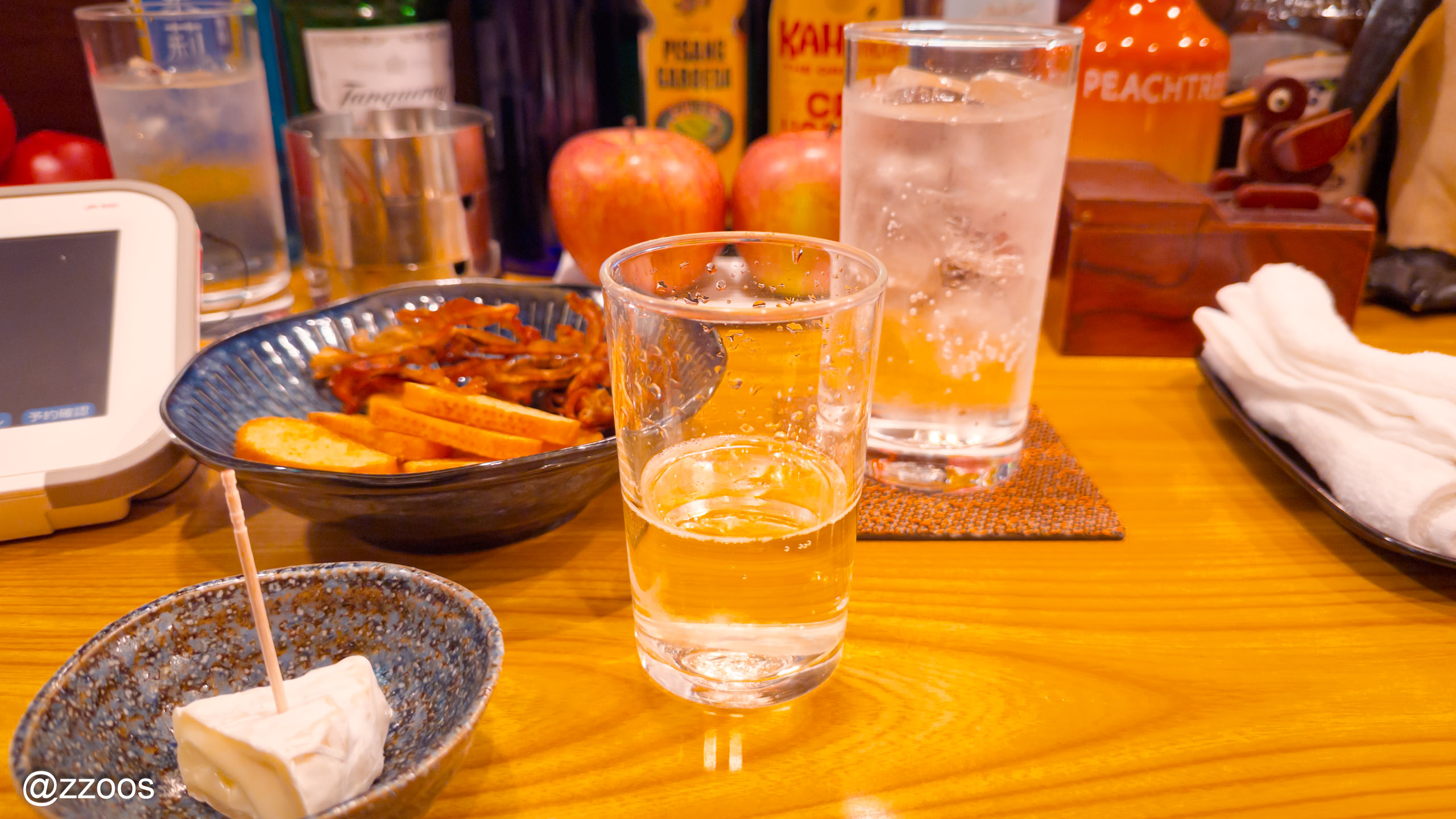
But one thing is clear — it’s cheap. A shochu soda or a whiskey highball is 500 yen. The simple food and side dishes are cheap too, and delicious.
Guests mingle with each other, singing together and talking. Even a foreigner like me, joining in alone, ends up fitting right in naturally.
I visited this place several times during this trip. I met a middle-aged man who’d studied art and ended up drinking with him at the next bar too. I talked with the young host about all kinds of things. I met a young Korean on a business trip and we were both surprised to find out we were both Korean. An elderly couple celebrating their wedding anniversary shared cheese with me. I got to meet all kinds of people and enjoy talking with them.
This became my favorite place on this trip. If I ever come back to Kanazawa, it’s the first place I’d visit again.
It’s not because the drinks or the food are especially delicious. It’s because I want to see Mukai-san’s kind smile again, and feel this place’s own warm, joyful atmosphere once more. It’s also nice that it’s cheap enough that I can drink as much as I want without worrying about my wallet.
I remember wandering around on my first night in Kanazawa, unable to find a place I liked. Now, after three or four nights here, I’ve found places I really love, and I’ve been spending my nights this way.
That’s probably why.
Why the nights of Katamachi have stayed with me so vividly.