Finally, it’s the evening of day one.
Kanazawa is famous for cheap, fresh seafood. Japanese friends told me that the conveyor belt sushi places here are on par with proper sushi restaurants elsewhere.
With a reputation like that, dinner was always going to be seafood. I wanted fresh sashimi.
I crossed the street from the hotel and headed into the back alleys of Katamachi — specifically Kiguramachi. I knocked on a few doors. Every single place was full. No reservation, no seat. That’s just how things work these days — you book ahead to eat out. But I’m the kind of traveler who doesn’t really do reservations.
I ended up sitting in a darkened park, staring at Google Maps. Two or three rejections will do that to you. I found a few more options, and half-resigned, pushed open the door of a place called Ichigohan Bunke (一合半ぶん家).
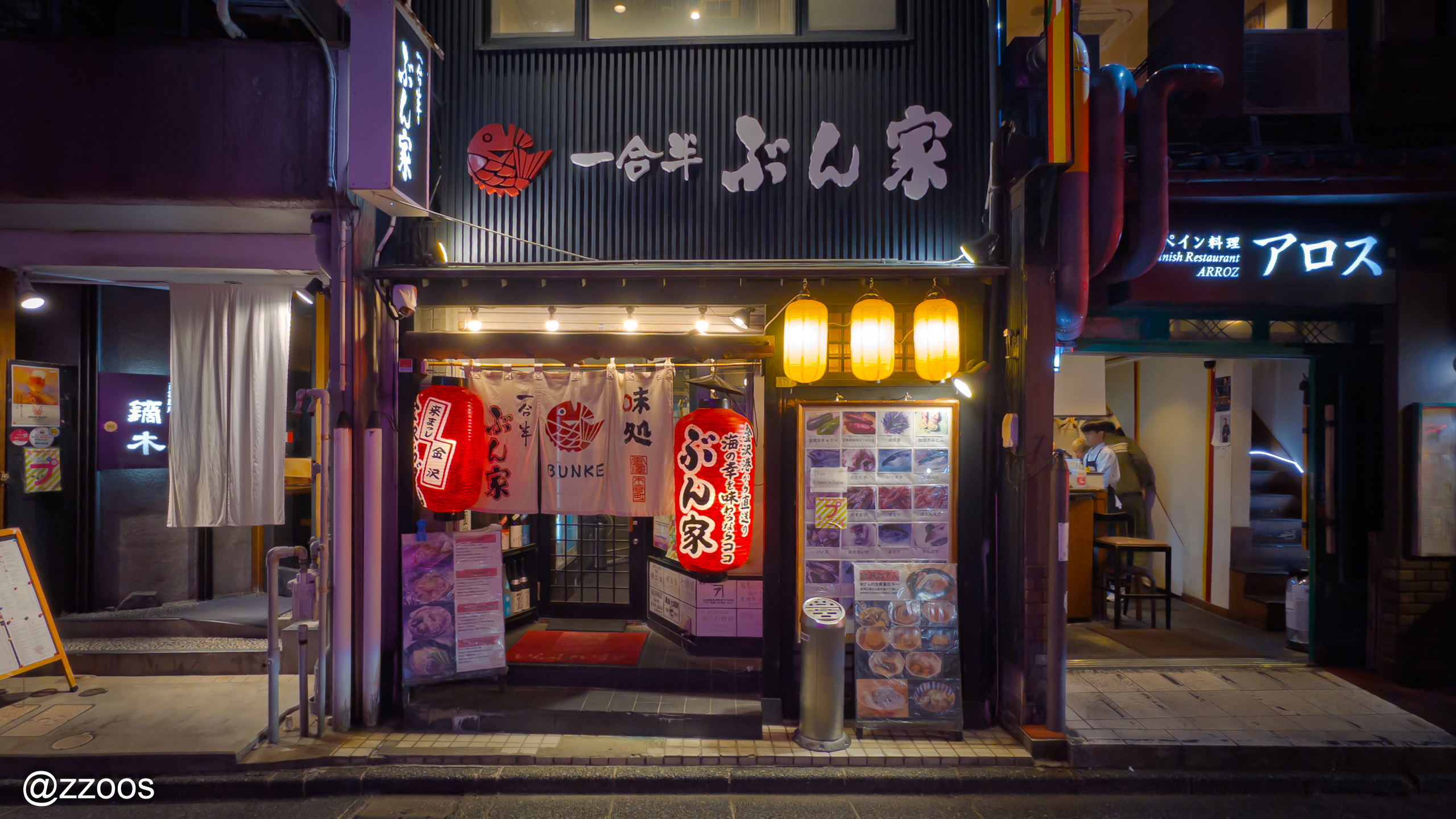
Thankfully, the place was quiet. A lot of restaurants were fully booked, so having open seats wasn’t exactly a ringing endorsement — but after a string of rejections, I was just grateful for a table.
In Japan, there’s a custom of ordering drinks the moment you sit down. Ordering a beer right away is called toriaezu biiru (とりあえずビール). So I followed suit and ordered something the second I sat down.
Not beer, though. I went with Kurokiri-shima (黒霧島) shochu with soda. Lately I’ve been reaching for shochu highballs more than beer.
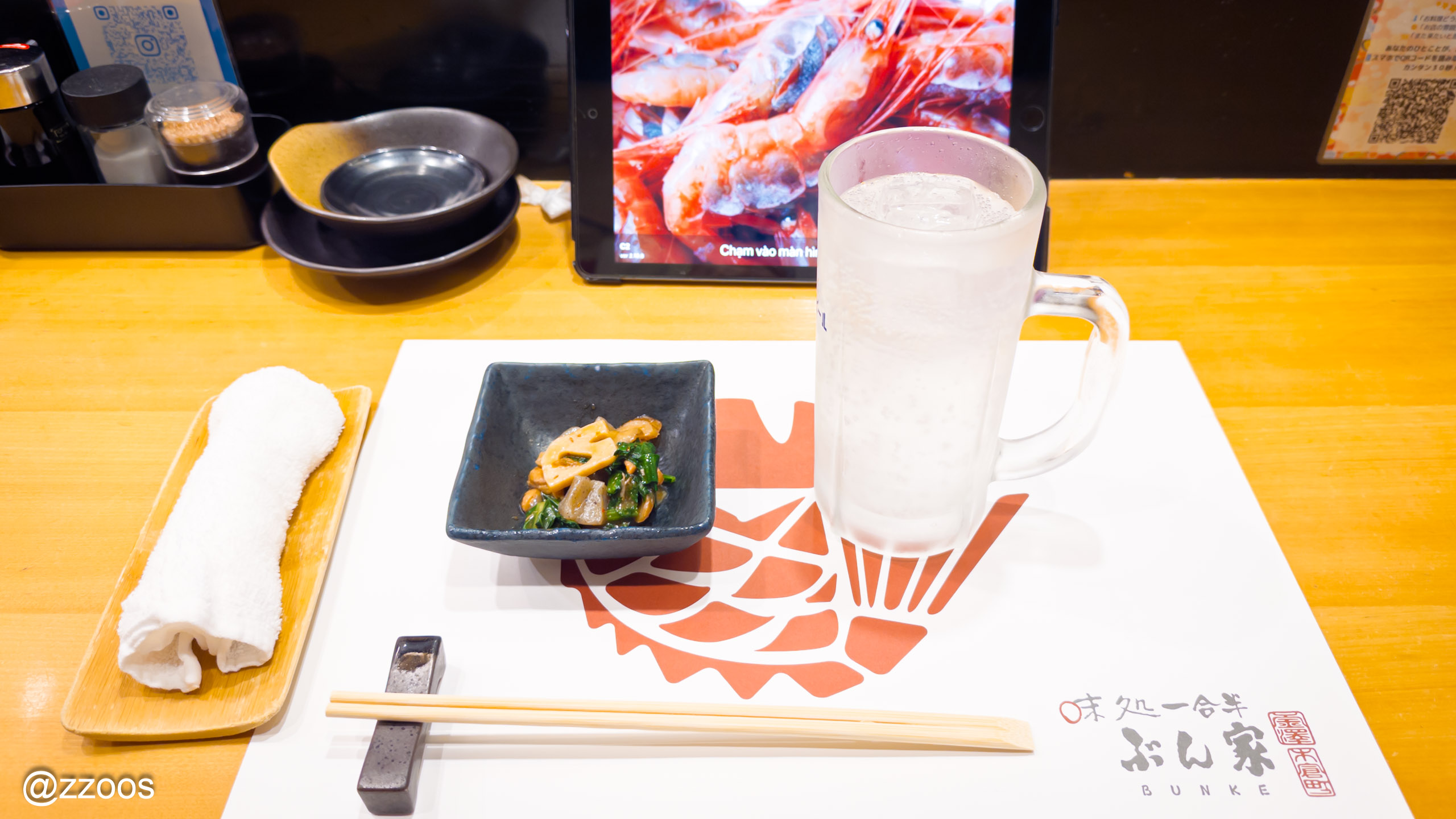
There was a tablet at every seat for ordering. It supports English and Korean too, and there are photos — easy enough to figure out what everything is.
I came for sashimi, so I was looking at the single-serving assorted options. A few different sets to choose from. I went with the five-piece assorted sashimi that included nodoguro.
Nodoguro — blackthroat seaperch — is a white fish, but unusually fatty for one, which makes it expensive and delicious.
This fish is basically the symbol of Kanazawa. Every single restaurant carries it. I heard later that demand is so high here that they actually import nodoguro from Korea.
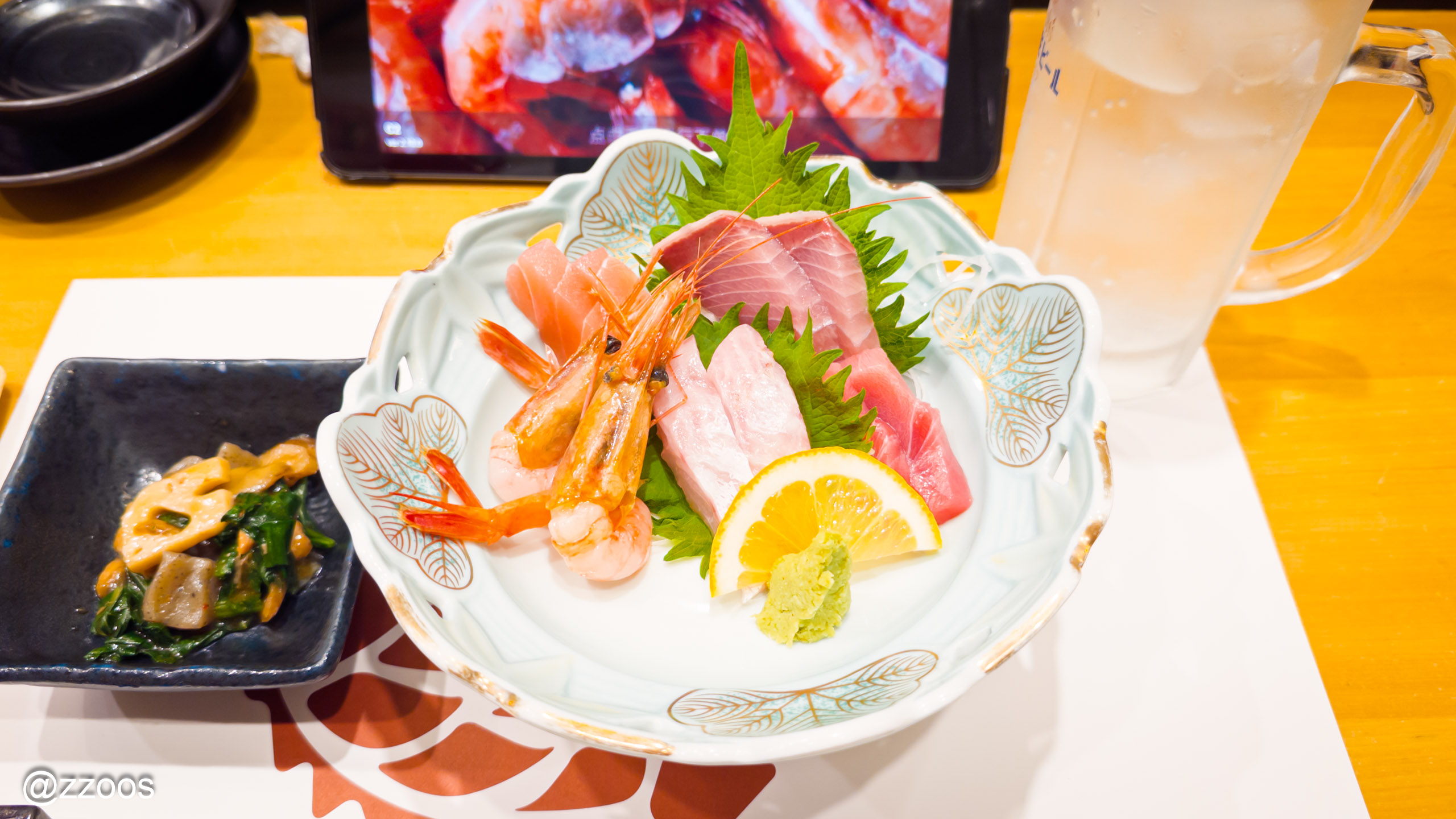
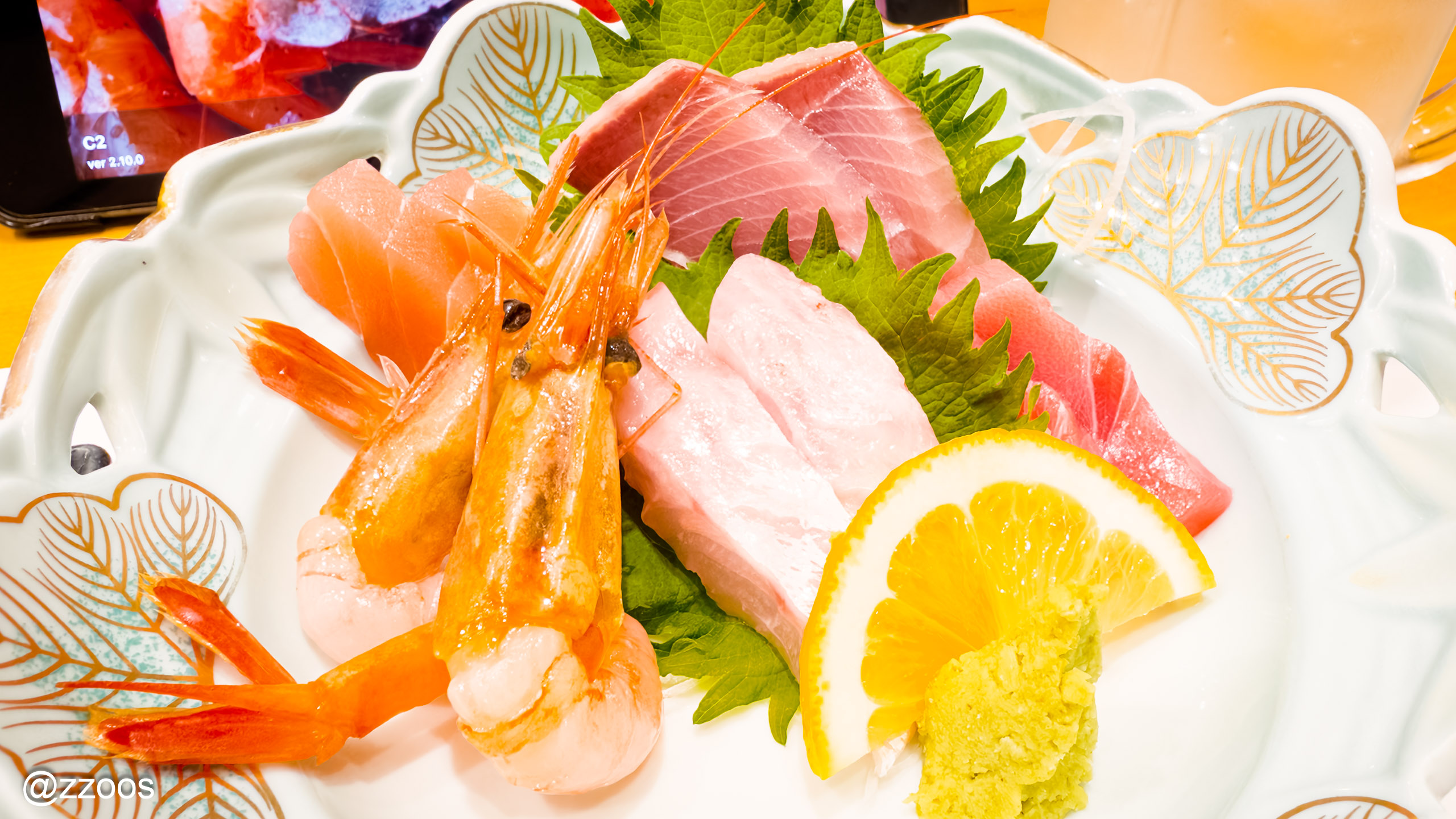
The sashimi arrived. The white one in the center — that’s nodoguro. Along with it, maguro, buri, and amaebi.
Everything was fresh and good, but the nodoguro especially.
Really good.
Spring isn’t actually nodoguro season, technically. Peak flavor comes in late autumn and winter, when the fat is at its richest. But out of season, it tasted like this?
Kanazawa nodoguro really is different.
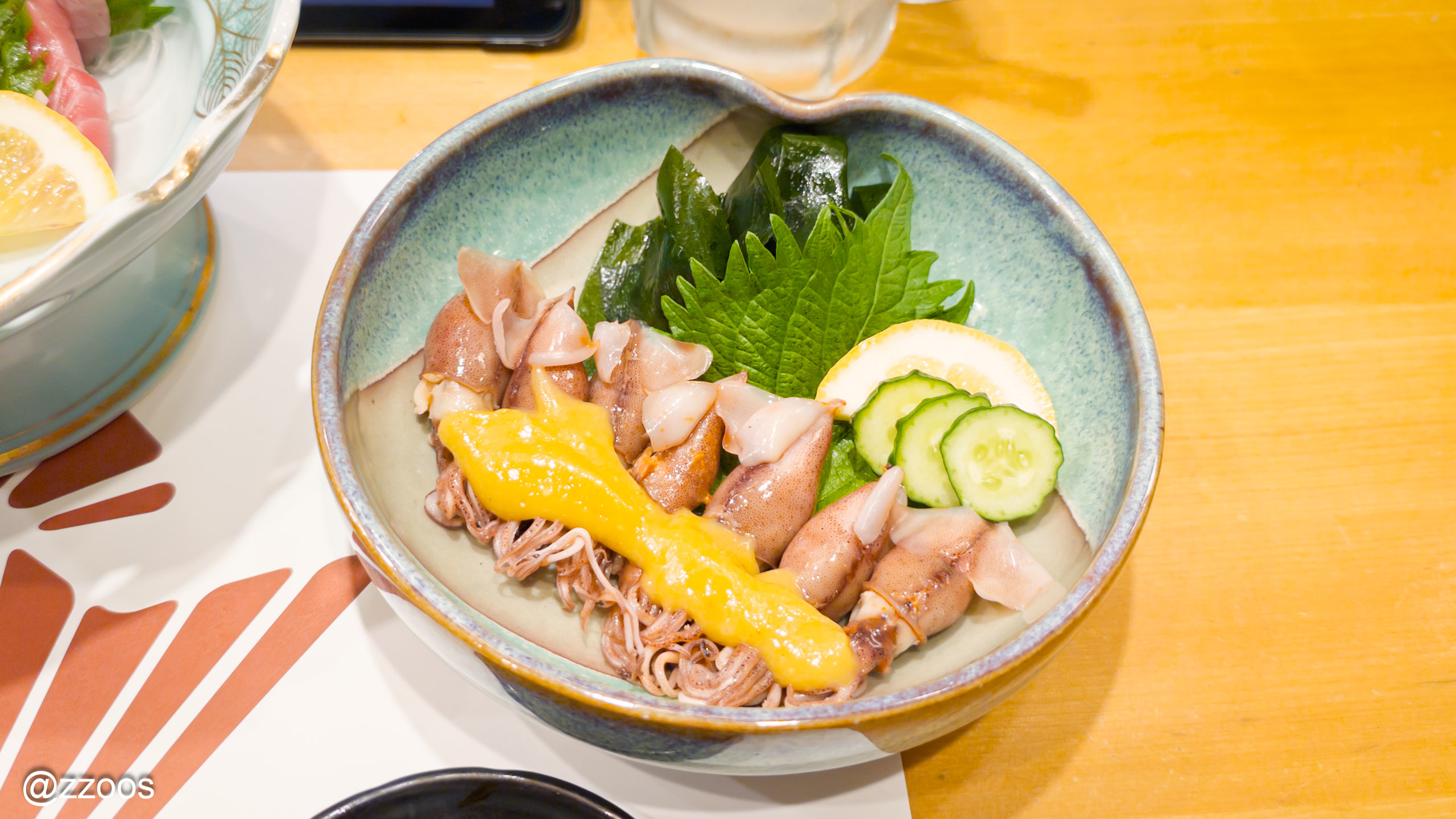
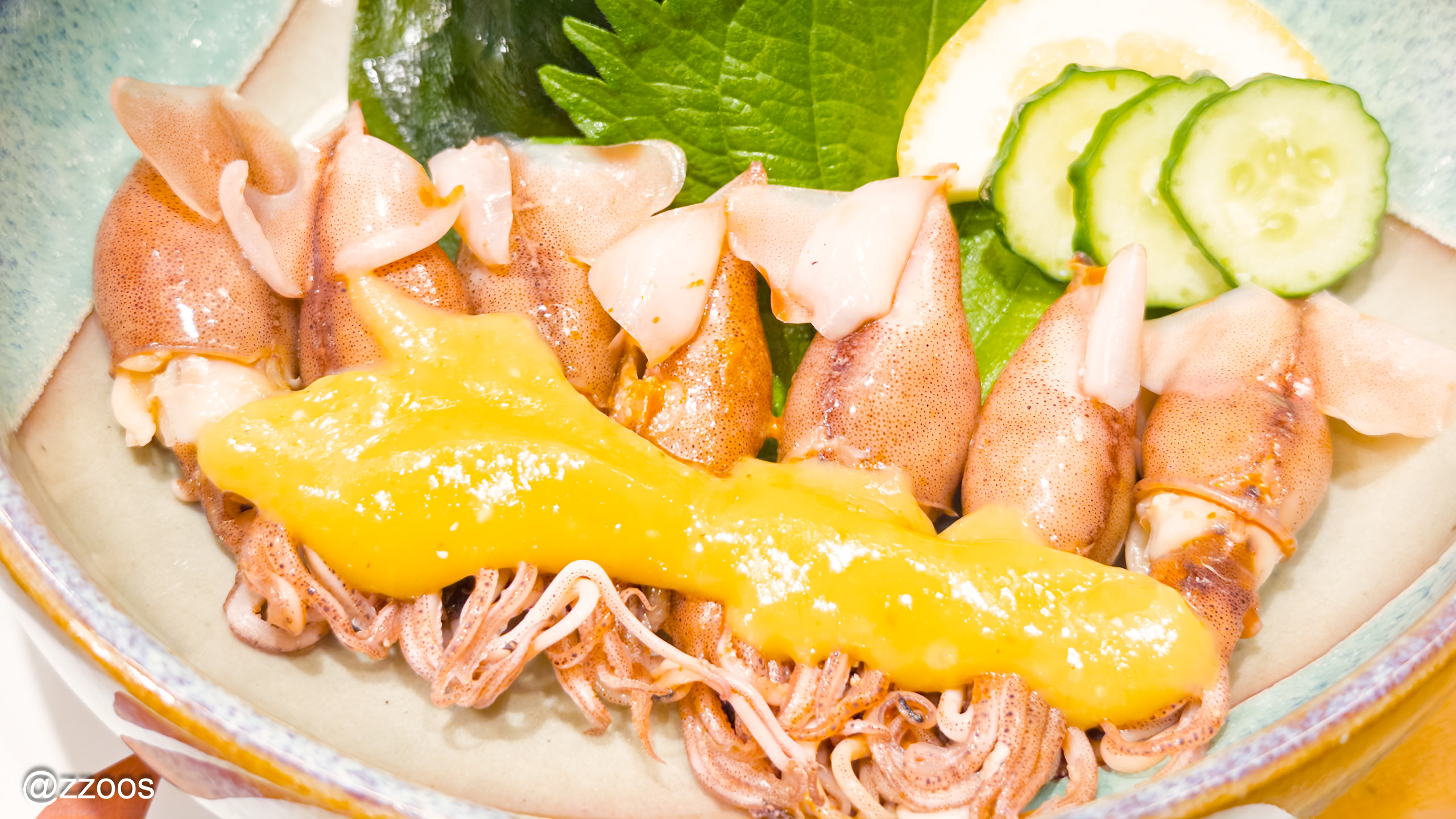
I ordered something else that’s actually in season right now — hotaru ika, firefly squid.
This is peak season for them in Kanazawa. I heard these ones come from Toyama Bay (富山湾). Apparently, at this time of year, they swarm the bay in such numbers you could almost scoop them up by hand.
I skipped sashimi and ordered them sumiso-ae — lightly boiled and dressed in a vinegar-miso sauce. Sweet, tangy, delicious.
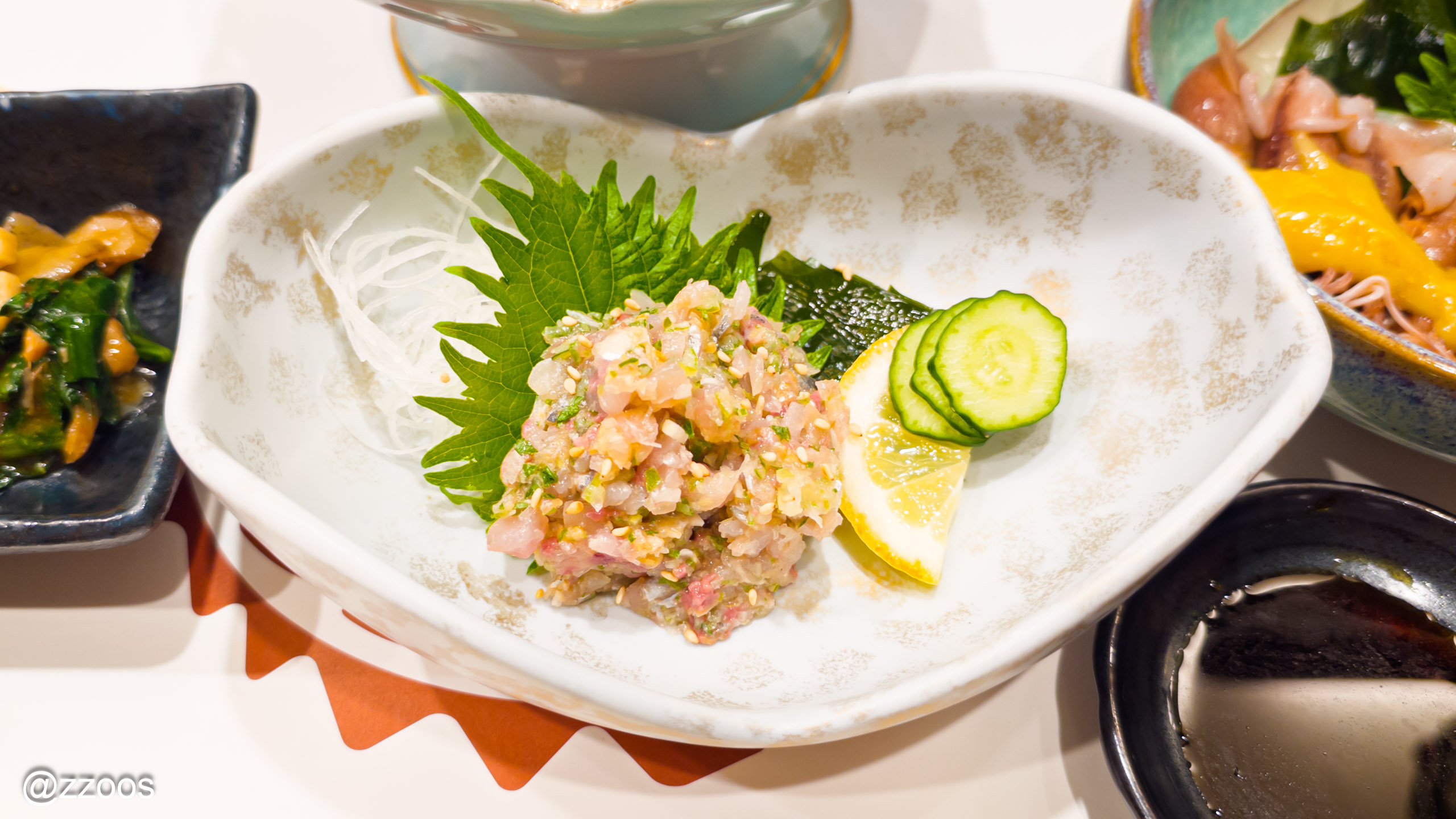
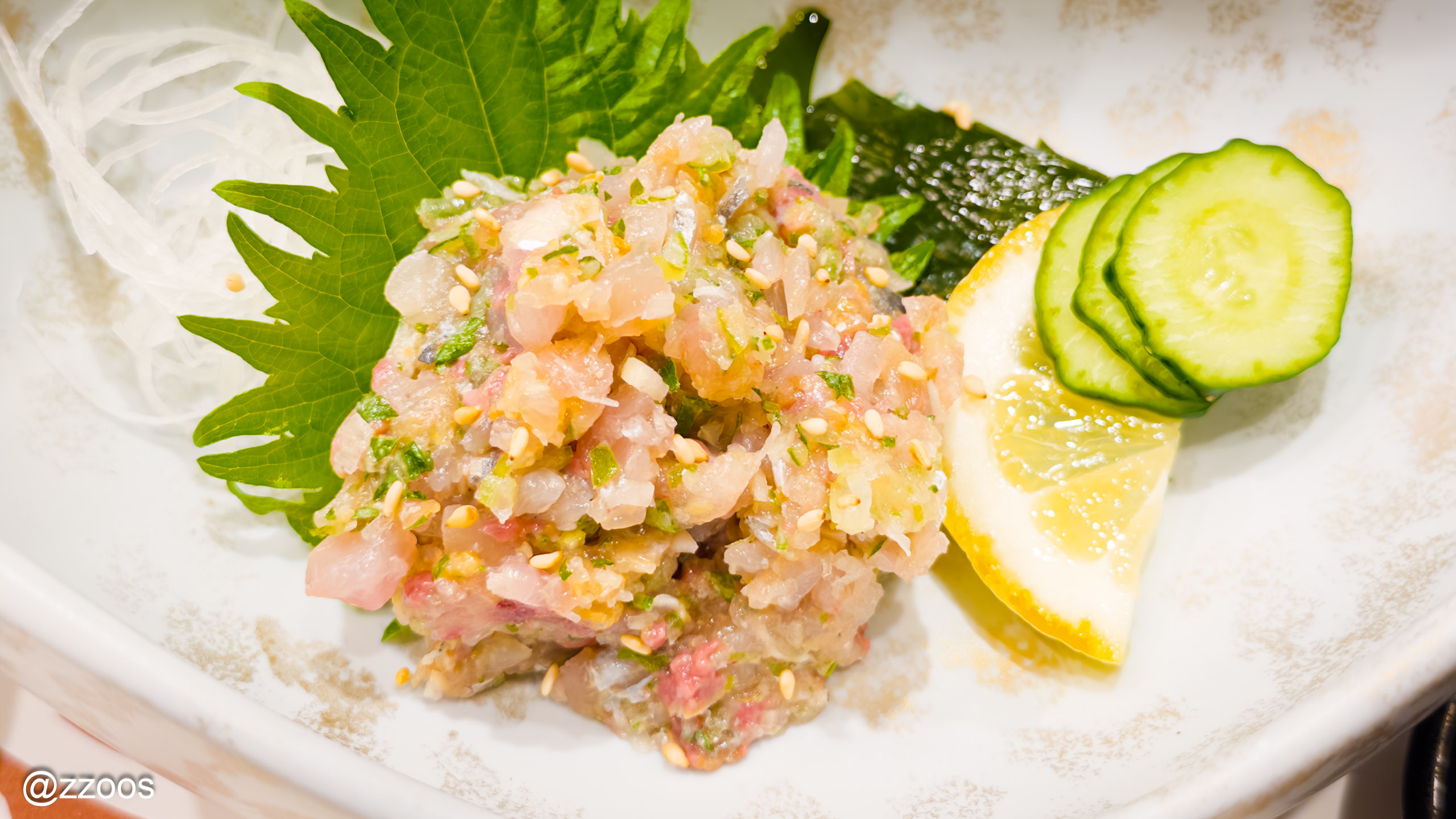
Since this was my first drink at a Japanese izakaya in a while, I also ordered horse mackerel — aji. A great fish that’s oddly hard to find back in Korea.
I went with aji namero — minced horse mackerel mixed with miso, scallion, and ginger. Perfect drinking food when you’re already full.
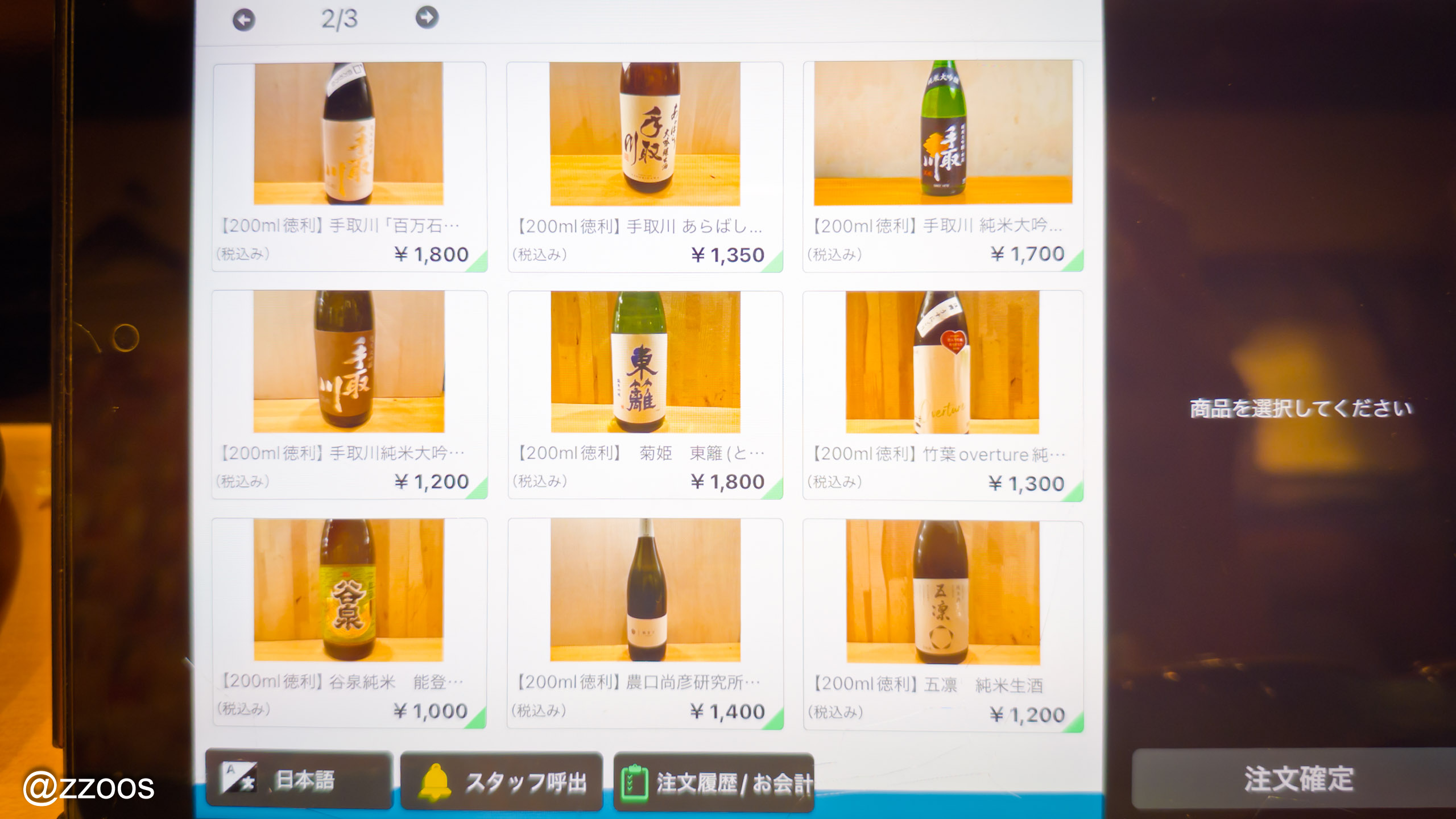
Looking at the nihonshu menu, there was a lot to choose from. With some help from ChatGPT, I landed on Tedorigawa Junmai Daiginjo Muroka Genshu Ishikawamon (手取川 純米大吟醸 無濾過生原酒 石川門). Quite a name.
Tedorigawa is the brewery. Junmai daiginjo is the grade. Muroka means unfiltered. Genshu means undiluted — straight from the barrel. Ishikawamon is the rice variety, a strain developed specifically for brewing in Ishikawa Prefecture.
It was a pricey pour. And unfortunately, it wasn’t quite my thing. I think the grade was the issue — junmai daiginjo means the rice is polished down significantly, which strips away some of the character. Ironically, the more you refine it, the more the rice flavor stands out in a way that doesn’t suit me.
The other Tedorigawa sakes I had later in the trip were all excellent. This one, the expensive one, just didn’t land.
Anyway — that was dinner, day one sorted.
Honestly, it wasn’t a standout restaurant. But it was solid. The tablet ordering was convenient, the food came out fast, and a Tabelog score of 3.45 says it’s a decent place.
It was still day one. I hadn’t gotten a feel for Kanazawa yet, just starting to take in the atmosphere. Wandering from place to place without a reservation, eating average-but-fine sashimi — the rest of the trip could only get better from here.
That said, the seafood in Kanazawa lives up to its reputation.
And fair warning — I end up eating nodoguro and gasu ebi until I’m sick of them. Ha.