Looking back at my Kanazawa posts, the word that shows up most is “Katamachi(片町).”
There’s a reason for that. A fair one. Every day I’d go somewhere different — a new sightseeing spot. But come evening, come nightfall, I’d end up in Katamachi. So it stands to reason that Katamachi is where I spent the most hours, and where I grew the most attached.
Broadly speaking, it includes Kigura-machi(木倉町), and to be more precise, it’s less Katamachi 1-chome and more the Katamachi 2-chome side.
This post is different from the one where I showed you the main boulevard — this one is about the back alleys of Katamachi.
There won’t be much explanation. But there will be a lot of photos.
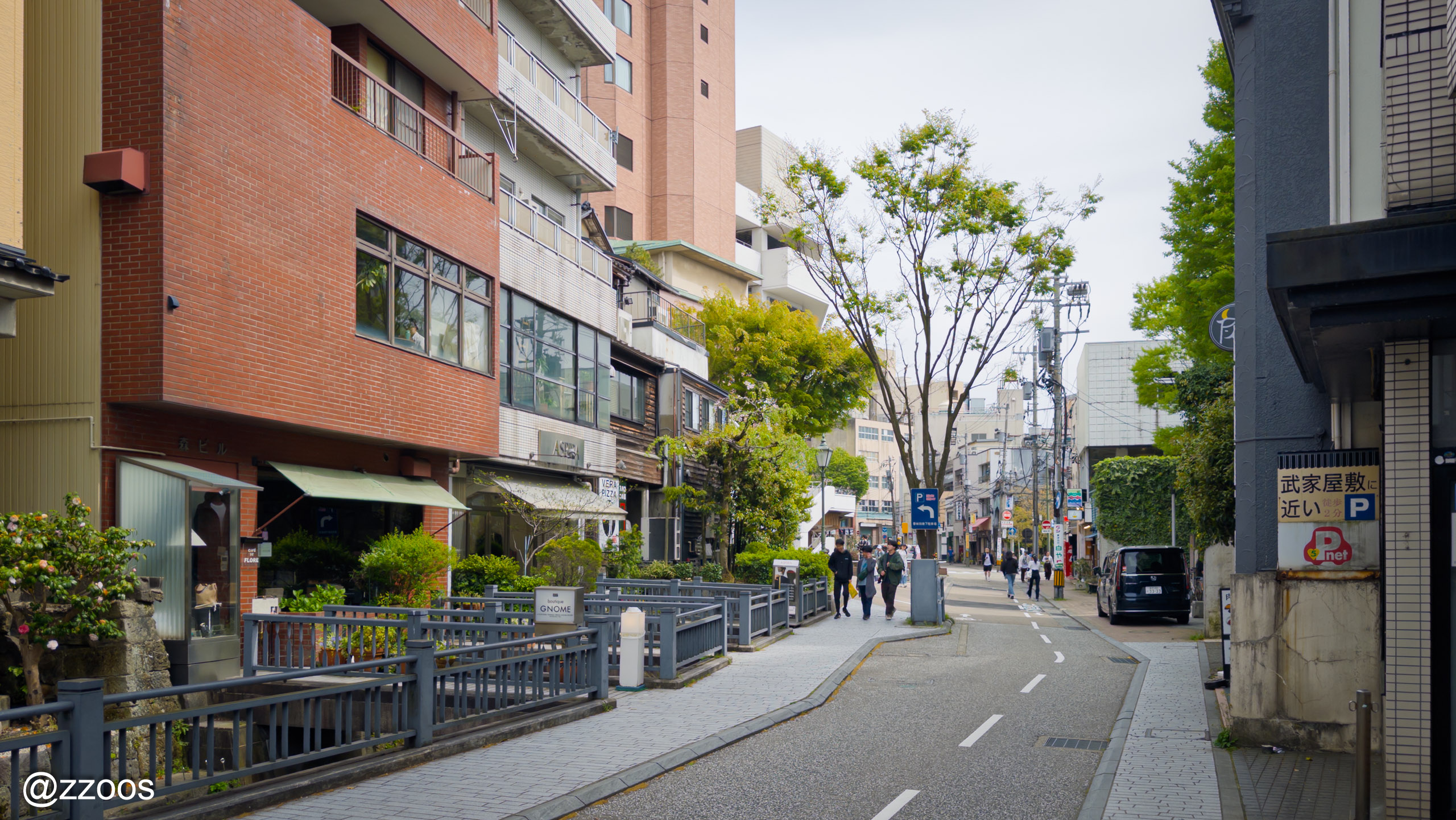
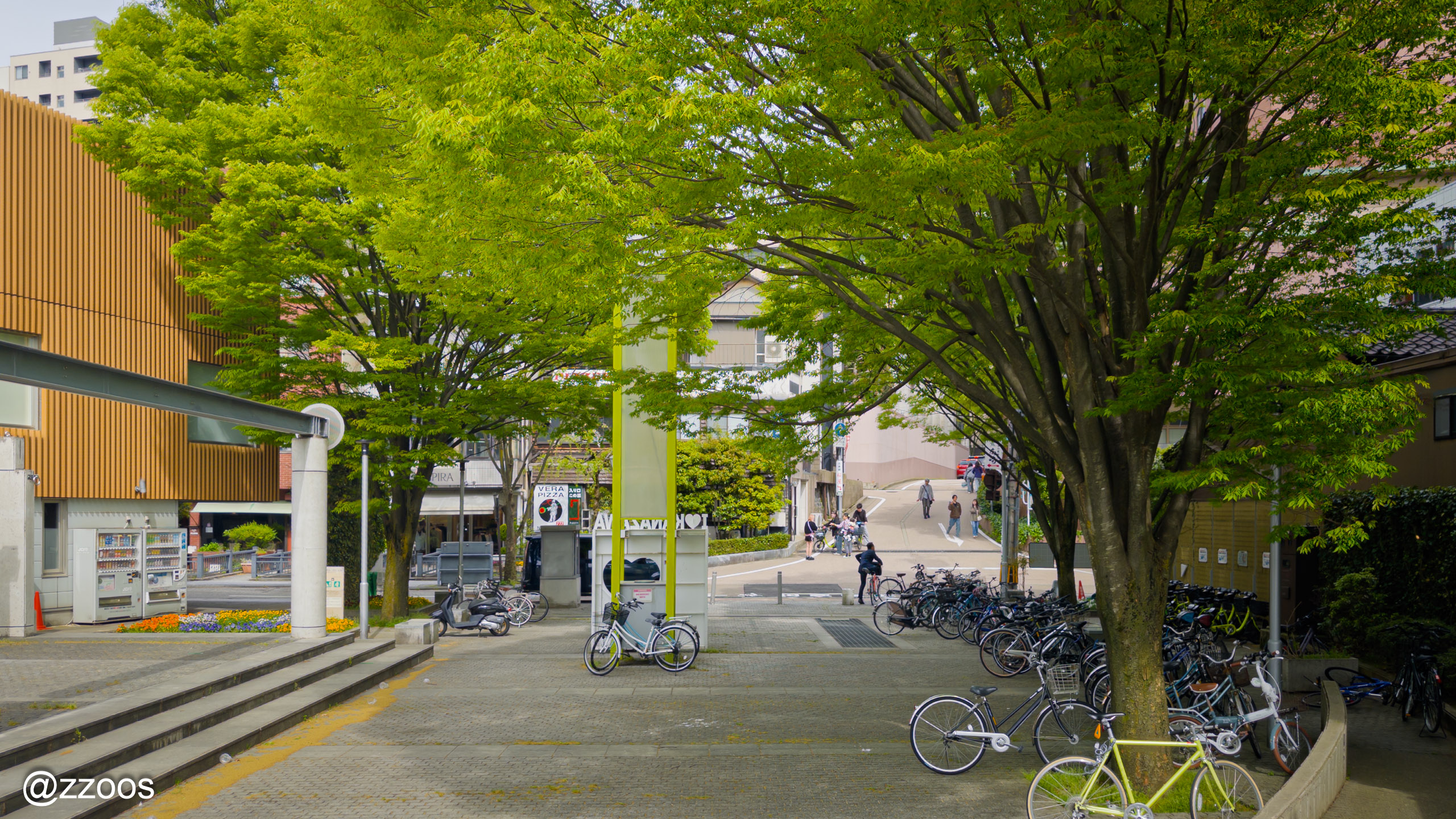
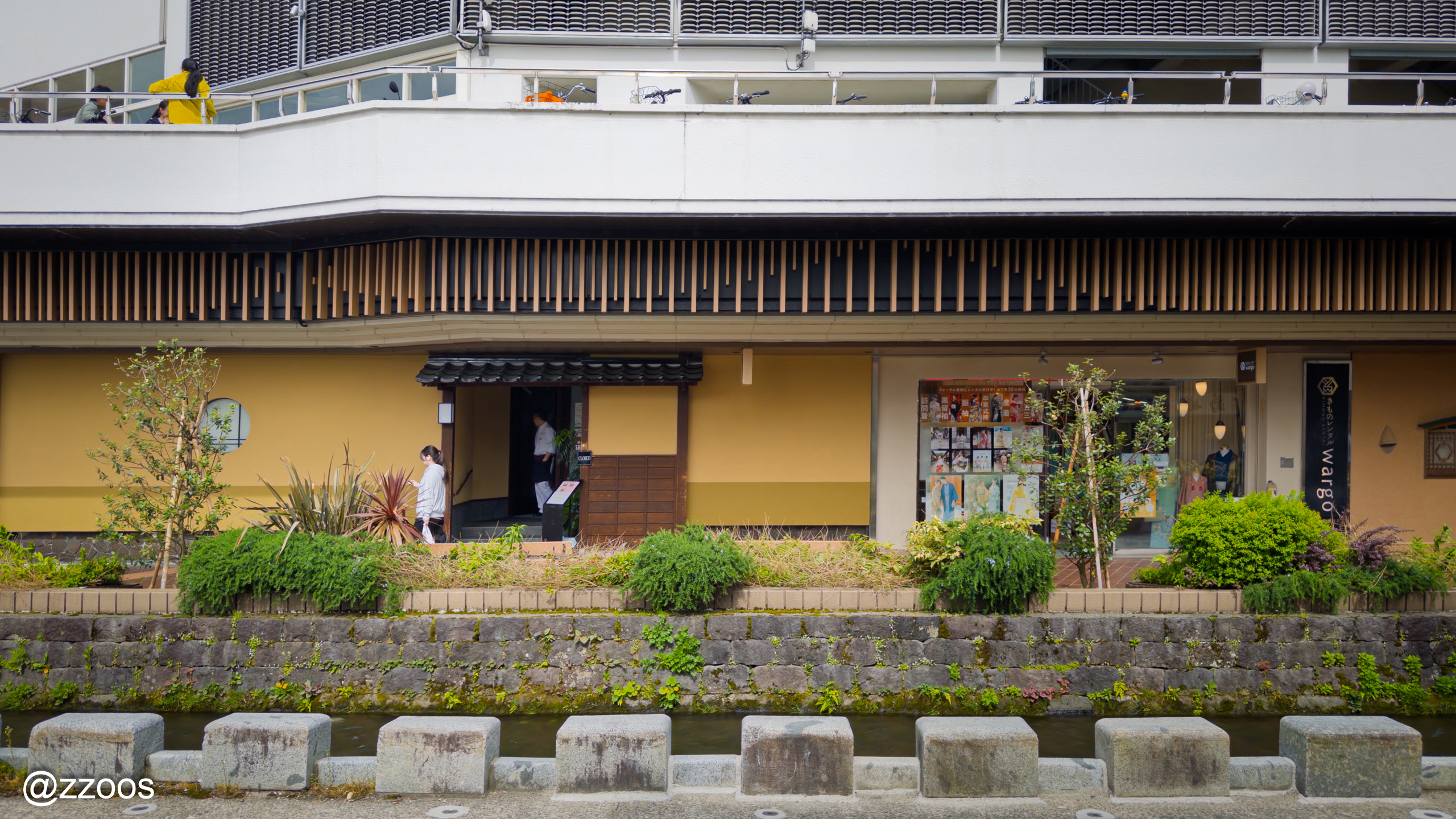
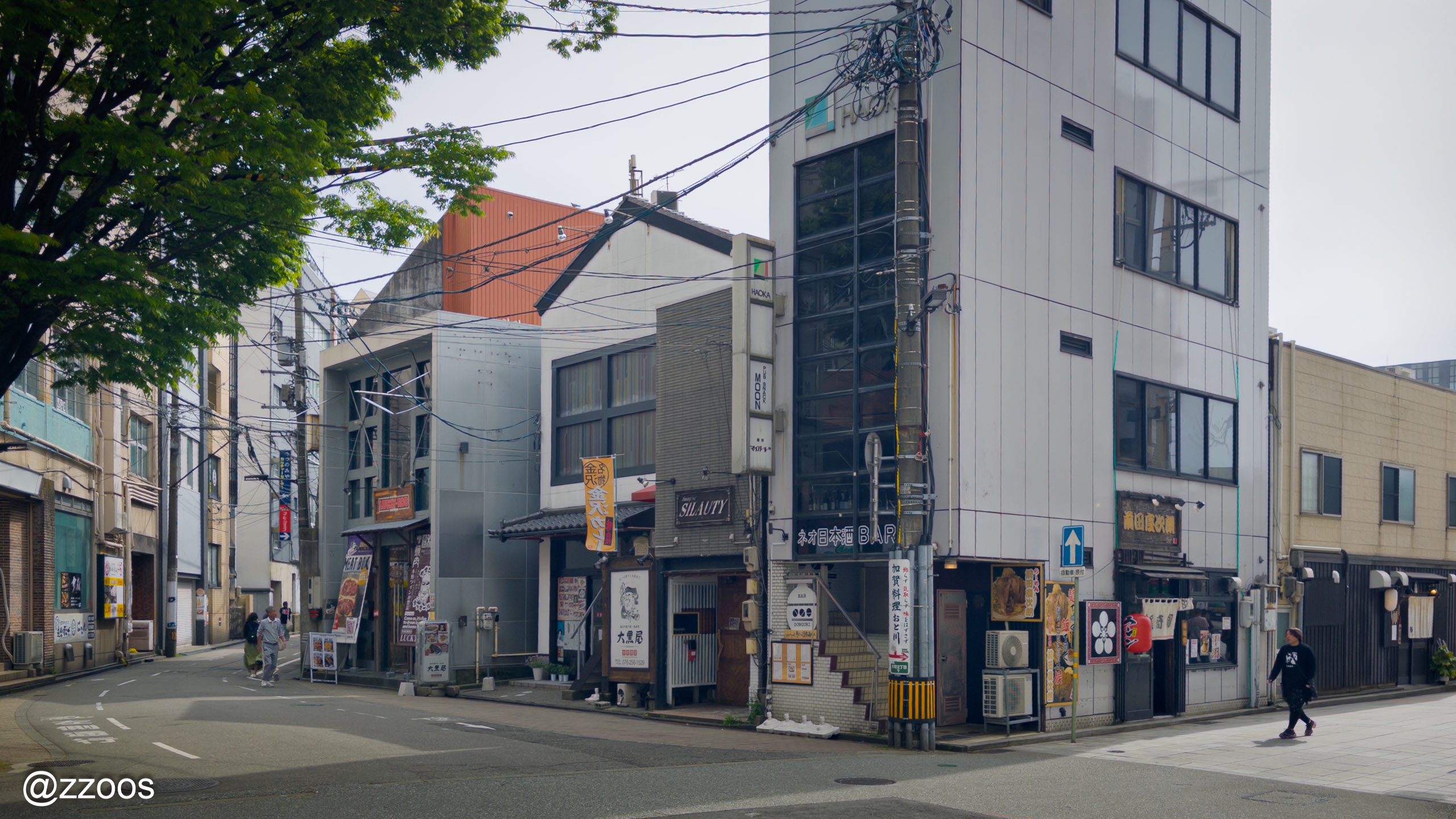
Calling it Katamachi might be a stretch. It’s more of a boundary zone between Katamachi and Korinbo(香林坊).
Korinbo is the commercial district just north of Katamachi. If Katamachi is the nightlife area, Korinbo has more of a business district feel. Come rush hour, the buses empty out at the Korinbo stop — suits filing out in a stream.
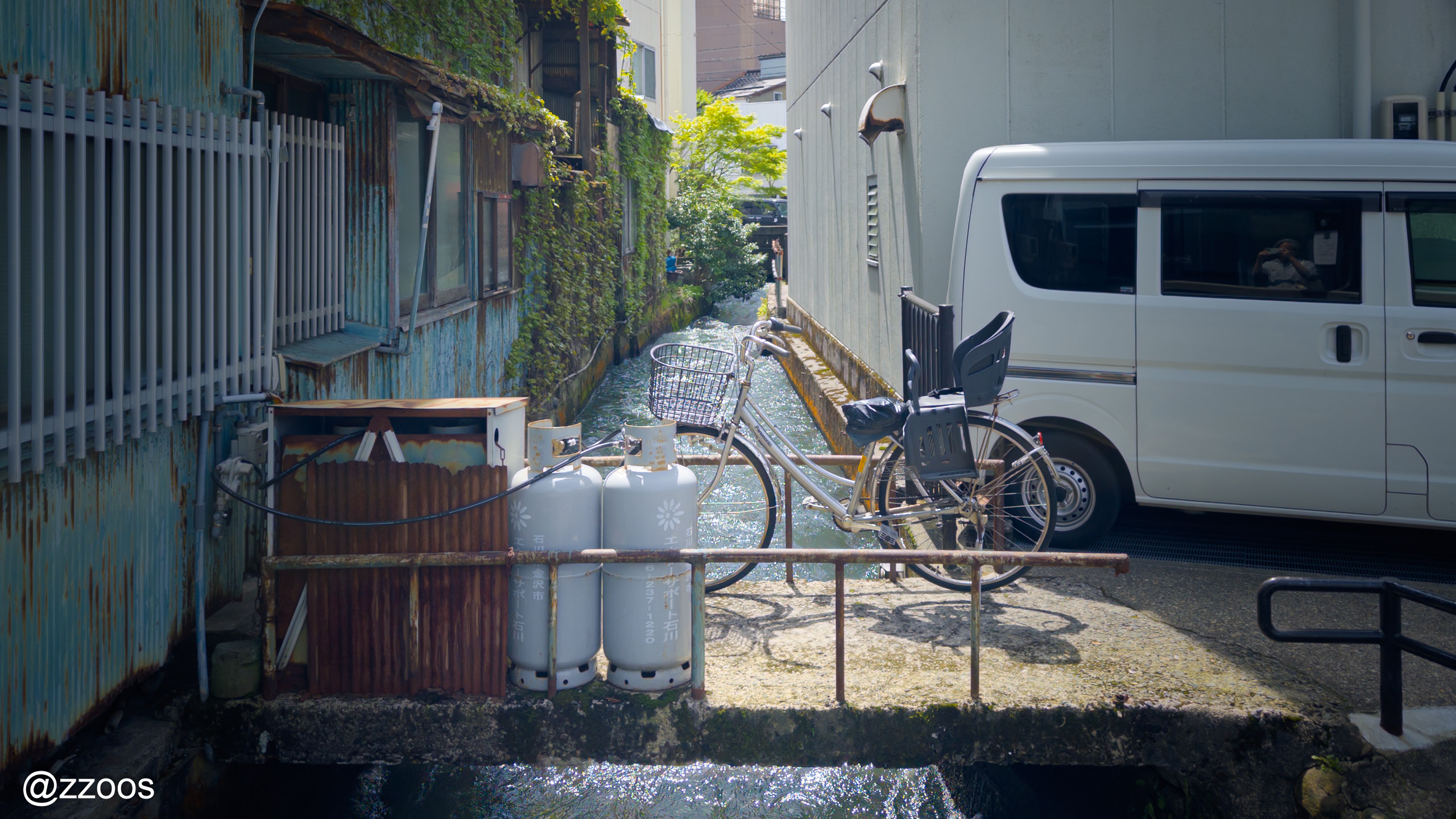
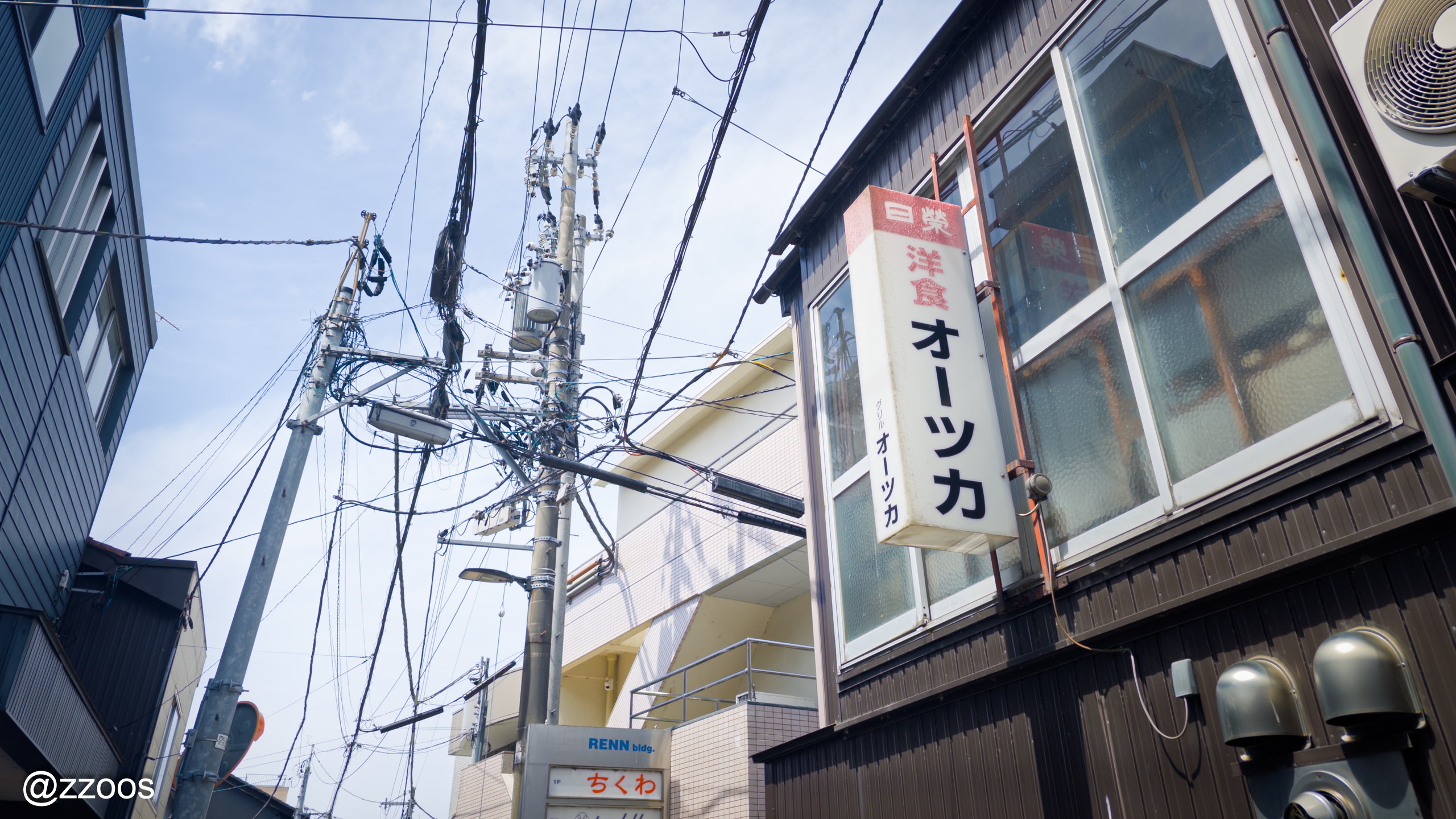
Kanazawa has canals running through it everywhere, and two of them flow through Katamachi.
One is the Kuratsuki Canal(鞍月用水), which runs along the border with Korinbo. The other is the Onosho Canal(大野庄用水), which passes through Nagamachi(長町) — once home to samurai residences — and flows all the way to where the Saigawa River(犀川) meets the sea.
The Onosho Canal is particularly impressive: ten kilometers long, and reportedly the oldest canal in Kanazawa.
A canal, by the way, is an artificially constructed waterway.
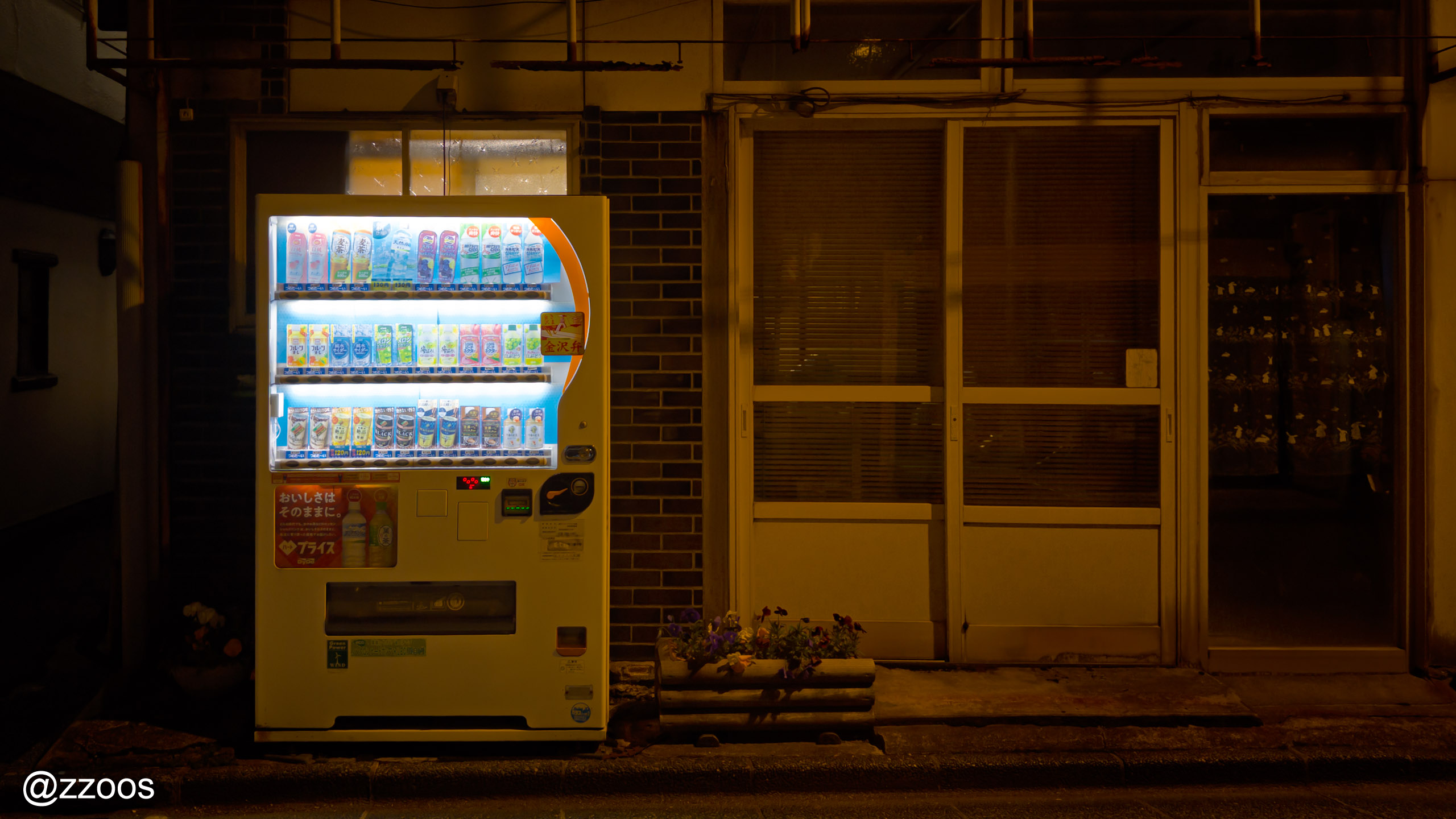
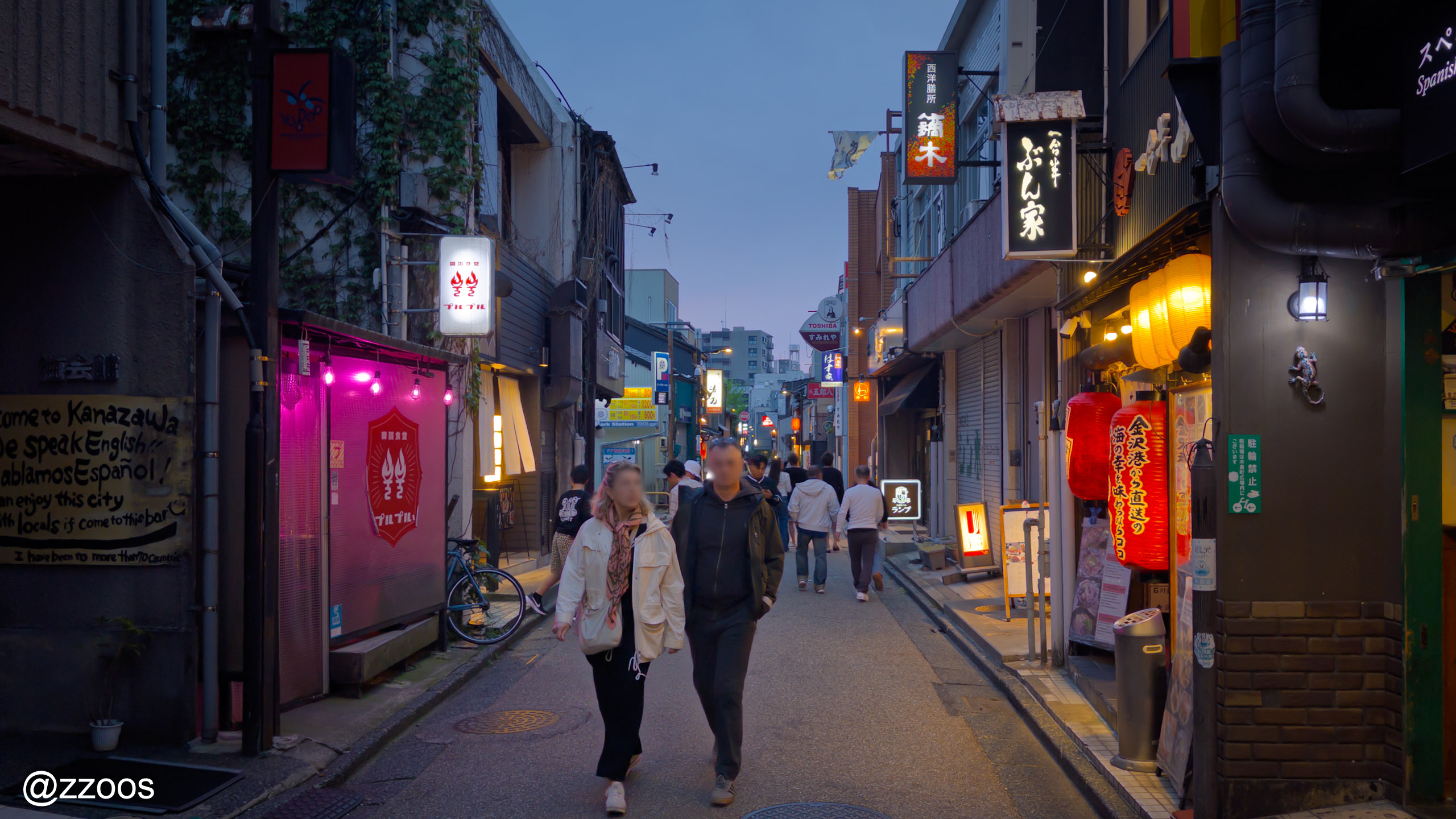
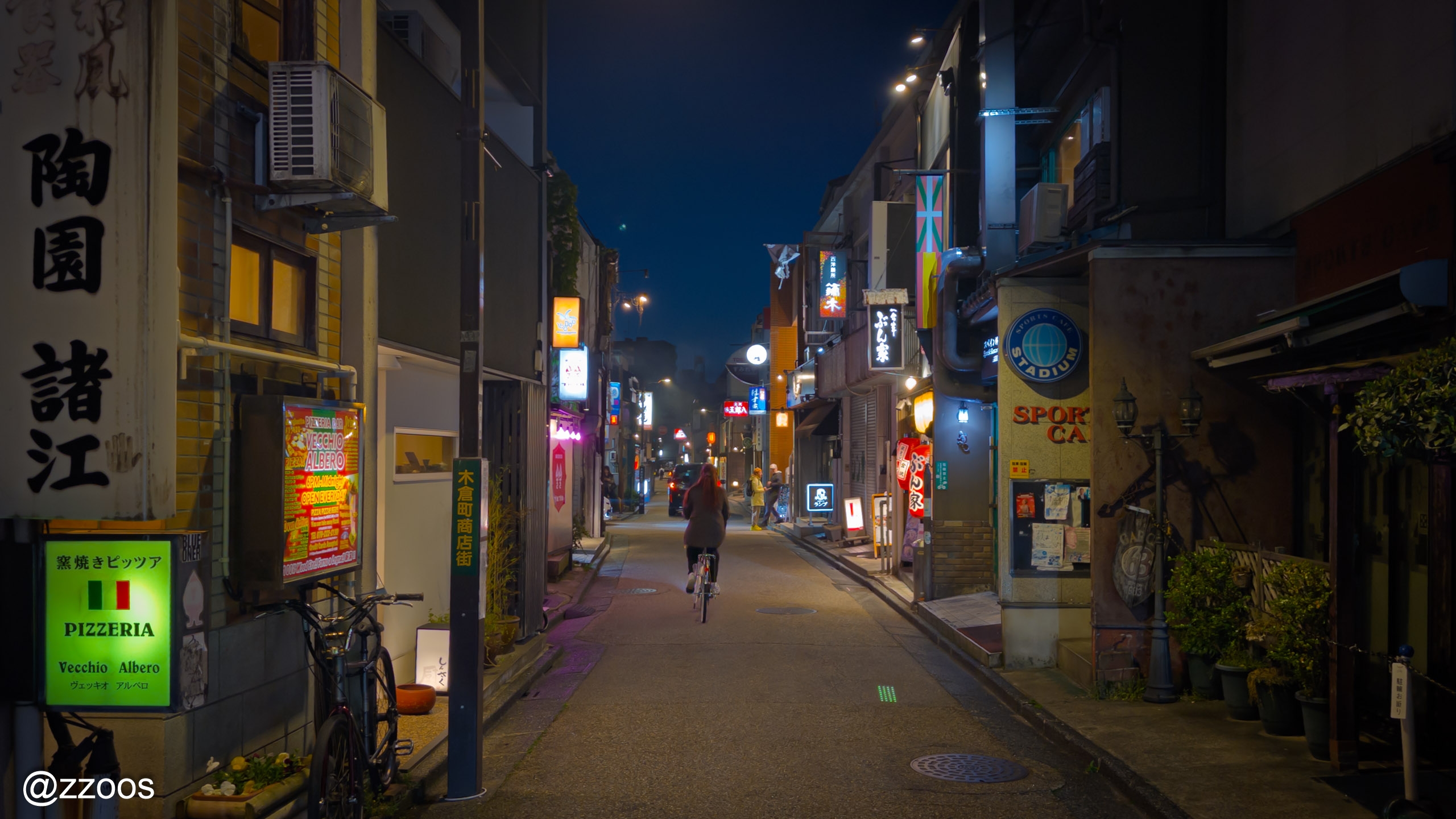
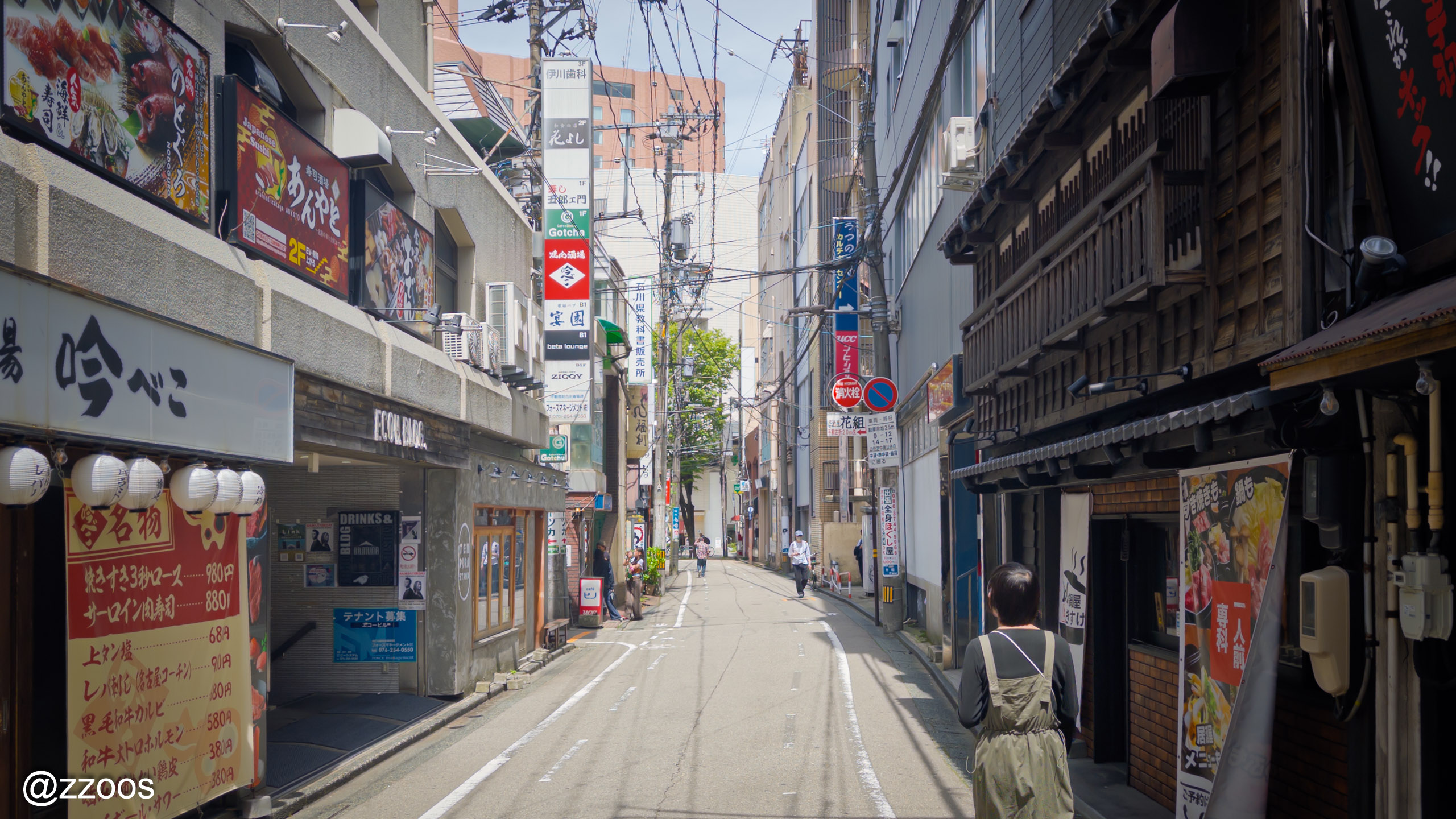
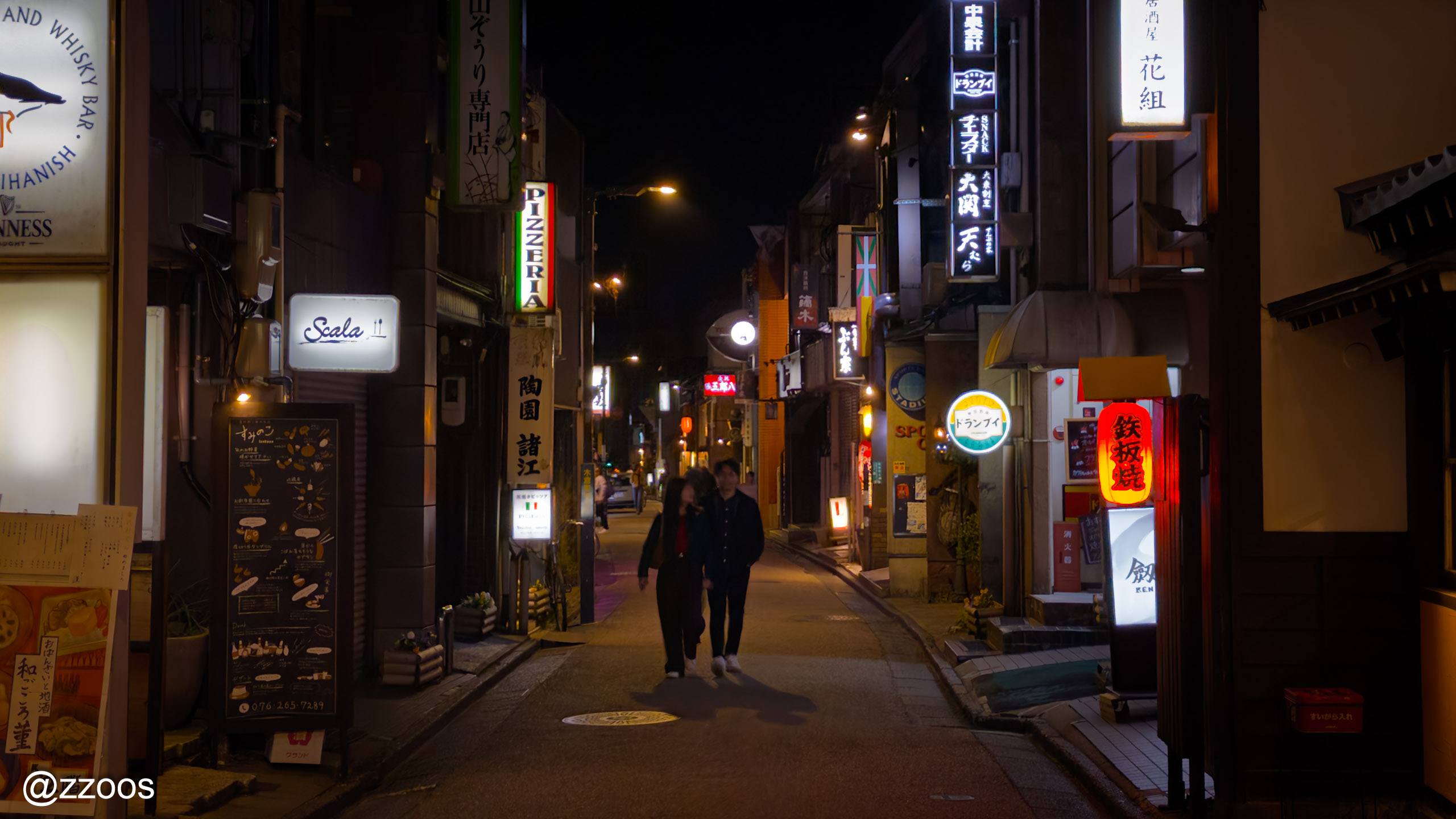
The name Kigura(木倉) comes from the timber warehouses the Kaga Domain kept here.
Looking at a map, this area falls within what should be Katamachi 2-chome — yet Kigura-machi has its own distinct administrative name, which struck me as unusual. I looked it up, and it turns out residents campaigned to revive the old neighborhood name.
It’s the stretch of Katamachi with some of the most popular shops.
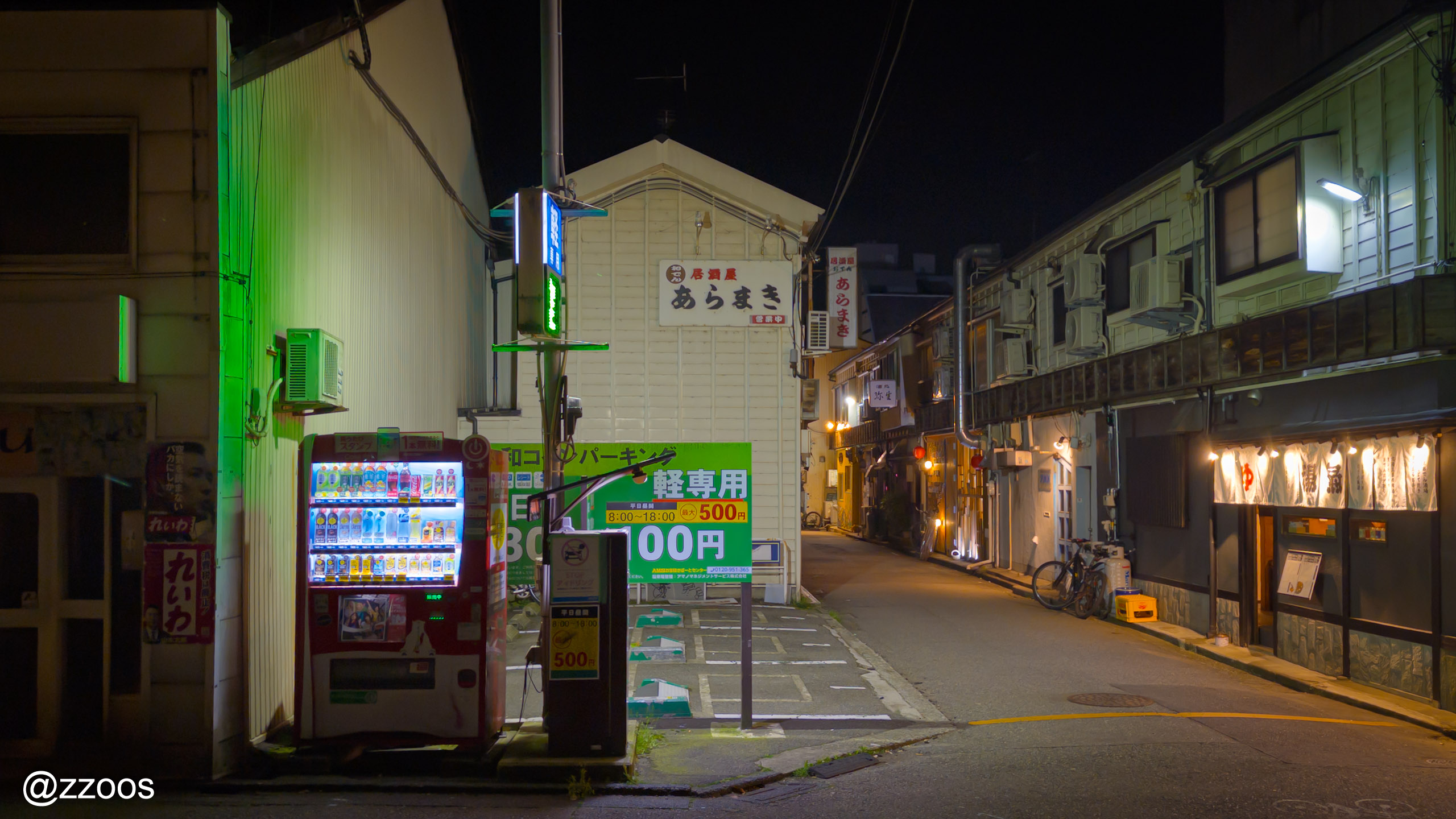
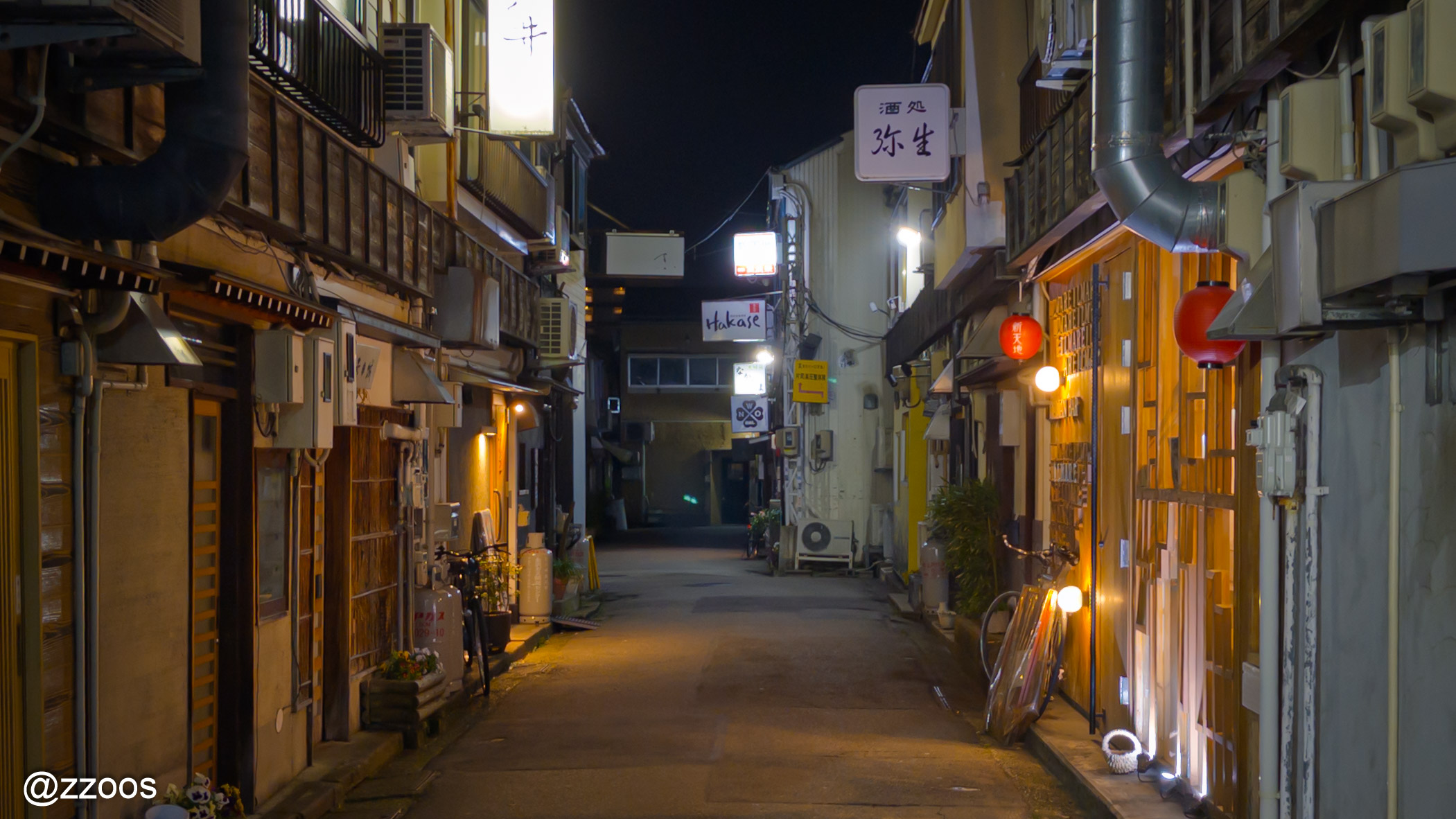
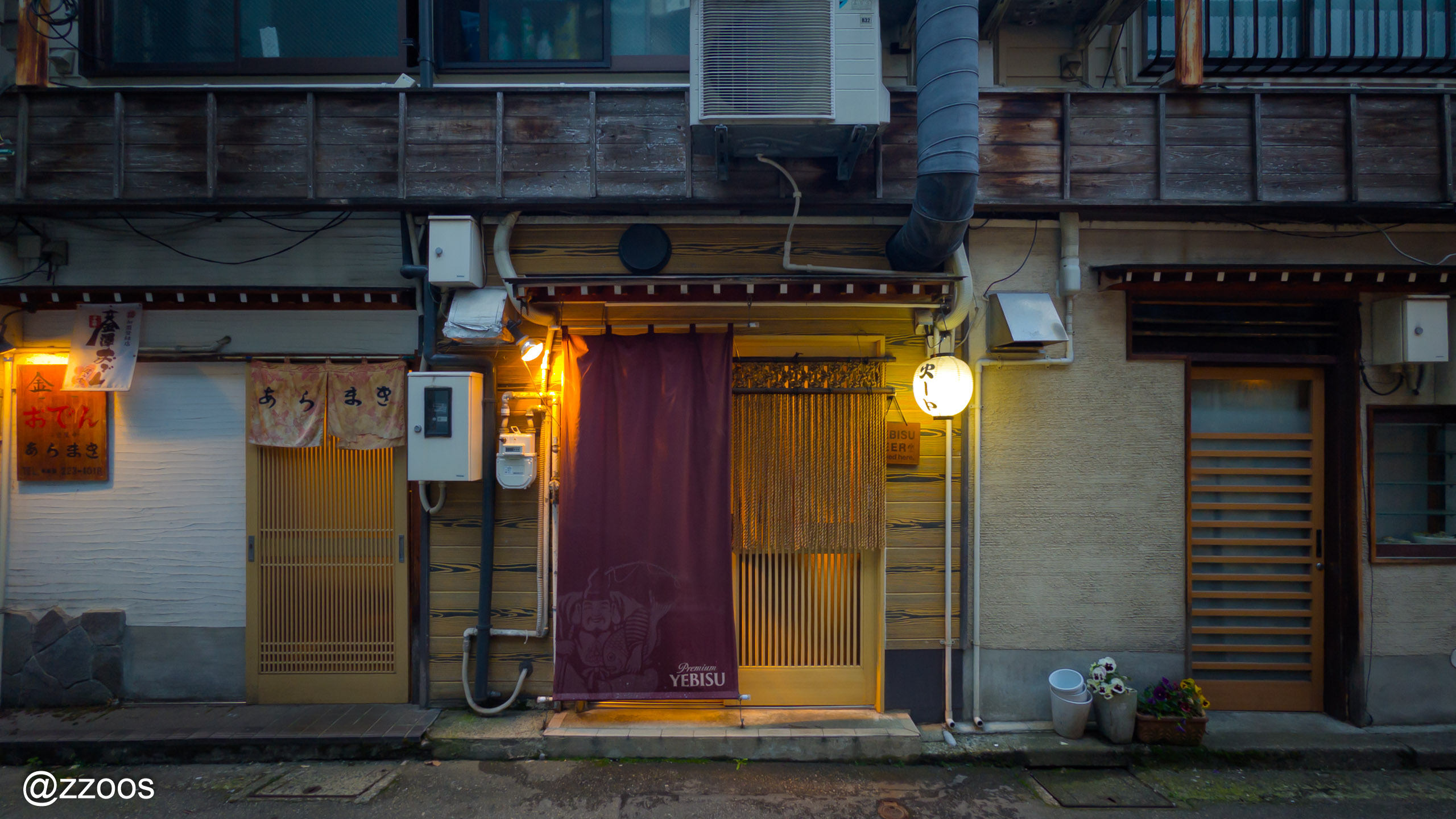
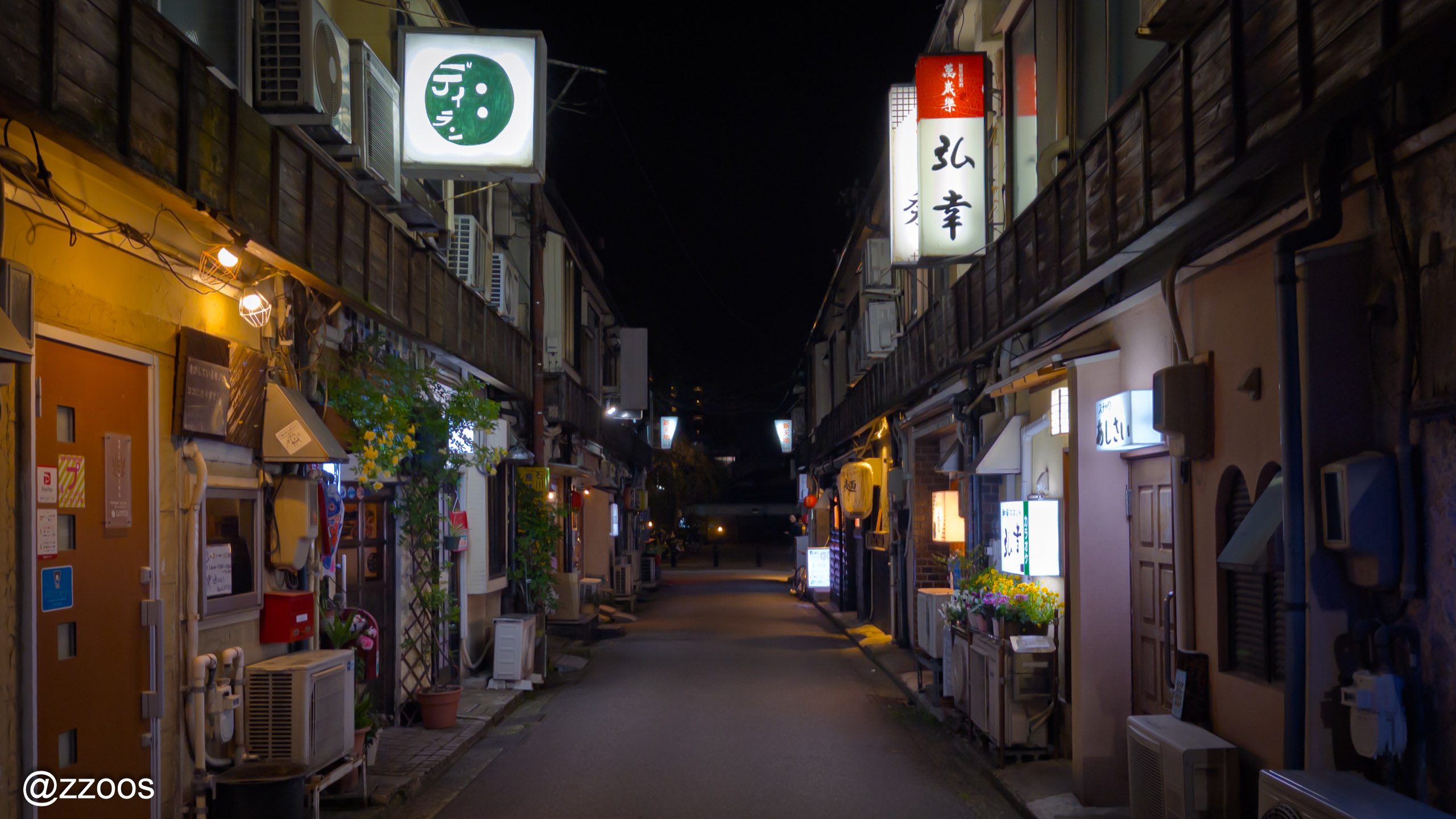
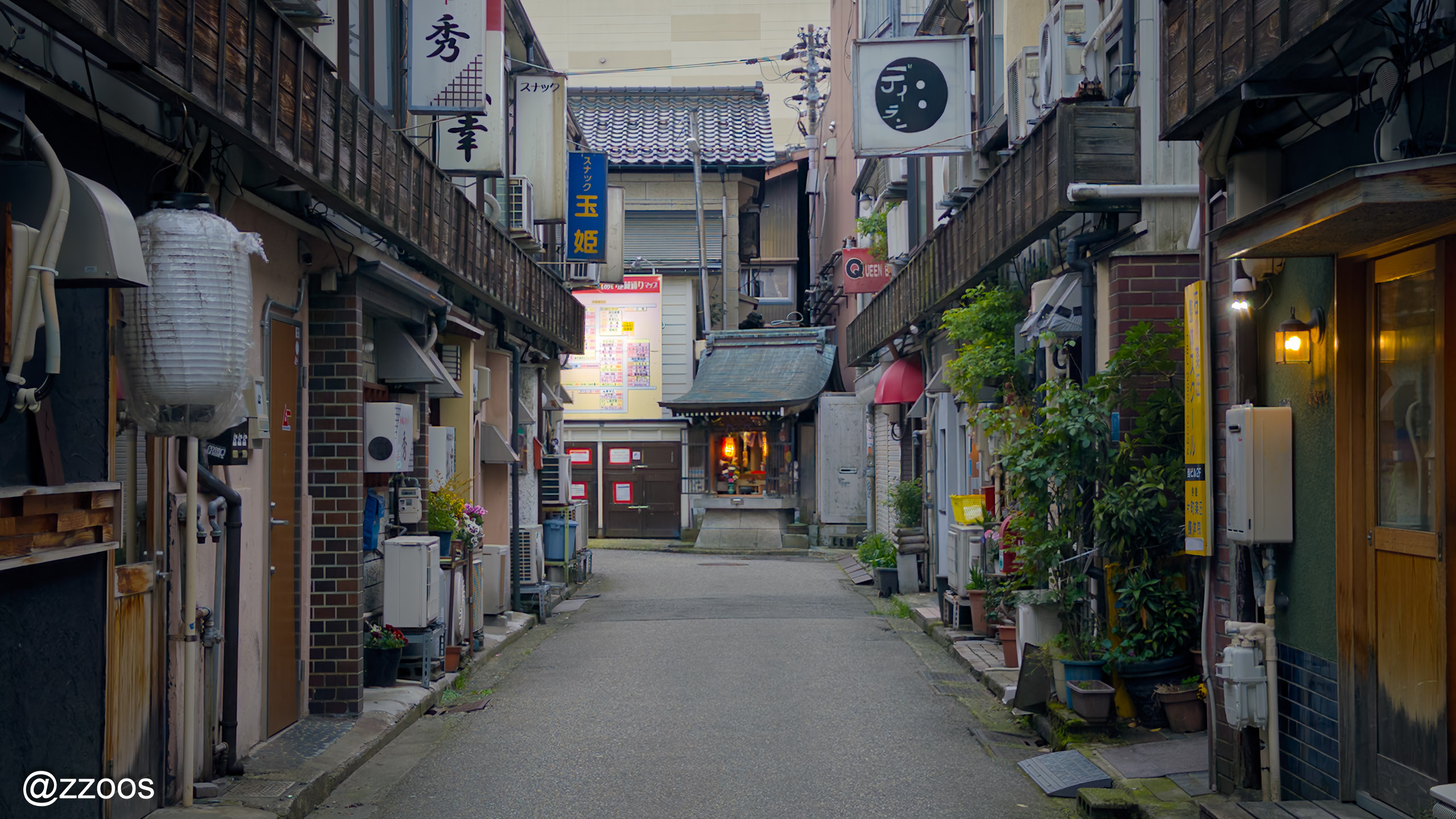
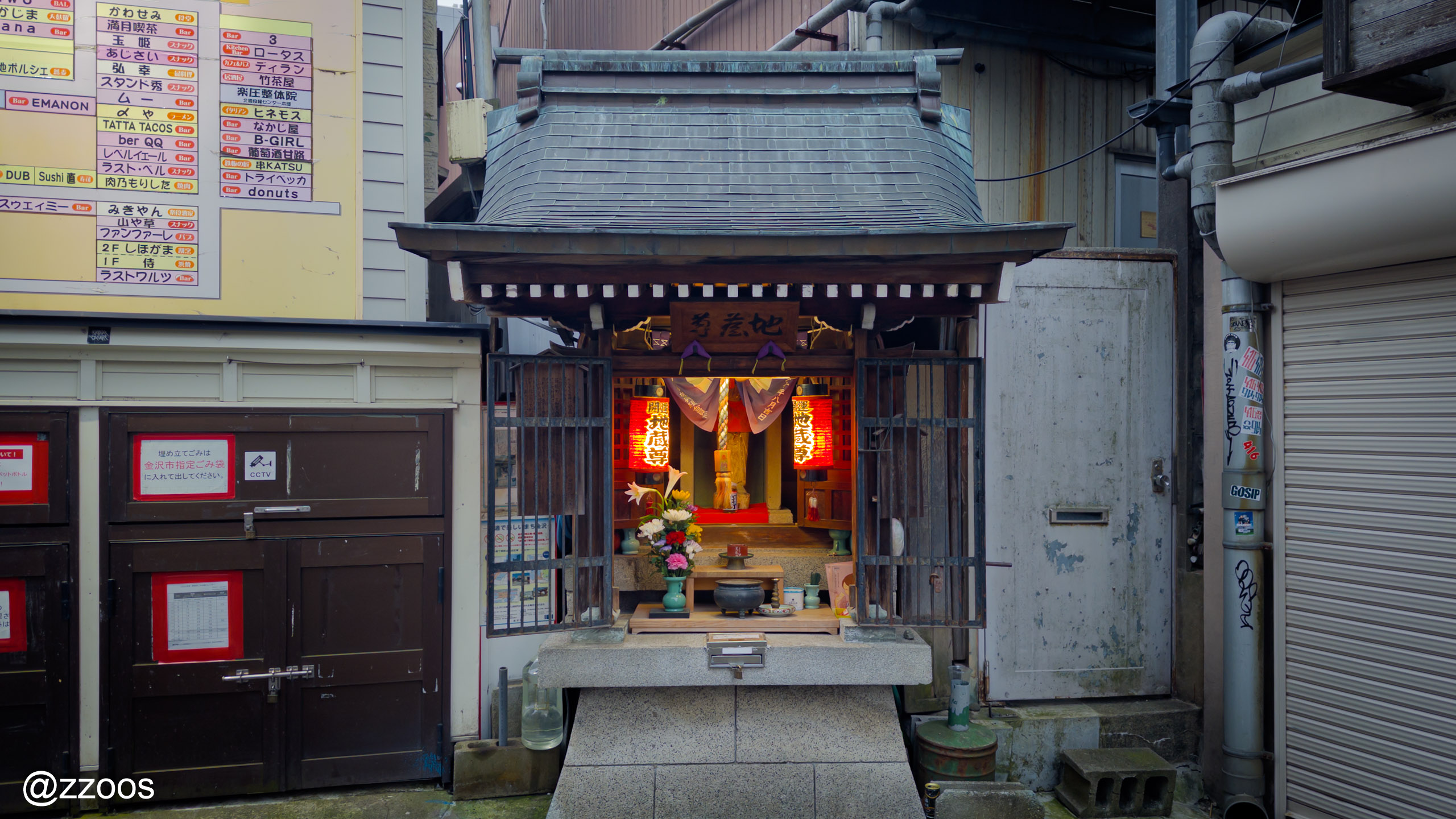
If Katamachi 2-chome has a crown jewel, it might be Shintenchi(新天地) district.
Kigura-machi has plenty of good spots, but so does Shintenchi just below it. Though I should say — I haven’t been to all of them. This is based on the few places I did visit, and many others I observed from outside.
If anything, Shintenchi feels like it has smaller shops than Kigura-machi. Though Kigura-machi does have its own ridiculously tiny stretch — Yakitori Yokocho(やきとり横丁), a whole alley of impossibly small places.
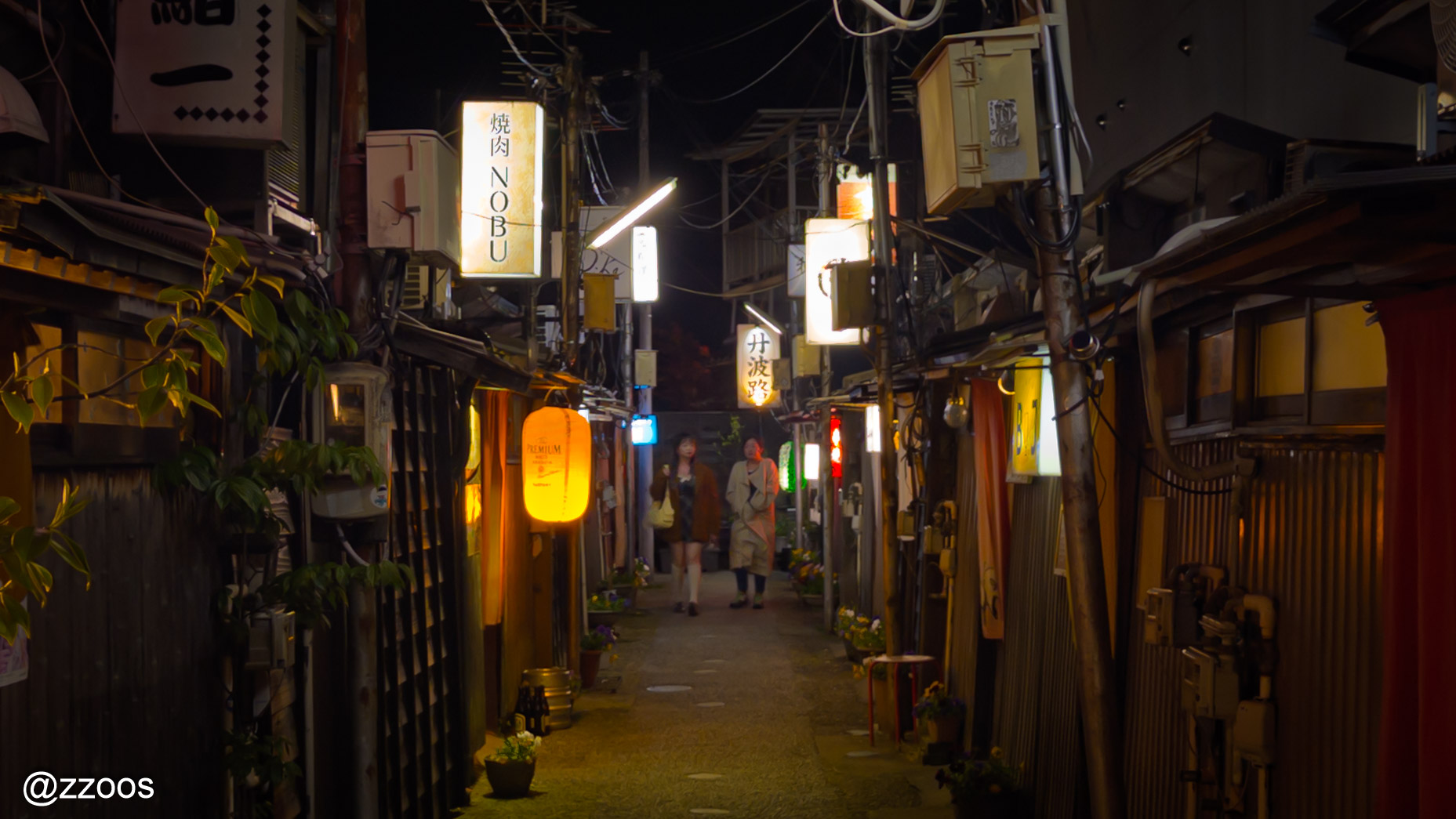
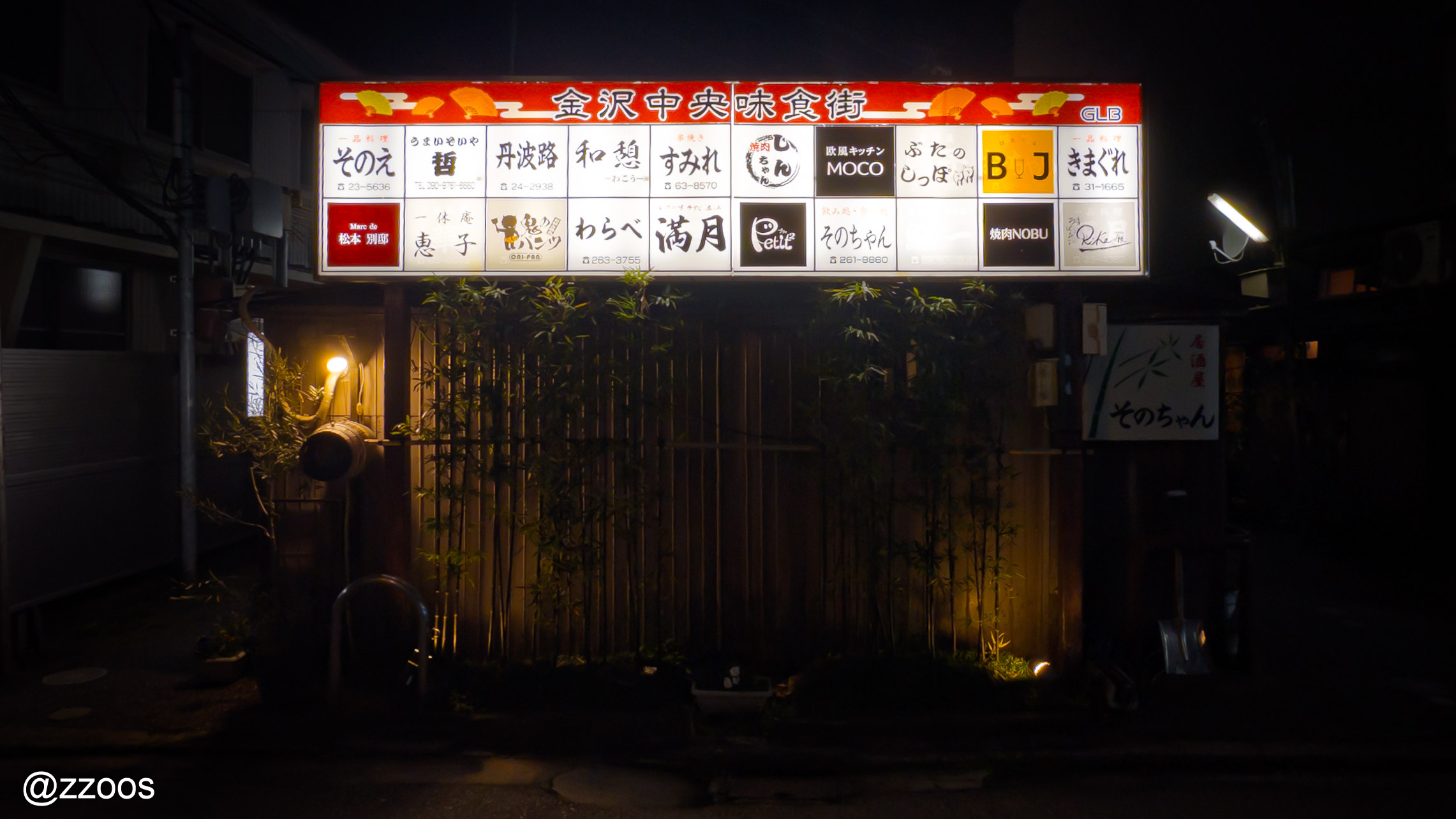
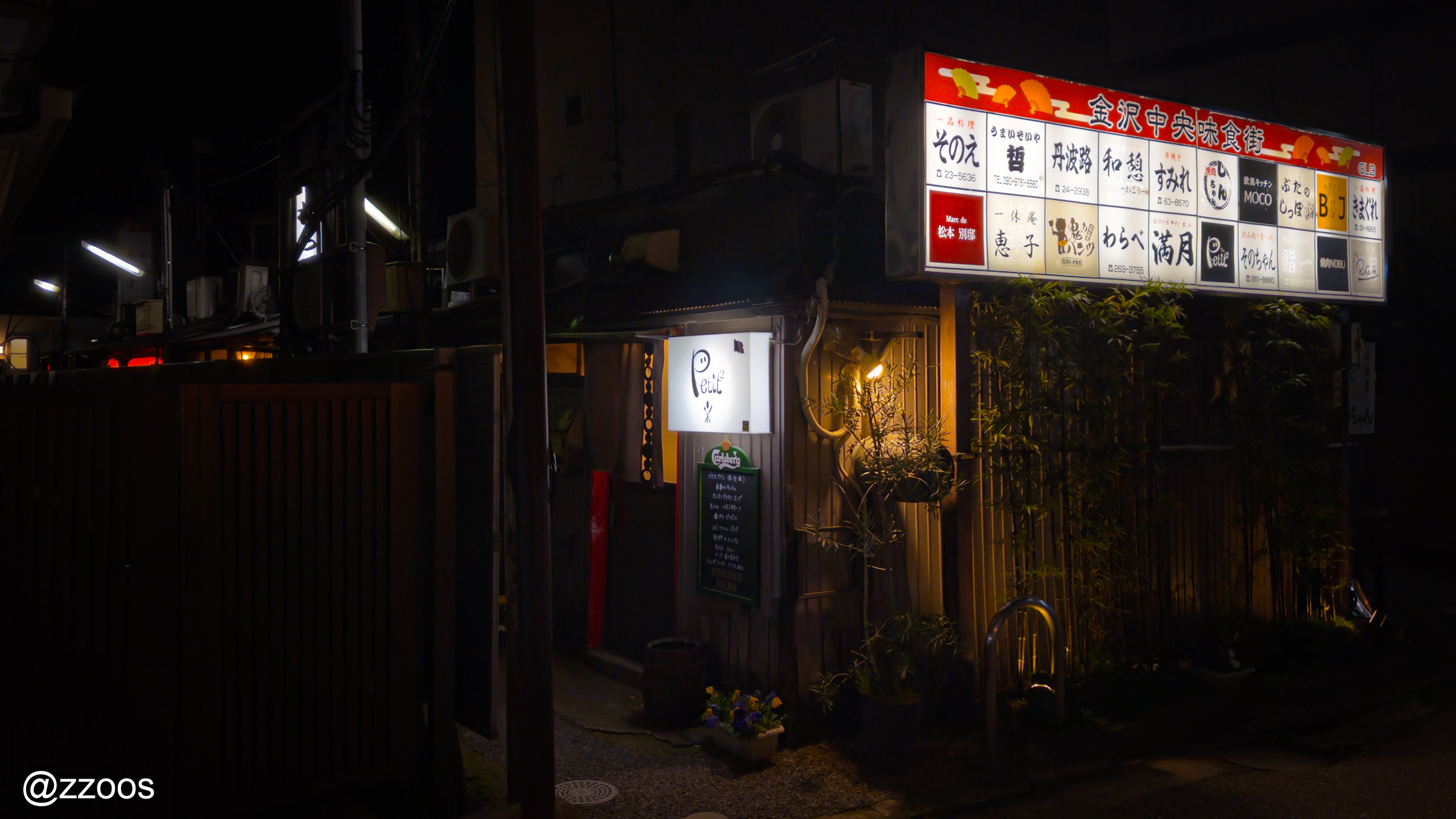
Walk a loop around Shintenchi and you’ll come across a peculiar little alley with quite a grand name: Kanazawa Chuo Mishokugai(金沢中央味食街) — Kanazawa Central Gourmet Street.
The name is grand. The shops are anything but. About twenty of them, each with a counter that fits maybe five or six people, all gathered in one alley.
When I first stumbled onto it, I was immediately taken with the atmosphere. But I couldn’t figure out what any of the individual places were, so I couldn’t bring myself to open a door. Most of them have no visible interior from outside.
If I ever make it back to Kanazawa, this is somewhere I want to actually explore properly.
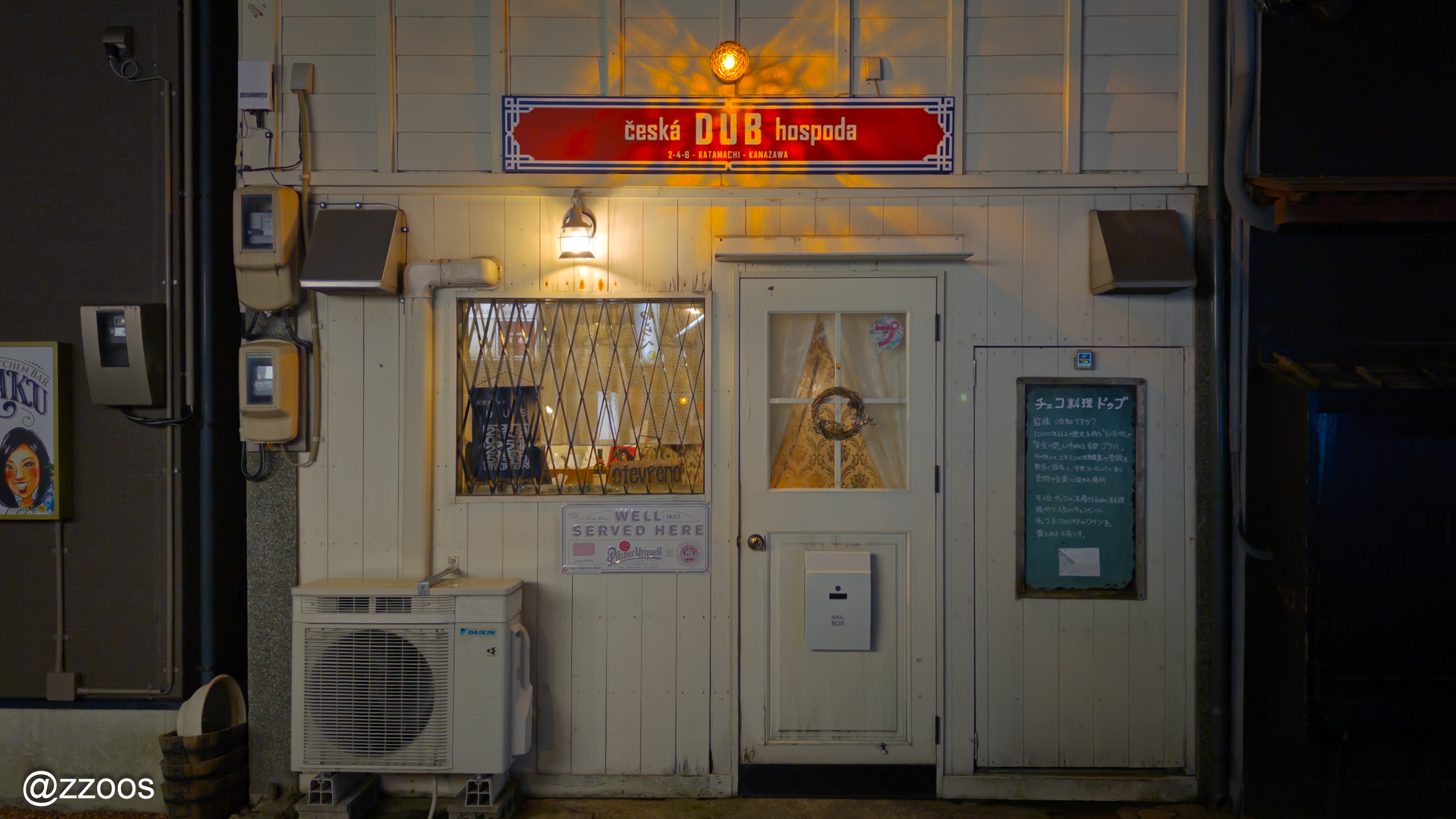
This trip to Kanazawa left me with very happy memories.
Not because of Kanazawa Castle. Not because of Kenrokuen. Not Shirakawago, not the 21st Century Museum of Contemporary Art.
It’s because of here. The back alleys of Katamachi.
Meeting people at Il Mare and Hige no Mise, then visiting new places to meet those same people again, and finding yet more new faces there. Drinking together, laughing, talking. Those moments and those memories are what made this trip — made Kanazawa — something I’ll carry with me.
That’s why Katamachi became a name I can’t forget. A street I want to go back to someday.