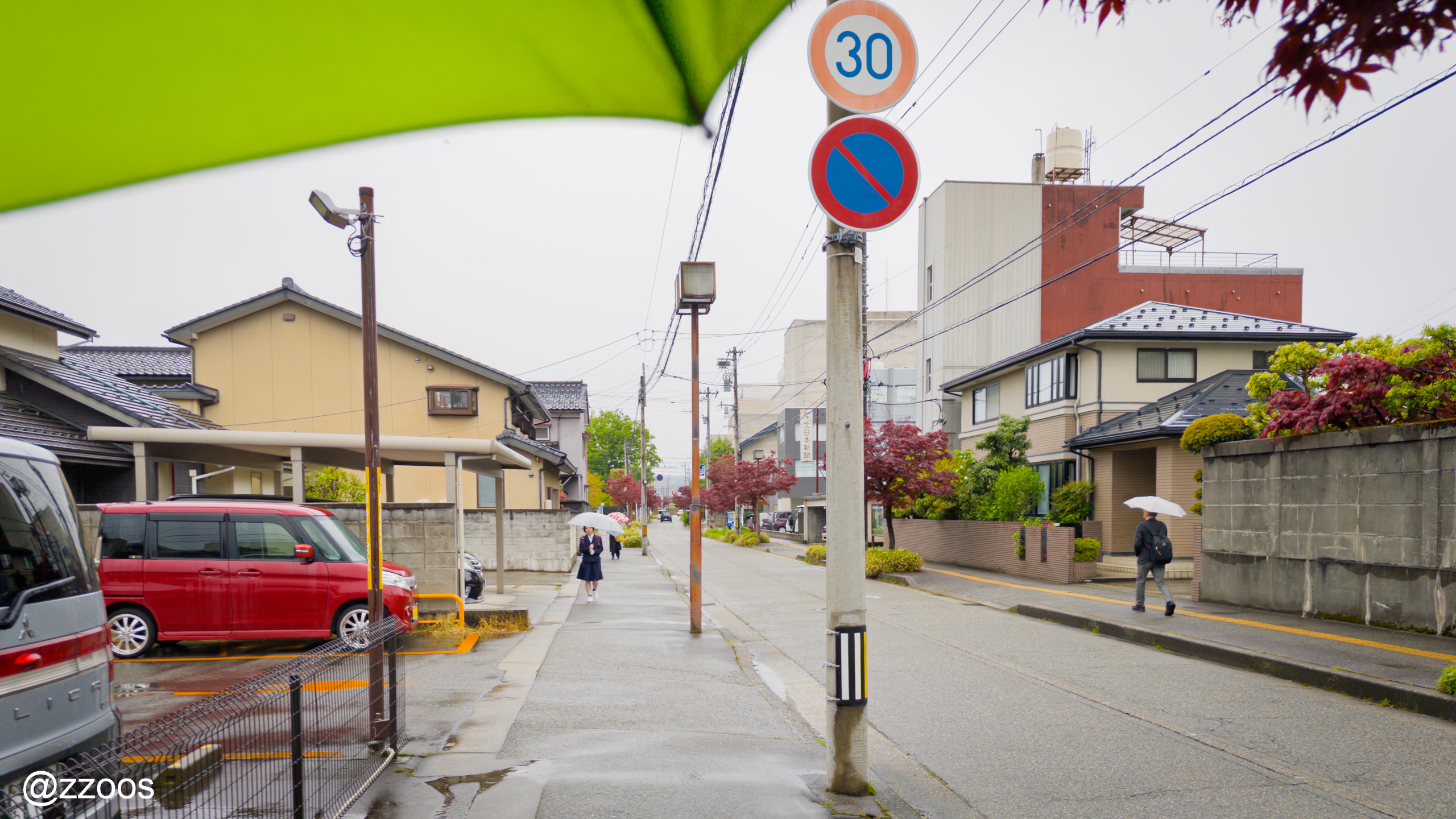
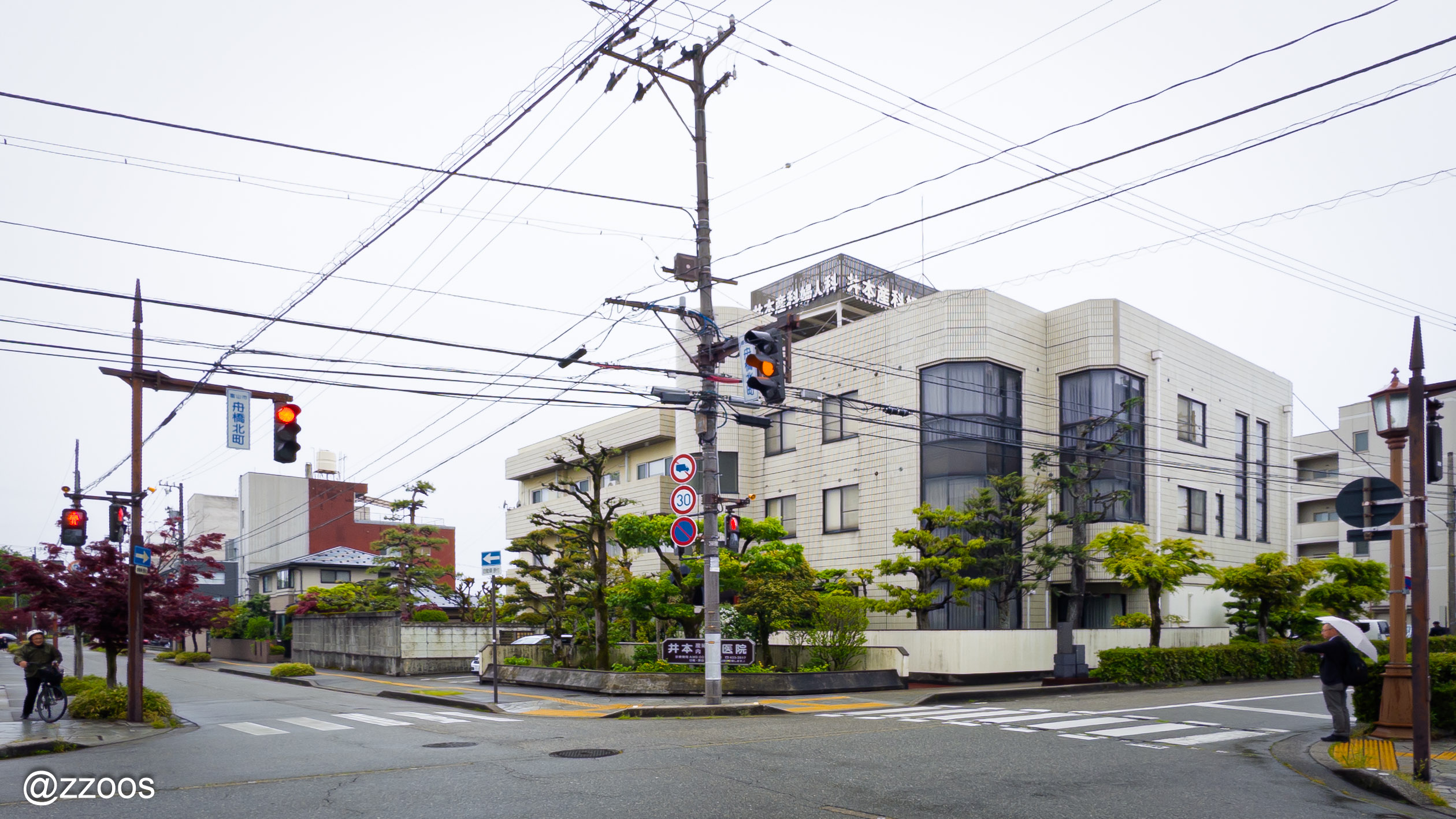
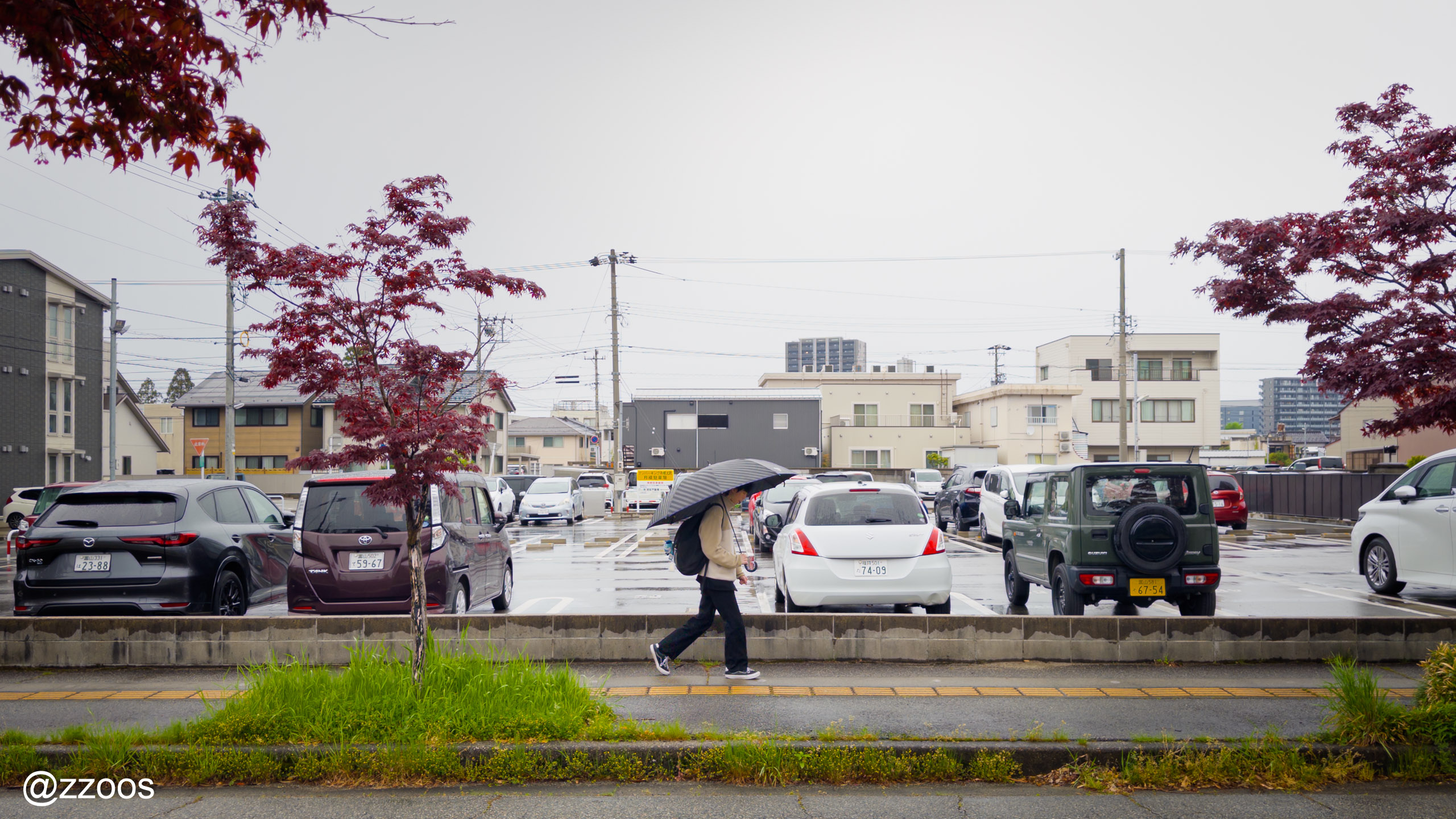
It was around five in the afternoon. There was still some time before it got dark. Since what I wanted was to see the night view at Kansui Park(富岩運河環水公園), rather than heading straight there, I felt like taking in one more place along the way.
I took the tram and got off at the Kenchō-mae(県庁前) stop. This is where the Toyama Prefectural Government building is.
I walked the residential backstreets under my umbrella. Alleys of a city I’d never set foot in. A little unfamiliar, and for that very reason a little exciting too. Traveling on foot under an umbrella has its own kind of feeling.
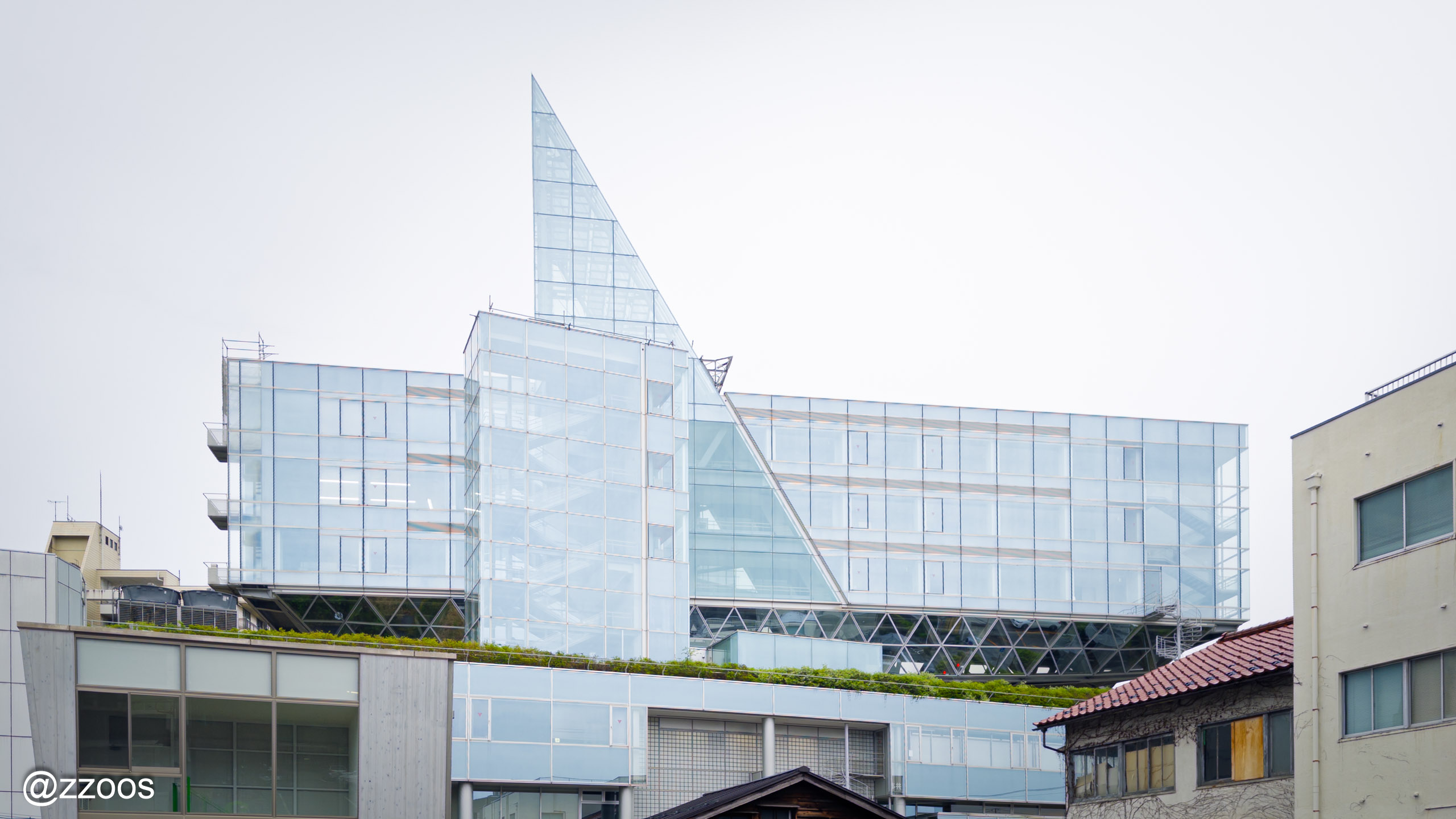
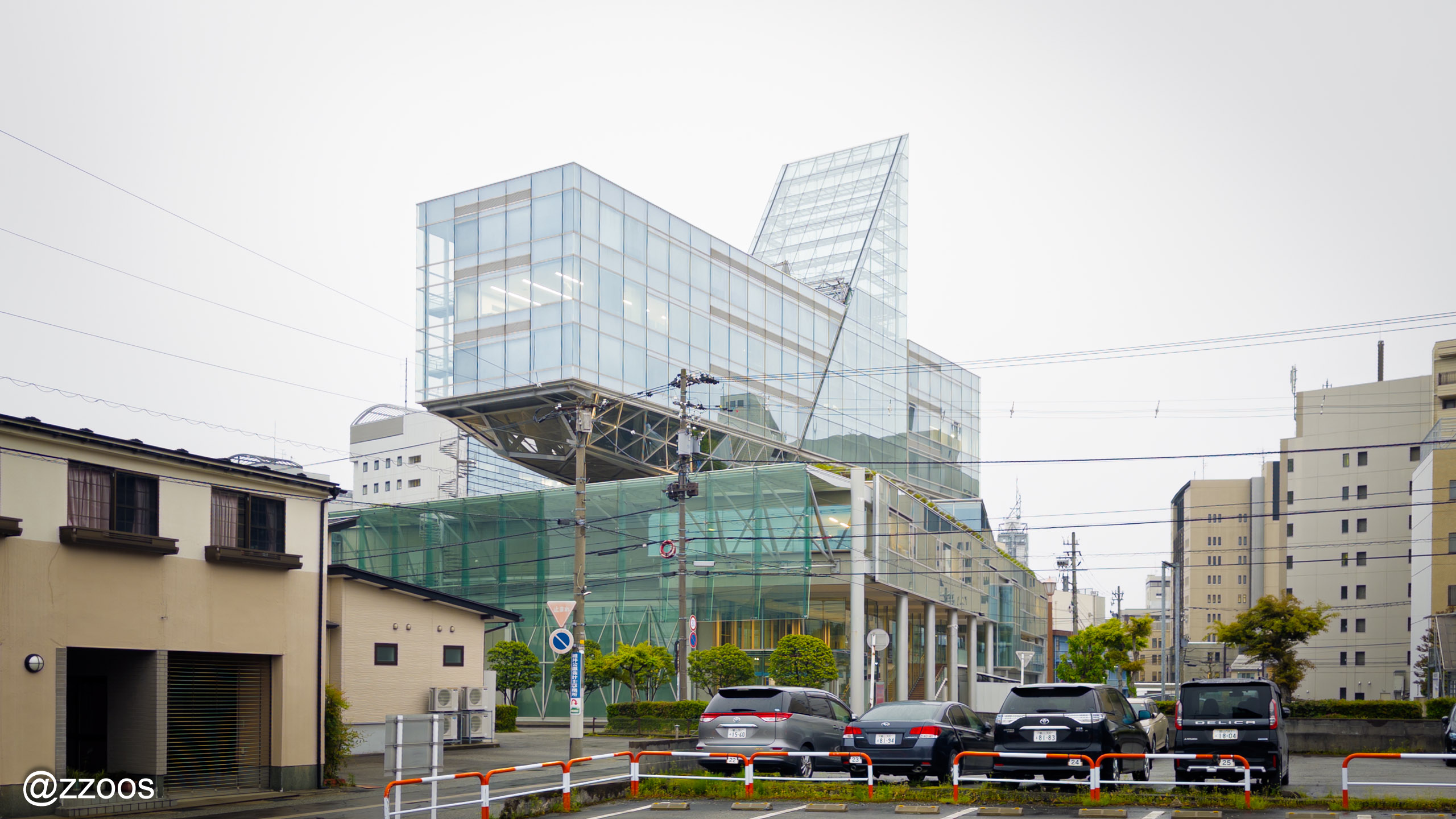
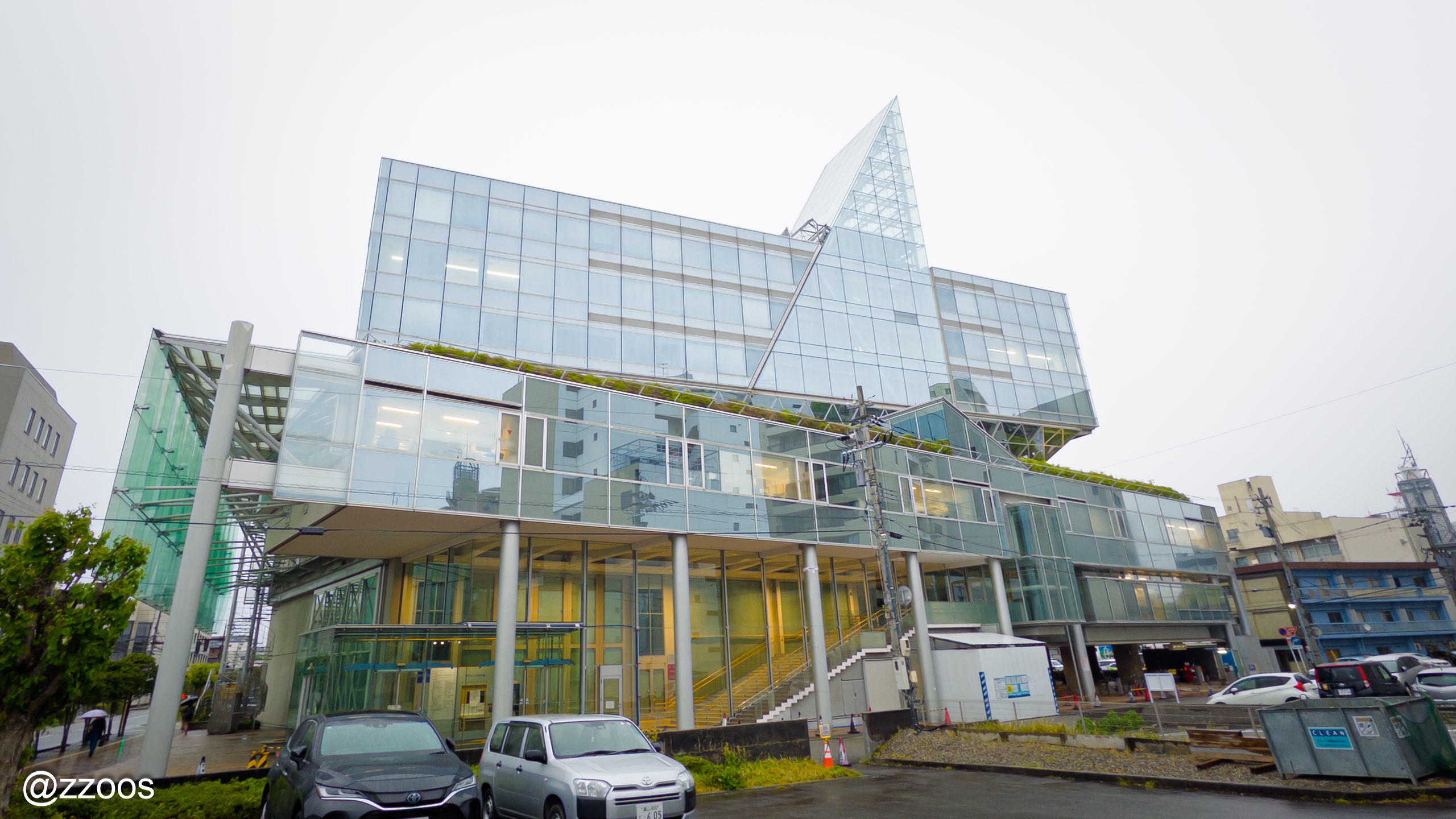
Before I even reached my destination, an unusual building came into view. I stopped for a moment and took several photos. I opened Google Maps and it turned out to be the Sunship Toyama Citizens’ Cultural Hall(サンシップとやま).
It was designed by an architect named Yoshiro Ikehara(池原義郎), and its defining feature is that, living up to the building’s nickname Sunship, it’s designed like a large ship with its sails raised.
Because the lower and upper sections separate at a point close to the height of the surrounding buildings, the ship-shaped upper part feels like it’s floating on a sea of buildings.
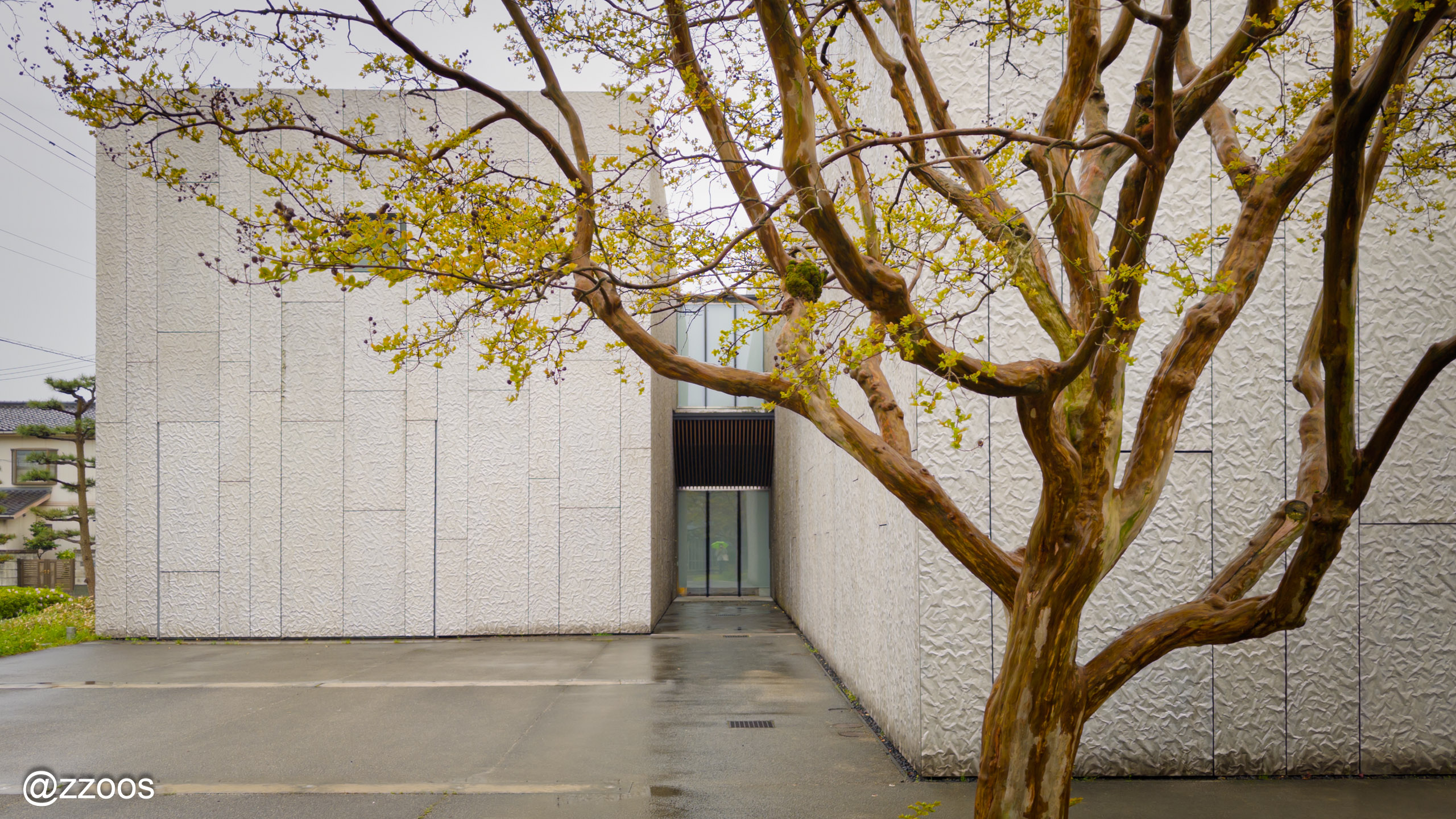
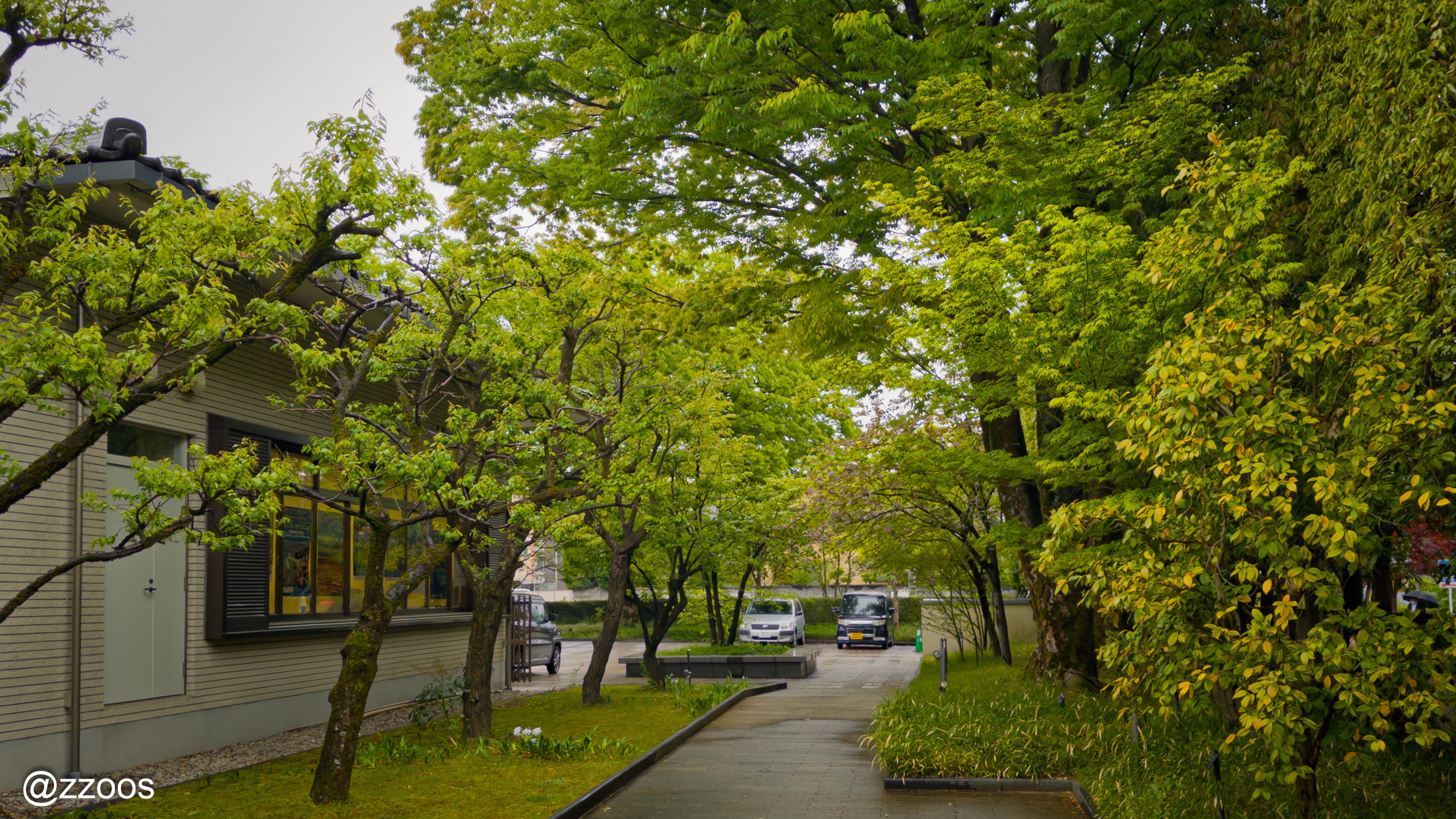
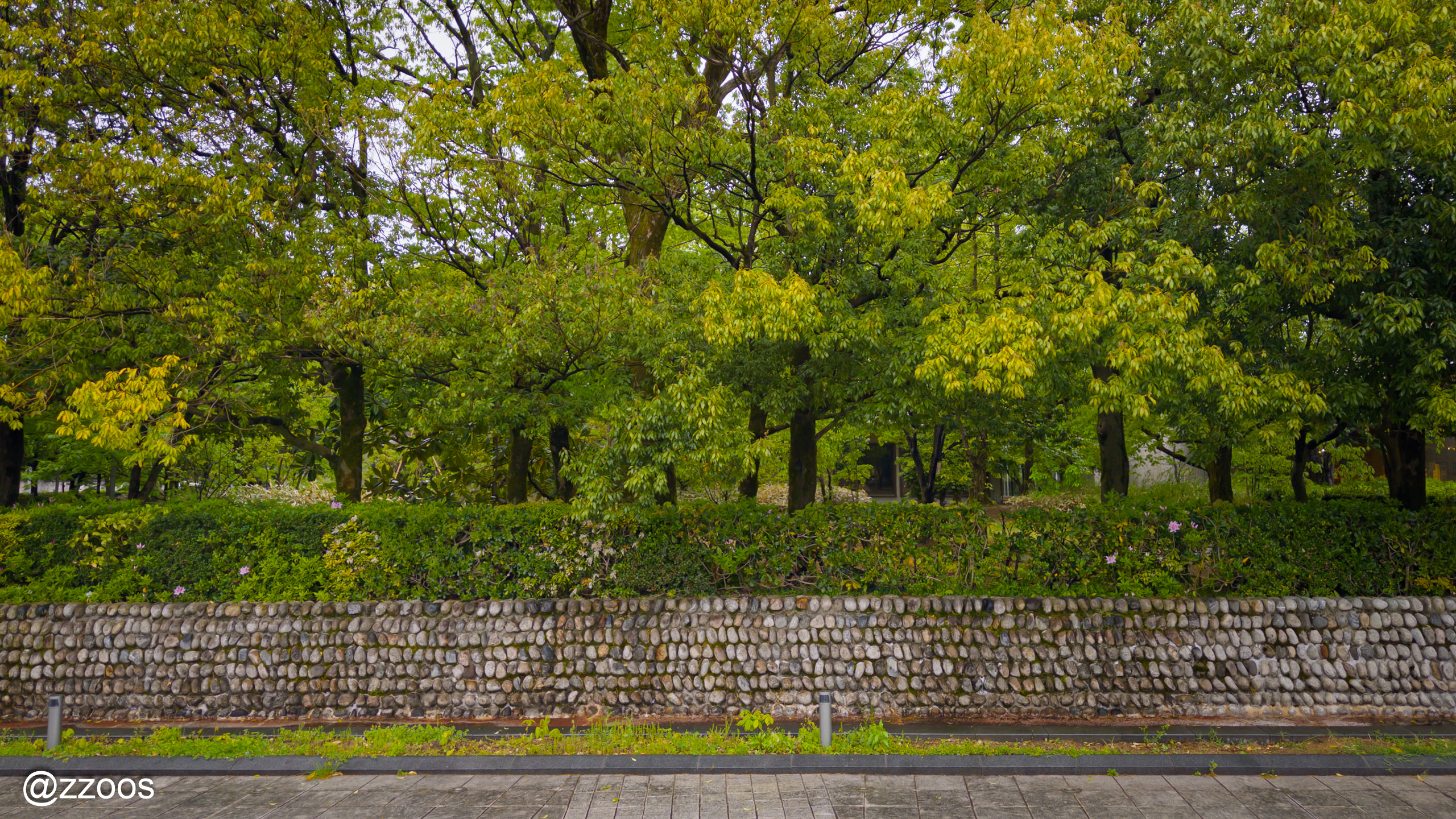
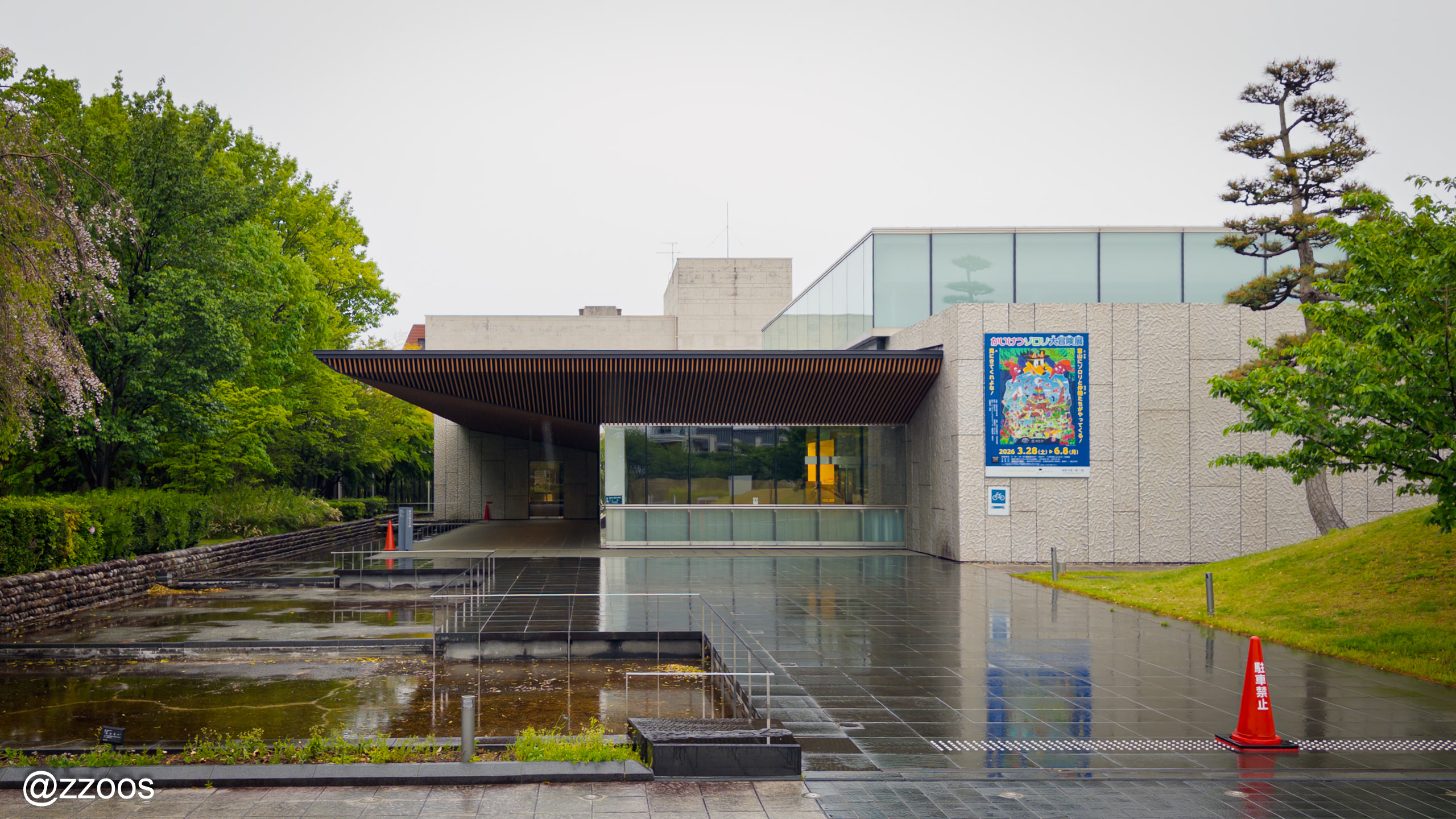
Walking a little farther, I arrived at today’s destination, the Koshinokuni Museum of Literature(高志の国文学館). It was already past 5:30 p.m. Not a time when you can view the exhibits.
Well, that’s fine. What I’d wanted was to walk a street in the rain.
The Koshinokuni Museum of Literature is, they say, a museum devoted to writers from the old Hokuriku region, centered on Toyama.
Curious about what the name ‘Koshinokuni(高志の国)’ meant, I looked it up, and it’s an ancient place name in Japan. The broad area spanning Toyama, Ishikawa, Fukui, and Niigata prefectures was called Koshi(高志) in ancient Japan.
The name grandly ties several regions together, but in practice the exhibits here mostly cover writers connected to Toyama. Which makes sense — the other prefectures would each want their own exhibition halls for writers from their own area. There’d be no need to hand their materials over to another prefecture.
Anyway, this is a place that’s actually a museum of writers connected to Toyama, but was given the bold, sweeping name ‘Koshinokuni.’
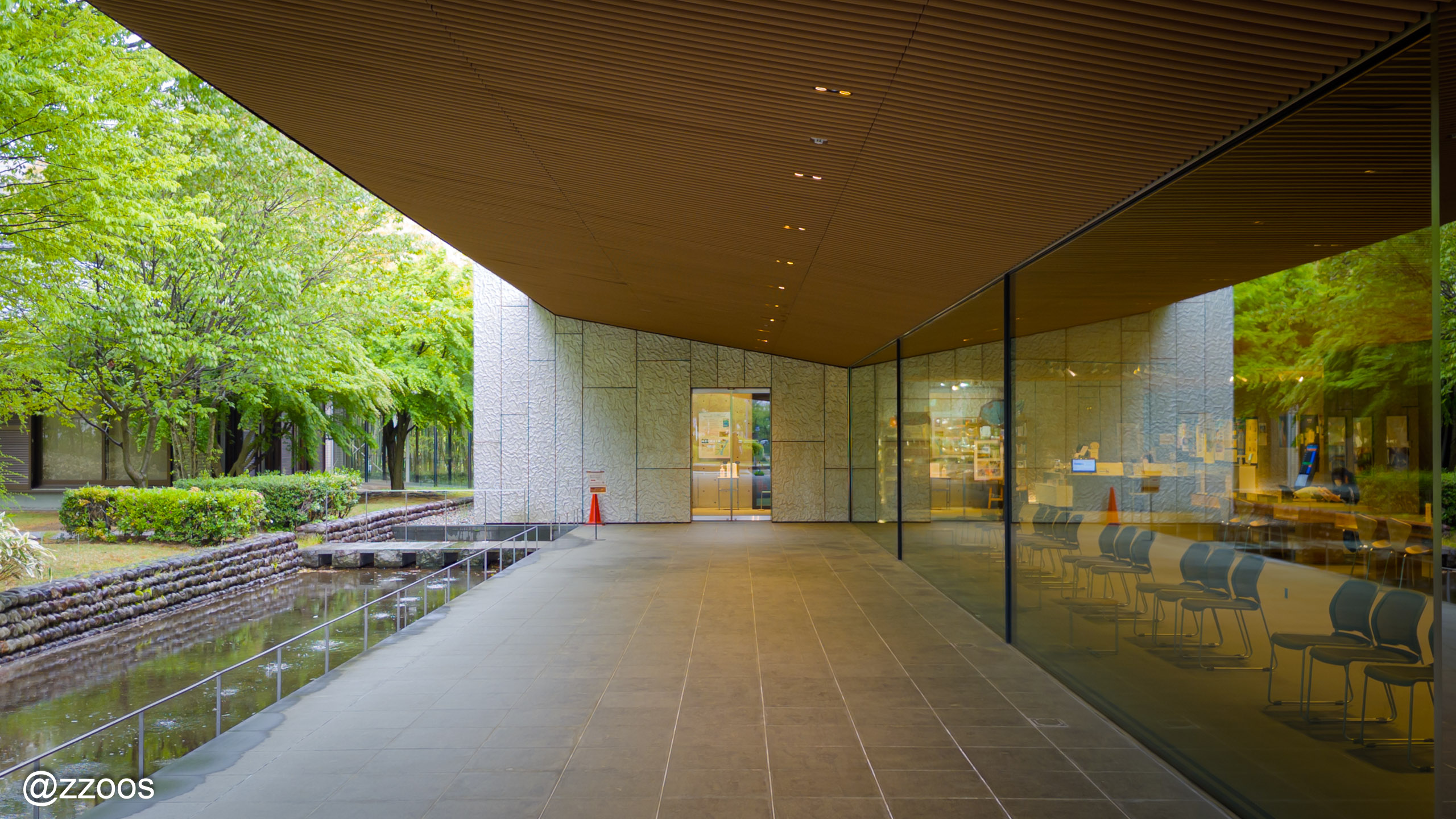
The Toyama-born writers on display here are, notably, the world-renowned novelist Yoshie Hotta(堀田善衞), Fujiko F. Fujio(藤子・F・不二雄), creator of Doraemon, and Mamoru Hosoda(細田守), director of The Girl Who Leapt Through Time — so the exhibits span writers across many genres, from ancient literature to modern and contemporary fiction, manga, and even film.
And rather than the dull, simple kind of exhibit the name “museum of literature” might make you expect, its exhibits are said to use a variety of methods — video, audio, digital picture scrolls using the latest technology, and more.
Well, I can’t view them today, so for now I’ll just take a closer look at the outside of the building.
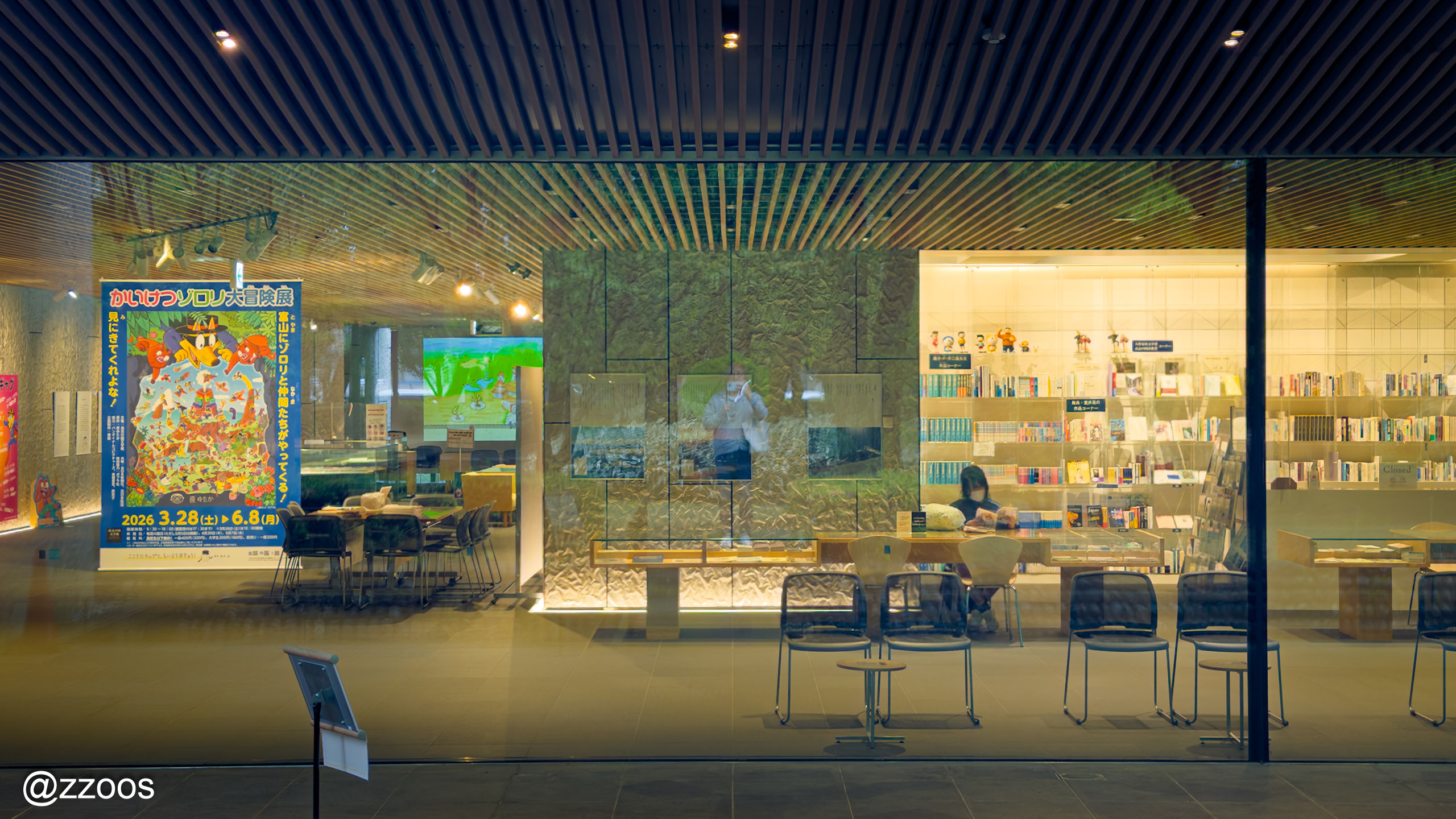
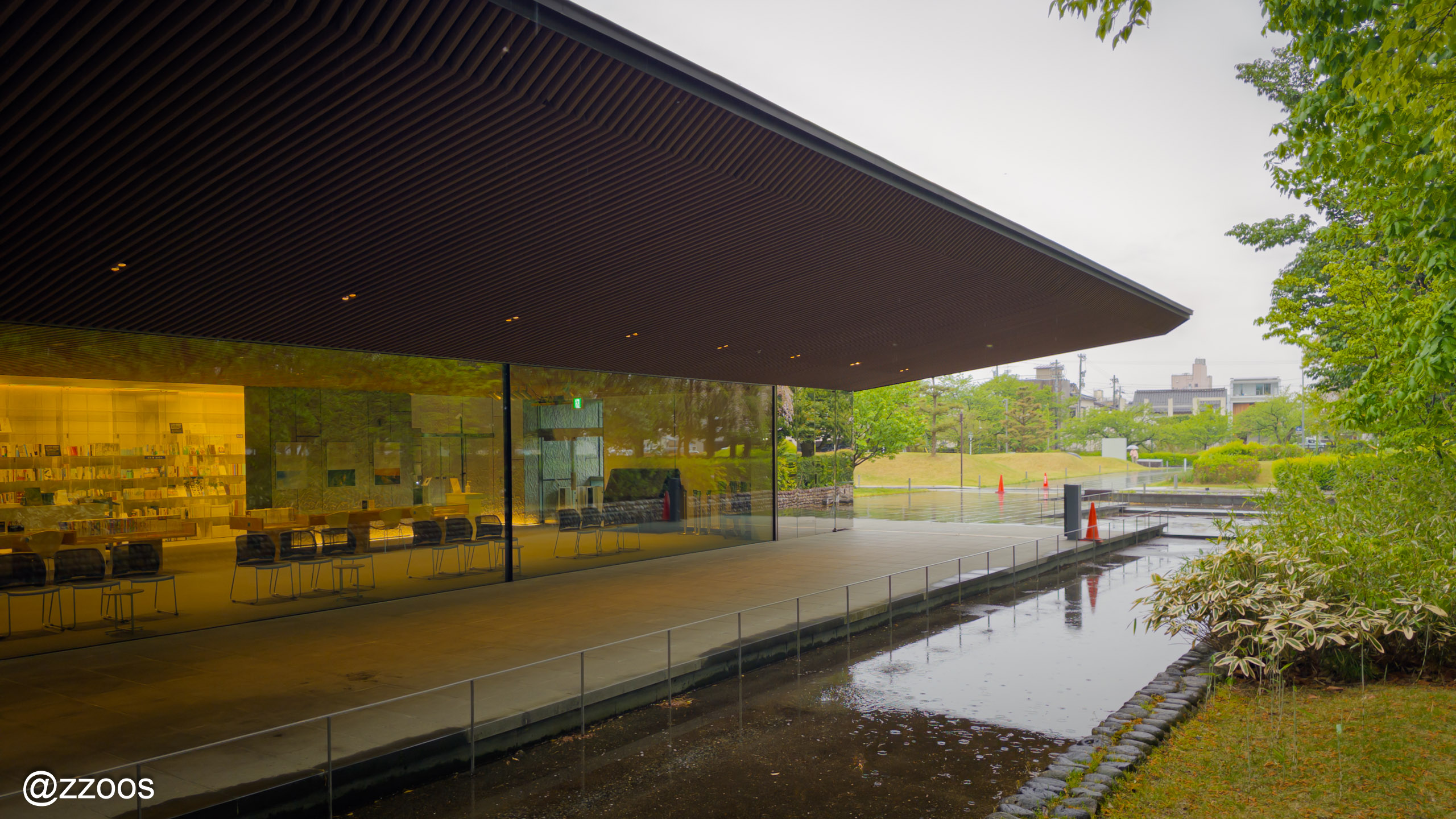
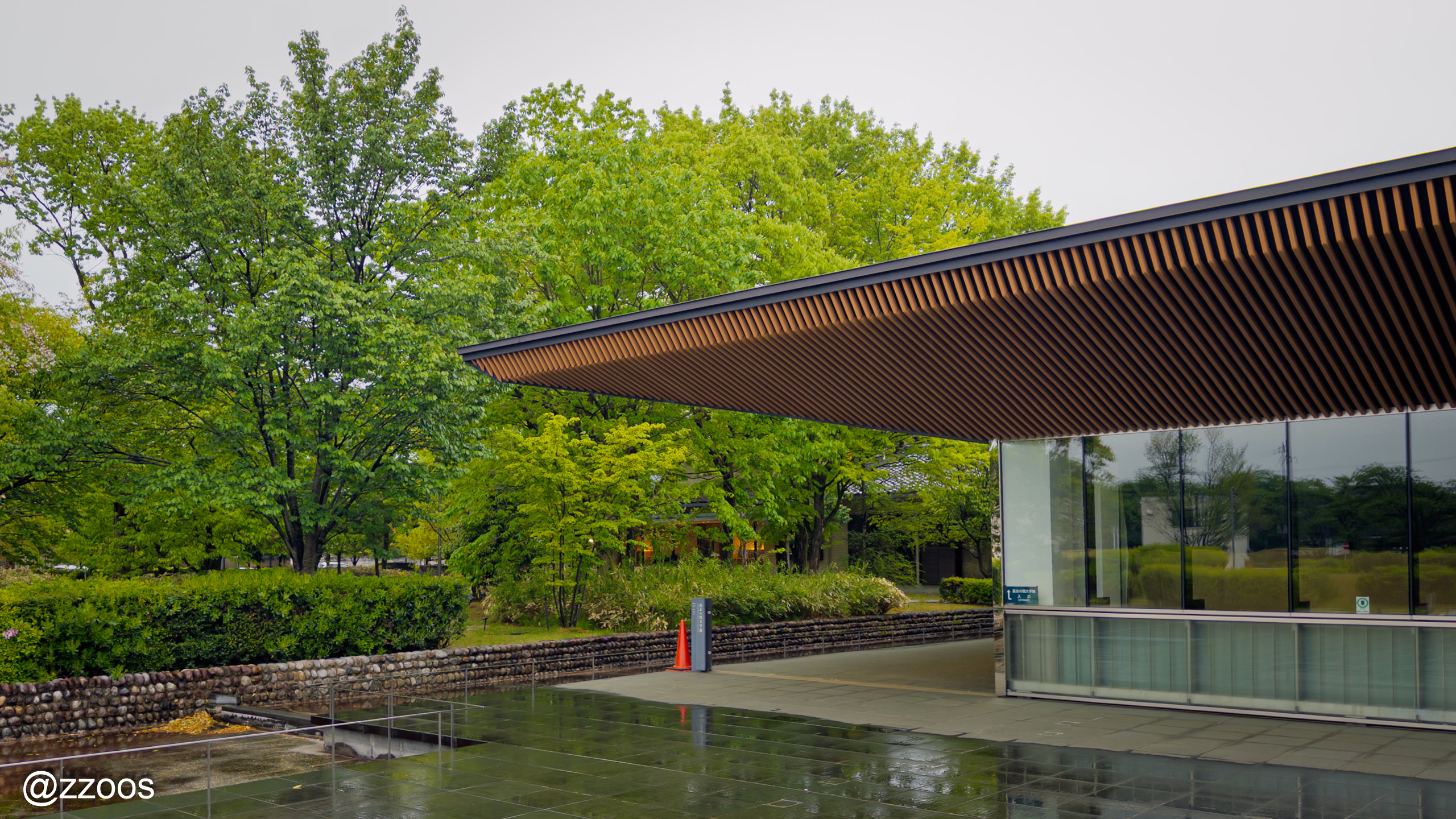
This museum, designed by CAn(シーラカンスアンドアソシエイツ), the atelier office of Professor Yasuyuki Ito(伊藤恭行), is a building that has won numerous Japanese architecture awards.
I didn’t see the inside, so I can’t say much about the rest, but this overwhelming cantilever, visible right from the front, is what I think really defines the building’s impression.
Running all the way from the front and wrapping around the lobby, this cantilever also embraces the garden on the far side of the lobby. Perhaps to draw that scenery in as much as possible, columns and walls were barely used. And the underside of the cantilever is packed with finely segmented panels to minimize the sense of weight.
At the same time, the slope of the underside is folded twice, giving it thickness while still keeping a sleek feel. It really was an impressive structure.
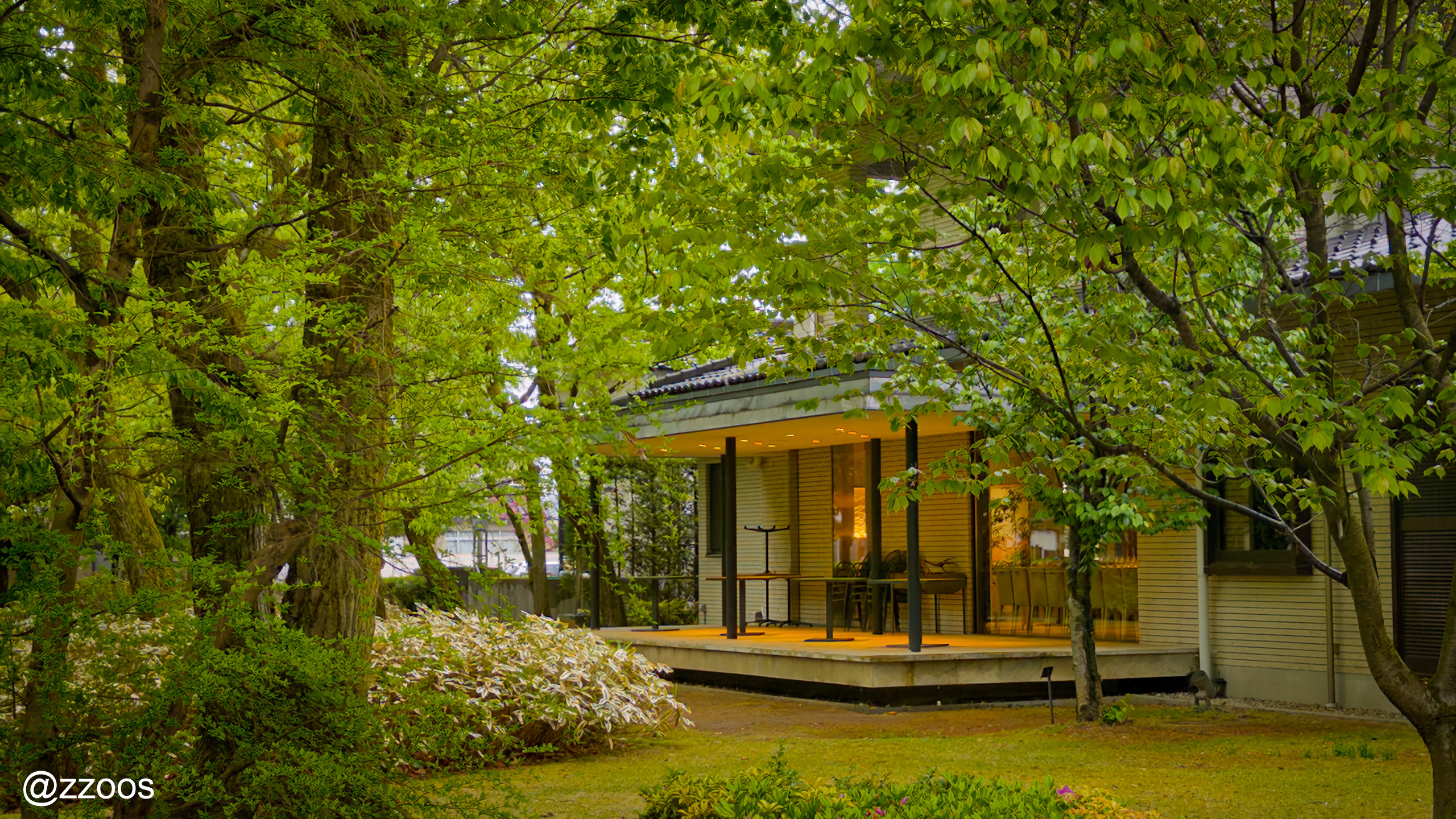
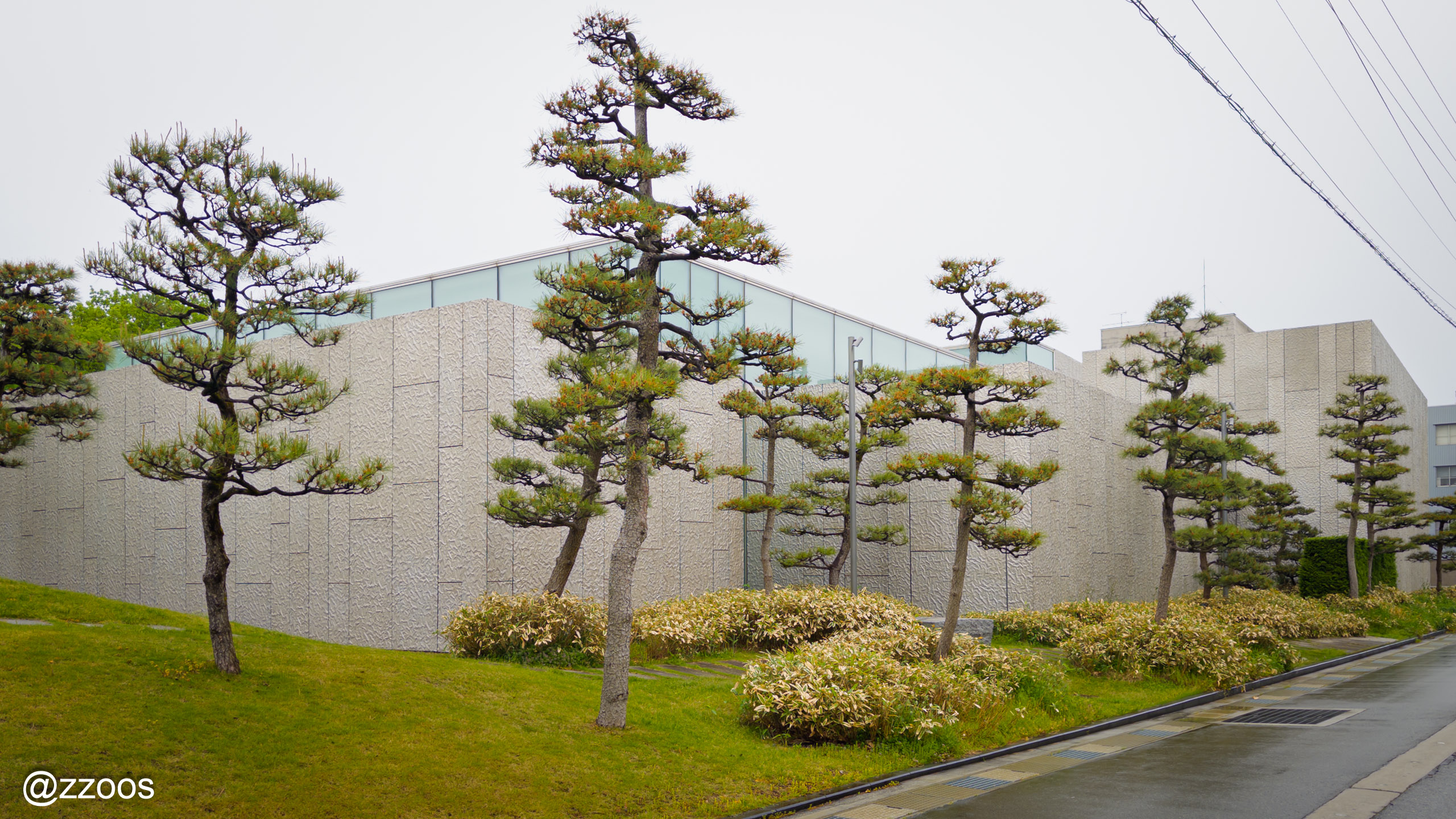
And so I made one loop around the Koshinokuni Museum of Literature.
This neighborhood actually has a lot to see. Right in front is Toyama Castle(富山城). In front of the Sato Memorial Museum of Art(富山市佐藤記念美術館) you can even take the Matsukawa(松川) river cruise. In front of Kenchō-mae Park(県庁前公園) are the Toyama Prefectural and City Government buildings — this is, quite literally, the heart of Toyama.
But this time it isn’t a full-on Toyama trip. Today I’ll leave it at this and head back.
Someday, if I take a trip with Toyama as the destination, I’ll have to come back then.