From Toyama Station, I took the shiden — the tram — and the first place I headed to was the Nakamachi stop. My first destination today was TOYAMA KIRARI.
It was designed by Kengo Kuma, an architect who represents contemporary Japanese architecture. He’s said to be a master of Japanese architecture, following in the footsteps of Tadao Ando.
There’s a bank on the first floor and a cafe on the second. Floors three through five house the Toyama City Library. And spanning all the floors up to the sixth is the Toyama Glass Art Museum — it’s a mixed-use building.
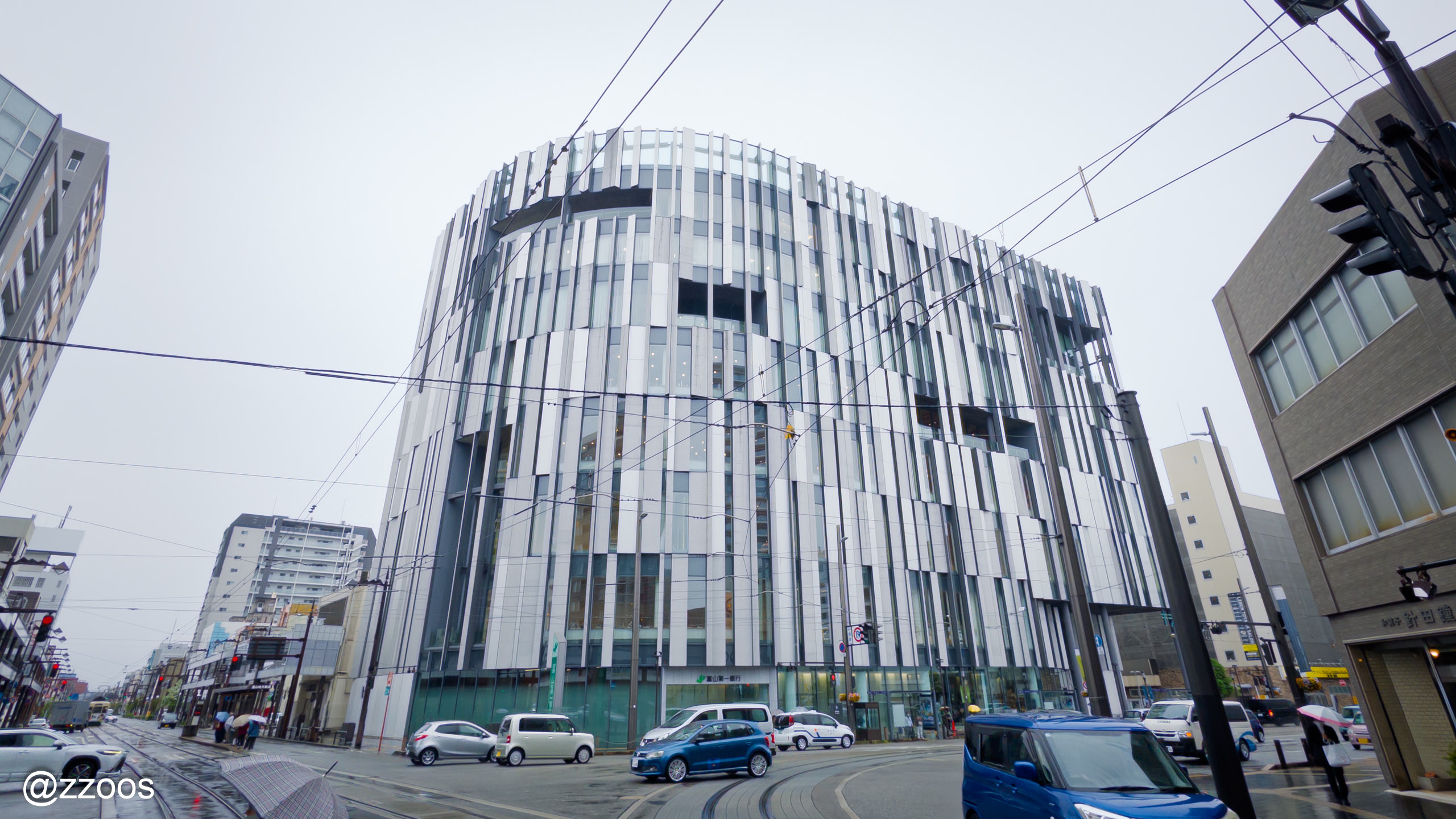
Walking from the tram, you first meet the building’s shape from a distance. And honestly, that exterior was a bit disappointing.
The building’s facade just doesn’t grab you.
It’s supposed to express the snow-covered cliffs of Tateyama, but I don’t get that at all. It’s less that the artist’s intent doesn’t come through, and more that, plainly, it just isn’t beautiful to look at.
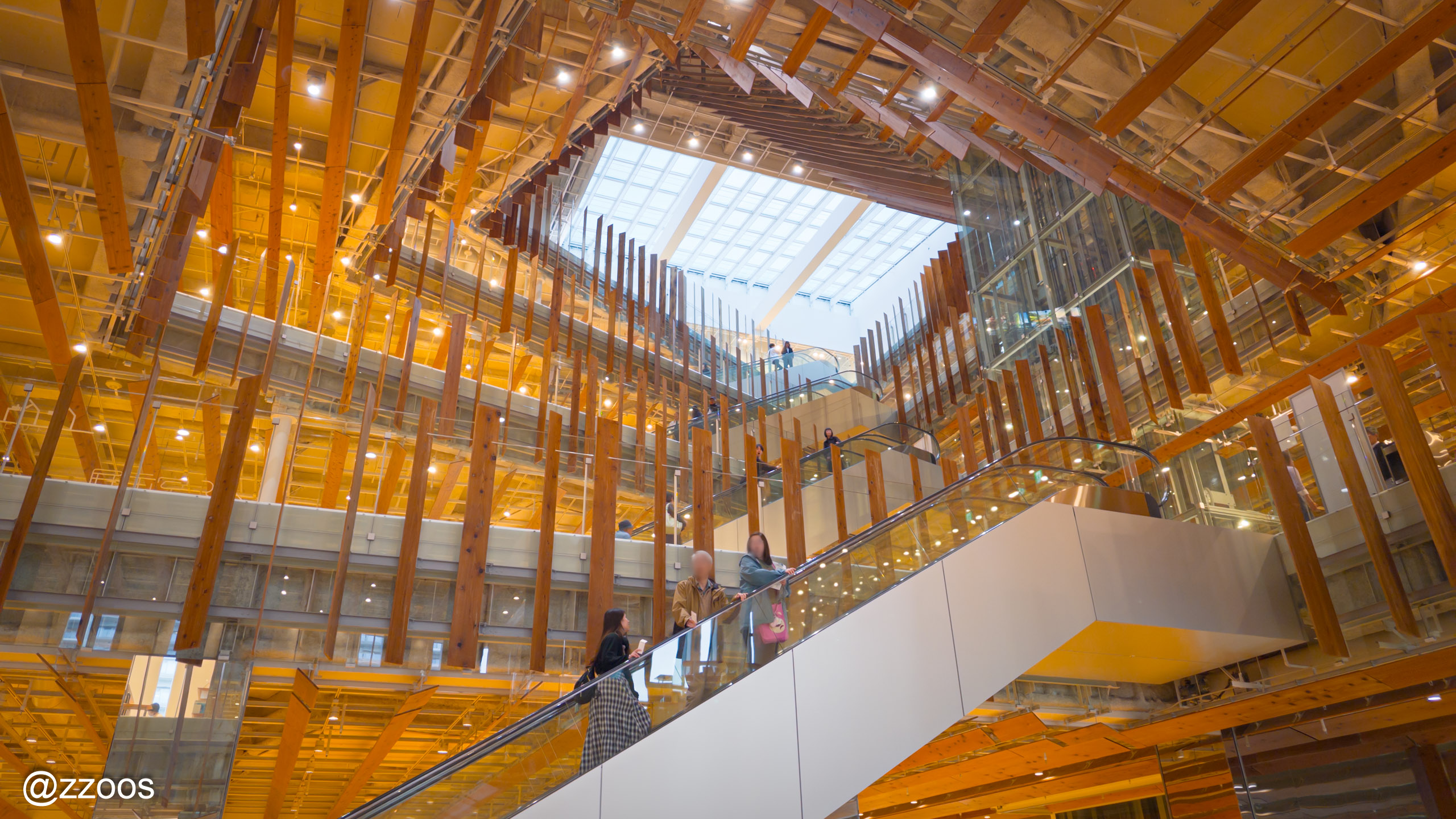
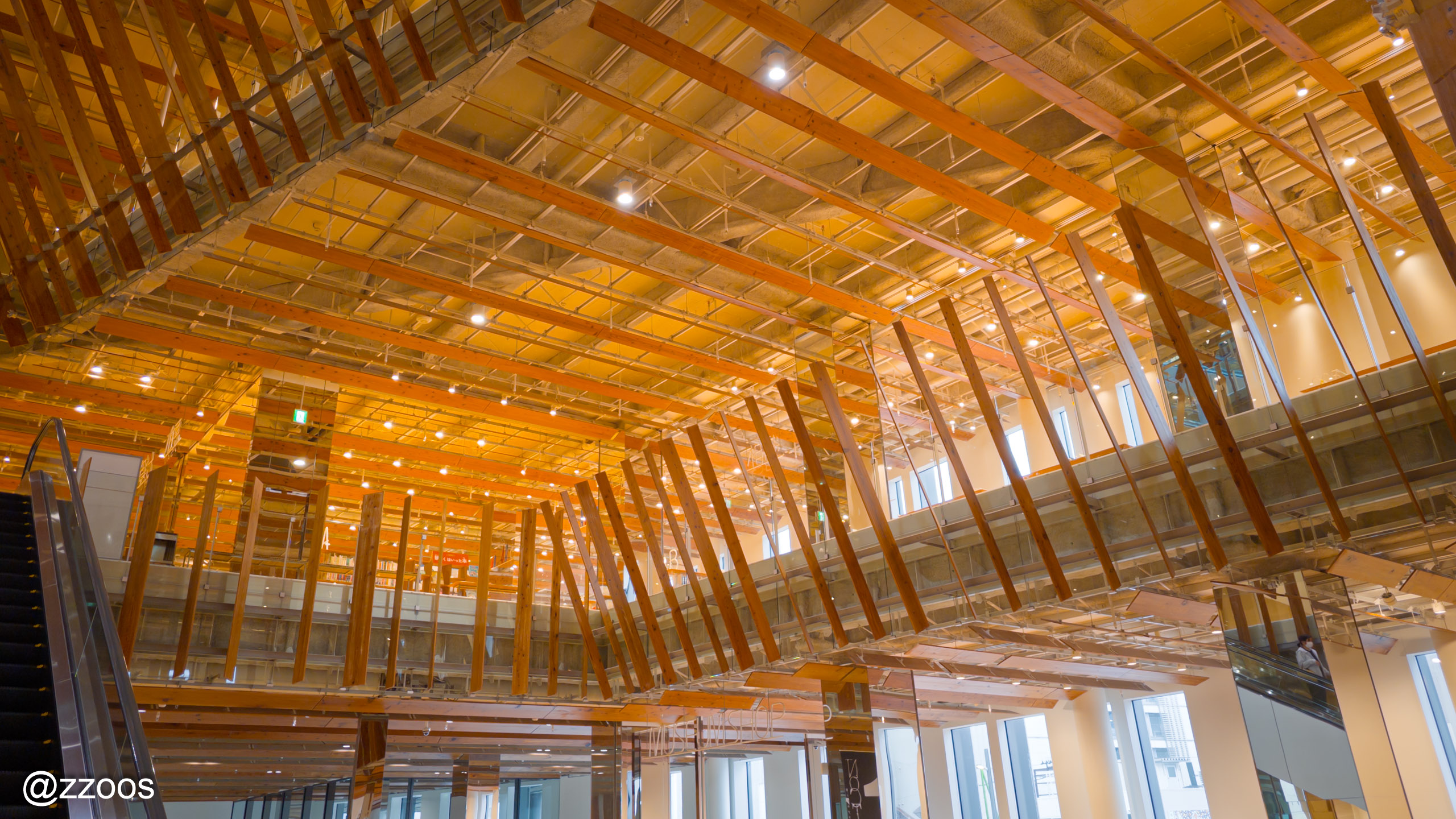
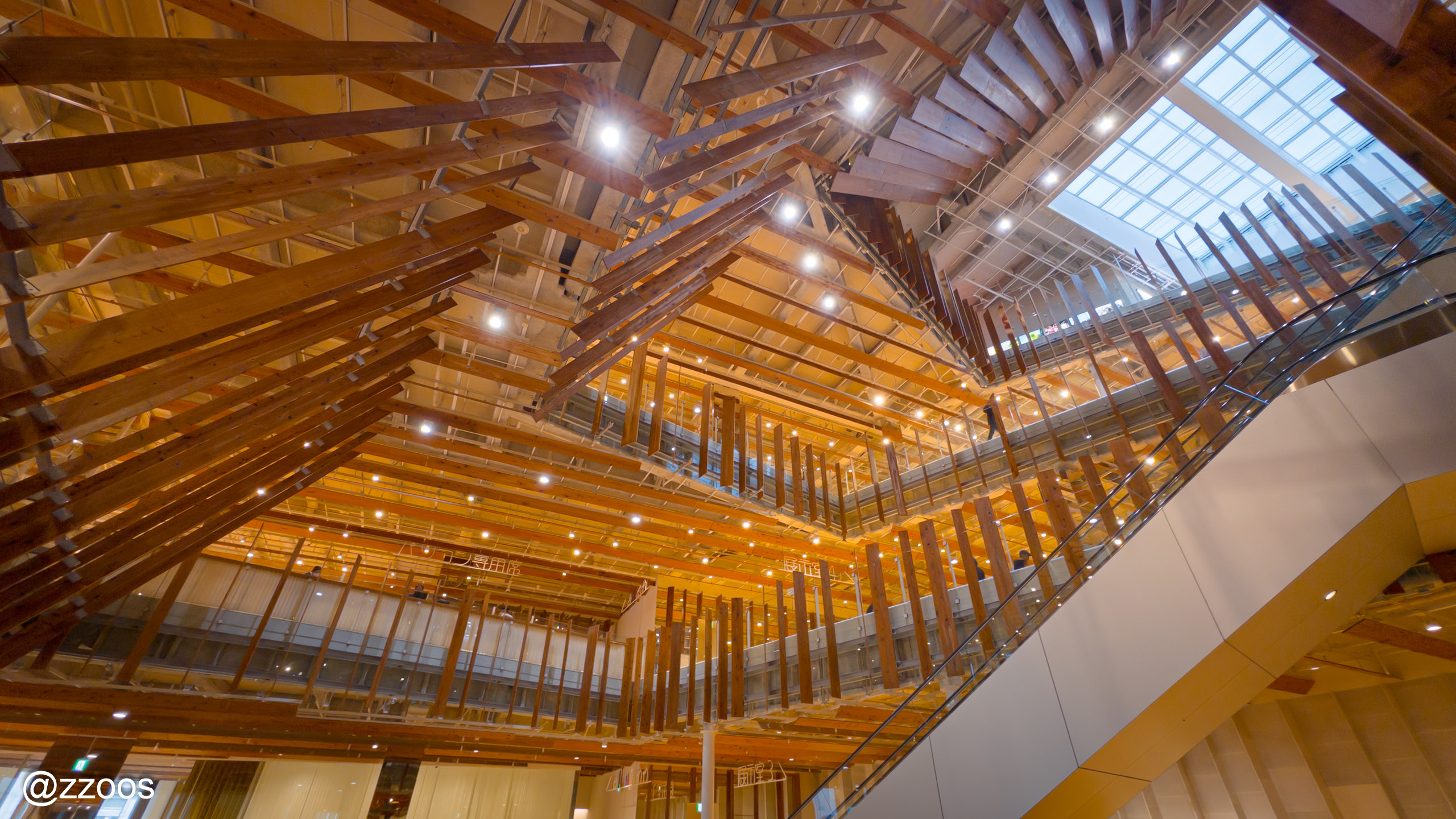
But the moment you step inside, your impression of this place changes completely.
It’s impressive.
The interior is definitely impressive.
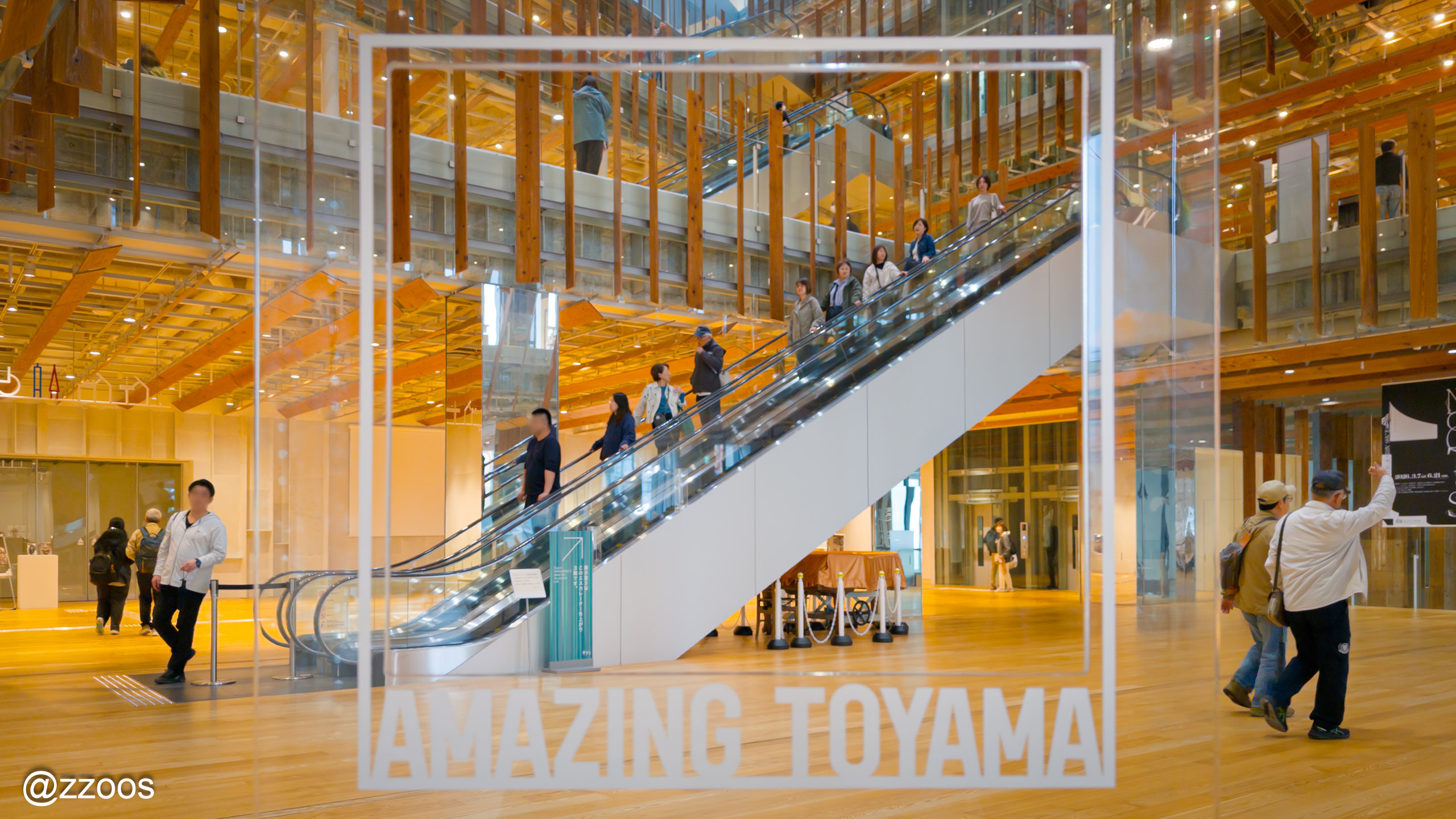
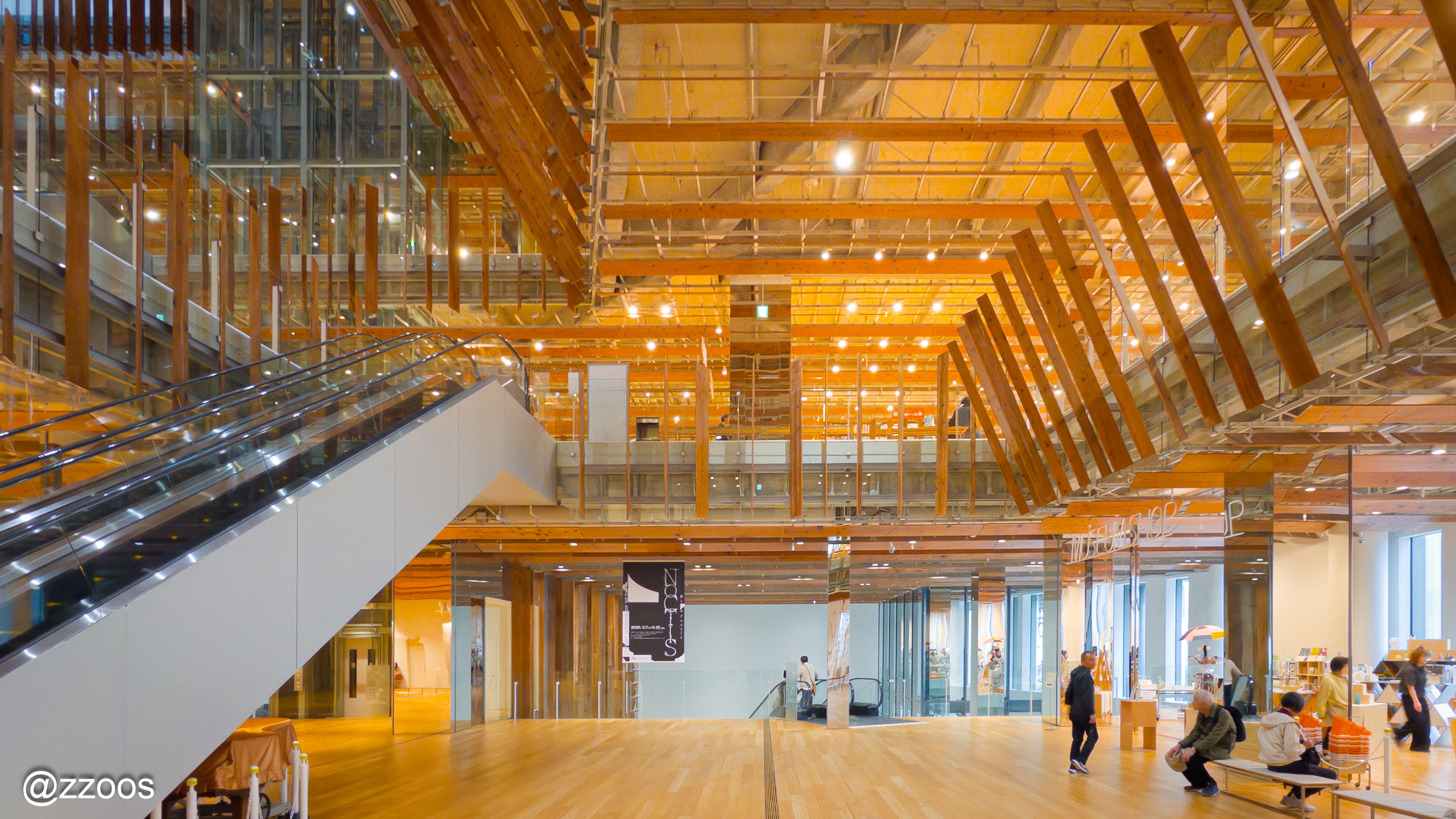
It’s a structure with an openness that runs clear up to the sixth floor. And because the open space on each floor is stacked while shifting slightly, it feels different from a space that’s simply blown open upward.
And the cedar panels standing irregularly and vertically on each floor give the space a sense of unity without blocking your view.
Since the floor plans are all shifted differently from one another, it could easily have looked disorienting. But the directionality of the vertically extending panels offsets some of that disorientation and gives the space its sense of dimension.
On top of that, the warmth of the bright wood and the overall white-toned interior make the whole space bright and light.
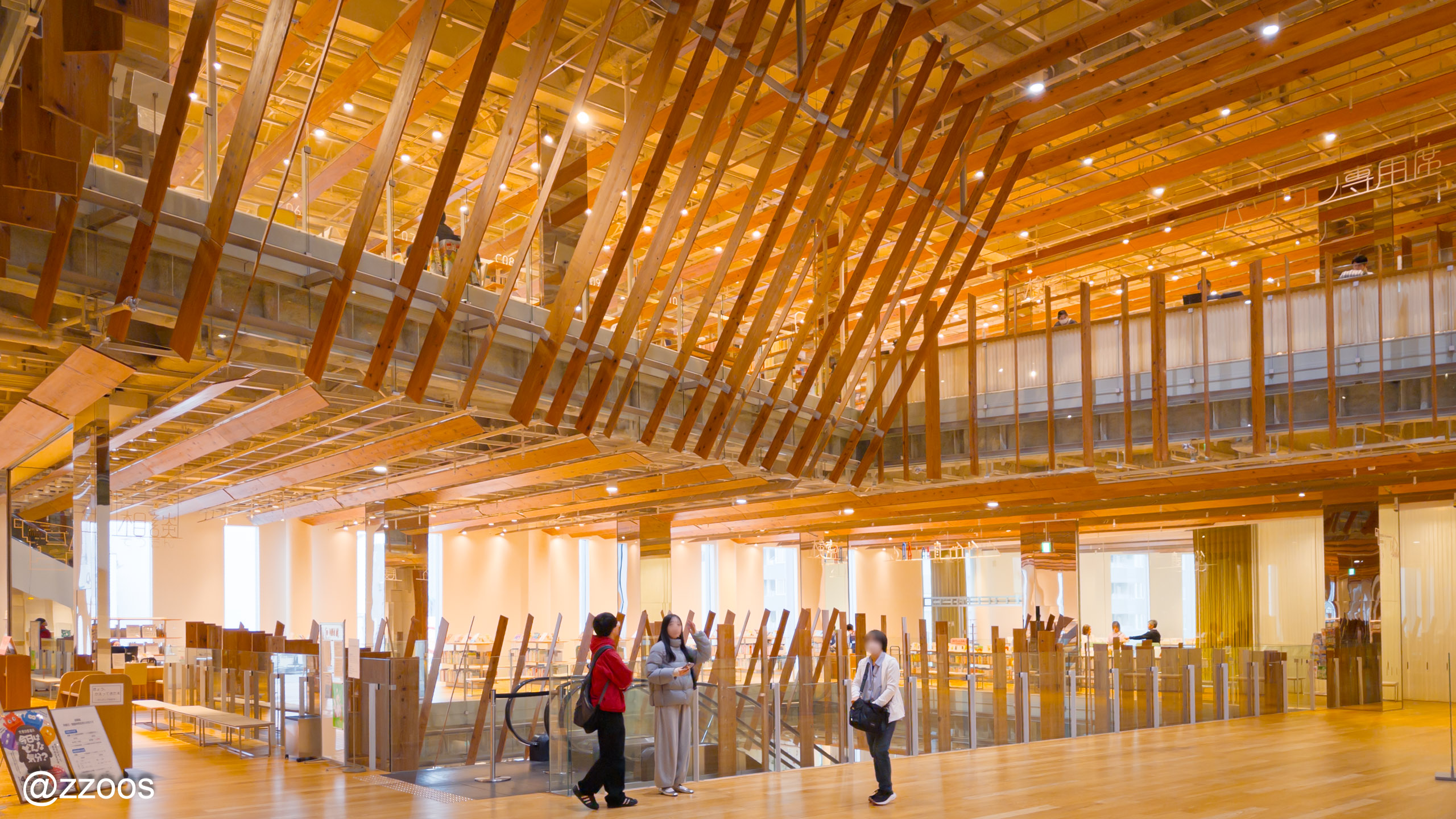
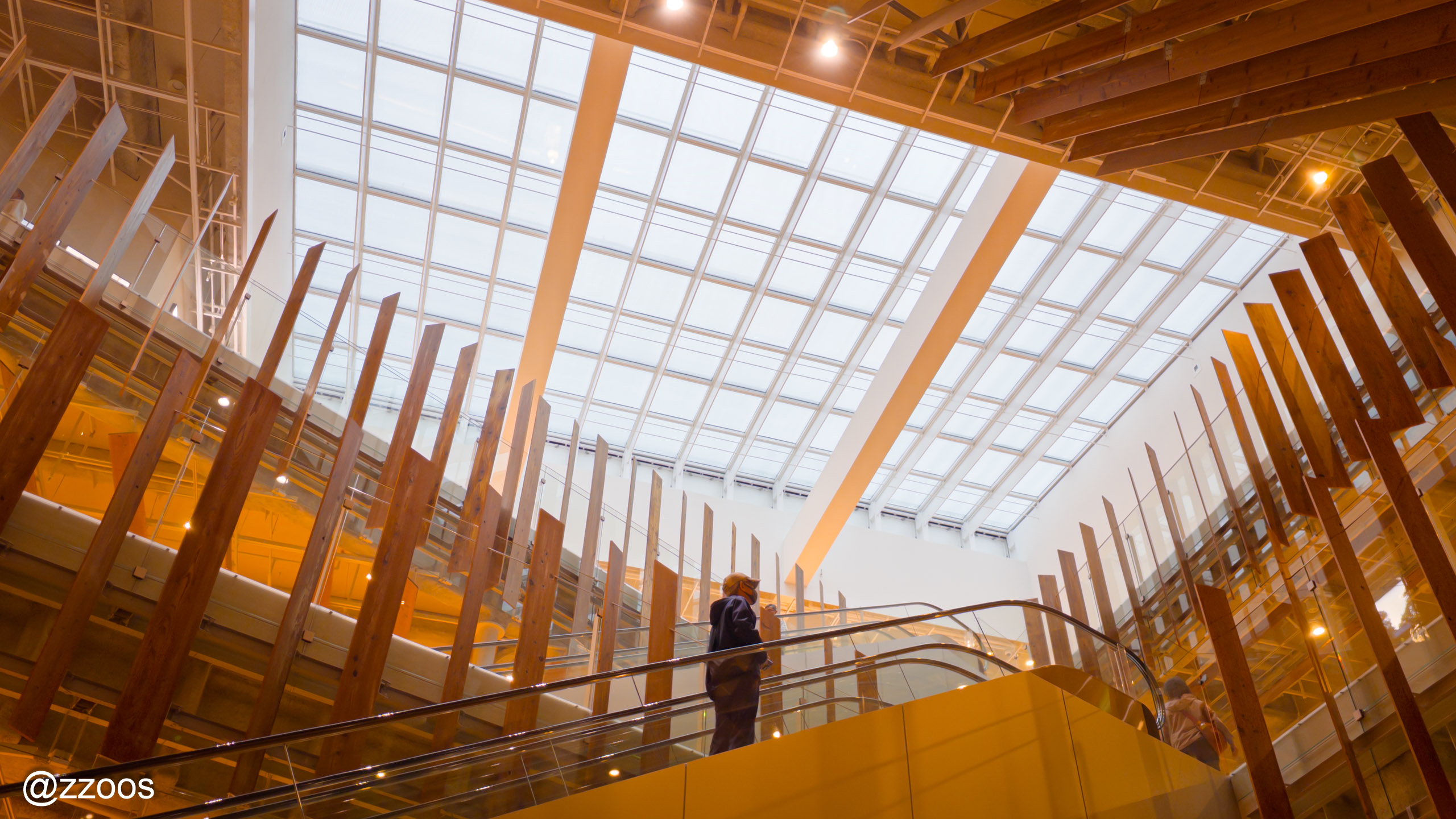
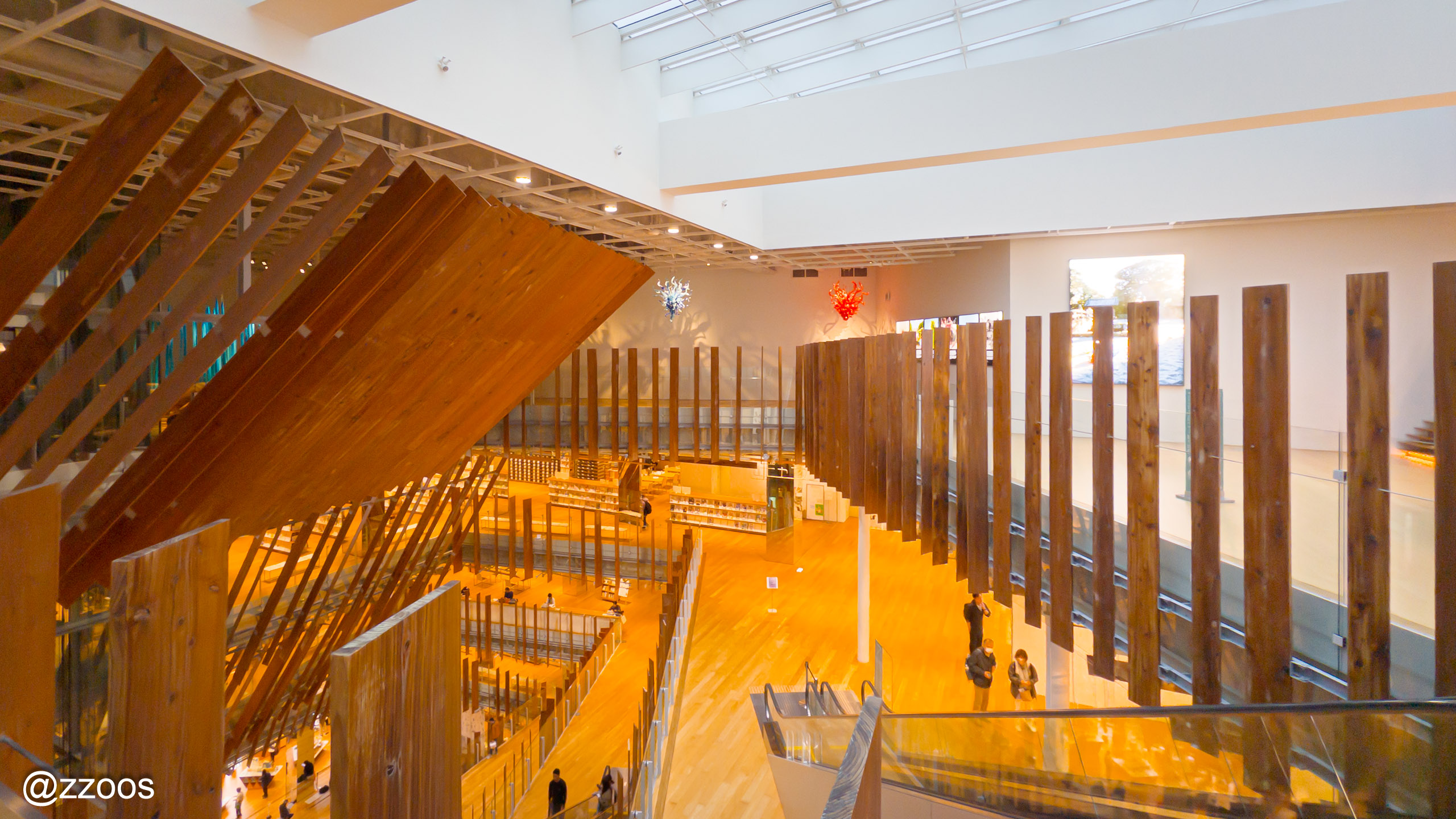
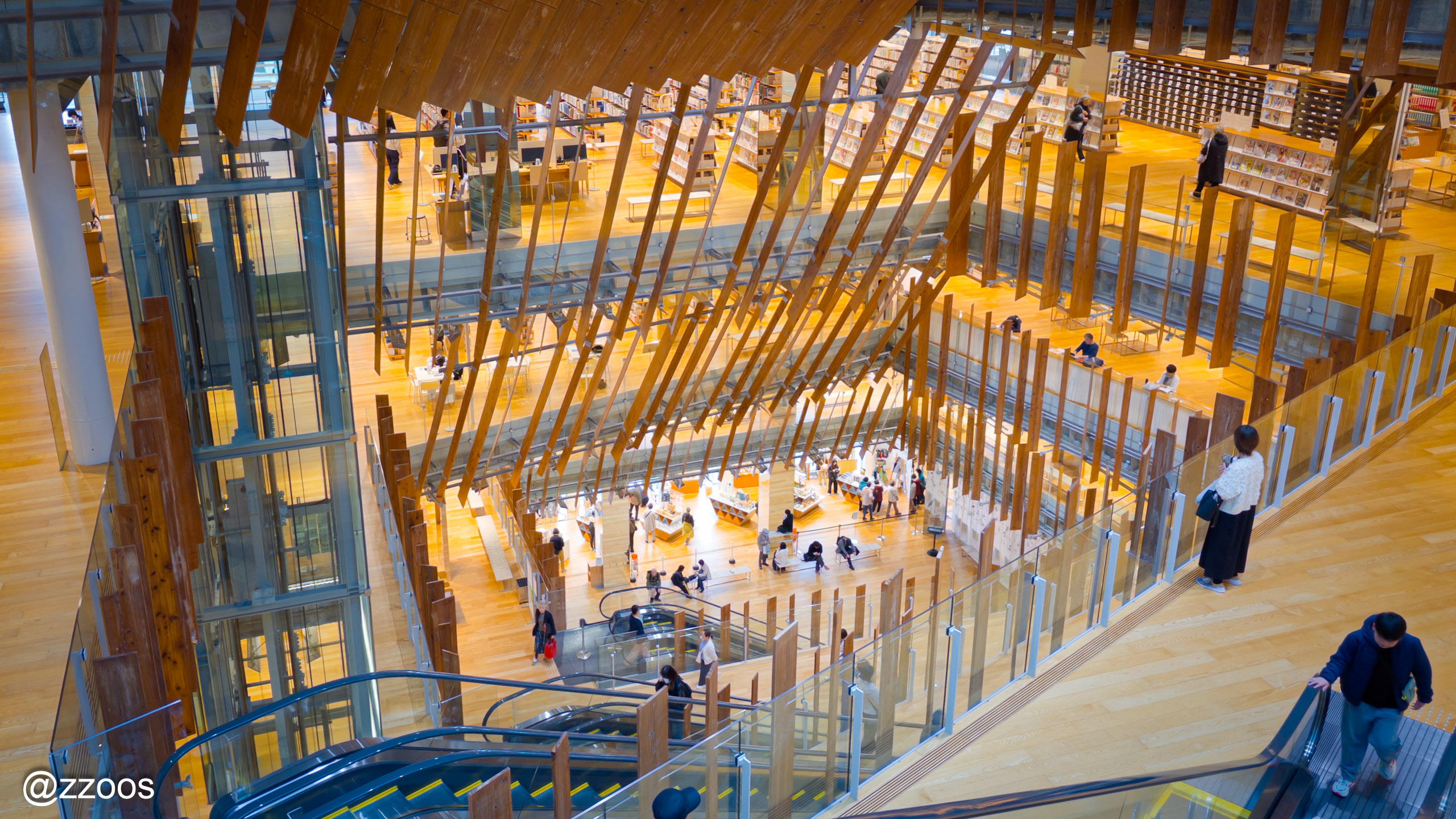
The escalators aren’t regular either. The escalators, freely arranged to match each floor’s shifted plan, could easily feel disorienting too — but because they’re arranged, seemingly irregular, to follow the space’s directionality toward the sixth-floor skylight, even the flow of the escalators plays a big part in shaping the sense of space as a whole.
Every moment going up from the second to the sixth floor, and every moment coming back down from the sixth to the second, became a new experience here.
It was a fresh space, the kind I hadn’t come across in a while.
Maybe that’s why? There were a lot of people who’d come here just to take photos.
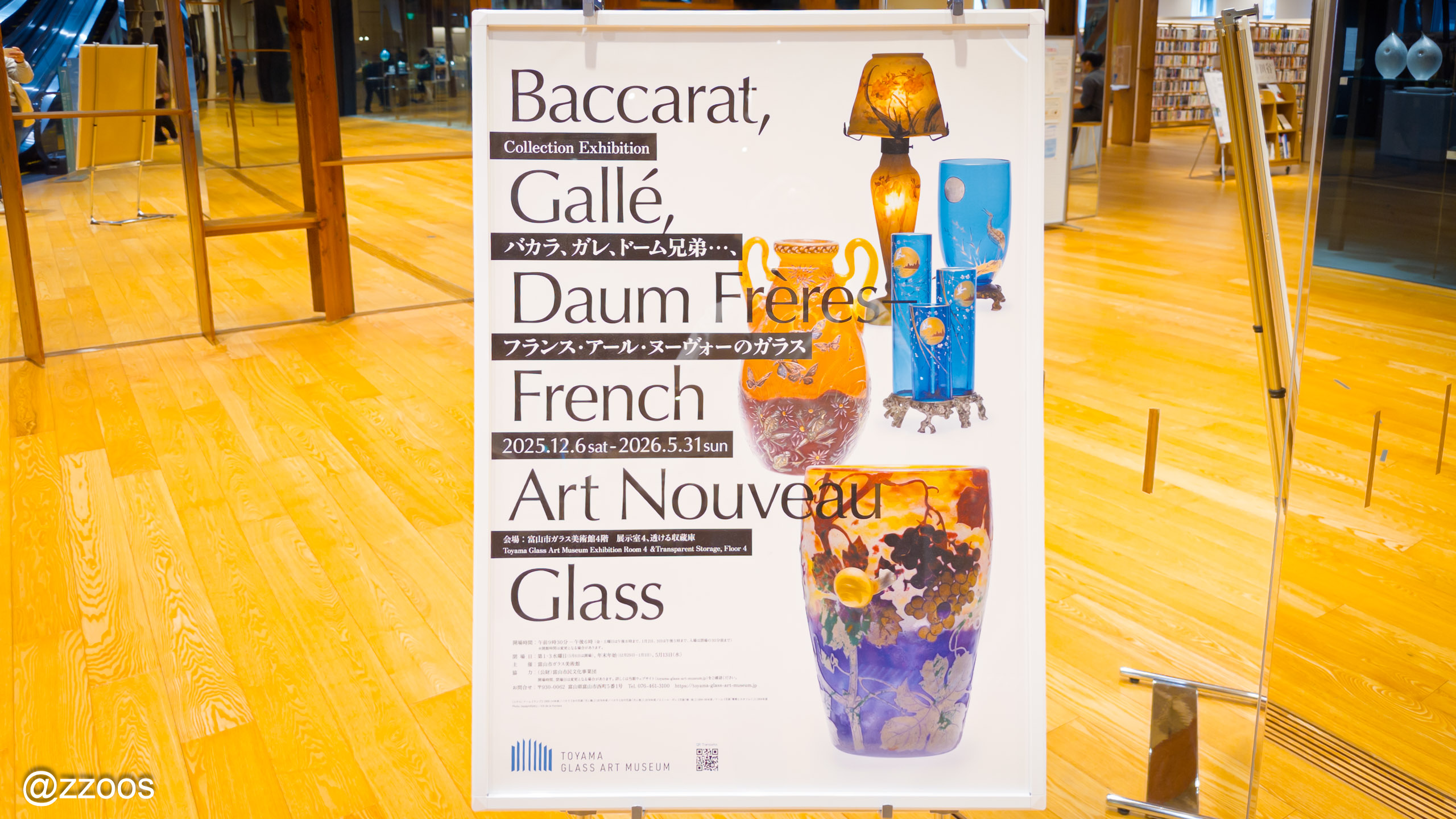
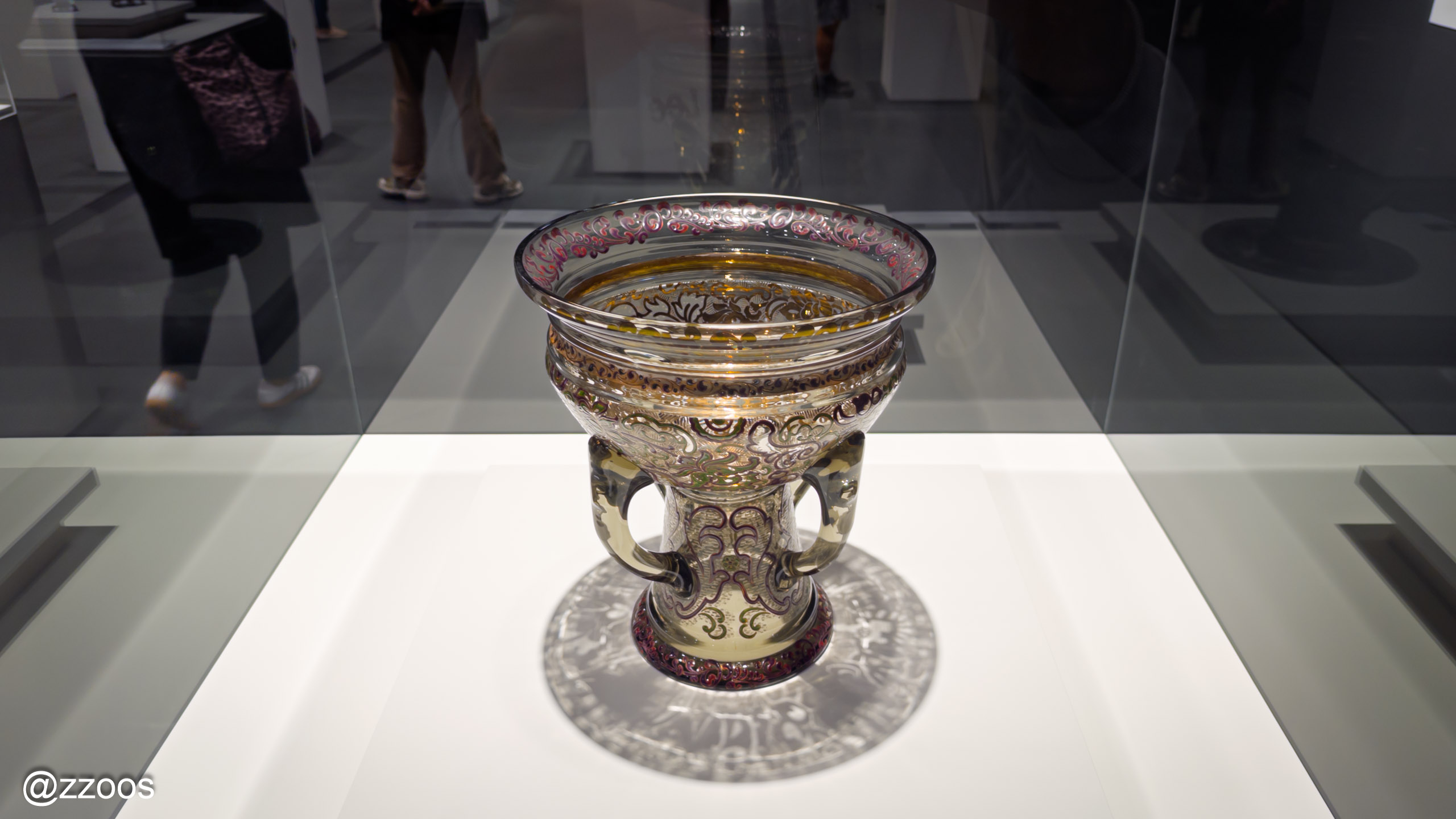
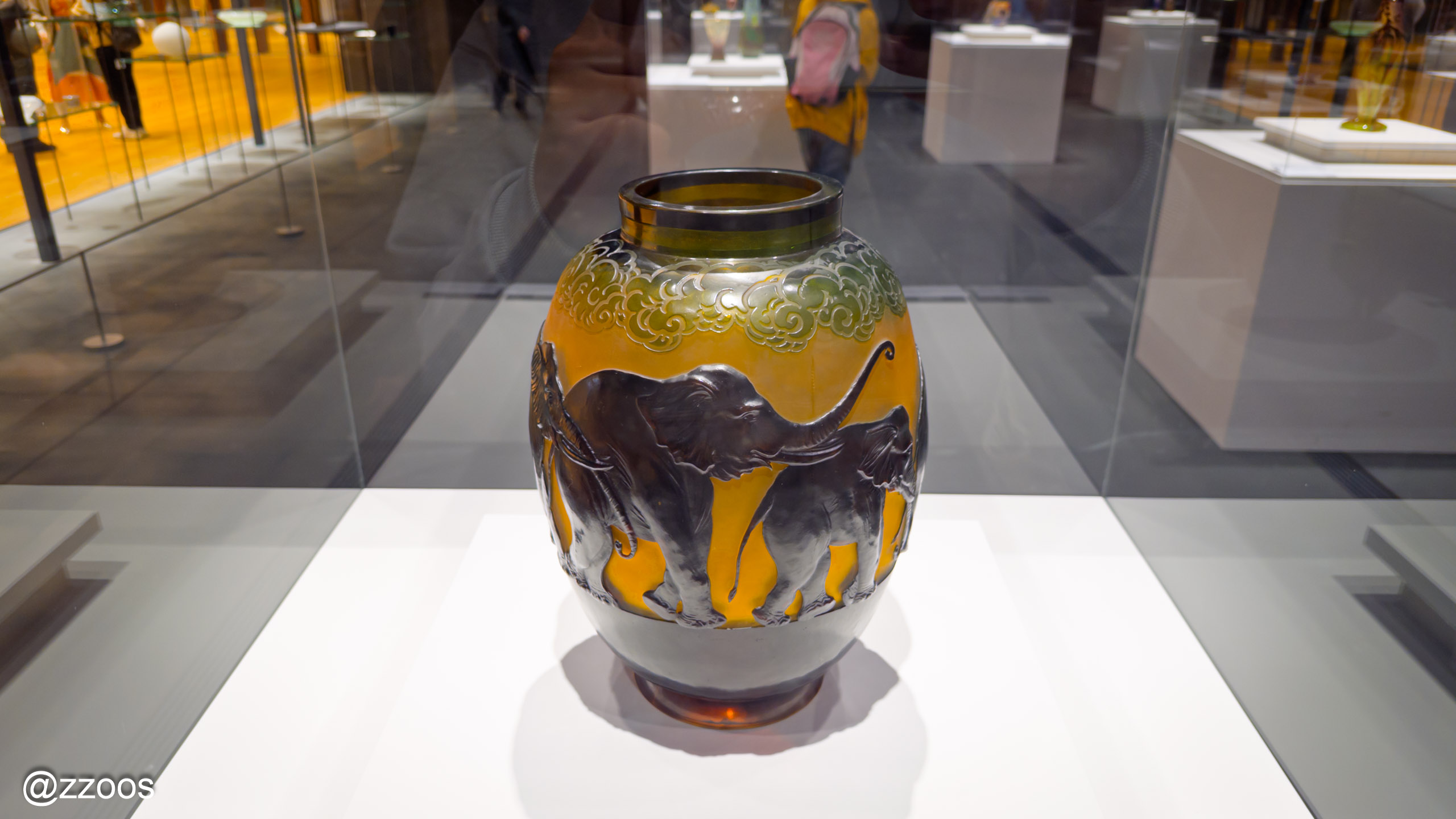
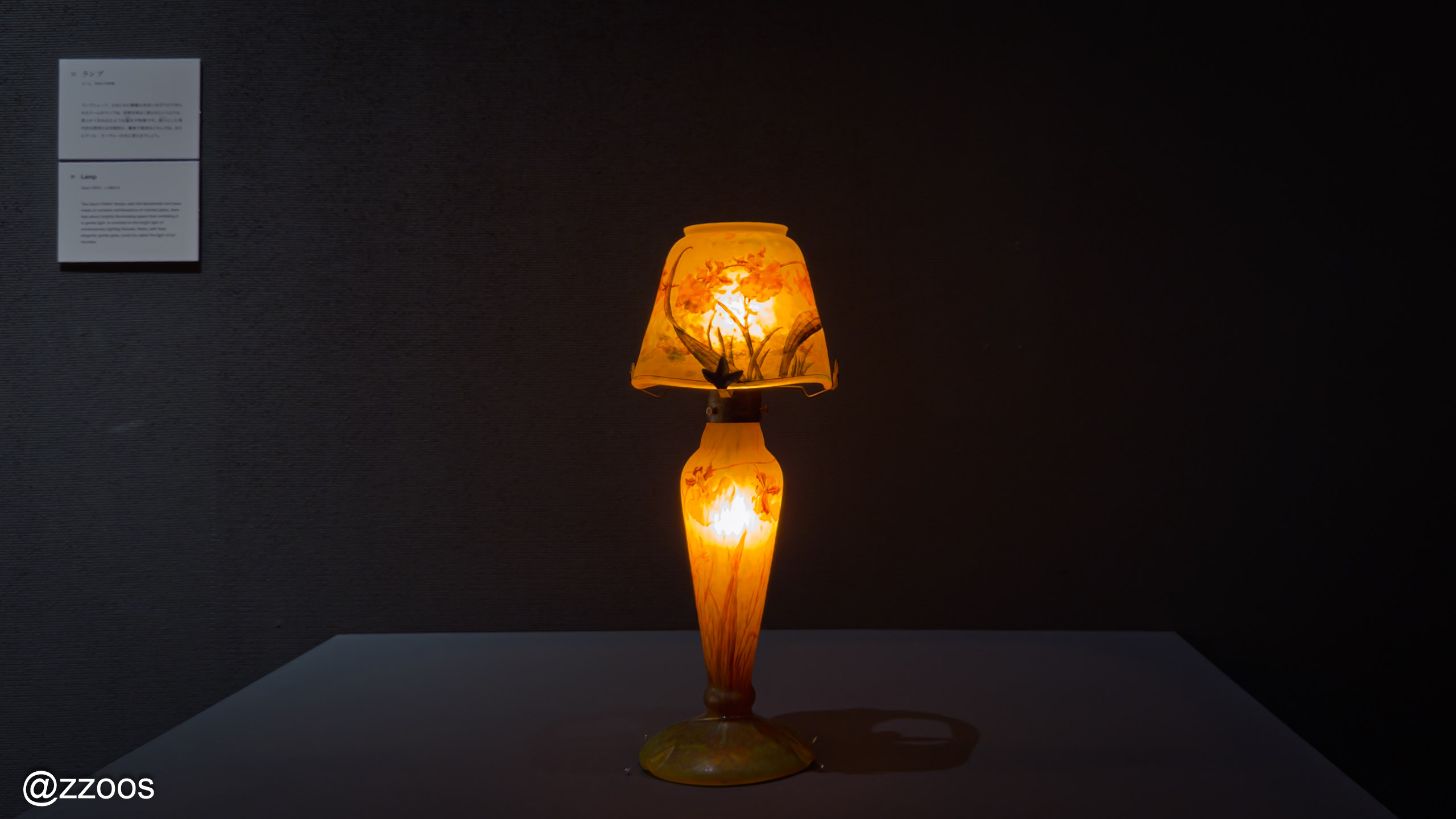
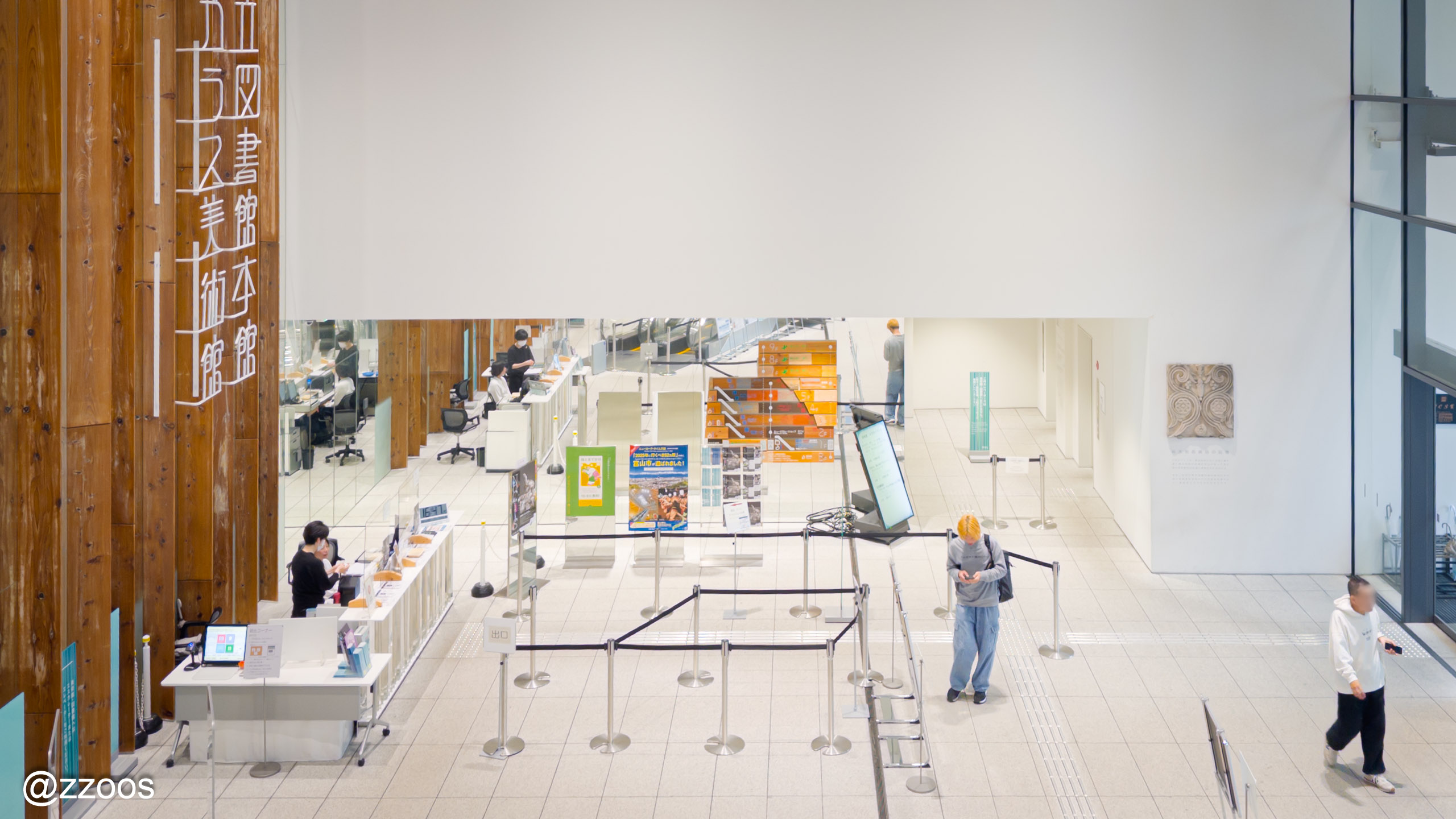
Anyway, this is a museum. You can buy admission tickets at the ticket booth on the first floor. They were split into a ticket for the permanent exhibition only and a ticket covering the special exhibition too. Since I’d come out of curiosity about the architecture, I bought the permanent-exhibition-only ticket.
But even without buying a museum ticket, there was no problem walking through the entire interior of the building.
That’s because there are plenty of spaces that aren’t the museum — the library, the cafe, and so on. The ticket was only needed to enter the galleries.
The permanent exhibition was running on the fourth and sixth floors.
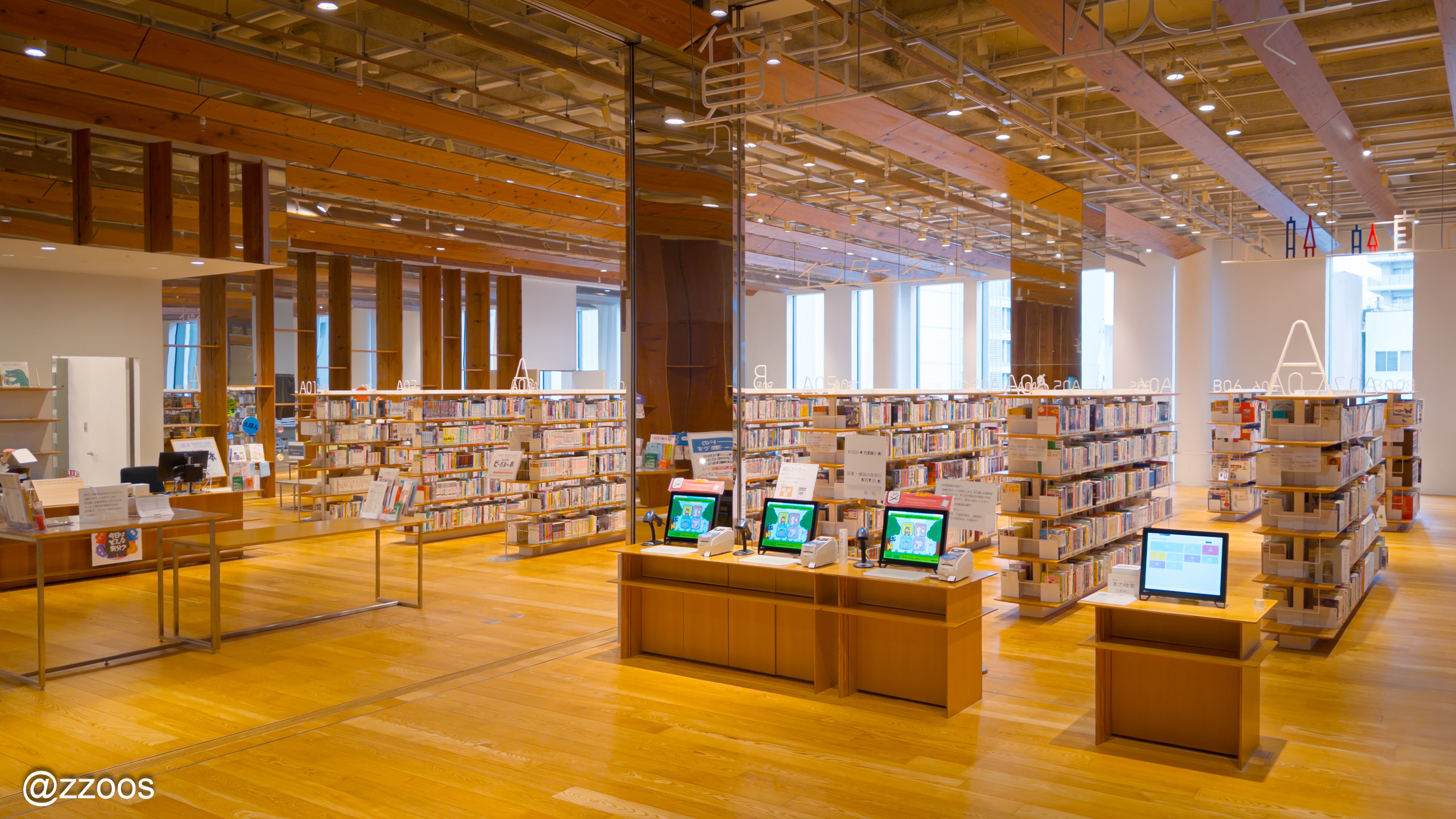
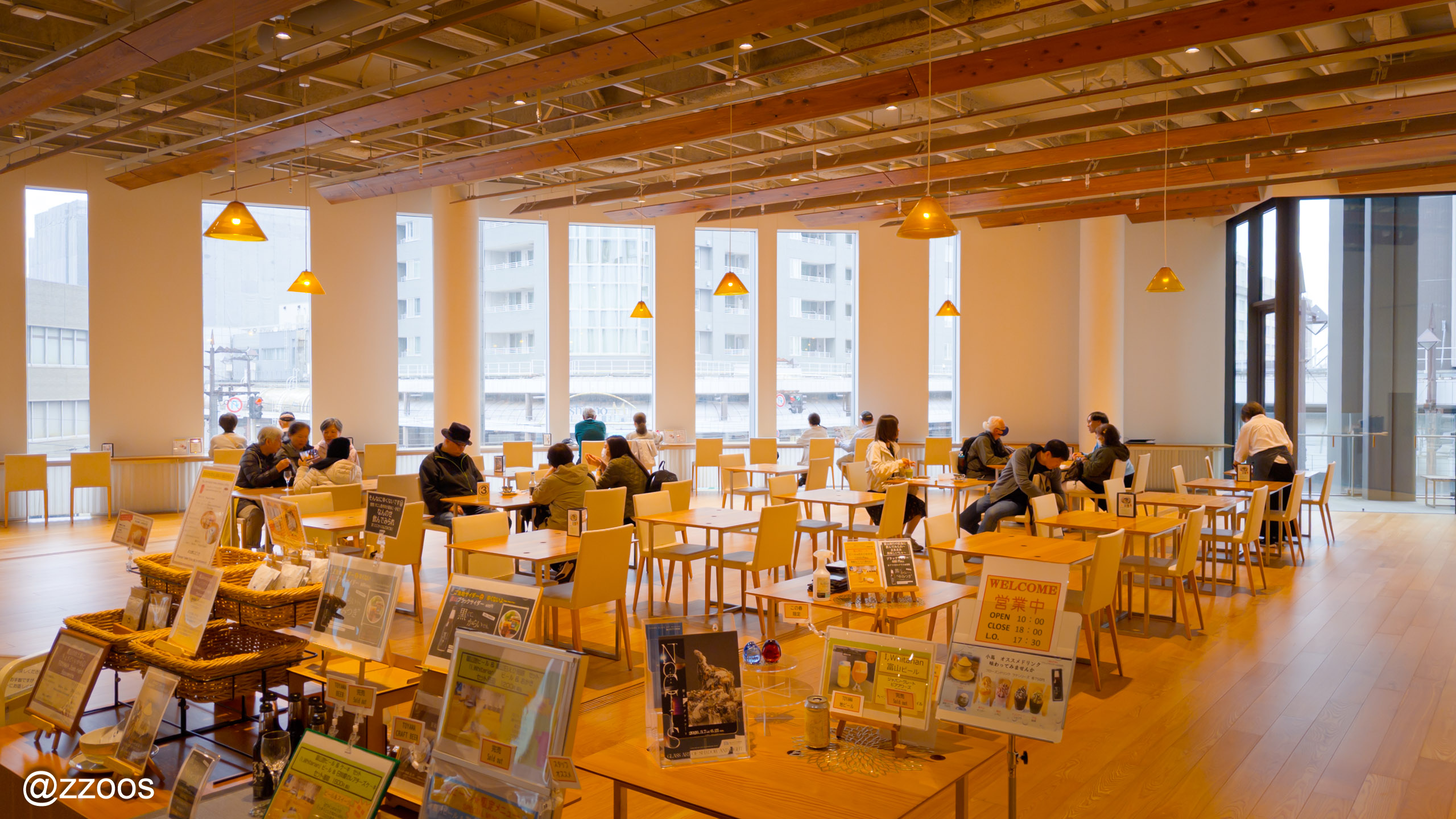
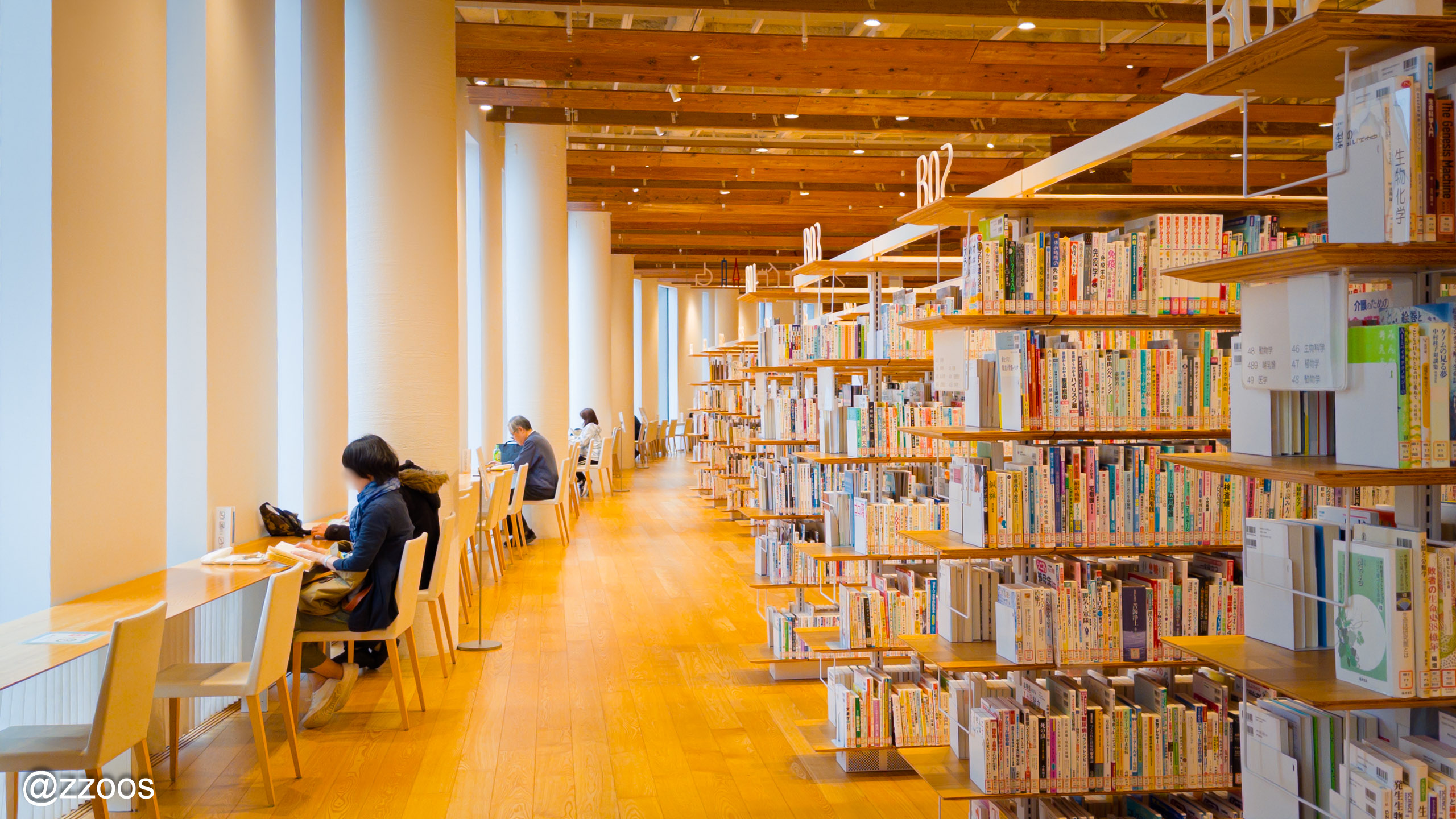
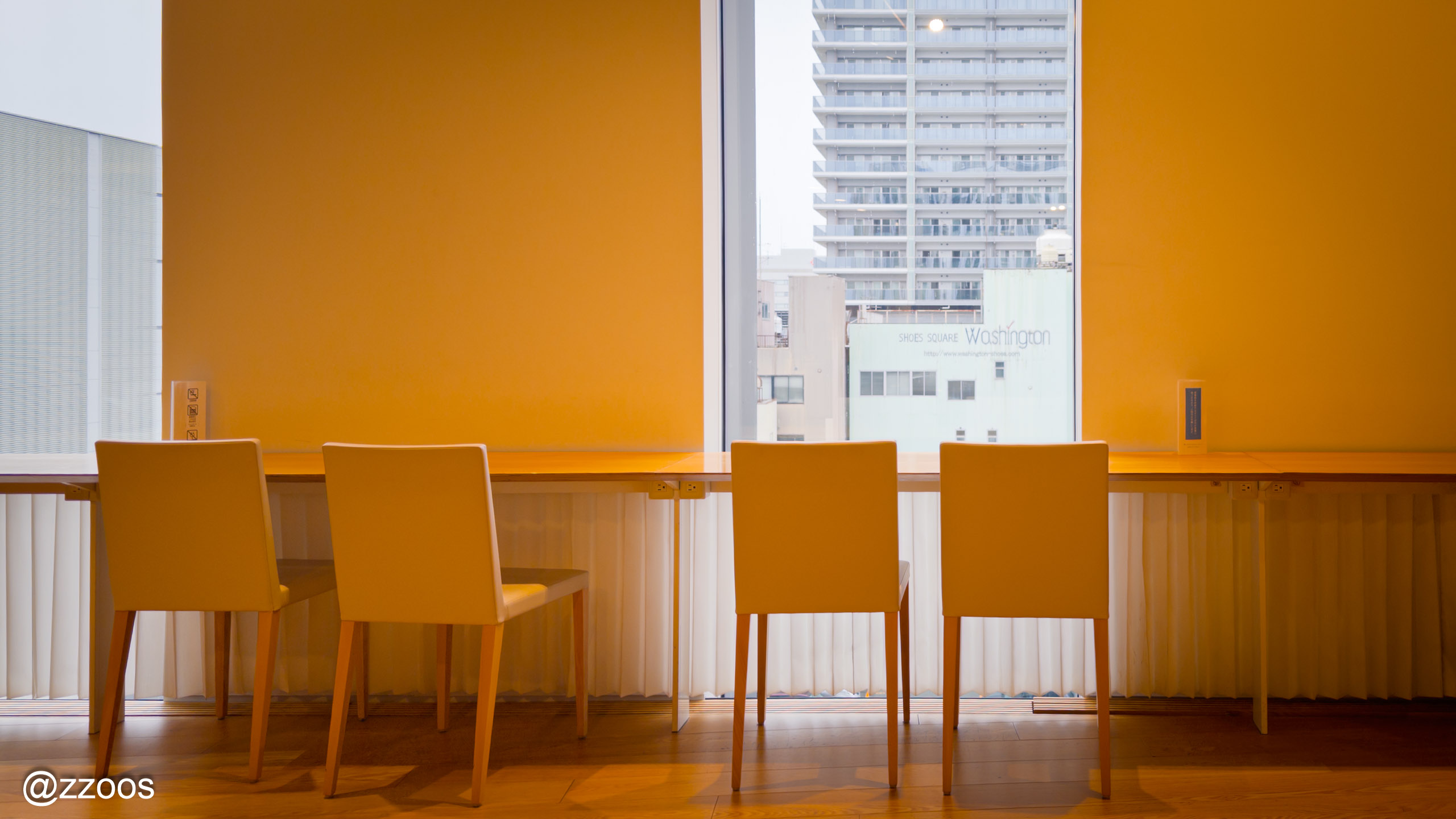
From the third to the fifth floor, the side opposite the galleries is the space used as the Toyama City Library. And on the second floor there’s a very spacious cafe.
I was a bit surprised that it’s a perfectly open space, one anyone can walk into easily without an ID or a membership card. When I first saw it, I thought it was a big bookstore.
And the reading rooms, as if they were part of the cafe — the way the boundaries are broken down, to the point where you can’t tell where the cafe ends and the library begins, is striking.
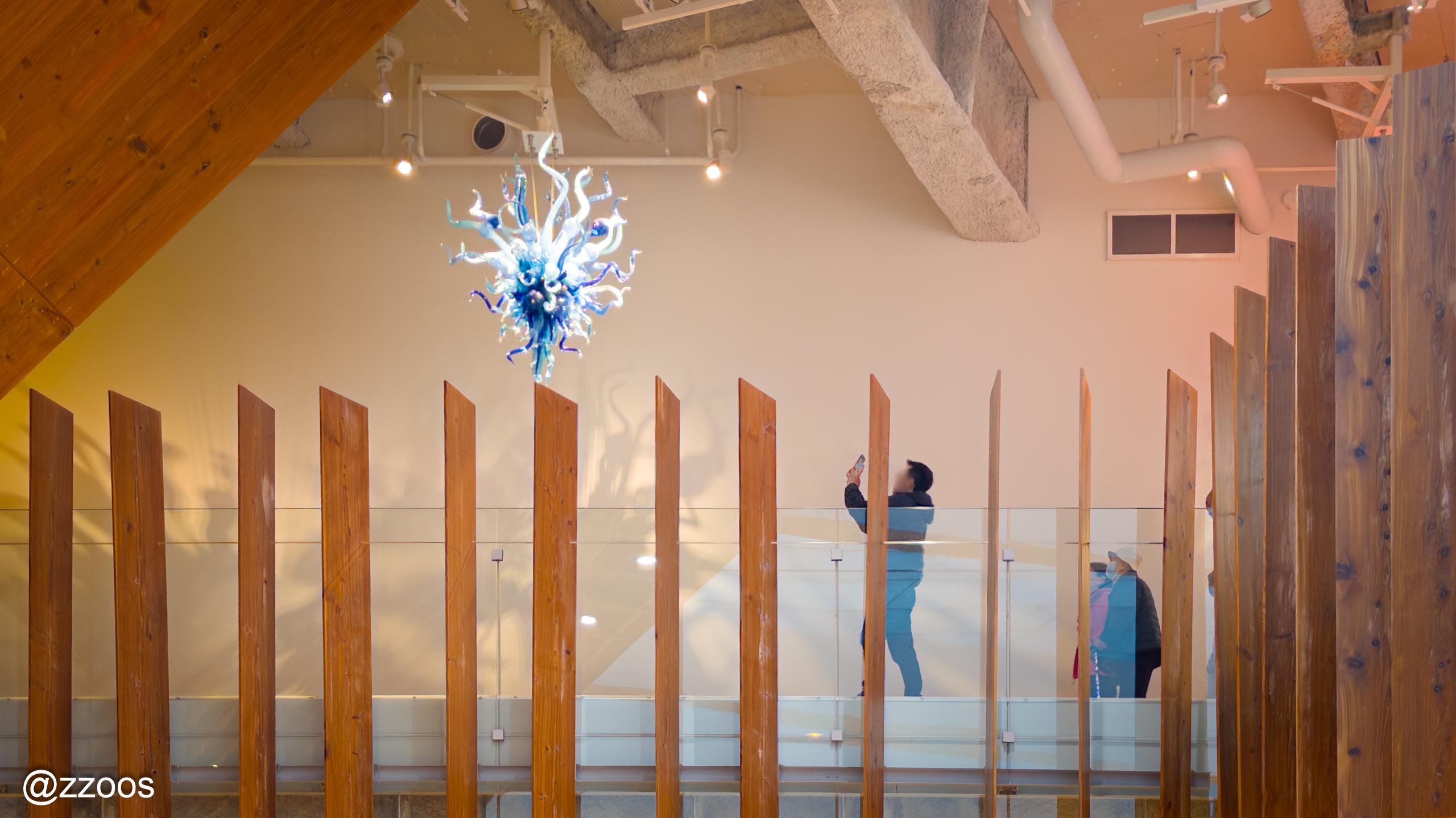
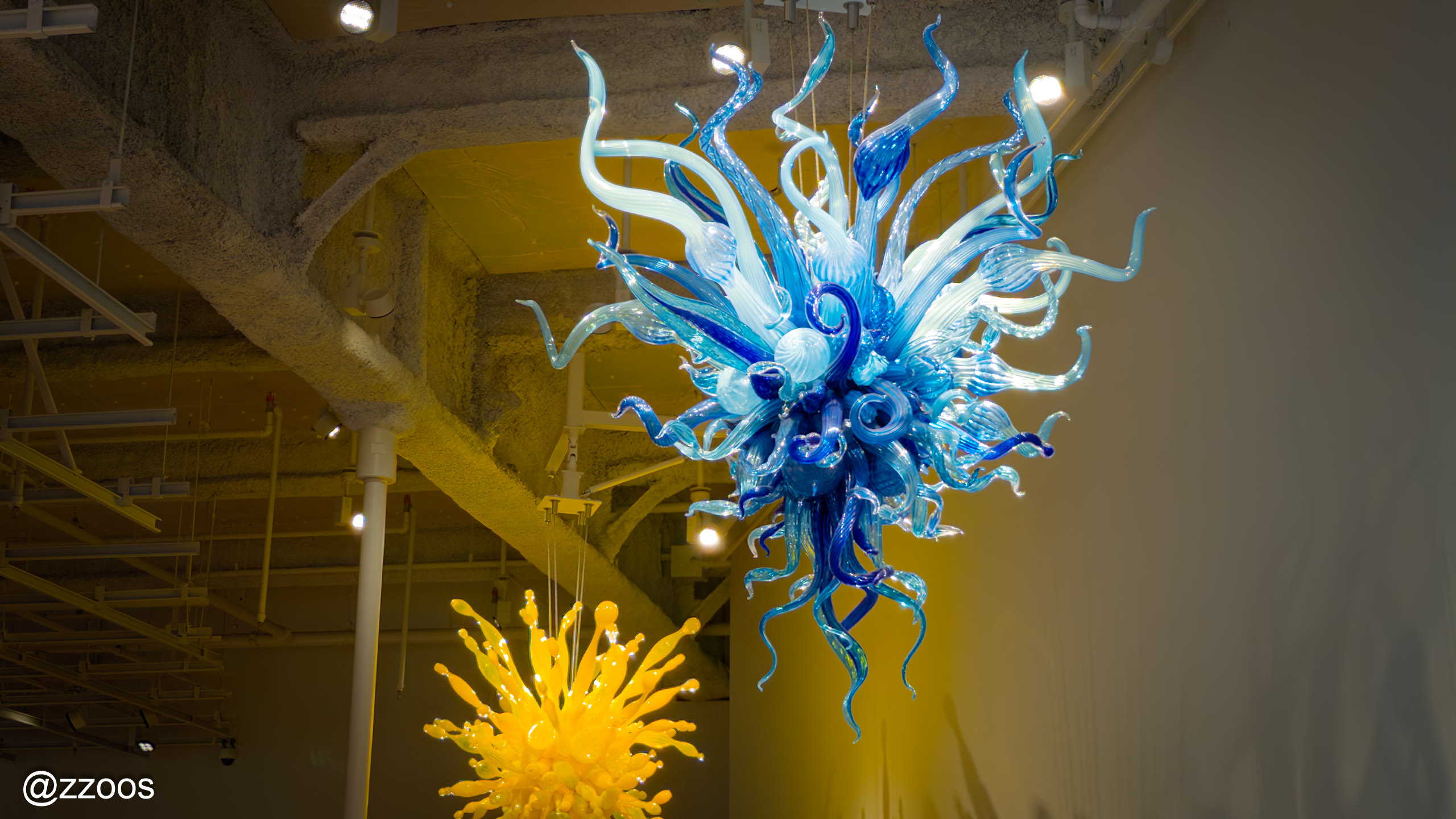
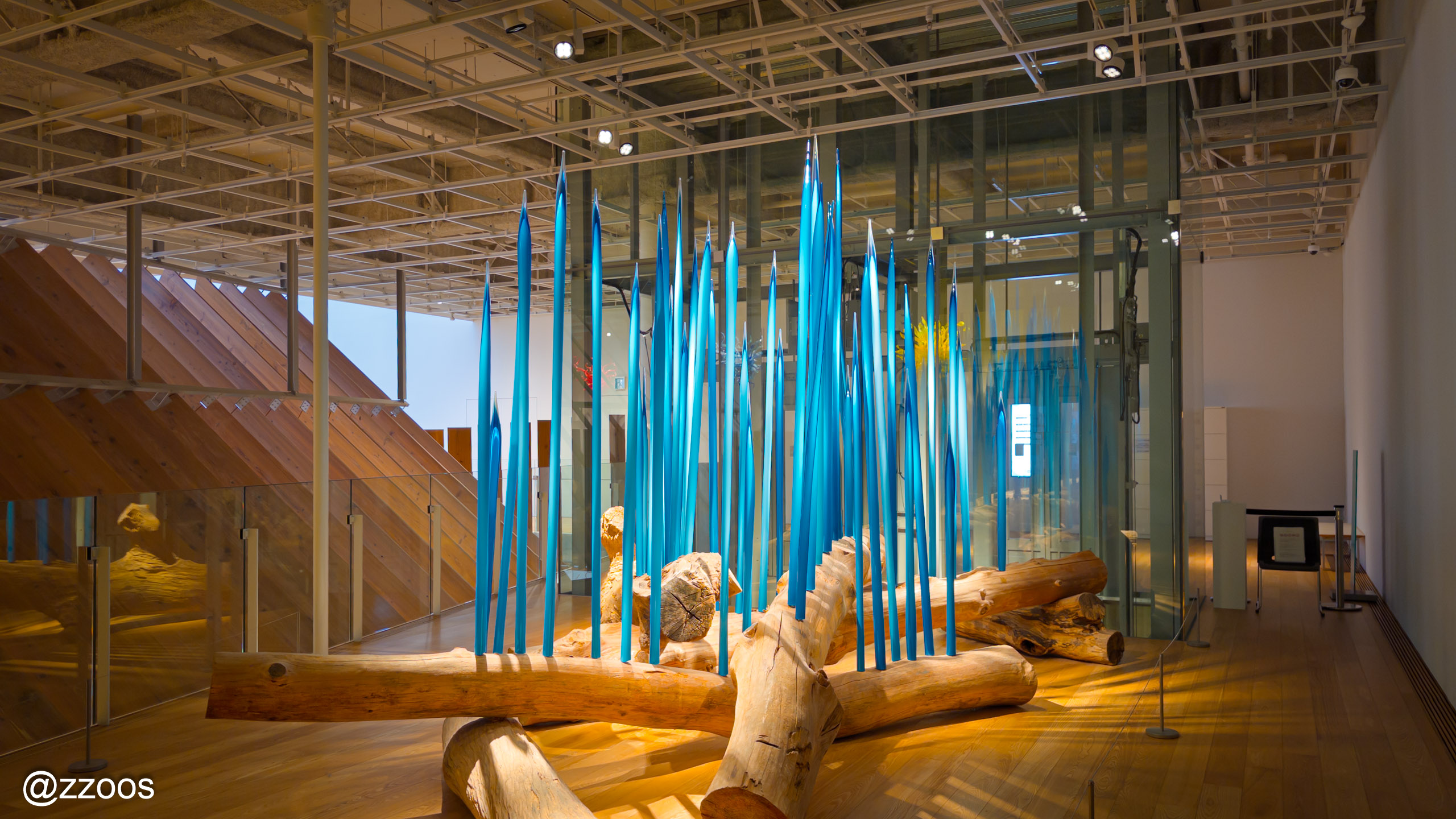
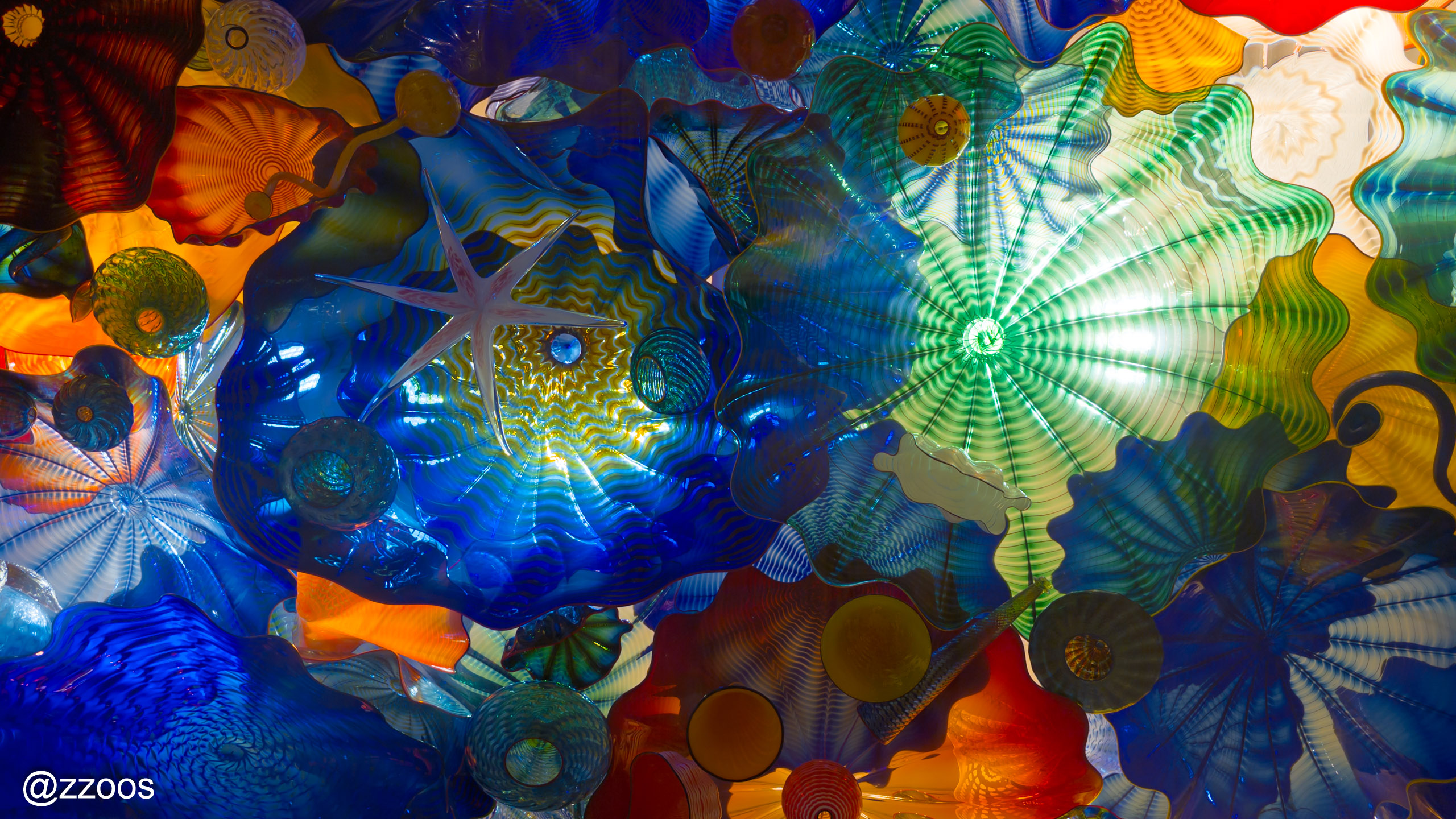
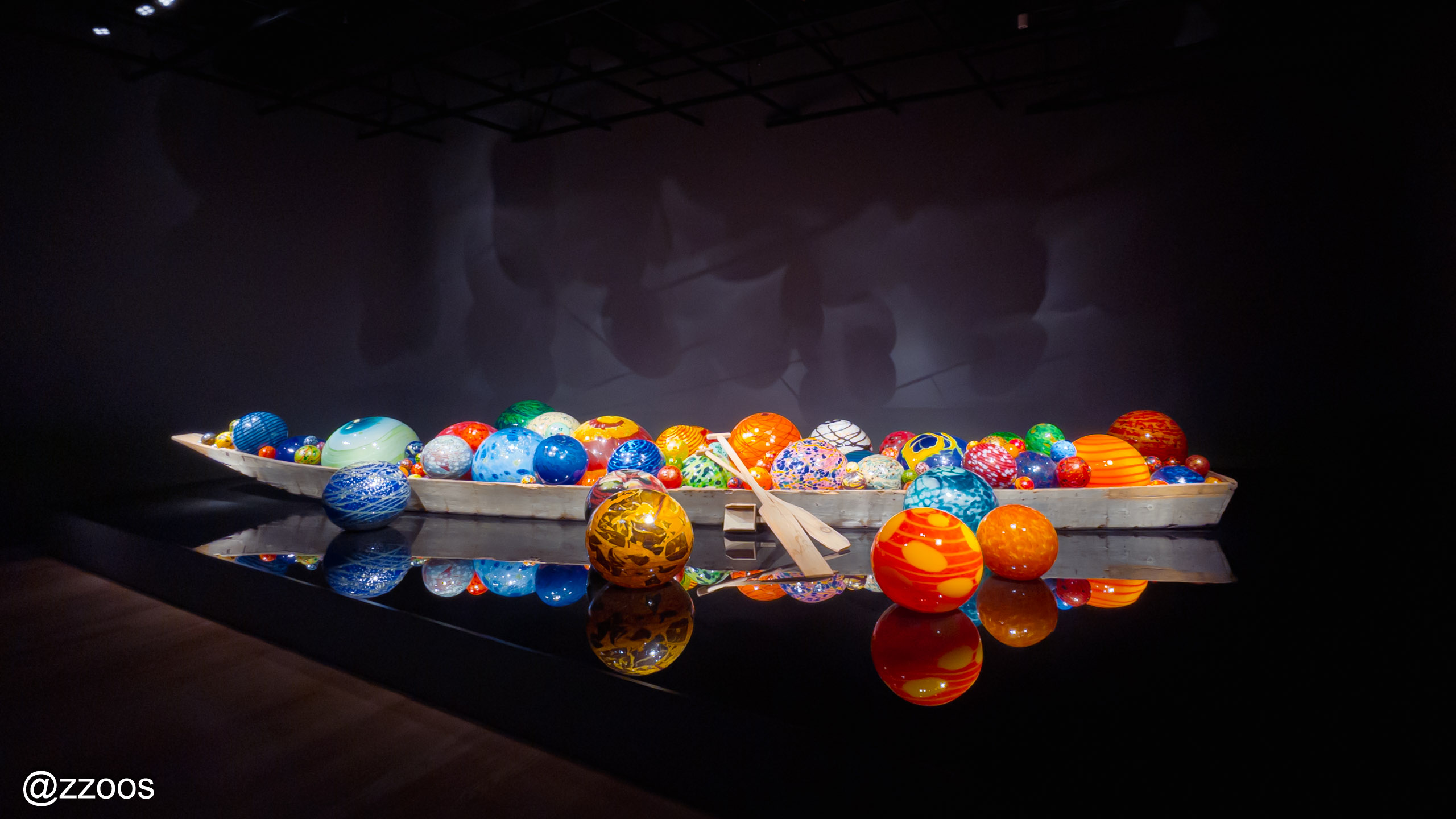
Finally, the sixth floor is a space with only the permanent gallery. If the fourth-floor gallery showed glasswork centered on smaller pieces, the sixth-floor gallery let you see enormous installation art made using glass.
Thanks to glass artworks in not only varied forms but also diverse colors, it’s the kind of show that’s a pleasure for the eyes.
And somehow this sense of color felt, curiously, quite Japanese. They say Westerners can’t really tell them apart, but the three East Asian countries — Korea, China, and Japan — distinguish each other remarkably well, don’t we?
Well, but after searching a little, it turns out the artist behind these works is an American named Dale Chihuly. So I figured my impression was wrong. Huh — but digging a bit further, this artist gave shape to images he’d seen in Japan and collaborated with Japanese glass artisans. So my impression wasn’t entirely wrong after all.
If you have even a little interest in architecture, I think this is a place worth stopping by at least once. It was a fairly moving spatial experience, the kind I hadn’t had in a while.
I feel like I got a small glimpse of the skill (?) of Kengo Kuma, said to represent contemporary Japanese architecture. Famous people really aren’t famous for nothing.
Alright, in the next post I’ll go visit yet another building.
Moments like this remind me all over again that my major was architecture.