I walked along Ohoridori under a canopy of trees.
The weather was nice, and I was in a good mood. I could have kept walking forever, but my goal for the day was to see both Kanazawa Castle and Kenrokuen, so that wasn’t an option.
Around Nezumita-mon, I turned and entered Oyama Shrine (尾山神社) through the Higashi Sanmon gate. I wanted to visit one of Kanazawa’s most iconic shrines before heading to the castle.
The standard route into the shrine is through the Oyama Shrine Shinmon Gate (尾山神社 神門). But since I entered from the opposite side, the photos here are in reverse order from the usual flow.
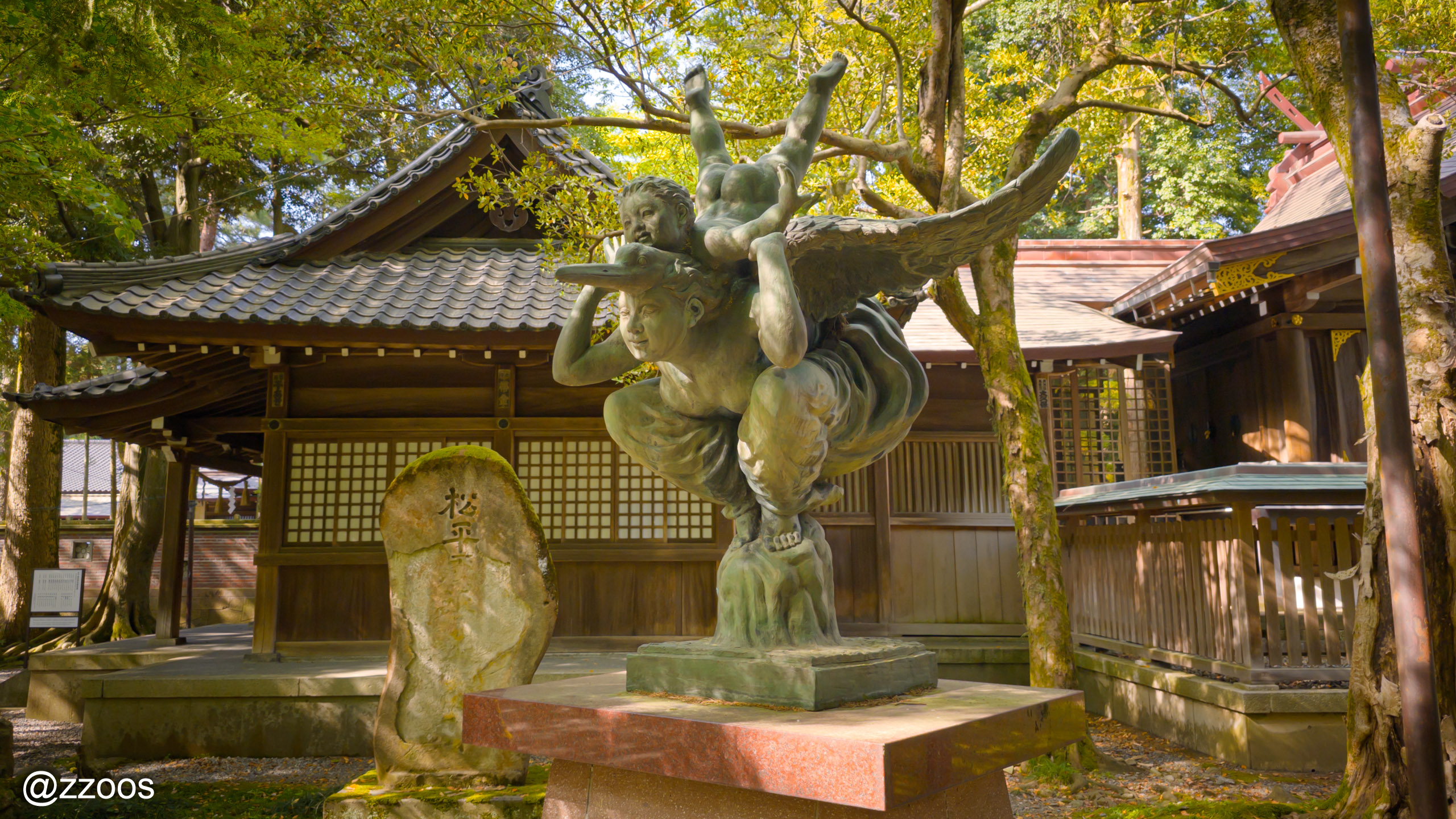
In the Edo period, the Kanazawa region was known as the Kaga Domain (加賀藩). It’s not exactly the same as present-day Ishikawa Prefecture, but roughly the same area.
The Kaga Domain was said to be the wealthiest and most powerful domain in Japan at the time, second only to the Tokugawa shogunate.
The phrase “Kaga Hyakumangoku (加賀百万石),” which you’ll come across here and there in Kanazawa, refers to that era — it symbolizes the domain’s wealth and power, when rice production exceeded one million koku.
The man credited with laying the foundation for that prosperity was Maeda Toshiie (前田利家), the first lord of the Maeda clan.
To the people of Kanazawa, he was a symbolic figure of the Kaga Domain, and Oyama Shrine is dedicated to him.
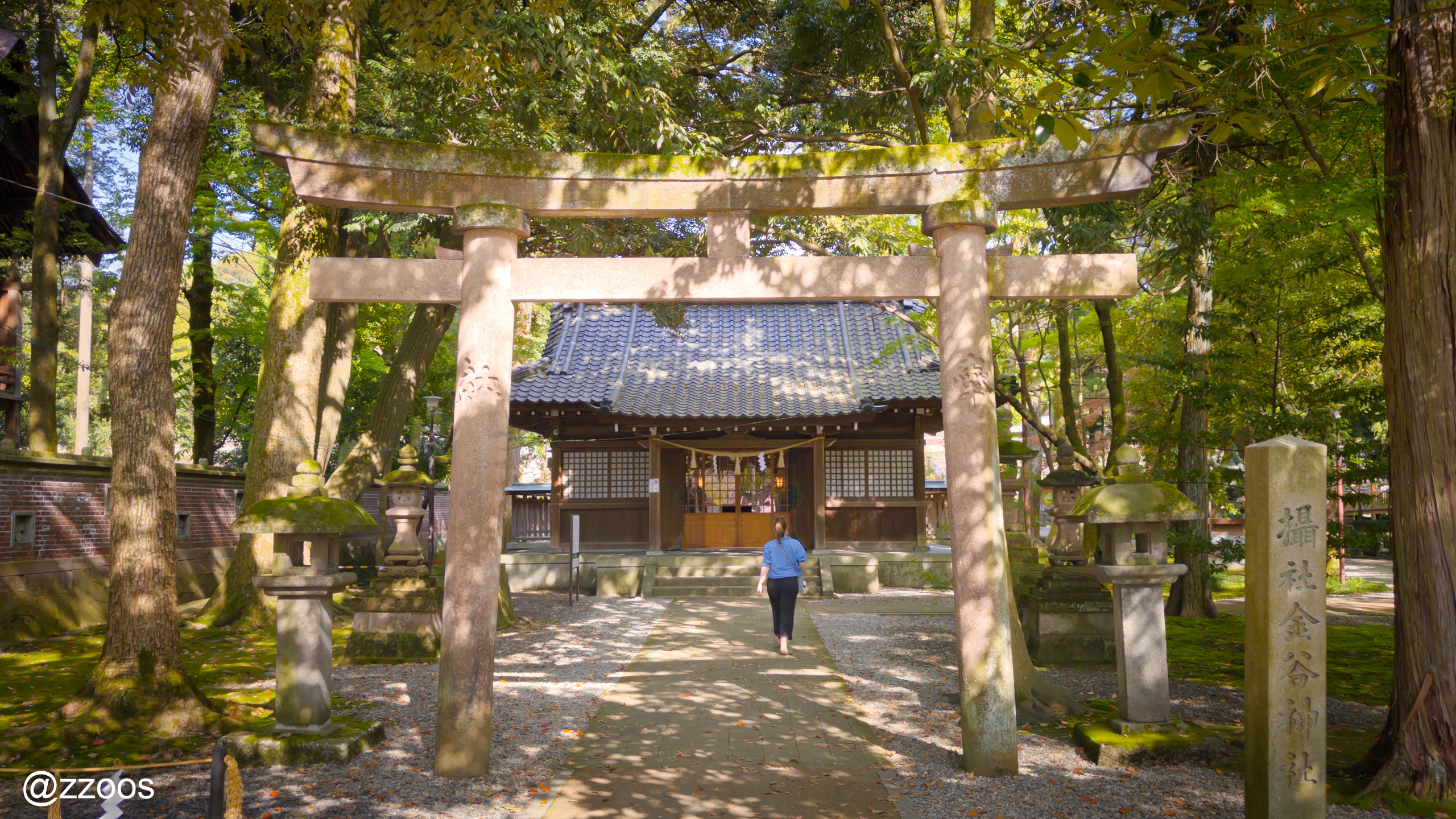
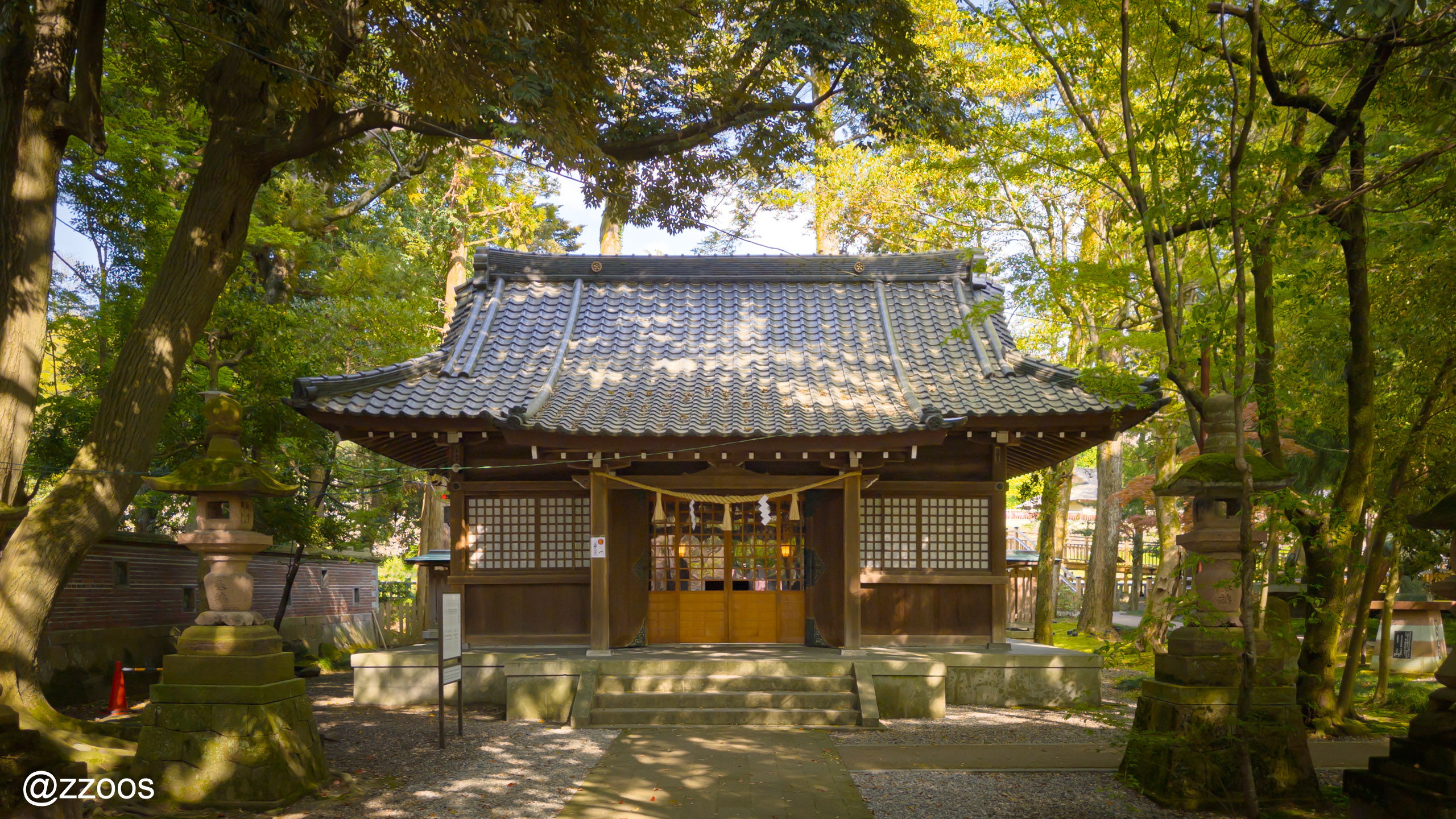
Within the grounds of Oyama Shrine, there is a smaller shrine called Kanaya Shrine (金谷神社).
This is where the second and subsequent lords of the Maeda clan are enshrined. The first lord is enshrined at Oyama Shrine, and the rest are here.
Oyama Shrine also enshrines Matsu (まつ), the wife of the first lord Maeda Toshiie.
Matsu is well-known for protecting her family and children through times of crisis. The shrine is also known as a place where people pray for safe childbirth and healthy upbringing.
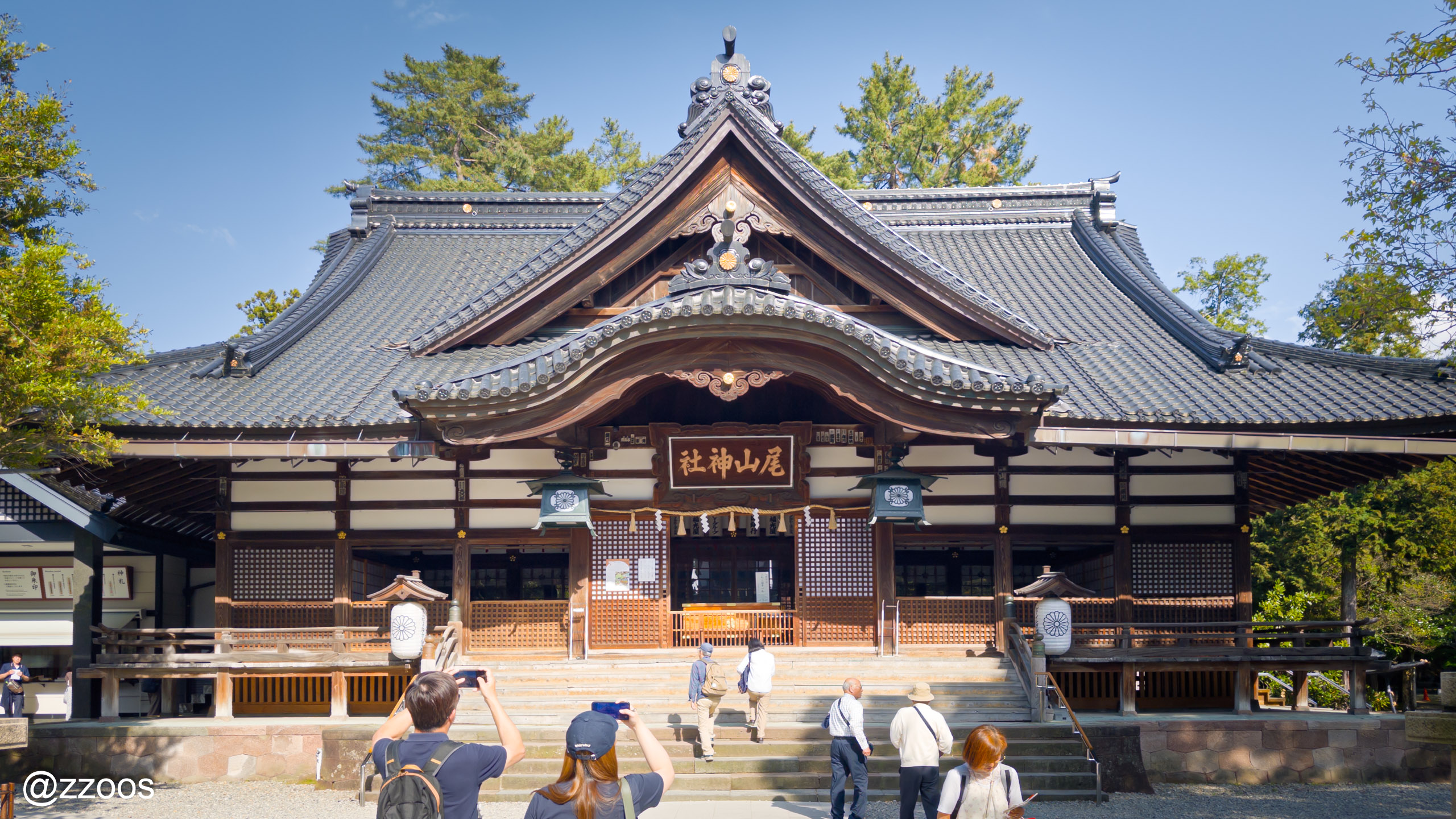
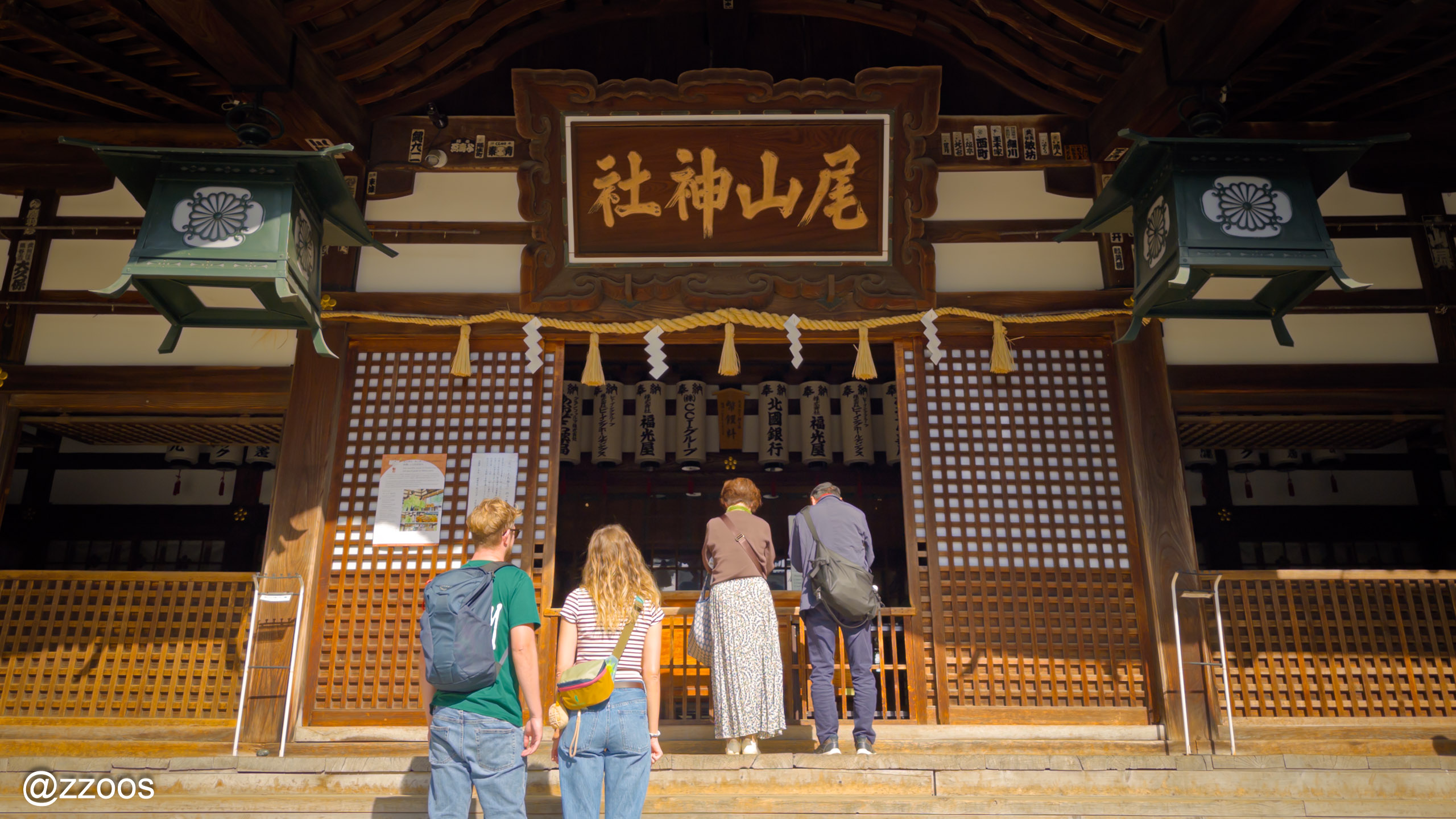
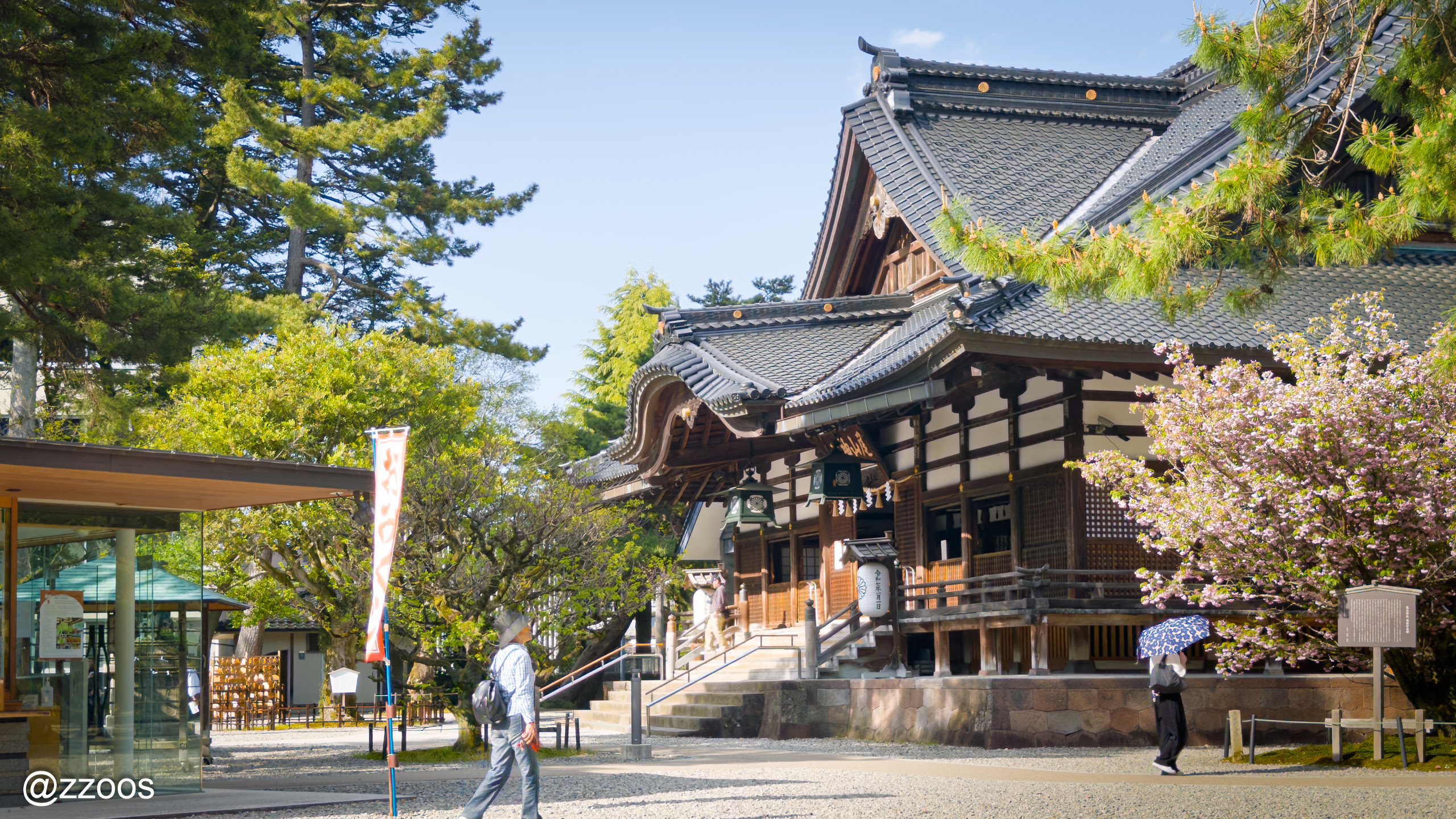
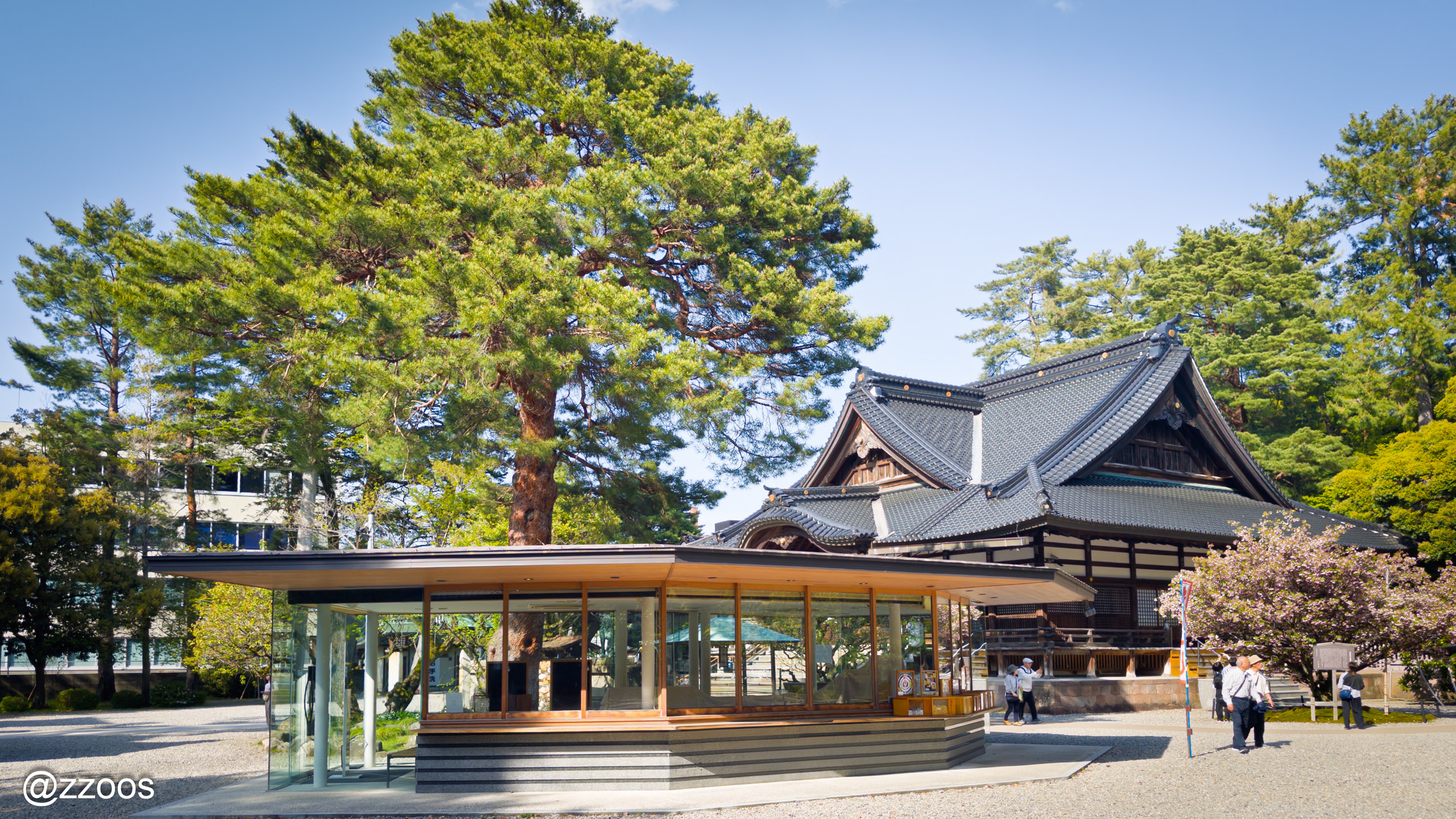
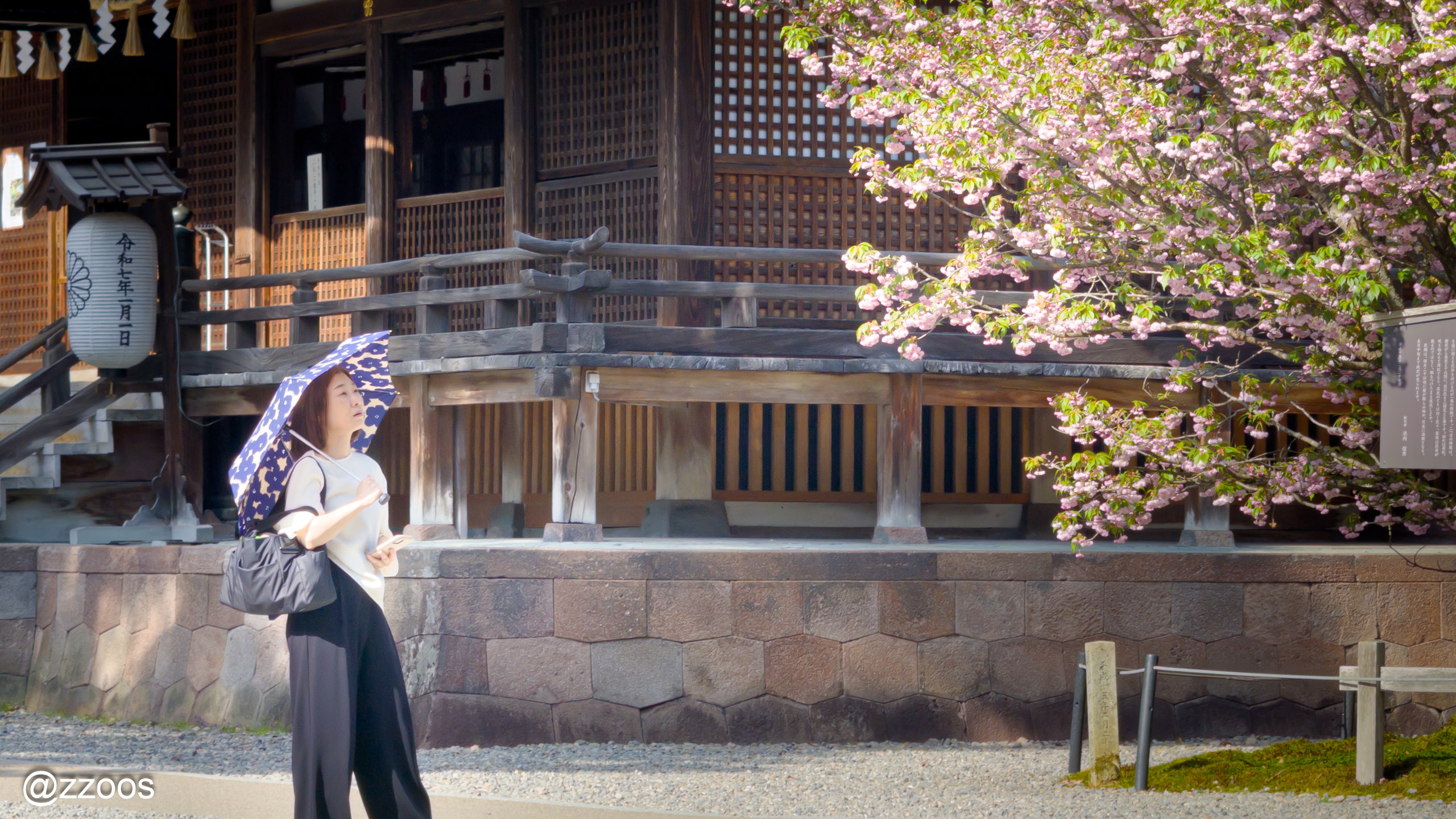
Arriving in front of the haiden (拝殿), there were a lot of people. Worshippers and photographers crowding the space. Kanazawa really does draw a lot of tourists.
The haiden is the main building of a shrine, where visitors come to worship.
The actual place where the deity resides is the honden (本殿), which is typically hidden away deep inside the grounds and not directly accessible to visitors.
The shrine office in front of the haiden was, surprisingly, a very modern building.
Seeing something like that, Kanazawa feels like a city where tradition and modernity coexist quite naturally. That feeling gets even stronger when you think about the 21st Century Museum of Contemporary Art, sitting right next to Kenrokuen.
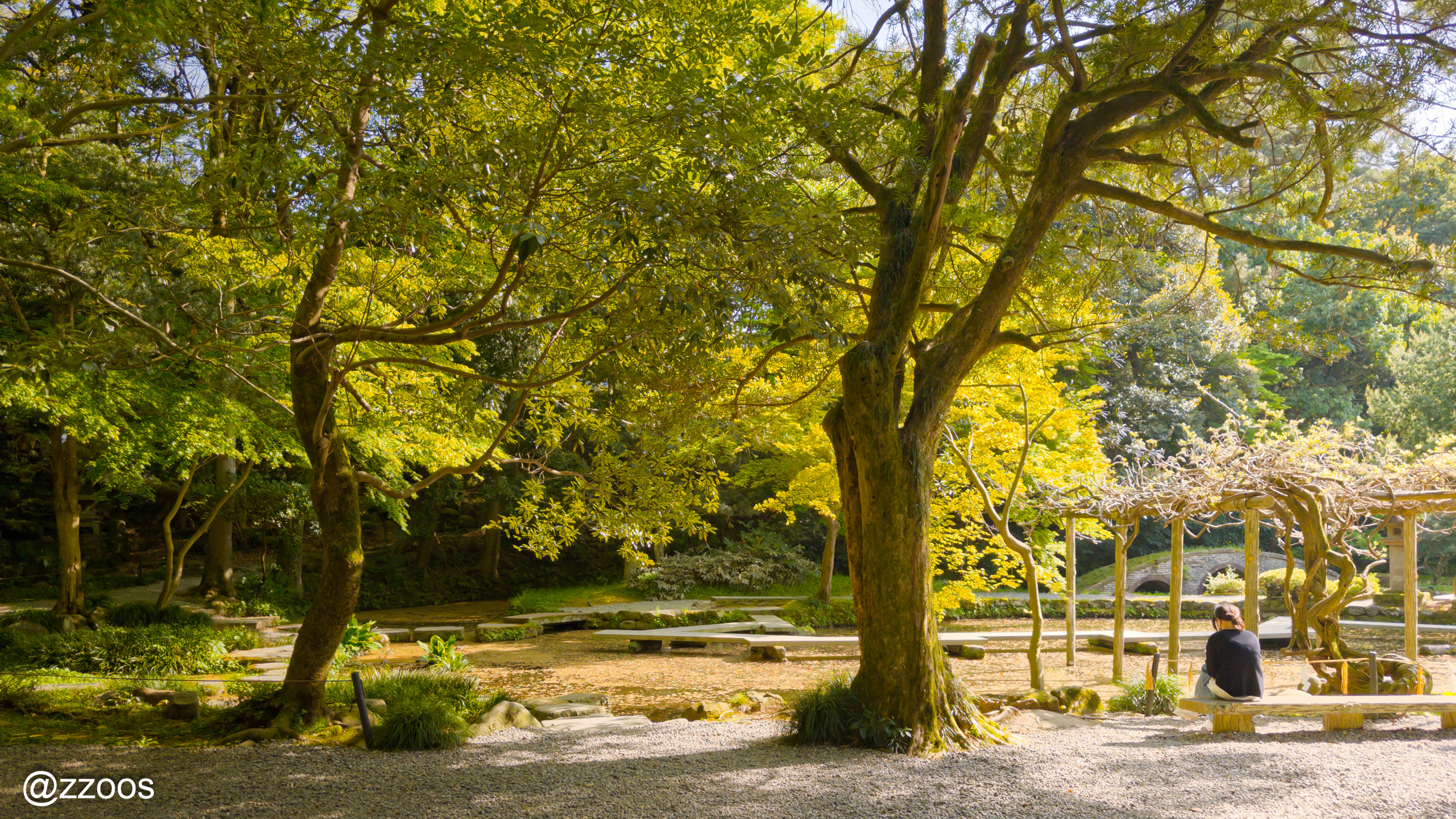
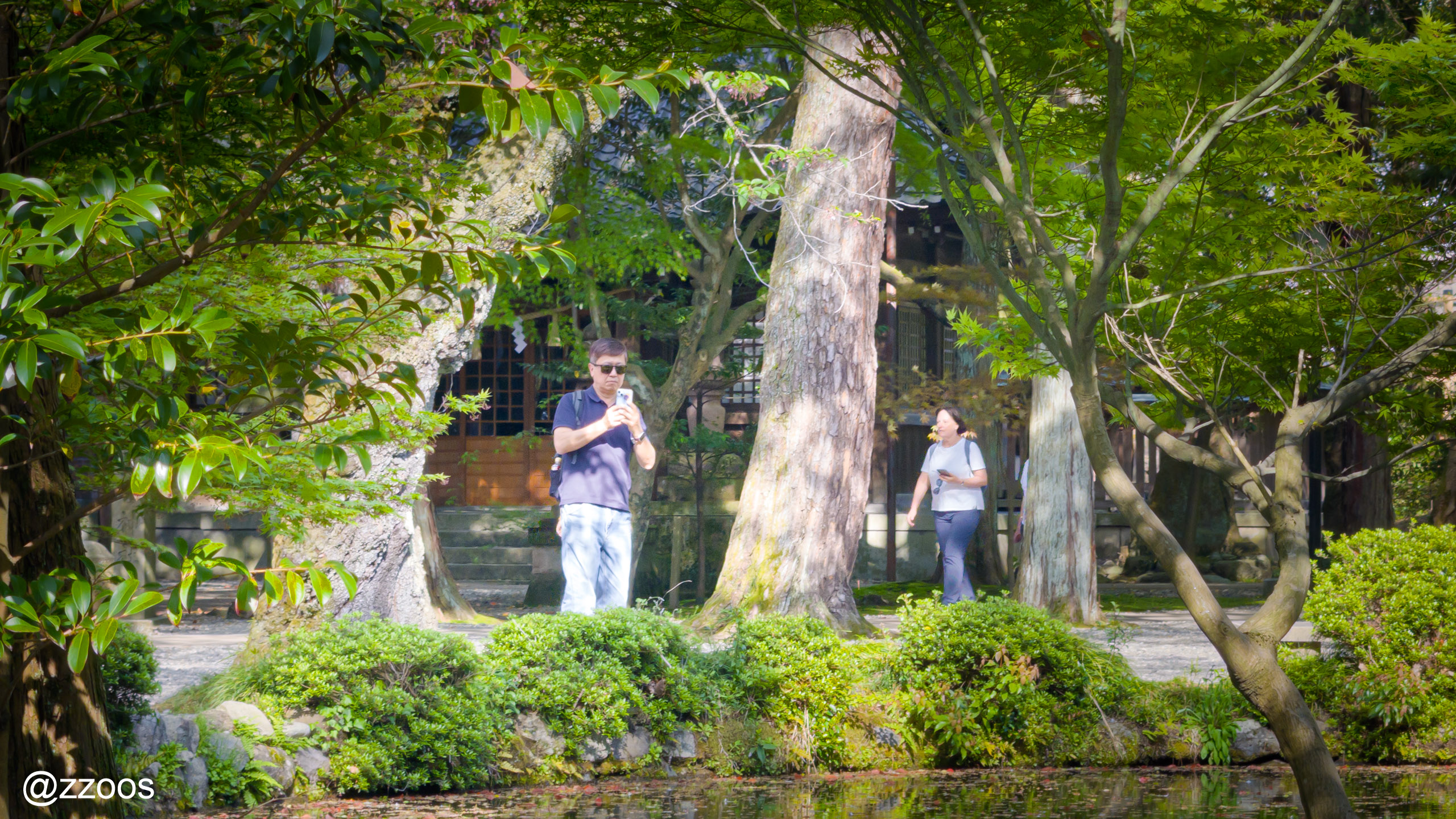
Next to the haiden, there is a pond. It’s quite large, with a proper walking path around it — a real garden.
Before Oyama Shrine existed, this area was part of Kanazawa Castle grounds.
The shrine was built on the site of Kanaya Goten (金谷御殿), a residence where the domain lord handled his affairs. The garden next to that residence is why it’s so substantial.
I sat here for a while.
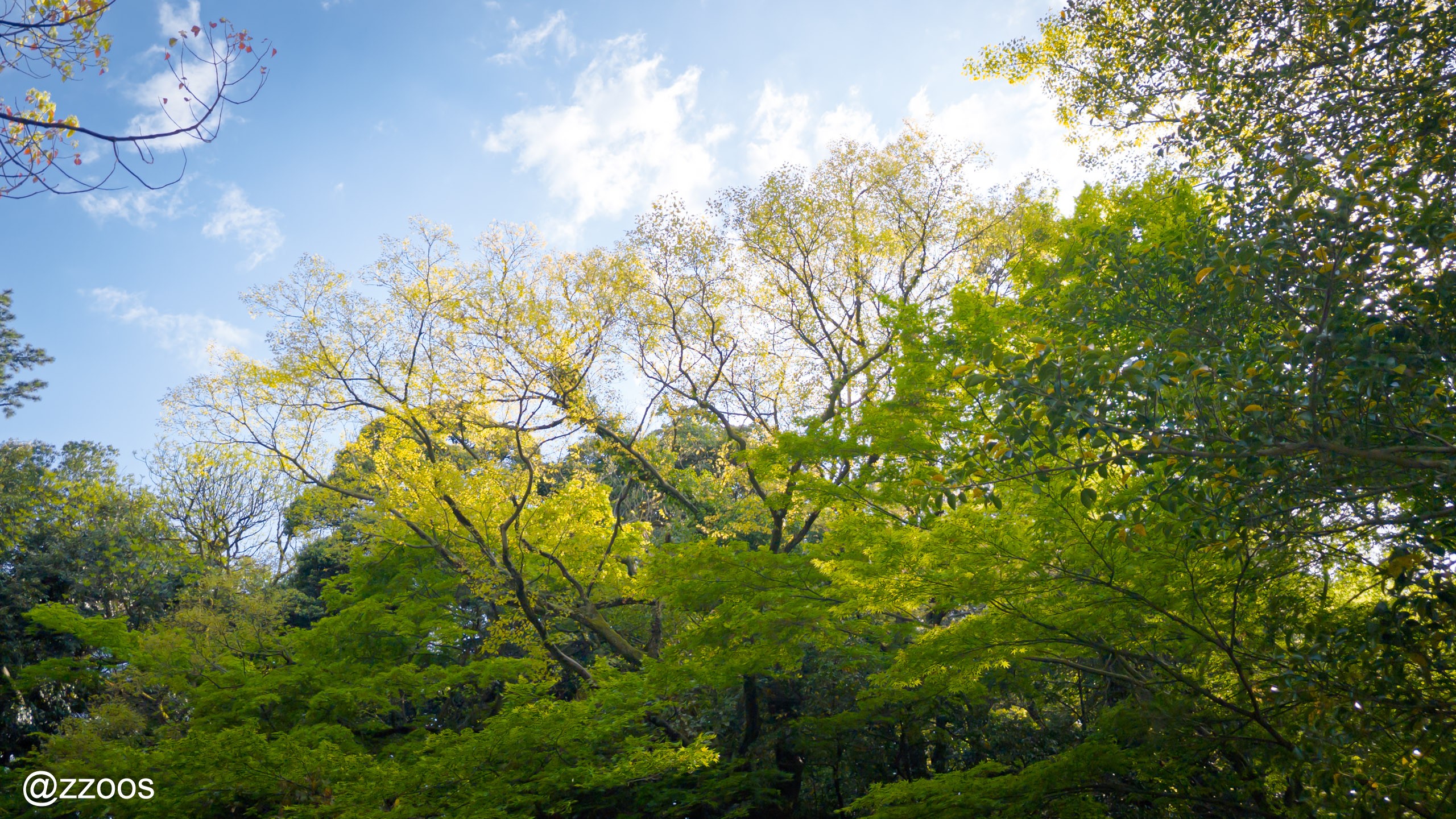
Watching the tourists. Watching a crow that had landed nearby, resting its wings for a moment. Watching the bright spring trees swaying in the breeze under the blue sky. Then following a single leaf as it fell into the pond.
Oyama Shrine turned out to be better than I expected. It feels a little different from the other shrines I’ve visited on this trip.
Probably because of this garden.
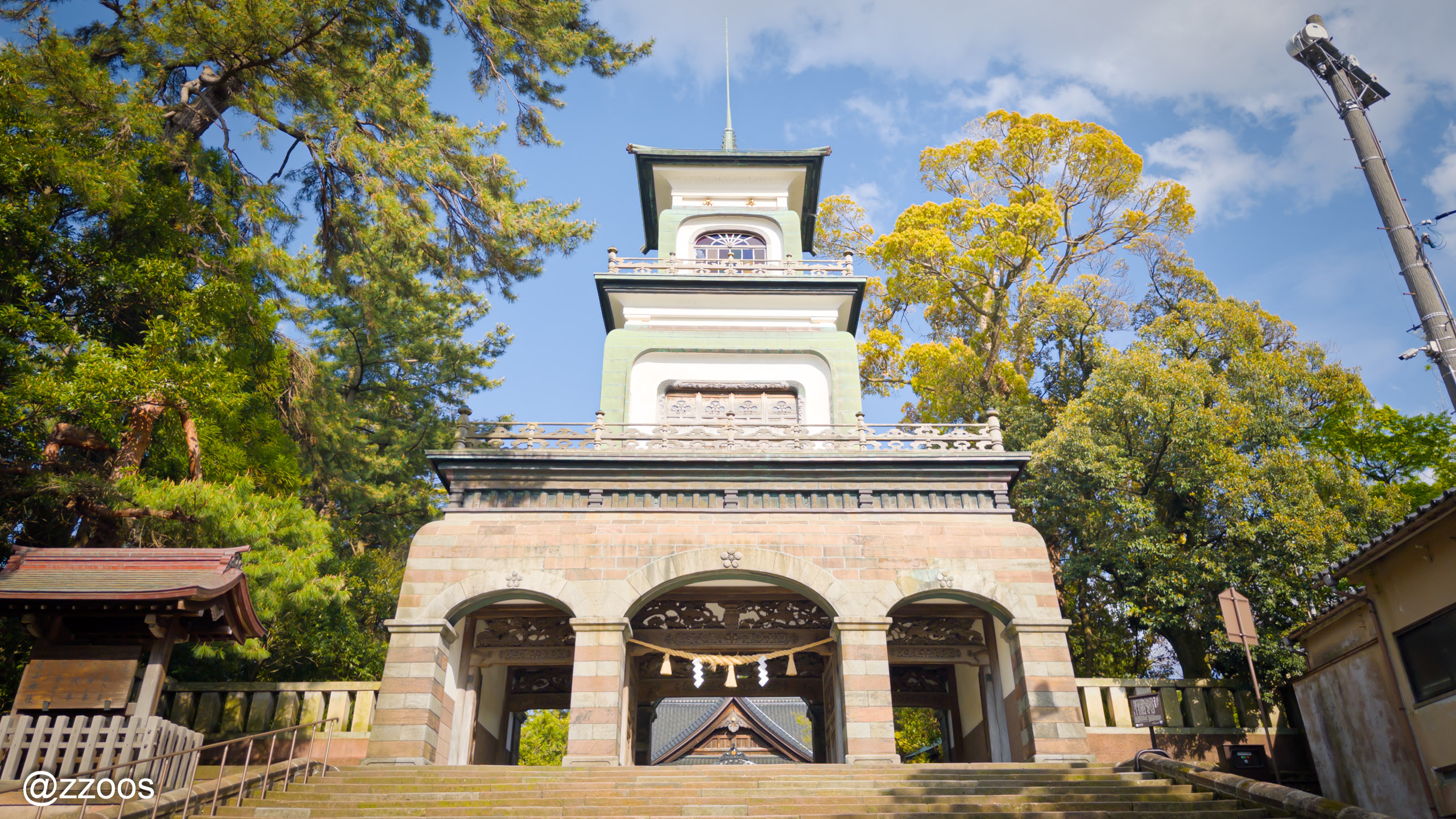
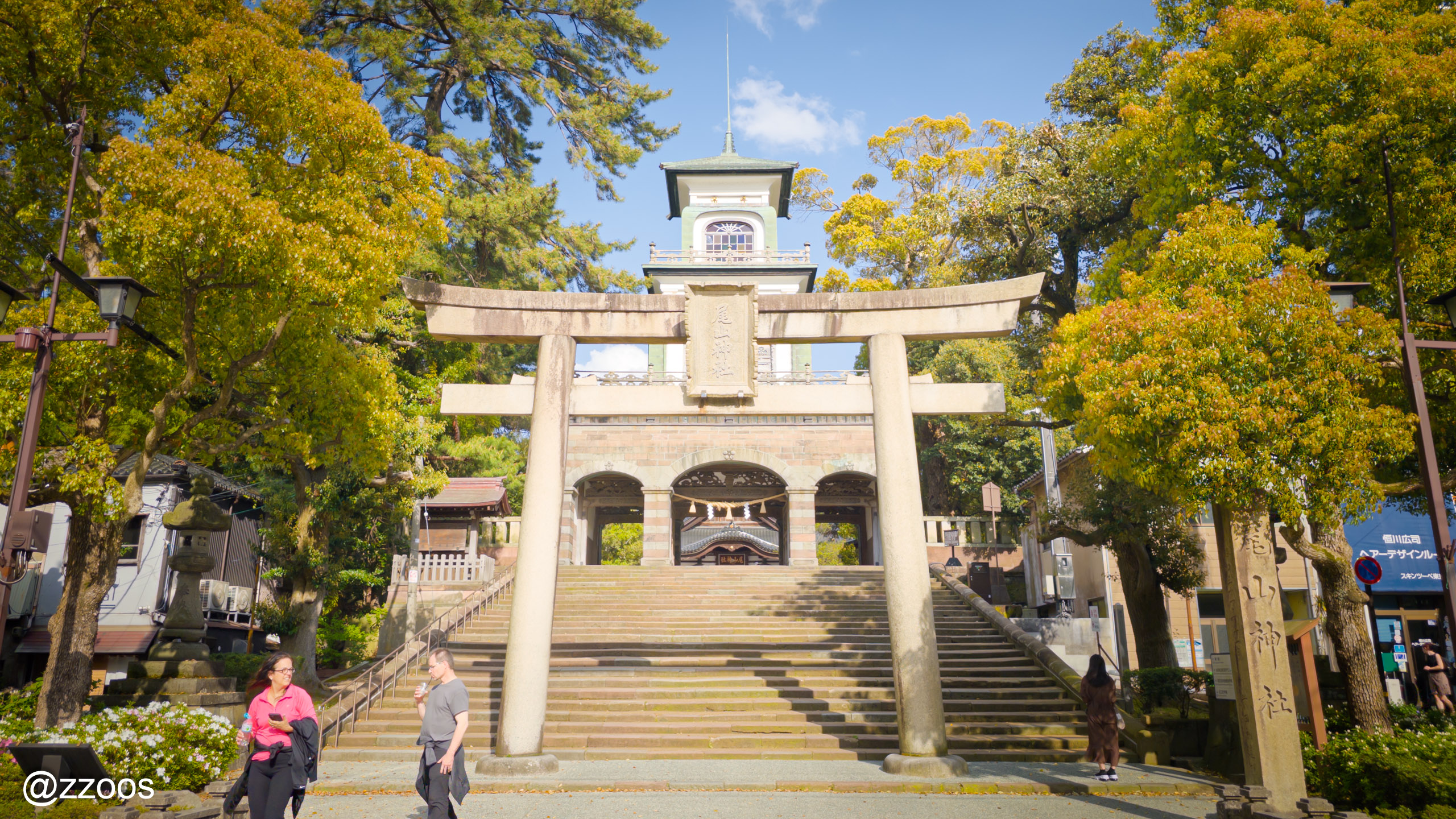
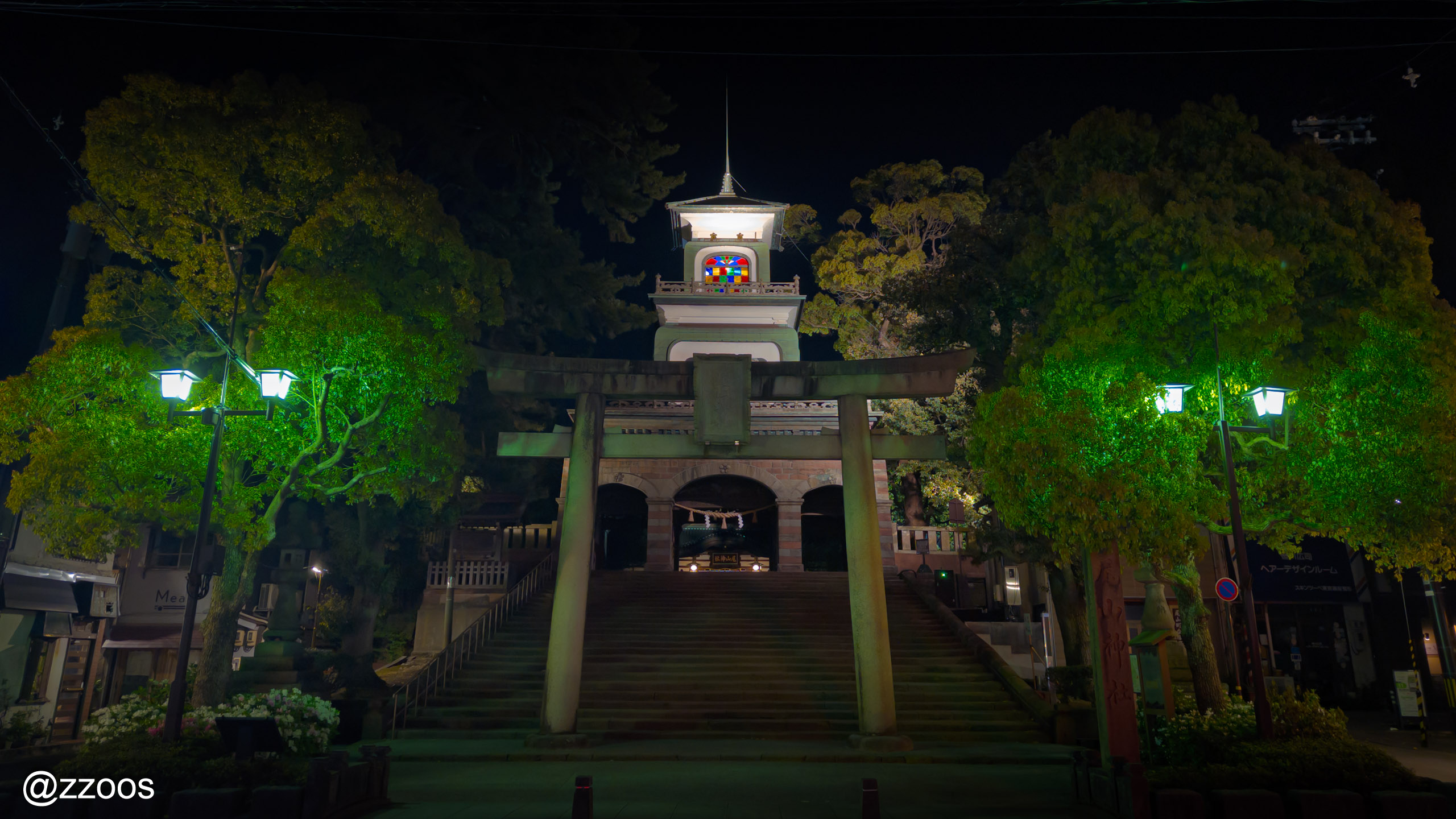
After a rest, I walked over to the Shinmon Gate — the main gate of Oyama Shrine — standing in front of the haiden.
I’ve visited a lot of shrines in Japan over the years, but I’ve never seen a gate quite like this. Maybe that’s why it’s been designated an Important Cultural Property of Japan.
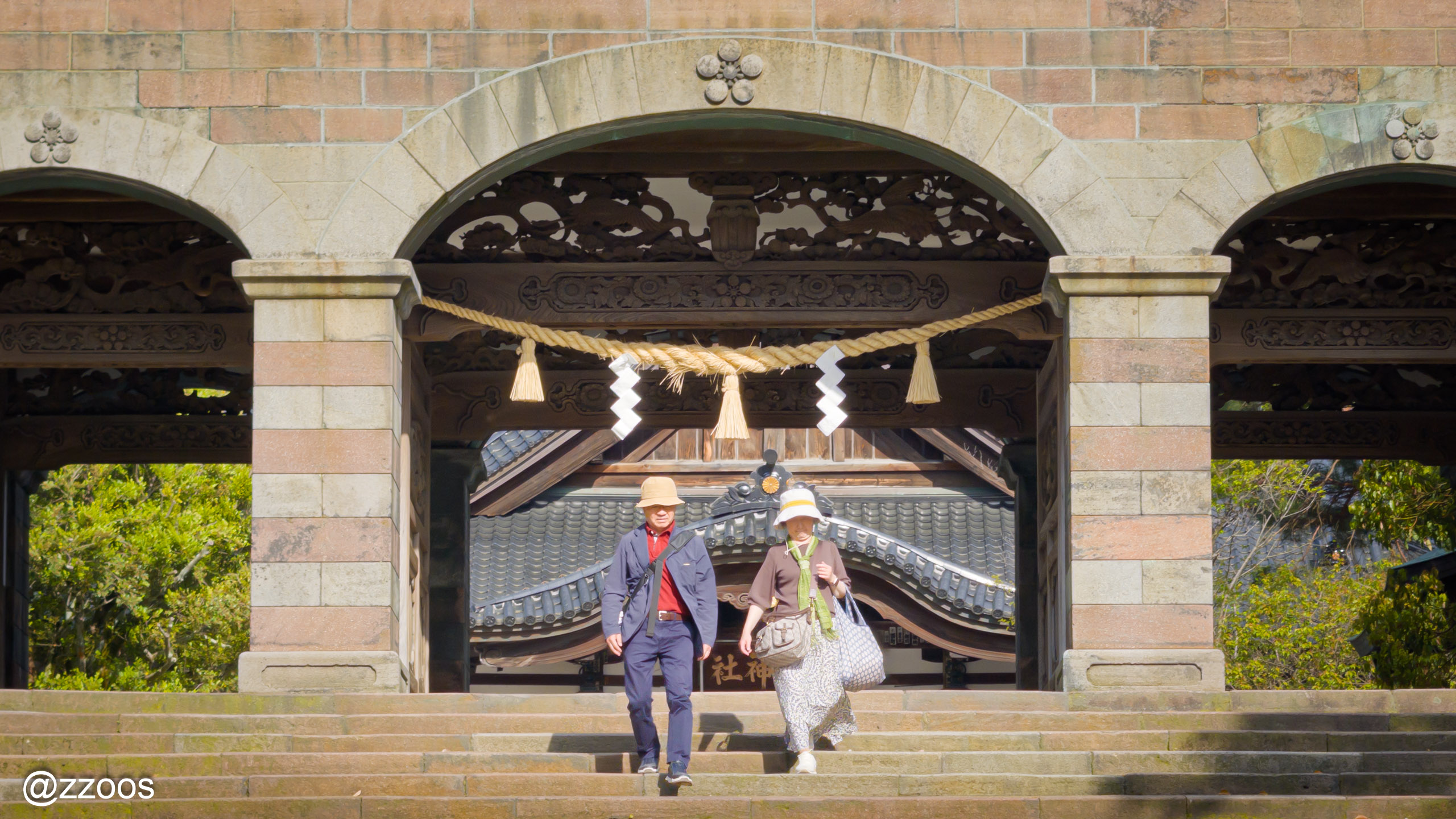
The base is Western-style masonry. Three arches are visible. On the keystone of each arch, the plum blossom crest of the Maeda clan is carved.
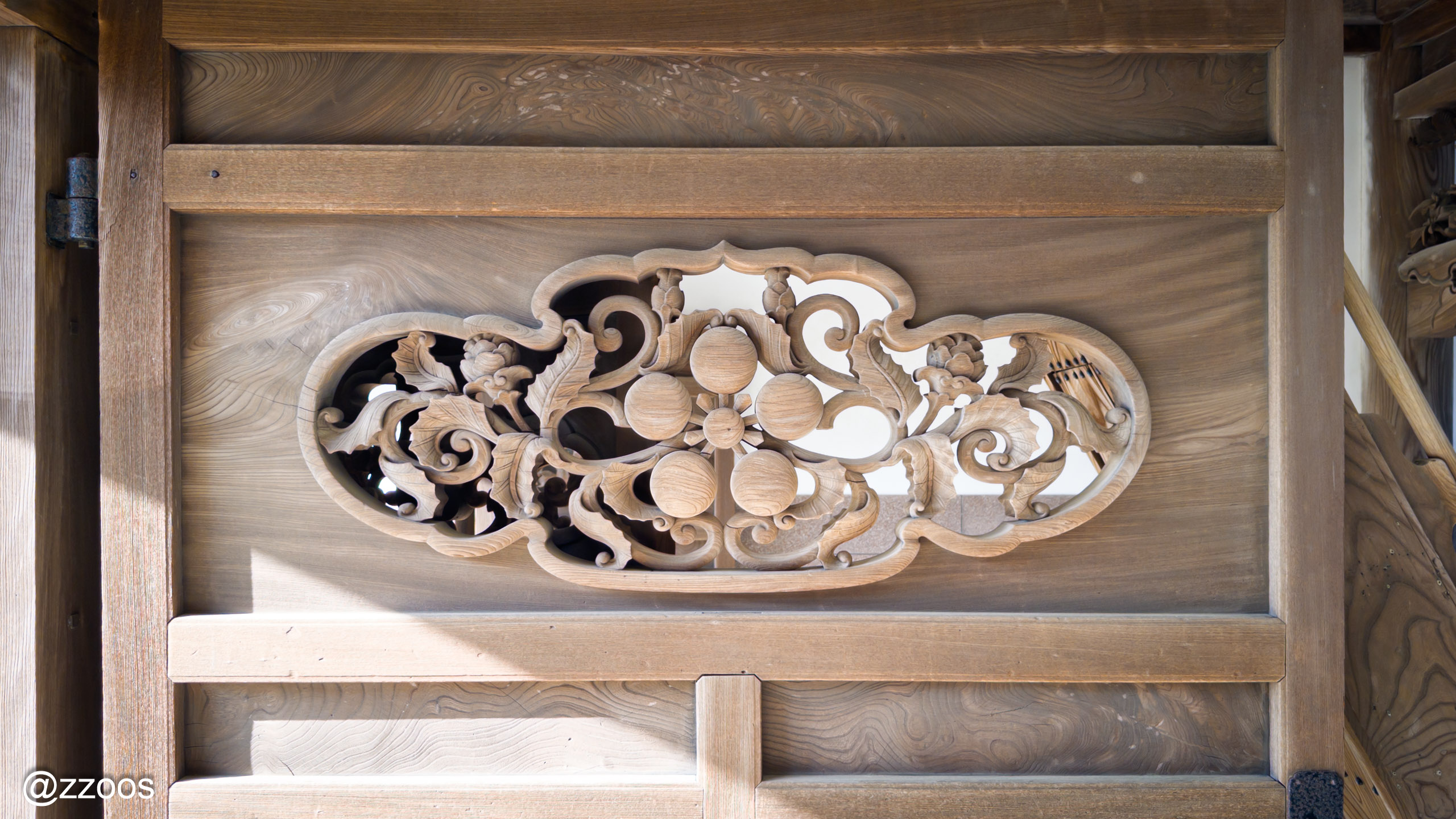
The second and third floors have elaborate Chinese-inspired decorations as well, and the third floor in particular features Dutch stained-glass windows.
At night, a light inside the gate once served as a lighthouse.
A stained-glass window on a shrine gate. It really is an unusual gate.
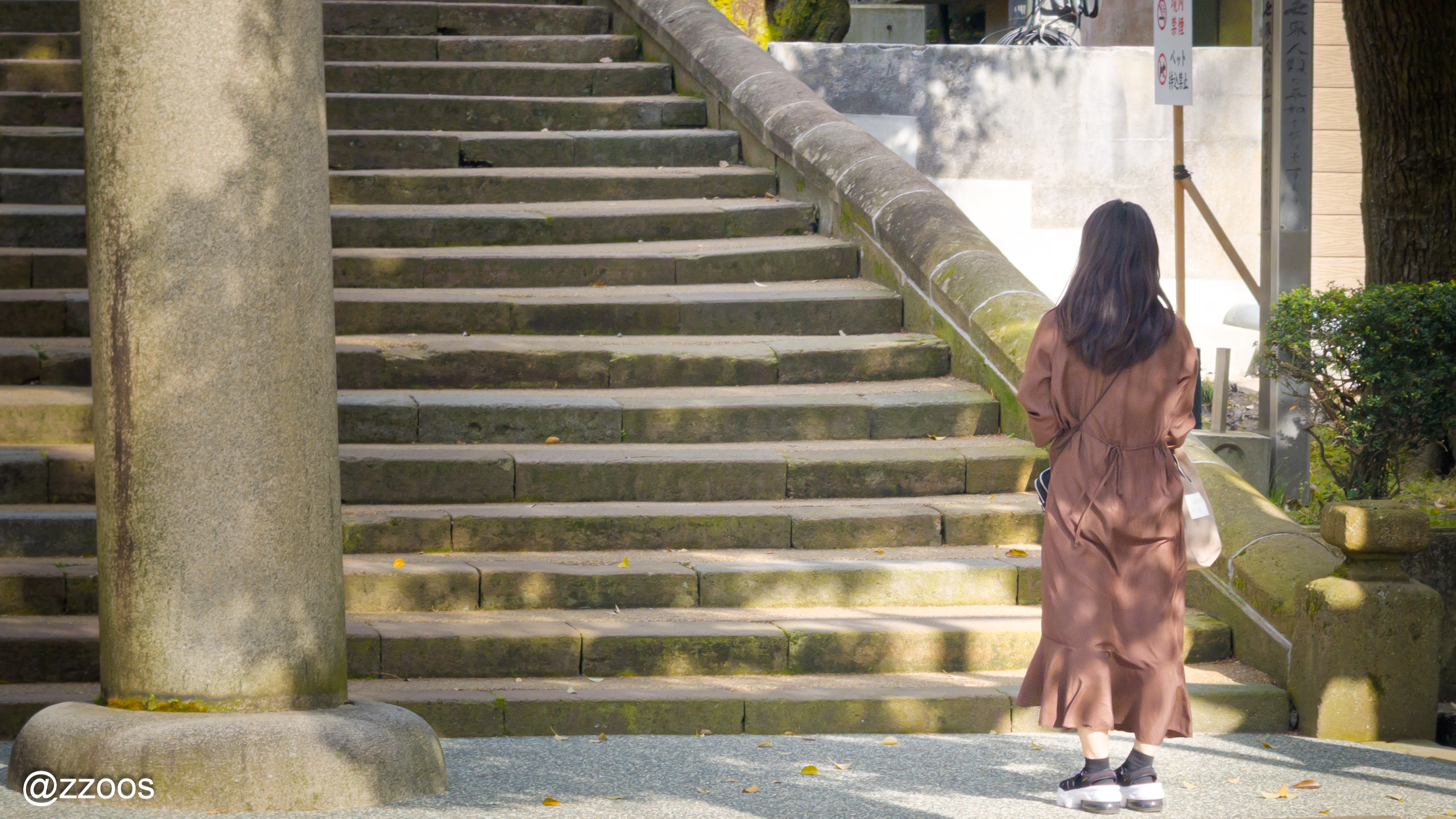
That was my visit to Oyama Shrine, one of Kanazawa’s most iconic.
The weather was good, the season was good — I’m not sure which, but this place really won me over. Especially those quiet moments sitting on the bench by the garden, just looking at the view.
I turned and retraced my steps. This time, I crossed Nezumita-mon Bridge (鼠多門橋) and passed through Nezumita-mon Gate (鼠多門).
Next up: Kanazawa Castle.