If you open a map while planning a trip to Kanazawa — do people still open actual maps these days, or just pull up an app? — you’ll notice that the sights are arranged in a remarkably simple, compact way.
Everything clusters around Kanazawa Castle (金沢城) and Kenrokuen Garden (兼六園). Clean and straightforward.
So most people end up setting aside at least a day to walk through the city center, taking in both the castle and the garden.
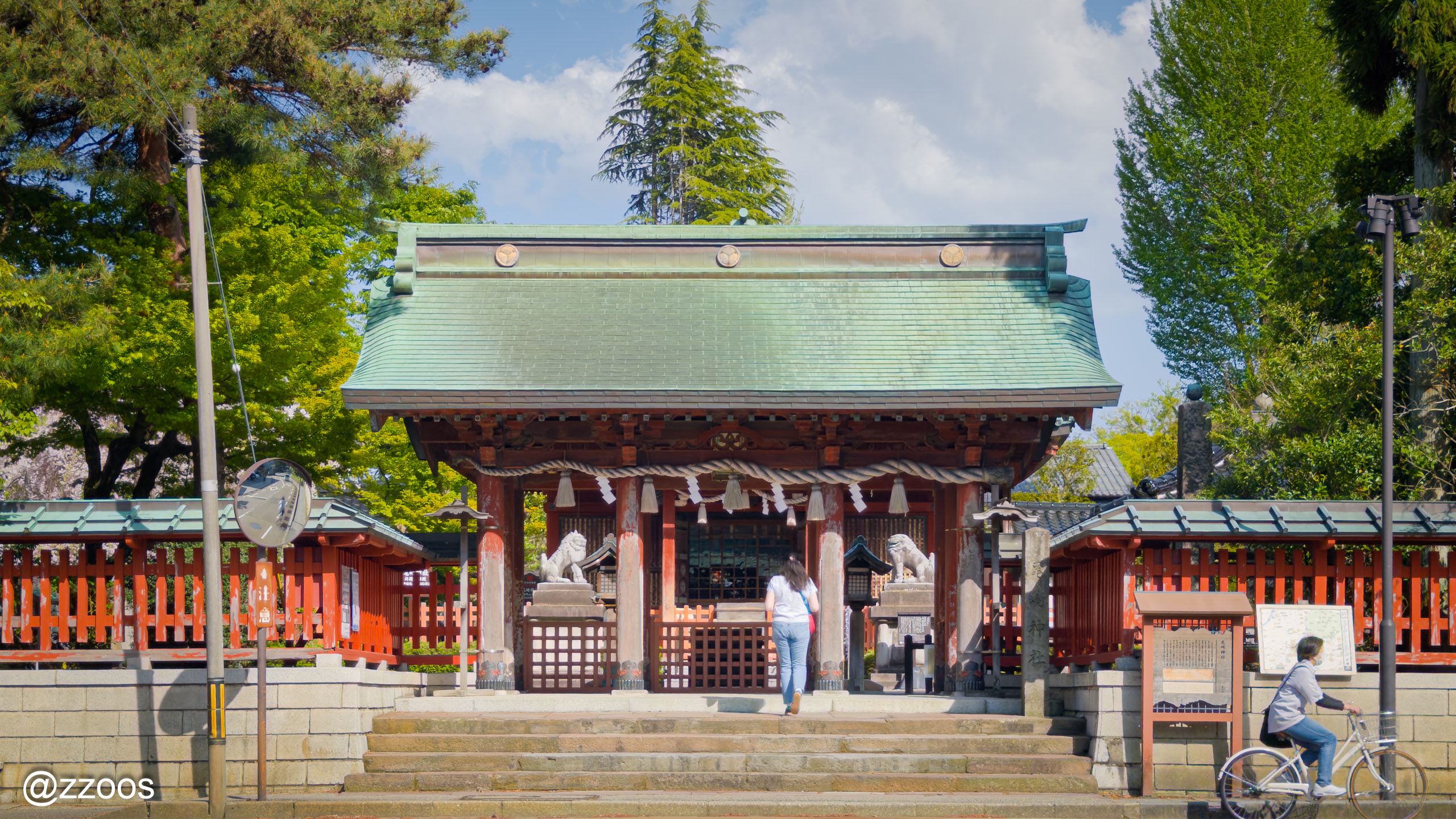
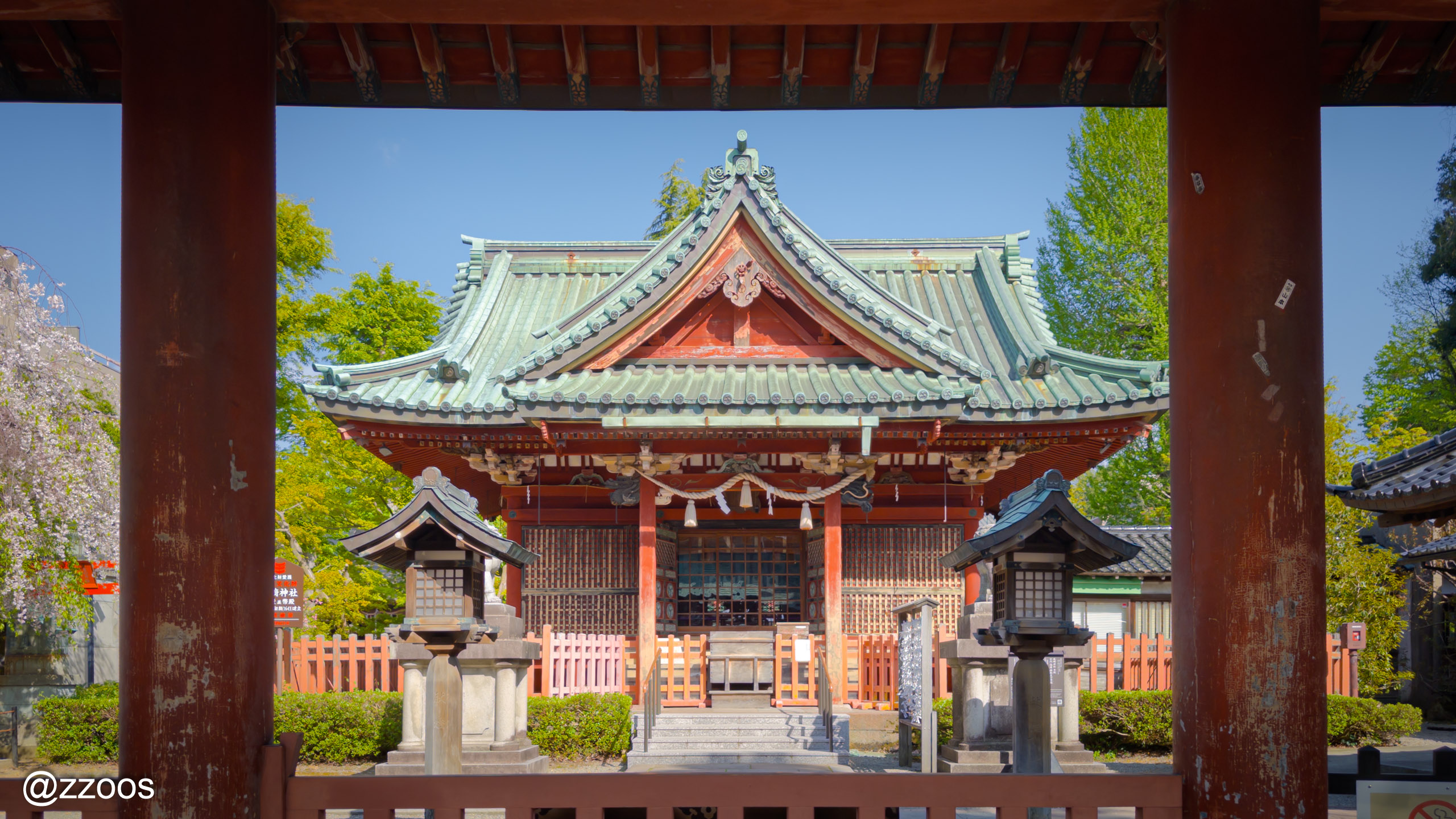
For me, today is that day.
I started at Omicho Market and headed toward Kanazawa Castle on foot.
The quiet residential streets wind on for a while, then suddenly open up — and there are the trees, dense and full.
That’s Ohoridori (お堀通り). The road that runs all the way around Kanazawa Castle.
It was once the site of the moat surrounding the castle. The moat was drained and turned into a road — and that’s Ohoridori. The name itself says it: oho-ri (お堀) means moat.
Today, it’s also where my walk around Kanazawa Castle begins — and where Ozaki Shrine (尾﨑神社) is.
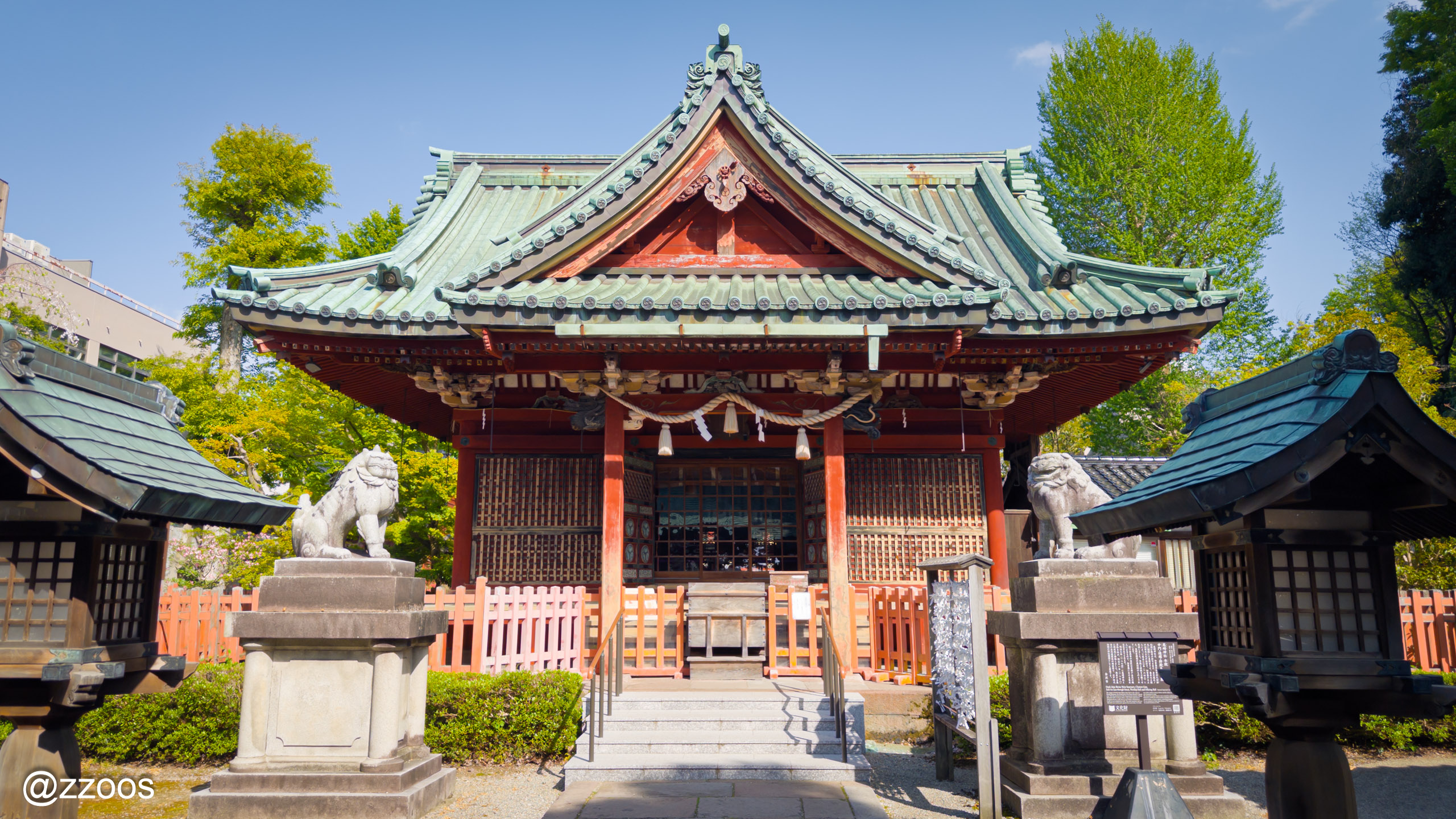
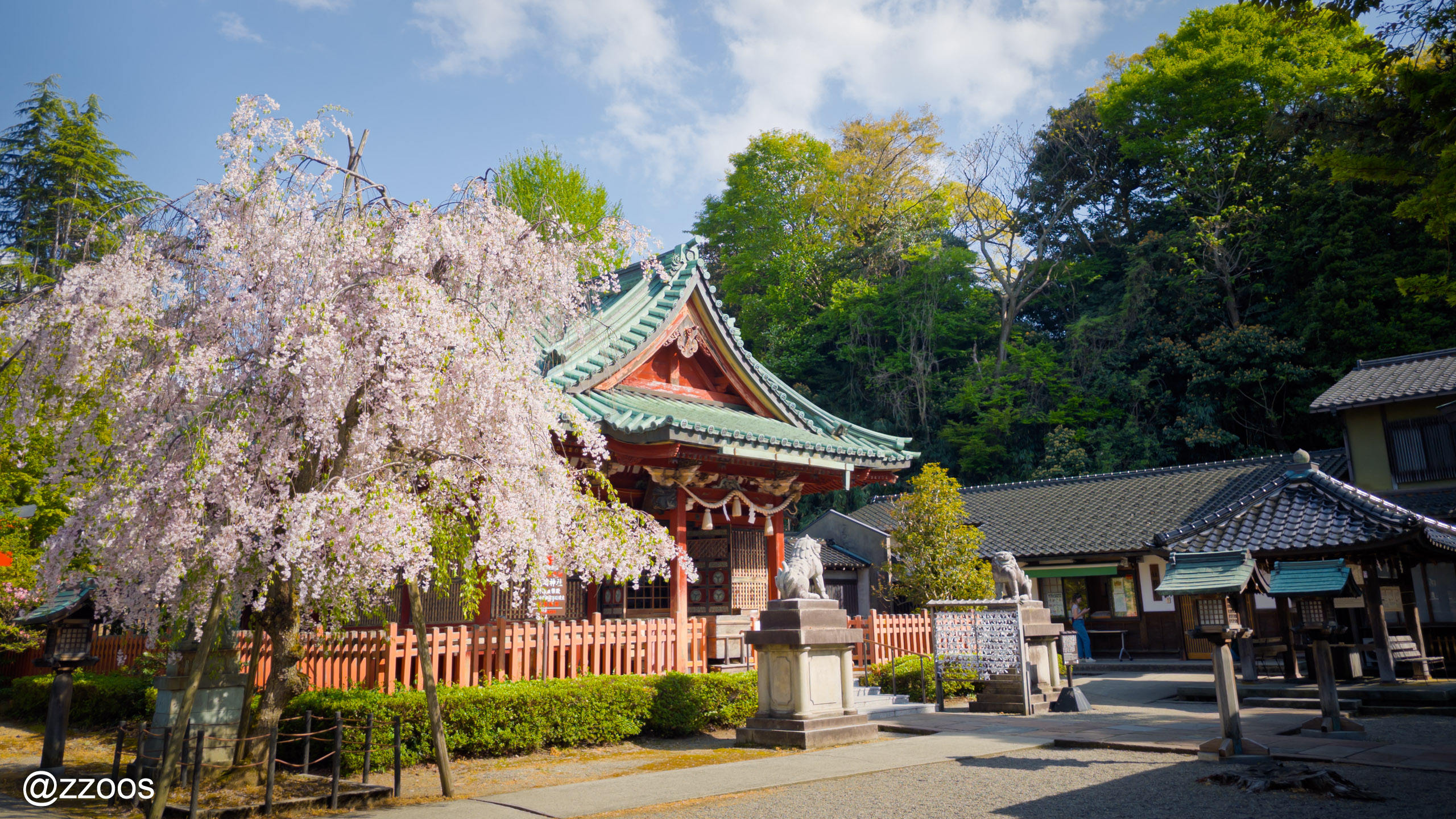
Ozaki Shrine is dedicated to Tokugawa Ieyasu (徳川家康) — a name well known to Koreans too. After the chaos following the Imjin War, he reunified Japan, pursued peaceful diplomacy with Joseon, and established the Edo shogunate.
The shrine isn’t large. For visitors heading straight to Kanazawa Castle or Kenrokuen, it might not even catch the eye.
But the compact grounds have a quiet, pleasant atmosphere. The late-blooming cherry blossoms made it feel even more charming.
The main hall is worn with age, but the deep vermilion gives it a sense of reverence — and somehow, a strange warmth too.
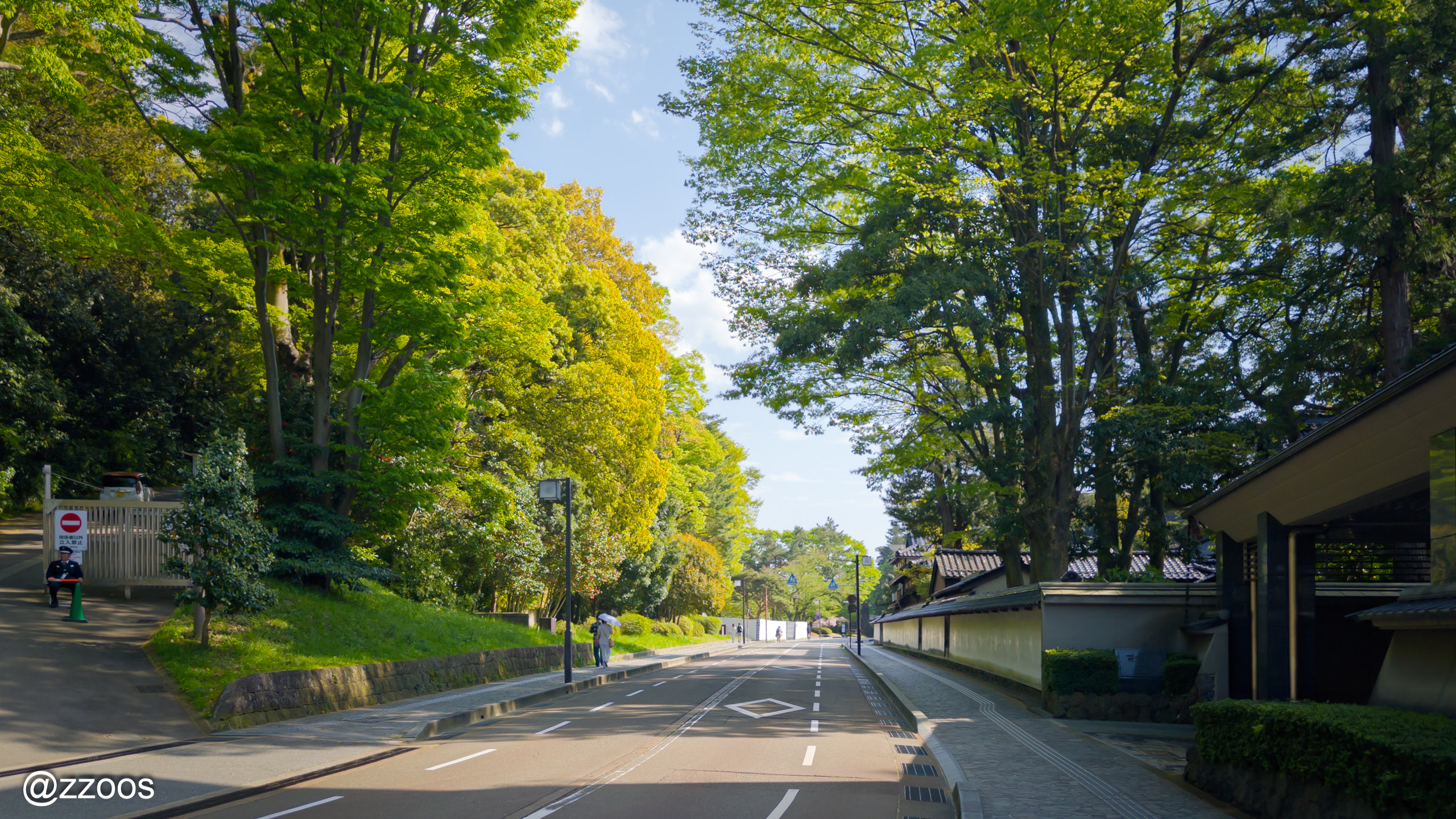
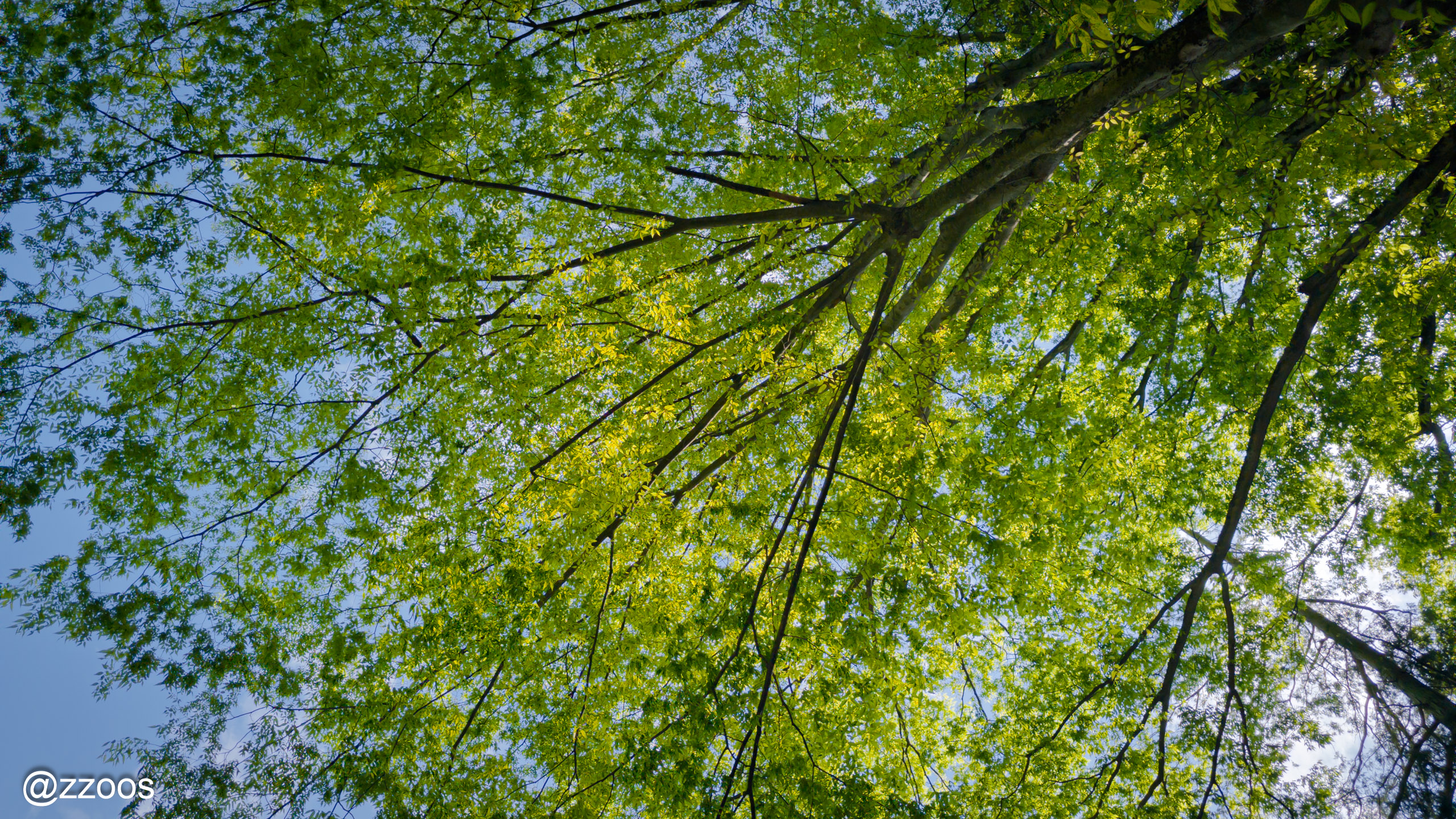
Leaving the shrine, I set out properly on Ohoridori.
It’s really lovely.
April greenery that lifts your mood just to look at lines both sides of the road. A light breeze comes through. The clear blue sky feels like it’s helping the trip along too.
There are several gates into Kanazawa Castle, and the most famous is probably Ishikawamon Gate (石川門).
But today, I’ve fallen for Ohoridori and want to keep walking it. So the plan is to go all the way to Nezumitamon Bridge (鼠多門橋), take a look at Oyama Shrine (尾山神社), and then enter Kanazawa Castle through Nezumitamon Gate (鼠多門).
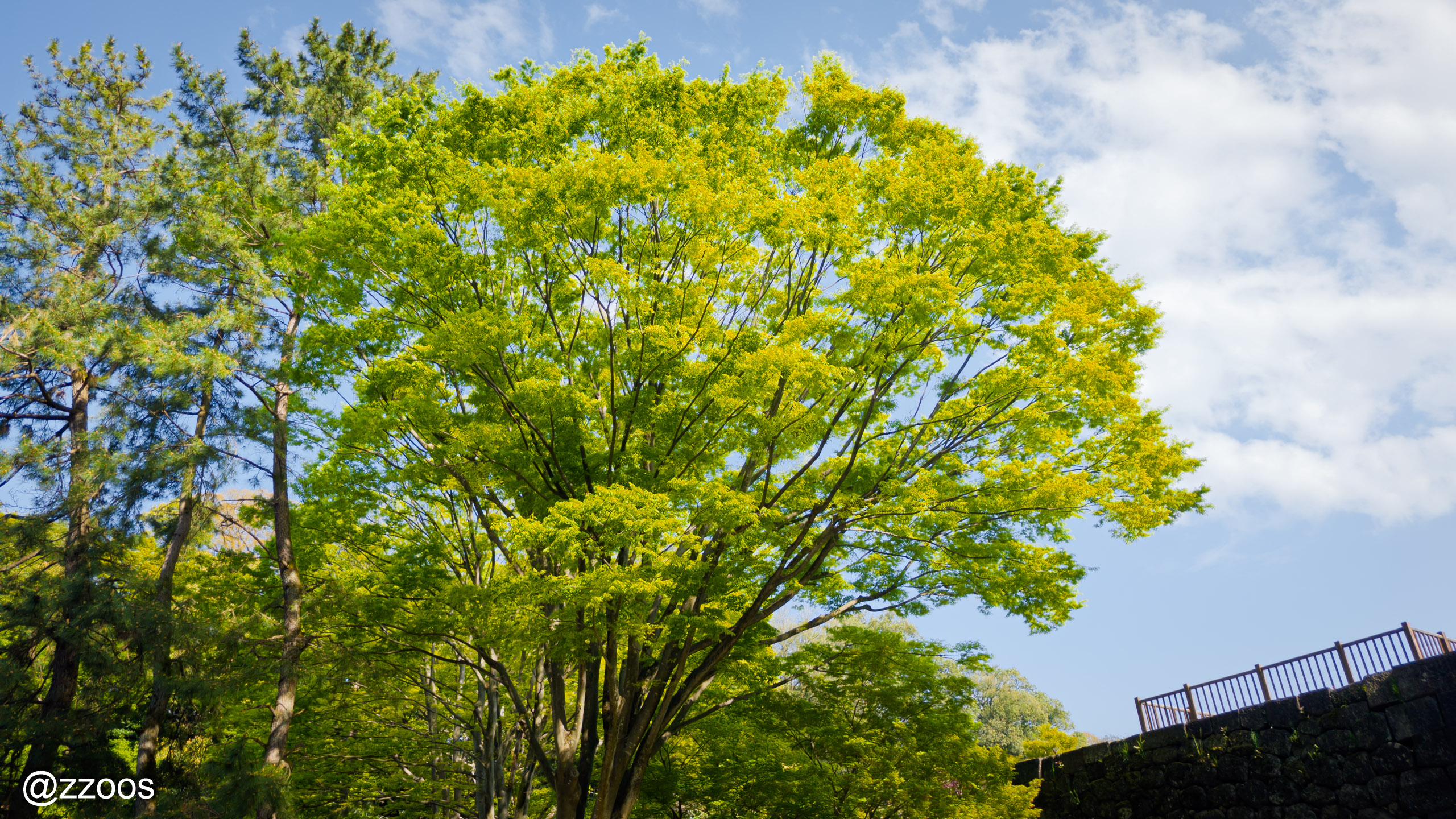
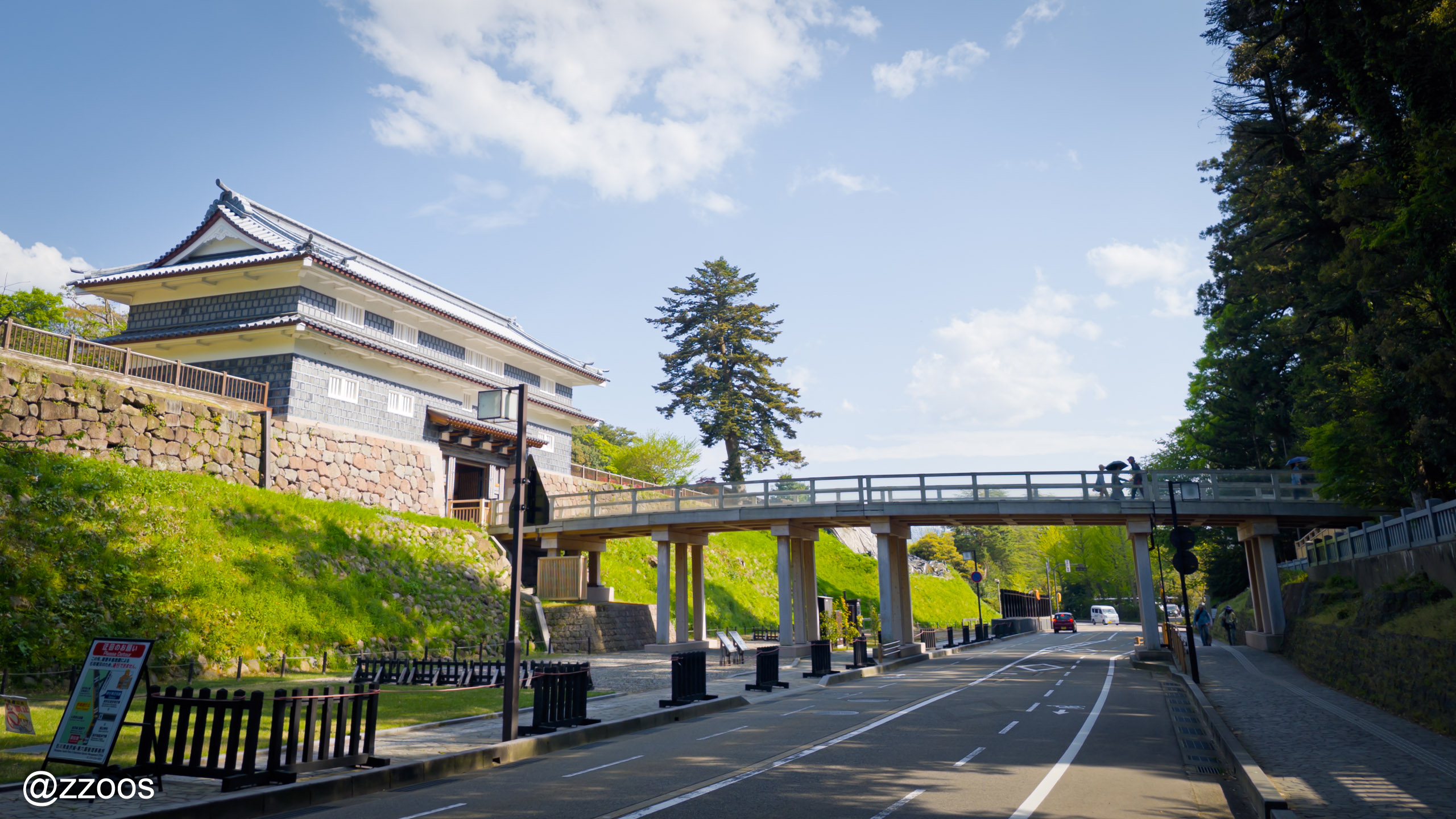
In the Edo period, there was no Oyama Shrine where it stands today — that site held military facilities and samurai quarters on the outer edge of the castle. So Nezumitamon Bridge, crossing the moat to reach the castle’s inner grounds, was an important one.
Kanazawa is said to be home to the largest and most intact surviving example of a jokamaichi (城下町) — a castle town — anywhere in Japan. Walking around here, you can see why. The structure of the castle and its surroundings is preserved in the street names, in the paths themselves.
Ohoridori. Road of the moat, more or less. Either way — I really like this road.
※ Searching for Ohoridori (お堀通り) on Google Maps will only show a specific stretch near the castle, but if you zoom in, you’ll see that the road encircling Kanazawa Castle itself is Ohoridori.