On the last evening,
I wanted to have a drink at a machi-chuka (町中華),
the kind of small backstreet Chinese place you might find somewhere in Japan.
But I chose poorly,
and ended up leaving with a full stomach
from food I didn’t really enjoy.
For reference, machi-chuka refers to
small, slightly worn neighborhood Chinese restaurants
that mainly serve things like chuka soba (ramen),
chahang (fried rice), and gyoza (dumpling).
They also offer simple Chinese dishes,
so you can have a drink there too.
The kind of place you sometimes see in Japanese dramas or films.
Apparently,
these small places don’t survive well in smaller cities like Karatsu.
You have to go to bigger cities to find them still holding on.
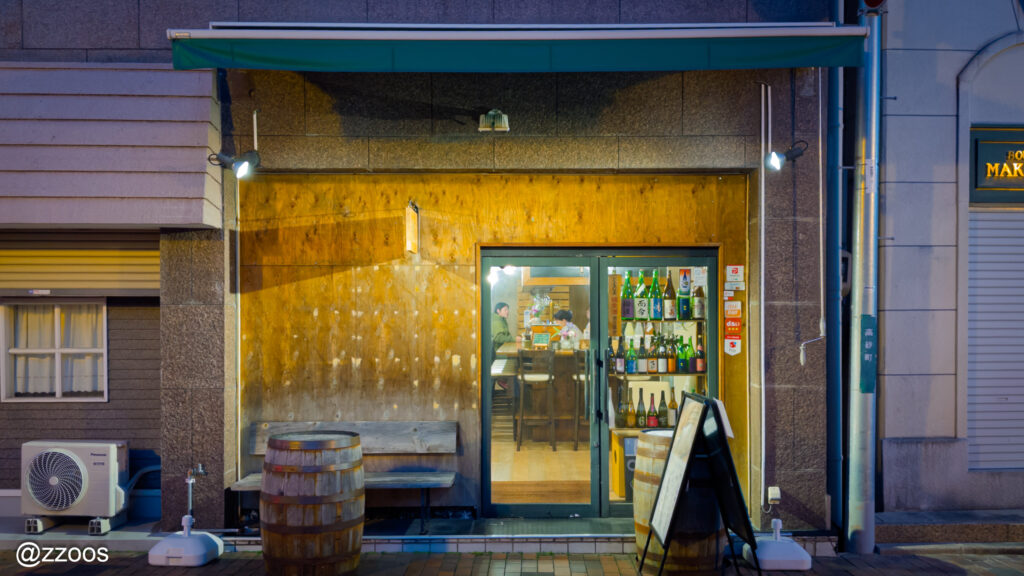
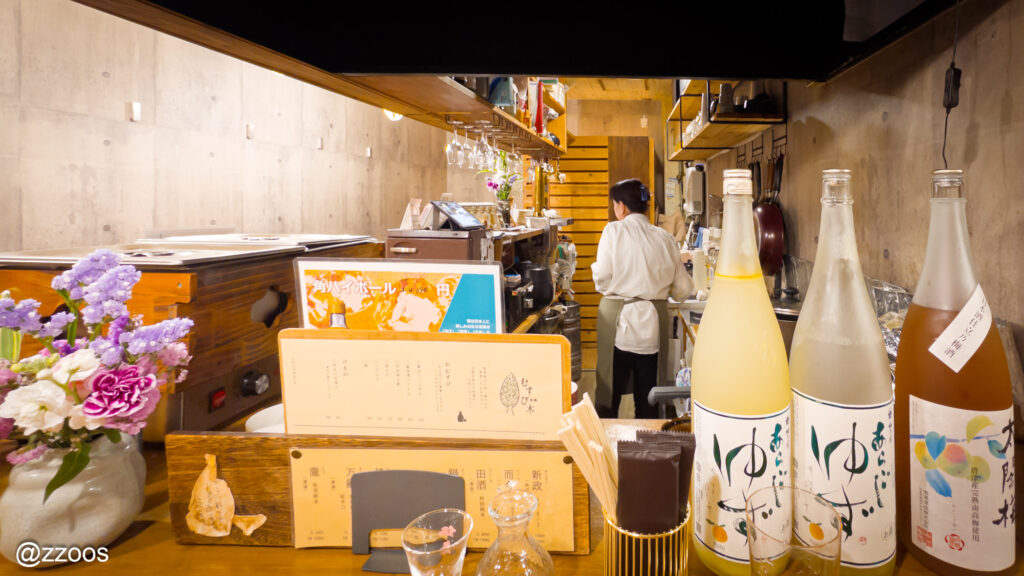
For the second round,
I came to a nihonshu bar.
Well… I think it’s fair to call it that.
They do have simple food and drinks other than nihonshu,
but nihonshu seems to be the focus.
They also carry bottles like Aramasa and Jikon,
which is why I had bookmarked this place.
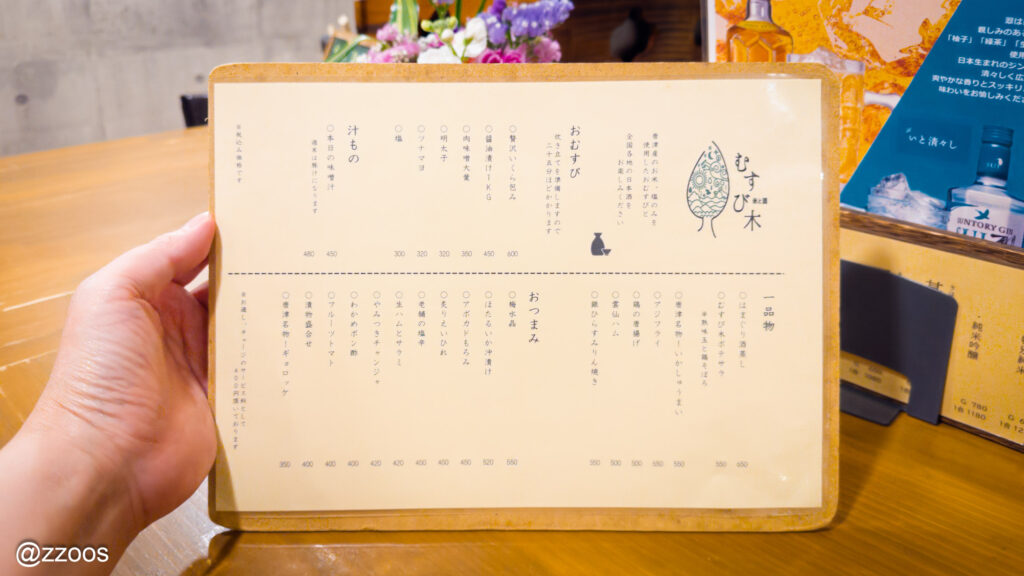
True to the name
Kometo Sake Musubiki (米と酒 むすび木),
they offer many kinds of musubi (rice balls).
They also prepare a variety of simple dishes,
and casually mentioned that
even if something isn’t on the menu,
they can make it if you ask.
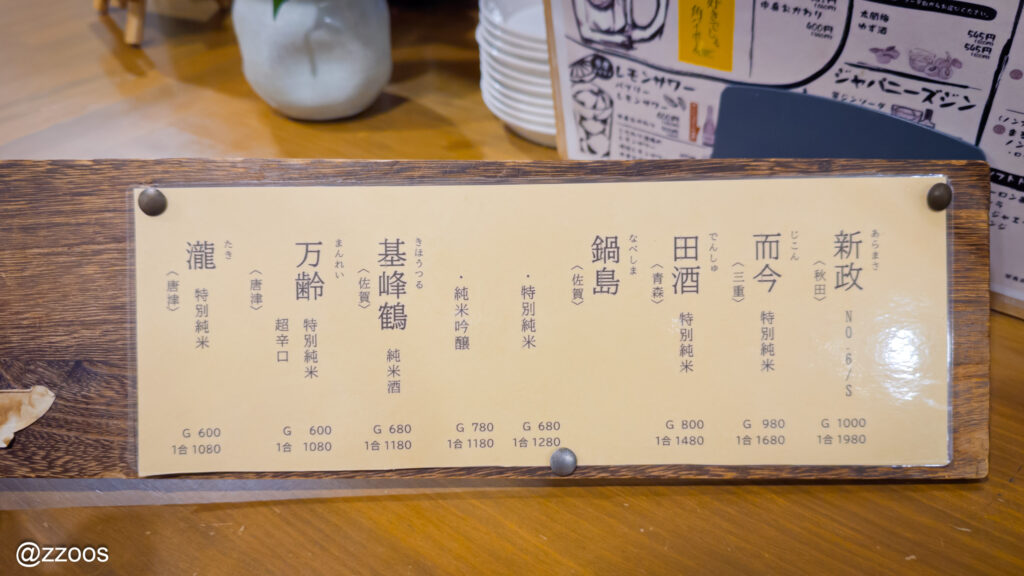
The nihonshu list was surprisingly simple:
Aramasa, Jikon, Denshu, Nabeshima (two types),
plus Kihotsuru, Manrei, and Taki.
A mix of well-known labels,
Saga prefecture sake,
and Karatsu-local sake.
And the prices—very reasonable.
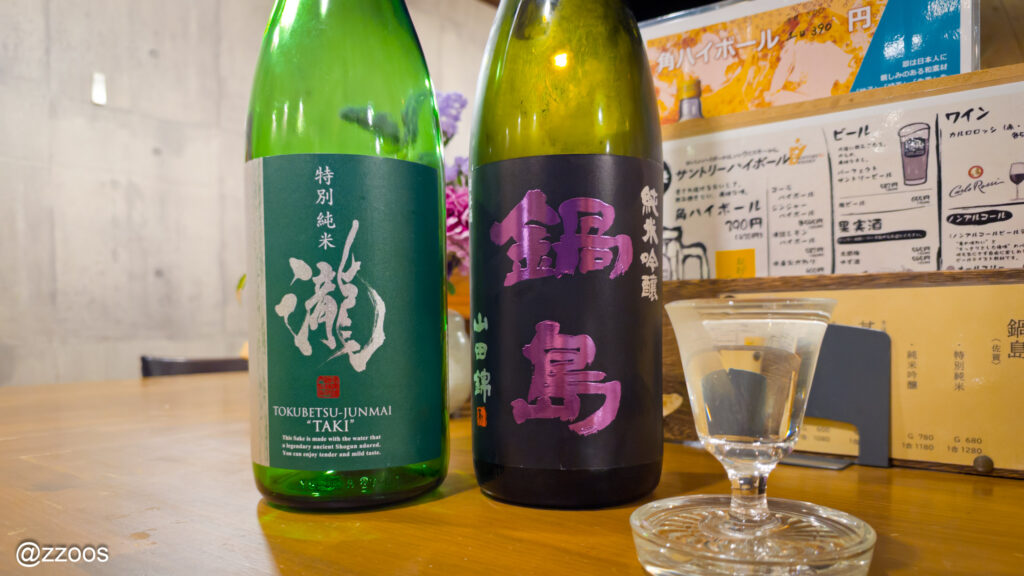
I originally wanted to start with Aramasa,
but both Aramasa and Jikon were sold out.
So I began with
Taki Tokubetsu Junmai,
then moved on to
Nabeshima Junmai Ginjo Yamadanishiki.
Taki is a sake from Karatsu.
It was my first time trying it.
True to its name—meaning waterfall—
it was clean and crisp.
Most of the sake I had in Karatsu and Saga
shared that kind of character.
Clean and refreshing.
Some were sharp like a blade,
others soft like a stream,
but even from different breweries,
there felt like a shared direction.
I heard that Saga’s brewing philosophy is
“not excessive.”
That balance seems to create
a harmony that follows traditional methods
while still feeling modern.
Among them,
Nabeshima Yamadanishiki felt more refined.
It keeps the structure of the rice,
while maintaining overall clarity.
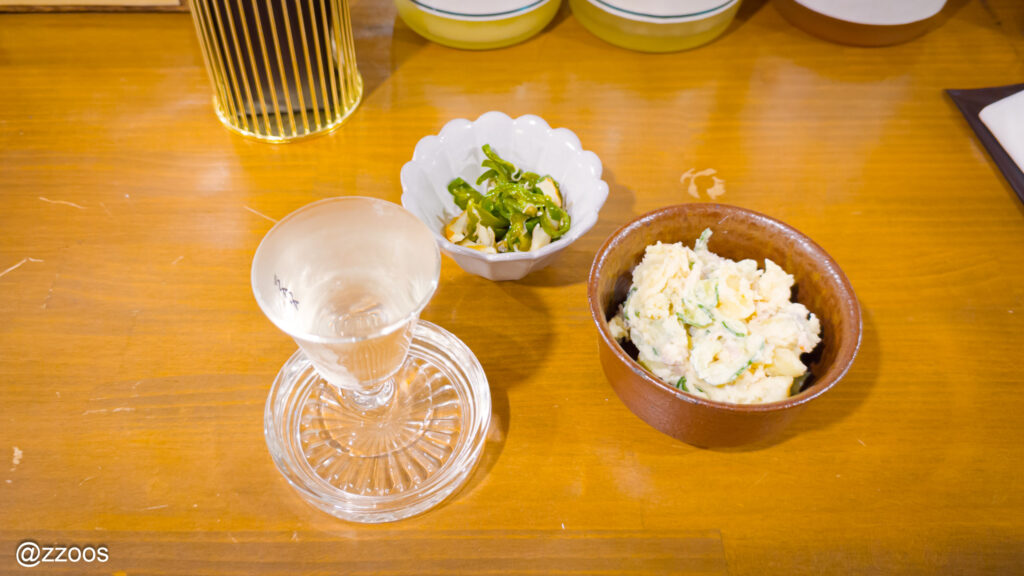
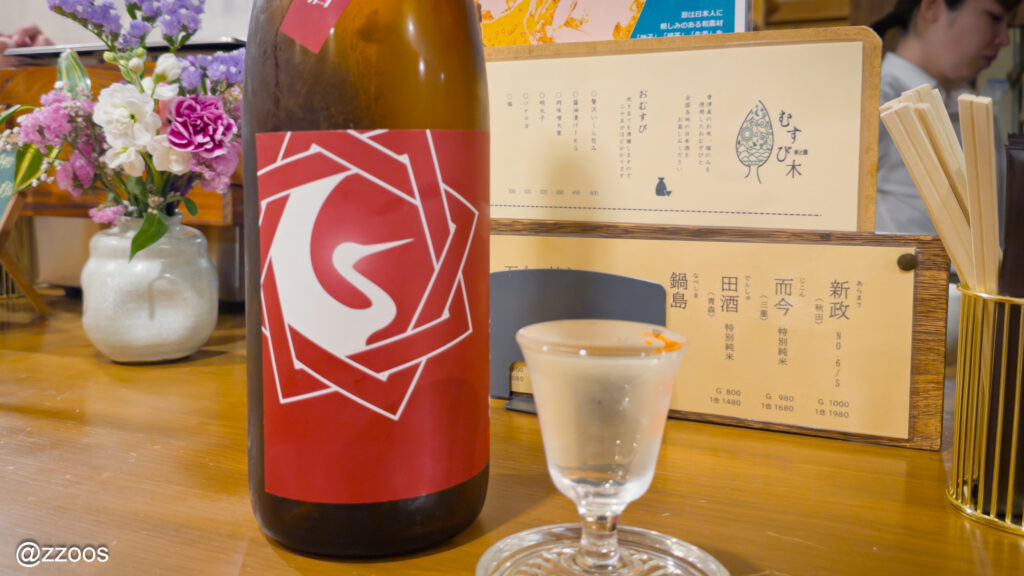
Next was
Kihotsuru Chokarakuchi Junmai.
Like the Manrei chokarakuchi I had earlier,
it presents itself as “not sweet at all.”
What’s interesting is that
aromatic sake often carries sweetness,
but Saga’s chokarakuchi styles
have restrained aromas
without sweetness.
While I was drinking,
a Japanese traveler sat next to me.
He asked about various sake
in fluent Japanese—of course—
and started ordering.
Then the owner said
there was a hidden bottle,
and asked if he wanted to try it.
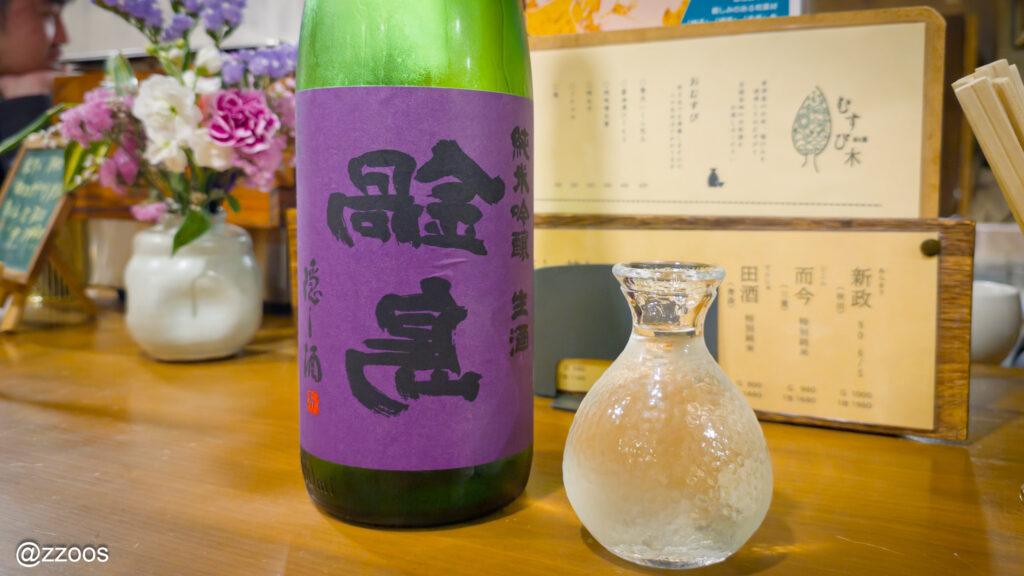
That was this—
Ura Nabeshima (裏鍋島).
On the label,
“鍋島” is written in reverse,
like a mirror reflection.
It also says
Junmai Ginjo Namazake,
and at the bottom left,
“kakushizake” (隠し酒).
Literally, “hidden sake.”
It’s called hidden
because it’s not part of Nabeshima’s official lineup.
Not a limited edition,
not a special release.
It’s more like
something quietly sold
only to those who know.
That’s what “kakushizake” implies,
and why it’s called Ura Nabeshima.
Without question,
it was the best sake I had on this trip.
I heard it’s a blend
of the best parts from multiple brewing tanks.
Rich umami, deep aroma.
Honestly,
from the first sip,
it felt almost unfair
to compare it with the others I had that day.
Still,
compared to the best sake I’ve ever had in my life,
it didn’t quite reach that level.
Best of the trip,
but not of a lifetime.
So yes—
it’s hard to find,
limited in distribution,
and definitely delicious.
But rather than something overwhelmingly perfect,
it feels more like
a sake you seek out for the experience.
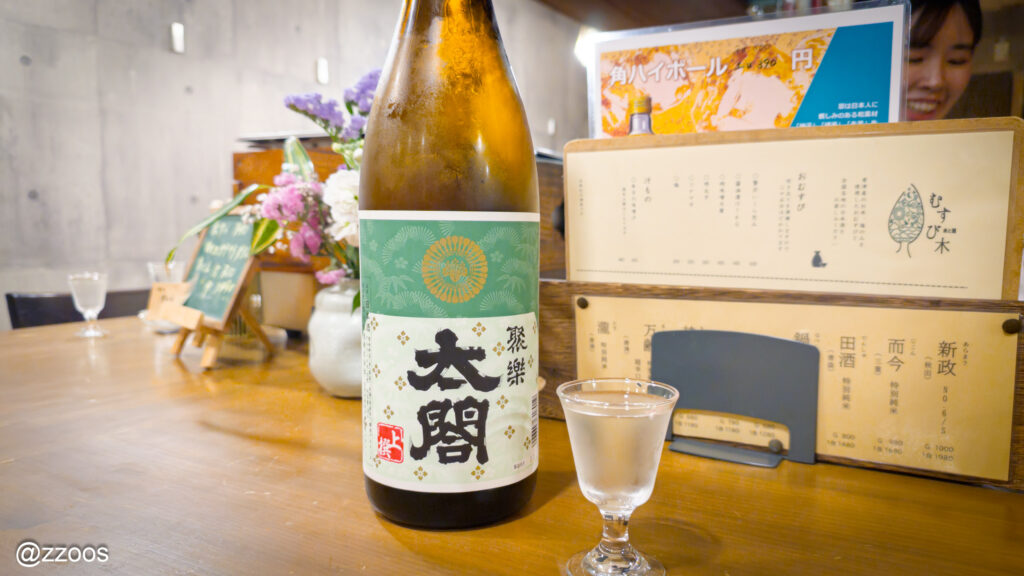
I had already suspected it,
but here,
you’re not limited to what’s on the menu.
If you talk with the owner,
she brings out something suitable
from what she has.
This time,
the traveler next to me ordered
Jurakutaiko Josen,
but it was only sold by the bottle,
so I passed.
Then suddenly,
the owner poured a glass
for everyone in the shop.
Jurakutaiko is also from Karatsu.
Again,
clean at its core.
But…
there seemed to be a reason
she served it like that.
It might have been stored for too long.
After the clean taste,
a slight off-note came through.
At first I thought it was koji aroma,
but it didn’t feel quite right.
Maybe serving it before it went further off
was the right decision.
Anyway,
tonight, here at Musubiki,
I had a very different kind of experience.
Because I got to try
Ura Nabeshima.
If you think of Saga’s most famous sake,
it’s probably Nabeshima.
Maybe Shichida comes next.
Karatsu is the second largest city in Saga,
so naturally,
Nabeshima is one of the most commonly seen sake here.
Many places carry it,
but usually just the Tokubetsu Junmai.
Cheaper than in Korea,
but still something easy to find back home.
So I had been focusing
on trying Karatsu-local sake instead.
And then,
completely by chance,
I came across Ura Nabeshima.
After all,
if you’re in Saga,
you should drink Saga’s sake.
That’s one of the real pleasures of traveling in Japan—
drinking what belongs to the place.