As I mentioned in the previous post, there was only one reason I booked a ryokan in Yobuko. To enjoy Yobuko ika at a relaxed pace. For that, I reserved Onoe Ryokan, which accepts solo guests in Yobuko. After transferring trains several times, I finally arrived.
After check-in, unpacking, and a bath in the large public bath, it was finally time for dinner.
It wasn’t an expensive luxury ryokan, so I wasn’t expecting an extravagant meal. But when I made the reservation, I made sure that “Yobuko ika” was included in the dinner. That meant I would be able to eat that squid.
By the way, “Yobuko ika” does not refer to a specific species. It is another name for ika ikezukuri (イカ活け造り). Because Yobuko’s ika ikezukuri became famous, the name stuck.
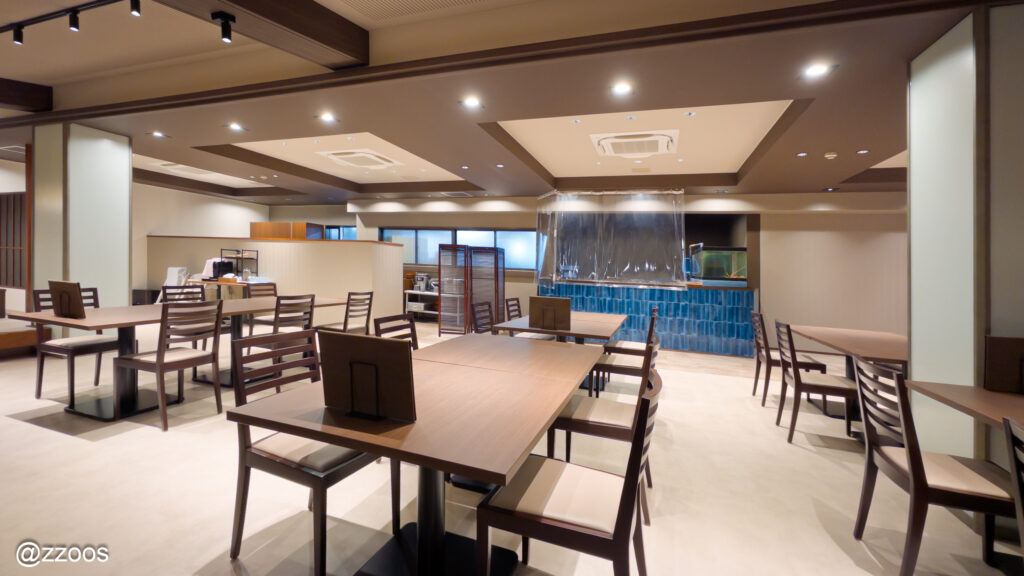
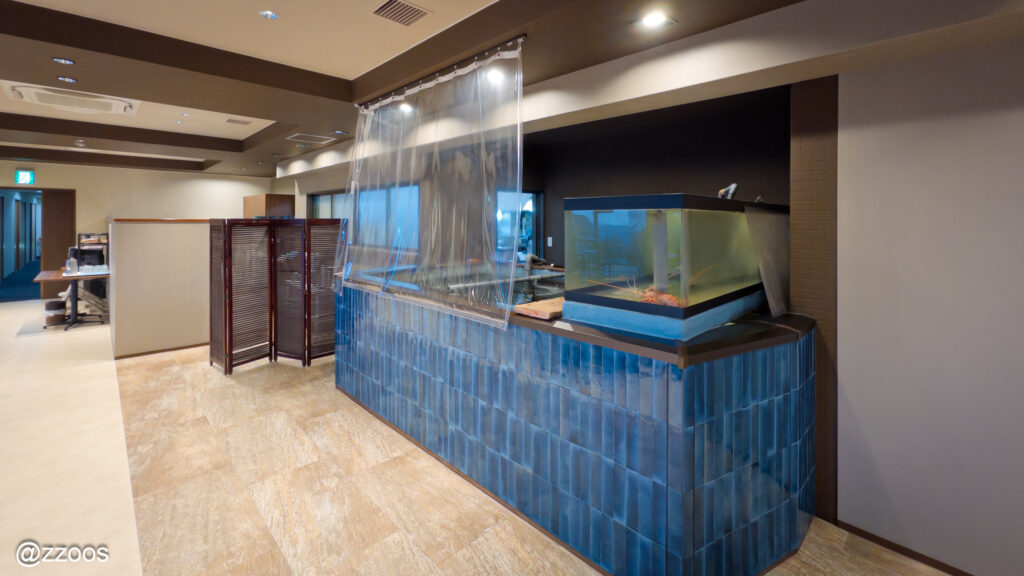
As soon as I entered, I saw a large tank. Inside, small squids were swimming. Later, I learned they were called sasaika (ササイカ). They are common in northern Kyushu from winter to spring.
Sasaika is a dialect word. In standard Japanese, it is yariika (ヤリイカ). In Korean, the standard name is hwasalkkottugi(화살꼴뚜기), and it can also refer to what we call hanchi(한치) caught along the East Sea.
In the Yobuko area, it seems they use sasaika for ikezukuri in winter and kensaki ika (ケンサキイカ) in summer. Kensaki ika is the same species as Jeju’s hanchi.
Squid species are complicated.
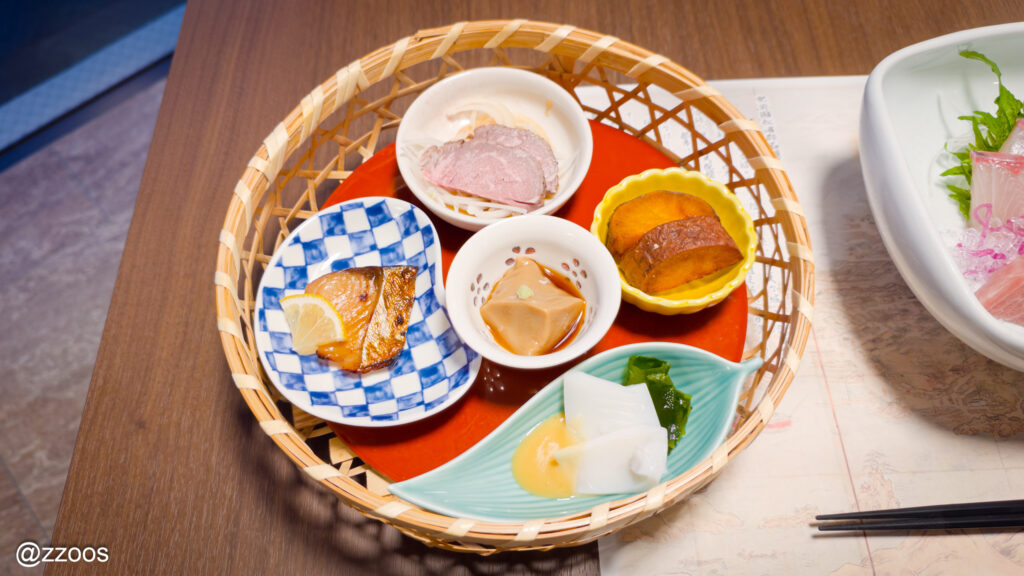
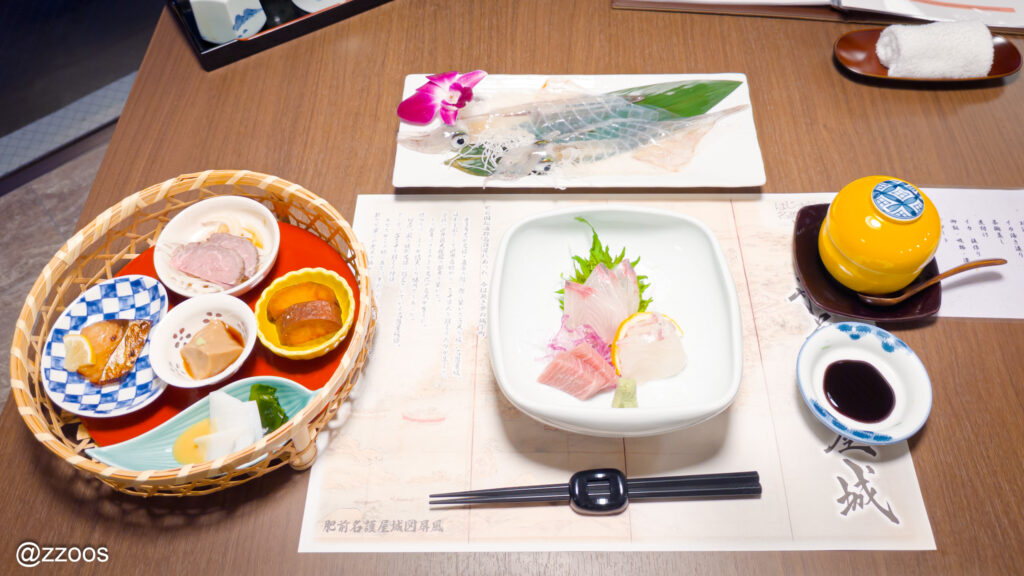
After watching the squid in the tank, I was guided to my seat. In a basket already set at the table were five small dishes: grilled mackerel, roast pork slices, soft tofu, boiled sweet potato, and blanched squid. They were mostly cold dishes.
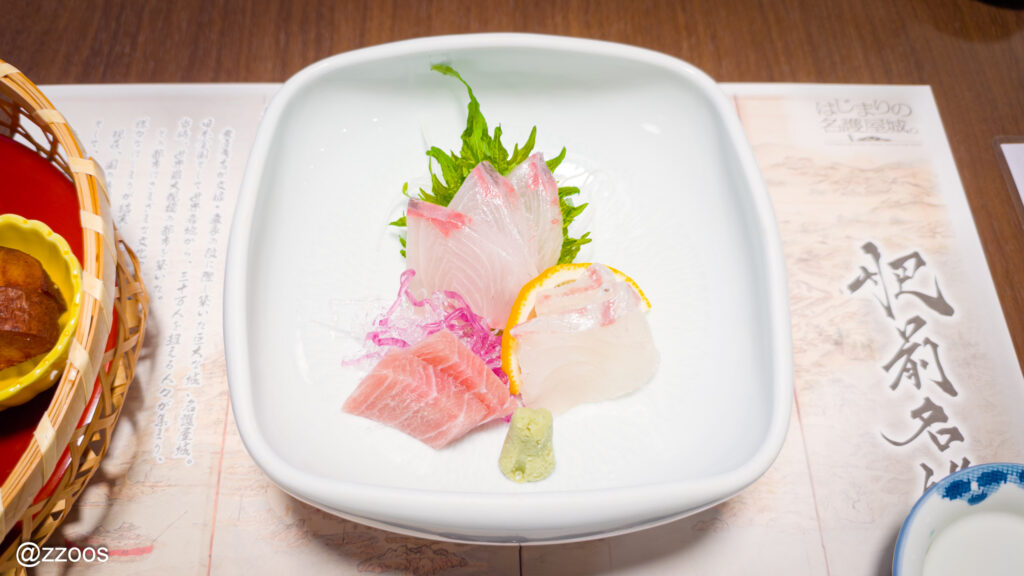
Soon after, three kinds of sashimi were served: kanpachi (amberjack), chutoro (medium-fatty tuna), and madai (red sea bream). I especially liked the kanpachi. It’s a fish I’ve always enjoyed.
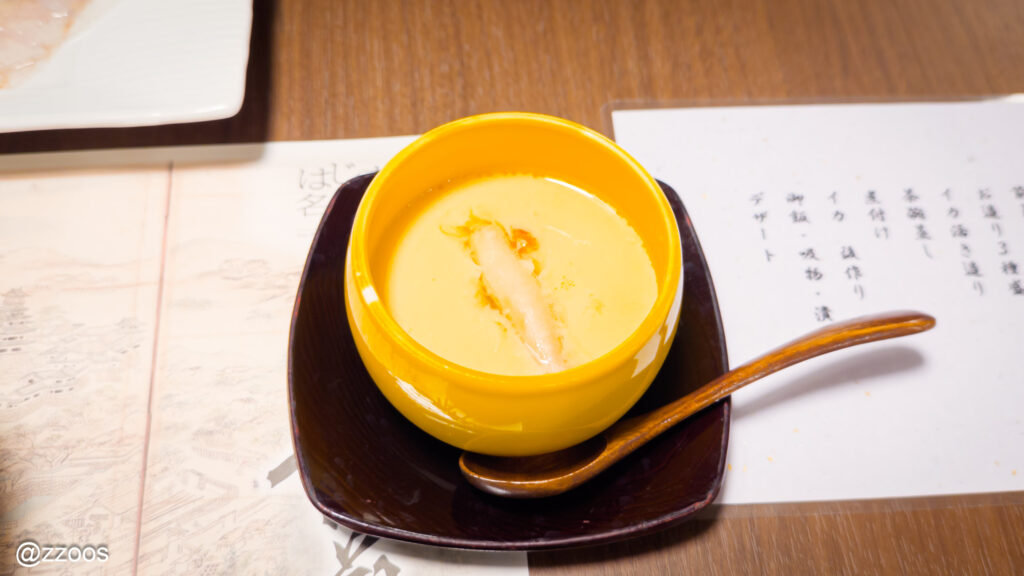
Next came chawanmushi. On a rainy and slightly chilly evening, a warm dish brought a sense of calm. I slowly began to sink into dinner.
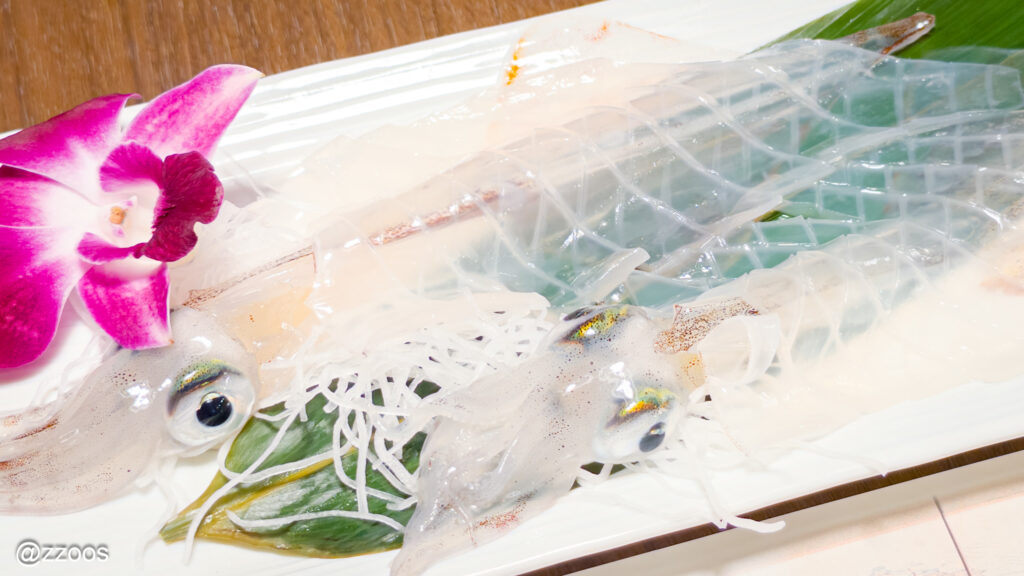
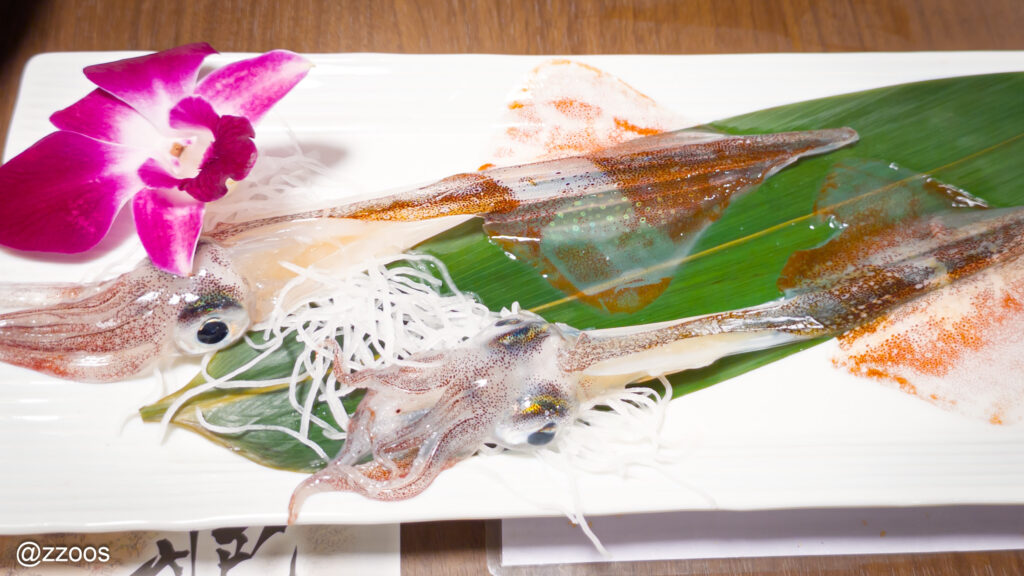
Finally, Yobuko ika appeared.
Two small sasaika were prepared as sashimi. The legs were still moving. I had heard that with truly fresh squid, even the black spots on the body move, so I stared carefully at the tiny dots on the mantle. They did not move.
I don’t know if this is the original taste of sasaika or because they were small individuals, but the texture was different from the squid I had eaten before.
The firm, slightly crisp texture that I usually find in the wing part of common squid was spread throughout the entire body. It was different from the chewy texture of bigfin reef squid and different from the dense bite of cuttlefish.
The joy of discovering a new taste in a new town. That may be the true pleasure of travel.
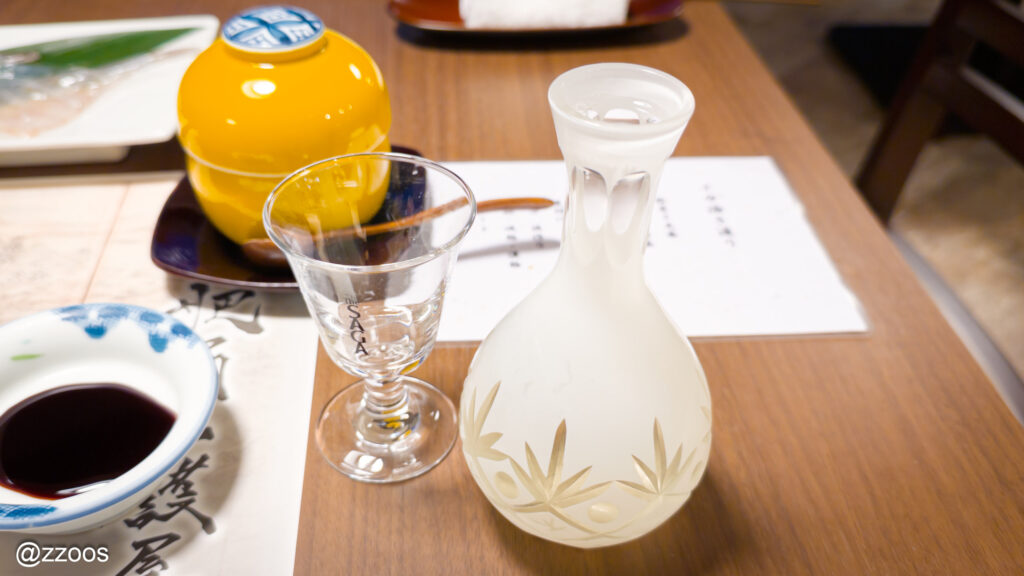
To enjoy good food, I needed a drink. The menu allowed orders by the go, a standard 180ml sake serving.
First, I ordered one cup of Manrei (万齢) Junmai Daiginjo, a local sake from Karatsu. I expected something traditional, but it felt more modern than I thought. It was clean, without unnecessary rice heaviness. Yet it was not fully modern either. The aroma did not burst out, and the acidity was not sharp. If I had to describe it, it was clean and well-balanced.
Next was another local sake from Karatsu, Madonoume (窓乃梅) Tokubetsu Junmai. This one had more of a rice character. It felt like a well-made traditional Japanese sake. I thought it would pair well with food. I ordered without much thought, but the order turned out right. The cleaner one first, then the slightly heavier one.
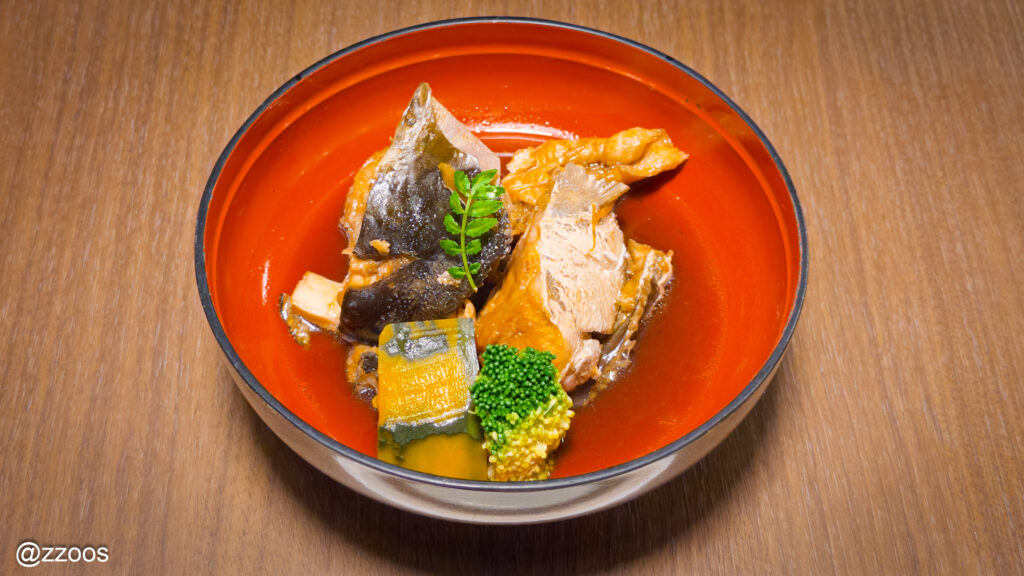
As I was eating slowly with sake, simmered kanpachi was served. Had I eaten amberjack this way before? I can’t quite remember.
It was excellent. The vegetables were cooked just enough to keep a slight crispness, and the fish gently simmered in soy sauce was deeply satisfying. I knew kanpachi was good as sashimi, but I didn’t know it could be this good simmered.
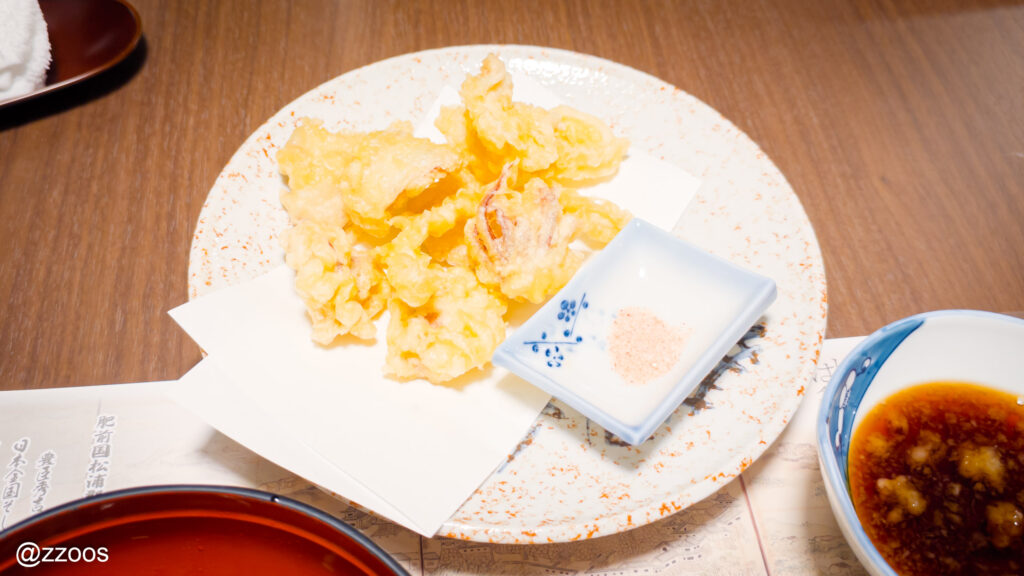
After finishing the body of the squid and leaving only the legs, a staff member asked whether I would like them fried or grilled. I chose fried. Squid legs are best fried.
They were delicious. Lightly fried in clean oil. When eating tempura in Japan, the overall quality feels consistently high.
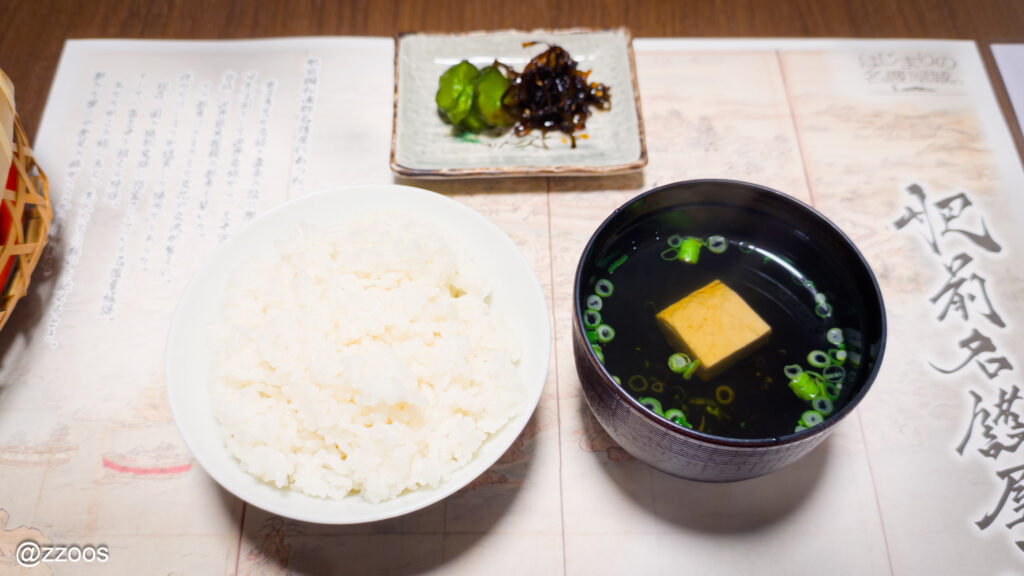
To finish, rice, soup, and tsukemono.
Overall, I felt there were slightly fewer dishes than I had hoped. If two more dishes had been added, I would have been completely satisfied. But that would mean a higher price. In that sense, the value felt appropriate.
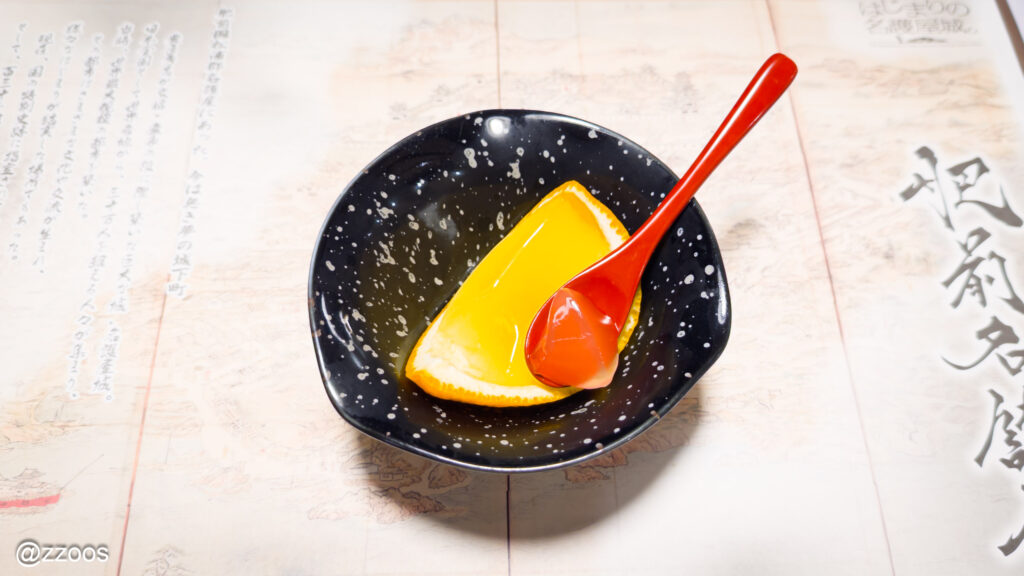
Dessert was citrus jelly. The jelly was set directly inside the citrus peel. It refreshed the palate. I couldn’t confirm it, but I assume it was a citrus variety from Saga Prefecture. Each region in Kyushu has its own citrus.
It was still raining heavily, so I couldn’t go out. I had planned to have a second round in the room, but I had no snacks. I regretted not stopping by a convenience store earlier.
Since I had been moving since early morning and was tired, I went to bed early on the first night.
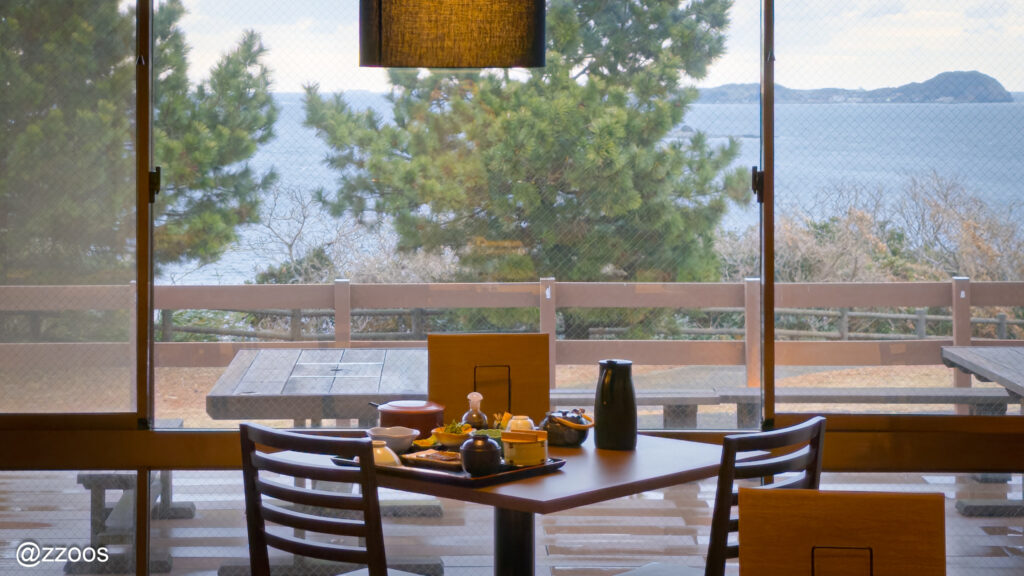
The next morning, I took a short walk around the ryokan. The morning sea view lifted my mood. With that feeling, I headed to the dining room.
Because I had chosen the time at check-in, the meal was already set. It was a good seat with a view of the sea.
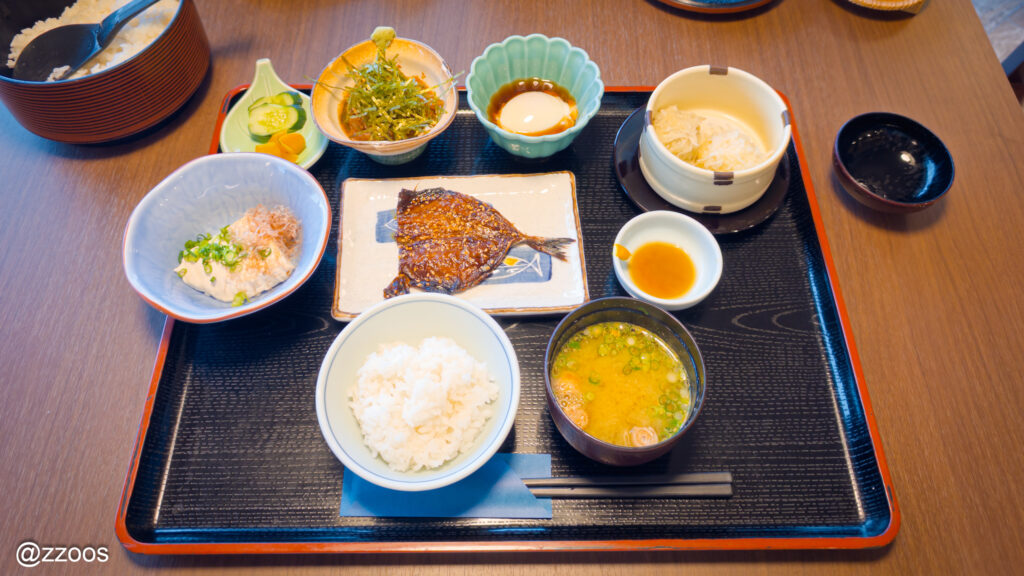
Tofu topped with katsuobushi, tsukemono, seasoned fish with shredded seaweed, soy-marinated soft-boiled egg, grilled dried aji, Yobuko squid shumai, rice, and miso soup.
It looked wonderful. Every side dish was good. The seasoned fish was especially delicious. I can only guess, but perhaps it was aji. It was good enough to finish a whole bowl of rice on its own.
The grilled dried aji had the characteristic aroma of dried fish, but also a deep savory richness. With no bones, it was easy to eat. It is a taste people may either love or dislike, but the saltiness makes you keep eating rice.
Two pieces of Yobuko squid shumai were also served. Simply put, squid dumplings. The wrapper and filling were both squid. They would have been even better if served hotter.
The meals at Onoe Ryokan offered high satisfaction for the price. Breakfast was especially excellent. Dinner lacked a bit of variety, but considering the cost, it was still satisfying. It may not be perfect, but it is a ryokan with solid value for money.
Now that the second day has begun, it’s time to move on to the next schedule.