Including my round trip around Kyushu in 2017, I had been under the illusion that I had visited most of Kyushu. Then not long ago, I realized that I had never once been to Saga Prefecture. I had even skipped it while circling all of Kyushu. When I try to think of famous cities in Saga, nothing immediately comes to mind, so perhaps it was easy to overlook. Even the Japanese people I met during my travels reacted as if to say, “That makes sense.”
When I started planning this trip, Saga came to mind. Right next to Fukuoka, yet somehow not particularly famous. This time, let’s go there. The most famous city in Saga Prefecture is probably Saga City. It is the prefectural capital and the largest city in the prefecture, but I heard that it has a reputation for being somewhat uninteresting(?) as a travel destination. So I looked for cities known for tourism, and Karatsu and Ureshino surfaced.
Ureshino, which seemed appealing for its view along the Shiota River crossing a small town, is known for its hot springs. Soaking in warm water in the middle of winter while waiting for spring would surely make for a good trip.
But this time, I decided on Karatsu. While browsing around on Google Maps, I happened to see Yobuko and Hado Misaki.
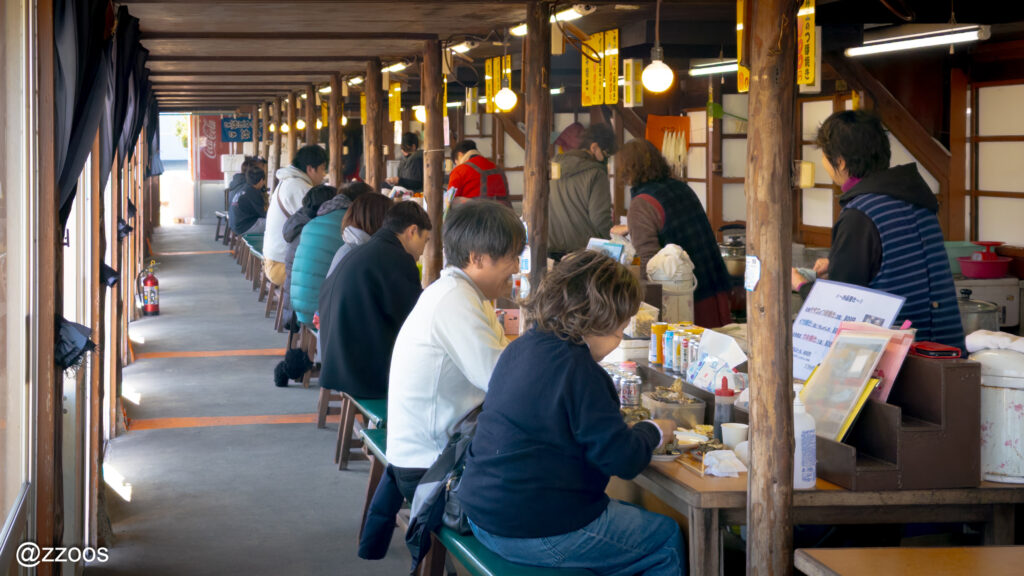
I remember it as a travel documentary. They said that in Kyushu, they created an Olle Trail inspired by Jeju Island’s Olle Trail. Among the various courses, the Karatsu course ended at Hado Misaki.
And there, in an old wooden building, women were grilling turban shells. That scene stayed deeply in my mind. I suddenly wanted to eat that grilled shellfish.
Yes, that is how a travel destination is decided — by a momentary feeling. That’s just how it is. When something sticks in your mind, you go.
For reference, I could not find the Karatsu course on the Kyushu Olle Trail website. I found information saying it was closed in 2017, and also that it ended in 2025, but in any case, it does not seem to be currently managed as an “Olle Trail.”
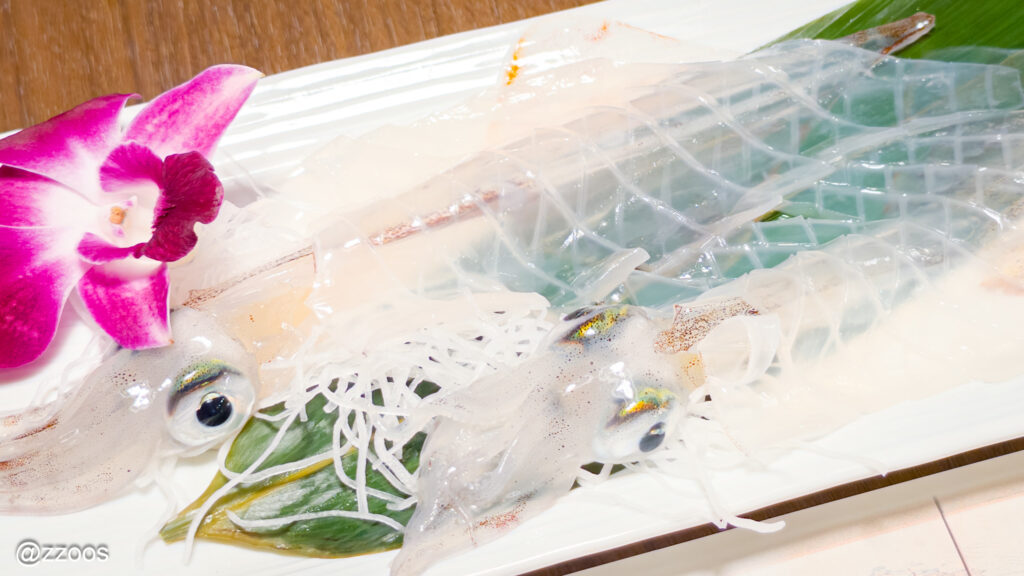
While traveling around Kyushu, you often come across izakaya that serve squid sashimi prepared from live squid and arranged back into its original shape on the plate — that is, ika ikizukuri (イカ活け造り). This ika ikizukuri became especially famous in Yobuko and is said to have become widely known across the country from there. So some people even refer to ika ikizukuri as Yobuko ika.
This was also something I had wanted to try at a famous place at least once. Hado Misaki and Yobuko. The image of the trip was beginning to take shape. With these two places as destinations and a few days in Karatsu, the rough schedule looked like this:
Fukuoka Airport → Karatsu by JR → Yobuko by bus → 1 night → Hado Misaki by bus → back to Karatsu by bus → 3 nights in Karatsu exploring slowly → Fukuoka Airport by JR → return home
Now that the outline of the trip was set, the next step was execution. I booked a ryokan in Yobuko, a hotel in Karatsu, and a flight to Fukuoka. And so, finally, on February 10, 2026,
the journey began again.
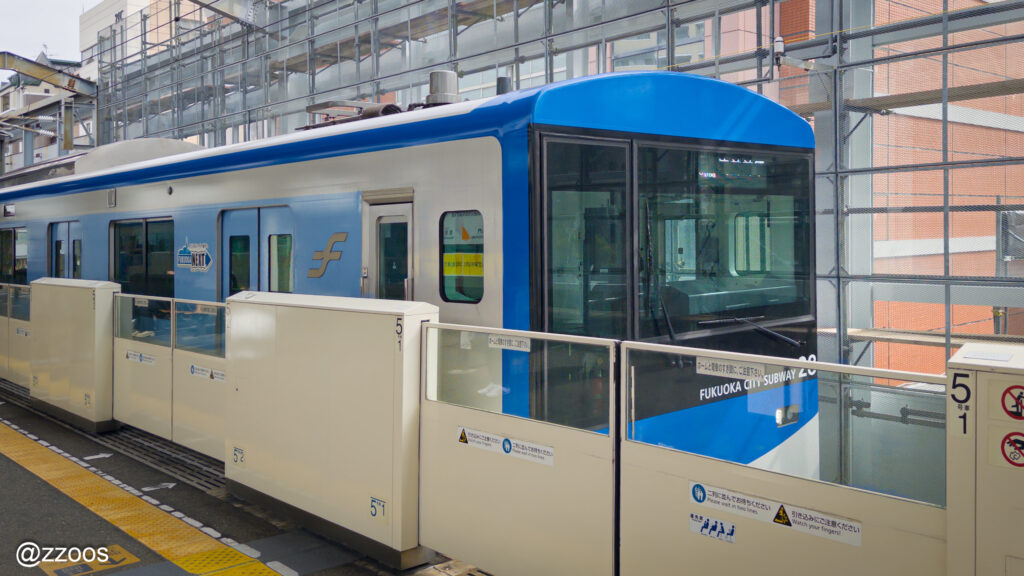
The plane departed Incheon at 10:50 a.m. and landed in Fukuoka around 12:30 p.m. After clearing immigration, I was able to board a train from the subway station in the domestic terminal to Meinohama around 1:50 p.m.
If I had timed it better, I might have been able to take one that went directly to Chikuzen-Maebaru, but unfortunately the one I boarded required a transfer.
I arrived at Meinohama Station a little after 2:00 p.m. I transferred from a different platform to a train bound for Chikuzen-Maebaru.
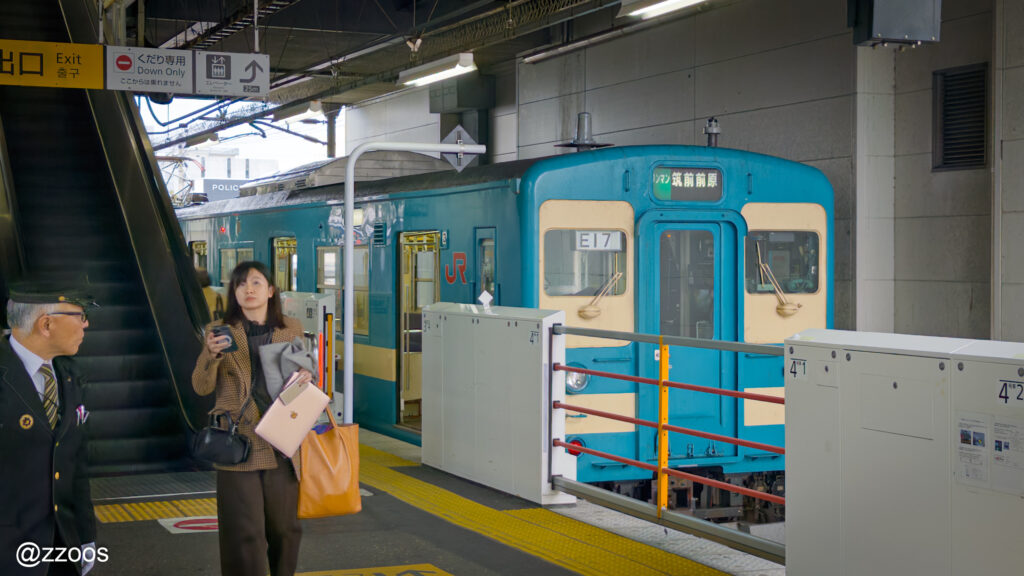
Upon arriving at Chikuzen-Maebaru Station, I was able to board the 2:40 p.m. train to Karatsu from the adjacent platform. That was the second transfer.
There is apparently a direct train from the airport to Karatsu with no transfers at all, but it seems to run only about twice a day on weekdays. Early morning and late evening. Just two times. So for a typical trip, rather than trying to match that schedule, it may be more comfortable to expect one or two transfers along the route Airport – Meinohama – Chikuzen-Maebaru – Karatsu.
For reference, there is also a bus option from the airport to Karatsu. I assumed the Chikuhi Line would be convenient and did not consider the bus, but if the timing works out, it might be the better choice.
In conclusion, there is a fast and convenient way to reach Karatsu “if the timing works,” but if not, you have to transfer trains several times and take longer. And I am experiencing exactly that route.
At least one consolation is that the ICOCA card registered on my iPhone works for all sections up to Yobuko. You can even set both your Korean transit card and Japanese transit card as “express transit cards.” In Japan, it automatically charges to the ICOCA card, and in Korea, to the T MONEY card.
Up until now, it had felt like a clean, modern subway. But the train I boarded after transferring at Chikuzen-Maebaru felt like an old rural train. Perhaps because it was a weekday afternoon, there were not many passengers. The rattling of the old train and its unfamiliar smell. Outside the window, which had been only cloudy, rain finally began to fall.
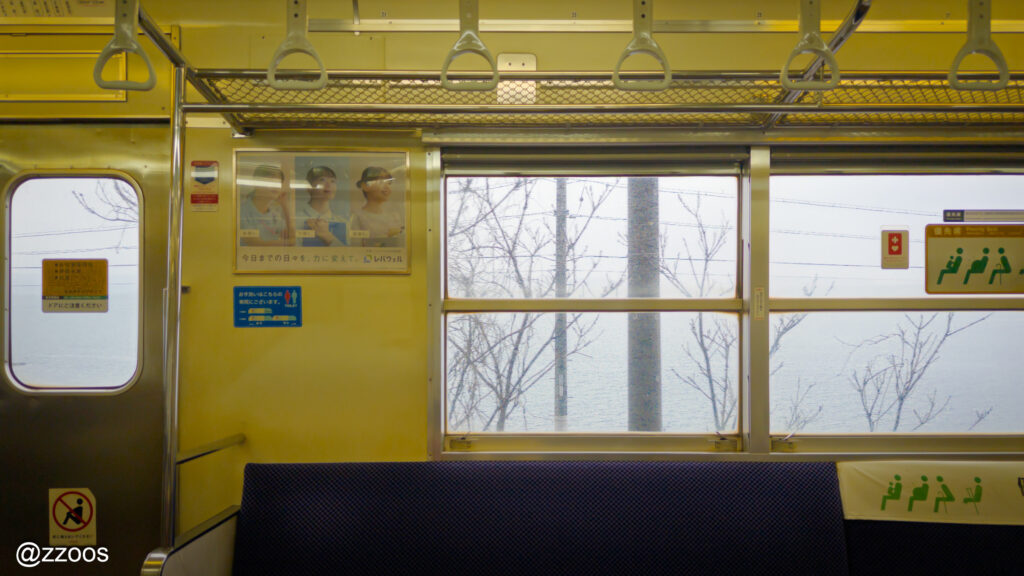
Each time I changed planes, buses, and trains, the colors, smells, and sounds had been changing little by little. Only now did I clearly realize it. Slowly, gradually, I was blending from everyday life into travel. And when I saw the Genkai-nada (玄界灘) — the sea known in Korean as Haehaetan — outside the rattling train window, the switch to travel mode was completely turned on.
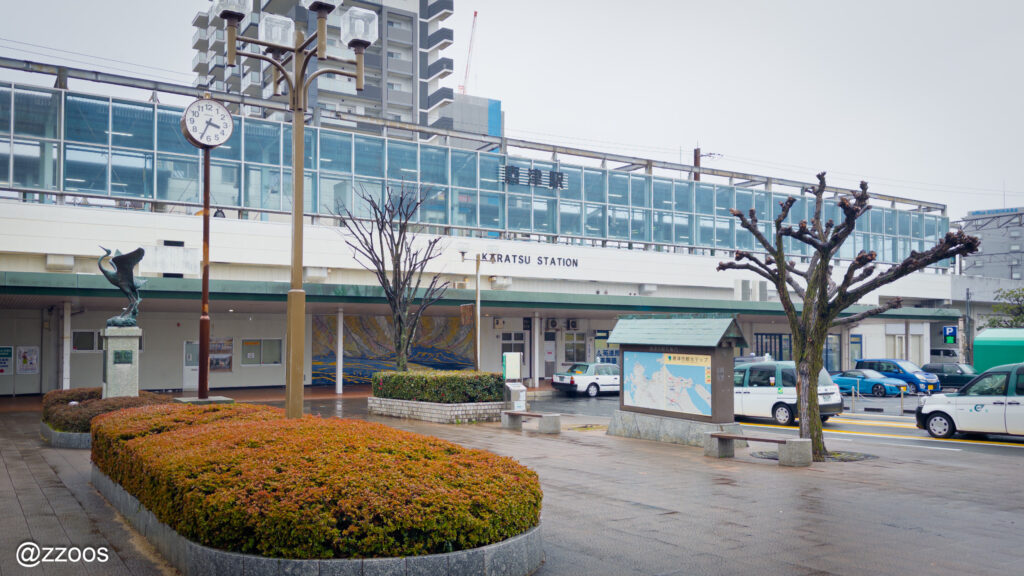
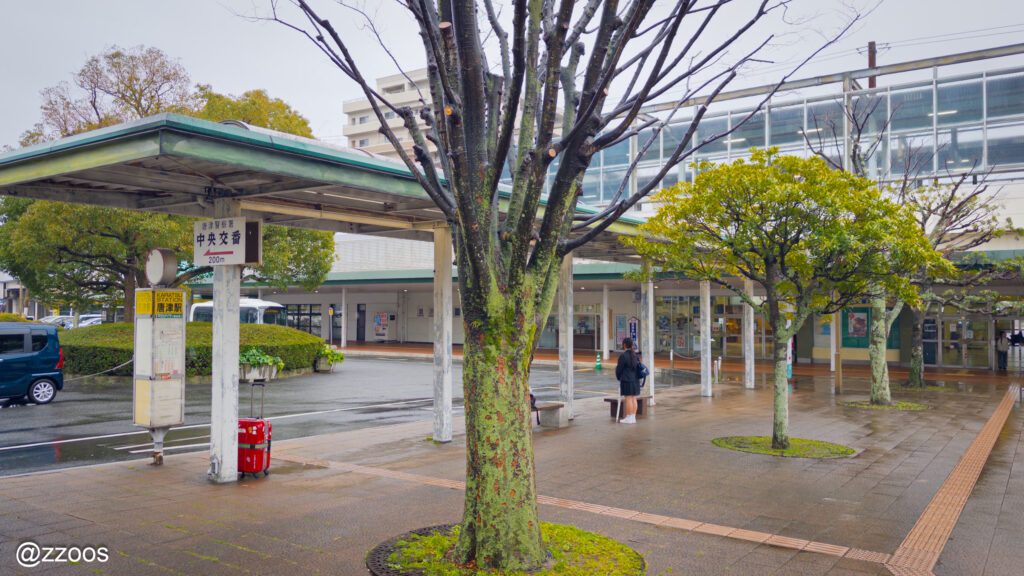
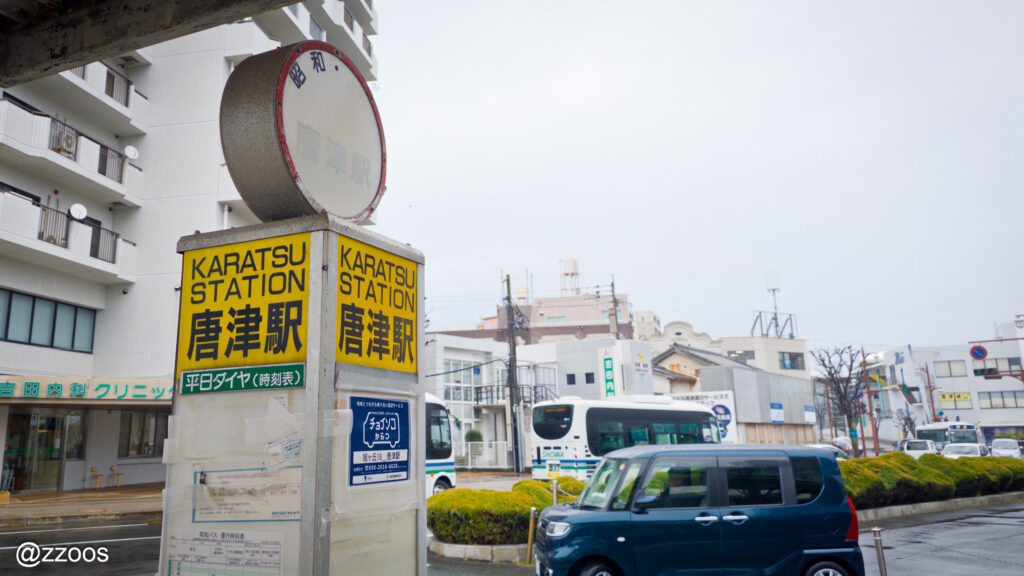
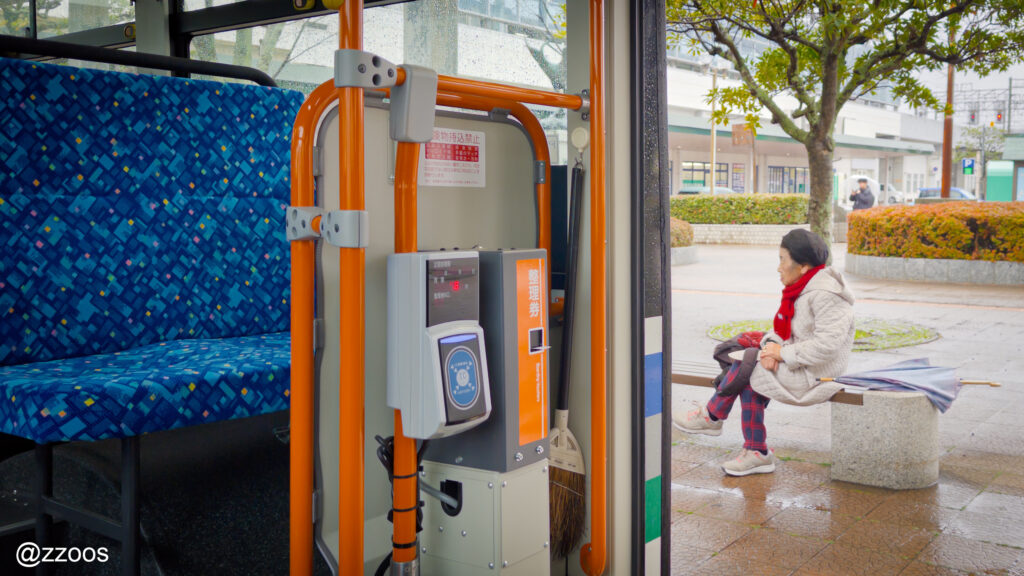
Finally, I arrived at Karatsu Station!
But my journey is still not over. Today, I still have to go to Yobuko. I did not expect it to take this long. After searching on Google Maps, I had thought very simply, “Oh, I can take just one train from the airport to Karatsu, and then it’s just a short bus ride.”
Now, there are two types of buses from Karatsu Station to Yobuko. One departs directly from in front of Karatsu Station and takes about 35 minutes. The other departs from Oteguchi (大手口), where all the buses in Karatsu gather. That one takes a longer route and about 50 minutes.
Fortunately, I was lucky enough to catch the bus departing directly from Karatsu Station. Lucky!
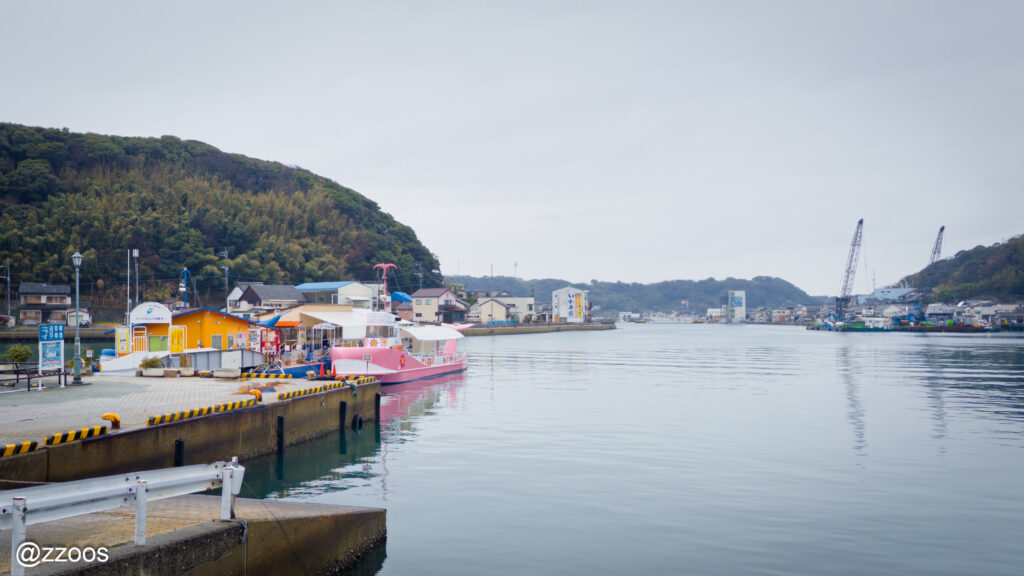
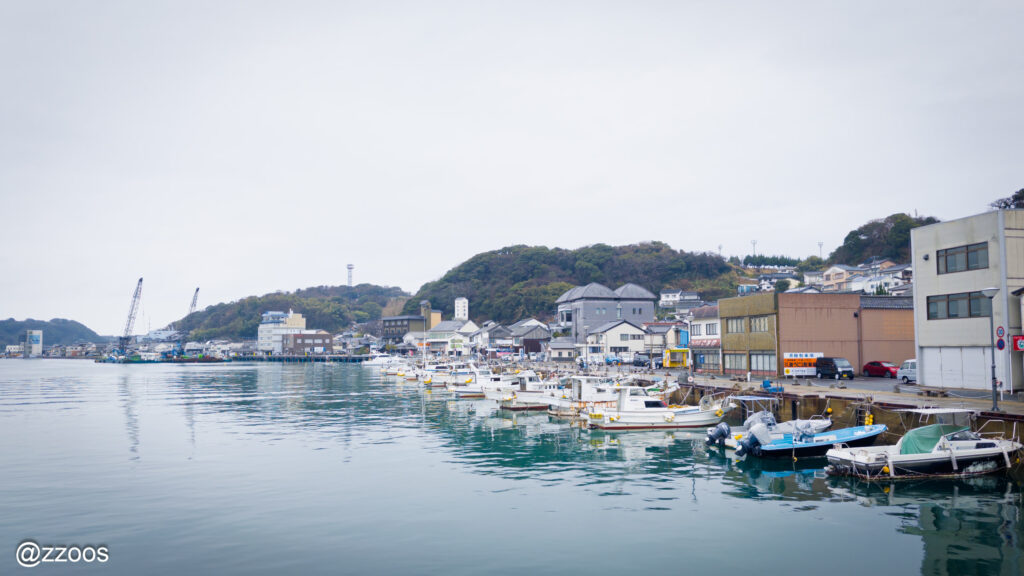
After 4:00 p.m., I finally arrived in Yobuko. The sky was still cloudy, but the rain had stopped.
Yobuko was truly a small harbor. Completely quiet and peaceful. I felt a kind of relief, as if thinking, “Finally! After 12 hours since leaving home, I have arrived!!” All I had to do now was walk to the ryokan I had reserved for tonight.
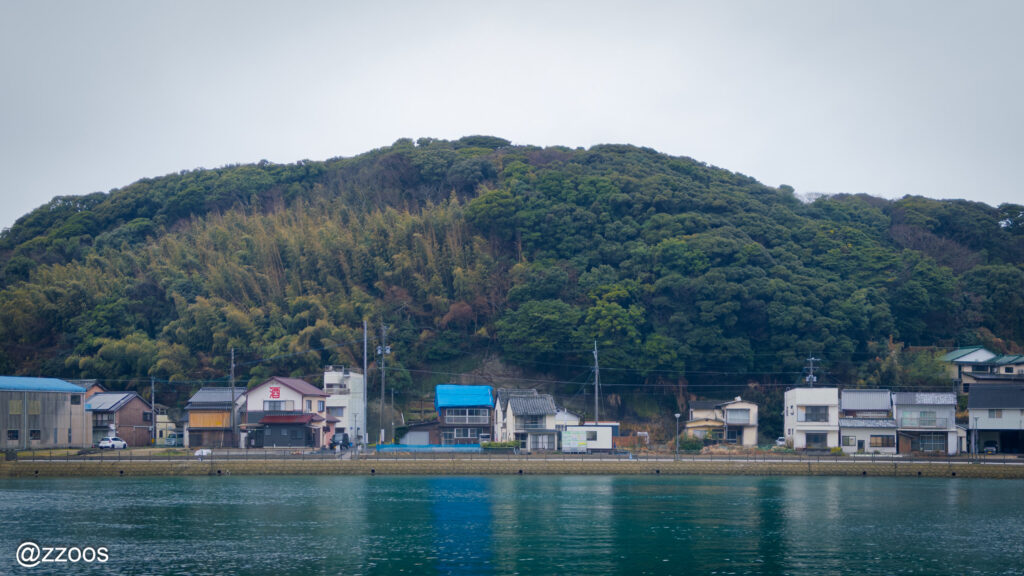
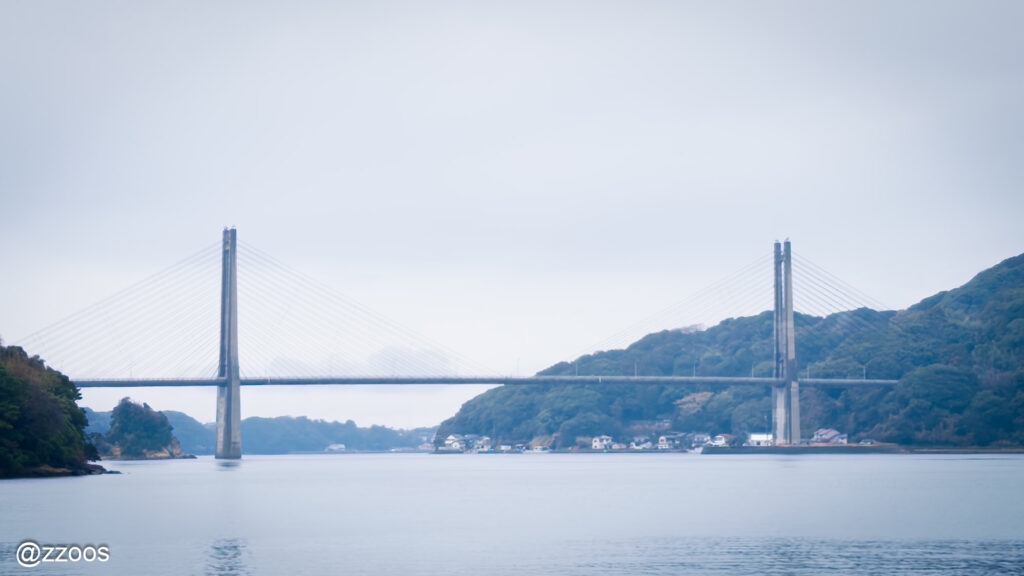
I thought I could walk to the ryokan quickly, but that was my mistake. Why did I ignore Google Maps when it said 27 minutes on foot? The last stretch even had a fairly steep uphill section, making it quite difficult to pull my suitcase up. It took more than 30 minutes while dragging my luggage.
It was fortunate that the rain had stopped. If it had continued, I would have deeply regretted the decision to walk to the ryokan.
In the end, I learned the next day at checkout that there was actually a bus from the stop where I had gotten off to the ryokan. However, the intervals were very long, so the timing had to be right… Perhaps the phrase I am saying most today is “if the timing works.” Indeed, when traveling to small cities below a certain size, checking the bus schedule is the most important thing.
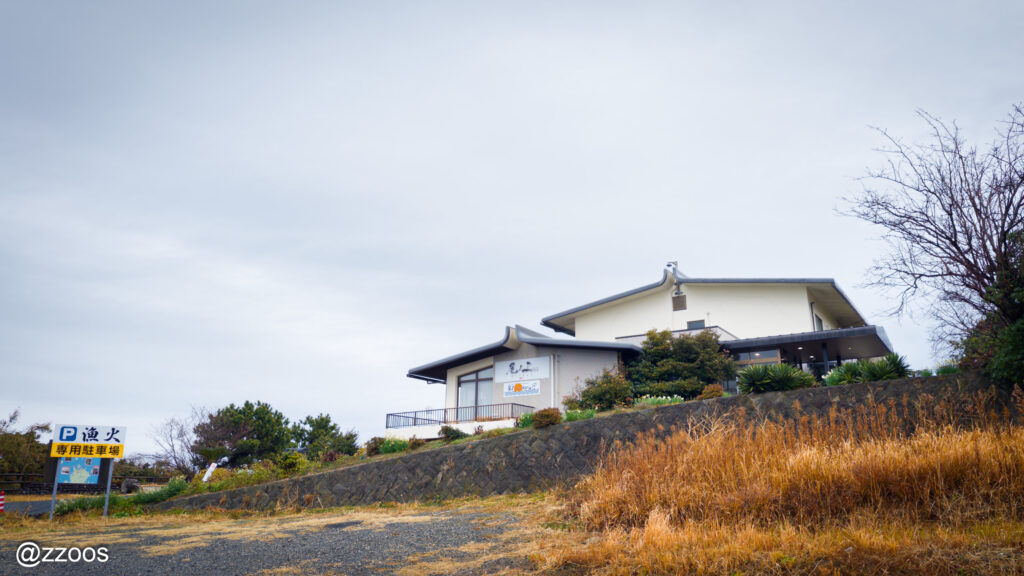
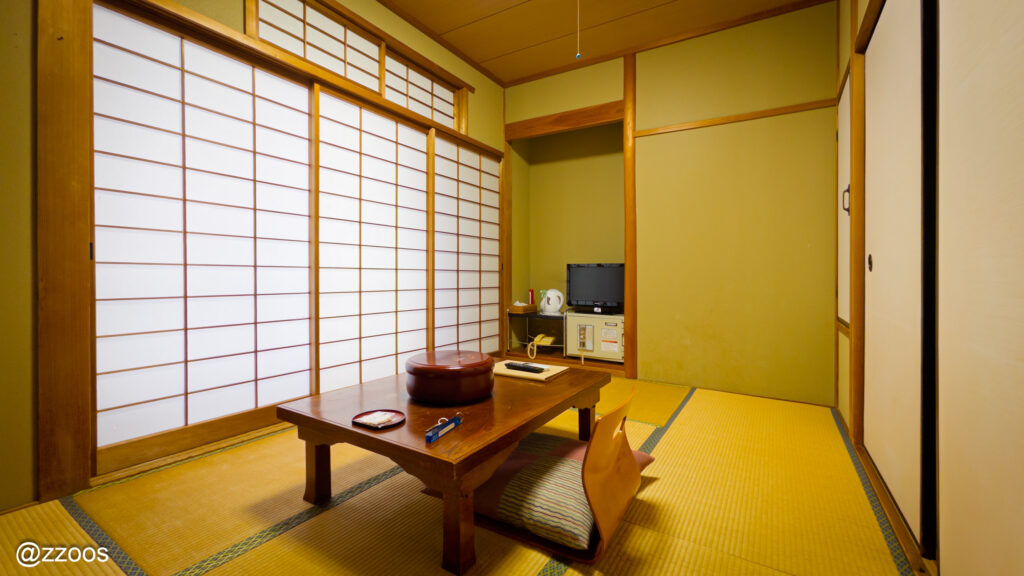
Finally, I checked into Onoue Ryokan, tonight’s accommodation. Dinner was reserved for 6:00 p.m., so for now, I decided to go to the bath. Ah, this is not a hot spring. There is simply a large public bath. Yobuko is not known for hot springs.
Nevertheless, the reason I booked a ryokan here was to eat the Yobuko ika mentioned earlier. Yobuko ika is served for dinner at the ryokan. After washing up and resting for a bit, it would finally be time for dinner. I am very much looking forward to it.
Now, I will organize the dinner at Onoue Ryokan in the next post. This post has already become far too long.