Japan has this thing with ranking the top three of everything. The three most beautiful gardens, the three greatest castles, the three finest pine groves — you name it. Apparently everything from the grand to the mundane can be sorted into a “Japan’s Top Three Whatevers” list.
It started, they say, with Confucian scholars of the Edo period. These days, local governments have gotten in on the action too, competing to coin and promote their own new “top three” titles.
A few of those places have made it onto my travel list.
I’ve been to Itsukushima (嚴島) — Miyajima (宮島) — one of Japan’s three most scenic views. I’ve seen Nachi Falls (那智の滝), one of the three great waterfalls. Of the three famous night views, I’ve visited two: Hakodate (函館) and Nagasaki (長崎). I’ve also walked through Nijinomatsubara (虹の松原), one of the three great pine groves. And Kumamoto Castle (熊本城), one of the three great castles, I’ve seen more than once.
A lot of those posts are scattered all over the place, or never got written up at all. But I wanted to brag a little anyway.
Anyway, this trip brought me to another place with one of those “top three” titles.
Kenrokuen (兼六園), one of Japan’s three great gardens.
The three great gardens are Kenrokuen in Kanazawa, Korakuen (後楽園) in Okayama, and Kairakuen (偕楽園) in Mito. They’re sometimes paired with the concept of setsu-getsu-ka (雪月花) — snow, moon, and flower: Kenrokuen for its beautiful winter snow, Korakuen for its autumn moon, Kairakuen for its spring blossoms.
The name Kenrokuen (兼六, “combining six”) comes from a Song Dynasty poet who identified six qualities a garden could possess — and this one, apparently, has all of them.
A place this famous draws crowds even an hour before closing. Still plenty of people lining up to get in.
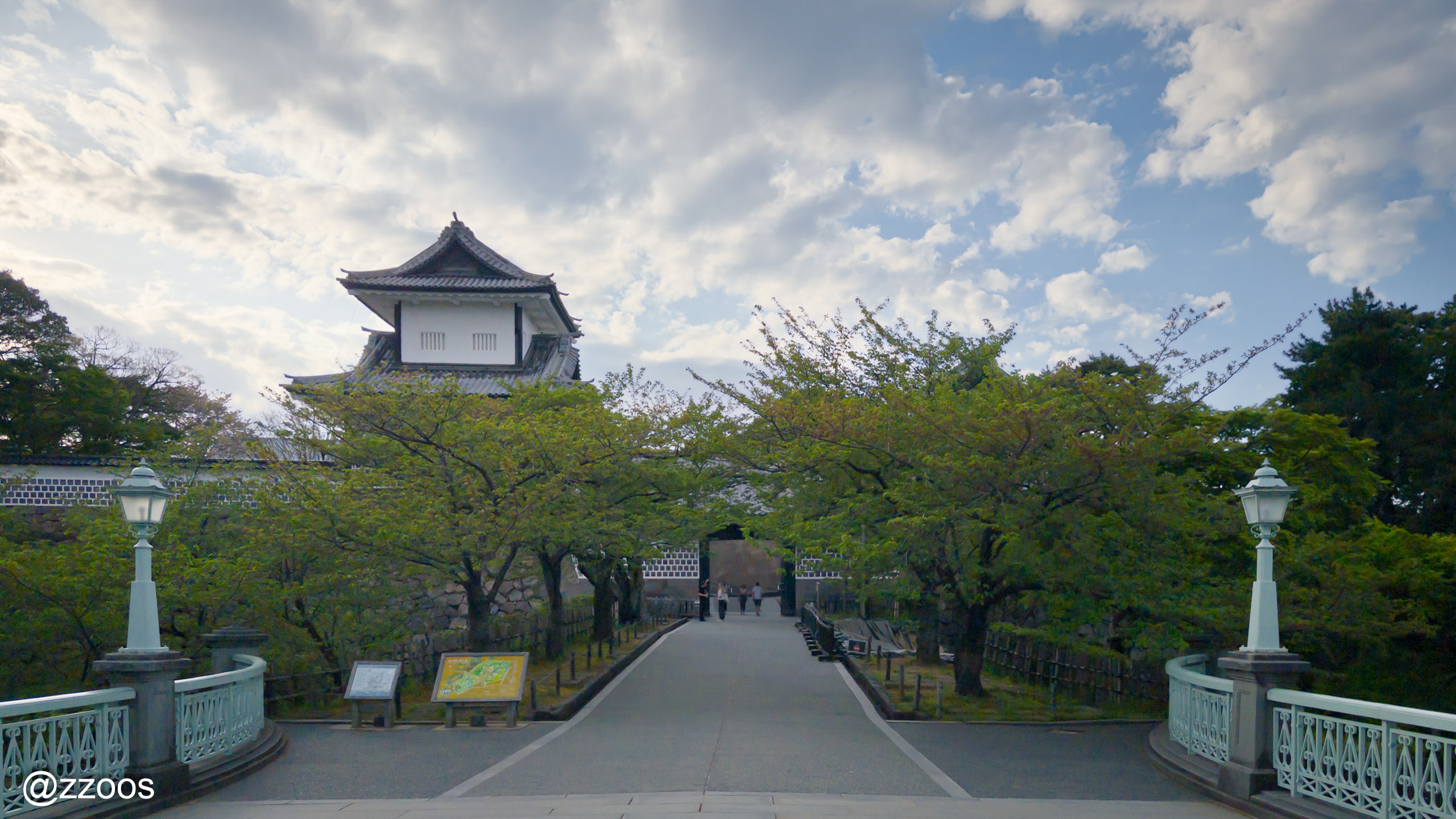
I’d come from Kanazawa Castle and exited through Ishikawamon Gate, so I entered through Katsurazaka Gate just across the bridge. Admission was 320 yen.
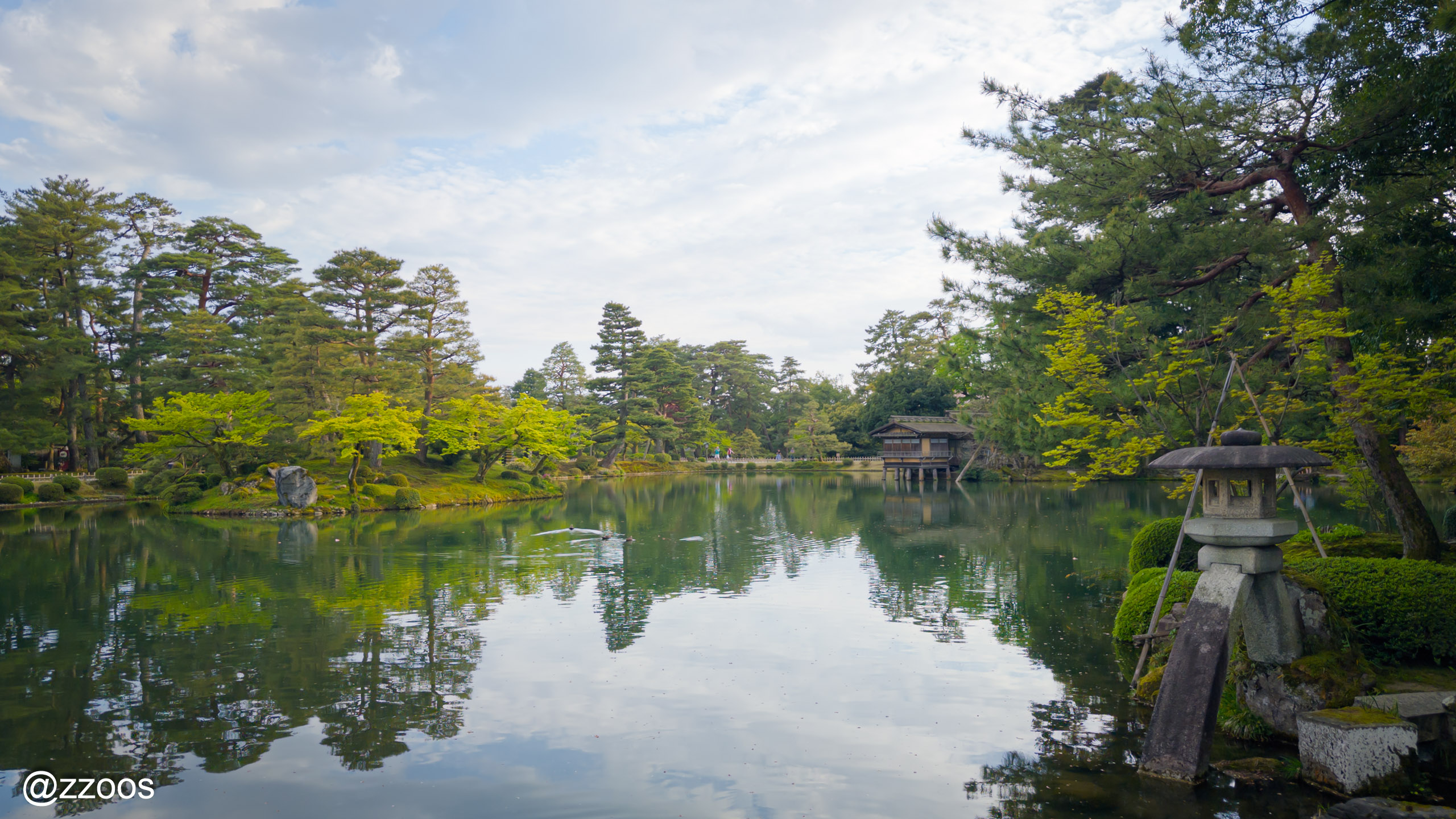
A short walk in, and there it was — Kasumigaike Pond (霞ヶ池), with the Kotojitoro Lantern (徽軫灯籠) standing at one end.
There was a line of people waiting to take photos in front of it. I wondered why, and apparently it’s quite well-known. The lantern has two legs instead of the usual base, and one of them stands in the water — something about harmony with nature. Honestly, to me it just looked like a stone lantern.
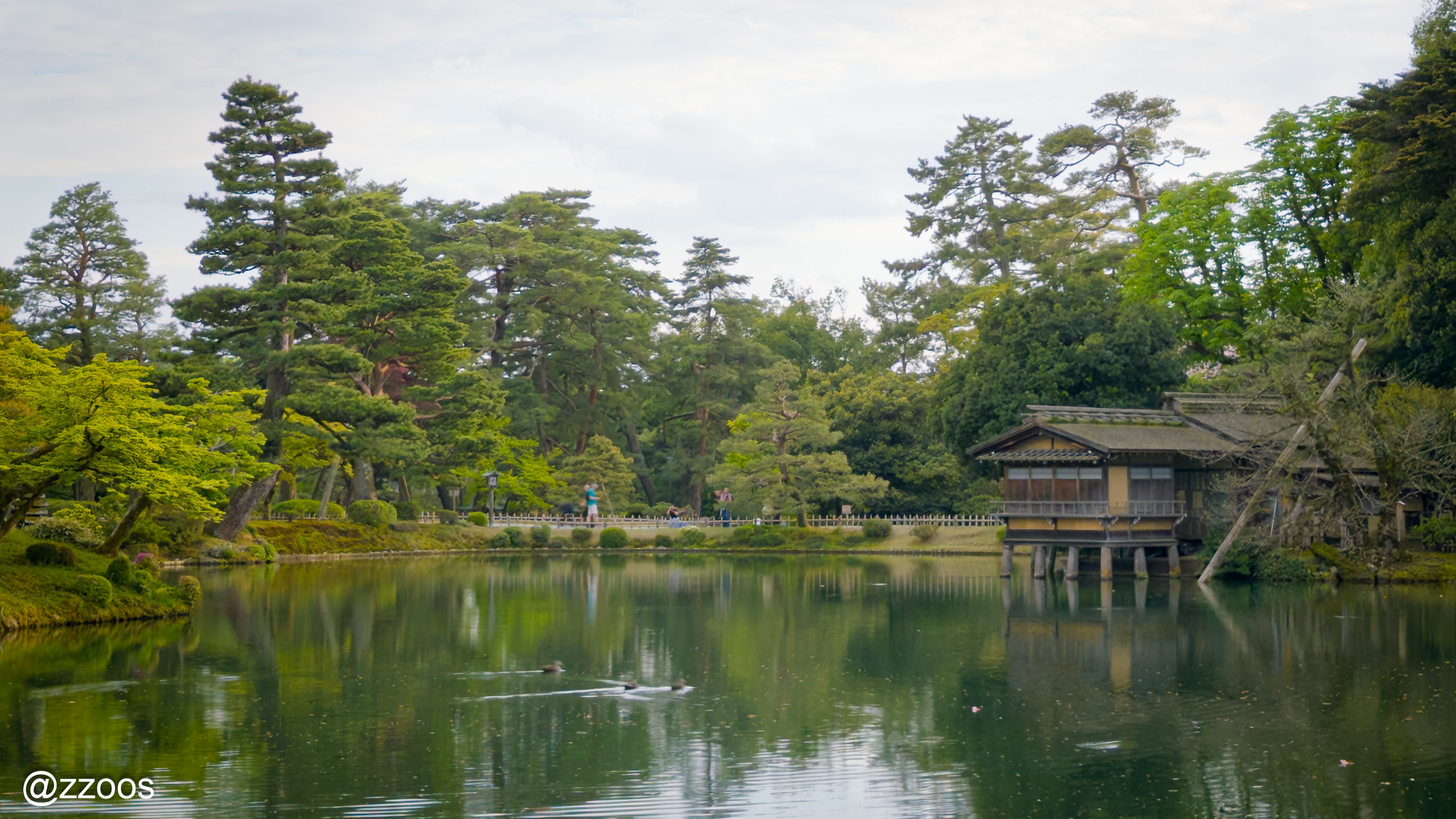
So I took a photo of the quiet scenery of Kasumigaike Pond instead.

Kenrokuen has no set path. Small trails branch off and reconnect in every direction, so you make your own route as you go. I kept checking Google Maps, and noticed a spot marked “Panoramic Viewpoint” nearby, so I went to check it out.
Just an ordinary view of the city, mostly blocked by trees. Maybe the trees have grown too tall since the Edo period.
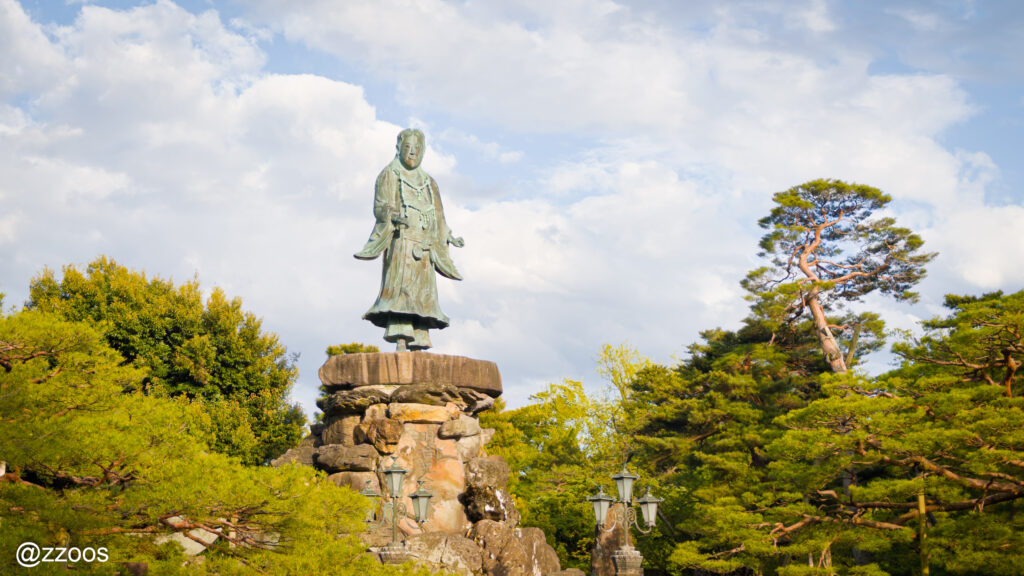
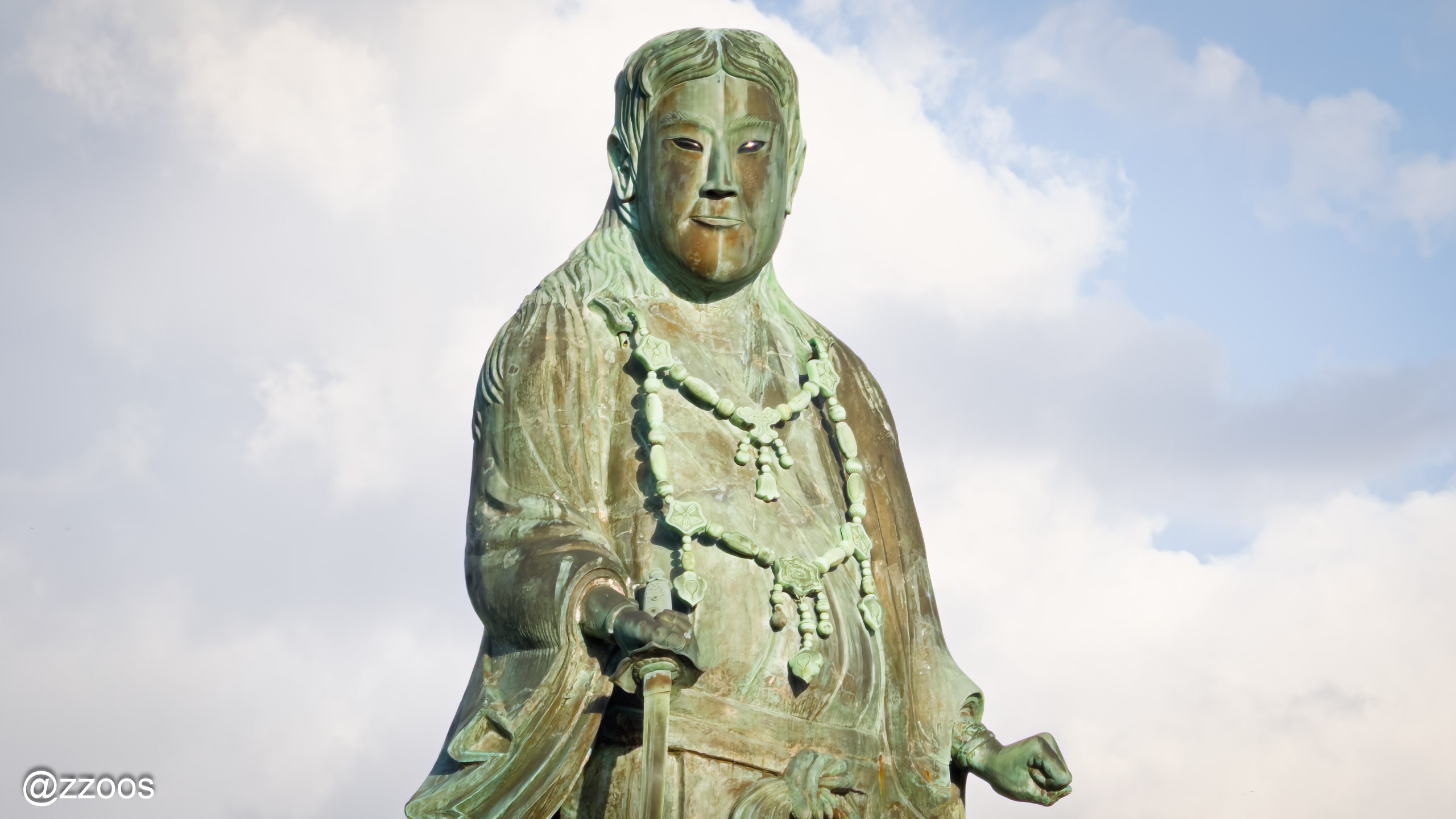
The most eye-catching thing in Kenrokuen might be this large bronze statue. It depicts Yamato Takeru (日本武尊), a warrior deity from ancient Japanese mythology. An odd sight in an Edo-period garden.
The statue is actually a war memorial — built to honor the soldiers who died in the Seinan War, Japan’s last civil war after the Meiji Restoration.
But the Meiji government didn’t call it that. They named it the Meiji Monument (明治紀念之標, Meiji Kinen no Shirube).
The word kinen (紀念) in Japanese carries the sense of commemoration — celebrating an occasion, marking a victory — rather than mourning the dead.
The Meiji government saw their victory in that war as the opening of a new era, and the name reflects exactly that.
Just as the people of Kanazawa once chose not to rebuild a castle keep to prove their loyalty to the Edo shogunate, they now had to prove their loyalty to the Meiji government.
So the name had to be kinen — a commemoration of victory, not a memorial to the dead.
The quiet bitterness of always being second, always having to prove yourself.
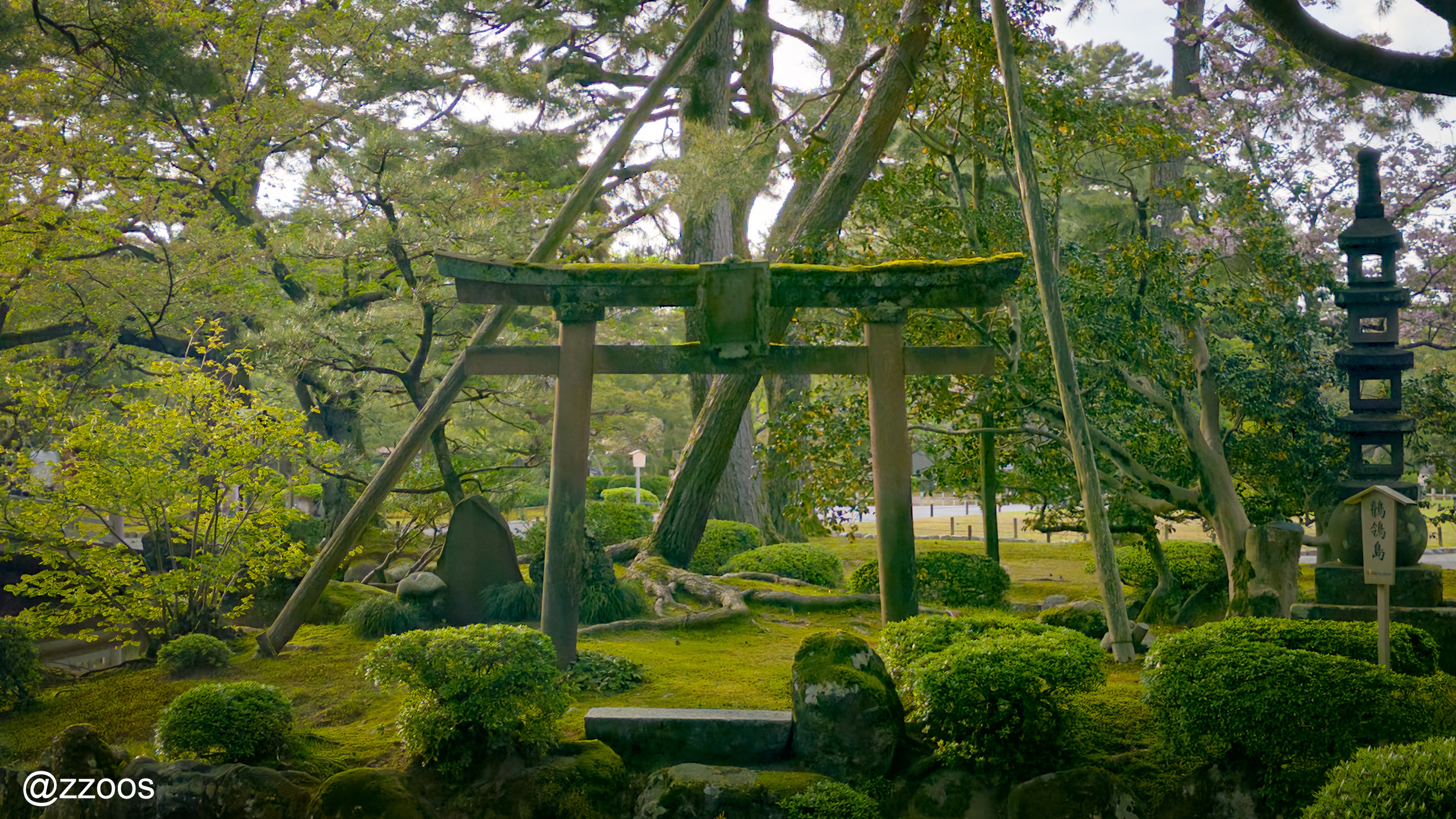
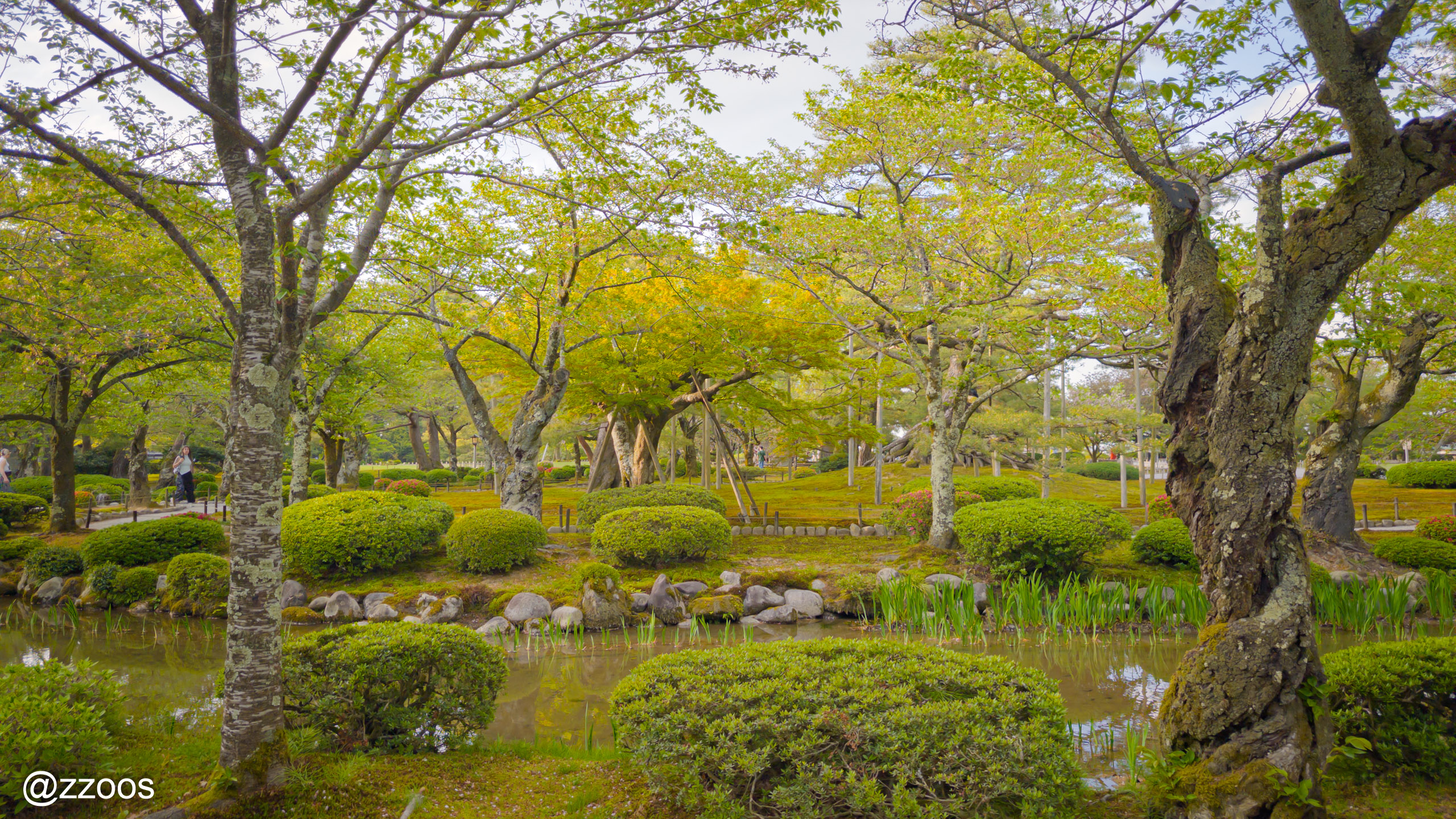
Kenrokuen is, honestly, one of the most beautiful places in Kanazawa. And a wonderful place for a walk. Water runs throughout, there’s a large pond, plenty of trees, well-maintained paths — narrow enough that even with crowds, you rarely feel packed in. Each section has its own slightly different mood, and there’s a quiet pleasure in watching the scenery shift as you move through it.
But.
It’s surprisingly hard to get a good photo here.
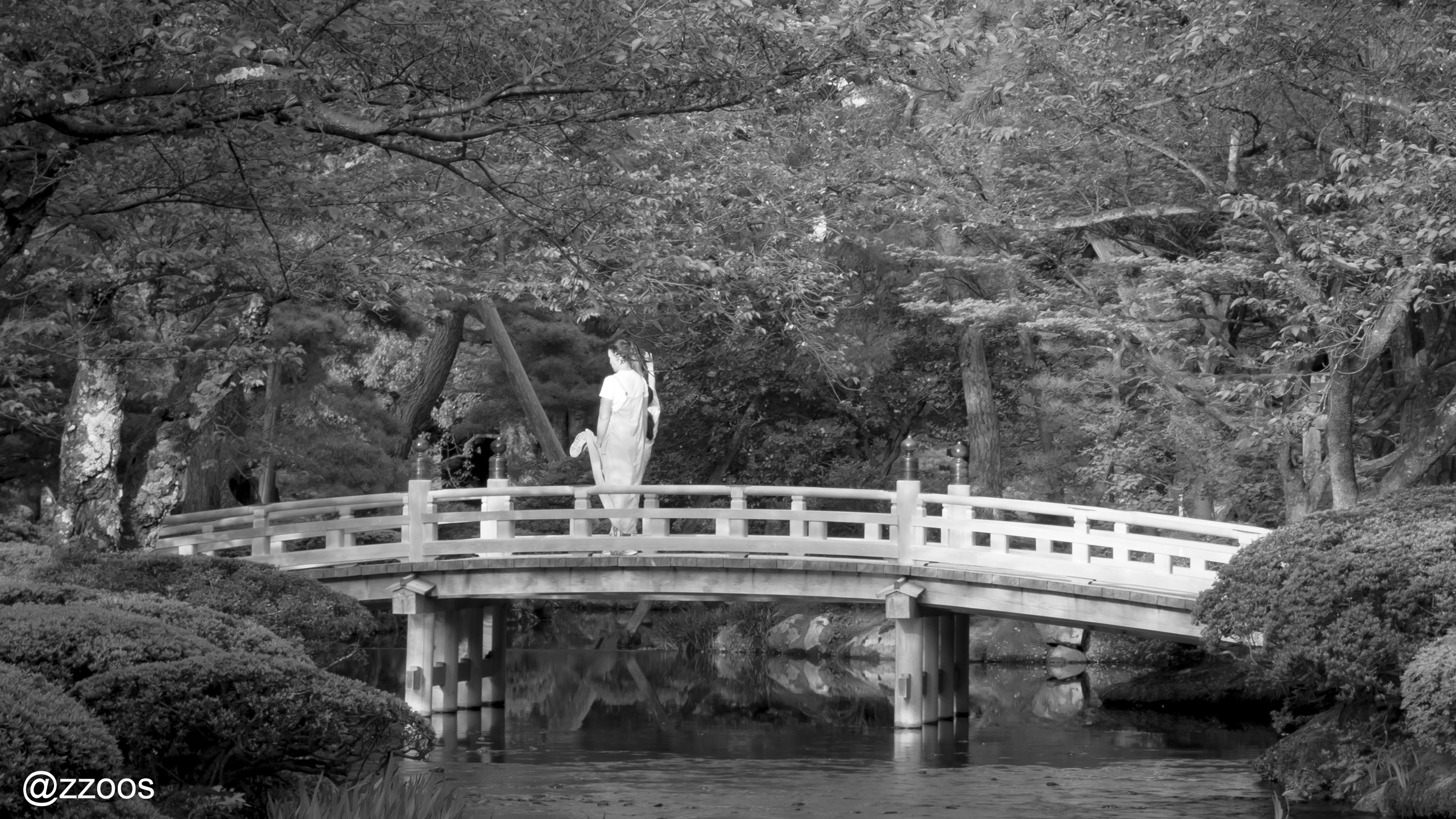
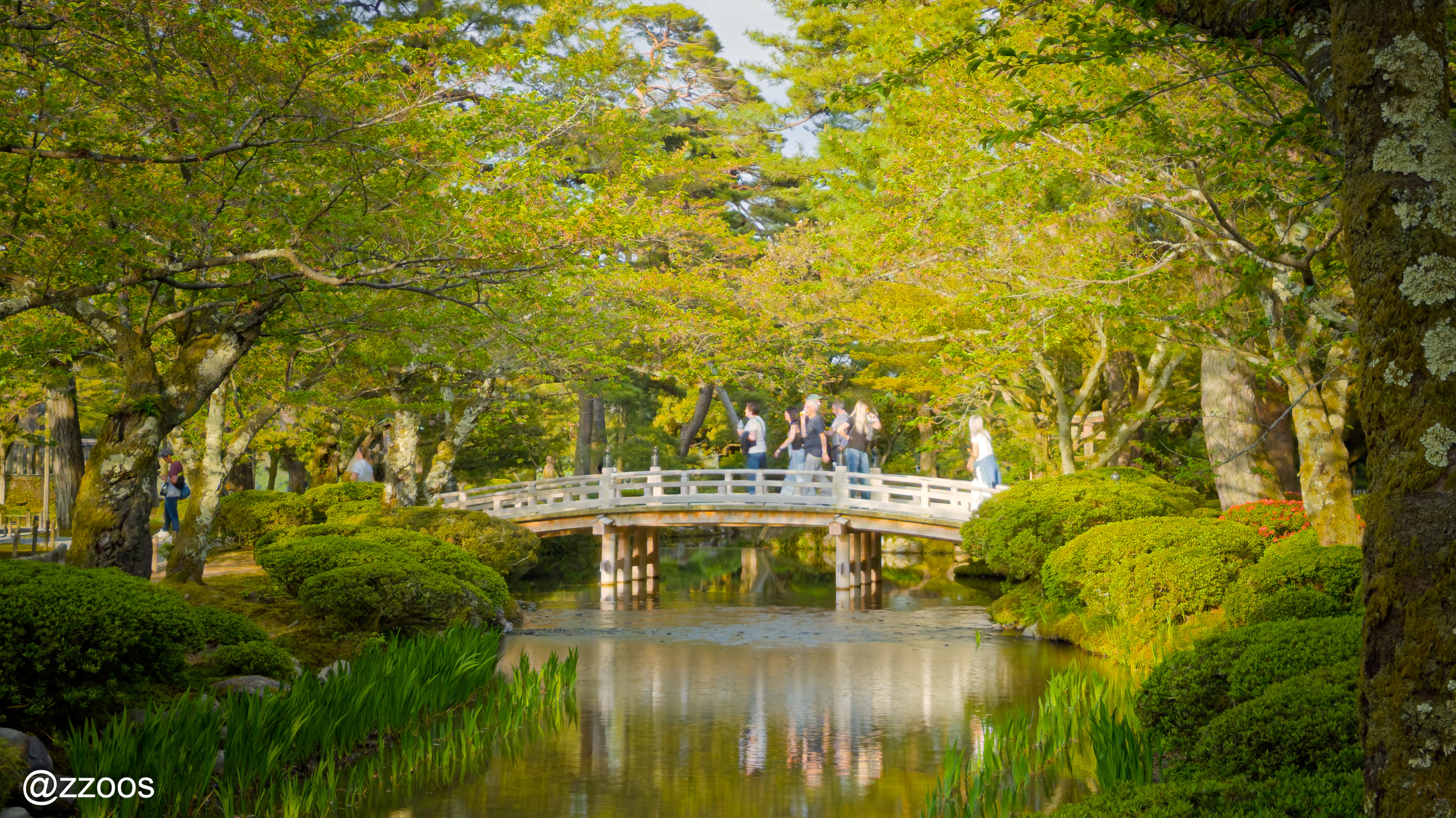
Then I found Hanami-bashi (花見橋) and decided to wait there for a while, camera ready. I had a feeling. Like maybe I could get something here.
I didn’t, really.
I wanted a single shot that could sum up the whole atmosphere of Kenrokuen. But there was nowhere in the garden where that shot existed.
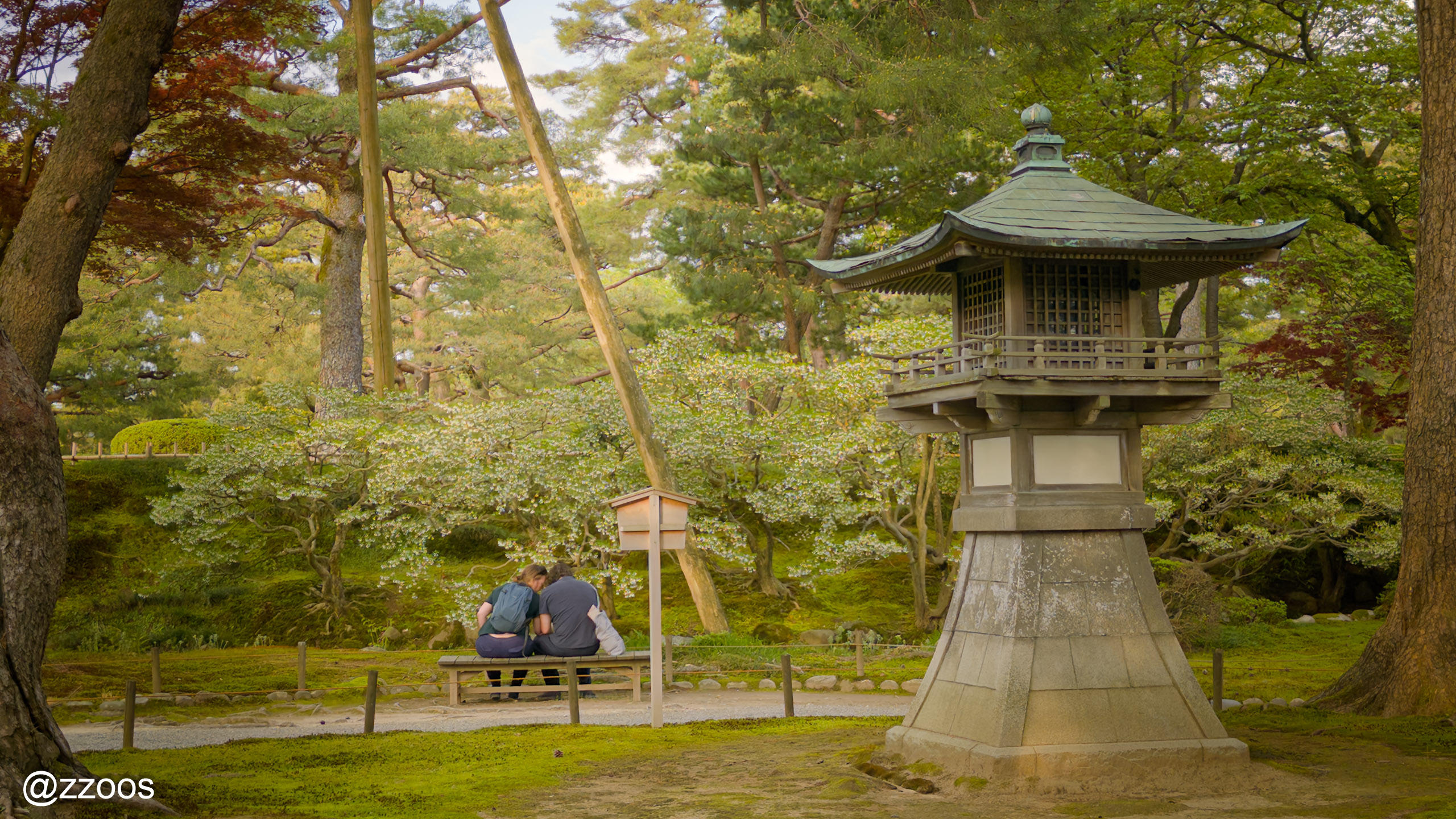
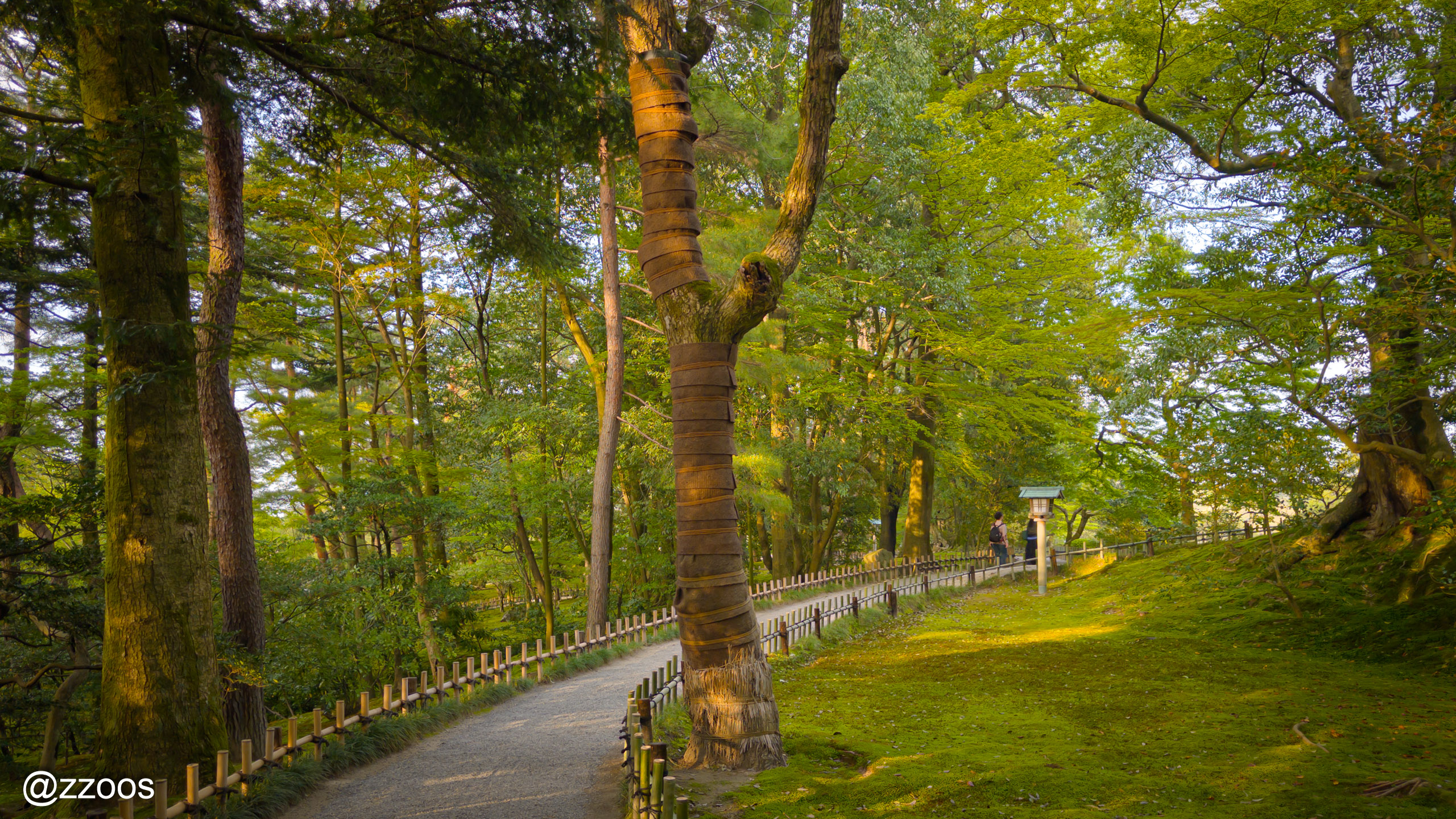
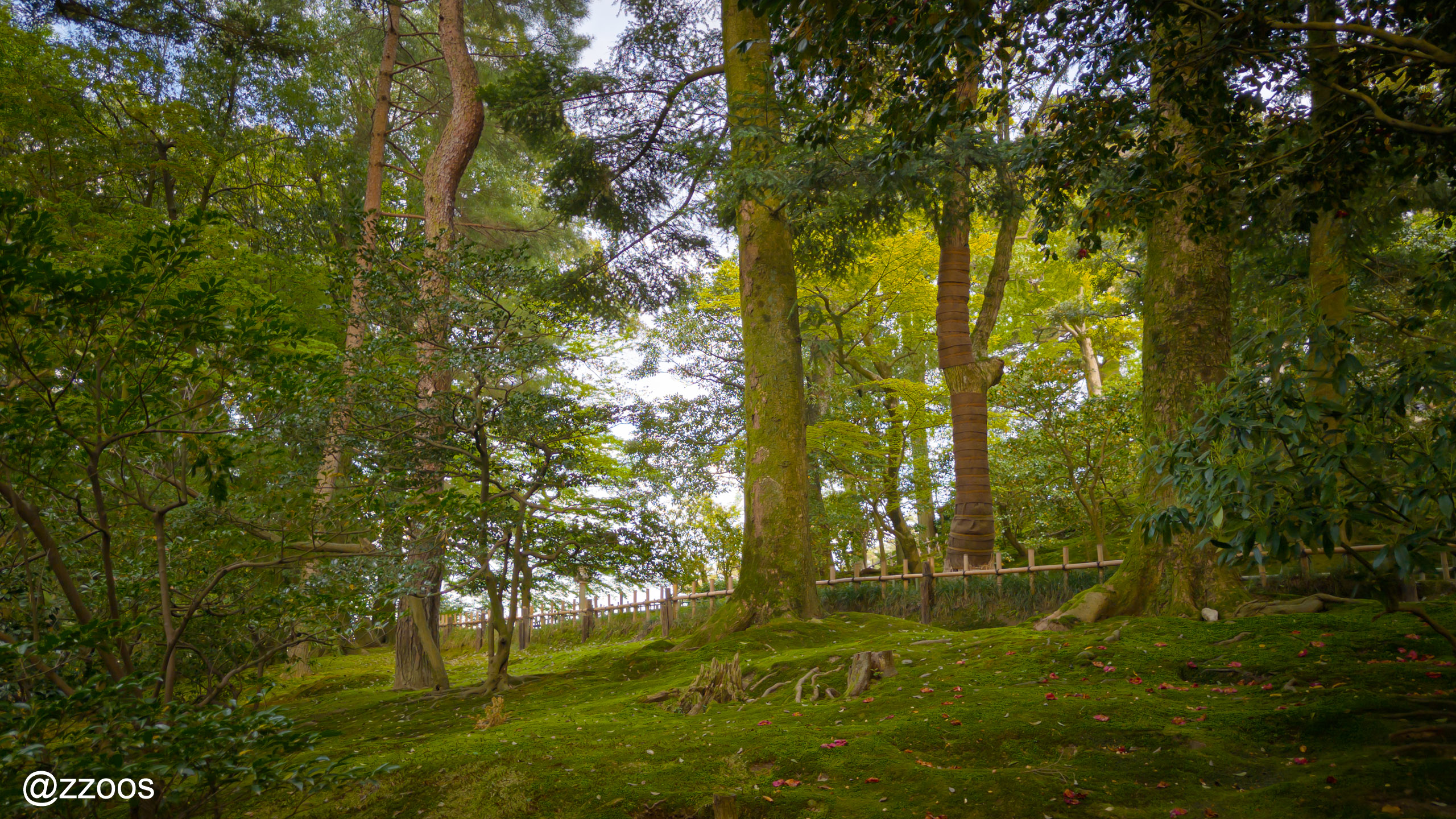
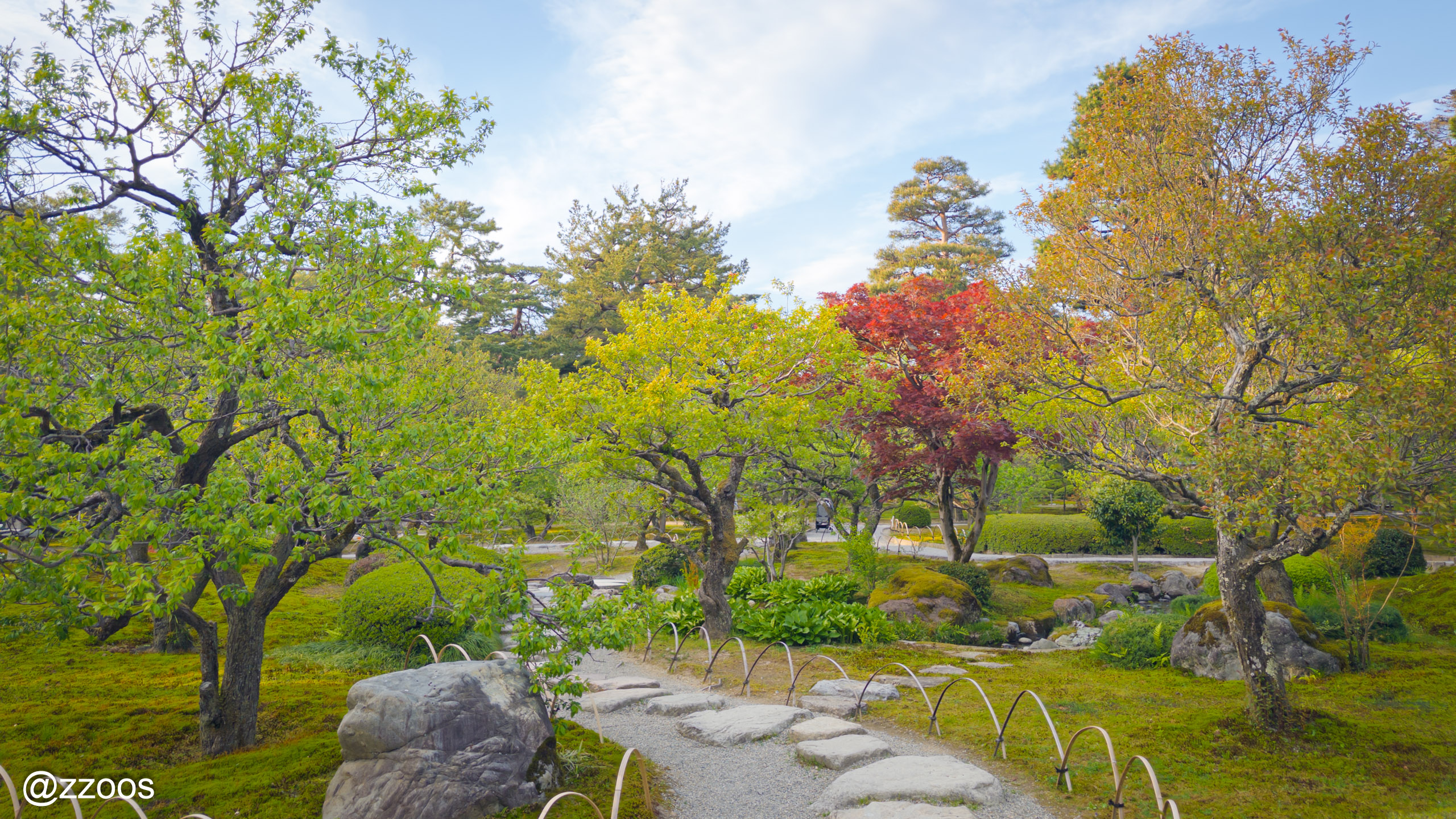
That’s because this isn’t a place defined by one dramatic scene. It’s a fairly large garden. The mood shifts slightly from section to section. No single structure, no single tree dominates the impression.
The scenery changes a little with every step. The sounds shift subtly as you move. Those small changes accumulate, and together they become the atmosphere of the whole garden.
And that’s why even the Kotojitoro Lantern — which seemed like nothing special to me at first — is actually one of the details that contributes to the overall mood of this garden.
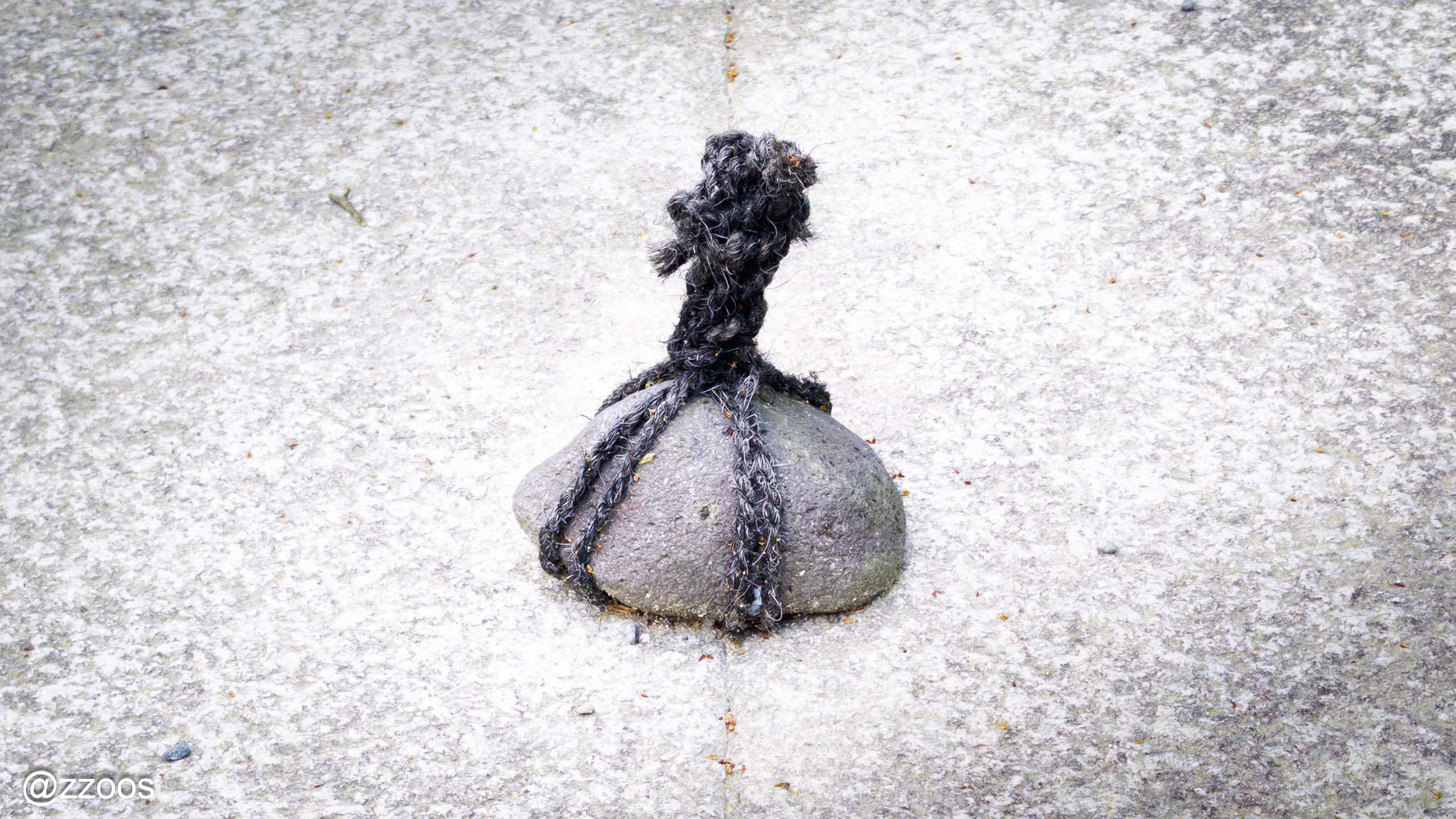
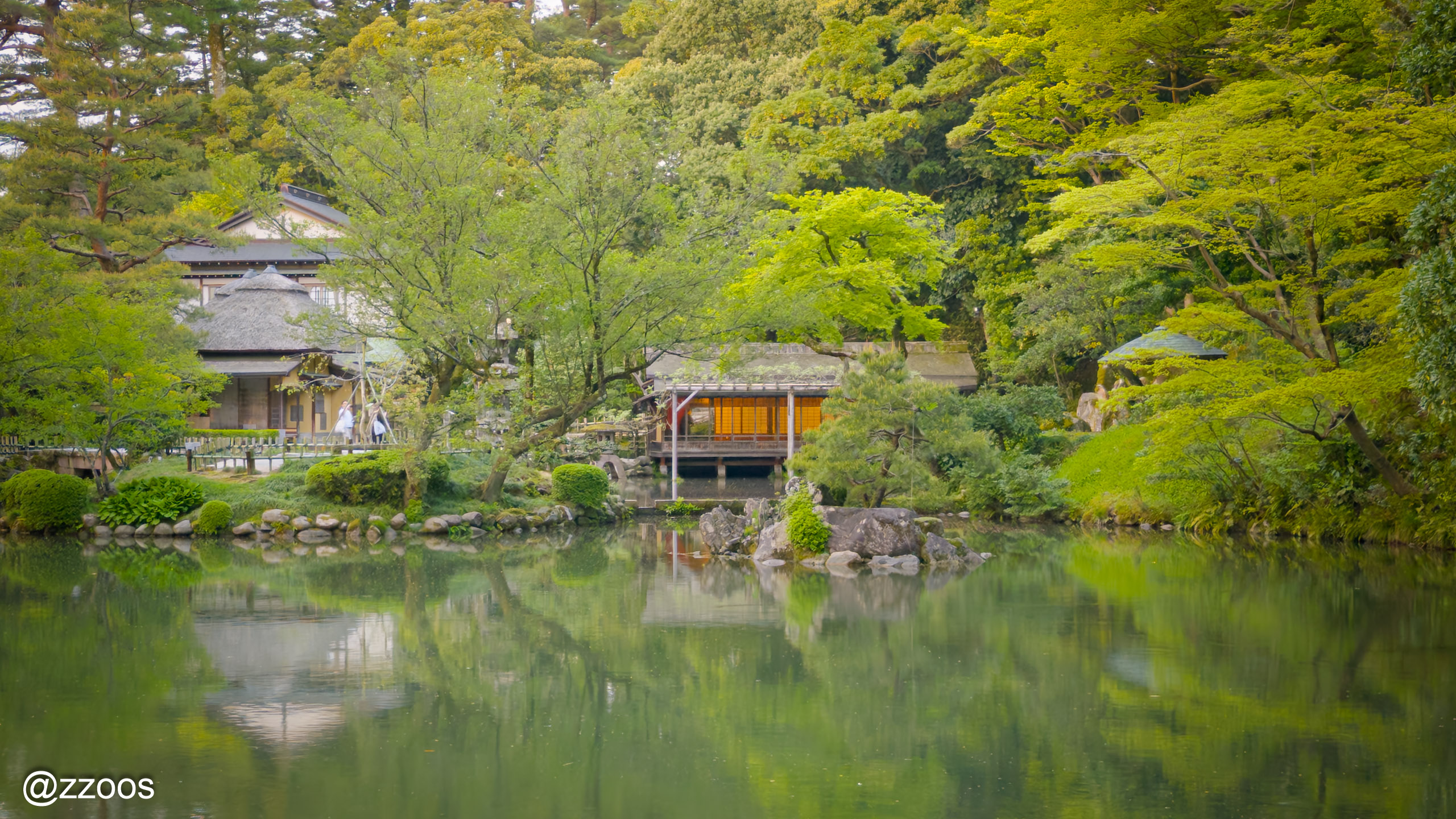
Kenrokuen feels better in person than it looks in photos. So I’d say: set aside the hunt for the perfect shot, and just walk through it. Let the quiet atmosphere find you.
At the time, I couldn’t let it go. I left feeling like I should have gotten a better photo. A sense of loss, almost — frustration at not having captured something worthy of the place.
But looking back now, Kenrokuen was never a place that could be expressed in a single photo. The fact that a collection of photos, taken one by one, somehow manages to convey even a little of its atmosphere — that says it all.
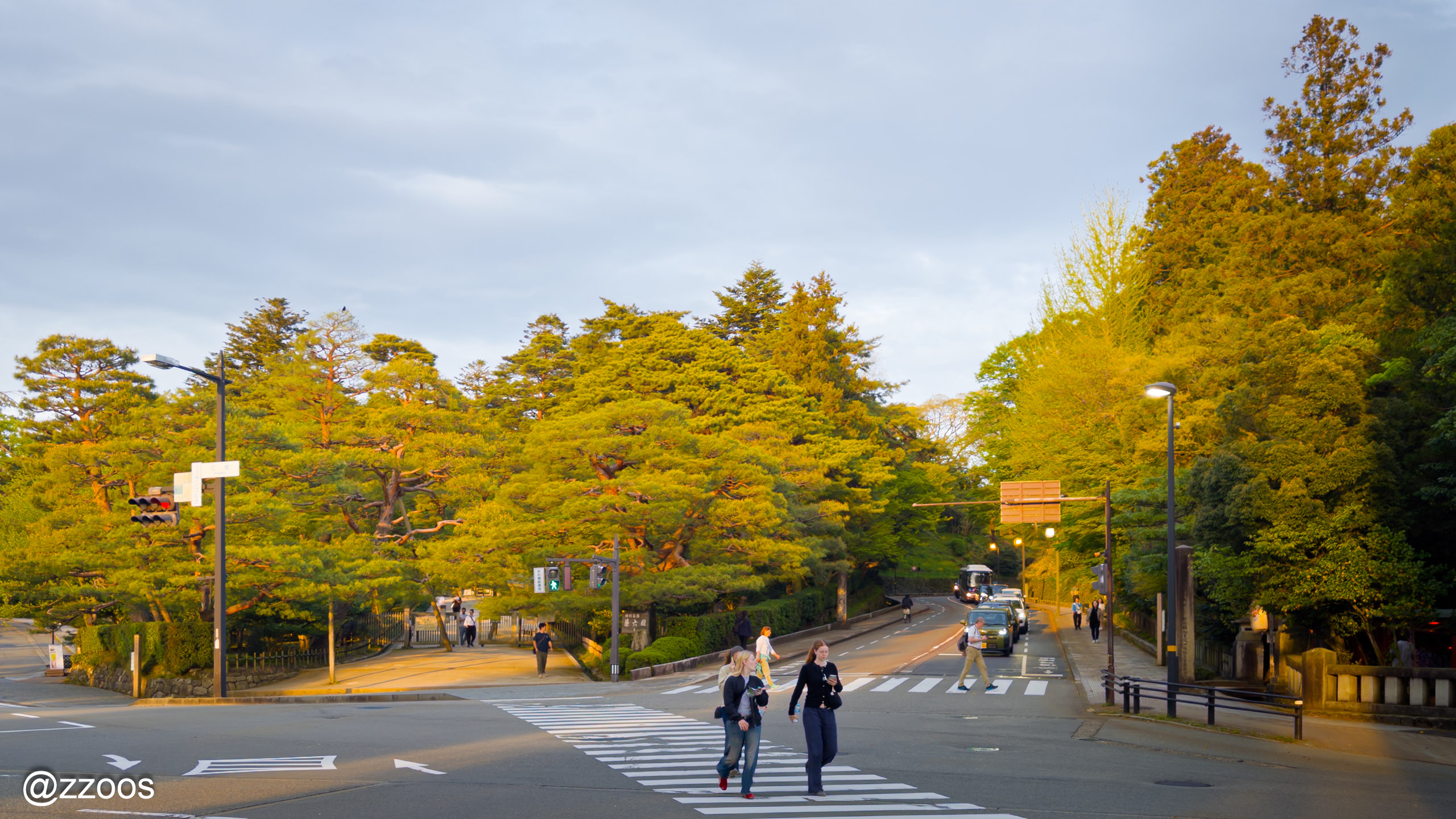
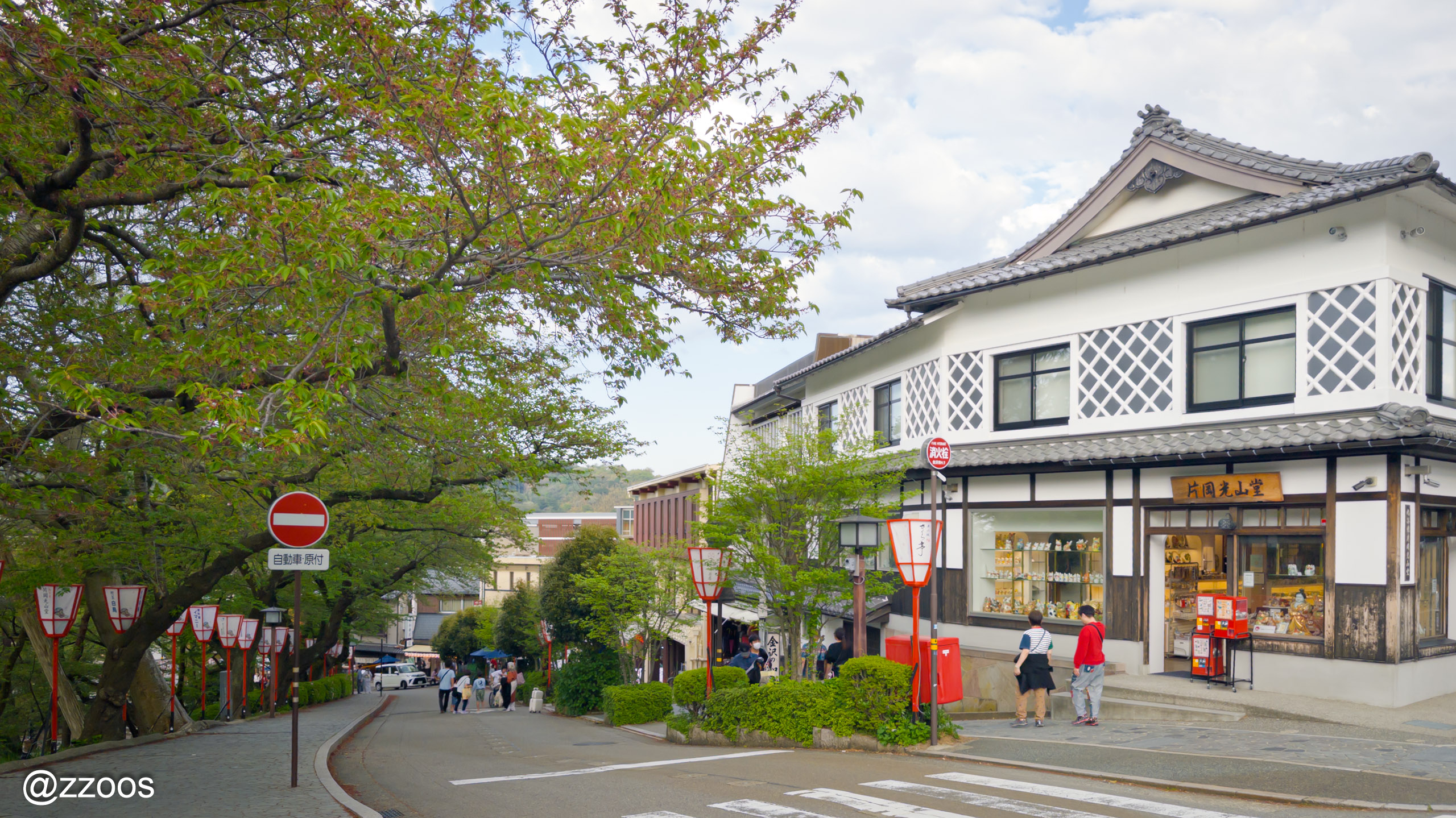
Six o’clock. Closing time. I left through Mayumizaka Gate (真弓坂口) — the intersection right in front of the 21st Century Museum of Contemporary Art.
Time to find dinner.
I was too tired for anything adventurous, so I ended up picking from restaurants with available reservations on Tabelog. The story of that evening — and the rest of the night — continues in the next post.