After finishing up at the museum, I started walking again.
Right across the street, there was a shrine I wanted to check out. And if I followed the path along the side of it, I could make my way up to Kanazawa Shrine. Just before that, there’s a cluster of museums — the Ishikawa Prefectural Museum of Art, the National Crafts Museum, the Ishikawa Prefectural History Museum — all gathered in one stretch. It seemed like a good route for a leisurely walk.
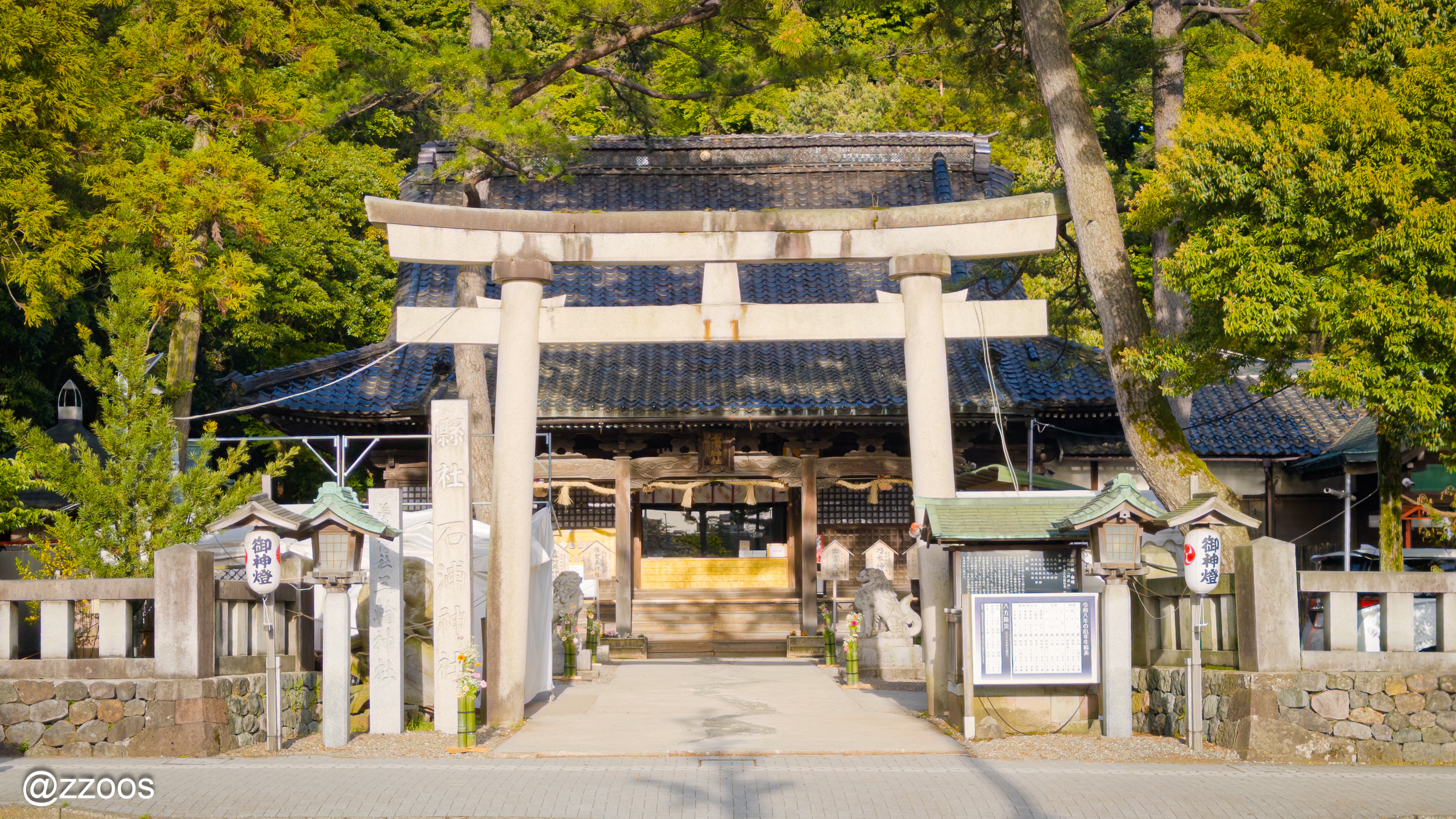
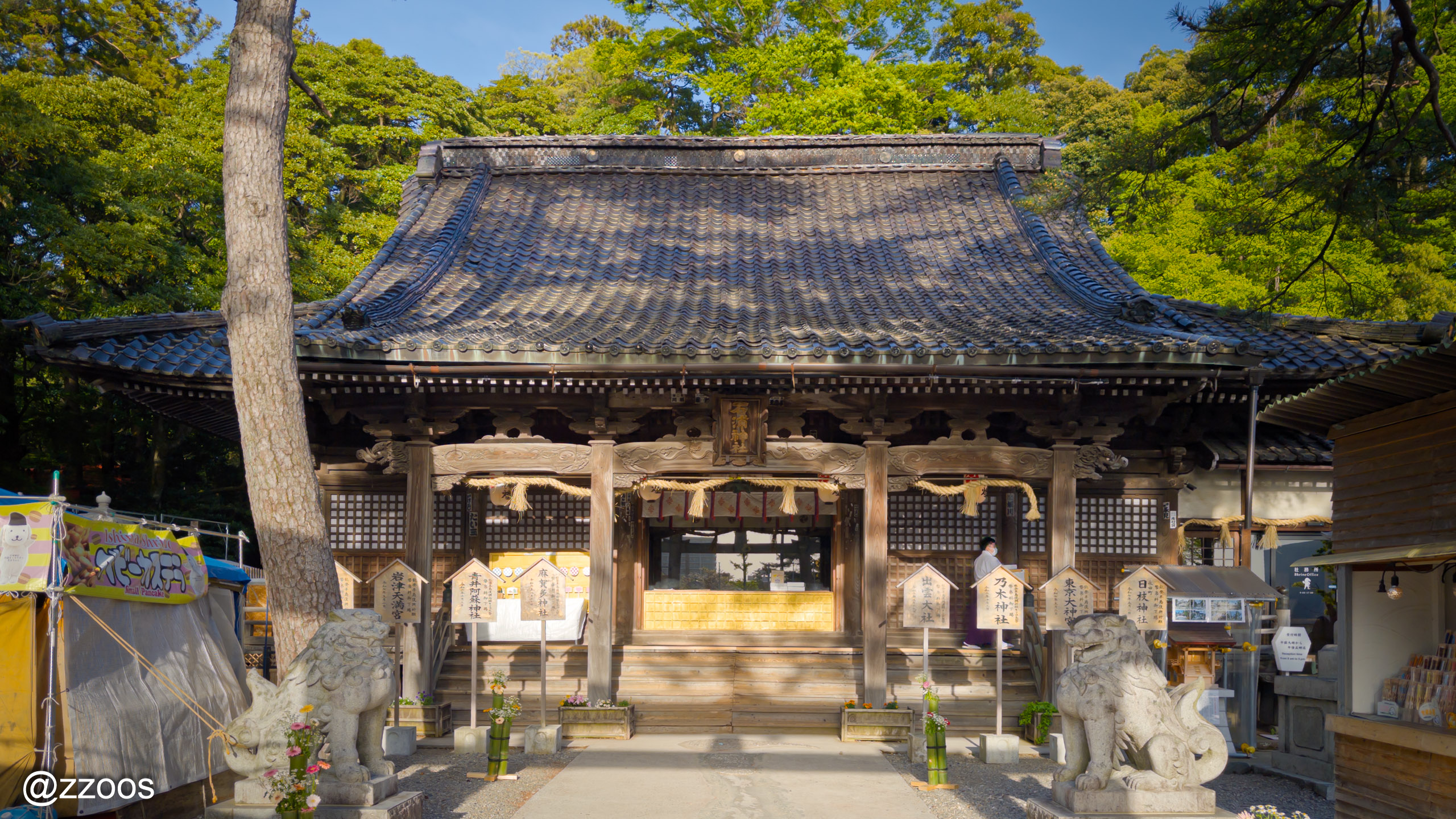
Crossing at the Hirosaka intersection, the shrine right in front of me was Ishiura Shrine.
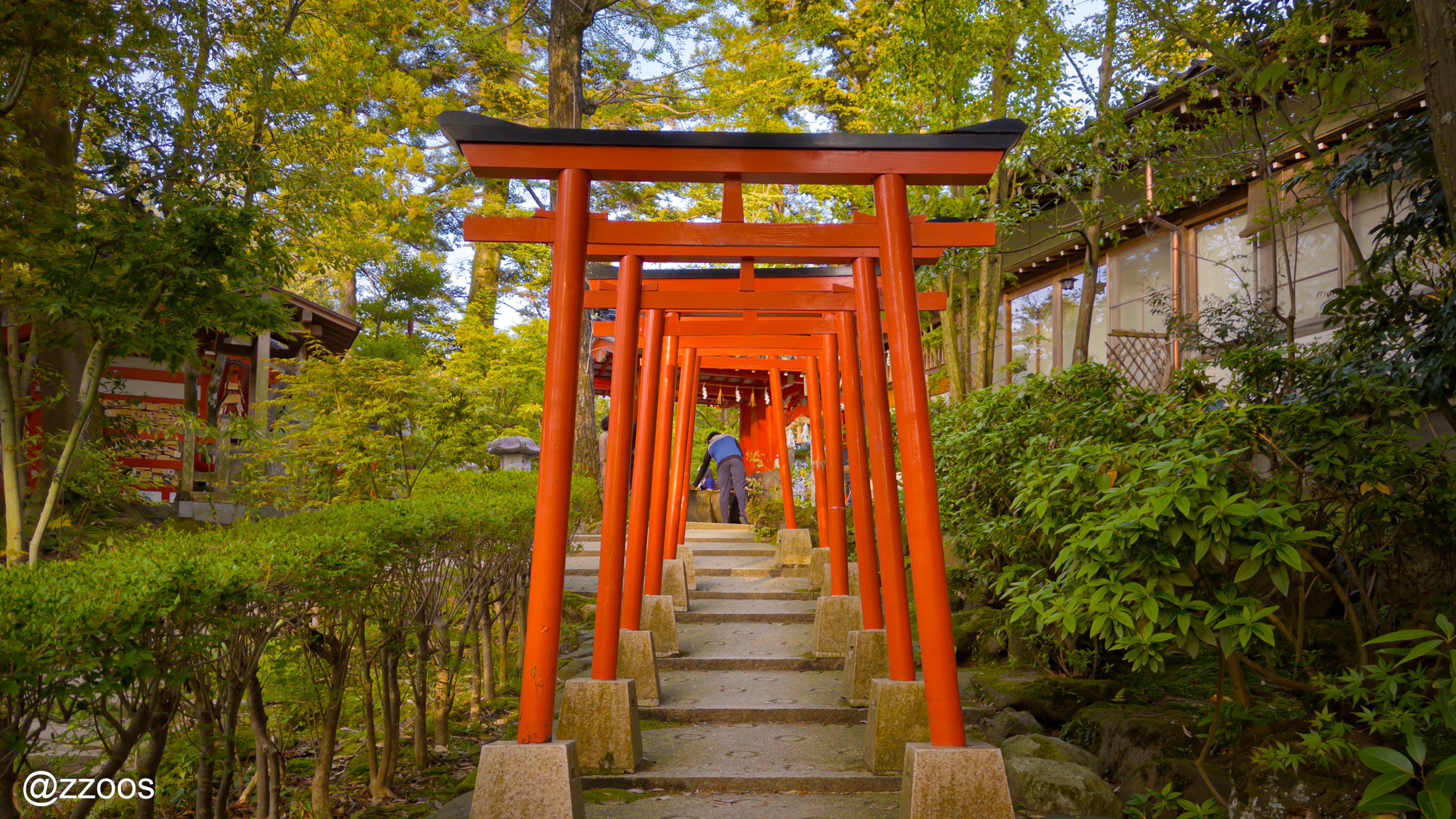
Honestly, I had no prior knowledge of this place. Even while I was there, my impressions were pretty surface-level: “Small shrine.” “Cute mascot character?” “A lot of commercial stalls for a shrine this size.” “Oh — they’ve lined up torii gates along the side to make a little tunnel.”
Back home, I looked it up.
Turns out it’s the oldest shrine in Kanazawa — around 1,500 years old. It enshrines one of Japan’s ancient deities associated with romantic connections between men and women, which makes it a popular venue for weddings and a constant draw for young couples.
That explained the rows of omikuji stalls and souvenir booths. And the mascot character too.
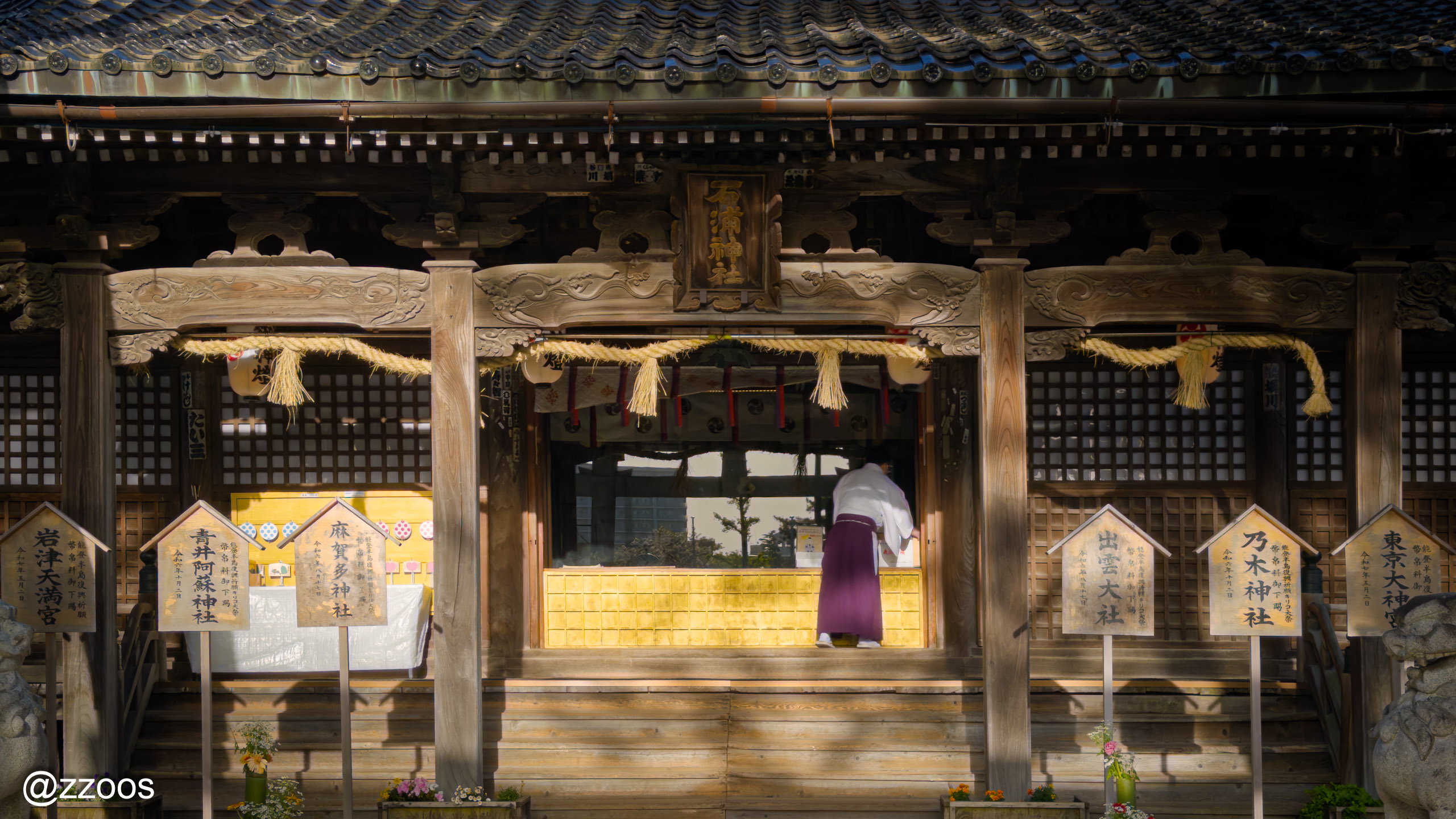
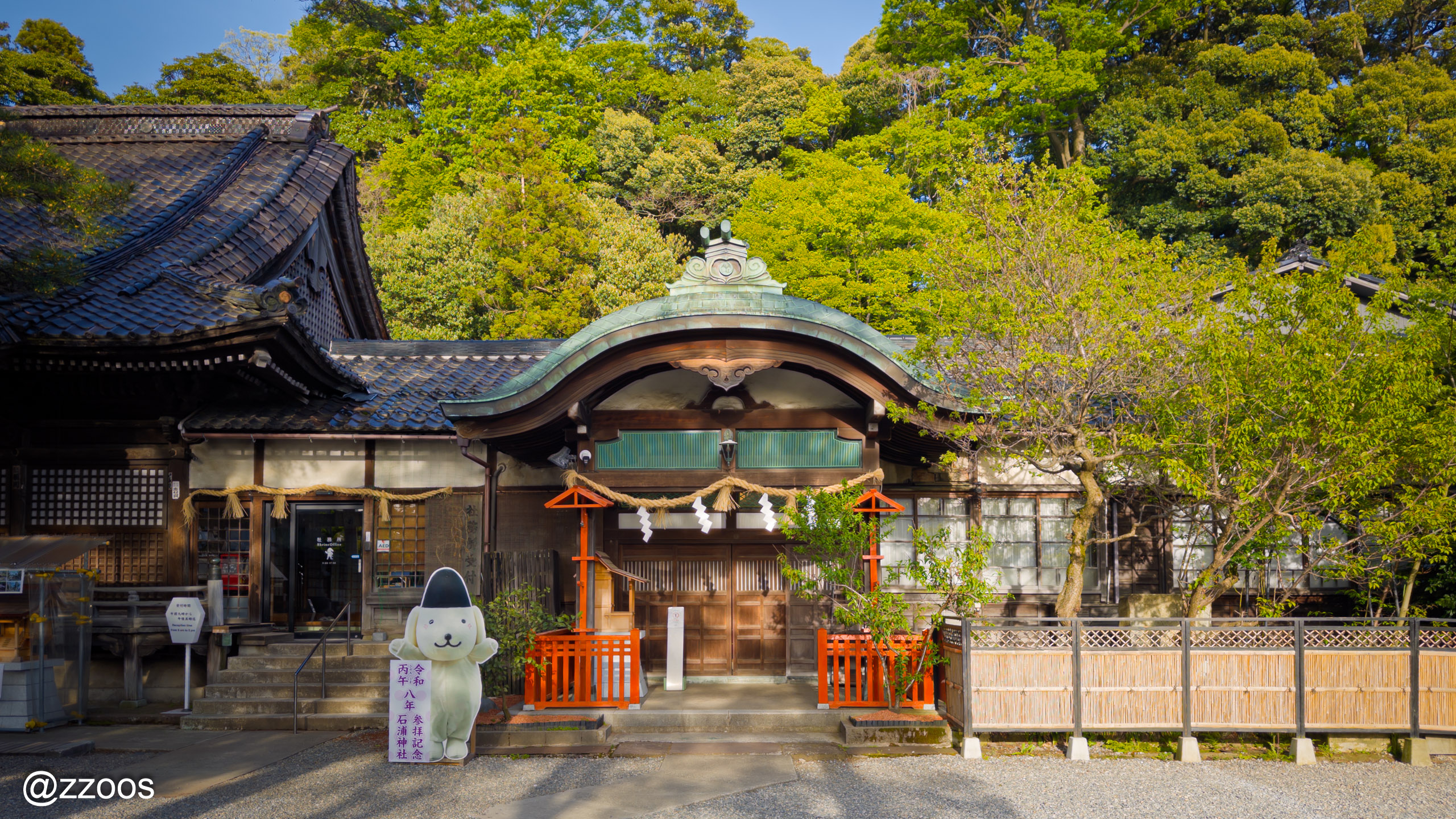
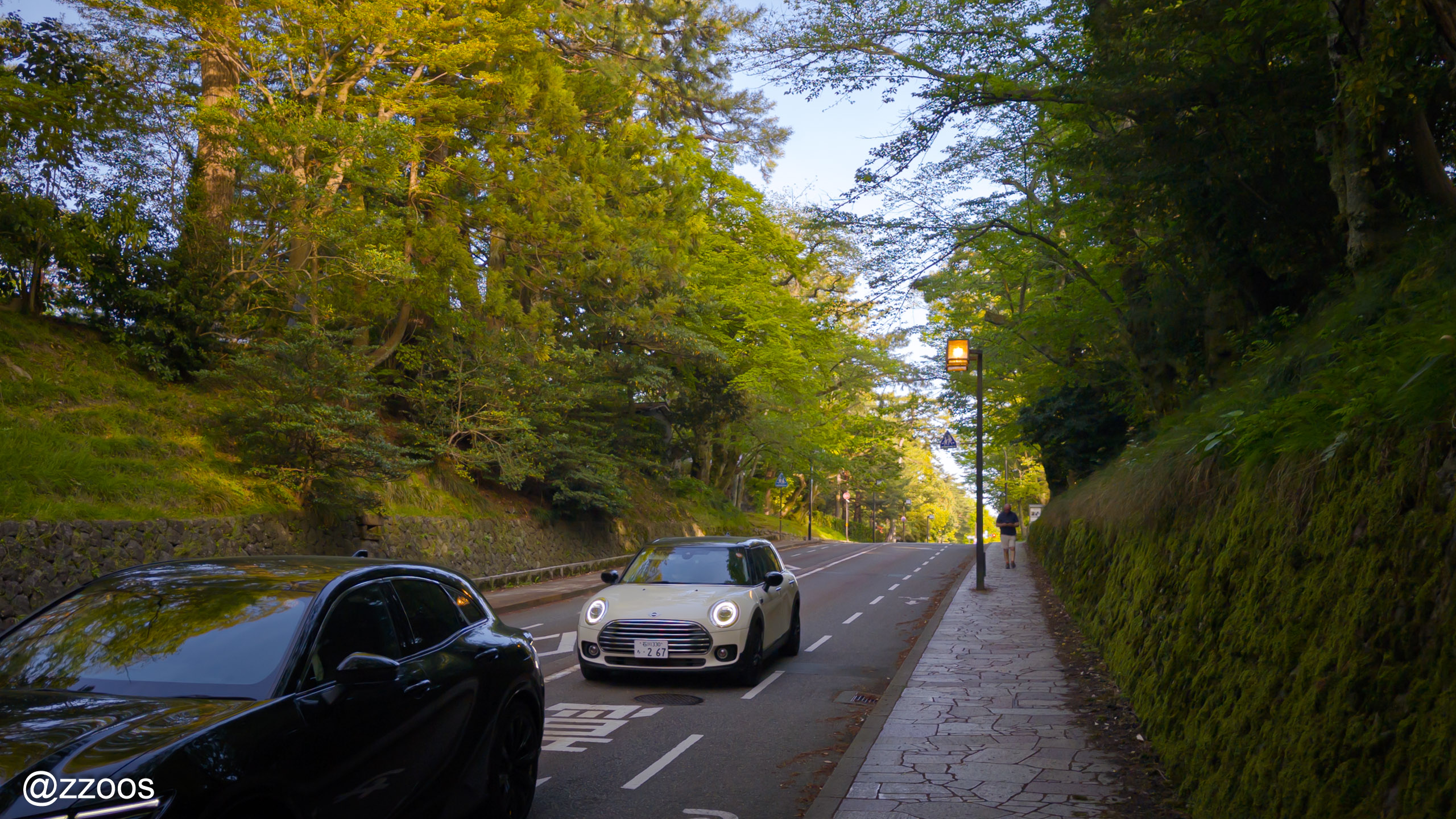
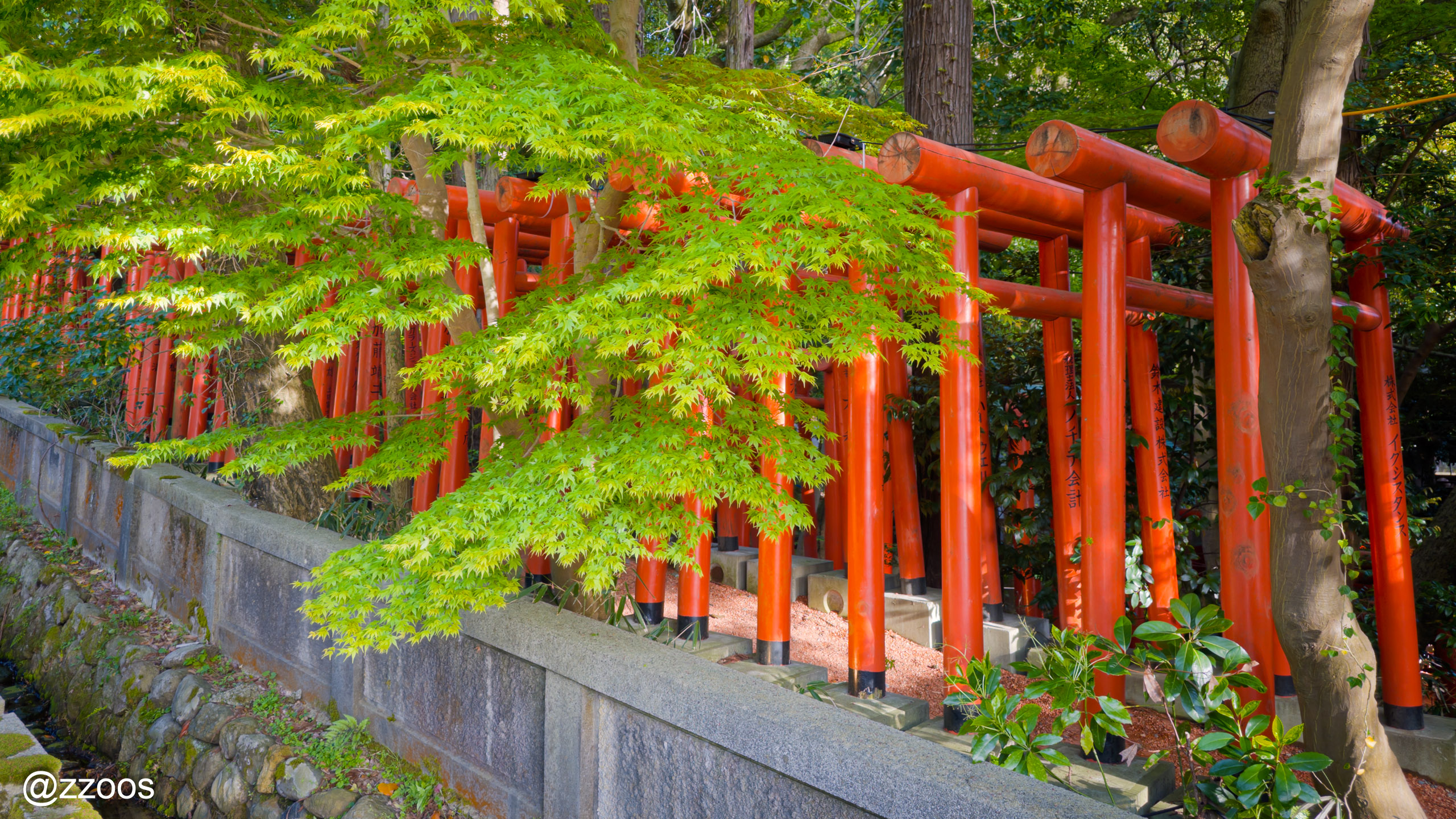
I had a brief look around the grounds, then stepped back out onto the main road. Walking along the edge of Kenrokuen, you can see the vermilion torii gates of Ishiura Shrine lined up to form a tunnel.
There are over 100 of them, apparently. It’s nothing like the scale of the famous Fushimi Inari Taisha(伏見稲荷大社), of course — nowhere near as many gates, nowhere near as long. But you do get a glimpse of what it feels like to walk beneath a tunnel of red torii.
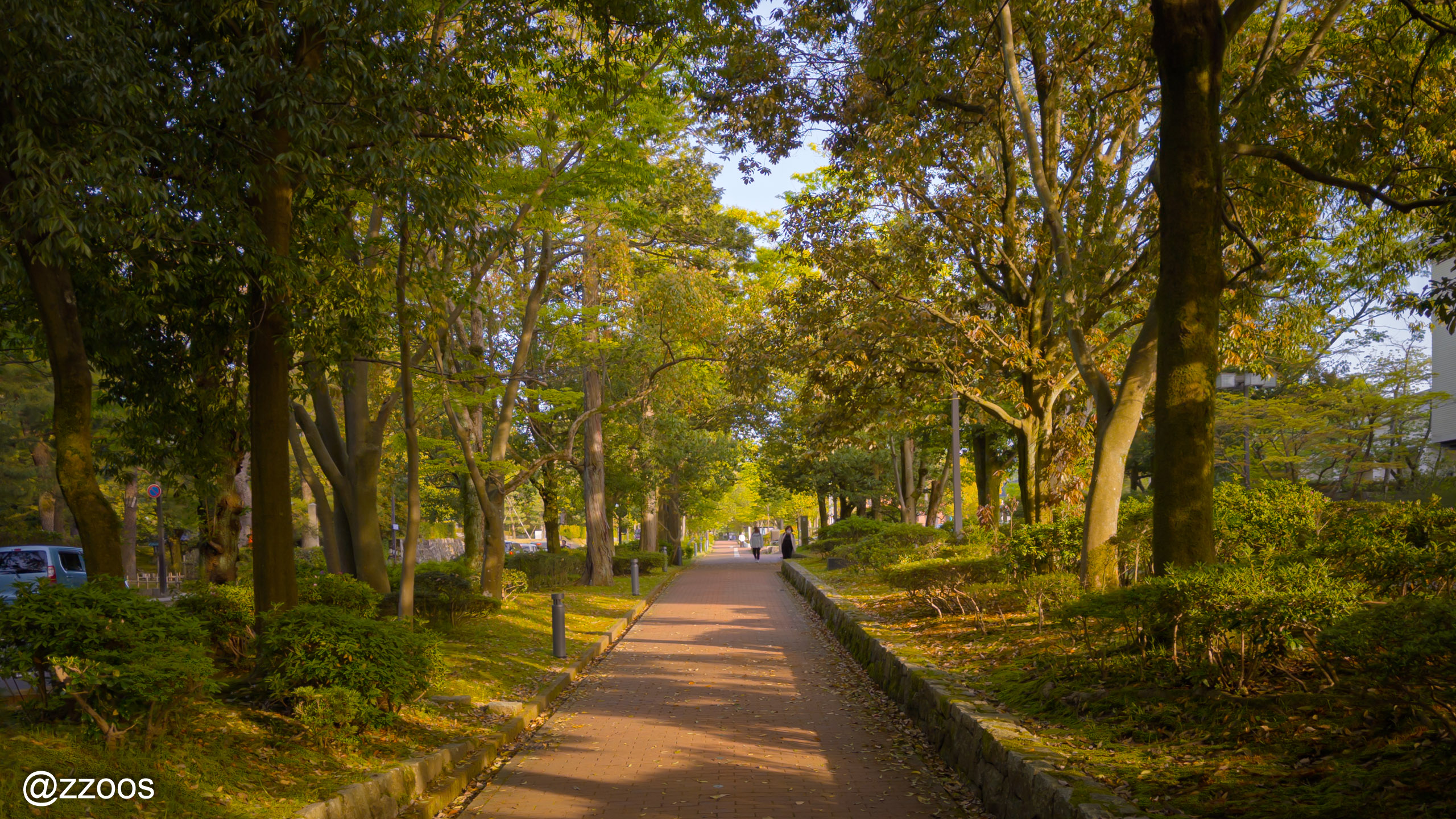
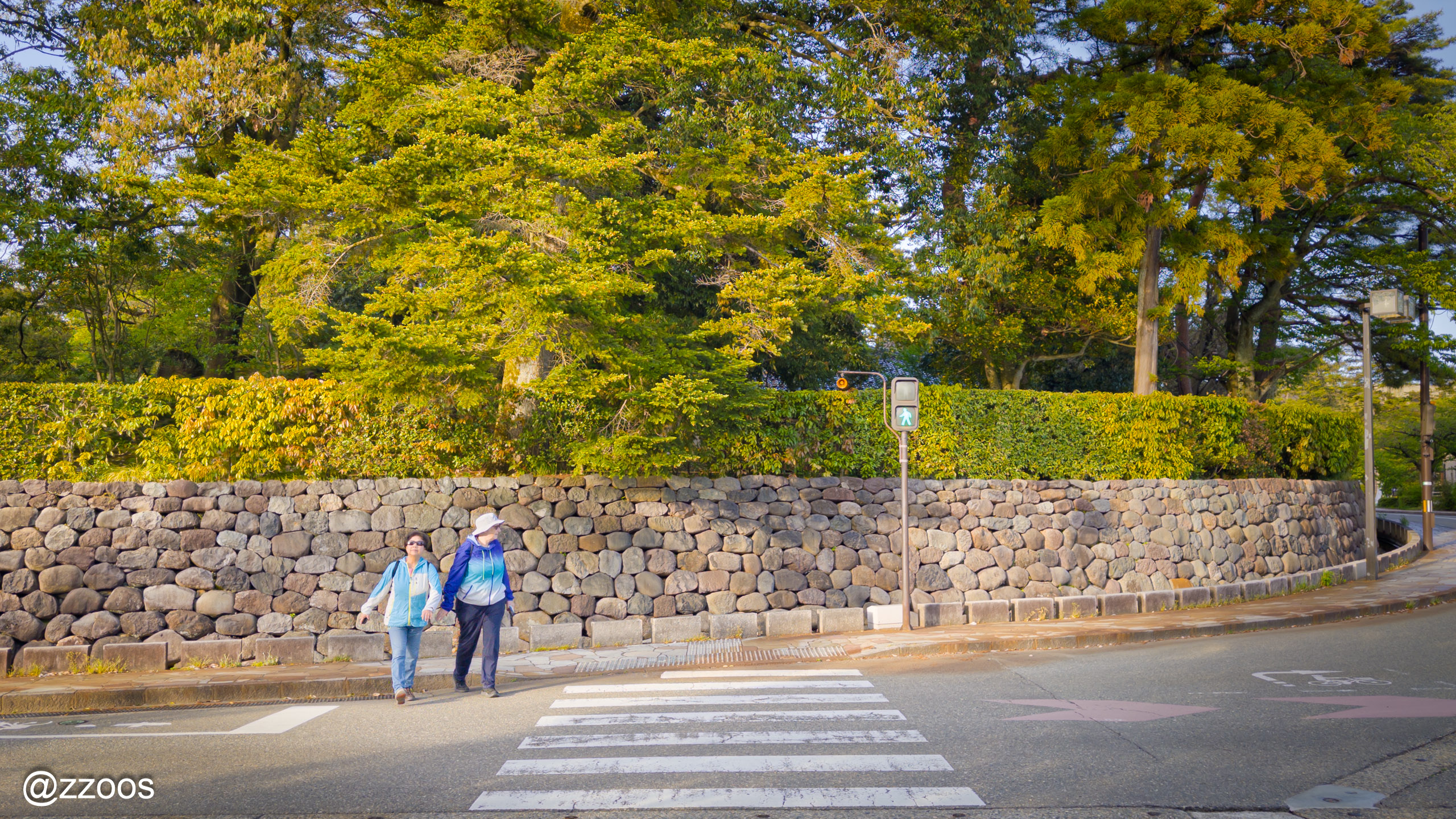
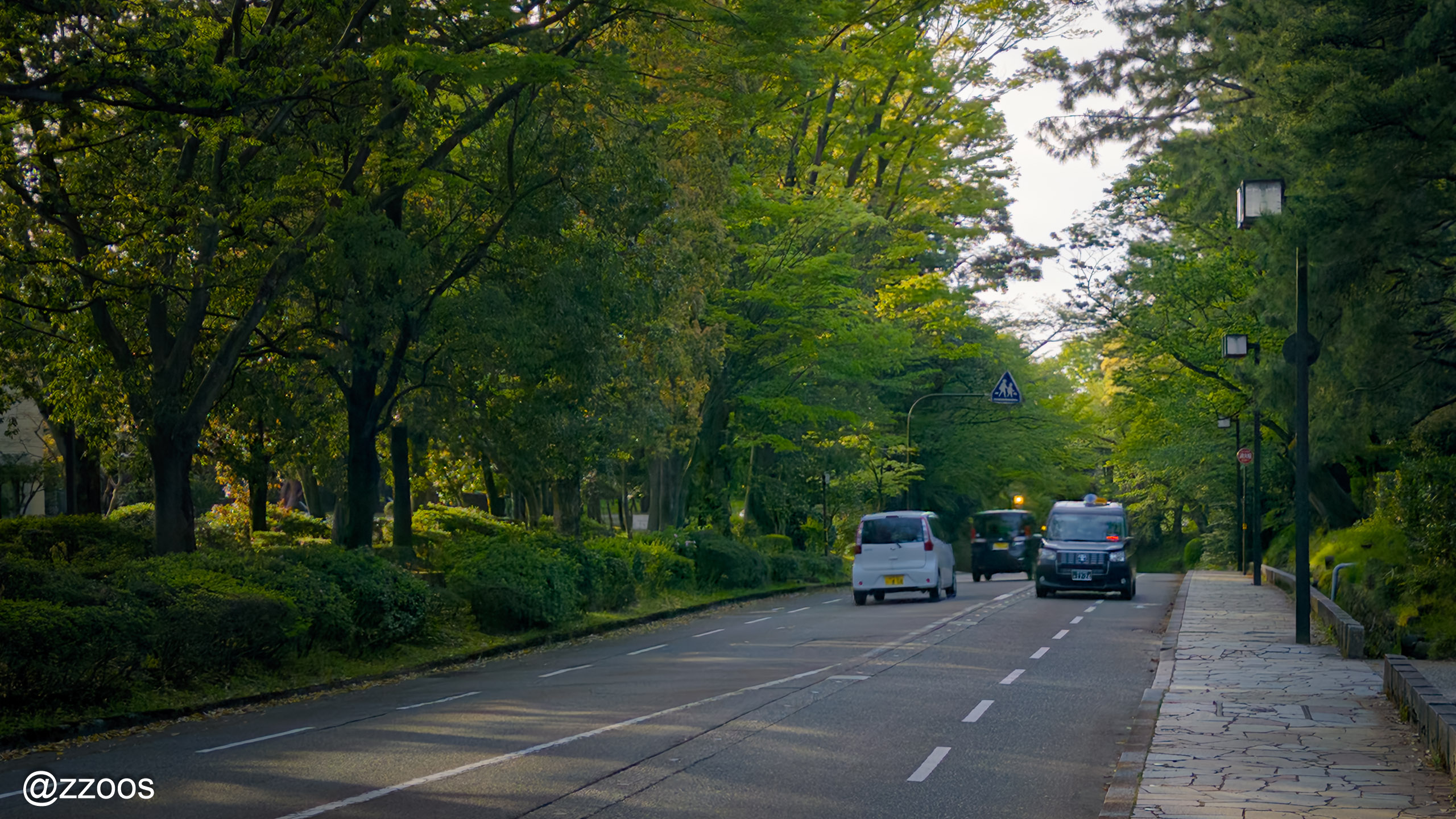
The road that runs in a wide arc around Kanazawa Castle and Kenrokuen is called Hyakumangoku-dori(百万石通り). The name is a nod to the era of Kaga Hyakumangoku — the period of great prosperity that people in Kanazawa still look back on with pride.
It’s the same road that passes in front of the Ishikawa Shiko Memorial Park, which I showed you in an earlier post. Of all the streets I walked in Kanazawa this trip, this one had the most atmosphere.
If I were to put it in terms of days of the week —
Kanazawa Station and its surroundings feel like a busy Saturday afternoon. Katamachi is a rowdy Friday night. Korinbo has the rushed energy of a Monday morning. And this street is a Sunday morning. It’s where Kanazawa’s history, modernity, and nature seem to sit comfortably together.
The stretch in front of City Hall has its own charm, but the section passing Kanazawa Shrine is just as good. Walking it slowly in the late afternoon, with the sun going down — that felt really nice.
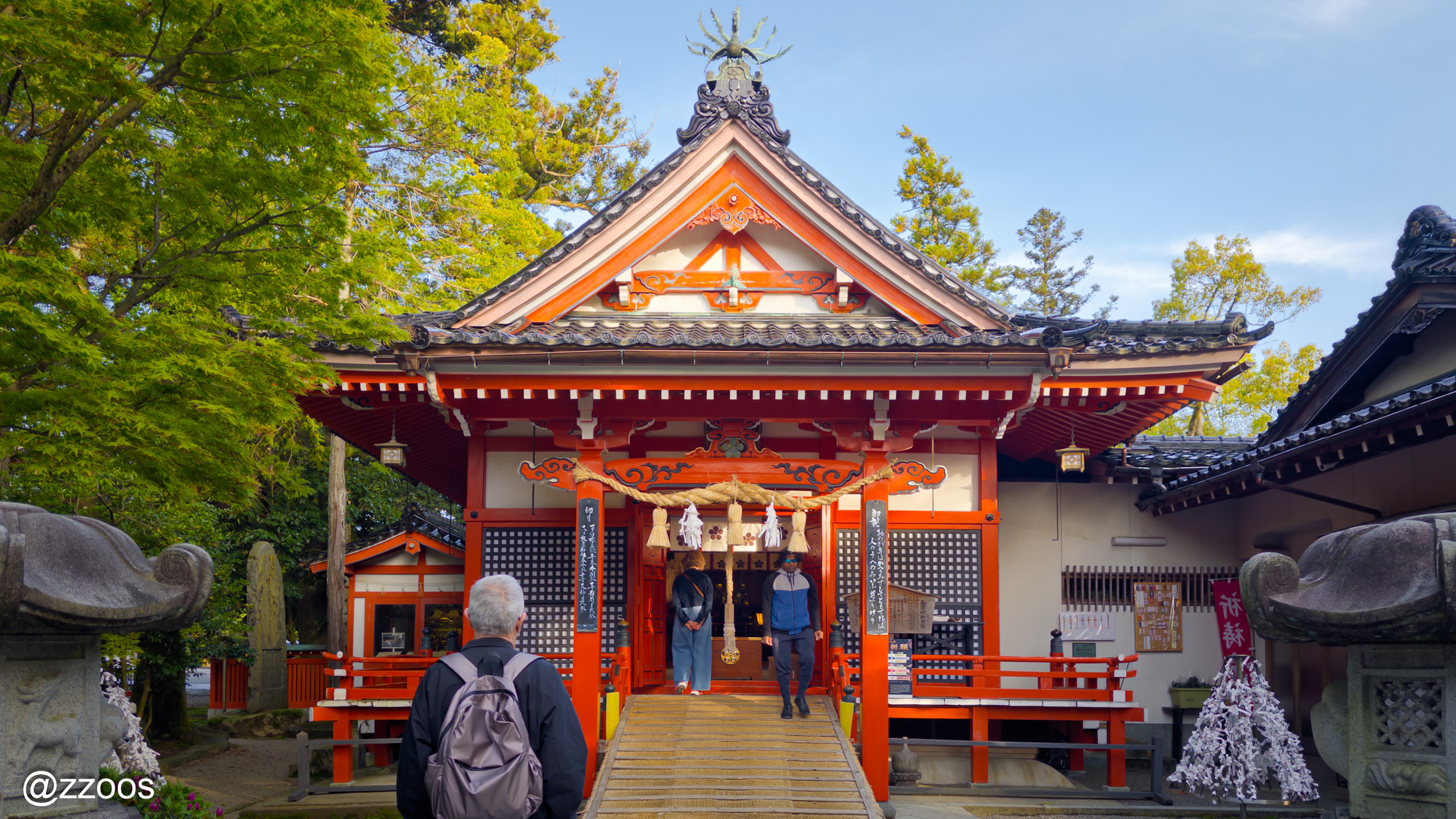
From Ishiura Shrine to Kanazawa Shrine, it’s less than a ten-minute walk.
I had no background on this one either. I just had a vague sense that a shrine sharing its name with the city must be significant somehow.
It turned out to be quite small as well. But that raised a question: why would such a small shrine carry the name “Kanazawa”?
The shrine is dedicated to Tenjin(天神) — the deity of learning. Originally, it wasn’t called Kanazawa Shrine at all. It was a small Tenmangu(天満宮) used privately by the Maeda clan. During the Meiji period, when the government reorganized shrine names and rankings across the country, this one was officially renamed Kanazawa Shrine.
A shrine dedicated to Tenjin, but not called Tenmangu. An unusual one.
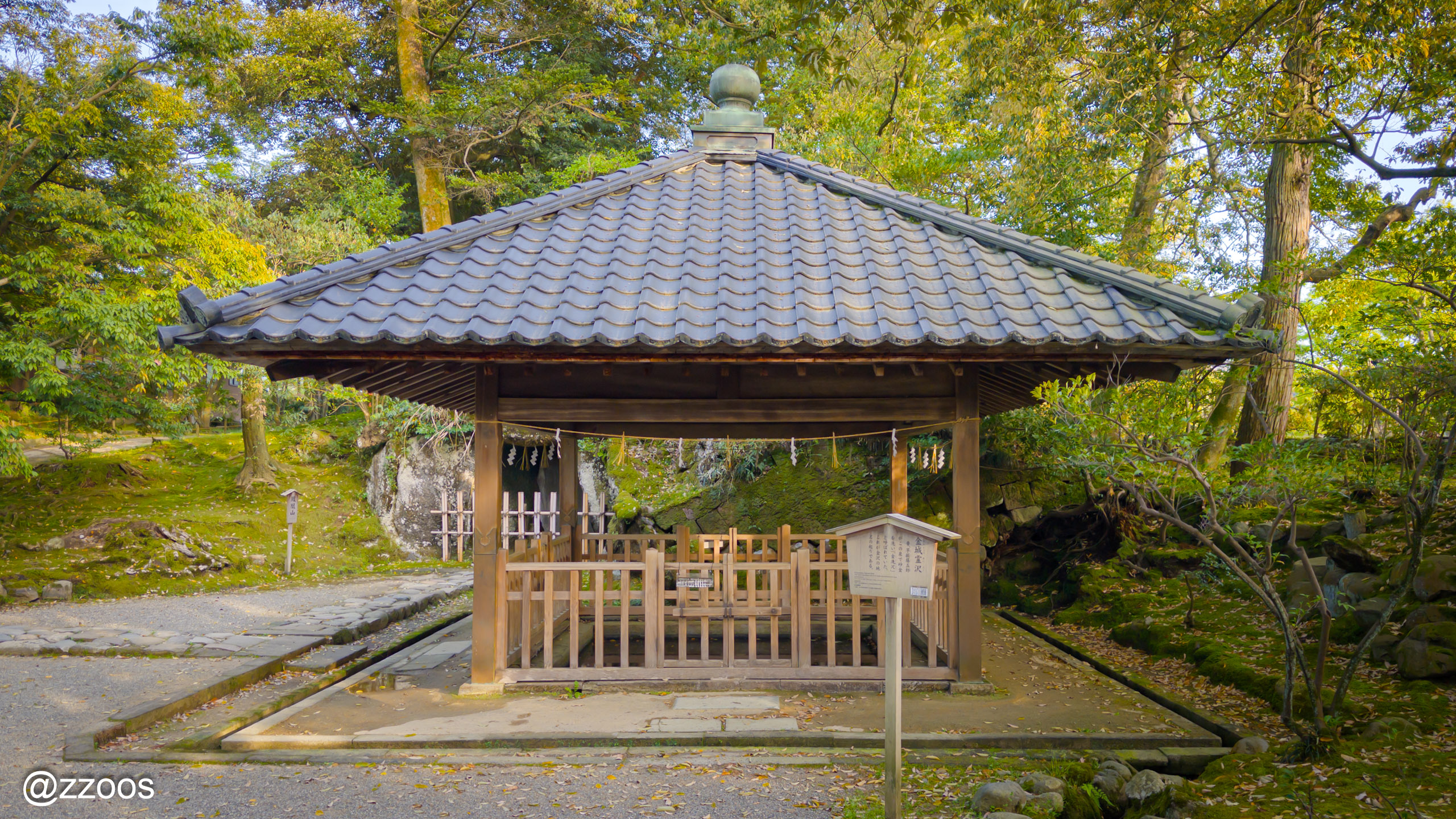
So why did it get the name Kanazawa?
Because right beside this shrine is a legendary spring called Kinjo Reitaku(金城霊沢) — said to be the very origin of the name “Kanazawa.” The characters speak for themselves: 金 means gold, and 沢 means marsh or wetland.
The full legend is worth looking up on your own, but the short version is this: a poor but honest young man washed mud from the spring, and found an enormous amount of gold dust sitting at the bottom.
So the shrine is called Kanazawa Shrine because it was built right next to that legendary spring.
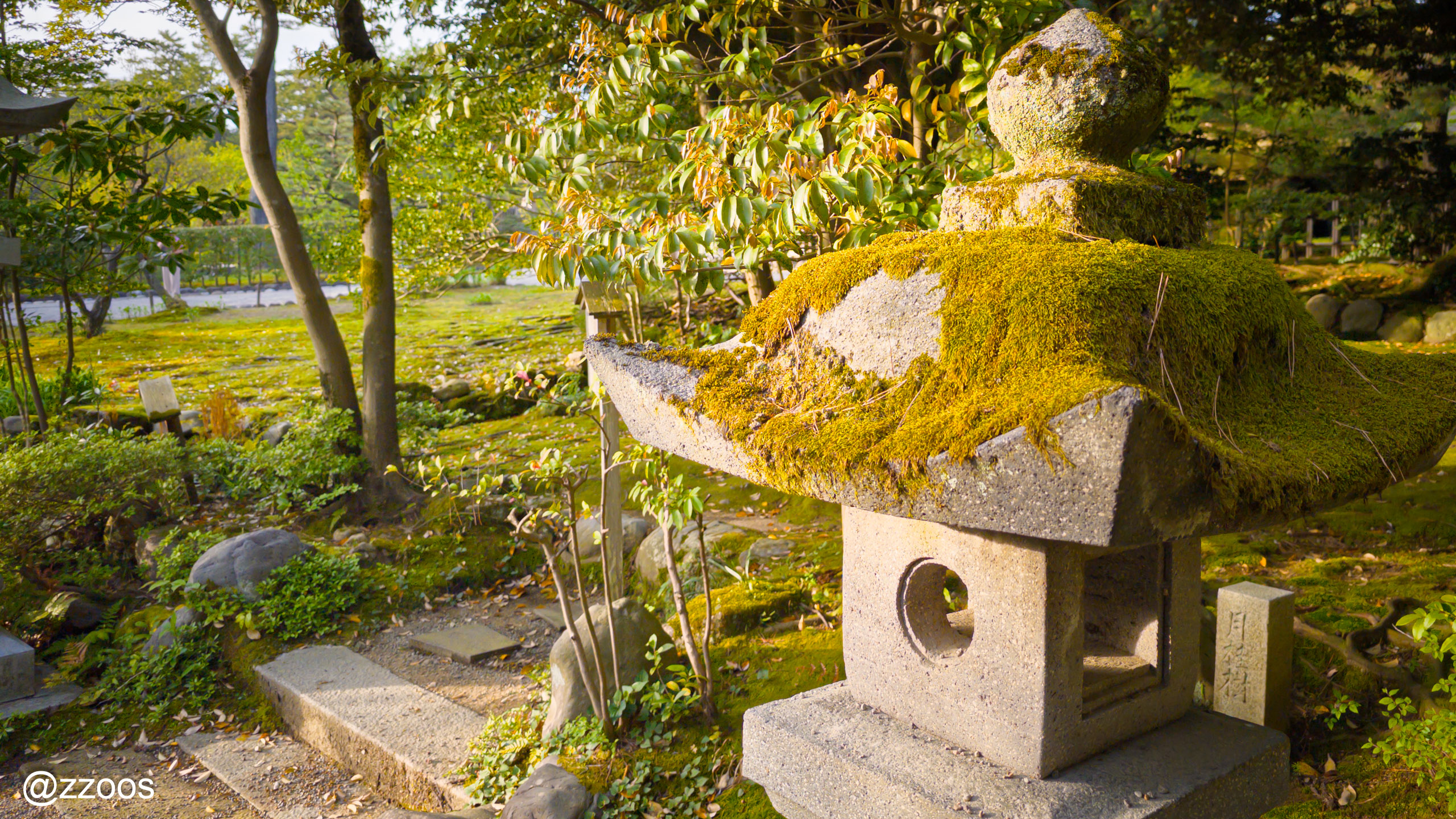
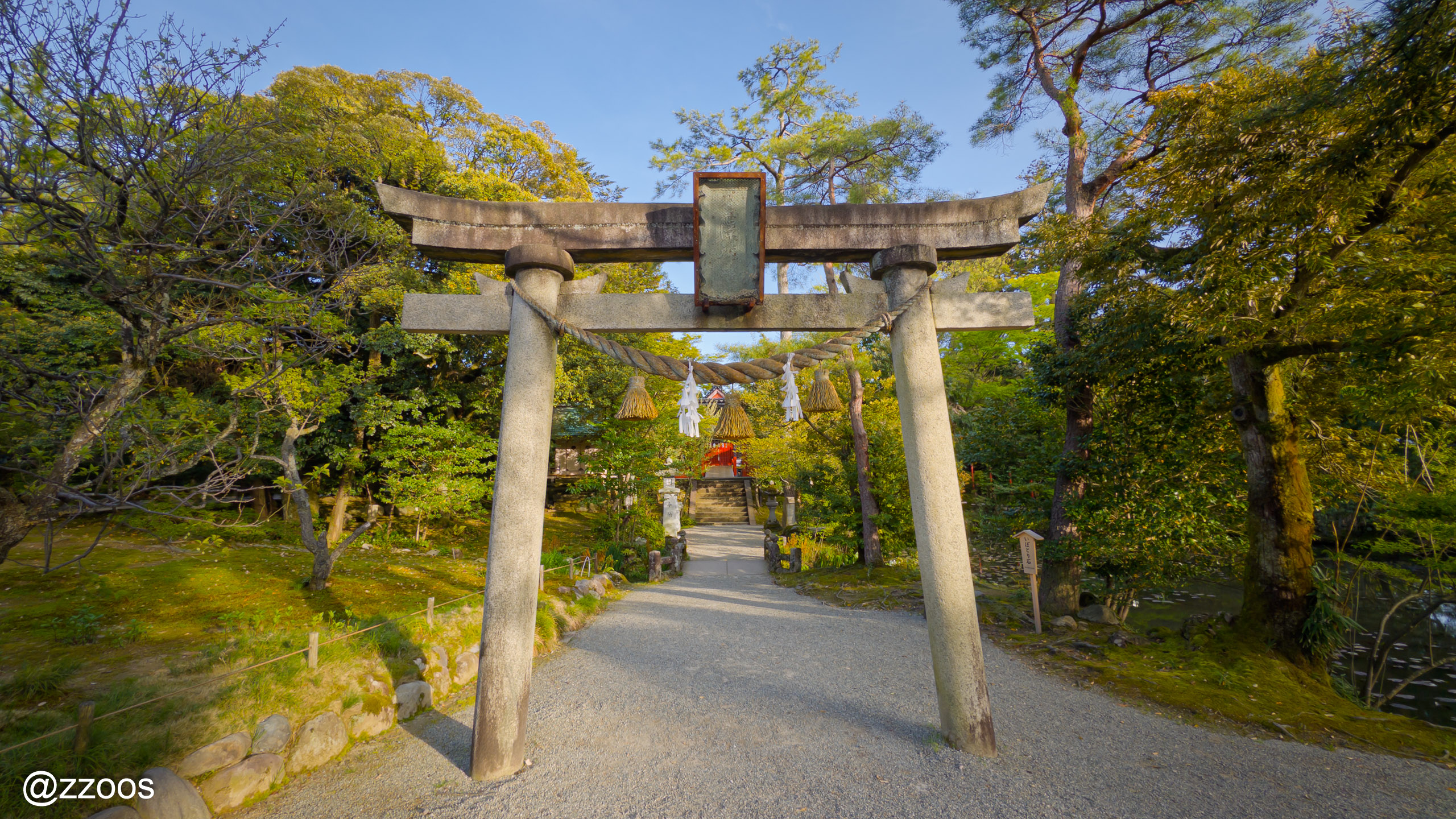
Both shrines are small, and close together — you can cover them both quickly. But once you know the history behind each one, it’s hard to think of them as just small shrines.
One is the oldest shrine in Kanazawa. The other holds the legend that gave the city its name.
The shadows were getting long. Not much daylight left, maybe.
Time to push on and finish the route. Next up: a look at the Ishikawa Prefectural Museum of Art and the National Crafts Museum buildings across from Kanazawa Shrine, then on to the D.T. Suzuki Museum(鈴木大拙館).