I got to Kanazawa Station by bus at around 4:30. It’s about an hour and twenty minutes from Shirakawa-go.
I’d been on the move since early in the morning, and with around three hours on buses round trip, it’s no surprise I was tired.
But rather than head into the hotel, I wanted to move straight on to the next stop. I came out the east exit of Kanazawa Station and caught the loop bus heading right.
After about fifteen minutes, I got off at the Higashi Chaya District(ひがし茶屋街) bus stop.
It was probably because I’d had lunch early. Or maybe because I’d used up so much energy walking all over Shirakawa-go. Either way, even though it was only five o’clock and still early, I was hungry.
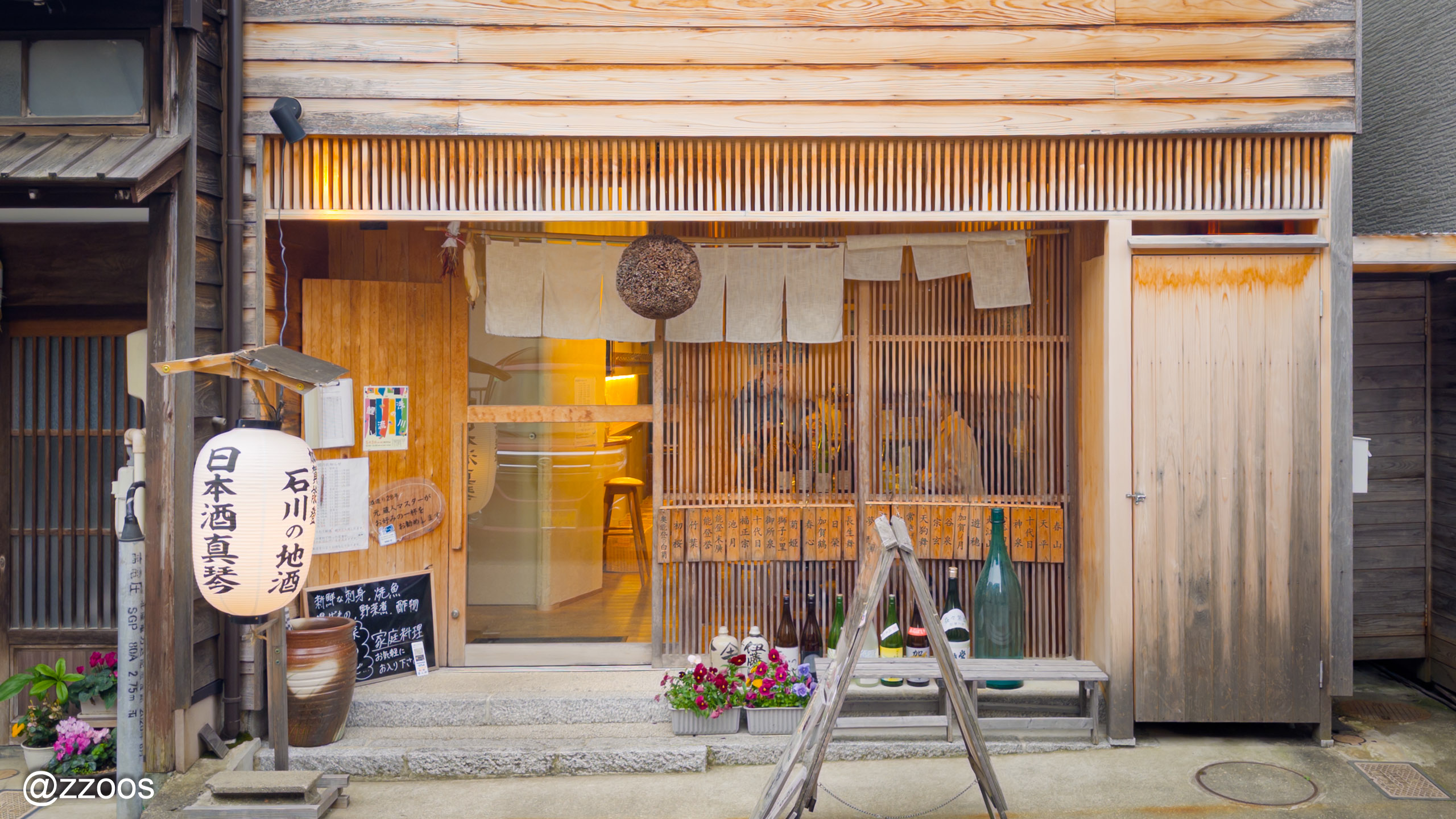
This was the shop where the high-school classmate I’d met two nights earlier at Higenomise works, and it belongs to Makoto(真琴)-san, who holds the Kikizakeshi(きき酒師, a sake sommelier) qualification. I’d met Makoto-san that night too, and decided to pay the place a visit.
I’d heard it’s better to go a bit early, since the shop closes early. Even though it’s a place that sells nihonshu — sake, in other words — it closes at 7 p.m. On some days it closes as early as 3 p.m., so it’s best to check the hours before you go.
The shop is named after its owner: Nihonshu Makoto(日本酒真琴).
It holds an enormous number of Ishikawa Prefecture(石川県) local sakes, and you can have a light meal there too.
You can also do an hour of nihonshu nomihodai(飲み放題, unlimited drinks), which makes it a really nice spot. Even if you don’t do the nomihodai, the master — a Kikizakeshi — will recommend nihonshu for you.
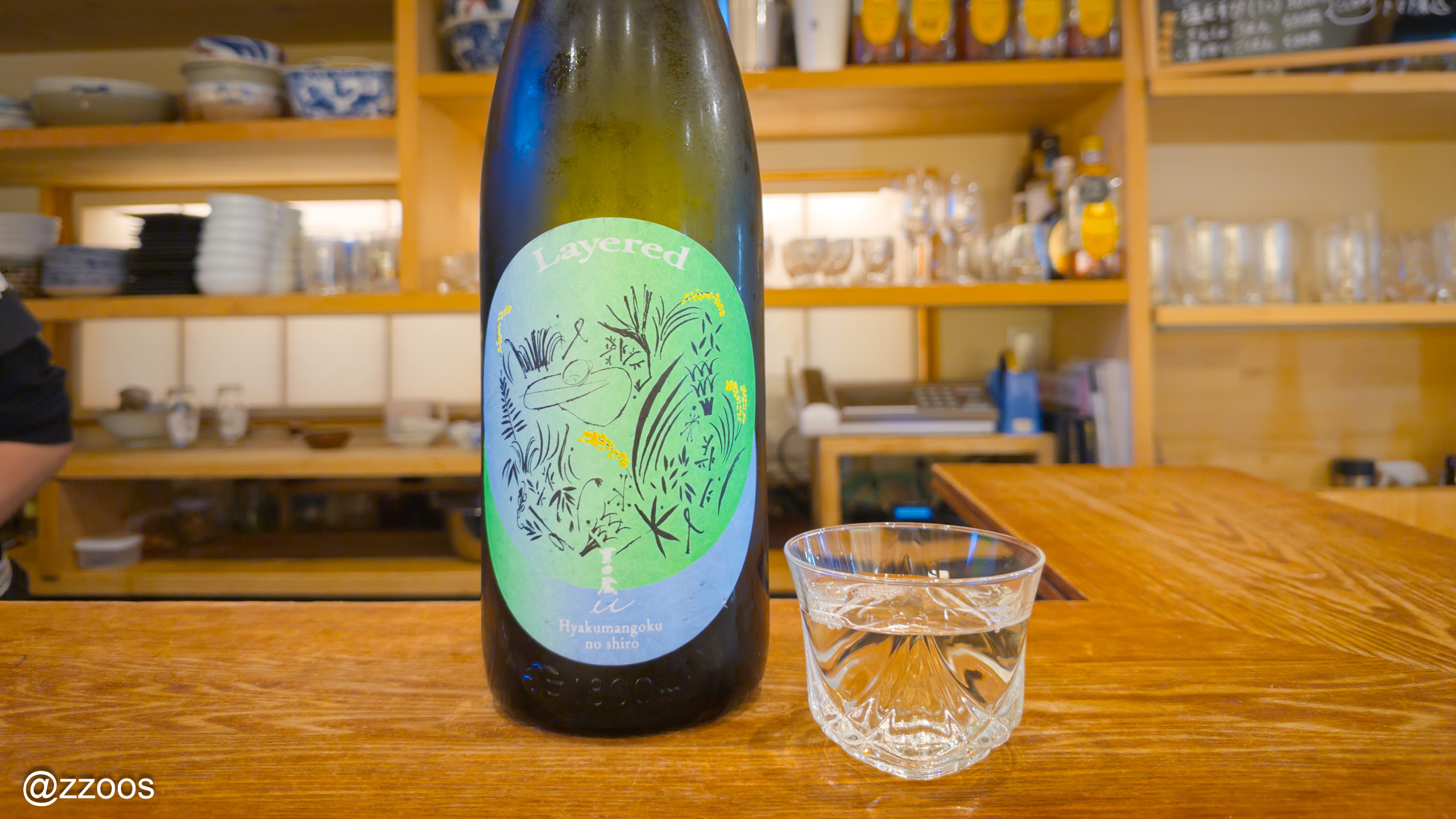
When I got to the shop, for my first glass I asked them to recommend a nihonshu. I said I like modern nihonshu with good acidity, and this is what they recommended.
It’s Yoshida (U) Layered from Tedorigawa(手取川), one of Ishikawa Prefecture’s representative nihonshu.
Even though I’d only explained my taste briefly, they picked out a nihonshu that was, quite literally, exactly my style. Acidity and minerality form the base, but complex aromas layer over each other — just like the name — as you drink.
This Tedorigawa was one of my real finds on this trip. Whatever I ate, it tasted good with it.
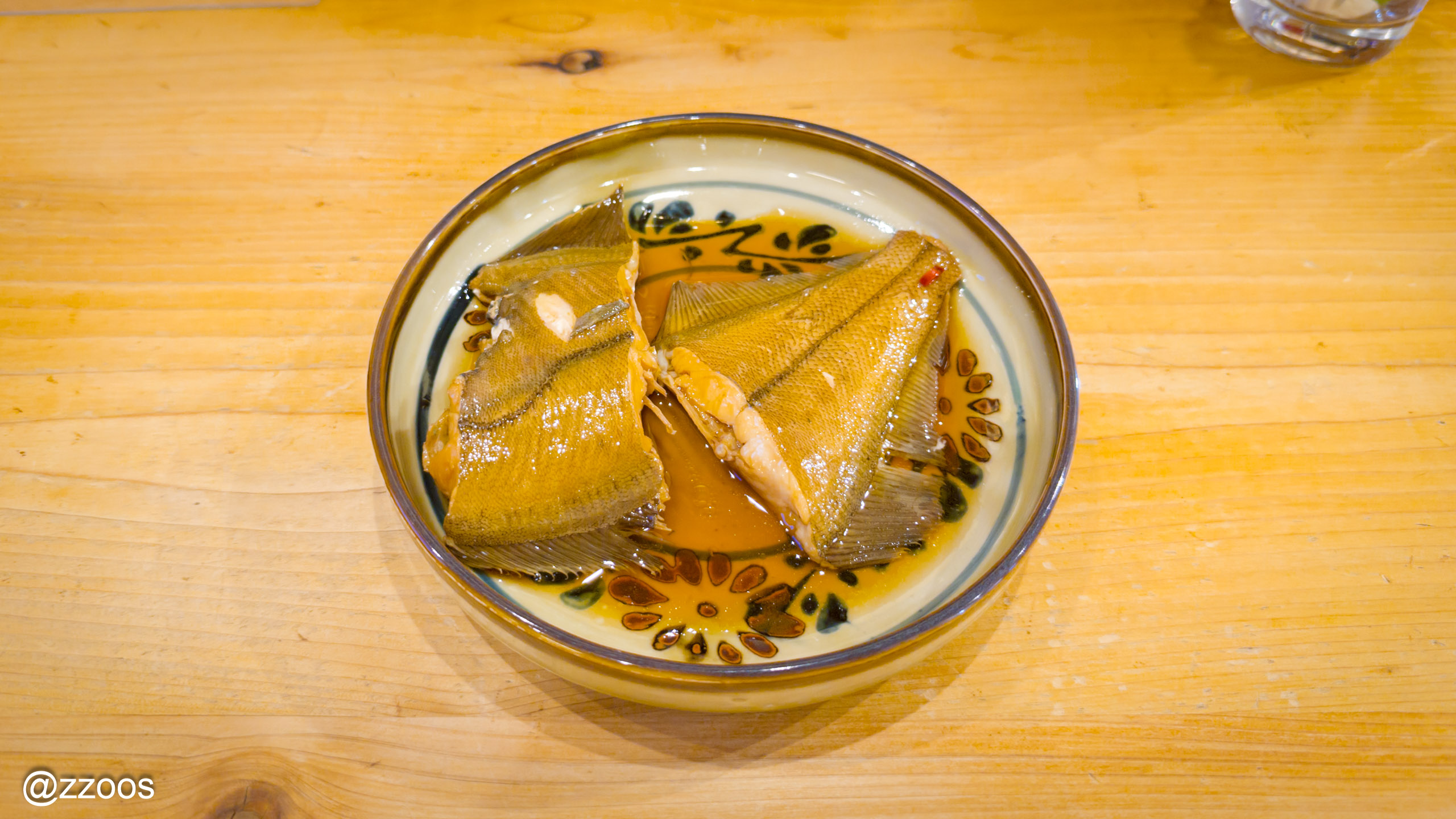
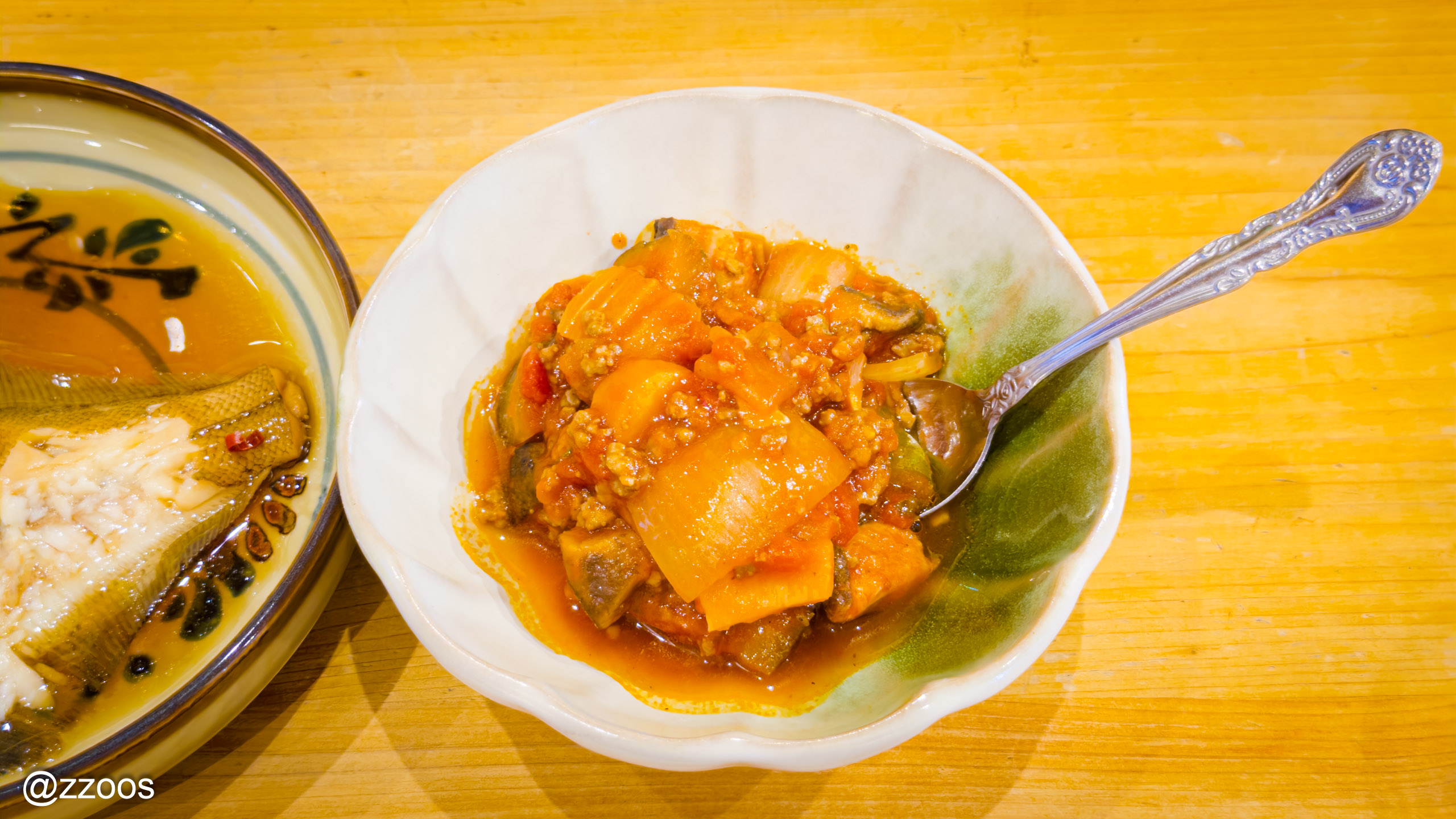
While we were talking about what to eat, they mentioned a three-item omakase, so I went with that. It’s three dishes that change from day to day.
Today it was the braised flatfish, the mushroom-and-vegetable tomato-sauce stir-fry, and grilled sardine. Sadly, I didn’t manage to get a photo of the grilled sardine.
With the sweet-and-salty Japanese-style braised fish, the savory grilled sardine, and the tomato-sauce stir-fry that switched up the mood entirely, I got to taste a real variety of flavors.
What was especially fun was how the tomato-sauce stir-fry changed completely once you added Tabasco.
They explained that if I like nihonshu, there’s also an hour-long nomihodai, so I said I’d do it right away. Nomihodai refers to a system where you can drink as much as you like within a set time.
The rules here at Nihonshu Makoto were simple.
You can only use one small glass; you can try anything that’s already been opened, but you can’t open anything unopened. You pick the bottle yourself, bring it to your seat, pour it into your glass, drink it, and then return the bottle to its place — a completely self-service system.
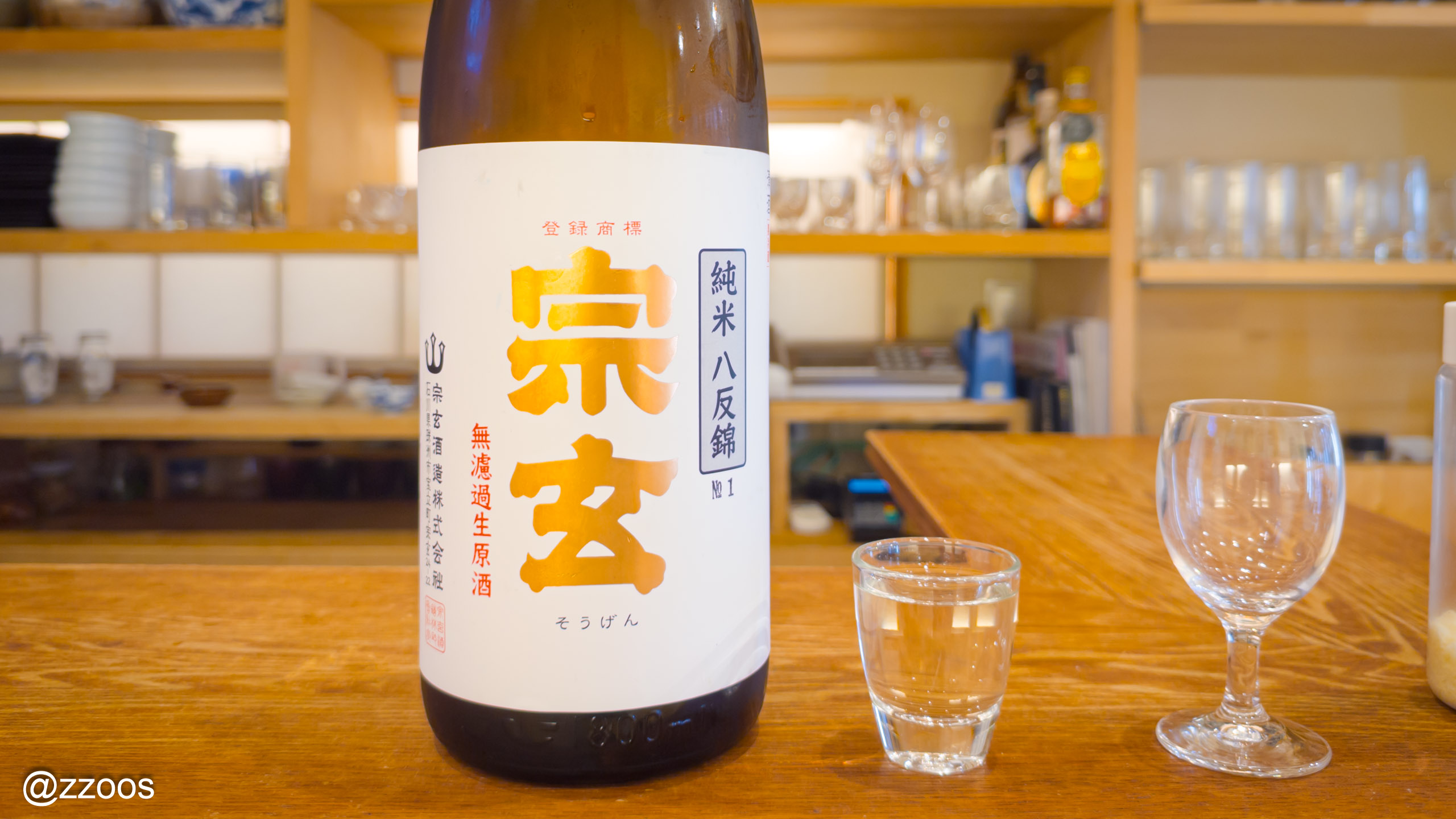
Standing with the owner in front of the fridge where the sake is kept, I listened to a bit of explanation about them, and the first one I picked was Sogen Junmai Hattan-nishiki Muroka Nama-genshu No.1(宗玄 純米 八反錦 無濾過生原酒 No.1).
It uses a sake-brewing rice called Hattan-nishiki. I think it’s the first time I’ve tried this rice.
From the feel of the label I expected a really classic taste, but once I actually drank it, it was very clean and well-balanced, with no off-flavors. I find myself wondering if that’s the power of Hattan-nishiki, said to be a sake-brewing rice from Hiroshima.
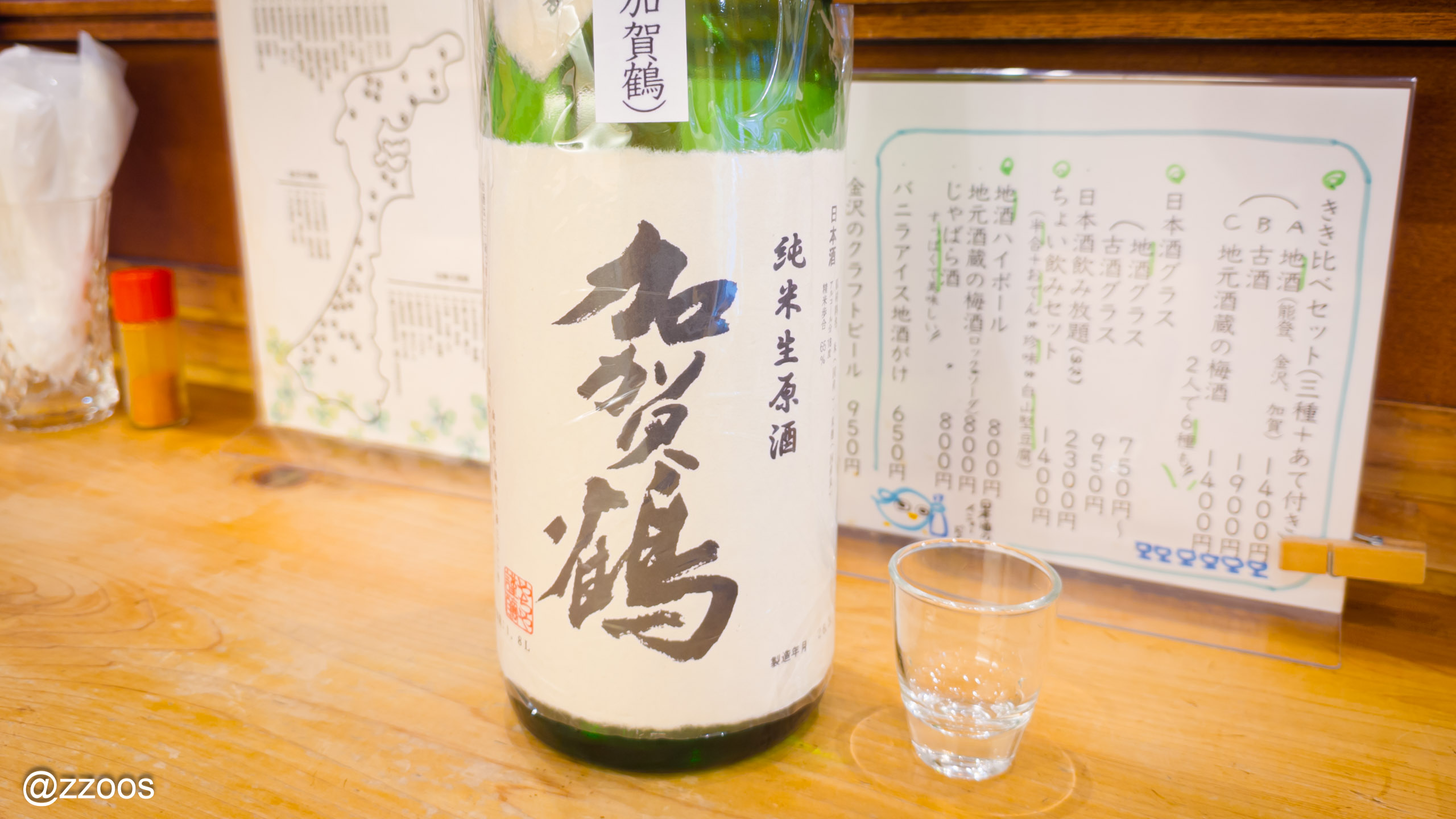
The next sake is Kagatsuru Junmai Shiboritate Nama-genshu(加賀鶴 純米 搾りたて 生原酒).
Looking back at my tasting notes from that day, I clearly liked this one a lot. I enjoyed things like its clean character, the umami lingering in the mouth, and the natural acidity.
What’s interesting is that both the first sake and this one used Hyakumangoku-no-shiro(百万石乃白). Maybe I’m someone who likes this rice.
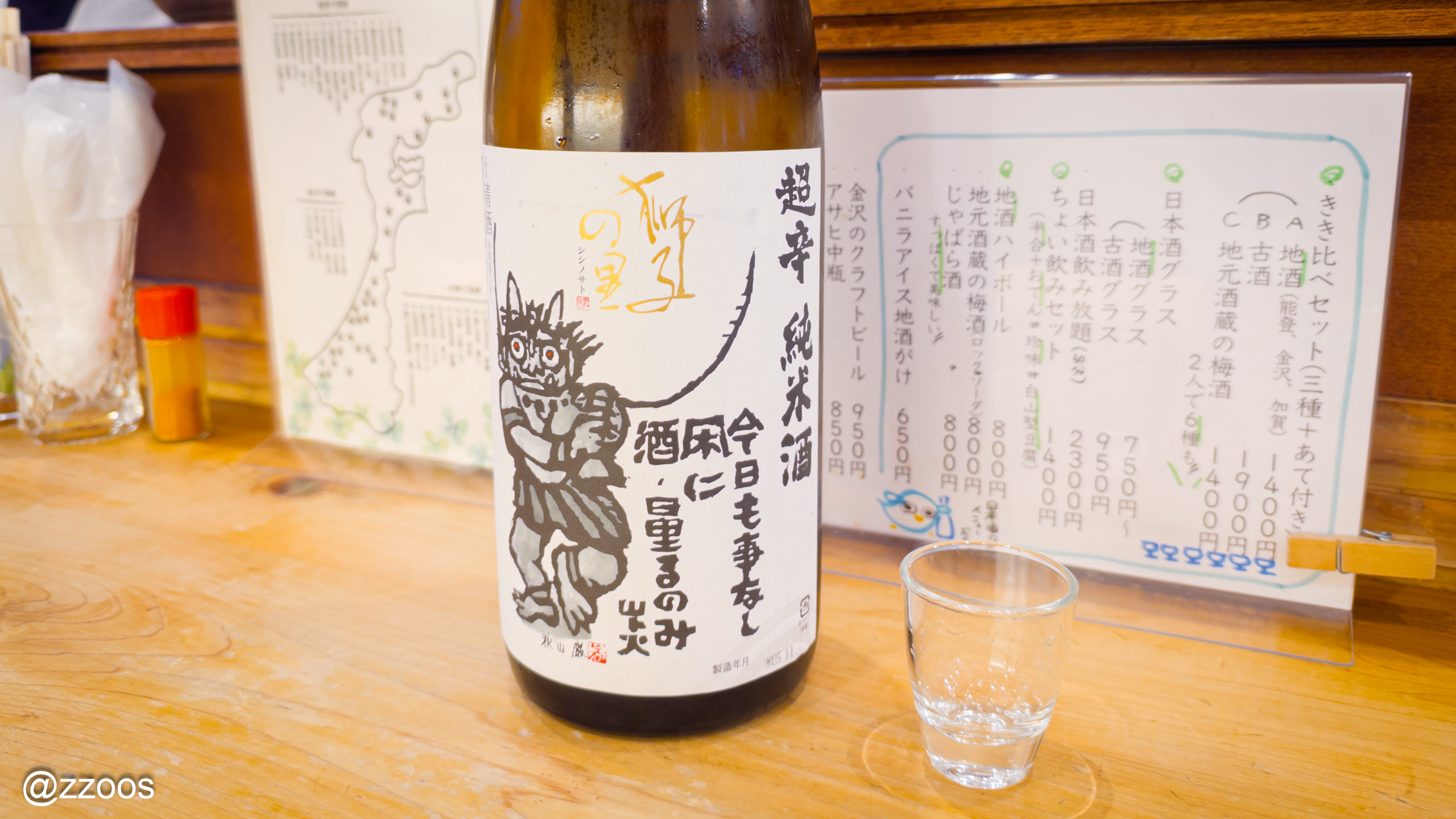
This one is Shishinosato Cho-karakuchi Junmaishu(獅子の里 超辛口 純米酒).
Unfortunately, I felt nothing from this sake. The cleanness typical of cho-karakuchi came across as flatness instead, and even so, it was just too bland, you know?
My guess is the cause was that there was barely any left — the bottle was almost down to the bottom. There’s a good chance it was a sake that had been open for quite a while.
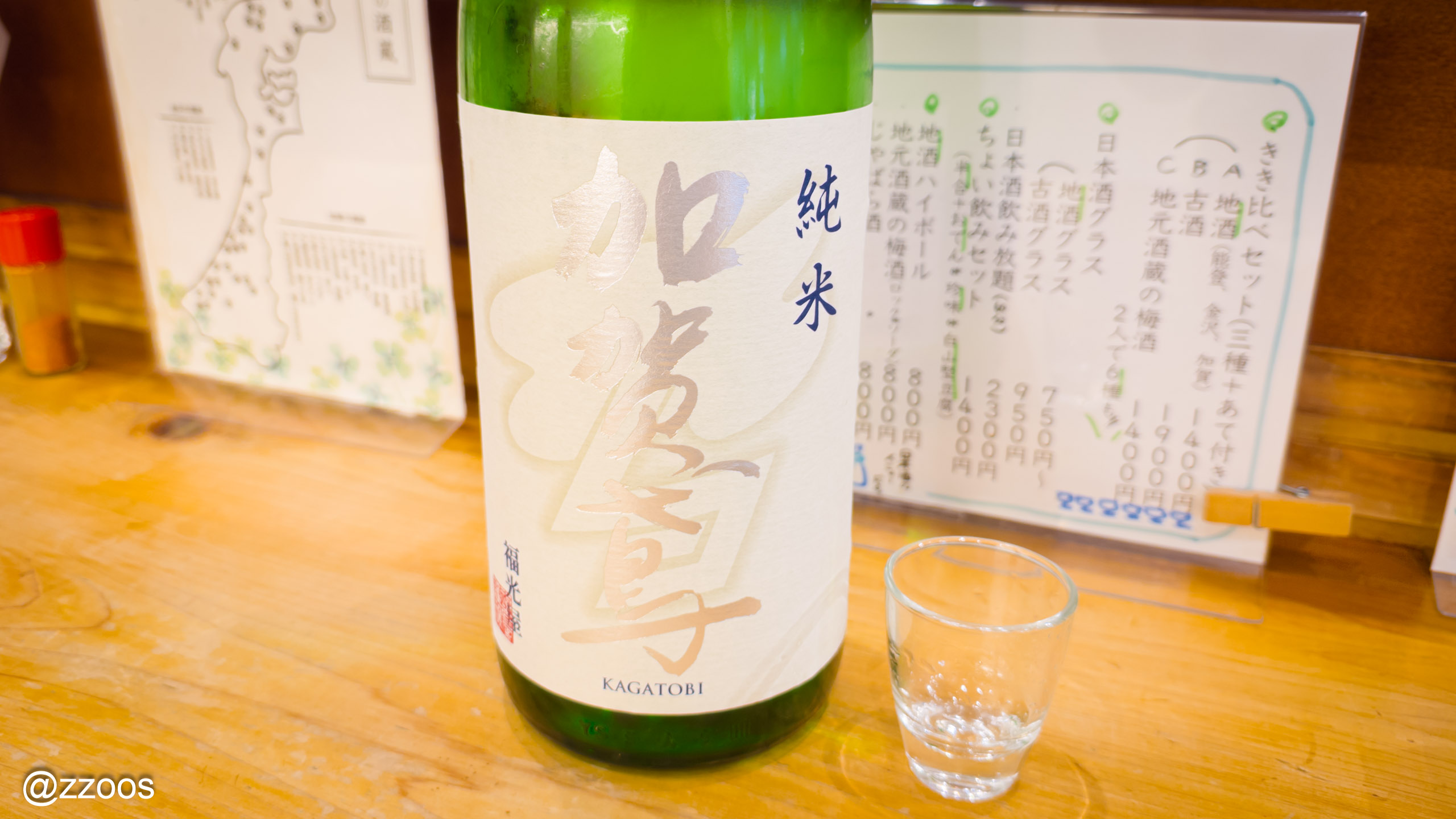
Next is Kagatobi Natsu-junmai Nama(加賀鳶 夏純米 生).
Among Ishikawa Prefecture’s nihonshu brands, a lot of them use the kanji Kaga(加賀). That’s because this area used to be the Kaga Domain. At first I didn’t know that, so I glanced at the names starting with Kaga and assumed they were all the same brand.
In the end, the one nihonshu I picked to bring home was also one with the kanji Kaga on it. I even bought one labeled Maboroshi-no-Kaga-no-sho(幻の加賀の庄), thinking it was the same brand.
Anyway, this sake is a junmaishu that Kagatobi releases as a summer limited edition. It was unusual in that I could feel a slight spiciness, but overall it was a clean sake.
I’d assumed it was the same brand as the Kagatsuru I drank second, so I just thought it was good — but thinking back now, Kagatsuru was more complex and refined, and Kagatobi was more of a simple, clear-cut style.
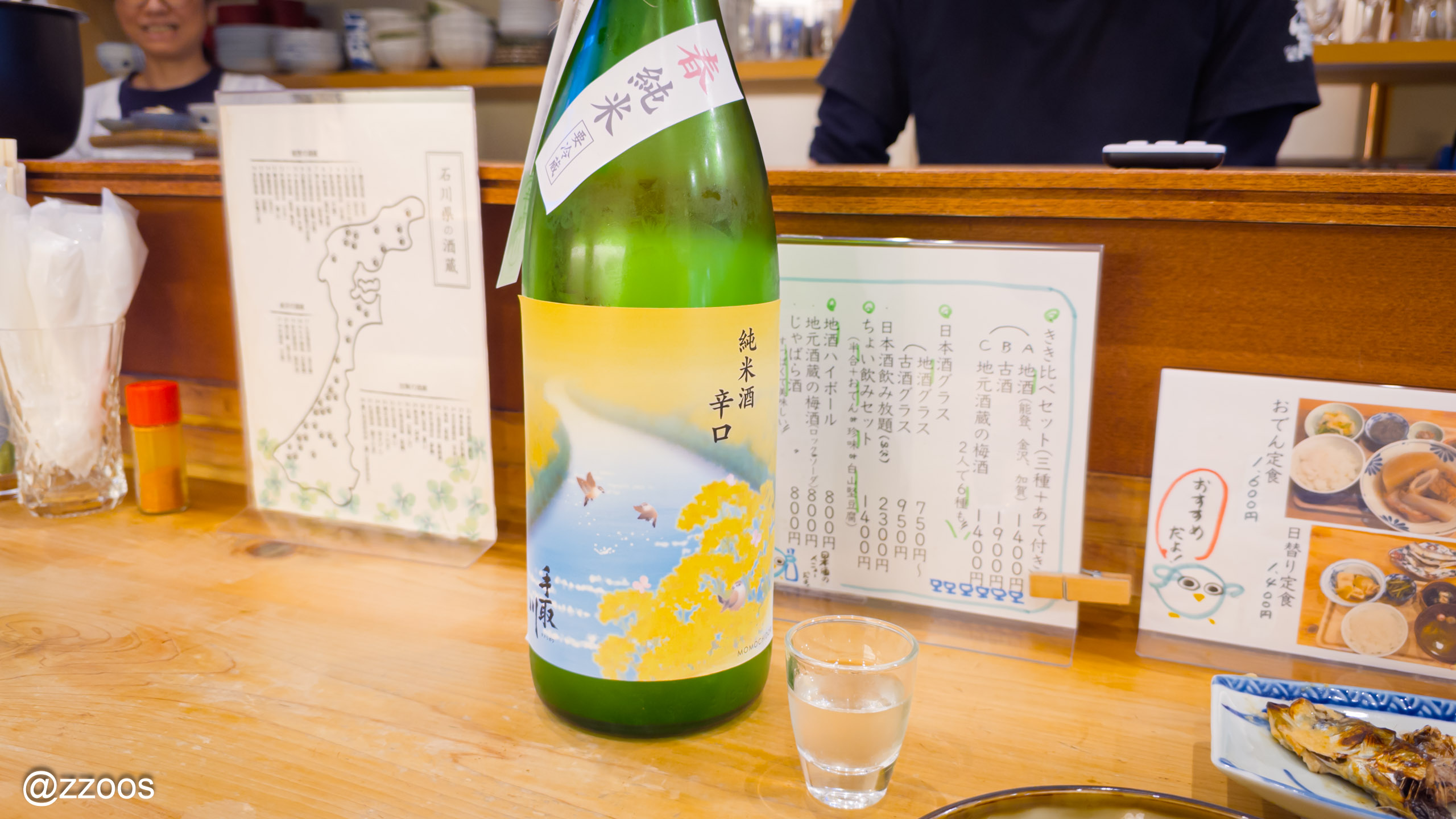
Next is Tedorigawa Haru Junmai Karakuchi(手取川 春 純米 辛口). They say it’s the spring entry in Tedorigawa’s four-seasons series(四季シリーズ), which they release as seasonal limited editions.
Unlike the karakuchi I drank earlier, this one is clean but also varied in taste and aroma. And the aftertaste that wipes the finish clean comes across not as bland, but rather as a cleanness like drinking water from a stream.
I liked this one too.
Looking into it a bit more, it turns out this one also used Hyakumangoku-no-shiro.
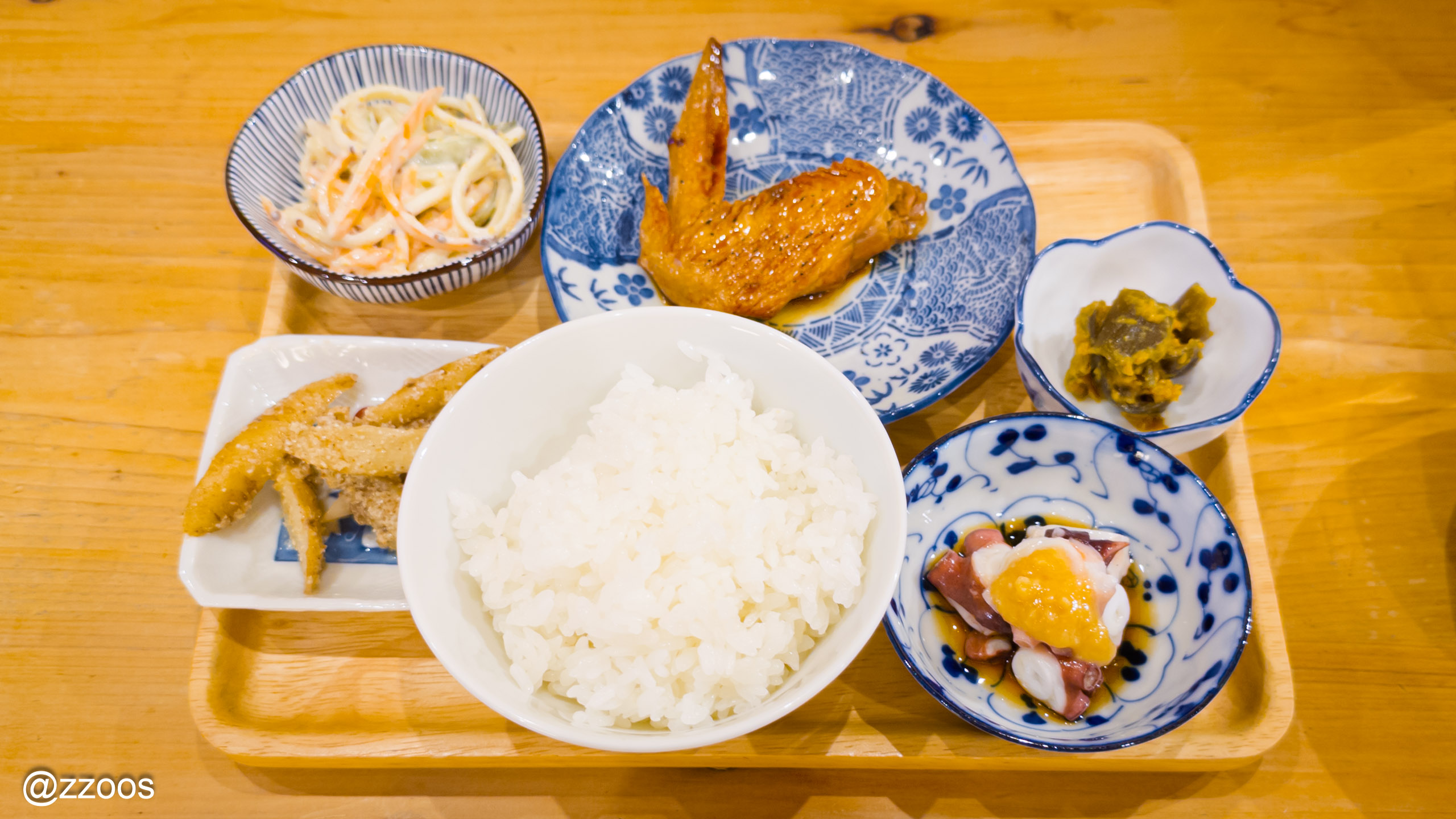
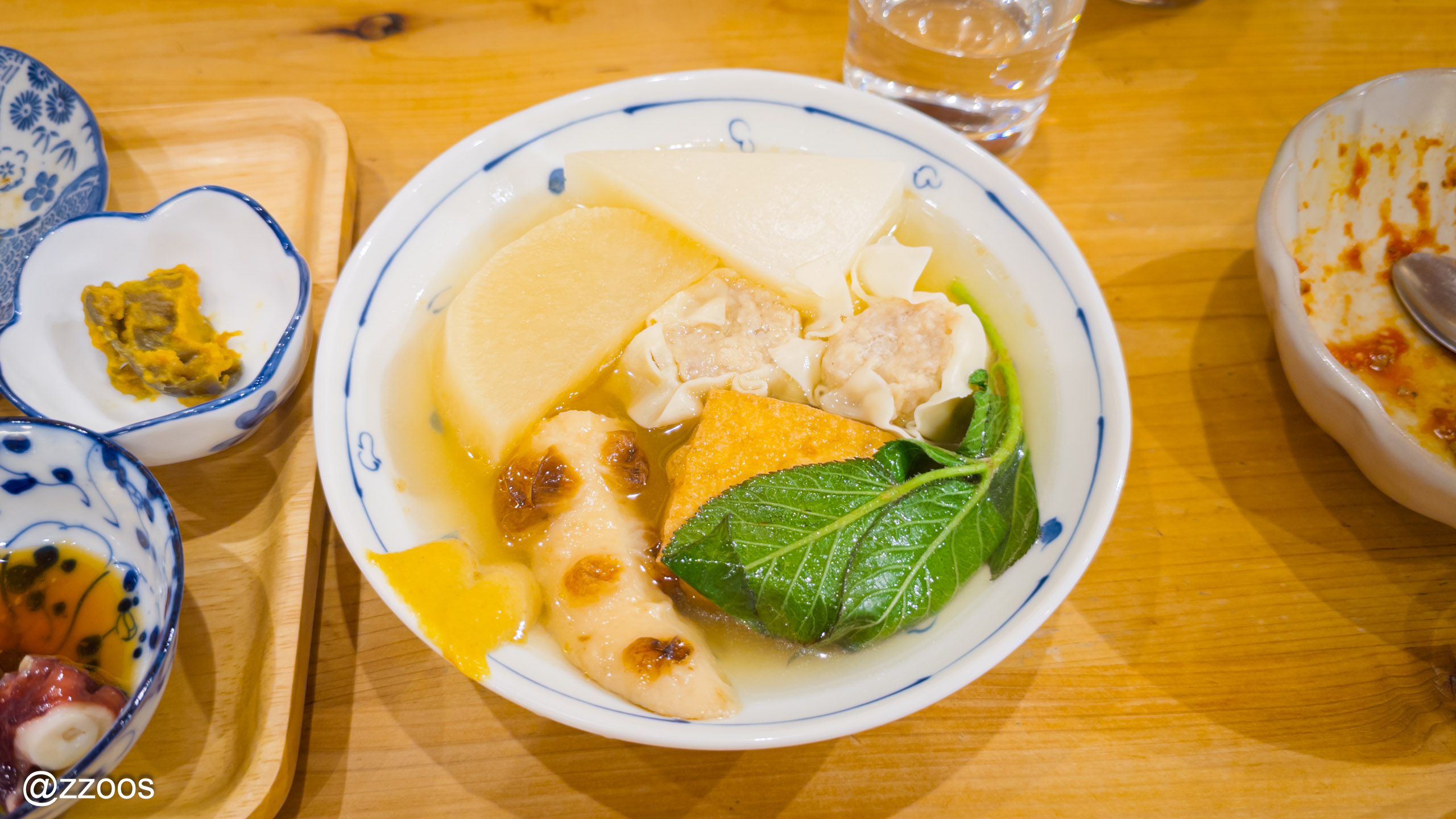
Sitting there sipping away, I found I needed more to nibble on. So I went and ordered the oden set meal. With rice you can fill your stomach a bit while also having the side dishes and oden to go with your drink — right?
Once it arrived, the portion was so generous that I started wondering whether I needn’t have ordered the three-item omakase at the start at all.
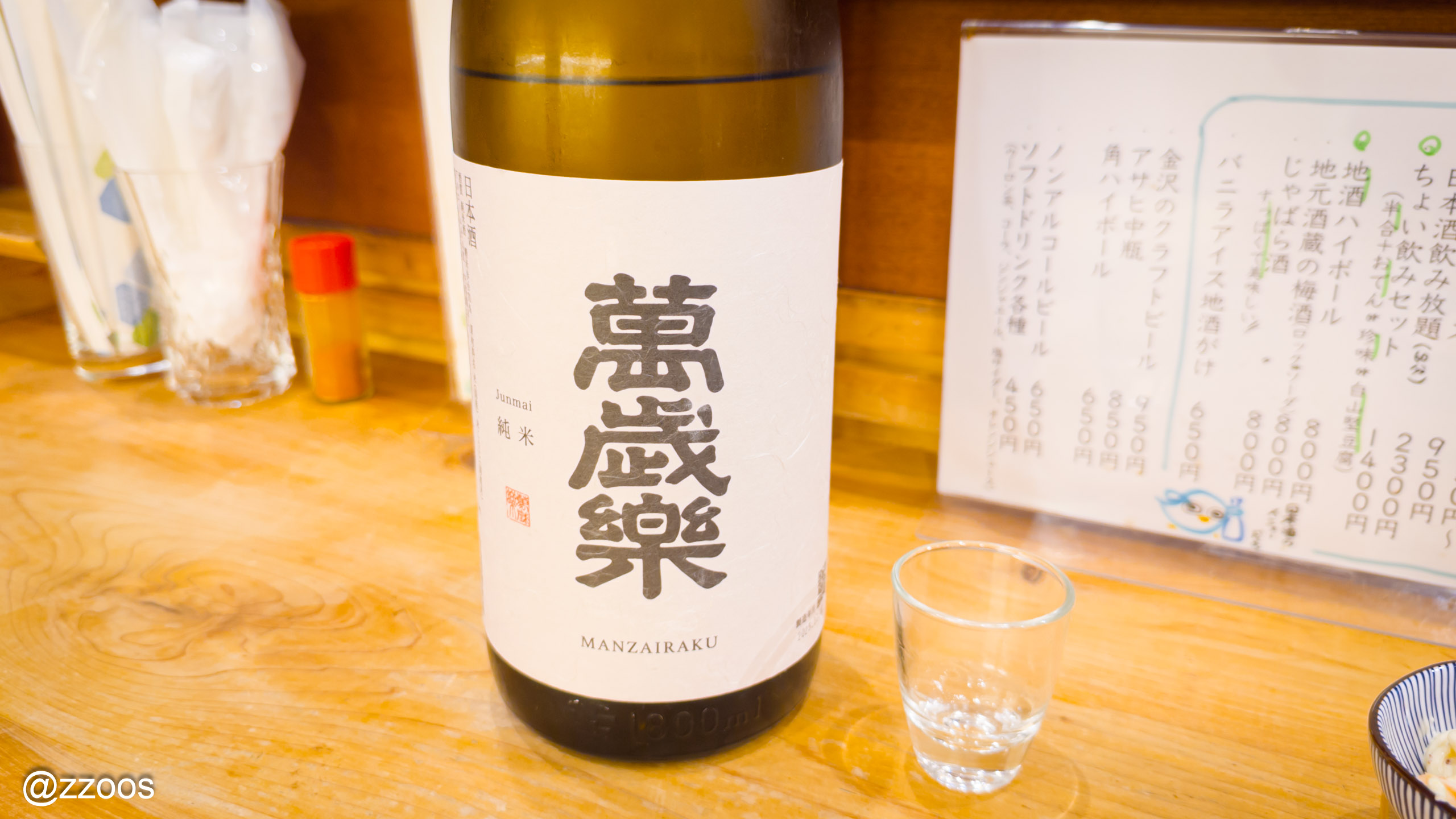
This nihonshu is Manzairaku Junmai(萬歳楽 純米).
You could call Manzairaku’s image a bit predictable, but that in itself is also proof that it’s been loved for a long time.
The first impression has a slight sweetness. And there’s a pleasant umami to it, so in the end — it’s tasty. It really is a taste that lets you see why it’s been loved for so long.
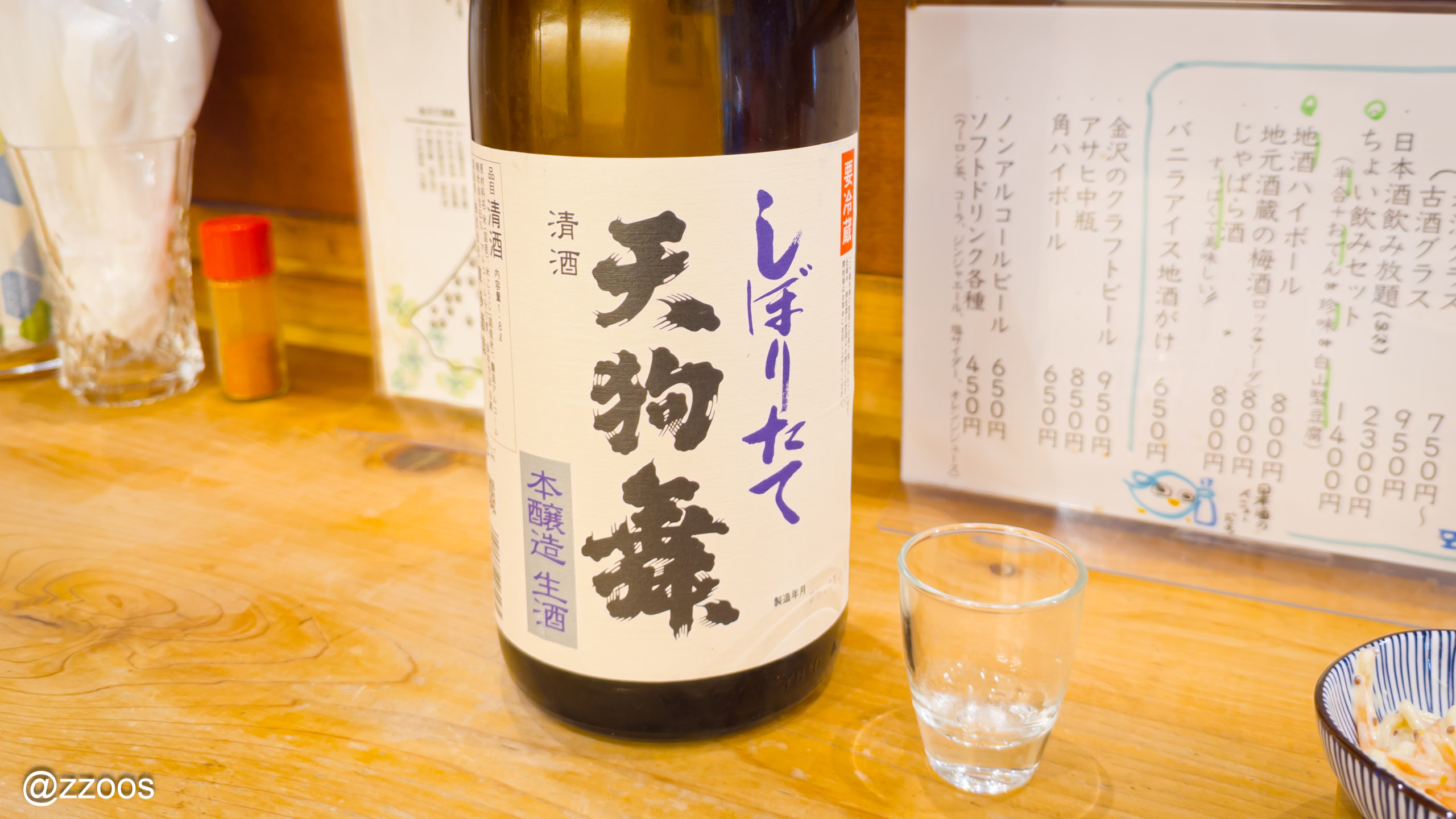
Now, next is Tengumai Shiboritate Honjozo Nama-zake(天狗舞 しぼりたて 本醸造 生酒).
They say it’s one of Tengumai’s signature winter-season limited sakes.
Being honjozo means it’s not a sake made from rice alone. It’s a grade where brewer’s alcohol is allowed.
Adding brewer’s alcohol makes it easy to think of it as a cheap grade, but that’s not the case. Depending on the brewery’s concept, alcohol is sometimes used precisely to tidy up the taste or aroma.
For my part, I’d had a bad impression of Tengumai from drinking it before, so I went in with a negative bias — and yet I got a clean impression with little to fault.
I think that’s probably because the brewer’s alcohol neatly tidied up the off-flavors of the rice. So I don’t think you should look down on something just because it’s honjozo.
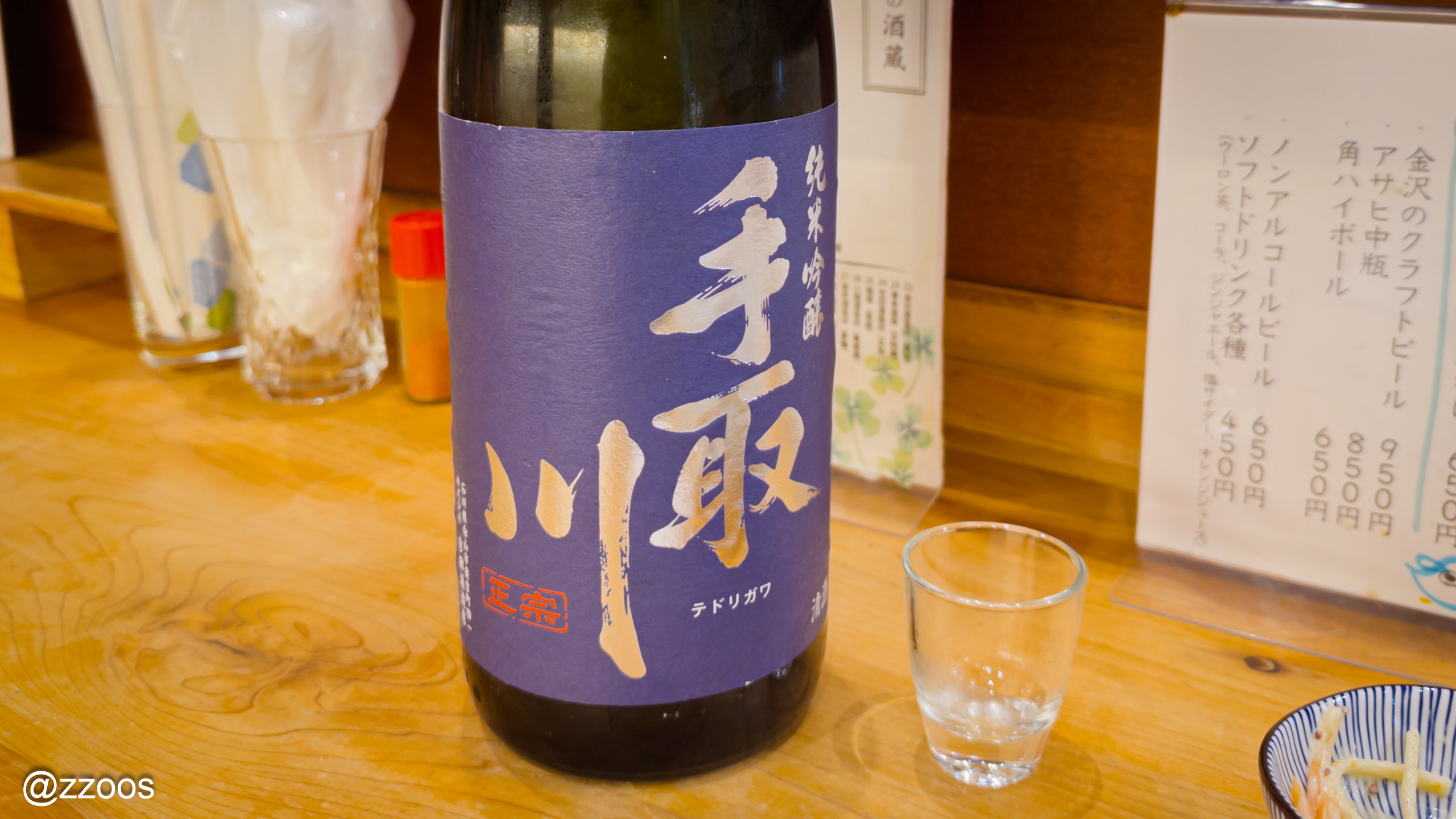
The last sake I drank was Tedorigawa again. This time it’s Tedorigawa Junmai Ginjo Nama-genshu Ishikawamon(手取川 純米吟醸 生原酒 石川門).
This is similar to what I drank on my first day arriving in Kanazawa. That day I had the Junmai Daiginjo Muroka Genshu Ishikawamon(手取川 純米大吟醸 無濾過原酒 石川門).
Both are made with the rice called Ishikawamon — that’s the same — but Junmai Daiginjo versus Junmai Ginjo, that is, how much the rice is milled down, is different.
To put it conclusively, neither one ended up being to my taste. All of Tedorigawa’s sakes were delicious, but strangely these ones weren’t great. Was it the ginjo versus daiginjo — the ginjo aroma? Or was it the rice, Ishikawamon?
Come to think of it, among the sake-brewing rices developed in Ishikawa Prefecture, I liked all the sakes that used Hyakumangoku-no-shiro.
Just as the grape variety matters in wine, it seems the rice variety matters this much in nihonshu too.
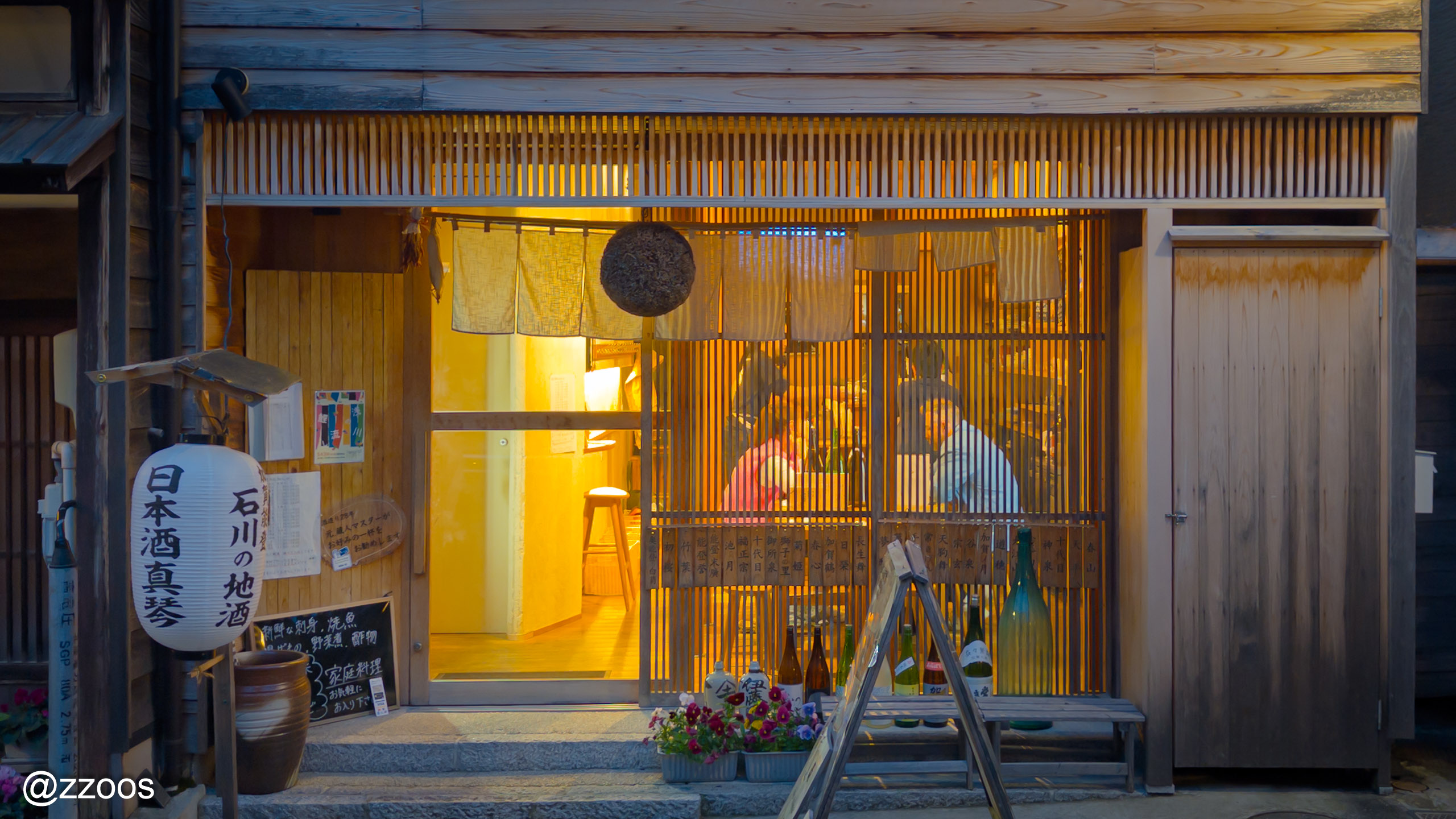
Nihonshu Makoto was, quite literally, a place where you can drink plenty of Ishikawa Prefecture’s local sake. Over the one-hour nomihodai, I drank eight kinds of nihonshu.
But my recommendation is to drink them one at a time with proper recommendations, rather than the nomihodai. With the nomihodai, since I was picking on my own, it was a bit of a shame that I had to choose without really knowing much about each sake.
The small glass, which meant I couldn’t pour a generous amount and drink, was another of the downsides. So if I visit again, I think I’d like to drink properly, glass by glass, with recommendations.
Right, now I need to digest everything I worked so hard to eat.
This place, Higashi Chaya District, is somewhere I haven’t properly looked around yet.
The truth is, part of the reason I had an early dinner here was to photograph the night views of Higashi Chaya District after the sun went down. I’d read somewhere that during the day there are too many people to take photos properly.
So from here on, partly to sober up a bit and partly to digest, I plan to take a walk around Higashi Chaya District.
In the next post, I’ll show you the night views of Higashi Chaya District, one of Kanazawa’s famous tourist spots.