When you plan a trip to Kanazawa, there are a few spots you really have to include.
Kenrokuen and Kanazawa Castle, for one. The 21st Century Museum is a must as well. You wouldn’t leave out the Nagamachi samurai district either, and finally, this place — Higashi Chaya District — shouldn’t be missed.
Today I ate dinner a little early, on purpose, because I wanted to see Higashi Chaya at night.
So, shall we take a slow look around the street?
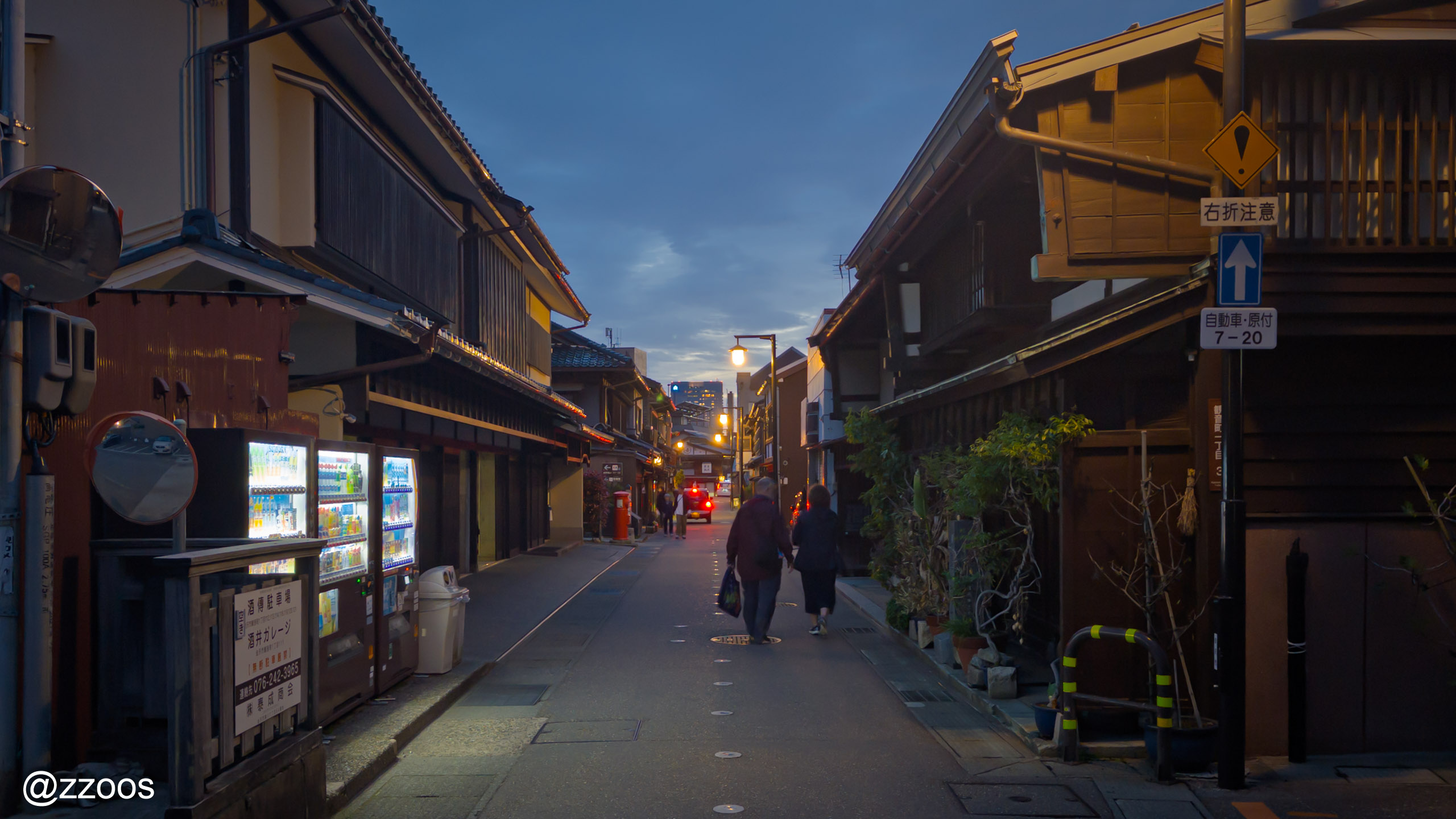
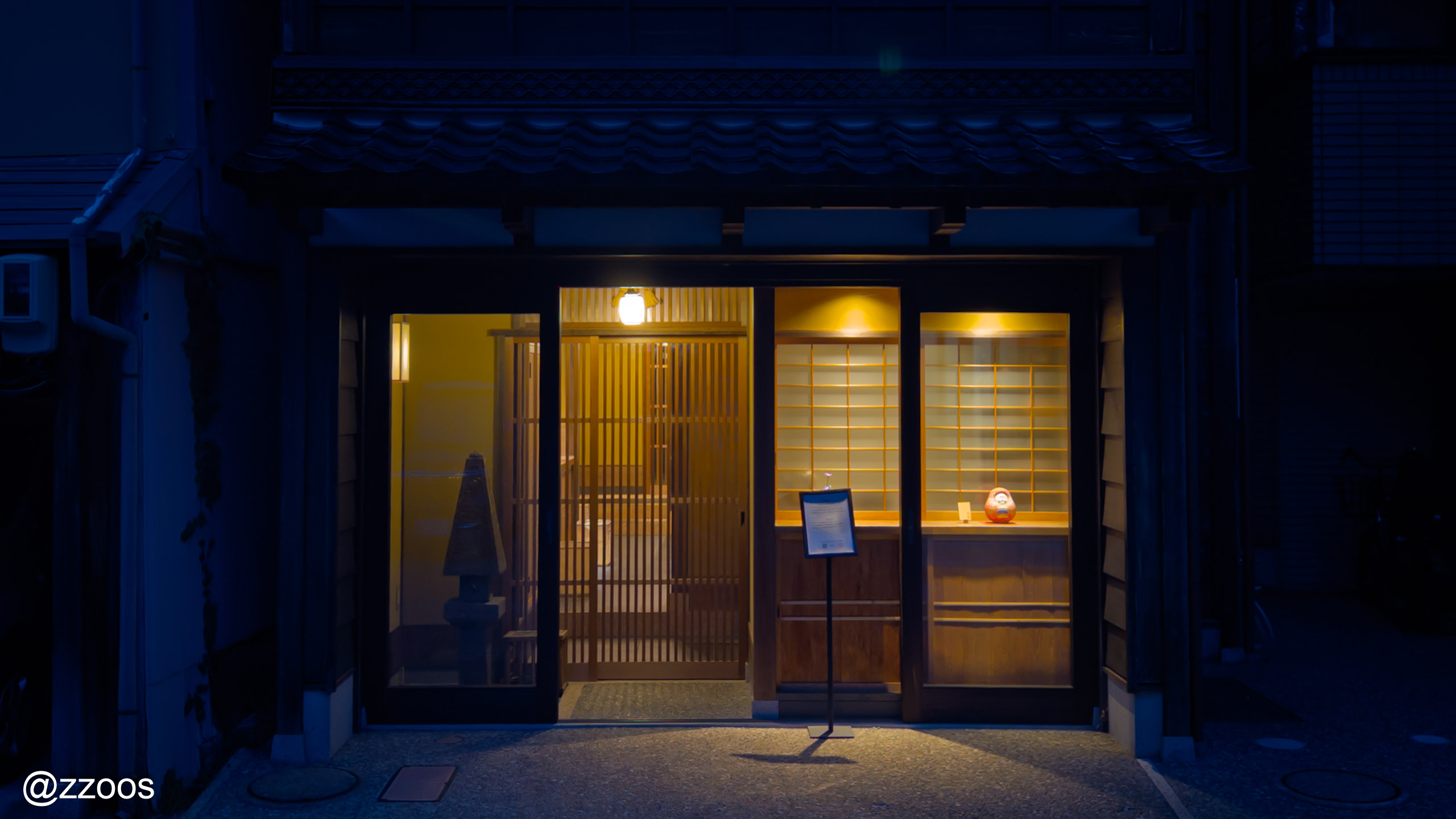
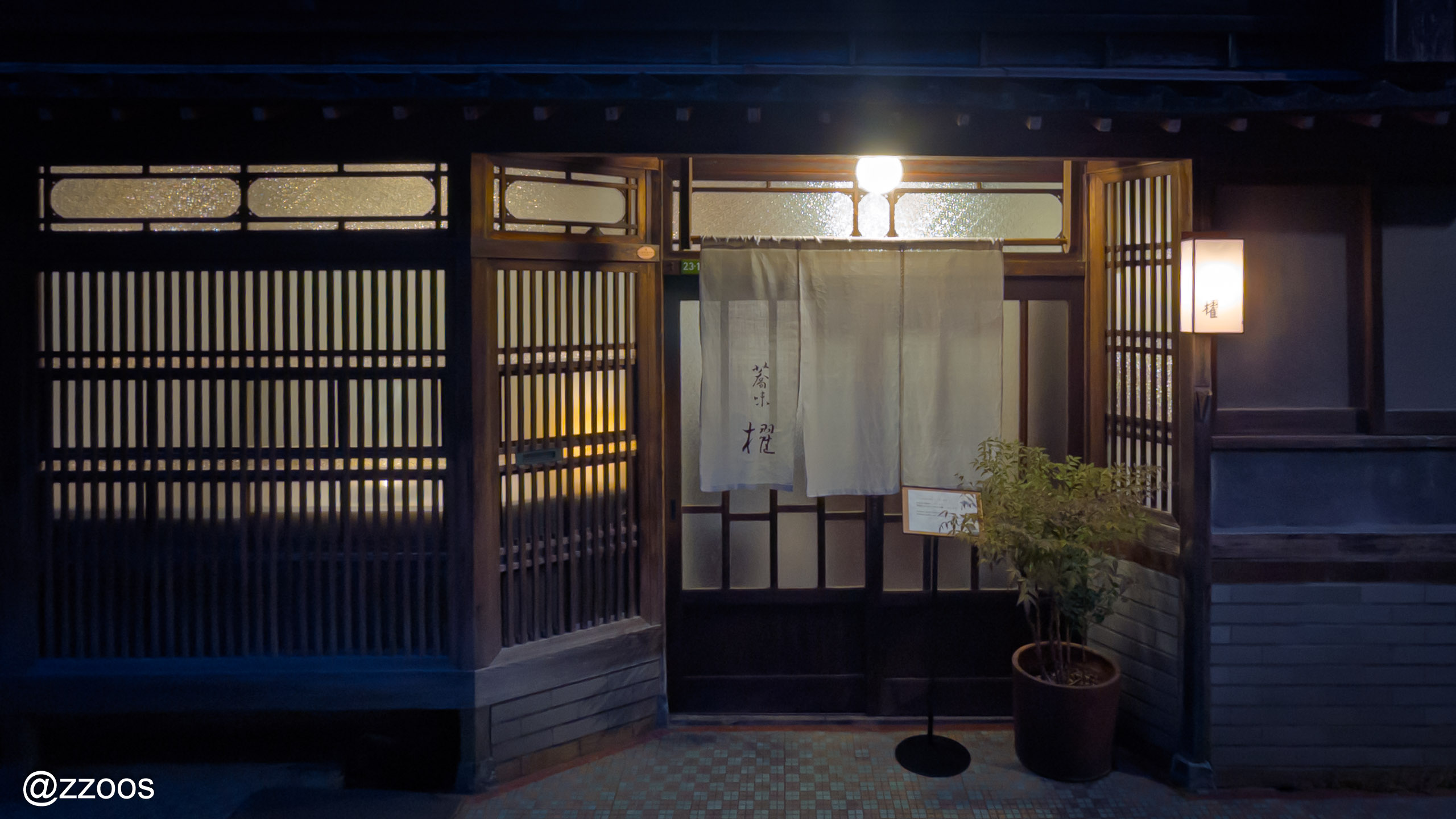
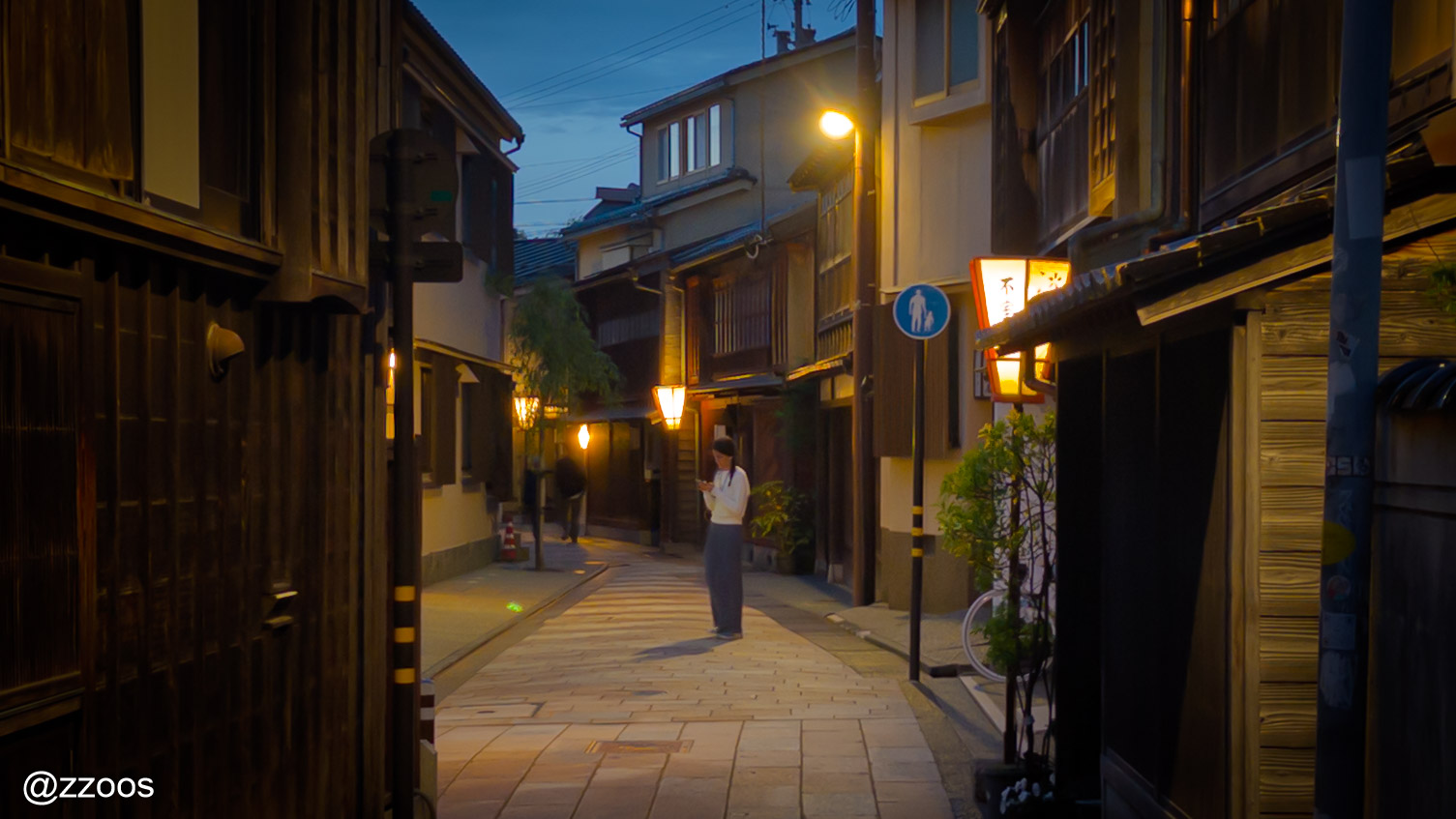
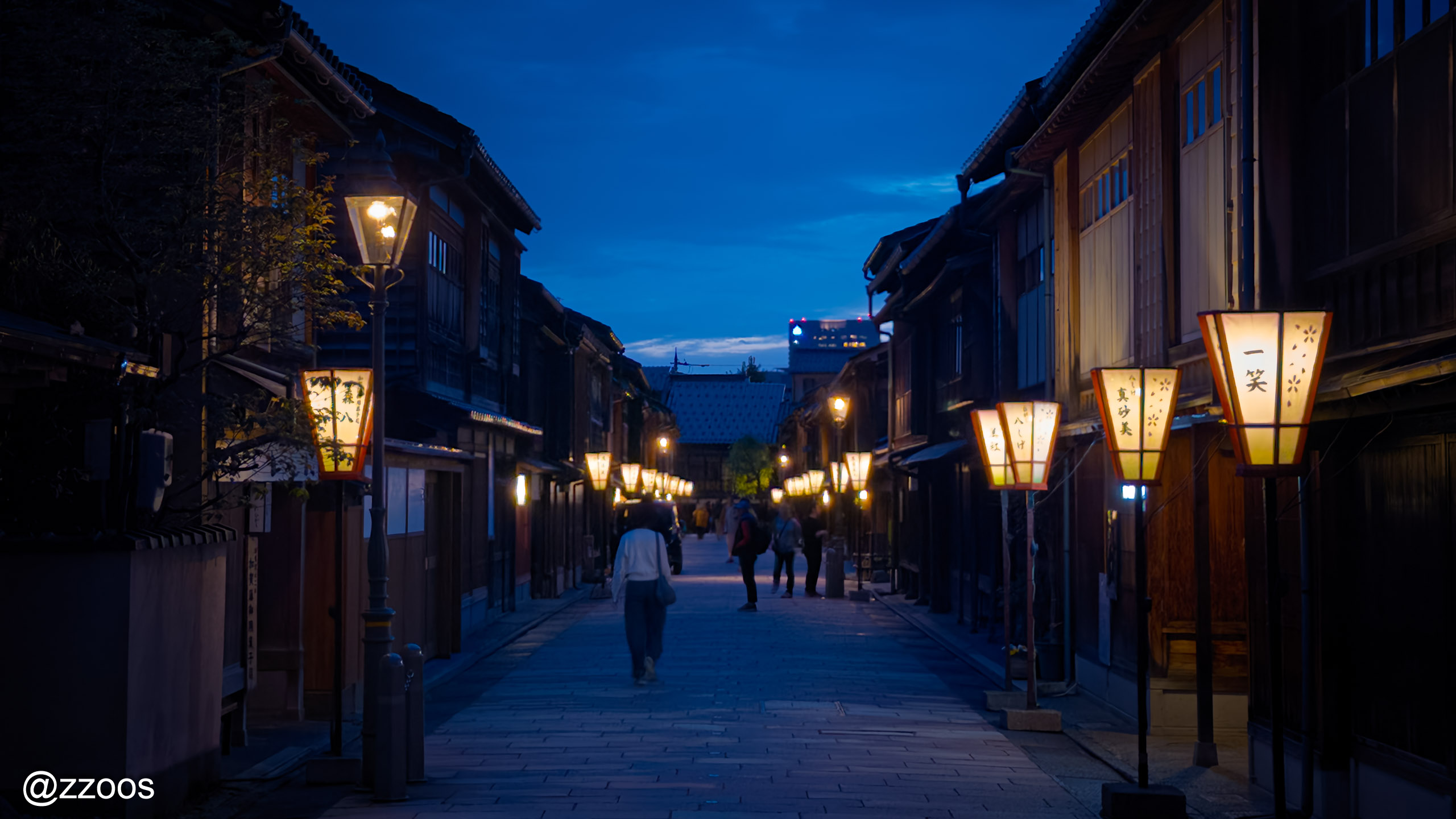
My first impression of this street is that it resembles Kyoto.
I’ve been to Kyoto so many times, and when you think of a traditional Japanese streetscape, places like Gion or Pontocho come to mind — it’s a kind of stereotype.
Which makes me wonder: is that why Kanazawa was once nicknamed “Little Kyoto”?
Compared with the Nagamachi samurai district I walked a few days ago, this street definitely looks more like Kyoto.
And that makes sense, because Kyoto’s Gion and Kanazawa’s Higashi Chaya have something in common: both were entertainment districts — no, pleasure quarters — officially sanctioned by the local government.
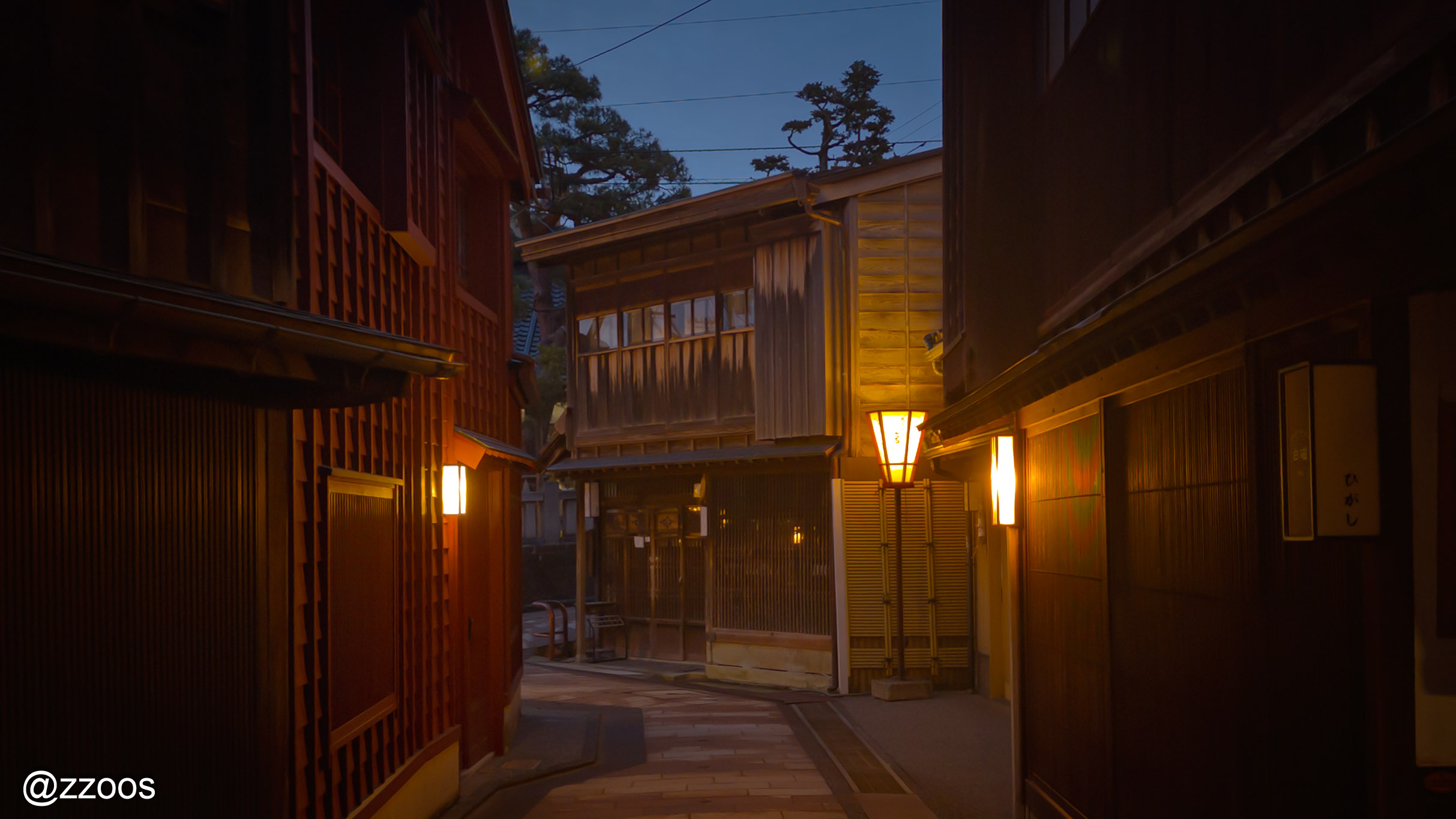
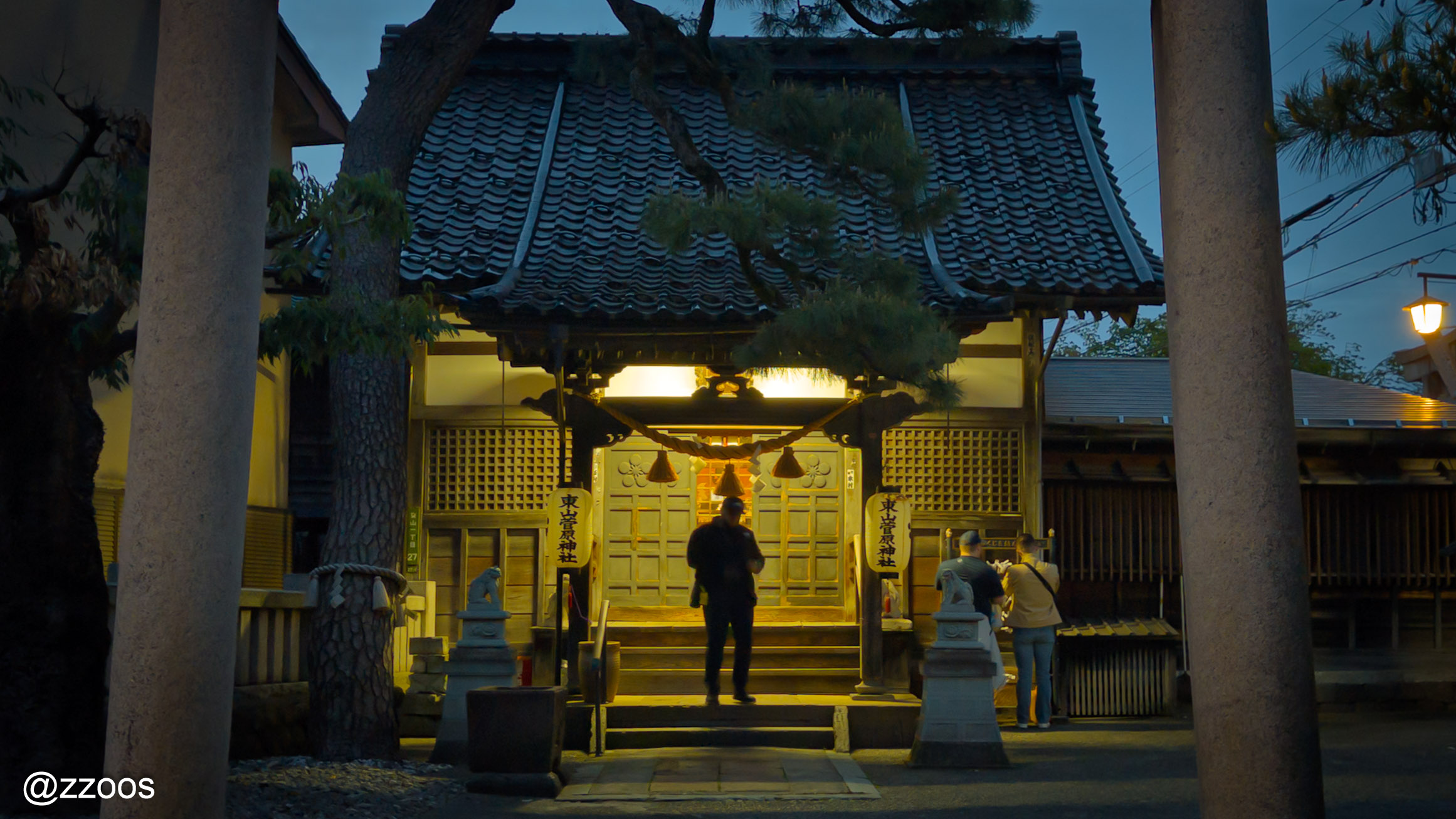
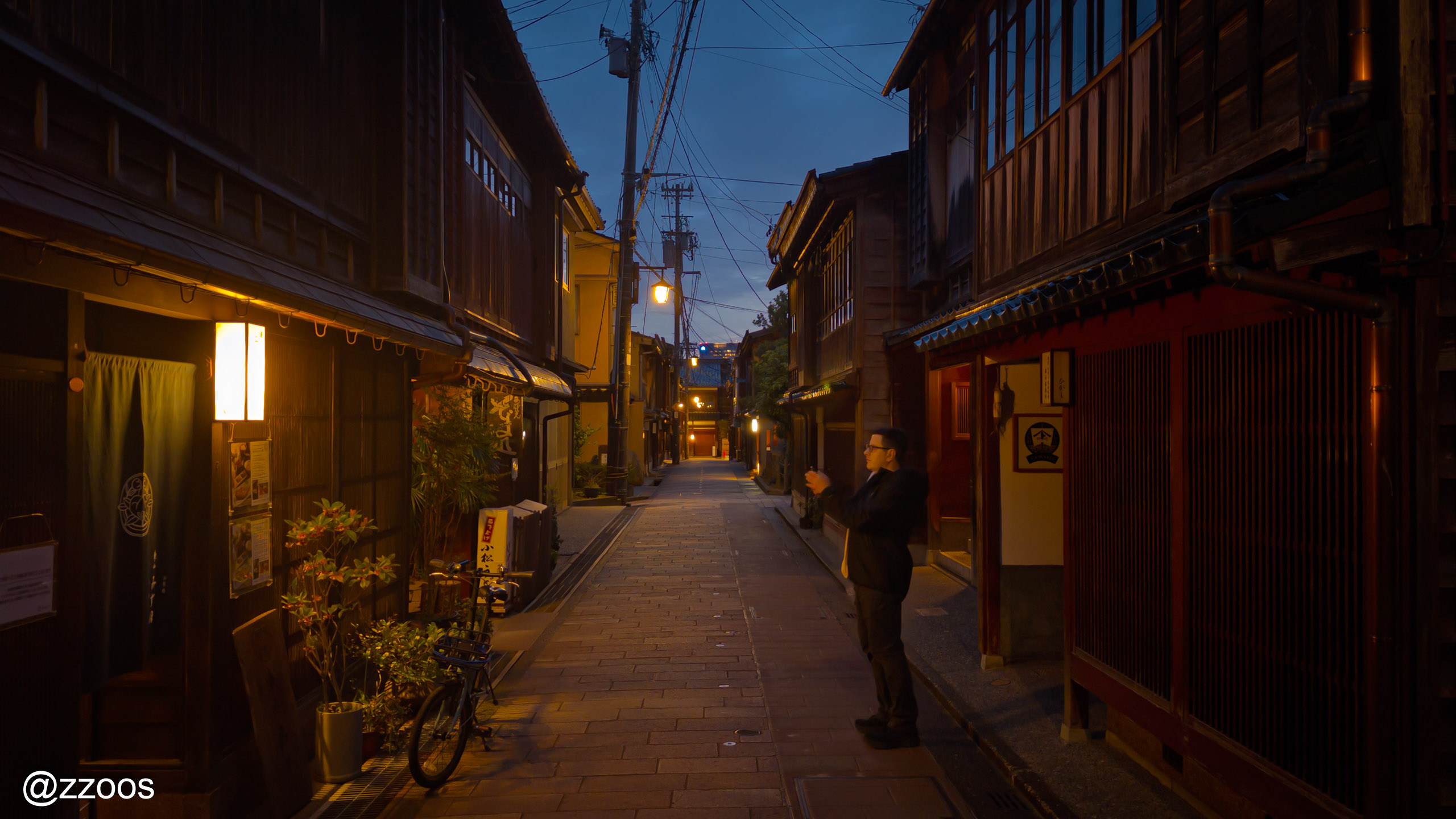
The name Higashi Chaya District (ひがし茶屋街) means “the eastern teahouse street.” But “teahouse” here doesn’t actually mean a shop that sells tea. These were establishments that hung up a “teahouse” sign while selling alcohol and entertainment.
The Edo-period shogunate strictly regulated luxury and entertainment among commoners, so the “teahouse” sign was meant to say, “We don’t sell alcohol and entertainment — this is just a place where guests rest for a while over a cup of tea.” But inside, they quietly sold alcohol, food, and entertainment.
The authorities knew about this, but they turned a blind eye — for the sake of control and management, and to secure tax revenue. The places where such shops gathered were exactly spots like Kyoto’s Gion and Kanazawa’s Higashi Chaya.
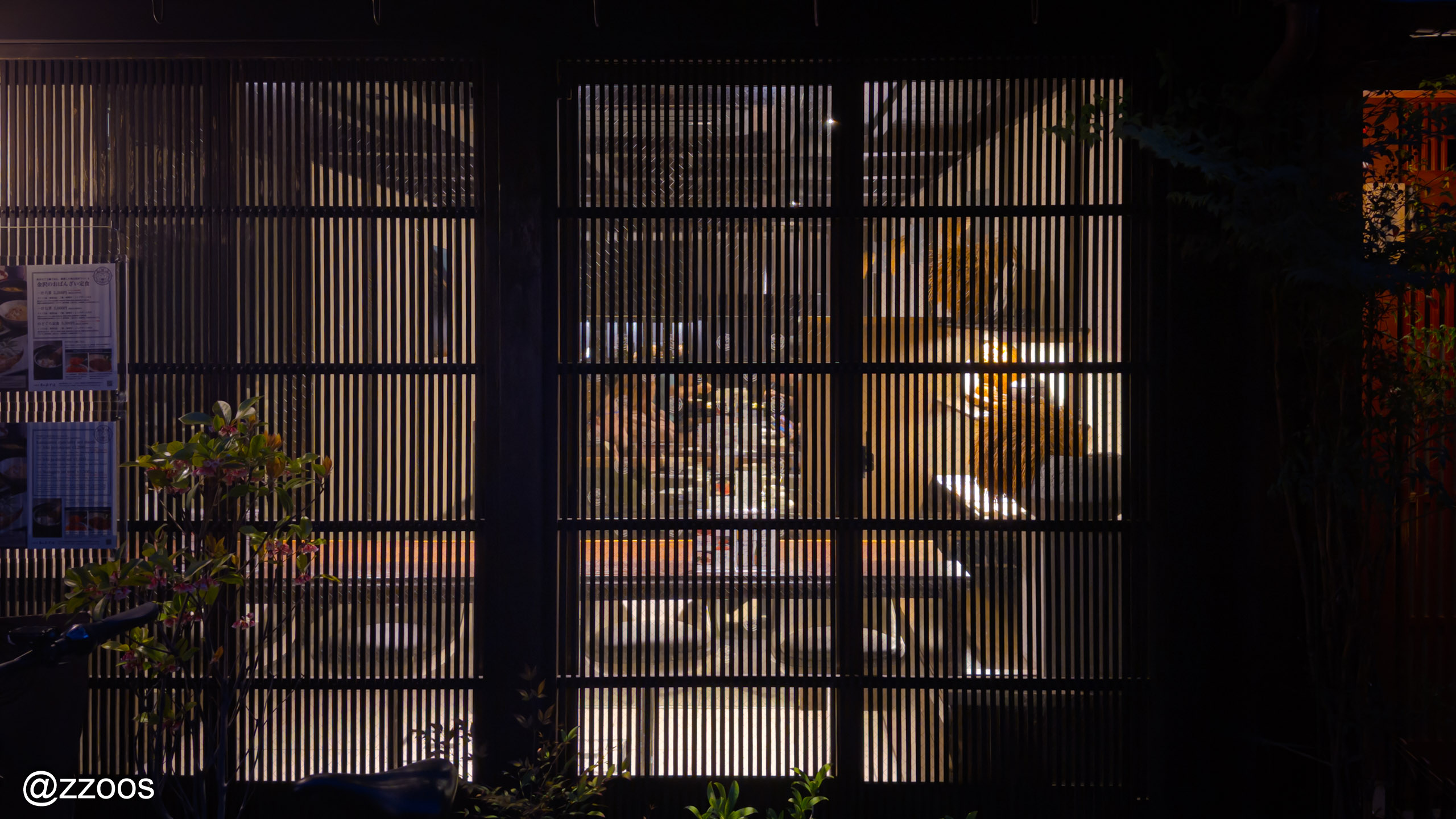
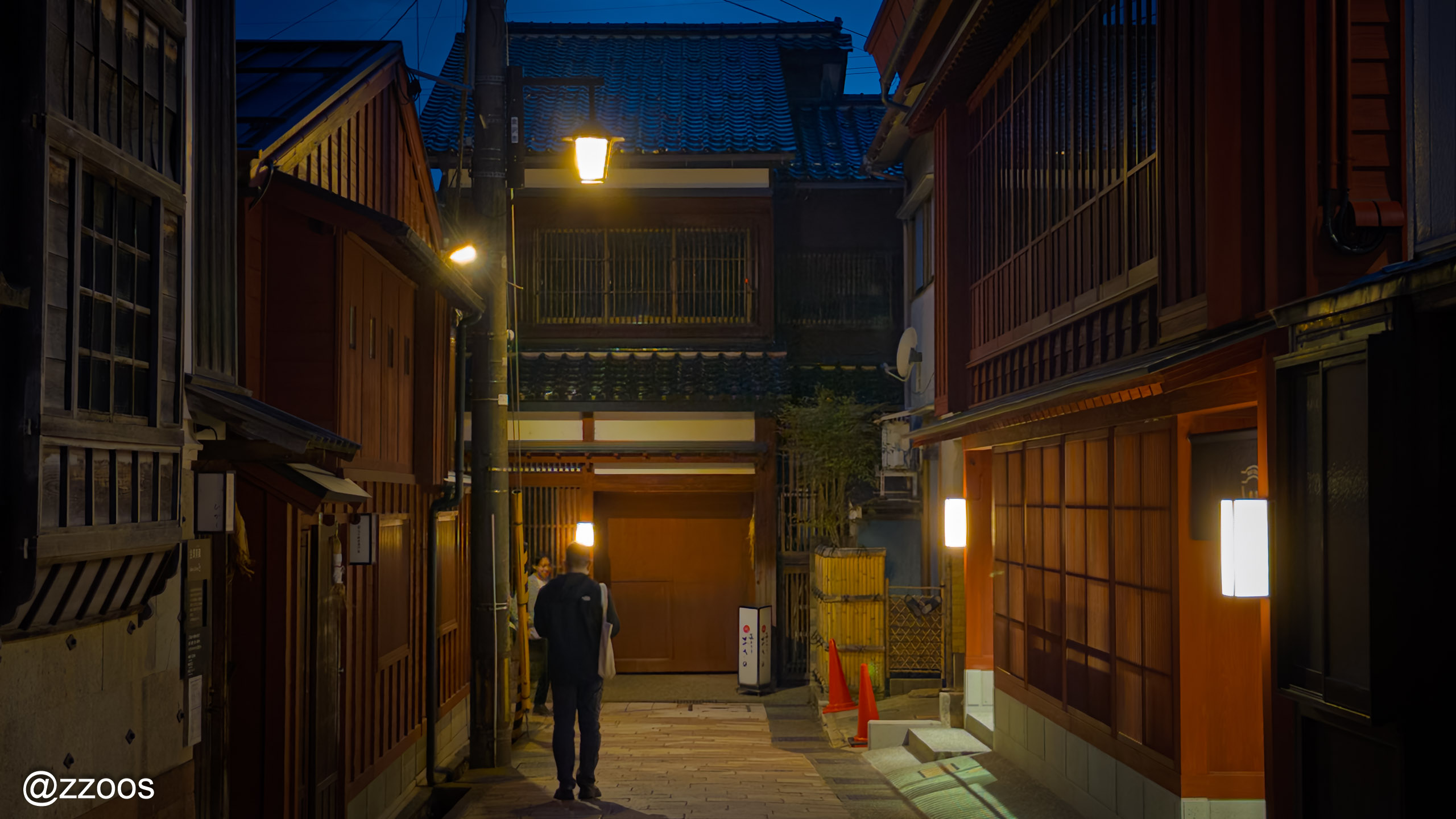
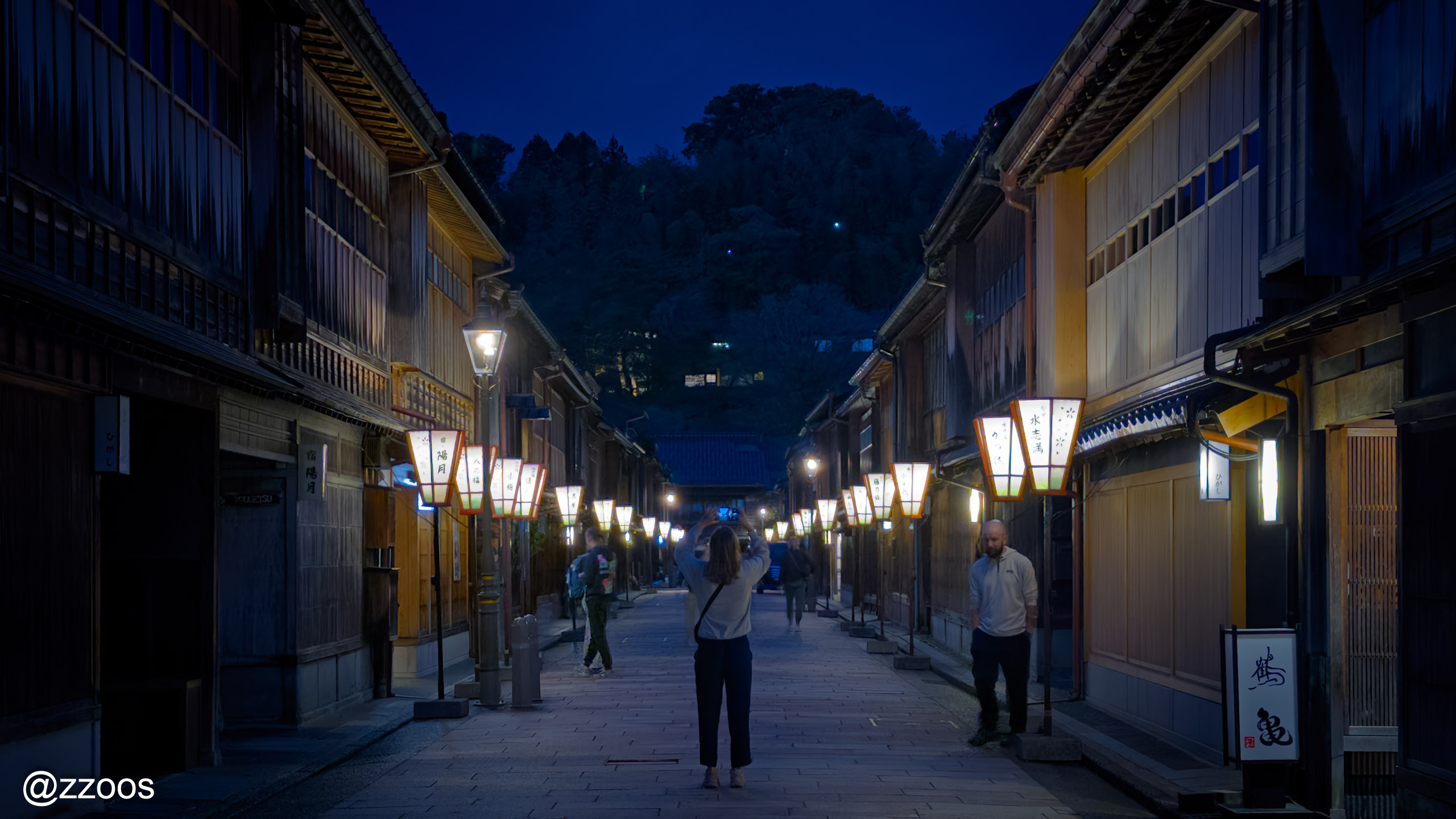
But as you walk around Higashi Chaya, you start to see many differences from Kyoto.
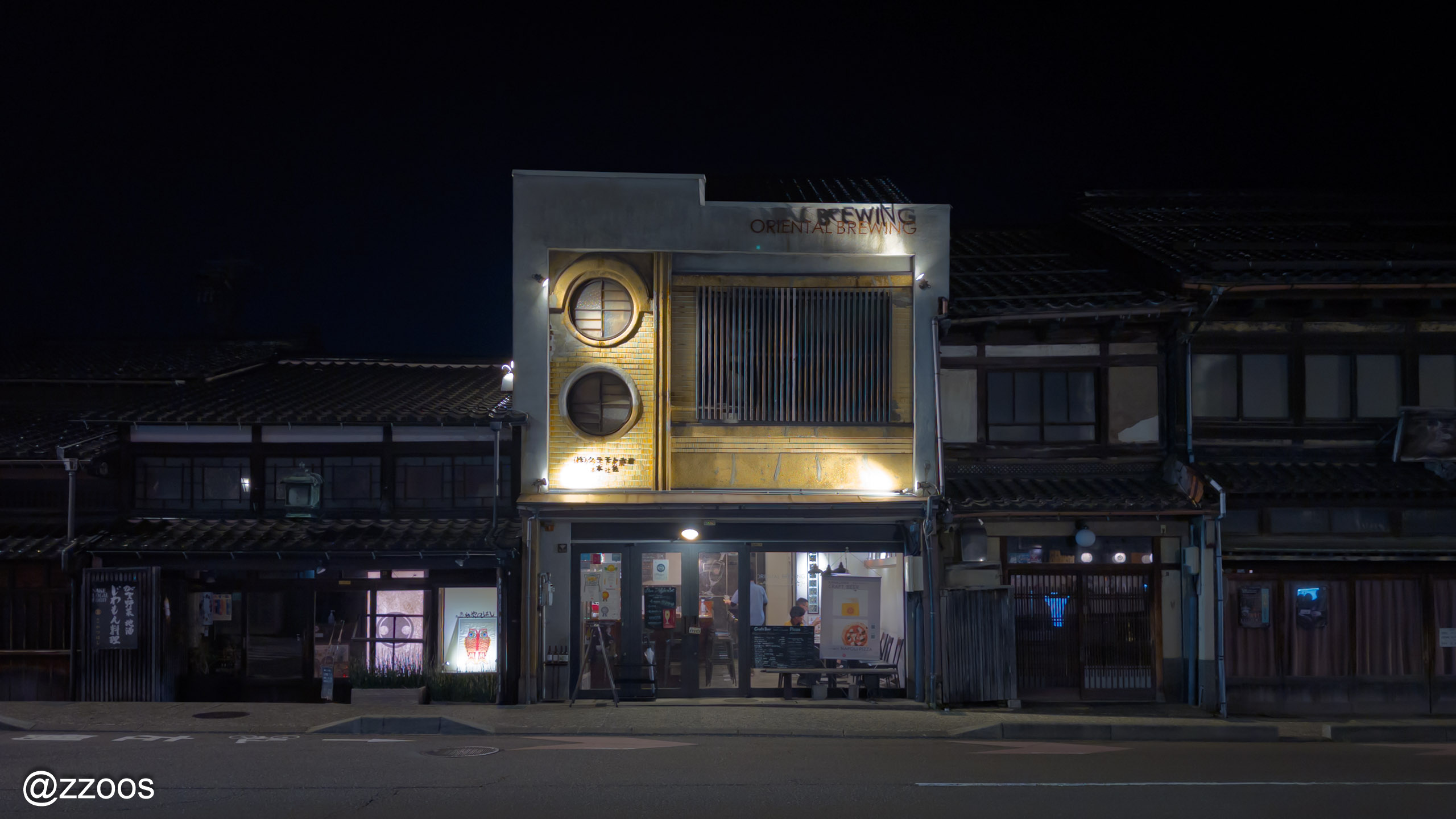
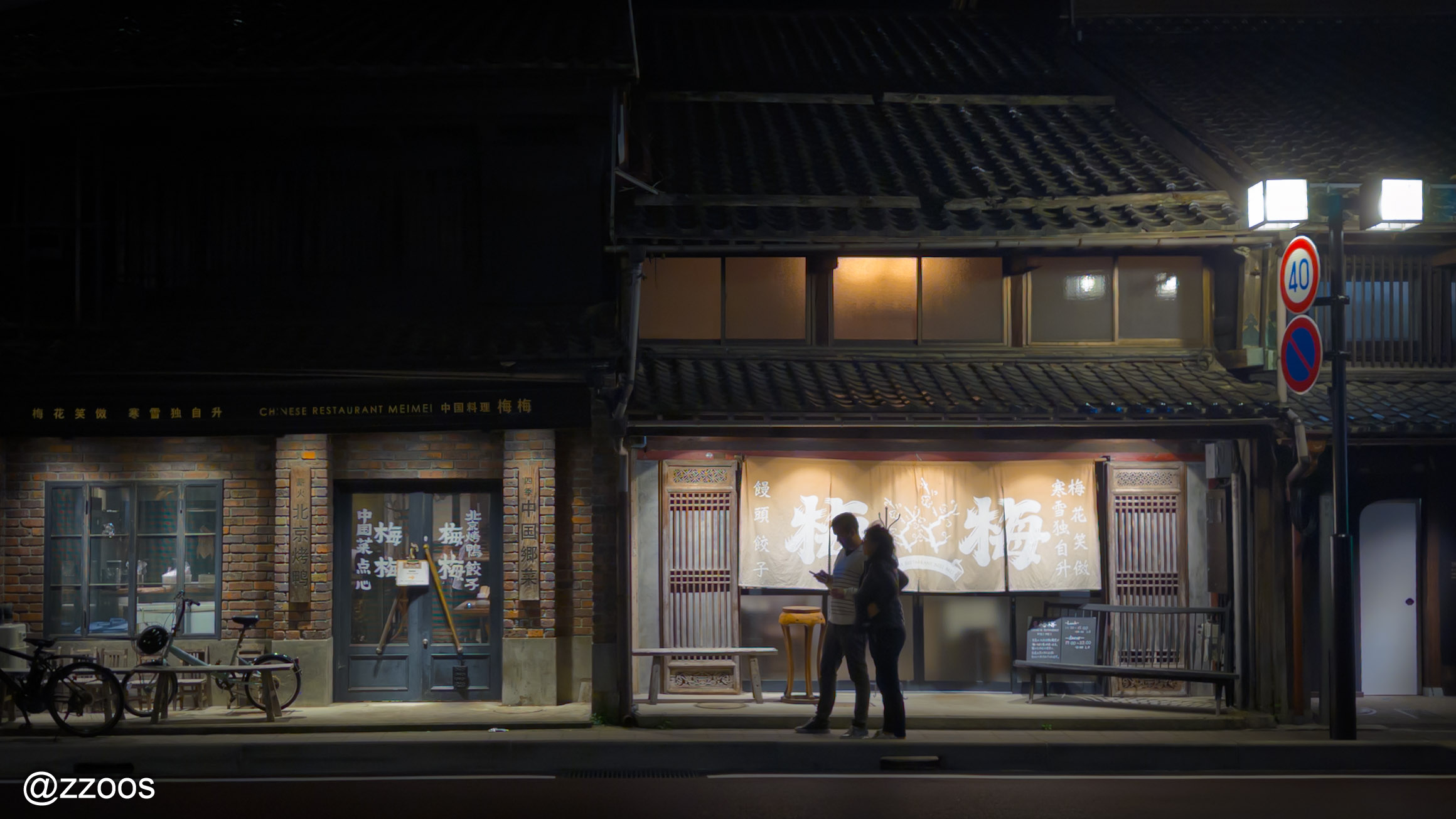
First of all, the overall mood of the street isn’t as flashy as Gion. The whole palette of the street is achromatic, dark wood tones. In Gion you come across yellow or red walls and see showy ornamentation. Here, the design of the windows and pillars is far heavier and plainer.
This, too, has to do with the weather, apparently.
This area gets so much snow that to bear the weight piling up on the roofs, the pillars have to be thicker, and more wood keeps getting added to reinforce the structure — so it ends up looking plain rather than showy.
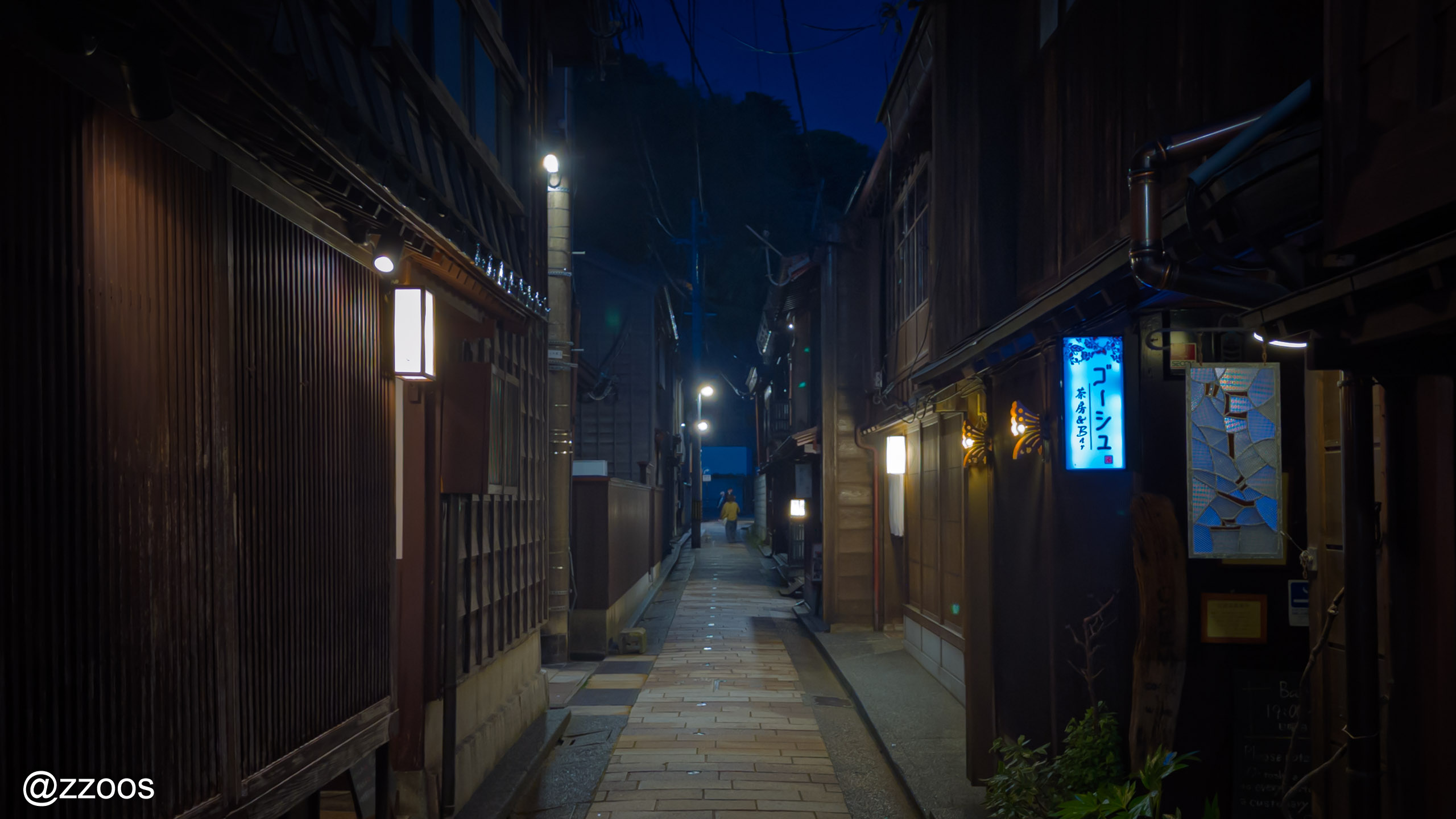
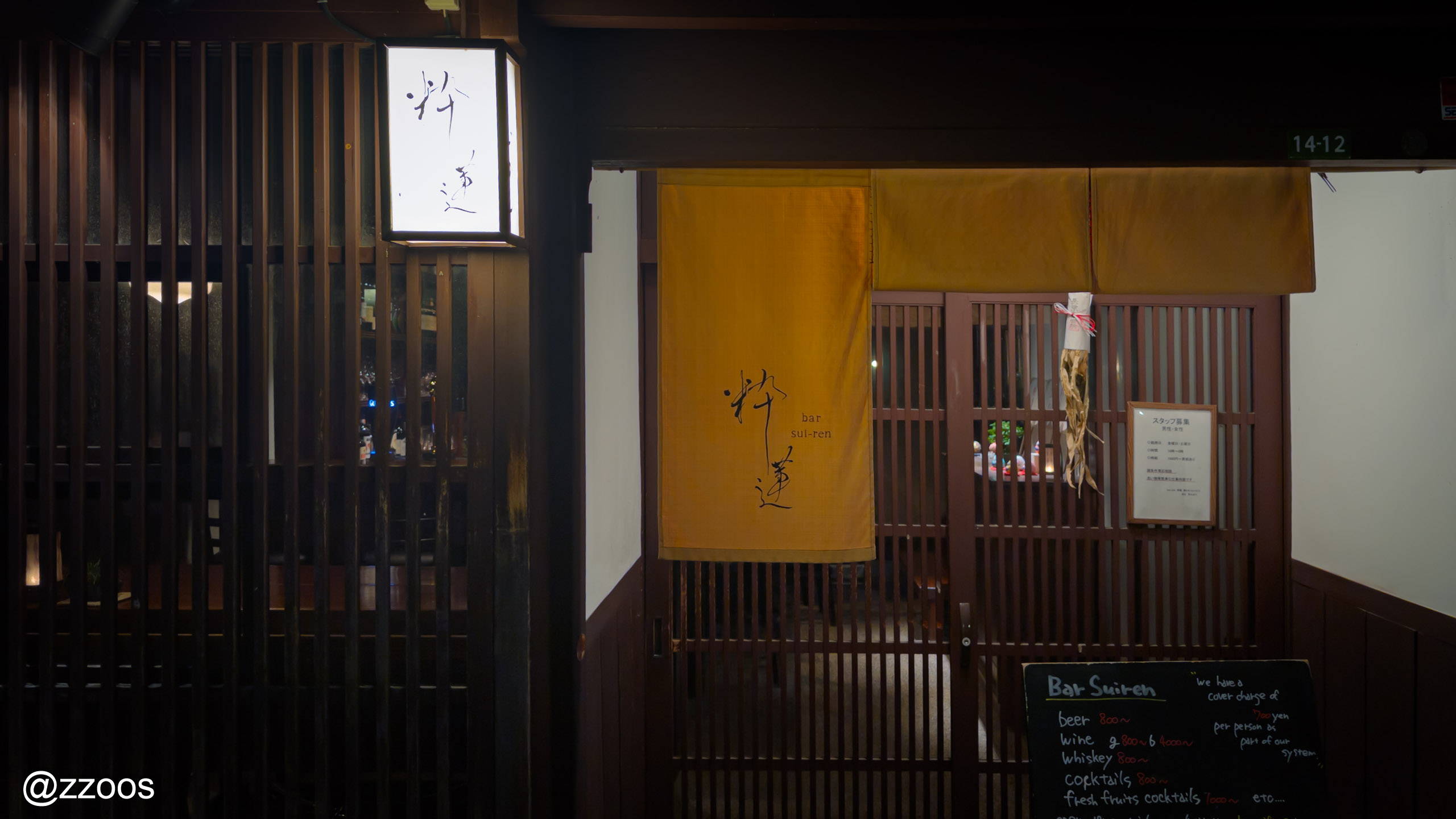
When you walk the streets of Kyoto, every shop has a structure made of bamboo set up below the windows. Usually it curves to protect the wall.
That’s called inuyarai (犬矢来). The name means it was set up to keep dogs from peeing on the wall.
This is one of those images that comes to mind with traditional Japanese streets.
But here in Kanazawa, you don’t see inuyarai easily. In winter, they’d clearly all collapse under the weight of the snow.
So instead of the elaborate, delicate inuyarai of Kyoto, what stands out here are outer walls finished thicker and heavier.
Because of that, the impression of the street is clearly different from Kyoto’s.
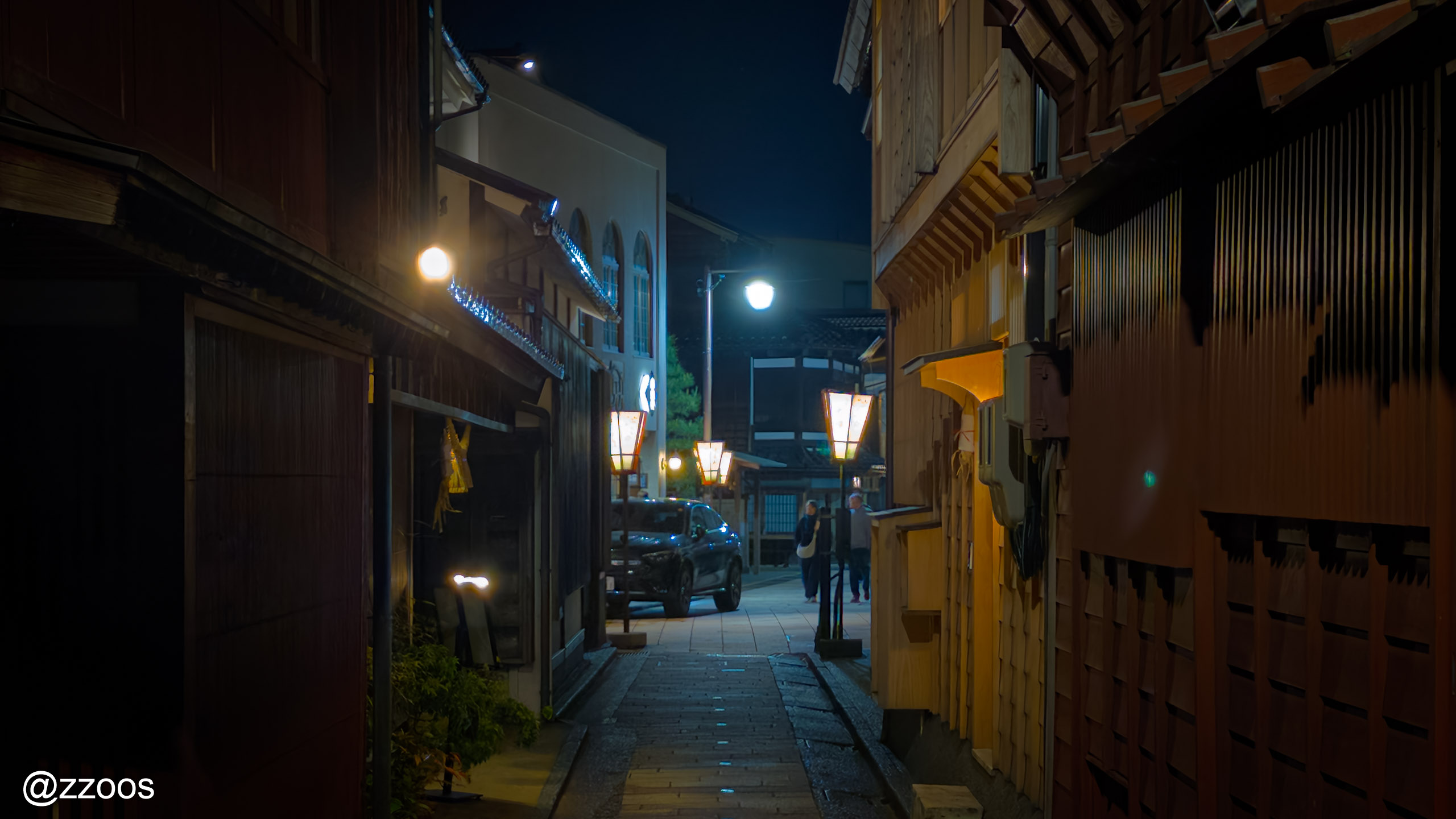
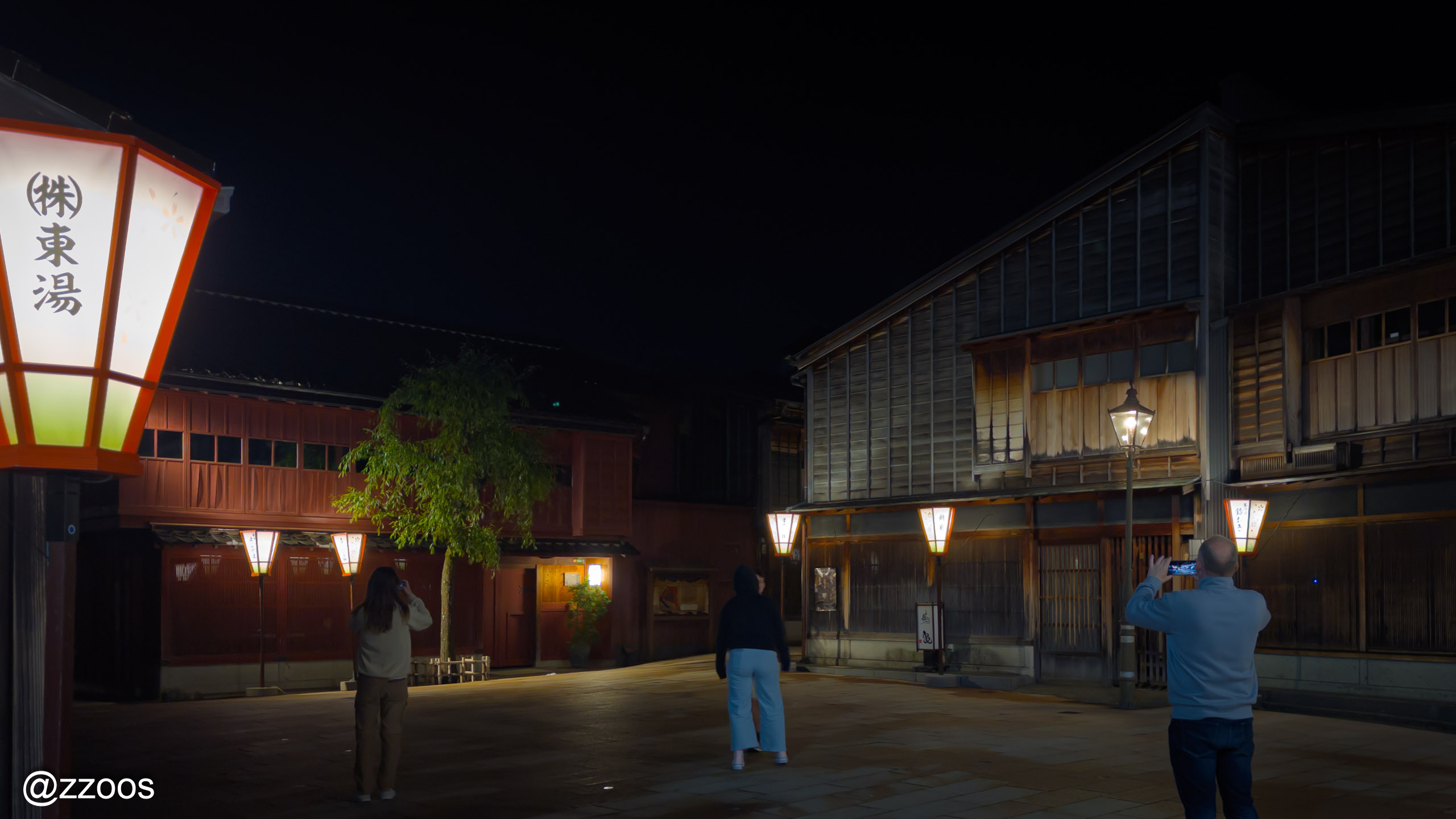
The heavy snowfall left another mark on Kanazawa’s buildings.
The roof tiles.
Unlike ordinary Japanese roof tiles, Kanazawa uses glazed, glossy tiles. It’s so the snow piled on the roof slides off more easily. These are called glazed tiles, or kaga-gawara (加賀瓦).
On top of that, the slope of the roofs and the way the edges are finished have a slightly different structure from other parts of Japan, to spread out the snow’s weight and let it run off.
So when you look at Kanazawa’s tiled roofs, you get the sense that the rooflines are somehow different from the distinctly Japanese ones.
The shape in particular feels similar to the roofs you’d see on Chinese temples or old buildings, so it even makes you think, “Ah, is this a Chinese-style building?”
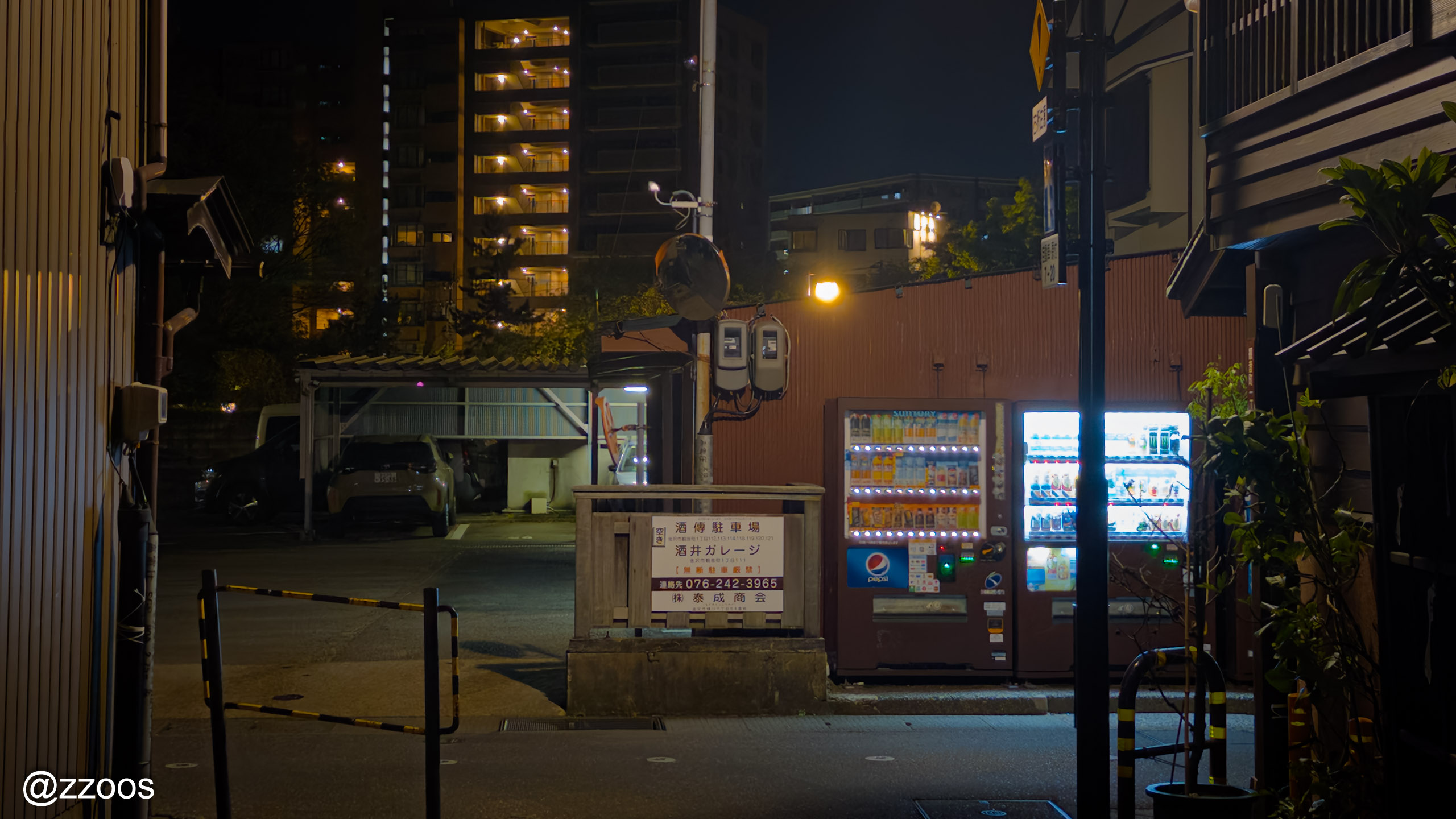
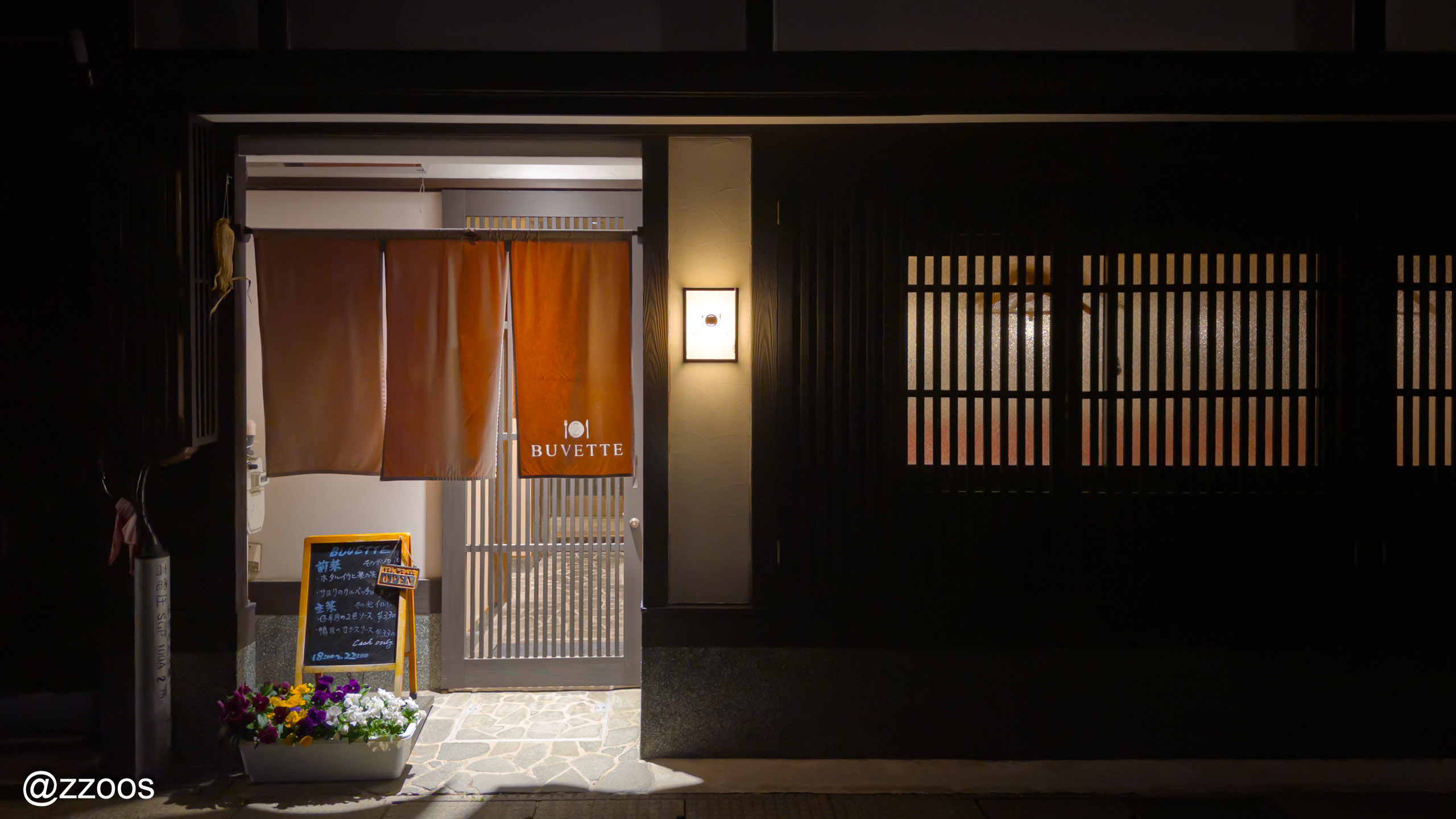
As you wander the Higashi Chaya area, you also come across small alleys. These alleys naturally bring Kyoto’s Pontocho to mind.
But as I kept walking these alleys, I found a big difference from Pontocho.
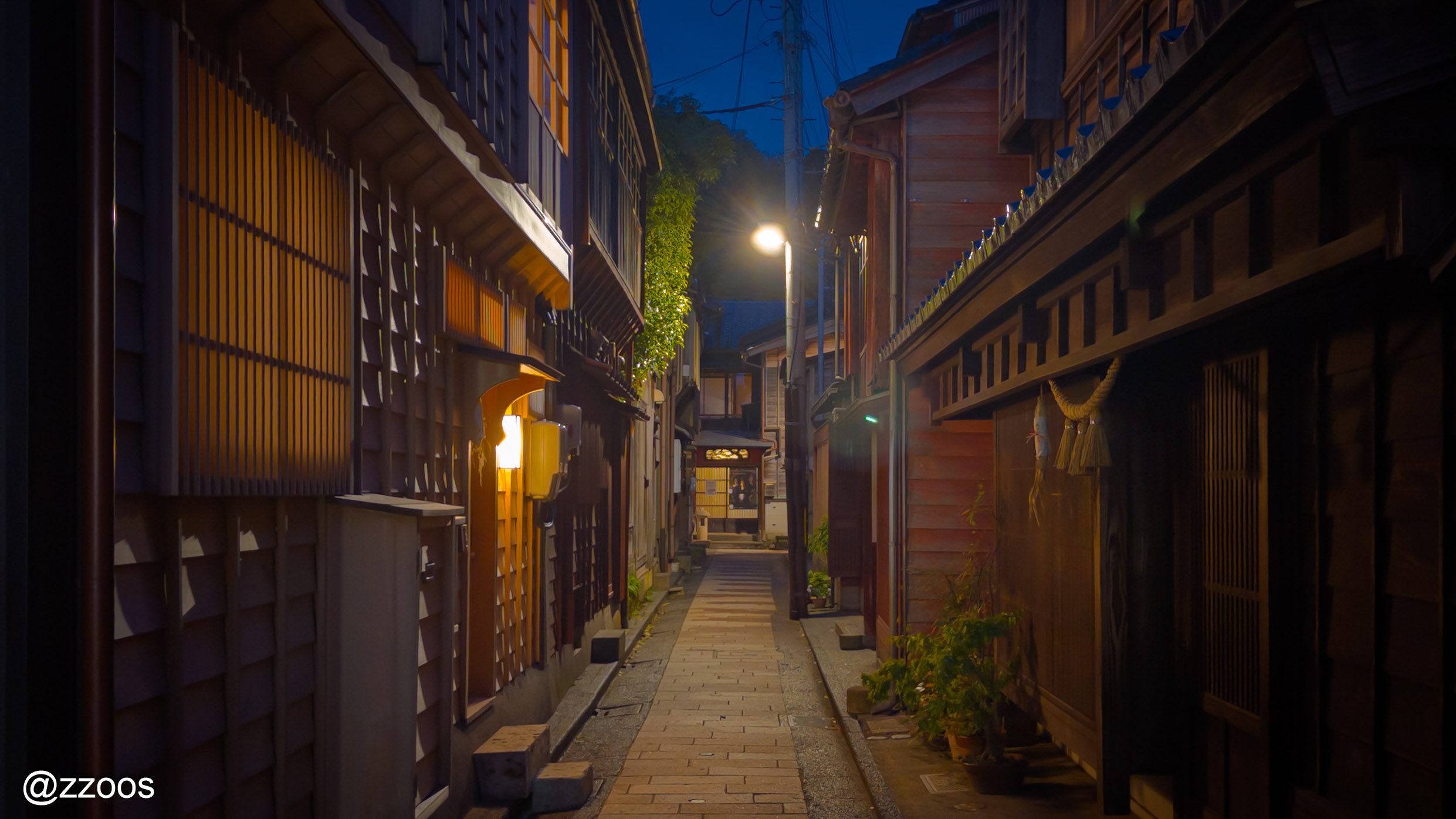
It was that Higashi Chaya’s alleys go quiet at night. Kyoto’s Pontocho, on the other hand, is dull if you go during the day — it’s a flashy entertainment district that only shows its true face after dark, right?
But this place is nothing like that. When night falls, all the shops close. It may once have been a street of entertainment, but now it feels more like a street kept under strict control to manage and preserve its traditional appearance.
So the mood is completely different from the night streets of Kyoto’s Gion or Pontocho.
Honestly, I came at night expecting a flashier nightscape. But, completely contrary to what I’d imagined, what I saw were very calm streets. Of course, this had its own atmosphere, which I liked.
I’ve mentioned this in an earlier post. Kyoto was a city with an imperial palace.
It was a city of wealthy merchants who gathered around the throne. That’s why, I think, the streets could be that opulent.
Kanazawa, on the other hand, is a castle town.
The lord lived in the castle, and around it lived the steadfast samurai who served him. So you could call this a street of samurai. Which means plainness suited it better than opulence.
Still, Kanazawa was a city that poured enormous wealth into culture and craft.
The streets may look plain on the outside, but indoors they would have been decorated lavishly — using Kanazawa’s signature gold leaf, for one — and people would have eaten fine food made from abundant seafood, washed down with good sake.
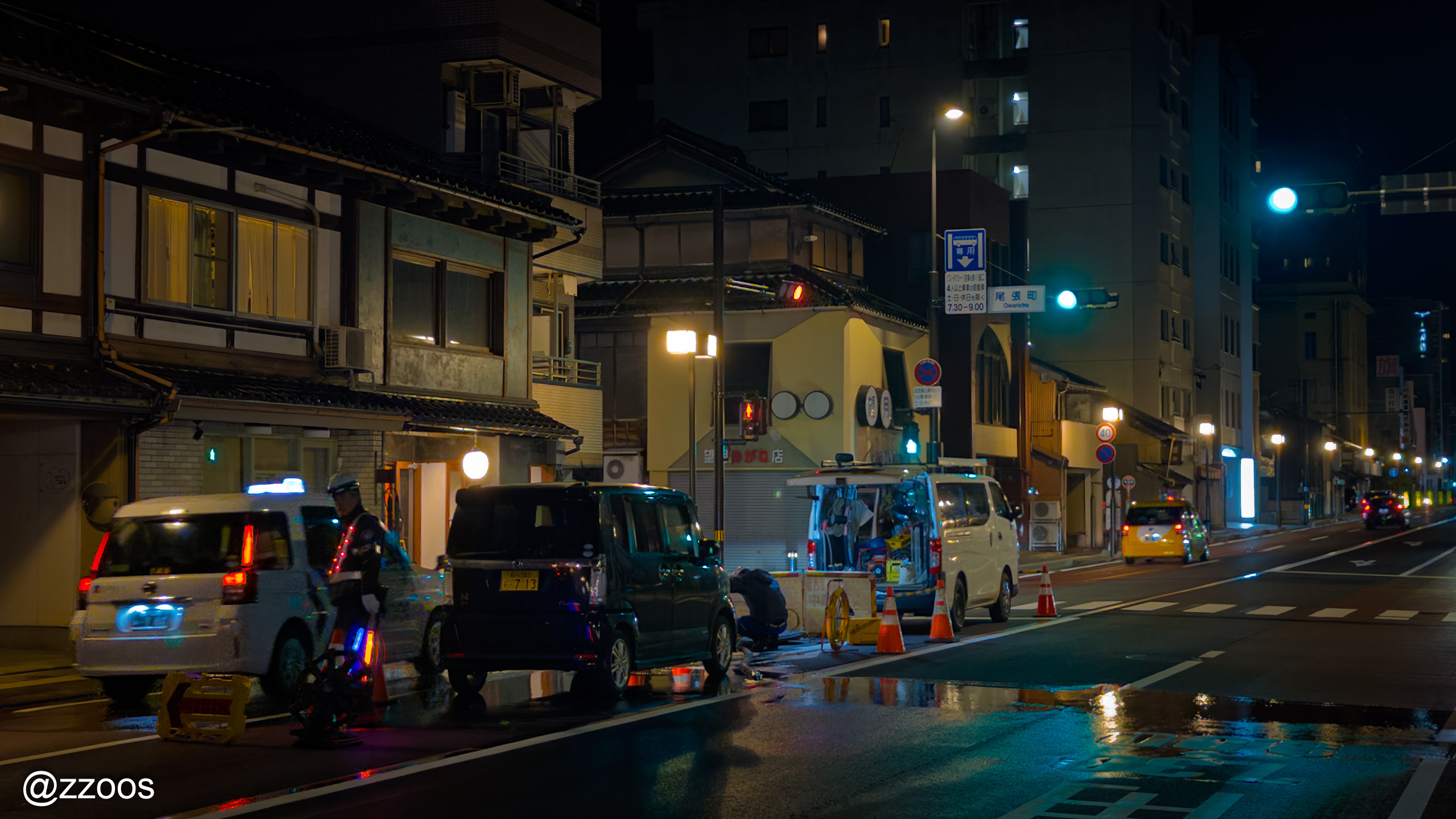
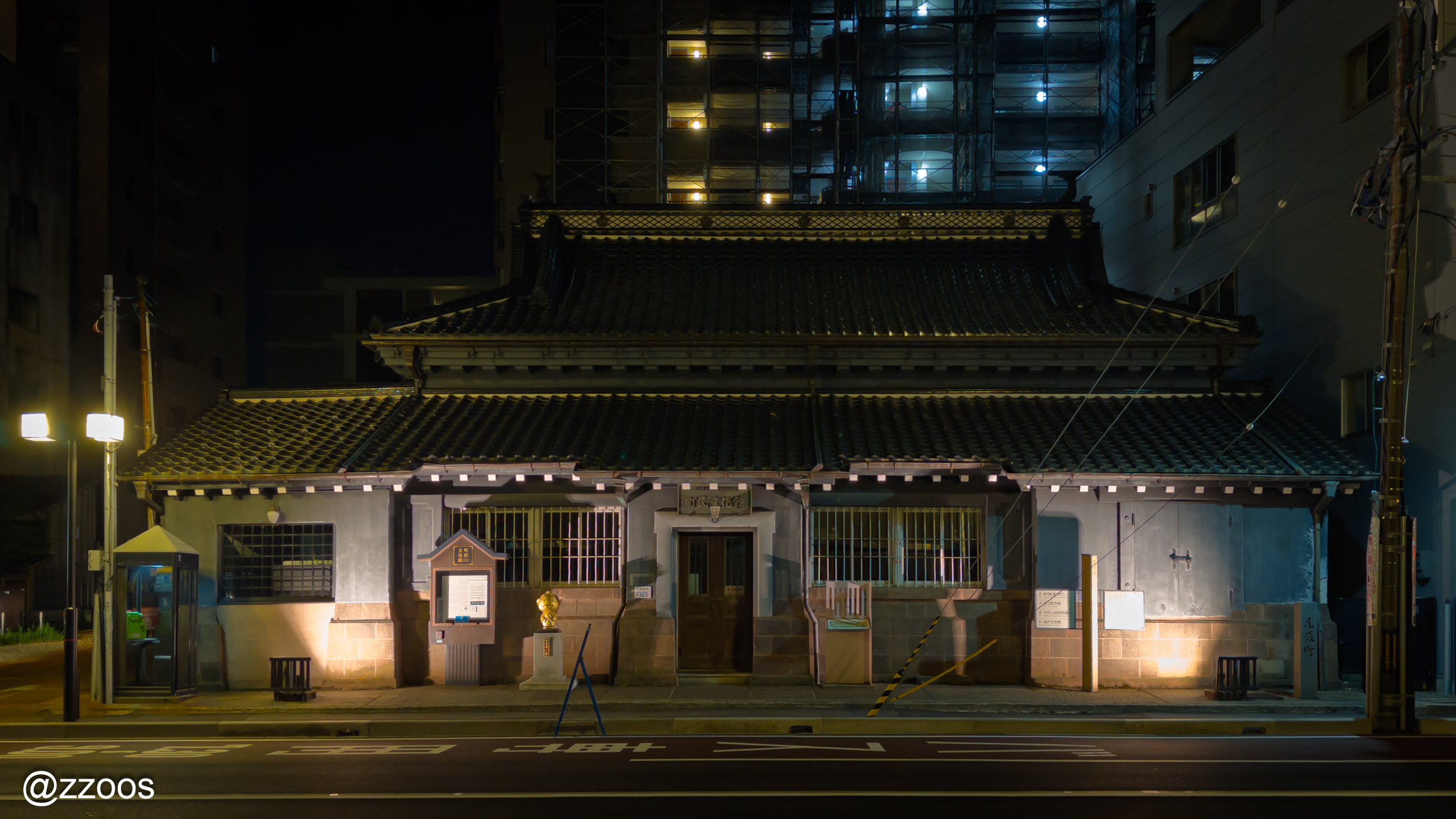
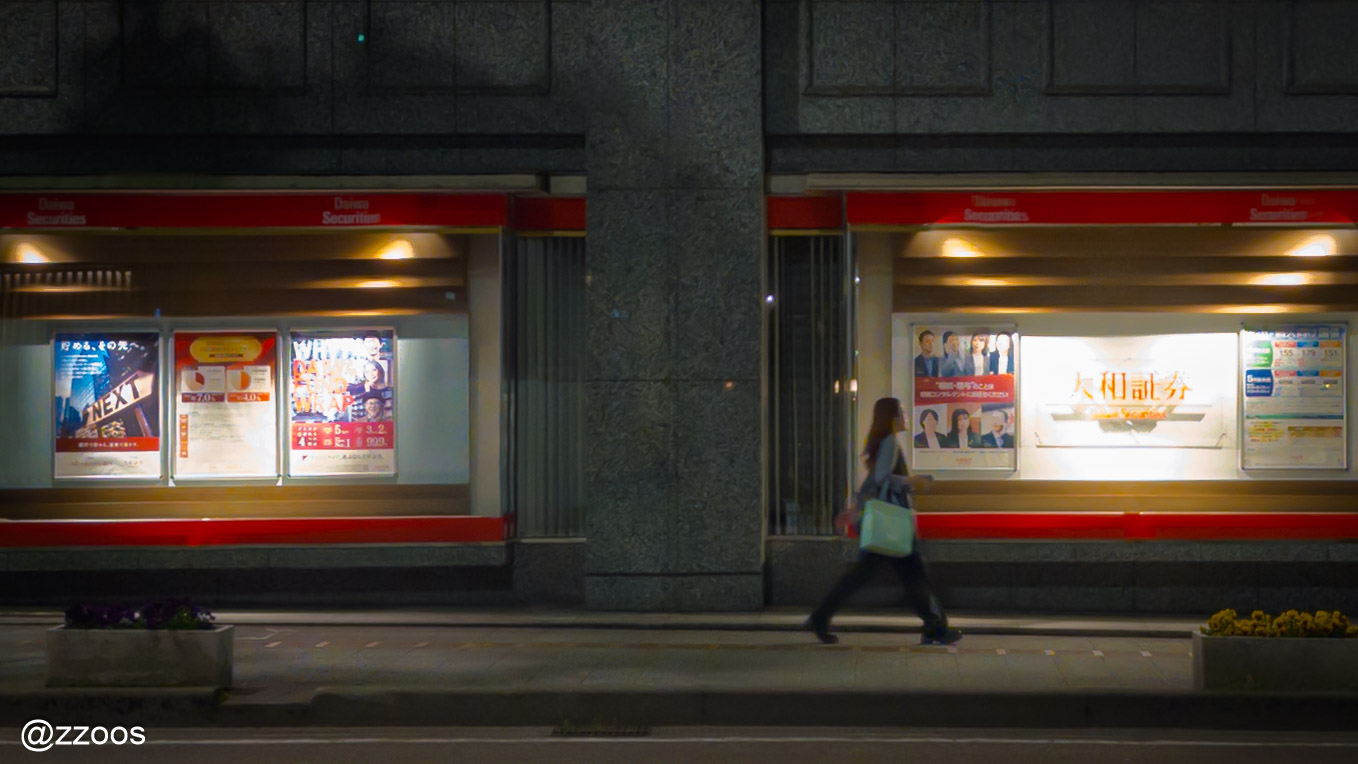
Had I been walking for about two hours? It was about time to head back to Katamachi and spend the rest of the night. Ah — it had gotten late enough that the buses had stopped running.
Nothing to be done. I decide to walk from Higashi Chaya all the way to Katamachi.
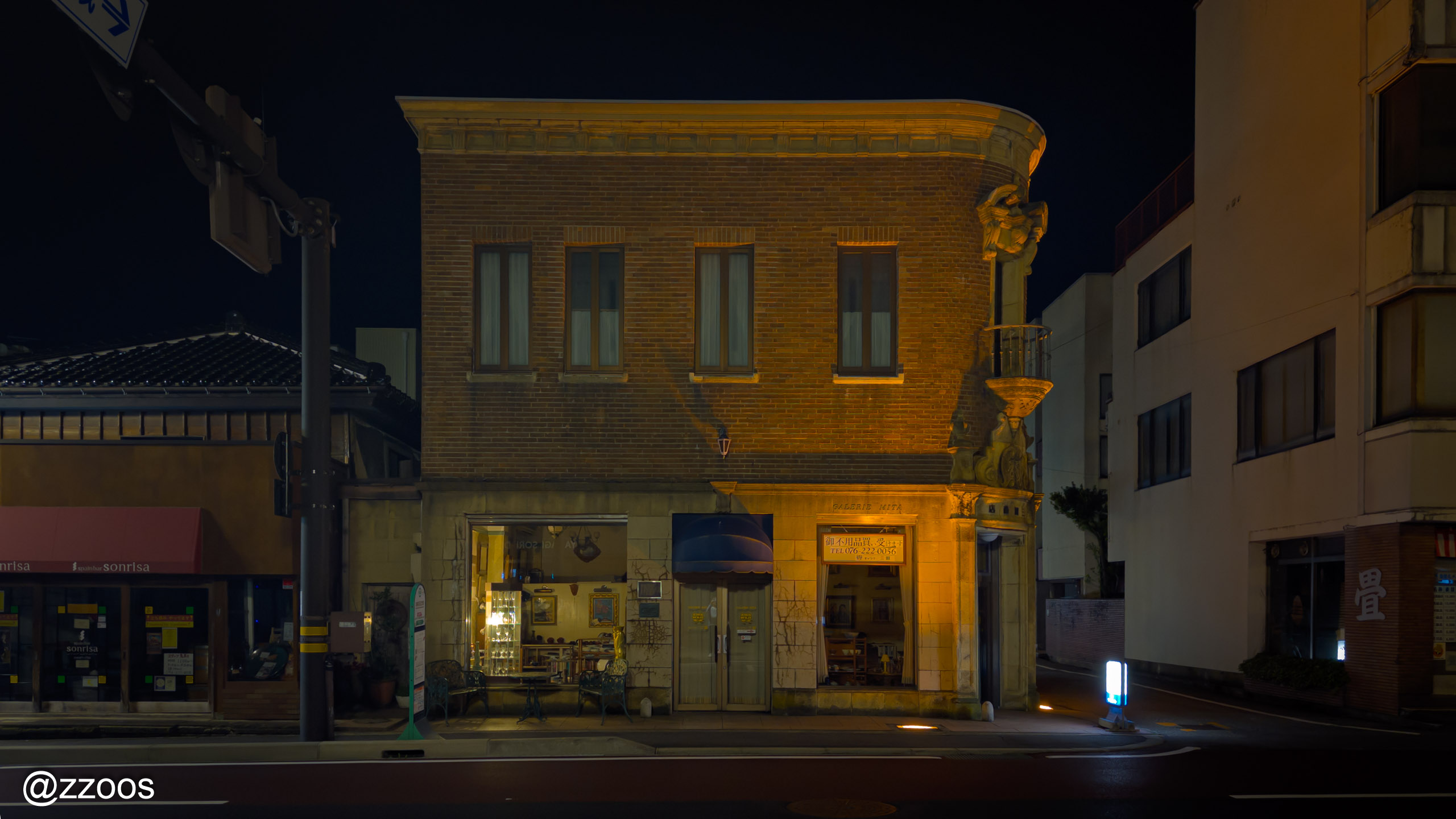
Higashi Chaya and the area north of Kanazawa Castle — especially north of the Asanogawa (浅野川) — clearly have far more traditional buildings left than the south. It must be because it’s a preservation district.
By contrast, the southern area — the district with Kohrinbo and Katamachi — is clearly a commercial zone with lots of modern buildings.
I walk slowly, taking in my surroundings and snapping photos. I cross the Asanogawa (浅野川) Ohashi Bridge, pass Omicho Market, and pass Oyama Shrine. Past Oyama Shrine, past Kohrinbo, and before I knew it I’d arrived at Katamachi.
It feels like setting out from the streets of the past and arriving in the streets of the present.
Now then — I’m planning to drink quite a bit tonight, you see?
I’ll continue that story in the next post.