I’m not sure how well-known this is in Korea, but among Japanese people, the city of Kanazawa (金沢) has a strong image as a “city with great seafood.”
There’s even a saying that conveyor belt sushi places in Kanazawa taste better than regular sushi restaurants in other cities.
According to the annual household survey by Japan’s Ministry of Internal Affairs and Communications, Kanazawa ranks first in the country almost every year for per-capita spending on sushi at restaurants.
That tells you both how much sushi people in Kanazawa eat, and that a half-hearted sushi place simply couldn’t survive here.
Thanks to its location right next to the sea, with snow-capped mountains nearby and Toyama Bay just past the Noto Peninsula, the natural environment here gives access to a wide variety of fish.
And unlike the large, nationwide budget chains where machines press frozen fillets into sushi, conveyor belt restaurants in Kanazawa have craftsmen cutting the fish and shaping the sushi by hand.
So it’s good ingredients, hand-shaped by craftsmen. Which is why, according to many Japanese people, the claim that conveyor belt sushi in Kanazawa beats the cheap sushi restaurants in most other cities isn’t just a joke — it’s at least partly true.
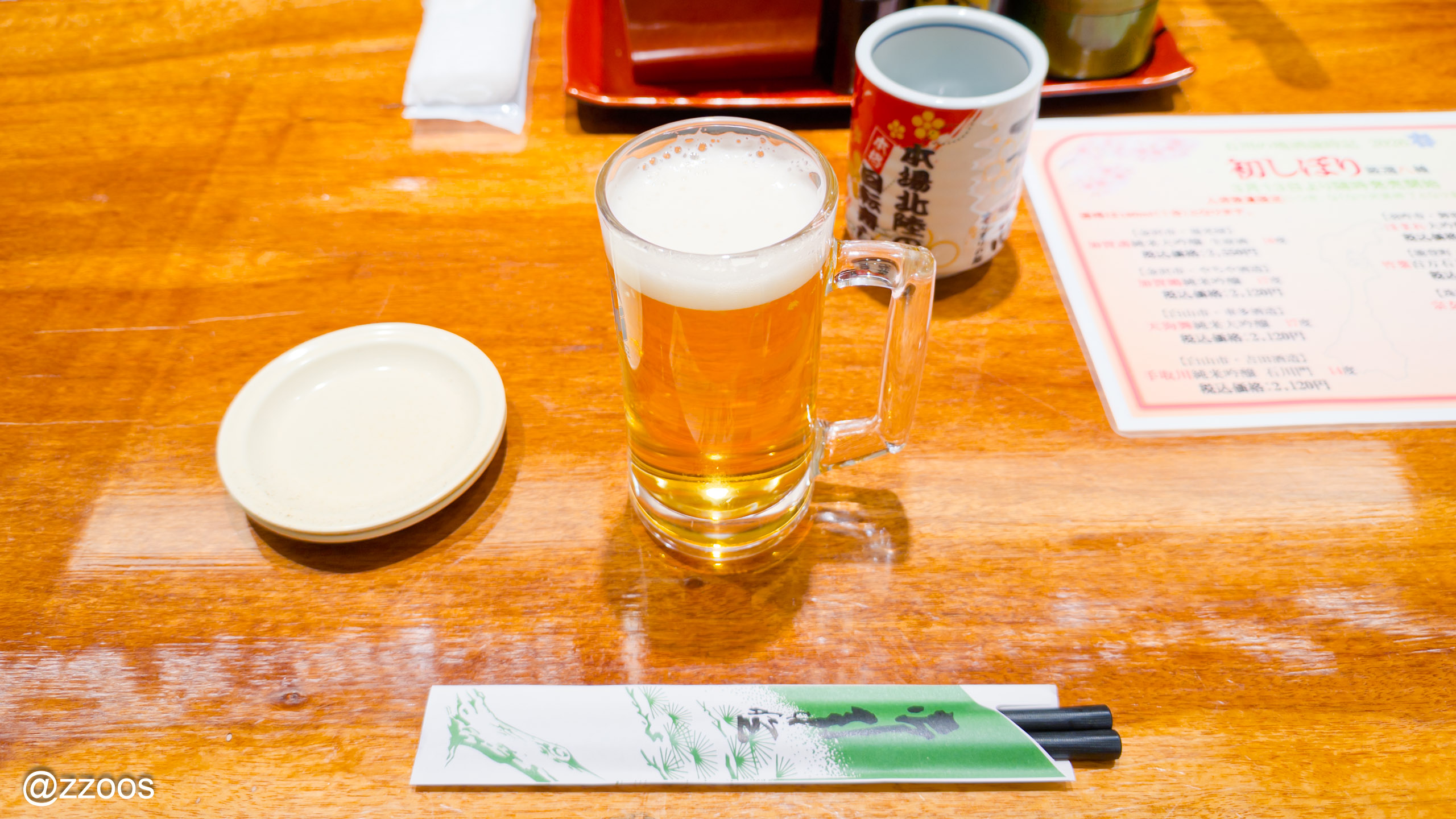
I don’t usually eat conveyor belt sushi when I travel. For one thing, I don’t eat that much sushi on trips in general. And if I’m going to eat it, I’d rather go to a small place where the owner hand-shapes it for you — and it doesn’t have to be an expensive sushi restaurant either.
When eating sushi in Japan, I think it’s only really worth it if you go to either an absurdly expensive, top-tier sushi restaurant, or a casual, affordable one. For the mid-to-high range places that are generally accessible, you can find plenty of equally good quality options back home in Korea.
Anyway, this is Kanazawa. So I wanted to check for myself whether the conveyor belt sushi really is good here.
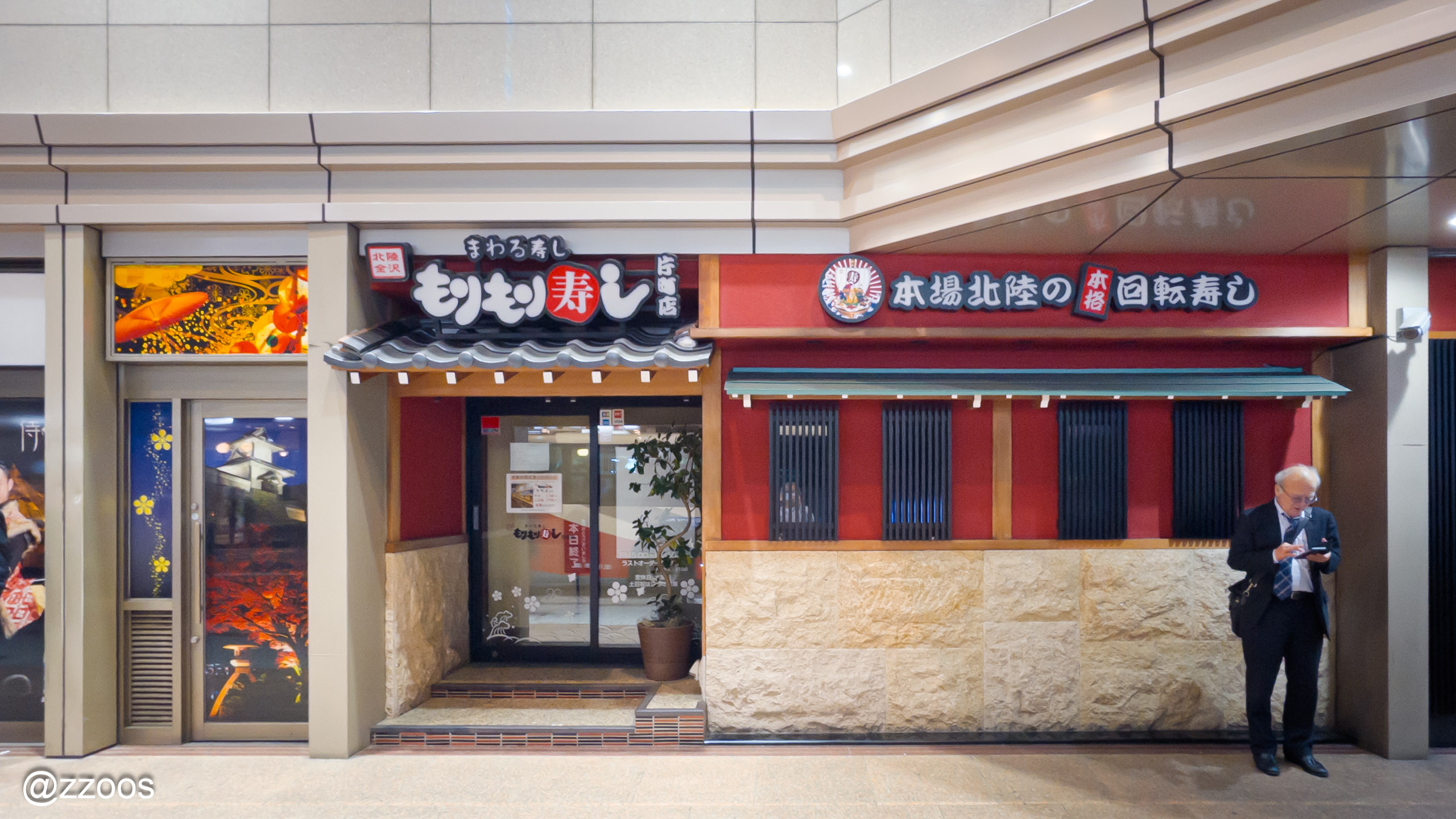
So I went to Morimori Sushi (もりもり寿し), Katamachi branch, right in front of my hotel. It’s right at a bus stop, so it’s an easy spot to notice while walking around Katamachi.
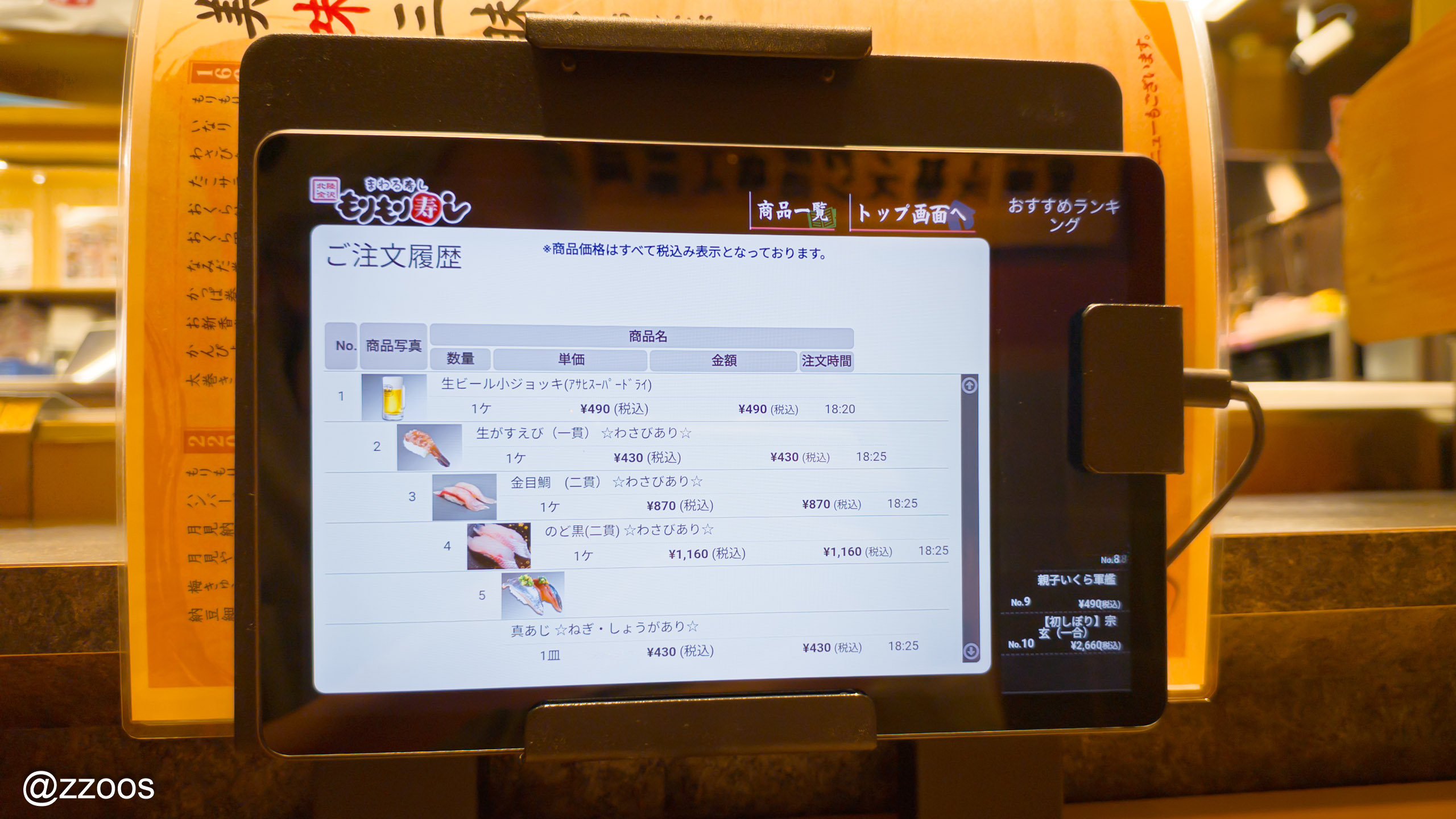
I’d pictured a conveyor belt running through the middle of the restaurant, but since I came alone, they seated me at the counter. There’s no “rotating” sushi on this side. You order by looking at the tablet in front of your seat.
I was kind of hoping to get that nostalgic feeling of watching the sushi go by and telling the price by the color of the plate, so that was a bit of a letdown.
But what was nice was getting to watch them cut the fish and shape the sushi right in front of me after I ordered.
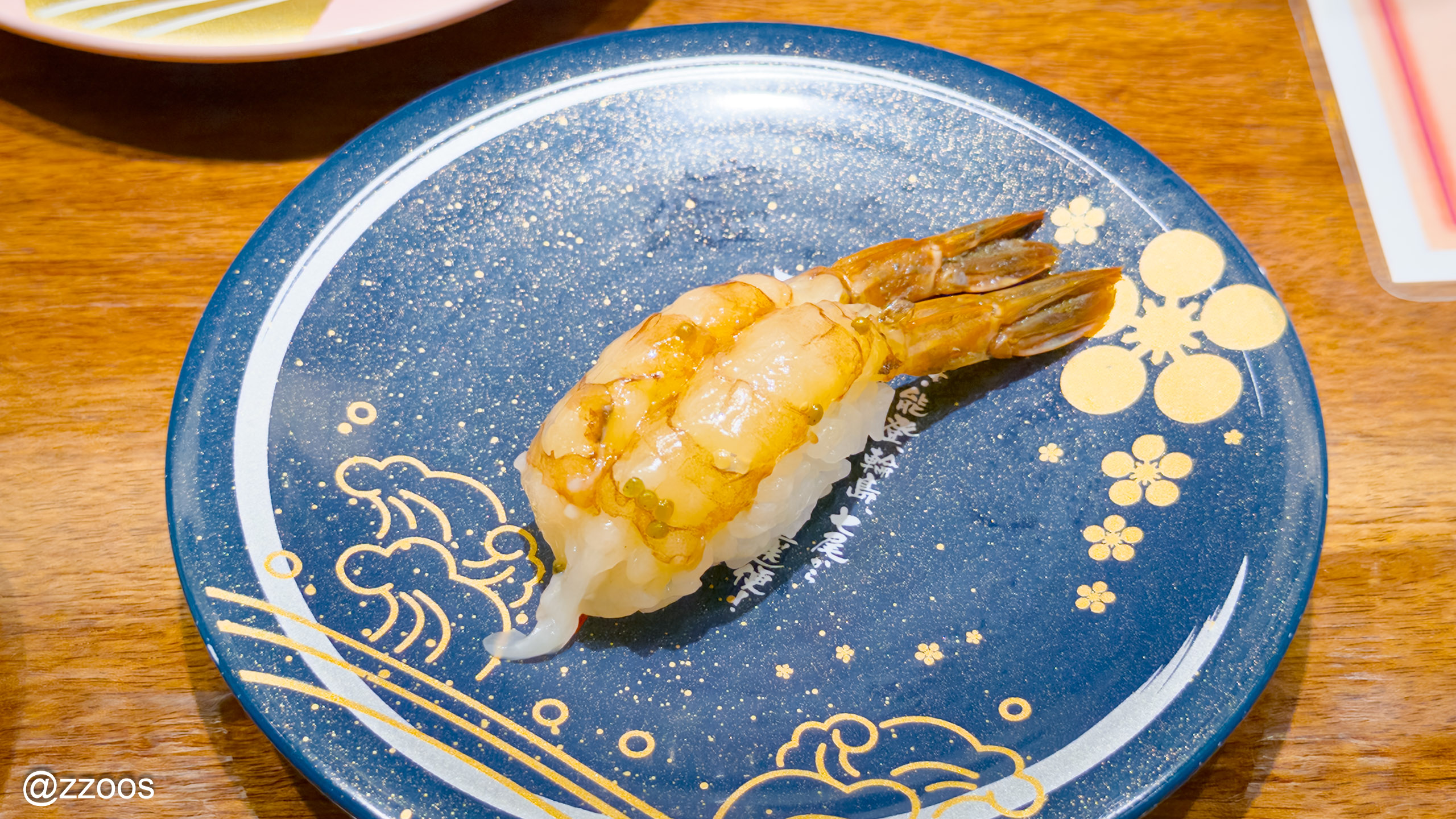
The first thing I ordered was gasuebi (がすえび).
If I had to pick the single best thing I ate in Kanazawa on this trip, it would be this shrimp. It has this soft, almost melting texture, with a strong sweetness that hits at the end — it really stood out.
Okay, but I have to say this. I have to. Because I need to find my own answer to the question: is conveyor belt sushi in Kanazawa really better than at sushi restaurants in other cities?
Honestly, the shrimp itself was delicious, but as a piece of sushi, I couldn’t give it a high score. The rice was too hard. Luckily it softened up quickly once I started chewing, so it wasn’t unpleasant — but overall, I’d say a proper sushi restaurant still has the edge in terms of finish.
That said, the quality of the ingredients here is genuinely overwhelming. That’s something I felt the entire trip. The seafood in Kanazawa is just incredible.
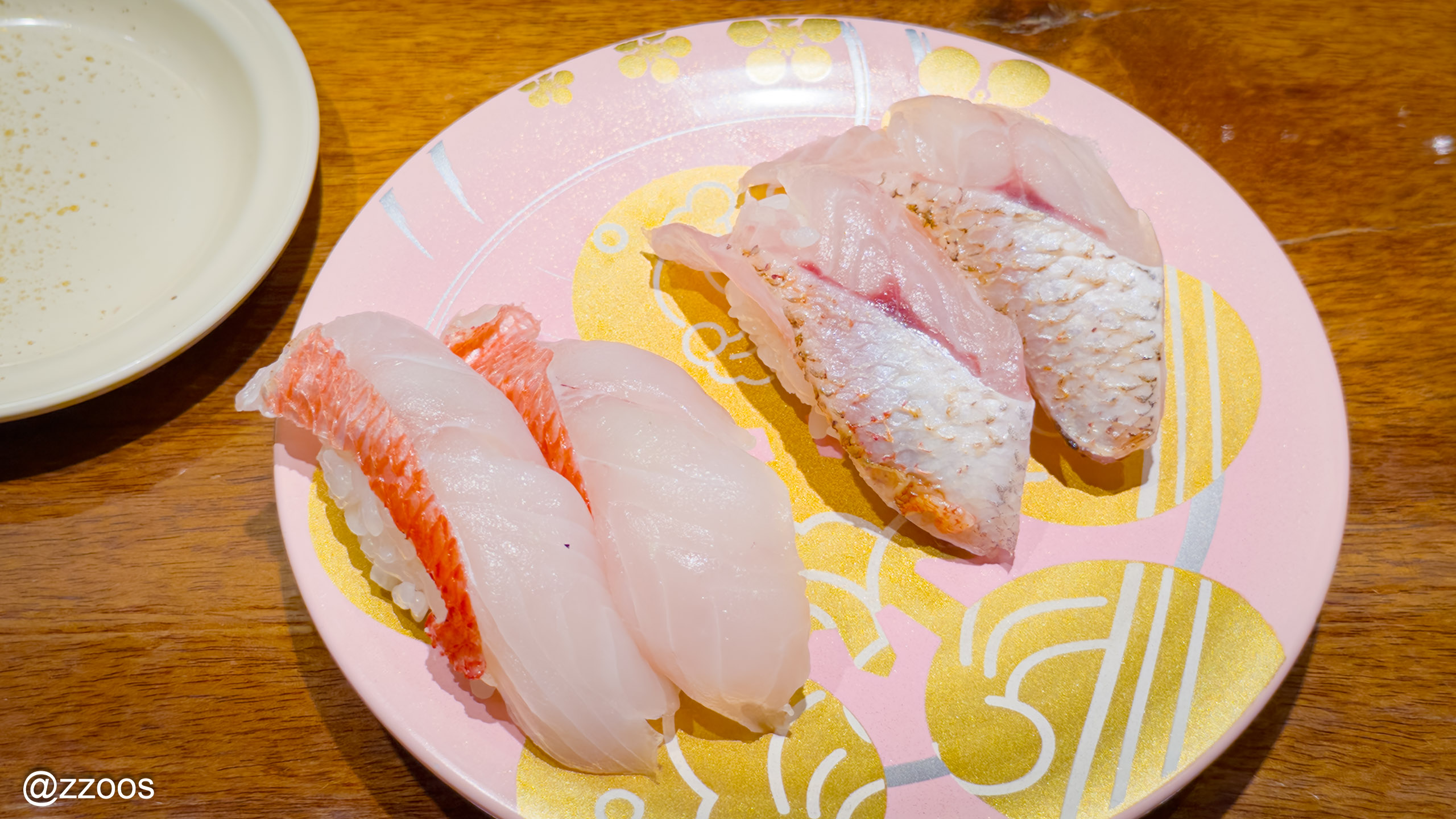
Next, I ordered kinmedai (金目鯛, splendid alfonsino) and nodoguro (のど黒, blackthroat seaperch).
Nodoguro is the signature fish of Kanazawa, and I figured kinmedai — which I hadn’t had in a while — would also be great here. And I was right. Both were excellent. It’s almost surprising that they tasted this good even out of season.
But looking back, I think this plate was a mistake on my part.
It’s too expensive. The plate in the photo — four pieces of sushi — costs 2,000 yen, around $13. Kinmedai isn’t a cheap fish to begin with, and nodoguro is even more expensive.
I’d been ordering whatever I felt like without thinking too much, and right about here it hit me — wait, this is going to add up to a lot more than I expected.
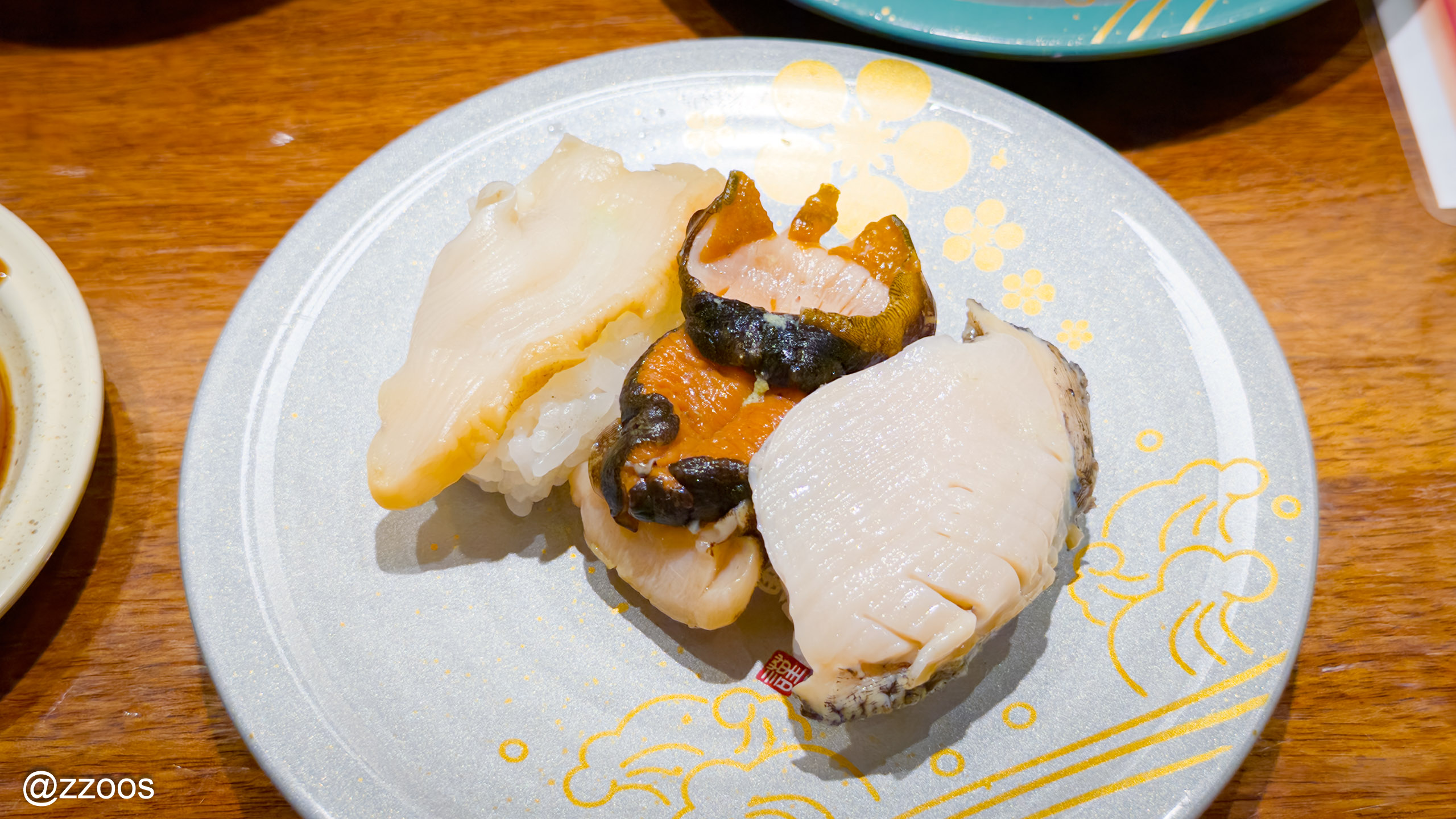
Next, I ordered an assortment of three types of shellfish. There wasn’t a clear description on the menu, so I’m not totally sure what each one was, but based on the photo —
The one on the far right looks like abalone, and the middle one looks like conch. What about the one on the left? Geoduck? Giant clam? I’m not sure.
All three were raw, uncooked. The texture was a bit firm because of that, but you could really taste the freshness, which was nice.
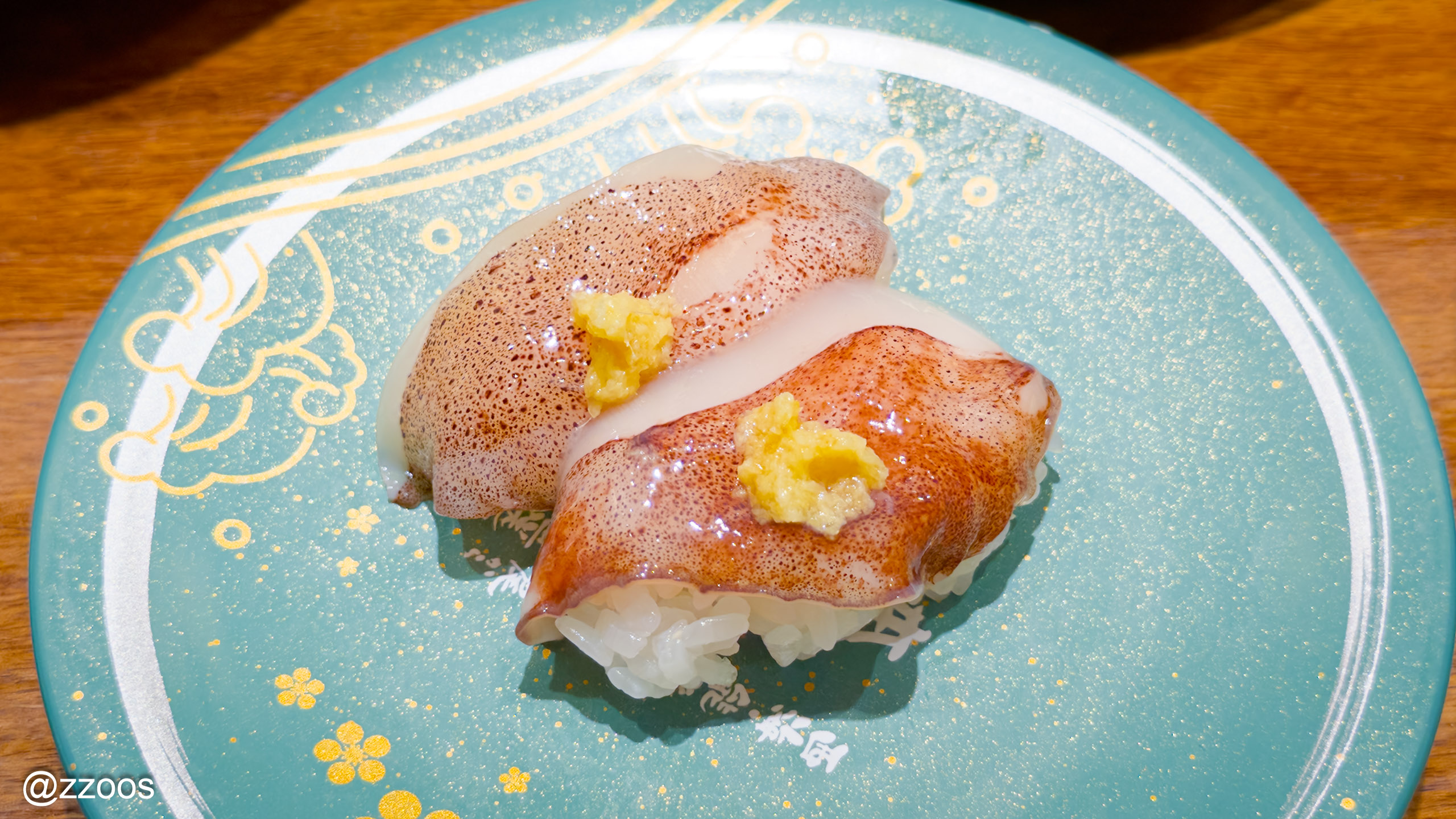
I noticed something on the menu marked as limited quantity, so I gave it a try. It was really cheap — two pieces for, I think, 160 yen?
Ikanomimi (いかの耳) — literally “squid ear.” It’s not actually an ear, of course. It’s sushi made from the fin part of the squid. I couldn’t tell what kind of squid it was, but it was delicious. A unique texture. The only downside was that the ginger on top had a fairly strong smell.
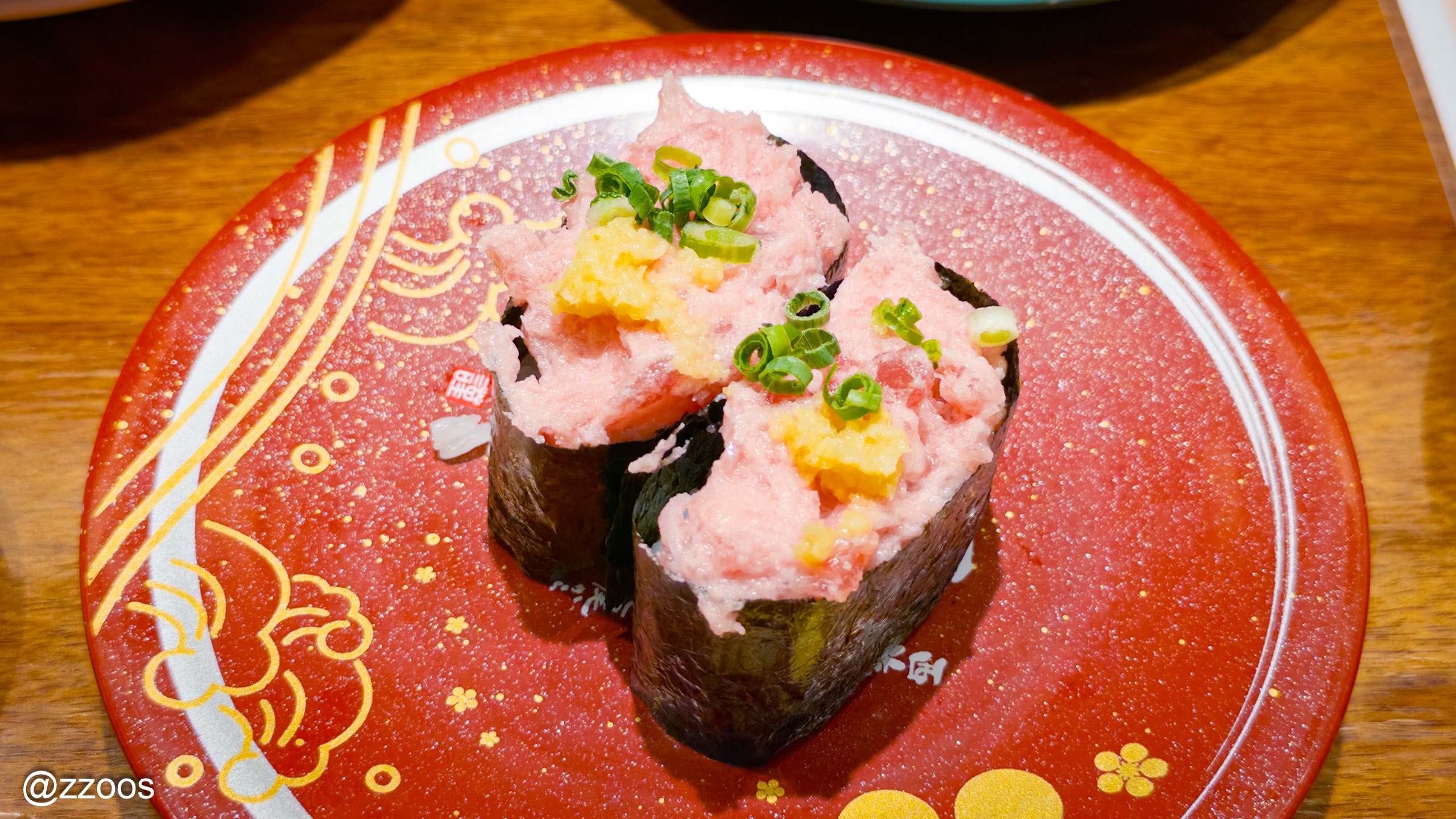
Negitoro gunkan-maki (ねぎとろ軍艦巻き). Fatty tuna minced together with green onion, wrapped in nori. It’s basically a combination that’s hard to mess up. Of course it was delicious.
This is around where I started to have some second thoughts.
My total order had already gone over 5,000 yen. I’d come to a conveyor belt place for a “light” dinner, and I was already past that. Not light at all.
So I decided to stop eating and call it there. Tomorrow I need to be up and moving early, so I figured I’d head back to the hotel, soak in a hot bath, and get some sleep.
Okay, so to wrap things up.
Is conveyor belt sushi in Kanazawa better than at sushi restaurants in other cities? My answer is… well, I’m not sure. The quality of the ingredients is high enough that satisfaction can be high, but the rice didn’t really win me over. So in the end, conveyor belt sushi is conveyor belt sushi.
And if you order the good, premium ingredients, the price climbs up quite a bit, even at a conveyor belt place. So if you’re factoring in value for money too… honestly, I’m still not sure.
Next time I’m in Kanazawa, I think I’ll look for a cheaper sushi restaurant that puts together a set for you, rather than going for conveyor belt sushi. I’m sure the ingredient quality there would be just as high.