This post is part of the “Street Scenes” series too. It’s a post with more photos than words.
In the earlier Street Scenes posts, I showed you the main road cutting through Katamachi (片町), Kanazawa’s busy downtown, and the back alleys of Katamachi.
This time I want to show you the area around the Sai River (犀川), the southern of the two rivers that run through Kanazawa.
It’s not a busy area and not a tourist spot, so the scenery might feel a little plain. But I think it’s actually scenery where you can feel Kanazawa’s everyday life.
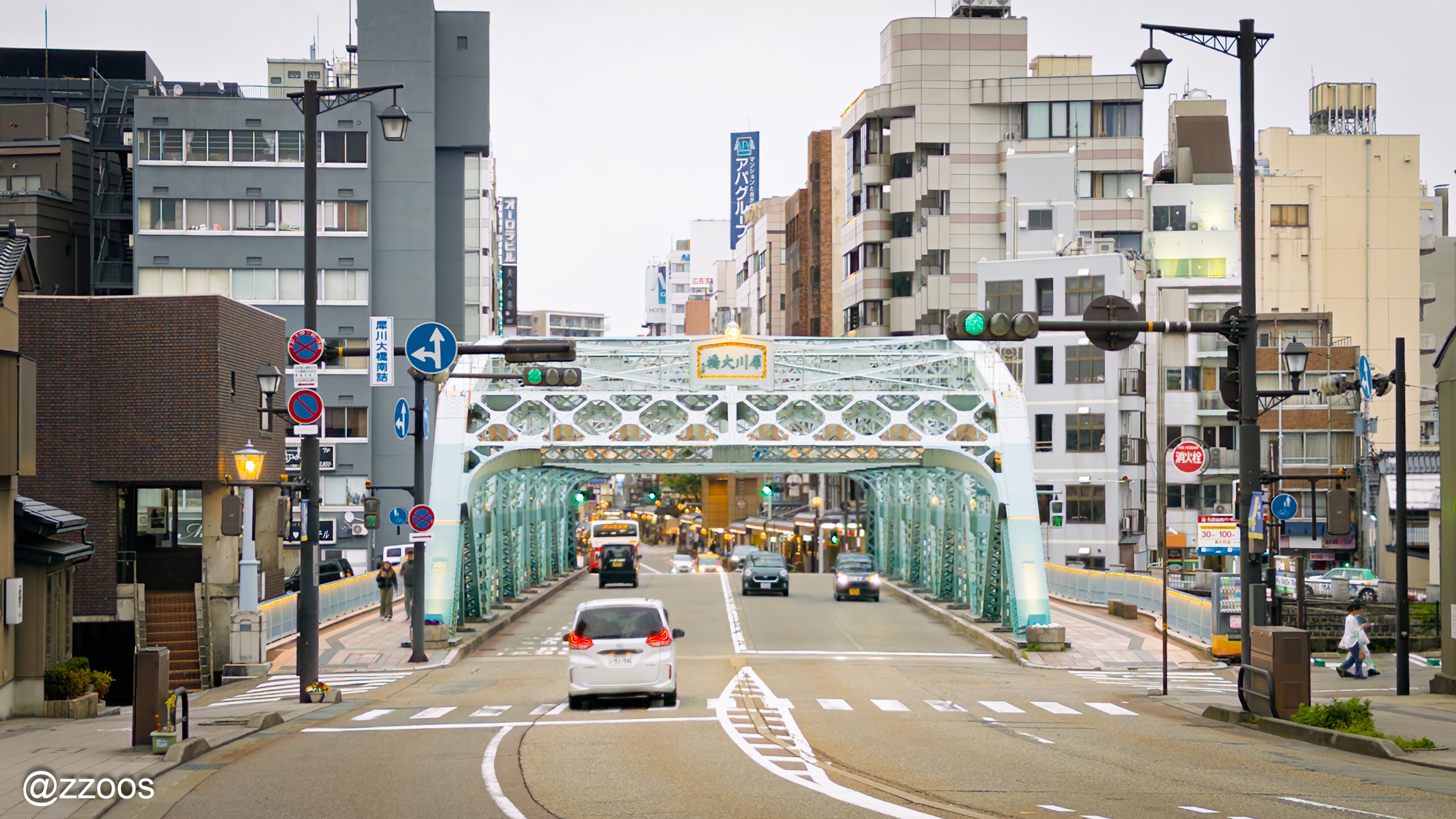
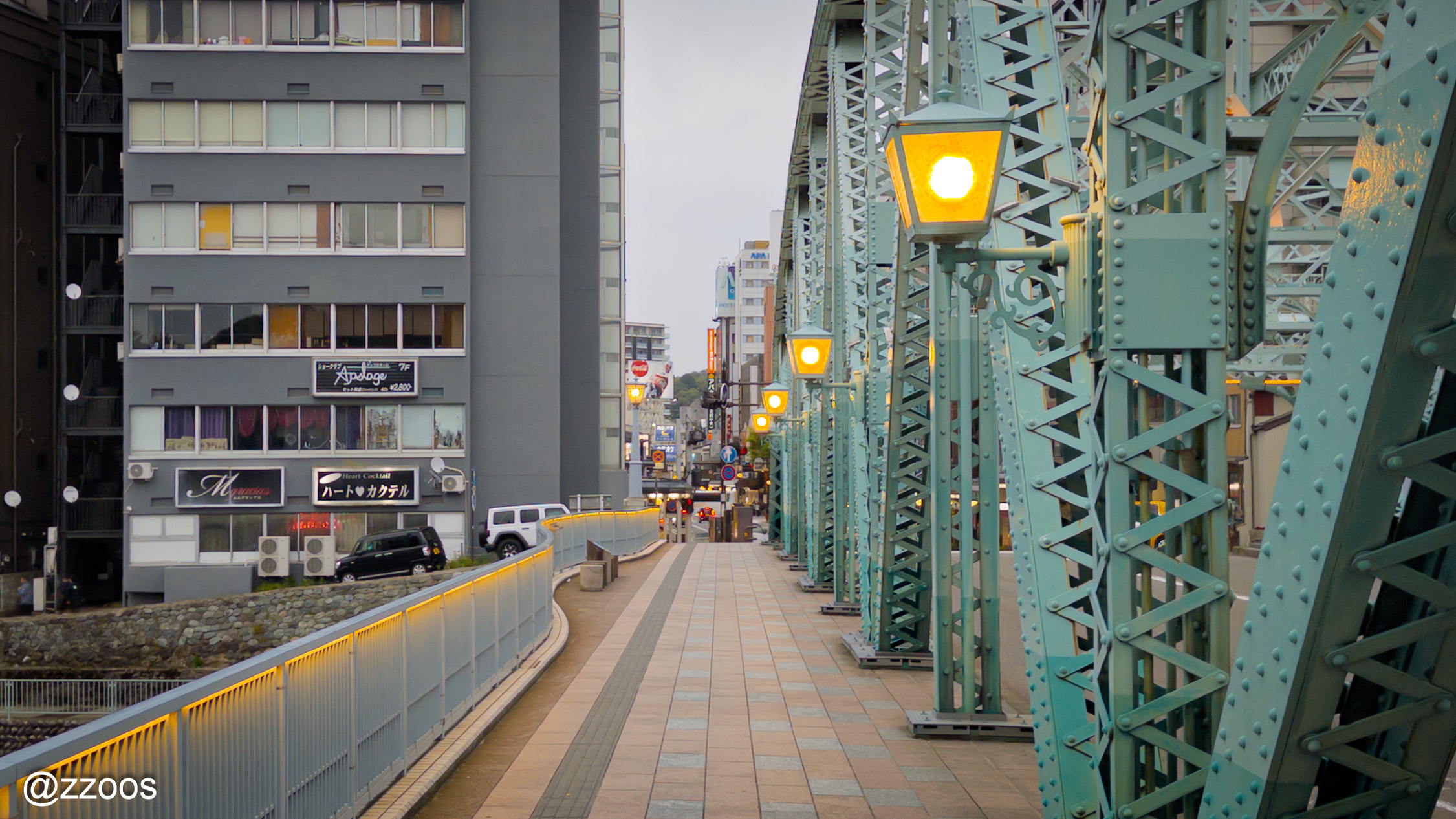
To the south of Katamachi is Saigawa Ohashi Bridge (犀川大橋), which lets you cross the Sai River (犀川).
I heard it’s one of the oldest iron bridges still standing in its original structure in Japan. It’s a bridge that’s also registered as a Registered Tangible Cultural Property of Japan.
It has a curious mint-colored mood to it, and the view of the Sai River from this bridge is quite nice. When it gets dark, the distinctive streetlights come on, and that’s worth seeing too.
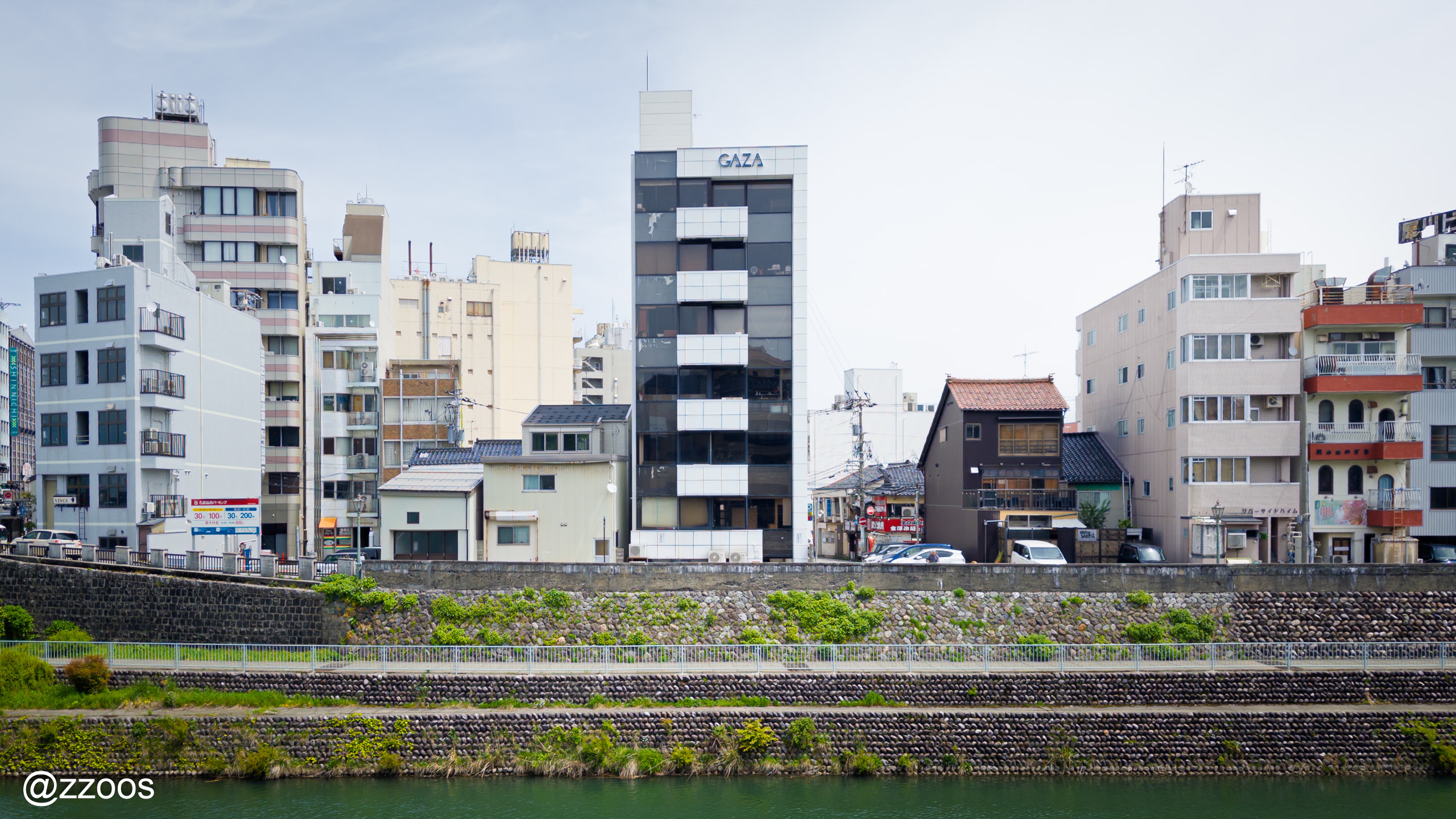
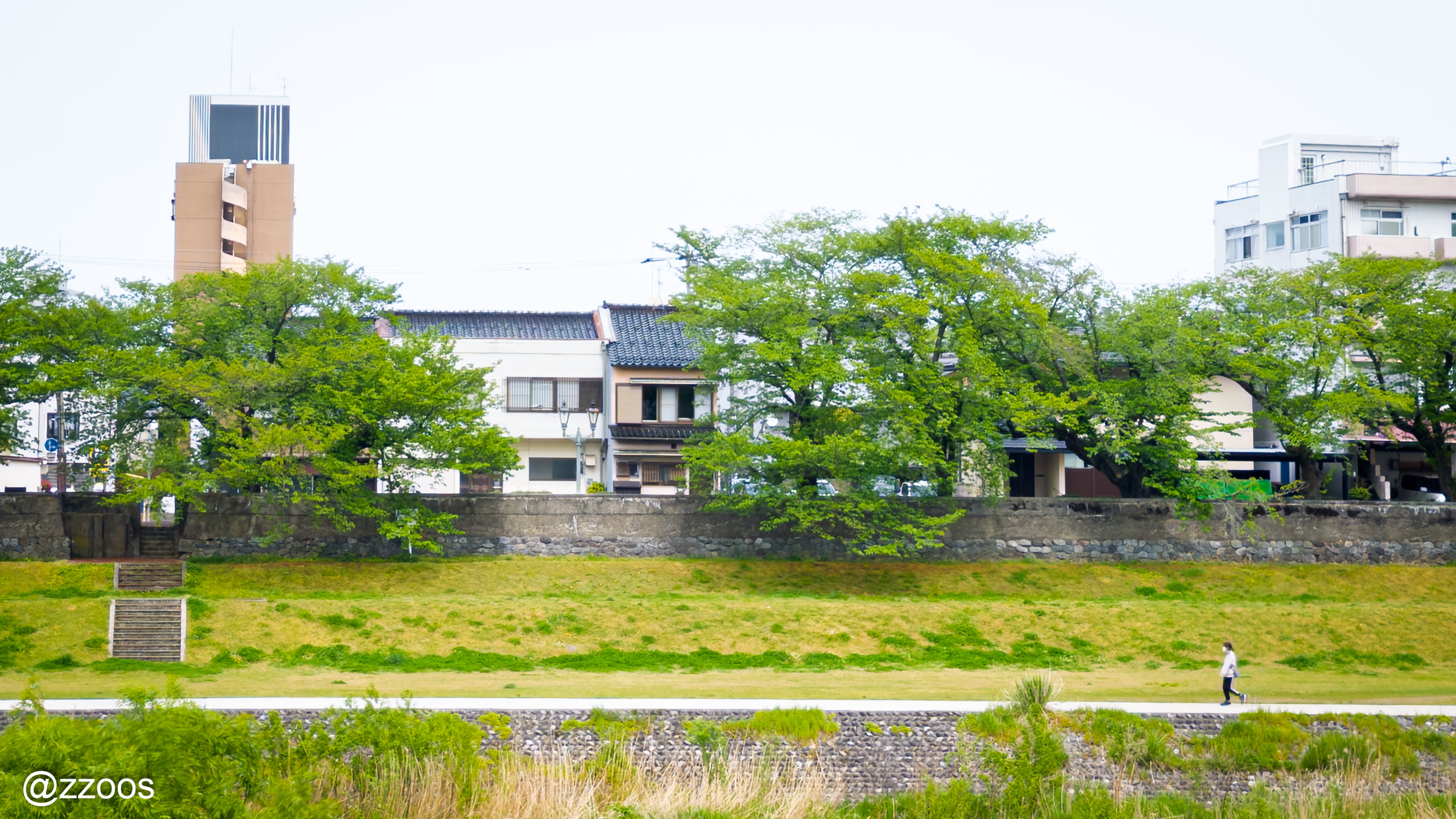
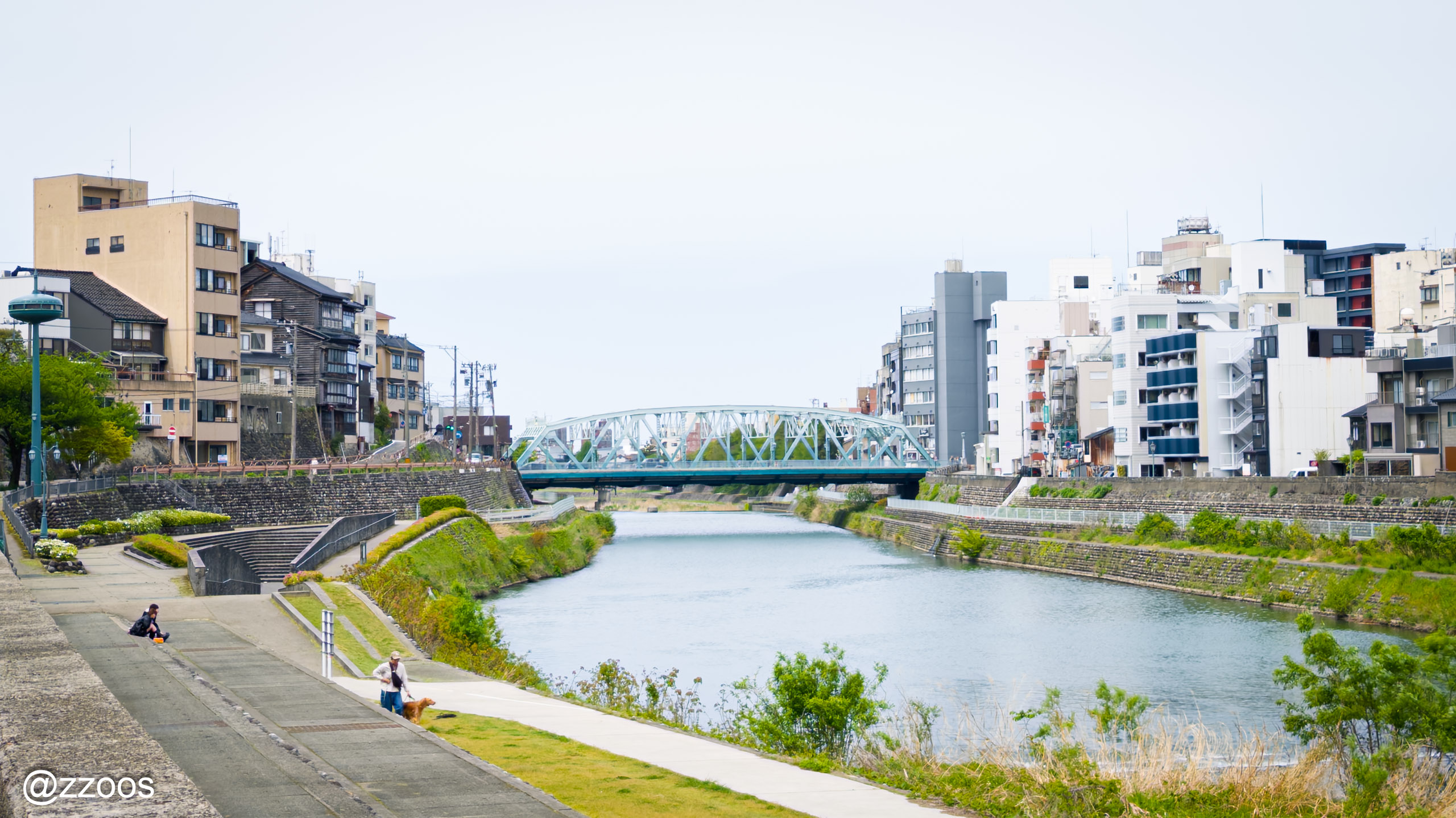
On the east side of Saigawa Ohashi Bridge, there’s a walking path along the river named Saisei no Michi (犀星のみち, “Saisei’s Path”).
It’s a path named after Murō Saisei (室生犀星), a famous poet from Kanazawa. They say the poet loved the Sai River. Apparently the “Sai” (犀) in his pen name was also taken from the Sai River.
So it’s a poet who loved a river and used its name as his pen name, and a walking path named after that poet to honor him.
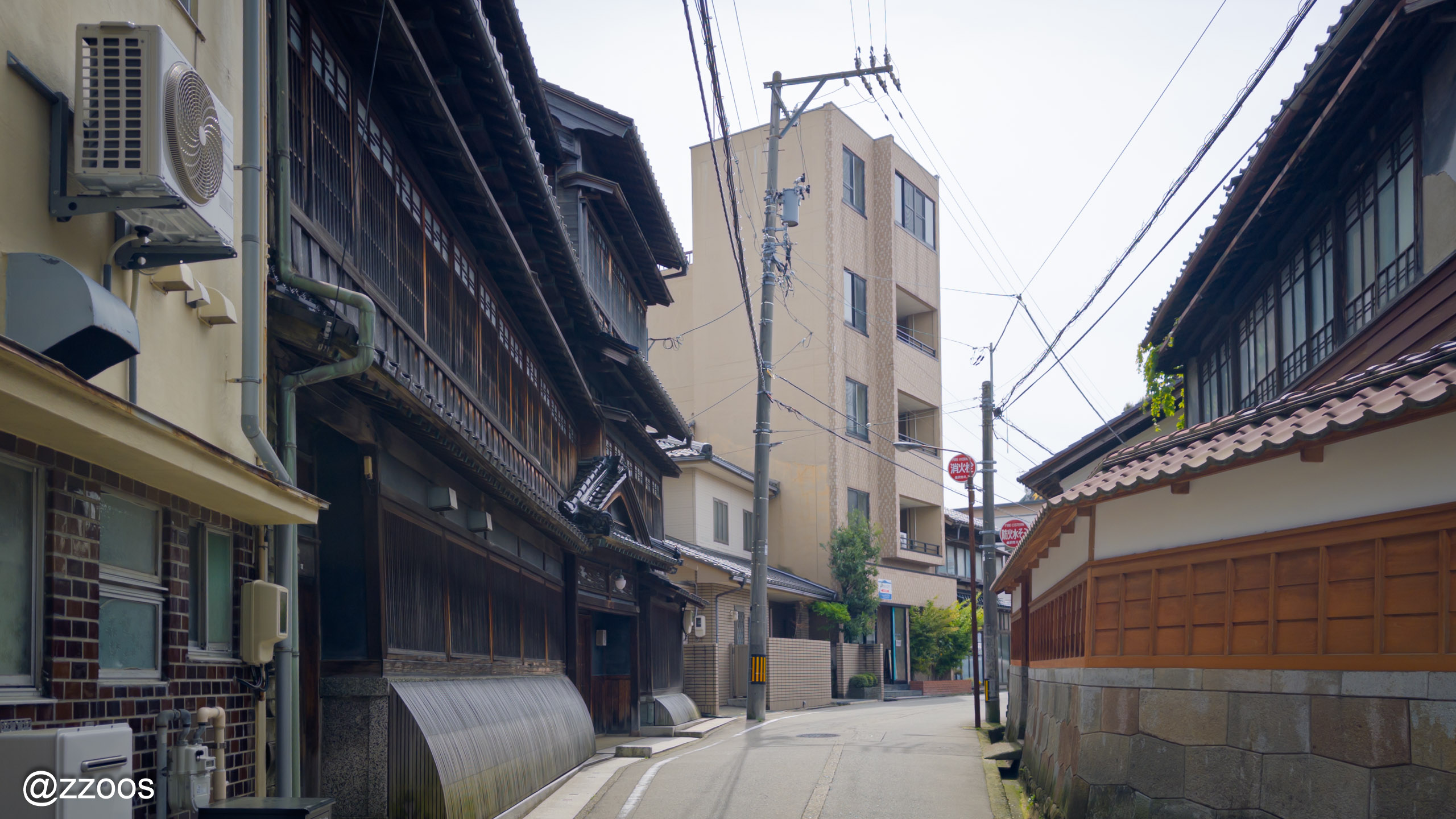
The neighborhood on the hill you see on the left after crossing the bridge south from Katamachi is called Teramachi (寺町).
Just as the name says, it’s a neighborhood where temples are gathered. You can tell from Google Maps too—an enormous number of temples are packed in here. They’re so densely clustered that you could say almost every other building is a temple.
The reason so many temples ended up gathered here is that, back in the Kaga Domain era, temples scattered around the city were relocated to this neighborhood.
I don’t know what excuse was given on the surface, but the real intent was apparently to set up what were effectively military bases on the hill in front of Saigawa Ohashi Bridge, the entrance into the castle town.
Besides temples, this neighborhood also has Tsubajin (つば甚), a ryotei (料亭, traditional Japanese restaurant) with over 350 years of history, and right next to it, the Taniguchi Yoshiro · Yoshio Memorial Kanazawa Architecture Museum (谷口吉郎・吉生記念 金沢建築館).
So you don’t really need to visit the other neighborhoods I’ll introduce later in this post, but the places I’ve covered up to here are worth a look on a light stroll.
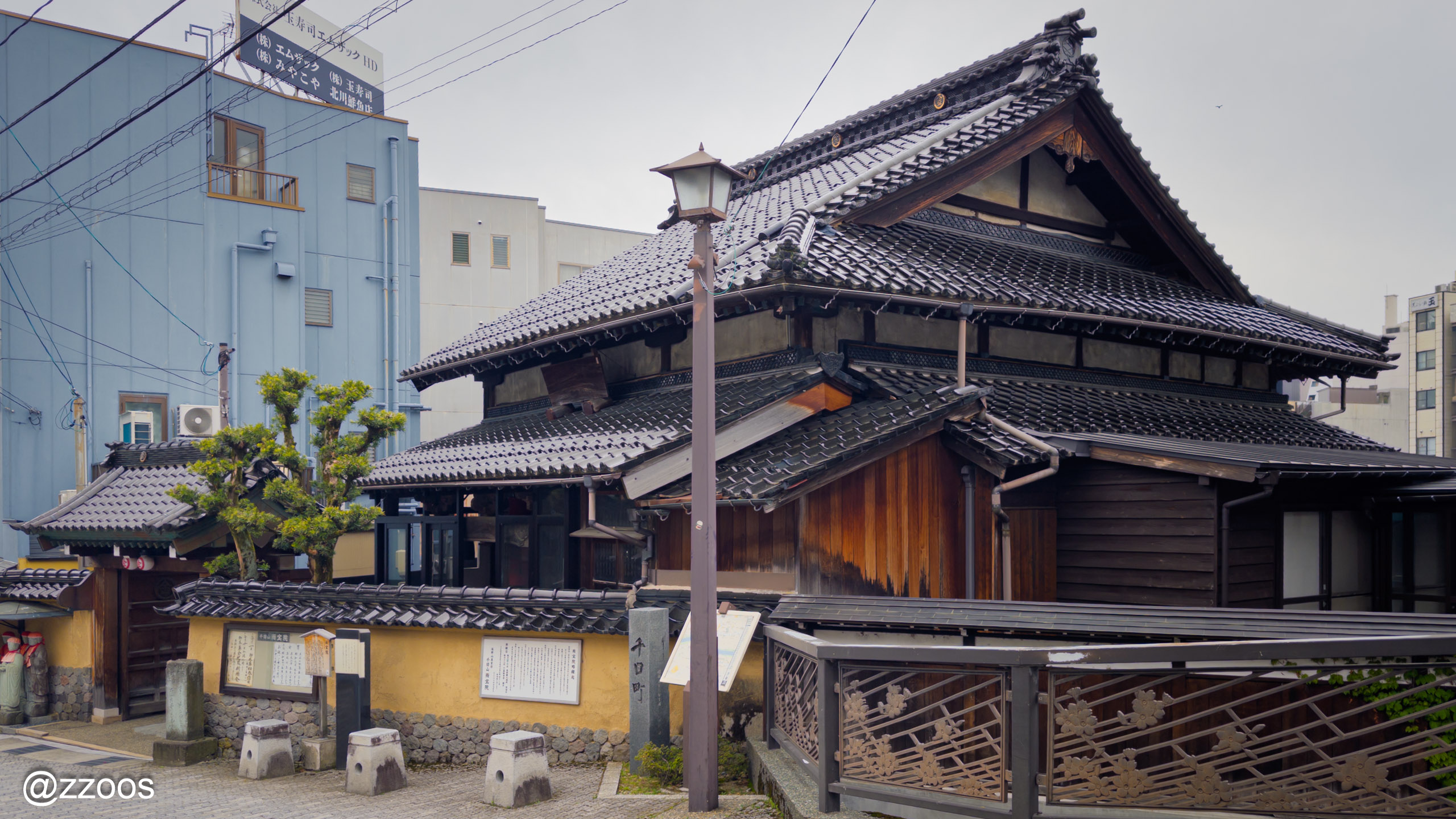
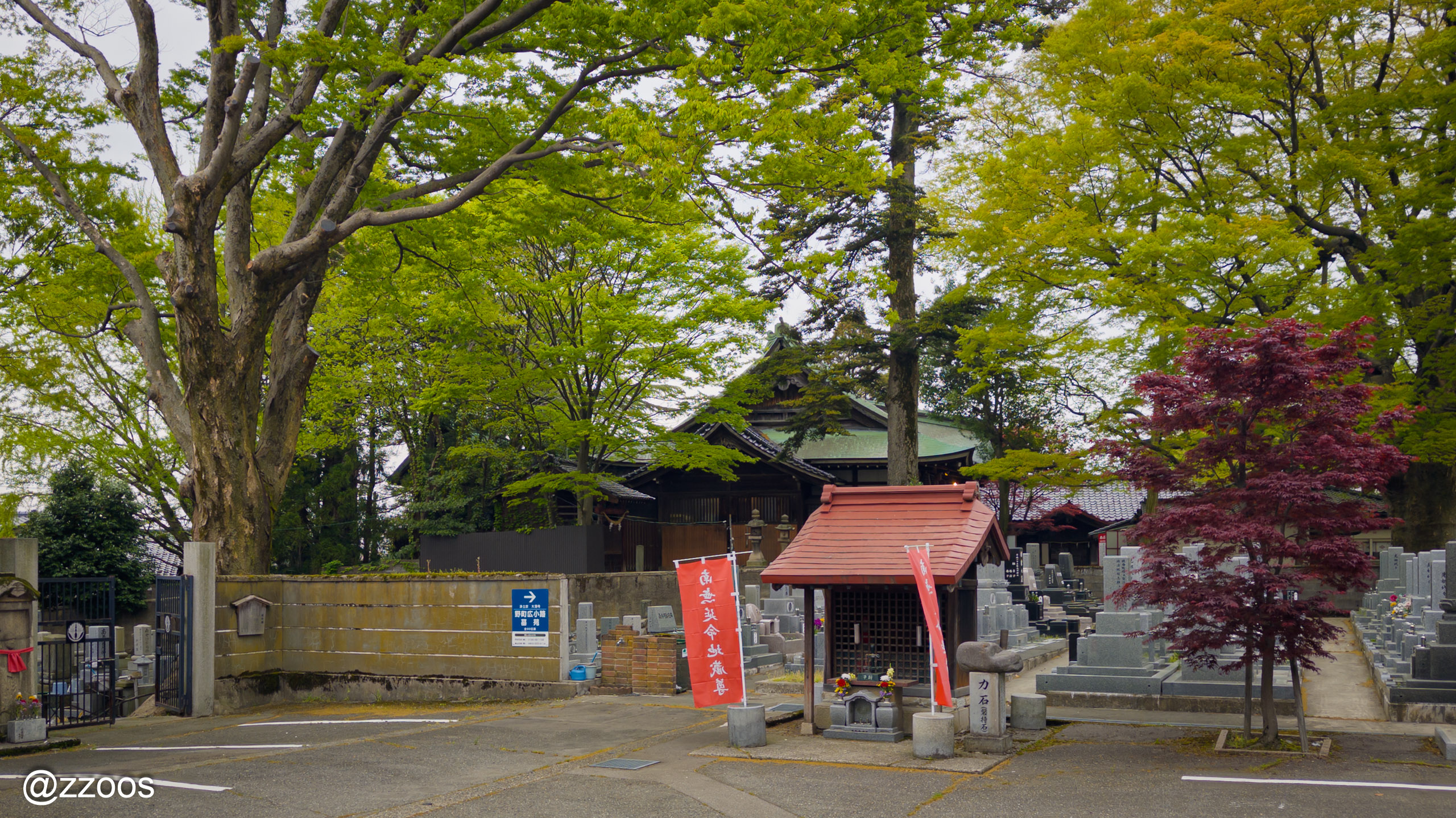
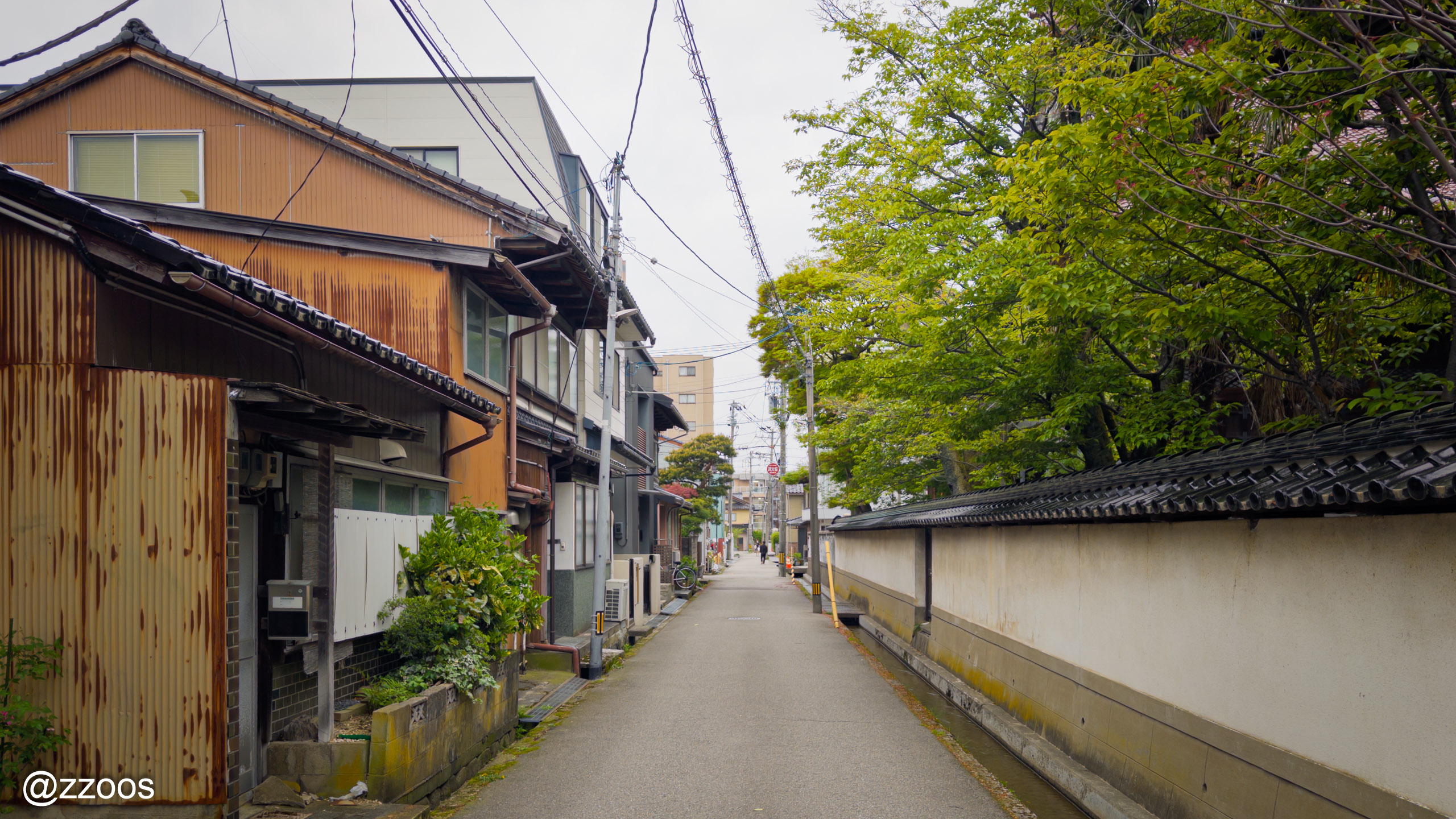
The neighborhood you see on the right after crossing the bridge south from Katamachi is called Nomachi (野町). It’s the area where Nishi Chaya District (にし茶屋街) is.
As I mentioned, Saigawa Ohashi Bridge is the gateway into Kanazawa’s castle town from the outer areas.
So the Nomachi area to the west naturally developed commerce, and the entertainment district that formed for travelers is exactly Nishi Chaya District.
If Higashi Chaya District (ひがし茶屋街) was a formal, glamorous entertainment district, then Nishi Chaya District has a plain, down-to-earth, common-folk feel to it, I’d say.
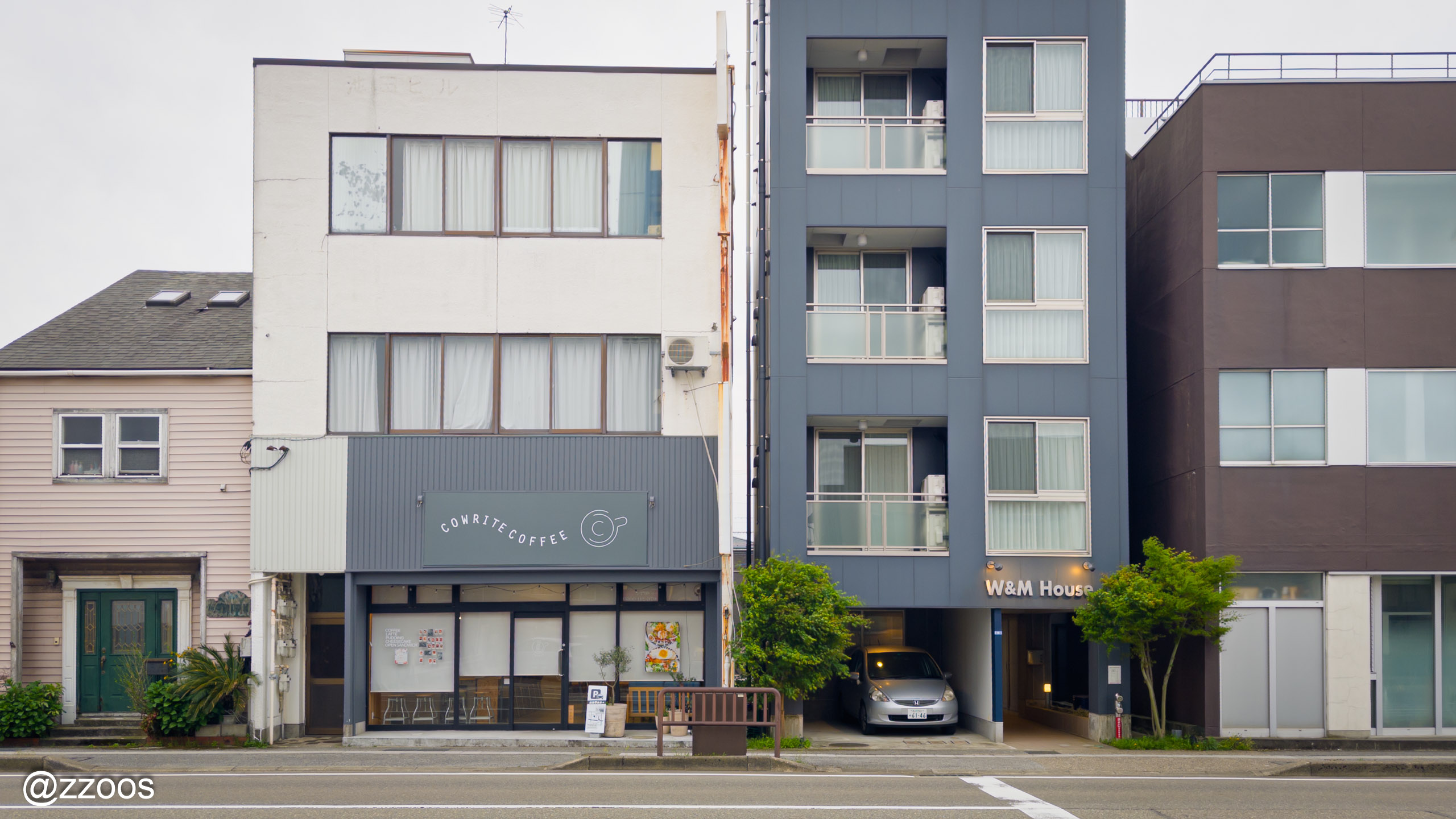
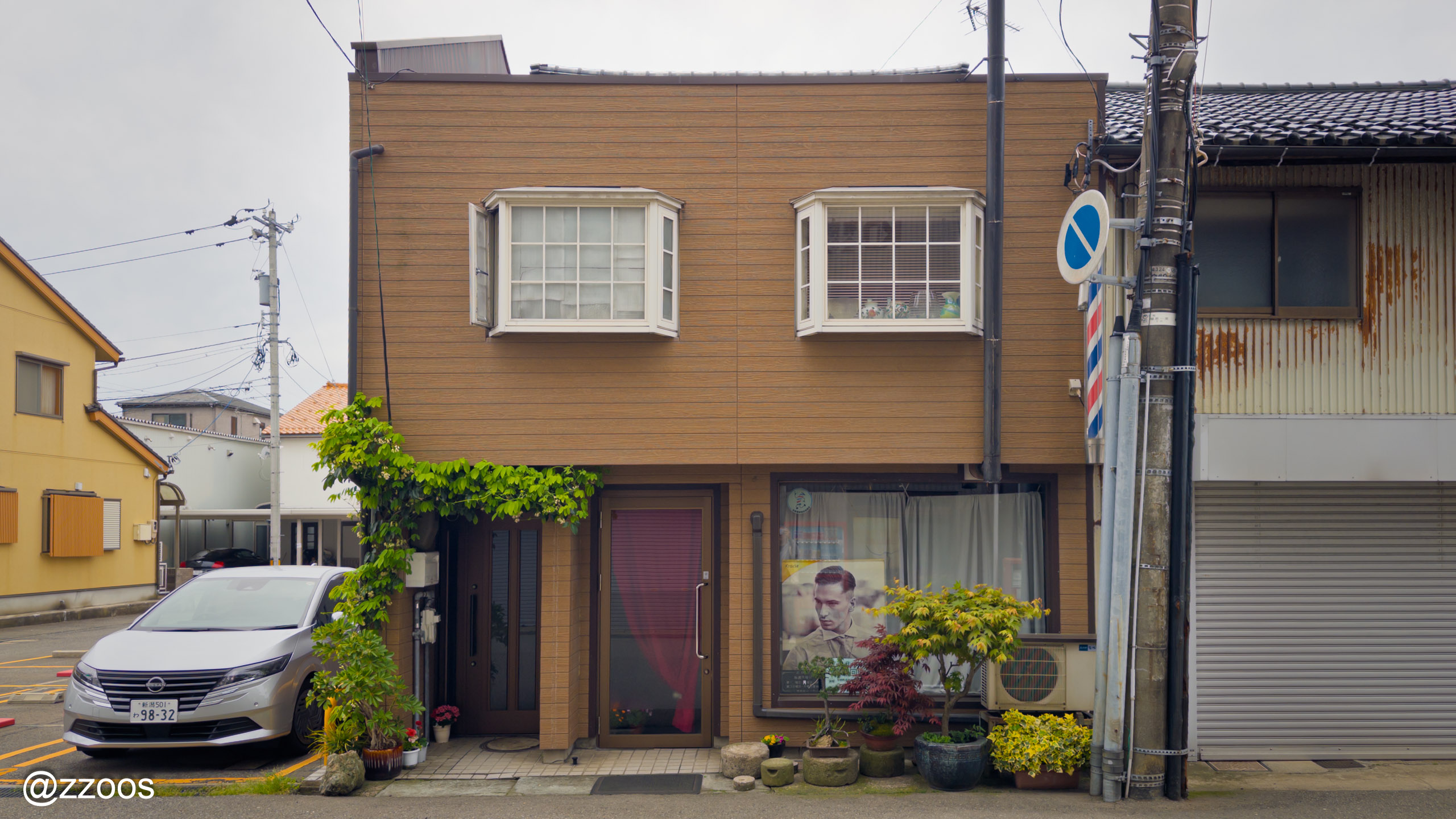
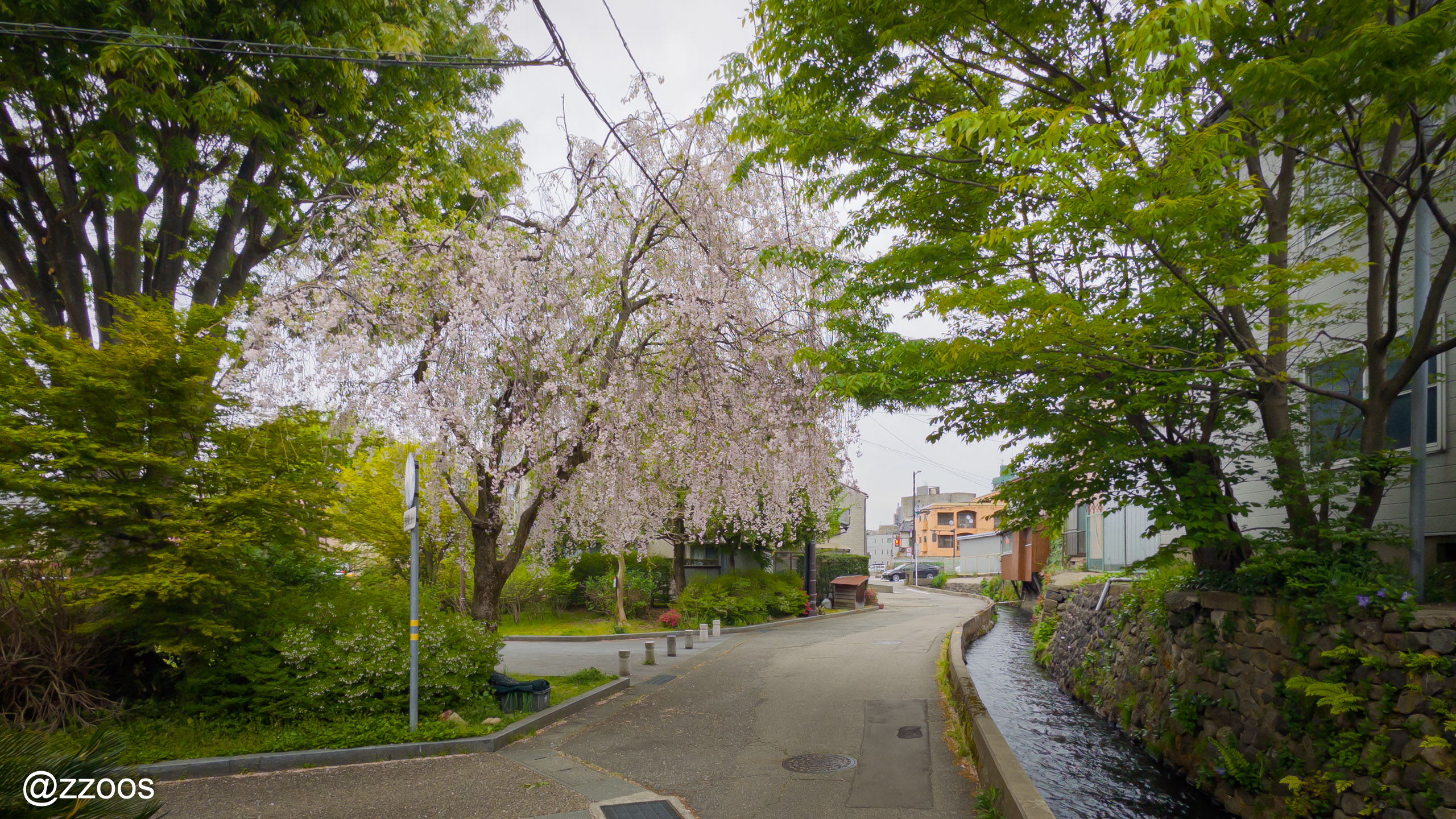
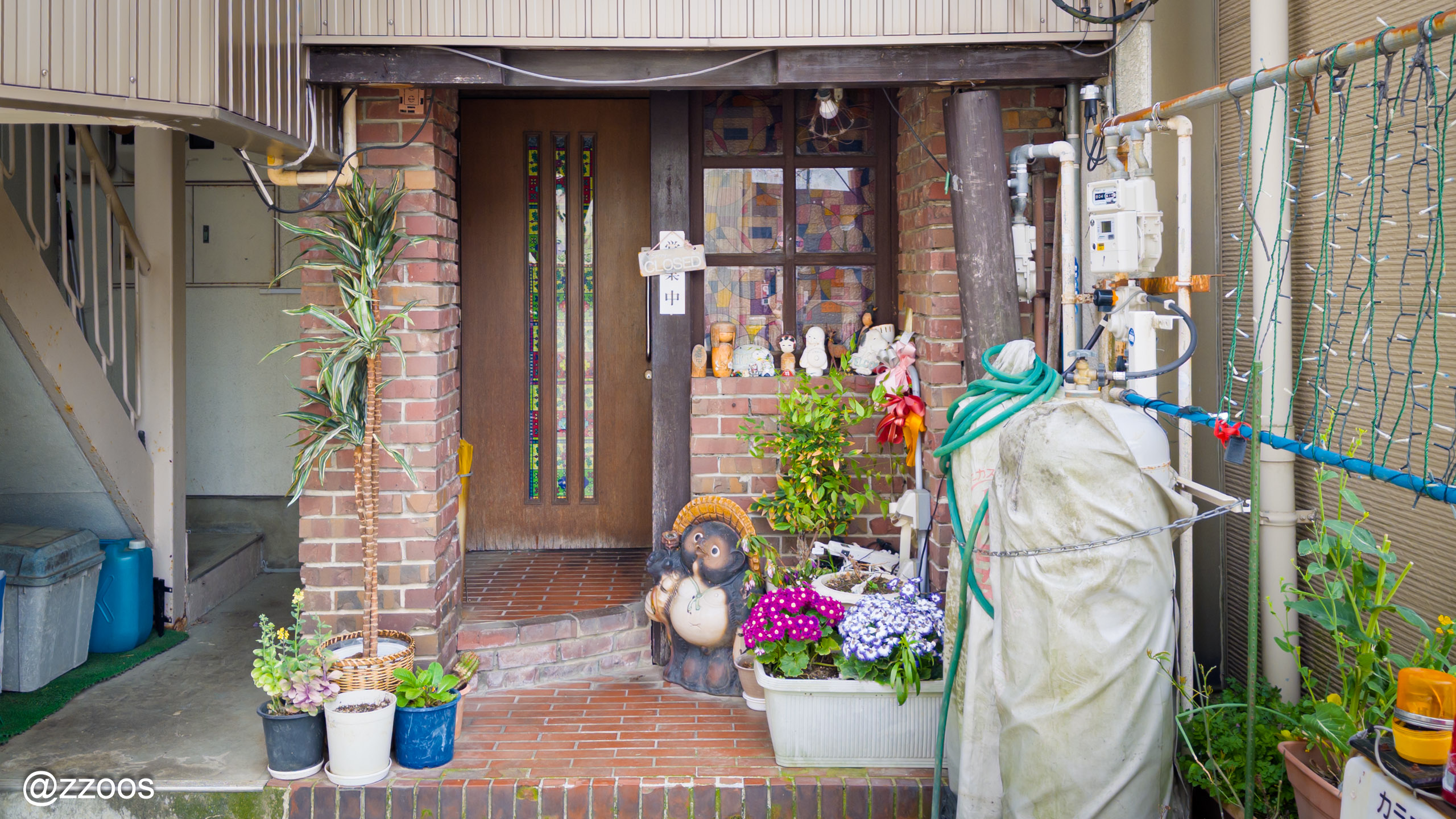
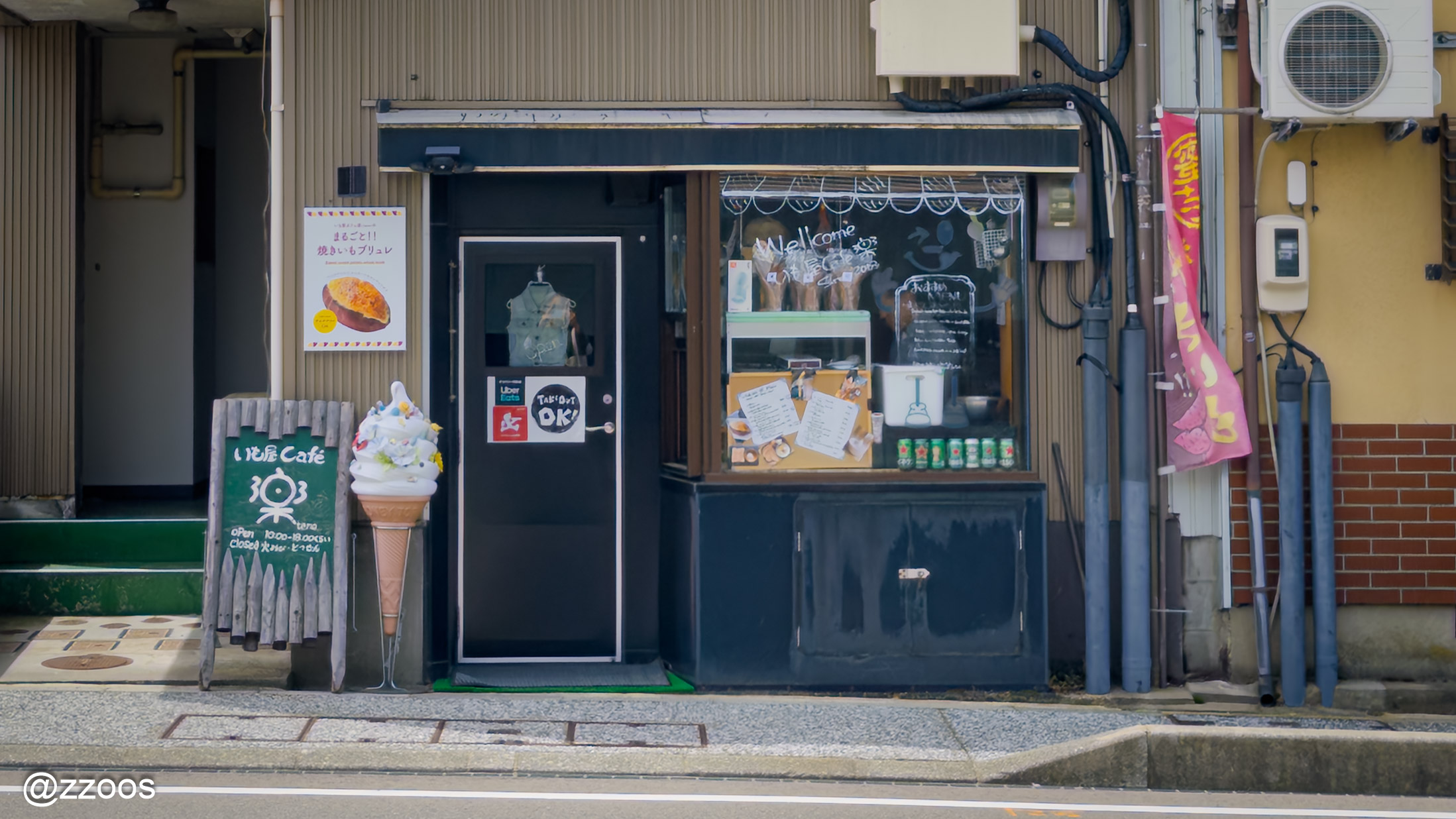
I started walking because I was curious about Nishi Chaya District, but as I followed the mood of the ordinary neighborhood and walked wherever my feet took me, I literally ran into streets of plain “living” and alleys of “everyday life” that had nothing to do with “tourism.”
This is one of Kanazawa’s faces too, I suppose.
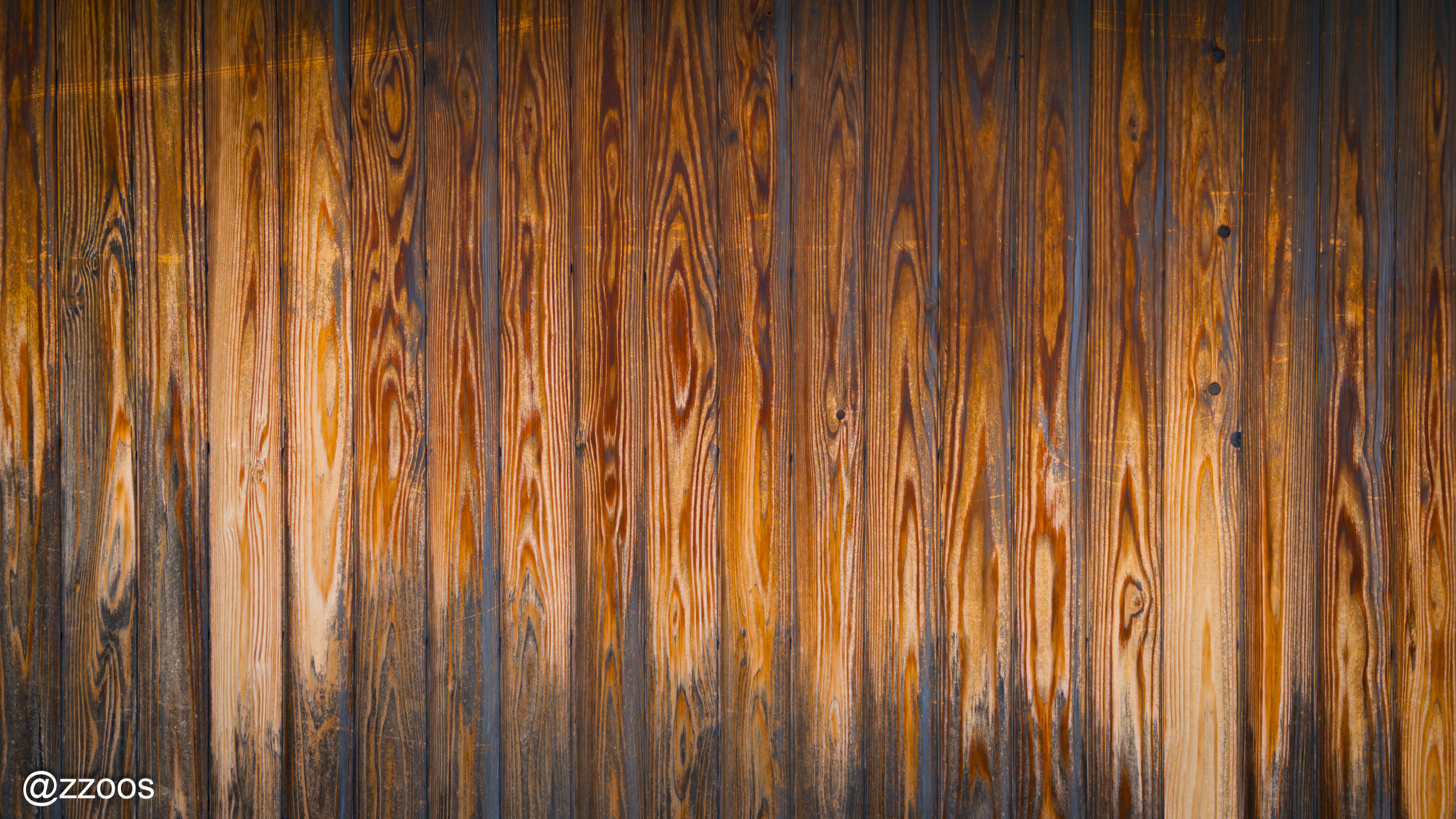
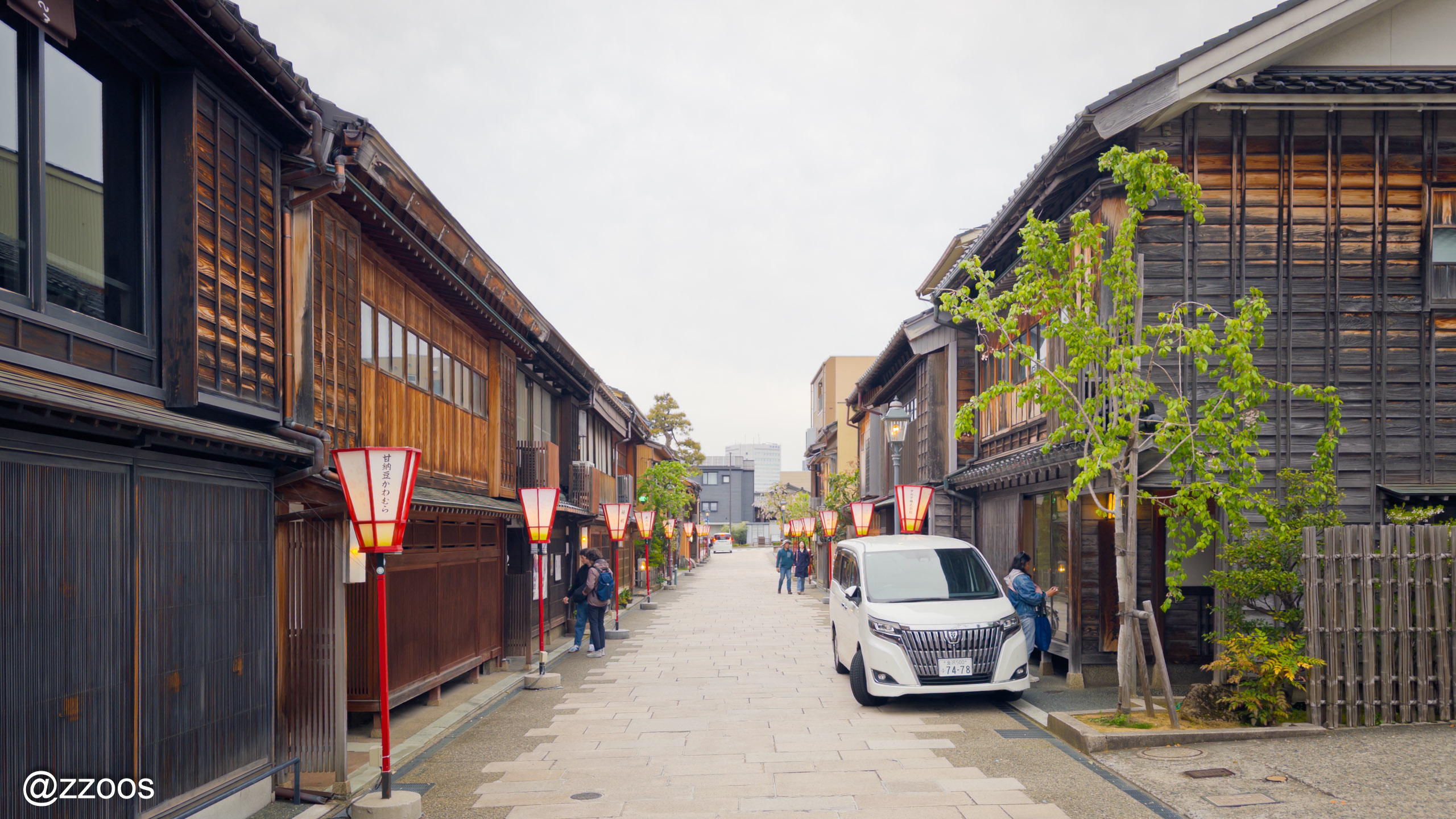
I made it to Nishi Chaya District, but honestly, there wasn’t much to see.
When the sun goes down and the streetlights come on, maybe you could get one nice atmospheric photo, but to the question of whether you really need to walk all the way out here just to see a very short street of about 100 meters, the answer is no. I don’t think there’s any real need to.
If you want to see Kanazawa’s traditional streets, going to Higashi Chaya District or Nagamachi would be better.
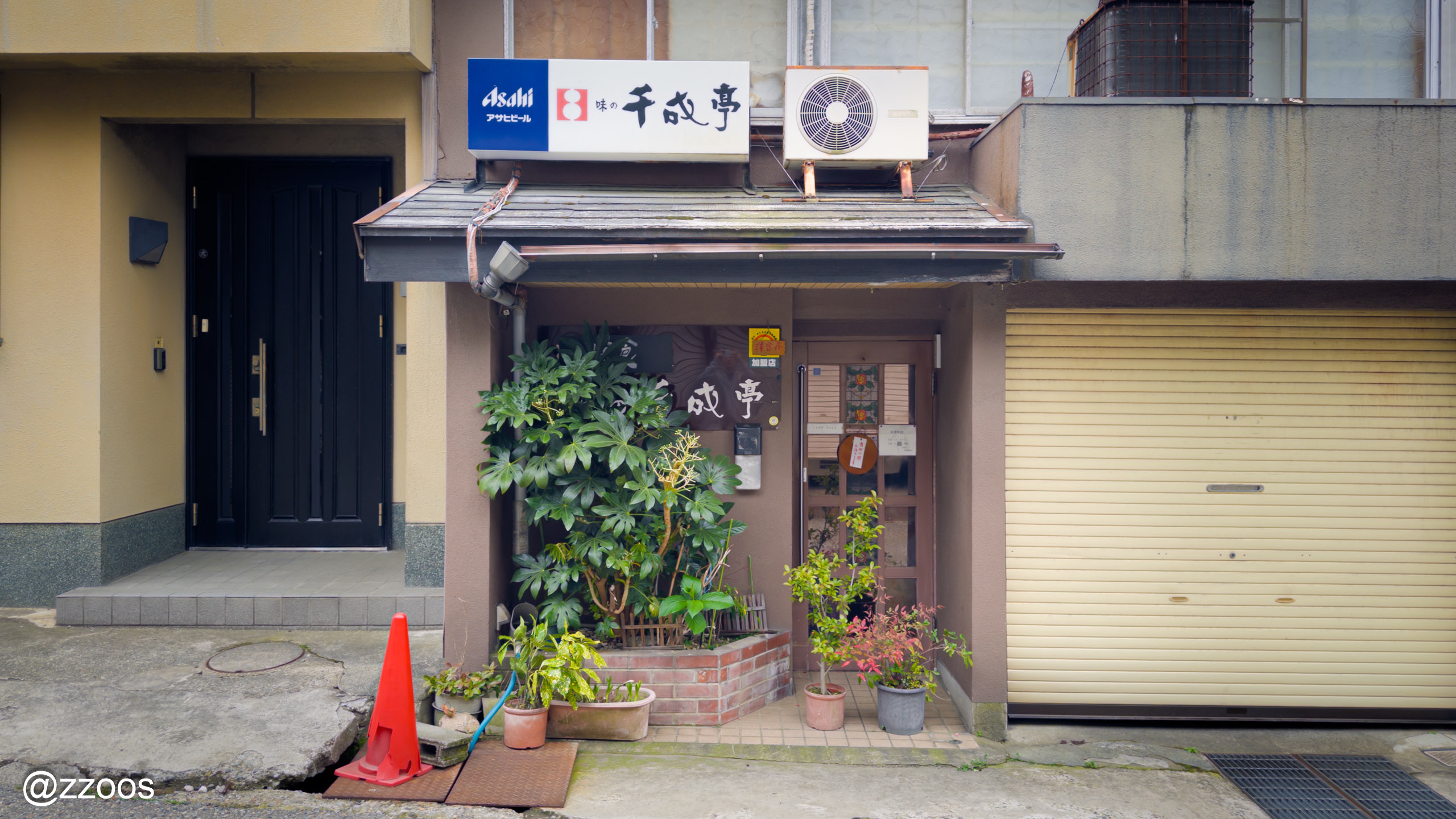
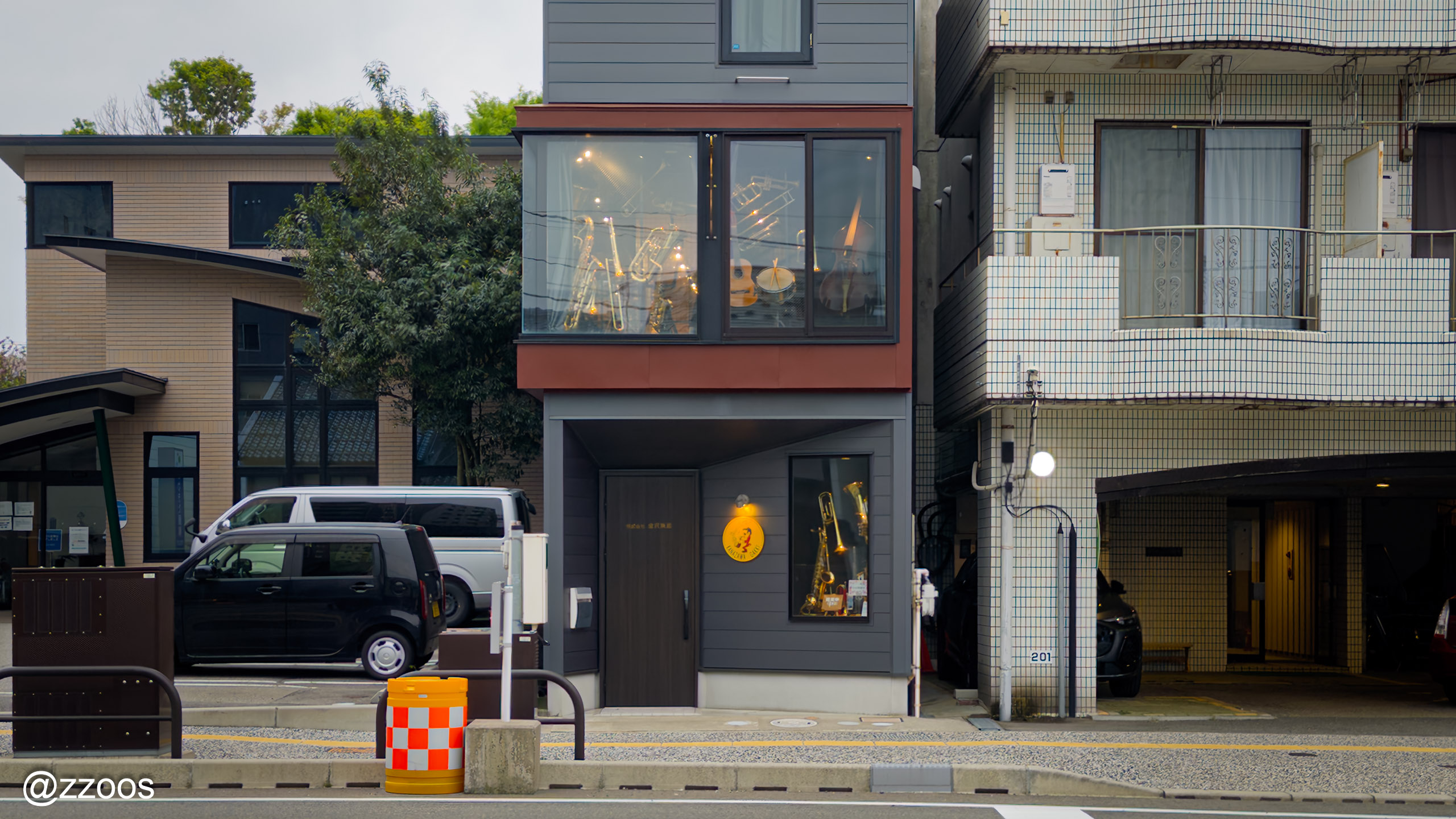
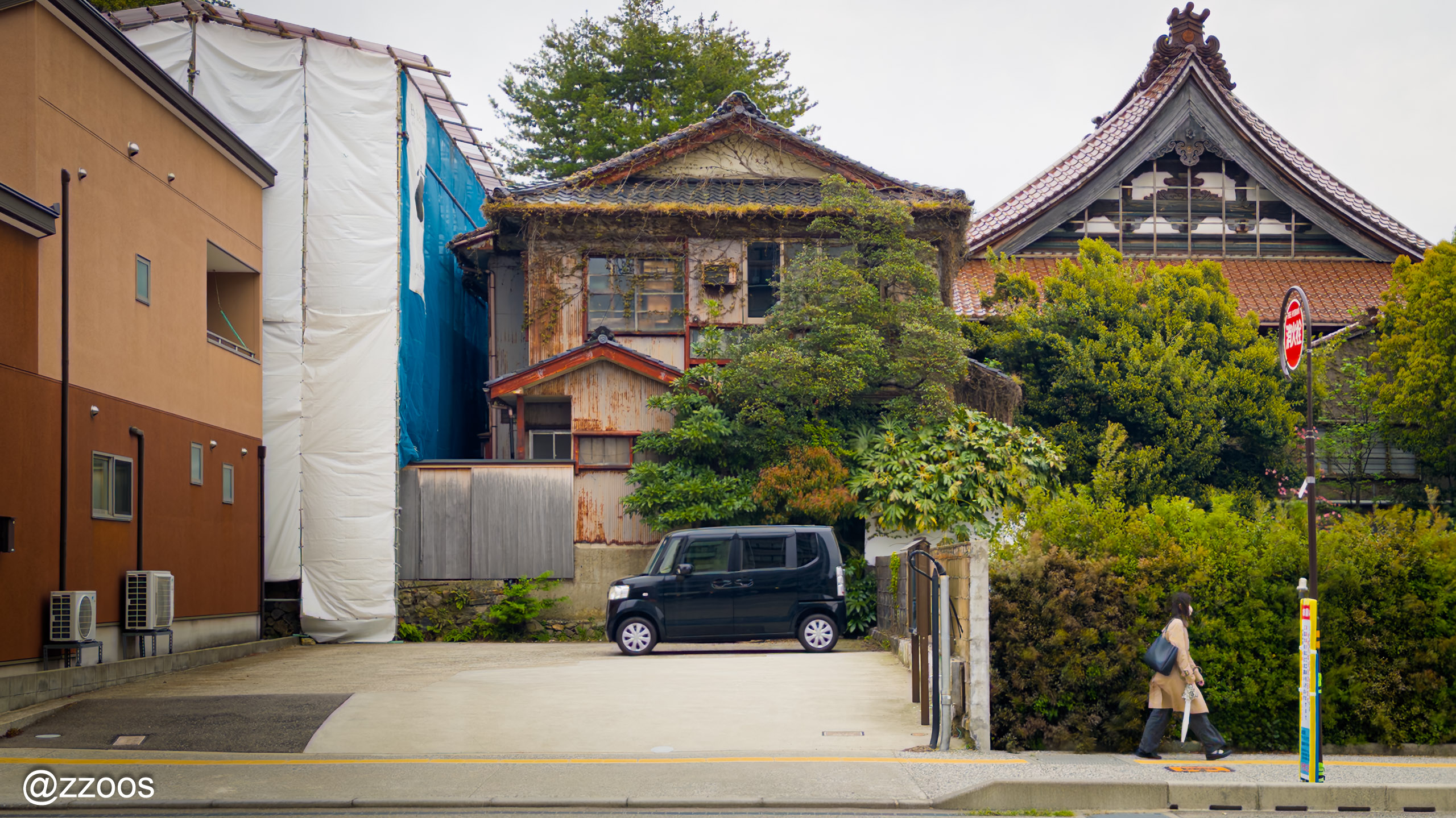
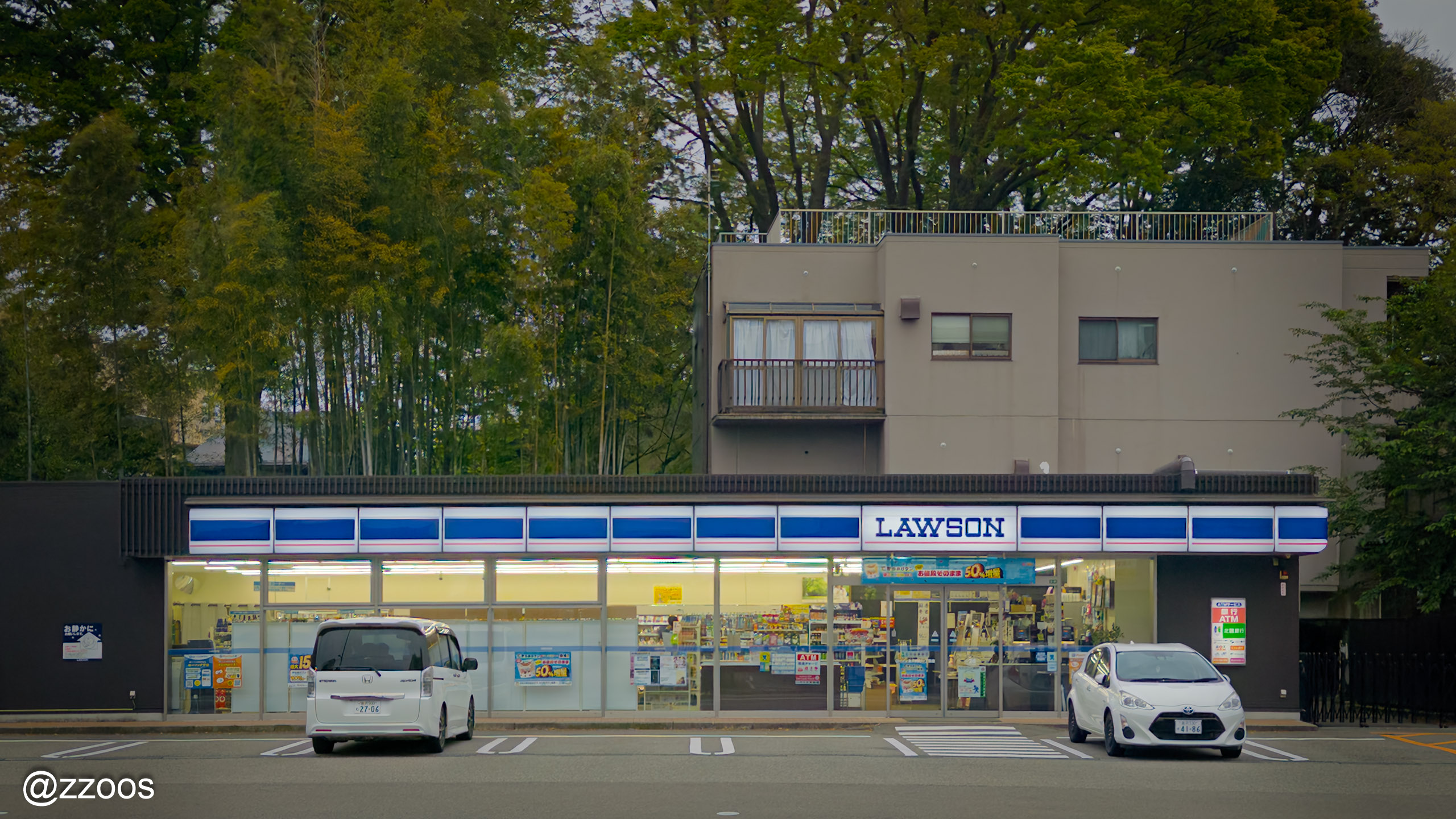
It was a neighborhood with not much to see, but I walked it anyway. I didn’t come only to look at glamorous tourist spots.
Walking streets steeped in everyday life like this and taking photos is one of the enjoyable things too. If anything, this side is probably the more “real” Kanazawa.
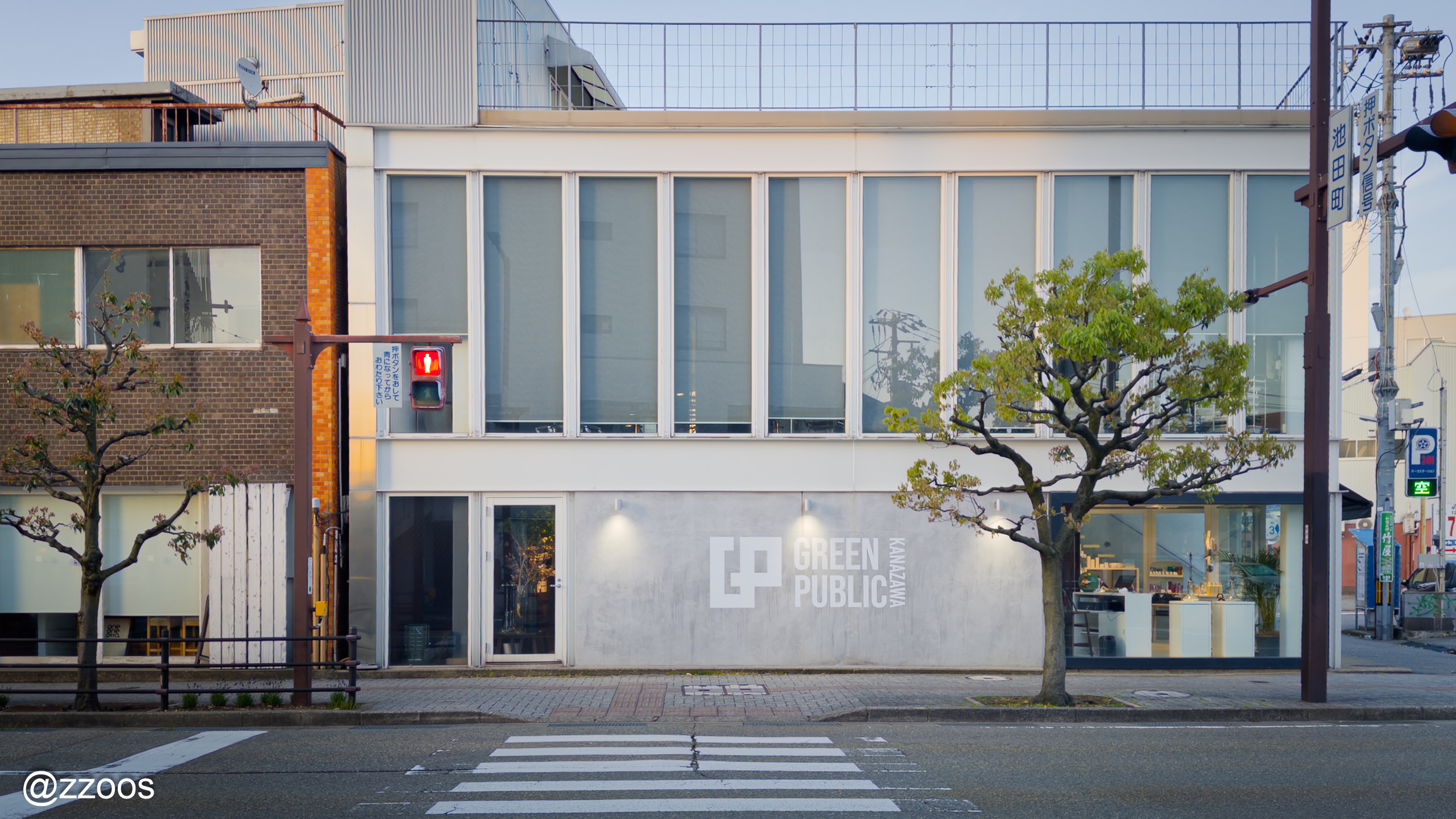
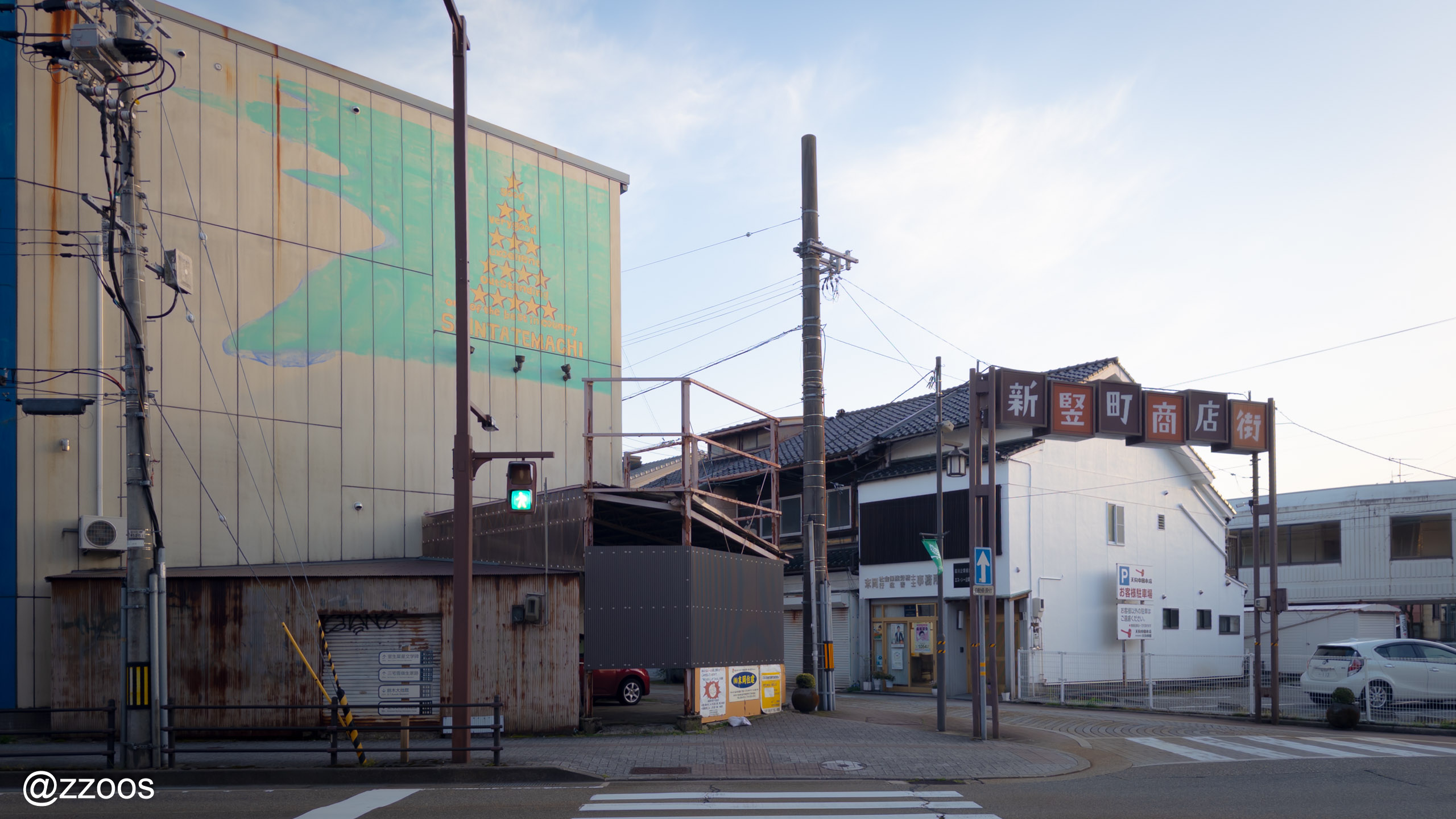
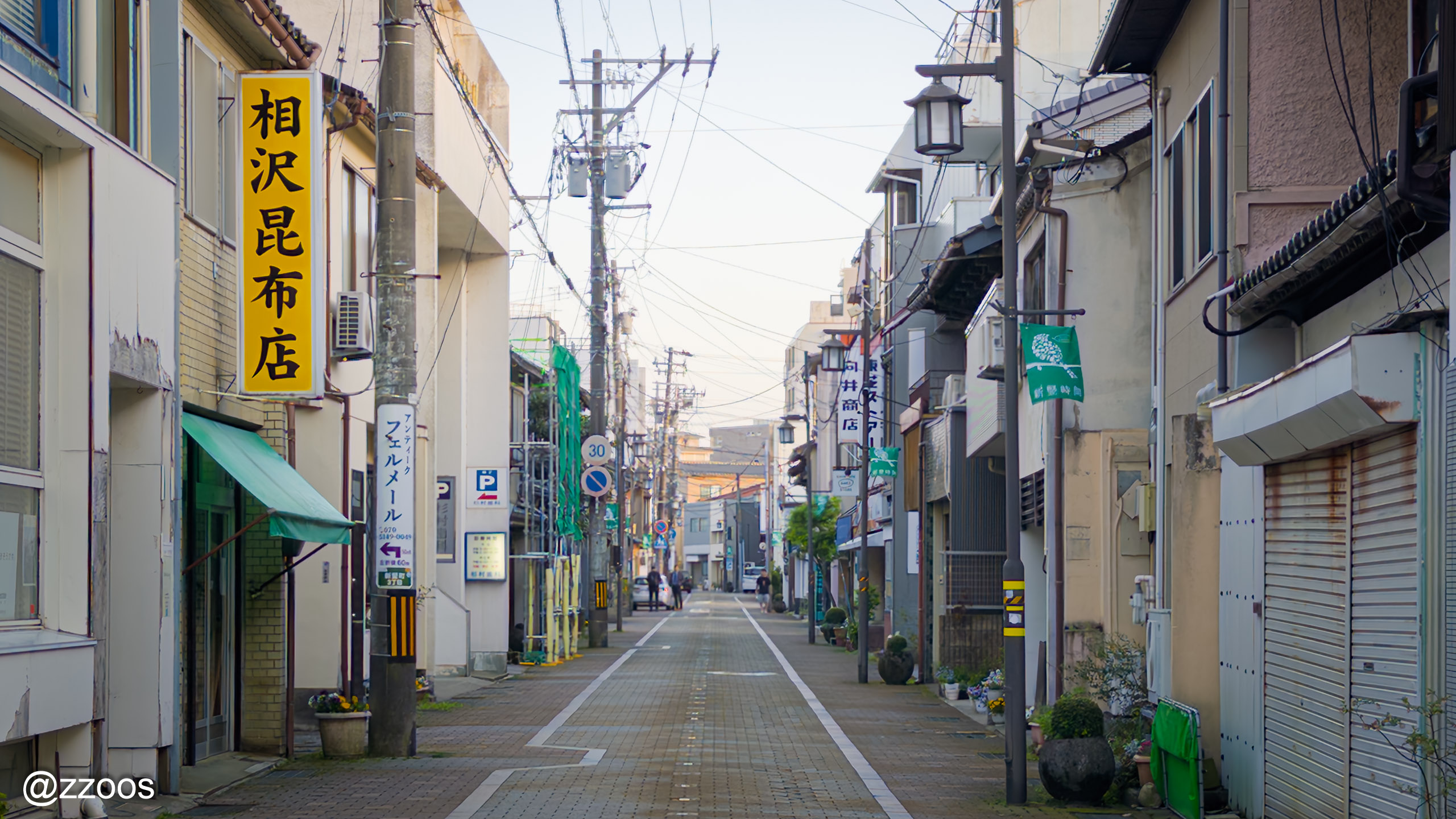
This time it’s the north side of the Sai River. If you follow Saigawa-odori (犀川大通り) to the southeast of Katamachi, you gradually move away from the busy area, and neighborhoods appear where you can look into Kanazawa’s life and daily routine.
The Shintatemachi shopping street is, quite literally, the shabby shopping street of a small provincial town, so you can see an atmosphere completely different from the shopping arcades or markets of tourist areas.
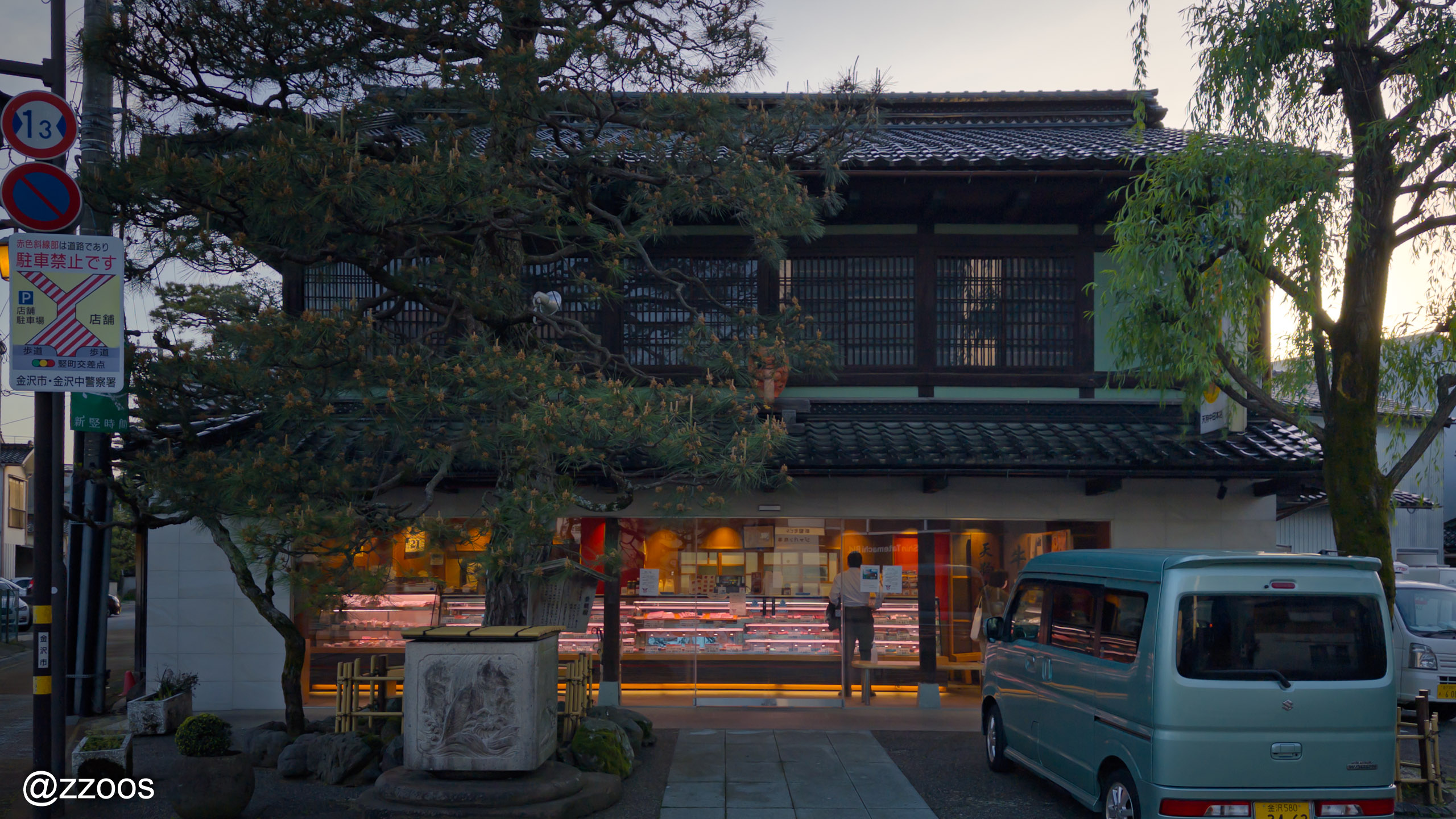
And there’s the head store of a butcher shop called Tengu Nakata (天狗中田) that I happened to find. They say it’s a butcher that represents Kanazawa.
It’s a long-established shop that opened over 100 years ago. There’s a story that the founder had a big nose, so he was nicknamed “Tengu,” and that he used that as the shop’s name.
They say it’s a place that uses very high-quality meat.
When I peeked inside, they were selling things like croquettes and menchi-katsu, and the prices were cheaper than I’d expected.
It’s the kind of place where buying a few to snack on back at the hotel would be just right.
The places I introduced today aren’t really major tourist spots. So when you’re traveling Kanazawa on a short schedule, they’re places you don’t really need to visit.
Still, they are places that make you wonder—maybe these streets, rather than Kanazawa’s crowded tourist sites, are the real face of Kanazawa. Something like that.
They feel like neighborhoods where, instead of the energy of tourists, the real breath of Kanazawa’s people and the weight of time have quietly settled. There’s nothing glamorous to see, so it’s dull, but there’s a peculiar mood to that dullness.