Shirakawa-go (白川郷).
It was a place I’d wanted to visit at least once. That snow-covered scene of the pointed roofs is the kind of shot anyone who loves photography wants to capture at least once. Since staying a night seemed essential for shooting the night view, I’d checked the minshuku booking site for Shirakawa-go now and then, well in advance.
When I was deciding on the destination for this trip, I thought, maybe I’ll go to Shirakawa-go? And I found out there was a city called Kanazawa nearby. It turned out to be a good city to travel in too, where tradition and the modern blend together. So I tied the two together into a single trip.
That said, Shirakawa-go in April probably wouldn’t be stunning enough to photograph the night view, so I decided not to stay over. A quick day trip this time, and a winter overnight next time.
I’d wanted to go to Shirakawa-go so badly—enough to look into lodging well ahead of time—and yet I never once considered how crowded the buses might be.
Before leaving on the trip, I’d looked into Kanazawa and found it was a small city of about 400,000 people. So I assumed it would be a fairly quiet place. I had no idea Kanazawa would have this many tourists, and I literally ‘never’ expected Shirakawa-go to be this popular a destination.
On my first day there, while talking about this and that at IL MARE, I mentioned I wanted to go to Shirakawa-go, and they told me I absolutely had to book the bus in advance.
That was when it hit me. Ah—I hadn’t prepared anything at all.
So the very next day, I went straight to Kanazawa Station. I’d heard you could book online too, but once I got to the site, I couldn’t quite figure out what to do or how. At times like that, what you really need is to meet a person face to face and talk.
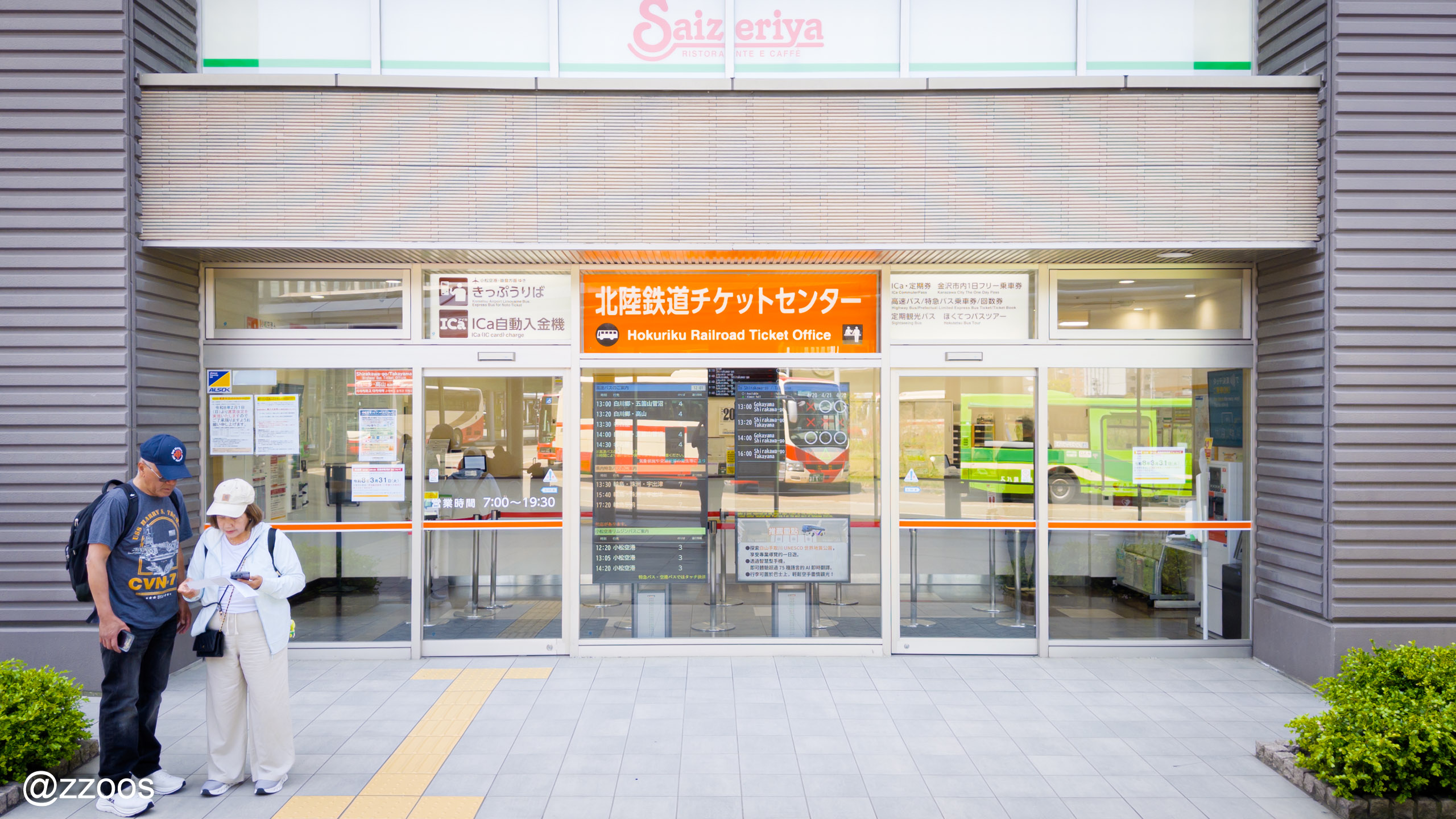
Go out the west exit of Kanazawa Station and walk left for a good while, and you’ll find the Hokuriku Railroad ticket office on the ground floor of a building with a Saizeriya on the second floor. The word ‘railroad’ can be confusing, but that’s just the company name. You can book buses here too.
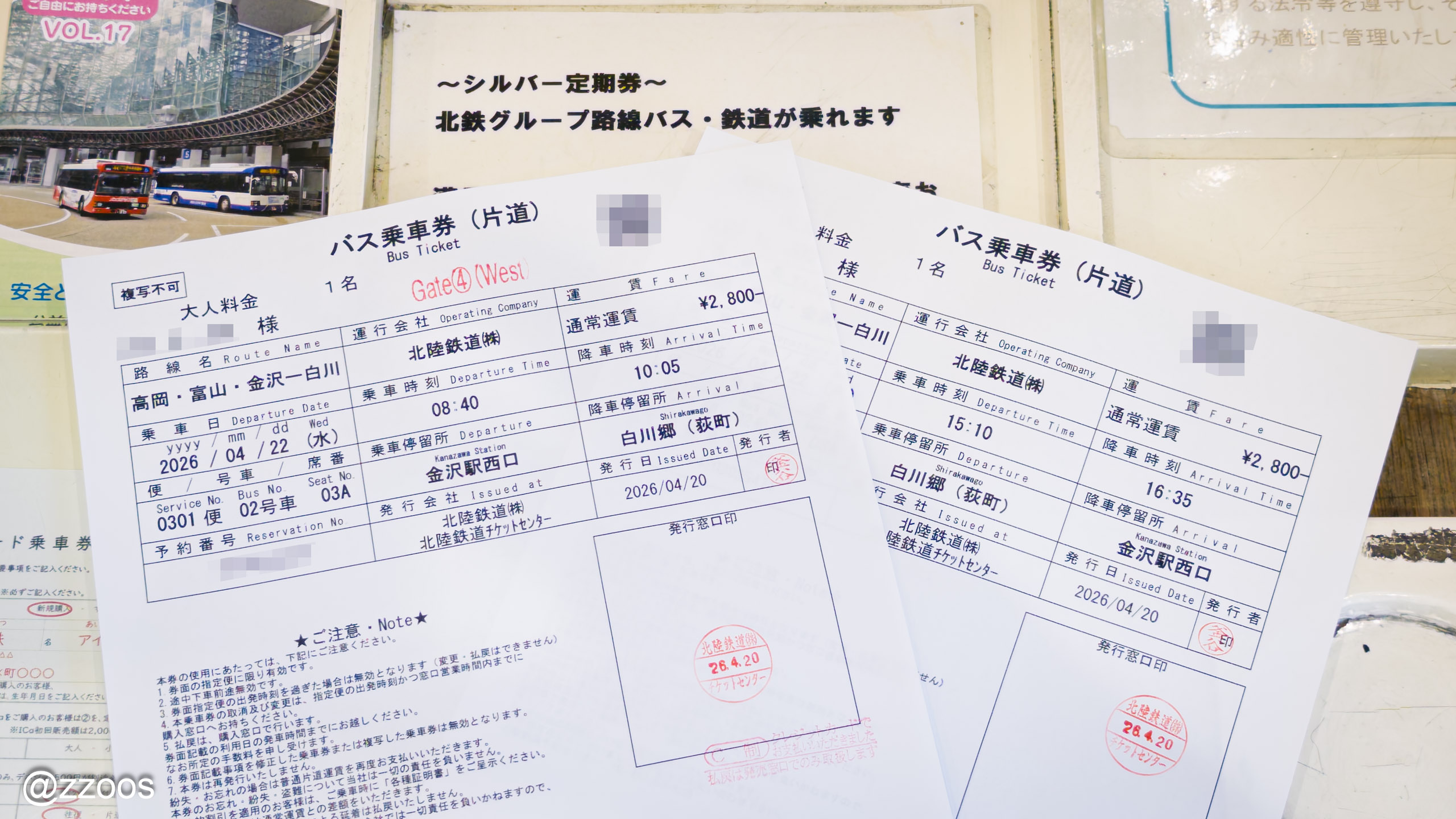
Maybe because it was the off-season, the bus tickets luckily had room to spare. Still, getting a same-day ticket on the spot was a bit hard. So I booked a ticket for two days later, on Wednesday.
The staff member who helped me book was truly kind. They didn’t speak English, but they patiently handled my asking and confirming over and over in my broken Japanese, and even said there might be a cancellation, refreshing the booking screen again and again to check for tickets.
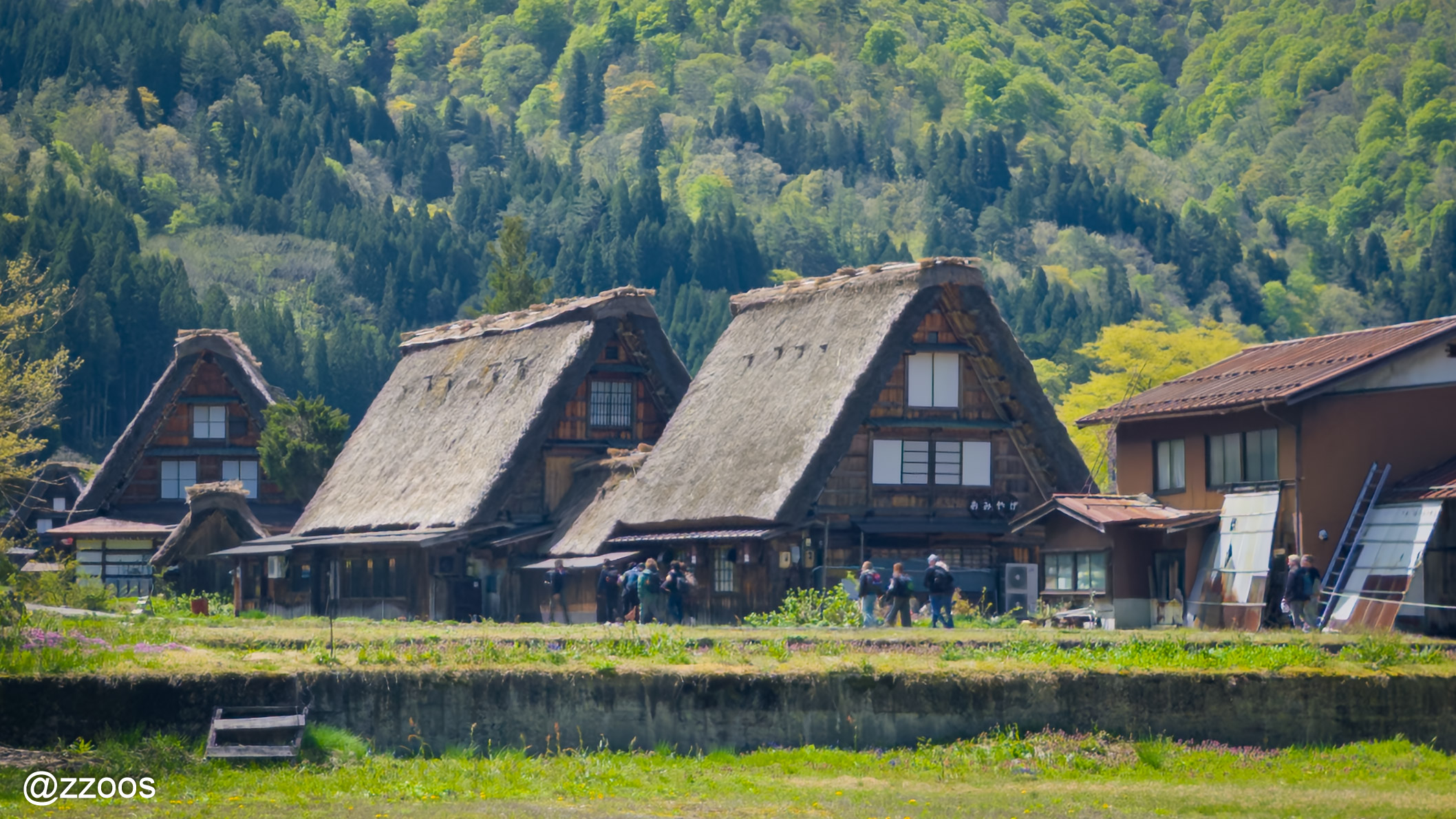
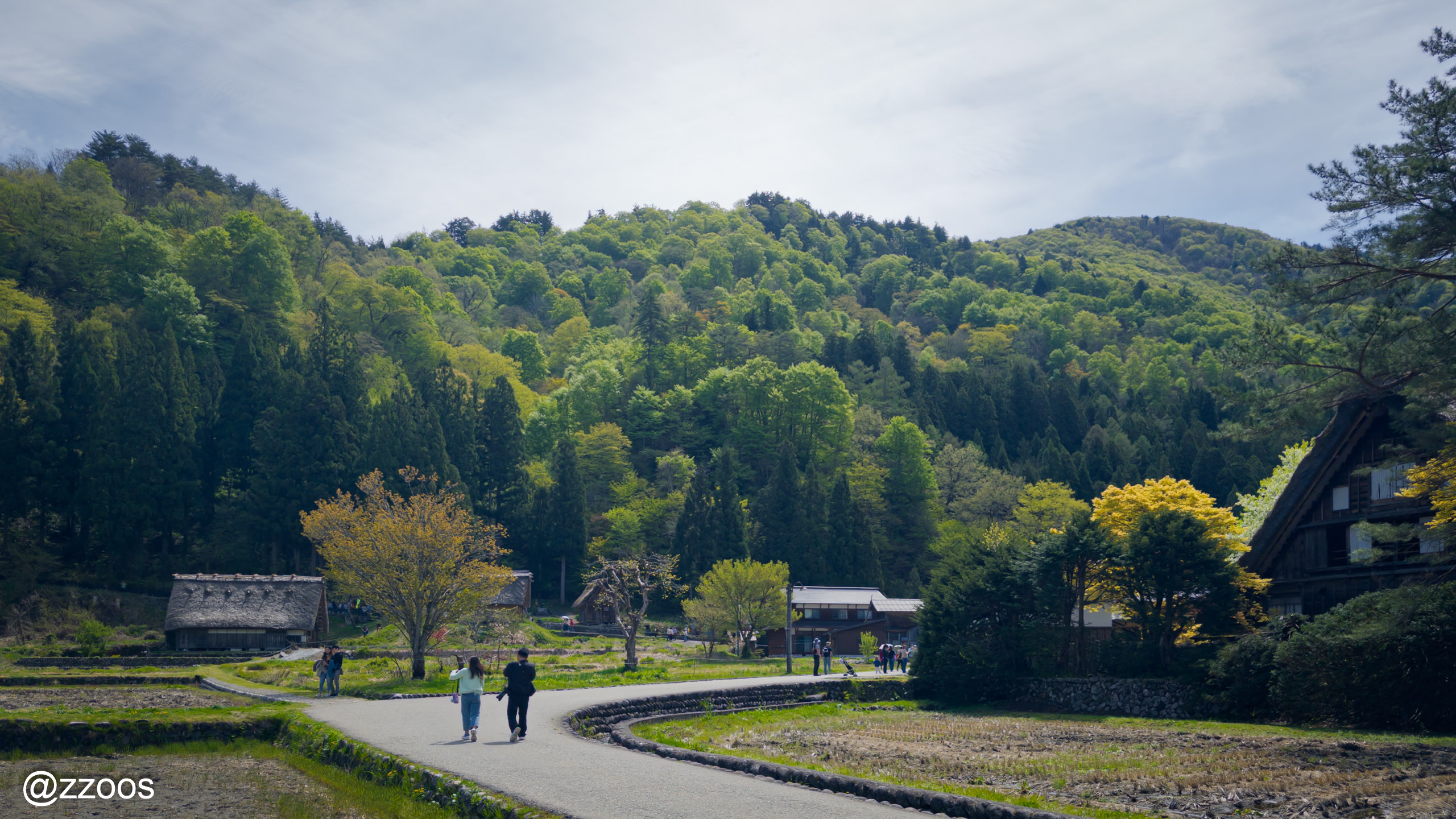
Finally, the day itself—Wednesday, April 22nd. I arrived at Kanazawa Station a little after 8 in the morning. Two buses departed at 8:40. I was on bus No. 2.
This part is a little confusing. Most of the guidance is based on bus No. 1. So if you happen to be marked as bus No. 2, you need to check the boarding platform carefully.
After riding for about an hour and a half? A little past 10, I arrived at the Shirakawa-go terminal.
The return bus was at 3:10 in the afternoon. A very generous stretch of time. I’d have liked to leave a bit later and head back a bit earlier, but those slots were the prime-time hours you had to reserve in advance.
But thanks to all that leeway in the bus schedule, I got to look around every corner of Shirakawa-go.
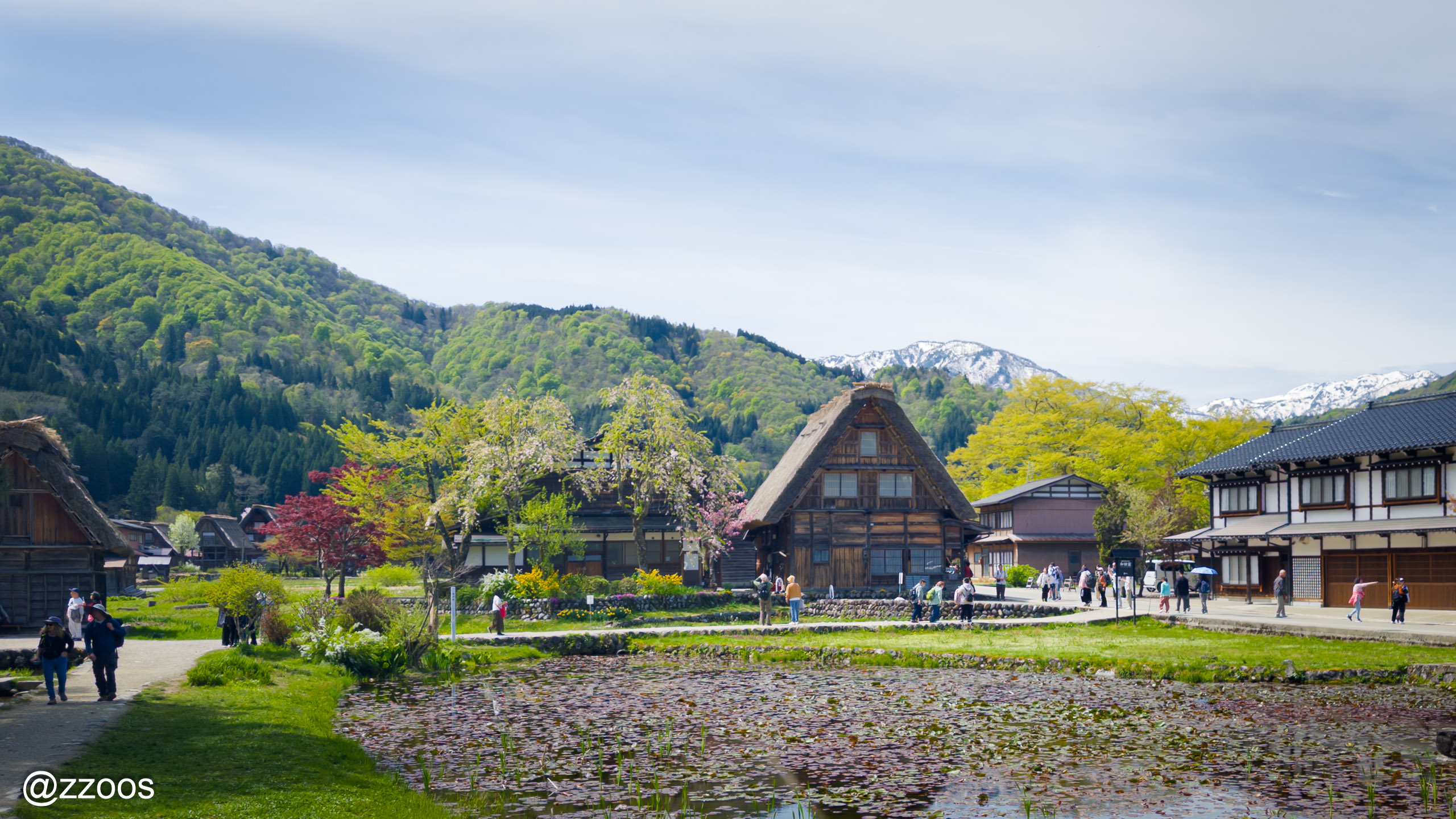
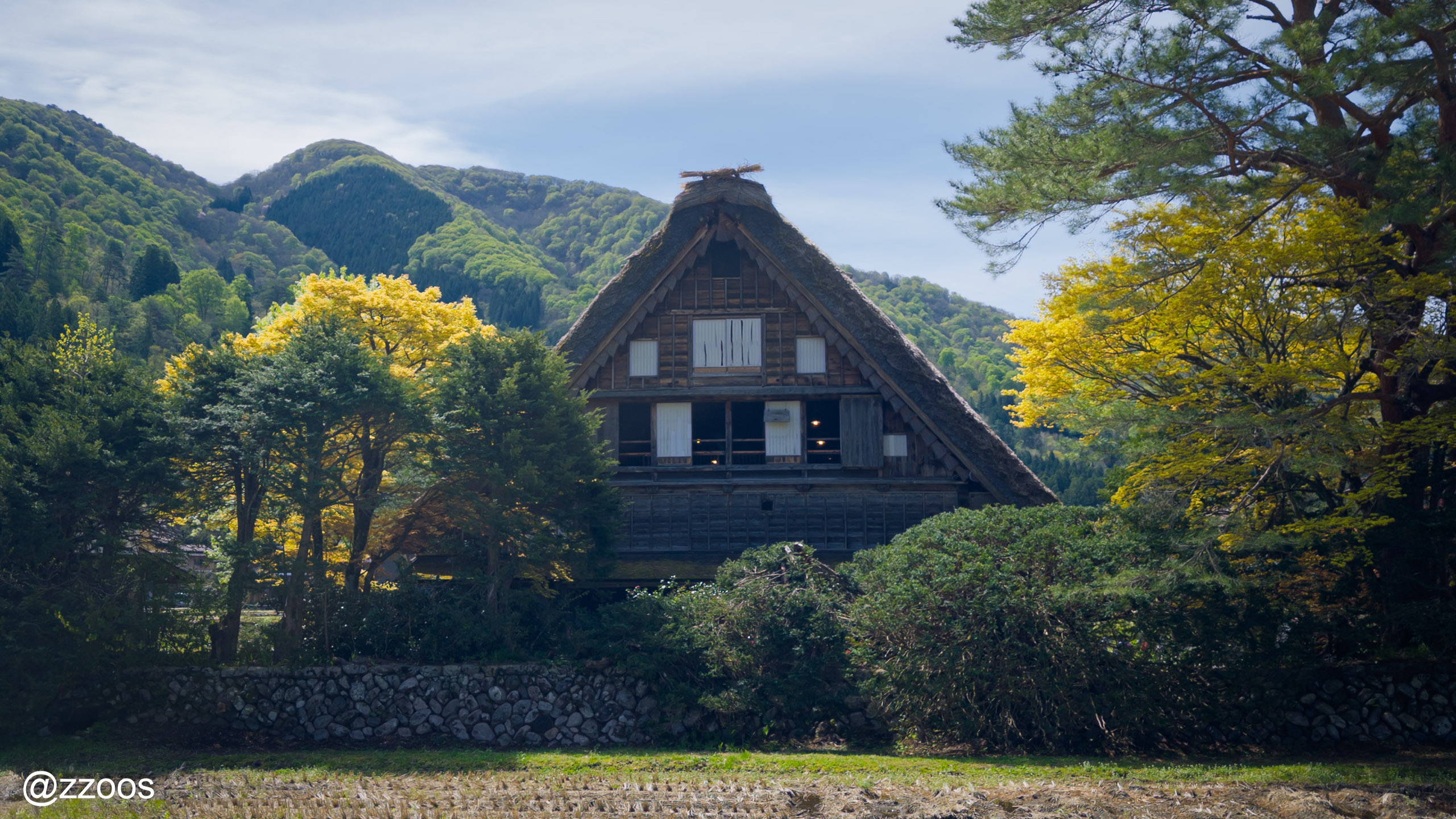
All right—now to look around Shirakawa-go.
The Shirakawa-go terminal is a small building. And the area around it is a fairly wide open lot. After getting off the bus, I was at a loss for where to go.
I opened Google Maps and found a place right nearby called the Ogimachi Castle Site Observatory (荻町城跡展望台). I figured I’d first look down over the whole village from up high, then wander every corner afterward.
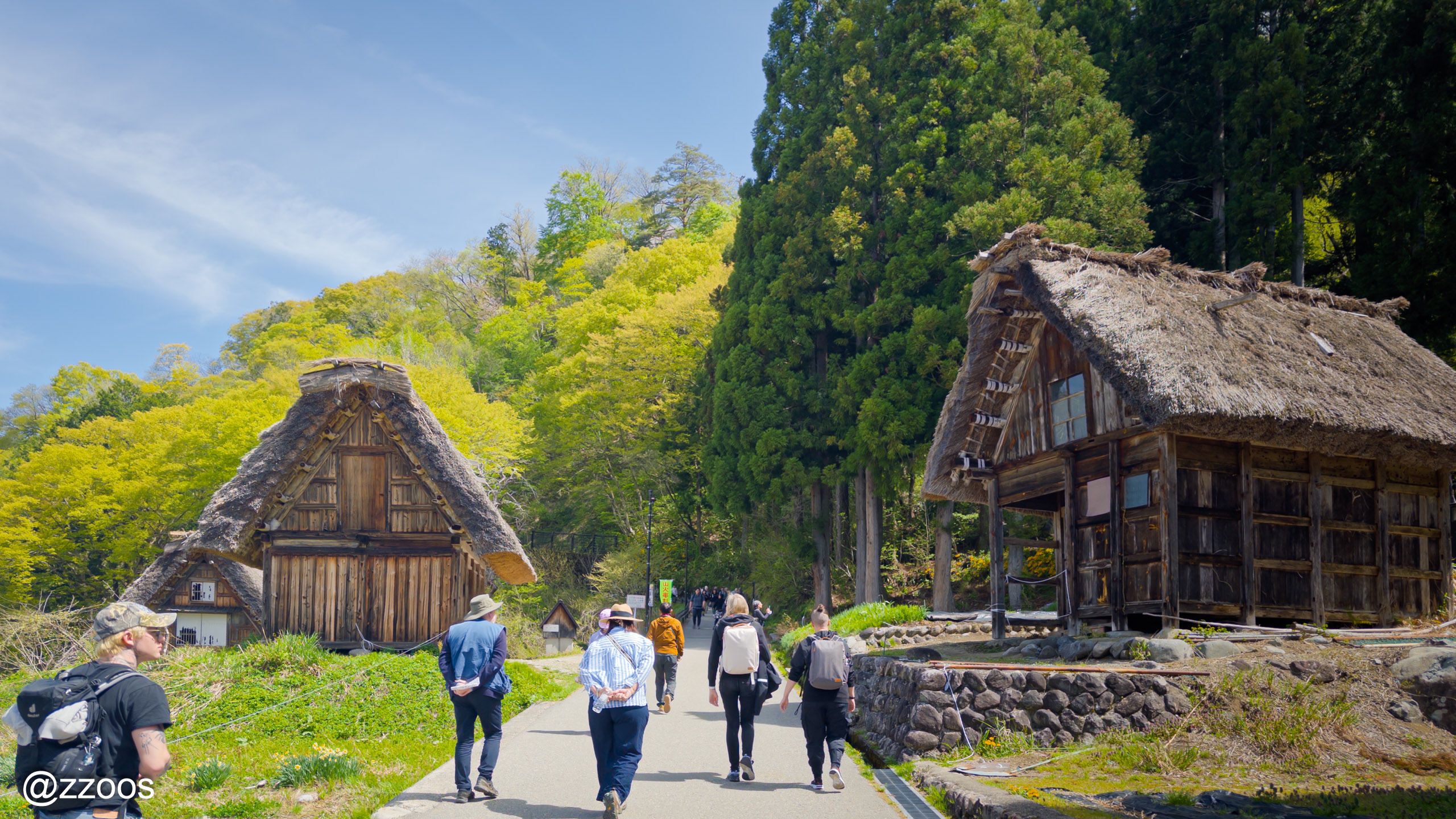
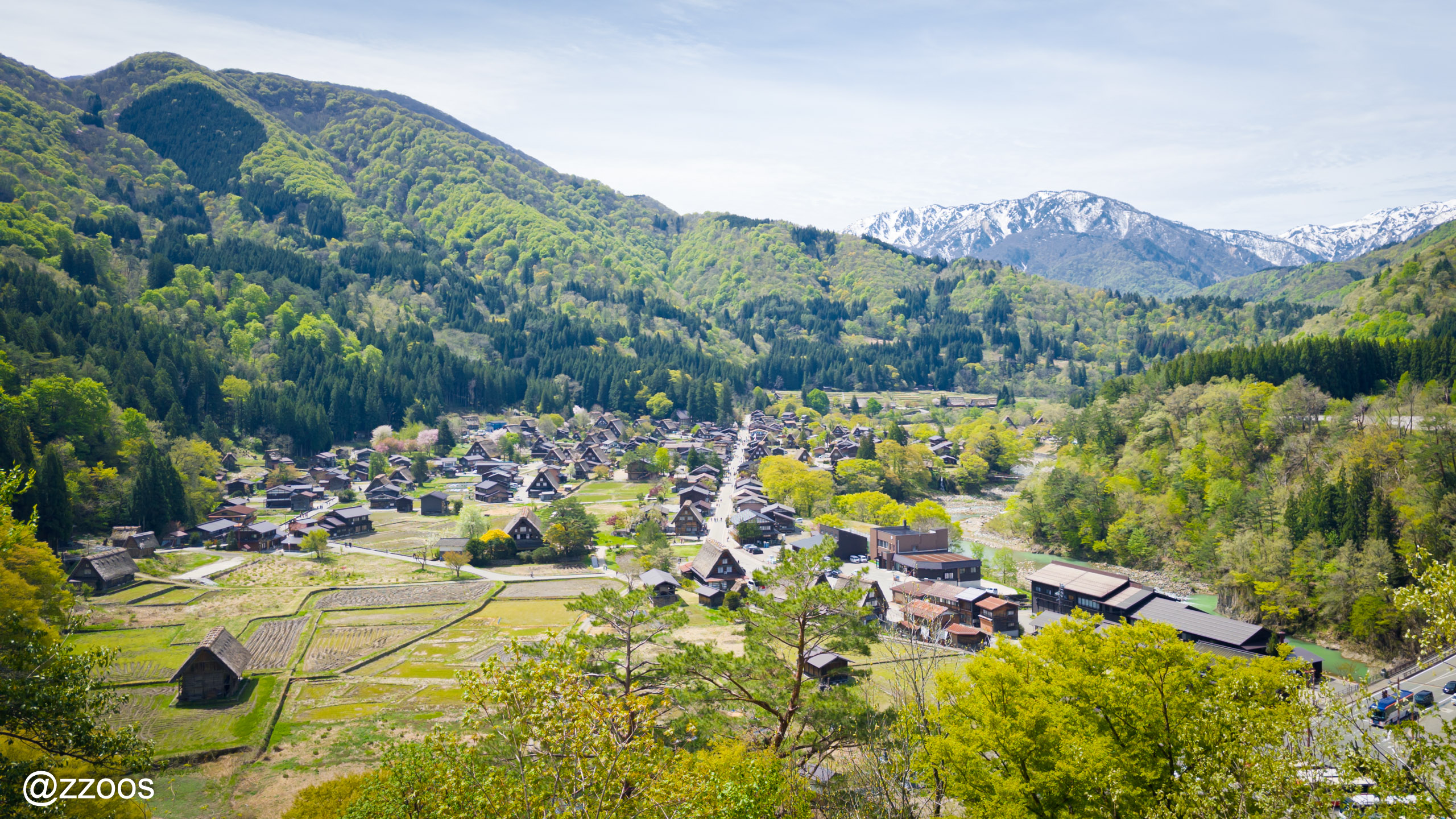
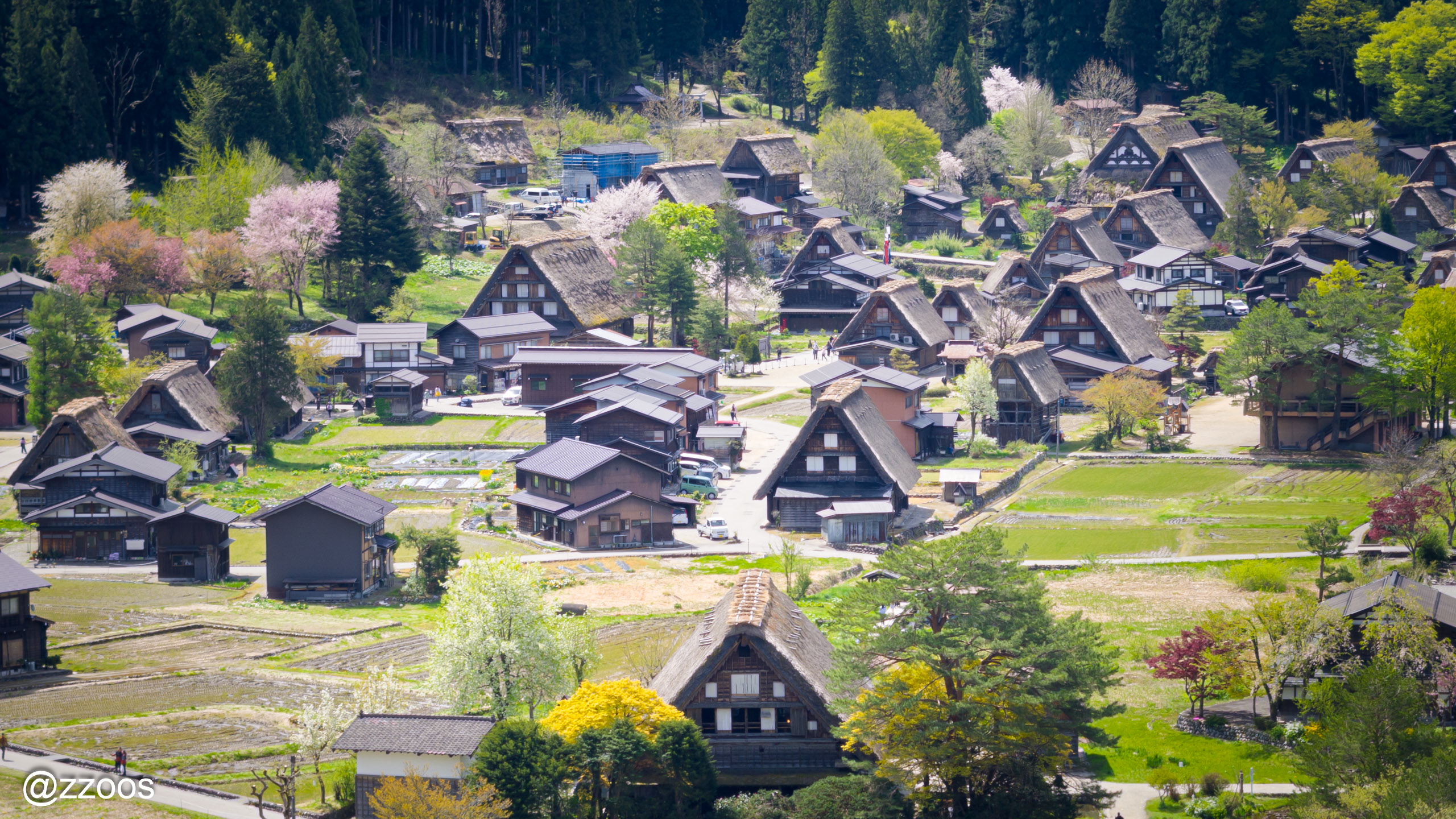
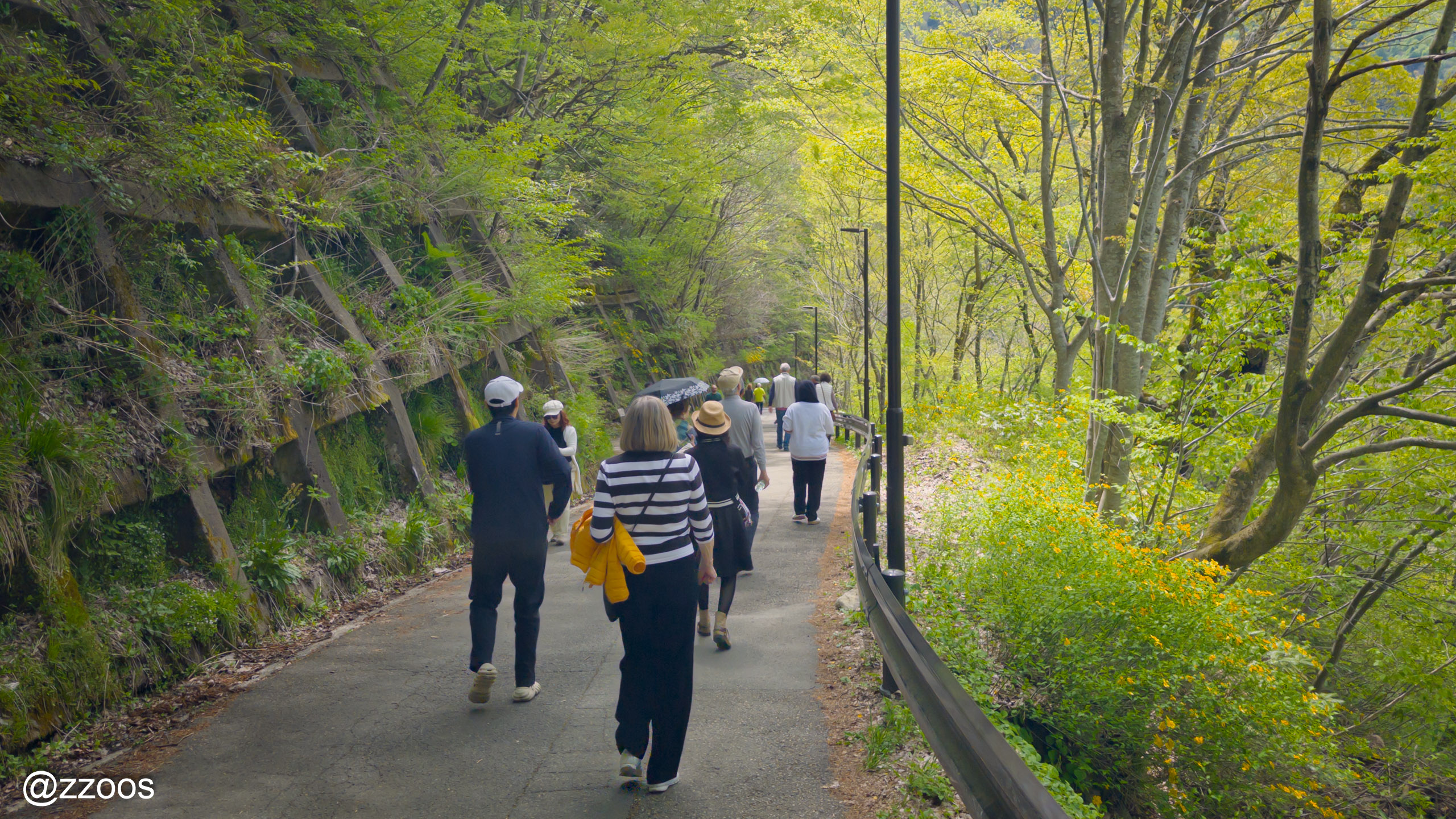
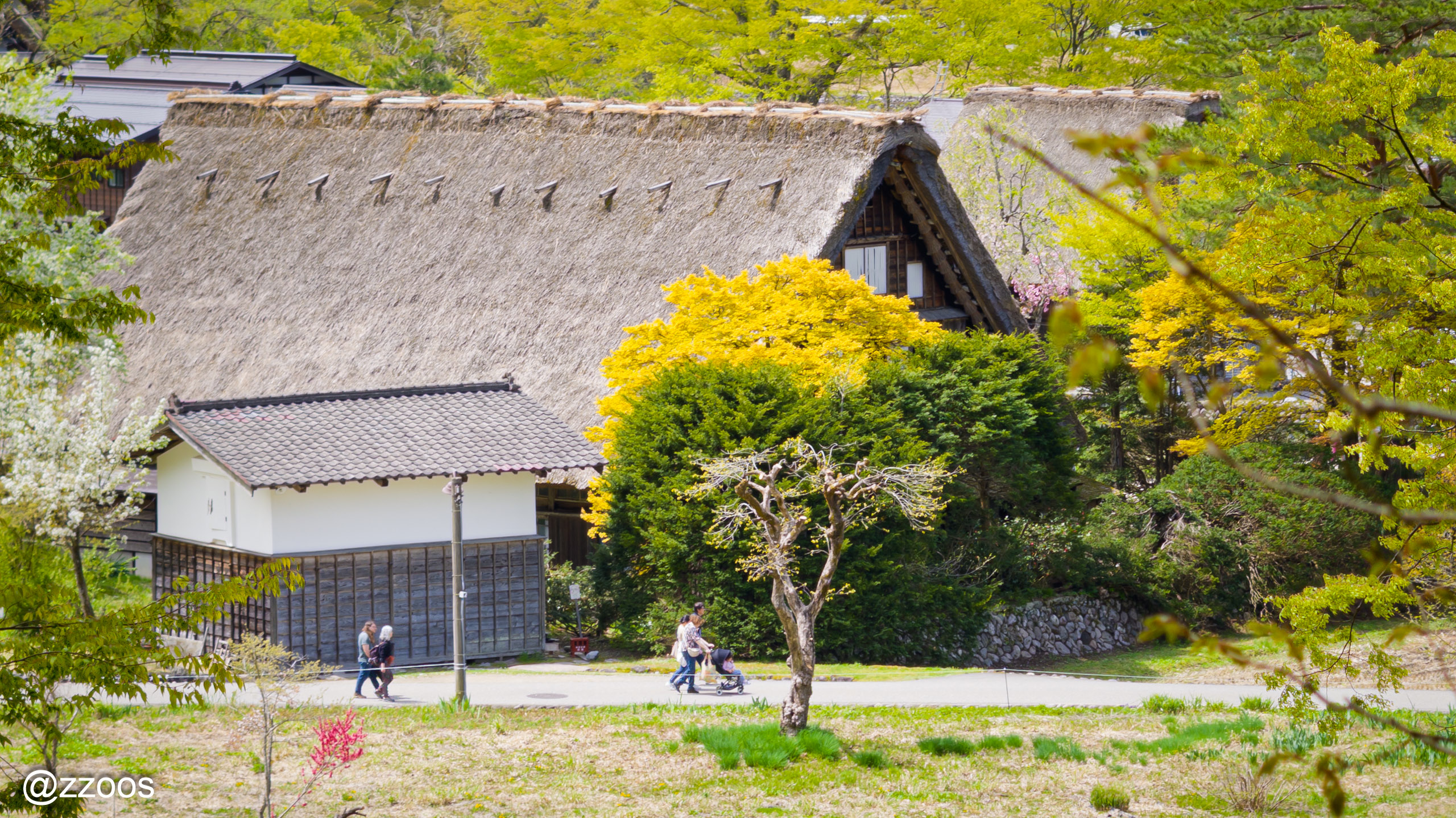
It doesn’t take long to get from the terminal to the observatory. The walking path up is well maintained, so it isn’t hard, either.
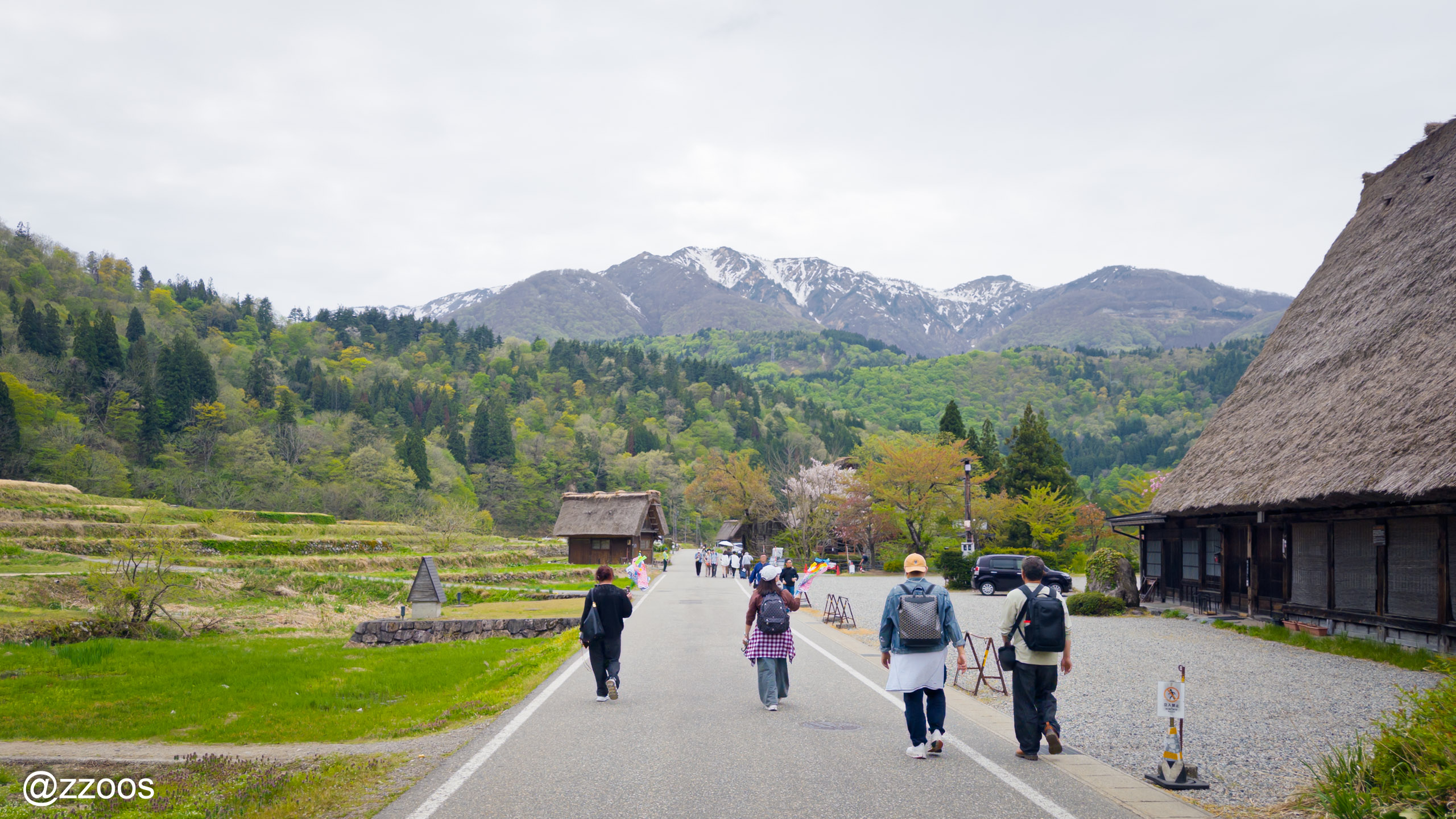
Climb up to the observatory and Shirakawa-go really does spread out below you at a single glance. There are a great many people, but not enough to get in the way of taking in the village scenery. Taking photos isn’t much trouble either.
That said, it looks completely different from the winter night view I’d seen online before the trip. That’s because the winter night-view photos had lit up only the ‘gassho-zukuri.’ So in other seasons, especially by day, you also see the roads and buildings that should have been buried in darkness and snow.
It wasn’t as impressive as I’d expected, but it’s clearly a fine view.
Oh—this observatory is named the Ogimachi Castle Site Observatory, right? So this is the site where Ogimachi Castle (荻町城) once stood. Ogimachi Castle wasn’t a castle built up with stone; it was more like a fortress that used the terrain as it was, with wooden fences put up to watch for enemies.
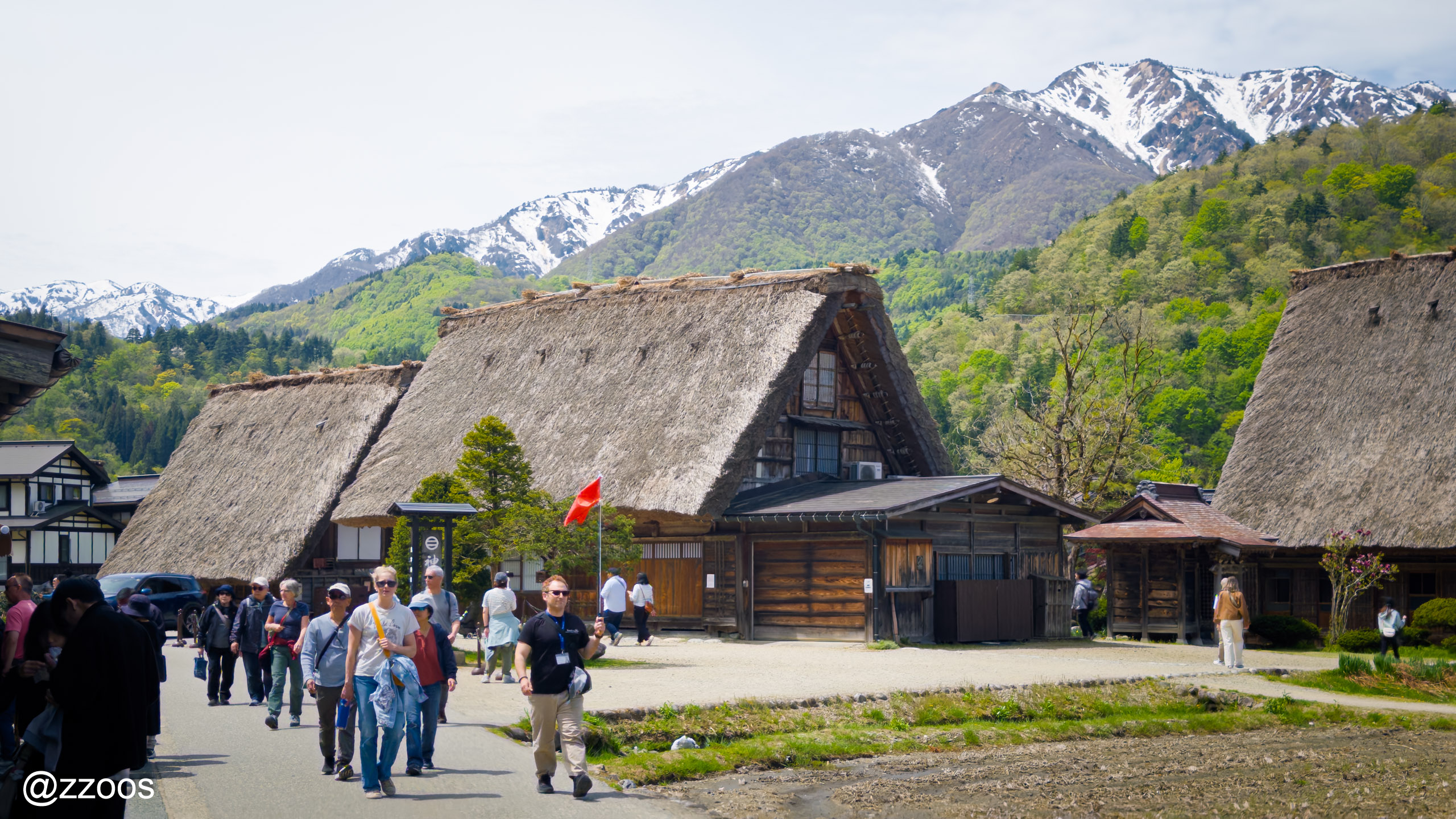
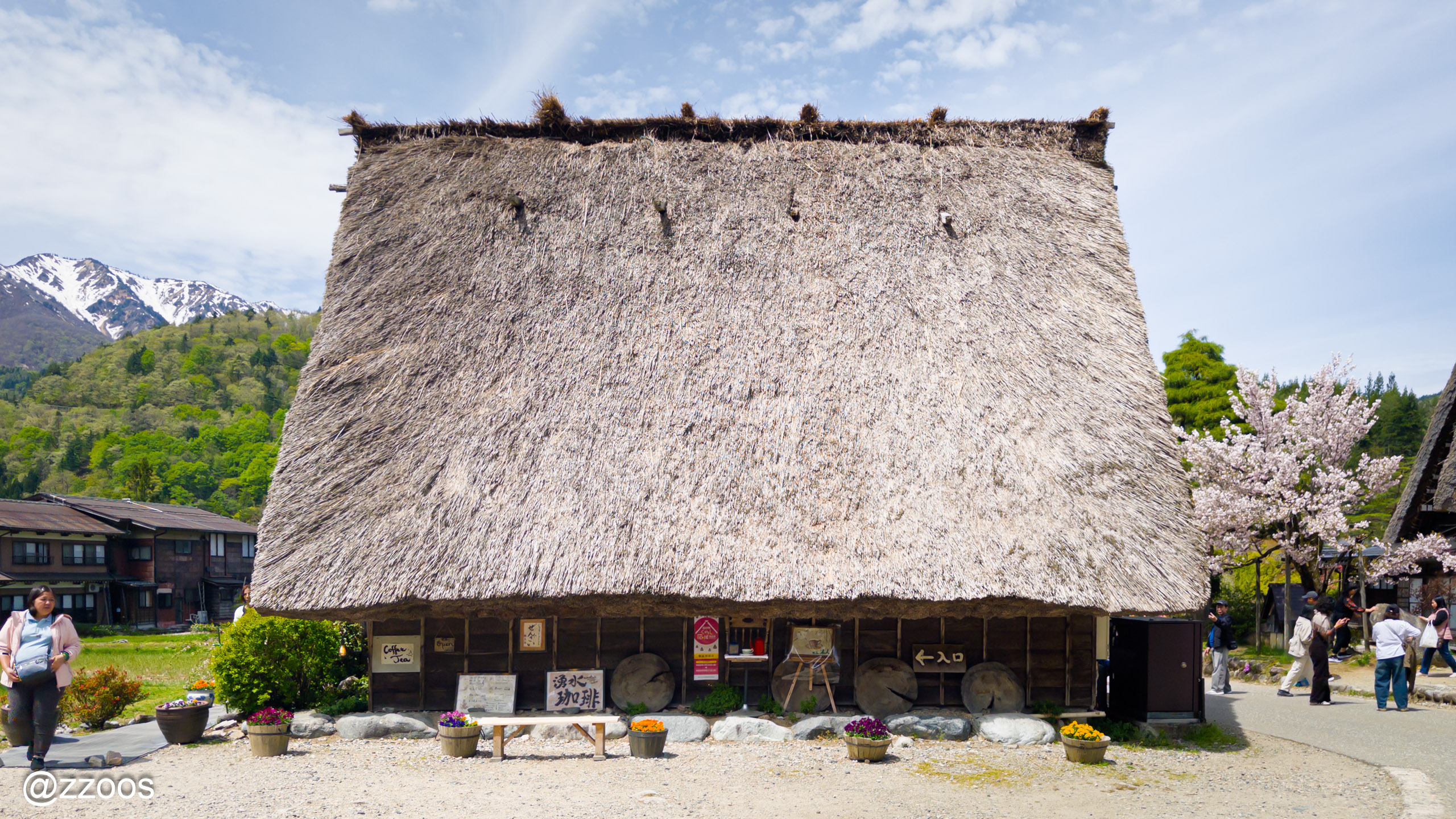
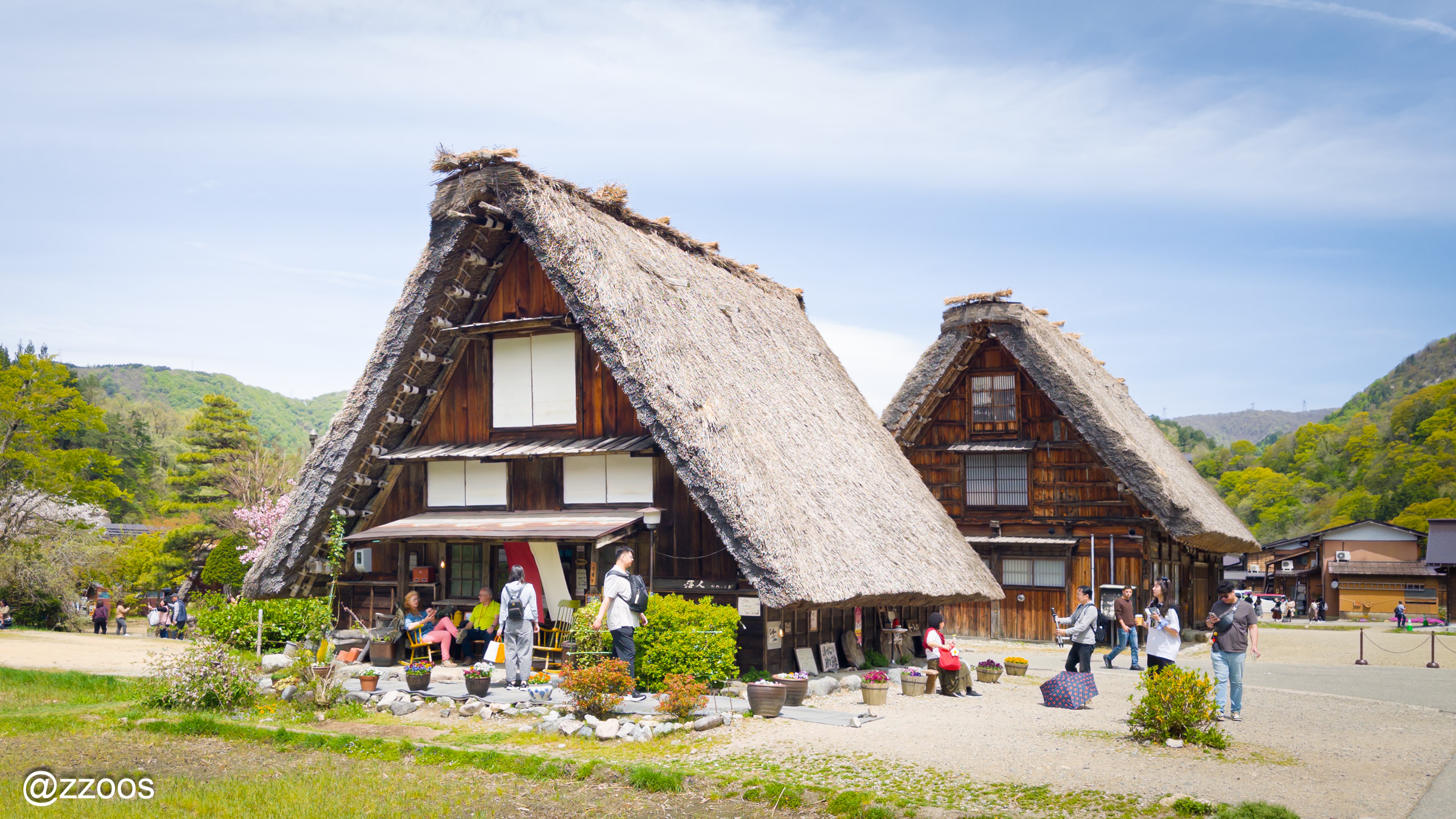
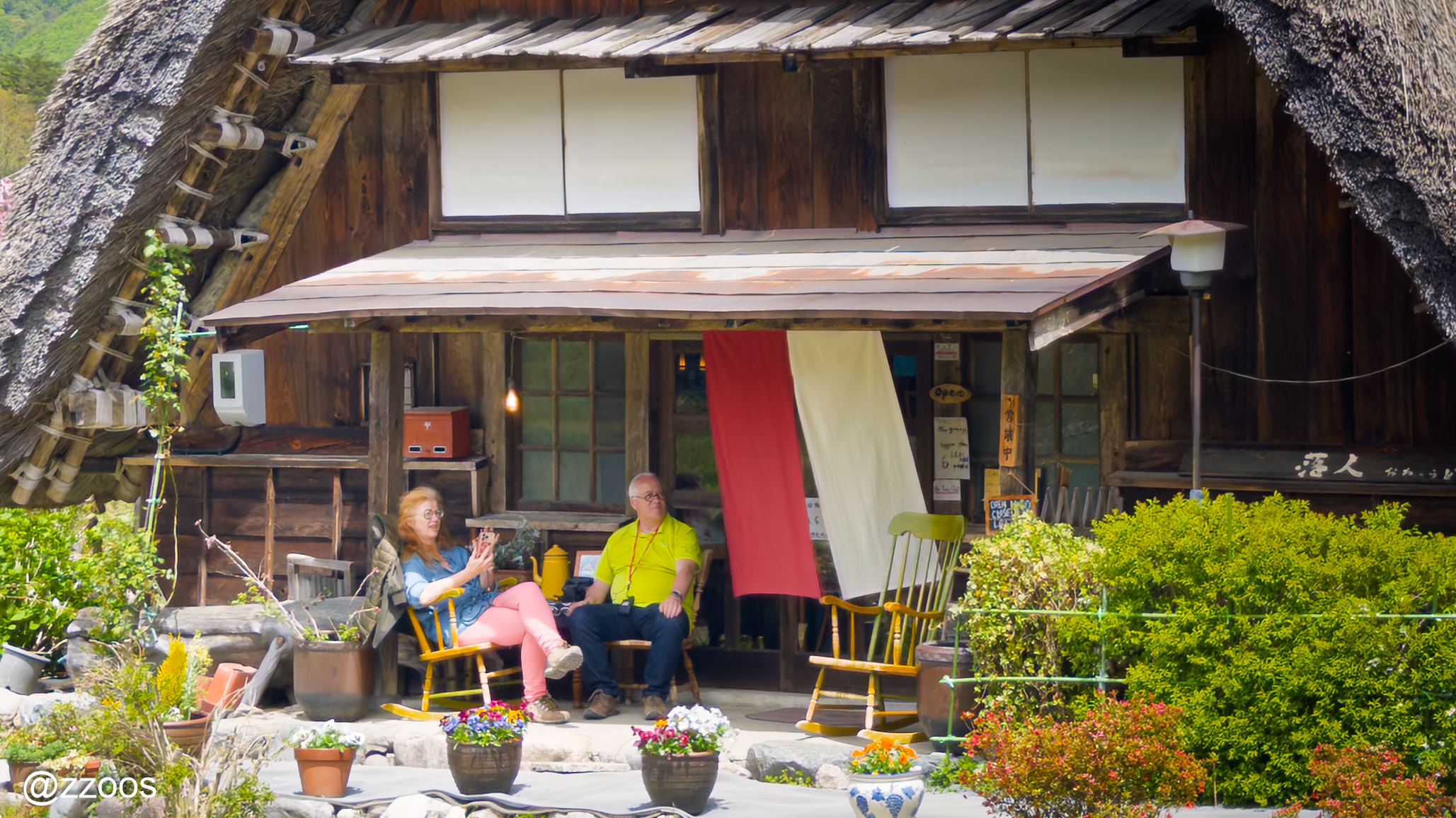
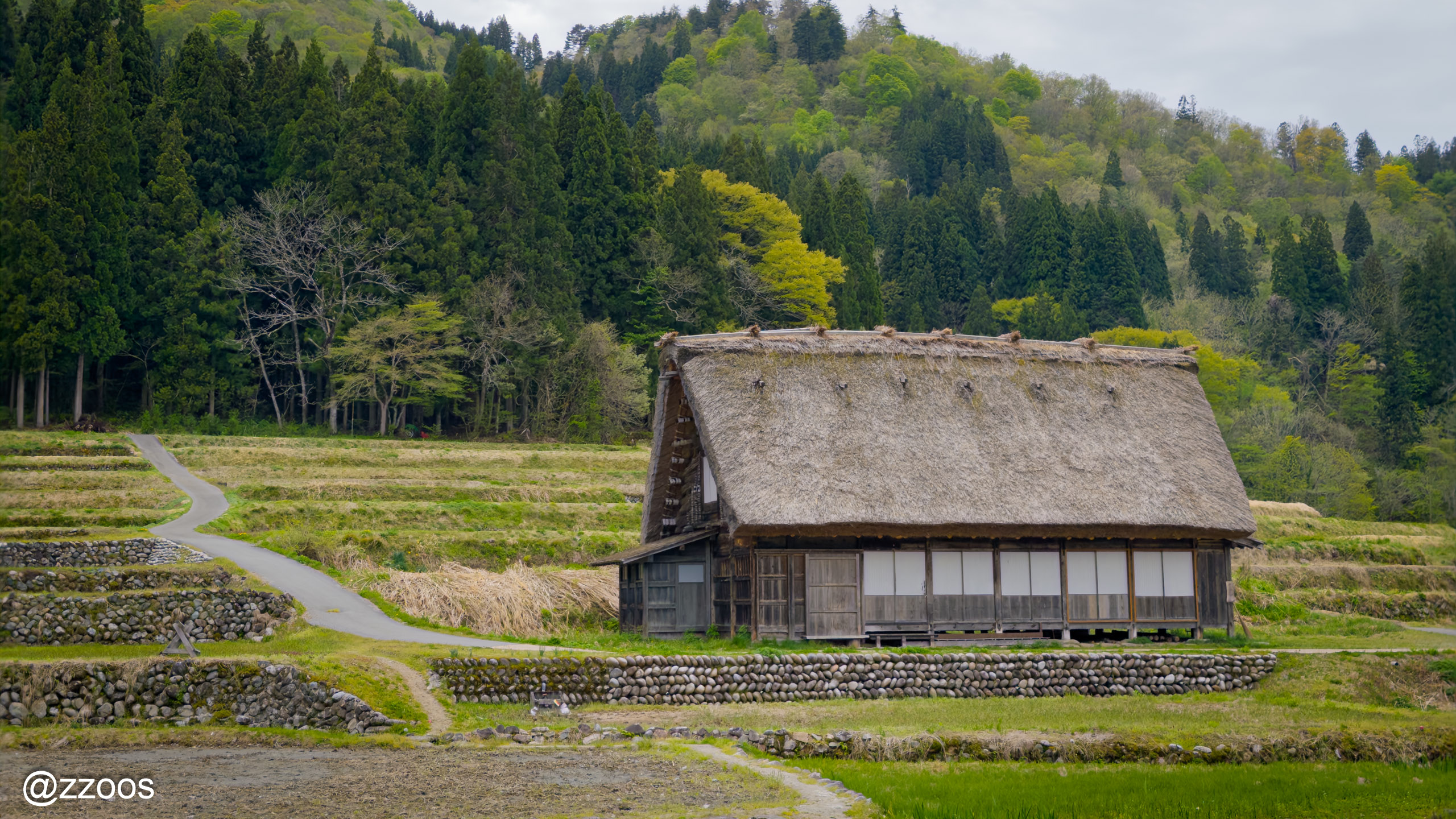
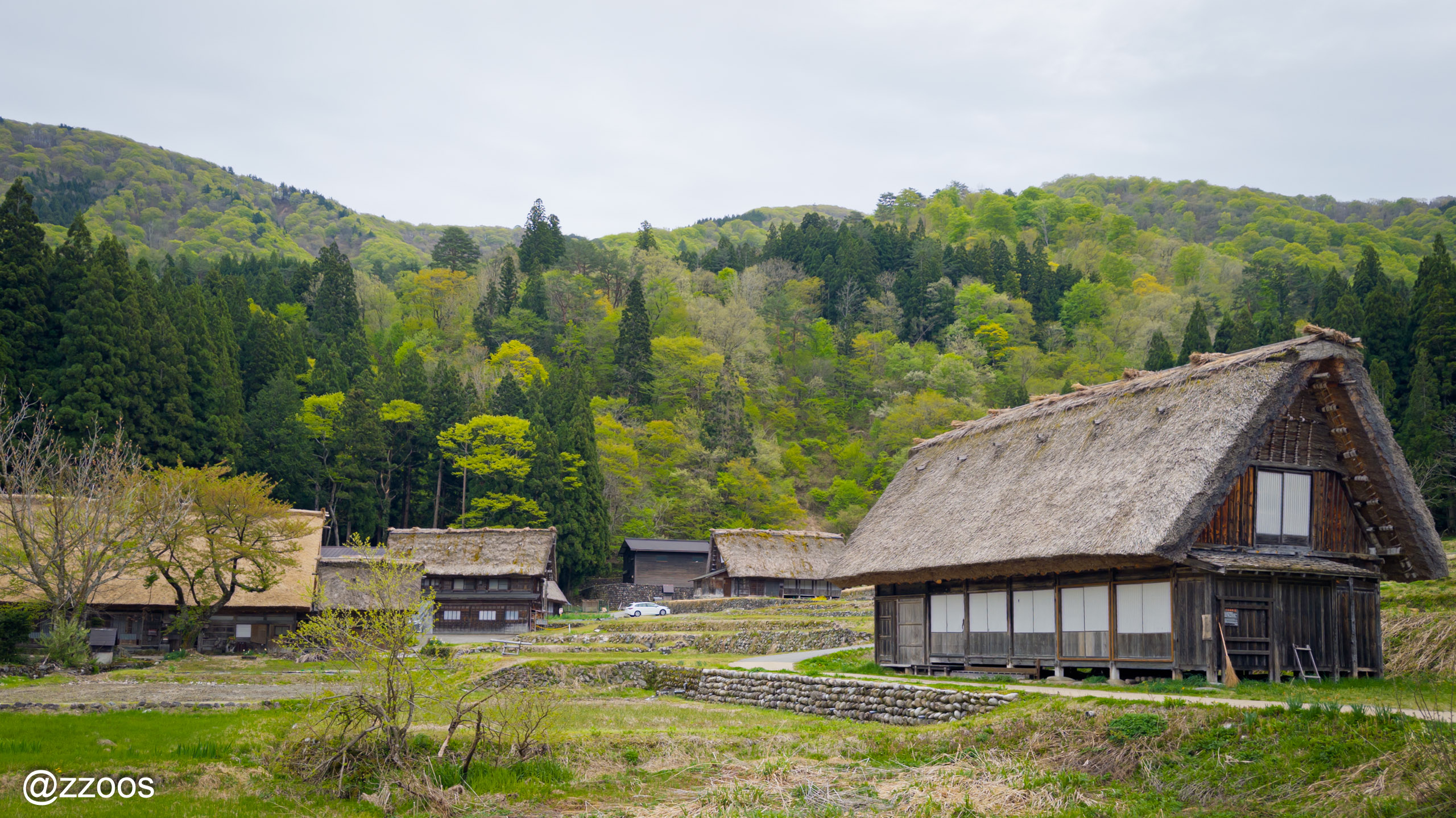
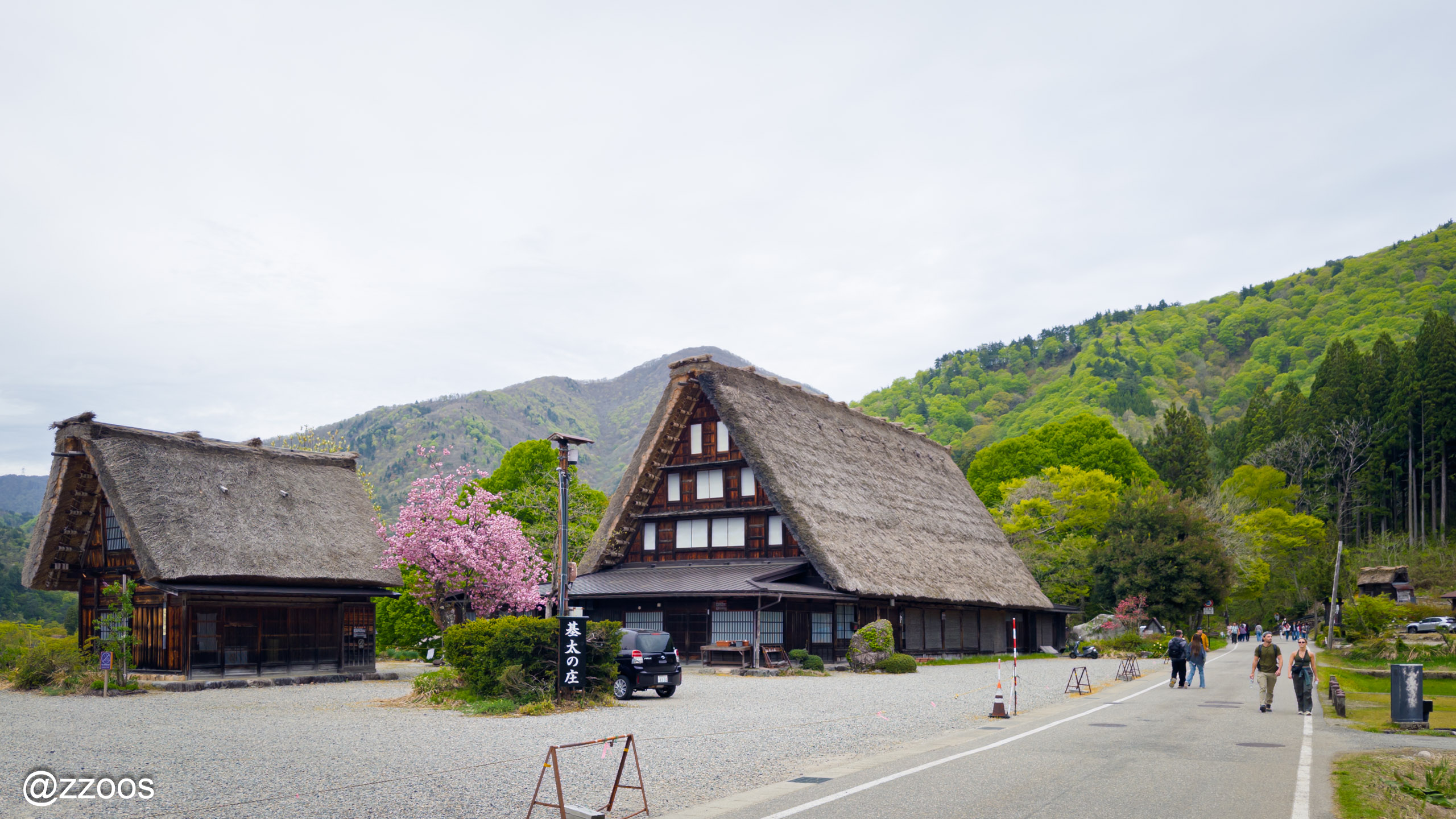
That distinctive roof shape called gassho-zukuri (合掌造り). The name was given, they say, because it resembles hands pressed together in prayer. There are a few more villages famous for this kind of roof.
The village of Ogimachi (荻町) in Gifu Prefecture, known as Shirakawa-go, and the villages of Ainokura (相倉) and Suganuma (菅沼) in the Gokayama (五箇山) area of Toyama Prefecture (富山県)—those are exactly such places.
These villages are all registered as UNESCO cultural heritage sites.
That said, the reason this Ogimachi village—that is, Shirakawa-go—is famous now is that the village is relatively large in scale and the easiest to reach, so it draws an overwhelming number of tourists.
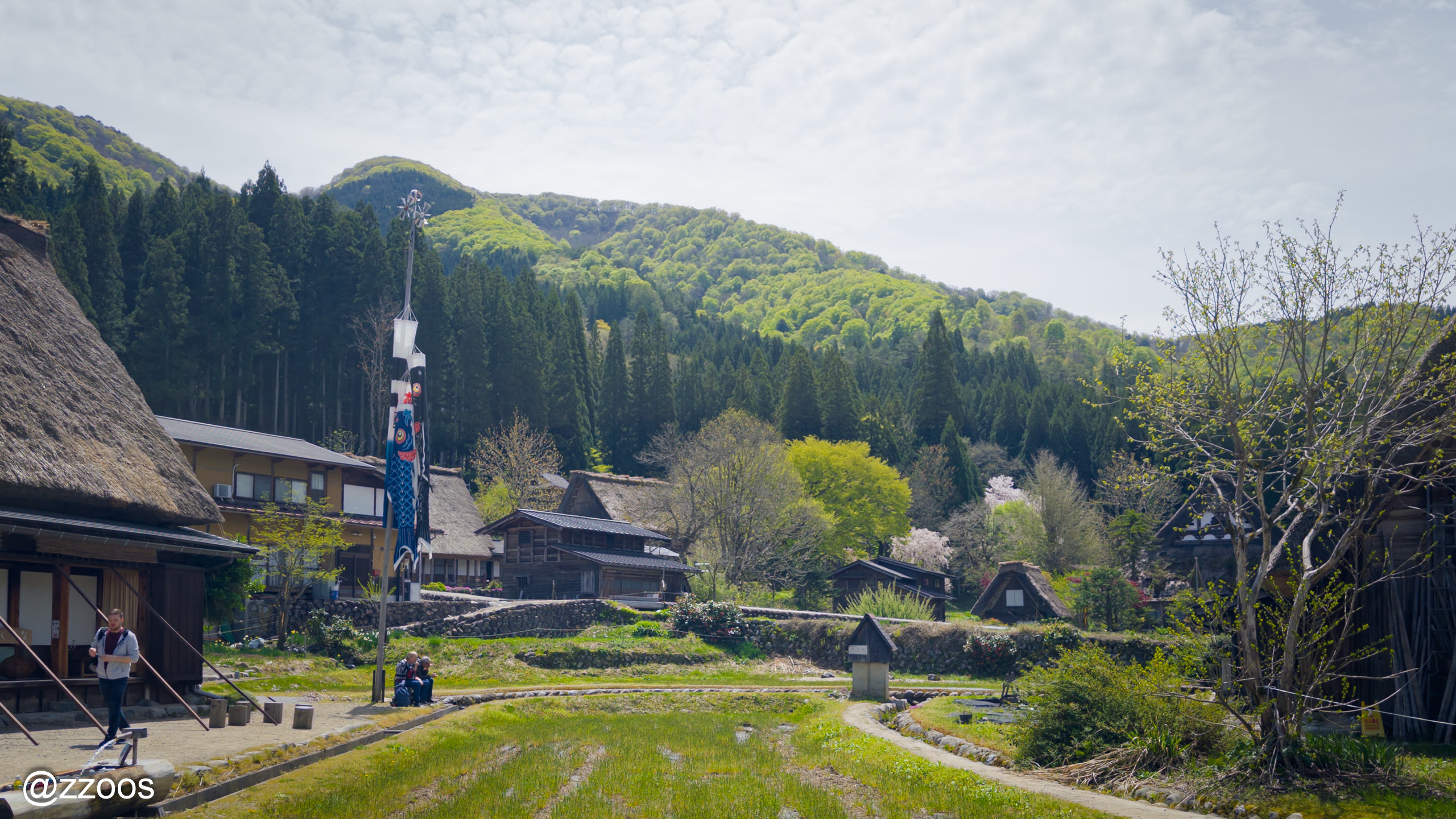
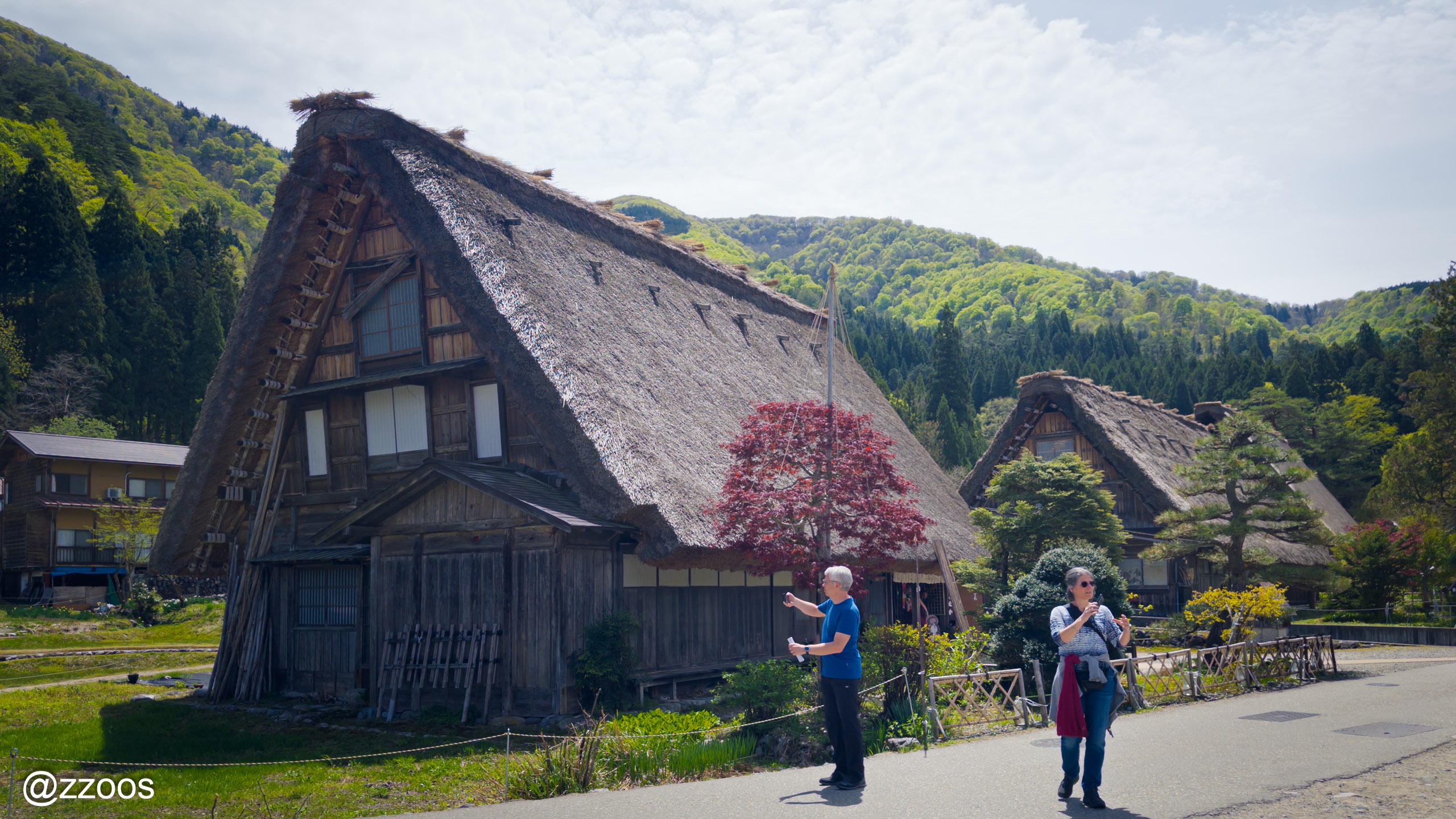
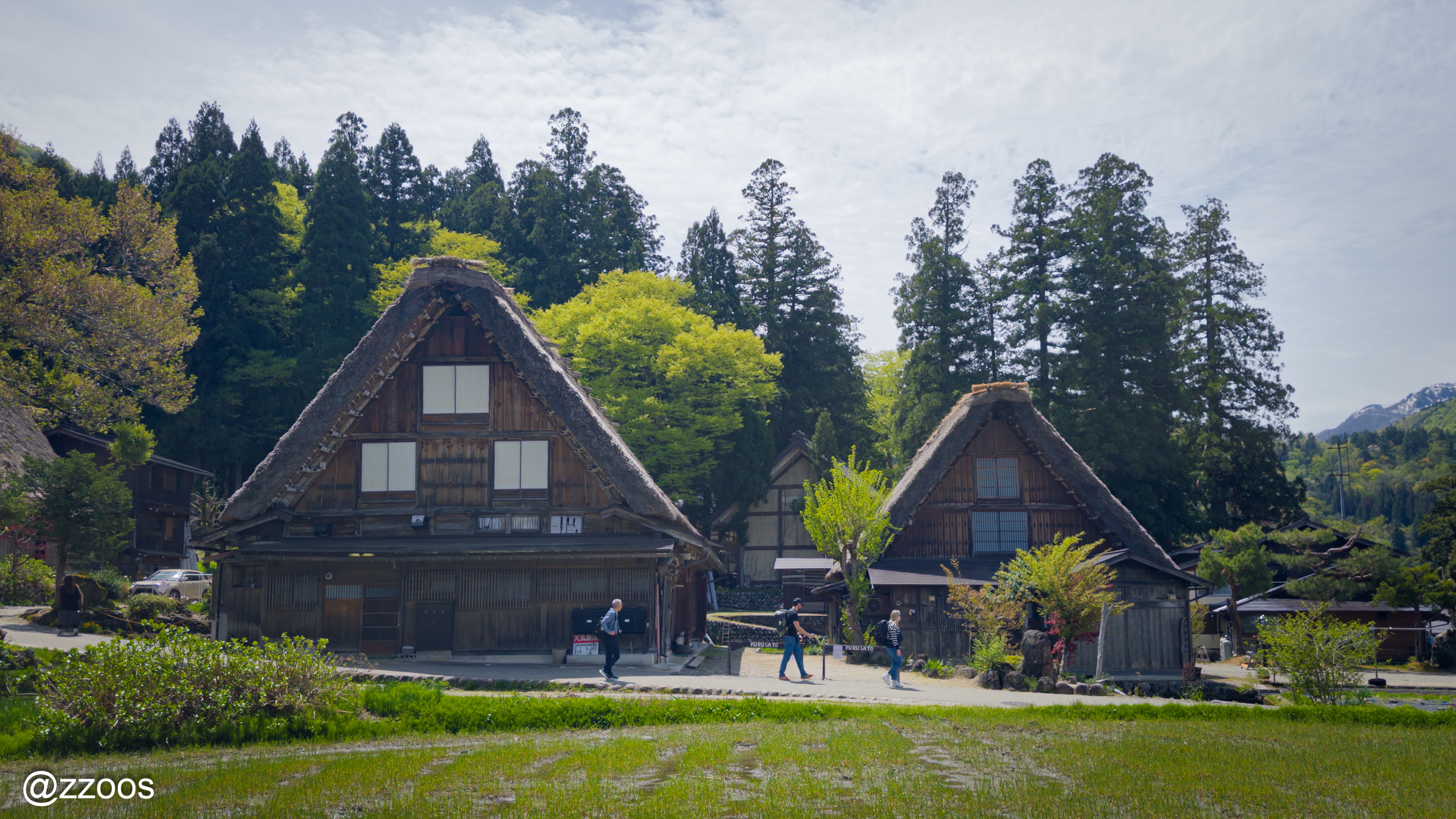
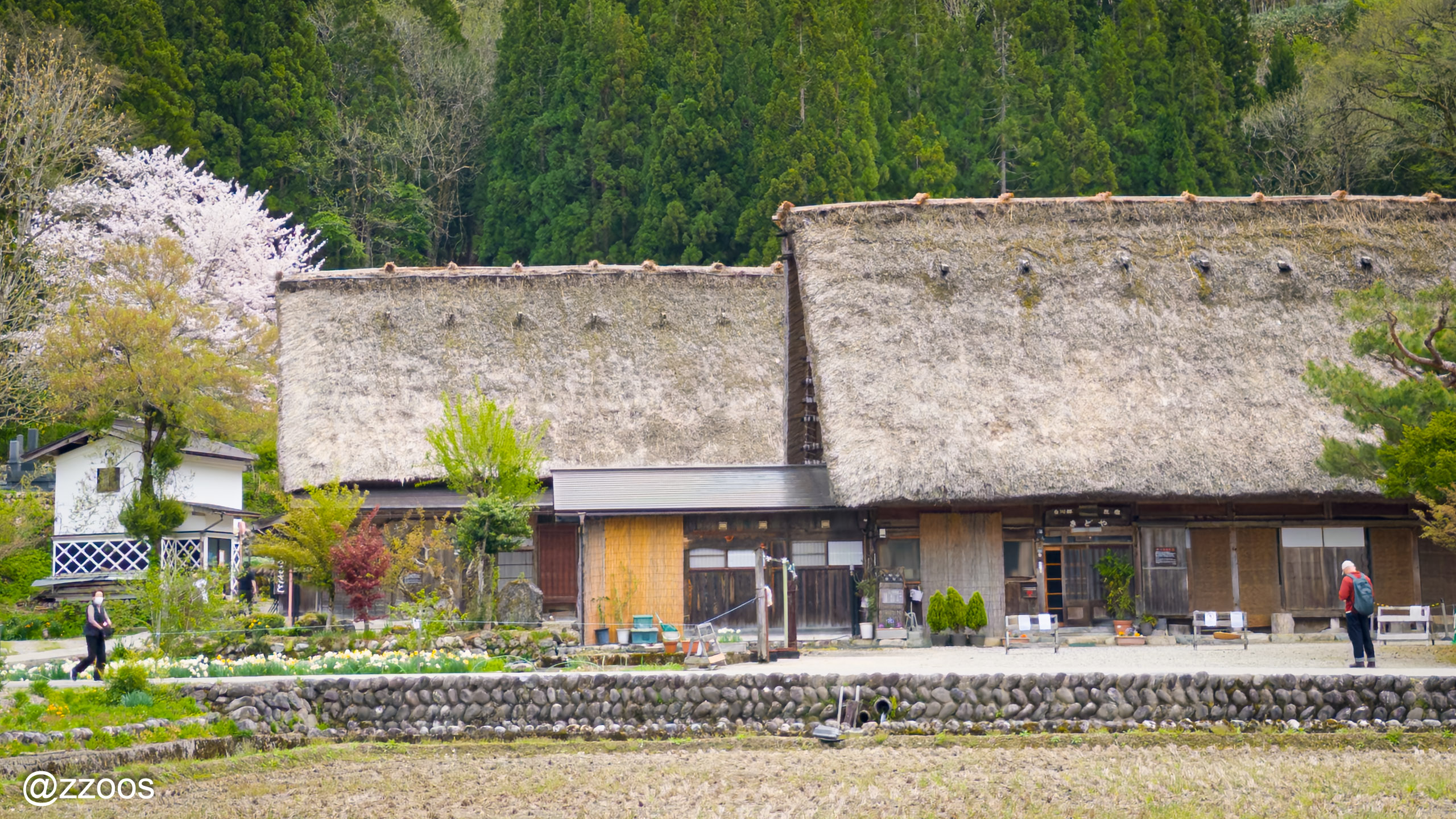
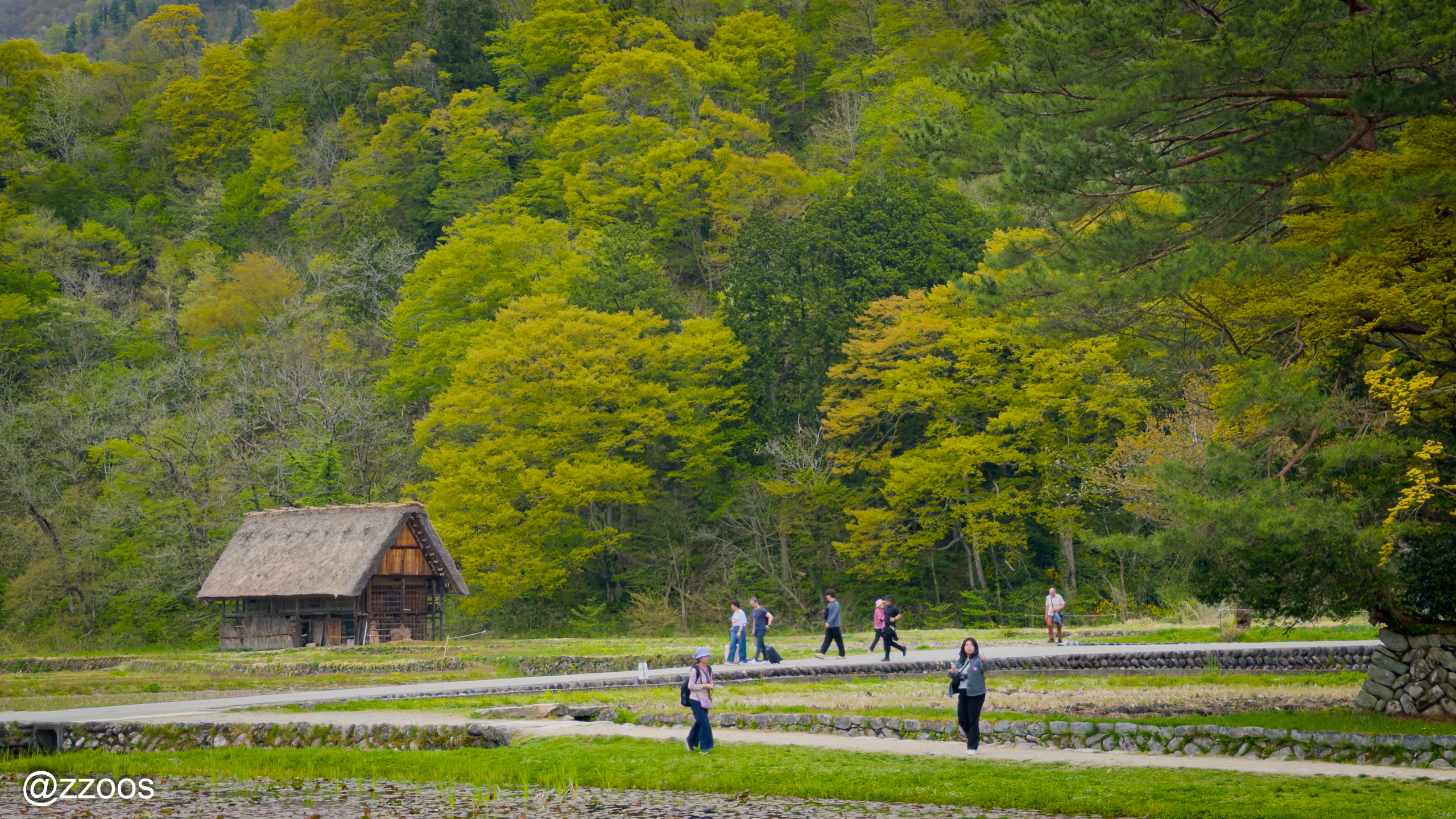
Those pointed gable roofs called gassho-zukuri are a form made to overcome nature.
This area is a region where humid air blowing in from the sea hits the mountain range and brings tremendous snowfall. So to keep snow from piling up on the roofs, they ended up with this pointed shape.
Thanks to that, the village came to have a distinctive look, and now it’s become a tourist spot that enormous crowds flock to see.
Those enormously large gassho-zukuri are re-thatched roughly once every thirty to forty years, they say. For a single house that’s a long stretch, but for the whole village there are quite a number of roofs, so in practice one or two houses re-thatch their roofs every year.
At that time the whole village gathers and works on it together. In their own words they call this Yui (結, ゆい). In Korean terms, it’s like pumasi—our old custom of shared labor.
The truth is, it wasn’t registered as UNESCO heritage simply for those pointed roofs alone. The roofs grew pointed to overcome the environment deep in the mountains, and to replace those roofs the village built a culture and system of helping one another. Their whole ‘way of life,’ with all of that woven together, is what was registered as cultural heritage.
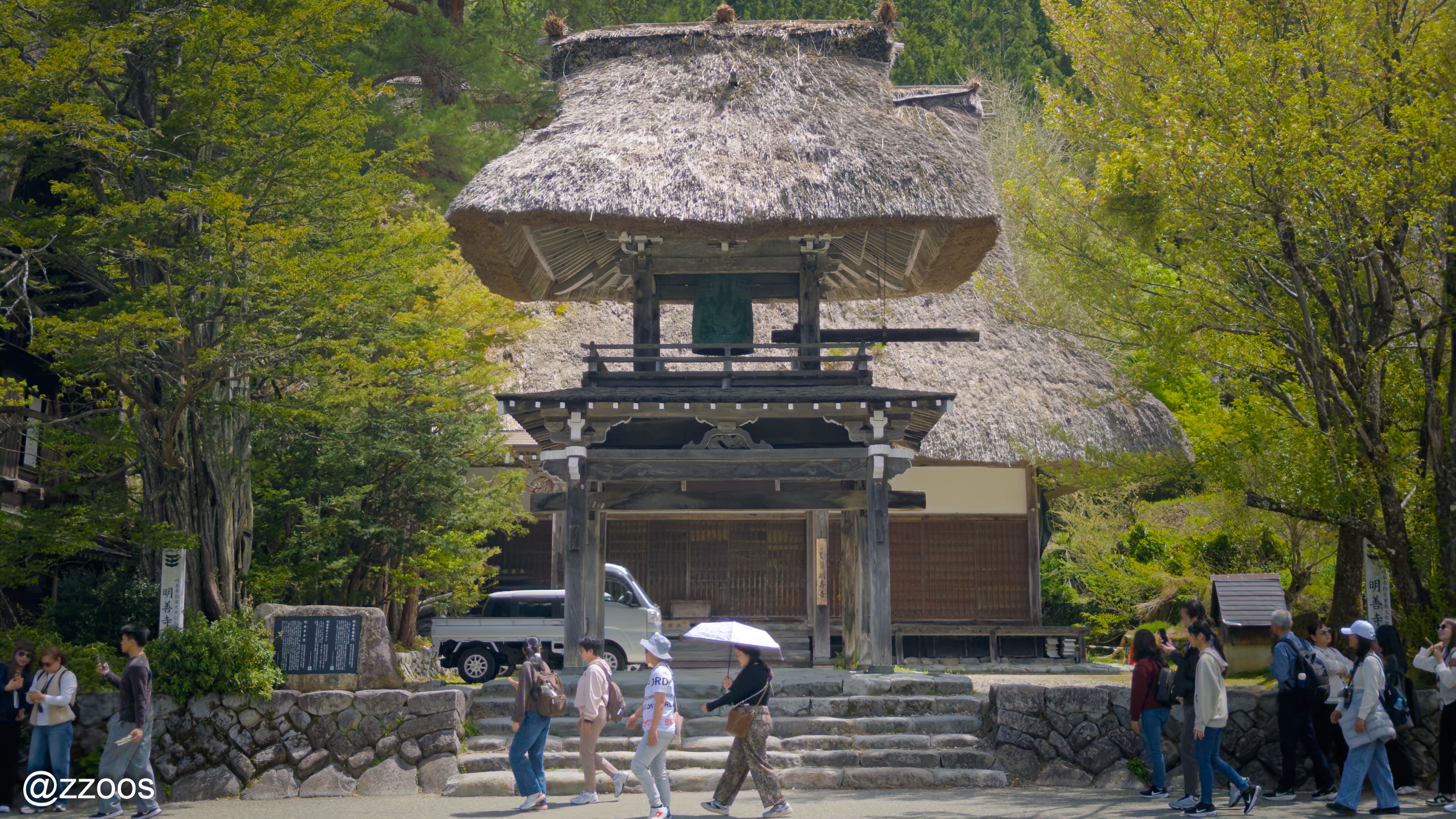
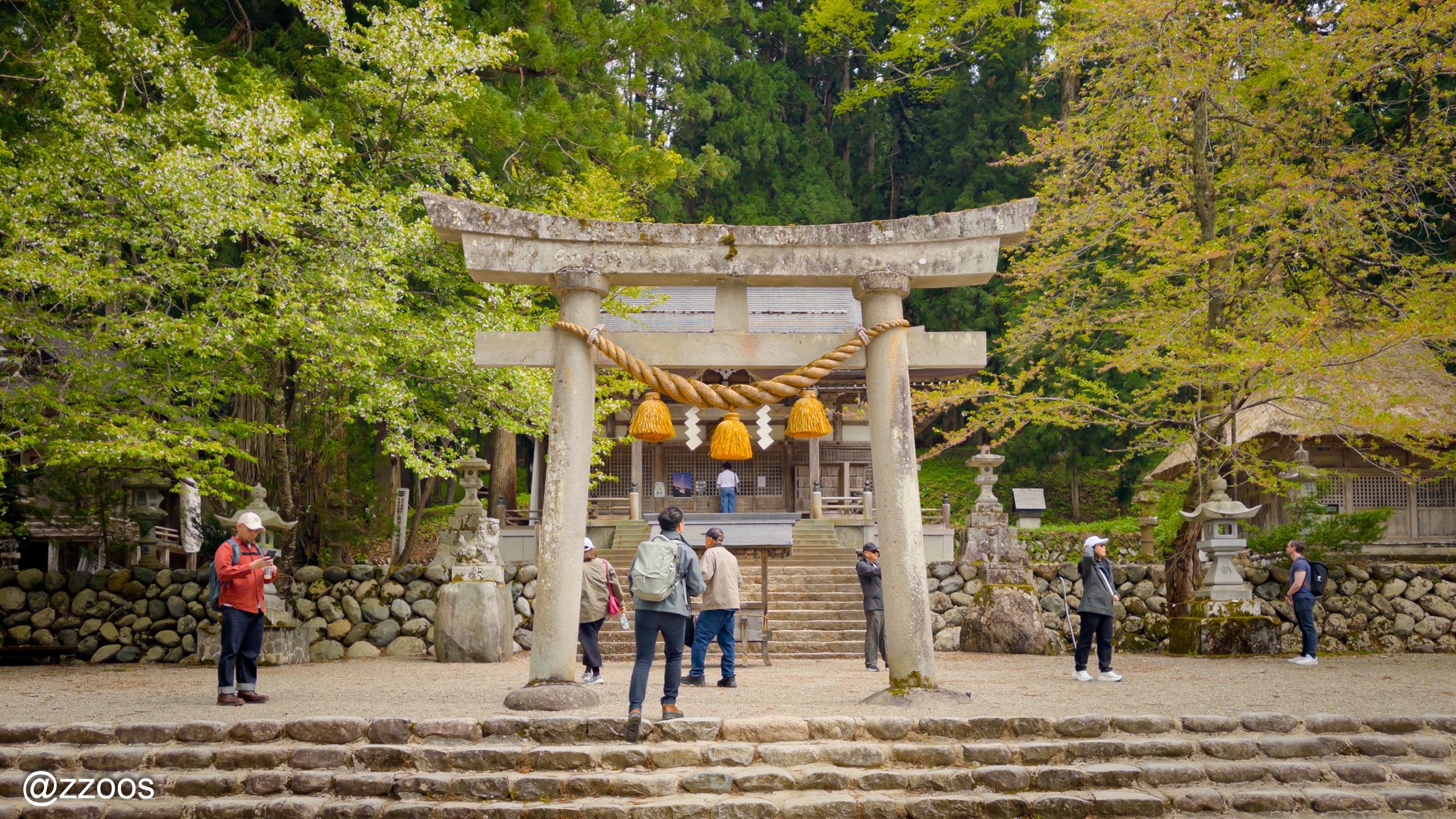
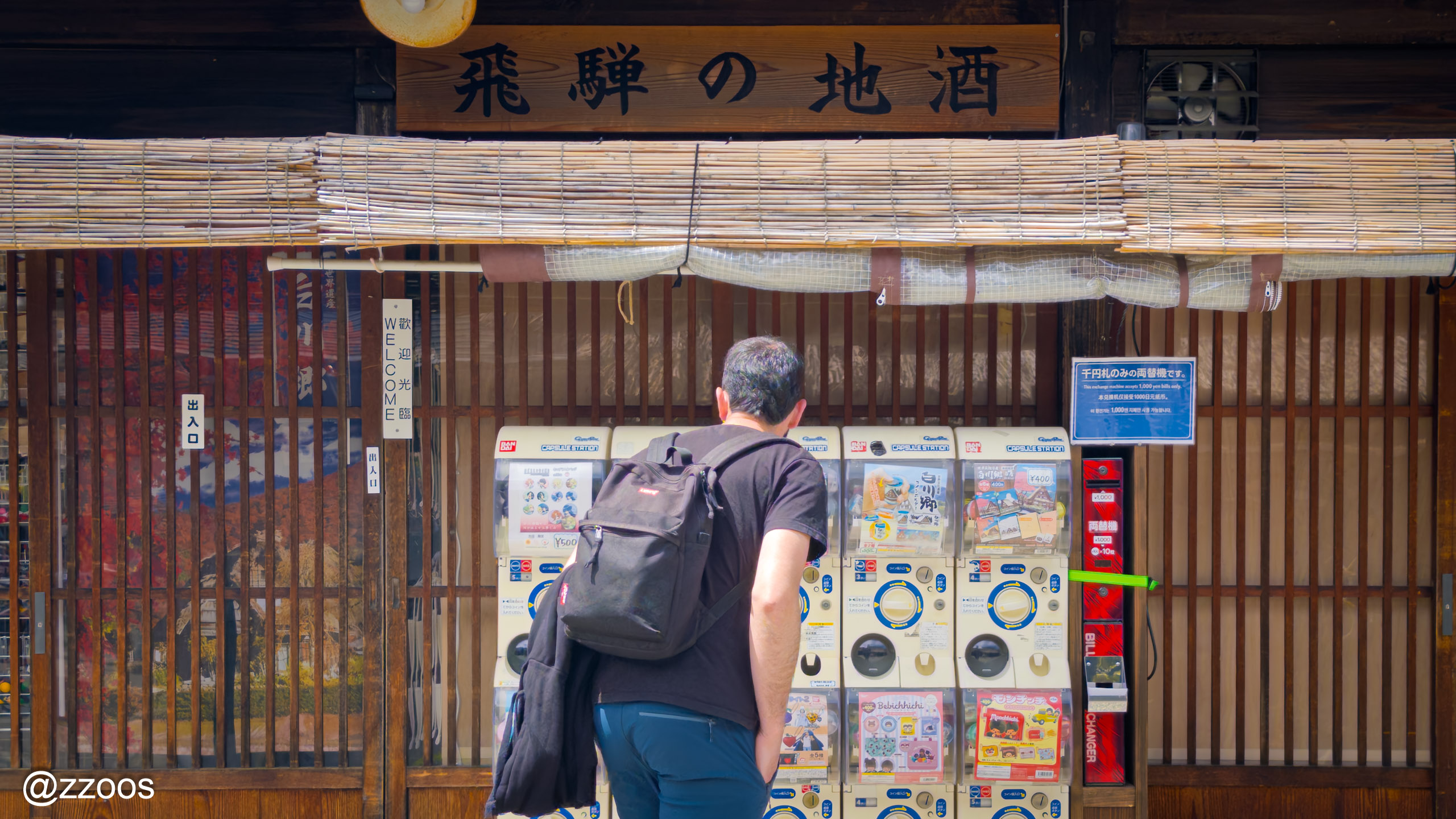
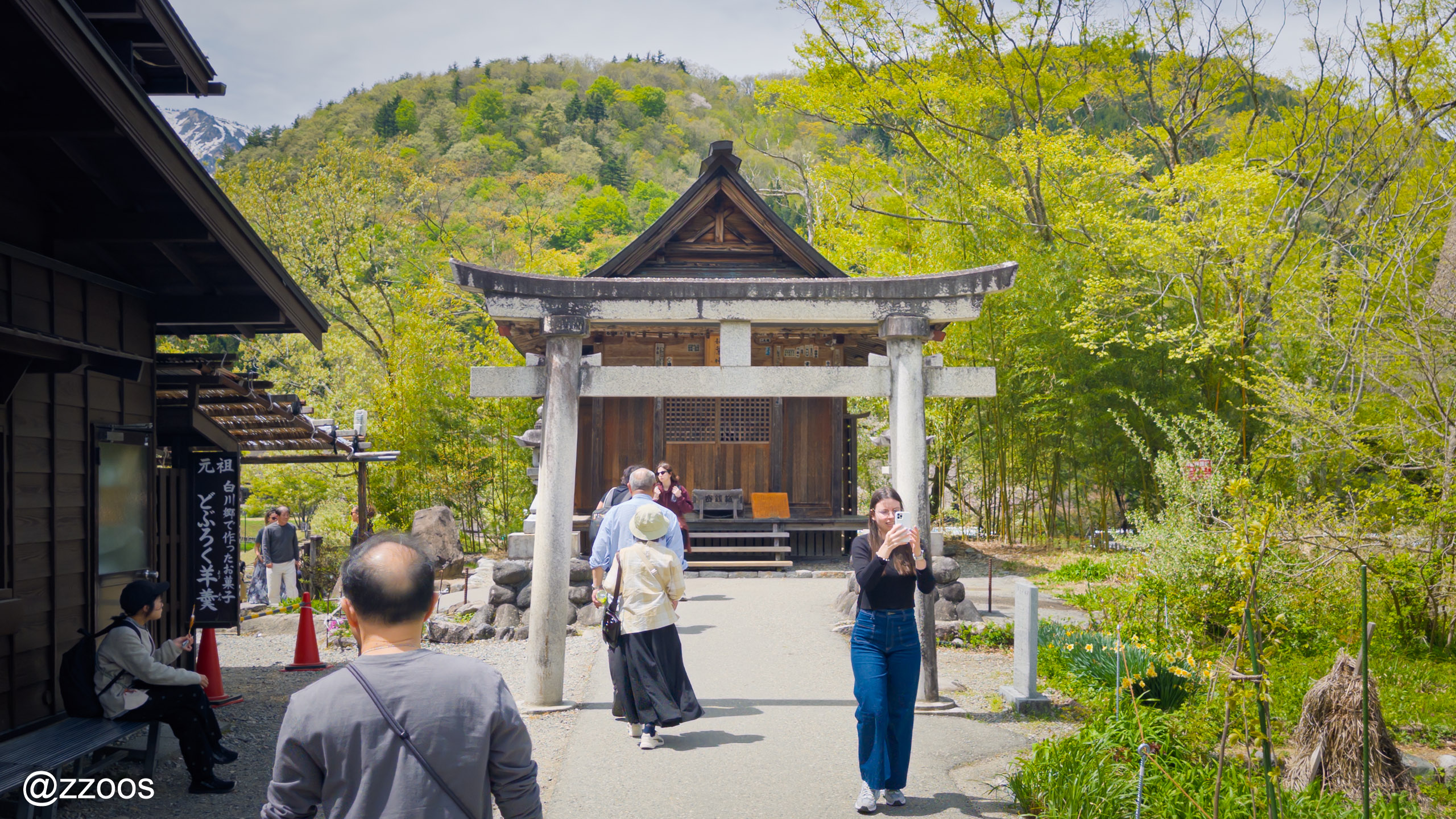
There’s another distinctive point to their way of life.
It comes precisely from this being range upon range of mountains, very deep in the hills—and from it being a place with an extreme environment where an enormous amount of snow falls.
Because it was an environment where doing economic work outdoors was hard, they had to carry out their economic activity inside the house.
Since a gassho-zukuri roof rises high and pointed, the house naturally gained second- and third-floor spaces. They lived on the first floor tending an irori (囲炉裏), a traditional Japanese hearth, and the smoke rising from that hearth warmed the second and third floors.
In those warmed second and third floors, they raised silkworms and kept up their livelihood, they say. And using the droppings from the silkworms they raised, down in the ground they cured saltpeter (焰硝), which served as the fuel for gunpowder.
Looked at this way, the start of those pointed gable roofs may have been ‘to keep snow from piling up,’ but its influence isn’t simple. Their whole life was shaped by the design of that roof.
Architecture really does reflect human beings and their lives, taking them in just as they are.
Today, I’m making the round trip from Kanazawa to Shirakawa-go by bus. But there are other ways to get to Shirakawa-go.
A route quite a lot of tourists choose is going by way of Takayama (高山). You could call it the closest city to Shirakawa-go. They say it takes about 50 minutes by bus, and there are also non-reserved, free-seating buses that don’t require a booking.
For people who—unlike me, staying put in Kanazawa—travel around this area moving from lodging to lodging, it’d be a course that lets you see Takayama and Shirakawa-go together.
And there’s also the option of taking a bus from Toyama (富山), which takes about the same time as from Kanazawa. The competition for reservations is apparently a bit less than from Kanazawa. There are also buses that go by way of the villages on the Gokayama side, they say.
Lastly, there’s apparently even a way to take a bus straight from Nagoya. It takes roughly 2 hours and 40 minutes, they say.
If you were starting from Nagoya, I’d think it might be better to take the Hida limited express that runs to Takayama instead. It’s a wide-view train, so it has the advantage of letting you enjoy the valley scenery, they say. From Takayama, you’d be able to use a bus to get to Shirakawa-go.
Beyond that, if you dig around the internet—Airbnb, Kayak, and so on—there are various courses that gather a group of people and set off. Shirakawa-go is a popular destination, after all.
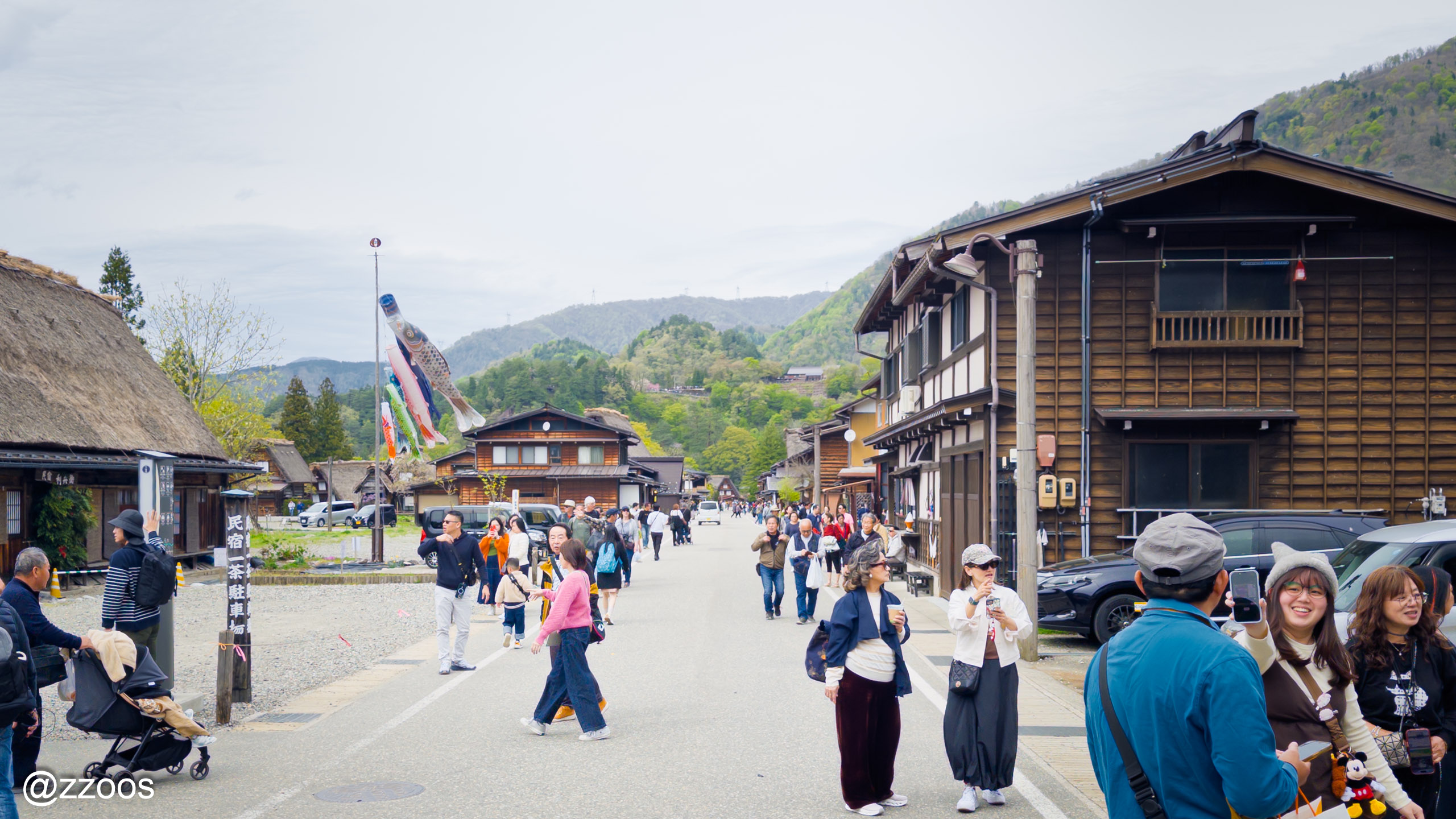
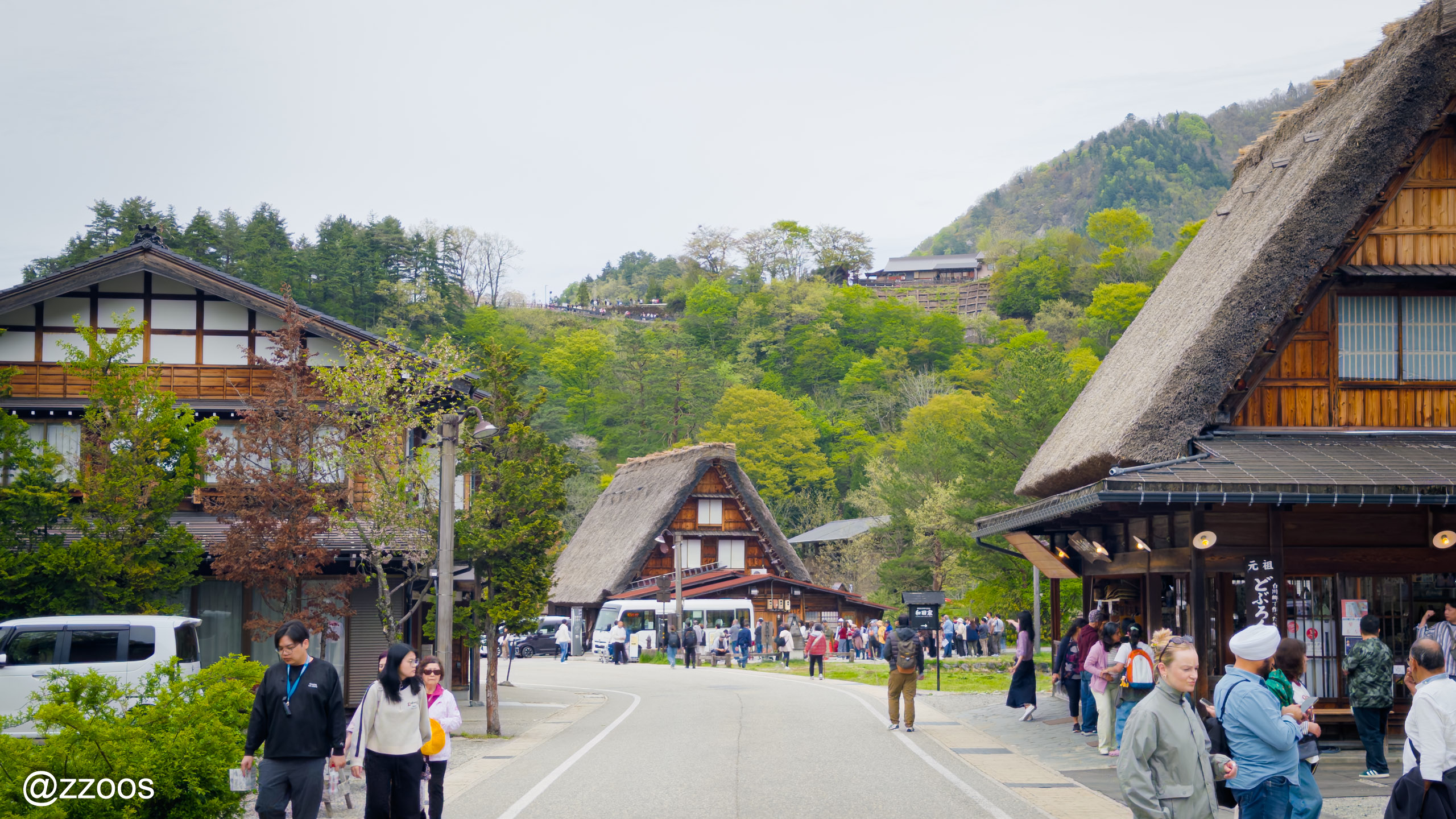
Before I knew it, it’s getting close to 3 in the afternoon. Now I should head back to the bus terminal and catch the bus for Kanazawa. By the time I reach Kanazawa it’ll be around 4:30.
Oh—and there are some stories I’ve left out of this post.
The story of eating soba for lunch, and of looking around the Shirakawa-go Gassho-zukuri Minkaen (白川郷合掌造り民家園)—a place that feels like a kind of gassho-zukuri museum—I’ll show you in another post.