I’d been up and out early, wandering around, so I started getting hungry a little sooner than usual. There aren’t many places to eat in Shirakawa-go. And with so many tourists around, the restaurants were bound to get crowded once lunchtime hit.
11 in the morning. A bit early for lunch, but a good time to eat before the crowds.
I used Google Maps to find a soba place called Nomura. When I got to the storefront, it read “Teuchi Soba-dokoro” (手打ちそば処). It means a soba shop where the noodles are pulled by hand.
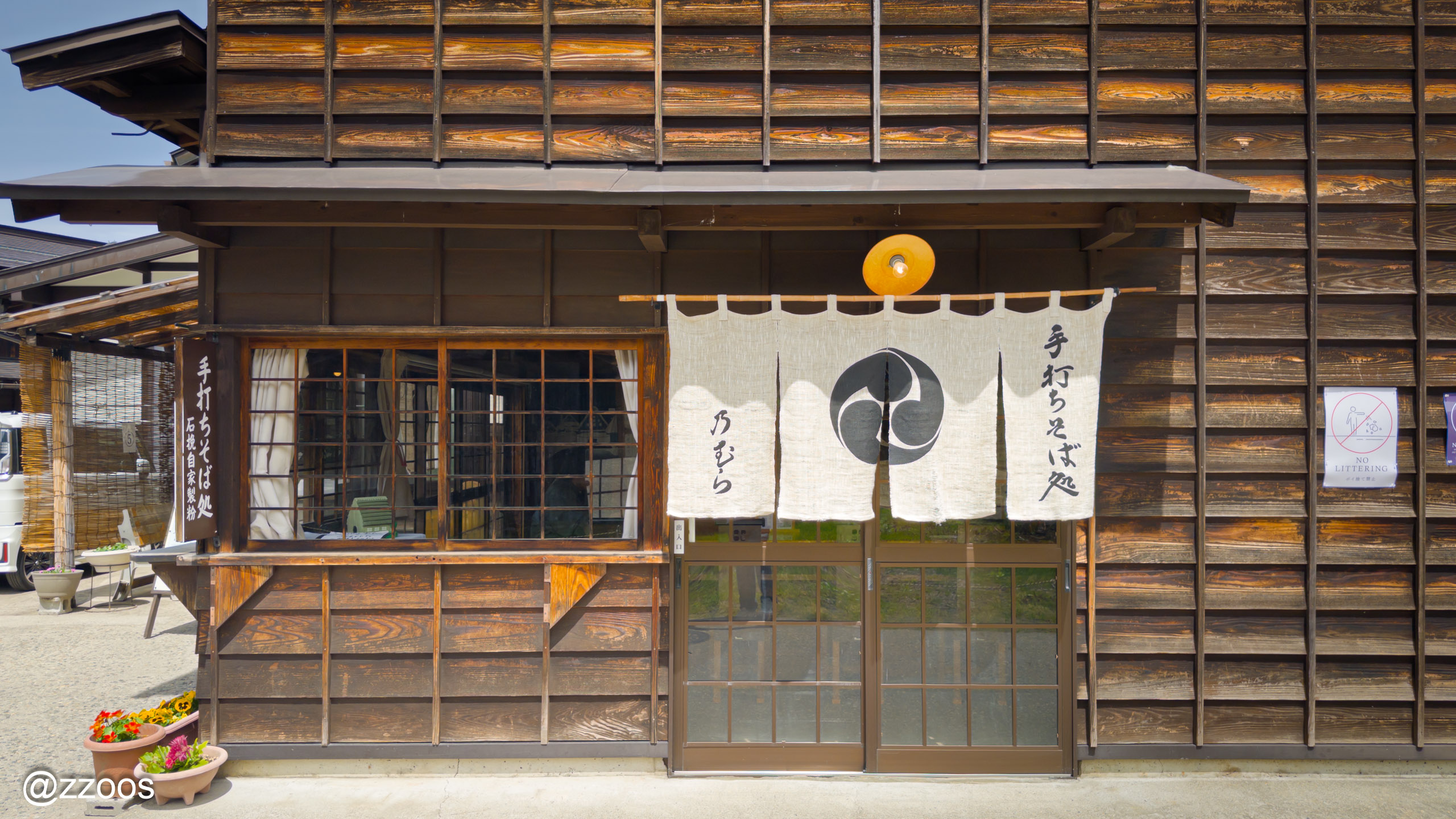
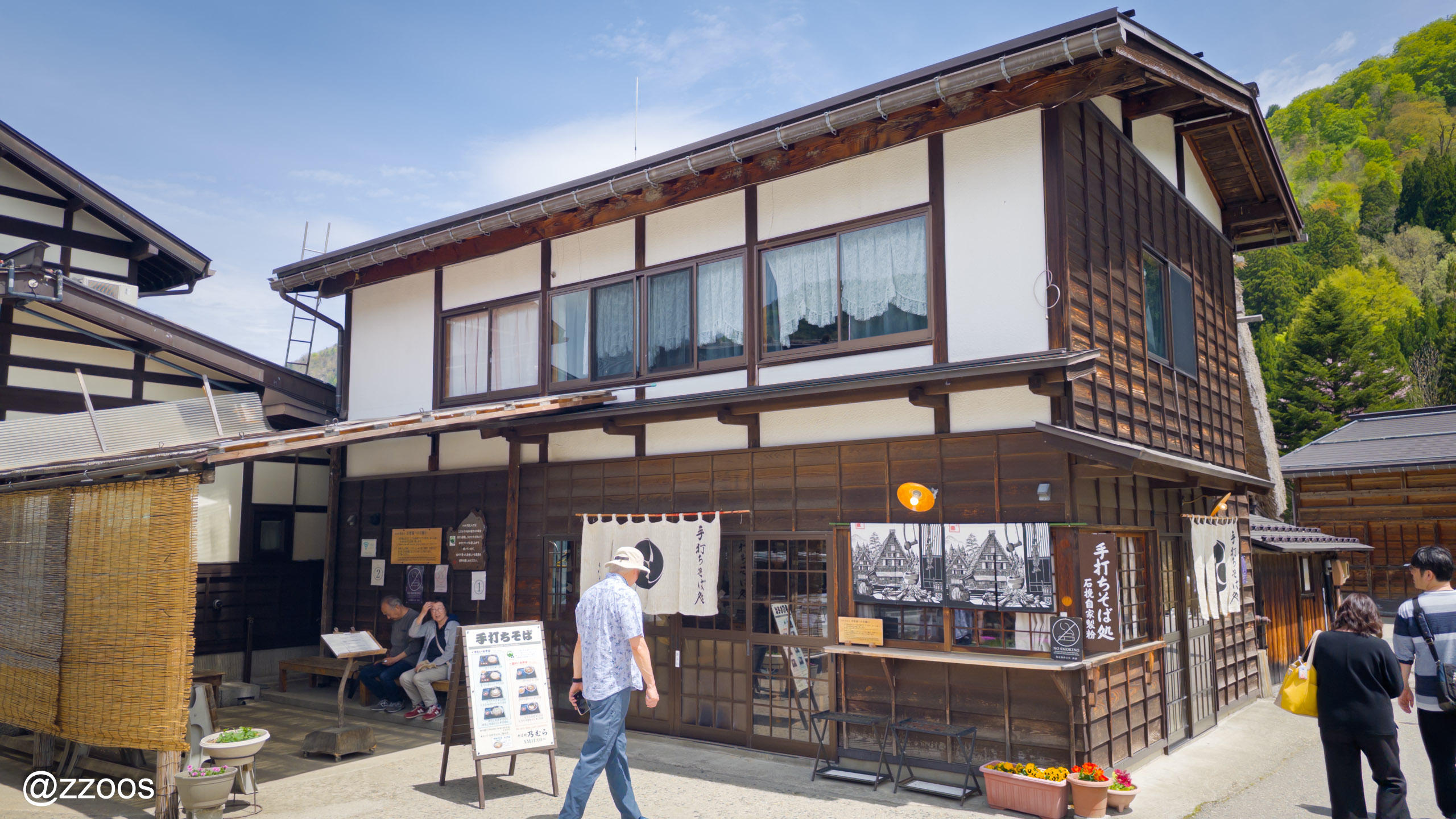
Seeing the word “dokoro” (処) suddenly made me curious about something.
When you look at the names of shops in Japan, certain words tend to get tacked on at the end. For example, sometimes it’s “ya” (屋), sometimes it’s “mise” (店). I got curious about what each of these words means, or what nuance it carries. So I did a little searching.
First, “mise” (店) is the most standard, neutral word for a shop. It’s a slightly dry, matter-of-fact expression.
The one you see most often while traveling is “ya” (屋) — soba-ya, ramen-ya, izakaya, tachinomi-ya, and so on. It has an intuitive, friendly, down-to-earth feel. That’s probably why you see it so much.
“Ba” (場), as in sakaba (酒場), apparently means a place where people gather and do something in a lively, bustling way. The nuance conveys the atmosphere itself rather than any expertise.
“Dokoro” (処) carries the meaning and nuance of a special space that strips away the commercial coloring and holds expertise instead. Today’s restaurant is a “soba-dokoro,” so I suppose they wanted to convey that it’s a more specialized place than a “soba-ya.” On my Karatsu trip a while back, I visited a place called Nomidokoro (呑処) too. That one probably carried the meaning of being serious about its drinks.
I haven’t seen the name “bō” (坊) very often. It’s apparently a word that gives a rough but warm, sturdy feeling, like a gathering spot where regulars come together. I hear you can often spot it on the signs of down-to-earth places selling okonomiyaki or monjayaki, or on casual taverns you drop into.
Beyond those, “an” (庵) has a feel of a place removed from the worldly, a literary and refined image. It’s mainly used for traditional soba shops that don’t mass-produce but sell only a set amount each day, teahouses tucked away in deep alleys, or quiet, high-end ryōtei where people drink in peace. The restaurant in the drama Osen, which starred Aoi Yu, was named Isshōan (一升庵).
“Tei” (亭) is another word used mainly for high-end restaurants. It’s used for somewhat pricier traditional cuisine specialists, yakiniku places that grill the meat properly, or long-established Western-style diners with a long history. In Korea too, shops ending in “jeong” tend to have a somewhat upscale feel, don’t they?
“Rō” (楼) is also used for high-end restaurants, but it gives a sense of larger scale. Apparently it’s an expression you only see at very large traditional ryokan over a century old, venerable Chinese cuisine specialists that have held their ground since the early modern era, or truly high-end dining places.
From now on, when I see a shop’s name, I’ll be able to roughly guess what kind of atmosphere it has… or will I?
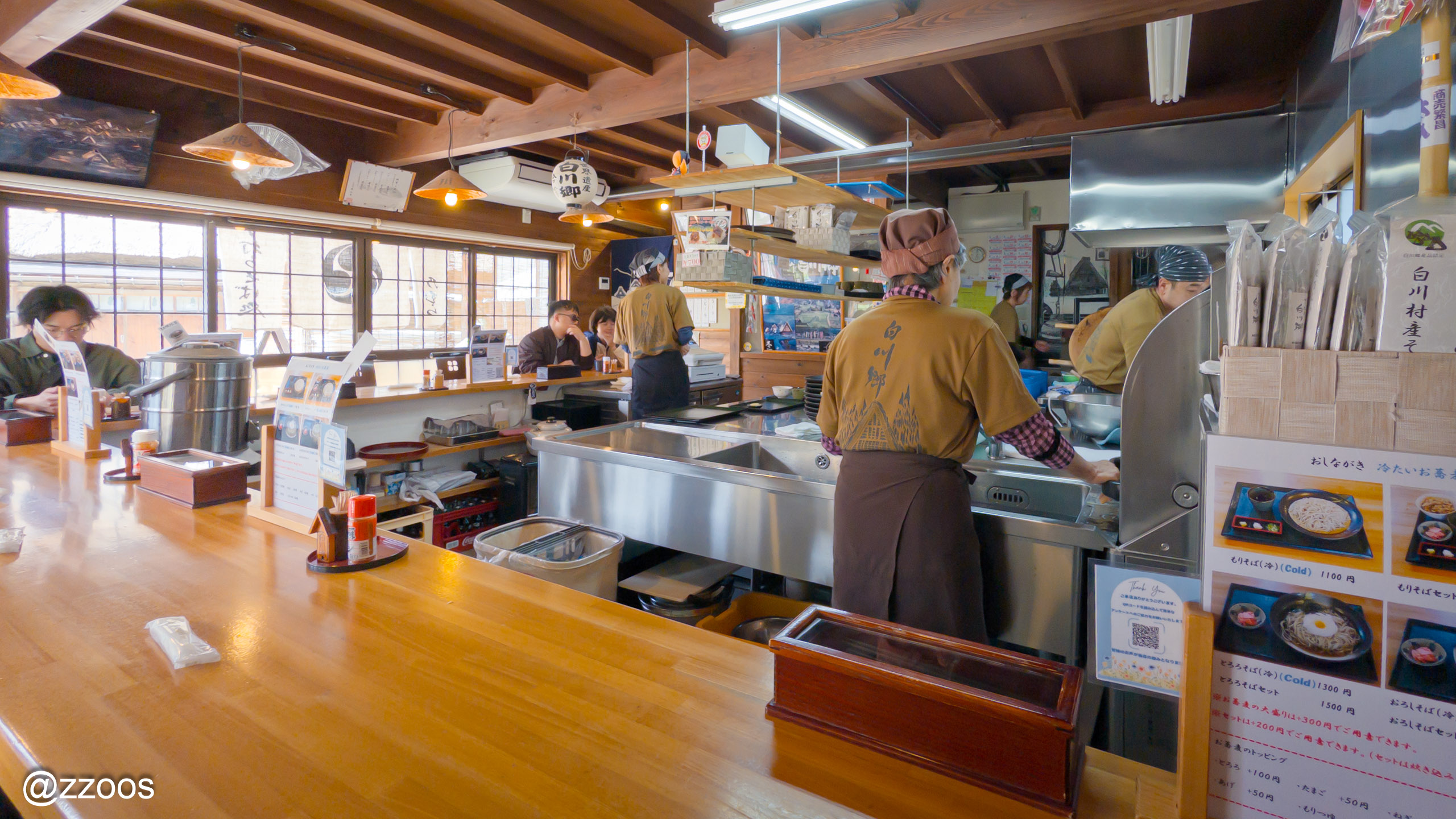
When I stepped inside, there were almost no other customers. Deciding to eat a slightly early lunch turned out to be a very good choice.
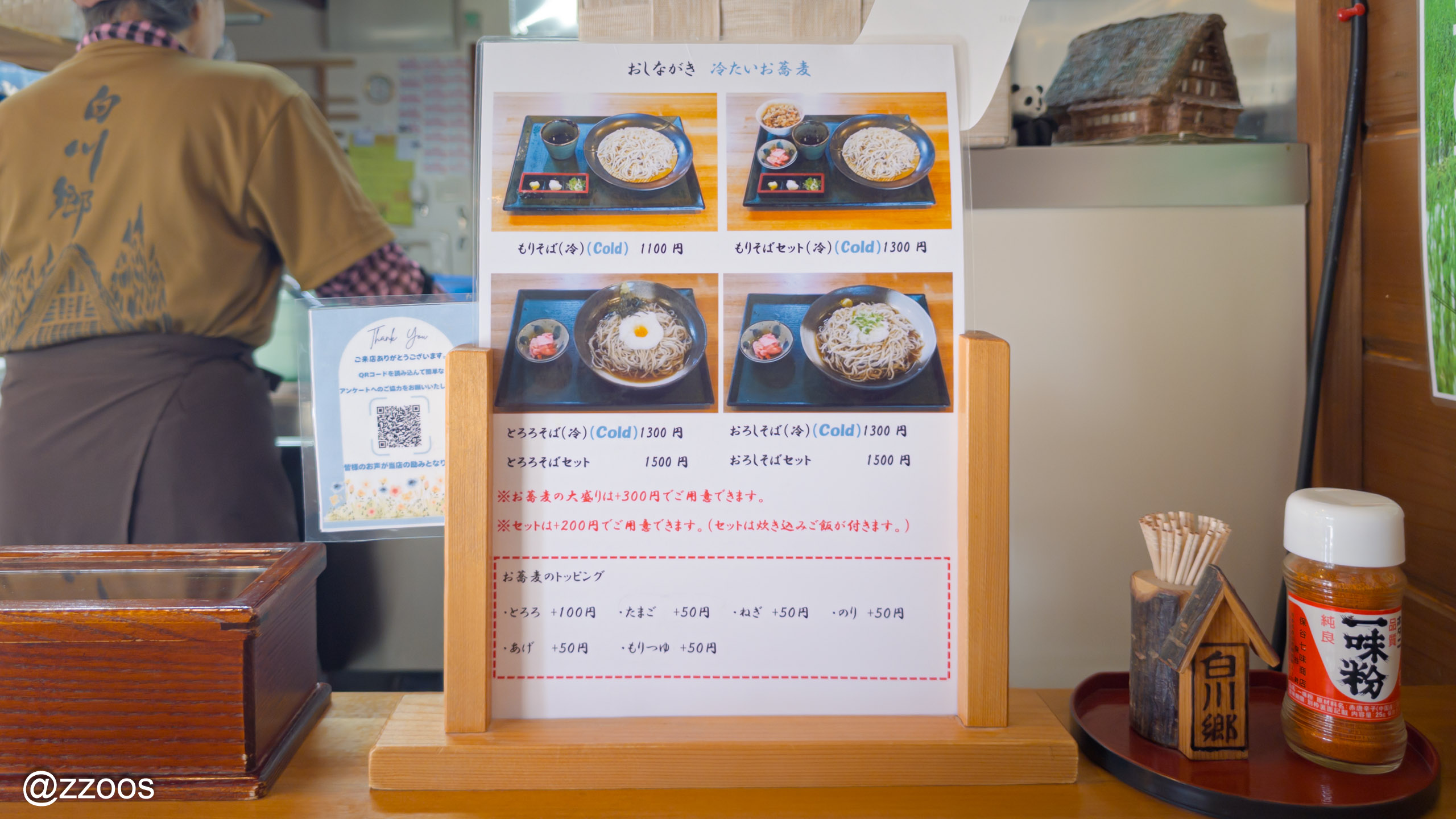
I could take my time picking from the menu, though honestly there weren’t many options. Mori soba, tororo soba, and oroshi soba were all of it. Order a set and it comes with rice. Not plain rice, but something like a seasoned rice cooked with vegetables and the like.
Oh, the warm soba options were kake soba and tororo soba, but it was hot out, so I had no intention of eating anything warm.
After a quick look at the menu, I ordered the cold tororo soba.
Shirakawa-go is in steep mountains, so they couldn’t make rice paddies and couldn’t grow rice. That’s why they’ve farmed buckwheat since long ago. This shop still seems to use noodles made from Shirakawa-go buckwheat.
And tororo is grated yam that’s turned thick and sticky. It’s an ingredient you put on top of rice or soba — a bit of a rustic, country-grandmother kind of thing.
For the record, since Shirakawa-go is deep in the mountains you’d think yam would grow plenty there, but surprisingly it’s a region where no yam grows at all, so from long ago they bought yam from other villages to eat. For mountain folk, yam apparently served as an important food for restoring energy.
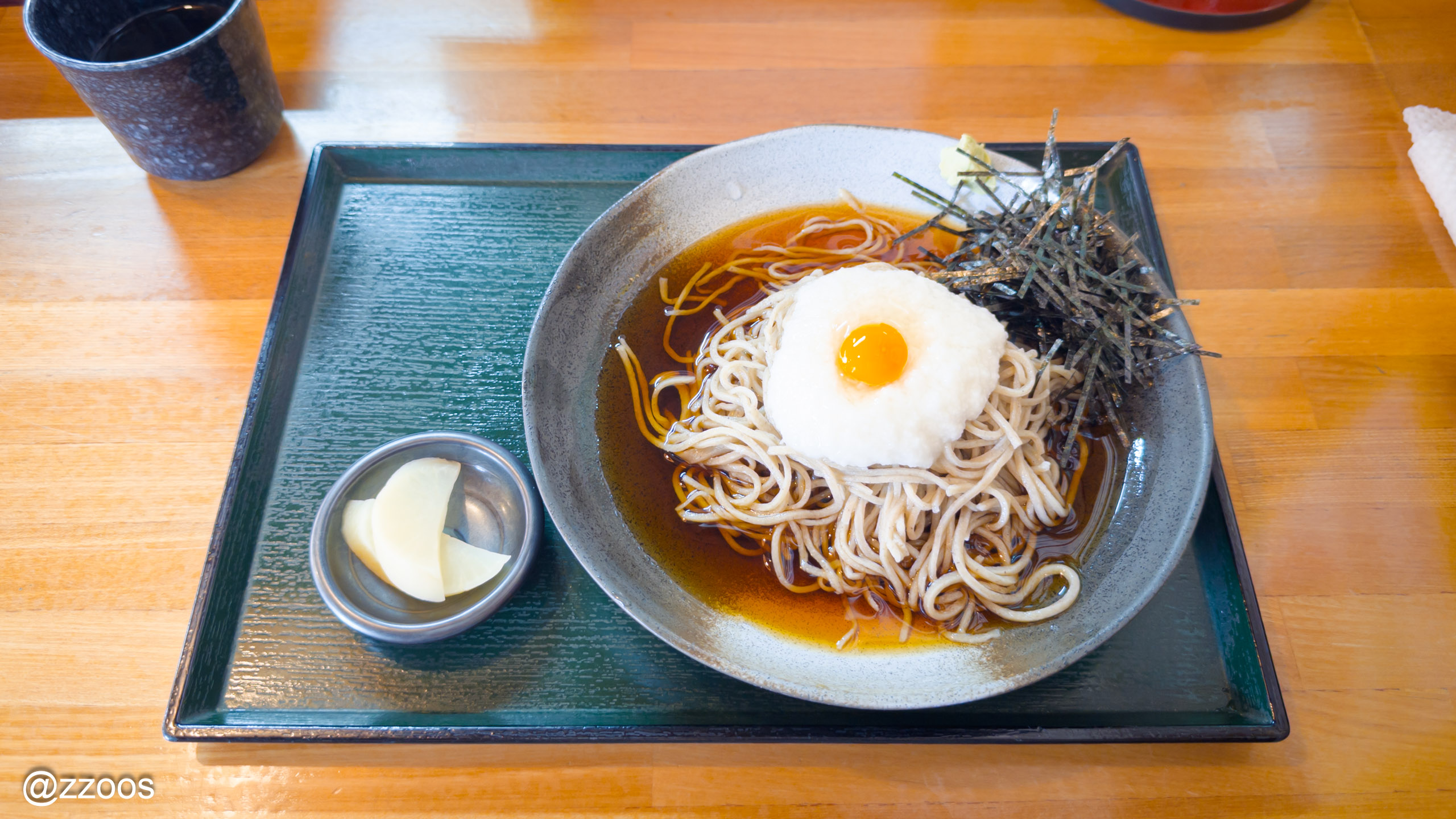
This right here is the tororo soba.
Cold broth with the soba noodles in it, and grated yam on top. This is what they call tororo. And to finish, an egg yolk on top. Shredded nori was added on the side for extra umami.
The side dish that comes with it is just two slices of pickled radish.
How was it, you ask?
I enjoyed it very much.
The tsuyu-based broth is a little salty, but the broth isn’t meant to be drunk straight from the bowl — it’s for dipping the noodles in. And with tororo on top of those, the texture gets even more varied.
For the record, looking at the menu, besides tororo (とろろ) soba there’s something called oroshi (おろし) soba. Oroshi means grated daikon on top.
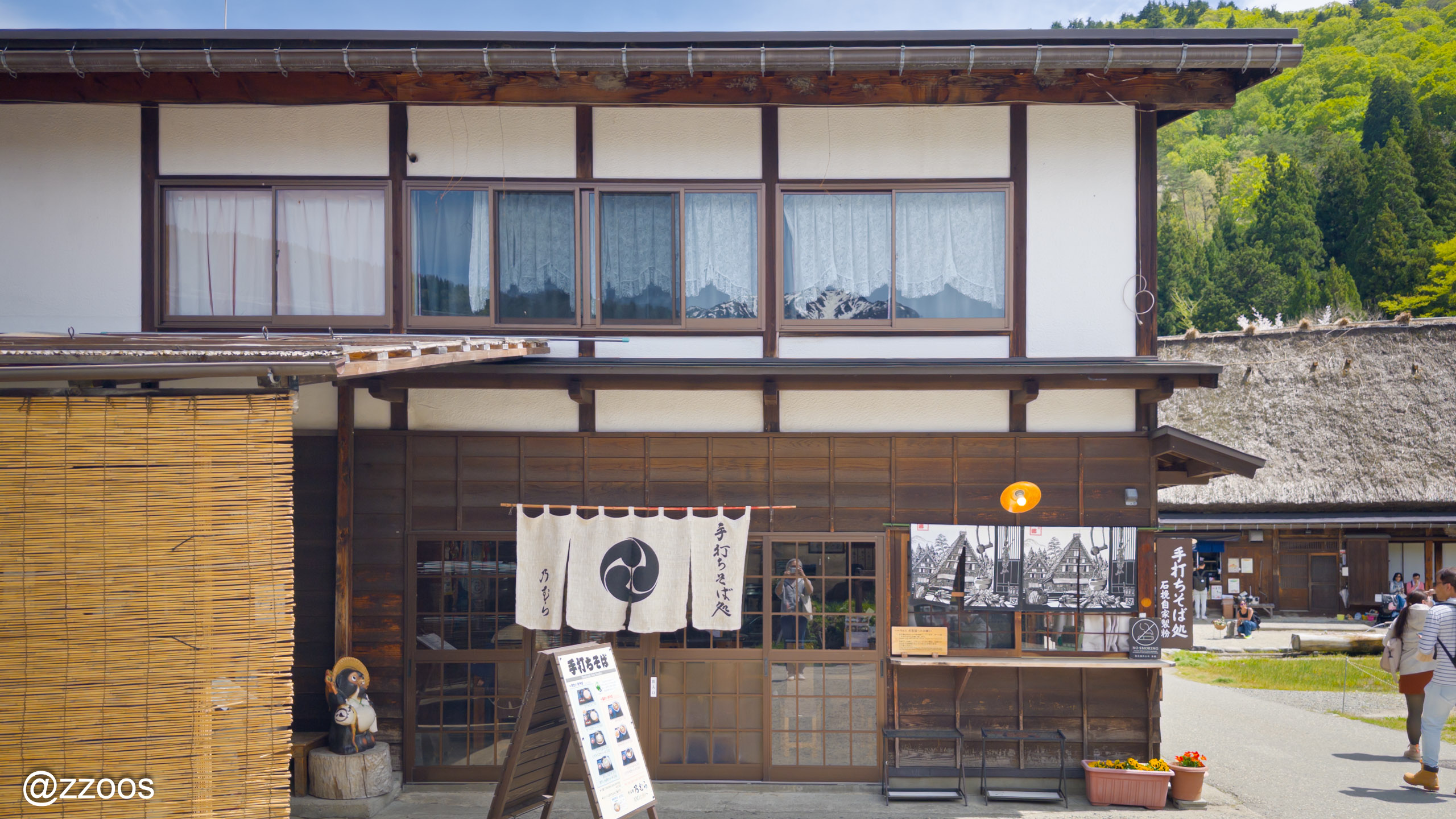
It was clear out and getting a little hot, but after a bowl of cold soba I felt like I could carry on.
I walked in, ordered, the soba came out about 5 minutes later, and I’d polished it off in 15 — at that rate, can I just call this fast food?
Anyway, since I’d gotten lunch out of the way a bit faster than everyone else, now I’m off to the southernmost part of Shirakawa-go, where the crowds don’t gather.
I’ll continue in the next post.