On my first day in Kanazawa, I met a very special guest at a wine bar called Ilmare in Shintenchi.
We were kind enough to exchange Instagram accounts, and at the time she introduced herself as someone running a small restaurant.
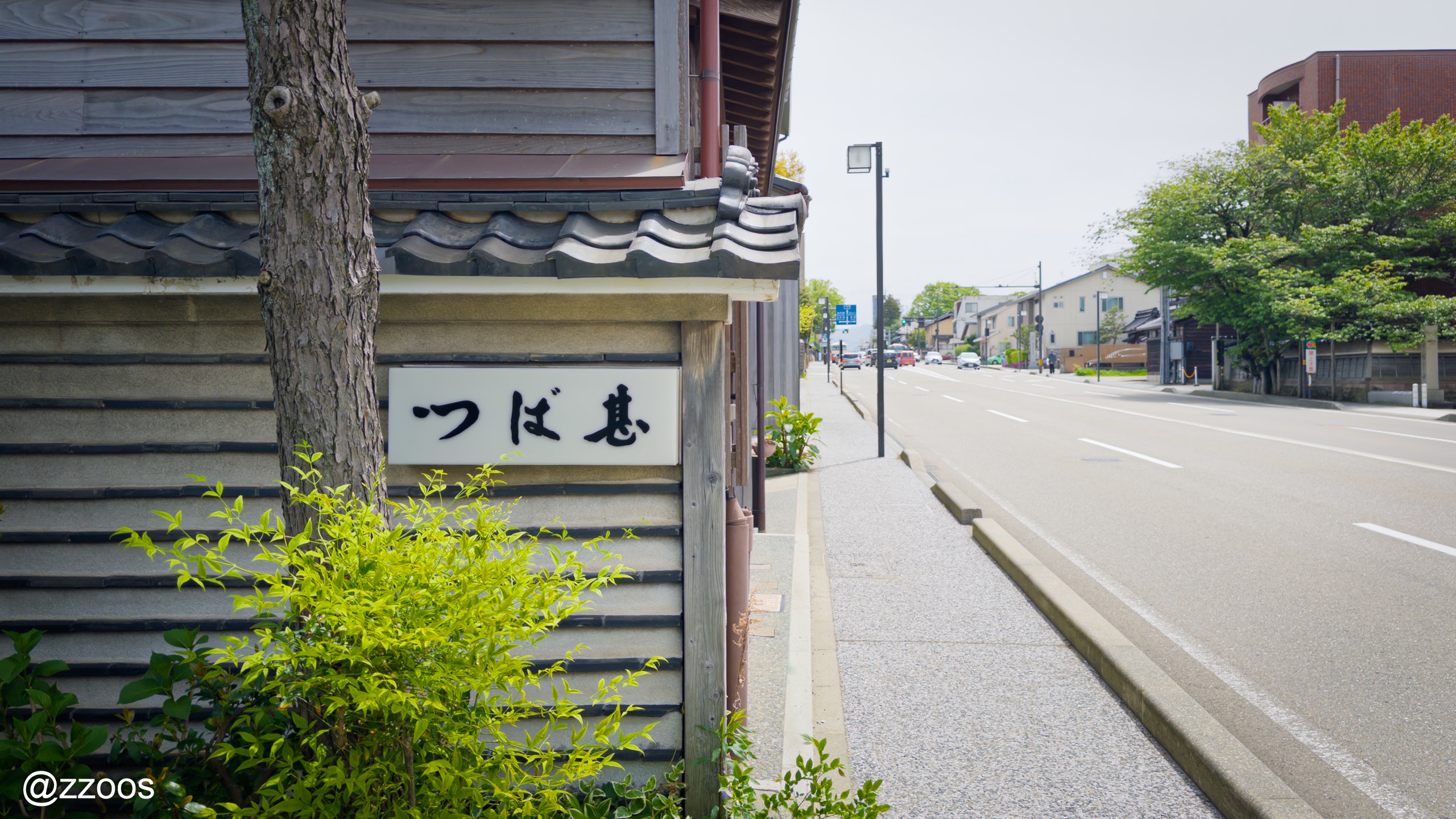
But as it turned out, she was Tsuba Yukari(鍔裕加里), the okami of Tsubajin(つば甚) — a ryotei(料亭) with 350 years of history, arguably the most famous restaurant in Kanazawa.
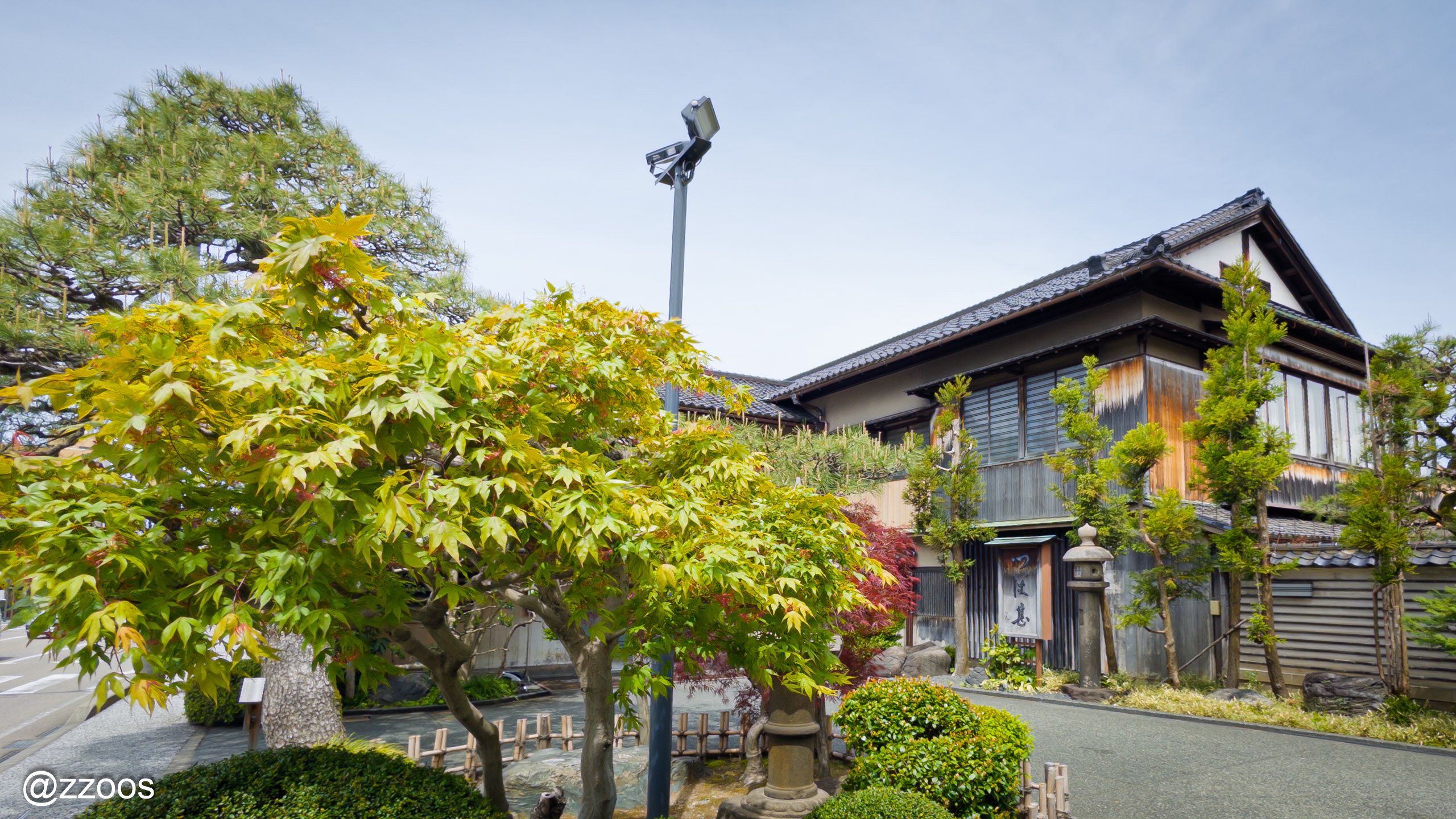
The family that came to Kanazawa as the personal tsuba craftsmen of Maeda Toshiie(前田利家) — the man who laid the foundation of Kaga Hyakumangoku(加賀百万石) — is today’s Tsuba family.
By the third generation, they opened a small place where they served food to friends and acquaintances, and as word spread it grew famous, becoming the beginning of Tsubajin. That was about 350 years ago.
For reference, a tsuba(鍔) is the guard that sits above the handle of a sword. That round, flat plate between the blade and the grip.
Here at Tsubajin, they still use that “tsuba” as the family crest.
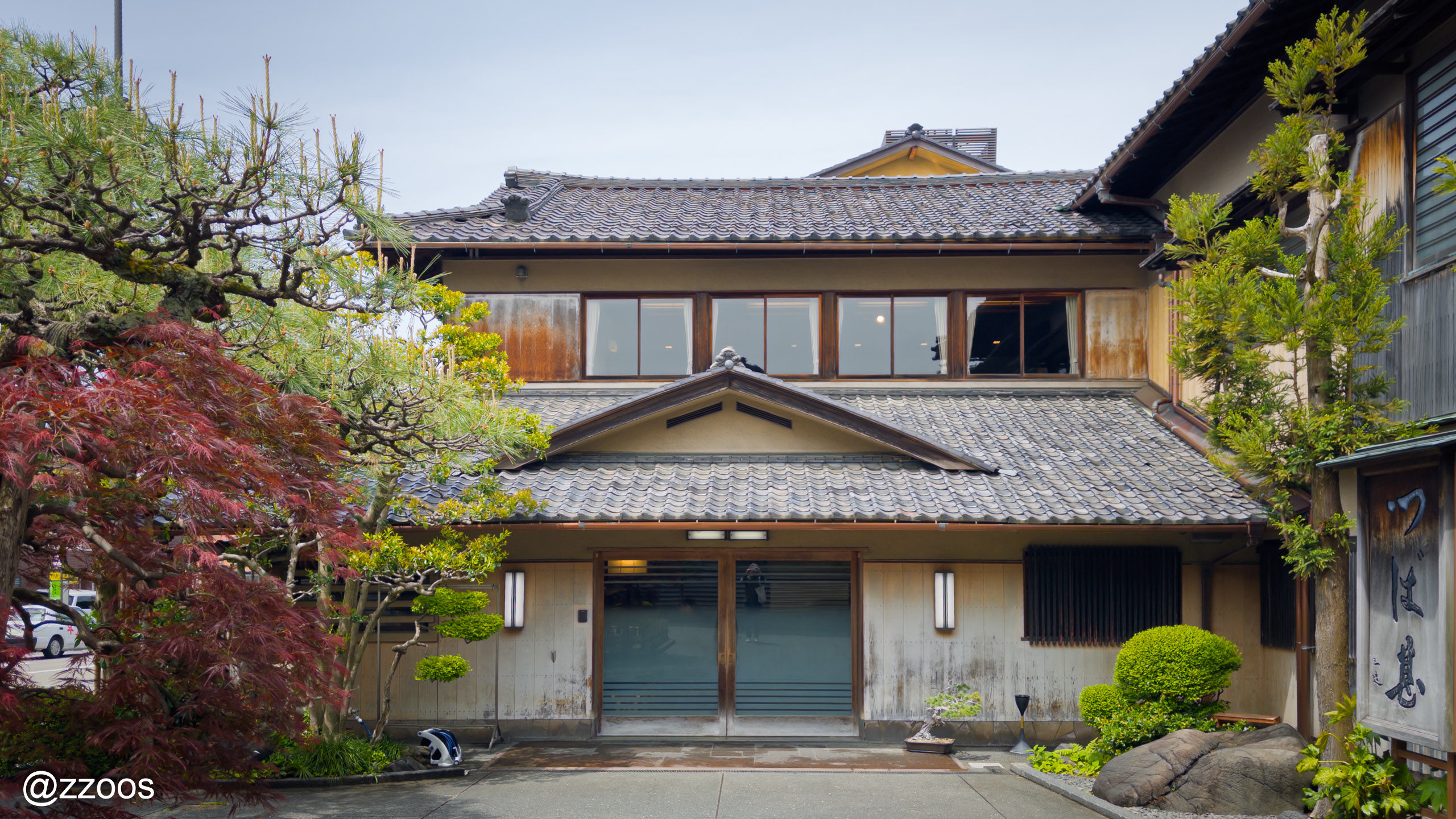
While talking over DM about when would be a good time to visit, we ended up settling on today, the last day of my trip. Unfortunately, dinner can only be booked for two or more, so I reserved lunch.
Reservations can be made through TableCheck, and payment is done in advance on the site too. At the restaurant, you only pay for anything extra.
For reference, lunch comes with crab congee, or kani-gayu (かに粥). It normally uses snow crab, zuwai-gani (ズワイガニ), but April isn’t the season, so they use red snow crab, beni-zuwai (ベニズワイガニ).
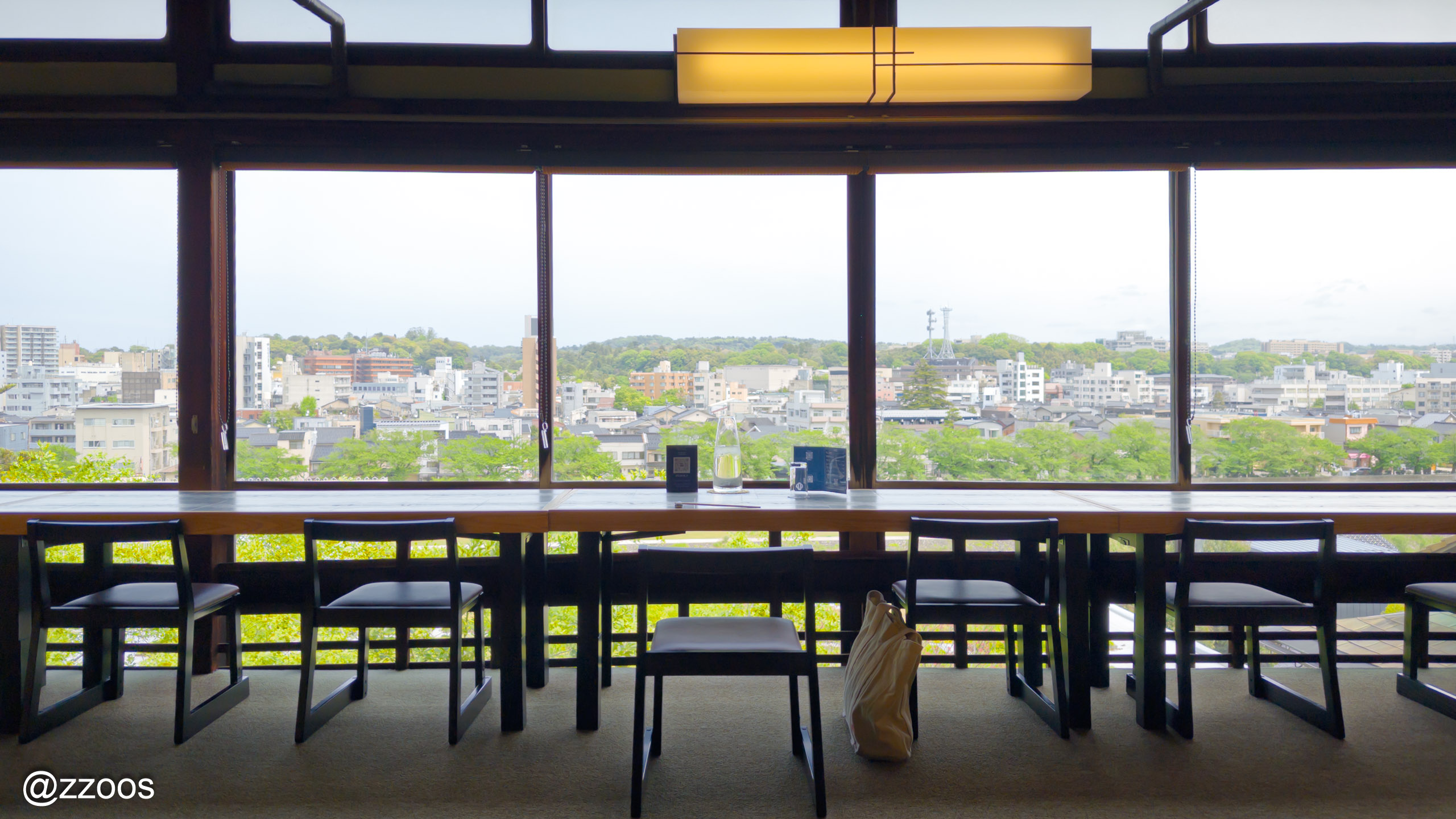
On the day of the reservation, I walked slowly from the hotel and crossed Saigawa Ohashi(犀川大橋). I took in the scenery along the Saigawa and arrived at Tsubajin.
When I got there, I was a little surprised. Today’s lunch reservation was just me. This wide space and this view, all to myself. Am I really allowed this kind of luxury? — that kind of view.
I sat down and ordered a sparkling wine. A Spanish cava called Codorníu Clásico Seco. The word Benjamín means it’s a small 200ml bottle.
Just the right amount to drink lightly on my own. Not expensive, and the taste is decent.
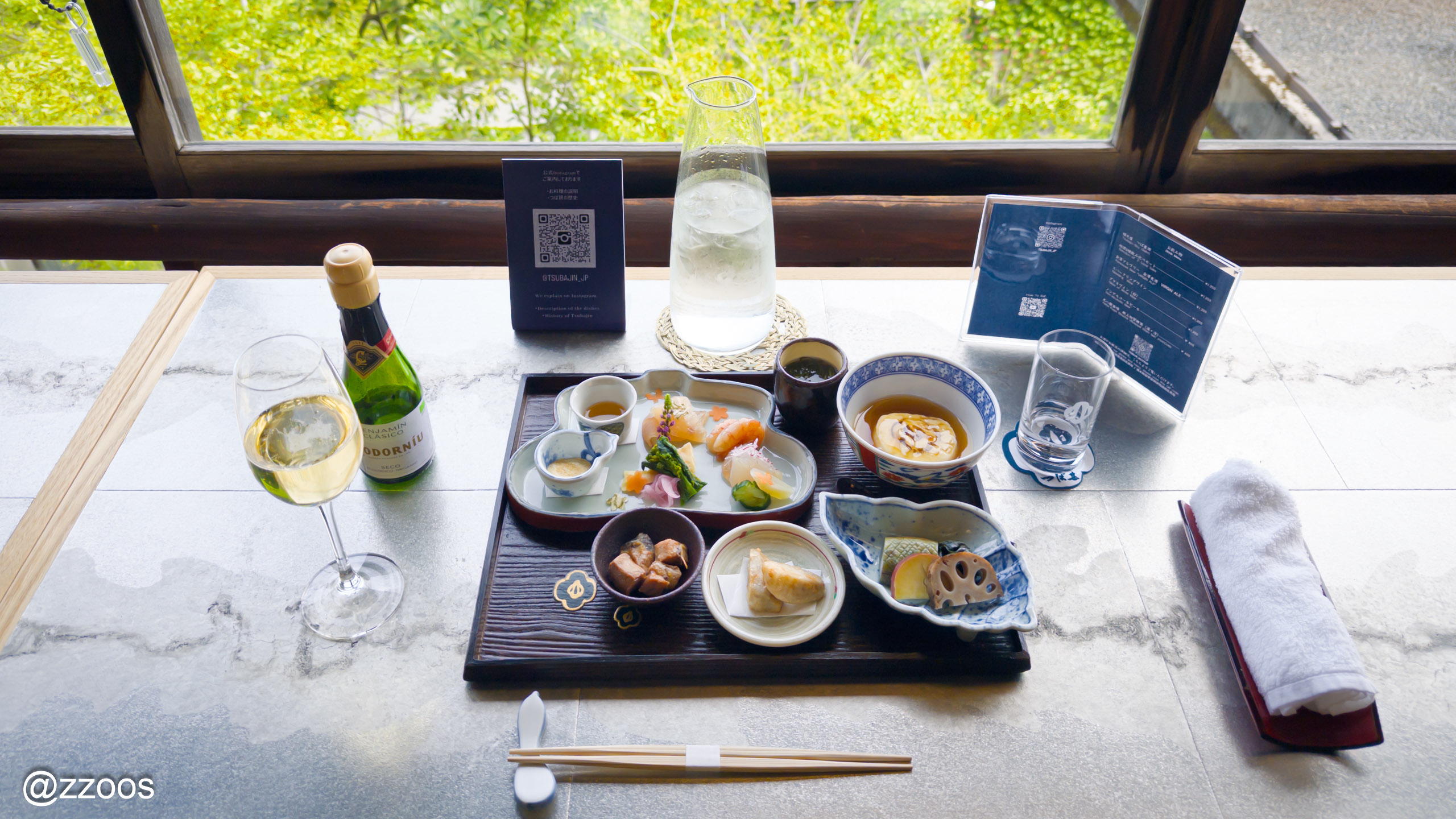
Then, before the crab congee, the appetizers came out first. She explained each one in great detail in Japanese, but I couldn’t catch all of it. If it had been a course menu, there might at least have been a printed menu to follow, but there wasn’t, so I’ll just describe them from memory.
To the upper left were a few kinds of sashimi and pickled vegetables. The slightly dark, clear sauce is a kind called irizake (煎り酒), used for dipping sashimi before soy sauce became common. It was tangy with a savory depth.
There were two kinds of sashimi that looked like white fish. I didn’t hear what they were, but one seemed to be sea bream aged with some special technique, and the other looked like cleanly aged sea bream.
And the shrimp laid neatly between them was very sweet and good. The taste felt a little different from gasu-ebi (ガスエビ), so I think it might have been shiro-ebi (白えび).
Maybe to match the season, there was fresh pickled rapeseed, and beneath it, hard to see, fresh bamboo shoots. I saw a lot of bamboo shoots at the market the other day too. These are the vegetables in season right now.
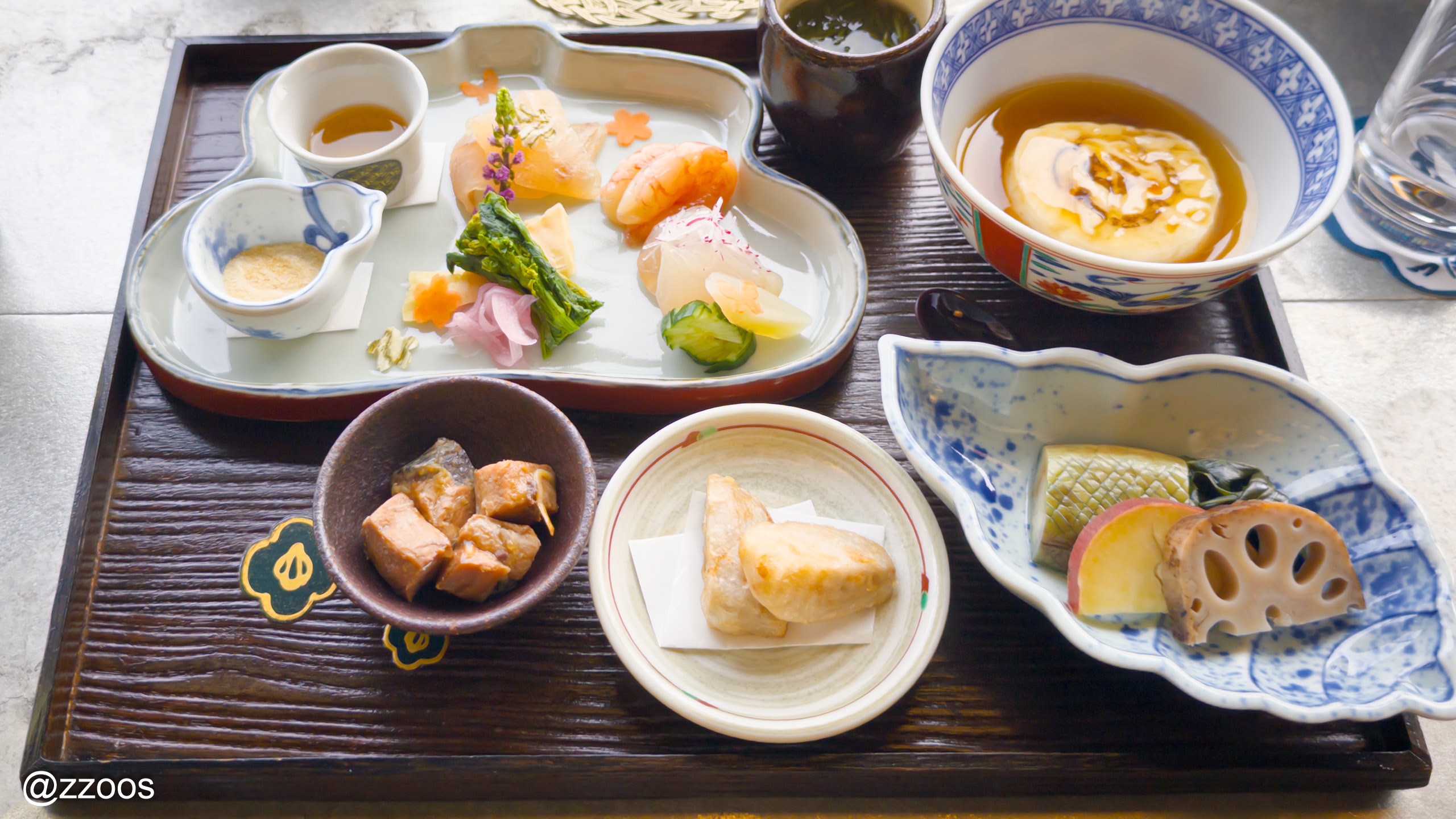
In a small cup was warm seaweed. I thought it might be mozuku, but it was my first time having it warm. It wasn’t heavily seasoned, so I could drink it down in one go.
Next to it was ankake-mushi (あんかけ蒸し) — bamboo shoots and various other ingredients finely chopped, shaped, steamed well, and topped with a thick broth. It’s fun that Tsubajin’s crest is stamped on it.
The thing at the lower left was simmered fish, but I don’t think it was a simple simmer. I suspect it was yellowtail. That said, this one was a bit dry, which was its weak point.
Next to it seemed to be taro, boiled and then grilled. I liked that I could taste both the soft texture and the char.
Finally, at the lower right, a few kinds of vegetables were boiled well. The texture of the eggplant was exquisite. The lotus root was also very soft and tasty.
Each of these dishes was probably prepared in its own special way, but since I couldn’t properly understand the explanations, most of this is what I “guessed” — which is a bit of a shame.
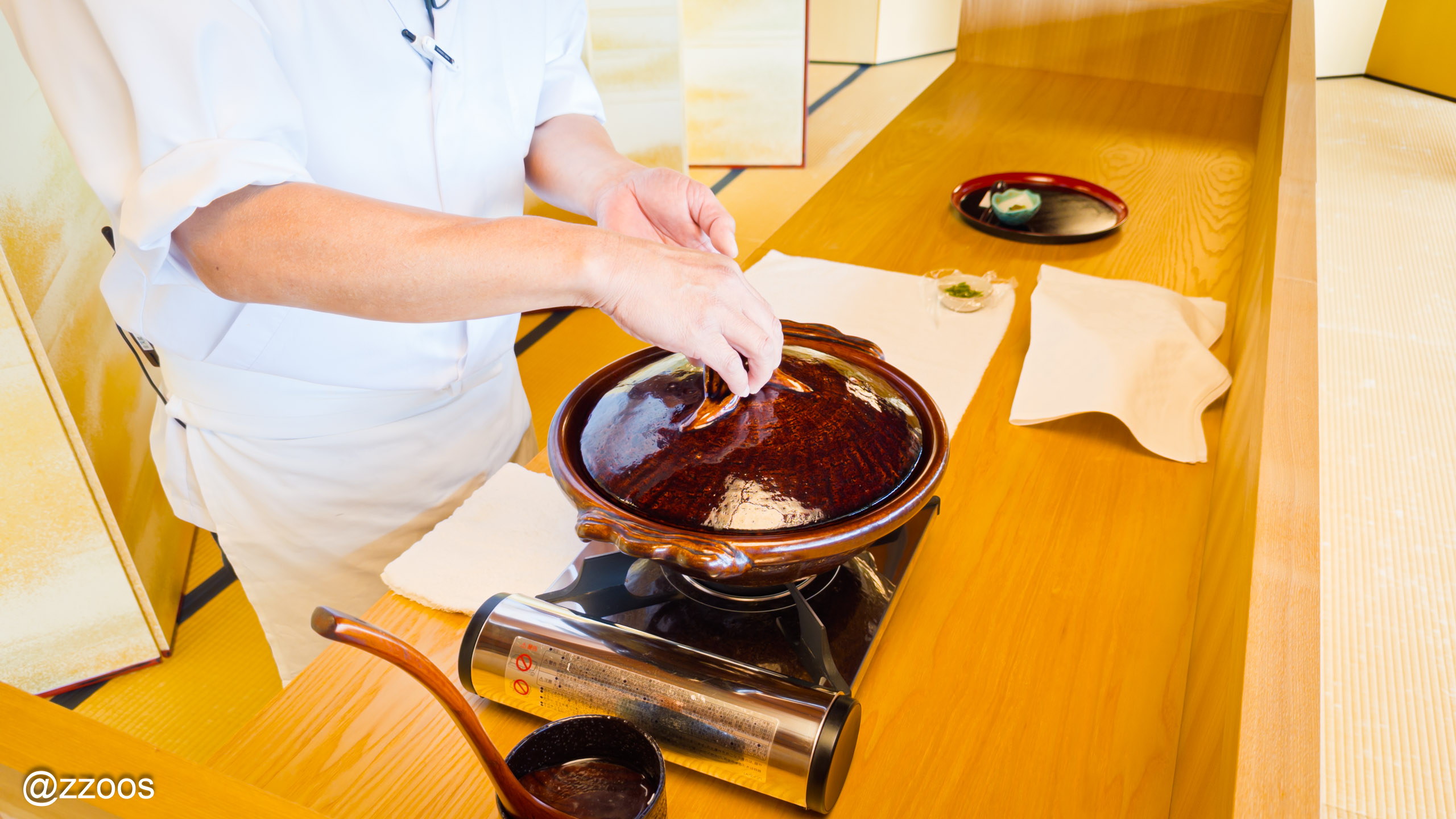
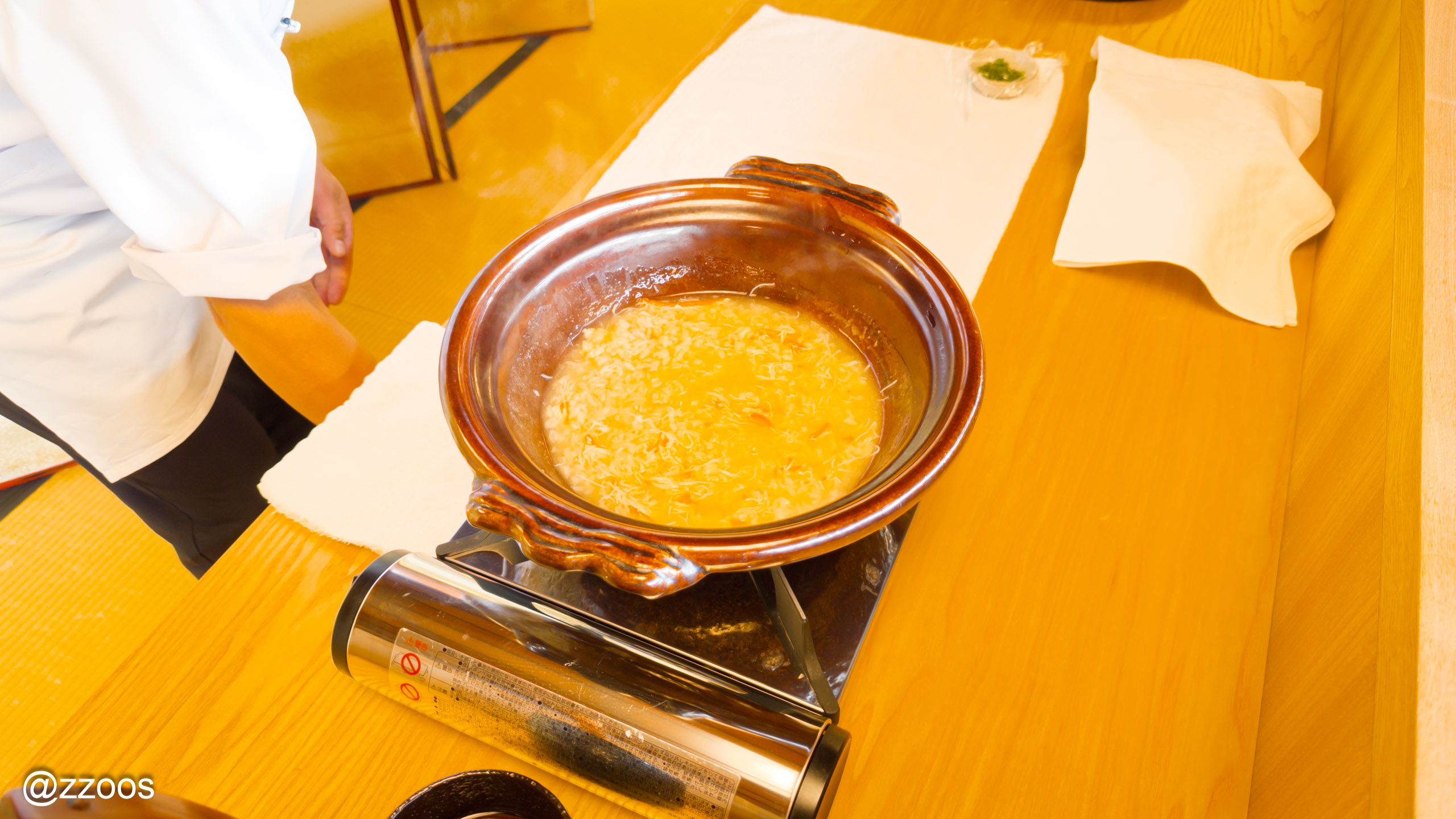
As I was eating the appetizers, they let me know the crab congee was finally ready. They said the aroma is especially good when you first lift the lid of the earthenware pot, so I should come experience it myself.
This is basically photo time. I regret a little that I didn’t film a video here. A lot of people make reels out of the lid-lifting moment.
Taking in the rich aroma of the crab congee, I greeted the chef, exchanged a few words of praise, and then came back to my seat.
They told me the congee is served in two rounds. Once as a clean congee, then a second time as a richer one that includes the innards.
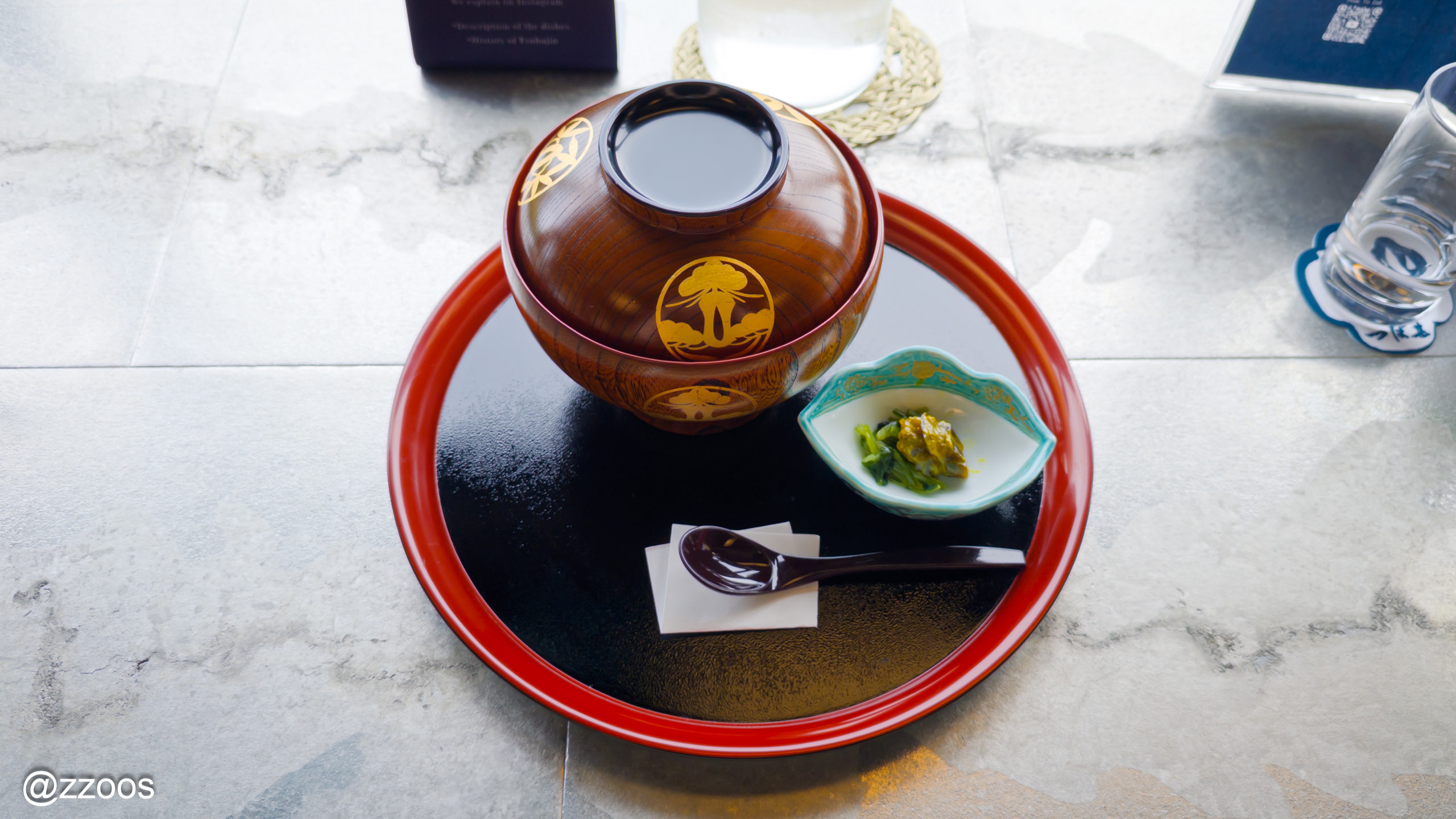
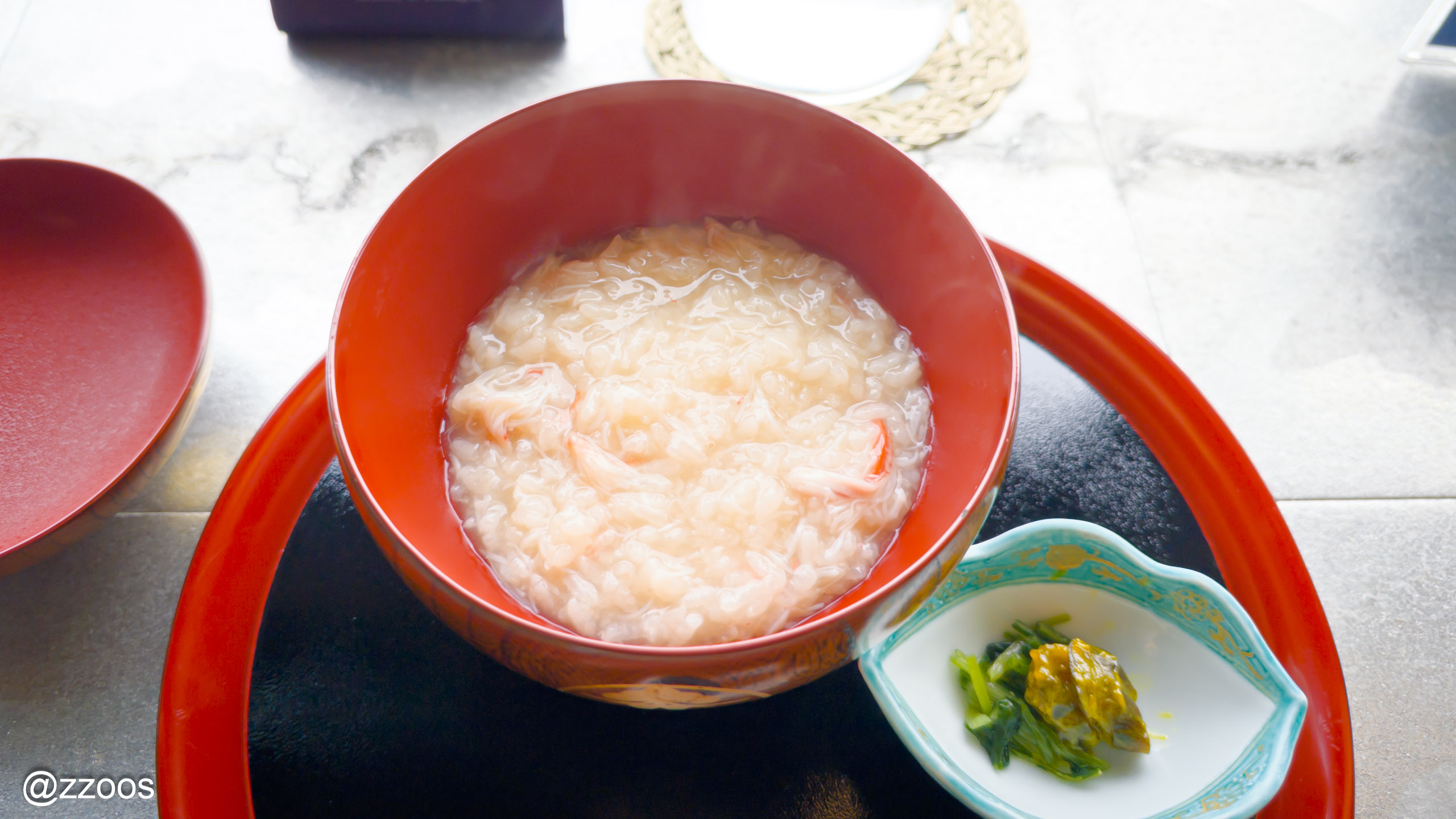
This is the clean congee served first. It’s full of crab meat, and the rice is soft and well cooked. The broth has a really deep flavor, so it’s — literally — delicious.
Eaten together with the tsukemono they serve alongside, the pickles vary the otherwise monotone flavor, which makes it even better.
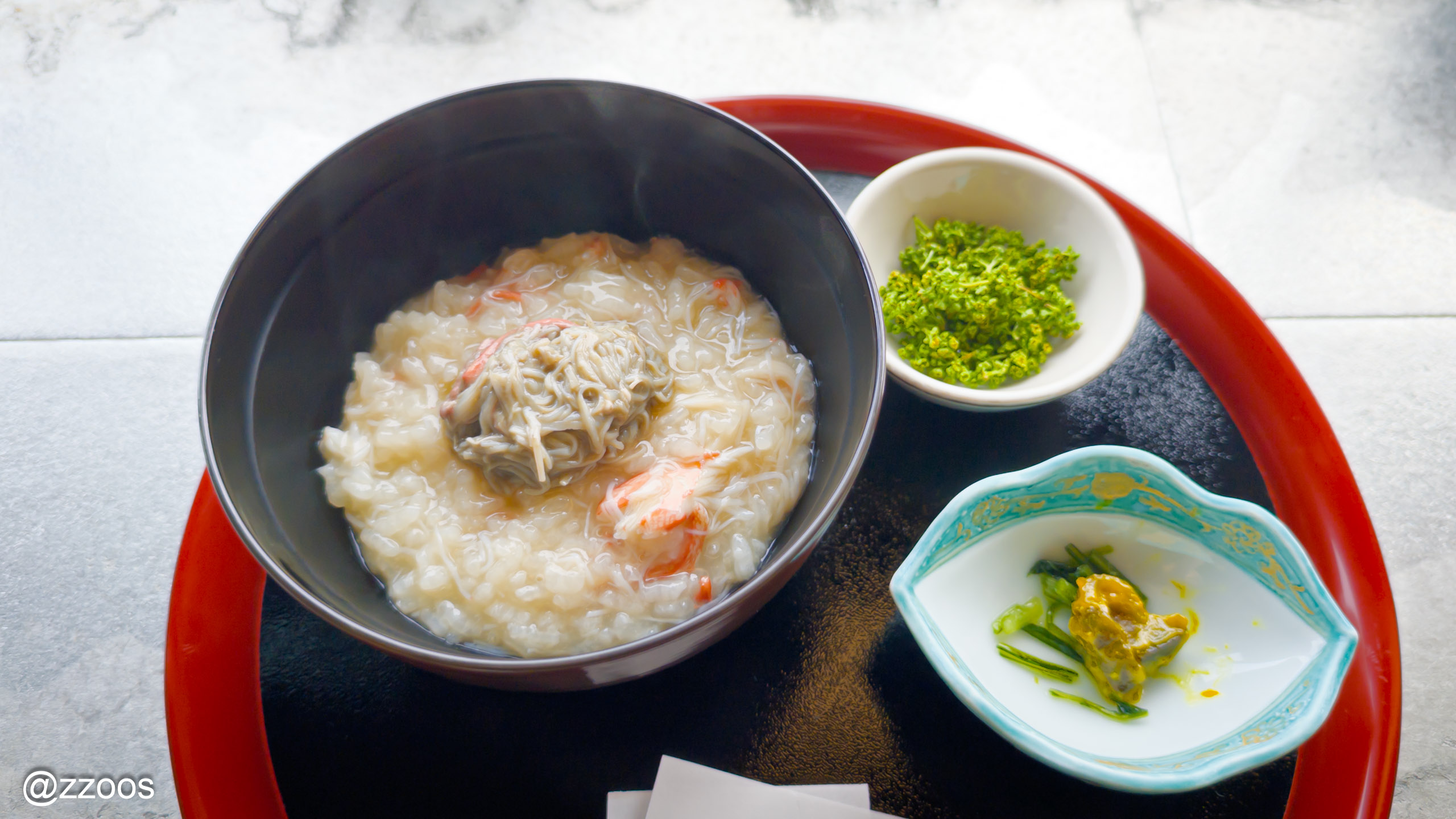
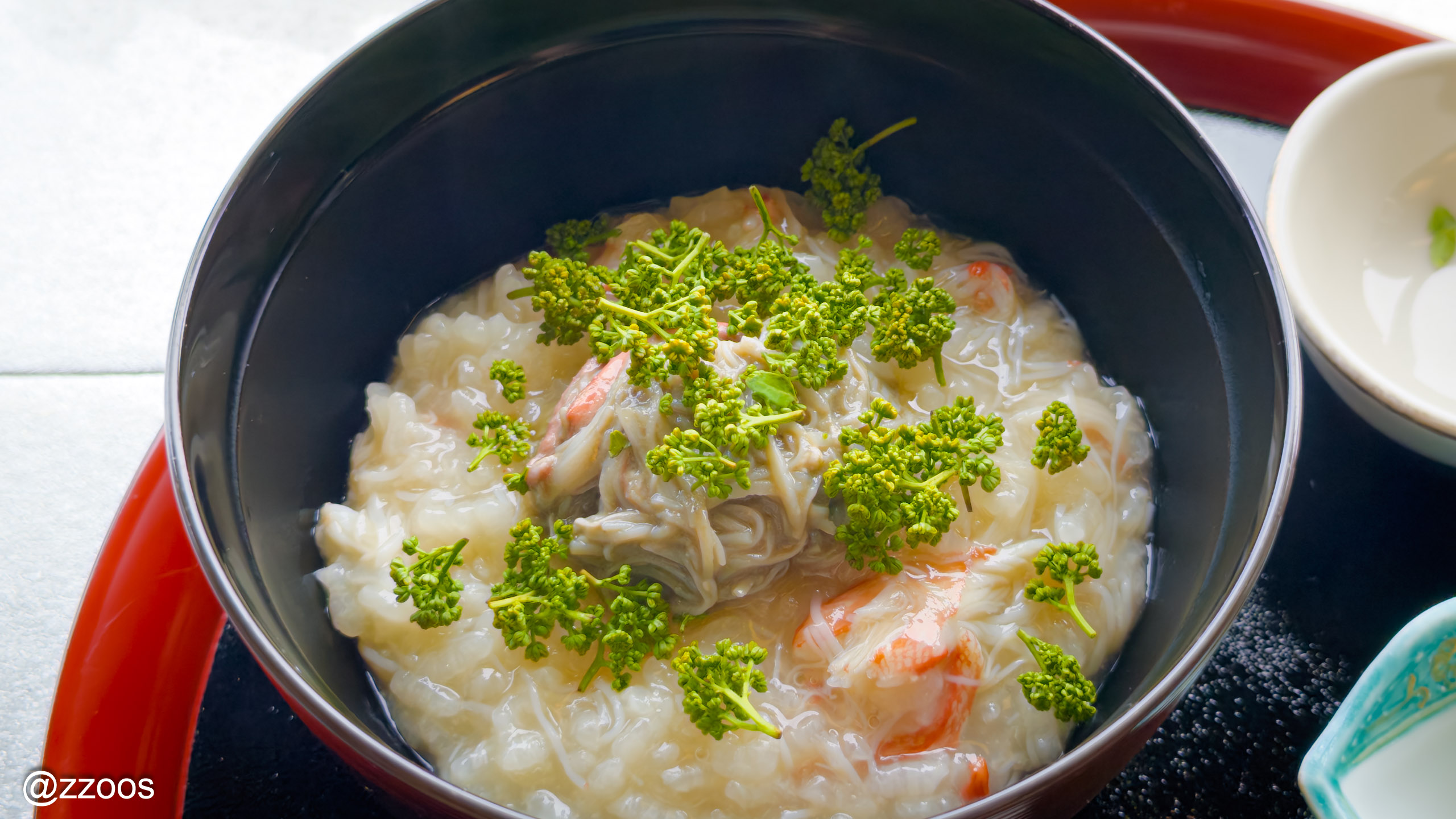
Once you finish the first bowl, they quickly bring the next congee. This time the innards are on top. The color of the bowl has changed too.
And next to the congee sits a fresh green herb. I couldn’t quite follow the explanation at the time, but given that it was late April, I think it’s hana-sansho (花山椒), the sansho blossom. It doesn’t have the strong taste of sansho; it’s an herb with a faint, cool freshness.
They told me to put it on top of the congee, so I sprinkled on a whole lot and ate.
As expected, crab congee only shows its full, rich self when the innards are there. The second bowl was much more delicious.
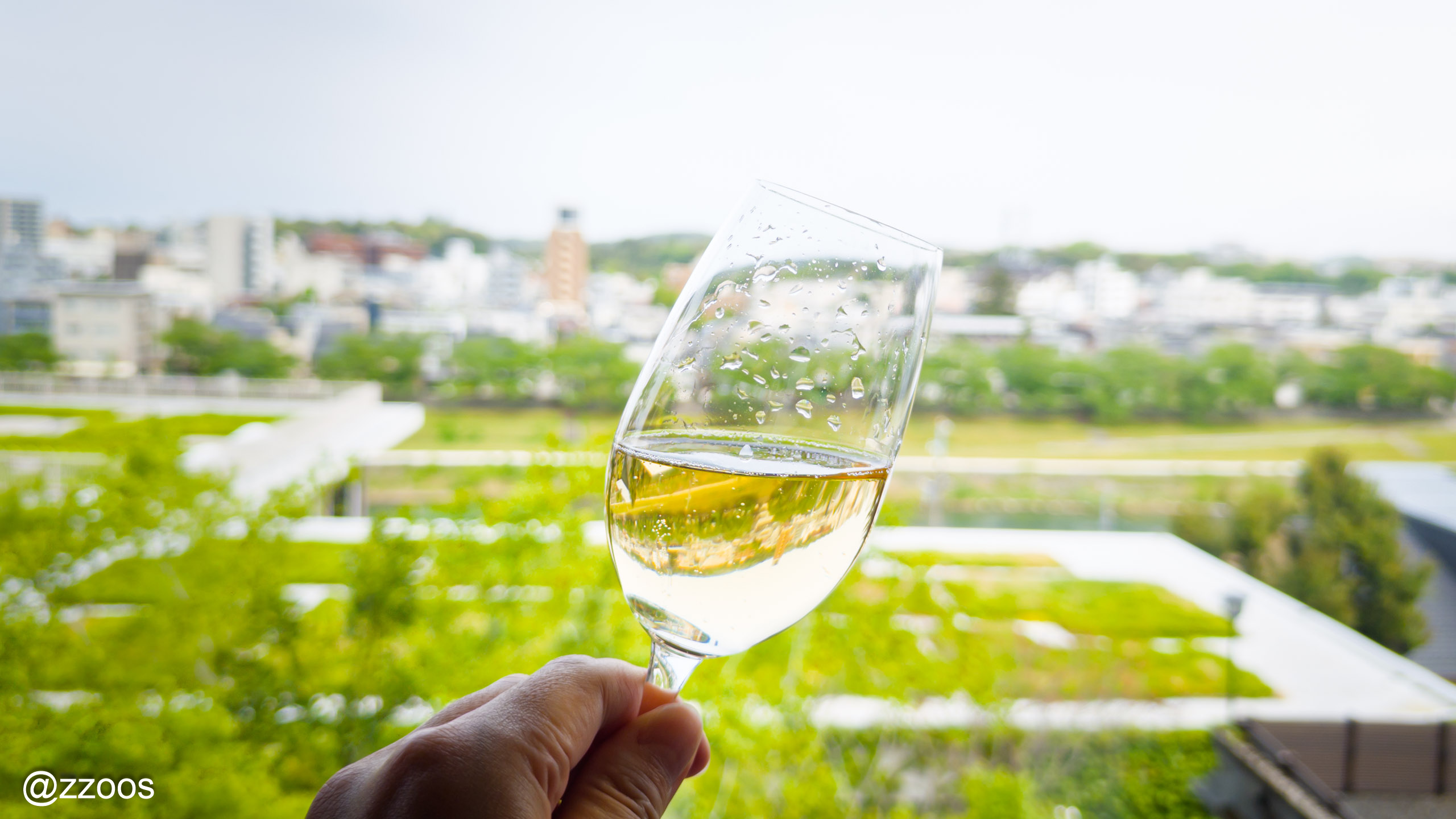
Along with the sparkling wine that was left, I slowly finished the meal while looking at the scenery of the Saigawa.
Come to think of it, there didn’t seem to be any dessert.
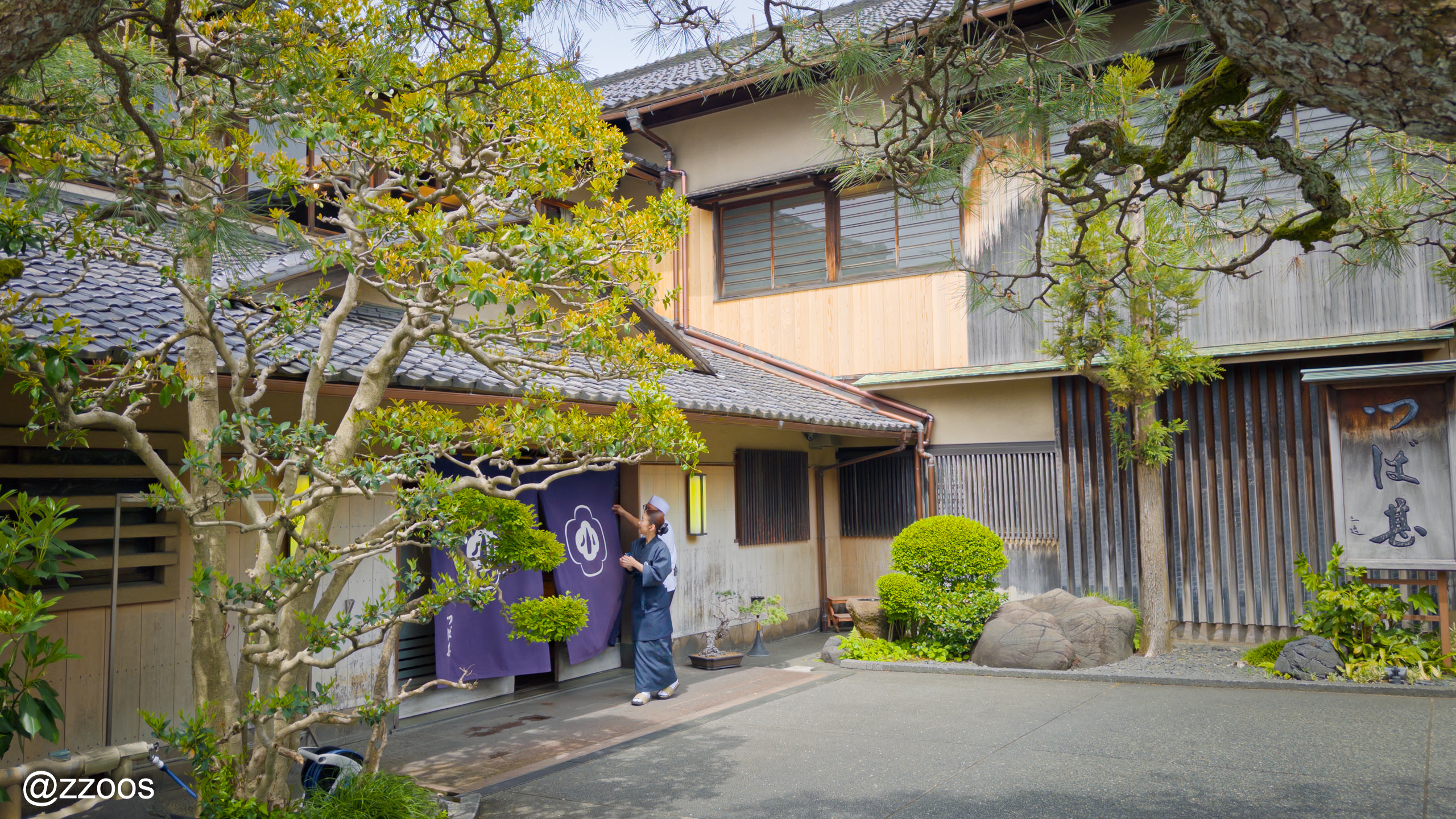
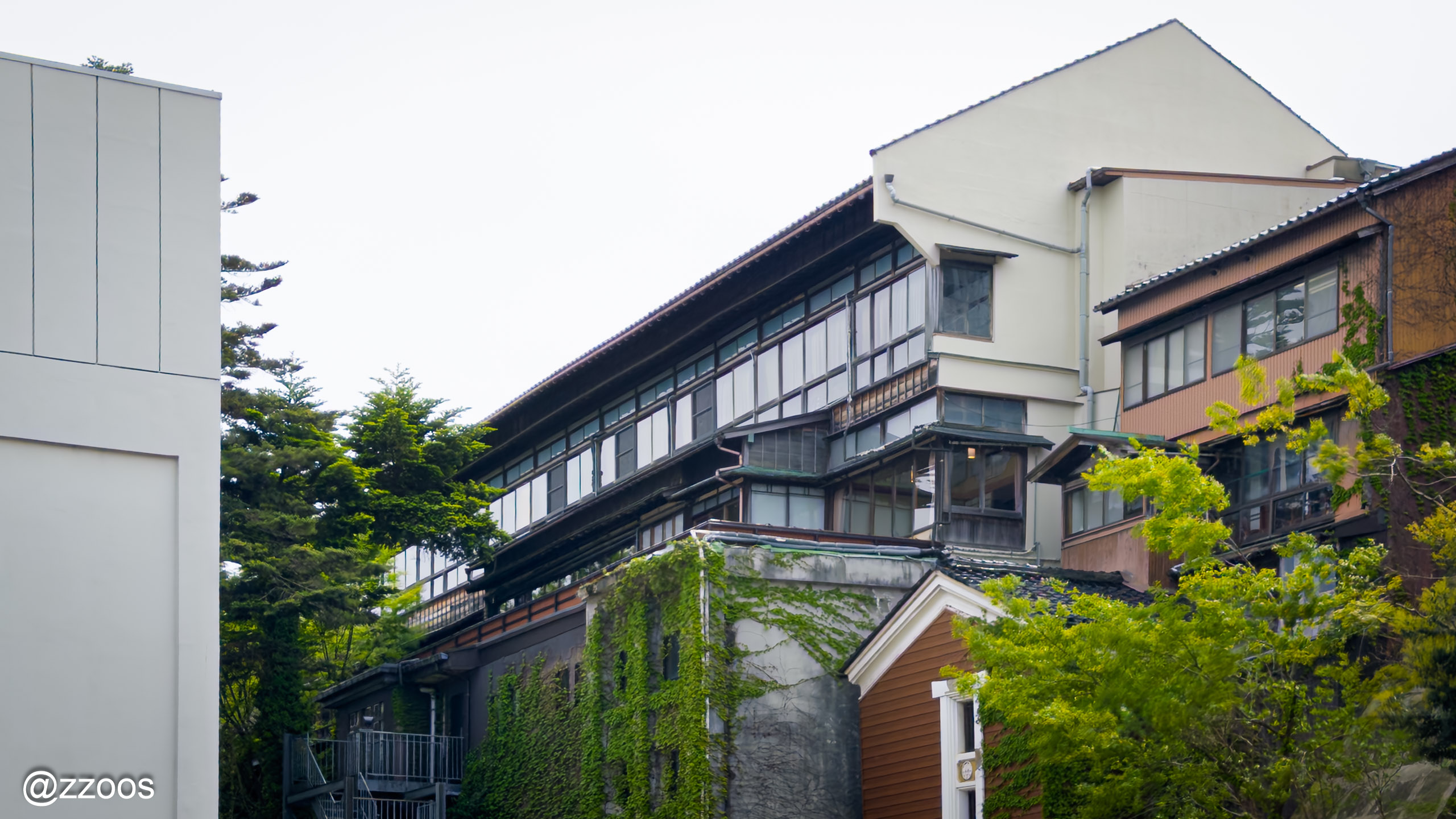
Honestly, it’s a fairly expensive restaurant. The dinner course runs over 30,000 yen per person, and even the lunch I had comes to well over 6,000 yen.
But here’s the thing. The dishes are clearly delicious. The staff’s service is excellent too. And the view of the Saigawa you look down on while eating is lovely.
I always eat at one high-end restaurant or so during a trip. On this trip, it was this place, Tsubajin. It was somewhere I liked so much that if I ever visit Kanazawa again, I imagine I’ll stop by here then too.