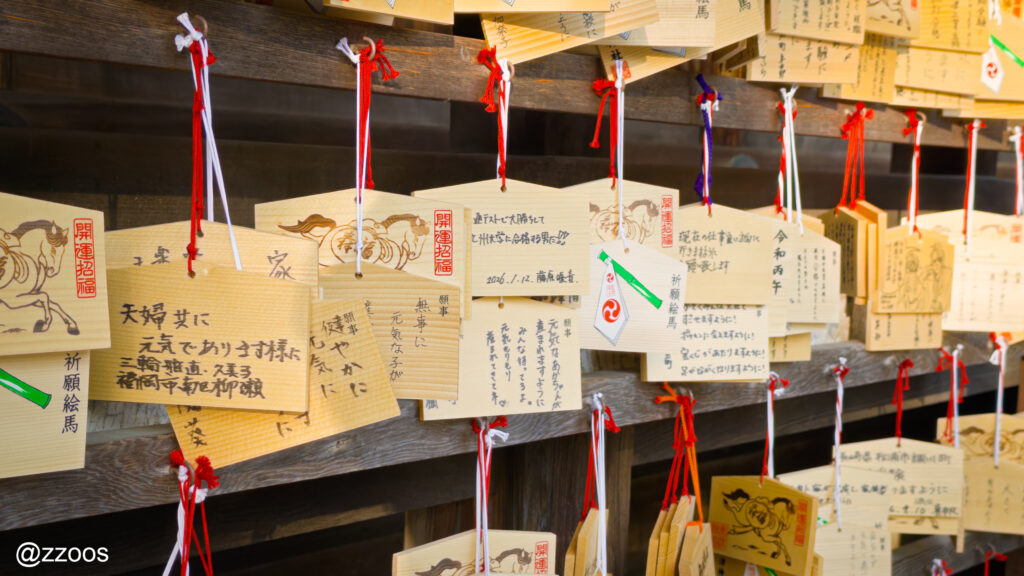
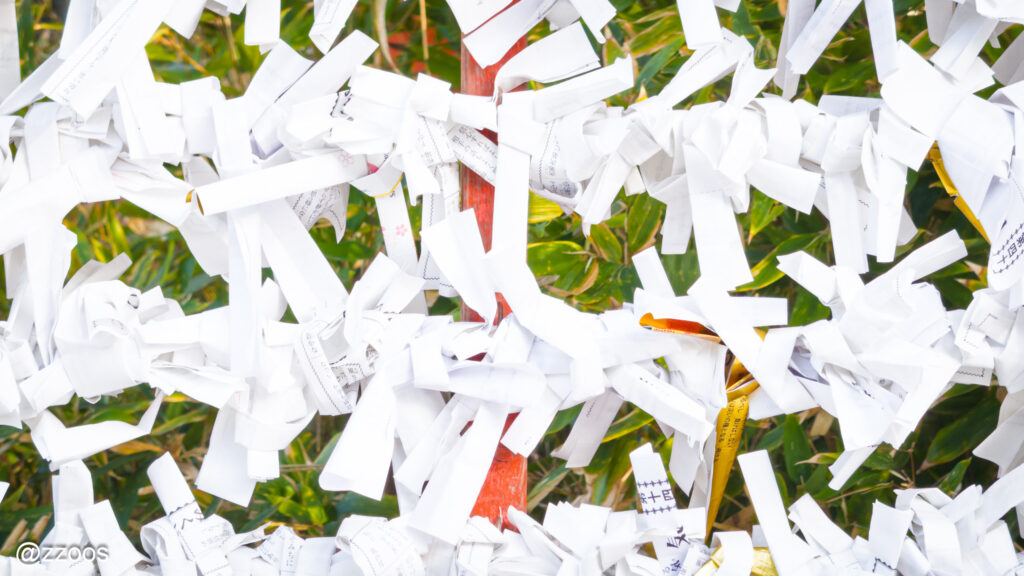
On the last day of the trip,
this was the final stop of the city tour.
Looking back,
today’s route might actually be
a very typical and well-designed course
for sightseeing in central Karatsu.
From a walk along the Matsuura River → Karatsu Castle → Takashima (Hoto Shrine) → Former Takatori Residence → Former Oshima Residence → and finally Karatsu Shrine.
If you look at the map,
it’s quite a well-connected route.
To make it more efficient,
it would have been better to visit Takashima first,
then see Karatsu Castle,
walk along the stone wall path,
and continue on to the former Takatori Residence.
After leaving the Oshima Residence,
Karatsu Shrine is just nearby.
But on the way,
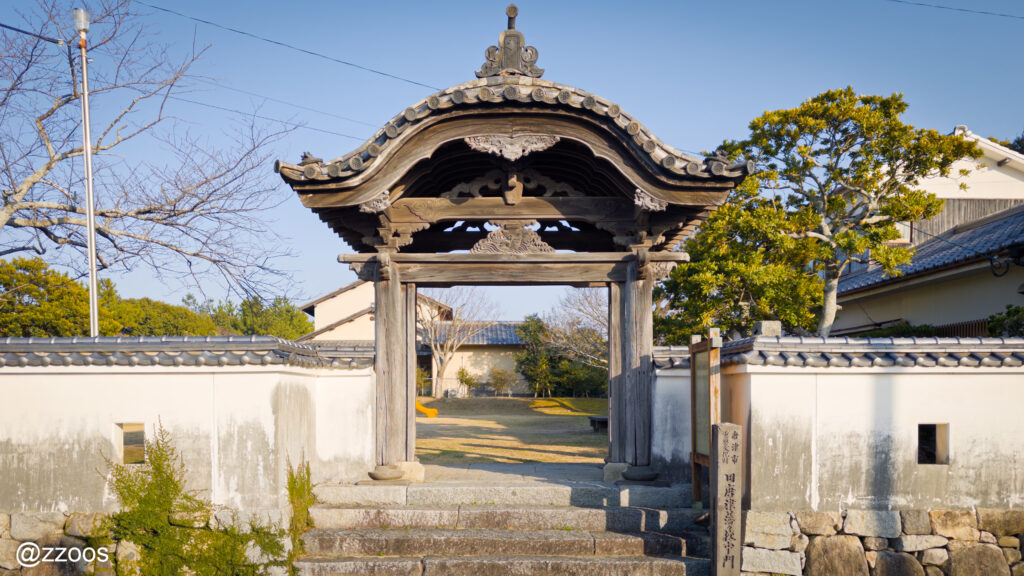
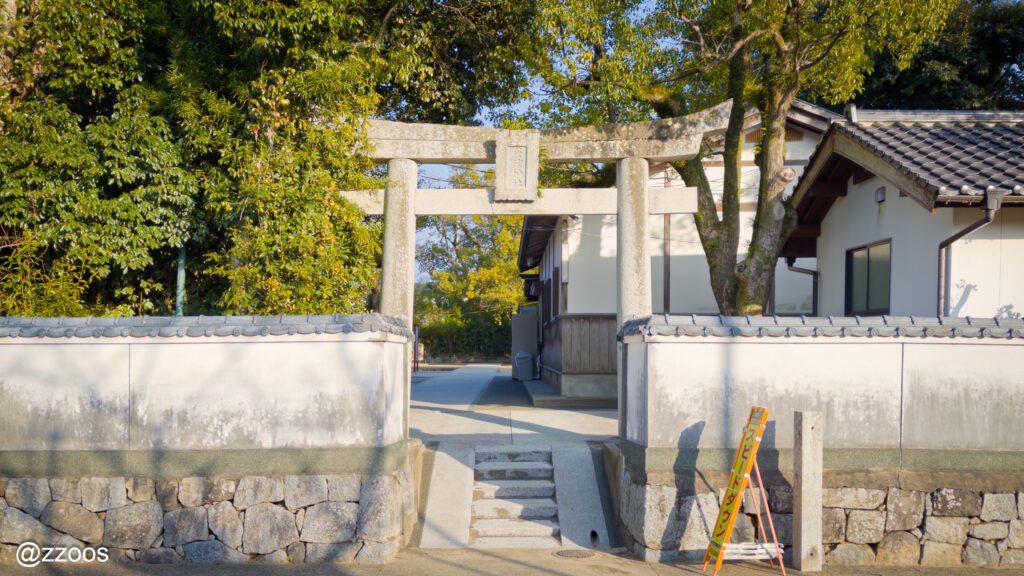
there was the remaining main gate of a school
once operated by the Karatsu domain (旧唐津藩藩校中門),
and I mistakenly thought that was the shrine entrance.
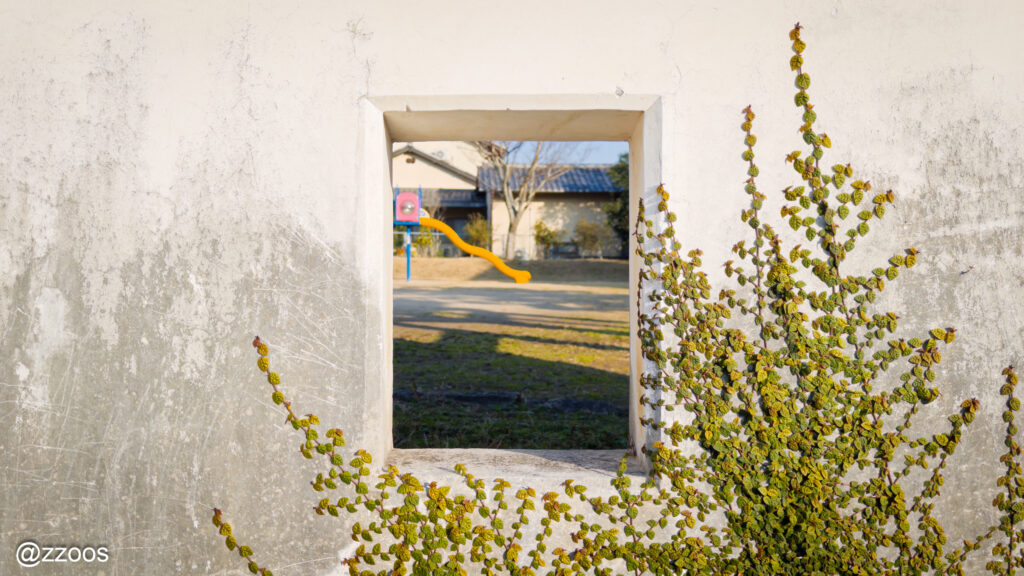
When I peeked inside,
there was a slide like in a playground,
so I realized it wasn’t a shrine.
Checking the map app,
I found that this gate is also
an important cultural property of Karatsu City.
No wonder it had such a strong presence.
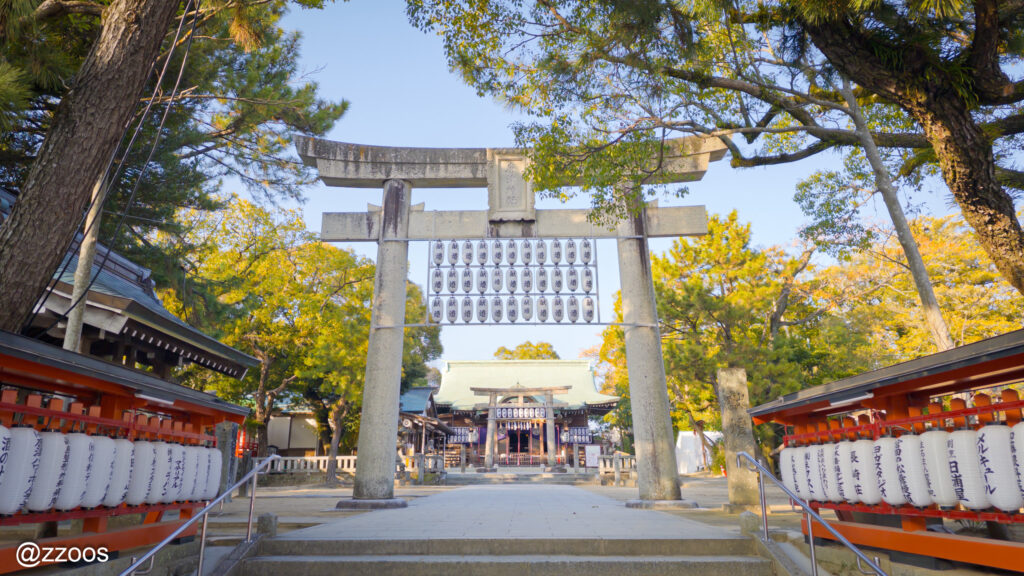
Once inside the shrine,
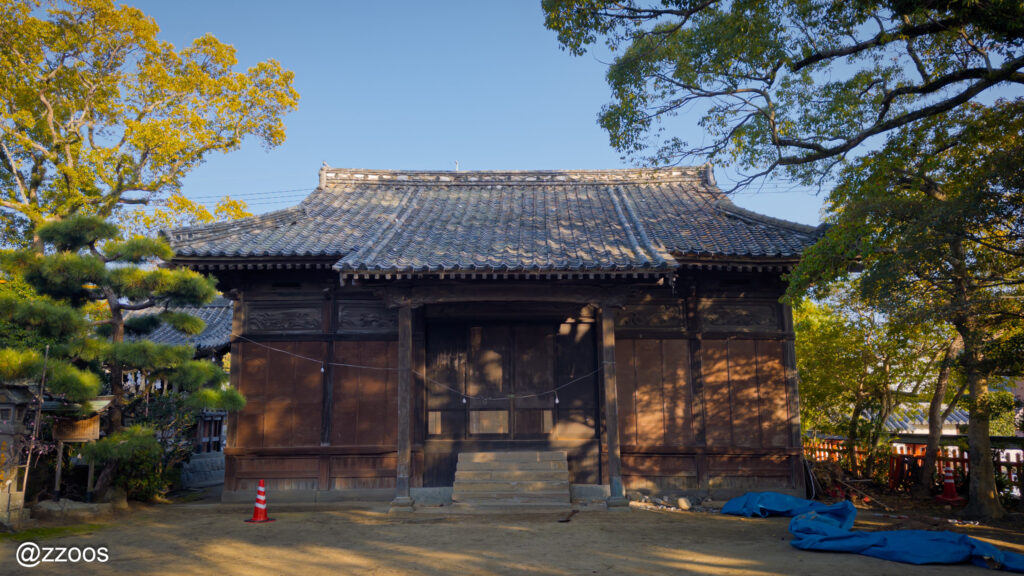
an old wooden building on the right immediately stands out.
You can tell at a glance
that it has a certain presence.
I wondered if it was
a major cultural property,
but maybe not quite to that level.
Still, it clearly feels old,
and according to the map app,
it’s called the Kohaiden (former worship hall).
A haiden is a space
where visitors pray at a shrine,
and since it has “old” attached to it,
it seems to be a former one
no longer in use.
To the left of the torii,
there are a few small shrines.
In front of one of them
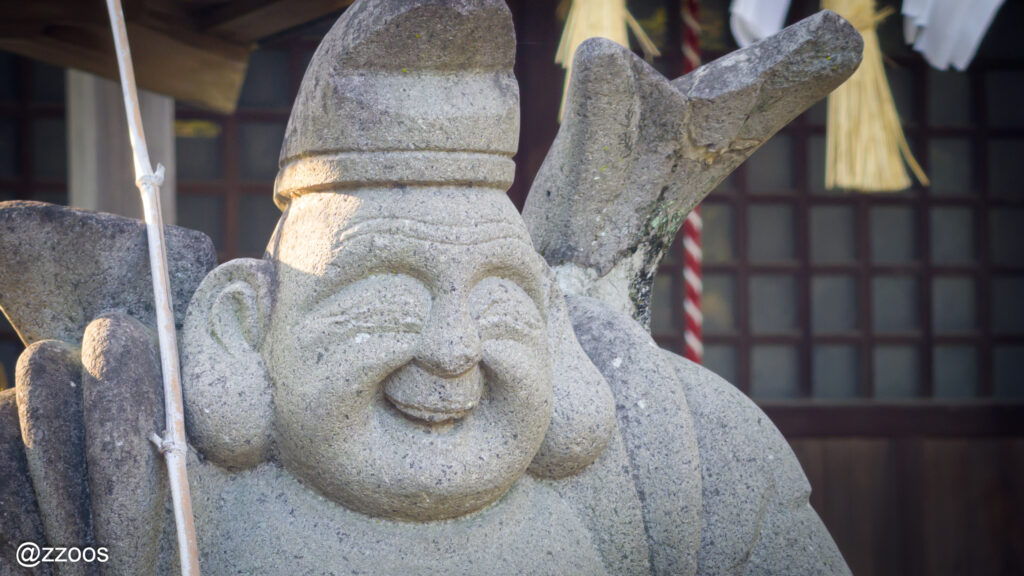
stands a statue of Ebisu (エビス).
A god with a kind,
welcoming smile.
He holds a fishing rod
and carries a large sea bream.
His big smile
and large earlobes are also distinctive.
He’s also the god
featured on Ebisu beer.
One of the Seven Lucky Gods in Japan,
he is said to be
the deity of prosperity
in fishing and commerce.
As you walk toward the main hall,
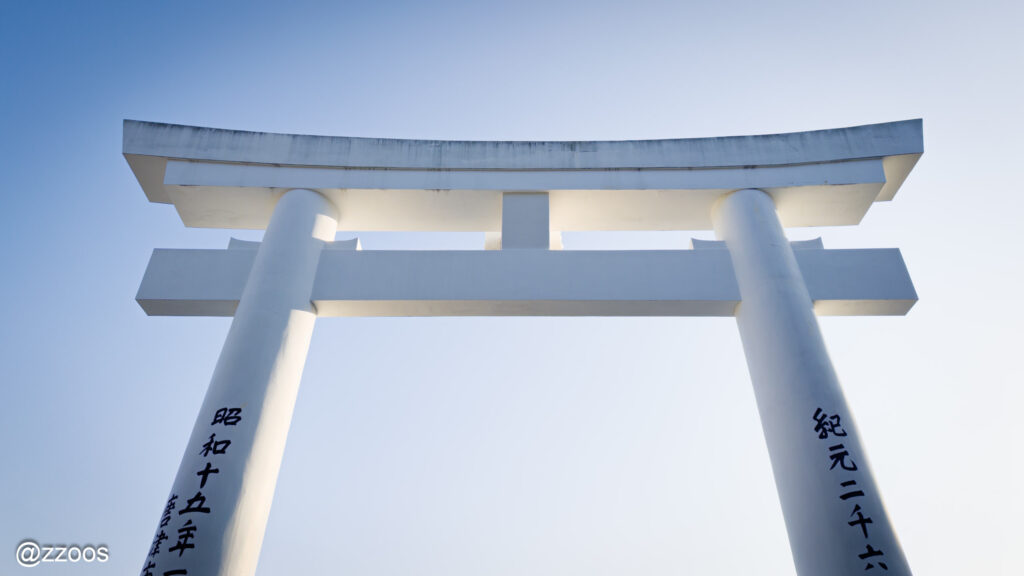
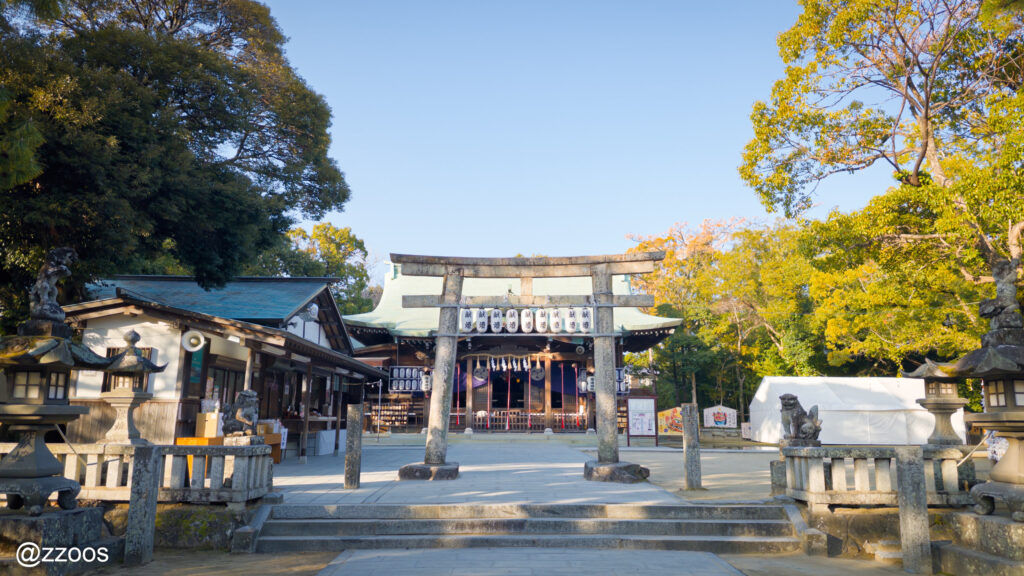
you pass through the Nino Torii (second gate)
and the Sanno Torii (third gate).
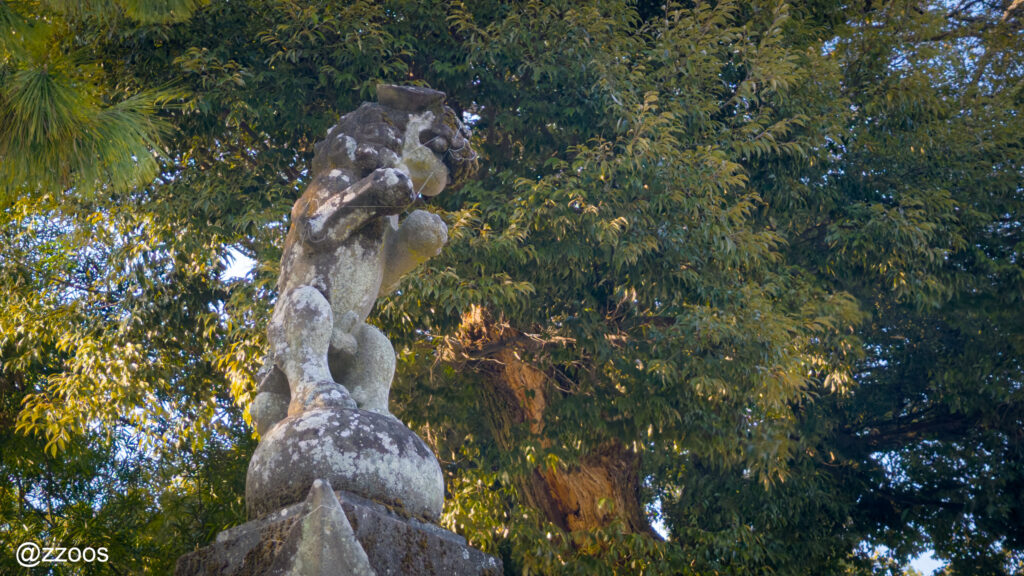
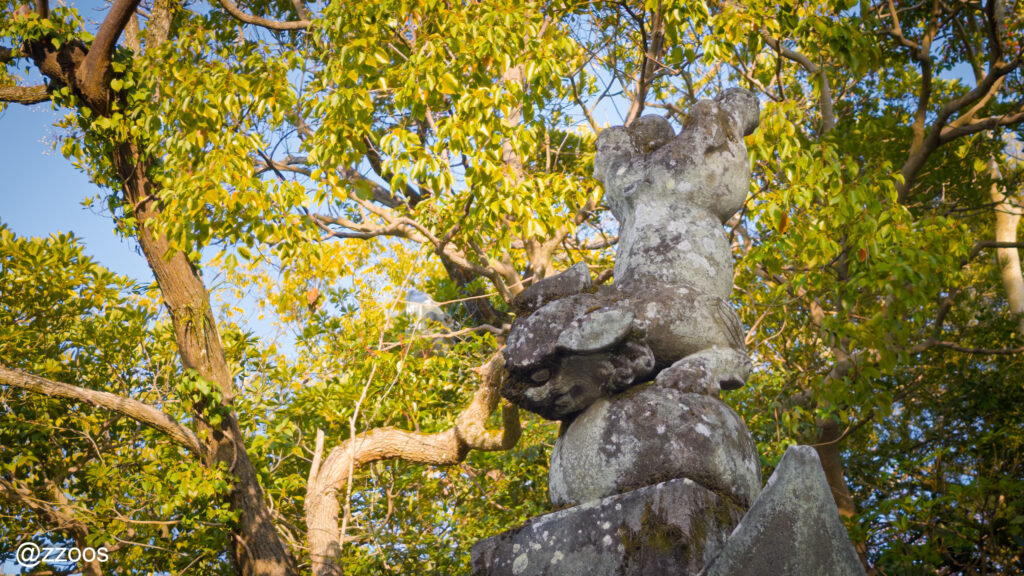
Beside the Sanno Torii,
there are several pairs of komainu statues.
Komainu are guardian figures
influenced by Chinese stone lions.
It’s similar to how Korea also has
protective figures like haetae.
However, Chinese stone lions
and Japanese komainu
exist as pairs.
One has its mouth open,
and the other has it closed.
The open one represents “A” (beginning),
and the closed one represents “Un” (end).
Together,
they symbolize the beginning and end of the world,
in other words, everything in the universe.
Similarly,
Okinawa’s shisa also appear in pairs,
with one open-mouthed
and the other closed.
But shisa feel more like
folk guardians that protect everyday life,
often placed even at homes,
not just sacred spaces.
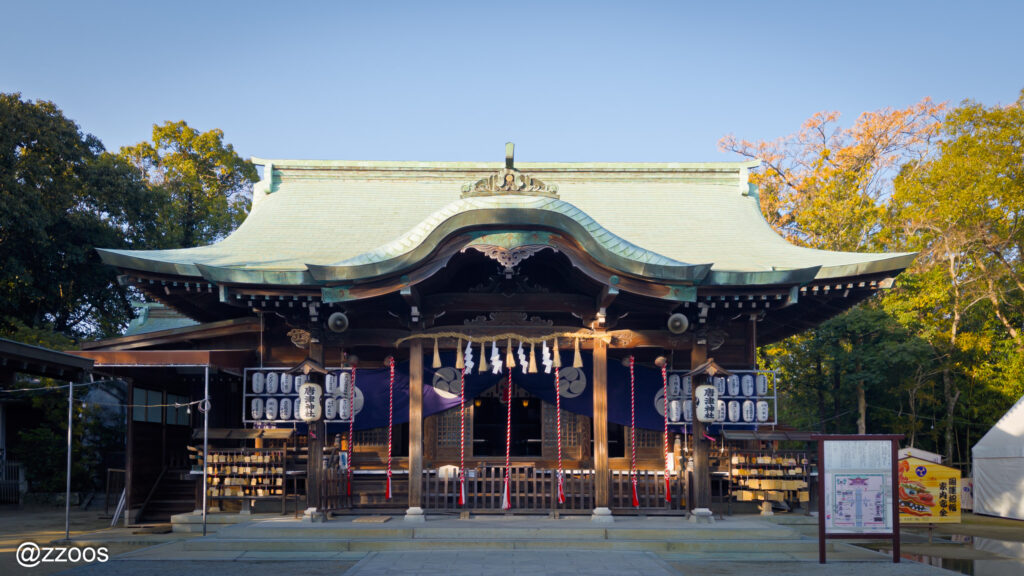
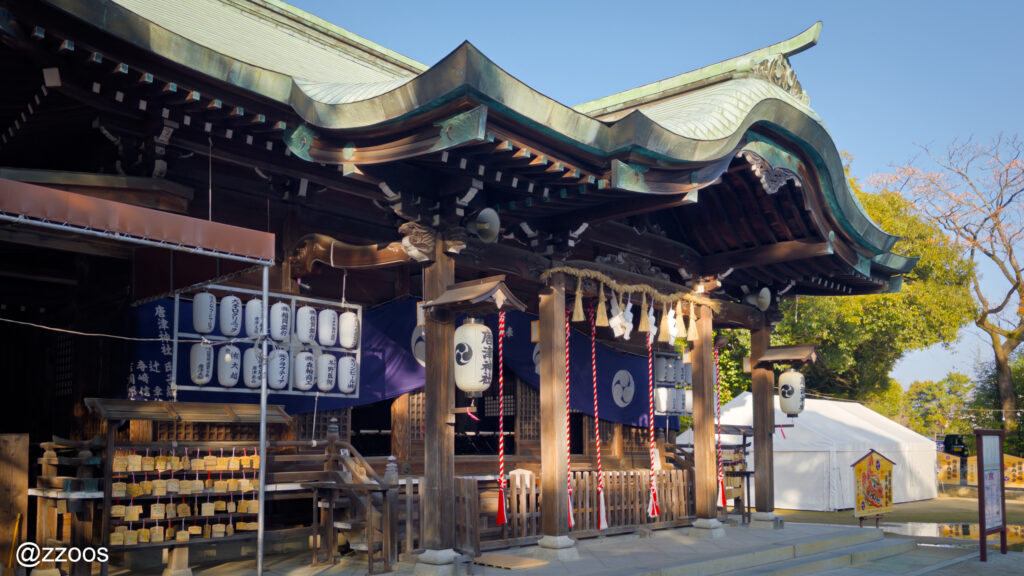
Karatsu Shrine enshrines
the Sumiyoshi Sanjin (住吉三神),
three deities associated
with the sea and navigation.
It makes sense
that shrines near the sea
are connected to prayers
for fishing and safe voyages.
Also, although I couldn’t capture it in photos,
there are many materials, drawings,
and traces related to
Karatsu Kunchi (唐津くんち)
and Hikiyama (曳山)
throughout the shrine.
Karatsu Kunchi,
held in November,
is one of the most famous festivals in Karatsu.
Hikiyama are large festival floats,
and in Karatsu Kunchi,
14 massive floats representing 14 towns
define the festival.
And this shrine,
Karatsu Shrine,
is where that Hikiyama procession begins.