After visiting the former Takatori residence,
I had just seen, up close, the extravagant lives of the wealthy.
It felt somewhat detached from reality—
a grand mansion that seemed to openly display wealth and power.
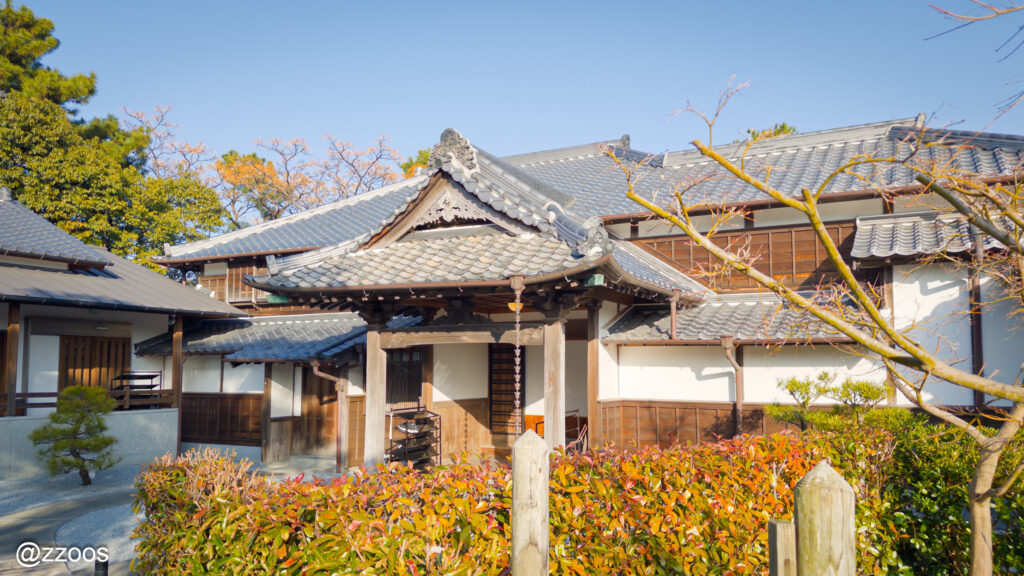
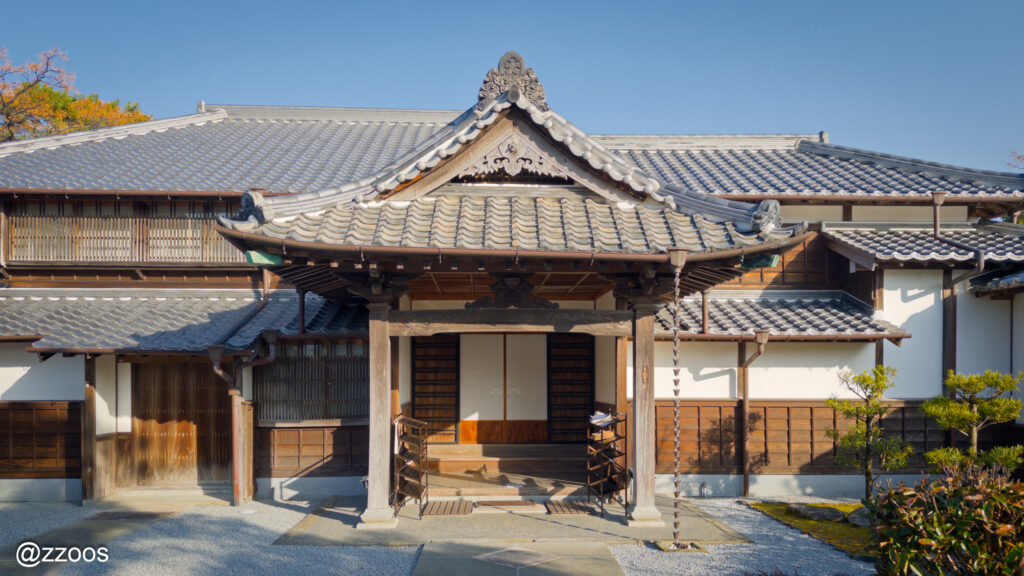
Right nearby, there is another residence called the Former Oshima Residence (旧大島邸).
It was originally located a bit further away,
but was relocated to its current position when an elementary school was built.
Compared to the former Takatori residence,
this place may seem plain at first.
But precisely because it lacks decoration
and shows only the structure itself,
it offers a completely different perspective on a traditional house.
Admission is free,
and more importantly, photography is allowed indoors.
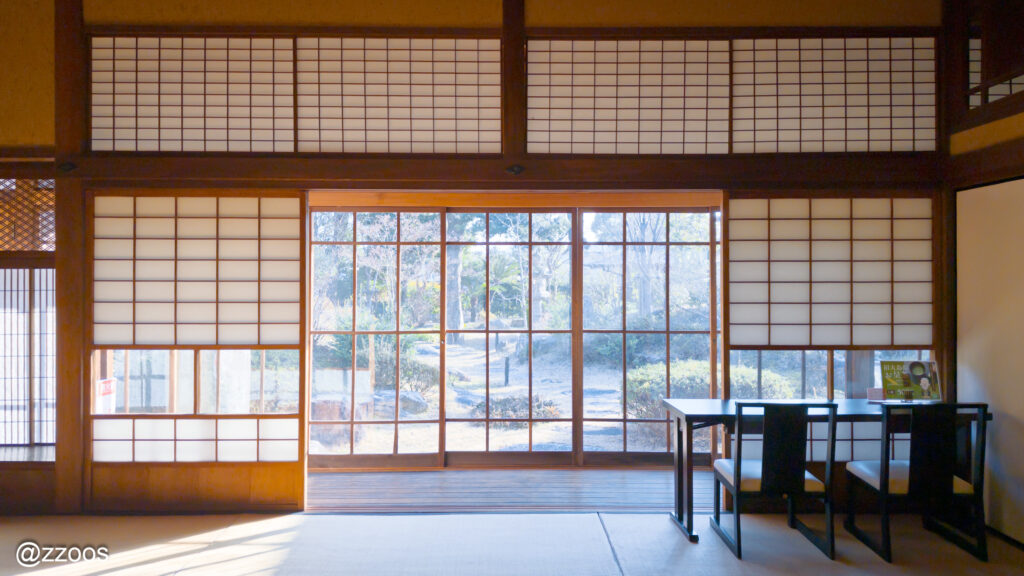
The owner of this house, Oshima Kotaro (大島小太郎),
was a businessman of the Meiji era.
He was particularly active in finance and commerce,
and held considerable influence in Karatsu.
He founded Karatsu Bank,
and also established railway and electric companies.
It would not be an exaggeration to say
he was one of the key figures in modernizing Karatsu.
If compared to Takatori Koreyoshi,
who was a national-level magnate in the coal mining industry,
Oshima Kotaro would be better understood
as a powerful businessman within the Karatsu region.
Naturally, the scale and level of grandeur differ as well.
Takatori’s house is a lavish mansion on a national scale,
while Oshima’s house, though large,
feels more like a well-built residence you could find elsewhere.
Because admission is free,
there is no fixed viewing route,
and photography indoors is allowed,
it becomes a place where you can wander around freely,
sit down for a moment, rest,
and take photos at your own pace.
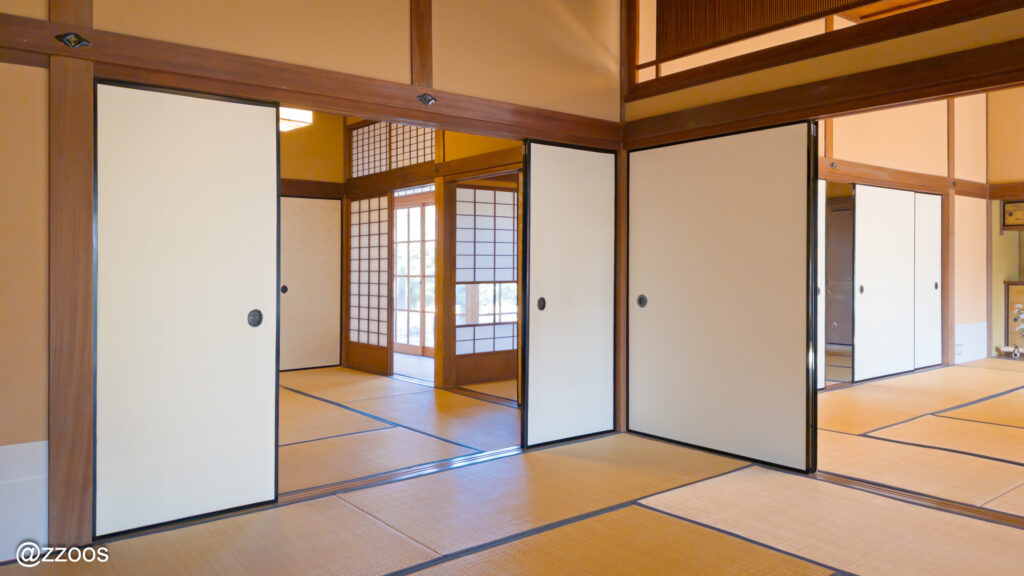
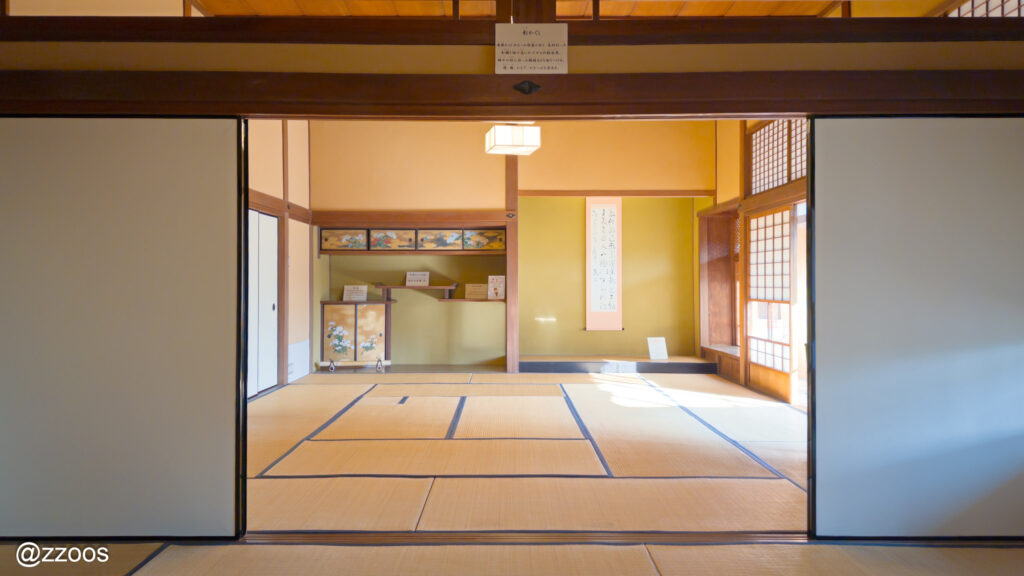
What stands out especially
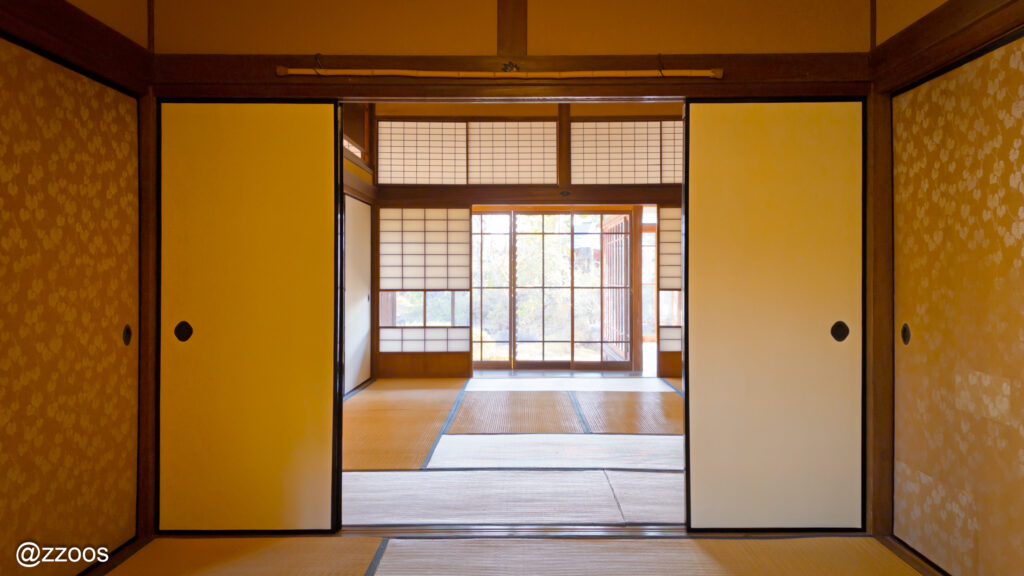
is the connected tatami rooms—different from Korean hanok—
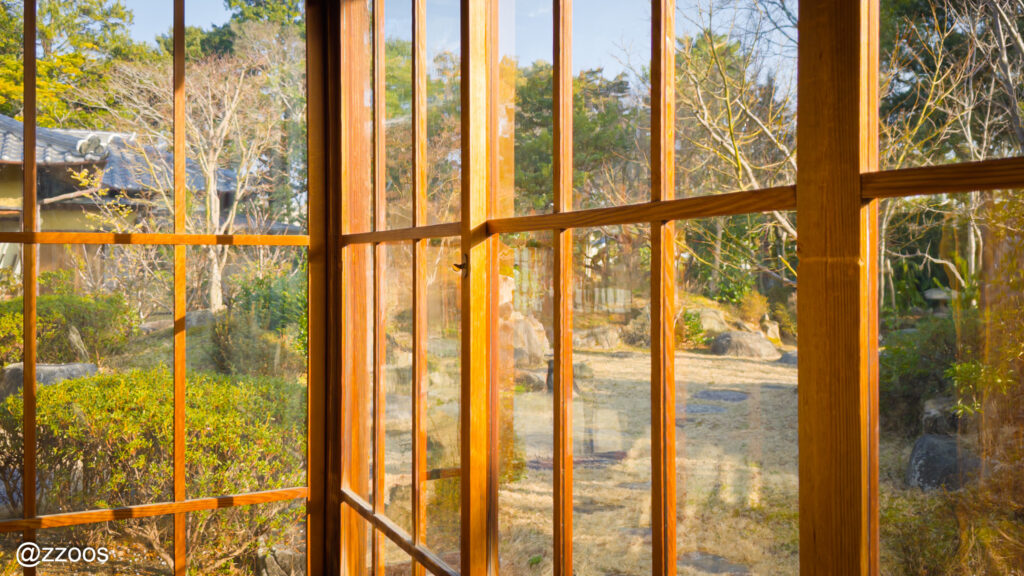
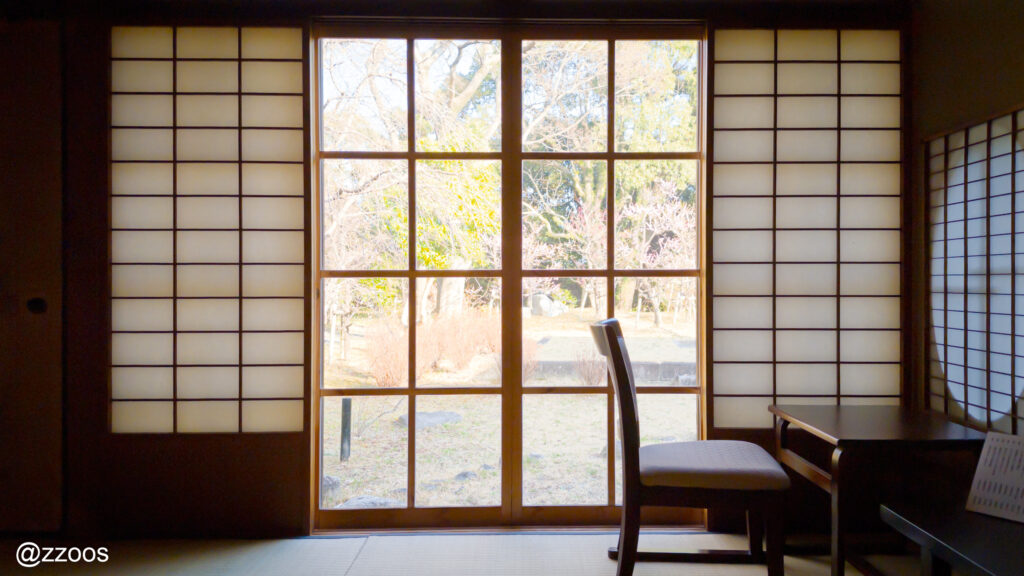
and the view of the garden from inside.
Perhaps the contrast with the Takatori residence I saw earlier
makes it feel even more so,
but the Oshima residence has almost no decoration.
Since it is open for free viewing,
there are no staged displays or added ornaments.
Because of that,
only the tatami, doors, and window frames remain—
revealing the structure of the house as it is.
And the atmosphere created by those elements.
When I think of this place together with
Natsume Soseki’s house in Kumamoto
and the Iso residence inside Sengan-en in Kagoshima,
there is a certain shared atmosphere
that runs through these Japanese houses of that time.
Little by little,
learning to recognize these things—
that, too, is part of the joy of travel.