When you think of Japanese castles, the image that comes to mind is almost always the tenshu (天守閣) — the keep.
Kumamoto Castle rising up in the middle of the city. Osaka Castle, Nagoya Castle. Even without thinking of a specific castle, the first image that comes to mind when you hear “Japanese castle” is that tall, imposing keep.
The keep was also a symbol of the lord’s authority and wealth. In wartime, it served as a command center at the highest point of the castle. In peacetime, it was a structure that showed off the lord’s power.
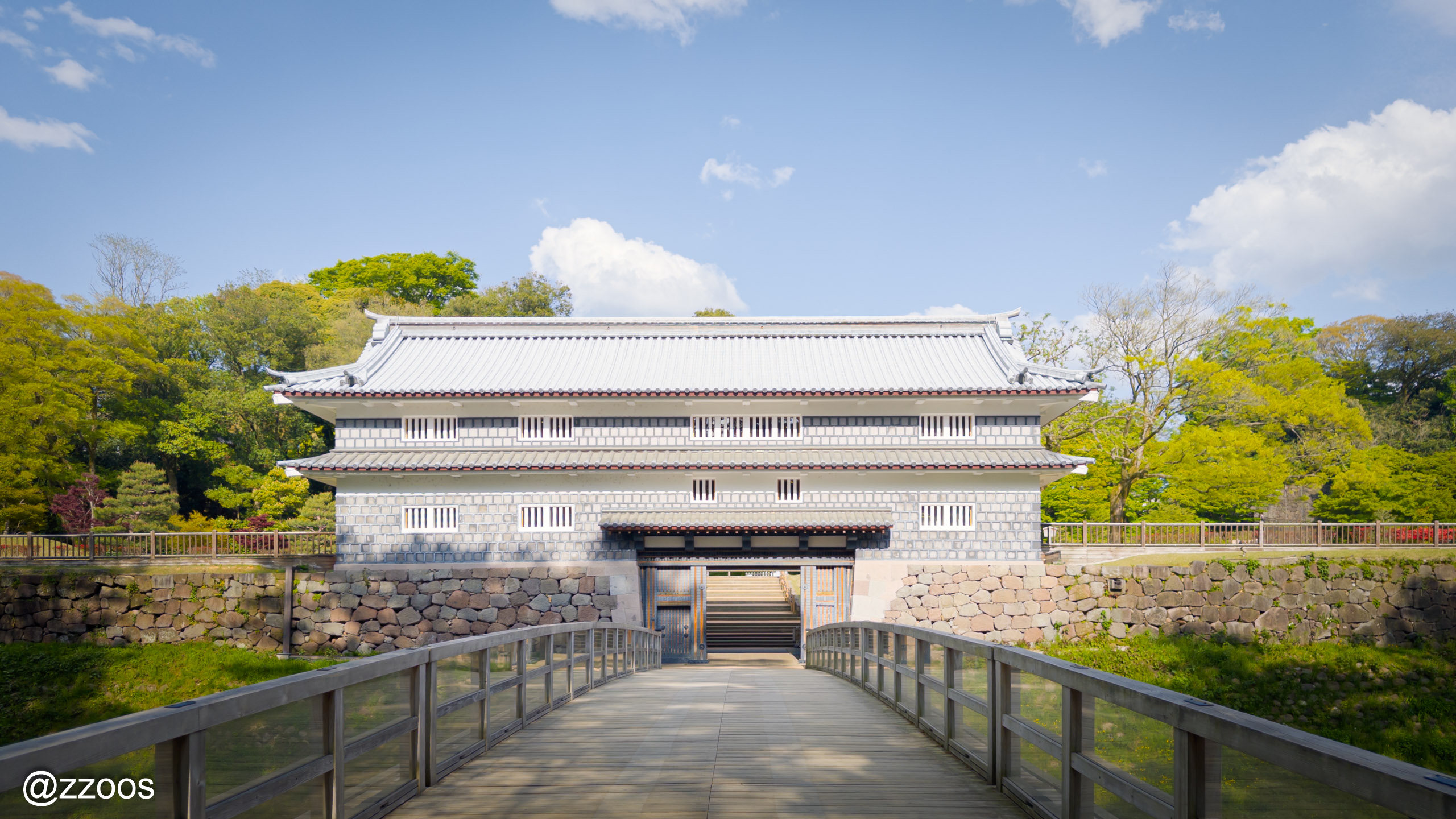
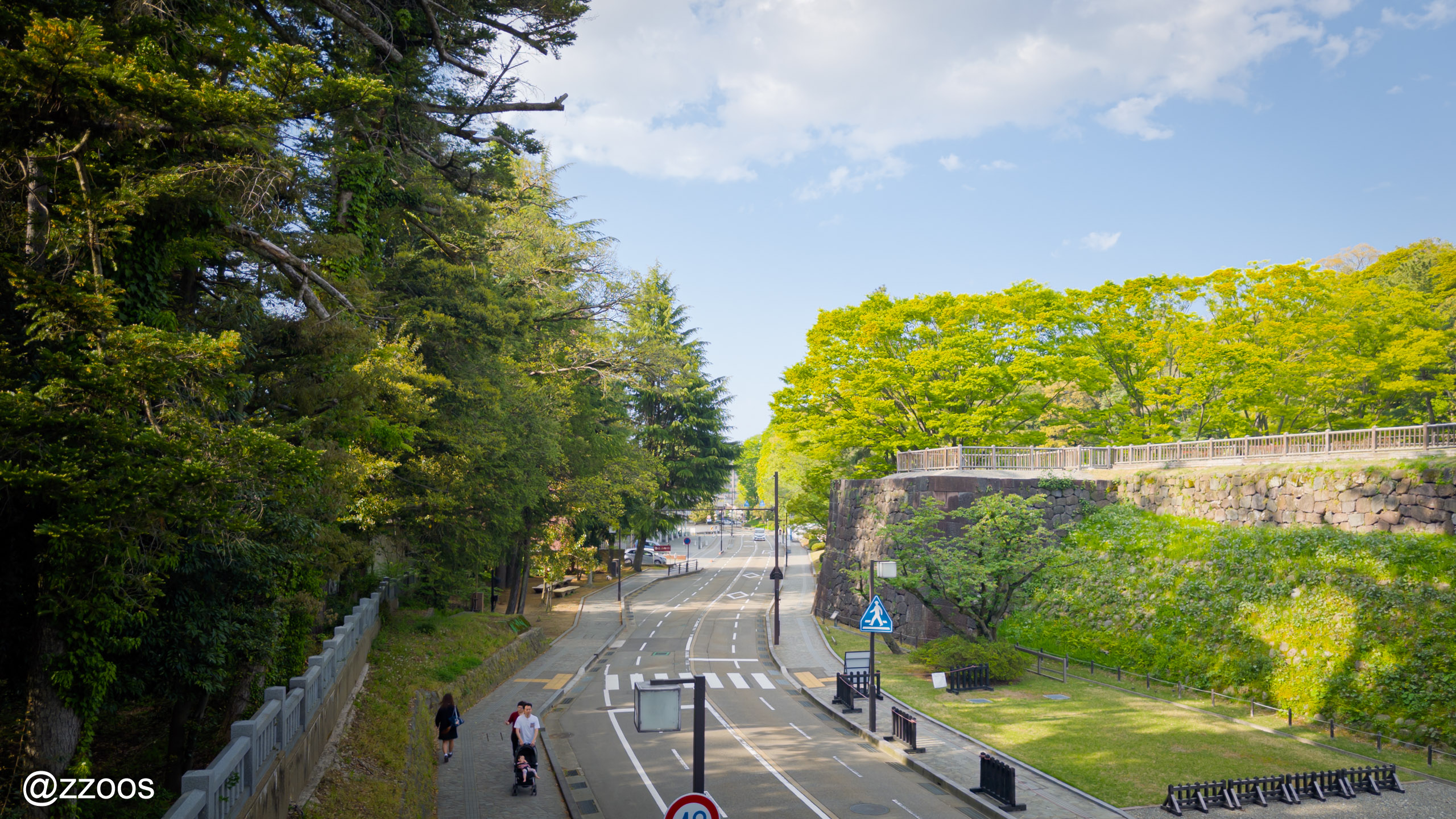
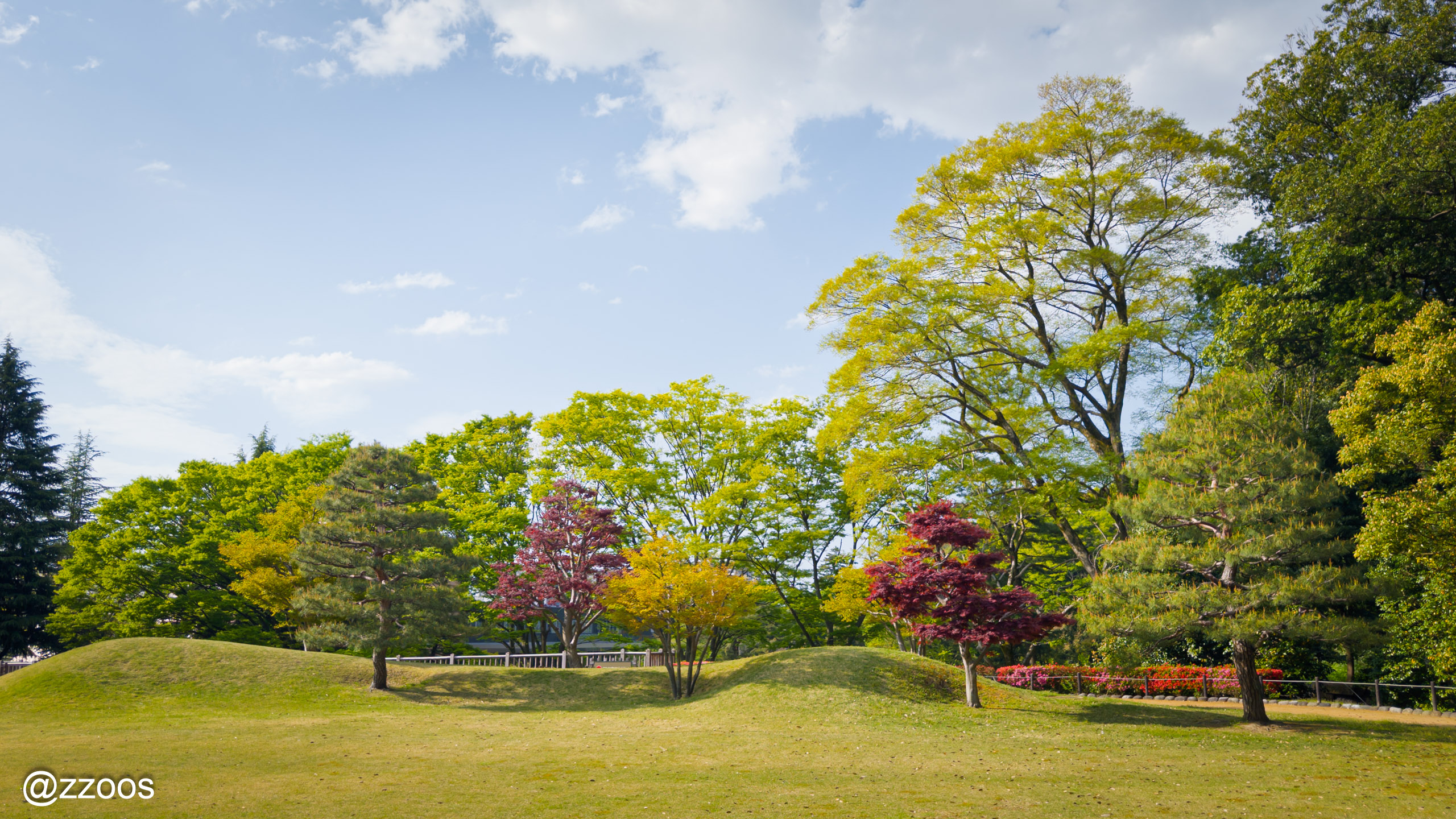
But Kanazawa Castle has no keep.
The Kaga Domain — the wealthiest and most militarily powerful domain outside the shogun himself during the Edo period, so prosperous it harvested over a million koku of rice a year and was known as Kaga Hyakumangoku (加賀百万石) — had no keep.
Just before Tokugawa Ieyasu established the Edo shogunate, Kanazawa Castle’s keep was struck by lightning and burned to the ground. And the Maeda clan, despite their enormous wealth and power, chose not to rebuild it.
At the start of the turbulent Edo period, the Kaga Domain was sending a message: “We have absolutely no intention of restoring the keep — a military symbol that could be seen as a threat to the shogunate.” The most prosperous domain in Japan had no desire to clash with the shogunate.
Rather than using Kaga’s vast wealth to build up military power, the Maeda clan directed it toward culture and the arts. The message was clear — we are a peaceful domain that loves culture and art, with no intention of threatening the shogunate.
Thanks to that, Kanazawa has remained a city where traditional crafts and arts have survived to this day.
After exploring Omicho Market, walking along Ohoridori, and visiting Oyama Shrine.
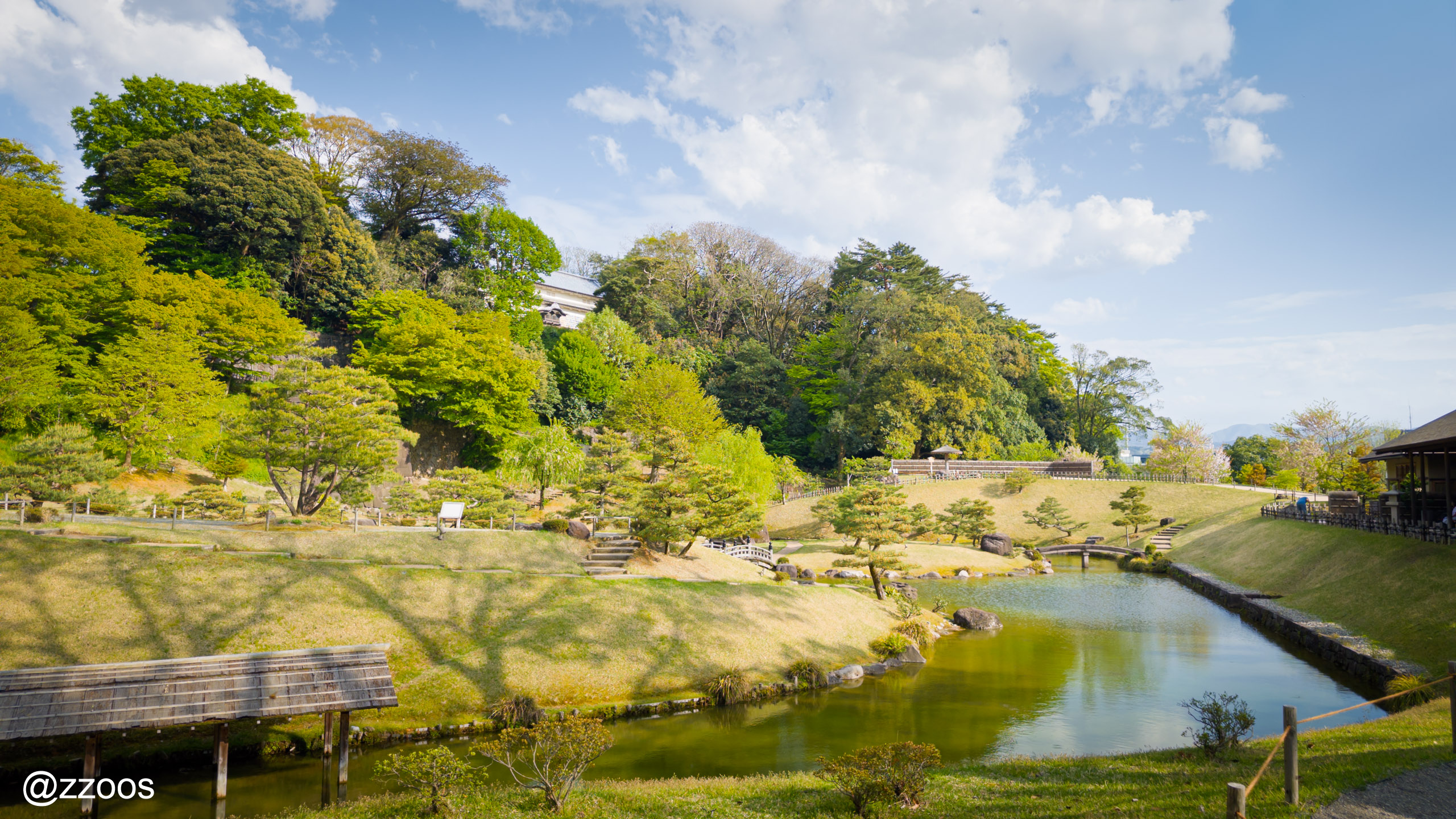
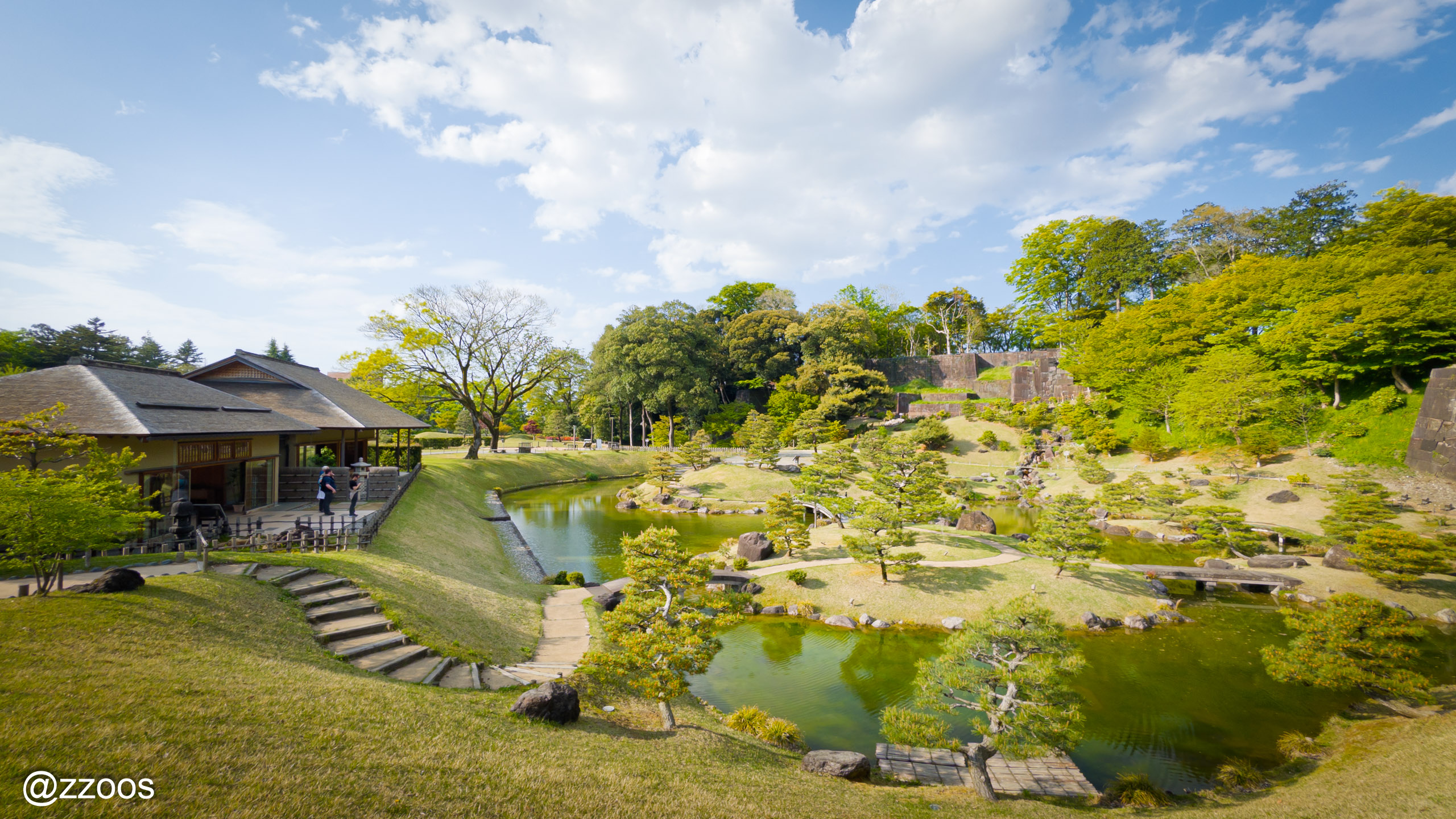
Cross Nezumitabashi from Oyama Shrine and you reach Nezumita-mon (鼠多門), the entrance to Kanazawa Castle. It looks less like a gate and more like a large building. Pass through it and the first thing you see is Gyokusen’inmaru (玉泉院丸) Garden.
A classic Japanese garden, neat and pretty.
There was a small café in just the right spot to take in the garden, but it wasn’t open. Maybe it was just too late in the day.
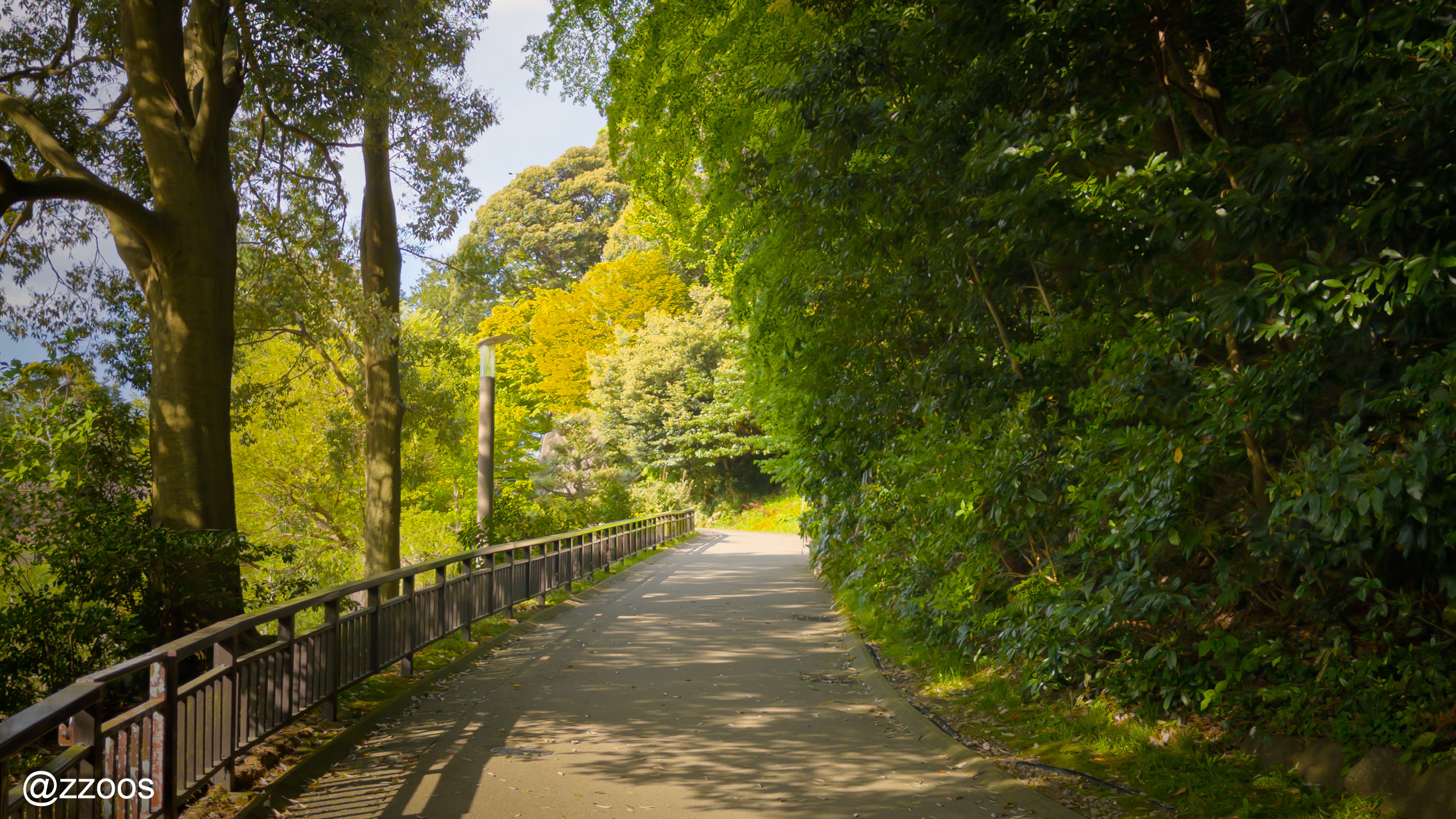
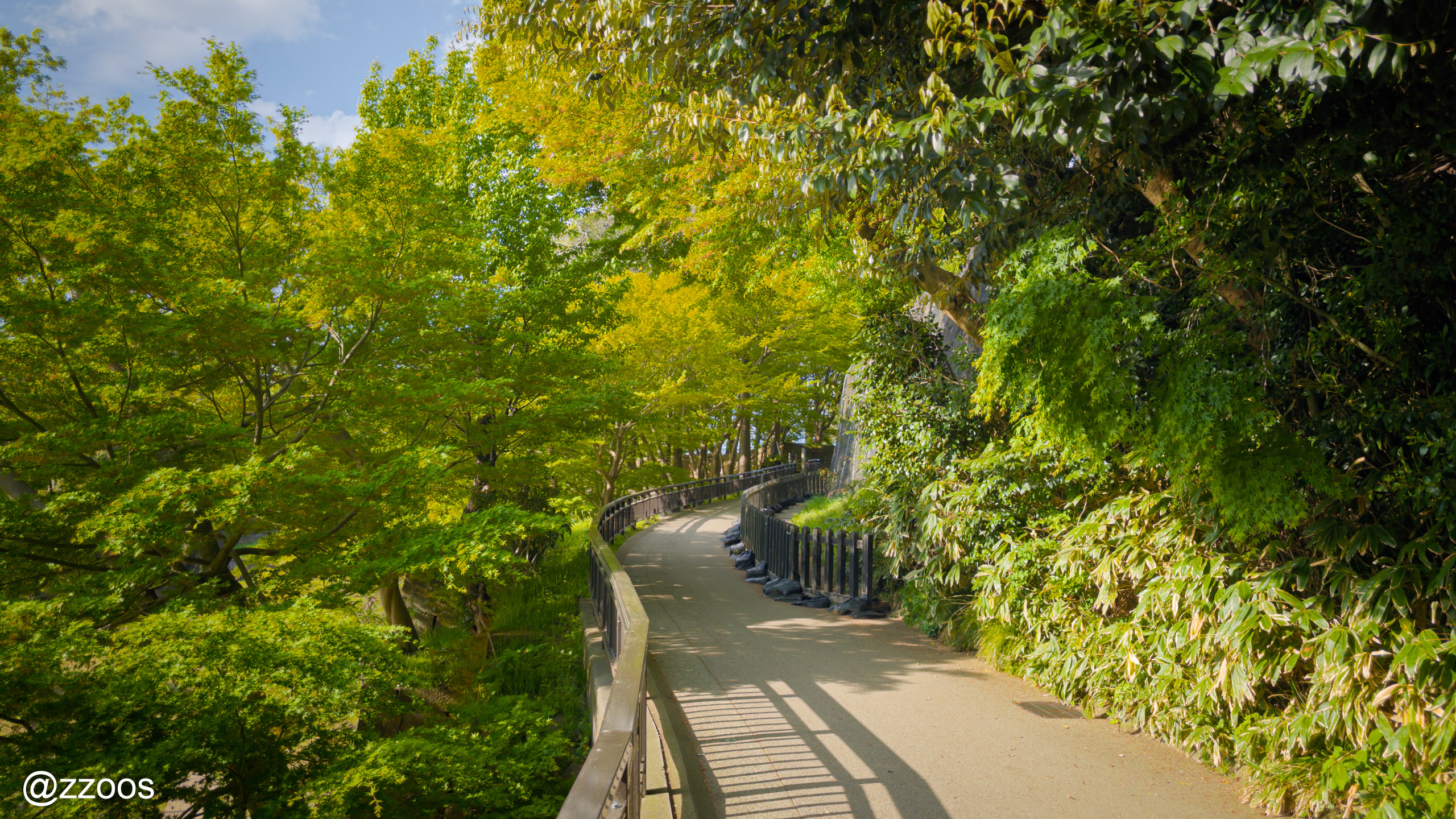
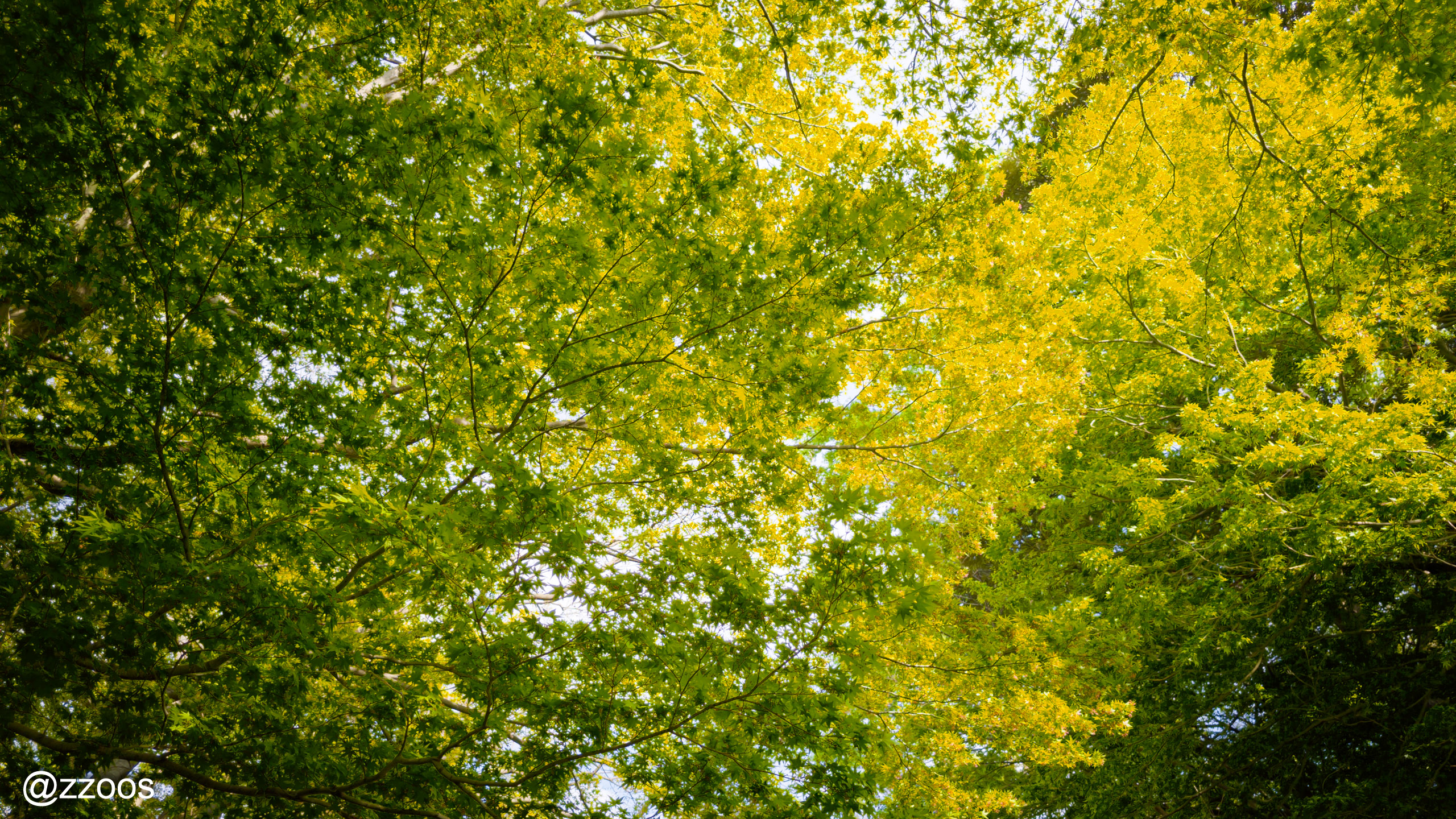
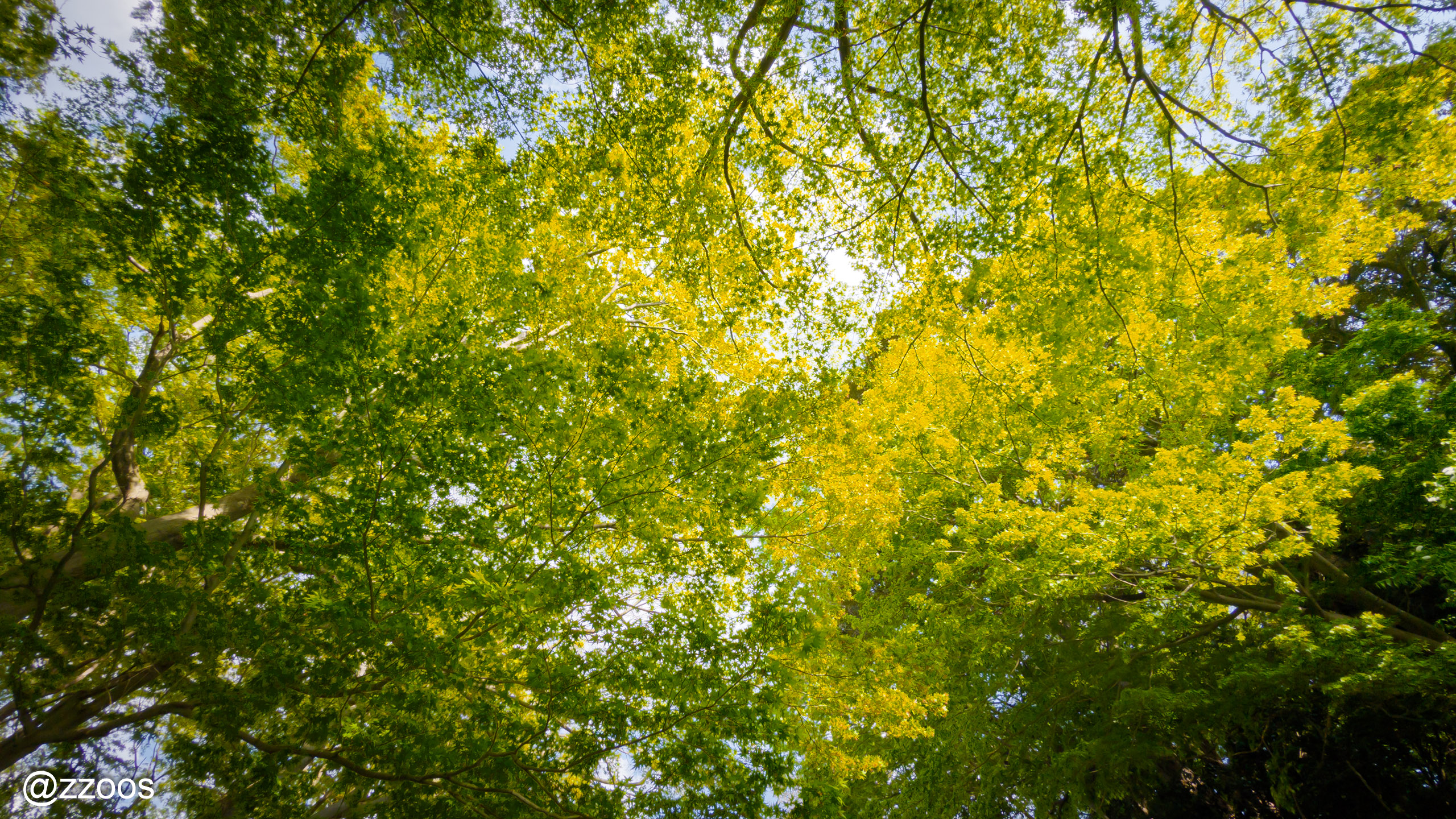
I walked around the garden and followed the path up through the trees. Honestly, it still didn’t feel much like a “castle” at this point. Just a very large garden.
It was around four in the afternoon. A little warm, but the occasional breeze and the slightly tilted afternoon light made the April greenery even prettier. Walking the tree-lined path that wrapped around Gyokusen’inmaru was a genuinely pleasant thing to do. The scenery was good too.
It felt like a natural continuation of the pleasant walk along Ohoridori.
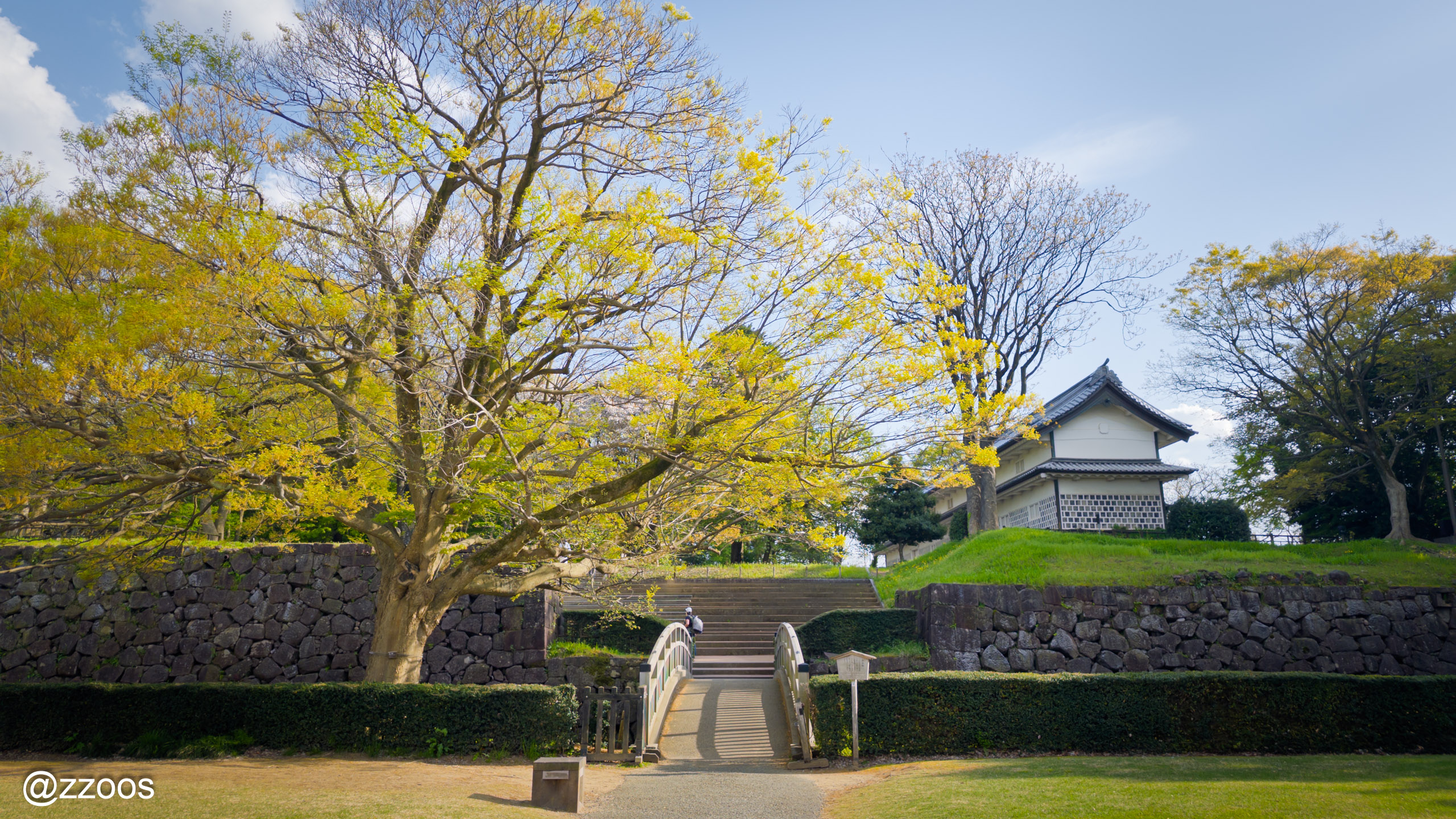
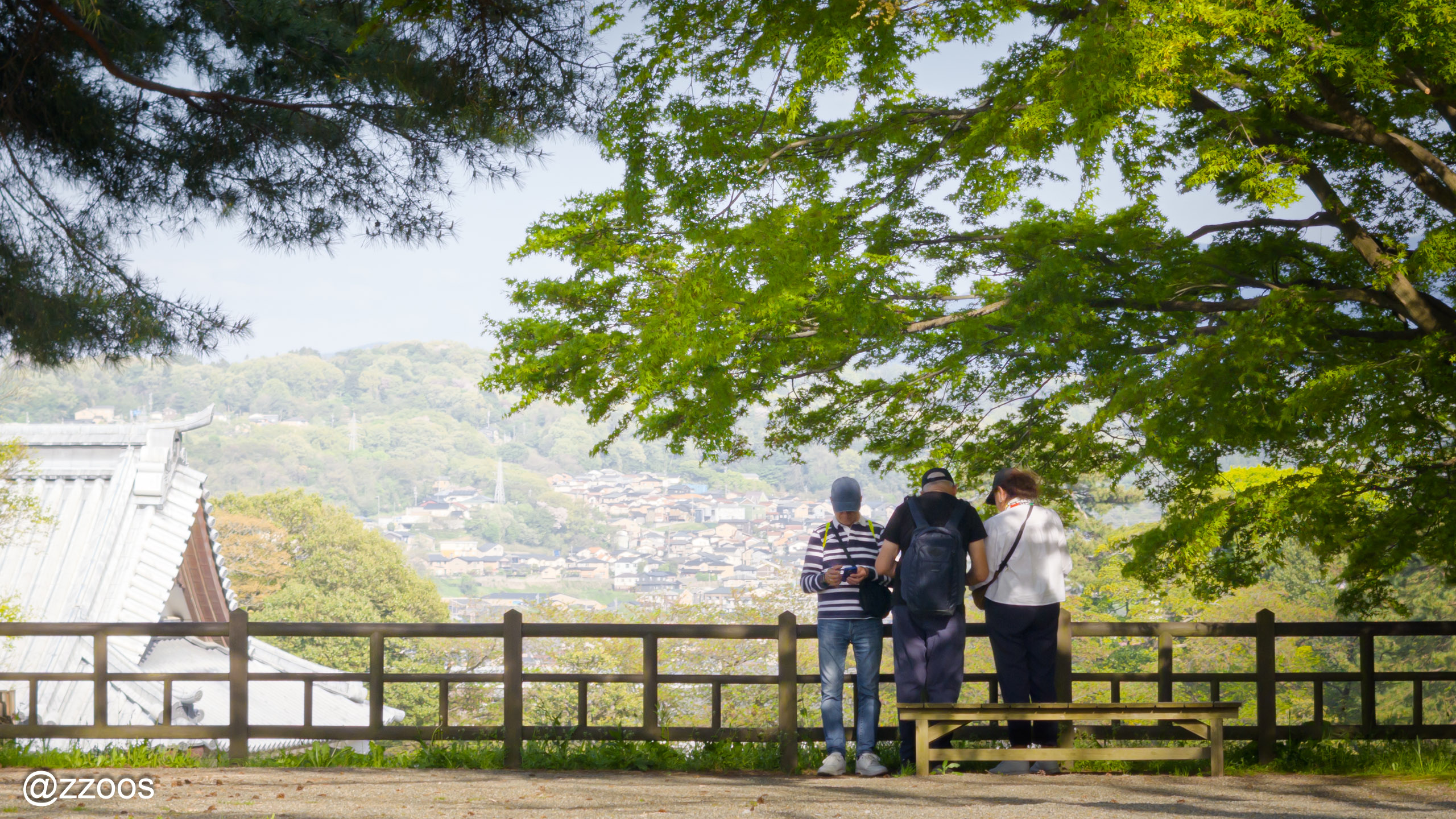
A little further up, Sanjikken-nagaya (三十間長屋) came into view. Apparently it’s a major cultural property showcasing the finest in Japanese timber architecture — if you look inside. I happened to be unable to get inside. So for me, it was just a long, not-particularly-impressive building.
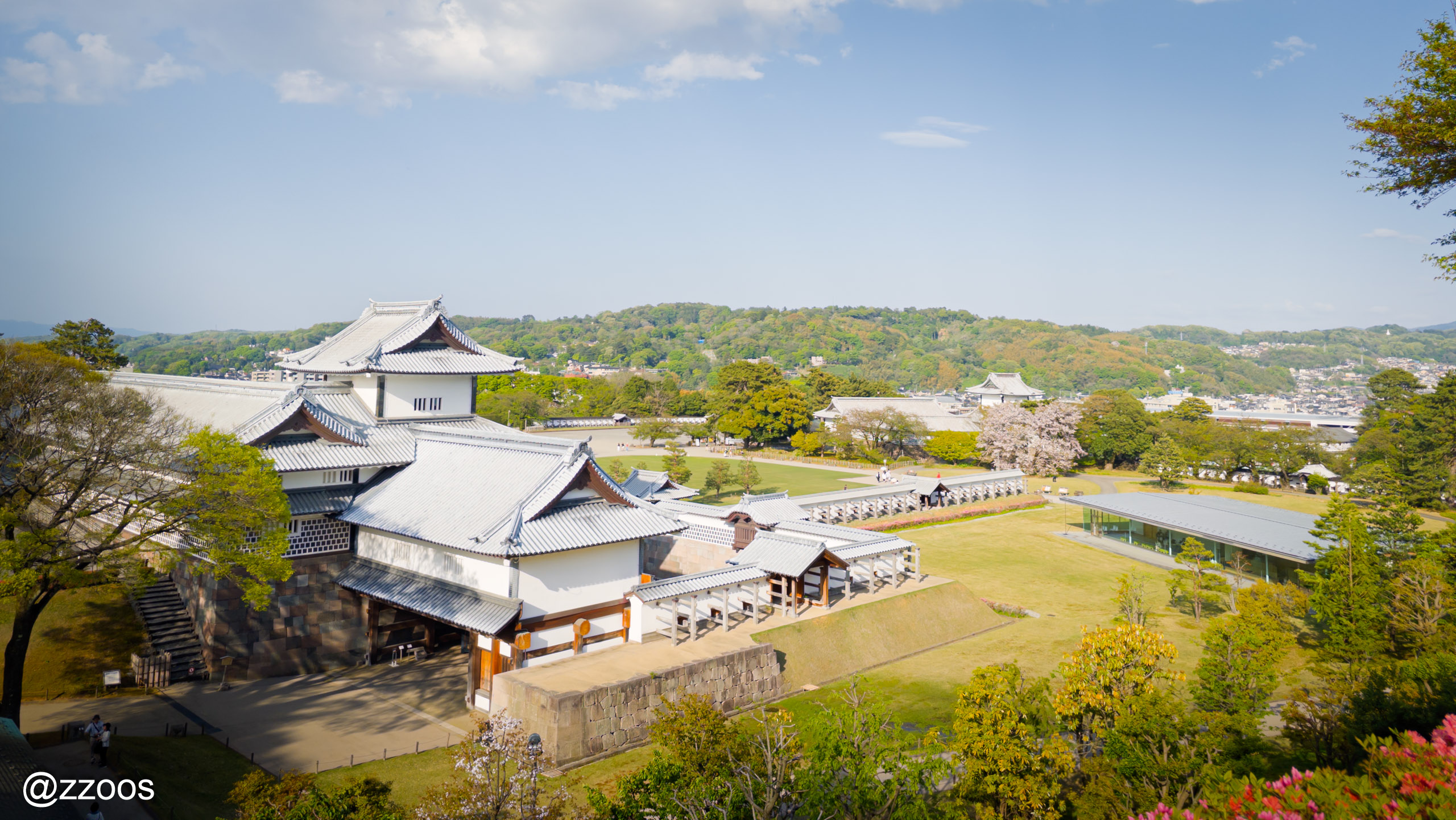
But the view looking down from the hill in front of it was pretty good.
It was a spot where you could look down at Gojikken-nagaya (五十間長屋) and Hashizume-mon (橋爪門) — the closest things to “castle-like” buildings in a castle without a keep. Sannomaru (三の丸) Plaza stretched out in front of them. And beyond the plaza would be Ishikawa-mon (石川門), the main gate of Kanazawa Castle.
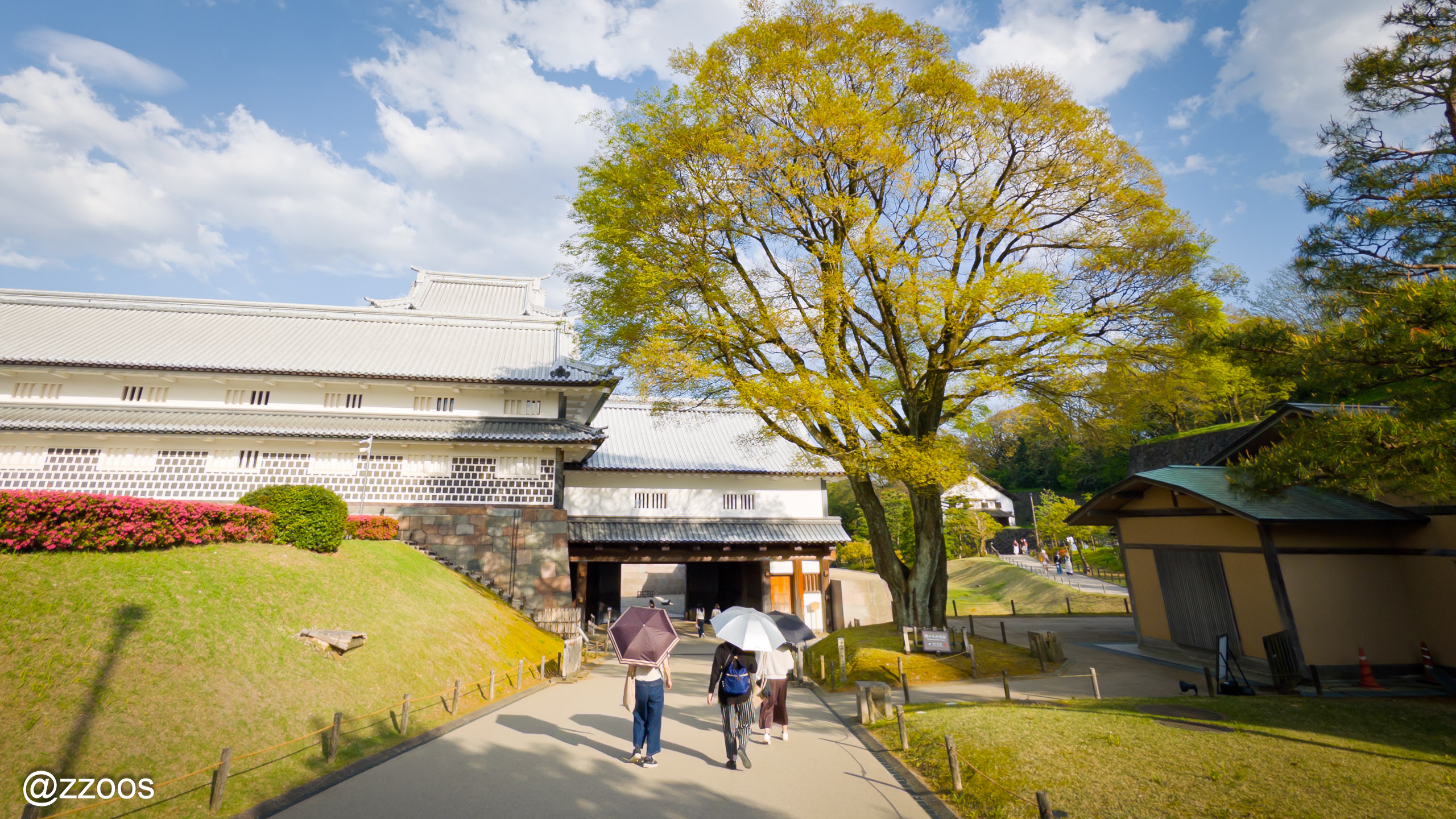
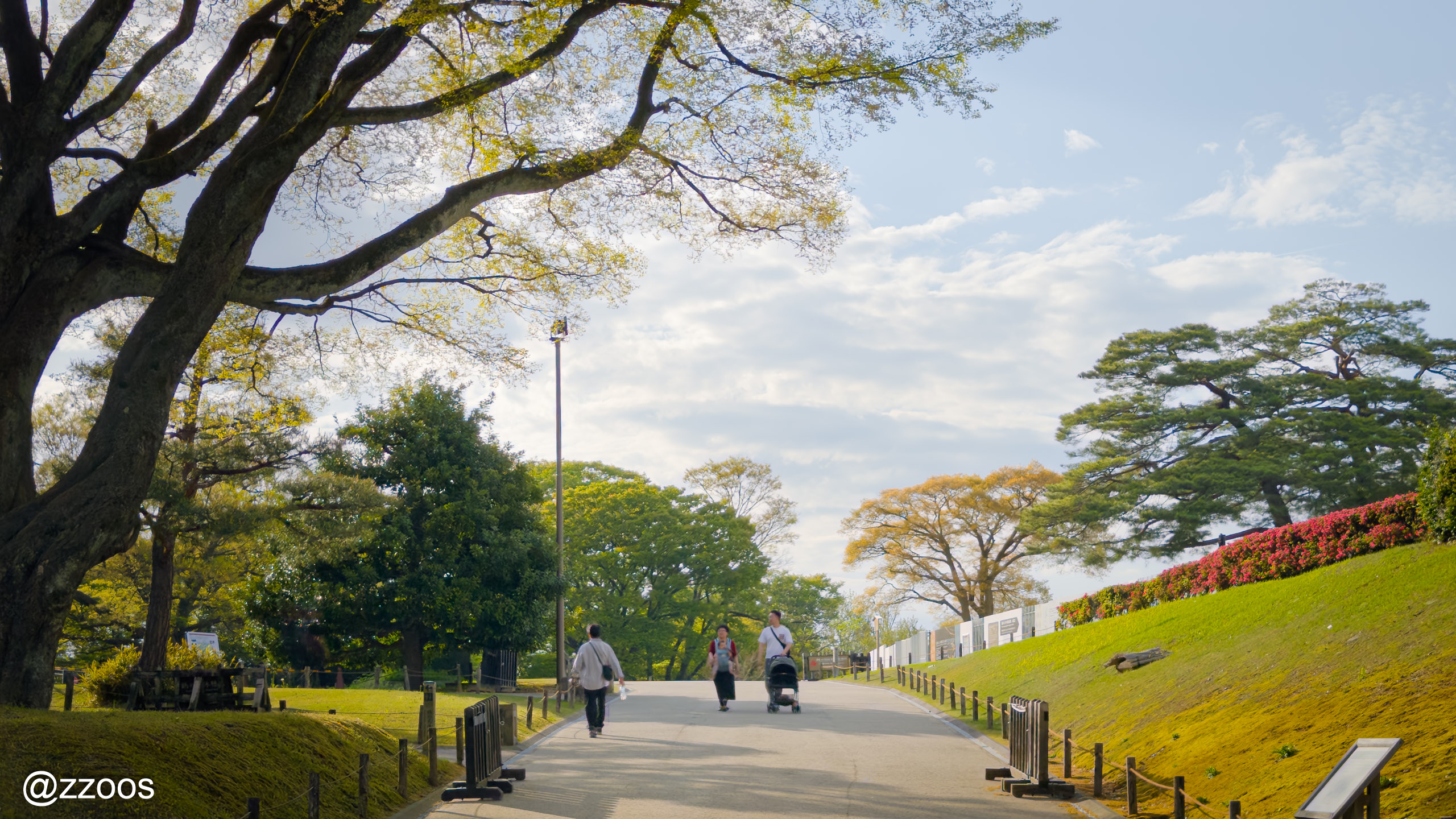
Coming down toward Ninomaru, there’s construction everywhere. Kanazawa Castle is currently undergoing a long-term restoration project. Not restoring the keep, but reconstructing the buildings that once stood in the Ninomaru area. When it’s done, it might be a somewhat more “impressive” castle.
A castle without a keep does feel a bit flat, there’s no denying it. No single shot that makes you think, “This is Kanazawa Castle.”
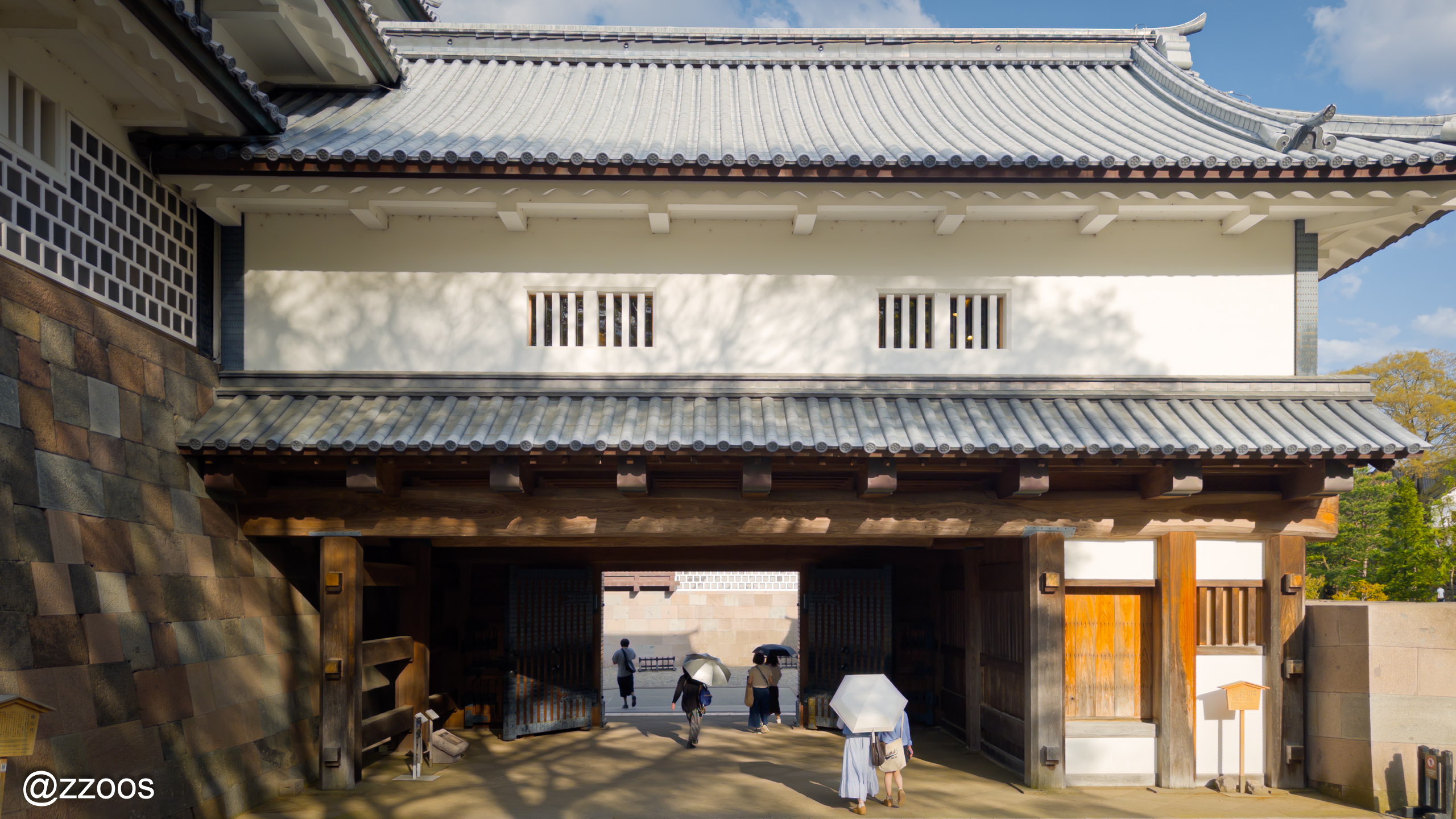
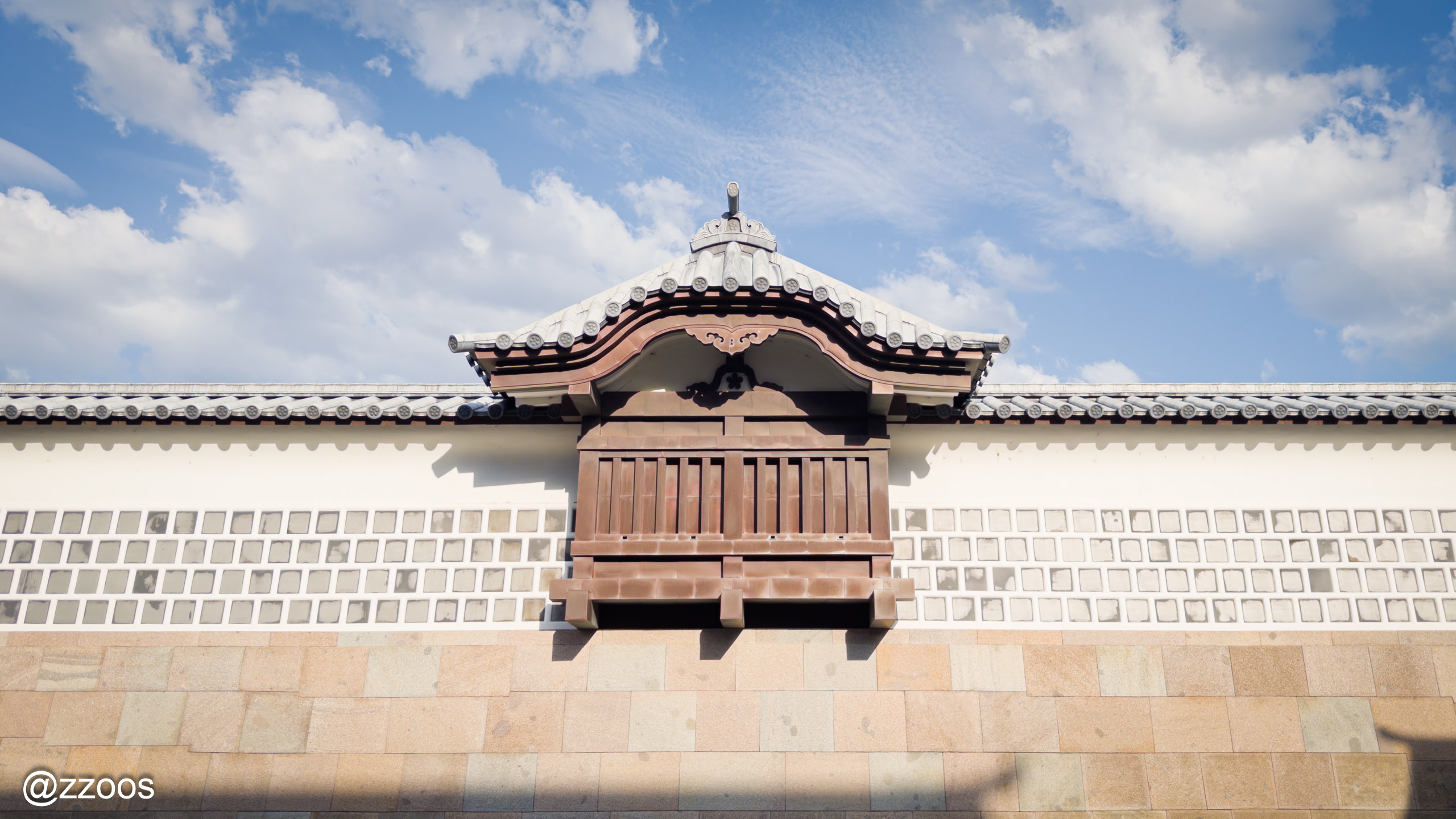
Something I found out after the trip while reading up on Kanazawa Castle: the roof tiles aren’t the usual fired clay. They’re made by covering wooden tiles with sheets of lead. Which gives them a slightly brighter shade of gray than regular tiles.
There were several reasons for going to the trouble of making tiles this way.
In a defensive battle, the lead could be melted down and recast into musket balls. In a region with heavy snowfall in winter, lighter tiles meant the roof was less likely to collapse under the weight of accumulated snow. And as a bonus, fire arrows were less likely to spread flames.
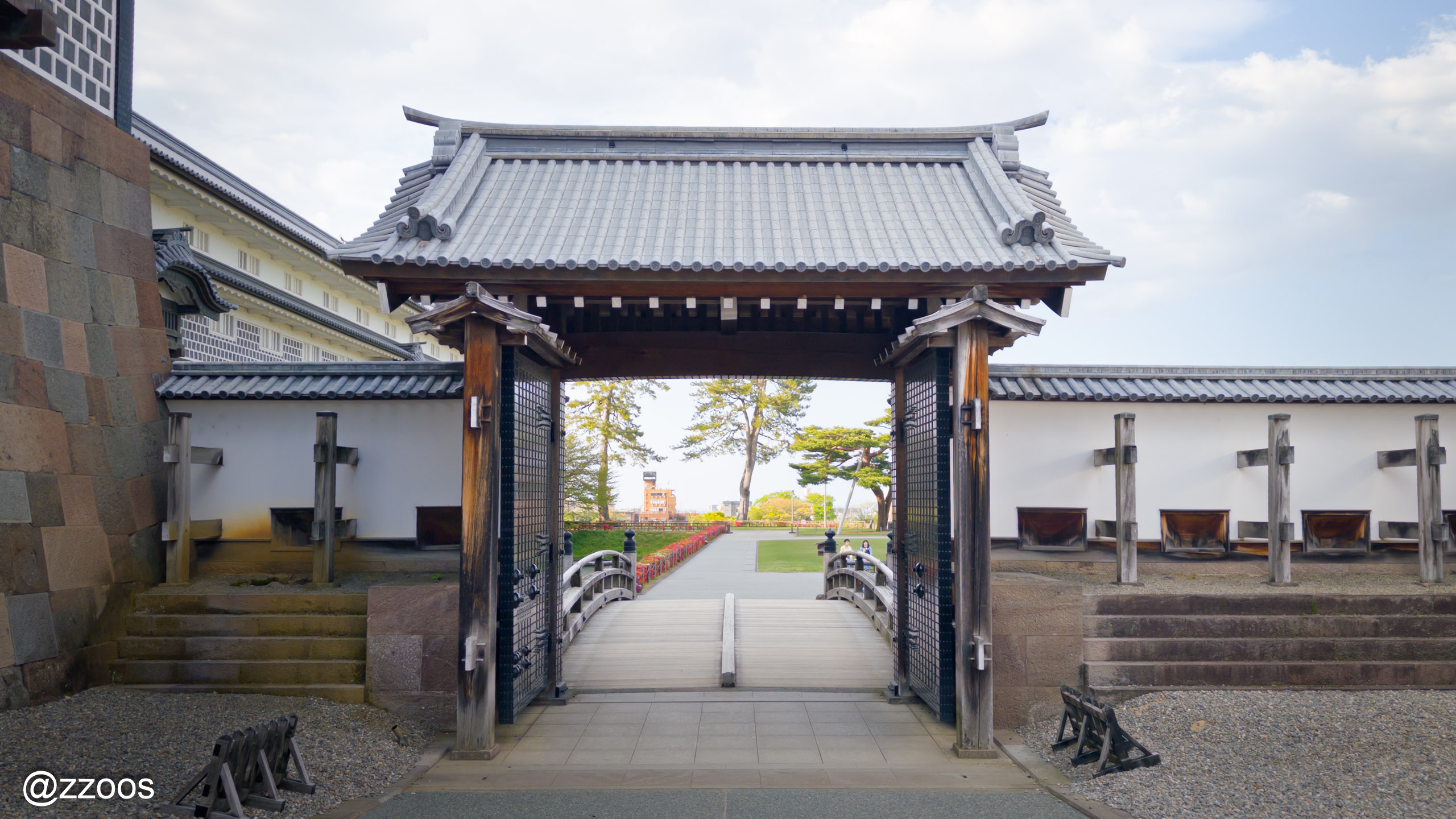
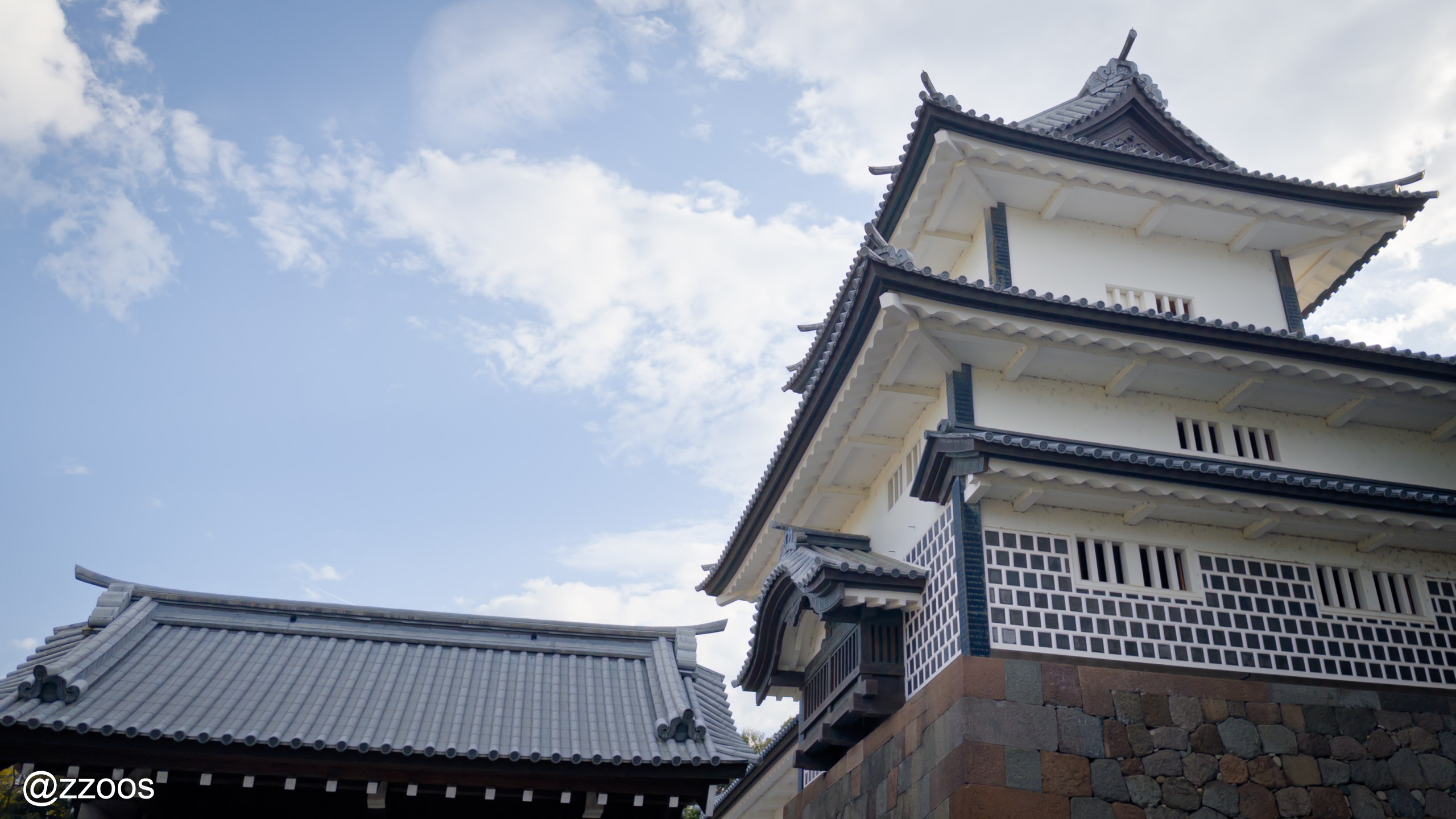
I came out through Hashizume-mon into Sannomaru Plaza. After walking all day, I needed to stop and rest now and then. I sat down on a bench in front of the plaza for a bit. That takes some timing too — with so many people around, even finding a bench isn’t easy.
I scrolled through the photos I’d taken at Kanazawa Castle, and the lack of a keep really is a shame. I just couldn’t get that one shot — the shot that says “this is Kanazawa Castle.” They all just look like photos from a walk through a large park.
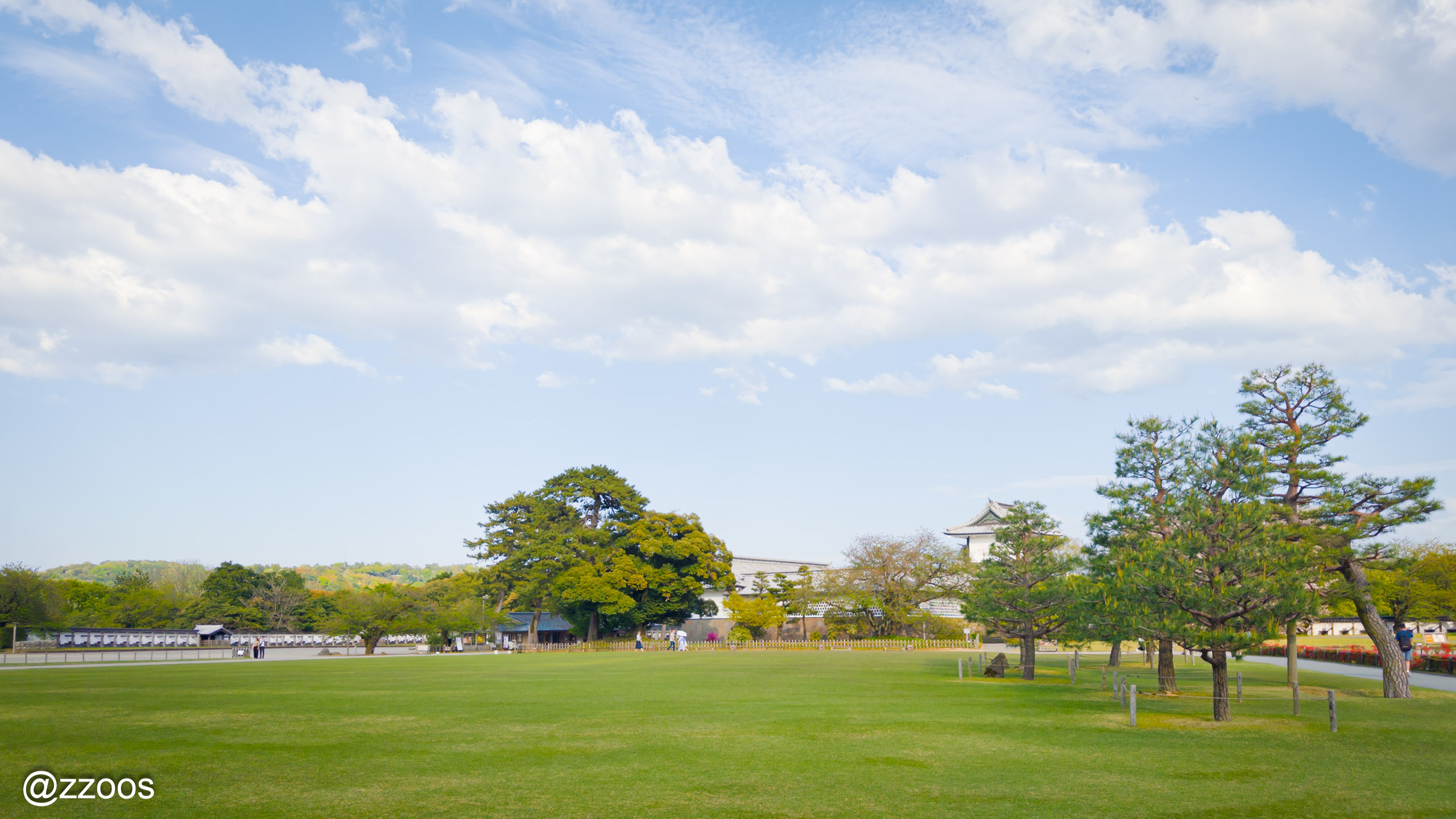
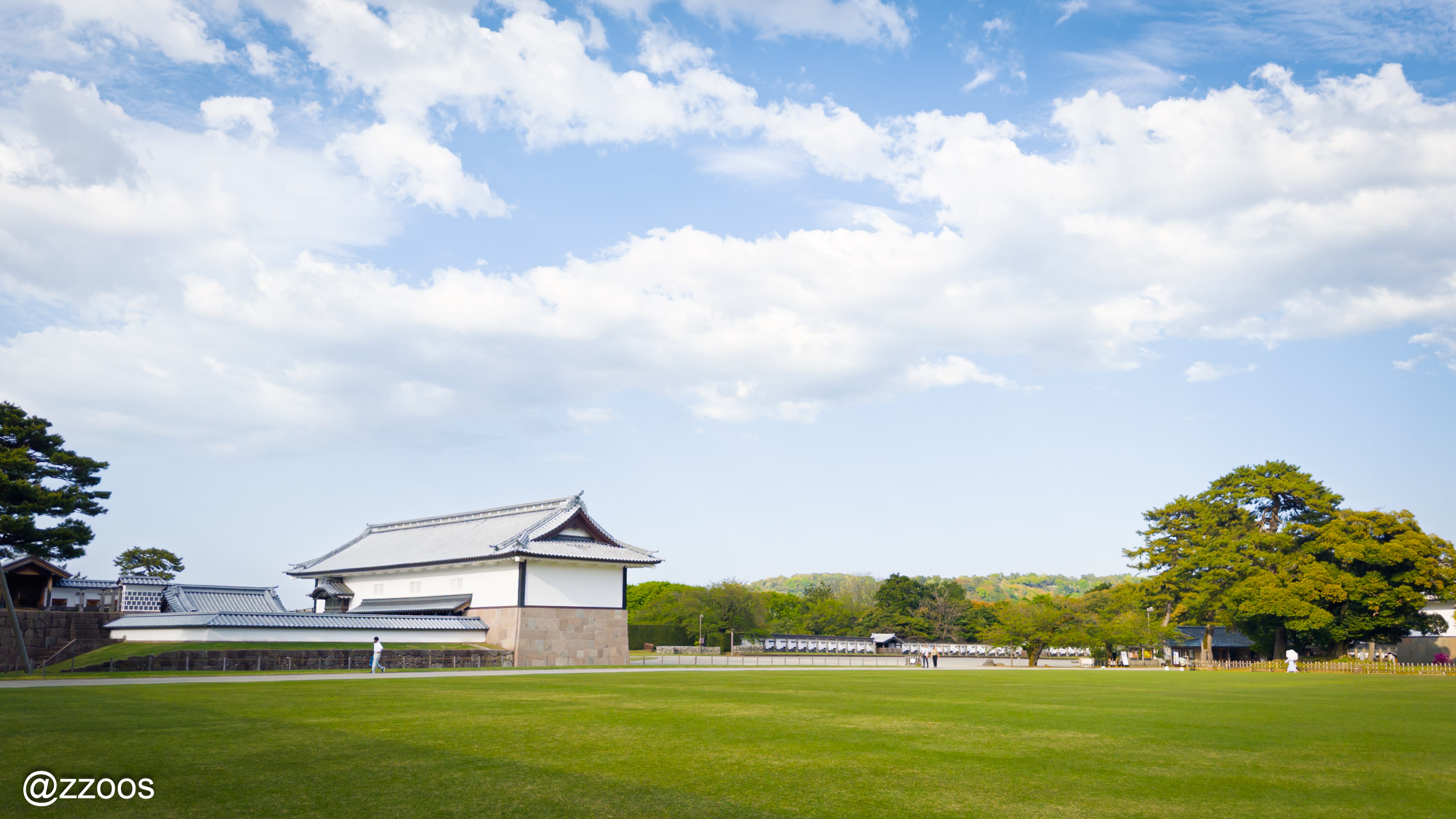
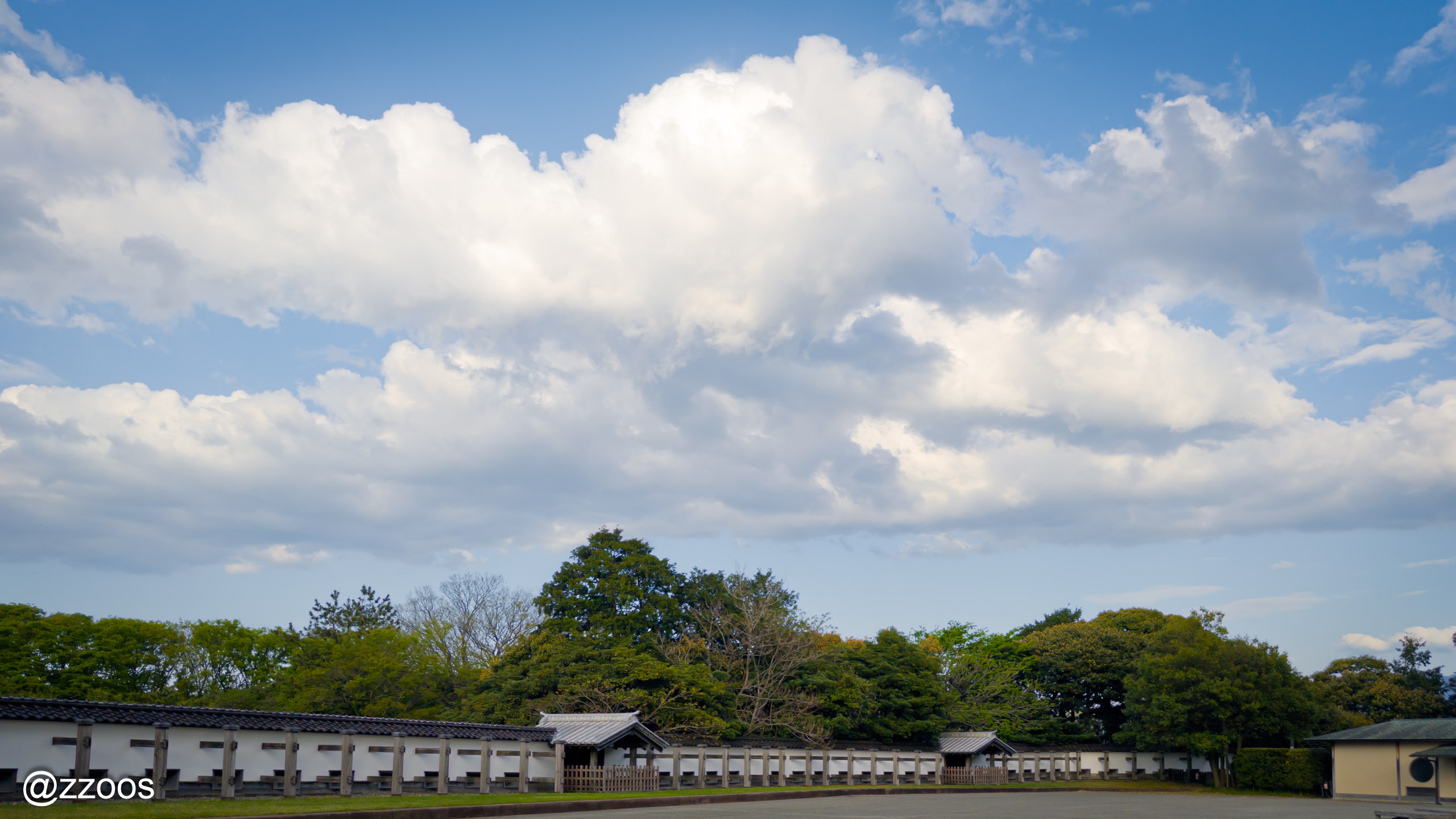
Sannomaru Plaza. Blue sky, wide open space covered in green grass.
For many people, this might be their first impression of Kanazawa Castle. I arrived here last, having walked the route in reverse.
Kanazawa Castle, honestly, is not a place where you’ll find dramatic, striking scenes. But as a park filled with greenery on a vast site, it was a perfectly good place for a walk.
The grounds are so large that there were plenty of paths I never got to. I imagine they were all just as full of greenery and trees. And the stone wall structures dotted around the grounds are a reminder that this is an ancient castle site.
I don’t know what Ninomaru will look like once the restoration is done. A castle that gave up its keep to survive. That’s why it exists in its current form. But that’s also why it has this slightly understated image — and that can’t really be helped.
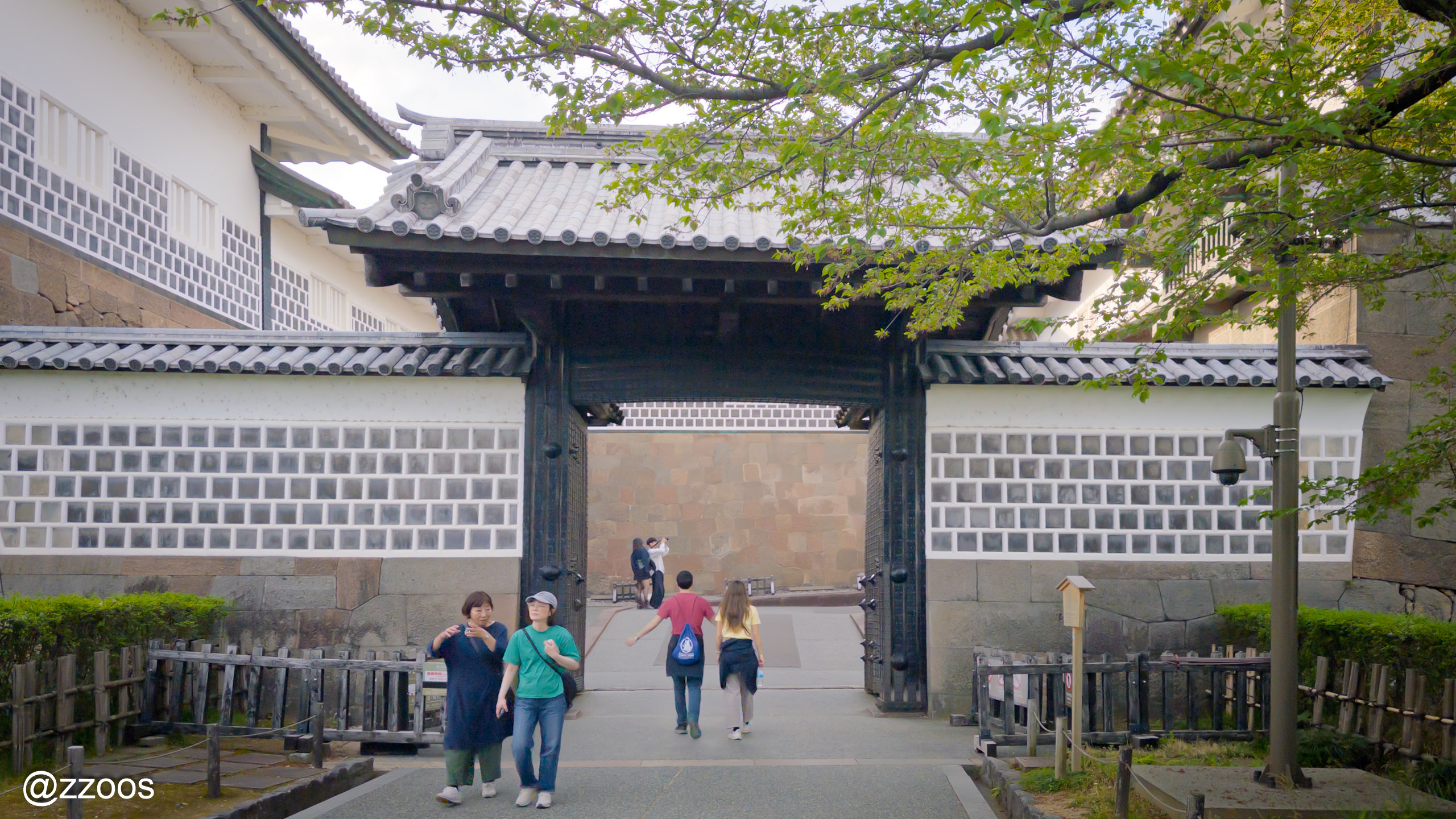
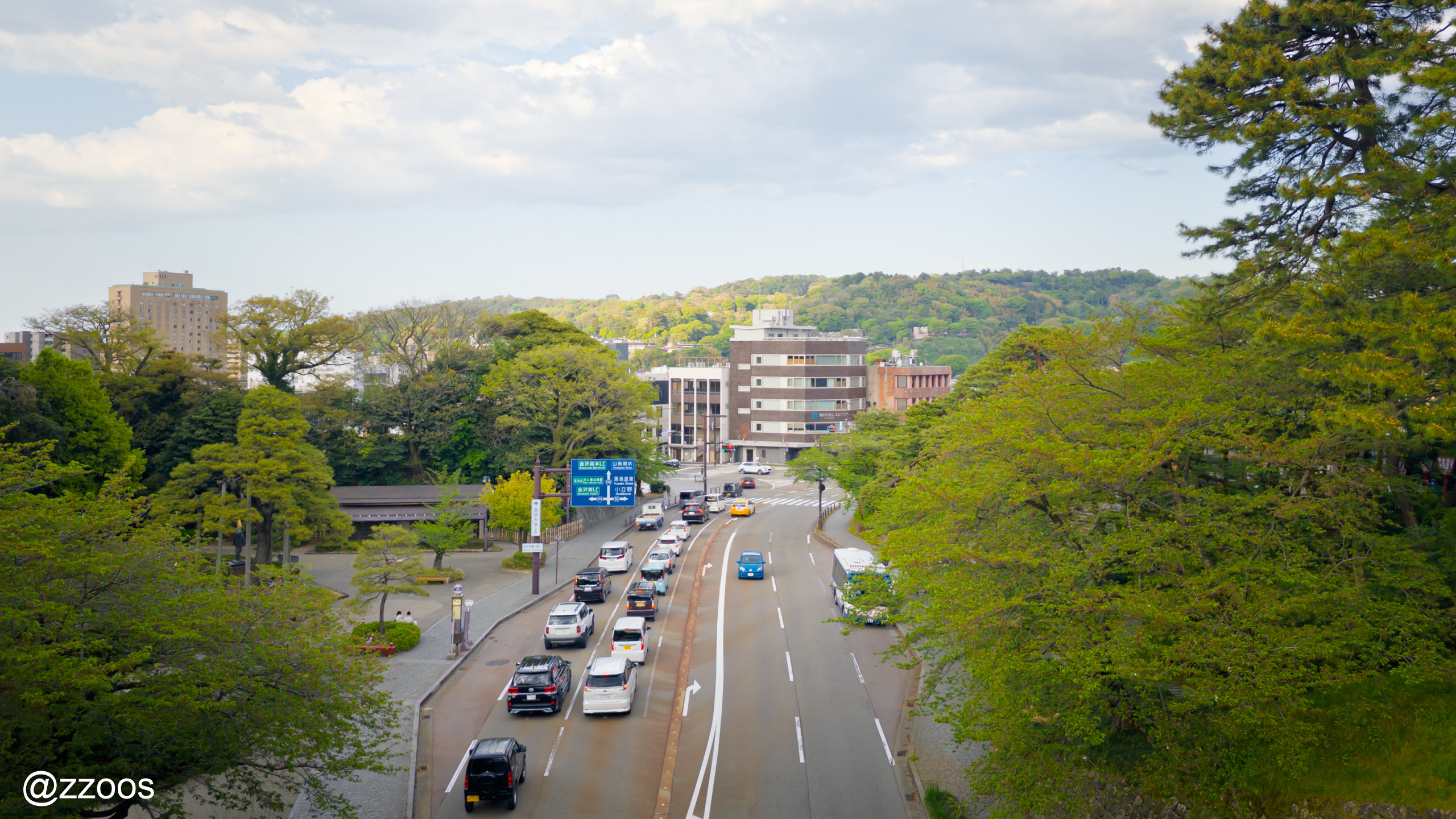
I head out through Ishikawa-mon (石川門) and across Ishikawabashi (石川橋). There’s still one more stop on today’s itinerary. I need to pick up the pace to get there before closing time. I have about an hour.
Next up: Kenroku-en (兼六園), one of Japan’s three great gardens. That story continues in the next post.