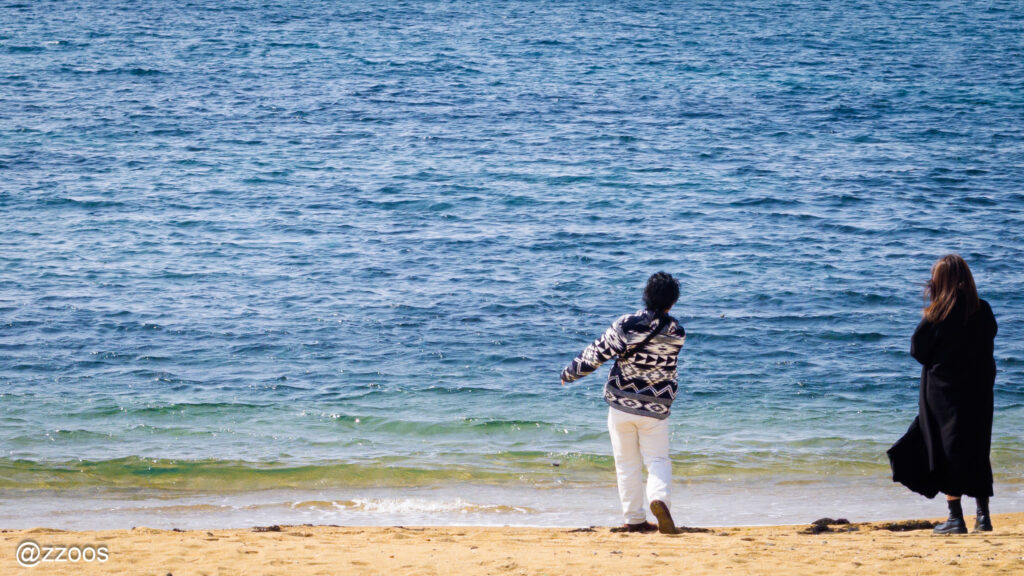
At last, my posts about my 4-night, 5-day trip to Karatsu, from February 10 to 14, have finally come to an end.
Some of you who saw that I went on this trip may have become interested in traveling to Karatsu too, right?
So in this post, which is both the final post of my Karatsu trip and its epilogue, I want to organize some vivid, firsthand information from my own trip and show it to you.
I tend to be a bit talkative,
so in the earlier posts,
there was a lot of unnecessary chatter, right?
Here,
I will try to show things in a more summarized and organized way.
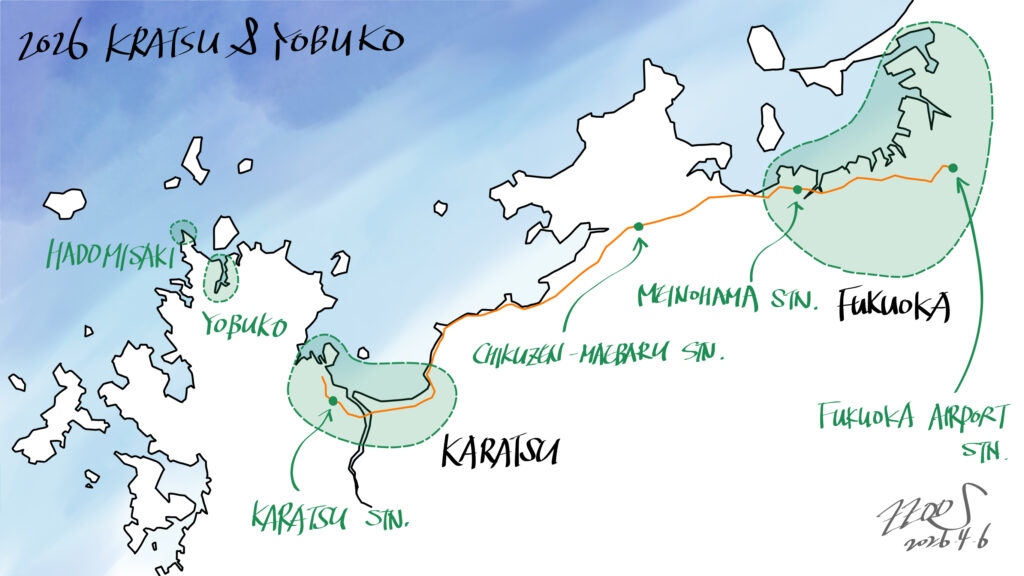
- WHY Karatsu?
Pros: Close to Fukuoka, second largest city in Saga, plus a beautiful sea
Cons: Even though it’s “second largest,” it’s much smaller than expected
The reason I chose Karatsu as my destination was simple:
I had never been to Saga Prefecture before.
I have been to Fukuoka so many times that I got tired of it,
and I have even traveled all around Kyushu once.
But somehow,
I had skipped only Saga Prefecture.
If you start thinking,
“I want to visit Saga Prefecture,”
the first place that comes up as a candidate is probably Saga City, the largest city in Saga Prefecture.
But I heard that Saga City is really just a city for daily life,
with almost nothing for sightseeing.
The next candidates would be Karatsu, the second largest city,
and Ureshino, a hot spring town.
From those,
I chose Karatsu,
where I could see the sea in places like Yobuko and Hadomisaki.
A hot spring trip felt like it might be too quiet and calm.
When you are tired of Fukuoka,
but also feel hesitant about going too far away,
I think Karatsu is exactly the kind of new city worth trying.
- Where to stay? Fukuoka vs Karatsu
Option 1)
Base in Fukuoka
Pros: You can enjoy the convenience of a big city in Fukuoka, and spend about one day looking around Karatsu.
Cons: Fukuoka again? You cannot go out to suburban places like Hadomisaki or Yobuko.
If the main purpose of your trip is Fukuoka,
and Karatsu is only a one-day side trip for a change of mood,
then staying at a hotel in Fukuoka may be the better choice.
It takes quite a bit of time to go back and forth by train or bus,
so it may be better to leave places like Hadomisaki, Yobuko, and Nijinomatsubara for another time,
and just enjoy a light tour of central Karatsu:
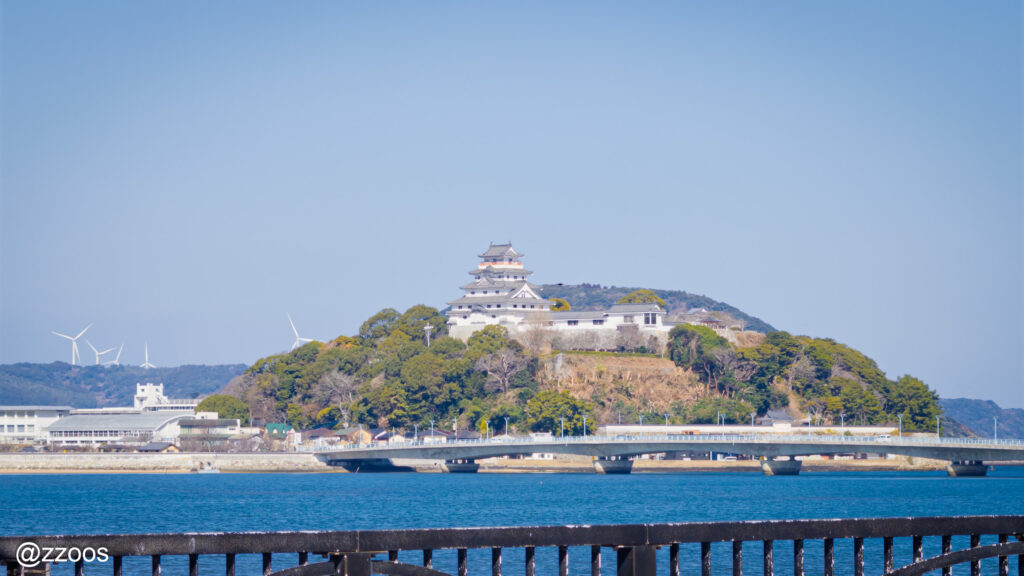
seeing Karatsu Castle, the Former Takatori House, and Karatsu Shrine,
then eating Saga beef in town and heading back.
Option 2)
Base in Karatsu
Pros: A full day in a new city. Suburban places like Hadomisaki and Yobuko are a bonus.
Cons: There is no shopping. Karatsu is truly a small city. It may feel quiet and not much more.
If you are tired of Fukuoka
and want to experience a completely new city more deeply,
then staying in Karatsu may be the better choice.
If you stay in Karatsu and use it as your base camp,
your options become much wider.
Sightseeing in central Karatsu is the basic plan,
and places like Nijinomatsubara become easy to visit too.
It takes about 30 minutes by bus from Karatsu to Yobuko,
and about 20 minutes by bus from Yobuko to Hadomisaki,
so if you match the bus times well,
it is fully possible as a day trip.
- Related links
- A Clean Hotel a Bit Far from Downtown – Hotel Riviere
- A Pine Forest Holding Karatsu Like a Rainbow – Kagamiyama Observation Deck
- Through the Rainbow Forest – Nijinomatsubara
- The Sea: Northwest Edge of Kyushu – A Walk at Hadomisaki
- Grilled Turban Shells at the End of the Road – Hadomisaki Grilled Turban Shells
- A Morning Market in a Small Port Town – Yobuko Morning Market
- A Walk in a Small Harbor Town – Scenes of Yobuko
One more)
Is one night in Yobuko necessary?
Pros: Yobuko squid at a ryokan. A deeper look into Yobuko.
Cons: A ryokan is not cheap. After checkout, your suitcase becomes a big piece of luggage.
When you use Karatsu as your base camp,
there is one more thing worth considering.
Is it really a good idea to spend one night in Yobuko?
You can almost say that Yobuko has no hotels in the usual sense.
It is really a very small town.
Still,
because “Yobuko squid” is famous,
there are some ryokan that focus on that.
When I was planning this trip,
I really wanted to include one night at a ryokan in Yobuko.
And this choice has very clear pros and cons.
The biggest advantage is that your time in Yobuko becomes much richer.
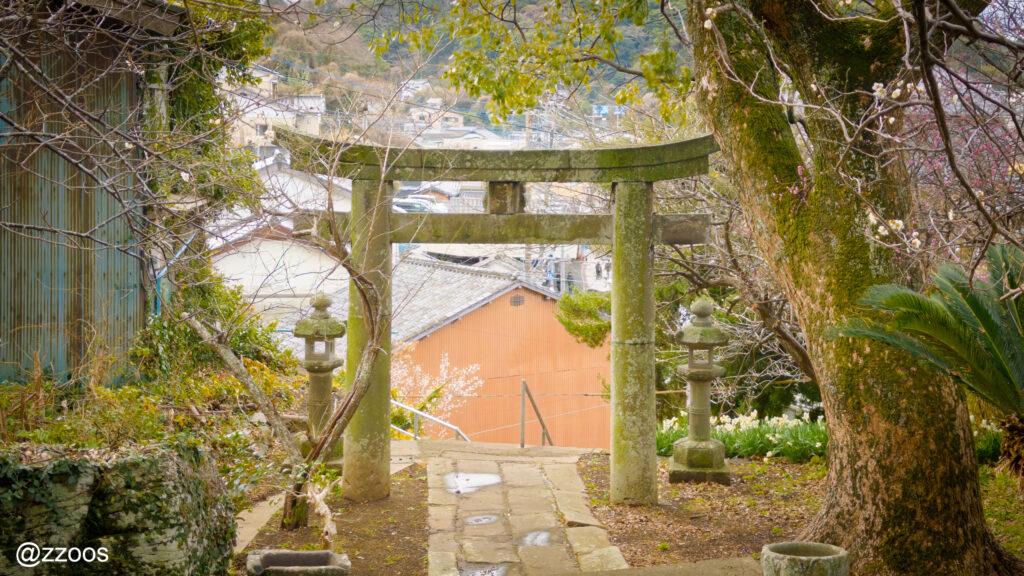
You would have enough time to look around Yobuko Morning Market and the small shrines in Yobuko,
and if the weather is good,
you could even take the sightseeing boat around Nanatsugama.
Another major advantage is being able to eat Yobuko squid for dinner at the ryokan.
But the cost of a ryokan is not small,
and after checking out,
you have to move around with your trunk.
Yobuko squid is famous,
but you can also eat it at restaurants in Yobuko without staying at a ryokan.
So,
you may not actually need to stay one night there.
- How to get to Karatsu: JR vs Bus
JR: The romance of travel is still the train. Two transfers. About two hours.
Bus: Go comfortably all the way to Karatsu. About an hour and a half.
There are two ways to get from Fukuoka Airport to Karatsu:
JR and bus.
And most people will probably choose JR,
because they have a kind of dream about “train travel in Japan.”
But this route is more troublesome than you might expect.
You have to take the Airport Line from Fukuoka Airport Station to Meinohama Station,
then transfer to the Chikuhi Line.
There are trains that connect directly,
but they are too infrequent.
And when you get from Meinohama Station to Chikuzen-Maebaru Station,
you have to transfer once again there.
It is the same Chikuhi Line,
but it does not go directly to Karatsu Station.
So you need to transfer twice,
and if you include the waiting time,
it takes about two hours in total.
Another option is to take the bus from Fukuoka Airport to Karatsu.
If the timing works,
you can arrive in Karatsu in just an hour and a half.
Of course,
the romance of train travel disappears a bit.
If the timing does not work out,
you can take the Airport Line to Hakata Station,
then take a bus to Karatsu from Hakata Bus Terminal right next to the station.
That bus runs at almost one per hour,
so it should be easy enough to catch.
In conclusion,
the total travel time is similar by bus and train.
But the bus takes you there in one shot,
while the train requires two transfers.
It is best to choose depending on your situation.
Suggestion)
Go to Karatsu by JR, and return by bus.
This is my suggestion.
When you go into Karatsu,
you are excited because it is the start of the trip.
So enjoy that bit of travel romance by train.
To be honest,
it feels closer to a subway than to a real train trip,
but still.
Then on the day you fly home,
check the bus schedule to Fukuoka Airport,
and go straight to the airport in one comfortable, fast ride.
Wouldn’t that be the best way to have both romance and convenience?
- Karatsu sightseeing: 2-day vs 1-day course
Karatsu is not a very large city,
so the sightseeing course is rather predictable.
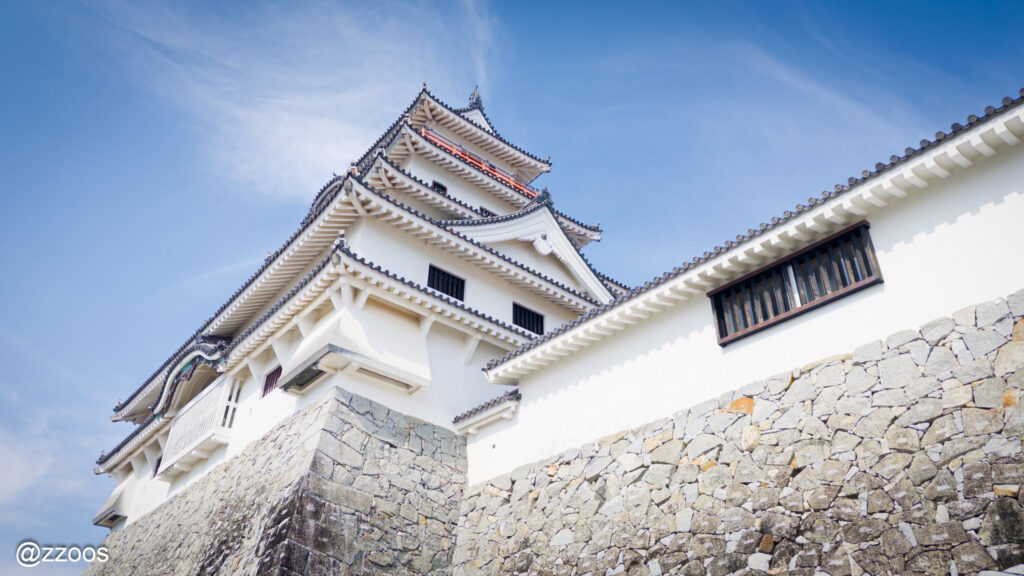
Karatsu Castle,
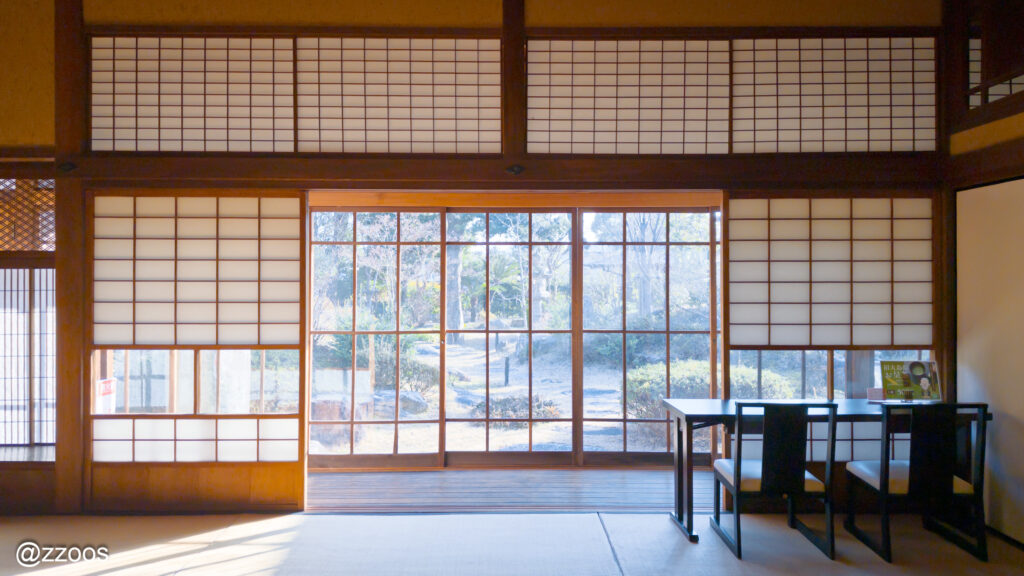
the Former Takatori House,
Hoto Shrine on Takashima Island,
a walk along the Matsuura River,
Kagamiyama Observatory,
and a walk in Nijinomatsubara.
It looks long when listed like this,
but as a course,
it is really just one day and a half.
So if you shorten it,
it can become a one-day course,
and if you go around at a relaxed pace,
it becomes a two-day course.
Option 1) 2-day course
Pros: A relaxed pace. You can see more.
Cons: You need one more day.
The plan is to group Kagamiyama Observatory, Nijinomatsubara,
and a walk along the Matsuura River into one day,
and Karatsu Castle, the Former Takatori House,
and Hoto Shrine into another day.
Because the schedule is fairly relaxed,
you would still have enough time to slowly look around places like the Former Oshima House and Karatsu Shrine.
For reference,
I personally tend to plan my trips very loosely,
so this is the way I went around.
- Related links
- A Pine Forest Holding Karatsu Like a Rainbow – Kagamiyama Observation Deck
- Through the Rainbow Forest – Nijinomatsubara
- The Image I Remember Most from Karatsu – The Matsuura River Walk
- Castle Overlooking the Sea – Karatsu Castle
- Tiny Shrine Famous for Lottery Luck – Takashima
- Grand Mansion Built by a Coal Tycoon – Former Takatori Residence
- Former Residence, Its Structure Revealed – Former Oshima Residence
- Where Wishes Meet the Wind – Karatsu Shrine
Option 2) 1-day course
Pros: Karatsu finished in one day.
Cons: You cannot see the omitted spots.
You wake up in the morning,
go to Kagamiyama Observatory,
then come down to Nijinomatsubara,
walk through the forest,
cross Maizuru Bridge,
and go all the way to Karatsu Castle.
Lunch can be settled with a Karatsu Burger in the forest.
After that,
you skip the Takashima course, which requires taking a boat,
and if you only see the main parts of central sightseeing,
Karatsu Castle and the Takatori House,
it will probably already be evening.
Then you will at least have covered the major highlights.
- Restaurants: I actually visited
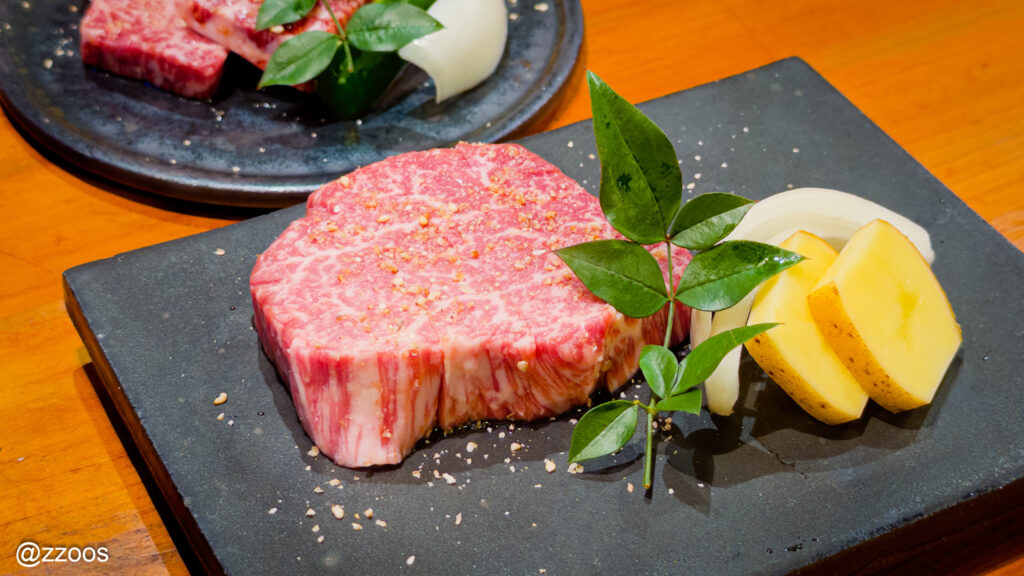
Tabelog score 3.62, ranked number one among yakiniku restaurants in Karatsu City.
You can eat high-quality Saga beef at a reasonable price.
It is the most expensive item, but I strongly recommend the chateaubriand.
Rather than having dinner, this is a gyoza bar where you can lightly enjoy wine, Japanese sake, shochu, and other drinks as a second stop.
Naturally, the gyoza is good, and they also serve light dishes.
Its strengths are the clean atmosphere and the kind staff.
They only accept people with reservations, so a reservation is essential.
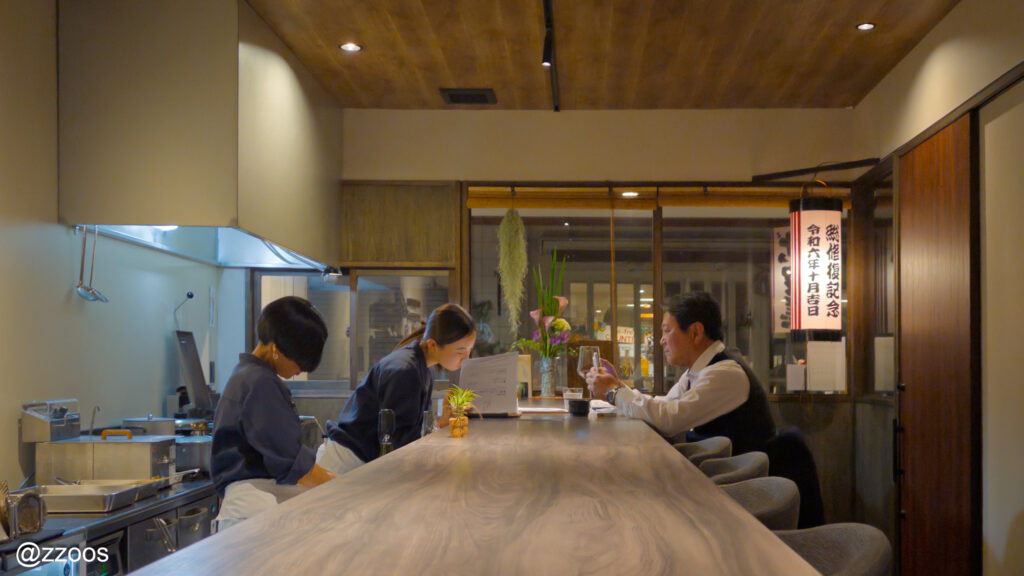
This is an izakaya where the master prepares dishes on his own using seasonal ingredients.
The master’s clean cooking skills are great, but the real strength of the place is the Japanese sake he recommends.
I was able to drink Kokueigiku, which felt like Saga’s version of Aramasa.
A good place for a light Japanese-style lunch.
The aji fry may have a fishy smell, so I recommend choosing another menu item.
It is not an especially outstanding taste, but it is ordinary Japanese sushi. Good for a light lunch.
If possible, you should order at least the Jonigiri (上握り), so that better ingredients will come out.
If you are walking through the pine forest of Nijinomatsubara, this is a good place for lunch or a snack.
A Japanese sake bar that serves musubi as its base and also offers various dishes.
They also have Japanese sake that is not listed on the menu, so it would be better to ask directly.
A place where you can drink somewhat old-fashioned, rough cocktails made by an owner bartender with 50 years of experience.
Could this perhaps be the most famous shop in central Karatsu?
A good place for a light glass of wine. There is a kind owner sommelier.
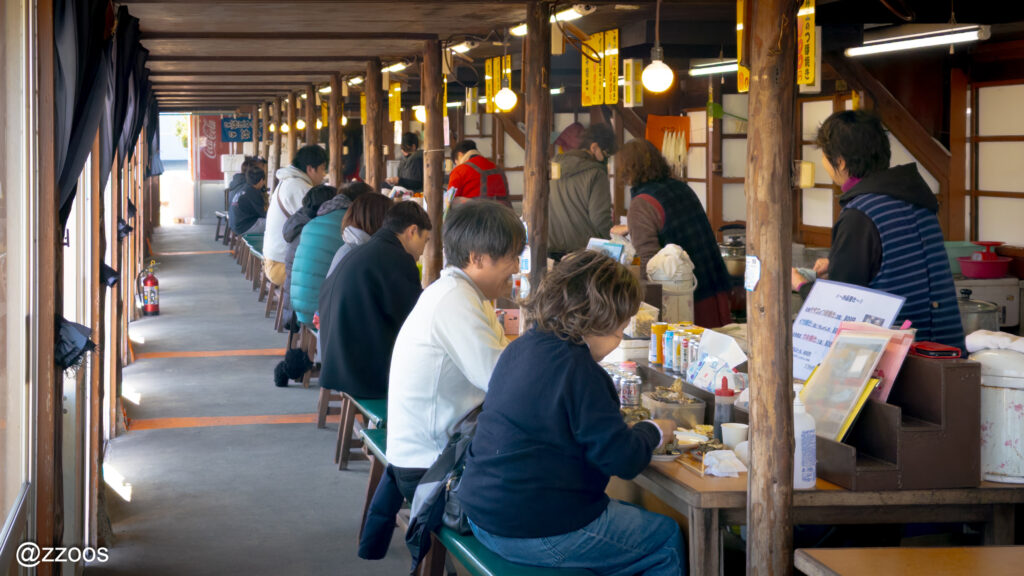
These are not tent-covered street stalls, but a group of indoor food stalls in semi-permanent buildings.
Because it is under the overpass at Karatsu Station, I could drink there while hearing trains passing by until late at night.
A holy place for drinkers, open until late.
- Restaurants: Recommended (not visited)
Reservations required. A tofu course meal place.
It is famous enough that some people reportedly come all the way to Karatsu just for this shop.
In reality, it seems almost impossible to get a dinner reservation, so you would probably need to aim for lunch.
Shoromanju is a local specialty of Karatsu. It is like a small bread filled with sweet red bean paste. I heard you can also eat it with tea or coffee.
These two shops are known as the two biggest names.
This was a place where I saw a long line on the way to eat ramen.
A kaisendon place where people line up from opening time even on weekday lunch.
It is really just a fish shop, but they keep grilling eel with sauce in front of the store,
so it is impossible to just walk past. I heard you cannot eat inside, and takeout only is possible.
They also sell sashimi made from fish caught in Karatsu, so I recommend it for anyone planning to eat at their accommodation.
This was the place I was recommended for tonkotsu ramen in Karatsu.
Because it closes at 9 p.m., it is not possible as a late-night hangover ramen stop.
Unfortunately, I visited on its regular closing day, so I ended up not being able to eat the ramen.
I tried to visit without a reservation, but it was full, so I failed. It seems reservations are essential.
There are no counter seats, so it may be difficult for solo diners.
Shabu-shabu and tonkatsu using pork from Karatsu.
It uses a detached building with a clean atmosphere.
It seems to be a popular place, so making a reservation would probably be a good idea.
- Other Tips
Transportation tip) For buses, go to Oteguchi
When taking a bus from Karatsu to Yobuko, Hadomisaki, Fukuoka Airport, or Hakata Bus Terminal,
if you are not sure where to catch the bus,
just go to Oteguchi first.
It seemed to me that all buses passing through Karatsu go through Oteguchi.
If, unlike me,
you stay at a hotel in central Karatsu rather than one a bit outside the center,
then Oteguchi becomes an even more natural place to catch the bus.
Shopping tip) For souvenirs, go to Karatsu Furusato Kaikan Arpino
There is no large shopping center in central Karatsu.
Well,
people who want shopping probably would not choose a small city like Karatsu for a trip anyway.
Still,
if you want to buy souvenirs,
you can go to the first floor of Arpino in front of Karatsu Station.
There,
you can buy a variety of local sake and local sweets packaged nicely enough to give as gifts.
Transportation tip) When going to Kagamiyama Observatory, take a taxi from Higashi-Karatsu Station
To properly see Nijinomatsubara,
you have to go up to Kagamiyama Observatory.
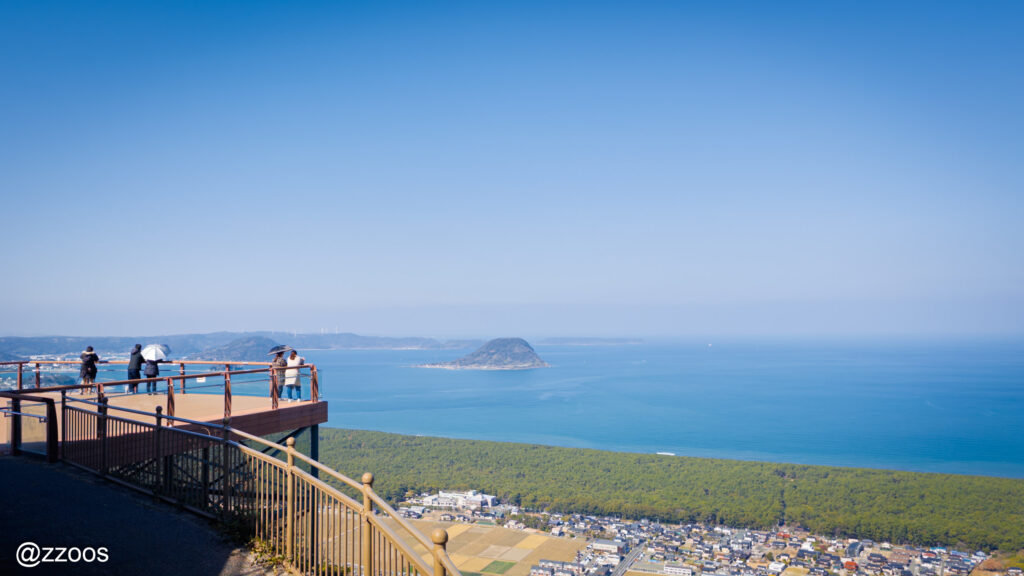
Only then can you properly see the pine forest wrapping around Karatsu Bay like a rainbow.
But this is not a place you can reach by public transportation.
So I recommend using a taxi.
And that taxi should be taken not from “Nijinomatsubara Station,”
but from “Higashi-Karatsu Station.”
Nijinomatsubara Station is such a tiny unmanned station
that there are simply no taxis nearby.
It is much easier to take one of the taxis waiting in front of Higashi-Karatsu Station.
And if you ask the driver to wait for a moment at Kagamiyama Observatory,
they will probably wait as if they are used to it.
Of course,
time-based charges continue while they wait,
so it is not a good idea to keep them waiting too long.
I went from Higashi-Karatsu Station → Kagamiyama Observatory (15 minutes) → Nijinomatsubara Station,
and the total fare was 5,450 yen.
It was not a cheap fare,
but I felt it was reasonable enough to accept.
Shopping tip) Before going back to your hotel, the convenience store is the FamilyMart in front of City Hall
Strangely enough,
there are not many convenience stores in central Karatsu.
The only 24-hour convenience store in town is the FamilyMart in front of City Hall.
After dinner or after having a drink,
you often want to buy a snack at a convenience store on the way back to your hotel, right?
At times like that,
instead of wandering around here and there,
it is easier on your mind to just go straight to the City Hall area.
And with that,
the posts about my trip to Karatsu have really all come to an end.
This trip began because I wanted to eat grilled turban shells that I had happened to see on TV.
I stayed one night in Yobuko to eat squid,
and I stopped by Hadomisaki to eat grilled turban shells,
then ended up completely falling for the charm of that sea.
I had gone to Karatsu looking for the feeling of a small city,
but it was such a much smaller city than I expected
that I was honestly a little surprised.
In fact,
most of the places we talk about when we say we are traveling to a “small city” in Japan
are cities that are at least medium-sized.
Karatsu is a real small city.
It is definitely still a city,
not a rural village,
but still.
Anyway,
it was a fun trip,
and it is a city I would like to visit again someday.
And now,
I am already planning my next trip.
Where will the next trip be?